Implementation of Optimal Power Flow in
Microgrids with Energy Storage
V. Jayalakshmi, Jafar Ali, S.P.Vijayaragavan
Assistant Professor, Dept. of EEE, Bharath University, Chennai, Tamil Nadu, India
Dept. of EEE, Bharath University, Chennai, Tamil Nadu, India
Assistant Professor, Dept. of EEE, Bharath University, Chennai, Tamil Nadu, India
ABSTRACT: Energy storage may improve power management in microgrids that include renewable energy sources. The storage devices match energy generation to consumption, facilitating a smooth and robust energy balance within the microgrid. This paper addresses the optimal control of the microgrid‘s energy storage devices. Stored energy is controlled to balance power generation of renewable sources to optimize overall power consumption at the microgrid point of common coupling. Recent works emphasize constraints imposed by the storage device itself, such as limited capacity and internal losses. However, these works assume flat, highly simplified network models, which overlook the physical connectivity. This work proposes an optimal power flow solution that considers the entire system: the storage device limits, voltages limits, currents limits, and power limits. The power network may be arbitrarily complex, and the proposed solver obtains a globally optimal solution.
1. INTRODUCTION
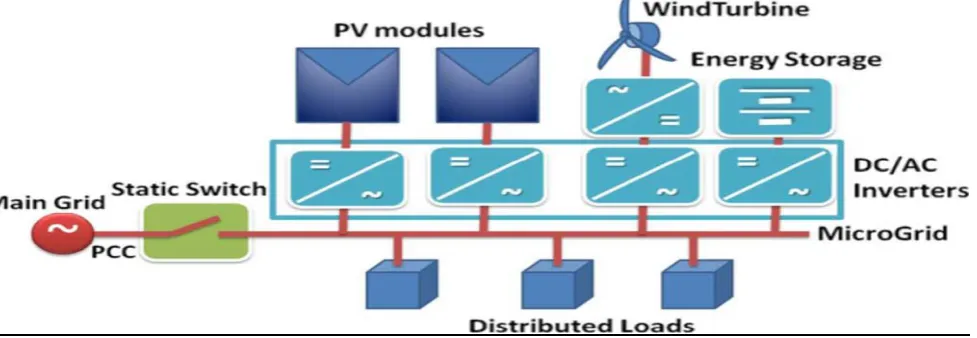
MICROGRIDS have received increasing attention as a means of integrating distributed generation into the electricity grid. Usually described as confinedclusters of loads, storage devices, and small generators, these autonomous networks connect as single entities to the public distribution grid, through a point of common coupling (PCC).Microgrids comprise a variety of technologies: renewable sources, such as photovoltaic and wind generators are operated alongside traditional high-inertia synchronous generators, batteries and fuel-cell. Thus, energy is generated near the loads, enabling the utilization of small-scale generators that increase reliability, and reduce losses overlong power lines.The locality of the microgrid network enables an improved management of energy. Generators (and possibly loads) may be controlled by a local energy management system (EMS) to optimize power flow within the network. The objectives of energy management depend on the mode of operation: Islanded,or grid-connected.[1-3]
minimize the overall price of energy or to maximize the profit from energy generation. A third group examines the optimal dispatch of energy storage devices Energy may be stored when renewable power is available or when energy import is inexpensive. This stored energy may be consumed later when demand is high or when renewable power is unavailable. The objective here is to optimize price, efficiency, and stability, considering the constraints imposed by the storage devices, such as limited capacity and internal losses. For example, in studies the storage device operates as a mediator of power generation.Overall power generation is optimized to be as constant as possible, reducing fuel costs, while taking into account the limited storage capacity. The study in employs storage to time-shift the generation of renewables, matching generation to consumption. The study in addresses a wind farm, compensated by a battery energy storage. Their goal is to control the storage device for improving the predictability of power generation.All of the above studies assume trivial network topologies.None of them inspect storage devices integrated in a general power network.[6] An optimal solution to a generally meshed network with storage devices has not been shown. The reason for this is the tremendous numerical complexity of the problem, which includes both the network domain and the time domain, related with storage. Traditional gradient based solvers (such as Newton-Raphson), while extremely useful in the network domain, are inadequate in the time domain and cannot be applied to the combined network-storage problem (see details in Section III).To cover this gap, this work introduces a new solution methodto this problem: an optimal power flow (OPF) solver that integrates storage devices.[7] The suggested method computes the globally optimal power flow, in both the network and time domains. It considers both the limitations of the storage device and the limitations of the network regarding voltages, currents and powers.The method combines a power flow solver with a dynamic programming recursive search, achieving a numerically efficient solution.
II. PROPOSED SYSTEM BLOCK DIAGRAM
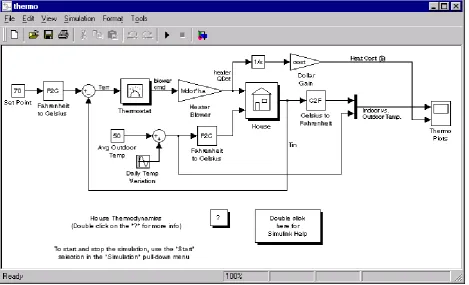
An optimal power flow (OPF) solver that integrates storage devices. The suggested method computes the globally optimal power flow, in both the network and time domains. It considers both the limitations of the storage device and the limitations of the network regarding voltages, currents and powers.[8-10] The method combines a power flow solver with a dynamic programming recursive search, achieving a numerically efficient solution. an optimal power flow (OPF) solver that integrates storage devices. The suggested method computes the globally optimal power flow, in both the network and time domains. It considers both the limitations of the storage device and the limitations of the network regarding voltages, currents and powers. [11]The method combines a power flow solver with a dynamic programming recursive search, achieving a numerically efficient solution.
III. NETWORK TOPOLOGY AND POWER FLOW EQUATIONS
This work utilizes the usual terminology of a power-flow
analysis. Buses are denoted with the running index , where is the number of buses. Each bus is described by four independent signals:
• —the active power, injected from the bus into the grid (positive for generators, negative for loads);
• —the reactive power, injected into the grid; • —the voltage magnitude of the bus; • —the phase angle of the voltage .
Basic units of the microgrid are defined in Table I. It describes
single phase units, balanced three-phase units, or unbalanced three-phase units, with per phase representation (―x‖ denote the phase, A, B, or C and is omitted for balanced three-phase). The PCC corresponds to the ―slack‖ bus. It is always indexed as bus 1 and is described as a bus, with as an uncontrollable voltage signal. Loads and renewable generators are uncontrollable and are therefore represented by fixed power signals (power versus time). For a balanced threephase system, power-flow equations are given in
These may be found in many classical textbooks, such as In
(1), and are the admittances‘ magnitude and phase,are the self-admittances, are the cross admittances,and are the line currents (magnitude).[12]The system may also be an unbalanced three-phase system. The power flow equations for this case are too complex to be described in the present scope, and are fully detailed in.For a simplified unbalanced system, in which leakage currents are neglected, and the neutral line impedances are taken as zero,the power-flow equations are given by
IV. MICROGRID STUDY CASE-1
The parameters are chosen as follows: , , ,and Wind power is sampled from [13]. The proposed dynamic programming analysis is applied to this system, optimizing the utilization of storage. A price signal is unavailable,so aminimalprice objective cannot be evaluated. Instead, we chose to optimize the power output of the system by minimizing losses over the mutual power line.
MICROGRID STUDY-2
The second system case study combines both an on trivalent- work and storage devices. Power flow is optimized to satisfy both the storage device constraints and the physical constraints of the network.The objective is to optimize the cumulative price of energy at the PCC [(5)]. The network is shown at Fig. 6. This microgrid is a medium- voltage (MV) network. It is supplied by a central transformer at the PCC, which ratings are: 13.8 kV, 5MVA.Impedances are specified in per-unit (in per- cent), using a base equal to the transformer‘s ratings. Active
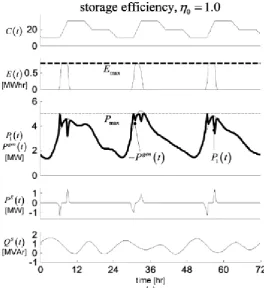
Micro grid case study II. Powers of loads and generators. Top: sum of active load power. Middle: sum of reactive load power. Bottom: active power of generators.
Power at the PCC is limited by the transformer: 5 5 MW. The micro grid contains two renewable generators, six loads (the sixth is a capacitor bank),and two storage devices.The gen- erator sare photovoltaic sources having installed power peaks of 1 and 0.5 MW. They provide only active power. Power signals weregeneratedrandomly,overa72-hperiod,as shown in Fig.7. The storage device capacities are 0.4.
V. RUNNING EXAMPLE MODEL
VI. SIMULATION OUTPUT
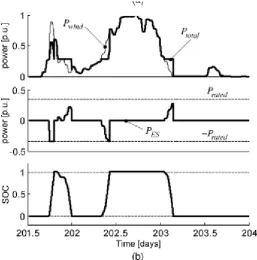
Figure. 3. Global and local solutions in time domain. (a) Global solution. (b) Local solution (bold) with a small variation (thin). The variation is energetically worse
Figure. 5. Microgrid case study II. Powers of loads and generators. Top: sum of active load power. Middle: sum of reactive load power. Bottom: active power
VI. CONCLUSION
This work suggests an algorithm to compute the optimal energy management of storage devices in grid-connected microgrids. Stored energy is controlled to balance the power of loads and renewable sources, over the time domain, minimizing the overall cost of energy at the PCC.The algorithm incorporates an arbitrary network topology, which can be a general one-phase, balanced, or unbalanced three-phase system. It employs a power flow solver in network domain, within a dynamic programming recursive search in time domain. This combination is robust and numerically efficient and reveals the globally optimal stored energy versus time for each storage device.
REFERENCES
[1] J. C.Vasquez, J.M. Guerrero, J.Miret,M. Castilla, and L.G. deVicuña,―Hierarchical control of intelligent microgrids,‖ IEEE Ind. Electron.Mag., vol. 4, pp. 23–29, Dec. 2010.
[2]Sukumaran V.G., Bharadwaj N., "Ceramics in dental applications", Trends in Biomaterials and Artificial Organs, ISSN : 0971-1198, 20(1) (2006) pp.7-11.
[3] E. Barklund, N. Pogaku, M. Prodanovic, C. Hernandez-Aramburo, andT. C. Green, ―Energy management in autonomous microgrid using stability-constrained droop control of inverters,‖ IEEE Trans. Power Electron.,vol. 23, no. 9, pp. 2346–2352, Sep. 2008.
[4] Selva Kumar S., Ram Krishna Rao M., Balasubramanian M.P., "Chemopreventive effects of Indigofera aspalathoides on 20-methylcholanthrene induced fibrosarcoma in rats", International Journal of Cancer Research, ISSN : ISSN: 1811-9727, 7(2) (2011) pp.144-151.
[5] J. Arai, K. Iba, T. Funabashi, Y. Nakanishi, K. Koyanagi, and R.Yokoyama, ―Power electronics and its applications to renewableenergy in Japan,‖ IEEE Circuits Syst. Mag., vol. 8, pp. 52–66, 2008.
[6]Menon R., Kiran C.M., "Concomitant presentation of alopecia areata in siblings: A rare occurrence", International Journal of Trichology, ISSN : 0974-7753, 4(2) (2012) pp.86-88.
[7] F. Katiraei, R. Iravani, N. Hatziargyriou, and A. Dimeas, ―Microgrids management,‖ IEEE Power Energy Mag., vol. 6, pp. 54–65,May– Jun.,2008.
[8]Rayen R., Hariharan V.S., Elavazhagan N., Kamalendran N., Varadarajan R., "Dental management of hemophiliac child under general anesthesia", Journal of Indian Society of Pedodontics and Preventive Dentistry, ISSN : 0970-4388, 29(1) (2011) pp.74-79.
[9] R. H. Lasseter, ―Microgrids,‖ in Proc. IEEE Power Eng. Soc. Winter Meeting, Feb. 2001, vol. 1, pp. 146–149.
[10]Shanthi B., Revathy C., Devi A.J.M., Subhashree, "Effect of iron deficiency on glycation of haemoglobin in nondiabetics", Journal of Clinical and Diagnostic Research, ISSN : 0973 - 709X, 7(1) (2013) pp.15-17.
[11] A. G. Tsikalakis andN.D.Hatziargyriou, ―Centralized control for optimizingmicrogrids operation,‖ IEEE Trans. Energy Conv., vol. 23, no.2, pp. 241–248, Mar. 2008.
[12] R. Majumder, A. Ghosh, G. Ledwich, and F. Zare, ―Power managementand power flow control with back-to-back converters in a utility connected microgrid,‖ IEEE Trans. Power Syst., vol. 25, pp. 821–834,May 2010.
[13] V. Del Toro, Electric Power Systems. Englewood Cliffs, NJ, USA:Prentice-Hall, 1992, vol. II.
[14] Sridhar raja .D , Application of BCI in Mind controlled robotic movements in intelligent rehabilitation ,International Journal of Computer Trends and Technology (IJCTT), ISSN: 2278 – 8875 , pp 1231-1238,Vol. 2, Issue 4, April 2013.
[15] B.Vamsi Krishna, A New Technique for Elimination of Harmonics Using Three Phase Shunt Active Filter, International Journal of Advanced Research in Electrical, Electronics and Instrumentation Engineering, ISSN (Online): 2278 – 8875,pp 5596-5602, Vol. 2, Issue 11, November 2013 [16] P.Thamarai, B.Karthik, ARM Based Automatic Meteorological Data Acquisition System, International Journal of Advanced Research in Electrical, Electronics and Instrumentation Engineering, ISSN (Online): 2278 – 8875,pp 6461-6465, Vol. 2, Issue 12, December 2013
[17] M.Bharathi,Effective Transfer Function Approach for Decentralized Controller,International Journal of Advanced Research in Electrical, Electronics and Instrumentation Engineering, ISSN 2278 - 8875 , pp 21-27, Vol. 1, Issue 1, July 2012.
[18] Vijayan T ,Energy-efficient MAC for Wireless Sensor Networks,International Journal of Advanced Research in Electrical, Electronics and Instrumentation Engineering,ISSN 2278 - 8875, pp 51-57,Vol. 1, Issue 1, July 2012.