Scholarship@Western
Scholarship@Western
Electronic Thesis and Dissertation Repository
4-9-2019 10:30 AM
Amplitude Modulation Perception in Children with Auditory
Amplitude Modulation Perception in Children with Auditory
Processing Disorder
Processing Disorder
Winnie Ly
The University of Western Ontario Supervisor
Allen, Prudence
The University of Western Ontario
Graduate Program in Health and Rehabilitation Sciences
A thesis submitted in partial fulfillment of the requirements for the degree in Master of Science © Winnie Ly 2019
Follow this and additional works at: https://ir.lib.uwo.ca/etd
Part of the Speech and Hearing Science Commons
Recommended Citation Recommended Citation
Ly, Winnie, "Amplitude Modulation Perception in Children with Auditory Processing Disorder" (2019). Electronic Thesis and Dissertation Repository. 6093.
https://ir.lib.uwo.ca/etd/6093
This Dissertation/Thesis is brought to you for free and open access by Scholarship@Western. It has been accepted for inclusion in Electronic Thesis and Dissertation Repository by an authorized administrator of
i
The ability to recognize speech, engage in daily communication and learn new information is crucial for human beings. We are able to perform these tasks sufficiently as a result of the efficiency of our auditory system. Our auditory perception goes beyond the ability to detect sound. It allows us to interpret multiple pieces of information received from the environment and make meaningful associations for both familiar and unfamiliar sounds. However, not every individual has normal auditory perception. Often individuals show poor ability to discriminate basic signal features (i.e. temporal cues) which leads to difficulty understanding speech in the presence of noise, following multi-step instructions and understanding
information. These challenges often lead to the speculation of auditory processing disorder (APD).
Children with developmental delays in auditory processing are more prone to experience difficulty in a classroom setting. As a result, an auditory processing disorder is likely to be identified in school aged children. Poor auditory perception often leads to academic failure, poor organization skills, a tendency to become easily distracted and difficulty learning unfamiliar sounds. However, the extent of these behaviours and their similarity to other developmental disorders (i.e. speech language disorder) may vary between children. Often these children are referred to an audiologist who will perform an Auditory Processing Evaluation to assess their auditory skills. Currently, many auditory processing tests are available to use, however, audiologists will choose the tests based on the case history and complaints of the child.
Temporal cues are important for speech understanding in noisy and quiet conditions (Lorenzi, 2008; Shannon et al., 1995). One method to assess the ability to discriminate temporal cues is the amplitude modulation task. Given the lack of sufficient data on
amplitude modulation discrimination in children with APD, the purpose of this thesis was to examine amplitude modulation perception in listeners (children with APD, typically
ii
The amplitude modulation task assessed listeners’ detection of modulation as modulation rate varied. A total of eighty listeners took part: (28) children with Auditory Processing Disorder (APD), (22) typically developing children (TD) and (30) normal hearing adults. A three-alternative forced choice adaptive procedure was administered to assess amplitude
modulation frequencies at 20, 32, 100 and 200 Hz. All listeners had better thresholds at 20 Hz compared to 200 Hz. Thresholds at 20 and 200 Hz for children with APD were
significantly poorer compared to typically developing children and adults but typically developing children and adults had similar thresholds.
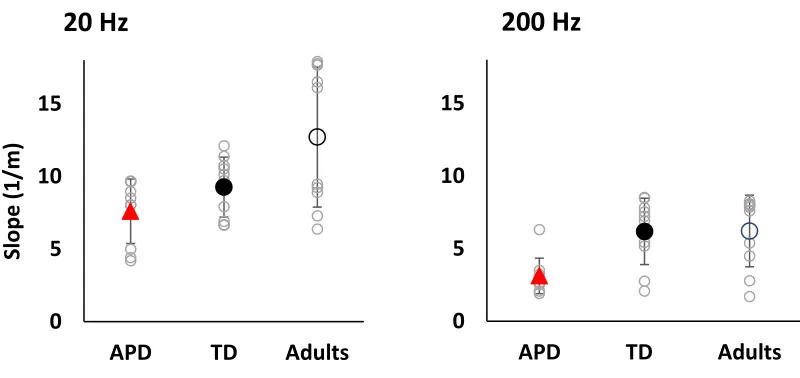
Study 2 (psychometric function estimation) was used to further characterize the modulation detection process. Psychometric function describes the relationship between the correct percent of detection and modulation depth. A total of thirty participants were enrolled in the study: (10) children with Auditory Processing Disorder (APD), (10) typically developing children (TD) and (10) normal hearing adults. A three-alternative forced choice non-adaptive procedure was administered and the psychometric functions were measured at 20 and 200 Hz. Children with APD showed poorer thresholds for modulation detection, as in Study 1, and shallower slopes compared to typically developing children and adults. Comparable thresholds and slopes in the typically developing children and adults suggests they are using similar listening strategies to extract temporal cues. The performance of the children with APD was consistent with greater uncertainty.
Finally, the goal of Study 3 (iPaas verification) was to examine the amplitude modulation thresholds obtained with a portable device (iPaas-based Psychoacoustic App Suite) and research laboratory-grade equipment (TDT). Because different transducers (ER 2 A insert earphones vs. DD 450 circum-aural headphones) are used in the 2 systems a transducers verification was performed followed by the iPaas verification. A total of 10 normal hearing adults enrolled in the study. Results demonstrated that for the transducers verification, thresholds obtained from the DD 450 circumaural transducers were significantly better at 20 and 32 Hz but were within 2 SD of the ER-2A Insert transducers. For the iPaas verification, thresholds were not significantly different between the systems for all four amplitude
iii
In combination, these three studies help improve our understanding of how sensitivity to temporal cues can affect the ability of listeners to perceive auditory information. Findings of poor amplitude modulation thresholds and slopes in children with APD may suggest the inefficiency of the auditory system in extracting temporal cues, potentially leading to poor speech recognition in noisy conditions. Given this finding, the non-speech amplitude modulation task can provide additional information in a clinical setting and should be included as an additional measure in the Auditory Processing Evaluation test battery.
Keywords
iv
Acknowledgments
I would like to express my sincere gratitude to my research supervisor, Dr. Prudence Allen. Thank you for giving me this wonderful opportunity to work with her. I sincerely appreciate her guidance and support during the entirety of my thesis. Every time I feel discouraged during the project, she has always given me endless encouragement and insight for me to become a better researcher. Dr. Allen sets an excellent role model as a researcher, mentor and advisor. I would also like to deeply thank my advisory committee, Dr. Vijay Parsa and Dr. David Purcell for their invaluable suggestions to this project. Thank you to Chris for her endless care, support and generous help for always recruiting APD children for my data collection. Thank you Sangam for always editing countless times of my thesis, writing new codes and teaching me how to be a competent researcher. Thank you Jordana for her kind support and encouragement.
I would also like to deeply thank all the listeners that have participated in my project. During the data collection process, I have made many new friendships and I cherish each one of them. I also appreciate the children and the parents that have devoted time out of their busy schedule to help me complete my thesis.
v
Table of Contents
Abstract ... i
Acknowledgments ... ivv
Table of Contents……….v
List of Figures……….ix
List of Appendices………...x
List of Abbreviations………..xi
Chapter 1………..1
1 Introduction………..1
1.1 Auditory Processing Disorder ... 1
1.1.1 Definition and Criteria for Identification………1
1.1.2 Comorbidity………2
1.1.3 Intervention……….3
1.2 Refererence………...3
Chapter 2……….…...6
2 Temporal ProcessingError! Bookmark not defined....6
2.1 Temporal processing in young children and children with developmental disorder. ... 6
2.2 Types of temporal processing………...6
2.2.1 Summary and Benefit of Amplitude Modulation test……….8
2.3 Reference………...9
Chapter 3………12
3 Amplitude Modulation Perception ... 12
vi
3.1.1 Amplitude modulation perception in typically developing children and
adults………...…...12
3.1.2 Amplitude Modulation perception in children with Auditory Processing Disorder and developmental delay……….13
3.1.3 Purpose of the study………..14
3.2 Methods………...14
3.2.1 Participants………14
3.2.2 Stimuli, Task and Procedure……….15
3.3 Results……….16
3.3.1 Hearing thresholds and Oto-acoustic emissions………...16
3.3.2 Amplitude modulation thresholds (Adults)………..17
3.3.3 WIN scores………...19
3.3.4 Correlation between age and WIN scores……….20
3.3.5 Correlation between WIN scores and AM thresholds………..21
3.4 Discussion………...22
3.5 Conclusion………...25
3.6 Reference……….26
Chapter 4………32
4 Psychometric Function………32
4.1 Adaptive and Non-Adaptive procedures……….33
4.1.1 Need for the study……….34
4.2 Methods………...34
4.2.1 Participants………34
4.2.2 Stimuli, Task and Procedure……….35
4.3 Results……….37
vii
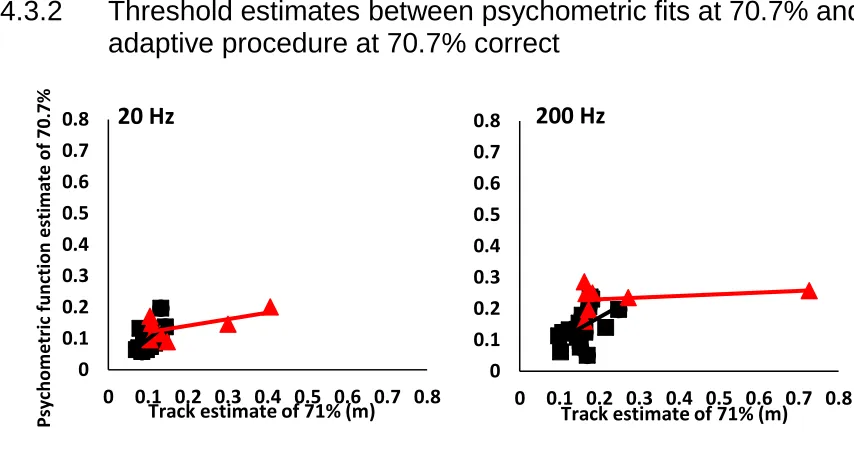
4.3.2 Track estimates between psychometric fits at 70.7% and adaptive procedure
at 70.7% correct……….38
4.3.3 Thresholds for adaptive and non-adaptive procedures at 20 and 200 Hz….40 4.3.4 Slopes at 20 and 200 Hz………41
4.4 Discussion………...42
4.5 Conclusion………..45
4.6 Reference………45
Chapter 5………50
5 iPaas-based Psychoacoustic Application Suite………...…..50
5.1 iPaas-based Psychoacoustic Application Suite test platform………...…..51Error! Bookmark not defined.Summary……….. .54 5.2 Methods………...54
5.2.1 Participants………54
5.2.2 Stimuli, Task and Procedures………...55
5.3 Result………..55
5.3.1 Transducer verification……….55
5.3.2 iPaas Verification……….57
5.4 Discussion………...59
5.5 Conclusion………..60
5.6 Reference……….61
Chapter 6………63
6 Conclusion and Future Direction……….………...63
viii
Appendix A: Approval for Research Involving Human Participants……….66
Appendix B: Letter of Information and Consent……….………...71
ix
List of Figures
Figure 3.1: Individual and mean amplitude modulation thresholds………...17
Figure 3.2: Amplitude modulation thresholds at 20 and 200 Hz as a function of age…..….18
Figure 3.3: Individual and mean WIN scores……….19
Figure 3.4: Correlation between age and WIN scores………20
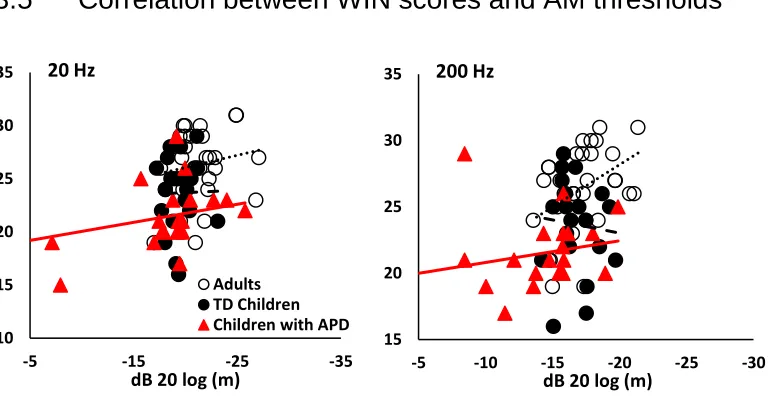
Figure 3.5: Correlation between modulation at 20 and 200 Hz and WIN scores…………...21
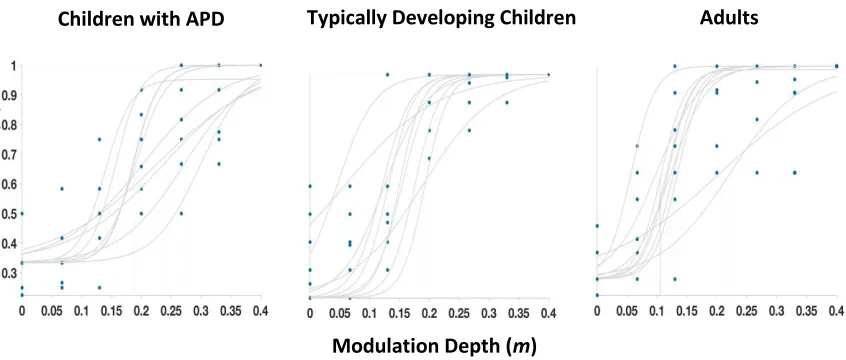
Figure 4.1: Psychometric functions for amplitude modulation detection at 20 Hz…………37
Figure 4.2. Psychometric function for amplitude modulation detection at 200 Hz………...37
Figure 4.3. Correlation between track estimates of psychometric functions and adaptive procedure at 20 and 20 Hz……….………38
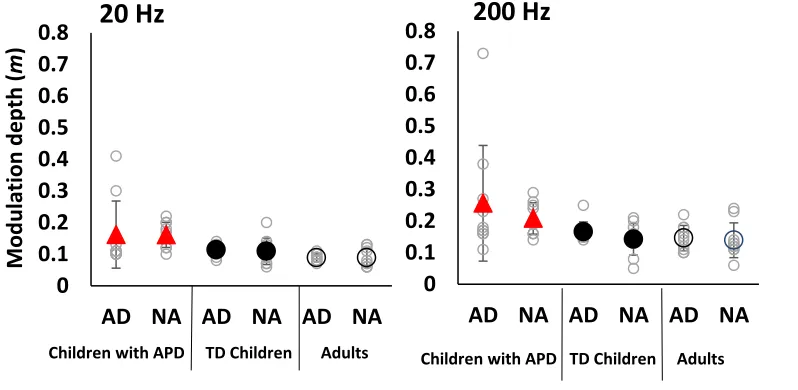
Figure 4.4: Individual and average amplitude modulation thresholds (adaptive and non-adaptive) at 20 and 200 Hz………...……….40
Figure 4.5: Slopes at 20 and 200 Hz………..41
Figure 5.1: Screenshot of the home window of the iPaas Psychoacoustic Application
Suite………51
Figure 5.2: Screenshot of the amplitude modulation test on the iPaas Application
Suite……….52
Figure 5.3: Screenshot of a trial of the amplitude modulation test………..53
Figure 5.4: Amplitude modulation thresholds for ER 2A and DD 450 transducers…………56
Figure 5.5. Test track of the amplitude modulation test from iPaas Application Suite…...57
x
List of Appendices
Appendix A: Approval for Research Involving Human Participants………66
xi
List of Abbreviations
Adaptive AD
American Speech Language and Hearing Association ASHA
American Academy of Audiology AAA
Amplitude Modulation AM
Application App
Auditory Brainstem Responses ABR
Auditory Processing Disorder APD
A-weighted Decibel dB A
Bamford-Kowal-Bench Speech-in-Noise test BKB-SIN
British Society of Audiology BSA
Decibel dB
Distortion Product Otoacoustic Emission DPOAE
Frequency Discrimination FD
Frequency Modulation FM
Frequency Pattern Test FPT
Gap Detection Threshold GDT
Goodness of Fit G2
Hertz Hz
xii
Milliseconds msec
Non-adaptive NA
Otoacoustic emissions OAE
Parameter Estimation by Sequential Testing PEST
Pitch Pattern Sequence test PPT
Repeated measures analysis of variance RMANOVA
Signal to Noise Ratio SNR
Sound Pressure Level SPL
Specific Language Impairment SLI
Staggered Spondee Word test SSW
Standard Deviation SD
Modulation Depth m
Temporal Modulation Transfer Function TMTF
Typically Developing TD
Tucker Davis Technologies TDT
Up Down Transformed Response UDTR
Word in Noise test WIN
Chapter 1
1
Introduction
Approximately 2-5% of school-aged children are diagnosed with Auditory Processing Disorder (APD) (Chermak & Musiek, 1997). Children with APD will typically display difficulty in understanding speech in the presence of background noise and they tend to seek audiology service to examine their hearing. Audiologists typically perform a full peripheral hearing evaluation such as pure tone audiometry, tympanometry, and otoacoustic emissions (OAEs) to rule out the possibility of hearing loss. However, these children are often found to have hearing thresholds within normal limits despite their listening complaints and poor academic performance (American Academy of Audiology (AAA), 2010). Along with listening difficulties, these children may have associated speech and language difficulties (American Speech Language and Hearing Association, (ASHA), 2005). The cause of APD is still largely unknown, and many researchers believe it is related to hereditary factors, maturational delay, and ear infections (Borges, Paschoal, & Colella-Santos, 2013; Tomlin & Rance, 2016; Brewer et al., 2016).
1.1
Auditory Processing Disorder
1.1.1
Definition and Criteria for Identification
The American Speech Language and Hearing Association (ASHA) (2005) has defined APD as a disorder associated with difficulty in auditory discrimination, sound
assess the neural integrity of the auditory system. The test battery should be chosen based on case history and peripheral audiological evaluation. The diagnosis of APD can be made if test results are greater than two standard deviations from the age-matched children, on two or more tests. If only one test is administered, the child will receive the diagnosis of APD if the test score falls at least three standard deviations away from the age-matched mean (ASHA, 2005).
1.1.2
Comorbidity
Although ASHA (2005) has provided guidelines for APD diagnosis, there are some controversies. The dispute arises mainly from the speech tests that are used to examine auditory processing. It is a well-known fact that children with APD may have an associated speech-language disorder if their performance on speech tests is poor since it is difficult to distinguish between language and listening skills (British Society of Audiology (BSA), 2011). Moore, Ferguson, Edmonson-Jones, Ratib and Riley (2010) believe that APD symptoms may co-exist with symptoms of cognitive and psychological disorders making it even more challenging to understand the nature of Auditory Processing Disorder.
Children with APD are also known to have difficulties in attention and memory (Moore, 2006). Behavioral tests that are used to examine the auditory processing involve some degree of attention and memory. Hence, if the test results are poor, it is challenging to tease apart the auditory deficit from the attention deficit (Stavrinos, Illiadou, Edwards, Sirimanna, & Bamiou, 2018). Because of these concerns, it is reasonable that clinicians and researchers continue to question the use of the appropriate diagnostic measure for APD diagnosis.
The general definition of APD is a deficit in the central nervous system in processing auditory information (ASHA, 2005; Jerger & Musiek, 2000). The central nervous system is also responsible for language and cognitive tasks, and it is important to understand that APD is an auditory deficit that is not related to other higher-order cognitive or language disorder (ASHA, 2005). Often, other health professionals are also involved in the assessment to provide additional crucial information before diagnosis. For example, a psychologist can examine the cognitive function of different areas, a speech-language pathologist can evaluate oral and written skills, and a teacher can help identify the area of academic difficulty.
1.1.3
Intervention
Although there is conflicting research regarding the diagnosis of APD, researchers and clinicians do agree on a few interventions that act as a coping mechanism to better manage these challenges. A few common suggestions are the implementation of FM systems, individualized listening strategies and specific auditory training (Iliadou et al., 2017). These interventions have been known to minimize the challenges of these individuals with auditory processing disorder.
1.2
Reference
American Academy of Audiology (AAA). 2010. American Academy of Audiology
Clinical Practice Guidelines: Diagnosis, Treatment, and Management of Children
and Adults with Central Auditory Processing Disorder. American Academy of
Audiology. (August, 2010).
American Speech-Language-Hearing Association. (2005a). (Central) auditory processing disorders [Technical Report]. Retrieved from ASHA website:
htpp://www.asha.org/policy.
Brewer, C. C., Zalewski, C. K., King, K. A., Zobay, O., Riley, A., Ferguson, M. A., . . . Moore, D. R. (2016). Heritability of non-speech auditory processing skills. European Journal of Human Genetics, 24(8), 1137-1144.
British Society of Audiology. (2007). Auditory Processing Disorder Steering Committee Interim Position Statement on APD. Reading: British Society of Audiology.
British Society of Audiology (2011) Recommended Procedure. Determination of uncomfortable loudness levels. Reading: British Society of Audiology.
Cameron, S., & Dillon, H. (2008). The Listening in Spatialized Noise-Sentences Test (LISN-S): Comparison to The Prototype Lisn and Results From Children With Either a Suspected (Central) Auditory Processing Disorder or a Confirmed Language Disorder. Journal of the American Academy of Audiology, 19(5), 377-391.
Chermak, G. D., & Musiek, F. E. (1997). Central auditory processing disorders: New
perspectives. San Diego: Singular Pub. Group.
Iliadou, V., Ptok, M., Grech, H., Pedersen, E. R., Brechmann, A., Deggouj, N., . . . Bamiou, D. (2017). A European Perspective on Auditory Processing Disorder-Current Knowledge and Future Research Focus. Frontiers in Neurology, 8.
Jerger, J., & Musiek, F. (2000). Report of the Consensus Conference on the Diagnosis of Auditory Processing Disorders in School-Aged Children. Journal of the American Academy of Audiology, 11, 467-474.
Ludwig, A. A., Fuchs, M., Kruse, E., Uhlig, B., Kotz, S. A., & Rübsamen, R. (2014).
Auditory Processing Disorders with and without Central Auditory Discrimination
Deficits. Journal of the Association for Research in Otolaryngology,15(3),
441-464.
Moore, D. R., Ferguson, M. A., Edmondson-Jones, A. M., Ratib, S., & Riley, A. (2010).
Nature of Auditory Processing Disorder in Children. Pediatrics,126(2).
Rance, G., & Tomlin, D. (2016). Maturation of the Central Auditory Nervous System in Children with Auditory Processing Disorder. Seminars in Hearing, 37(01), 074-083.
Stavrinos, G., Iliadou, V., Edwards, L., Sirimanna, T., & Bamiou, D. (2018). The Relationship between Types of Attention and Auditory Processing Skills:
Chapter 2
2
Temporal Processing
Auditory temporal processing is defined as the perception of acoustic stimuli within a given time frame (Pinheiro & Musiek, 1985). Temporal processing is critical for understanding speech in quiet and in the presence of background noise (Gordon-Salant, Fitzgibbons, & Yeni-Komshian, 2011). To recognize speech, listeners must be capable of processing brief, time-varying acoustic information that changes rapidly. The ability to follow the overall timing structure (prosody) is mandatory in order to develop appropriate listening and language skills (Wingfield, Poon, Lombardi, & Lowe, 1984).
2.1
Temporal processing in young children and children
with developmental disorder
Some children with auditory processing disorders or other neurodevelopment delay may have difficulty in processing temporal auditory stimuli (Tallal, 1980; Benasich & Tallal, 1996). A temporal processing deficit can be the underlying factor in the ability to
understand speech and attain good academic performance. There is evidence shown that temporal processing may change with age. One study reported that older listeners who cannot sufficiently follow variation in speaking rates had greater difficulty in speech recognition compared to younger listeners (Gordon-Salant, Yeni-Komshian, &
Fitzgibbons, 2008). Changes in temporal processing due to age can lead to problems with processing and understanding speech information (Grose, Hall, & Buss, 2006). These findings generally support the conclusion that temporal processing can be sensitive to age for speech discrimination.
2.2
Types of temporal processing
Temporal ordering or sequencing suggests the ability to process multiple auditory stimuli in the order of occurrence (Musiek, 1994). This ability is affected by a number of factors such as number of stimuli, the order of sequence, the difficulty of the task and the amount of training that was offered to the subject. In order to assess temporal ordering and
sequencing, frequency and duration pattern Tests were developed (Musiek, 1994). Both of these tests measure the ability of the listener to state the order of a sequence of three tones that varied in frequency or duration.
Temporal integration refers to the accumulation of sound energy over the duration of the stimulus to improve detection (Moore & Moore, 2003). Moore (1973) reported that listeners’ abilities to detect differences in the frequency of two successive tone pulses were improved when they were provided with increasing duration of the tone pulses for up to a few hundred milliseconds.
Temporal masking involves changes in detection threshold of a target stimulus due to the presence of another sound stimulus. This ability is assessed by presenting a masking tone with sufficient duration and intensity that it can reduce the sensitivity of a stimulus that is presented either after or before the masking tone, known as backward and forward
masking, respectively.
Temporal resolution refers to the ability of a listener to perceive rapid changes in auditory signals (Conte et al., 2017). The threshold for temporal resolution is called the temporal auditory acuity (Green, 1971). Two common measures that examine temporal resolution are gap detection threshold (GDT) (Musiek et al, 2005) and amplitude modulation detection (Viemeister, 1979). Gap detection tests assess the shortest gap within a sound stimulus that the listener is able to detect. The experimental stimuli can be created from narrow-band noise, broadband noise or pure tones, but each one of them has their own advantages and disadvantages (Florentine & Buss, 1981; Glasberg, Moore, & Bacon, 1987; Davis & McCroskey, 1980). Normative data for gap detection thresholds are approximately 2 to 20 milliseconds (McCroskey & Keith, 1996).
sensitivity to modulated noise by measuring the temporal modulation transfer function (TMTF). This test may be considered as a better measure of temporal processing since it modulates different amplitudes similar to the envelope fluctuation of speech stimuli, and may provide more information regarding temporal processing than gap detection
thresholds (Strickland & Viemiester, 1997). In general, the TMTF is illustrated as a low-pass characteristic in which higher modulation frequencies require larger modulation depths to be detected on modulations (Viemeister, 1979). The thresholds are measured in modulation depth from 0 to 1 (where 0 means no modulation and 1 means one full modulation) and they are converted to dB from the equation of 20*log10 (m). When
listeners require a greater depth to discriminate between the noise stimuli, their thresholds become more elevated.
2.2.1
Summary and Benefit of Amplitude Modulation test
In summary, all of these findings strongly suggest that temporal processing is essential to process auditory information. Since speech and sound have envelopes that fluctuate in the time domain, temporal processing plays a major role for speech recognition due to its sensitivity to time. Changes in temporal processing occur with age. In general, older listeners show decreased capability to process time varying speech stimuli compared to younger listeners. In addition, individuals with neurodevelopmental delays or auditory processing disorder often show poorer scores on temporal processing tests compared to normal hearing individuals. These findings may suggest that a temporal processing deficit can be the underlying reason for difficulty in understanding speech in different settings. Although a large variety of temporal processing measures are available, only tests that involve stimuli that fluctuate with time may be useful since speech stimuli contain envelope fluctuation and they are sensitive to time. Hence, it is beneficial to administer the amplitude modulation test that involves detecting changes in amplitude envelopes to examine how listeners perceive these time-varying stimuli. This measure may exist as an important link to understand how temporal processing deficit can affect speech
2.3
References
Benasich AA, Tallal P. (1996). Auditory temporal processing thresholds, habituation, and recognition memory over the first year. Infant Behavior and
Development. 19:339–357.
Conte, A., Rocchi, L., Nardella, A., Dispenza, S., Scontrini, A., Khan, N., & Berardelli, A. (2012). Theta-Burst Stimulation-Induced Plasticity over Primary
Somatosensory Cortex Changes Somatosensory Temporal Discrimination in Healthy Humans. PLoS ONE, 7(3).
Davis, S. M., & Mccroskey, R. L. (1980). Auditory Fusion in Children. Child
Development,51(1), 75-80.
Florentine, M., & Buss, S. (1981). An excitation‐pattern model for intensity
discrimination. The Journal of the Acoustical Society of America,70(6),
1646-1654.
Glasberg B. R., Moore B. C. J., Bacon S. P. (1987). Gap detection and masking in hearing-impaired and normal-hearing subjects. Journal of the Acoustical Society of America, 81, 1546–1556.
Gordon-Salant, S., Yeni-Komshian, G., & Fitzgibbons, P. (2008). The role of temporal cues in word identification by younger and older adults: Effects of sentence context. The Journal of the Acoustical Society of America, 124(5), 3249-3260.
Gordon-Salant, S., Fitzgibbons, P., & Yeni-Komshian, G. (2011). Auditory temporal processing and aging: Implications for speech understanding of older people. Audiology Research, 1(1S).
Grose, J. H., Hall, J. W., & Buss, E. (2006). Temporal processing deficits in the pre-senescent auditory system. The Journal of the Acoustical Society of America, 119(4), 2305-2315.
McCroskey R., & Keith R. (1996). Auditory Fusion Test-Revised. Auditec; St Louis, MO.
Moore, B. C., & Moore, G. A. (2003). Discrimination of the fundamental frequency of
complex tones with fixed and shifting spectral envelopes by normally hearing and
hearing-impaired subjects. Hearing Research,182(1-2), 153-163.
Moore, B. C. (1973). Frequency difference limens for short‐duration tones. The Journal
of the Acoustical Society of America,54(3), 610-619.
Musiek, F. E. (1994). Frequency (Pitch) and Duration Pattern Tests. Journal of the American Academy of Audiology, 265-268.
Musiek, F. E., Shinn, J. B., Jirsa, R., Bamiou, D., Baran, J. A., & Zaida, E. (2005). GIN
(Gaps-In-Noise) Test Performance in Subjects with Confirmed Central Auditory
Nervous System Involvement. Ear and Hearing,26(6), 608-618.
Pinheiro, M. L. & Musiek, F. E. (1985) Sequencing and temporal ordering in the auditory system. In F. E. Musiek & M. L. Pinheiro (Eds) Assessment of Central Auditory Dysfunction: Foundations and clinical correlates (pp. 219–238). Baltimore:
Williams & Wilkins.
Strickland, E. A., & Viemeister, N. F. (1997). The effects of frequency region and
bandwidth on the temporal modulation transfer function. The Journal of the
Acoustical Society of America,102(3), 1799-1810. doi:10.1121/1.419617
Wingfield, A., Poon, L. W., Lombardi, L., & Lowe, D. (1985). Speed of Processing in
Normal Aging: Effects of Speech Rate, Linguistic Structure, and Processing
Time. Journal of Gerontology,40(5), 579-585.
Chapter 3
3
Amplitude modulation perception
The temporal properties of speech can be divided into three major components such as temporal envelope, periodicity and temporal fine structure (Rosen, 1992). The temporal envelope fluctuates between 2- 50 Hz and provides segmental cues on manner of articulation, voicing and vowel identity. The periodicity cue fluctuates between 50-500 Hz and contains segmental information on voicing and manner, as well as prosodic information on intonation and stress. The temporal fine structure cues are fast variations that oscillate between 600 to 10000 Hz and convey segmental information on place of articulation, vowel quality, voicing and manner. These temporal cues are known to help in understanding speech both in quiet and in the presence of background noise (Lorenzi, 2008; Shannon, Zeng, Kamath, Wygonski, & Ekelid, 1995).
3.1
Temporal Modulation Transfer Function (TMTF)
The general approach used to study the processing of non-speech temporal envelope cues is to measure the auditory temporal modulation transfer function. This method determines the minimum depth of amplitude modulation (AM) that is required to discriminate
modulated noise from unmodulated noise as a function of modulation frequency (Viemeister, 1979). Previous amplitude modulation detection studies found that the TMTF typically displays a low pass filter [better amplitude modulation detection thresholds at slower modulation frequencies (e.g 20 Hz) compared to faster modulation frequencies (e.g. 200 Hz)] (Peter et al., 2014).
3.1.1
Amplitude modulation perception in typically developing
children and adults
A few studies have examined maturation of amplitude modulation detection and these studies have reported better thresholds at slower amplitude modulation compared to faster amplitude modulation (Banai, Sabin & Wright, 2011; Dawes & Bishop, 2008; Hall & Grose, 1994; Lorenzi et al 2000; Peter et al 2014). However, there are some
detection. Hall and Grose (1994) showed that children 4-5 years of age and 6-7 years of age have poor amplitude modulation detection thresholds (5 – 200 Hz) compared to children 9-10 years of age and adults. There were no significant differences in amplitude modulation thresholds between 9-10-year-old children and adults. Peter and his
colleagues (2014) reported that young children (8-11 years) are poor at discriminating very slow amplitude modulation frequency (4 Hz) compared to older children (12-17 years) and adults. There were no maturational effects for the other modulation
frequencies (8, 16, 32, 64 and 128 Hz). Contradicting these findings, a study reported that amplitude modulation detection at a faster rate (125 Hz) matured later compared to a slower modulation rate (8 Hz) in 6-11-year-old children (Moore, Cowan, Riley, Edmondson-Jones, & Ferguson, 2011). In a study by Lorenzi, Dumont, & Fullgrabe, (2000) it was reported that children with mean age of 11 year 6 months have adult like amplitude modulation detection thresholds (4 – 1024 Hz). However, the children’s age range were between 8 years 5 month to 14 years and 7 months and there were only 6 children, hence it is difficult to determine when the adult level was attained. In summary, young children are poor at detecting slow amplitude modulation (< 8 Hz) compared to older children and adults. These results indicate that peripheral mechanism to perceive temporal envelope is developed in young children. However, the central auditory system of young children is not efficient enough to extract the information on the underlying modulation detection.
3.1.2
Amplitude Modulation perception in children with Auditory
Processing Disorder and developmental delay
ASHA (2005) typically recommend behavioural test batteries that include both speech and non-speech tests to examine auditory skills. In addition, ASHA also suggests that children with APD should display a deficit in the neural processing of auditory stimuli that is not related to higher order language or cognition. Children with APD are identified when their test scores are two standard deviations below their age-specific mean on two or more tests or three standard deviations below age-specific mean on one test.
The ability to encode basic acoustic signal features is essential for higher level information processing. Children with listening difficulties are often reported to have difficulties in auditory discrimination of spectral and temporal features (Allen & Allan, 2011; Ludwig et al., 2014). Specifically, temporal envelope cues are important for recognizing speech both in quiet and in noise (Lorenzi, 2008; Shannon et al., 1995). Children with language-learning disorders also show poor sensitivity to amplitude
modulation cues indicating a temporal processing deficit (Lorenzi et al., 2000). However, there is a scarcity of studies on processing of amplitude modulation cues in children with APD.
3.1.3
Purpose of the study
This study examined the perception of temporal envelope via an amplitude modulation discrimination task. It was hypothesized that APD children may be poor at processing amplitude modulation cues.
3.2
Methods
3.2.1
Participants
behavioural and objective tests. The behavioural tests included the Staggered Spondaic Word test (SSW) (Katz, 1962), the Pitch Pattern Sequence test (PPT) (Musiek, 1994), a test of Frequency Discrimination (FD) (Thompson, Cranford & Hoyer, 1999) and the Word in Noise test (WIN) (Wilson, Abrams, & Pillion, 2003). The objective tests included click-evoked auditory brainstem responses and ipsi and contralateral acoustic reflex thresholds at 500, 1000 and 2000 Hz. Test procedure and scoring are similar to that of Allen and Allan (2014). Children were identified as APD when their test results were two standard deviations below the age mean on two or more tests (ASHA, 2005). Typically developing children and their parents did not report any listening or academic concerns. Adult participants were undergraduate and graduate students at the Western University and did not report any academic or listening concerns, All participants underwent pure tone audiometry (≤ 20 dB HL [ANSI, 1996]), tympanometry and distortion product otoacoustic emission (DPOAE) testing in both ears to ensure their hearing was within normal limits. All children and 20 adults reported that English was their first language and 10 adults reported that English was not their first language.
The Word-In-Noise (WIN) test was administered to all participants (right and left ears). The WIN test is a word recognition test designed to evaluate the ability of the listener to understand words in the presence of multi-talker babble. This is an adaptive test in which the multi-talker babble background noise remains constant while the loudness of the speech is reduced from 24 dB SNR to 0 dB SNR by 4 dB decrements every five words. This test is presented at 80 dB SPL through ER 3A insert earphones monaurally. All participants were administered the WIN test except for six children with APD and one typically developing child who underwent the Bamford-Kowal-Bench Speech-in-Noise (BKB-SIN) test.
3.2.2
Stimuli, Task and Procedure
The noise stimuli were digitally generated in the Tucker Davis Technologies (TDT) System 3 RP2 real- time signal processor 2.1 and controlled by a Dell Dimension 8100 desktop computer. Signal generation and presentation was controlled by the Dell Dimension computer. The noise carrier was centered at 700 Hz with a 1000 Hz bandwidth. The duration of the signal and masker was 575 ms with an inter-stimulus interval of 400 ms. Stimuli were presented monaurally at 65 dB SPL to the right ear through the Etymotic ER-2 insert earphones. Responses were recorded on an Elo Touch system 15’ CRT Touch monitor Model 1525C located inside the sound isolation booth.
3.3
Results
3.3.1
Hearing thresholds and Oto-acoustic emissions
An RMANOVA was carried out on hearing threshold with frequency (0.25, 0.5, 1, 2 ,4 and 8 kHz) as a within subject factor and subject group (APD children, typically developing children and adults) as a between subject factor. There were no significant differences in hearing thresholds between groups [ F (2, 76) = 0.835, p = 0.438] and there was no significant interaction between group and frequency [ F (7.918, 300.887) = 1.261, p = 0.264]. There were significant differences in hearing thresholds between frequencies [
F (3.959, 300.887) = 19.697, p < 0.001]. Similarly, an RMANOVA was performed on DPOAE with test frequency (0.75, 1, 1.5, 2, 3, 4, 5 and 6 kHz) as a within subjects factor and group (APD children, typically developing children and adults) as a between subjects factor. There were no significant differences in DPOAE amplitude between groups [ F (2, 77) = 1.151, p = 0.360] and there was no significant interaction between groups and test frequencies [ F (8.825, 339.769) = 1.103, p = 0.352]. There were significant differences in DPOAE amplitude at different test frequencies [ F (4.413, 339.769) = 21.768, p < 0.001].
3.3.2
Amplitude modulation thresholds (Adults)
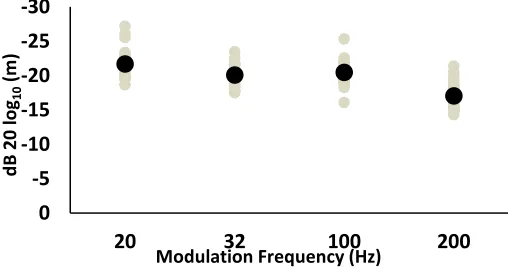
Figure 3.1: Individual (grey circles) and mean amplitude modulation thresholds (20, 32, 100 and 200 Hz) for adults.
-30 -25 -20 -15 -10 -5 0
20 32 100 200
d B 20 lo g10 (m )
Figure 3.1 shows adults thresholds, in dB, as a function of modulation frequency (20, 32, 100, and 200 Hz). Adult participants showed better thresholds at the slower modulation frequency (20 Hz) compared to the faster modulation frequency (200 Hz). An
RMANOVA was carried out on modulation thresholds at different frequencies (20, 32, 100 and 200 Hz). There were significant differences in thresholds at different amplitude modulation frequencies [F (3, 87) = 45.87, p < 0.001]. A Bonferroni-corrected Post-Hoc analysis showed that the mean threshold at 20 Hz were significantly better compared to 32 Hz [ t (29) = -1.60, p = 0.009], 100 Hz [ t (29) = -1.24, p = 0.038] and 200 Hz [ t (29) = -4.64, p < 0.001]. Similarly, thresholds at 32 Hz was significantly better than 200 Hz [ t (29) = -3.04, p < 0.001]. Thresholds at 100 Hz were significantly better compared to 200 Hz [ t (29) = -3.40, p < 0.001]. In contrast, there were no significant differences in thresholds between 32 Hz and 100 Hz [ t (29) = 0.364, p > 0.05]. As reported in the literatures (Hall & Grose, 1992; Lorenzi et al., 2000; Peter et al., 2014), amplitude modulation thresholds for adults from the present study showed a clear low-pass
characteristic i.e. better thresholds at the slower modulation frequency (20 Hz) and poor thresholds at the faster modulation frequency (200 Hz). Children were only tested with two frequencies (20 and 200 Hz) to avoid fatigue and inattentiveness.
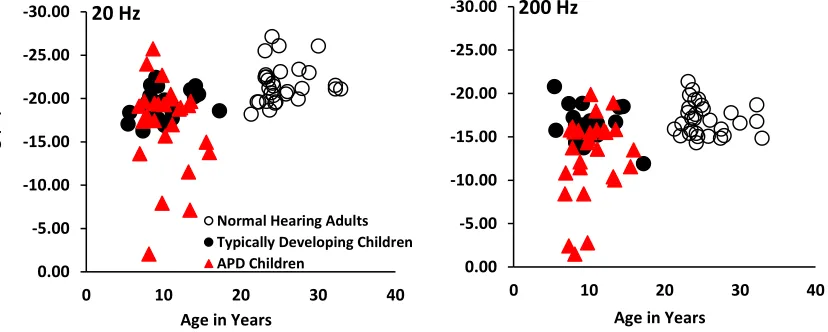
Figure 3.2:Amplitude modulation threshold at 20 and 200 Hz as a function of age in years for children with APD (red filled triangle), typically developing children (black filled circle) and normal hearing adults (unfilled black circle), respectively.
-30.00 -25.00 -20.00 -15.00 -10.00 -5.00 0.00
0 10 20 30 40
Age in Years 200 Hz -30.00 -25.00 -20.00 -15.00 -10.00 -5.00 0.00
0 10 20 30 40
Age in Years 20 Hz
Normal Hearing Adults Typically Developing Children APD Children
d
B 20 l
o
g (
m
Figure 3.2 shows individual amplitude modulation thresholds (in dB) at 20 and 200 Hz for children with APD, typically developing children and adults. The effect of age on modulation thresholds at 20 Hz and 200 Hz was assessed by the Pearson’s Coefficient correlation between all groups. None of the groups showed significant association
between age and amplitude modulation detection thresholds. Children with APD: 20 Hz [ r (28) = 0.18, p = 0.35] and 200 Hz [ r (28) = -0.256, p = 0.19]; typically developing children: 20 Hz [ r (22) = -0.28, p = 0.21] and 200 Hz [ r (22) = 0.387, p = 0.08]; Adults: 20 Hz [ r (30) = -0.17, p = 0.36] and 200 Hz [ r (30) = 0.14, p = 0.47]. A repeated
measure analysis of variance (RMANOVA) was carried out with modulation frequency (20 and 200 Hz) as a within subjects factor and group (children with APD, typically developing children and adults) as a between subjects factor. All three groups showed better thresholds at 20 compared to 200 Hz [ F (1, 77) = 143.414, p < 0.001]. There were significant differences in modulation thresholds between groups [ F (2, 77) = 16.511, p < 0.001]. A Bonferroni-corrected Post-Hoc analysis showed that mean thresholds at 20 and 200 Hz for children with APD were significantly poorer compared to typically
developing children [ t (79) = 3.50, p = 0.002] and adults [ t (79) = 5.68, p < 0.001]. However, there were no significant differences in thresholds between typically
developing children and adults [ t (79) = -1.76, p = 0.246]. There was also no significant interaction between groups and modulation frequencies [ F (2, 77) = 2.393, p = 0.098].
3.3.3
WIN scores
0 5 10 15 20 25 30 35
Right Left Right Left Right Left
W
IN
Score
s
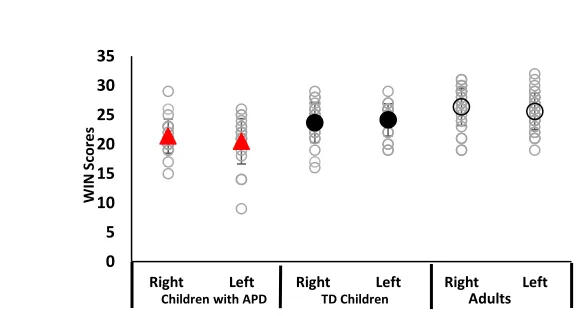
Figure 3.3:Individual (unfilled grey circles) and mean WIN scores (right and left ears) for children with APD (red filled triangle), typically developing children (black filled circle) and adults (unfilled black circle).
Figure 3.3 shows the WIN scores for individual participants between right and left ear. The WIN scores of all children (children with APD and typically developing children) and twenty adults with English as first language were included in the analysis. A repeated measure analysis of variance (RMANOVA) was carried out with Word in Noise score (right and left ear) as a within subject factor and group (children with APD, typically developing children and adults) as a between subject factor. There were significant differences in scores between groups [ F (2, 69) = 17.880, p < 0.001], but there was no significant interaction between WIN scores and groups [F (2, 69) = 1.568, p = 0.216]. A Bonferroni-corrected Post-hoc analysis showed that the WIN scores of children with APD were significantly poorer compared to typically developing children [t (69) = -2.95, p = 0.006] and adults [t (69) = -5.25, p < 0.001]. Typically developing children showed
significantly poorer WIN scores compared to adults [t (69) = 2.29, p = 0.03]. There were no significant differences in WIN scores between ears [F (1, 69) = 1.714, p = 0.195].
3.3.4
Correlation between age and WIN scores
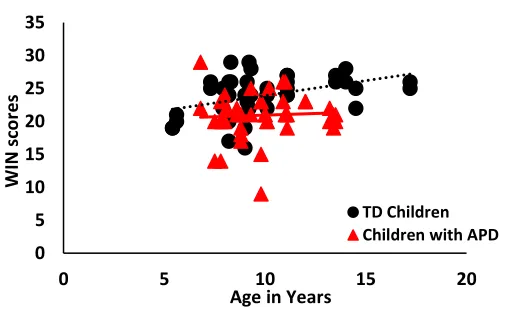
Figure 3.4:Correlation between age and WIN scores for children with APD (red filled triangles) and typically developing children (black filled circle). X-axis denotes the age in years and y-axis represents the WIN scores.
0 5 10 15 20 25 30 35
0 5 10 15 20
W
IN sco
res
Age in Years
Figure 3.4 illustrates the correlation of age and WIN scores (right and left ears) for children with APD and typically developing children. The correlation between age and WIN scores were examined using the Pearson correlation coefficient. Typically
developing children showed a significant correlation between age and WIN score [ r (42) = -0.488, p = 0.001]. In contrast, children with APD reported an insignificant correlation between age and WIN scores [ r (44) = – 0.0007, p = 0.10].
3.3.5
Correlation between WIN scores and AM thresholds
Figure 3.5: Plot of correlation between modulation threshold at 20 and 200 Hz and WIN scores (right ear), respectively. Children with APD (red filled triangle), typically
developing children (black filled circle) and adults (unfilled black circle) are shown.
Figure 3.5 shows amplitude modulation thresholds at 20 and 200 Hz as a function of WIN scores (only right ear). The association between amplitude modulation thresholds and WIN scores was examined using the Pearson correlation coefficient. Children with APD showed no significant association between amplitude modulation thresholds and WIN scores at 20 Hz [ r (22) = -0.312, p = 0.157] and 200 Hz [ r (22) = -0.259, p = 0.245]. Typically developing children did not show any association between amplitude modulation thresholds and WIN scores at 20 Hz [ r (21) = -0.131, p = 0.57] and 200 Hz [ r (21) = 0.014, p = 0.955]. Adults showed a significant association between 200 Hz and
10 15 20 25 30 35 -35 -25 -15 -5
dB 20 log (m) 20 Hz
Adults TD Children Children with APD
15 20 25 30 35 -30 -25 -20 -15 -10 -5
WIN score [ r (20) = -0.517, p = 0.02] but there was no significant association between 20 Hz and WIN scores [ r (20) = -0.151, p = 0. 525].
3.4
Discussion
The perception of amplitude modulation was studied in children with APD, typically developing children and adults. There were no significant differences in hearing thresholds and oto-acoustic emissions between groups indicating normal peripheral function in all listeners.
For all three groups, modulation thresholds were significantly better at 20 Hz compared to 200 Hz. This result is similar to previous findings (Moore, 2008; Fullgrabe, Harland, Sek & Moore, 2017) which suggest that the nature of the human auditory system possesses an upper frequency limit in which neural synchrony (phase locking) becomes inefficient (Verschooten & Joris, 2014). Although the exact frequency limit is still unknown, the nature of our auditory system does not allow amplitude modulation to be processed efficiently at higher frequency rates. Hence, it is reasonable to suggest that thresholds at 20 Hz is significantly better since phase locking to individual cycles of amplitude modulation is possible without losing any vital information. However, at a faster modulation frequency (i.e. 200 Hz), there are more individual cycles which leads to incompetent neural synchrony. As a result, the ability to process auditory information becomes more challenging which results in poorer threshold (Wijk, Beek, &
Daffertshofer, 2012)
It has been suggested that sensitivity to slow amplitude modulation (< 8 Hz) may take up to 9-10 years of age to mature compared to amplitude modulation frequency greater than 8 Hz (Banai, Sabin, & Wright, 2011; Hall & Grose, 1994; Peter et al., 2014). Several researchers have speculated that this argues for different maturational trajectories in the auditory system in response to different acoustic stimuli (Keller & Cowan, 1994; Gomes, Ritter, Tartter, Vaughan, & Rosen, 1997). Furthermore, other studies have reported that the human auditory cortex continues to develop into teenage years (Sussman,
thresholds (20 and 200 Hz) between typically developing children and adults. Both groups did not show significant association between age and amplitude modulation thresholds. It can be inferred from the present study results that the 20 Hz and 200 Hz amplitude modulation thresholds are mature in children aged between 5 – 17 years. It is difficult to compare findings from the present to the literature due to differences in the stimuli and amplitude modulation frequency.
Similar to adults and typically developing children, APD children showed better
thresholds at 20 Hz compared to 200 Hz. Amplitude modulation thresholds at 20 and 200 Hz for children with APD were significantly poor compared to typically developing children. Despite the poor sensitivity in children with APD, the shape (better thresholds at 20 Hz compared to 200 Hz) was similar among three groups. These results may indicate that mechanism that encodes temporal envelope is developed in children with APD. However, the central auditory system of APD children is not efficient enough to process the encoded information.
Previous studies have reported a deficit in non-speech auditory discrimination in APD children. Allan (2011) examined level, spectral and temporal encoding in children who were referred for auditory processing. Both non-APD (clinically referred children who did not qualify for APD diagnosis) and APD children showed a deficit in processing spectral and temporal cues but the processing of level was similar among groups. Similarly, Ludwig et al (2014) reported that both non-APD and APD children showed a deficit in spectral, temporal and binaural processing of acoustic stimuli. But the level coding was not affected in these children. Since this current study also examines temporal processing similar to previous studies (Allan, 2011; Ludwig et al., 2014) mentioned above, the finding of significantly poorer thresholds in children with APD can be
explained by a possible deficit in their temporal processing. The ability to accurately and efficiently process temporal cues is crucial in order to learn new information and provide necessary information for higher level processing. When these children with APD
unfamiliar information, may pose a very difficult environment for children with APD. Furthermore, their ability to follow conversations and instructions may also be
compromised, leading to confusion and misinformation. As a result, a large number of children with APD often have poorer academic performance. In combination, we may suggest that children with APD demonstrated poor ability to extract temporal envelope cues which could be a contributing reason for poor speech recognition in noisy
environment.
Literature on the development of speech perception in noise suggests that children’s speech recognition in speech-shaped noise matures earlier (~ 10 years of age) compared to speech recognition in presence of multi-talker babble (> 14 years of age) (Corbin, Bonino, Buss, & Leibold, 2016; Leibold, 2017). The prolonged maturation of recognizing speech in presence of multi-talker babble is thought to be due to an immature glimpsing ability in children (Leibold, 2017). In the present study, the WIN test required the listener to repeat a word in presence of the background multi-talker babble. The WIN scores of typically developing children were significantly poorer when compared to adults. Typically developing children showed significant association between age and WIN scores. These results indicate that the ability of typically developing children to recognize speech in multi-talker babble is still immature. In contrast, children with auditory
processing disorder did not show significant improvement in WIN scores as a function of age. As a group, WIN scores of APD children were significantly poor compared to typically developing children and adults. These results provide evidence of a speech in noise deficit in APD children and may explain some of their listening complaints.
(Muchnik et al., 2004). Cacace & McFarland (1996) have identified that children with APD have increased challenges in understanding speech in less than optimal
environments. Similarly, children with dyslexia have also been found to have poor modulation thresholds and speech recognition scores (Rocheron, Lorenzi, Füllgrabe, & Dumont, 2002).
Since the ability to extract temporal envelope is an important part of speech recognition, it is important to understand how these acoustic stimuli are processed. Children with APD struggle to listen efficiently in less than optimal situations. This challenge often hinders their performance in school and results in academic failure. However, there is a lack of agreement for the appropriate criteria for APD identification since the difficulties faced by these individuals are also seen in other neurodevelopmental disorders (Wit et al., 2018). The etiology of this disorder is still uncertain, but many researchers have predicted it could be due to ear infections and premature births (Borges, Paschoal, & Colella-Santos, 2013; Gallo, Diaz, & Pereira, 2011). There is a large selection of test batteries available, but no specific tests are recognized as universal for APD identification. Under these circumstances, no valid approach has been established and many studies still attempt to find its identity (Wit et al., 2018; Dawes & Bishop, 2010; Ferguson, Hall, Riley, & Moore, 2011). However, we believe using non-speech-based test is ideal since listeners can come from a diversified background and it can avoid the possibility of language as a potential factor to influence the overall thresholds (Dawes, 2008).
3.5
Conclusion
The WIN test showed that the typically developing children have immature ability to recognize speech in multi-talker babble. The WIN test results showed direct evidence of speech recognition in noise deficit in APD children.
This study has demonstrated that it may be advantageous to add this non-speech based test as an additional measure to examine temporal processing deficits. In combination, this psychoacoustic test can be included as part of the auditory processing evaluation to examine temporal processing abilities. In general, psychoacoustic tests are administered using expensive research grade equipment by researchers who possess advanced
programming skills. Since these tests are typically conducted at a laboratory setting, clinicians may not have many opportunities to administer these tests in clinics. Aside from the lack of accessibility to this equipment, an alternative explanation could be due to the expensive cost of this testing system. It can be considered as an impractical purchase for the purpose of one psychoacoustic measure when other commercial test batteries are readily available. Hence, researchers at Western University have
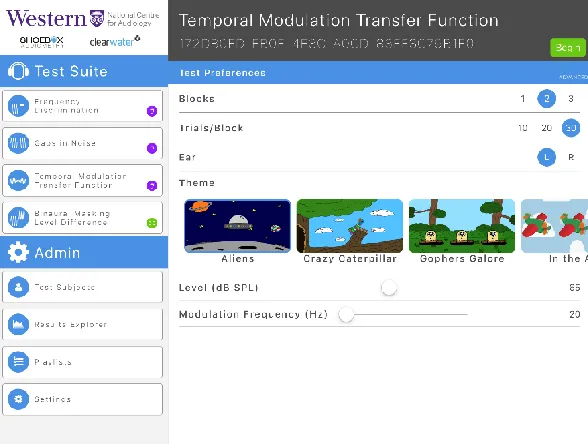
collaborated with Clearwater Clinical and SHOEBOX Audiometry to implement an affordable and portable device with psychoacoustic measures that can be tested outside of sound booths. While this project is currently under development, we believe this potential device can be considered as a low cost alternative for clinicians. In addition, more
psychoacoustic tests (i.e. Temporal Modulation Transfer Function, Frequency
Modulation, Gap Detection Threshold and Binaural Masking Level Difference) can be implemented onto this portable device in which clinicians can easily administer multiple tests in one session.
3.6
Reference
Allen, P., & Allan, C. (2011). Acoustic Signal Encoding in Children with Auditory
Processing Disorders (Unpublished doctoral dissertation). University of Western
Ontario. Retrieved February 21, 2018.
Allen, P., & Allan, C. (2014). Auditory processing disorders: Relationship to cognitive
processes and underlying auditory neural integrity. International Journal of
American Speech-Language-Hearing Association. (2005a). (Central) auditory processing disorders [Technical Report]. Retrieved from ASHA website:
htpp://www.asha.org/policy.
ANSI S3.6-1996. Specifications for Audiometers.
Banai, K., Sabin, A. T., & Wright, B. A. (2011). Separable developmental trajectories for
the abilities to detect auditory amplitude and frequency modulation. Hearing
Research, 280(1-2), 219-227.
Borges, L., Paschoal, J., & Colella-Santos, M. (2013). (Central) Auditory Processing: The
impact of otitis media. Clinics, 68(7), 954-959.
Cacace, A. T., & Mcfarland, D. J. (1996). Central Auditory Processing Disorder in
School-Aged Children. Journal of Speech Language and Hearing Research,
41(2), 355.
Chermak, G. D., and Musiek, F. E. (1997). Central Auditory Processing Disorders: New
Perspectives. San Diego, CA: Singular Publishing Group, Inc.
Corbin, N. E., Bonino, A. Y., Buss, E., & Leibold, L. J. (2016). Development of Open-Set Word Recognition in Children. Ear and Hearing, 37(1), 55-63.
Dawes, P., & Bishop, D. V. (2008). Maturation of Visual and Auditory Temporal
Processing in School-Aged Children. Journal of Speech, Language, and Hearing
Research,51(4), 1002-1015.
Dawes, P., & Bishop, D. V. (2010). Psychometric profile of children with auditory processing disorder and children with dyslexia. Archives of Disease in Childhood, 95(6), 432-436.
Ferguson, M. A., Hall, R. L., Riley, A., & Moore, D. R. (2011). Communication,
Listening, Cognitive and Speech Perception Skills in Children with Auditory
Processing Disorder (APD) or Specific Language Impairment (SLI). Journal of
Füllgrabe, C., Harland, A. J., Sęk, A. P., & Moore, B. C. (2017). Development of a
method for determining binaural sensitivity to temporal fine
structure. International Journal of Audiology,56(12), 926-935.
Gallo, J., Diaz, K. Z., & Pereira, L. D. (2011). Auditory processing evaluation in children
born preterm. Jornal Da Sociedade Brasileira De Fonoaudiologia, 23 (2),
95-101.
Gomes, H., Ritter, W., Tartter, V. C., Vaughan, H. G., & Rosen, J. J. (1997). Lexical processing of visually and auditorily presentend nouns and verbs: evidence from reaction time and N400 priming data. Cognitive Brain Research, 6, 121-134.
Hall, J. W., & Grose, J. H. (1994). Development of temporal resolution in children as measured by the temporal modulation transfer function. The Journal of the Acoustical Society of America, 96(1), 150-154.
Hind, S. E., Haines-Bazrafshan, R., Benton, C. L., Brassington, W., Towle, B., & Moore,
D. R. (2011). Prevalence of clinical referrals having hearing thresholds within
normal limits. International Journal of Audiology,50(10), 708-716.
Katz, J. (1962). The Use of Staggered Spondaic Words for Assessing the Integrity of the Central Auditory System. Journal of Auditory Research, 2, 327-337.
Keller, T. A., & Cowan, N. (1994). Developmental increase in the duration of memory for tone pitch. Developmental Psychology, 30(6), 855-863.
Leibold, L. J. (2017). Speech Perception in Complex Acoustic Environments:
Developmental Effects. Journal of Speech Language and Hearing Research,
60(10), 3001
Levitt, H. (1971). Transformed Up‐Down Methods in Psychoacoustics. The Journal of the Acoustical Society of America, 49(2B), 467-477.
Lorenzi, C., Dumont, A., & Fu¨llgrabe, C. (2000). Use of Temporal Envelope Cues by
Children With Developmental Dyslexia. Journal of Speech Language and
Hearing Research, 43(6), 1367.
Ludwig, A. A., Fuchs, M., Kruse, E., Uhlig, B., Kotz, S. A., & Rübsamen, R. (2014).
Auditory Processing Disorders with and without Central Auditory Discrimination
Deficits. Journal of the Association for Research in Otolaryngology,15(3),
441-464.
Moore, D. R. (2006). Auditory processing disorder (APD)—Potential contribution of
mouse research. Brain Research,1091(1), 200-206.
Moore, B. C. (2008). The Role of Temporal Fine Structure Processing in Pitch
Perception, Masking, and Speech Perception for Normal-Hearing and
Hearing-Impaired People. Journal of the Association for Research in Otolaryngology,9(4),
399-406.
Moore, J. K., & Linthicum, F. H. (2007). The human auditory system: A timeline of development. International Journal of Audiology, 46(9), 460-478.
Moore, D. R., Cowan, J. A., Riley, A., Edmondson-Jones, A. M., & Ferguson, M. A.
(2011). Development of Auditory Processing in 6- to 11-Yr-Old Children. Ear
and Hearing,32(3), 269-285.
Moore, D. R., Rosen, S., Bamiou, D., Campbell, N. G., & Sirimanna, T. (2012). Evolving
concepts of developmental auditory processing disorder (APD): A British Society
of Audiology APD Special Interest Group ‘white paper’. International Journal of
Audiology,52(1), 3-13.
Moore, D. R., Ferguson, M. A., Edmondson-Jones, A. M., Ratib, S., & Riley, A. (2010).
Nature of Auditory Processing Disorder in Children. Pediatrics, 126(2).
Muchnik, C., Roth, D. A., Othman-Jebara, R., Putter-Katz, H., Shabtai, E. L., &
Function in Children with Auditory Processing Disorders. Audiology and
Neurotology, 9(2), 107-114.
Musiek, F. (1994). Frequency (Pitch) and Duration Pattern Tests. Journal of the
American Academy of Audiology, (5) 265-268.
Peter, V., Wong, K., Narne, V. K., Sharma, M., Purdy, S. C., & Mcmahon, C. (2014). Assessing Spectral and Temporal Processing in Children and Adults Using Temporal Modulation Transfer Function (TMTF), Iterated Ripple Noise (IRN) Perception, and Spectral Ripple Discrimination (SRD). Journal of the American Academy of Audiology, 25(2), 210-218.
Rocheron, I., Lorenzi, C., Füllgrabe, C., & Dumont, A. (2002). Temporal envelope perception in dyslexic children. NeuroReport, 13(13), 1683-1687.
Rosen, S. (1992). Temporal Information in Speech: Acoustic, Auditory and Linguistic Aspects. Philosophical Transactions of the Royal Society B: Biological Sciences, 336(1278), 367-373.
Shannon, R. V., Zeng, F., Kamath, V., Wygonski, J., & Ekelid, M. (1995). Speech
Recognition with Primarily Temporal Cues. Science,270(5234), 303-304.
Sussman E., Steinschneider M., Gumenyuk V., Grushko J., Lawson K. (2008). The maturation of human evoked brain potentials to sounds presented at different stimulus rates. Hear. Res. 236, 61–79.
Thompson, N. C., Cranford, J. L., & Hoyer, E. (1999). Brief-Tone Frequency
Discrimination by Children. Journal of Speech Language and Hearing Research,
42(5), 1061.
Verschooten, E, and Philip X. J. (2014) Estimation of Neural Phase Locking from
Stimulus-Evoked Potentials. Journal of the Association for Research in
Viemeister, N. F. (1979). Temporal modulation transfer functions based upon modulation thresholds. The Journal of the Acoustical Society of America, 66(5), 1364-1380.
Wilson, R. H., Abrams, H. B., & Pillion, A. L. (2003). A word-recognition task in
multitalker babble using a descending presentation mode from 24 dB to 0 dB
signal to babble. The Journal of Rehabilitation Research and Development,40(4),
321.
Wijk, B. C., Beek, P. J., & Daffertshofer, A. (2012). Neural synchrony within the motor system: What have we learned so far? Frontiers in Human Neuroscience, 6.
Wit, E. D., Dijk, P. V., Hanekamp, S., Visser-Bochane, M. I., Steenbergen, B., Schans, C.
Chapter 4
4
Psychometric Function
Psychophysical experiments are designed to measure the ability of the listener to
discriminate changes to a physical stimulus (Shen, 2013). In general, as the magnitude of the change increases, the probability of detecting the change will increase as well.
Psychometric functions can be used to describe the listeners’ sensitivity to stimulus characteristics. A psychometric function is a sigmodal function that can describe
perceptual accuracy, giving a measure of threshold and slope (Shen, 2013). The threshold is estimated at a certain percent correct performance on the fitted psychometric function. The slope parameter of the psychometric function describes the rate of the change in performance as the signal is changed. A large value in slope indicates a shallower function with a quick rise to 100 % correct detection as the signal value is increased. In contrast, a small value in slope represents a gradual increase to reach 100% correct detection as the signal difference is increased (Allen & Wightman, 1994).
In general, a psychometric function can provide information in regards to the detection process. It describes the relationship between the correct percent of detection to the signal level in a detection task (Dai, 1995). Overall, the psychometric function shows the shape of a sigmoidal function and it can be fitted by a variety of functions (Weibull, Logistic, Gaussian and Gumbel) (Zychaluk & Foster, 2010) depending on the number of signal levels and data trials (Wichmann & Hill, 2001). In most forced choice tasks, the threshold is often taken at the signal level predicted to produce 70.7% correct performance (Leek, 2001). A larger signal level required to reach a 70.7% correct detection equates to a poorer performance.
Green & Swets (1966) have identified that the slopes in auditory detection tasks for the adults remain relatively similar, with small variability. However, thresholds change rapidly with decreasing age. As suggested by Allen and Wightman (1994), the low
subjects. The larger variability in thresholds from children can be due to non-auditory factors such as inattention, fatigue or differences in developmental rates (Peter, Narne, Sharma, Purdy, & Mcmahon, 2014). A few studies have speculated that it can be due to the child’s inability to switch among sensory cues, reduced listening efficiency and inattentiveness to relevant cues (Allen, Wightman, Kistler, & Dolan, 1989; Hall & Grose, 1994; Sutcliffe & Bishop, 2005). As a result, it is impossible to use children’s grouped data to accurately represent their individual performance. Of the few studies that have reported psychometric functions in children, reports are sometimes conflicting. For example, Olsho et al. (1988) concluded that the psychometric functions in typically developing children are significantly shallower with poorer thresholds compared to adults. However, Trehub et al. (1986) have shown psychometric functions and slopes of children that are similar to adults.
4.1
Adaptive and Non-Adaptive procedures
A non-adaptive descending-ascending procedure can be used to estimate an underlying psychometric function. The descending-ascending procedure begins with a large difference between the target and the standard signal to ensure listeners are able to recognize the target signal. Typically, multiple runs are required since many trials are needed for this procedure. Several pre-determined signal levels (e.g. modulation depths) that do not depend on the previous trial are chosen for each track (Simpson, 1989). In order to set the predetermined modulation depths, a preliminary study is necessary to choose the appropriate modulation depths to test. Each modulation depth is presented an x number of times and the proportion of responses to the number of presentations is
obtained for each depth. One advantage of using the non-adaptive procedure is that the number of trials are pre-set to ensure uniform placement of the modulation depths to decrease the chance of bias and variability in threshold estimate. It also provides information on a listener’s response to a wide range of stimuli.
value to estimate the threshold. While less energy and time is needed, the adaptive method sacrifices the possibility of losing information presented outside the range of modulation depths and results in psychometric functions that are stable in both slopes and thresholds over successive trials.
4.1.1
Need for the study
Compared to adults, there are insufficient studies that have examined the amplitude modulation detection process in children using psychometric functions as the dependent variable. In addition, there is no published data of psychometric functions on children with APD. Given this gap in knowledge, it is of interest to examine the psychometric functions between children with APD, typically developing children and adults. Since chapter 3 has shown significantly poorer AM thresholds for children with APD compared to typically developing children and adults, it was hypothesized that the psychometric function will reveal a poor modulation detection in children with APD. We predicted that children with APD will have a shallower slope compared to typically developing children and adults.