Deep learning and machine learning in
hy-drological processes climate change and earth
systems a systematic review
Sina Ardabili1, Amir Mosavi2,3*
,Majid Dehghani4,Annamaria R. Varkonyi-Koczy2,5
1Institute of Advanced Studies Koszeg, Koszeg, Hungary
2Kalman Kando Faculty of Electrical Engineering, Obuda University, Budapest, Hungary
3School of the Built Environment, Oxford Brookes University, Oxford OX3 0BP, UK 4Technical and Engineering Department, Faculty of Civil Engineering, Vali-e-Asr
Univer-sity of Rafsanjan, Rafsanjan, Iran
5Department of Mathematics and Informatics, J. Selye University, Komarno, Slovakia
Abstract. Artificial intelligence methods and application have re-cently shown great contribution in modeling and prediction of the
hydrological processes, climate change, and earth systems. Among
them, deep learning and machine learning methods mainly have
re-ported being essential for achieving higher accuracy, robustness,
ef-ficiency, computation cost, and overall model performance. This
paper presents the state of the art of machine learning and deep
learning methods and applications in this realm and the current
state, and future trends are discussed. The survey of the advances in
machine learning and deep learning are presented through a novel
classification of methods. The paper concludes that deep learning is
still in the first stages of development, and the research is still
pro-gressing. On the other hand, machine learning methods are already
established in the fields, and novel methods with higher
perfor-mance are emerging through ensemble techniques and
hybridiza-tion.
Keywords: Machine learning, deep learning, big data, hydrology, climate change, global warming, hydrological model, earth
sys-tems
Nomenclatures
Artificial neural network ANN Random forest RF
Extreme learning machine ELM Deep feedforward neural net-work
DFNN
Machine learning ML Recurrent neural network RNN
Support vector machine SVM Partial least squares PLS
Wavelet neural networks WNN Discriminant analysis DA
Deep learning DL Principal component analysis PCA
Autoregressive integrated moving average
ARIMA Linear discriminant analysis LDA
Feed-forward neural net-works
FFNN Support vector regression SVR
Multi layered perceptron MLP Least-squares LS
Decision tree DT Sparse Bayesian SB
Response surface methodol-ogy
RSM Standard precipitation evapo-transpiration index
SPEI
Back propagation neural net-work
BPNN Genetic programming GP
Gradient boosting decision tree
Adaptive neuro fuzzy infer-ence system
ANFIS Moderate Resolution Imaging Spectroradiometer
MODIS
Central processing unit CPU Reduced order model ROM
Fire-fly algorithm FA wise step fire-fly algorithm WSSFA
Deep neural network DNN Deep belief networks DBN
1 Introduction
Studying the hydrological processes, climate change and earth systems are of
utmost importance to expand knowledge and insight into the universe [1]. Thus,
advancing the accurate models of the earth’s various phenomena and systems
have been the center of attention [2]. Physical models have a long tradition in
simulation, understanding, and prediction of the hydrological processes, climate
change, and earth systems [3-7]. Physical models are used worldwide as the
trustworthy systems to study the environmental phenomena, climate behavior,
atmospheric and hydrological systems, and further study of the natural hazards,
extreme events, and ecosystems [8-11]. Statistical models, including the time
series analysis form another major popular group of modeling techniques widely
used by scientists for studying the earth systems and deliver insight on climate
change and hydrological related events [12-18].
Various drawbacks are associated with physical and statistical models [19-21].
Among them, the accuracy, weakness in uncertainty analysis, high computation
cost, and the need for a comprehensive amount of data, have been highlighted in
the literature [22, 23]. Machine learning and deep learning methods have seen to
tackle these shortcomings very well through their efficient computation and
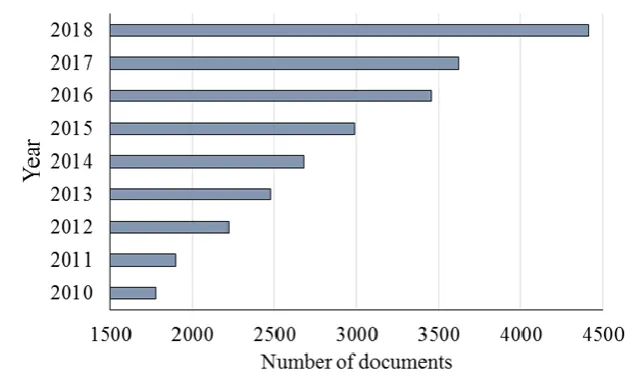
very popular among the research communities [30-46]. Figure.1 represents the
rapid progress of machine learning and deep learning in hydrological processes,
climate change, and earth systems research and their subfields. The progressing
domination of these intelligent methods is apparent. Thus, studying the novel
methods and identifying the trend in using and advancement of these methods
would be essential.
Fig. 1. The rapid growth of using machine learning and deep learning for modeling and prediction of the hydrological processes, climate change and
earth systems (source: web of science)
Literature includes a number of review papers on machine learning and
deep learning methods [30-46]. There exists a number of papers where the
How-ever, there is a gap in investigating the algorithmic advancements and
appli-cation domains considering the hydrological processes, climate change, and
earth systems. Consequently, the contribution of this paper is set to present
the state of the art of machine learning and deep learning methods used for
modeling the above-mentioned systems and identify the application areas.
2 Machine learning methods
In this section, the machine learning methods have been classified into the
following popular subsections, i.e., tree-based, support vector-based, neural
net-work-based, and hybrids and ensembles. Further, there are investigated
accord-ing to their popularity and applications domains. The summary of the methods
are provided in the tables bellow and methods are reviewed according to their
efficiency and accuracy
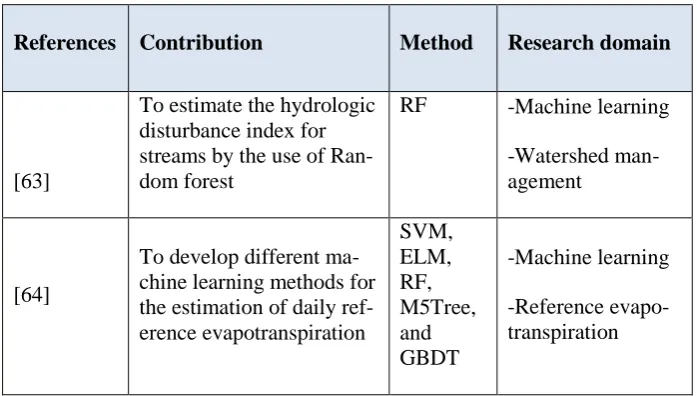
Table 1. Top studies developed by ML methods in hydrology
References Contribution Method Research domain
[63]
To estimate the hydrologic disturbance index for streams by the use of Ran-dom forest
RF -Machine learning
-Watershed man-agement
[64]
To develop different ma-chine learning methods for the estimation of daily ref-erence evapotranspiration
SVM, ELM, RF, M5Tree, and GBDT
-Machine learning
[65]
To develop ML methods for the prediction of the wheat production yield in the presence of satellite and climate data
RF, ANN, and SVM -Machine learning -Hydrological data [66]
To develop ML methods for the estimation of the atmospheric daily pollen concentration
RF and ANN
-Machine learning
-Daily pollen con-centration
[67]
To develop ML methods for the prediction of water flow forecasting as a hy-drological parameter MLP, SVR, RBF, and ANFIS -Machine learning -Hydrologic pa-rameter [68]
To develop an innovative ML method for the predic-tion of daily solar radia-tion (monthly average val-ues)
ELM- MODIS
-Machine learning
-Daily solar radia-tion
Fox and Magoulick [63] developed a study to estimate the hydrologic
disturb-ance index for streams by the use of Random forest in the presence of fish
community and hydrologic data and landscape metrics for gaged streams as the
training dataset. RF has been introduced as one of the effective methods for this
task. RF also has been proposed in a study by Fan et al. [64], who developed
SVM and ELM methods in comparison with different tree-based ensemble
methods for the estimation of daily reference evapotranspiration in the presence
of meteorological data. Tree-based ensemble methods included RF, M5tree,
gradient boosting decision tree, and extreme gradient boosting. Evaluations have
been performed using determination coefficient, root means a square error and
means absolute error. Based on comparisons, RF could provide a higher accuracy
In another study, Cai et al. [65] developed different ML methods for the
prediction of wheat production yield by integrating hydrological data, including
satellite and climate data. This study also could successfully present a
comparison of the performance of methods using the determination coefficient.
Methods included the least absolute shrinkage and selection operator, RF, ANN,
and SVM. In all datasets, the highest determination coefficient value was owned
by SVM followed by RF. Zewdie et al. [66] developed ML methods including
RF and ANN for the prediction of atmospheric daily pollen concentration for the
comparison with next-generation weather radar. Comparisons have been
performed using correlation coefficient values. Based on results, RF and ANN
could provide similar performance in the prediction of target values with a high
correlation coefficient value.
Kovačević et al. [67] developed a study for the prediction of water flow using
MLP, SVR, RBF, and ANFIS methodologies. Evaluation of results and
comparison of the performance of methods have been performed using the
employment of root mean square error, mean absolute error, and determination
coefficient. The best method was ANFIS, followed by SVR with a linear kernel.
Ghimire et al. [68] developed a novel ML method entitled the integrated
ELM-MODIS. The proposed method has been compared with basic ELM, GP,
ANN-GA, ANN-PSO, GA-SVR, and online sequential ELM methods in terms of
determination coefficient, root mean square error and mean absolute error. Based
on the results, the proposed method could significantly increase the estimation
performance followed by hybrid GA-SVR and hybrid ANN-GA methods. The
overall detailed results in terms of accuracy, reliability, and sustainability have
been presented in table 2 for further considerations and applications.
Table 2. the comparison results of ML-based methods in hydrology
Method Application
Accu-racy
Reliability
Sustainabil-ity
Reference
RF Estimation ++ ++ ++ [63]
RF Estimation +++ ++ ++ [64]
M5Tree Estimation ++ + + [64]
ELM Estimation + + + [64]
SVM Estimation +++ +++ ++ [65]
RF Estimation ++ ++ + [65]
NN Estimation ++ + + [65]
RF Estimation ++ ++ + [66]
ANN Estimation ++ ++ + [66]
SVR-Linear
kernel
Estimation ++ ++ ++ [67]
RBF Estimation ++ ++ + [67]
MLP Estimation ++ + + [67]
ELM-MODIS Estimation +++ +++ +++ [68]
GA-SVR Estimation ++ ++ ++ [68]
ANN-GA Estimation ++ ++ + [68]
3 Deep learning methods
Deep learning techniques are considered as a significant part of ML methods
based on ANN. DL techniques have been widely applied in analyzing,
estimating, designing, filtering, processing, recognition, and detection tasks. The
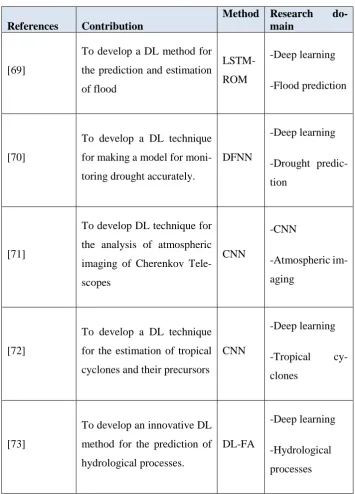
Table 3. Top studies developed by DL techniques in hydrology
References Contribution
Method Research do-main
[69]
To develop a DL method for
the prediction and estimation
of flood LSTM-ROM -Deep learning -Flood prediction [70]
To develop a DL technique
for making a model for
moni-toring drought accurately.
DFNN
-Deep learning
-Drought
predic-tion
[71]
To develop DL technique for
the analysis of atmospheric
imaging of Cherenkov
Tele-scopes CNN -CNN -Atmospheric im-aging [72]
To develop a DL technique
for the estimation of tropical
cyclones and their precursors
CNN
-Deep learning
-Tropical
cy-clones
[73]
To develop an innovative DL
method for the prediction of
hydrological processes.
DL-FA
-Deep learning
-Hydrological
Hu et al. [69] developed a novel LSTM integrated by ROM method as an
innovative DL method for the prediction of time-series flooding. This integrated
method could successfully cop with the prediction of Spatio-temporal
distribution of floods because it can use the advantage of both ROM and LSTM
methods. The evaluation of results has been performed using root mean square
error in the presence of different predicted periods. The validation data was
included in the Okushiri tsunami test datasets. This method presented a high
accuracy as well as reducing the cost of CPU. This can increase the sustainability
of the proposed method significantly.
Shen et al. [70] developed DL technique architecture entitled deep
feed-forward neural network for the prediction of SPEI as one of the main factors of
drought in the presence of multi-source remote sensing data. The proposed
method provided a good correlation with meteorological and agricultural
droughts. Evaluating data included SPEI in Henan Province, China, which
indicated a high-performance value.
Shilon et al. [71] developed a convolutional neural network method for the
analysis of aerial imaging of Cherenkov Telescopes. This imaging system has a
significant role in finding very high energy γ-ray emitters. The training phase
was performed using datasets generated from Monte-Carlo simulated events and
testing phase was performed on both measured and simulations data. CNN could
successfully cope with the task with high accuracy. CNN also has been employed
by Matsuoka et al. [72] who developed a CNN technique for the estimation of
tropical cyclones. The training process was performed in the presence of
longwave radiation outgoing during twenty-year simulation which has been
calculated by employing a cloud-resolving global atmospheric simulation. The
Xu et al. [73] integrated deep learning and fire-fly algorithm for training the
SVR method with optimized parameters. Also, the performance of the developed
methods has been compared with other methods in term of determination
coefficient. Based on results, the highest correlation coefficient was owned by
wise step fire-fly based SVR algorithm followed by DLFA based SVR algorithm
in training step, but in testing step the accuracy of DLFA based SVR method has
been significantly reduced. This reduction caused the lowest sustainability index
for this method.
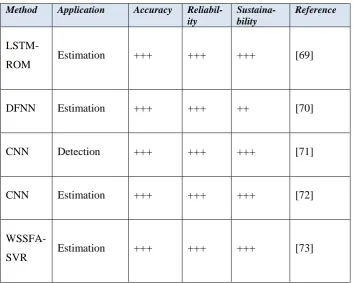
Table 4. the comparison results of DL based methods
Method Application Accuracy
Reliabil-ity
Sustaina-bility
Reference
LSTM-ROM Estimation +++ +++ +++ [69]
DFNN Estimation +++ +++ ++ [70]
CNN Detection +++ +++ +++ [71]
CNN Estimation +++ +++ +++ [72]
DLFA-SVR Estimation ++ + + [73]
FA-SVR Estimation ++ ++ ++ [73]
4 Conclusions
The survey of the advances in machine learning and deep learning are
pre-sented through a novel classification of methods. The paper concludes that deep
learning is still in the first stages of development, and the research is still
pro-gressing. On the other hand, the machine learning methods are already
estab-lished in the fields, and novel methods with higher performance are emerging
through ensemble techniques and hybridization. Similar trends have also been
reported in the other application domains [74-83].
Acknowledgments
This publication has been supported by the Project: "Support of research and
development activities of the J. Selye University in the field of Digital Slovakia
and creative industry" of the Research & Innovation Operational Programme
(ITMS code: NFP313010T504) co-funded by the European Regional
References
1. Taylor, R.G., et al., Ground water and climate change. Nature climate
change, 2013. 3(4): p. 322.
2. Wang, C., et al., Most of the Northern Hemisphere Permafrost Remains
under Climate Change. Scientific reports, 2019. 9(1): p. 3295.
3. Baynes, E.R.C., et al., Beyond equilibrium: Re-evaluating physical
modelling of fluvial systems to represent climate changes. Earth-Science
Reviews, 2018. 181: p. 82-97.
4. Bouhal, T., et al., Technical feasibility of a sustainable Concentrated
Solar Power in Morocco through an energy analysis. Renewable and
Sustainable Energy Reviews, 2018. 81: p. 1087-1095.
5. Carrassi, A., et al., Data assimilation in the geosciences: An overview of
methods, issues, and perspectives. Wiley Interdisciplinary Reviews:
Climate Change, 2018. 9(5).
6. He, C., et al., Review and comparison of empirical thermospheric mass
density models. Progress in Aerospace Sciences, 2018. 103: p. 31-51.
7. Hill, J., H. Buddenbaum, and P.A. Townsend, Imaging Spectroscopy of
Forest Ecosystems: Perspectives for the Use of Space-borne
Hyperspectral Earth Observation Systems. Surveys in Geophysics,
2019. 40(3): p. 553-588.
8. Qin, W., et al., Comparison of deterministic and data-driven models for
solar radiation estimation in China. Renewable and Sustainable Energy
9. Raseman, W.J., et al., Emerging investigators series: A critical review
of decision support systems for water treatment: Making the case for
incorporating climate change and climate extremes. Environmental
Science: Water Research and Technology, 2017. 3(1): p. 18-36.
10. Schenato, L., A review of distributed fibre optic sensors for
geo-hydrological applications. Applied Sciences (Switzerland), 2017. 7(9).
11. Seixas, M., et al., Active bending and tensile pantographic bamboo
hybrid amphitheater structure. Journal of the International Association
for Shell and Spatial Structures, 2017. 58(3): p. 239-252.
12. Aslam, R.A., S. Shrestha, and V.P. Pandey, Groundwater vulnerability
to climate change: A review of the assessment methodology. Science of
the Total Environment, 2018. 612: p. 853-875.
13. Devi, R.M., et al., Understanding the linkages between climate change
and forest. Current Science, 2018. 114(5): p. 987-996.
14. Estévez, J., et al., Introduction to the special issue on
“hydro-meteorological time series analysis and their relation to climate
change”. Acta Geophysica, 2018. 66(3): p. 317-318.
15. Flowers, G.E., Hydrology and the future of the Greenland Ice Sheet.
Nature Communications, 2018. 9(1).
16. Mudelsee, M., Trend analysis of climate time series: A review of
methods. Earth-Science Reviews, 2019. 190: p. 310-322.
17. Murray, N.J., et al., The role of satellite remote sensing in structured
ecosystem risk assessments. Science of the Total Environment, 2018.
18. Rhein, M., Taking a close look at ocean circulation: Ocean circulation
patterns in the North Atlantic provide a benchmark for climate models.
Science, 2019. 363(6426): p. 456-457.
19. Newton, R.J. and J.S. McClary, The flux and impact of wastewater
infrastructure microorganisms on human and ecosystem health. Current
Opinion in Biotechnology, 2019. 57: p. 145-150.
20. Royapoor, M., A. Antony, and T. Roskilly, A review of building climate
and plant controls, and a survey of industry perspectives. Energy and
Buildings, 2018. 158: p. 453-465.
21. Sun, Z., et al., Evaluating and comparing remote sensing terrestrial GPP
models for their response to climate variability and CO 2 trends. Science
of the Total Environment, 2019. 668: p. 696-713.
22. Akpoti, K., A.T. Kabo-bah, and S.J. Zwart, Agricultural land suitability
analysis: State-of-the-art and outlooks for integration of climate change
analysis. Agricultural Systems, 2019. 173: p. 172-208.
23. Lyubchich, V., et al., Insurance risk assessment in the face of climate
change: Integrating data science and statistics. Wiley Interdisciplinary
Reviews: Computational Statistics, 2019. 11(4).
24. Akhter, M.N., et al., Review on forecasting of photovoltaic power
generation based on machine learning and metaheuristic techniques.
IET Renewable Power Generation, 2019. 13(7): p. 1009-1023.
25. Al Tarhuni, B., et al., Large scale residential energy efficiency
26. Mosavi, A., P. Ozturk, and K.W. Chau, Flood prediction using machine
learning models: Literature review. Water (Switzerland), 2018. 10(11).
27. Ponsero, A.J. and B.L. Hurwitz, The promises and pitfalls of machine
learning for detecting viruses in aquatic metagenomes. Frontiers in
Microbiology, 2019. 10(MAR).
28. Shen, C., A Transdisciplinary Review of Deep Learning Research and
Its Relevance for Water Resources Scientists. Water Resources
Research, 2018. 54(11): p. 8558-8593.
29. Zhu, X.X., et al., Deep Learning in Remote Sensing: A Comprehensive
Review and List of Resources. IEEE Geoscience and Remote Sensing
Magazine, 2017. 5(4): p. 8-36.
30. Aram, F., et al., Design and validation of a computational program for
analysing mental maps: Aram mental map analyzer. Sustainability
(Switzerland), 2019. 11(14).
31. Asadi, E., et al., Groundwater Quality Assessment for Drinking and
Agricultural Purposes in Tabriz Aquifer, Iran. 2019.
32. Asghar, M. Z.; Subhan, F.; Imran, M.; Kundi, F.M.; Shamshirband, S.;
Mosavi, A.; Csiba, P.; R. Várkonyi-Kóczy, A. Performance Evaluation
of Supervised Machine Learning Techniques for Efficient Detection of
Emotions from Online Content. Pre-prints 2019, 2019080019 (doi:
10.20944/preprints201908.0019.v1).
33. Bemani, A.; Baghban, A.; Shamshirband, S.; Mosavi, A.; Csiba, P.;
Estimation of Acid Sol-vent Solubility in Supercritical CO2. Preprints
2019, 2019060055 (doi: 10.20944/preprints201906.0055.v2).
34. Choubin, B., et al., Snow avalanche hazard prediction using machine
learning methods. Journal of Hydrology, 2019. 577.
35. Choubin, B., et al., An ensemble prediction of flood susceptibility using
multivariate discriminant analysis, classification and regression trees,
and support vector machines. Science of the Total Environment, 2019.
651: p. 2087-2096.
36. Dehghani, M., et al., Prediction of hydropower generation using Grey
wolf optimization adaptive neuro-fuzzy inference system. Energies,
2019. 12(2).
37. Dineva, A., et al., Review of soft computing models in design and control
of rotating electrical machines. Energies, 2019. 12(6).
38. Dineva, A., et al., Multi-Label Classification for Fault Diagnosis of
Rotating Electrical Machines. 2019.
39. Farzaneh-Gord, M., et al., Numerical simulation of pressure pulsation
effects of a snubber in a CNG station for increasing measurement
accuracy. Engineering Applications of Computational Fluid Mechanics,
2019. 13(1): p. 642-663.
40. Ghalandari, M., et al., Investigation of submerged structures’ flexibility
on sloshing frequency using a boundary element method and finite
element analysis. Engineering Applications of Computational Fluid
41. Ghalandari, M., et al., Flutter speed estimation using presented
differential quadrature method formulation. Engineering Applications
of Computational Fluid Mechanics, 2019. 13(1): p. 804-810.
42. Karballaeezadeh, N., et al., Prediction of remaining service life of
pavement using an optimized support vector machine (case study of
Semnan–Firuzkuh road). Engineering Applications of Computational
Fluid Mechanics, 2019. 13(1): p. 188-198.
43. Menad, N.A., et al., Modeling temperature dependency of oil - water
relative permeability in thermal enhanced oil recovery processes using
group method of data handling and gene expression programming.
Engineering Applications of Computational Fluid Mechanics, 2019.
13(1): p. 724-743.
44. Mohammadzadeh, S., et al., Prediction of Compression Index of
Fine-Grained Soils Using a Gene Expression Programming Model.
Infrastructures, 2019. 4(2): p. 26.
45. Mosavi, A. and M. Edalatifar, A Hybrid Neuro-Fuzzy Algorithm for
Prediction of Reference Evapotranspiration, in Lecture Notes in
Networks and Systems. 2019, Springer. p. 235-243.
46. Mosavi, A., A. Lopez, and A.R. Varkonyi-Koczy, Industrial
applications of big data: State of the art survey, D. Luca, L. Sirghi, and
C. Costin, Editors. 2018, Springer Verlag. p. 225-232.
47. Mosavi, A. and T. Rabczuk, Learning and intelligent optimization for
material design innovation, D.E. Kvasov, et al., Editors. 2017, Springer
48. Mosavi, A., T. Rabczuk, and A.R. Varkonyi-Koczy, Reviewing the novel
machine learning tools for materials design, D. Luca, L. Sirghi, and C.
Costin, Editors. 2018, Springer Verlag. p. 50-58.
49. Mosavi, A., et al., State of the art of machine learning models in energy
systems, a systematic review. Energies, 2019. 12(7).
50. Mosavi, A., et al., Prediction of multi-inputs bubble column reactor
using a novel hybrid model of computational fluid dynamics and
machine learning. Engineering Applications of Computational Fluid
Mechanics, 2019. 13(1): p. 482-492.
51. Mosavi, A. and A.R. Varkonyi-Koczy, Integration of machine learning
and optimization for robot learning, R. Jablonski and R. Szewczyk,
Editors. 2017, Springer Verlag. p. 349-355.
52. Nosratabadi, S., et al., Sustainable business models: A review.
Sustainability (Switzerland), 2019. 11(6).
53. Qasem, S.N., et al., Estimating daily dew point temperature using
machine learning algorithms. Water (Switzerland), 2019. 11(3).
54. Rezakazemi, M., A. Mosavi, and S. Shirazian, ANFIS pattern for
molecular membranes separation optimization. Journal of Molecular
Liquids, 2019. 274: p. 470-476.
55. Riahi-Madvar, H., et al., Comparative analysis of soft computing
techniques RBF, MLP, and ANFIS with MLR and MNLR for predicting
grade-control scour hole geometry. Engineering Applications of
56. Shabani, S.; Samadianfard, S.; Taghi Sattari, M.; Shamshirband, S.;
Mosavi, A.; Kmet, T.; R. Várkonyi-Kóczy, A. Modeling Daily Pan
Evaporation in Humid Cli-mates Using Gaussian Process Regression.
Preprints 2019, 2019070351 (doi: 10.20944/preprints201907.0351.v1).
57. Shamshirband, S.; Hadipoor, M.; Baghban, A.; Mosavi, A.; Bukor J.;
Annamaria R. Varkonyi-Koczy, Developing an ANFIS-PSO Model to
predict mercury emissions in Combustion Flue Gases. Preprints 2019,
2019070165 (doi: 10.20944/preprints201907.0165.v1).
58. Shamshirband, S., et al., Ensemble models with uncertainty analysis for
multi-day ahead forecasting of chlorophyll a concentration in coastal
waters. Engineering Applications of Computational Fluid Mechanics,
2019. 13(1): p. 91-101.
59. Shamshirband, S., A. Mosavi, and T. Rabczuk, Particle swarm
optimization model to predict scour depth around bridge pier. arXiv
preprint arXiv:1906.08863, 2019.
60. Taherei Ghazvinei, P., et al., Sugarcane growth prediction based on
meteorological parameters using extreme learning machine and
artificial neural network. Engineering Applications of Computational
Fluid Mechanics, 2018. 12(1): p. 738-749.
61. Torabi, M., et al., A Hybrid clustering and classification technique for
forecasting short-term energy consumption. Environmental Progress
and Sustainable Energy, 2019. 38(1): p. 66-76.
62. Torabi, M., et al., A Hybrid Machine Learning Approach for Daily
Prediction of Solar Radiation, in Lecture Notes in Networks and
63. Fox, J.T. and D.D. Magoulick, Predicting hydrologic disturbance of
streams using species occurrence data. Science of the Total
Environment, 2019. 686: p. 254-263.
64. Fan, J., et al., Evaluation of SVM, ELM and four tree-based ensemble
models for predicting daily reference evapotranspiration using limited
meteorological data in different climates of China. Agricultural and
Forest Meteorology, 2018. 263: p. 225-241.
65. Cai, Y., et al., Integrating satellite and climate data to predict wheat
yield in Australia using machine learning approaches. Agricultural and
Forest Meteorology, 2019. 274: p. 144-159.
66. Zewdie, G.K., et al., Estimating the daily pollen concentration in the
atmosphere using machine learning and NEXRAD weather radar data.
Environmental Monitoring and Assessment, 2019. 191(7).
67. Kovačević, M., et al., Application of artificial neural networks for
hydrological modelling in karst. Gradjevinar, 2018. 70(1): p. 1-10.
68. Ghimire, S., et al., Self-adaptive differential evolutionary extreme
learning machines for long-term solar radiation prediction with
remotely-sensed MODIS satellite and Reanalysis atmospheric products
in solar-rich cities. Remote Sensing of Environment, 2018. 212: p.
176-198.
69. Hu, R., et al., Rapid spatio-temporal flood prediction and uncertainty
quantification using a deep learning method. Journal of Hydrology,
70. Shen, R., et al., Construction of a drought monitoring model using deep
learning based on multi-source remote sensing data. International
Journal of Applied Earth Observation and Geoinformation, 2019. 79: p.
48-57.
71. Shilon, I., et al., Application of deep learning methods to analysis of
imaging atmospheric Cherenkov telescopes data. Astroparticle Physics,
2019. 105: p. 44-53.
72. Matsuoka, D., et al., Deep learning approach for detecting tropical
cyclones and their precursors in the simulation by a cloud-resolving
global nonhydrostatic atmospheric model. Progress in Earth and
Planetary Science, 2018. 5(1).
73. Xu, L., et al., Simulation and prediction of hydrological processes based
on firefly algorithm with deep learning and support vector for
regression. International Journal of Parallel, Emergent and Distributed
Systems, 2019.
74. Ardabili, S., Mosavi, A., Mahmoudi, Mesri Gundoshmian, T,
Nosratabadi, S., Var-konyi-Koczy, A., Modelling temperature variation
of mushroom growing hall us-ing artificial neural networks, Preprints
2019.
75. Mesri Gundoshmian, T., Ardabili, S., Mosavi, A., Varkonyi-Koczy, A.,
Prediction of combine harvester performance using hybrid machine
learning modeling and re-sponse surface methodology, Preprints 2019.
76. Ardabili, S., Mosavi, A., Varkonyi-Koczy, A., Systematic review of
deep learning and machine learning models in biofuels research,
77. Ardabili, S., Mosavi, A., Varkonyi-Koczy, A., Advances in machine
learning model-ing reviewing hybrid and ensemble methods, Preprints
2019.
78. Ardabili, S., Mosavi, A., Varkonyi-Koczy, A., Building Energy
information: demand and consumption prediction with Machine
Learning models for sustainable and smart cities, Preprints 2019.
79. Ardabili, S., Mosavi, A., Dehghani, M., Varkonyi-Koczy, A., Deep
learning and machine learning in hydrological processes climate change
and earth systems a systematic review, Preprints 2019.
80. Mohammadzadeh D., Karballaeezadeh, N., Mohemmi, M., Mosavi, A.,
Varkonyi-Koczy A., Urban Train Soil-Structure Interaction Modeling
and Analysis, Preprints 2019.
81. Mosavi, A., Ardabili, S., Varkonyi-Koczy, A., List of deep learning
models, Preprints 2019.
82. Nosratabadi, S., Mosavi, A., Keivani, R., Ardabili, S., Aram, F., State of
the art sur-vey of deep learning and machine learning models for smart
cities and urban sustainability, Preprints 2019.
83. Perez, H.; H.M. Tah, J.; Mosavi, A.. Deep Learning for Detecting
Building Defects Using Convolutional Neural Networks. Preprints 2019,