Q
UALITY OF
S
ERVICE
M
ANAGEMENT FOR
M
ULTIMEDIA
C
OMMUNICATIONS
:
INVESTIGATIONS ON USABILITY OF INTERFACES FOR
DESKTOP AND PORTABLE SYSTEMS
Mladen Georgievski
S
UBMITTED INF
ULFILMENT OF THER
EQUIREMENTS FORTHE
D
EGREE OFD
OCTOR OFP
HILOSOPHYS
CHOOL OFC
OMPUTERS
CIENCE&
M
ATHEMATICS,
F
ACULTY OFH
EALTH,
E
NGINEERING ANDS
CIENCEV
ICTORIAU
NIVERSITYPOBOX 14428
MELBOURNE CITY MC
VICTORIA,AUSTRALIA,8001
Contents – Brief
CONTENTS – DETAILED...II LIST OF FIGURES ... VIII LIST OF TABLES... XI LIST OF ACRONYMS – GENERAL ...XII LIST OF ACRONYMS – SPECIFIC TO THIS THESIS... XIV DECLARATION OF ORIGINALITY ... XV ACKNOWLEDGEMENTS ... XVI ABSTRACT ... XVII PUBLICATIONS REPORTING OUTCOMES OF THIS RESEARCH... XIX
CHAPTER 1 INTRODUCTION ...1
CHAPTER 2 LITERATURE STUDY ...7
CHAPTER 3 A MODEL & TAXONOMY FOR QOS MANAGEMENT ...40
CHAPTER 4 OVERVIEW OF USABILITY TESTING...78
CHAPTER 5 USABILITY INVESTIGATION DESIGN...98
CHAPTER 6 USABILITY STUDIES ON QOS MANAGEMENT INTERFACES ...125
CHAPTER 7 CONCLUSIONS & FURTHER RESEARCH ...219
BIBLIOGRAPHY ...230
APPENDIX A RE-ENGINEERING USABILITY TESTING PROCESSES ...238
APPENDIX B USABILITY TEST SCENARIO EXAMPLE ...239
APPENDIX C PRE-EXPERIMENT QUESTIONNAIRE EXAMPLE ...240
APPENDIX D POST-EXPERIMENT QUESTIONNAIRE EXAMPLE...241
APPENDIX E QCTT IMPLEMENTATION USING THE CCS & TFS METHODS ...242
APPENDIX F QCTT INTERFACE IMPLEMENTATION FOR PORTABLE DEVICES...243
APPENDIX G DETAILED RESULTS FOR USABILITY STUDY X...244
APPENDIX H DETAILED RESULTS FOR USABILITY STUDY Y ...245
Contents – Detailed
LIST OF FIGURES ... VIII LIST OF TABLES... XI LIST OF ACRONYMS – GENERAL ...XII LIST OF ACRONYMS – SPECIFIC TO THIS THESIS... XIV DECLARATION OF ORIGINALITY ... XV ACKNOWLEDGEMENTS ... XVI ABSTRACT ... XVII PUBLICATIONS REPORTING OUTCOMES OF THIS RESEARCH... XIX
CHAPTER 1 INTRODUCTION ...1
1.1 BACKGROUND... 1
1.2 MOTIVATION FOR THIS RESEARCH... 1
1.3 ORIGINALITY OF THE THESIS... 2
1.4 RESEARCH AIMS &OBJECTIVES... 3
1.5 RESEARCH METHODOLOGIES AND TECHNIQUES... 4
1.6 CONTRIBUTION TO KNOWLEDGE... 5
1.7 ORGANISATION OF THE THESIS... 6
CHAPTER 2 LITERATURE STUDY ...7
SUMMARY... 7
2.1 INTRODUCTION... 8
2.2 NETWORKED MULTIMEDIA SYSTEMS... 9
2.2.1 Overview of Networked Multimedia Systems ... 9
2.2.2 Networked Multimedia Systems and Applications ... 10
2.2.3 Conclusion ... 11
2.3 QUALITY OF SERVICE... 11
2.3.1 Overview of the Quality of Service Concept ... 11
2.3.2 Defining Quality of Service... 12
2.3.3 Quality of Service Technology Developments and Applications... 13
2.3.4 Quality of Service Negotiation Techniques... 14
2.4 QUALITY OF SERVICE COMMUNICATION PROTOCOLS... 15
2.4.1 TCP/IP Protocol Suite ... 15
2.4.2 Resource Reservation Protocol (RSVP)... 16
2.4.3 Asynchronous Transfer Mode (ATM) ... 17
2.4.4 Multi-Protocol Label Switching (MPLS) ... 18
2.4.5 Differentiated Services (Diffserv) Model – Prioritisation... 18
2.4.6 Subnet Bandwidth Management (SBM) ... 18
2.4.7 Conclusion ... 19
2.5 QOSARCHITECTURES &FRAMEWORKS... 19
2.5.1 Extended Integrated Reference Model (XRM) ... 19
2.5.2 Quality of Service Architecture (QoS-A)... 20
2.5.3 Heidelberg QoS Model ... 21
2.5.4 Open Systems Interconnection (OSI) QoS Framework ... 22
2.5.5 IETF QoS Manager (QM)... 22
2.5.6 Telecommunications Information Networking Architecture QoS Framework (TINA)... 23
2.5.7 The OMEGA Architecture... 24
2.5.8 The Tenet Architecture... 25
2.5.9 MASI End-to-End Architecture... 26
2.5.10 Washington University End System QoS Framework ... 26
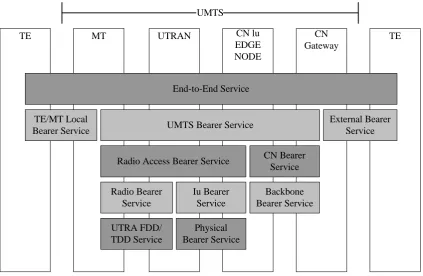
2.5.11 Universal Mobile Telecommunication System (UMTS) ... 27
2.5.12 Other QoS Supporting Architectures ... 28
2.5.13 Conclusion ... 29
2.6 HOLISTIC QUALITY OF SERVICE MODELS... 29
2.6.1 A Holistic View of Quality of Service... 30
2.6.2 Siemens AQUILA Model ... 30
2.6.3 Bridging the Gap between Network Protocols and Users ... 31
2.6.4 Extending the OSI Model to Incorporate Human Factors ... 31
2.6.5 A Survey of QoS in Mobile Computing Environments ... 33
2.6.6 Conclusion ... 33
2.7 USABILITY TESTING FOR NETWORKED MULTIMEDIA SYSTEMS... 34
2.7.1 The Need for Usability Studies ... 35
2.7.2 Levels of Usability Studies ... 35
2.7.3 Usability Testing Processes ... 36
2.7.4 Conclusion ... 38
SUMMARY... 40
3.1 INTRODUCTION... 41
3.2 QUALITY OF SERVICE PERSPECTIVES... 42
3.2.1 User Perspective ... 43
3.2.2 Application Perspective ... 43
3.2.3 Transmission Perspective ... 44
3.2.4 Dependency between the Three QoS Perspectives... 44
3.3 ATHREE LAYER QUALITY OF SERVICE (TRAQS)MODEL... 45
3.3.1 Overview of the TRAQS Model ... 46
3.3.2 User Perspective Layer (UPL)... 47
3.3.3 Application Perspective Layer (APL) ... 47
3.3.4 Transmission Perspective Layer (TPL)... 48
3.4 ATAXONOMY FOR QOSPARAMETERS... 48
3.4.1 Categorising QoS Parameters into a Taxonomy... 48
3.4.2 Quality of Service Performance Aspects... 52
3.5 AN APPLICATION TAXONOMY... 56
3.5.1 Multimedia Applications... 56
3.5.2 Classification of Multimedia Information... 57
3.5.3 An Application Profile Model ... 59
3.6 SPECIFYING QOS WITH USER,APPLICATION, AND QOSPROFILES... 60
3.7 RELATIONSHIP AMONG THE THREE QUALITY OF SERVICE PERFORMANCE ASPECTS... 61
3.8 TASK MODELLING THE TRAQSFUNCTIONALITY... 63
3.8.1 TRAQS Task Model... 64
3.8.2 Task Modelling Technique... 64
3.8.3 Concur Task Tree Environment ... 65
3.8.4 TRAQS Functionality Requirements ... 66
3.8.5 TRAQS Communication Model... 66
3.8.6 TRAQS Task Definition... 67
3.8.7 TRAQS Task Model in CTTE ... 72
3.8.8 TRAQS Task Model Simulation ... 76
CHAPTER 4 OVERVIEW OF USABILITY TESTING...78
SUMMARY... 78
4.1 INTRODUCTION... 79
4.2 USABILITY ENGINEERING... 80
4.2.1 Usability Testing Processes ... 80
4.2.2 Usability Engineering Life Cycle... 81
4.2.3 Empirical Testing... 84
4.2.4 Ethical Aspects of Tests with Human Subjects... 85
4.2.5 Choosing Experimenters and Participants ... 87
4.2.6 Test Scenarios and Tasks ... 88
4.3 USABILITY ASSESSMENT METHODS... 88
4.3.1 Onsite Monitoring... 89
4.3.2 Participant Feedback Questionnaire ... 89
4.3.3 Usability Evaluation Criteria ... 90
4.3.4 Task Performance Measures... 92
4.3.5 Thinking Aloud Protocol... 93
4.3.6 Interviews... 93
4.3.7 Observation ... 93
4.3.8 Heuristic Evaluation ... 94
4.4 USABILITY TESTING FACILITIES... 94
4.5 RE-ENGINEERING USABILITY TESTING PROCESSES... 95
4.6 CONCLUSION... 96
CHAPTER 5 USABILITY INVESTIGATION DESIGN...98
SUMMARY... 98
5.1 INTRODUCTION... 99
5.2 RATIONALE FOR USABILITY TESTING OF INTERFACES FOR QOSMANAGEMENT... 99
5.2.1 Motivation for Usability Investigation ... 99
5.2.2 Strategy for Usability Investigation ... 100
5.3 USER INTERFACES FOR QOSMANAGEMENT... 101
5.3.1 Physical User Interfaces ... 102
5.3.2 Graphical User Interfaces ... 103
5.3.3 Static QoS Management... 106
5.3.4 Dynamic QoS Management ... 111
5.4 USABILITY INVESTIGATION OVERVIEW... 113
5.4.1 Overall Aims and Objectives ... 115
5.4.2 Individual Usability Study Aims and Objectives ... 116
5.5 USABILITY INVESTIGATION PROCESS... 119
5.6 USABILITY TEST PROCEDURE... 121
5.7 SELECTION OF PARTICIPANTS... 122
SUMMARY... 125
6.1 INTRODUCTION... 127
6.2 USABILITY STUDY A:INNOVATIVE METHODS FOR CONTROL... 128
6.2.1 Overview ... 128
6.2.2 User Interface Design ... 128
6.2.3 Experiment Design... 130
6.2.4 Analysis... 132
6.2.5 Conclusion ... 136
6.3 USABILITY STUDY B:METHODS FOR FEEDBACK... 136
6.3.1 Overview ... 136
6.3.2 User Interface Design ... 137
6.3.3 Experiment Design... 138
6.3.4 Analysis... 139
6.3.5 Conclusion ... 141
6.4 USABILITY STUDY C:STATIC QOSSPECIFICATION –DESKTOP SYSTEMS... 142
6.4.1 Overview ... 142
6.4.2 User Interface Design ... 142
6.4.3 Experiment Design... 146
6.4.4 Analysis... 147
6.4.5 Conclusion ... 153
6.5 USABILITY STUDY D:STATIC QOSNEGOTIATION –DESKTOP SYSTEMS... 154
6.5.1 Overview ... 154
6.5.2 User Interface Design ... 155
6.5.3 Experiment Design... 157
6.5.4 Analysis... 159
6.5.5 Conclusion ... 164
6.6 USABILITY STUDY E:COMPARISON OF TWO METHODS FOR IMPLEMENTING THE QCTT MODEL.... 165
6.6.1 Overview ... 165
6.6.2 User Interface Design ... 165
6.6.3 Experiment Design... 168
6.6.4 Analysis... 169
6.6.5 Conclusion ... 174
6.7 USABILITY STUDY F:USER-INITIATED QOSRE-NEGOTIATION –DESKTOP SYSTEMS... 175
6.7.1 Overview ... 175
6.7.2 User Interface Design ... 176
6.7.3 Experiment Design... 177
6.7.4 Analysis... 179
6.8 USABILITY STUDY G:SYSTEM INITIATED QOSRE-NEGOTIATION –DESKTOP SYSTEMS... 185
6.8.1 Overview ... 185
6.8.2 User Interface Design ... 186
6.8.3 Experiment Design... 187
6.8.4 Analysis... 188
6.8.5 Conclusion ... 193
6.9 USABILITY STUDY X:USER INITIATED QOSRE-NEGOTIATION –PORTABLE DEVICES... 194
6.9.1 Overview ... 194
6.9.2 User Interface Design ... 195
6.9.3 Experiment Design... 198
6.9.4 Analysis... 200
6.9.5 Conclusion ... 203
6.10 USABILITY STUDY Y:SYSTEM INITIATED QOSRE-NEGOTIATION –PORTABLE SYSTEMS... 204
6.10.1 Overview ... 204
6.10.2 User Interface Design ... 204
6.10.3 Experiment Design... 205
6.10.4 Analysis... 207
6.10.5 Conclusion ... 213
6.11 USABILITY STUDY Z:MEMORABILITY ANALYSIS... 213
6.11.1 Overview ... 213
6.11.2 Memorability Questionnaire Design... 214
6.11.3 Analysis... 215
6.11.4 Conclusion ... 216
6.12 CHAPTER CONCLUSION... 217
CHAPTER 7 CONCLUSIONS & FURTHER RESEARCH ...219
SUMMARY... 219
7.1 INTRODUCTION... 220
7.2 MAJOR FINDINGS &CONCLUSIONS... 221
7.3 RECOMMENDATIONS FOR FUTURE RESEARCH... 227
BIBLIOGRAPHY ...230
APPENDIX A RE-ENGINEERING USABILITY TESTING PROCESSES ...238
APPENDIX B USABILITY TEST SCENARIO EXAMPLE ...239
APPENDIX C PRE-EXPERIMENT QUESTIONNAIRE EXAMPLE ...240
APPENDIX D POST-EXPERIMENT QUESTIONNAIRE EXAMPLE...241
APPENDIX E QCTT IMPLEMENTATION USING THE CCS & TFS METHODS ...242
APPENDIX F QCTT INTERFACE IMPLEMENTATION FOR PORTABLE DEVICES...243
APPENDIX G DETAILED RESULTS FOR USABILITY STUDY X...244
APPENDIX H DETAILED RESULTS FOR USABILITY STUDY Y ...245
List of Figures
FIGURE 2-1:TCP/IP–FIVE LAYER PROTOCOL STACK...16
FIGURE 2-2:ATMREFERENCE MODEL...17
FIGURE 2-3:FIVE PLANES OF THE XRMARCHITECTURE...20
FIGURE 2-4:QOS-AMODEL...21
FIGURE 2-5:HEIDELBERG QOSMODEL...21
FIGURE 2-6:INTERNET ENGINEERING TASK FORCE (IETF)QOSMANAGER (QM) ...23
FIGURE 2-7:TINAFRAMEWORK...23
FIGURE 2-8:THE OMEGAARCHITECTURE...24
FIGURE 2-9:THE TENET ARCHITECTURE...25
FIGURE 2-10:UNIVERSAL MOBILE TELECOMMUNICATIONS SYSTEM (UMTS)QOSARCHITECTURE...27
FIGURE 2-11:THE TEN-LAYER OSIMODEL THAT INCORPORATES THE HCIEXTENSION...32
FIGURE 2-12:TRADITIONAL USABILITY TESTING LABORATORY...38
FIGURE 3-1:THE THREE QOSPERSPECTIVES PRESENTED IN A VENN DIAGRAM...42
FIGURE 3-2:THREE LAYER QOS(TRAQS)MODEL [4] ...46
FIGURE 3-3:THE QOSPARAMETER ARCHITECTURE (QPA)...49
FIGURE 3-4:APPLICATION CLASSIFICATION MODEL (ACM) ...58
FIGURE 3-5:APPLICATION PROFILE MODEL (APM)...60
FIGURE 3-6:QUALITY,COST,TEMPORAL TRIANGLE (QCTT)MODEL...62
FIGURE 3-7:TRAQSABSTRACT TASK MODEL...73
FIGURE 3-8:STAGE 1–SESSION INITIALISATION...73
FIGURE 3-9:STAGE 2–QOSNEGOTIATION...74
FIGURE 3-10:STAGE 3–QOSPROVISION...74
FIGURE 3-11:STAGE 4–DYNAMIC QOSMANAGEMENT (RE-NEGOTIATION)...75
FIGURE 3-12:STAGE 5–SESSION TERMINATION...76
FIGURE 4-1:TYPICAL ARCHITECTURE OF A FIXED USABILITY TEST FACILITY...95
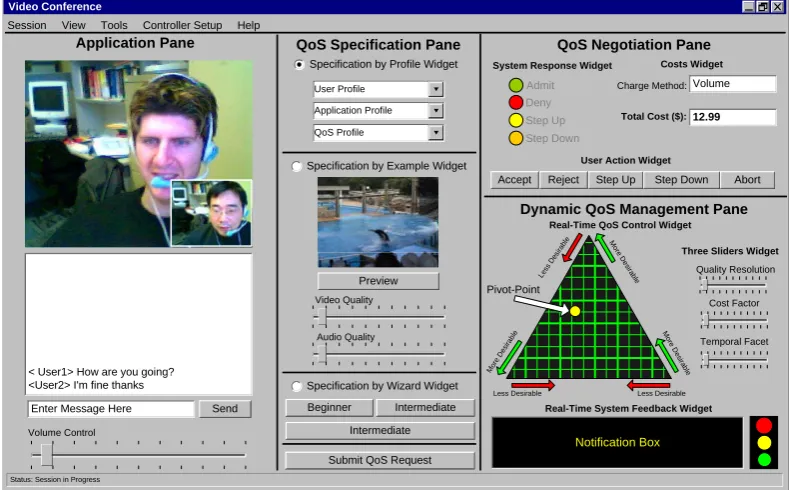
FIGURE 5-1:PROTOTYPE QOSMANAGEMENT INTERFACE...103
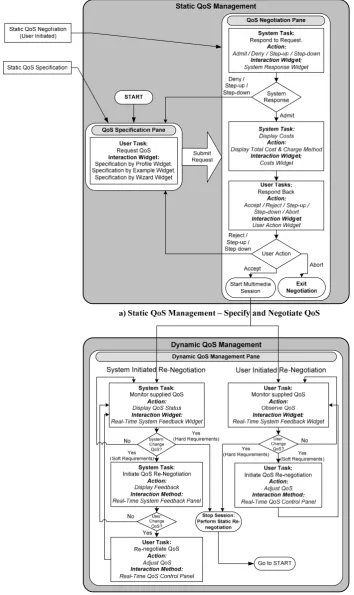
FIGURE 5-2:PROCESS FOR SPECIFYING,NEGOTIATING AND MANAGING QOS ...104
FIGURE 5-3:MENU DRIVEN QOSSPECIFICATION USER INTERFACE USING PROFILES...107
FIGURE 5-4:MENU DRIVEN QOSSPECIFICATION USER INTERFACE USING PROFILES WITH EXAMPLES....108
FIGURE 5-5:QOSSPECIFICATION USING WALKTHROUGH WIZARD (BEGINNER USER) ...109
FIGURE 5-6:STATIC QOSNEGOTIATION INTERFACE...111
FIGURE 5-7:DYNAMIC QOSMANAGEMENT INTERFACE...112
FIGURE 6-1:USABILITY STUDY A:USER INTERFACE, ...129
FIGURE 6-2:USABILITY STUDY A:AVERAGE TASK COMPLETION TIMES, ...133
FIGURE 6-3:USABILITY STUDY A:AVERAGE TASK ERROR COUNT,...134
FIGURE 6-4:USABILITY STUDY A:AVERAGE USABILITY RATINGS, ...135
FIGURE 6-5:USABILITY STUDY B:FEEDBACK METHODS AND INTERFACES, ...138
FIGURE 6-6:USABILITY STUDY B:SYSTEM FEEDBACK METHODS ANALYSIS,...140
FIGURE 6-7:USABILITY STUDY C:LEVEL OF QOSSPECIFICATION FOR USER PROFILES,...143
FIGURE 6-8:USABILITY STUDY C:PROFILES WITH EXAMPLES SPECIFICATION METHOD...144
FIGURE 6-9:USABILITY STUDY C:WALKTHROUGH WIZARD SPECIFICATION METHOD,...145
FIGURE 6-10:USABILITY STUDY C:AVERAGE TASK COMPLETION TIMES,...148
FIGURE 6-11:USABILITY STUDY C:AVERAGE TASK ERROR COUNT, ...150
FIGURE 6-12:USABILITY STUDY C:AVERAGE USABILITY RATINGS, ...151
FIGURE 6-13:USABILITY STUDY C:OVERALL USABILITY ANALYSIS, ...152
FIGURE 6-14:USABILITY STUDY D:STATIC QOSNEGOTIATION INTERFACE...155
FIGURE 6-15:USABILITY STUDY D:AVERAGE TASK COMPLETION TIMES, ...160
FIGURE 6-16:USABILITY STUDY D:AVERAGE TASK ERROR COUNT,...161
FIGURE 6-17:USABILITY STUDY D:USABILITY RATINGS FOR EACH USER INTERACTION METHOD, ...162
FIGURE 6-18:USABILITY STUDY D:OVERALL USABILITY ANALYSIS,...163
FIGURE 6-19:USABILITY STUDY E:QCTTINTERFACES, ...166
FIGURE 6-20:USABILITY STUDY E:AVERAGE TASK COMPLETION TIMES,...170
FIGURE 6-21:USABILITY STUDY E:AVERAGE TASK ERROR COUNT, ...170
FIGURE 6-22:USABILITY STUDY E:USABILITY RATINGS FOR THE CCSINTERFACE,...171
FIGURE 6-23:USABILITY STUDY E:USABILITY RATINGS FOR THE TFSINTERFACE, ...172
FIGURE 6-24:USABILITY STUDY E:USABILITY COMPARISON FOR THE CCS AND TFSINTERFACES, ...173
FIGURE 6-25:USABILITY STUDY F:QCTTINTERFACE –INCLUDES TWO NEW FEATURES, ...176
FIGURE 6-26:USABILITY STUDY F:DIFFERENT SYSTEM FEEDBACK, ...177
FIGURE 6-27:USABILITY STUDY F:AVERAGE TASK COMPLETION TIMES, ...180
FIGURE 6-28:USABILITY STUDY F:AVERAGE TASK ERROR COUNT, ...181
FIGURE 6-29:USABILITY STUDY F:AVERAGE USABILITY RATINGS, ...182
FIGURE 6-30:USABILITY STUDY F:OVERALL USABILITY ANALYSIS, ...183
FIGURE 6-31:USABILITY STUDY G:QCTTINTERFACE, ...186
FIGURE 6-32:USABILITY STUDY G:AVERAGE PARTICIPANT RESPONSE TIMES,...189
FIGURE 6-33:USABILITY STUDY G:LEVEL OF DISTRACTION RATINGS, ...190
FIGURE 6-34:USABILITY STUDY G:AVERAGE USABILITY RATINGS, ...191
FIGURE 6-35:USABILITY STUDY G:OVERALL USABILITY ANALYSIS,...192
FIGURE 6-36:USABILITY STUDY X:ENHANCED USER INTERFACE FOR PORTABLE DEVICES...196
FIGURE 6-37:USABILITY STUDY X:COMBINED AVERAGE TASK COMPLETION TIMES, ...200
FIGURE 6-41:USABILITY STUDY Y:AVERAGE RESPONSE TIMES, ...208
FIGURE 6-42:USABILITY STUDY Y:COMBINED AVERAGE RESPONSE TIMES, ...209
FIGURE 6-43:USABILITY STUDY Y:LEVEL OF DISTRACTION RATINGS...210
FIGURE 6-44:USABILITY STUDY Y:COMBINED USABILITY RATINGS...211
FIGURE 6-45:USABILITY STUDY Y:COMBINED USABILITY RATINGS...212
List of Tables
TABLE 3-1:INDEPENDENT AND DEPENDENT PARAMETERS SPECIFICATION...50
TABLE 3-2:TEMPORAL RELATIONSHIP NOTATIONS IN CTTE ...72
TABLE 4-1:STAGES OF THE USABILITY ENGINEERING LIFE CYCLE [64]...81
TABLE 5-1:PARTICIPANT EXPERIENCE/KNOWLEDGE RANKING MODEL...122
TABLE 5-2:PARTICIPANT PROFILE RANK CHART...123
TABLE 6-1:USABILITY STUDY A:EVALUATION CRITERIA AND TASK PERFORMANCE MEASURES...132
TABLE 6-2:USABILITY STUDY B:EVALUATION CRITERIA...139
TABLE 6-3:USABILITY STUDY C:EVALUATION CRITERIA AND TASK PERFORMANCE MEASURES...147
TABLE 6-4:USABILITY STUDY D:EVALUATION CRITERIA AND TASK PERFORMANCE MEASURES...158
TABLE 6-5:USABILITY STUDY E:EVALUATION CRITERIA AND TASK PERFORMANCE MEASURES, ...169
TABLE 6-6:USABILITY STUDY F:EVALUATION CRITERIA AND TASK PERFORMANCE MEASURES...178
TABLE 6-7:USABILITY STUDY G:EVALUATION CRITERIA AND TASK PERFORMANCE MEASURES, ...188
TABLE 6-8:USABILITY STUDY X:EVALUATION CRITERIA AND TASK PERFORMANCE MEASURES...199
List of Acronyms – General
3GPP Third Generation Partnership Program
ABR Application Bit Rate
ATM Asynchronous Transfer Mode
BER Bit Error Rate
bpp Bits per pixel
bps Bits per second
CBR Constant Bit Rate
CTTE Concur Task Tree Environment
DiffServ Differentiated Services
DLE Distributed Learning Environments
DRoPS Dynamically Reconfigurable Protocol Stacks
EEG Electroencephalograms
EoD Education on Demand
fps Frames per second
FVoD Full Video on Demand
GUI Graphical User Interface
HCI Human Computer Interaction
HQML Hierarchical QoS Modelling Language
IETF Internet Engineering Task Force Group
Intserv Integrated Services
IPv4 Internet Protocol Version 4
IPv6 Internet Protocol Version 6
ISO International Standards Organisation
ISP Internet Service Provider
MBR Mean Bit Rate
MPLS Multi-Protocol Label Switching
NPPs Network Performance Parameters
NVoD Near Video on Demand
OSI Open Systems Interconnection Reference Model
PBR Peak Bit Rate
PDA Personal Digital Assistant
PER Packet Error Rate
QM Quality of Service Manager
QoP Quality of Presentation
QoS Quality of Service
QoS-A Quality of Service Architecture
RSVP Resource Reservation Protocol
RTP Real-Time Transport Protocol
SAS Synchronisation Accuracy Specification
SBM Subnet Bandwidth Management
TCP/IP Transport Control Protocol / Internet Protocol
TINA Telecommunication Information Networking Architecture
UMTS Universal Mobile Telecommunications System
VBR Variable Bit Rate
VoD Video on Demand
List of Acronyms – Specific to this
Thesis
ACM Application Classification Model
APL Application Perspective Layer
APM Application Profile Model
CCS Cartesian Coordinate System
PUI Physical User Interface
QCTT Quality Cost Temporal Triangle
QPA Quality of Service Parameter Architecture
TFS Triangular Fractal System
TPL Transmission Perspective Layer
TRAQS Three Layer QoS Model
Declaration of Originality
I, Mladen Georgievski, declare that the PhD thesis entitled “Quality of Service
Management for Multimedia Communications: Investigations on Usability of Interfaces
for Desktop and Portable Systems” is no more than 100,000 words in length, exclusive
of tables, figures, appendices, references and footnotes. This thesis contains no material
that has been submitted previously, in whole or in part, for the award of any other
academic degree or diploma. Except where otherwise indicated, this thesis is my own
work.
Signature: ______________________ Date: _____________
Acknowledgements
First and foremost, I would like to thank my supervisor, Associate Professor Nalin
Sharda, for his continual guidance, timely advice, encouragement and support
throughout the course of this thesis. He has been a great mentor, and I will always
remember our lengthy philosophical conversations.
Furthermore, I owe my thanks to Mr. Jayden Kimber for applying his elite
programming skills in developing the software applications used in this research and for
his assistance in performing the usability studies. I would also like to thank Mrs. Roopa
Jakkilinki for facilitating the usability tests.
I wish to thank Dr. Florica Cirstea, Mr. Gabriele Sorrentino, and Mr. Leon Gor for their
continual technical and theoretical advice, and the feedback they have given me
throughout this research. A special thanks goes to Ms. Lilly Petrovska for applying her
exceptional English skills in copy editing this thesis.
I would also like to express my gratitude towards the technical support staff within the
School of Computer Science and Mathematics: Mr. Mark Mojic, Mr. Cameron Giles,
and Mr. Rajendran Ponnusamy, for their promptly and excellent technical support
throughout this research. Furthermore, I would like to thank the Head of School, and the
administrative staff for their support, and all my colleagues and friends for the
encouragement and motivation they have given me.
I would also like to thank all test participants for their patience and valuable feedback
they have given within the usability tests.
Last but not least, I would like to specially thank my Mum and Dad for their constant,
unconditional support, and encouragement they have provided me throughout my entire
life. Their inspiration and enthusiasm have always made me achieve my goals and
Abstract
Multimedia communication is now possible via the use of high bandwidth channels, and
communication protocols that support Quality of Service (QoS) requests. However,
these technologies often fall short of user expectations by not providing effective user
interfaces that can facilitate negotiations between the user and the system.
In this thesis, a set of conceptual models are developed to create a user-centred QoS
management system for networked multimedia applications. Various interfaces are
designed and developed for ‘specifying’ and ‘negotiating’ QoS prior to initiating a
multimedia session, and ‘re-negotiating’ QoS in real-time during the multimedia
session.
The interfaces developed in this research provide the means for managing QoS for fixed
as well as mobile multimedia communications. Usability investigations were conducted
to evaluate the efficacy of these interfaces for specifying, negotiating and re-negotiating
QoS on Desktop Systems and on Portable Devices – such as, Personal Digital Assistants
(PDAs) and Mobile Phones. Conducting the usability tests for these interfaces required
re-engineering of traditional usability testing processes – to improve the efficiency of
performing each test and collecting data.
Ten separate usability studies were performed using Beginner, Intermediate, and
Advanced users to investigate novel Human Computer Interaction (HCI) methods for:
computer control and system feedback; QoS specification and negotiation on Desktop
Users agreed that there is a need for such interfaces that enable them to request,
negotiate and re-negotiate QoS. Usability studies for these interfaces show good
usability and learnability for technical as well as non-technical users. The innovative
interaction methods developed in this research project, by far, enhanced the user’s
experience in managing QoS, however, suggestions for further improvements were also
given by the participants.
Index Terms: Quality of Service (QoS), Networked Multimedia Systems, QoS
Publications Reporting Outcomes of
this Research
Peer Reviewed International Journal Publication
- M. Georgievski and N. Sharda, "Re-Engineering the Usability Testing Process for Live
Multimedia Systems," Journal of Enterprise Information Management (EIMJ), vol. 19, pp.
223-233, 2006.
International Conference Publications, Full Paper Peer Reviewed
- N. Sharda, M. Georgievski, and K. Lim, "Mapping the TRAQS Quality of Service Model to
the m-Apps Middleware," presented at M2USIC 2005: MMU International Symposium on Information and Communications Technologies, PJ Hilton Hotel, Petaling Jaya, Malaysia, 2005.
- M. Georgievski and N. Sharda, "Implementation and Usability of User Interfaces for
Quality of Service Management," presented at Tencon’05, Annual Technical Conference of IEEE Region 10, Melbourne, Australia, 2005.
- M. Georgievski and N. Sharda, "Enhancing User Experience for Networked Multimedia
Systems," presented at The 4th International Conference on Information Systems Technology and its Applications, ISTA2005, Massey University, Palmerston North, New Zealand, 2005.
- M. Georgievski and N. Sharda, "Re-Engineering the Usability Testing Process for Live
Multimedia Systems," presented at The 2004 International Research Conference on Innovations in Information Technology, IIT2004, Dubai, UAE, 2004.
- M. Georgievski and N. Sharda, "Task Modelling for a Holistic Quality of Service Model –
TRAQS," presented at IEEE India Council Annual Convention and Exhibition 2003, ACE2003, Hotel Le Meridien, Pune, India, 2003.
- M. Georgievski and N. Sharda, "Usability Testing for Real-Time QoS Management,"
presented at The 24th IEEE International Real-Time Systems Symposium, RTSS2003, Cancun, Mexico, 2003.
- M. Georgievski and N. Sharda, "A Taxonomy of QoS Parameters and Applications for
Multimedia Communications," presented at International Conference on Internet and Multimedia Systems and Applications, IMSA2003 Kaua'i, Hawaii, USA, 2003.
- N. Sharda and M. Georgievski, "A Holistic Quality of Service Model for Multimedia
Chapter 1
Introduction
1.1
Background
In recent years, advancements in information and communication technology have led
to the development of sophisticated multimedia applications which are now being used
in almost every aspect of our lives. Improvements in the performance of computing
devices, and bandwidth for wired line and wireless communication networks have
transpired an evolution of new networked multimedia systems.
These improvements enrich the experience for carrying out communication,
entertainment and edutainment. People now have the luxury of experiencing Video on
Demand, Video Conferencing, Education on Demand, Virtual Classrooms on Desktop
Computers and Portable Devices. However, as society adopts these technologies, they
will become dependant upon efficient and effective delivery of multimedia information.
Consequently, people would want guarantees in the provision of services. The Quality
of Service (QoS) concept arises due to multimedia communications requiring
end-to-end service guarantees in order for the transmitted multimedia content to be
comprehended by the user. To allow the users to request such guarantees from a system,
this requires the development of User-Centred Quality of Service (QoS) Management
systems and interfaces that enable users to request and negotiate QoS.
1.2
Motivation for this Research
Transmission of multimedia information requires consideration of QoS from three
perspectives, namely: User Perspective, Application Perspective, and Transmission
Perspective. At the User Perspective, acceptable QoS levels are influenced by the user’s
perceptual, auditory and visual faculties. At the Application Perspective, users require
information can be easily perceived and comprehended. Communication networking
protocols are required to efficiently deliver multimedia information at a level that does
not compromise the quality of the presentation. Current, communication networking
protocols have been enhanced with QoS mechanisms to guarantee services at the
Transmission Perspective.
To provide the user with the QoS that they desire, and guarantee the preservation of
these services throughout the communication session; it is important that facilities are
made available which assist the user to request, negotiate, and re-negotiate QoS
efficiently. Such a solution requires primary consideration of the User Perspective;
however, its relation to the Application and Transmission Perspectives must be taken
into account.
These solutions need to employ better Human Computer Interaction (HCI) techniques
that model the user’s requirements, which can then be mapped into the system’s
functionality. Developing such a system would require a framework that integrates the
functionality of the User, Application, and Transmission Perspectives for managing
QoS.
If a QoS management system does not give users the means to specify their needs easily
and effectively, it is likely that the users will not receive the service they require.
Therefore, it is important that users can specify their requirements using intuitive
interaction methods and interfaces. Developing such interfaces is the primary
motivation for this research.
1.3
Originality of the Thesis
Currently, most QoS mechanisms operate at the Transmission and/or Application
Perspectives. Communication protocols (such as TCP/IP [1]) have been enhanced with
QoS management facilities that reserve and allocate resources for transmitting
multimedia information. New communication protocols have also been developed that
provide adequate QoS support for the delivery of multimedia information. For example,
in wireless networks, the Universal Mobile Telecommunications System (UMTS) [2]
Therefore, a holistic approach towards managing QoS is required that considers human
factors related to the User Perspective, over and above the Application and
Transmission Perspectives.
This thesis introduces a Three Layer QoS (TRAQS) model that gives required
prominence to the User Perspective, thus providing a framework for developing a
‘user-centred’ QoS management system. Next, user interfaces are developed based on this
model. These interfaces are then subjected to usability investigations.
1.4
Research Aims & Objectives
Aim:
This research aims to develop a holistic QoS model for QoS management; and
investigate the usability of related interaction methods and interfaces for QoS
specification, negotiation, and re-negotiation.
Objectives
Specific objectives for this research are as follows:
- Survey and identify the shortcomings of current technologies that support QoS
guarantees for the delivery of multimedia information.
- Provide a framework for developing user-centred QoS management systems for
networked multimedia applications.
- Investigate novel interaction methods and interfaces for technical and non-technical
users to request and negotiate QoS prior to initiating a multimedia session, and
re-negotiate QoS in real-time while the multimedia session is in progress.
- Study the usability of these novel user interfaces and their features for QoS
1.5
Research Methodologies and Techniques
To conduct this research, the following methodologies and techniques were employed.
- Literature Study – A literature survey was carried out to identify the different
networked multimedia applications that are widely used and to understand the basic
function of each application. Formal definitions of QoS, QoS technology
developments and applications, and QoS negotiation techniques were studied.
Current communication protocols, architectures and frameworks were analysed and
their limitations for the provision of QoS were identified. The concept of holistic
management of QoS was investigated, different holistic QoS models were analysed,
and their limitations were identified. Methods for performing usability studies for
multimedia systems were investigated, and the different types of usability studies,
and usability testing processes were identified.
- Develop a Holistic QoS Model – A holistic Three Layer QoS (TRAQS) model was
developed using the top-down approach where the user’s requirements were
considered for the development of taxonomies and models to manage and negotiate
QoS parameters. Task modelling technique was used to model the system behaviour
and the user interaction involved for specifying and negotiating QoS. Task models
facilitated the development of the interfaces.
- Analyse and Re-engineer Traditional Usability Testing Processes – Current
usability testing processes and facilities were analysed for their efficiency in
performing the usability studies. This required conducting specific usability studies
to evaluate the efficiency of the testing facility configuration and the procedures
used to perform the experiment. This assisted to streamline the usability testing
procedure and re-configure the testing facility to improve its efficiency.
- Investigate Novel Interaction Methods – Preliminaryinvestigations were conducted
into evaluating the usability of different Physical User Interface (PUI) devices, to
perform basic computer control using different Graphical User Interface (GUI)
elements. This guided the development of innovative interaction methods that can
- Study Interfaces for QoS Specification, Negotiation and Re-negotiation – Interfaces
for QoS specification, negotiation and re-negotiation were developed based on the
TRAQS model. Usability engineering techniques were used throughout the
development cycle to ensure that the interfaces correctly modelled the user
requirements. Controlled usability studies with real users were performed for each
interface. The re-engineered usability testing process was used to conduct the
various tests efficiently, and collate their results systematically. Pre-experiment
questionnaires were used to gather background information about each participant.
Participants were ranked and categorised according to their technical sophistication.
Participant feedback was collected using post experiment questionnaires; Task
Completion Times and Task Error Counts were also recorded. The usability of each
interface was determined by analysing the collated data.
1.6
Contribution to Knowledge
This research contributes to the enhancement of knowledge in the following areas:
- Develop a better understanding of the user requirements for QoS management.
- Investigate a novel holistic QoS model, namely TRAQS, for developing
user-centred QoS management systems, which integrates the three perspectives for
multimedia information transmission.
- Develop innovative interaction methods for requesting, negotiating and
re-negotiating QoS, thus improving the processes for QoS management.
- Provide a thorough usability analysis of the innovative interaction methods and
interfaces developed for QoS management, and give recommendations for further
research.
The above contributions to knowledge facilitate the ongoing developments of new QoS
management systems for networked multimedia systems. It is anticipated that this
research will foster the development of user-centred QoS management interfaces on real
1.7
Organisation of the Thesis
This thesis includes seven chapters. Succeeding to this Introduction chapter, Chapter 2
comprises a literature study of Networked Multimedia Systems, current QoS
technologies, and usability studies for multimedia systems. Current QoS
Communication Protocols, Architectures, and Frameworks are reviewed, and their
limitations are identified.
Chapter 3 presents details of the TRAQS model, a taxonomy for QoS Parameters and
Applications, the three performance aspects for multimedia communications, and task
modelling of the TRAQS model.
Chapter 4 introduces the reader to usability testing; an overview of Usability
Engineering, Usability Assessment Methods, and Usability Testing Facilities is
presented. This chapter also presents the Re-engineered Usability Testing Process,
Assessment Methods, and Usability Evaluation Criteria employed in this research.
Chapter 5 presents the motivation for usability testing of user interfaces for QoS
management. User interfaces for QoS management are introduced, and an overview of
the aims and objectives for the usability investigation of these interfaces is given. A
description is presented for the usability testing procedures, and a participant ranking
model – used to classify the usability data.
Chapter 6 presents the various usability investigations on interaction methods and
interfaces for QoS management on Desktop Systems and Portable Devices. Ten
separate usability studies are presented which investigate the usability of novel system
control and feedback interaction methods; interfaces for QoS specification, negotiation,
and re-negotiation on Desktop Systems; and interfaces for QoS re-negotiation on
Portable Devices. Each usability study presents details of the user interface design,
experiment design, a usability analysis, and specific conclusions.
Chapter 7 concludes this thesis; a summary of the major findings and suggestions for
further research is presented.
Chapter 2
Literature Study
Summary
This chapter provides a literature review of current QoS technologies that fall short to provide consideration of the three perspectives for multimedia information transmission; namely: User Perspective, Application Perspective and Transmission Perspective. Current communication protocols, such as: TCP/IP, RSVP, ATM, MPLS, DiffServ, SBM, and architectures, such as: XRM, QoS-A, Heidelberg QoS Model, OSI QoS Framework, IETF QM, and other QoS supporting architectures, operate predominantly at the transmission and/or application perspectives. These technologies do not provide adequate consideration to the user perspective for the provision of QoS.
2.1
Introduction
Development of communication technology has evolved and has enabled support for
transmitting multimedia information over communication networks. This evolution has
lead to development of various multimedia applications, which are now being used in
almost every aspect of our daily lives. Section 2.2 provides an overview of current
networked multimedia systems and their application in society.
As society becomes more dependant on this technology, it is important that some
guarantees for Quality of Service (QoS) are made available. Transmission of
multimedia information can be categorised into three perspectives, namely: User,
Application and Transmission perspectives. To provide such guarantees, it is essential
to understand the concept of QoS and its applicability in networked multimedia
systems. Section 2.3 provides an overview of QoS, a review of formal definitions made
by researchers, development of QoS technologies and applications, and QoS negotiation
techniques.
Thus far, various technologies have emerged that guarantee QoS at the Application and
Transmission perspectives. Current network communication protocols, such as: TCP/IP,
RSVP and ATM, guarantee QoS at the transmission perspective but do not provide
adequate consideration to the Application and User perspectives. Section 2.4 describes
these communication protocols in further detail.
Current QoS architectures and frameworks, such as: XRM, QoS-A, Heidelberg QoS,
and UMTS – for wireless networks, provide end-to-end QoS guarantees at the
Application and/or Transmission perspectives. Section 2.5 presents a review of various
QoS architectures and frameworks.
As users require different QoS guarantees for different multimedia applications, it is
necessary that the users are able to request QoS based on their needs, and, the cost they
are willing to pay. In this research a Three Layer QoS (TRAQS) model has been
developed that gives required prominence to the User, Application and Transmission
Developing a solution that bridges the gap between the user requirements and the
system functionality would require employing efficacious Human Computer Interaction
(HCI) techniques. Usability studies in QoS management for networked multimedia
systems are also required to improve the HCI. Usability studies can be performed at
three levels: Interface, System and Service level. Section 2.7 describes usability studies
for networked multimedia systems, the different levels of usability studies, and usability
testing processes.
2.2
Networked Multimedia Systems
2.2.1
Overview of Networked Multimedia Systems
Networked Multimedia Systems comprise of various real-time multimedia applications
such as: Video on Demand (VoD), Video Conferencing, Collaborative Conferencing,
and Education-on-Demand (EoD). These applications are used for: Communication,
Entertainment, Education, Edutainment, Health and Medicine, Marketing and Research.
Networked Multimedia systems require for effective and comprehensible transmission
of multimedia content.
Without QoS guarantees, failure in the delivery of multimedia information can be
critical in certain situations. For example, for a virtual organisation that heavily relies on
video conferencing to maintain communications between offsite offices, a failure or
inefficient transmission of information could paralyse communications, thus effecting
the company’s operations [3]. In order to maintain efficient communications and
unambiguous multimedia information transmission, it is imperative to provide the
ability to specify the required Quality of Service (QoS).
Networked Multimedia Systems are being implemented in distributed environments,
where the underlying architecture provides support for such services and applications.
The following section describes the various networked multimedia systems and
2.2.2
Networked Multimedia Systems and Applications
Video on Demand (VoD) is an amalgamation of the video hire and pay-TV concepts
[4]. With VoD, the end user is able to select and play a desired movie from a menu
system displayed on their TV using a remote control. In a VoD service, a video server
transmits the movie over a network to which the user’s TV is connected. Nowadays,
VoD services are mainly available in hotels, aeroplanes, and on the Internet. With the
introduction of Pay-Per-View Cable TV, VoD would be available in many households
also. Some Pay-Per-View Cable TV services do not incorporate a true VoD system.
There are two types of VoD services available, they are: Full Video on Demand (FVoD)
and Near Video on Demand (NVoD) [4]. FVoD provides the user with full VCR-like
controls including; play, stop, rewind, fast forward and pause. On the other hand, NVoD
does not provide the user with VCR-like controls. The user is only able to select a
movie and watch it right through. For this type of service, many video servers transmit
each movie clip at regular intervals, thus, for a user to begin watching the movie they
must wait for the next transmission interval.
Multicast VoD Services enables efficient distribution of video streams to multiple
clients, which improves performance [5]. Mobile VoD services are currently being
researched and developed to provide efficient transmission of video content to portable
devices. This service is useful for on-the-go information access, such as
News-on-Demand [6], Weather Updates [7], and Location Based Systems [8][9].
Video Conferencing allows two or more users from different sites to have virtual
face-to-face communication. Users are able to communicate via text, voice, and video [4].
An enhancement to Video Conferencing is Collaborative Conferencing. Collaborative
Conferencing enables sharing of applications where two or more users can work on the
same project/document/application in real-time.
Multicast Video Conferencing enables two or more users to collaborate in a virtual-
meeting. Video/Collaborative Conferencing is being used in the corporate, education,
health, and marketing industries to form virtual organisations. Further enhancements to
video conferencing systems have been developed, these include: GAZE-2, which uses
and Shared Virtual Team User Environments that comprise 3D video conferencing
systems simulating a team environment [10].
Education-on-Demand (EoD) enables instant availability of education material over a
communication network. Applications of EoD include virtual classrooms and distance
education [11][12]. These applications simulate a rich, near-classroom experience to
non-classroom students [13]. Virtual classrooms enable shared workspace for teachers
and students to interact and work on a project simultaneously. These applications are
similar to collaborative conferencing, however, enhancements are made that enable
users to immerse themselves in a virtual classroom environment. Leonard et al present
innovations using IP video and data collaboration techniques [13].
2.2.3
Conclusion
Networked Multimedia Systems are currently revolutionising how people in society
perform their daily tasks. Communication systems are making a transition from analog
to digital in many areas, including, television broadcasting, entertainment, education
etc. With this transition society is becoming more dependent on networked multimedia
systems. As this dependency grows, the issue of QoS will become more significant as
users of such systems will require efficient communications. Much research is
underway in developing QoS supporting technologies. However, sufficient research has
not been conducted on how users can interact with this technology to request and
negotiate desired QoS. Therefore, further research is required in developing QoS
supporting technologies that enable negotiations between the user and the system. This
thesis presents the outcomes of developing innovative and intuitive interfaces that
enable efficient Human Computer Interaction (HCI) for requesting, negotiating and
managing QoS.
2.3
Quality of Service
2.3.1
Overview of the Quality of Service Concept
Multimedia information includes text, images, audio, video and/or a combination of
these. In order for the multimedia information to be fully comprehended, transmission
of the transmitted content – in particular for audio and video content. The level of
synchronisation for transmitting multimedia information is specified in terms of
Synchronisation Accuracy Specification (SAS), which includes delay, jitter, skew, and
error rate [4]. For the multimedia content transmitted in real-time to be correctly
comprehended by the user, a Quality of Service (QoS) specification and its processing
mechanisms must be included in the system. QoS specification depends upon
qualitative and quantitative requirements that are related to the user’s auditory and
visual perception.
Microsoft states that “the goal of QoS is to provide preferential delivery service for the
applications that need it by ensuring sufficient bandwidth, controlling latency and jitter,
and reducing data loss” [14]. Cisco states that QoS “refers to the capability of a network
to provide better service to selected network traffic over various technologies, including
Frame Relay, Asynchronous Transfer Mode (ATM), Ethernet and 802.1 networks,
SONET, and IP-routed networks that may use any or all of these underlying
technologies” [15]. Dictionary.com states that QoS is “the performance properties of a
network service, possibly including throughput, transit delay, and priority. Some
protocols allow packets or streams to include QoS requirements” [16]. The above
definitions show that QoS has been viewed mainly from a technical perspective.
2.3.2
Defining Quality of Service
Many research bodies and organisations have developed their own definition of QoS.
Currently the International Standards Organisation (ISO) defines QoS as “a set of
qualities related to the collective behaviour of one or more objects” [17]. Wang et al
state that QoS “refers to optimizing the performance of a network relative to a specific
application and takes place through resource management. It is accomplished through
management tools that reserve bandwidth, prioritize usage, monitor change, and scale
resources to provide performance assurances” [18].
Internet Engineering Task Force (IETF) states “as the demand for networked real time
services grows, so does the need for shared networks to provide deterministic delivery
services. Such deterministic delivery services demand that both the source application
delivery of the data. Collectively, these services are referred to as bandwidth reservation
and Quality of Service (QoS)” [19].
Fluckiger states that QoS is “a concept based on the statement that not all applications
need the same performance from the network over which they run. Thus, applications
may indicate their specific requirements to the network, before they actually start
transmitting data” [20]. Vogel et al states that QoS “represents the set of those
quantitative and qualitative characteristics of a distributed multimedia system that are
necessary to achieve the required functionality of an application” [21].
The above definitions identify QoS from a network and application point of view.
2.3.3
Quality of Service Technology Developments and
Applications
Various research bodies have developed Networking Protocols with some QoS
provision, such as: RSVP [22], ATM [23], MPLS [24], DiffServ [25], and SBM [26].
Other research in QoS Frameworks and Architectures include: XRM [27], QoS-A [28],
Heidelberg QoS Model [27], OSI QoS Framework [27], IETF QM [27], and TINA [27].
The emergence of wireless / mobile communications has lead to the development of
UMTS [2]. Ecklund et al conducted research on “A Dynamically-Configured, Strategic
QoS Management Hierarchy for Distributed Multimedia Systems” [29]. These
technologies effectively provide QoS by operating generally at the Application and/or
the Transmission Perspectives.
Bauer and Patrick published research on extending the OSI model to incorporate human
factors [30]. Allison et al have conducted research that introduces a holistic view of
QoS for the delivery of multimedia information [31]. Similar research has been
presented by Dabrowski et al, which introduce the ‘Siemens AQUILA model’ [32].
Ghinea et al have conducted research in bridging the gap between multimedia network
protocols and users, and mapping quality of perception to QoS [33][34]. Chalmers and
Sloman present a survey on QoS management in mobile computing environments, and
introduce the notion Static and Dynamic QoS Management [35]. These and other major
2.3.4
Quality of Service Negotiation Techniques
In multimedia communication systems, QoS negotiation involves the process of
exchanging QoS parameters between the communicating entities (e.g. the service
provider and the user(s)), where the main objective is to achieve a common agreement
upon the level of QoS, satisfying all communicating entities [36]. The following three
QoS negotiation techniques can be distinguished.
Triangular Negotiation involves the three entities: calling service user, service
provider, and called service user for QoS negotiations. The calling service user passes
QoS specification to the service provider. The service provider can then downgrade
parameter values. The resulting QoS specification is then passed on to the called service
user. The called service user may in turn also downgrade the QoS parameters. This
final specification is then returned to the calling service user, whereby, both the called
service user and the service provider may reject the request. This method is further
subdivided into the negotiation schemes: Information Exchange, Bounded Target and
Contractual Value. Further details of these schemes have been published by Plagemann
et al [36].
Bilateral Negotiation involves QoS negotiation taking place between service users. In
this scheme the calling service user can propose QoS parameter values that can be
accepted, or accepted with modifications, or rejected by the called service user. The
service provider is not allowed to change the QoS specification [36].
Unilateral Negotiation represents a ‘take it or leave it approach’. The calling service
user proposes QoS parameter values that can be accepted or rejected without
modifications by the service provider [36].
These negotiation techniques demonstrate how QoS negotiation can be carried out
between various communicating entities at the Transmission Perspective. To enable
different users to negotiate QoS with network services and applications, user interfaces
are required that employ efficacious interaction methods for negotiating QoS at the User
Perspective. These interfaces need to employ usability engineering in the development
2.3.5
Conclusion
QoS plays an important role in the delivery of multimedia information. QoS takes
crucial consideration of the SAS factors for transmission of multimedia information.
Different organisations develop their own QoS definition and employ it in their research
and development of QoS technologies.
QoS is perceived as a specification for network and application technologies to provide
services that satisfy auditory and visual requirements of the user. Definitions of QoS
have been developed based on a technical perspective. QoS technologies and
applications have been developed based on the definitions presented in the above
subsection. These technologies provide QoS at the application and transmission
perspectives.
QoS negotiation techniques such as: Triangular, Bilateral and Unilateral enable users to
negotiation services between each other and the service provider. QoS negotiation
between the user and the system is essential. This is possible via the development of
QoS definitions, models and user interfaces that allow the user to interact with the
system to obtain a desired QoS. Such a facility requires viewing QoS from a user’s
perspective rather than a technical perspective, as addressed in this research project.
2.4
Quality of Service Communication Protocols
2.4.1
TCP/IP Protocol Suite
TCP/IP (Transport Control Protocol / Internet Protocol) has become one of the most
widely used communication protocol suite [1]. Originally, TCP/IP was not designed to
support transmission of multimedia content, and did not have QoS mechanisms. Over
the years, modifications were made to TCP/IP to support multimedia communications.
This led to the development of QoS protocols such as RSVP (explained in the following
subsection), ST-II (Stream Protocol), and RTP (Real-Time Transport Protocol).
TCP/IP is the underlying technology for the Internet as it has become a standard for
internetworking [1]. The architecture of TCP/IP is a 5-layer protocol stack, comprising
Figure 2-1. TCP/IP operates at the Transmission Perspective and delivers
connection-oriented and connectionless services.
TCP/IP Layers
Layer No. Name Protocols
1 Application MIME
SMTP FTP TELNET
HTTP
2 Host-to- host transport TCP
UDP
3 Internet IP
ST-II
4 Network access RSVP
5 Physical
Figure 2-1: TCP/IP – Five Layer Protocol Stack
2.4.2
Resource Reservation Protocol (RSVP)
The ReSource ReserVation Protocol (RSVP) is a signalling protocol that provides QoS
guarantees for multimedia communication over the Internet by reserving resources, such
as bandwidth and buffers [22]. The RSVP protocol provides the ability to set-up and
control reservation enabling the Integrated Services (IntServ) model [37].
RSVP provides two fundamentally different types of Integrated Services: Guaranteed
Service and Control Load Service. Guaranteed Services provides guaranteed
bandwidth, thus emulating a dedicated virtual circuit [38]. Controlled Load Services is
equivalent to “best effort service under unloaded conditions” [38].
RSVP sends a PATH message from the sender, which contains traffic (TSpec)
information to the destination address. The destination address may be unicast or
multicast. A receiver requests resources by sending a RESV message, which comprises
a request specification (Rspec) that indicates the type of Integrated Services needed
[22][38]. RSVP can run over the Internet Protocol (IP) version 4 [23] as well as version
6 [39]. Thus, the RSVP protocol handles QoS issues only at the Transmission
2.4.3
Asynchronous Transfer Mode (ATM)
The Asynchronous Transfer Mode (ATM) is based on the principle of cell switching,
using Switched Virtual Connections (SVCs), in which data is asynchronously
transmitted in 53-byte packets called cells [23]. The ATM technology was conceived as
a transmission service that can support a variety of data types, including multimedia
traffic.
ATM can deliver synchronous, asynchronous as well as isochronous traffic. ATM
includes QoS by providing bandwidth-on-demand to an end system through SVCs,
which are monitored and controlled by the Signal Control Point (SCP). Permanent
Virtual Connections (PVCs) are set-up, controlled and managed by a Network
Management System [23].
The ATM protocol architecture (Figure 2-2) includes a User Plane, Control Plane and a
Management Plane. The User Plane manages user data transfer including flow and error
control. The Control Plane manages call connection control functions. The
Management Plane comprises the Layer Management and the Plane Management
functions. ATM operates primarily at the Transmission Perspective and does not
include the ability to perform negotiations between the user, application and
transmission system.
Physical Layer ATM Layer ATM Adaptation Layers
Higher Layers Higher Layers
Control Plane User Plane
L
a
ye
r M
a
n
age
me
n
t
P
lan
e M
a
n
agem
e
n
t
Management Plane
2.4.4
Multi-Protocol Label Switching (MPLS)
Multi-Protocol Label Switching (MPLS) is a QoS protocol that marks traffic at ingress
boundaries and un-marks at egress points [24]. MPLS resides only within routers and
uses the marking priority scheme to determine the ‘next-hop’ for the traffic within the
network. MPLS is more of a ‘traffic engineering’ protocol rather than a QoS protocol
[38][40]. MPLS routing is used to establish ‘fixed bandwidth pipes’, similar to PVC in
ATM and Virtual Circuits in RSVP, to improve QoS within the transmission
perspective. MPLS is a multi-protocol system, which can be used with protocols other
than TCP/IP, ATM, and RSVP, operating in the Transmission Perspective.
2.4.5
Differentiated Services (Diffserv) Model – Prioritisation
Differentiated Services (DiffServ) provide a clear-cut and unrefined method to
categorise services for different applications [25]. Unlike IntServ, which functions on a
signalled-QoS model, DiffServ functions on the provisioned-QoS model where network
elements are set up to service multiple classes of traffic [25]. DiffServ operates on ‘per
hop behaviours’ (PHBs), and classifies traffic into two service levels: Expedited
Forwarding (EF) and Assured Forwarding (AF) [25]. Furthermore, DiffServ performs
Packet Marking at ingress and egress points within the architecture in order to deliver
end-to-end QoS in the Transmission Perspective [41].
2.4.6
Subnet Bandwidth Management (SBM)
Subnet Bandwidth Management (SBM) is a signalling protocol that allows
communication between nodes and switches in the SBM Framework and enables
mapping to higher-layer QoS protocols [26][38][42]. SBM consists of a Bandwidth
Allocator (BA), which manages the bandwidth resources, and a Requestor Module
(RM), which maps the high-layer QoS protocol parameters with the layer 2 (e.g.
Ethernet) priority levels. SBM provides QoS to the end-system, operating in the
2.4.7
Conclusion
As the demand for QoS supporting communication protocols is growing, many research
bodies and organisations have made effort to modify existing communication protocols
to cater for the provisioning of QoS at the Transmission Perspective. New technology,
such as the ATM, have been developed and specifically targeted for supporting delivery
of live multimedia information.
These protocols provide QoS by manipulating and reserving resources at the
Transmission Perspective. Some of these communication protocols provide enough
resources and QoS mechanisms that make possible for multimedia applications, such as:
video conferencing, and video streaming, telephony to be used over communication
networks. Although it is possible to use these applications over the communication
networks, the quality and synchronisation of the transmitted multimedia information is
of an unacceptable level.
As there is no such facility for users to specify a desired QoS, this leaves them with the
burden to put up with poor communication quality. Developing QoS mechanisms that
predominantly function at the Transmission Perspective only does not effectively
provide QoS as there is insufficient consideration for the application and user
requirements.
2.5
QoS Architectures & Frameworks
2.5.1
Extended Integrated Reference Model (XRM)
Extended Integrated Reference Model (XRM) developed by the COMET Group at
Columbia University, is a real-time framework for control and management of
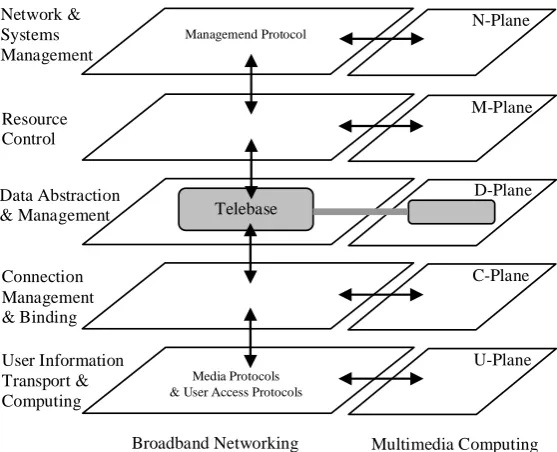
multimedia communication networks [27]. XRM is divided into five distinct functional
planes shown in Figure 2-3. Starting at the top of these are: Network and Systems
Management, Resource Control, Data Abstraction and Management, Connection
Management and Binding, User Information Transport and Computing [27]. The XRM
is based on theoretical work done for guaranteeing QoS requirements in ATM networks
Transmission Perspective and provides QoS to the end-system by using management,
traffic control and information transport functions [27].
N-Plane
M-Plane
D-Plane
C-Plane
U-Plane
Broadband Networking Multimedia Computing Network &
Systems Management
Resource Control
Data Abstraction & Management
Connection Management & Binding User Information Transport & Computing
Telebase
Media Protocols & User Access Protocols
Managemend Protocol
Figure 2-3: Five planes of the XRM Architecture
2.5.2
Quality of Service Architecture (QoS-A)
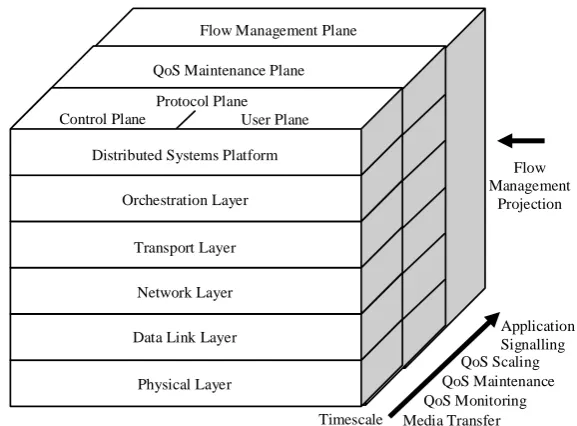
The Quality of Service Architecture (QoS-A) proposed by the COMET group at
Columbia University, New York, USA is shown in Figure 2-4. The QoS-A is a
multi-layer/plane architecture of services and mechanisms for QoS management and control
of continuous media flows in multi-service networks [28]. The QoS-A model
encompasses three key notions: Flows, Service Contracts and Flow Management [28].
Flows characterises the production, transmission and eventual consumption of single
media streams related to QoS [28]. Service Contracts are induced agreements of QoS
levels between users and providers. Flow Management monitors and maintains the
contracted QoS levels. The QoS-A provides an end-to-end QoS framework at the
![Table 4-1: Stages of the Usability Engineering Life Cycle [64]](https://thumb-us.123doks.com/thumbv2/123dok_us/7944568.1318702/101.595.189.409.472.747/table-stages-usability-engineering-life-cycle.webp)