Forgery Attacks on Round-Reduced
ICEPOLE-128
Christoph Dobraunig, Maria Eichlseder, and Florian Mendel
IAIK, Graz University of Technology, Austria
[email protected]
Abstract.
ICEPOLE is a family of authenticated encryptions schemes
submitted to the ongoing CAESAR competition and in addition
pre-sented at CHES 2014. To justify the use of ICEPOLE, or to point out
po-tential weaknesses, third-party cryptanalysis is needed. In this work, we
evaluate the resistance of ICEPOLE-128 against forgery attacks. By
us-ing differential cryptanalysis, we are able to create forgeries from a known
ciphertext-tag pair with a probability of 2
−
60
.
3
for a round-reduced
ver-sion of ICEPOLE-128, where the last permutation is reduced to 4 (out
of 6) rounds. This is a noticeable advantage compared to simply
guess-ing the right tag, which works with a probability of 2
−
128
. As far as we
know, this is the first published attack in a nonce-respecting setting on
round-reduced versions of ICEPOLE-128.
Keywords:
CAESAR, ICEPOLE, forgery, differential cryptanalysis
1
Introduction
ICEPOLE is a family of authenticated encryption schemes, which has been
pre-sented at CHES 2014 [17] and submitted to CAESAR [16]. CAESAR [18] is
an open cryptographic competition aiming to find a suitable portfolio of
au-thenticated encryption algorithms for many use cases. For the first round, 57
candidates have been submitted. Due to the open nature of CAESAR, those
can-didates have different design goals ranging from high-speed software designs to
designs suitable for compact hardware implementations. This makes comparison
of the submitted ciphers difficult, which is nevertheless necessary to determine
the ciphers for the next rounds. However, all designs have one goal in common:
security. Thus, as much security analysis as possible is needed to sort out weak
CAESAR candidates and get insight in the security of the others.
The goal of authenticated encryption is to provide confidentiality and
au-thenticity. Our attacks focus solely on the authenticity in a forgery attack. The
goal is to manipulate known ciphertext-tag pairs in a way such that they are
valid with a certain probability. For ICEPOLE-128, the intended number of bits
of security with respect to authenticity is 128. Therefore we consider only attacks
with a success probability above the generic 2
−
128
applicable.
The method of choice for our attacks is differential cryptanalysis [7]. To create
forgeries, we need differential characteristics which hold with a high probability
and fulfill certain constraints explained later. By using this technique, we are
able to attack versions of ICEPOLE-128 where the last permutation is reduced
to 4 out of 6 rounds. As far as we know, no forgery attacks have been performed
on round-reduced versions of ICEPOLE. In addition, we have analyzed the main
building block of ICEPOLE, its permutation. We were able to improve the
re-sults of the designers regarding high-probability characteristics for the ICEPOLE
permutation without any additional constrains. Our results are summarized in
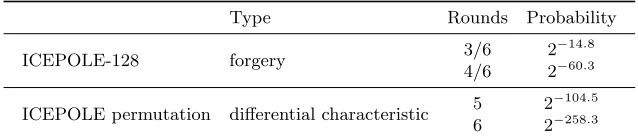
Table 1. Note that we have verified the forgery for 3 rounds practically by using
the reference implementation of ICEPOLE-128 submitted to CAESAR.
Table 1.
Results for ICEPOLE.
Type
Rounds
Probability
ICEPOLE-128
forgery
3/6
2
−
14
.
8
4/6
2
−
60
.
3
ICEPOLE permutation
differential characteristic
5
2
−
104
.
5
6
2
−
258
.
3
Related work.
In the submission document [16], the designers bounded the
minimum number of active S-boxes in a differential characteristic for the
ICE-POLE permutation. They are able to show that for 3 rounds, the minimum
number of active S-boxes is 9, and that there are no characteristics with 13 or
fewer active S-boxes for 4 rounds. In addition, Morawiecki et al. [16]
heuristi-cally searched for differential characteristics. For 5 rounds, their best published
differential characteristic has a probability of 2
−
186
.
2
, and for 6 rounds 2
−
555
.
3
.
Recently, Huang et al. [13] presented state-recovery attacks on ICEPOLE in
a nonce-misuse scenario. They show that in this scenario, the internal state of
ICEPOLE-128 and ICEPOLE-128a can be recovered with complexity 2
46
, and
the internal state of ICEPOLE-256a with complexity 2
60
.
Outline.
The remainder of the paper is organized as follows. We describe the
design of ICEPOLE in Section 2. Afterwards, we give a high-level overview
about the techniques used to find suitable differential characteristics in Section 3,
followed by our attacks on round-reduced versions of ICEPOLE in Section 4.
Finally, we conclude in Section 5.
2
Description of ICEPOLE
In case of disagreement between the specifications of ICEPOLE-128 in the CHES
and CAESAR documents, we always stick to the version submitted to CAESAR
and the available reference implementations of this version.
2.1
Mode of Operation
ICEPOLE uses a duplex-like [5] mode of operation, which operates on an internal
state of 1280 bits. This state
S
is represented as 20 64-bit words
S
[0
..
3][0
..
4].
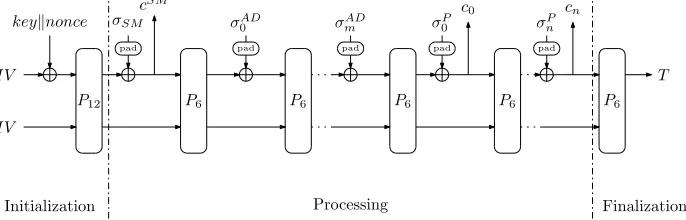
Bits on the same position of all 20 words are called slice. The encryption (as well
as the decryption) can be split into the three subsequent phases: initialization,
processing of data, and finalization (tag generation), and is shown in Fig. 1.
P
12
σ
AD
0
P
6
IV
IV
Initialization
Processing
Finalization
key
k
nonce
σ
SM
c
SM
pad
P
6
σ
AD
m
P
6
σ
P
0
c
0
pad
P
6
pad pad
σ
P
n
c
n
P
6
padT
Fig. 1.
Encryption of ICEPOLE-128.
Initialization.
First, the state
S
is initialized with a constant value. Afterwards,
the 128-bit key and the 128-bit nonce are xored to the internal state. Then, the
12-round variant
P
12
of the ICEPOLE permutation is applied.
Processing of Data.
For processing, the associated data and the plaintext are
split into 1024-bit blocks, with possibly smaller last blocks. Each of these blocks
is padded to 1026 bits. The padding rule is to append a frame bit, followed by
a single 1 and zeros until 1026 bits are reached.
After the initialization, the padded secret message number
σ
SM
is xored
to the internal state and
c
SM
is extracted. Then, 6 rounds of the ICEPOLE
permutation
P
6
are applied. After the processing of the secret message number,
the associated data blocks
σ
AD
i
are padded and injected, separated by the
6-round ICEPOLE permutation
P
6
. The plaintext blocks
σ
i
P
are processed in a
similar way, except that ciphertext blocks
c
i
are extracted. For easier comparison
with other sponge-based [3,4] primitives, we move the last permutation call
P
6
Finalization.
Since we moved the last permutation call of the processing to
the finalization, the finalization starts with calling
P
6
. Afterwards, the 128-bit
tag
T
is extracted from the state:
T
=
S
[0][0]
k
S
[1][0]
.
2.2
Permutation
Two variants of the ICEPOLE permutation are used: One with 6 rounds,
P
6
, and
one with 12 rounds,
P
12
. Each round
R
consists of five steps,
R
=
κ
◦
ψ
◦
π
◦
ρ
◦
µ
.
–
µ: Mixing of every 20-bit slice through an MDS matrix over
GF
(2
5
).
–
ρ: Rotation within all 64-bit words.
–
π: Reordering of 64-bit words (words are swapped).
–
ψ: Parallel application of 256 identical 5-bit S-boxes.
–
κ: Constant addition.
For a detailed description of
κ
,
ψ
,
π
,
ρ
, and
µ
, we refer to the CAESAR
design document [16].
3
Search for Differential Characteristics
As we will see later, the existence of differential characteristics holding with
a high probability is crucial for our attacks on round-reduced ICEPOLE-128.
Since ICEPOLE-128 is a bit-oriented construction, automatic search tools are
helpful for finding complex differential characteristics with a high probability.
ICEPOLE-128 has a rather big internal state of 1280 bits involving many
oper-ations per permutation round. Therefore, we have decided to use the
guess-and-determine techniques already used for several attacks on hash functions [12,14,15]
together with a greedy strategy, which has already been used to find differential
characteristics with a high probability for SipHash [10].
We first describe the used concepts for representing differences within the
used automatic search tool and propagating them in Section 3.1. Then, we give
a high-level overview of our search strategy in Section 3.2.
3.1
Generalized Conditions and Propagation
Table 2.
Generalized conditions [8].
x, x
0
0
,
0
1
,
0
0
,
1
1
,
1
?
X
X
X
X
-
X
−
−
X
x
−
X
X
−
0
X
−
−
−
u
−
X
−
−
n
−
−
X
−
1
−
−
−
X
#
−
−
−
−
x, x
0
0
,
0
1
,
0
0
,
1
1
,
1
3
X
X
−
−
5
X
−
X
−
7
X
X
X
−
A
−
X
−
X
B
X
X
−
X
C
−
−
X
X
D
X
−
X
X
E
−
X
X
X
Apart from the representation, the propagation of differences (or in this case
of the generalized conditions) through the components of the ICEPOLE
permu-tation has to be modeled. Here, we make the distinction between the linear part
of one round, consisting of the application of
µ
,
ρ
, and
π
, and the nonlinear part
ψ
, which is the application of 256 5-bit S-boxes. The propagation for each S-box
is done by exhaustively calculating all possible solutions for given input and
output differences (basically look-ups in the difference distribution table). The
propagation of the linear part of each round is modeled by techniques described
in [11].
3.2
Search Strategy
On a high level, our search strategy can be split into the following two phases:
1. Search for a valid characteristic with a low number of active S-boxes.
2. Optimize the probability of the characteristic.
The first phase primarily serves to narrow the search space for the second
phase. In this first phase, we search for truncated differentials with as few
dif-ferentially active S-boxes as possible. In this context, an S-box is called active
if there are differences on its inputs and outputs. The number of active S-boxes
sets an upper bound on the best possible probability of a characteristic, since
the maximum differential probability of the ICEPOLE S-box is 2
−
2
.
4
The Attack
The first thing to do when analyzing a cryptographic primitive is to find a
promising point to attack. Thus, we explain the observations that have led to
the attack on the finalization of ICEPOLE-128 using differential cryptanalysis
in Section 4.1. After that, we discuss our first findings regarding forgeries in
Section 4.2, and explain the trick leading to an improvement of the attack in
Section 4.3. Finally, in Section 4.4, we show characteristics for 5 and 6 rounds
of the ICEPOLE permutation which are not suitable for a forgery, but have a
better probability than the best characteristics published by the designers [16].
4.1
Basic Attack Strategy
ICEPOLE uses a sponge-like mode of operation like several other CAESAR
can-didates including
Ascon
[9],
Keyak
[6], or NORX [1,2]. When comparing those
Sponge constructions with ICEPOLE, it is noticeable that the last permutation,
which separates the last plaintext injection from the extraction of the tag, has
much fewer rounds in the case of ICEPOLE compared to the others.
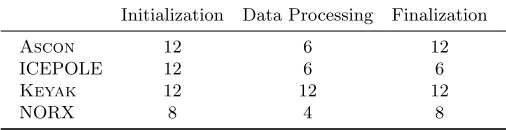
For more detail, we have a closer look at the number of permutation rounds
during the three different stages for the proposals of
Ascon
, ICEPOLE,
Keyak
,
and NORX, which have the same security level of 128 bits. The number of rounds
in each stage for these four primitives is given in Table 3. We can see that for
As-con
and NORX, the number of rounds for data processing is reduced compared
to finalization and initialization and for all three competitors of ICEPOLE, the
finalization is equally strong as the initialization. In the case of ICEPOLE, the
permutation used in the finalization has the same number of rounds as the
per-mutation during the processing of data, and thus just half of the rounds of the
permutation used during the initialization. So it is interesting to evaluate if the
designers of the competitors of ICEPOLE have been overly conservative in the
design of their respective finalization, or if their decision to invest more rounds
can be justified.
Table 3.
Permutation rounds for some sponge-like CAESAR candidates.
Initialization
Data Processing
Finalization
Ascon
12
6
12
ICEPOLE
12
6
6
Keyak
12
12
12
4.2
Creating Forgeries
In this section, we first describe the principles of our attack on a high level.
Afterwards, we discuss our preliminary results regarding suitable characteristics
when just considering the 1024 bits of the ciphertext blocks to inject differences.
Attack Strategy.
For creating forgeries with the help of differential
charac-teristics, we have in principle two attack points in sponge-like constructions as
ICEPOLE-128. We can either attack the data processing, or we can perform
the attack on the finalization. In both cases, the key to a successful attack lies
in the search for a suitable differential characteristic which holds with a high
probability.
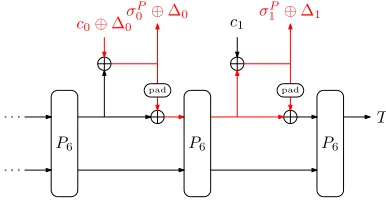
Fig. 2 shows how a forgery during the processing of the data works. This
approach requires a differential characteristic with differences only in those parts
of the state that can be modified with message blocks, while the rest of the state
has to remain free of differences. In other words, we search for a characteristic
capable of producing collisions on the internal state. If we have found such a
characteristic with input difference
∆
0
that holds with probability 2
−x
, we can
create a forgery which succeeds with probability 2
−x
as follows: Assume we know
a valid ciphertext-tag pair consisting of two ciphertext blocks (
c
0
k
c
1
,
T
). Then,
the ciphertext-tag pair (
c
0
⊕
∆
0
k
c
1
,
T
) is valid with probability 2
−x
. Thus, a
valid forgery can be created with complexity 2
x
.
P6
σ
P
0
⊕
∆
0
c
0
⊕
∆
0
pad
P6
T
P6
σ
P
1
⊕
∆
1
c
1
pad
Fig. 2.
Forgery during data processing.
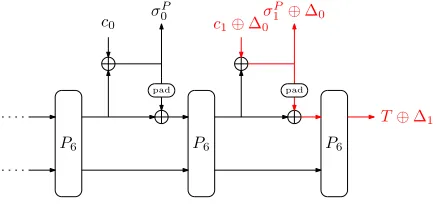
The second option, attacking the finalization, is pictured in Fig. 3. In contrast
to the previous attack, the requirements on a suitable characteristic can be
relaxed. Here, we do not require a collision. It is sufficient that the difference
∆
1
for the tag
T
is known. The actual difference in the rest of the state does not
matter in this attack. In other words, a forgery can be created from a known
ciphertext-tag (
c
0
k
c
1
,
T
) by applying suitable differences to
c
1
and
T
to get
(
c
0
k
c
1
⊕
∆
0
,
T
⊕
∆
1
).
P
6
σ
P
0
c
0
pad
P
6
T
⊕
∆
1
P
6
σ
P
1
⊕
∆
0
c
1
⊕
∆
0
pad
Fig. 3.
Forgery during finalization.
less restrictive when attacking the finalization. Thus, attacks on the finalizations
are easier to achieve. In addition, the fact that the linear layer is located before
the application of the S-boxes comes in handy. ICEPOLE has a state size of 1280
bits. For the generation of the tag, only 128 bits of the 1280 bits are extracted.
The other bits do not influence the tag. Since the S-boxes are located at the end
of the permutation, 128 of the 256 S-boxes of the last round have no influence on
the tag and therefore, do not contribute to the probability of creating a forgery.
Moreover, the other 128 S-boxes of the last round only contribute a single bit,
which also has a positive effect on the total probability.
Suitable Characteristics.
As discussed before, we need characteristics with a
good probability, where the input differences lie in the part of the state that can
be controlled by a ciphertext block, and where as many of the active S-boxes as
possible lie in parts which do not contribute to the probability. However, before
we present our results, we describe the findings of the designers [16] and the
results by Huang et al. [13].
The designers of ICEPOLE already searched for differential characteristics
without any special restrictions. They have found characteristics for 3 rounds
with probability 2
−
18
.
4
, 4 rounds with 2
−
52
.
8
, 5 rounds with 2
−
186
.
2
and 6 rounds
with 2
−
555
.
5
. Indeed, when considering that the last round of ICEPOLE only
contributes partially to the probability, these results look promising from the
perspective of an attacker. However, as already observed by Huang et al. [13],
these characteristics cannot be used for attacks on the cipher. They showed
that if only 1024 bits of a message block are considered suitable for introducing
differences, it is impossible to find a 3-round path with 9 active S-boxes in the
form 4-1-4. Moreover, they show that the minimum number of active S-boxes in
the first round is 2 in this case.
Our search for suitable characteristics supports their result. If we just
con-sider the 1024 bits of the message block suitable for differences, we can create
forgeries for 3 rounds with probability 2
−
25
.
3
and, for 4 rounds with a probability
close to 2
−
128
. However, in the next section, we explain how we improved the
probability for the 4-round attack to 2
−
60
.
3
by exploiting the padding rule of the
4.3
Exploiting the Padding
ICEPOLE uses at most 1024-bit message blocks, which are padded to 1026 bits
by appending a frame bit, which is 0 for the last plaintext block, followed by a
single 1 and as many zeros until 1026 bits are reached. So using, for instance, a
1016-bit block and a 1024-bit block (where the last byte fulfills the padding rule
applied to the 1016-bit block) virtually flips a bit in an otherwise unaccessible
part of the state. By using this trick, we are able to use characteristics where
only one S-box is active in the first round.
With these improved differential characteristics, we are able to create
forg-eries for ICEPOLE-128 with the finalization reduced to 3 (out of 6) rounds with
probability 2
−
14
.
8
, and for 4 rounds (out of 6) with probability 2
−
60
.
3
. The
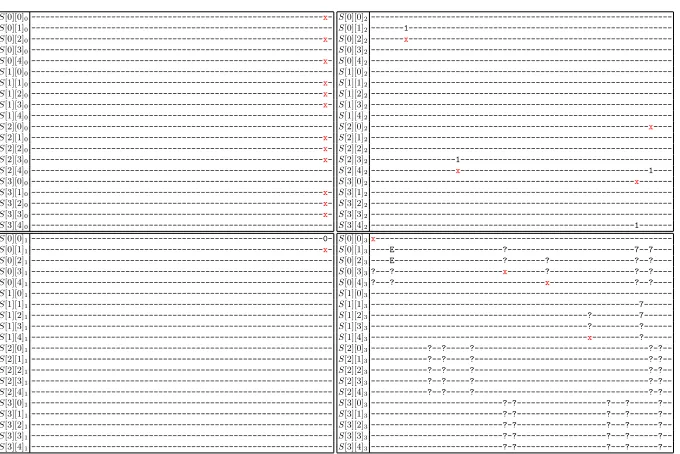
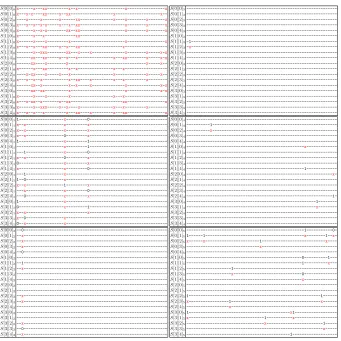
char-acteristics for the 3-round attack can be found in Table 4, and for the 4-round
attack in Table 5 of Appendix A.
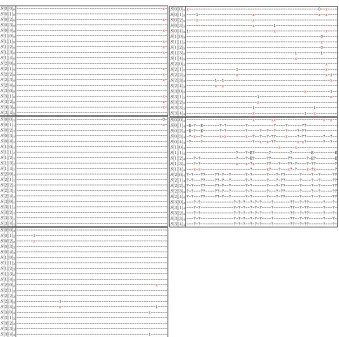
The 3-round attack on ICEPOLE-128 has been verified using the reference
implementation ICEPOLE128v1 submitted to CAESAR with a modified number
of rounds for permutation
P
6
. We fixed a random key at the beginning and
encrypted random 1024-bit messages (last byte of messages has to be equal to
the padding
0x2
) with random nonces to get 1024-bit ciphertexts. The forgeries
are created by applying the difference shown in Table 4 to ciphertext and tag
and discarding the last byte of the ciphertext. Removing the last byte of the
ciphertext introduces a difference at bit 1026. Backed up by our experiments
(2
28
message-tag pairs), a forgery for round-reduced ICEPOLE-128, where the
finalization is reduced to 3 out of 6 rounds, can be created with probability 2
−
11
.
7
.
For the 4-round attack, the probability is too low to be verified experimentally.
However, parts of the used characteristic which have a high probability have
been verified.
To introduce differences with the help of the padding, we can either extend
or truncate known ciphertexts. As already discussed before, creating forgeries
by truncating the last byte of the ciphertext only works if the last byte of the
message before encryption equals the padding. Extending 1016-bit ciphertexts
requires to guess 8 bits of the internal state correctly and hence decreases the
probability by 2
−
8
. In the case of messages consisting of a fractional number of
bytes, 1022-bit ciphertexts can be extended, leading to a decrease of 2
−
2
.
4.4
Characteristics for the Permutation
We also considered characteristics without any special restrictions. We have been
able to improve the results published in the design documents. We have found
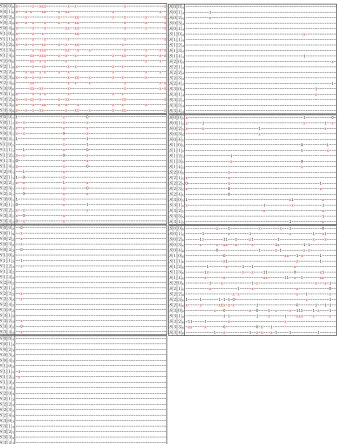
a 5-round characteristic with an estimated probability of 2
−
104
.
5
and a 6-round
characteristic with an estimated complexity of 2
−
258
.
4
. The characteristics are
5
Conclusion
In this work, we have analyzed the resistance of ICEPOLE-128 against forgery
attacks. Our attacks work for versions of ICEPOLE-128 where the permutation
used during the finalization is reduced to 4 (out of 6) rounds. This means that
ICEPOLE-128 has a security margin of 2 rounds, which is lower than the 3
rounds expected by the designers [16].
Acknowledgments.
The work has been supported in part by the Austrian
Science Fund (project P26494-N15) and by the Austrian Research Promotion
Agency (FFG) and the Styrian Business Promotion Agency (SFG) under grant
number 836628 (SeCoS).
References
1. Aumasson, J., Jovanovic, P., Neves, S.: NORX. Submission to the CAESAR
com-petition:
http://competitions.cr.yp.to/round1/norxv1.pdf
(2014)
2. Aumasson, J., Jovanovic, P., Neves, S.: NORX: Parallel and Scalable AEAD. In:
Kutylowski, M., Vaidya, J. (eds.) Computer Security – ESORICS 2014, Part II.
LNCS, vol. 8713, pp. 19–36. Springer (2014)
3. Bertoni, G., Daemen, J., Peeters, M., Van Assche, G.: Sponge Functions. ECRYPT
Hash Workshop 2007 (May 2007)
4. Bertoni, G., Daemen, J., Peeters, M., Van Assche, G.: On the Indifferentiability of
the Sponge Construction. In: Smart, N.P. (ed.) Advances in Cryptology –
EURO-CRYPT 2008. LNCS, vol. 4965, pp. 181–197. Springer (2008)
5. Bertoni, G., Daemen, J., Peeters, M., Van Assche, G.: Duplexing the Sponge:
Single-Pass Authenticated Encryption and Other Applications. In: Miri, A.,
Vau-denay, S. (eds.) Selected Areas in Cryptography – SAC 2011. LNCS, vol. 7118, pp.
320–337. Springer (2011)
6. Bertoni, G., Daemen, J., Peeters, M., Van Assche, G., Van Keer, R.: Keyak.
Sub-mission to the CAESAR competition:
http://competitions.cr.yp.to/round1/
keyakv1.pdf
(2014)
7. Biham, E., Shamir, A.: Differential Cryptanalysis of DES-like Cryptosystems. J.
Cryptology 4(1), 3–72 (1991)
8. De Canni`
ere, C., Rechberger, C.: Finding SHA-1 Characteristics: General Results
and Applications. In: Lai, X., Chen, K. (eds.) Advances in Cryptology –
ASI-ACRYPT 2006. LNCS, vol. 4284, pp. 1–20. Springer (2006)
9. Dobraunig, C., Eichlseder, M., Mendel, F., Schl¨
affer, M.: Ascon. Submission
to the CAESAR competition:
http://competitions.cr.yp.to/round1/asconv1.
(2014)
10. Dobraunig, C., Mendel, F., Schl¨
affer, M.: Differential Cryptanalysis of SipHash.
In: Joux, A., Youssef, A.M. (eds.) Selected Areas in Cryptography – SAC 2014.
LNCS, vol. 8781, pp. 165–182. Springer (2014)
12. Eichlseder, M., Mendel, F., Schl¨
affer, M.: Branching heuristics in differential
colli-sion search with applications to SHA-512. In: Cid, C., Rechberger, C. (eds.) Fast
Software Encryption – FSE 2014. LNCS, vol. 8540, pp. 473–488. Springer (2014)
13. Huang, T., Tjuawinata, I., Wu, H.: Differential-linear cryptanalysis of ICEPOLE.
In: Leander, G. (ed.) Fast Software Encryption – FSE 2015. LNCS, vol. 9054, pp.
243–263. Springer (2015)
14. Mendel, F., Nad, T., Schl¨
affer, M.: Finding SHA-2 Characteristics: Searching
through a Minefield of Contradictions. In: Lee, D.H., Wang, X. (eds.) Advances in
Cryptology – ASIACRYPT 2011. LNCS, vol. 7073, pp. 288–307. Springer (2011)
15. Mendel, F., Nad, T., Schl¨
affer, M.: Improving Local Collisions: New Attacks on
Reduced SHA-256. In: Johansson, T., Nguyen, P.Q. (eds.) Advances in Cryptology
– EUROCRYPT 2013. LNCS, vol. 7881, pp. 262–278. Springer (2013)
16. Morawiecki, P., Gaj, K., Homsirikamol, E., Matusiewicz, K., Pieprzyk, J.,
Ro-gawski, M., Srebrny, M., W´
ojcik, M.: ICEPOLE. Submission to the CAESAR
competition:
http://competitions.cr.yp.to/round1/icepolev1.pdf
(2014)
17. Morawiecki, P., Gaj, K., Homsirikamol, E., Matusiewicz, K., Pieprzyk, J.,
Ro-gawski, M., Srebrny, M., W´
ojcik, M.: ICEPOLE: High-Speed, Hardware-Oriented
Authenticated Encryption. In: Batina, L., Robshaw, M. (eds.) Cryptographic
Hard-ware and Embedded Systems – CHES 2014. LNCS, vol. 8731, pp. 392–413. Springer
(2014)
A
Differential Characteristics
Table 4.
3-round characteristic suitable for forgery with probability 2
−
14
.
8
.
S[0][0]0---x-S[0][1]0
---S[0][2]0---x
-S[0][3]0
---S[0][4]0---x
-S[1][0]0
---S[1][1]0---x
-S[1][2]0---x
-S[1][3]0---x
-S[1][4]0
---S[2][0]0
---S[2][1]0---x
-S[2][2]0---x
-S[2][3]0---x
-S[2][4]0
---S[3][0]0
---S[3][1]0---x
-S[3][2]0---x
-S[3][3]0---x
-S[3][4]0
---S[0][0]1
---0-S[0][1]1---x
-S[0][2]1
---S[0][3]1
---S[0][4]1
---S[1][0]1
---S[1][1]1
---S[1][2]1
---S[1][3]1
---S[1][4]1
---S[2][0]1
---S[2][1]1
---S[2][2]1
---S[2][3]1
---S[2][4]1
---S[3][0]1
---S[3][1]1
---S[3][2]1
---S[3][3]1
---S[3][4]1
---S[0][0]2
---S[0][1]2
---1---S[0][2]2---x
---S[0][3]2
---S[0][4]2
---S[1][0]2
---S[1][1]2
---S[1][2]2
---S[1][3]2
---S[1][4]2
---S[2][0]2---x
----S[2][1]2
---S[2][2]2
---S[2][3]2
---1---S[2][4]2---x
---1----S[3][0]2---x
---S[3][1]2
---S[3][2]2
---S[3][3]2
---S[3][4]2
---1---S[0][0]3x
---S[0][1]3
----E---?---7--7----S[0][2]3
----E---?---?---?--?----S[0][3]3?---?---x
---?---?--?----S[0][4]3?---?---x
---?--?----S[1][0]3
---S[1][1]3
---7---S[1][2]3
---?---7---S[1][3]3
---?---?---S[1][4]3---x
---?---S[2][0]3
---?--?---?---?-?--S[2][1]3
---?--?---?---?-?--S[2][2]3
---?--?---?---?-?--S[2][3]3
---?--?---?---?-?--S[2][4]3
---?--?---?---?-?--S[3][0]3
---?-?---?---?---?--S[3][1]3
---?-?---?---?---?--S[3][2]3
---?-?---?---?---?--S[3][3]3
---?-?---?---?---?--Table 5.
4-round characteristic suitable for forgery with probability 2
−
60
.
3
.
S[0][0]0---x
-S[0][1]0 ---S[0][2]0---x
-S[0][3]0 ---S[0][4]0---x
-S[1][0]0 ---S[1][1]0---x
-S[1][2]0---x
-S[1][3]0---x
-S[1][4]0 ---S[2][0]0 ---S[2][1]0---x
-S[2][2]0---x
-S[2][3]0---x
-S[2][4]0 ---S[3][0]0 ---S[3][1]0---x
-S[3][2]0---x
-S[3][3]0---x
-S[3][4]0 ---S[0][0]1
---0-S[0][1]1---x
-S[0][2]1 ---S[0][3]1 ---S[0][4]1 ---S[1][0]1 ---S[1][1]1 ---S[1][2]1 ---S[1][3]1 ---S[1][4]1 ---S[2][0]1 ---S[2][1]1 ---S[2][2]1 ---S[2][3]1 ---S[2][4]1 ---S[3][0]1 ---S[3][1]1 ---S[3][2]1 ---S[3][3]1 ---S[3][4]1 ---S[0][0]2 ---S[0][1]2
---1---S[0][2]2---x
---S[0][3]2 ---S[0][4]2 ---S[1][0]2 ---S[1][1]2 ---S[1][2]2 ---S[1][3]2 ---S[1][4]2 ---S[2][0]2---x
----S[2][1]2 ---S[2][2]2 ---S[2][3]2
---1---S[2][4]2---x
---1----S[3][0]2---x
---S[3][1]2 ---S[3][2]2 ---S[3][3]2 ---S[3][4]2
---1---S[0][0]3x---0--x
----S[0][1]3----1---x---x--x
----S[0][2]3----x---x
---S[0][3]3---x
---1---S[0][4]31---x---x
----S[1][0]3
---0---S[1][1]3---x
---S[1][2]3
---0---S[1][3]3
---1---1---S[1][4]3---x
---S[2][0]3---x
----S[2][1]3---1---x
----S[2][2]3---x---x -1--S[2][3]3---1--1---x
--S[2][4]3---x--x
---S[3][0]3---x
---1--S[3][1]3---1---x
--S[3][2]3---x
---S[3][3]3
---1---1---S[3][4]3---x---1---x
---S[0][0]4---x---xx---x--x
--S[0][1]4
-E-?--E---?-?---?---?----?---?7---S[0][2]4 -E-?--E---?-?---?---?--?--?----?----?-??---S[0][3]4-?-x--?---x-x---x--?--?--?-??----x
----?-??---?--?--S[0][4]4-?----?---?--x--x-??---x-x ?---?--?--S[1][0]4---x---x
---S[1][1]4---?---?-E?---7---7---E---E
S[1][2]4---?-?---?---?-E?---??---??---?-E?---E
S[1][3]4---?-?---x---x-?x---??---?---??-?----?-??---?
S[1][4]4---x-x---?---x?---?---x?-?----x-?x---?
S[2][0]4?-?---??----??-?--?---?-?---?---?-??---?----?--?---??
S[2][1]4?-?---??----??-?--?---?-?---?---?-??---?----?--?---??
S[2][2]4?-?---??----??-?--?---?-?---?---?-??---?----?--?---??
S[2][3]4?-?---??----??-?--?---?-?---?---?-??---?----?--?---??
S[2][4]4?-?---??----??-?--?---?-?---?---?-??---?----?--?---??
S[3][0]4
---?-?---?-?-?--?-?-?----?---??--?-??---?---?-S[3][1]4
---?-?---?-?-?--?-?-?----?---??--?-??---?---?-S[3][2]4
---?-?---?-?-?--?-?-?----?---??--?-??---?---?-S[3][3]4
---?-?---?-?-?--?-?-?----?---??--?-??---?---?-Table 6.
5-round characteristic with probability 2
−
104
.
5
.
S[0][0]0x---x---xx---x--x---x---x
S[0][1]0x---x-x----xx---x--xx---x---x
--S[0][2]0----x---x---x---xx---x----x---x---x
S[0][3]0x---x--x--x-x---x---x--xx---x---x---x
S[0][4]0x---x--x-x---xx--xx---x---x---x
S[1][0]0x---x---x---xx
---S[1][1]0x---x----x---x---x---x
S[1][2]0x---x--x---xx---x--x---xx---x
---S[1][3]0---x--xxx---xx---x----x---x---x---x-x S[1][4]0---xx---xx---x--x---x---x---xx---x---x-x S[2][0]0---xx----x---x---x---x
--S[2][1]0x---x---xx---x--x---x---x
---S[2][2]0----x-xx----x---x---x---x---x---x
--S[2][3]0x---x--x--x---x--xx----x---x---x---x
---S[2][4]0---xx--x---x--x---x---x---x-x S[3][0]0---xx--xx---x---x---x-x S[3][1]0x---x----x---x---x---x
---S[3][2]0x---x-xx--x---x--xx---xx---x
S[3][3]0x---x--xxx---x--x----x---x---x---x
---S[3][4]0x---x--x---x---x---xx----x---x---xx---x
S[0][0]11---x
---0---S[0][1]1x--x---x---x
---S[0][2]1x--x---x---x
---S[0][3]1x--x---0---x
---S[0][4]11---x
---1---S[1][0]1---x
---1---S[1][1]1---1---x
---0---S[1][2]1x--x---0---x
---S[1][3]10---x---x
---S[1][4]1x---x
---0---S[2][0]1---1---x
---S[2][1]11--0---x
---S[2][2]1x--x---1---x
---S[2][3]1---x---x
---0---S[2][4]1---0---x---x
---S[3][0]11---x
---S[3][1]10---x
---1---S[3][2]1x--x---x
---S[3][3]1x--0---x
---S[3][4]10--x---x
---S[0][0]2
--0---S[0][1]2--x
---S[0][2]2--x
---S[0][3]2--x
---S[0][4]2
--0---S[1][0]2 ---S[1][1]2
--1---S[1][2]2--x
---S[1][3]2 ---S[1][4]2 ---S[2][0]2 ---S[2][1]2 ---S[2][2]2--x
---S[2][3]2--x
---S[2][4]2 ---S[3][0]2 ---S[3][1]2 ---S[3][2]2--x
---S[3][3]2
--0---S[3][4]2--x
---S[0][0]3 ---S[0][1]3 ---S[0][2]3 ---S[0][3]3 ---S[0][4]3 ---S[1][0]3 ---S[1][1]3 -1---S[1][2]3-x ---S[1][3]3 ---S[1][4]3 ---S[2][0]3 ---S[2][1]3 ---S[2][2]3 ---S[2][3]3 ---S[2][4]3 ---S[3][0]3 ---S[3][1]3 ---S[3][2]3 ---S[3][3]3 ---S[3][4]3 ---S[0][0]4 ---S[0][1]4
---1---S[0][2]4---x
---S[0][3]4 ---S[0][4]4 ---S[1][0]4---x
---S[1][1]4 ---S[1][2]4 ---S[1][3]4 ---S[1][4]4
---1---S[2][0]4---x
-S[2][1]4 ---S[2][2]4 ---S[2][3]4 ---S[2][4]4
---1-S[3][0]4
---1---S[3][1]4---x
---S[3][2]4 ---S[3][3]4 ---S[3][4]4 ---S[0][0]5
---1---0-S[0][1]51---1---x---1--x
-S[0][2]5x---x---1---x
----S[0][3]5---x
---S[0][4]5 ---S[1][0]5
---0---1---S[1][1]5---1---x
---S[1][2]5
---1---S[1][3]5---x
---0---S[1][4]5---x
---S[2][0]5 ---S[2][1]5 ---S[2][2]5
1---1---S[2][3]5x---1---x
---S[2][4]5---x
---S[3][0]51---x 1---S[3][1]5x---1---x
---S[3][2]5---x
---1---S[3][3]5---x
---1---Table 7.
6-round characteristic with probability 2
−
258
.
3
.
S[0][0]0x---x--xxx---x--x---x---x
S[0][1]0x---x-x----xx---x--xx---x---x
--S[0][2]0----x---x---xx---x----x---x---x
S[0][3]0x---x--x----x---x---x--xx---x---x---x
S[0][4]0x---x----x---xx--xx---x---x---x
S[1][0]0x---x---x---xx
---S[1][1]0x---x----x---x---x---x
S[1][2]0x---x--x---xx---x--x---xx---x
---S[1][3]0---x--xxx---xx---x----x---x---x---x-x S[1][4]0---xx--xxx---x--x---x---x---xx---x---x-x S[2][0]0---xx--x-x---x---x---x
--S[2][1]0x---x---xx---x--x---x---x
---S[2][2]0----x-xx--x-x---x---x---x---x---x
--S[2][3]0x---x--x--x---x--xx----x---x---x---x
---S[2][4]0---xx---x--x---x---x---x-x S[3][0]0---xx--xx---x---x---x-x S[3][1]0x---x--x-x---x---x---x
---S[3][2]0x---x-xx--x---x--xx---xx---x
S[3][3]0x---x---xx---x--x----x---x---x---x
---S[3][4]0x---x--x--xx---x---xx----x---x---xx---x
S[0][0]11---x
---0---S[0][1]1x--x---x---x
---S[0][2]1x--x---x---x
---S[0][3]1x--x---0---x
---S[0][4]11---x
---1---S[1][0]1---x
---1---S[1][1]1---1---x
---0---S[1][2]1x--x---0---x
---S[1][3]10---x---x
---S[1][4]1x---x
---0---S[2][0]1---1---x
---S[2][1]11--0---x
---S[2][2]1x--x---1---x
---S[2][3]1---x---x
---0---S[2][4]1---0---x---x
---S[3][0]11---x
---S[3][1]10---x
---1---S[3][2]1x--x---x
---S[3][3]1x--0---x
---S[3][4]10--x---x
---S[0][0]2
--0---S[0][1]2--x
---S[0][2]2--x
---S[0][3]2--x
---S[0][4]2
--0---S[1][0]2 ---S[1][1]2
--1---S[1][2]2--x
---S[1][3]2 ---S[1][4]2 ---S[2][0]2 ---S[2][1]2 ---S[2][2]2--x
---S[2][3]2--x
---S[2][4]2 ---S[3][0]2 ---S[3][1]2 ---S[3][2]2--x
---S[3][3]2
--0---S[3][4]2--x
---S[0][0]3 ---S[0][1]3 ---S[0][2]3 ---S[0][3]3 ---S[0][4]3 ---S[1][0]3 ---S[1][1]3 -1---S[1][2]3-x ---S[1][3]3 ---S[1][4]3 ---S[2][0]3 ---S[2][1]3 ---S[2][2]3 ---S[2][3]3 ---S[2][4]3 ---S[3][0]3 ---S[3][1]3 ---S[3][2]3 ---S[3][3]3 ---S[3][4]3 ---S[0][0]4 ---S[0][1]4
---1---S[0][2]4---x
---S[0][3]4 ---S[0][4]4 ---S[1][0]4---x
---S[1][1]4 ---S[1][2]4 ---S[1][3]4 ---S[1][4]4
---1---S[2][0]4---x
-S[2][1]4 ---S[2][2]4 ---S[2][3]4 ---S[2][4]4
---1-S[3][0]4
---1---S[3][1]4---x
---S[3][2]4 ---S[3][3]4 ---S[3][4]4 ---S[0][0]5x
---1---0-S[0][1]5x---1---x---1--x
-S[0][2]5x---x---1---x
----S[0][3]5---x
---S[0][4]5 ---S[1][0]5
---0---1---S[1][1]5---1---x
---S[1][2]5
---1---S[1][3]5---x
---0---S[1][4]5---x
---S[2][0]5---x
---S[2][1]5x---x
---S[2][2]50---x
---1---S[2][3]5x---0---x
---S[2][4]5
---0---S[3][0]51---x1---x
---S[3][1]5x---1---x
---1---S[3][2]5---x---x
---S[3][3]5
---1---S[3][4]5---1---x
---S[0][0]6---x----1---x---x
---1---0---S[0][1]6---1---x---1---x---1---x 1----S[0][2]6---1x---11---1---x1---1---x----x
----S[0][3]6---x---x--xx---x---x---1x ---1-1---S[0][4]6---0---1---x-1---x-x ---S[1][0]6---0---xx---1-x
---1---S[1][1]6---x1---x
---1---S[1][2]6---1---x---1---1---x
---S[1][3]6---1x---x---x----11---0---x 1---S[1][4]6---x---x---xx---11--x--1---xx
---S[2][0]6---1----x---1-x---x---x -1--S[2][1]6---x---1---x---x
---0--S[2][2]6---x-x---x---1---x
--S[2][3]61---1---1-1-1-0---x
---1--S[2][4]6x---x---x1x-x-x ---1---0---1---1-1--S[3][0]6---x---0---x--0----1--x---x--111----1-x
----1--S[3][1]6---1-1---1----x---1----xxx----x---x
--S[3][2]6-11---1---x---x
---S[3][3]6-xx---x
![Table 2. Generalized conditions [8].](https://thumb-us.123doks.com/thumbv2/123dok_us/7937553.1317823/5.612.164.453.129.249/table-generalized-conditions.webp)