60 | P a g e
AN EFFICIENT LOW COST OF DATA LOGGER
TRACKING SYSTEM
Korra Janu Naik
1, L. Srinivas Reddy
2 1Pursuing M.Tech (ES),
2Assistant Professor,
Nalanda Institute of Engineering and Technology (NIET), Siddharth Nagar, Kantepudi (V),
Sattenpalli (M), Guntur Dist, A.P. (India)
ABSTRACT
The system provides a compact battery-powered system that monitors the temperature, gas, humidity, and
intensity of light in indoor areas, which sends the measured data using the existent wireless infrastructure,
supported the IEEE 802.11 b/g standards. The resulted device’s characteristics and performance are
comparable to those provided by recognizing solutions, such as ZigBee-based device nodes. By replacing
ZigBee with Wi-Fi property with close sensors, this resolution is often used for the remote gathering and more
process of measuring the sensor data in real time manner. Hence it is easy to monitor the data through IP
address via WI-FI module and can also the view the data in smart mobile phone where it should require internet
connection.
Keywords:
WI-FI, Humidity, LDR, Gas and Temperature Sensor
I.
INTRODUCTION
INDOOR air quality (IAQ) represents a very important issue affecting the comfort, the health and conjointly the
protection of building occupants. IAQ issues result in a collection of symptoms, including headaches, dizziness,
difficulties in concentration and others, brought up as “sick building syndrome” (SBS). Basic measurements and
CO2, will offer data helpful in determination such problems. the current paper presents the event of a compact
powered system, that monitors the humidity ,and temperature, the carbonic acid gas level, absolutely the
pressure and therefore the intensity of sunshine in indoor areas, and that sends the measuring information
exploitation the existent wireless infrastructure supported the IEEE 802.11 b/g standards. This provides the
likelihood of the remote gathering and more processing of information from an outsized range of such wireless
sensing systems. What is more, by combining wireless property with close sensors, this answer is used for
reducing the overall energy consumption of a whole building.
The characteristics of the developed device, specifically reduced dimensions, low power consumption, high
flexibility and robustness, create it appropriate for its use as a node in an exceedingly wireless sensor network
(WSN) or in a web of Things (IoT) scenario. The reduced energy profile is achieved by the employment of a
coffee power core microcontroller, associated of a non-dispersive infrared detector (NDIR) for dioxide
measurements, having the lowest power consumption on the market. The temperature and ratio detector includes
61 | P a g e
sensors, mensuration pressure and lightweight intensity, are less power hungry than these, intense five μA and0.24 mA, severally. Moreover, a Wi-Fi module with associate advanced API software package, named Wi-Fi,
that permits economic power management, was chosen for information transmission. These combined with
appropriate power saving methods, and relying on planned measuring rates, result in the action of a battery life
between one month and a number of other years. Though the acquired close information are often displayed
regionally on the hooked up LCD, for testing the foremost probable usage state of affairs, they were visualized
employing an industrial resolution, provided by Lively, a “Public Cloud for the net of Things”.
The device conferred during this paper could be a little battery hopped-up close (temperature, ratio, CO2,
absolute pressure and light-weight intensity) wireless detector permitting measure rates between one and sixty
samples per hour. Once taking one measure per hour, it will last up to a few years while not requiring
maintenance. The tests showed battery time period of ups to a few years, comparable the one among the devices.
ZigBee communication consumes less energy than Wi-Fi.
II.
LITERATURE
REVIEW
In the present system, the ZigBee is used to monitor the environment conditions of different kind of sensors.
The system which provides only measuring data of corresponding sensors like humidity, temperature sensor,
intensity of light etc. In this system, the main drawback is range and power consumption. We replaced ZIGBEE
with WIFI TECHNOLGY, it is easy to monitoring the continuously data from sensors and also measure the data
from mobile phone via Wi-Fi technology within high speed range of data. For particular purpose our proposed
system comes to exit.
We propose the system based on WIFI technology.
ZigBee
has often been regarded as a mini version of Wi-Fi.Keeping some features like reliability, less power consumption apart, ZigBee and Wi-Fi are often used in
similar applications in terms of household based wireless communication. Wi-Fi is a short range wireless
communication even share common ISM band of 2.4 GHz.The information of sensors will be updated on the PC
through wirelessly by using WIFI technology. We can monitor the different sensors like humidity, gas, light and
temperature etc. The system can also view the data from mobile phone but it should require internet connection.
Through internet connection via WIFI, we can easily monitor the data from sensors. The WI-FI Module
which we used in this project are ESP8266.it has inbuilt features such as GPIO, UART, SPI and so on. It is very
62 | P a g e
III.
HARDWARE
DESIGN
It is composed of various hardware and software modules. The following block diagram indicates the evaluation
of hardware components blanketed in the device. It consists of Lpc2148 microcontroller, LCD module for
display purpose, wifi module for data logging purpose and various sensors for monitoring the environment.
3.1 LPC2148 Microcontroller
The LPC2148 microcontroller board based totally on a sixteen-bit/32-bit ARM7TDMI-S CPU with real-time
emulation, sixteen-bit/32-bit ARM7TDMI-S microcontroller in a tiny LQFP64 package deal, 8 kB to 40 kB of
on-chip static RAM and 32 kB to 512 kB of on-chip flash memory; 128-bit huge interface/accelerator allows
high-pace 60 MHz operation, In- system Programming (ISP), unmarried 10-bit DAC affords variable analogue
output, 32-bit timers/outside event counters (with four capture and 4 examine channels every), PWM unit (six
outputs) and watchdog, Low strength actual-Time Clock (RTC), more than one serial interfaces which includes
two UARTs , rapid I2C-bus (400kbit/s), SPI and SSP with buffering and variable information length
competencies.
3.2 WI-FI Module
ESP8266 is an effective, low rate Wi-Fi module suitable for including wireless practicality to partner diploma
existing microcontroller assignment thru a UART serial association. The module will even be reprogrammed to
act as a standalone Wi-Fi linked tool–simply upload energy. The device which is communicate through AT
Commands. The following commands represents the AT Commands.
AT Command
63 | P a g e
AT+CWMODE=1
AT+CWLAP
AT+CWJAP=”SSID”,”PASSWORD”
AT+CWLIF
AT+CIPSTART=”TCP”,”192.168.88.35″, 80
AT+CIPSEND=50
GET /status.html HTTP/1.0\r\nHost: 192.168.88.35\r\n\r\n
AT+CIPCLOSE
By using above commands we communicate the data in real time manner.
IV.
SOFTWARE
DESIGN
In this proposed gadget, as we used LPC2148 we want to use following software equipment to program for it.
1. KeiluVision
2. Flash Magic
The KeiluVision is an IDE for Embedded c language. in this IDE, we want to import the utilities and libraries
according to the controller we're the use of. This IDE is very less difficult and in user friendly way to apply. It
consists of all the C/C++ compilers, assemblers, and debuggers in it. It simplifies the manner of embedded
simulation and trying out in conjunction with Hex file technology.
The flash magic is a programming utility. The C/C++ software written in IDE may be processed into Hex
document i.e. in .hex layout. By using hex file we dump the code into microcontroller and perform the task with
respective application.
V.
WORKING
DESCRIPTION
The most objective of the project is to watch the sensor information and conjointly transmit the data through
local area network technology. Thus we will simply monitor the information from the sensor in a predefined
manner. In this project the microcontroller plays a vital role to perform the desired task. The microcontroller we
used in this project is ARM 7 LPC2148 which has several inbuilt features such as ADC, SPI, I2C, PWM, and
RTC. The sensors which are interfacing directly with microcontroller and we write the code in such manner to
communicate with the microcontroller and perform the specific task. The WI-FI module is interfaced with
microcontroller which is used to measure the corresponding sensor data and monitor the information through IP
address. The system can also view the data from a mobile phone, but it should require internet connection. We
64 | P a g e
VI.
RESULTS
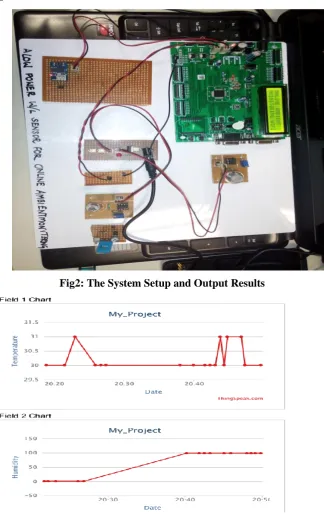
Fig2: The System Setup and Output Results
65 | P a g e
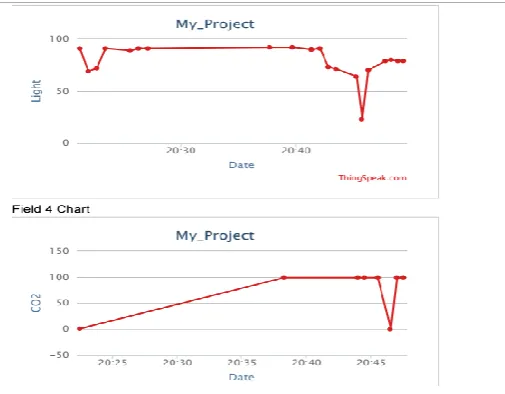
Fig 4: Graphical representation of Co2 and Light
The above figure represents the overview of sensor data monitoring via Wi-Fi module through IP address. By
mentioning IP address in web Brower, we can easily monitor the data from different sensor in efficient manner
.By implementing this concept we can use different applications like agriculture field, industries in real time
manner with in less cost and low power consumption.
VII.
CONCLUSION
The implemented system is based on WIFI technology which is easily monitor the data of all sensor values and
update the data through IP address. The system is much efficiently to communicate the real time manner and
consistent in nature.
VIII. FUTURE SCOPE
The system provides only monitoring the sensor values but we can’t control the devices with respective sensors.
In future scope we can do both i.e. Monitoring as well as controlling the appliances. By implementing this
concept we can use in several appliances like agriculture, Health monitoring etc.
REFERENCES
[1] United States Environmental Protection Agency. (1991). “Indoor air facts no. 4 (revised) sick building
syndrome,” Air and Radiation (6609J), Research and Development (MD-56), Tech. Rep. [Online].
Available: http://www.epa.gov/iaq/pdfs/sick_building_factsheet.pdf
[2] S. Sharma, V. N. Mishra, R. Dwivedi, and R. R. Das, “Quantification of individual gases/odors using
dynamic responses of gas sensor array with ASM feature technique,” IEEE Sensors J., vol. 14, no. 4, pp. 1006–1011, Apr. 2014.
[3] Xively. Xively Is the Public Cloud Specifically Built for the Internet of Things. [Online]. Available:
https://xively.com/whats_xively/FOLEA AND MOIS: LOW-POWER WIRELESS SENSOR FOR
66 | P a g e
[4] H. Yang, Y. Qin, G. Feng, and H. Ci, “Online monitoring of geological CO2 storage and leakage based
on wireless sensor networks,” IEEESensors J., vol. 13, no. 2, pp. 556–562, Feb. 2013.
[5] PointSix. WiFi 2000 ppm CO2 and Temperature Transmitter 3008-40-V6. Point Six Wireless, Data
Sheet. [Online].Available:http://www.pointsix.com/PDFs/3008-40-V6.pdf
[6] Enocean Alliance. Self-Powered CO2 Sensor Moves Into Volume Production. [Online]. Available:
http://www.enocean-alliance.org/en/gss-seamless-sensing-co2-sensor-moves-into-volume-production/
[7] V. Jelicic, M. Magno, D. Brunelli, G. Paci, and L. Benini, “Contextadaptive multimodal wireless sensor
network for energy-efficient gas monitoring,” IEEE Sensors J., vol. 13, no. 1, pp. 328–338, Jan. 2013.
[8] Cypress Semiconductor. (May 21, 2014). Programmable System-on- Chip (PSoC). PSoC®3: CY8C32
Family Data Sheet, document 001-56955. [Online]. Available: http://www.cypress.com/?docID=49257
[9] Roving Networks. (2012). RN-131G & RN-131C 802.11 b/g Wireless LAN Module.[Online]. Available:
http://www.rovingnetworks.com
[10] S. S. Shrestha, “Performance evaluation of carbon-dioxide sensors used in building HVAC applications,”
Ph.D. dissertation, Dept. Mech. Eng., Iowa State Univ., Ames, IA, USA, 2009.
[Online].Available:http://lib.dr.iastate.edu/etd/10507
[11] S. Folea, G. Mois, L. Miclea, and D. Ursutiu, “Battery lifetime testing using LabVIEW,” in Proc. 9th Int.
Conf. Remote Eng. Virtual Instrum.(REV), Jul. 2012, pp. 1–6.
[12] D. Larios, J. Barbancho, G. Rodríguez, J. Sevillano, F. Molina, and C. León, “Energy efficient wireless
sensor network communications based on computational intelligent data fusion for environmental
monitoring,” IET Commun., vol. 6, no. 14, pp. 2189–2197, Sep. 2012.
[13] J. Ko, C. Lu,M. B. Srivastava, J. A. Stankovic, A. Terzis, andM. Welsh, “Wireless sensor networks for
healthcare,” Proc. IEEE, vol. 98, no. 11, pp. 1947–1960, Nov. 2010.
[14] C. H. See, K. V. Horoshenkov, R. A. Abd-Alhameed, Y. F. Hu, and S. Tait, “A low power wireless
sensor network for gully pot monitoring in urban catchments,” IEEE Sensors J., vol. 12, no. 5, pp. 1545–
1553, May 2012.
[15] T. Sanislav and L. Miclea, “An agent-oriented approach for cyberphysical system with dependability
features,” in Proc. IEEE Int. Conf.Autom.Quality Testing Robot. (AQTR), May 2012, pp. 356–361.
AUTHOR DETAILS
KORRA JANU NAIK, pursuing M.Tech (ES) from NalandaInstitute of Engineering and Technology(NIET), Siddharth Nagar, Kantepudi village, Satenepalli Mandal, Guntur dist,
AP, INDIA.
L.SRINIVAS REDDY,working as Assistant Professor(ECE)from Nalanda Institute of
Engineering and Technology (NIET),Siddharth Nagar, Kantepudi village,