Int. J. Environ. Sci. Technol.
I DO1 10.10071~13762-014-0572-5
Managing cost implications for highway infrastructure
sus tainability
K.
C.
Goh
J.
Yang
Received: 22 November 20131Revised: 28 February 2014lAccepted: 17 March 2014 O Islamic Azad University (IAU) 2014
Abstract Highway construction works have significant
bearings on all aspects of sustainability. With the increas-
ing level of public awareness and government regulatory
measures, the construction industry is experiencing a cul-
tural shift to recognise, embrace and pursue sustainability.
Stakeholders are now keen to identify sustainable alterna-
tives and the financial implications of including them on a
life cycle basis. They need tools that can aid the evaluation
of investment options. To date, however, there have not
been many financial assessments on the sustainability
aspects of highway projects. This is because the existing
life cycle costing analysis models tend to focus on eco-
nomic issues alone and are not able to deal with sustain-
ability factors. This paper provides insights into the current
practice of life cycle cost analysis, and the identification
and quantification of sustainability-related cost components
in highway projects through literature review, question-
naire surveys and semi-structured interviews. The results
can serve as a platform for highway project stakeholders to
develop practical tools to evaluate highway investment
decisions and reach an optimum balance between financial
viability and sustainability deliverables.
Keywords Highway infrastructure
.
Cost analysis
.
Life
cycle
.
Sustainability
K. C. Goh (IXI)
Department of Construction Management, Faculty of
Technology Management and Business, Universiti Tun Hussein Onn Malaysia, 86400 Parit Raja, Batu Pahat, Johor, Malaysia e-mail: kcgoh0l @gmail.com
J. Yang
Science and Engineering Faculty, School of Civil Engineering and Built Environment, Queensland University of Technology, GPO Box 2434, Brisbane, QLD 4001, Australia
Introduction
Sustainability adds a new dimension to the evaluation of
highway investments. In the infrastructure context, sus-
tainability means analysing the entire life of a facility, from
social, economical as well as environmental perspectives
(List 2007). Traditional priorities on financial justifications
will need to be jointly considered with sustainability
endeavours that will impact upon a project for the long
term (Keoleian et al. 2005). Realising the impetus and
advantages of pursuing sustainability, some researchers
start to explore the links between sustainability and high-
way infrastructure. For example, Huang and Yeh (2008)
implemented an assessment rating framework for green
highway projects. Ugwu et al. (2006a, b) outline the
demand for methods and techniques that can facilitate
sustainability assessment and decision-making at the vari-
ous project levels of highway construction.
Although sustainability is essential for Australian high-
way development, stakeholders are still very concerned
with the long-term financial obligations and viability for
their investments (Koppenjan and Enserink 2009; Engel
et al. 2013). People believe that sustainability endeavours
will have an impact on the developmental costs, and
decisions based solely on acquisition cost may not be the
best selection in the long run. The potential and cost
implications of environmental and social dimensions must
be investigated (Surahyo and El-Diraby 2009; Navabakhsh
and Tarniz 201 3).
With the influence of global financial crisis, decision-
making on highway investment becomes crucial. Funding
at all levels of government seems inadequate. Private
investments are increasing. In this context, life cycle
costing analysis (LCCA) can help explore alternatives. The
concept of LCCA was firstly applied in highway
,J3>.f~.fif:-
liT ~ ~ ~ ~ j ~ q b ~ g ~ ~ / ~ ~ - ~ \ y ~ v ;r , ,,.
t
,L?
tJfi ::.~uc~,
...J :.-$ ,, +,.
on ,J+JJ!Int. J. Environ. Sci. Technol.
Table 3 Sustainability-related cost components in highway
infrastructure
Sustainability criteria Main cost components
Agency category Material costs
Plant and equipment costs Major maintenance costs Rehabilitation costs
Social category Road accident- internal costs
Road accident- economic value of damage Environmental category Hydrological impacts
Loss of wetland
Disposal of material costs Cost of barriers
the agency-related cost components, for example, the
application of Highway design and maintenance standard
model version 4 to quantify costs associated with con-
struction and maintenance activities. There are a number of
reasons for the lack of standard calculation methods for
socially and environmentally related cost components. For
example, there are no published calculation methods or
models in dealing with these cost components; and they are
too difficult to convert into real dollar value. Instead, these
costs are often classified as external costs or wrap-up costs.
For example, waste management costs are deemed as part
of the construction costs.
There are three main challenges to the integration of
sustainability-related cost components into LCCA prac-
tice-(a)
the limited capacity of existing LCCA models;
(b) poor quality of assumptions and data when dealing with
sustainability costs; and (c) difficulties of examining long-
term community and environmental issues and costs.
The interviewees of this research suggested the possible
ways to improve the consideration of sustainability issues
in LCCA practice. Multi-criteria evaluation and decision-
making may help identify social and environmental effects
therefore associated costs in highway infrastructure pro-
jects. Practical knowledge and past experiences may sig-
nificantly contribute to the enhancement of sustainability in
Material
Plant and Equipment Major Maintenance Rehabilitation
/
,*
Questionnaire Results and Findings
I
Sustainability-related cost components in
highway infrastructure development
II
I
I Category
Hydrological
I
I Economic Value of
Interview Results and Findings
\\
Sustainabilitv enhancement for LCCA practice
.
Further development of tools that integrate social,
environmental and micro-economic dimensions I Extend the system boundaries by complementing LCC- I
oriented tools
Improve the understanding of socially and 1
environmentally related decision-making through multi-
.
criteria decision support approach. I Industrv practiceof LCCA aa~lication
Industry recognition of LCCA The theoretical and historical data of LCCA Government guidelines and reports
Challenges of integrating cost related to sustainability
measures The inclusion/ exclusion of social and environmental costs
A monetary value
Decision-making under uncertainty situation Business and political influences
Uncertainties evaluation techniques
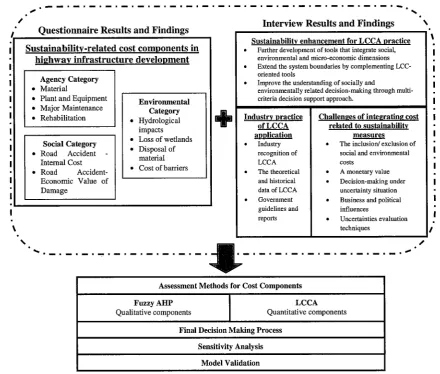
Fig. 1 Platform of overall scenario of long-term financial management in highway infrastructure
n
Q
springerAssessment Methods for Cost Components
Fuzzy AHP Qualitative components
LCCA Quantitative components
Final Decision Making Process
Sensitivity Analysis
[image:8.595.51.291.107.261.2] [image:8.595.76.517.350.724.2]Int. J. Environ. Sci. Technol.
LCCA. More specific and in-house developed tools will
also help in this respect.
Based on the processes of this research and findings
from the surveys, a platform depicting the overall scenario
of long-term financial management with sustainability
objectives in highway infrastructure development can be
established as shown in Fig. 1.
Using this platform, the research reported here advances
onto the next stage-the
development of a decision support
model that incorporates fuzzy analytical hierarchy process,
LCCA and sensitivity analysis. The on-going work aims to
produce a procedure driven tool that can guide decision-
makers to contemplate financial positions of embedding
sustainability initiatives into highway projects.
Conclusion
The pursuit of sustainability in highway development can
have long-term financial implications to the stakeholders
involved. By understanding the current issues and critical
cost components related to sustainability endeavours, we
can develop and articulate strategies to improve and
encourage the enhancement of highway infrastructure's
long-term financial positions, while maximising sustain-
ability deliverables. Feedbacks from the industry practi-
tioners confirmed the importance of sustainability-related
costs and suggest that highway investment decisions use
scientific and systematic approaches such as the LCCA,
particularly in dealing with sustainability issues. The
authors propose a platform of LCCA considerations to
assist practitioners' harness the various financial manage-
ment scenarios and integrate them with sustainability
objectives under a streamlined procedure. This provides the
foundation for the development of a decision support
model to evaluate costs associated with sustainability
measures in highway projects. Future studies may also
consider the inherent links between costs and risks for
more tangible predictions on the gains as well as the
commitments of pursuing sustainability in highway
infrastructure.
Acknowledgments The authors express gratefully acknowledge-
ment to the industry stakeholders and professional academicians for their valuable contributions to the success of this research.
References
Ahuja V, Yang J, Shankar R (2009) Study of ICT adoption for building project management in the Indian construction industry. Autom Constr 18(4):415-423
Arja M, Sauce G, Souyri B (2009) External uncertainty factors and LCC: a case study. Build Res Inf 37(3):325-334. doi:10.1080/ 09613210902863609
Chan A, Keoleian G, Gabler E (2008) Evaluation of life-cycle cost analysis practices used by the Michigan Department of Trans- portation. J Transp Eng 134(6):236-245. doi: 10.10611 (ASCE)O733-947X(2008)134:6(236
Chan DWM, Chan APC, Lam PTI, Wong JMW (2011) An empirical survey of the motives and benefits of adopting guaranteed maximum price and target cost contracts in construction. Int J Proj Manage 29(5):577-590. doi:10.1016lj.ijproman.2010.04.002
Ekanayake L, Ofori G (2004) Building waste assessment score: design-based tool. Build Environ 39(7):851-861
Engel E, Fischer R, Galetovic A (2013) The basic public finance of public-private partnerships. J Eur Econ Assoc 11(1):83-111. doi:lO.ll lllj.1542-4774.2012.01105.x
Gerbrandt R, Berthelot C (2007) Life-cycle economic evaluation of alternative road construction methods on low-volume roads. Transp Res Rec 1989 1:61-71
Glaeser EL, Kahn ME (2010) The greenness of cities: carbon dioxide emissions and urban development. J Urban Econ 67(3):404-418. doi: 10.10161j.jue.2009.11.006
Goh KC, Yang J (2013) Importance of sustainability-related cost components in highway infrastructure: perspective of stakehold- ers in Australia. J Infrastruct Syst 20(1):04013002. doi:10.10611 (ASCE)IS.1943-555X.0000152
Hao JL, Hills MJ, Huang T (2007) A simulation model using system dynamic method for construction and demolition waste man- agement in Hong Kong. Constr Innov 7(1):7-21
Heijungs R, Settanni E, Guin6e J (2013) Toward a computational structure for life cycle sustainability analysis: unifying LCA and LCC. Int J Life Cycle Assess 18(9):1722-1733
Huang RY, Yeh CH (2008) Development of an assessment frame- work for green highway construction. J Chin Inst Eng 31(4):573-585
Keoleian GA, Kendall A, Dettling JE, Smith VM, Chandler RF, Lepech MD, Li VC (2005) Life cycle modeling of concrete bridge design: comparison of engineered cementitious composite link slabs and conventional steel expansion joints. J Infrastruct Syst 11:51
Kohler J, Wietschel M, Whitmarsh L, Keles D, Schade W (2010) Infrastructure investment for a transition to hydrogen automo- biles. Technol Forecast Soc Change 77(8):1237-1248. doi:lO. 1016lj.techfore.2010.03.010
Koppenjan JF, Enserink B (2009) Public-private partnerships in urban infrastructures: reconciling private sector participation and sustainability. Public Adm Rev 69(2):284-296
Kumar K, Parida M, Katiyar VK (2013) Optimized height of noise barrier for non-urban highway using artificial neural network. Int J Environ Sci Technol 11(3):719-730. doi:10.1007ls13762-013- 0257-5
Lee J, Edil T, Tinjum J, Benson C (2010) Quantitative assessment of environmental and economic benefits of recycled materials in highway construction. Transp Res Rec 2158(1):138-142. doi:lO. 314112158-17
Lee J, Edil T, Benson C, Tinjum J (2013) Building environmentally and economically sustainable transportation infrastructure: green highway rating system. J Const Eng Manag 139(12):A4013006. doi: 10.1061/(ASCE)CO. 1943-7862.0000742
Li Z, Chen Y (2013) Estimating the social return to transport infrastructure: a price-difference approach applied to a quasi- experiment. J Comp Econ 41(3):669-683. doi: 10.1016lj.jce. 2012.09.004
Li Z, Madanu S (2009) Highway project level life-cycle benefittcost analysis under certainty, risk, and uncertainty: methodology with case study. J Transp Eng 135(8):516-526. doi:10.10611 (ASCE)TE.1943-5436.0000012
Li Y, Ashkanasy N, Ahlstrom D (2013) The rationality of emotions:
A hybrid process model of decision-making under uncertainty.
Int. J. Environ. Sci. Technol. Asia Pac J Manag 31(1):293-308. doi:10.1007/s10490-012-
9341-5
Lipscy PY (2012) A casualty of political transformation? the politics of energy efficiency in the Japanese transportation sector. J East Asian Stud 12(3):409-439. doi:10.5555/1598-2408-12.3.409 List G (2007) A model for life cycle evaluation of highway
investments. Struct Infrastruct Eng 3(2):95-101. doi:10.1080/ 15732470600590903
Litman T (2007) Socially optimal transport prices and markets: principles, strategies and impacts. Social Research in Transport (SORT) Clearinghouse:300
Matheson D, Duke S (2012) A new paradigm for road charging-an environmental approach to taxation for green mobility. In: Road Transport Information and Control (RTIC 2012), IET and ITS Conference on, IET, pp 1-4
Melemez K (2013) An environmental assessment of forest stands damages caused by excavators during road construction in Beech forests. Int J Environ Sci Technol 10(4):645450. doi:10.1007/ ~13762-012-0125-8
Navabakhsh M, Tamiz R (2013) Influences of rural industries on sustainable social and environmental developments. Int J Environ Sci Technol 10(1):191-198. doi:lO.l007/s13762-012- 0109-8
Ozcan-Deniz G, Zhu Y, Ceron V (2011) Time, cost, and environ- mental impact analysis on construction operation optimization using genetic algorithms. J Manag Eng 28(3):265-272. doi:lO. 1061/(ASCE)ME.1943-5479.0000098
Partheeban P, Arunbabu E, Hemamalini RR (2008) Road accident cost prediction model using systems dynamics approach. Trans- port 23(1):59-66
Quinet E (2004) A meta-analysis of western european external costs estimates. Transp Res D Trans Environ 9(6):465-476. doi:lO. 1016/j.trd.2004.08.003
Rouse P, Chiu T (2009) Towards optimal life cycle management in a road maintenance setting using DEA. Eur J Oper Res 196(2):672-681. doi:10.1016/j.ejor.2008.02.041
Sanchez A, Hampson KD (2012) Sustainable road infrastructure procurement in Australia. Procure Innov Gr Growth 33-37 Santero NJ, Masanet E, Horvath A (2011) Life-cycle assessment of
pavements. Part I: critical review. Res Conserv Recycl 55(9-10):801-809. doi:10.1016/j.resconrec.2011.03.010
Santos J, Ferreira A (2013) Life-cycle cost analysis system for pavement management at project level. Int J Pavement Eng 14(1):71-84. doi:10.1080/10298436.2011.618535
Shehu Z, Akintoye A (2010) Major challenges to the successful implementation and practice of programme management in the construction environment: a critical analysis. Int J Proj Manage 28(1):26-39. doi:10.1016/j.ijproman.2009.02.004
Singh D, Tiong RLK (2005) Development of life cycle costing framework for highway bridges in Myanmar. Int J Proj Manage 23(1):37-44. doi:10.1016/j.ijproman.2004.05.010
Solveling G, Solak S, Clarke J-PB, Johnson EL (201 1) Scheduling of runway operations for reduced environmental impact. Transp Res D Transp Environ 16(2):110-120. doi:10.1016/j.trd.2010.09.
004
Stanley JK, Hensher DA (2011) Environmental and social taxes: reforming road pricing in Australia. Road Trans Res 20(4):71 Surahyo M, El-Diraby TE (2009) Schema for interoperable repre-
sentation of environmental and social costs in highway con- struction. J Const Eng Manag 135(4):254-266
Ugwu 0 0 , Kumaraswamy MM, Kung F, Ng ST (2005) Object- oriented framework for durability assessment and life cycle costing of highway bridges. Autom Constr 14(5):611432 Ugwu 0 0 , Kumaraswamy MM, Wong A, Ng ST (2006a) Sustain-
ability appraisal in infrastructure projects (SUSAIP): Part 1. Development of indicators and computational methods. Autom Constr 15(2):239-251. doi:10.1016/j.autcon.2005.05.006
Ugwu 0 0 , Kumaraswamy MM, Wong A, Ng ST (2006b) Sustain- ability appraisal in infrastructure projects (SUSAIP). Part 2: a case study in bridge design. Autom Constr 15(2):229-238 Widyatmoko I (2008) Mechanistic-empirical mixture design for hot
mix asphalt pavement recycling. Constr Build Mater 22(2):77-87
Wilde WJ, Waalkes S, Harrison R (1999) Life cycle cost analysis of portland cement concrete pavements. research report. Center for transportation research, bureau of engineering research, the University of Texas at Austin
Wong J, Li H (2006) Development of a conceptual model for the selection of intelligent building systems. Build Environ 41(8):1106-1123
Yang JB, Peng SC (2008) Development of a customer satisfaction evaluation model for construction project management. Build Environ 43(4):458-468
Yip Robin CP, Poon CS (2009) Cultural shift towards sustainability in the construction industry of Hong Kong. J Environ Manag 90(11):3616-3628
Zhang H, Keoleian GA, Lepech MD (2008) An integrated life cycle assessment and life cycle analysis model for pavement overlay systems. In: 1st International symposium on life-cycle civil engineering, Varenna, Italy, pp 907-915
Zhang H, Keoleian G, Lepech M, Kendall A (2010) Life-cycle optimization of pavement overlay systems. J Infrastruct Sys 16(4):310-322. doi:10.1061/(ASCE)IS.1943-555X.0000042