© 2017, IRJET | Impact Factor value: 5.181 | ISO 9001:2008 Certified Journal
| Page 1387
Experimental Performance, mathematical modelling and development
of Stress Block Parameter of Ferrocement Beams with Rectangular
Trough Shaped Skeletal Steel
Sandesh Namdev Mhadeshwar
1, Aharnish Madhukar Naik
21
Bachelor of Engineering, Civil Engineering, MITM, University of Mumbai, Maharashtra, India
2Bachelor of Engineering, Civil Engineering, ARMIET, University of Mumbai, Maharashtra, India
---***---Abstract -
In civil engineering design and construction the main steel in beams and slabs are in use to take the tension and to increase the ductile behavior. In slabs the main and distribution steel is provided in horizontal form. Also the main steel in singly reinforced and doubly reinforced beams is in horizontal form only. But if we replace this horizontal form of the reinforcement in beams and slabs by rectangular trough shaped reinforcement, there will be increase in the moment carrying, shear carrying capacity with reduced deflection because of additional folded plate action and thereby the sections become more economical and which considers the critical loading as per substitute frame method of analysis.Key Words:
Ferrocement, flexural, prestressed, skeletal steel, concrete, beam.1. INTRODUCTION
Now a day’s construction is increases day by day due to rapid industrialization and urbanization, so it is essential to find the new modification in construction. “The ferrocement is a type of reinforced concrete in thin elements currently constituted by micro concrete of hydraulic cement reinforced with thick layers of continuous netting, in wire with a relatively small diameter. The net may be metallic or in other materials.”
The engineering properties of ferrocement structure are equivalent to normal concrete, and in some application it performs better. The tensile strength of ferrocement is a result of volume of reinforcement used in the structure. The tensile performance of ferrocement concrete or structure can be grouped into three, namely the pre cracking phase, post cracking phase and finally post yielding phase. A ferrocement member subjected to upward tensile stress behaves something like linear elastic materials until the first crack appears. The behavior of ferrocement elements under compression mainly depended on mix design properties. Ferrocement exhibits a very easy mould-ability characteristics, that it can be used to produce any desired shape of structure.
In general, the ferrocement layers showed good stiffness, ductility and impact resistance. The impact resistance of the ferrocement was improved with higher ratio of volume fraction. The thickness of slab increases the absorbed energy. Ferrocement is labour intensive and a material saving technique has never been able to compete with R.C.C.
The advantages of ferrocement as compare to reinforced concrete are as follows:
•
A wider range of elasticity•
Greater resistance to extension•
Better behavior at dynamic stress•
Increased value of the breaking effort out of extension.2. LITERATURE REVIEW
Randhir J. Phalke, Darshan G. Gaidhankar (et.al)
carried out work on “flexural behavior of ferrocement slab panels using welded square mesh by incorporating steel fibres.” They concluded that:
1)
The flexural loads at first crack and ultimate loads depend on number of reinforcing mesh layers used in ferrocement panel.2)
Increasing the number of layers of wire mesh from 2 to 4 layers significantly increases the ductility and capability to absorb energy of the panel.3)
Presence of steel fibers also increases the flexural strength of panels as compare to those without fibers.Prof. Dr. S. K. Patra, Debasnana Jena, Susanta Banerjee, Sourav Kumar Das (et.al) carried out work on “ferrocement”. They concluded that:
© 2017, IRJET | Impact Factor value: 5.181 | ISO 9001:2008 Certified Journal
| Page 1388
2)
The ductility and load carrying capacity of ferrocement element can be improved by applying different layers of wire mesh.3)
Shear behavior of ferrocement element is equal to that of the reinforced concrete element.
K. Sasiekalaa& R. Malathy (et.al) carried out work on mechanical properties of ferrocement with cementitious materials. They concluded that ferrocement is an excellent construction material, for the past and future, from self-health construction to advanced prefabrication. In thin concrete products, ferrocement plays the link between reinforced concrete and fibre reinforced concrete. The history of ferrocement as a modern construction material is longer than that of reinforced concrete, prestressed concrete and steel.
Sidharamappa Shivshankar Dharne (et.al) carried out work on effect of shape of main reinforcement in slabs. He concluded that:
1)
Critical loading conditions will be considerably in design as per substitute frame method.2)
The slab thickness will reduce considerably and thereby self-weight of slabs will reduce.3)
Load carrying capacity will increase for same area of steel and concrete used in the conventional design of slabs because of additional folded plate action.4)
This type of ferrocement flat slab can also be used for the intermediate floors.S. P. Shah (et.al) carried out work on ferrocement in construction. He concluded that ferrocement has come into widespread use only the last two decades and the state so the art of ferrocement is still in its infancy. Nevertheless, sufficient design information is available and adequate field experience has been acquired to enable safe design and construction of many types of ferrocement structures. Whether ferrocement can economically compete with alternate materials is depends on the type and location of application.
3. OBJECTIVES
The key objectives of current work are to study the effect of ferrocement beams with rectangular trough shaped main and distribution skeletal steel.
It consists of
1.
Mix design2.
Comparison of experimental results of conventional RCC and ferrocement beams with rectangular trough shaped skeletal steel.3.
Mathematical modeling of conventional RCC and ferrocement beams with rectangular trough shaped skeletal steel.4.
Development of stress block parameters for ferrocement beams with rectangular trough shaped skeletal steel.4. METHODOLOGY
4.1 Experimental work
Experimental work consists of following steps:-
Mix design for M20 grade of concrete by IS method. Casting and testing of RCC conventional beams and
ferrocement beams with rectangular trough shaped skeletal steel.
The ferrocement beams with rectangular trough shaped reinforcement and conventional RCC beams are to be casted and tested by varying the percentage of the reinforcement. The sizes of beams are to be used throughout the project work is 150X 150 X 700 mm. The rectangular trough sizes used may be varied and the corresponding results will be compared with conventional RCC beams by testing the both types of beams under two point loading.
4.2 Theoretical work :
4.2.1 Mathematical modeling of following beams will be carried out by using ANSYS
i. Conventional RCC beams.
ii. Ferrocement beams with rectangular trough shaped skeletal steel.
4.3 Development of stress block parameters :
The experimental and theoretical results will be compared and the stress block parameters will be developed.
4.4 Test Materials:
Cement: Cement is a binding material used in
© 2017, IRJET | Impact Factor value: 5.181 | ISO 9001:2008 Certified Journal
| Page 1389
cement and water. Mortar is a proportionate mixture of cement, sand and water.
Ordinary Portland cement:
This type of cement is also called as normal cement since its setting is normal when mixed with water.
Properties:
Fineness: The residue of ordinary Portland cement does not exceed 10% when sieved through IS sieve no. 9 (90 Microns).
Soundness: Its expansion is not more than 10 mm for unaerated cement and not more than 5 mm for aerated cement.
Setting time: Its initial setting time is not less than 30 min. and final setting time not more than 10 hrs.
We use ordinary Portland cement whose 28 day compressive strength is 53 Mpa.
Fine aggregate :
The aggregate with grain size below 4.75 mm is termed as fine aggregate. Natural sand or crushed stone dust is the fine aggregate commonly used in concrete mix. Angular grained sand produces good and strong concrete, because it has good interlocking property, while round grained particles of sand do not afford such interlocking. The percentage of all type deleterious materials in fine aggregate should not exceed 5%. We are using natural river sand confirming with specific gravity 2.61.
Coarse aggregate :
The aggregate whose particles are retained on I.S. Sieve No. 480 (4.75mm) is termed as coarse aggregate. The size of coarse aggregate used depends on the nature of work. Crushed stone and natural gravel are the common materials used as coarse aggregate for concrete. For R.C.C. work, 20mm aggregate is commonly used. We use crushed coarse aggregate of 20 mm retained on 12.5 mm sieve. The specific gravity of coarse aggregate 2.78 is used.
Water :
Water is an essential ingredient of concrete since it takes part in chemical reaction with cement to form a binding paste that fills the innumerable minute surface irregularities of sand and aggregate. Portable water free form any harmful amounts of oils, alkalis, sugars and organic
materials are used for proportioning and curing of concrete. Combining water with cementations material forms a cement paste by the process of hydration. The cement paste glues the aggregate together, fills voids within it, and makes it flow more freely.
Water is generally measured by volume, and specified as so many litres per bag of cement. For a given quantity of water to be mixed in concrete, adjustment should be made for the amount of water present in the sand and aggregate i.e. amount of aggregate present in aggregate should be subtracted from the total required quantity of water. Water-cement ratio is the ratio of water mixed in concrete to volume of cement used .The strength and workability of concrete depends upon the amount of water used.
Concrete :
Concrete is a composite material composed of coarse aggregate bonded together with a fluid cement which hardens over time. In Portland cement concrete, when the aggregate is mixed together with the dry cement and water, they form a fluid mass i.e. easily molded into shape. The cement reacts chemically with water and other ingredients to form a hard matrix which binds on the material together into durable stone like material.
Concrete has relatively high compressive strength, but much lower tensile strength. For this reason it is usually reinforced with materials that are strong in tension. The elasticity of concrete is relatively constant at low stress levels but starts decreasing at higher stress levels as matrix cracking develops. Concrete has a very low coefficient of thermal expansion and shrinks as it matures. All concrete structures crack to some extent due to shrinkage and tension. Concrete that is subjected to long duration forces is prone to creep.
Ferrocement :
© 2017, IRJET | Impact Factor value: 5.181 | ISO 9001:2008 Certified Journal
| Page 1390
Figure.1.Sample of Ferrocement Concrete
•
Properties of ferrocement composites1.
Wire diameter 0.5 to 1 mm2.
Size of mesh opening 6 to 35 mm3.
Spacing of mesh layer is 1 inch4.
Thickness 6 to 50 mm. Steel :
In reinforced concrete, concrete being weak in tension, steel bars are used to carry the tension. Steel bar possess high tensile strength, ability to develop a good bond with concrete, high modulus of elasticity and nearly the same temperature coefficient of expansion and contraction as concrete. That is why steel is used as a reinforcing material. The steel reinforcement for concrete is generally round in cross-section, to avoid any possible stress concentration.
The following three types of steel reinforcement are used in practice:
Mild steel plain round bars ( Fe 250 )
High yield strength deformed bars ( Fe 415, Fe 500)
Welded wire fabric.
8 mm Diameter of steel is to be used in both conventional RCC and ferrocement beams.
Figure.2.Steel
5. TEST AND PROCEDURE
5.1. Casting of Conventional Beams:
[image:4.595.318.545.347.521.2][image:4.595.312.550.554.740.2]
Figure 3.Reinforcement Used in Conventional Ferrocement Beams
© 2017, IRJET | Impact Factor value: 5.181 | ISO 9001:2008 Certified Journal
| Page 1391
Figure.5. Casted Conventional Beams
[image:5.595.303.555.63.270.2] [image:5.595.39.283.289.480.2]5.2. Casting of Ferrocement Beams:
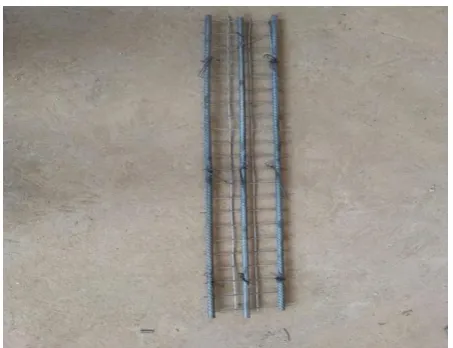
[image:5.595.43.282.530.714.2]Figure.6. Reinforcement used in Ferrocement Concrete Beam
Figure.6. Setup for Ferrocement Concrete Beams
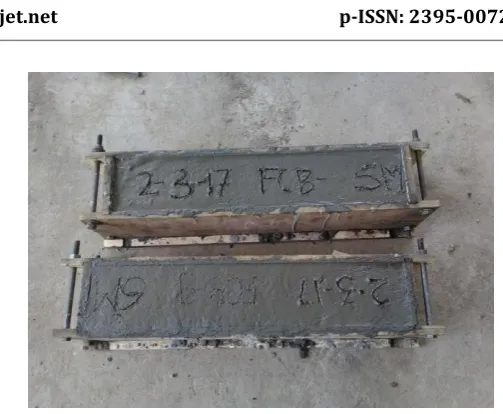
Figure 7. Casted Ferrocement Concrete Beams
5.3.Flexural Strength Test:
The standard size of the specimens are 15cm x 15cmx 60cm.Alternatively if the largest nominal size of the aggregate does not exceed 20mm.The mould should be of metal, preferably steel or cast iron and the metal should be of sufficient thickness to prevent spreading and warping. Stresses due to volume changes alone may be high. The longitudinal tensile stress in the bottom of the payment, caused by restrained and temperature warping, frequently amounts of to as much as 2.5 Mpa at certain periods of the year and the corresponding stress in the transverse direction is approximately 0.9 Mpa. These stresses are additive to those produced by wheel loads on unsupported portion of the slab.
Both tests are intended to be used to determine Modulus of rupture and are considered to give equivalent answers. Strength of concrete beam specimen was calculated as:
Fb = 3P x a/bd2 if a<20
Where, Fb=flexural stress, MPa, b=measured width in cm of the specimen, d =depth in mm of the specimen. l=length in mm of the span on which the specimen was supported and, p=maximum load in kg applied to the specimen
Test procedure:
1) Place the cube mould of size 15 x 15 x 60 cm on the non-porous base plate. Coat the inner side of mould with proper oil gradient. Fix all the screw and make the mould.
2) Place steel skeletal inside the mould as shown in figure and adjust it
© 2017, IRJET | Impact Factor value: 5.181 | ISO 9001:2008 Certified Journal
| Page 1392
4) Finally level the top surface with the edge of tamping rod and trowel and keep for 24 hr. at room temp. Concrete cube moulds are covered with Husain cloth & plastic sheet.
5) After this period the specimen are marked and removed from mould and it submerged in Lime water tank for curing at least 20 hrs.
6) Test the mould after 7 and 28 days on the Third point loading machine.
6.
RESULTS
6.1 Load Test on Beams:
6.1.1 For Conventional Concrete Beams:
Table.1. Observation Table for Conventional Concrete Beams
SR .NO
BEAM
DESIGNATION
DAYS LOAD
IN KN
AVG.
1 B1 7 57.60 58.37
2 B2 7 54.72
3 B3 7 62.80
4 B4 14 54.00 64.20
5 B5 14 72.90
6 B6 14 65.70
7 B7 28 56.00 61.66
8 B8 28 62.00
9 B9 28 67.00
6.1.2 For Ferrocement Concrete Beam:
Table.2. Observation Table for Ferrocement Concrete Beams
SR .NO
BEAM
DESIGNATION
DAYS LOAD
IN KN
AVG.
1 B1 7 77.60 74.68
2 B2 7 78.65
3 B3 7 67.80
4 B4 14 84.60 86.61
5 B5 14 88.90
6 B6 14 86.35
7 B7 28 83.60 87.17
8 B8 28 87.90
9 B9 28 89.83
6.2 Results of Flexural Strength of Beams: 6.2.1 For Conventional Concrete Beams:
Flexural Strength of Beam, Fb = PL/bd2 (N/mm2)
Where; b=150 mm, d=150mm, L=500mm
Table.3. Flexural Strength of Conventional Concrete Beams
Sr.
no
Descripti on
P
(N)
d2
(mm)
Fb
(N/mm2 )
1 Beam @7
day curing
58370 22500 8.64
2 Beam @
14 day curing
64200 22500 9.50
3 Beam @
28 day curing
61660 22500 9.13
6.2.2 ForFerrocement Concrete Beams:
Flexural Strength of Beam, Fb = PL/bd2 (N/mm2)
© 2017, IRJET | Impact Factor value: 5.181 | ISO 9001:2008 Certified Journal
| Page 1393
Table.4. Flexural Strength of Ferrocement Concrete Beams
Sr.
no
Descripti on
P
(N)
d2
(mm)
Fb
(N/mm2 )
1 Beam @7
day curing
74680 22500 11.06
2 Beam @
14 day curing
86610 22500 12.79
3 Beam @
28 day curing
87170 22500 12.91
6.3. Flexural strength comparison can be understand by chart showing below:
Chart.1.Flexural strength comparison
7. CONCLUSION
[1] The flexural strength of ferrocement concrete beams with rectangular trough shaped skeletal steel is greater than conventional concrete beams.
[2] Flexural strength of ferrocement concrete beam is increase by 30 to 40% to the conventional concrete beam.
[3] Ferrocement concrete beam is not cost effective than the conventional concrete beam.
[4] So the main objective of this research has been successfully achieved.
REFERENCES
[1] Sidramappa Dharane & Archita Malge “Experimental performance of flexural behavior of ferrocement under gradual loading,” International journal of Civil, flexural, Environmental and Infrastructure Engineering Research and Development (IJCSEIERD) ISSN (P):2249-6866; ISSN (E): 2249-7978, vol. 4, issue 2, April 2014, 97-102.
[2] K.Sasiekalaa and R. Malathy “A review report on mechanical properties or ferrocement with cementitious materials”. International Journal of Engineering Research and technology (IJERT), ISSN: 2278-0181, Vol-1 issue 9 Nov 2012. [3] Prof. (Dr) S. K. Patra. “Ferrocement” International
Journal of Engineering Research and technology (IJERT), ISSN: 2278-0181, Vol-2 issue 10 Oct 2013. [4] Prof. Mr. Darshan G. Gaidhankar, Sayyed Saeed.
“Flexural behavior of Ferrocement slab panels using expanded metal mesh incorporating steel fibres.” International Journal of Engineering Research and technology (IJERT), ISSN: 2278-0181, Vol-3 issue 5 May 2014.
[5] Randhir J. Phalke, Darshan G. Gaidhankar, “Flexural behavior of Ferrocement slab panels using welded square mesh by incorporating steel fibres.” International Journal of Engineering Research and technology (IJERT), eISSN: 2319-1163, pISSN: 2321-7308.
[6] S. P. Shah, “Ferrocement in construction.” International Journal of Engineering Research and technology (IJERT), ISSN: 2278-0181, Vol-4issue 03 JAN 2014.
[7] Y. I. Elbahy, M. A. Yousef, M. Nehdi. “Stress block parameters.” International Journal of Engineering Research and technology (IJERT).
[8] www.sciencedirect.com