
reviews
reports
deposited research
interactions
information
refereed research
six years, and what’s next?
Kira S Makarova and Eugene V Koonin
Address: National Center for Biotechnology Information, National Library of Medicine, National Institutes of Health, Bethesda, MD 20894, USA.
Correspondence: Eugene V Koonin. E-mail: [email protected]
Published: 16 July 2003 GenomeBiology2003, 4:115
The electronic version of this article is the complete one and can be found online at http://genomebiology.com/2003/4/8/115
© 2003 BioMed Central Ltd
“A phylogenetic analysis based upon ribosomal RNA sequence characterization reveals that living systems represent one of three aboriginal lines of descent: (i) the eubacteria, compris-ing all typical bacteria; (ii) the archaebacteria, containcompris-ing methanogenic bacteria; and (iii) the urkaryotes, now repre-sented in the cytoplasmic component of eukaryotic cells.”
CR Woese and GE Fox, 1977 [1]
Archaea before and after genomes
The quotation above neatly summarizes what is arguably one of the most important scientific discoveries of the twen-tieth century (rather remarkably, this quote is the entire abstract of Woese and Fox’s groundbreaking article [1]). So profound are its implications that the debate rages to this day: did Carl Woese and George Fox really discover a new domain of life, which is equal in status to bacteria and eukaryotes [2,3], or is it ‘merely’ an unusual branch of bac-teria [4-7]? This debate is reflected even in the different names that, 25 years after their description as a distinct, third line of the evolution of life, are still applied to this group of organisms: on the one hand, archaea, in adherence with the three-domain interpretation, and on the other archaeabacteria, emphasizing the purported affinity with bacteria. Of course, Woese and Fox did not actually discover
these unusual organisms; some of the would-be archaea have been known for decades and their unusual properties, such as extreme halophilic and extreme thermophilic phenotypes, have been described in considerable detail (see, for example, [8-10]). The revolutionary aspect of Woese and Fox’s work was subtler and more profound: by comparing certain parts of the genomic sequences of various organisms, they came up with a three-domain clas-sification of life, in which a group of prokaryotes they desig-nated archaebacteria has been accorded the status of a distinct domain (subsequently renamed archaea, to empha-size the fundamental separation from other domains), on an equal footing with bacteria and eukaryotes. Numerous microbiologists had seen archaea before, but without Woese and Fox’s foray into genome analysis no-one recognized these organisms for what they really were. Their way of comparing genome sequences was, by today’s standards, extremely crude, as they analyzed not even sequences but oligonucleotide catalogues of rRNA genes. It is all the more astounding that the principal conclusion achieved with this ‘primitive’ approach stands to this day, 25 years and 16 complete (and several more nearly complete) archaeal genome sequences later (Table 1).
In the years following Woese and Fox’s breakthrough [1], many unique features of archaea have become apparent. To
Abstract
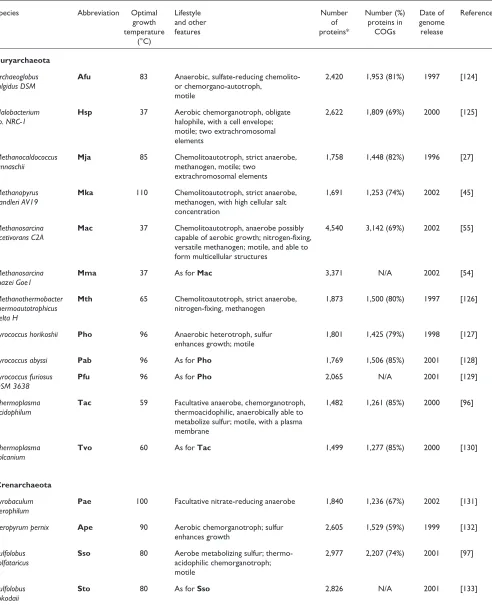
Table 1
Completely sequenced archaeal genomes
Species Abbreviation Optimal Lifestyle Number Number (%) Date of Reference
growth and other of proteins in genome
temperature features proteins* COGs release
(°C) Euryarchaeota
Archaeoglobus Afu 83 Anaerobic, sulfate-reducing chemolito- 2,420 1,953 (81%) 1997 [124]
fulgidus DSM or chemorgano-autotroph,
motile
Halobacterium Hsp 37 Aerobic chemorganotroph, obligate 2,622 1,809 (69%) 2000 [125]
sp. NRC-1 halophile, with a cell envelope;
motile; two extrachromosomal elements
Methanocaldococcus Mja 85 Chemolitoautotroph, strict anaerobe, 1,758 1,448 (82%) 1996 [27]
jannaschii methanogen, motile; two
extrachromosomal elements
Methanopyrus Mka 110 Chemolitoautotroph, strict anaerobe, 1,691 1,253 (74%) 2002 [45] kandleri AV19 methanogen, with high cellular salt
concentration
Methanosarcina Mac 37 Chemolitoautotroph, anaerobe possibly 4,540 3,142 (69%) 2002 [55] acetivorans C2A capable of aerobic growth; nitrogen-fixing,
versatile methanogen; motile, and able to form multicellular structures
Methanosarcina Mma 37 As for Mac 3,371 N/A 2002 [54]
mazei Goe1
Methanothermobacter Mth 65 Chemolitoautotroph, strict anaerobe, 1,873 1,500 (80%) 1997 [126] thermoautotrophicus nitrogen-fixing, methanogen
delta H
Pyrococcus horikoshii Pho 96 Anaerobic heterotroph, sulfur 1,801 1,425 (79%) 1998 [127] enhances growth; motile
Pyrococcus abyssi Pab 96 As for Pho 1,769 1,506 (85%) 2001 [128]
Pyrococcus furiosus Pfu 96 As for Pho 2,065 N/A 2001 [129]
DSM 3638
Thermoplasma Tac 59 Facultative anaerobe, chemorganotroph, 1,482 1,261 (85%) 2000 [96] acidophilum thermoacidophilic, anaerobically able to
metabolize sulfur; motile, with a plasma membrane
Thermoplasma Tvo 60 As for Tac 1,499 1,277 (85%) 2000 [130]
volcanium
Crenarchaeota
Pyrobaculum Pae 100 Facultative nitrate-reducing anaerobe 1,840 1,236 (67%) 2002 [131] aerophilum
Aeropyrum pernix Ape 90 Aerobic chemorganotroph; sulfur 2,605 1,529 (59%) 1999 [132] enhances growth
Sulfolobus Sso 80 Aerobe metabolizing sulfur; thermo- 2,977 2,207 (74%) 2001 [97]
solfataricus acidophilic chemorganotroph;
motile
Sulfolobus Sto 80 As for Sso 2,826 N/A 2001 [133]
tokodaii
begin with, many of these organisms thrive under conditions that, by the usual standards of biology, seem unimaginable, such as in the water in the vicinity of the hydrothermal vents called ‘black smokers’ heated to over-boiling temperatures and saturated with hydrogen sulfide, or in extreme salinity [11-13]. In the most extreme hyperthermophilic habitats, archaea are, in fact, the only detectable life forms. In more moderate environments, archaea coexist with bacteria and eukaryotes, and their ecological importance is being increas-ingly recognized [14]. The first molecular biological studies showed that archaea are highly unusual and clearly distinct from bacteria at the molecular level. In particular, the struc-ture of the membrane glycerolipids in archaea is different from that of bacterial and eukaryal cells, and archaea do not contain murein, the predominant component of bacterial cell walls [15,16].
But the most striking differences between archaea and bacteria are seen in the organization of their information-processing systems. The structures of ribosomes and chromatin, the presence of histones, and sequence similarity between pro-teins involved in translation, transcription, replication and DNA repair all point to a closer relationship between archaea and eukaryotes than between either of these and bacteria [17-21]. Moreover, the key components of the DNA replication machinery - such as the polymerases involved in elongation and initiation and the replicative helicases - are not homolo-gous, or at least not ortholohomolo-gous, in archaea and eukaryotes on the one hand, and bacteria on the other [17,22]. This observation led to the hypothesis that replication of double-stranded DNA as the principal form of replication of the genetic material was ‘invented’ twice, independently: once in bacteria and once in the ancestor of archaea and eukaryotes [22,23]. In contrast many - although not all - of the metabolic pathways of archaea more closely resemble their bacterial rather than eukaryotic counterparts [24-26]. These studies support the status of archaea as a distinct domain of life with specific connections to eukaryotes, and emphasize the unusual and unique nature of archaeal genomes.
The new age of archaea began in 1996 with the whole-genome shotgun sequencing of the first archaeal whole-genome, that of Methanococcus (now Methanocaldococcus) jan-naschii [27]. The Methanococcus ‘genomescape’ at first looked largely mysterious, with clear functional assignments produced for only 38% of the genes [27]. A more detailed computational analysis that pushed the methodology avail-able at the time to its limits yielded general functional pre-dictions for up to 70% of the genes, showing that a solid connection between the genomes of archaea and those of other, better known forms of life did exist [24]. Nevertheless, the fact remained that, more than anything, the first sequenced archaeal genome revealed the depth of our igno-rance of the biology of this remarkable group of organisms. Subsequent genome sequencing, while certainly less exten-sive than the devoted ‘archaeologists’ would wish, produced
a rich sampling of genomes of taxonomically diverse archaea (Table 1). This set of completely sequenced genomes includes multiple representatives of the two major divisions of the archaea established by phylogenetic analysis of rRNA, namely the Euryarchaeota and the Crenarchaeota [3], as well as the principal ecological types of archaea, such as hyper-thermophiles, moderate hyper-thermophiles, and mesophiles, as well as halophiles and methanogens; autotrophic and het-erotrophic forms, and anaerobes and aerobes are also repre-sented by multiple species (Table 1).
Some potentially important branches of archaea are still missing from sequence databases, however, such as the mys-terious Korachaeota, which might have branched off the trunk of the phylogenetic tree prior to the divergence of the remainder of the archaea [28], and the equally intriguing Nanoarchaea that so far seem to have the smallest genomes of all known cellular life forms [29,30]. These lacunae notwithstanding, the available sampling of archaeal genomes is substantial and is complemented by an even greater diversity of bacterial and eukaryotic genomes that are available for comparative analysis. This article critically assesses the contribution of comparative genomics to our understanding of the functional systems of archaeal cells and their evolution. We pose the following question: what have we learned from comparisons of archaeal genomes that could not easily have been learned by other, more traditional approaches? We suggest some tentative answers, as we see them. What follows is a viewpoint from behind a computer terminal; we realize that, from the experimenter’s bench, the perspective might be somewhat different.
Evolutionary archaeogenomics
From the beginning of comparative genomics, it has been obvious that genome comparisons will yield valuable func-tional and evolutionary information only within a frame-work of the rational classification of genes and proteins. In our view, perhaps the most natural form of such a classifica-tion is a system of orthologous gene sets, which allows a researcher to analyze the evolutionary fate of each individ-ual gene [31]. Orthologs are homologous genes that evolved from a single ancestral gene in the last common ancestor of the compared genomes, whereas paralogs are genes related via duplication within a genome [32-34]. When duplica-tion(s) succeeds speciation, a family of paralogs in one species should be considered orthologous to the corre-sponding family in the other species [34]. Insomuch as orthologous relationships are correctly defined, phyletic (or phylogenetic) patterns of orthologous gene sets help in the prediction of gene functions and provide clues to the pre-vailing trends in genome evolution (a phyletic pattern is defined, simply, as the pattern of representation of genomes in each orthologous set) [26,31,35,36]. These phyletic pat-terns are captured in the database of Clusters of Orthologous Groups of proteins (COGs) [37], and here we use COGs for a
comment
reviews
reports
deposited research
interactions
information
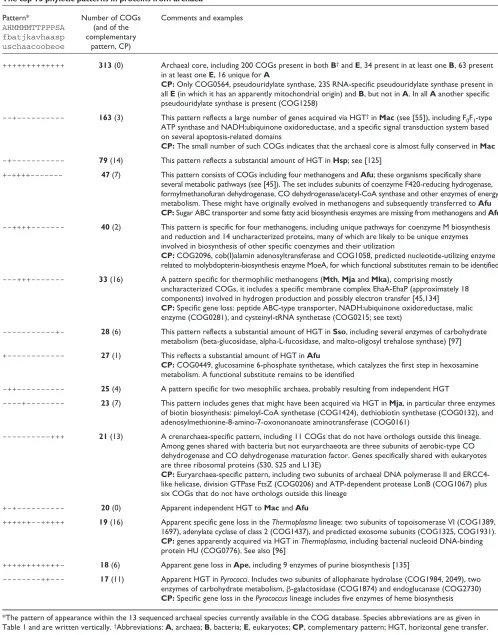
Table 2
The top 15 phyletic patterns in proteins from archaea
Pattern* Number of COGs Comments and examples AHMMMMTTPPPSA (and of the
fbatjkavhaasp complementary uschaacoobeoe pattern, CP)
+++++++++++++ 313(0) Archaeal core, including 200 COGs present in both B†and E, 34 present in at least one B, 63 present
in at least one E, 16 unique for A
CP: Only COG0564, pseudouridylate synthase, 23S RNA-specific pseudouridylate synthase present in all E(in which it has an apparently mitochondrial origin) andB, but not in A. In all A another specific pseudouridylate synthase is present (COG1258)
--+--- 163(3) This pattern reflects a large number of genes acquired via HGT†in Mac(see [55]), including F 0F1-type
ATP synthase and NADH:ubiquinone oxidoreductase, and a specific signal transduction system based on several apoptosis-related domains
CP: The small number of such COGs indicates that the archaeal core is almost fully conserved in Mac -+--- 79(14) This pattern reflects a substantial amount of HGT in Hsp; see [125]
+-++++--- 47(7) This pattern consists of COGs including four methanogens and Afu; these organisms specifically share several metabolic pathways (see [45]). The set includes subunits of coenzyme F420-reducing hydrogenase, formylmethanofuran dehydrogenase, CO dehydrogenase/acetyl-CoA synthase and other enzymes of energy metabolism. These might have originally evolved in methanogens and subsequently transferred to Afu CP: Sugar ABC transporter and some fatty acid biosynthesis enzymes are missing from methanogens and Afu --++++--- 40(2) This pattern is specific for four methanogens, including unique pathways for coenzyme M biosynthesis
and reduction and 14 uncharacterized proteins, many of which are likely to be unique enzymes involved in biosynthesis of other specific coenzymes and their utilization
CP: COG2096, cob(I)alamin adenosyltransferase and COG1058, predicted nucleotide-utilizing enzyme related to molybdopterin-biosynthesis enzyme MoeA, for which functional substitutes remain to be identified ---+++--- 33(16) A pattern specific for thermophilic methanogens (Mth, Mja and Mka), comprising mostly
uncharacterized COGs, it includes a specific membrane complex EhaA-EhaP (approximately 18 components) involved in hydrogen production and possibly electron transfer [45,134]
CP:Specific gene loss: peptide ABC-type transporter, NADH:ubiquinone oxidoreductase, malic enzyme (COG0281), and cysteinyl-tRNA synthetase (COG0215; see text)
---+- 28(6) This pattern reflects a substantial amount of HGT in Sso, including several enzymes of carbohydrate metabolism (beta-glucosidase, alpha-L-fucosidase, and malto-oligosyl trehalose synthase) [97] +--- 27(1) This reflects a substantial amount of HGT in Afu
CP: COG0449, glucosamine 6-phosphate synthetase, which catalyzes the first step in hexosamine metabolism. A functional substitute remains to be identified
-++--- 25(4) A pattern specific for two mesophilic archaea, probably resulting from independent HGT
----+--- 23(7) This pattern includes genes that might have been acquired via HGT in Mja, in particular three enzymes of biotin biosynthesis: pimeloyl-CoA synthetase (COG1424), dethiobiotin synthetase (COG0132), and adenosylmethionine-8-amino-7-oxononanoate aminotransferase (COG0161)
---+++ 21 (13) A crenarchaea-specific pattern, including 11 COGs that do not have orthologs outside this lineage. Among genes shared with bacteria but not euryarchaeota are three subunits of aerobic-type CO dehydrogenase and CO dehydrogenase maturation factor. Genes specifically shared with eukaryotes are three ribosomal proteins (S30, S25 and L13E)
CP: Euryarchaea-specific pattern, including two subunits of archaeal DNA polymerase II and ERCC4-like helicase, division GTPase FtsZ (COG0206) and ATP-dependent protease LonB (COG1067) plus six COGs that do not have orthologs outside this lineage
+-+--- 20(0) Apparent independent HGT to Macand Afu
++++++--+++++ 19(16) Apparent specific gene loss in the Thermoplasmalineage: two subunits of topoisomerase VI (COG1389, 1697), adenylate cyclase of class 2 (COG1437), and predicted exosome subunits (COG1325, COG1931). CP: genes apparently acquired via HGT in Thermoplasma, including bacterial nucleoid DNA-binding protein HU (COG0776). See also [96]
++++++++++++- 18(6) Apparent gene loss in Ape, including 9 enzymes of purine biosynthesis [135]
[image:4.609.53.551.112.747.2]systematic survey of archaeal genomes (most of the phyletic pattern analyses can be done directly on the COG website by using the phyletic pattern search tool [38]).
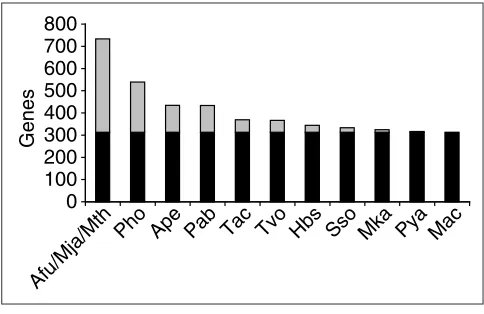
The most common phyletic patterns found in archaea are shown in Table 2. Not unpredictably, the top pattern con-sists of the 313 COGs that are represented in all archaeal genomes sequenced so far. What is more remarkable is that this apparent conserved core of archaeal genomes has undergone only limited shrinkage since the time it was first defined by comparative analysis of four archaeal genomes [39] (Figure 1). Extrapolating from the effect (or rather the near lack thereof) of the latest additions to the collection of archaeal genomes on the size of the conserved core of archaeal genes, we are compelled to conclude that around 300 genes are shared by all archaea, encode essential func-tions and have not been subject to non-orthologous gene dis-placement during archaeal evolution (non-orthologous gene displacement is a widespread phenomenon whereby a gene responsible for an essential function is displaced by an unre-lated or distantly reunre-lated gene responsible for the same func-tion [40]).
Of the COGs represented in all archaea, 16 so far have no members from other domains of life and comprise a unique archaeal genomic signature, whereas 61 are exclusively archaeo-eukaryotic. The majority of the pan-archaeal genes are known to be involved in, or are implicated in, informa-tion processing, particularly translainforma-tion and RNA modifica-tion (Figure 2). Strikingly, among the 61 COGs that are uniquely shared by archaea and eukaryotes, only two do not, technically, belong to the information-processing machinery (COG1936, a nucleotide kinase, and COG3642, a protein
kinase typically fused to a metalloprotease domain); the 10 uncharacterized COGs in this category consist of proteins whose predicted biochemical activity (GTPase, methyltrans-ferase or RNA-binding protein) suggests a role in translation or RNA modification.
Thus, phyletic pattern analysis strongly supports the identity of archaea as a distinct group of organisms with a stable, con-served core of genes that primarily encodes proteins involved in the replication and expression of the genome. Further-more, there is clearly a subset of genes, again primarily asso-ciated with information processing, that is shared by archaea and eukaryotes, to the exclusion of bacteria; this is compati-ble with the archaeo-eukaryotic affinity suggested by phylo-genetic analyses of rRNA and proteins involved in translation, transcription and replication. The fact that this archaeo-eukaryotic component is quantitatively small, however, shows that the process of evolution has been more complex than simple vertical inheritance and has involved extensive horizontal gene transfer (HGT) between archaea and bacteria, at least outside the core gene set [24,25,41]. An intensely mixing pool of genes coding for metabolic enzymes, structural components of the cell and other proteins outside the central information-processing machinery might have existed after the divergence of bacteria and archaea but prior to the separation of the major archaeal and bacterial lineages.
More recent HGT, which has emerged as a major aspect of prokaryotic evolution in general [26,42-44], was apparently prominent in all archaea, although gene exchange with bac-teria seems to have been much less extensive in hyperther-mophiles than in mesophiles such as Methanosarcina or even Halobacterium [44,45]. Apparent preferential HGT has been noticed between archaea and hyperthermophilic
comment
reviews
reports
deposited research
interactions
information
[image:5.609.55.297.497.654.2]refereed research
Figure 1
The archaeal gene core: changes resulting from the appearance of new genome sequences. Black bars indicate the current set of pan-archaeal genes (313 COGs); gray indicates COGs that are not part of the current pan-archaeal core but are seen to be conserved after the addition of the given genome sequence. The genomes are listed from left to right in chronological order of release of the complete sequence; species name abbreviations are as in Table 1.
0
100
200
300
Afu/Mja/Mth
Pho Ape Pab Tac Tvo Hbs Sso Mka Pya Mac
400
Genes
500
600
700
800
Figure 2
Functional breakdown of genes within the conserved archaeal core. ‘Universal’ indicates genes with orthologs in both bacteria and eukaryotes; ‘eukaryotic’, genes with orthologs only in eukaryotes; ‘bacterial’, genes with orthologs only in bacteria; ‘archaeal’, genes without non-archaeal orthologs. The data on orthology and functional classification are derived from the COGs.
Information processing
Cellular processes
Metabolism
Poorly characterized
0
10
20
30
40
50
60
70
80
90
[image:5.609.314.556.508.664.2]bacteria, such as Aquifex and Thermotoga; when compared to bacterial mesophiles these bacteria have many more pro-teins with greater similarity to archaeal than to bacterial homologs [46,47]. With HGT, or more precisely the pivotal role of HGT in evolution, remaining a controversial subject [48], this conclusion has been disputed on the grounds that
Aquifexand Thermotoga might be early-branching bacteria retaining ancestral features in many protein sequences [49]. But this argument seems untenable simply because of the obvious split of the gene complements of these bacteria into ‘garden variety’ bacterial genes and ‘archaeal’ genes [50]. The reality of horizontal gene flow from archaea to ther-mophilic bacteria becomes even more tangible upon exami-nation of the proteins encoded in the genome of
Thermoanaerobacter tengcongensis[51,52], which contains many more ‘archaeal’ genes than appear in other bacteria of the Bacillus-Clostridium group and to which the early-branching argument would not apply.
Although archaeal hyperthemophiles do not appear to have many genes acquired via HGT from bacteria, at least after the divergence of the archaeal lineages, horizontal gene exchange between archaea themselves might have been extensive. Strikingly, even within the conserved core of archaeal genes, major diversity of phylogenetic tree topolo-gies has been observed ([53] and Y.I. Wolf and E.V.K., unpublished observations). As noted by Nesbo and coworkers [53], “the notion that there is a core of non-transferable genes…has not been proven and may be unprovable”. These findings do not invalidate the notion of a core of indispensable genes that are conserved across archaea but suggest a wide spread of xenologous gene dis-placement, whereby an essential gene is displaced by an ortholog from a distant lineage, typically via an intermedi-ate stage of redundancy [44].
Other phyletic patterns that are common among archaea seem primarily to reflect HGT or gene loss prevalent in indi-vidual archaeal lineages (Table 2). Thus, Methanosarcina, a mesophile with by far the largest genome among the sequenced archaeal genomes, is represented in numerous COGs that have no other archaeal members but are present in various groups of bacteria. This organism, which coexists with a diverse bacterial biota, appears to be a veritable sink for horizontally acquired bacterial genes [54,55]. Similar, if less dramatic, evidence of apparent horizontal gene transfer was seen in Halobacterium, Sulfolobus, and A. fulgidus
(Table 2; [44]). Of further note are the patterns of genes that are ubiquitous in one of the major branches of archaea, namely Euryarchaeota or Crenarchaeota, but are missing from the other branch. While quantitatively small, the set of euryarchaea-specific genes includes those for several crucial cellular functions, such as the two subunits of DNA poly-merase II and the FtsZ GTPase that is required for cell divi-sion in Euryarchaeota and bacteria but missing from Crenarchaeota and eukaryotes.
Phyletic patterns can be used for interesting and potentially useful forays into functional genomics - more specifically for the identification of the genomic cognates of particular phe-notypes. The most dramatic phenotypic characteristic of archaea is hyperthermophily, and attempts have been made to use the phyletic pattern approach to identify a gene set typical of hyperthermophiles. Strikingly, there is only one COG that is represented in all hyperthermophiles (both bac-teria and archaea) but not in any other sequenced genomes, the reverse gyrase ([56]; COG1110). Reverse gyrase consists of a topoisomerase and a helicase domain and functions to introduce negative supercoiling into DNA; this activity is apparently required for DNA replication and gene expres-sion at extreme high temperatures [57]. But ‘clean’ phyletic patterns that have an unequivocal association with a given phenotype are an exception rather than the rule, so flexible pattern selection approaches have been employed. Our recent analysis of phyletic patterns enriched in archaeal and bacter-ial hyperthermophiles yielded around 60 COGs potentbacter-ially related to this phenotype [58]. About one quarter of these COGs encode parts of a predicted DNA repair system that is largely characteristic of thermophiles ([59] and see below). The remaining COGs in this set suggest the existence of a transcriptional regulator that might be involved in adaptation to hyperthermal environments, and a distinct class of enzymes, the S-adenosyl methionine (SAM)-radical enzymes, whose chemistry is likely to be particularly efficient under these conditions [58]. Finally, a substantial number of COGs are specific for methanogens or shared by the methanogens and A. fulgidus(Table 2 and [45]). Many of these include known or predicted enzymes involved in methanogenesis and associated metabolic pathways [45,60]; others remain to be characterized and are likely to encode additional com-ponents of these pathways.
Further functional and evolutionary information can be extracted from complementary phyletic patterns, which are the signature of non-orthologous gene displacement [26,61]. Although the complementarity is, most often, only partially due to redundancy in some species, several cases of near-perfect complementarity among archaea are notable, such as the two classes of unrelated lysyl-tRNA synthetases [62,63], and two forms of thymidylate synthase that are also unrelated to each other [61,64]. Below, when discussing functional genomics of the archaea, we return to the use of conserved and complementary phyletic patterns for functional prediction.
Genome-wide phylogeny of archaea and
reconstruction of archaeal ancestors
multiple genes (proteins), from other, integral measures of the evolutionary distance between genomes (for example, the median of the distribution of evolutionary rates between orthologs), or from non-sequence-based measures such as the similarity of gene repertoire and gene orders [65]. Generally, it appears that trees produced from concatenated alignments of gene products that are not particularly prone to HGT yield the best resolution [66-68]. All genome-tree analyses unequivocally supported the monophyly of archaea and the monophyly of Crenarchaeota. Beyond that, however, the genome-tree topology is not necessarily com-patible with that of rRNA-based trees. Thus, genome-tree analysis cast doubt on the bifurcation of Euryarchaeota and Crenarchaeota being the first split in archaeal evolution; in some of these analyses, Halobacteriumand Thermoplasma
branch off first, suggesting that Crenarchaeota are a highly derived lineage that evolved from within Euryarchaeota [66]. The same versions of genome-trees strongly suggest monophyly of methanogens, which is compatible with their distinct gene repertoire and life style [45]; but alternative trees constructed from concatenated multiple alignments of a different assortment of translation machinery compo-nents support the original divergence of Crenarchaeota and Euryarchaeota but reject the monophyly of methanogens [21,69]. It appears that a robust phylogeny of archaea will require many additional genome sequences and perhaps also further refinement of phylogenetic methods dealing with long branches and with large amounts of data. The reconstruction of the best approximation of archaeal phylo-geny is of interest not so much in and of itself, but more in terms of clarifying the tempo and mode of evolution of this remarkable group of organisms. A definitive tree topology will help answer fundamental questions, such as whether methanogenesis evolved only once or several times, whether the role of histones in chromatin formation is ancestral or derived in the archaeo-eukaryotic lineage, and even the exact evolutionary relationship between archaea and eukaryotes.
Phylogenetic trees can also be employed for reconstruction of the gene sets of ancestral life forms. Given a species tree topology and phyletic patterns of the maximum possible number of orthologous gene sets (or COGs), the most parsi-monious evolutionary scenario, which includes the minimum possible number of elementary events, can be reconstructed using various parsimony algorithms [70,71]. The elementary events included in this type of analysis are gene gain and gene loss. Gene gain in a given lineage may occur either as emergence of new genes (COGs), primarily via duplication with subsequent radical divergence, or as HGT from other lineages. The relative likelihood of gene loss and gene gain (the gain penalty) substantially affects the recon-structed evolutionary scenario and the gene composition of the reconstructed ancestral genomes - but this parameter is a major unknown. Nevertheless, examination of the gene sets for the last universal common ancestor (LUCA) derived with
different gain penalties showed, perhaps rather unexpectedly, that the assumption of equal probabilities of gains and losses (a gain penalty of 1) yields a reasonable reconstruction of the main functional systems of the cell [71].
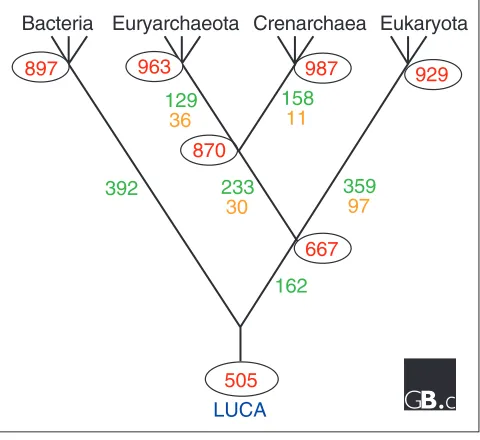
We therefore applied our version of the weighted parsimony algorithm [70], with that assumption, to the updated set of bacterial, archaeal and eukaryotic genomes (also assuming the dichotomy of Euryarchaeota and Crenarchaeota sug-gested by rRNA trees and some of the genome-trees) and the results are schematically shown in Figure 3 (see also addi-tional data file). This reconstruction suggests that the common ancestor of archaea could have had around 900 genes, with substantial gene gain but only minimal gene loss compared to the more ancient common ancestor of the archaeo-eukaryotic lineage. Obviously, the conserved core of the pan-archaeal genes is a subset of the reconstructed ancestral gene set, but it seems striking that approximately two thirds of the ancestral genes have been lost from at least one of the sequenced archaeal genomes (Figure 3).
From genome comparisons to functional and
structural genomics of the archaea
In the era of comparative genomics, experimental studies on a genomic scale lag woefully behind computational studies. The great majority of the genes in most species will never be studied experimentally, and our understanding of the bio-chemistry and physiology of the respective organisms therefore
comment
reviews
reports
deposited research
interactions
information
[image:7.609.315.555.89.309.2]refereed research
Figure 3
The most parsimonious scenario for the evolution of the main lineages of life. The red numbers in ovals near the internal nodes show the size of the reconstructed gene sets of the respective ancestral forms. Green numbers show gene gains and brown numbers gene losses assigned to each of the branches in the tree. LUCA, last universal common ancestor.
LUCA
392
162
359
97
233
30
158
11
129
36
929
987
963
897
667
870
505
models from which the predictions are inferred (Table 3). A good example is the archaeal ortholog of the bacterial DNA primase (DnaG), which is a highly conserved protein present in all archaea [24]. The discovery of a predicted bacterial-type primase in archaea was unexpected, given that the archaeal replication system is orthologous to that of eukary-otes and, in particular, archaea encode the two subunits of the eukaryotic-type primase (COG1467 and COG2219; it should be noted parenthetically that detection of the large primase subunit itself required extremely careful sequence analysis due to the low similarity to the eukaryotic ortholog [22]). Given that the niche of the replicative primase seems to be occupied by the eukaryotic-type enzyme [74,75], the DnaG ortholog is likely to have a critical role in repair, but beyond this general idea its function has yet to be deter-mined by direct experimentation; such experiments have the potential to reveal completely new repair systems and pathways. Other proteins implicated in repair as a result of exhaustive sequence analysis, such as the putative nucleases encoded by COG1833 and COG1628 (Table 3), illustrate the same point: the biochemical activities are predicted but the biology remains to be investigated experimentally.
Some of the other functional predictions inferred from sequence analysis directly help filling glaring gaps in otherwise well-characterized pathways of archaeal metabolism. A good example of such focused prediction is the identification of an archaeal fructose-1,6-bisphophate aldolase, an indispensable glycolytic enzyme, which was first predicted computationally to be a member of the DhnA family of aldolases by our group [76] and subsequently identified experimentally [77]. In the same vein, during work for this article, we predicted the missing archaeal aconitase, an essential enzyme of the tri-carboxylic acid cycle (Table 3; K.S.M. and E.V.K., unpub-lished observations).
The identities of a considerable number of proteins respon-sible for essential functions in archaea remain a mystery. Perhaps the most notable case is the missing cysteinyl-tRNA synthetase of thermophilic methanogens. Cysteine is incorporated into the proteins of these organisms as readily as in any others, but they lack an ortholog of cysteinyl-tRNA synthetase. Two different solutions for this paradox have been proposed, one involving an uncharacterized protein that has been proposed to be a ‘third class’ of aminoacyl-tRNA synthetases [78], and the other based on the apparent ability of the archaeal prolyl-tRNA synthetase to couple tRNACyswith cysteine [79]. The first hypothesis has been
refuted by our group upon more detailed sequence analysis [80], however, and the second did not seem to be compati-ble with subsequent structural studies [81]. The real cys-teinyl-RNA synthetase of methanogens seems still to be hiding among uncharacterized proteins. Gaping holes also remain in archaeal pathways of isoleucine biosynthesis [82], heme biosynthesis [83], biotin biosynthesis [26], and several others.
depends on the transfer of information from functionally characterized orthologs [26,72]. For both bacteria and eukaryotes, such transfer is facilitated by the availability of a vast body of experimental data on model organisms, such as Escherichia coli, Bacillus subtilis, the yeast Sac-charomyces cerevisiae or the fruit fly Drosophila melanogaster. The situation is quite different for archaea because, some genetic studies of mesophilic archaeal species notwithstanding [73], there is, so far, no satisfac-tory model system; this results primarily from the fact that most of these organisms grow slowly and are hard to culti-vate. The functions of most of the archaeal genes have therefore been predicted by sequence analysis. Moreover, on many occasions the similarity between an archaeal protein and its functionally characterized homolog is so low that computational methods for sequence analysis have to be extended to the limit of their power.
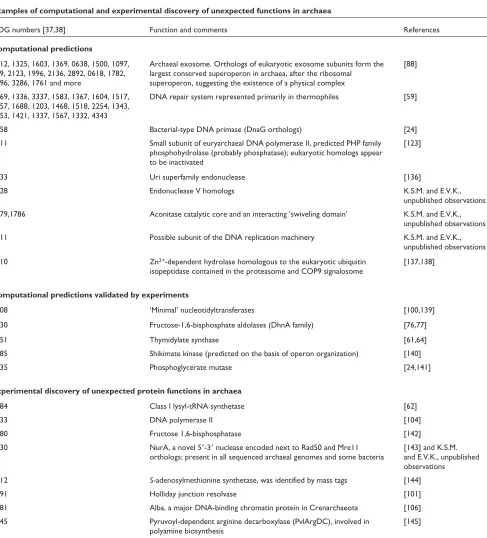
[image:8.609.53.296.85.255.2]A substantial fraction of the functional predictions for archaeal proteins appear ‘trivial’ in the sense that the respective proteins are highly conserved orthologs of well-characterized proteins from model organisms and, for all practical purposes, the validity of the prediction is beyond reasonable doubt (which is not to say that there are no important details of the functions of these proteins that can be uncovered only by experiment). For many other proteins, however, the prediction remains only a pointer to the proba-ble biochemical function while the biology remains a mystery. A rough breakdown of the state of functional char-acterization of several archaea with sequenced genomes is given in Figure 4. The substantial fraction of genes for which only general, typically biochemical, prediction is available, is testimony to the current limited understanding of archaeal biology. Moreover, even some of the more defin-itive predictions only serve to emphasize the biological dif-ferences between archaea and the bacterial or eukaryotic Figure 4
Functional breakdown of genes in each of the sequenced archaeal genomes. The data are from COGs; species name abbreviations are as in Table 1.
Afu Hsp Mac Mth Mja Mka Tac Tvo Pho Pab Pae Sso Ape 0
500 1,000
Genes
1,500 2,000 2,500 3,000 3,500 4,000 4,500 5,000
Beyond straightforward (even if highly sensitive) sequence analysis, a powerful approach to the prediction of functions involves analysis of various forms of genomic context, or establishing ‘guilt by association’ [26,84-87]. The associa-tions employed to infer gene funcassocia-tions may be manifest at different levels, including the phyletic patterns discussed
above, juxtaposition of domains in multidomain proteins, clustering of genes in (predicted) operons, co-expression, and protein-protein interaction. The last two of these types of data, obtained through transcriptomic and proteomic efforts, are becoming increasingly important in the func-tional genomics of eukaryotes and, to a somewhat lesser
comment
reviews
reports
deposited research
interactions
information
[image:9.609.64.551.99.637.2]refereed research
Table 3
Examples of computational and experimental discovery of unexpected functions in archaea
COG numbers [37,38] Function and comments References
Computational predictions
0012, 1325, 1603, 1369, 0638, 1500, 1097, Archaeal exosome. Orthologs of eukaryotic exosome subunits form the [88] 689, 2123, 1996, 2136, 2892, 0618, 1782, largest conserved superoperon in archaea, after the ribosomal
1096, 3286, 1761 and more superoperon, suggesting the existence of a physical complex
1769, 1336, 3337, 1583, 1367, 1604, 1517, DNA repair system represented primarily in thermophiles [59] 1857, 1688, 1203, 1468, 1518, 2254, 1343,
1353, 1421, 1337, 1567, 1332, 4343
0358 Bacterial-type DNA primase (DnaG orthologs) [24]
1311 Small subunit of euryarchaeal DNA polymerase II, predicted PHP family [123] phosphohydrolase (probably phosphatase); eukaryotic homologs appear
to be inactivated
1833 Uri superfamily endonuclease [136]
1628 Endonuclease V homologs K.S.M. and E.V.K.,
unpublished observations 1679,1786 Aconitase catalytic core and an interacting ‘swiveling domain’ K.S.M. and E.V.K.,
unpublished observations
1711 Possible subunit of the DNA replication machinery K.S.M. and E.V.K.,
unpublished observations 1310 Zn2+-dependent hydrolase homologous to the eukaryotic ubiquitin [137,138]
isopeptidase contained in the proteasome and COP9 signalosome
Computational predictions validated by experiments
1708 ‘Minimal’ nucleotidyltransferases [100,139]
1830 Fructose-1,6-bisphosphate aldolases (DhnA family) [76,77]
1351 Thymidylate synthase [61,64]
1685 Shikimate kinase (predicted on the basis of operon organization) [140]
3635 Phosphoglycerate mutase [24,141]
Experimental discovery of unexpected protein functions in archaea
1384 Class I lysyl-tRNA synthetase [62]
1933 DNA polymerase II [104]
1980 Fructose 1,6-bisphosphatase [142]
1630 NurA, a novel 5ⴕ-3ⴕnuclease encoded next to Rad50 and Mre11 [143] and K.S.M. orthologs; present in all sequenced archaeal genomes and some bacteria and E.V.K., unpublished
observations 1812 S-adenosylmethionine synthetase, was identified by mass tags [144]
1591 Holliday junction resolvase [101]
1581 Alba, a major DNA-binding chromatin protein in Crenarchaeota [106] 1945 Pyruvoyl-dependent arginine decarboxylase (PvlArgDC), involved in [145]
extent, bacteria, but are so far unavailable for archaea. The main type of context information in archaea has therefore been obtained by analyzing conserved elements of gene order and multidomain proteins. Only a relatively small frac-tion (10-15%) of each archaeal genome is covered by evolu-tionarily conserved gene strings that can be predicted to form operons [87]. Nevertheless, by comparing gene orders in multiple genomes, partially conserved gene neighbor-hoods can be reconstructed and examination of some of these leads to predictions of functional systems whose exis-tence has not previously been suspected (Table 3).
The most notable illustrations of this approach (both from our own group) are the prediction of the archaeal exosome [88] and a potential new repair system typical of archaeal and bacterial thermophiles [59]. The eukaryotic exosome is a multisubunit complex that consists of RNAses, helicases and RNA-binding proteins and is involved in the exonucleolytic degradation of various classes of RNA [89-91]. During com-parative analysis of gene order in prokaryotic genomes, it was observed that a distinct set of genes, some of which encode orthologs of eukaryotic exosome components, form a partially conserved predicted superoperon, which includes in total over 15 genes (although none of the archaeal genomes contains every one of these within the predicted superoperon). In addition to RNAses and RNA-binding pro-teins (with an RNA helicase apparently encoded in a sepa-rate operon), the exosomal superoperon also encodes a proteasome subunit and a subunit of prefoldin, a co-transla-tional molecular chaperone ([88] and Figure 5a). Thus, these observations point to the existence of a multifunctional macromolecular complex that could couple post-transla-tional protein folding with regulated, ATP-dependent degra-dation of RNA and proteins. This complex remains to be discovered experimentally, and the potential implications for new functional and physical interactions in eukaryotes are also open to experimental study.
A more sophisticated comparison of gene orders, which required special algorithms for delineation of partially con-served genomic neighborhoods [92], led us to predict a dis-tinct DNA repair system that is most prevalent in thermophiles and includes genes for a predicted novel DNA polymerase, a helicase, two nucleases and several uncharac-terized genes, at least one of which could encode a novel nuclease ([59] and Figure 5b). Furthermore, this neighbor-hood contains multiple, diverged versions of a gene coding for a protein with a probable structural role dubbed RAMP (repair-associated mysterious protein). The proliferation of RAMP genes (Figure 5b) is an example of a potentially adap-tive lineage-specific expansion of a gene family; such expan-sions are discussed below in greater detail.
Additional, simpler cases of functional prediction via ‘guilt by association’ are illustrated in Figure 5c-e. The gene for the uncharacterized protein represented by COG1711 (Figure 5c)
forms an evolutionarily highly conserved gene pair with the gene for the clamp subunit of DNA polymerase (ortholog of the eukaryotic PCNA). The orthologs of COG1711 proteins are conserved in all eukaryotes, and this protein might be an essential but still uncharacterized component of the archaeo-eukaryotic DNA replication machinery (K.S.M. and E.V.K., unpublished observations). The gene represented by unchar-acterized COG1909 is squeezed between genes for RNA poly-merase subunits and that for a ribosomal protein (Figure 5d). Examination of the multiple alignments that lead to this COG shows conservation of polar residues compatible with an enzymatic function (K.S.M. and E.V.K., unpublished observa-tions). There are no readily detectable eukaryotic orthologs for this protein, which is therefore likely to be an archaea-specific enzyme with a house-keeping function.
Finally, uncharacterized COG1545 consists of genes encod-ing putative zinc-ribbon-containencod-ing proteins that form a stable gene pair with the gene for acetyl-CoA acetyltrans-ferase, a central enzyme of fatty acid biosynthesis (Figure 5e). Both these genes show remarkable paralogous expansion in several archaea, probably as a result of a series of duplications of the gene doublet. It appears likely that proteins from COG1545 form a complex with acetyl-CoA acetyltransferase, with the zinc-ribbon protein regulating and/or stabilizing the enzyme. The predictions depicted in Figure 5c-e and other similar ones ([87]; and K.S.M. and E.V.K., unpublished observations) are not particularly precise, even in terms of the biochemical activity of the respective proteins. Nevertheless, guilt by association impli-cates each of these proteins in specific biological functions, and the evolutionary conservation of both the proteins themselves and the gene order all but proves that their func-tions are essential. Thus, these proteins appear to be excel-lent targets for experimental studies, which have the potential to reveal new facets of central cellular processes in archaea.
two subunits of a predicted nucleotidyltransferase in several archaea [99,100] (Figure 6d) is of special interest and might have something to do with thermal adaptation, but the actual functions and even the substrates of these enzymes remain a mystery. Other lineage-specific expansions, such as that of distinct families of predicted ATPases in Methanocaldococ-cusand Pyrococcus, or a specific family of RadA(RecA)-like ATPases and the UspA-family of NTP-binding proteins in several archaeal species [39], suggest the existence of unusual pathways, perhaps involved in stress response and signal
transduction, but the actual biology associated with these expansions can only be uncovered experimentally.
Archaeal comparative genomics is a young field and so far, as we have seen, largely predictive. But a few experimental studies have already been instigated as a result of compara-tive-genomic predictions. The discovery of the archaeal fruc-tose-1,6-bisphosphate aldolase mentioned above [76,77] is a case in point, and several other examples of experimental val-idation of predictions are given in Table 3. It does not seem to
[image:11.609.57.557.93.465.2]comment reviews reports deposited research interactions information refereed research Figure 5
Prediction of gene functions in archaea by genomic context analysis. (a)The superoperon coding for the predicted archaeal exosome (see [88]). (b)The partially conserved gene neighborhood coding for the predicted repair system found in archaeal and bacterial thermophiles (see [59] for details). (c-e) Predicted operons containing uncharacterized genes in the neighborhood of genes from the following COGs: COG1594, DNA-directed RNA
polymerase, subunit M, and transcription elongation factor TFIIS (RPB9); COG0592, encoding a DNA polymerase sliding clamp subunit (PCNA ortholog); COG1631, ribosomal protein L44E; COG1095, DNA-directed RNA polymerase, subunit Eⴕ(RPB7); COG2093, DNA-directed RNA polymerase, subunit Eⴕⴕ(RPE2); COG2004, ribosomal protein S24E; COG1709, transcriptional regulator; COG3425, 3-hydroxy-3-methylglutaryl CoA synthase (PksG); COG0183, acetyl-CoA acetyltransferase (Fad A/PaaJ orthologs). UC, uncharacterized, shown by white arrows. Species abbreviations are as in Table 1. Genes are shown not to scale and are denoted by their respective genes names (some are discussed further in the text); arrows indicate the direction of transcription. A solid line connects genes in a predicted operon. Species that have the same operon organization as the listed species are indicated in parentheses. Orthologous genes are aligned. Genes with similar general functions are shown by the same shading. Broken lines show that genes are in the same predicted operon but are not adjacent. Small arrows indicate the presence of additional functionally related genes in the same predicted operon; these genes are not shown for lack of space.
VNG0678g L15E COG1632 UC COG1325 Rpp30 COG1603 Rpp14 COG1369 PS subunit COG0638 UC COG1500 Rrp4 COG1097 RNAse PH COG0689 Rrp42 COG2123 L37E COG1997 RPC10 COG1996 IMP4 COG2136 UC COG2892 Prefoldin COG1382
MTH690 MTH689 MTH688 MTH687 MTH686 MTH685 MTH684 MTH683 MTH682 MTH681 MTH680.a MTH680 MTH679 MTH678 Mth
SSO0742 SSO0741 SSO0740 SSO0739 SSO0738 SSO0737 SSO0736 SSO0735 SSO0732 SSO6418 SSO5865 SSO0731 SSO0730.a SSO0730 Sso
PAB0575 PAB1135 PAB1136 PAB0467 PAB0417 PAB0418 PAB0419 PAB0420 PAB0421 PAB7067 PAB3072 PAB2357 PAB3073 PAB1364 Pab
Ta1286 Ta1288 Ta1291 Ta1292 Ta1293 Ta1294 Ta1295 Ta1137 Tac
Polymerase COG1353 UC COG1421 RAMP COG1337 RAMP COG1567 RAMP COG1332 UC COG1517
MTH1082 MTH1081 MTH1080 MTH1079 MTH1078
RAMP COG1583
Mth
TM1811 TM1812 TM1813 TM1814 TM1815
TM1809
TVN0112 TVN0111 TVN0110 TVN0109 TVN0108 TVN0114 TVN0113
PH0163 PH0164 PH0165 PH0166 PH0167 PH0168
PH0162 MTH1083 Tvo Pab Thermotoga maritima
TM1805 TM1806 TM1807 TM1808
TVN0106 TVN0105
PH1248 PH1247 PH1246 PH1245 PH0915
PH1249
MJ0983 MJ0213 MJ1139 MJ0494 MJ0591 MJ0592 MJ0593 MJ0593.a MJ0594 MJ0594.a MJ0978 Mja
MTH1088 MTH1087 MTH1086 MTH1085 MTH1084
TM1810 MTH1089 PH0916 UC COG1343 Nuclease? COG1518 RecB nuclease COG1468 Helicase COG1203 RAMP? COG1688 UC COG1857 HD nuclease COG2254
MK1314 MK1315 MK1316 MK1317
MK1308 MK1310 MK1318 Mka
PAB1465 PAB1466 MTH1310 UC COG1711 PCNA COG0592 RPB9 COG1594 L44E COG1631 MTH1312 MTH1311 PAB1464 MTH1314 MJ0249 MJ0248 MJ0248 Mth Mja
MJ0248 MJ0248 Mka
MK1453
MK1451 MK1452 MK1454
UC COG1909 RPE2 COG2093 RPB7 COG1095 S24E COG2004 PAE3284
PAE3562 PAE3563 PAE2434
Mka, most others
SSO0416
SSO0415 SSO5798 Sso
(Ape) SSO0435
Pae
MK1378
MK1380 MK1379 MK1377
UC COG1545 PksG COG3425 Transcriptional regulator COG1709 FadA/PaaJ COG0183 PH0675
PH1471 PH0677 PH0676 Pho
Mka (Afu)
VNG0676c
VNG1616c VNG1615g Hsp
TA0031 TA0030 TA1282m TA1455 Tac, most others Pho
(a)
(b)
be chance that these examples all involve metabolic enzymes for which the specific reaction could be predicted precisely. Validation is likely to be much more difficult for proteins of other functional groups, such as putative repair enzymes, for which the actual substrates are harder to predict.
For some conserved archaeal proteins, functions cannot be predicted computationally despite considerable effort. Several important discoveries have been made by experimental characterization of such mysterious proteins. The most notable cases include the archaeal Holliday-junction resolvase, which is not related to its functional analog in bac-teria [101-103], and DNA polymerase II, a highly conserved euryarchaeal protein that is not found outside this lineage and shows no detectable sequence similarity to any other proteins [104,105]. Additional examples of direct experi-mental determination of the functions of archaeal proteins that could not be predicted by computational techniques (at least not before the experiment had been reported) are given in Table 3.
Especially notable is the story of the Alba protein, a DNA-binding component of chromatin in Crenarchaeota [106,107]. As noted above, crenarchaea lack histones and in these
organisms Alba appears to be the main chromatin protein, in a striking case of non-orthologous gene displacement. But orthologs of Alba are also present in thermophilic Euryarchaeota and in some eukaryotic lineages, where its functions remain to be elucidated. The most remarkable dis-covery regarding Alba is the regulation of its interaction with DNA and with the chromatin-associated protein deacetylase Sir2 via lysine acetylation and deacetylation [106,108]. In eukaryotes, regulation of chromatin dynamics via acetylation and deacetylation occurs through histone tails [109]. Thus, a special case of non-orthologous gene displacement seems to have taken place whereby the regulation mechanism is con-served but the actual substrates are different in archaea and eukaryotes. To add an extra twist to the story, Thermoplasma
lacks both histones and Alba but has the bacterial DNA-binding protein HU, pointing to three distinct solutions to the problem of chromatin organization in archaea [107].
[image:12.609.54.558.391.670.2]The last subject we have to briefly touch upon is structural genomics of the archaea. The ultimate goal of the structural genomics enterprise is determining the three-dimensional structure for all proteins, or at least for all sufficiently differ-ent proteins encoded in the genomes of diverse life forms [110]. This goal is far from being reached, and targets for
Figure 6
Lineage-specific expansions of paralogous gene families in archaea. The vertical axis shows the number of members of the indicated COGs. (a) COG0477, permeases of the major facilitator superfamily; COG0531, amino-acid transporters. (b)COG1145, ferredoxin. (c)COG2101, TATA-box binding protein (TBP), a component of transcription initiation factors TFIID and TFIIIB; COG1405, Brf1 subunit of transcription-initiation factor TFIIIB and transcription-initiation factor TFIIB. (d)COG1708, ‘minimal’ nucleotidyltransferase catalytic subunit; COG2250, ‘minimal’ nucleotidyltransferase accessory subunit. Species abbreviations are as in Table 1.
0 10 20 30 40 50 60 70
Afu Hsp Mac Mth Mja Mka Tac Tvo Pho Pab Pae Sso Ape COG0477
COG0531
0 2 4 6 8 10 12
Afu Hsp Mac Mth Mja Mka Tac Tvo Pho Pab Pae Sso Ape COG2101
COG1405
0 5 10 15 20 25 30
Afu Hsp Mac Mth Mja Mka Tac Tvo Pho Pab Pae Sso Ape COG1145
0 5 10 15 20 25
Afu Hsp Mac Mth Mja Mka Tac Tvo Pho Pab Pae Sso Ape COG1708
COG2250
Number of COG members
Number of COG members
Number of COG members
Number of COG members
(a)
(b)
structural determination have been prioritized by different researchers on the basis of different principles, from nearly random choice to relatively elaborate strategies, including the use of the COG database [111-115]. The development of structural genomics so far has been a mixture of success, when informative and interesting structures have been solved, and mild disappointment in cases when the structure determination did not seem to shed any light on a protein’s function. Structural genomics could be particularly impor-tant in the case of archaea, for which a miniscule number of structures had been solved prior to the launch of structural genomic initiatives, and in which proteins often show low similarity to bacterial or eukaryotic homologs, making homology modeling difficult.
Notable developments that illustrate both the benefits and the pitfalls of structural genomics, are the concerted effort on ‘structural proteomics’ of Methanothermobacter thermo-autotrophicus[116] and a similar project on M. jannaschii
[117]. The elucidation of the structure of the M. jannaschii
protein MJ0577 [117] is an excellent case for the power of structural genomics. Analysis of this structure and accompa-nying biochemical experiments revealed a distinct nucleotide-binding domain that is distantly related to the catalytic domains of class I aminoacyl-tRNA synthetases and belongs to the so-called HUP fold of nucleotide-binding domains [118]. Together with comprehensive sequence analysis, the determination of this structure provided the structural, functional and evolutionary context for the UspA protein family, which is specifically expanded in archaea [39]. The exact function(s) of these proteins remains unknown but, in this case, structural genomics ensured a substantial functional insight. On several other occasions, however, determination of the structures of archaeal pro-teins has failed to provide clear functional clues; these remain structures in search of a function.
What’s around the corner?
The first sequenced archaeal genome was a veritable terra incognita. Six years after that sequence appeared, the archaeal genomescape looks quite different. The principal landmarks have been mapped and now, when a new archaeal genome is released, we largely know what to expect from it. Computational approaches to comparative genomics, com-bining in-depth sequence and structure comparison with genome context analysis, have led to the reconstruction of the central functional systems of archaeal cells. But these approaches have also produced numerous isolated predic-tions of biochemical activities of archaeal proteins that remain to be fitted into a general picture, and this can be done only through ‘wet’ experiments, although new genome sequences will substantially help by enriching the genomic context. A shrinking but still notable set of archaeal genes includes those that encode highly conserved proteins without any clue to function; solving these mysteries has the potential
to bring out truly new biology. Furthermore, in this article we have not even touched upon important aspects of archaeal genomics, such as the in-depth studies of the translation system, which have revealed several highly unusual, remark-able mechanisms and enzymatic systems [63,119] or the identification of regulatory sites in DNA and patterns of transcription regulation [120,121]. The latter avenue of research is still in its infancy but will certainly grow in scale once more archaeal genomes, and in particular closely related ones, are sequenced.
Because of the lack of established model systems for archaeal experimental biology and the resulting difficulty with large-scale experimentation, clues from genome com-parison are even more crucial for archaeal functional genomics than they are in the case of bacteria or eukaryotes. So far, the input of comparative genomics into actual experi-ments has been less prominent than we would hope. Simply put, it is not often that experimenters rush to test predic-tions produced by in silicogenome comparison and, further-more, it is even rarer that targets for functional characterization are carefully prioritized on the basis of how unusual and fundamental the predictions are. As discussed above, however, the few cases when such tests have been performed are encouraging. It is our hope that the future belongs to a much tighter integration of comparative, struc-tural and functional genomics.
Beyond functional studies, archaeal genomics is fundamen-tal to our understanding of two critical transitions in the evolution of life. The first is the primary split between the bacterial and archaeo-eukaryotic lineages, which might have involved the origin of the DNA-replication machinery and of the large, double-stranded DNA genomes themselves [22,23], and the second is the origin of eukaryotes [122]. With regard to the latter problem, archaea are a particularly valuable source of information because, on many occasions, they seem to have retained primitive traits while eukaryotes have undergone major changes. A characteristic example is the small DNA polymerase subunit, which has all the hall-marks of an active phosphatase in archaea, but not in eukaryotes, in which the phosphatase activity is predicted to be inactivated [123]. Indubitably, archaea resemble the common ancestor of the archaeo-eukaryotic line of descent more closely than eukaryotes do, so archaeal genomics is our best chance to reconstruct this critical intermediate in the evolution of life. We are confident that comparative archaeogenomics has a bright future, with major progress in both the functional and the evolutionary avenues of research expected within the next few years.
Additional data file
The list of genes in the reconstructed gene set of the last common ancestor of archaea is available with the complete version of this article, online.
comment
reviews
reports
deposited research
interactions
information
Acknowledgements
We thank Boris Mirkin for producing the data used for Figure 3 and Stephen Bell, Michael Galperin, Dieter Söll and Yuri Wolf for useful discussions.
References
1. Woese CR, Fox GE: Phylogenetic structure of the prokaryotic domain: the primary kingdoms. Proc Natl Acad Sci USA 1977, 74:5088-5090.
2. Fox GE, Stackebrandt E, Hespell RB, Gibson J, Maniloff J, Dyer TA, Wolfe RS, Balch WE, Tanner RS, Magrum LJ, et al.: The phylogeny of prokaryotes.Science 1980, 209:457-463.
3. Woese CR, Kandler O, Wheelis ML: Towards a natural system of organisms: proposal for the domains Archaea, Bacteria, and Eucarya.Proc Natl Acad Sci USA 1990, 87:4576-4579. 4. Woese CR, Gupta R: Are archaebacteria merely derived
‘prokaryotes’?Nature 1981, 289:95-96.
5. Mayr E: Two empires or three? Proc Natl Acad Sci USA 1998, 95:9720-9723.
6. Woese CR: Default taxonomy: Ernst Mayr’s view of the microbial world.Proc Natl Acad Sci USA 1998, 95:11043-11046. 7. Gupta RS: Life’s third domain (Archaea): an established fact
or an endangered paradigm?Theor Popul Biol 1998, 54:91-104. 8. Kushner DJ: Lysis and dissolution of cells and envelopes of an
extremely halophilic bacterium.J Bacteriol 1964, 87:1147-1156. 9. Langworthy TA, Smith PF, Mayberry WR: Lipids of Thermoplasma
acidophilum.J Bacteriol 1972, 112:1193-1200.
10. Brock TD, Brock KM, Belly RT, Weiss RL: Sulfolobus: a new genus of sulfur-oxidizing bacteria living at low pH and high temperature.Arch Mikrobiol 1972, 84:54-68.
11. Stetter KO: Extremophiles and their adaptation to hot envi-ronments.FEBS Lett 1999, 452:22-25.
12. Segerer AH, Burggraf S, Fiala G, Huber G, Huber R, Pley U, Stetter KO: Life in hot springs and hydrothermal vents.Orig Life Evol Biosph 1993, 23:77-90.
13. DeLong EF: A phylogenetic perspective on hyperthermophilic microorganisms. Methods Enzymol 2001, 330:3-11.
14. DeLong EF, Pace NR: Environmental diversity of bacteria and archaea.Syst Biol 2001, 50:470-478.
15. Hanford MJ, Peeples TL: Archaeal tetraether lipids: unique struc-tures and applications.Appl Biochem Biotechnol 2002, 97:45-62. 16. Engelhardt H, Peters J: Structural research on surface layers: a
focus on stability, surface layer homology domains, and surface layer-cell wall interactions.J Struct Biol 1998, 124:276-302. 17. Edgell DR, Doolittle WF: Archaea and the origin(s) of DNA
replication proteins.Cell 1997, 89:995-998.
18. Sandman K, Pereira SL, Reeve JN: Diversity of prokaryotic chro-mosomal proteins and the origin of the nucleosome.Cell Mol Life Sci 1998, 54:1350-1364.
19. Sandman K, Bailey KA, Pereira SL, Soares D, Li WT, Reeve JN: Archaeal histones and nucleosomes. Methods Enzymol 2001, 334:116-129.
20. Lecompte O, Ripp R, Thierry JC, Moras D, Poch O: Comparative analysis of ribosomal proteins in complete genomes: an example of reductive evolution at the domain scale.Nucleic Acids Res 2002, 30:5382-5390.
21. Forterre P, Brochier C, Philippe H: Evolution of the Archaea. Theor Popul Biol 2002, 61:409-422.
22. Leipe DD, Aravind L, Koonin EV: Did DNA replication evolve twice independently?Nucleic Acids Res 1999, 27:3389-3401. 23. Forterre P: The origin of DNA genomes and DNA replication
proteins.Curr Opin Microbiol 2002, 5:525-532.
24. Koonin EV, Mushegian AR, Galperin MY, Walker DR: Comparison of archaeal and bacterial genomes: computer analysis of protein sequences predicts novel functions and suggests a chimeric origin for the archaea.Mol Microbiol 1997, 25:619-637. 25. Jain R, Rivera MC, Lake JA: Horizontal gene transfer among genomes: the complexity hypothesis. Proc Natl Acad Sci USA 1999, 96:3801-3806.
26. Koonin EV, Galperin MY: Sequence - Evolution - Function. Computa-tional Approaches in Comparative Genomics. New York: Kluwer Acade-mic; 2002.
27. Bult CJ, White O, Olsen GJ, Zhou L, Fleischmann RD, Sutton GG, Blake JA, FitzGerald LM, Clayton RA, Gocayne JD, et al.: Complete
genome sequence of the methanogenic archaeon, Methanococcus jannaschii.Science 1996, 273:1058-1073. 28. Pace NR: A molecular view of microbial diversity and the
biosphere.Science 1997, 276:734-740.
29. Huber H, Hohn MJ, Rachel R, Fuchs T, Wimmer VC, Stetter KO: A new phylum of Archaea represented by a nanosized hyper-thermophilic symbiont.Nature 2002, 417:63-67.
30. Huber H, Hohn MJ, Stetter KO, Rachel R: The phylum Nano-archaeota: present knowledge and future perspectives of a unique form of life.Res Microbiol 2003, 154:165-171.
31. Tatusov RL, Koonin EV, Lipman DJ: A genomic perspective on protein families. Science 1997, 278:631-637.
32. Fitch WM: Distinguishing homologous from analogous pro-teins.Syst Zool 1970, 19:99-113.
33. Fitch WM: Homology: a personal view on some of the prob-lems.Trends Genet 2000, 16:227-231.
34. Sonnhammer EL, Koonin EV: Orthology, paralogy and proposed classification for paralog subtypes.Trends Genet 2002, 18:619-620.
35. Gaasterland T, Ragan MA: Microbial genescapes: phyletic and functional patterns of ORF distribution among prokaryotes. Microb Comp Genomics 1998, 3:199-217.
36. Pellegrini M, Marcotte EM, Thompson MJ, Eisenberg D, Yeates TO: Assigning protein functions by comparative genome analy-sis: protein phylogenetic profiles. Proc Natl Acad Sci USA 1999, 96:4285-4288.
37. Tatusov RL, Natale DA, Garkavtsev IV, Tatusova TA, Shankavaram UT, Rao BS, Kiryutin B, Galperin MY, Fedorova ND, Koonin EV: The COG database: new developments in phylogenetic clas-sification of proteins from complete genomes. Nucleic Acids Res 2001, 29:22-28.
38. Prokaryotic COGs project phyletic pattern search [http://www.ncbi.nlm.nih.gov/COG/new/release/phylox.cgi] 39. Makarova KS, Aravind L, Galperin MY, Grishin NV, Tatusov RL,
Wolf YI, Koonin EV: Comparative genomics of the Archaea (Euryarchaeota): evolution of conserved protein families, the stable core, and the variable shell. Genome Res 1999, 9:608-628.
40. Koonin EV, Mushegian AR, Bork P: Non-orthologous gene dis-placement.Trends Genet 1996, 12:334-336.
41. Doolittle WF, Logsdon JM, Jr.: Archaeal genomics: do archaea have a mixed heritage?Curr Biol 1998, 8:R209-R211.
42. Doolittle WF: Phylogenetic classification and the universal tree.Science 1999, 284:2124-2129.
43. Doolittle WF: Lateral genomics.Trends Cell Biol 1999, 9:M5-M8. 44. Koonin EV, Makarova KS, Aravind L: Horizontal gene transfer in
prokaryotes - quantification and classification.Annu Rev Micro-biol 2001, 55:709-42.
45. Slesarev AI, Mezhevaya KV, Makarova KS, Polushin NN, Shcherbinina OV, Shakhova VV, Belova GI, Aravind L, Natale DA, Rogozin IB, et al.: The complete genome of hyperthermophile Methano-pyrus kandleri AV19 and monophyly of archaeal methanogens.Proc Natl Acad Sci USA 2002, 99:4644-4649. 46. Aravind L, Tatusov RL, Wolf YI, Walker DR, Koonin EV: Evidence
for massive gene exchange between archaeal and bacterial hyperthermophiles.Trends Genet 1998, 14:442-444.
47. Nelson KE, Clayton RA, Gill SR, Gwinn ML, Dodson RJ, Haft DH, Hickey EK, Peterson JD, Nelson WC, Ketchum KA, et al.: Evidence for lateral gene transfer between Archaea and bacteria from genome sequence of Thermotoga maritima. Nature 1999, 399:323-329.
48. Brown JR: Ancient horizontal gene transfer. Nat Rev Genet 2003, 4:121-132.
49. Kyrpides NC, Olsen GJ: Archaeal and bacterial hyperther-mophiles: horizontal gene exchange or common ancestry? Trends Genet 1999, 15:298-299.
50. Aravind L, Tatusov RL, Wolf YI, Walker DR, Koonin EV: Reply. Archaeal and bacterial hyperthermophiles: horizontal gene exchange or common ancestry? Trends Genet 1999, 15:299-300. 51. Bao Q, Tian Y, Li W, Xu Z, Xuan Z, Hu S, Dong W, Yang J, Chen Y, Xue Y, et al.: A complete sequence of the T. tengcongensis genome.Genome Res 2002, 12:689-700.
52. Thermoanaerobacter tengcongensisproteins [http://www.ncbi.nlm.nih.gov/sutils/taxik.cgi?gi=237]

![Figure 5Prediction of gene functions in archaea by genomic context analysis. partially conserved gene neighborhood coding for the predicted repair system found in archaeal and bacterial thermophiles (see [59] for details)](https://thumb-us.123doks.com/thumbv2/123dok_us/8656972.869352/11.609.57.557.93.465/prediction-functions-partially-conserved-neighborhood-predicted-bacterial-thermophiles.webp)

