Tropical Biomedicine 28(3): 506–513 (2011)
Optimization of the expression of surface antigen SAG1/2
of
Toxoplasma gondii
in the yeast
Pichia
pastoris
Thiruvengadam, G.1, Init, I.2, Fong, M.Y.2 and Lau, Y.L.2*
1School of Science, Monash University Sunway Campus, Bandar Sunway, 46150 Selangor, Malaysia 2Department of Parasitology, Faculty of Medicine, University of Malaya, 50603 Kuala Lumpur, Malaysia
*Corresponding author email: [email protected]
Received 1 August 2010; received in revised form 23 April 2011; accepted 28 April 2011
Abstract. Surface antigens are the most abundant proteins found on the surface of the parasite Toxoplasma gondii. Surface antigen 1 (SAG1) and Surface antigen 2 (SAG2) remain the most important and extensively studied surface proteins. These antigens have been identified to play a role in host cell invasion, immune modulation, virulence attenuation. Recombinant SAG1/2 was cloned and expressed in yeast Pichia pastoris. We describe here optimization of critical parameters involved in high yield expression of the recombinant SAG1/2. Our results suggest that recombinant SAG1/2 were best expressed at 30ºC, pH 6 and 1% methanol as the carbon source by X33 Pichia cells. Additional optimizations included the downstream process such as ammonium sulphate precipitation and dialysis. The fusion protein was purified using Ni-NTA purification system with 80% recovery. The purified protein was 100% specific and sensitive in detection of toxoplasmosis.
INTRODUCTION
Toxoplasma gondii is an obligate
intracellular protozoan parasite with an exceptionally broad host range (Christine et al., 2001). The parasite has been identified to be responsible for toxoplasmosis, a disease that result in blindness, mental retardation and occasionally death among congenitally infected infants (Dubey, 1977). This disease is now gaining recognition worldwide because it has been identified to be one of the main causes of death in most of the immunocompromised patients (Farkash et al., 1986; Mills, 1986; Navia et al., 1986).
Identification of a T. gondii infection during acute or chronic stage of infection, based on the presence of antibodies against the parasite is important (Auer et al., 2000). Diagnosis of toxoplasmosis is usually based on the levels of immunoglobulin G (IgG) and immunoglobulin M (IgM). Comparison between two immunoglobulin levels has also been a great tool to differentiate between
acute and chronic infection. But most of the commercially available diagnostic assays make use of the total antigens of the parasites to detect the antibodies against them. Culturing of the parasites is very expensive and the process of handling live parasites is potentially harmful (Dirk et al., 1999). These draw backs can be overcome by using recombinant antigens (Fisher et al., 1998).
made in the above studies, we are aiming to produce SAG1 and SAG2 constitutively in the form of a fusion protein, SAG1/2 and test its specificity and sensitivity for diagnosis purpose.
Here we use methylotrophic yeast Pichia pastoris as a system of expression to produce the recombinant SAG1/2. The culture conditions used for P. pastoris expression systems like temperature, pH, and the amount of methanol provided to the cells as carbon source are important factors to be considered in order to improve the productivity of the recombinant protein (Rachel et al.,2005). We have tried to adopt different strategies by changing those parameters during the expression in order to produce maximum yield of the recombinant protein.
MATERIALS AND METHODS
Optimization of expression for SAG1/2
in P. pastoris
Recombinant plasmid was constructed as previously described (Lau et al., 2011) and transformed into P. pastoris X33 cells using the EasySelectTM Pichia Expression kit (Invitrogen Corp., USA), following the manufactures protocol. Screening for positive recombinants from the colonies generated on the YPDS plates were done by performing colony PCR, using gene specific primers. PCR result showed that the recombinant plasmid was successfully integrated into the genome of P. pastoris. In order to enhance the expression level recombinant protein in P. pastoris, the growth conditions in shake flasks such as methanol (0.5% and 1%), pH (4 and 6), temperature (27ºC and 30ºC) were optimized. A general protocol was used for all experiments except the parameter that was tested. In brief, a single colony of a selected clone was picked to inoculate 5 ml of BMGY (buffered complex medium containing glycerol). The culture was grown at 30ºC for 24 hours and shaken at 250 rpm. The cells were harvested and resuspended in 20 ml of BMMY (buffered complex medium containing methanol). The culture was allowed to continue growing for 96 hours under the same condition.
Methanol was added every 24 h to a final concentration of 1% to maintain induction. At every 12 hours, 1 ml of culture was collected. The cells and supernatant were separated by centrifugation and kept at -80ºC until further analysis. The negative control, P. pastoris
X-33 transformed with the parent plasmid vector, was also tested for background intracellular expression. The experiments were carried out in duplicates.
Protein purification
Cells and growth medium were separated by spinning at maximum speed for 5 min at room temperature. Equal volume of 20% trichloroacetic acid (v/v) was added. The mixture was incubated at -20ºC overnight. The mixture was then centrifuged at 13,000 rpm for 30 min to pellet the protein. The resulting pellet was then washed with cold 100% acetone and centrifuged at 13,000 rpm for 10 min, this step was repeated twice to wash away any remaining acid. The pellet was air dried and resuspended in phosphate buffered saline (PBS) and used for protein purification. The culture supernatants were also precipitated by using ammonium sulphate precipitation method. At the end of induction period, cells were separated from culture medium by centrifugation. Ammonium sulphate required for 80% saturation was slowly added to the supernatant. All steps were carried out on ice. The sample saturated with ammonium sulphate was stirred for 2 hours continuously in cold and pelleted by centrifuged at maximum speed for 20 min at 4ºC. The resulting pellet was resuspended in PBS and subjected to dialysis at 4ºC using the dialysis buffer (1M TRIS, pH 8 and 0.5M EDTA). The dialyzed samples were used for protein purification.
immidazole. Eluted protein fractions were used for further analysis. The concentration of protein was determined using the Bradford assay.
Western blotting
The sensitivity of purified recombinant SAG1/ 2 was evaluated by western blot. A total of 50 serum samples were used, including sera of patients diagnosed with toxoplasmosis (30 samples), healthy individual (10 samples), amoebiasis (2 samples), cysticercosis (2 samples), filariasis (2 samples), malaria (2 samples) and toxocariasis (2 samples). These samples were obtained from the Diagnostic Laboratory at the Department of Parasitology, University of Malaya. The proteins were probed with human serum (at 1:250 dilutions). Bound antibodies were detected with alkaline phosphatase-conjugated goat anti-human IgM or IgG (Bio-Rad, USA).
RESULTS
Expression of recombinant SAG1/2
Total extracellular protein of recombinant SAG1/2 clone was collected from supernatant of the culture and concentrated.
The proteins were then electrophoresed on SDS-PAGE. A novel protein of 60 kDa appeared after 12 h of induction and its intensity peaked after 36 hours (data not shown). This band was absent in the negative control. The culture conditions for production of the recombinant SAG1/2 were studied to improve the yield of the recombinant proteins.
Effects of temperature on recombinant SAG1/2 expression
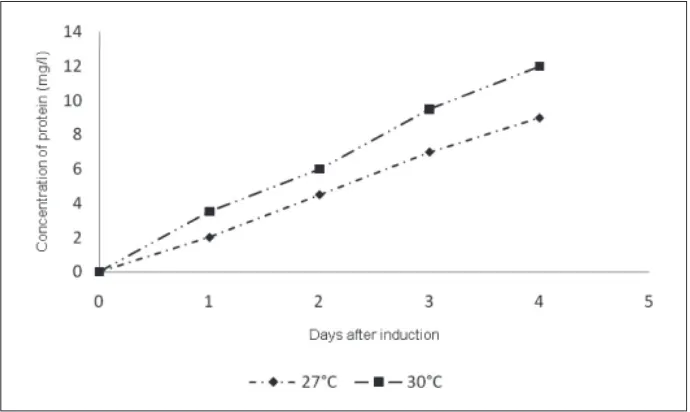
First, temperature effect was tested to optimize the expression of the recombinant SAG1/2. Expression level of the recombinant protein was observed at two different temperatures, 27ºC and 30ºC. As shown in Figure 1, higher yield of recombinant protein was produced at 30ºC in comparison to 27ºC from the first day of induction. The results demonstrated that expression at a higher temperature increased the yield of recombinant SAG1/2 significantly up to 96 hours (Figure 1).
Effect of pH on recombinant SAG1/2 expression
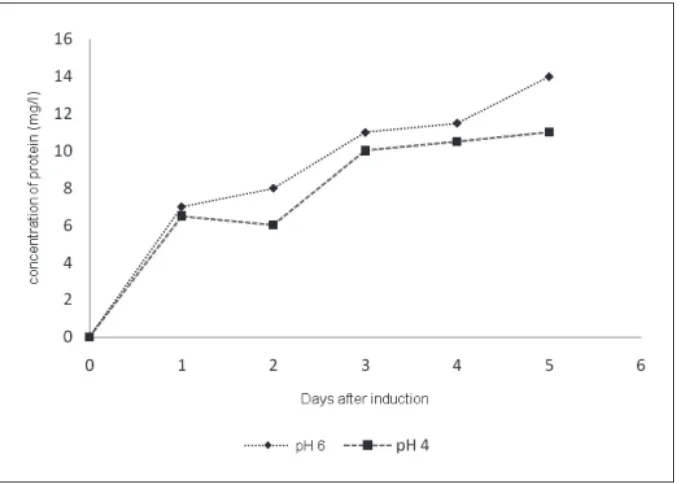
[image:3.579.118.463.453.659.2]To determine the pH at which recombinant SAG1/2 was optimally expressed, expression was conducted at pH 4 and pH 6. Before
inoculation of the fermentation medium, the pH value was set and kept constant throughout the experiment. Temperature was maintained at 30ºC throughout the experiment. The maximum yield of protein was seen at pH 6 after induction. At pH 4 the protein yield is quite low starting from day 1 of induction (Figure 2).
Effect of final concentration of methanol on recombinant SAG1/2 expression
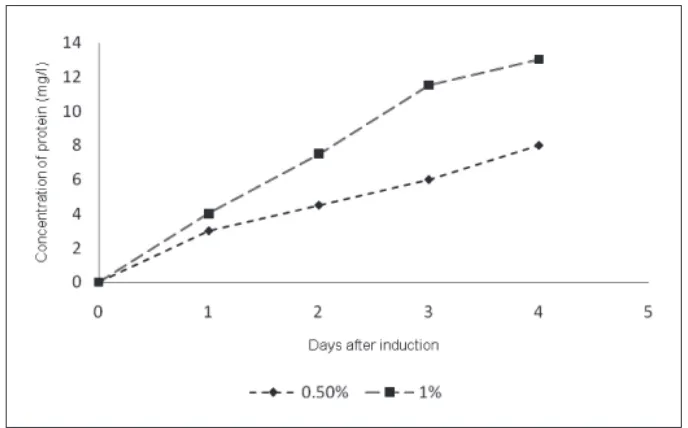
Methanol concentration during the induction phase is an important parameter and needs to be precisely controlled. To determine the optimum methanol feeding protocol, two different methanol concentrations were added to the media during culturing. It was observed that when the cells were induced with 1% methanol, the yield of protein was higher than 0.5% of methanol (Figure 3). Thus, feeding with 1% methanol daily was considered the optimal feeding protocol.
Protein purification
The 60 kDa recombinant SAG1/2 was successfully purified using the Ni-NTA
columns to eliminate all the un-specific proteins with a percentage recovery of 80% (data not shown). The recombinant SAG1/2 was detected by all the serum sample of toxoplasmosis patient and no cross-reactivity was observed when these recombinant proteins were tested with serum samples of healthy individual or patients infected with other helminthic and protozoa (Figure 4).
DISCUSSION
[image:4.579.122.462.418.660.2]The choice of culture condition used for P. pastoris expression system is an important factor to be considered in order to improve the yield of the expressed recombinant protein. Optimal conditions for culturing vary according to the kind of P. pastoris strain used or the foreign protein expressed. The optimum temperature for the growth of P. pastoris is 30ºC (according to the instruction manual of P. pastoris expression system). At higher temperature, yeast growth decays and protein expression will be affected. Decrease in temperature generally reduces cell death,
Figure 4. Western blot analysis of the recombinant SAG1/2 with patients’ sera. Lane M contained the Bio-Rad Prestained Broad Range Protein Marker. Lane 1 to 2 represent results of 2 sera from negative control. Lane 3 to 7 represent results of 5 sera from toxoplasmosis patients and lane 8 to 12 represent sera from amoebiasis, cysticercosis, filariasis, malaria and toxocariasis, respectively. The 60 kDa purified recombinant SAG1/2 was detected only in immunoblots probed with sera from toxoplasmosis patients (lanes 3 to 7)
Figure 3. Graphical representation of protein concentration obtained at two different methanol concentration obtained. It is observed that the lower the methanol concentration used for induction the lower is the yield of the recombinant protein. As the methanol concentration is increased to 1% their seems to be a increase in the yield of the recombinant protein
which prevents the release of proteases that degrade the recombinant proteins (Li
et al., 2001; Dale et al., 2010). However for recombinant SAG1/2, yield of recombinant protein was higher at 30ºC as compared to
SAG1/2 was stably expressed without interference by the proteases. Similar finding was found by Monica et al. (2003) during the production of thermostable xylanase in P. pastoris, where the recombinant protein was produced optimally at 30ºC.
Being a very robust eukaryotic cell, P. pastoris can be grown in a wide pH range of 3 to 8. It is necessary to maintain a constant pH of the culture medium for more efficient production of the recombinant protein (Chiruvolu et al., 1998; Cereghino & Cregg, 2000). Proteolysis of the recombinant protein takes place at the neutral pH since most of the proteases are active at this pH. It was reported that at pH 3 or below, no protein degradation was observed as most of the proteases are inactive at this pH (Dale, 2010). However, we observed that recombinant SAG1/2 was extensively expressed at pH 6 (Figure 2) and the level of expression decreased as the pH was lowered. Our finding was in agreement with Chen et al.
(2000) who reported that expression levels of human α-galactosidase A decreased as the pH was decreased from 6.2 to 4.6. A change in the pH does not necessary affect the yield of protein production in P. pastoris. The pH of 5-6 has been most routinely used for expression in the growth culture (Cregg et al., 1993).
Methanol taken up by P. pastoris cells is oxidized to formaldehyde by alcohol oxidase AOX1 in the peroxisomes of the cell. (Cereghino & Cregg, 2000). For the expression of protein using AOX1 promoter, one of the main issues that should be addressed is to control the methanol concentration at the right level. Increase in methanol concentration correlates to increase in protein production (Fairlie et al., 2000). However, excessive methanol can be toxic to the cell which may lead to cell death (Sarramegna et al., 2002). Two different methanol concentrations were investigated in this study (0.5 and 1%) (Figure 3). It was observed that increase in the methanol concentration from 0.5% through 1% invariably increases the level of recombinant protein expression. These findings are similar
with the previous reports by Fairlie et al.
(2000) and Dale et al. (2010) where the optimal methanol used for induction of recombinant human activin A and macrophage inhibitory cytokine I in P. pastoris was 1% respectively.
Protein purification can be carried out using methods such as column chromato-graphy, and gel filtration. Here we make use of the C-terminal His tag in the vector that co-expressed along with the recombinant protein for purification. The six histidine residues have high affinity for Ni2+ found on the four coordination sites of the Nitrilotriacetic acid Agarose resin (NTA). The recombinant SAG1/2 was then eluted by replacing the histdine molecules with similarly structured immidazole at a concentration of 250mM. The percentage of recovery in this method was observed to be 80%. Purified recombinant SAG1/2 showed high sensitivity and specificity for detection of toxoplasmosis in western blot analysis (Figure 4).
In summary, the methylotrophic yeast P. pastoris constitutes a robust expression system for the production of recombinant protein. Recombinant SAG1/2 was efficiently secreted by P. pastoris, producing high protein yield. More works have to be executed to evaluate the usefulness of the recombinant SAG1/2 for diagnostic or vaccination.
Acknowledgement. This study was supported by research grants from University of Malaya.
REFERENCES
Auer, H., Vander-Mose, A., Picher, O., Walochnik, J. & Aspock, H. (2000). Clinical and diagnostic revelance of the
Toxoplasma gondii IgG avidity test in the serological surveillance of pregnant women in Austria. Parasitology Research 86: 965-970.
Cereghino, J.L. & Cregg, J.M. (2000). Heterologous protein expression in the methylotropic yeast Pichia pastoris.
Chen, Y., Jin, M., Egborge, T., Coppola, G., Andre, J. & Calhoun, D.H. (2000). Expression and characterization of glycosylated and catalytically active recombinant human α-galactosidase A produced in Pichia pastoris. Protein Expression and Purification20: 472-484.
Chiruvolu, V., Eskridge, K., Cregg, J. & Meagher, M. (1998) Effects of glycerol concentration and pH on growth of recombinant Pichia pastoris yeast.
Applied Microbiology and Biotechnology 75: 163-173.
Christine, L., David, J.P., Ferguson, M.E., Grigg, M.C. & John, C.B. (2001). Surface antigens of Toxoplasma gondii: variations on a theme. International Journal of Parasitology31: 1285-1292.
Chung-Dar, Y., Gan-Nan, C. & David, C. (2004). Protective immunity against Toxoplasma gondii in mice induced by a chimeric protein rSAG1/2. Parasitology Research 92: 58-64.
Cregg, J.M., Vedvick, T.S. & Raschke, W.C. (1993). Recent advances in the expression of foreign genes in Pichia pastoris. Nature Biotechnology11: 905-910.
Dale, F., Robert, C. & Tracy, W. (2010). Optimization of the expression of recombinant human activin A in the yeast
Pichia pastoris. Biotechnology Progress 26: 372-383.
Dirk, J., Martine, V. & Eric, S. (1999). Evaluation of recombinant Dense Granule Antigen 7 (GRA7) of Toxoplasma gondii for detection of immunoglobin G antibodies and analysis of a major antigenic domain. Clinical and Diagnostic Laboratory Immunology6: 24-29.
Dubey, J.P. (1997). Bradyzoite-induced murine toxoplasmosis: stage conversion, pathogenesis, and tissue cyst formation in mice fed bradyzoites of different strains of Toxoplasma gondii. Journal of Eukaryotic Microbiology44: 592-602.
Fairlie, W.D., Zhang, H.P., Brown, P.K., Bauskin, A.R. & Breit, S.N. (2000). Expression of a TGF- superfamily of protein, macro-phage inhibitory cytokine-1, in yeast Pichia pastoris.
Gene254: 67-76.
Farkash, A.E., Maccabee, P.J., Sher, J.H., Landesman, S.H. & Hoston, G. (1986). CNS toxoplasmosis in acquired immune deficiency syndrome: a clinical-pathological-radiological review of 12 cases. Journal of Neurology, Neuro-surgery and Psychiatry49: 744. Fisher, H.G., Stachelhaus, S., Sahm, M., Meyer,
H.E. & Reichman, G. (1998). GRA7, an excretory 29kDa Toxoplasma gondii
dense granule antigen released by infected host cells. Molecular and Biochemical Parasitology 91: 251-262. Grimwood, J. & Smith, J.E. (1996).
Toxoplasma gondii: the role of parasite surface and secreted proteins in host cell invasion. International Journal of Parasitology26: 169-173.
Kasper, L.H., Khan, I.A., Ely, K.H., Bulow, R. & Boothroyd, J.C. (1992). Antigen-specific (p30) mouse CD8+ T cells are cytotoxic against Toxoplasma gondii-infected peritoneal macrophages. Journal of Immunology148: 1493-1498.
Khan, I.A., Eckel, M.E., Pfefferkorn, E.R. & Kasper, L.H. (1988). Production of interferon by cultured human lymphocytes stimulated with a purified membrane protein (P30) from
Toxoplasma gondii. Journal of Infectious Diseases157: 979-983. Lau, Y.L., Shamila, H. & Fong, M.Y. (2006).
Characterization of a truncated Toxo-plasma gondii surface antigen 2 (SAG2) secreted by the methylotrophic yeast
Pichia pastoris. Tropical Biomedicine 23: 186-193.
Li, Z., Xiong, F., Lin, Q., d’ Anjou, M., Daugulis, A.J., Yang, D.S.C. & Hew, C.L. (2001). Low-temperature increases the yeild if bilogically active herring antifreeze protein in Pichia pastoris. Protein Expression and Purification21: 438-445.
Mills, J. (1986). Pneumocystis carinii and
Toxoplasma gondii infections in patients with AIDS. Reviews of Infectious Diseases8: 1001.
Mineo, J.R. & Kasper, L.H. (1994). Attachement of Toxoplasma gondii to host cells involves major surface protein, SAG1 (P30). Experimental Parasitology 79: 11-20.
Monica, C.T., Marcius, S.A., Eleonora, K., Orlando, B.M., Nei, P., Carolina, M.M.C. & Rodolpho, M.A. (2003). Optimized expression of a thermostable Xylanase from Thermomyces lanuginosus in
Pichia pastoris. Applied and Environ-mental Microbiology69: 6064-6072.
Navia, B.A., Petito, C.K., Gold, J.W.M., Cho, E.S., Jordan, B.D. & Price, R.W. (1986). Cerebral toxoplasmosis complicating the acquired immune deficiency syndrome: clinical and neuropathological findings in 27 patients. Annals of Neurology19: 224.
Rachel, D. & Milton, T.W. (2005). Expression of heterologous proteins in Pichia pastoris: a useful experimental tool in protein engineering and production.
Journal of Molecular Recognition 18: 119-138.
Sarramegna, V., Demange, P., Milon, A. & Talmont, F. (2002). Optimizing functional versus total expression of the human mu-opioid receptor in Pichia pastoris.