Influence of Human Resource Development Practices
on Performance of Academic Staff in Technical Training
Institutions in Kenya: A Case Study of Thika Technical
Training Institute
Leah Nyambura Kariuki *, Dr. Susan Wekesa **
*
MSC HRM, Candidate (Jomo Kenyatta University of Agriculture and Technology) P.o Box 105-60103 Runyenjes, Kenya **
Department of Entrepreneurship, Technology, Leadership and Management, Jomo Kenyatta University of Agriculture and Technology, P.o Box 62000-00100 Nairobi, Kenya
DOI: 10.29322/IJSRP.8.9.2018.p8159
http://dx.doi.org/10.29322/IJSRP.8.9.2018.p8159
Abstract- The aim of the study was to determine the influence of human resource development practices on performance of academic staff in Technical Training Institutions in Kenya focusing on Thika Technical Training Institute (TTTI). The objective of the study was to determine the influence of training, career development and employee empowerment on performance of academic staff in Thika Technical Training Institute. This study adopted case study research design. The study targeted 250 academic staff across five departments of TTTI, from which a sample of 100 respondents were drawn for the study. The sample was selected through stratified sampling technique. The study used both self-reported questionnaires and interview guides to collect data from the respondents. Self-reported questionnaires were given to the lecturers of TTTI and interviews were done to the heads of departments in TTTI. Primary data was collected through the use of questionnaires, whereas secondary data was obtained through existing literature related to the current research topic under study. The qualitative data was analyzed using content analysis whereas quantitative data was analyzed using descriptive statistics and presented in the form of frequencies, percentages, mean and standard deviation. Inferential statistics was obtained by means of correlation analysis and multiple regression analysis to explain relationship between variables using SPSS version 21 computer program. The results indicated that there was a positive relationship between performance of academic staff in Thika Technical Training Institute and training, career development and employee empowerment. The study concluded that all the three variables under study are statistically significant in explaining the performance of academic staff in Thika Technical Training Institute. The study recommended that there was need to introduce both short term and long term training programs to the academic staff, introduce career development opportunities and elements associated with empowerment such as authority delegation, job enrichment, autonomy, and knowledge sharing should be incorporated in employee empowerment as they are significant in employee performance.
Index Terms- Human resource development, Training, Career development, Employee empowerment
I. INTRODUCTION
uman resources are an organization's greatest asset because without them, everyday business functions such as managing cash flow, making business transactions, communicating through all forms of media, and dealing with customers cannot be completed. Human resources and the potential they possess are key drivers for an organization’s success. With globalization and technological advances, today's organizations are continuously changing. Thus, organizational change impacts not only the business but also its employees. Human resource development (HRD), as a crucial part of human resource management, is an effective instrument to ensure that the intellectual capital of an organization can contribute to its competitive advantage (Subramaniam & Youndt, 2005). Organizations that spend a lot of money on the development of their employee anticipate that this results to a competitive advantage in the long run (Aguinis & Kraiger, 2009). Implications of the HRD process show how HRD can be designed or administered. Even though learning and development interventions are aimed to enhance individual, group and organizational performance (Yamnill & McLean, 2001), the present study focuses on the performance of the individual academic staff behavior and not on group or TTI performance in Kenya.
In a study on the effect of training and Development on Employee Performance at Accra Polytechnic it was found that training and development had positive impact on employee performance of the Polytechnic. For employees to carry out their duties effectively and efficiently they must have the relevant skills, knowledge, values, attitudes and competencies as well as understand their organization’s culture. The results of this study revealed that the correlation between employee performance and training and development were highly significant (DeGraft-Otoo, 2012).
enables them to make informed decisions around compensation and succession planning to attract, retain and motivate the employees, resulting in a more engaged and productive workforce (Thite, 2001; Kapel & Shepherd, 2004; Kaye, 2005). Another study found out that empowerment tools such as Power, Knowledge, Information Sharing and Rewards influences the employee’s performance (Yasothai, Jauhar, & Bashawir, 2015). Meyerson and Dewettinck (2012) from their findings found that employee empowerment emphasizing the factors, delegation, participating management, encouragement and giving reward cause employee’s performance to improve. From the previous literature reviewed above in this study it is evident that the HRD practices training, career development and employee empowerment affect employee performance. Therefore, this study sought to seek the influence of HRD practices on performance of academic staff in technical training institutions in Kenya focusing on Thika Technical Training Institute as a case.
II. OBJECTIVES OF THE STUDY
The general objective of this study was to determine the influence of human resource development practices on performance of academic staff in Thika Technical Training Institute.
The study was guided by the following specific objectives; 1. To determine the influence of training on performance
of academic staff in Thika Technical Training Institute. 2. To establish influence of career development on
performance of academic staff in Thika Technical Training Institute.
3. To assess influence of employee empowerment on performance of academic staff in Thika Technical Training Institute.
III. METHODOLOGY
3.1 Target Population
Table 1: Target Population
Departments in Thika Technical Training Institute Target Population Percentage
Business Studies 63 25%
Information and Communication Technology 50 20%
Engineering 37 15%
Health and Applied Sciences 50 20%
Human Resource Management 50 20%
Total 250 100%
Source: Thika Technical Training Institute Human Resource Records
[image:2.612.75.528.320.403.2]3.2 Sample and Sampling Technique
Table 2: Sample Size
Departments in Thika Technical Training Institute Target
Population
Sample Ratio
Sample Size
Business Studies 63 0.4 25
Information and Communication Technology 50 0.4 20
Engineering 37 0.4 15
Health and Applied Sciences 50 0.4 20
Human Resource Management 50 0.4 20
Total 250 0.4 100
Source: Research Data,2018
Stratified sampling technique was used to select the sample. Sekaran (2010) emphasize that stratified random sampling helps achieve intended representation from various subgroups in any given population, with generalization that has minimal bias. The respondents were drawn from the “strata” which comprises of respondents’ departments in Thika Technical Training Institute.
3.3 Research Instrument, Data Collection Procedures and
Data Analysis
The study adopted two research instruments that includes questionnaire to the respondents and conducted interviews to the head of departments so as to gain detail information since it is a
case study. The questionnaires were distributed with the help of the Thika Technical Training Institute head of departments to the selected sample size. These questionnaires were in form of a Likert scale anchored by a five-point rating ranging from strongly disagree, disagree, neither agree nor disagree, agree, to strongly agree. Closed-ended questions were used as per the recommendations by Gay (1992) who maintains, that closed-ended questions generate specific responses and allow easy analysis of data.
on performance of academic staff in Thika Technical Training Institute from the management perspective.
In order to start the data collection process, the researcher obtained all the necessary documents, including an introduction letter from the Jomo Kenyatta University of Agriculture and Technology. The researcher then took the formal introduction letter to Thika Technical Training Institute management in order to seek permission to carry out the study. A pilot study of 10 academic staff was carried out at Thika Technical Training Institute test the reliability and validity of the questionnaires. Once the pilot study was completed, the other academic staff at Thika Technical Training Institute was then issued with the questionnaires which were collected after 2weeks.
The quantitative data was analyzed using both descriptive and inferential statistics. Descriptive statistics was quantified using percentages, frequencies, mean, and standard deviation while inferential statistics was quantified using correlation and regression to explain the relationships between the independent variables and the dependent variable using SPSS version 21. Correlation measures indicate the degree of association between three or more variables simultaneously (Cohen et al., 2007). Pearson’s product-moment correlation coefficient (PPMCC) analysis was conducted for this study at 95% confidence interval and 2-tailed5% level of confidence to examine the strength of the relationship between the variables (training, career development and employee empowerment); by examining the statistical significance of the relationship; and by examining the amount of the correlation coefficient. According to Saunders, Lewis, and Thornhill (2009), this correlation coefficient (usually represented by the letter r) can take on any value between -1 and +1. Therefore a value of +1 represents a perfect positive correlation, while a value of -1 represents a perfect negative correlation and a value of 0 meaning the variables are perfectly independent.
According to Cohen et al.,(2003) multiple regression is a flexible method of data analysis that may be appropriate whenever a quantitative variable (the dependent) is to be examined in relationship to any other factors (expressed as independent variables) The regression model applied in this study was as follows:
Where Y is the dependent variable that is performance of academic staff
is the constant
is the slope of each independent variable
Employee training
career development
employee empowerment e error term
IV. RESULTS AND DISCUSSION
4.1 Information on Respondents
The results obtained showed that majority of the respondents65.7 % were men while the remaining 34.3% were women. The findings also showed that 11% of the respondents were below 25 years of age, 26% were between 25-35 years of age, 51% were between 35-45 years of age and 12% were above 45 years of age. This showed that the majority of the respondents were between 35-45years of age.
In terms of education level, the results showed that, 23% of the respondents were diploma holders, 66% were first degree holders, while only 9% had a master’s degree and only 2% had Doctorate degree. The findings reveal that majority of the respondents were first degree holders in TTTI.
Findings also showed that, 20% respondents had worked in Thika Technical Training Institute for less than 5 years while 51% respondents had worked for between 5-10 years, and 29% respondents had worked above 15 years. These results indicate that majority of the respondents had worked for a period of 5-10 years.
In terms of employment status, the findings of the study showed that, 63% of the respondents in TTI had been employed as permanent and pensionable, while 37% were employed on contract terms and none of the respondents had been employed Temporary. These findings show that most of the respondents at Thika Technical Training Institute are employed as permanent and pensionable terms and this have a positive effect on employee performance
The results also revealed that 29% respondents were from business studies department, 17% respondents were from information and communication technology department, 11% respondents were from engineering department, 20% respondents were from health and applied sciences department, while 23% respondent was from human resource management department. This indicates that most respondents at Thika Technical Training Institute were from business studies department.
4.2 Training and Employee Performance
The findings indicated that the respondents agreed that their supervisor did not identify their training needs yearly indicating gaps in performance indicated by a mean of 2.64 and standard deviation of 1.143.The respondents agreed that their performance improves when provided with short term training programs indicated by a mean of 3.17 and standard deviation of 1.372.The respondents agreed their performance is not impacted by long term training programs provided by TTTI indicated by a mean of 3.49 and standard deviation of 0.974.
The findings on long term training are in line with Hannagan (2002) who conducted a study on management concepts and practices who argued that there is no guarantee that trained employees actually benefit from participation in training and that employees are usually unproductive especially while undergoing long term training let alone the additional expenses. The findings on short term training are supported by Ambetsa (2006) whose finding on the contribution of technical and vocational training to sustainable development found out that short term training contributes to individual’s personal development, increases their productivity and income at work and facilitates everybody’s participation.
and vocational training to sustainable development found out that short term training contributes to individual’s personal development, increases their productivity and income at work and facilitates everybody’s participation.
Thematic Analysis of Qualitative Findings on the Influence of Training on Employee Performance
Head of departments who were interviewed also indicated that the academic staff who undertook further training in TTTI showed positive performance changes. The HOD’s further noted that, there was significant improvement on employee performance on the employees who were involved in short term training opportunities and there was positive noticeable changes from academic staff who had been promoted with regard to their performance in teaching, research and consultancy services in TTTI.
These views corroborate with the views expressed by Ambetsa (2006) whose finding on the contribution of technical and vocational training to sustainable development found out that short term training contributes to individual’s personal development, increases their productivity and income at work and facilitates everybody’s participation.
4.3 Career Development and Employee Performance
Findings showed that the respondents agreed that they did their best in their jobs if they knew that they had an equal chance of making it to the top through career advancement indicated by a mean of 3.29 and standard deviation of 1.131. The respondents agreed that their performance improved when provided with coaching programs indicated by a mean of 3.07 and standard deviation of 0.968.The respondents agreed that their performance was determined by the kind of career counseling opportunities provided by their employer indicated by a mean of 3.38 and standard deviation of 0.133.
The findings on equal chance of making it to the top through career advancement are in agreement with Morishima (2001) who conducted a study on Evolution of white collar human resource management who argues that promotion opportunities increase the level of individual performance and organizational commitment among workers in their career advancement, influences the worker’s behavior’s and attitudes such as motivation and organizational commitment, particularly in the case of stable employment. The findings on coaching programs are in line with a study conducted by Myers(2000) on Employee problem and prevention counseling who notes that employees who derive satisfaction from knowing that expectations through career counseling can be met inside the organization will most likely become a highly productive employee.
Thematic Analysis of Qualitative Findings on the Influence of Career Development on Employee Performance
The HOD’s who were interviewed echoed that career development had positive influence on employee performance of academic staff in TTTI, this was due to the embrace of coaching and career counseling opportunities offered to the employees by the institution. These views further lend credence to the assertions of CIPD (2013) on a study in coaching and mentoring which reveals that coaching is an important part of training and
development of employees. Coaching targets high improvements and high performance of the people at the workplace and generally focuses on particular goals and skills; however, it might also have some effects on personal attributes of an individual like confidence and social interaction.
4.4 Employee Empowerment and Employee Performance
According to the research findings the respondents agreed that delegation enhanced their level of job performance indicated by a mean of 3.38 and standard deviation of 0.133.The respondents agreed that they performed well if they have a lot of power and control over how they do their job and allowed to make decisions on their job indicated by a mean of 3.99 and standard deviation of 1.429. The respondents agreed that knowledge sharing had positive influence on their performance because the more they know, the better they can perform indicated by a mean of 3.30 and standard deviation of 1.132. The findings on power and control over job are supported by Yasothai et al.(2015) who conducted a study on the Impact of Empowerment on Employee Performance, who noted that power sharing empowers individuals from all dimensions. It also provides an employee more authority in performing their tasks, more freedom to contribute ideas at higher levels of decision making, more confidence to think and stay as organizational partners, and better strategy to handle effectively and creatively in new working environments. The findings on delegation can be supported by Al-Jammal et al.(2015) who conducted a study on The impact of the delegation of authority on employees' performance at great Irbid municipality, who noted that on the level of an organization, delegation achieves competitive advantage, knowledge inventory, increases the level of productivity and speed in finalizing tasks effectively. The findings on knowledge sharing can further by supported Simon and Galunic(2004) in their study on how knowledge heterogeneity influences managerial performance and innovativenss, who argues that in a European telecommunications company access to a wide knowledge sharing is an equally importance for overall employee performance.
Thematic Analysis of Qualitative Findings on the Influence of Employee Empowerment on Employee performance
further found out in their study findings that there is a significance for delegation of authority on efficiency,
effectiveness and empowerment of employees' performance.
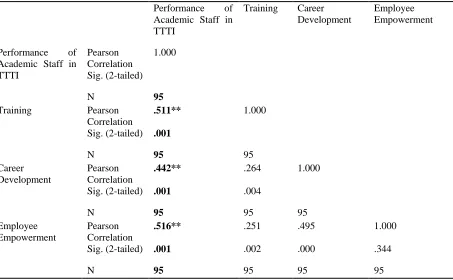
[image:5.612.83.536.137.417.2]4.5 Correlation Analysis
Table 3: Correlation Analysis
Performance of Academic Staff in TTTI
Training Career Development
Employee Empowerment
Performance of Academic Staff in TTTI
Pearson Correlation
1.000
Sig. (2-tailed)
N 95
Training Pearson Correlation
.511** 1.000
Sig. (2-tailed) .001
N 95 95
Career Development
Pearson Correlation
.442** .264 1.000
Sig. (2-tailed) .001 .004
N 95 95 95
Employee Empowerment
Pearson Correlation
.516** .251 .495 1.000
Sig. (2-tailed) .001 .002 .000 .344
N 95 95 95 95
**. Correlation is significant at the 0.05 level (2-tailed).
The findings revealed that there is a statistically significant and strong positive relationship between employee empowerment and performance of academic staff at TTTI (r=0.516, p=0.001<0.05), and there is statistically significant and strong positive relationship between training and performance of academic staff (r=0.511, p=0.001<0.05). Similarly, there is a statistically significant and stronger positive relationship between career development and performance of academic staff (r = 0.422, p=0.001<0.05).
4.6 Regression Analysis
The researcher conducted regression analysis to determine the statistical relationship between the variables. For this case multiple regression was used since more than two independent variables were involved (Kothari, 2004). The study conducted multiple regression analysis so as to establish whether human resource development practices had an effect on Performance of Academic Staff in TTTI. This section explains the linear
regression model results that were obtained from the SPSS model. The linear regression model is of the form;
Where Y is the dependent variable that is performance of academic staff
is the constant
is the slope of each independent variable
Employee training
career development
employee empowerment e error term
The model is presented in the table below
Table 4: Regression model
Model R R Square Adjusted R Square
1 .838 .702 .692
The value of R2 is 0.702. This implies that, there was a variation of 70.2% on performance of academic staff at TTTI with training, career development and employee empowerment. The 29.8% remaining implies that there are other factors not studied in this research that affected performance of academic staff at TTTI.
V. CONCLUSIONS
5.1 Conclusions
After reviewing literature and carrying out empirical study in this research it was concluded that there is significant positive relationship between training, career development and employee empowerment on performance of academic staff at TTTI. The study concluded from the regression findings that, employee empowerment contributed more to the performance of academic staff at TTTI followed by training and then career development. The study concluded that supervisors in TTTI did not identify and address to the employee’s training needs at the end of the year indicating gaps in performance. The study concluded that short term training programs is a contributing factor towards job performance of academic staff in TTTI. The study also concluded that performance of academic staff was not impacted with long term training programs provided by TTTI. This can be attributed to the fact that there was no guarantee that training employees actually benefit from long term training since they are on sabbatical leaves and actually not teaching in their respective classes.
It was possible to conclude from the study findings that academic staff in TTTI would perform better if they have an equal chance of making it to the top through career advancement, similarly performance will improve if provided with coaching programs. From the study finding, it can be deduced that promoted staff can produce more quantitative and qualitative work since their attitudes to work are improved. The study concluded that there was positive relationship between career counseling opportunities provided by the employer and performance of academic staff at TTTI.
From the study, it can also concluded that through delegation academic staff level of performance would improve. This could be attributed to the fact since they have added responsibilities employees tend to feel empowered and motivated to perform their job effectively and have a room to be more innovative hence improved performance. Similarly, the study concluded that academic staff in TTTI will perform better if they have a lot of power and control over how they do their job and allowed to make decisions on their job undertakings. Further, the study concluded that knowledge sharing has positive influence
on performance of academic staff in TTTI because the more they know, the better they can perform.
REFERENCES
[1] Aguinis, H., & Kraiger, K. (2009). Benefits of training and development for individuals and teams, organizations and society. The Annual Review of Psychology, 6(2), 451–474.
[2] Al-Jammal, H. R., Al-Khasawneh, A., & Hamadat, M. H. (2015). The impact of the delegation of authority on employees' performance at great Irbid municipality: case study.
[3] International Journal of Human Resource Studies, 5(3), 48-69.
[4] CIPD. (2013). Coaching and mentoring: Resource summary. Retrieved March 15, 2016, from Chatered Institute of Personnel Development:
http://www.cipd.co.uk/hr-resources/factsheets/coaching-mentoring.aspx2(1), 360-369.
[5] Cohen, J., Cohen, P., West, S. G., & Aiken, L. S. (2003). Applied Multiple Regression/Correlation Analysis for the Behavioral Sciences (3rd ed.). Mahwah, NJ: Erlbaum. 2(1), 360-369.
[6] Cohen, L., Manion, L., & Morrison, K. (2007). Research Methods in Education (6th ed.). New York: Routledge.12(6),56-61
[7] DeGraft-Otoo, E. (2012). The effect of training and Development on Employee Performance at Accra Polytechnic. Commonwealth Executive MBA Research Project, Nkrumah University of Science and Technology, Nigeria. 2(1), 360-369.
[8] Gay, L. R. (1992). Educational Research: Competencies for Analysis and Applications (4th ed.). New York: Macmillan Publishers.67(4),80-90 [9] Megginson, D., Banfield, P., & Mathews, J. J. (1999). Human resource
management (2nd ed.). London: Kogan Page.8(3), 32-46
[10] Meyerson, G., & Dewettinck, B. (2012). Effect of Empowerment on Employees Performance. Advanced Research in Economic and Management Sciences, 2(6), 40-47.
[11] Sekaran, U. (2010). Research Methods for business :A skill Building Approach (5th ed.). London: John wiley & Sons Publisher.17(3),67-72 [12] Subramaniam, M., & Youndt, M. (2005). The influence of intellectual
capital on the types of innovative capabilities. Academy of Management Journal, 48(3), 450-463.
[13] Thite, M. (2001). Help us but help yourself: the paradox of contemporary career management. Career Development International, 6(6), 312-317 [14] Yamnill, S., & McLean, G. N. (2001). Theories supporting transfer of
training. Human Resource Development Quarterly, 12(5), 195–208.
AUTHORS
First Author – Leah Nyambura Kariuki, MSC HRM, Candidate
(Jomo Kenyatta University of Agriculture and Technology) P.o Box 105-60103 Runyenjes, Kenya
Second Author – Dr. Susan Wekesa, Department of