Business Administration Dissertations Programs in Business Administration
Spring 4-26-2017
The Role of Leadership in Adoption of
Waste-to-Energy (WtE) in Nigeria
Jahan Moghadam
Follow this and additional works at:https://scholarworks.gsu.edu/bus_admin_diss
This Dissertation is brought to you for free and open access by the Programs in Business Administration at ScholarWorks @ Georgia State University. It has been accepted for inclusion in Business Administration Dissertations by an authorized administrator of ScholarWorks @ Georgia State University. For more information, please [email protected].
Recommended Citation
Moghadam, Jahan, "The Role of Leadership in Adoption of Waste-to-Energy (WtE) in Nigeria." Dissertation, Georgia State University, 2017.
PERMISSION TO BORROW
In presenting this dissertation as a partial fulfillment of the requirements for an advanced degree from Georgia State University, I agree that the Library of the University shall make it available for inspection and circulation in accordance with its regulations governing materials of this type. I agree that permission to quote from, copy from, or publish this dissertation may be granted by the author or, in her absence, the professor under whose direction it was written or, in his absence, by the Dean of the Robinson College of Business. Such quoting, copying, or
publishing must be solely for scholarly purposes and must not involve potential financial gain. It is understood that any copying from or publication of this dissertation that involves potential gain will not be allowed without written permission of the author.
NOTICE TO BORROWERS
All dissertations deposited in the Georgia State University Library must be used only in accordance with the stipulations prescribed by the author in the preceding statement.
The author of this dissertation is: Jahan Moghadam
500 N. Abingdon St. Arlington, VA 22203
The director of this dissertation is:
Karen Loch
J. Mack Robinson College of Business Georgia State University
The Role of Leadership in Adoption of Waste-to-Energy (WtE) in Nigeria
by
Jahan Moghadam
A Dissertation Submitted in Partial Fulfillment of the Requirements for the Degree
Of
Executive Doctorate in Business
In the Robinson College of Business
Of
Georgia State University
GEORGIA STATE UNIVERSITY
ROBINSON COLLEGE OF BUSINESS
Copyright by Jahan Moghadam
ACCEPTANCE
This dissertation was prepared under the direction of the JAHAN MOGHADAM
Dissertation Committee. It has been approved and accepted by all members of that committee,
and it has been accepted in partial fulfillment of the requirements for the degree of Doctor of
Philosophy in Business Administration in the J. Mack Robinson College of Business of Georgia
State University.
Richard Phillips, Dean
DISSERTATION COMMITTEE
Dr. Karen Loch (Chair)
Dr. Steven Dionne
ACKNOWLEDGEMENTS
Many organizations and individuals have provided support and information during the
preparation of this dissertation. Special thanks are due to WorldWide Solutions (WWS) for
covering my tuition and expenses for my graduate program and assisting in gathering information.
Thank you to Global Waste Energy Conversion Company (GWECC) for providing valuable
information that made this study even possible and meaningful. To Georgia State University
(GSU) by allowing me the opportunity to be a part of their doctorate program and the learning
experience GSU provided. Special thank you to the Nigeria Embassy and people of Nigeria for
allowing me to conduct this study on a subject close to my heart, which I hope enriches all the
amazing people of Nigeria.
A special thanks to each member of my dissertation committee for their endless efforts,
guidance, continued assistance, and confidence during the path of this study. Thank you to Dr.
Karen Loch, my chair and advisor, for her relentless assistance, patience, and essential guidance
that was imperative to the success of this study. To Dr. Steven Dionne and Dr. Felix Rioja, thank
you for all the support, valuable suggestions, time, and advice that helped shape this study.
Thank you to Shalini Gopalkrishnam and Dr. Michael Mackay for their support and
indispensable assistance in data analysis and review. Thanks to Kamran Niazi for his endless
assistance, which was vital to this study.
Thanks to the GSU professors in the doctorate program by challenging me like I have not
been before by providing learning, the ability and tools to complete the dissertation and the
program. To my fellow classmates (and GSU doctorate alumni) who have made the past three
years a memorable experience -- thank you all for the support and new friendships.
Thank you to all my friends that supported me and believed in me during this journey.
and confidence you gave me, along with the long days and nights of studying, reading, writing,
traveling for school -- thank you for your devotion.
This dissertation is in loving memory of my beloved dog, Koby. You were with me at the
start of this journey, and now giving me strength as you watch from above.
Last, but not least, to my amazing family, which words cannot truly express my gratitude
for all they have done and their everlasting love, dedication, guidance, and strong support
throughout my graduate work. To my sister, Dr. Moj Moghadam, thank you for your support and
counsel. To my mom for always believing in me and showering me with love.
To my dad, Dr. Abe Moghadam, your endless support from work to home, you have been
a role model and my idol. Dad, this dissertation is my thank you for always believing and
TABLE OF CONTENTS
ACKNOWLEDGEMENTS ... iv
LIST OF TABLES ... x
LIST OF FIGURES ... xii
I CHAPTER 1: INTRODUCTION ... 1
I.1 Renewable Energy ... 2
I.2 Infrastructure in Developing Countries... 5
I.3 Need for Energy Infrastructure and Waste Management in Nigeria ... 8
I.4 Research Rationale and Summary ... 12
II CHAPTER 2: LITERATURE REVIEW ... 16
II.1Definition of Renewable Energy and Waste-to-Energy ... 16
II.2Acceptance of Renewable Energy and WtE ... 17
II.3Role of Leadership-Led Change ... 23
II.4Conclusion ... 24
III CHAPTER 3: THEORETICAL FRAMEWORK ... 26
III.1 Theory of Reasoned Actions ... 26
III.2 Leadership-Led Change ... 34
III.3 Integrated Framework... 39
III.4 Hypotheses Summary ... 41
IV CHAPTER 4: METHODOLOGY ... 43
IV.1 Data Collection ... 43
IV.2 Measures ... 45
IV.3 Procedure ... 46
IV.4.1 Data clean procedures. ... 47
IV.4.2 Preliminary Analysis ... 48
IV.4.3 Correlations with intent to adopt WtE ... 49
IV.5 Structural Equation Modeling (SEM) ... 49
V CHAPTER 5: DATA ANALYSIS AND RESULTS ... 51
V.1 Descriptive Statistics ... 51
V.2 Evaluation of Measurement and Structural Model ... 54
V.2.1 Reflective and Formative Constructs. ... 54
V.2.2 Moderation effects in the PSL-SEM model. ... 55
V.2.3 Measurement Model ... 56
V.2.4 Structural Model. ... 61
V.2.5 Blindfolding. ... 66
V.3 Moderation Model Summery ... 67
V.4 Post-Hoc (Mediation Analysis) ... 69
V.5 The Mediator Model ... 70
V.5.1 Measurement Model ... 70
V.5.2 Results of Mediation ... 72
V.5.2.1 Correlations of the Structural Model (Mediator). ... 72
V.5.2.2 Path coefficients (direct effect), indirect effects, and total effects. ... 73
V.5.3 Blindfolding for Mediator ... 75
V.5.4 Sobel Test and Bootstrapping (Preacher and Hays) for Mediation ... 76
V.5.4.1 Sobel Test... 76
V.5.4.2 Bootstrapping the Mediating Effect. ... 77
V.7 Qualitative Feedback Results... 80
VI CHAPTER 6: DISCUSSION AND CONCLUSION ... 83
VI.1 Description of Study ... 83
VI.2 Discussion of Results ... 84
VI.3 Leaders’ Feedback ... 87
VI.4 Contributions and Implications of the Study ... 88
VI.4.1 Researchers. ... 88
VI.4.2 Practitioners. ... 88
VI.5 Study Limitations ... 91
VI.6 Future Research ... 93
VI.7 Conclusion ... 96
APPENDICES ... 98
Appendix A: Diagram of The Theory of Reasoned Action (TRA) by Bang et al. (2000) 98 Appendix B: Significance of Indirect Effects ... 99
Appendix C: Confirmatory Tetrad Analysis (CTA) for Moderator Model ... 100
Appendix D: Confirmatory Tetrad Analysis (CTA) for Mediator Model ... 101
Appendix E: PLS-SEM Moderator Model with Beta and T Statistics. ... 102
Appendix F: PLS-SEM Mediation Model with Beta and t-Statistics ... 103
Appendix G: Direct Effects Model Attitude to Intention ... 104
Appendix H: Directs Effects Model Attitudes to Intention Beta and p-Value ... 105
Appendix I: Mediator Model Beta and R2 ... 106
Appendix J: Mediator Model Beta and p-Value ... 107
Appendix K: Mediator Model Beta & t-Statistics ... 108
Appendix M: Histogram on Sample Knowledge of Renewable Energy ... 110
Appendix N: Histogram of Sample Familiarity with Waste-to-Energy (WtE) ... 111
Appendix O: Survey Questions Draft ... 112
Appendix P: Survey Feedback from Participants ... 122
REFERENCES ... 130
LIST OF TABLES
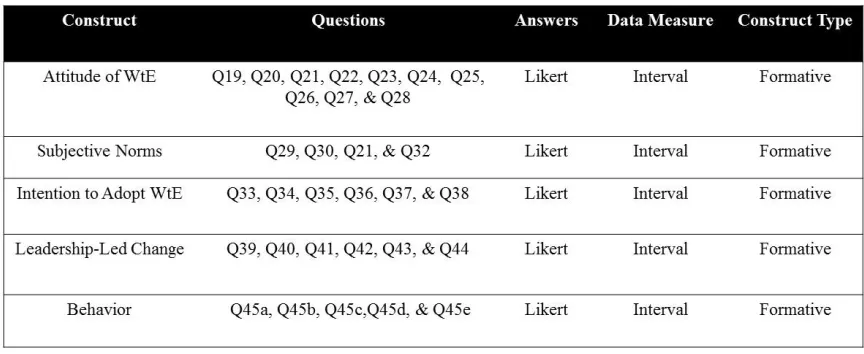
Table 1: Questionnaire Breakdown with Respect to Constructs... 45
Table 2: Descriptive Statistics ... 52
Table 3: Measurement Model Outer VIF Values ... 58
Table 4: Measurement Model Outer Weights ... 59
Table 5- Measurement Model Outer Weights ... 60
Table 6: Measurement Model, t-Statistics and p-Values ... 61
Table 7: Latent Variable Correlations ... 63
Table 8: Structural Model Inner VIF Values ... 63
Table 9: Structural Model Path Coefficient (Direct) ... 64
Table 10: Structural Model Indirect Effect ... 64
Table 11: Structural Model Total Effects ... 65
Table 12: Structural Model p-Values and t-Statistics ... 65
Table 13: Structural Model R² (Moderator) ... 66
Table 14: Construct Cross-Validated Redundancy (Blindfolding) ... 67
Table 15: Levels of Support of Study Hypotheses ... 68
Table 16: Latent Variable Correlations (Mediator) ... 73
Table 17: Mediation Structure Model Path Coefficient (Direct Effect) ... 73
Table 18: Mediation Structural Model Indirect Effect ... 73
Table 19: Mediator Structural Model Total Effects ... 74
Table 20: Structural Model Inner VIF Values ... 74
Table 21: Mediation Structural Model p-Value and t-Statistics ... 75
Table 22: Mediation Structural Model R² ... 75
Table 24: Bootstrapping Preacher and Hays ... 78 Table 25 - Post Hoc Hypothesis Summary ... 80
LIST OF FIGURES
Figure 1: Estimated RE Share of Global Final Energy Production in 2013 (REN21, 2015) . 4
Figure 2: Estimated RE Share of Global Final Energy Consumption in 2013 (REN21, 2015)
... 4
Figure 3: World Electricity Access and Lack of Access (REN21, 2015) ... 8
Figure 4: Overall Ranking of Nigeria according to RCII 2016 ... 10
Figure 5: RCII Ranking for Nigeria Concerning Pollution ... 11
Figure 6: RCII Rankings of Nigerian Infrastructure 2015 ... 22
Figure 7: Leadership Creates Change Space by Stimulating 3 As (Andrews et al., 2010) .. 24
Figure 8: Diagram of The Theory of Reasoned Action (TRA) by Fishbein and Ajzen (1975) ... 29
Figure 9: Dynamic Interaction Between Leadership and Change Space (Andrews et al., 2010, p. 17) ... 35
Figure 10: What Leadership Does in the Change Process = Creates Change Space (Andrews et al., 2010, p. 14) ... 35
Figure 11: A Simple Function-Driven Leadership Network (Andrews et al., 2010, p. 13) .. 36
Figure 12: Example of Nigeria-Driven Leadership Network for WtE ... 37
Figure 13: TRA Leadership-Led Change Model to Predict Adoption of WtE in Nigeria ... 40
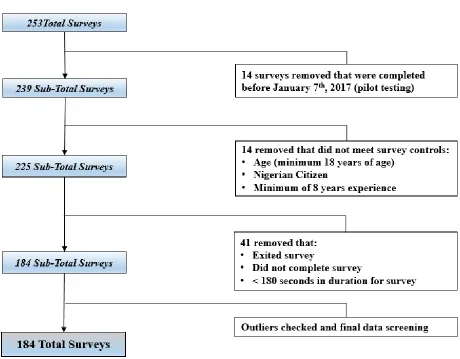
Figure 14: A-Priori Sample Size Calculator for Structural Equation Model (Soper, n.d.) . 44 Figure 15: Data Cleaning Procedure... 48
Figure 16: PLS-SEM Moderation Model ... 56
Figure 17: PLS-SEM Moderation Model Estimated Parameters ... 57
Figure 18: PLS-SEM Moderator Model with Beta and p-Values ... 68
Figure 19: PLS-SEM Mediation Model (Calculated) ... 71
ABSTRACT
The Role of Leadership in Adoption of Waste-to-Energy (WtE) in Nigeria
by
Jahan Moghadam
May 2017
Chair: Karen Loch
Major Academic Unit: Business
The use of Renewable Energy (RE) has considerably increased in the last several years.
Innovative forms of sustainable alternative energy production, such as solar and wind, have now
become recognized energy sources. Following suit, this paper has reviewed Waste-to-Energy
(WtE), an innovative and evolving form of RE, and its possible adoption in Nigeria to address
both the energy crisis and the pollution problem. The theoretical framework of this paper utilizes
the genesis of Fishbein and Ajzen’s (1975) theory of reasoned action (TRA), expanding on
renewable energy studies using TRA such as Bang, Ellinger, Hadimarcou, and Traichal (2000)
Mishra, Akman, & Mishra (2014), and the leadership-led change framework (Andrews,
McConnell, & Wescott, 2010) in order to explain leaders’ behavior to adopt WtE in Nigeria.
Four factors act as antecedents to the formation of attitudes and subjective norms about WtE,
which then impact intentions to adopt WtE. Intentions then become a predictor of behavior for
adopting WtE in Nigeria as a solution for energy and pollution issues. Combining these two
theoretical frameworks allows us to study leader’s behavioral intentions and the behavior to
adopt WtE in Nigeria. Leadership-led change was examined as a moderator in the relationship
between intention and behavior to adopt WtE in Nigeria. Results showed that leadership-led
of leadership-led as a mediator, which showed leadership-led had a partial statistically significant
mediating effect between leaders’ attitudes and intention to adopt WtE.
INDEX WORDS: reasoned action, TRA, Waste-to-Energy, WtE, renewable energy, sustainable
energy, pollution, attitudes, subjective norms, behavioral intention, leadership,
I CHAPTER 1: INTRODUCTION
A key factor contributing to the wellbeing and prosperity of a country is secure and stable
access to energy. Availability of energy has a tremendous effect on a country’s growth in
several key areas including economy, education, commerce, healthcare, poverty, and
transportation (Ghali & El-Sakka, 2004; Jumbe, 2004; Maji, 2015; Mozumder & Marath, 2000;
Shiu & Lam, 2004). Having stable sources of energy is particularly important to developing
countries, but the infrastructure to produce this energy is typically not as technologically
advanced or well developed there as in industrialized nations. At the same time, such developing
nations are usually rich in not only the energy sources employed in conventional methods of
energy production but also renewable resources such as solar energy, wind, and waste. The
purpose of the study was to examine the factors affecting adoption of one type of sustainable
renewable energy creation, Waste-to-Energy (WtE), in the developing country of Nigeria.
The United States Department of Energy (n.d.) defines renewable energy (RE) as energy
produced from resources that are being continuously replenished, including solar energy, wind,
water, geothermal heat, and bioenergy. Conventional energy, in contrast, has traditionally been
generated from non-renewable resources such as coal, natural gas, and oil. WtE is based on
waste, a form of renewable energy. Unlike other RE sources, however, waste is not a product of
nature but rather of human activity. Every human produces approximately 4.3 pounds of waste
per day (Duke University, 2016), and as waste is produced continuously, it could provide an
abundant and constant stream of feedstock for energy creation. WtE fundamentally converts
various forms of waste into such useful energy forms as hydrogen (hydrogen), biogas,
bio-alcohol, etc., through latest WtE technologies such as grate-fired combustion, gasification,
This study has examined what influences the intention to adopt WtE and the behavior to
adopt WtE by leaders in developing countries in Africa using Nigeria as an illustrative example
of developing countries. The following section will look at renewable energy’s definition within
the literature. A rationale for the importance of this particular research is then provided, and the
benefits that developing countries can derive from its adoption are discussed.
I.1 Renewable Energy
RE technology has become a more appealing alternative energy source for leaders
concerned about the environment (Osterhus, 1997). Incineration, an older form of WtE, is
persistently used as a cost-effective approach to waste disposal, but modern WtE is also an
effective means of reaching targets for RE production and a source of future sustainable energy,
according to the International Solid Waste Association (ISWA, 2009). Benefits of WtE include
reduced cost compared to landfilling, higher rates of energy recovery, and reduced
environmental impacts attributable to recycling (Achillas et al., 2011). Event management
organizations that organize mega sporting events around the world such as Olympics and World
Cups have taken up a zero waste initiative, and waste management itself has become a key
policy priority of these global events (Mantz & Mantz, 2016). Initiatives to curb waste have
been adopted by individual firms even at a micro-level to address their respective wastes (Orge
& McHenry, 2013). However, even with increasing interest in RE and waste management,
energy companies have met with limited success in making RE a “normative” energy source in
the economy, and it is still not substitutable with conventional energy sources (Gleason, de Alba,
& Fish, 1996).
As Figure 1 shows, bio-power technologies (e.g., WtE) only accounted for 1.8% of global
2015). As Figure 2 shows, global RE consumption represents only 19.1% of total energy use,
with bio-power specifically accounting for only 1.3% (REN21, 2015). These figures show the
lack of utilization of the innovative WtE technology globally (in critical areas like West Africa,
for example). It also illustrates that WtE is not widely implemented as an RE technology. The
world has abundant RE sources that could offer global environmental benefits, and WtE is the
only practical clean alternative for providing sustainable energy while simultaneously reducing
mismanaged waste (Achillas et al., 2011). A possible explanation in the lack of use of RE and
WtE has been noted in literature (Kessides & Wade, 2011; Alexander, 2016). Kessides and
Wade (2011) argues that the energy output from RE as compared to conventional energy (e.g.,
nuclear energy) shows some constraints in its ability to achieve high rates of power production.
Further, there is some hesitancy to implement WtE methods among individuals who are
apprehensive about having a WtE plant in their backyard based on the general assessment that
renewable energy technologies are not safe (Alexander, 2016). In addition, the perception that
there is not enough feed stream (waste) for WtE to produce ample amounts of power (Alexander,
Figure 1: Estimated RE Share of Global Final Energy Production in 2013 (REN21, 2015)
[image:22.612.82.528.402.601.2]
I.2 Infrastructure in Developing Countries
A key component in a country’s development and prosperity is stable and secure access
to energy. Without energy infrastructure, modern economic and technological development
cannot be realized, as witnessed in many parts of the developing world (Calderón & Servén,
2004). Infrastructure in its totality governs the basic physical structures and facilities needed for
the operation of a country, enterprise, or society. Within a nation’s complete overarching
infrastructure lies its energy infrastructure, which plays a vital role in the development of the
country through increased economic growth and improved standards of living.
Access to energy has a tremendous effect on a country’s growth in several key areas,
including finance, education, commerce, healthcare, transportation, and many other areas (Maji,
2015). Furthermore, as shown by Ghali and El-Sakka (2004), access to energy is necessary for
economic and social development, and its lack can be viewed as a deterrent to economic growth.
The adoption of modern energy use has more far-reaching benefits for economic development
and poverty alleviation than the ones that can be quantified (Cabraal, Barnes, & Agarwal, 2005).
With regard to economic indicators, Mozumder and Marathe (2007) found unidirectional
causality running from gross national product (GNP) to energy consumption in Bangladesh.
Shiu and Lam (2004) also identified a unidirectional causal relationship between energy
consumption and GNP in China, while Jumbe (2004) found bidirectional causality between
energy consumption and GNP in Malawi.
The most direct role energy plays in an economy is as an input to production. In essence,
a country without energy exists in a non-mechanized world. In a comparison of developed,
emerging, and developing markets, energy is one factor that distinguishes their infrastructures.
Domestic energy production and distribution have several positive advantages, including
Apart from the obvious direct effects of energy infrastructure, Agénor and
Moreno-Dodson (2006) and Agénor (2009) provide examples of several indirect channels through which
energy infrastructure can also affect an economy. By indirectly providing citizens with
education and health services, energy infrastructure affects productivity. For instance, access to
electricity reduces the cost of boiling water as well as improving hygiene and health, as hospitals
are highly dependent on electricity. Electricity also increases opportunities to use electronic
equipment (e.g., computers) as well as study time, thereby improving learning. The effects on
health and education are also interdependent, as better health increases school attendance and
learning ability, and better education increases public awareness and the capacity to address
health needs. Thus, the availability of energy can affect the overall wellbeing of a society, and
not only in terms of increased commerce or an improved standard of living.
Employment in formal and in informal sector activities is positively correlated with
access to such modern energy options as electricity, as is worker productivity in value-adding
processes (Karekezi, McDade, Boardman, & Kimani, 2012; Dinkelman, 2010). However, since
a conventional energy supply is driven by land and natural resource use, the conversion of these
natural resources can negatively affect the environment both locally and globally (Pachauri, Rao,
Nagai & Riahi, 2013). The global focus is thus moving towards more environmentally friendly
energy sources.
Developing countries typically lag far behind industrialized nations in terms of energy
infrastructure, with African nations being a case in point. For example, only two in five Africans
have access to a reliable supply of electricity throughout the day (Park, 2016). This shortcoming
is attributable, at least in part, to African nations’ failure to make full use of the continent’s
continent’s hydropower potential had been tapped. Consequently, residents of Africa experience
both higher electricity prices and higher operating costs than other regions as Africa’s power
producers rely on relatively more expensive energy generation sources (Foster, 2008). Clearly,
this inefficient and inadequate energy production is not due to lack of resources but rather due to
poor policy-making and lack of capital. As noted by Akuru and Okoro (2014), market
distortions such as the price distortion, poor regulatory environment and inadequate
infrastructure were the few characteristics that explained the problems with the energy market of
Nigeria. Pendse (1979) also noted that an energy crisis could also ensue in developing countries
due to scarcity of capital; energy industries are highly capital intensive, and developing countries
are often unable to provide sufficient capital for its development. In the absence of the necessary
capital, a government may respond to these energy crises with calculated policy packages to
mitigate the crises’ adverse impact on the unorganized and poorer section of energy consumers
instead of focusing on a policy towards energy creation. These energy crises are persistent in
other developing countries as well who boast possession of abundant natural resources (The
Economist, 2010). Moreover, even with high endowment of natural resources, these developing
countries are unable to generate sufficient energy due to poor policy-making (Pendse, 1979).
Figure 3 shows world access to electricity, which globally is 85% with and 15% without
access (REN21, 2015). Out of the 15% of the global population without electrical access, 55% is
located in Sub-Saharan Africa (SSA), with 87% in rural areas and 13% in urban (REN21, 2015).
The power generation capacity of SSA is quite low—as mentioned by Isaksson (2009), this
capacity is only equal to that of one European country: Spain. Isaksson (2009) further elaborated
on this and mentioned that South Africa is the biggest electricity producer in the continent; if
of what it is producing right now (The Economist, 2014). In objective terms, the SSA region
consisting of 22 countries is only able to produce electricity equivalent to a single developed
country. In contrast, in 1970, SSA had almost three times as much electricity-generating
capacity per million persons as South Asia, with similar per capita incomes. Three decades later,
South Asia had left SSA far behind, with nearly twice the electricity-generating capacity
[image:26.612.118.510.278.454.2](Isaksson, 2009). This lack of energy infrastructure is prevalent in most parts of Africa.
Figure 3: World Electricity Access and Lack of Access (REN21, 2015)
I.3 Need for Energy Infrastructure and Waste Management in Nigeria
Like the majority of African nations, Nigeria, the focus of this study, suffers from a
crippling energy shortage. According to a report by the United States Department of Energy
(2015), “the electrification rate in Nigeria is estimated at 41%—leaving approximately 100
million people in Nigeria without access to electricity” (p. 2). The cost of creating energy
infrastructure can be very high, especially in rural areas, due to the lack of complementary
factors primarily determine the total cost of a project (Remer, Lin, Yu, & Hsin, 2008), and poor
conditions in such areas could therefore potentially add billions of dollars to infrastructure costs.
Moreover, costs associated with extending and generating energy infrastructure also depend on
still more factors, including the governance of the country and the current transportation
conditions.
Nigeria suffers from all these issues. Firstly, its lack of transport infrastructure
considerably increases the cost of any project involving movement of heavy capital goods.
Secondly, Nigeria suffers from poor governance, ranking 130th (out of 199) globally in the
Robinson Country Intelligence Index’s (RCII) governance dimension; inadequate government
control (e.g., high levels of corruption) adds to project costs as each bureaucrat demands a cut
from a project’s budget. Moreover, the hard decisions frequently required by leaders in
cost-efficient projects to address infrastructure needs sustainably are impossible. In terms of
economics, Nigeria ranked 2nd in Africa and 57th globally in 2015 but dropped in 2016 to 6th in
Africa and 80th globally (RCII), despite being one of the most advanced countries in Africa and
Figure 4: Overall Ranking of Nigeria according to RCII 2016
Another critical and prominent problem that hinders development in West African
countries, particularly Nigeria, is high pollution levels. Referring to the RCII again, Nigeria
ranks 120th among all countries with respect to air pollution, and ranks 111th regarding exposure
Figure 5: RCII Ranking for Nigeria Concerning Pollution
In Lagos, for example, massive amounts of toxic waste cause devastating health issues,
and water polluted with plastics has caused the fishery economy to shrink. Concurrently, the
continuous expansion of Lagos’s population has increased pollution, especially greenhouse gas
emissions, posing environmental challenges resulting in loss of life and destruction of property
(Olowoporoku, Longhurst, & Barnes, 2012). The problem of pollution and energy infrastructure
go hand in hand; e.g., neither goal is more important than the other, but rather, the goals of
improved energy infrastructure and reduced pollution are integrated and mutually reinforcing
(Ban, 2016).
An optimal way to address the energy crisis while simultaneously reducing pollution is to
produce energy in the most environmentally efficient way possible, allowing a developing
country to produce sufficient energy while preserving the environment. In Nigeria, many issues,
electricity is unavailable, residents employ other methods of energy generation, including
running diesel-powered generators that cause severe pollution.
Over time, concern about this environmental hazard and other related issues have
mounted because of their health implications, not only in that country but globally (Howarth &
Norgaard, 1995). The silver lining in this situation is that the people of Nigeria have shown
concern for this looming crisis. According to the World Bank (2015) report, the Lagos
community has shown concern for the pollution problem, and action in the form of increased
public transport usage to supplant private vehicles has been noted. Indeed, with very few
developing countries showing any concern for climate change, Lagos, with its willingness to
develop while protecting the environment, does actually provide a glimpse of the future. This
scenario makes Nigeria a perfect country for the focus of this study, since it is economically
strong but chronically experiences both chronic power shortages and major pollution crises that
must be addressed. WtE could provide a solution to Nigeria’ needs and simultaneously address
both issues.
I.4 Research Rationale and Summary
This study sought to explain why WtE is not gaining widespread adoption as a means of
producing clean sustainable energy in Nigeria, a representative developing nation. This study
employed the theory of reasoned action (TRA) developed by Fishbein and Ajzen (1975), a
widely used model of behavioral intentions and behavior (Madden, Ellen, & Ajzen, 1992) to
examine leadership’s behavioral intention and behavior with respect to adoption of the
innovative technology WtE. More specifically, the study examines the factors contributing to the
Jaddoud (2016) on acceptance of WtE in the U.S., this study used a similar theoretical approach
to estimate the intention to adopt WtE in a developing country.
Intention to adopt is necessary for widespread implementation of any innovative
technology, but appropriate policy by the country’s leaders is also necessary. Fishbein and
Ajzen (2011) view intention as an objective that addresses the essentially dichotomous nature of
behavior, and define it as an individual’s subjective probability dimension connecting a
particular individual to some specific behavior. Prior to acting, individuals consider the
consequences of alternative behaviors and then select the behavior associated with most
desirable outcome as a course of action (Ajzen & Fishbein, 1975; Bang, Ellinger, Hadimarcou, &
Traichal, 2000). Consequently, individual behavior reflects the intention to perform it. Thus,
TRA provides a basic framework on the thought and behavioral process of reaching a reasoned
action.
TRA has been used in studies involving decisions concerning the environment. Bang et
al. (2000) employed TRA to understand the individual’s attitude and behavioral intention for
renewable energy. More specifically, they examined the relationship between consumer concern
for the environment, consumer knowledge, and beliefs about renewable energy on the one hand,
and consumer willingness to pay more for renewable energy on the other hand. Chang (1998)
has also used both TRA and the theory of planned behavior (TPB) to predict behavior in a
different subject area. Use of TRA to explain behavior for various subjects is a valid strategy
when explaining behavior.
A study that uses the partial TRA framework in the acceptance of RE is Bang et al.
(2000). This research has used the complete version of TRA model (Fishbein & Ajzen, 1975),
the benefits of renewable energy, it should be more widely adopted. Renewable energy sources
such as WtE are able to directly address persistent energy issues including the high demand for
power, inconsistent delivery of electricity and gas that lead to scheduled cutouts (load shedding),
increasing pollution, and environmental concerns. However, adoption of WtE has been far less
than optimal.
This research introduced the role of leaders in understanding this disparity and the
intentions and behavior of leaders with respect to adoption of WtE. To explain the role leaders’
behavioral attitudes have on the intention and behavior to adopt WtE as a viable solution for the
energy crisis in Nigeria, this study incorporated the leadership-led change theory of Andrews,
McConnell, and Wescott (2010) and the theoretical framework of TRA into its research design.
In the context of our research, TRA helped us understand behavior of Nigerian leaders
based on their pre-existing attitudes. As part of this study, participants were asked whether they
intended to perform a certain behavior—adoption of WtE, an action requiring both a thinking
process and reasoning. Fundamentally, an individual's decision to engage in a particular
behavior reflects attitudes he or she has developed, given that individual’s concerns and prior
knowledge. TRA can explain how an individual’s attitudes lead to changes in his or her intended
and actual behavior. Like other individuals, Nigerian leaders may tend to behave with respect to
the outcomes they expect, and consequently, TRA may help to explain their behavior (Chang,
1998; Madden, Ellen & Ajzen, 1992). In summary, this research argued that change can result
from effective leadership; thus, it is important for leaders in developing countries to make a
reasoned action that will subsequently lead to the desired behavior of adopting WtE.
The following sections has addressed the literature around RE and WtE and established
further sections have developed on theoretical models, hypotheses and the research strategy used
to evaluate these defined hypotheses. The final sections look at the obtained results used and
II CHAPTER 2: LITERATURE REVIEW
The past decade has seen increased concern about the sustainability of energy resources
across the globe to continue to meet worldwide demand (Carlson, Grove, & Kangun, 1993;
Kilbourne, McDonagh, & Prothero, 1997; Zinkhan & Carlson, 1995). Worldwide power
generation is responsible for more pollution than any other single activity (Dunn, 1997). Effects
of utilizing fossil fuels, including global warming and climate change, world energy conflicts,
and energy source shortages, have increasingly threatened world stability. Negative effects are
observed at all levels of the society, e.g., locally, regionally, and globally (Kothari, Tyagi, &
Pathak, 2010). The world is seeking ways to increase sustainable energy production without also
increasing pollution. Developed countries such as the United States are considering more
environmentally friendly sources of energy production, such as renewable energy, to meet their
demands and address environmental concerns (Osterhus, 1997). In terms of scalability and
net-production, the appeal of renewable energy has been low due to its inability to produce as much
energy as nuclear power generation (Kessides & Wade, 2011). In addition, public concern
regarding recycling and renewable energies has been found to be not exceedingly high, and, as a
consequence, the public is not willing to pay the added premium for undertaking sophisticated
waste management methods (Achillas et al., 2011). Therefore, despite the various technologies
available for waste valorization, a large number of issues remain unaddressed (Stehlík, 2009).
II.1 Definition of Renewable Energy and Waste-to-Energy
Renewable resource technology is defined as the electricity produced using a source other
than a conventional power source, which should not utilize more than 25% of fossil fuel
(Kozloff, 1994a). Renewable energy emits very little pollution, making it a favorable technology
(1994b) has defined six types of renewable energy sources— photovoltaic cells, thermal electric
technology, wind, biomass, geothermal, and hydropower. The energy taken from any of these
sources in practice produces minimal pollution, thus preserving the environment while fulfilling
the need for energy.
WtE is categorized as a renewable energy source by the U.S. Environmental Protection
Agency, which states that “Waste-to-energy is a clean, reliable and renewable source of energy”
(U.S. EPA, 2016). WtE is the process of generating energy in the form of electricity or heat
(steam) from the thermal breakdown of waste through any thermal conversion technology or
combination of conversion technologies. All the WtE technologies mentioned above follow a
similar procedure of creating energy in the form of electricity, heat, fuels from a waste source
(World Energy Council, 2013). These thermal conversion technologies include combustion,
gasification and pyrolysis. Conventional WtE refers to grate-fired or fluidized bed combustion
of waste. Direct combustion or incineration is the most conventional WtE approach, directly
generating heat that creates steam, which is then used to generate power. Besides incineration,
more advanced thermochemical approaches, such as pyrolysis, gasification and plasma-based
technologies, have been developed since the 1970s (Kolb & Seifert, 2002). This study addressed
the concept of WtE as a whole instead of limiting itself to a single WtE method, with the
exception of incineration, which is not as environmentally friendly as other WtE processes.
II.2 Acceptance of Renewable Energy and WtE
Adoption of renewable energy is no longer a rare phenomenon, as demonstrated by its
adoption in numerous developed countries. Incineration, a common WtE technology, has been
widely adopted in the European Union, and its use is continuously growing (Grosso &
2012), and these 400 WtE plants had been treating 7-10% of the total EU waste; 40% of waste
still went to the landfill, however. Yassin, Lettieri, Simons, and Germana (2005) found that the
energy generated from incineration in Europe in 2000 was equivalent to the electricity demand of
Switzerland, and this number has been constantly rising since. With respect to RE production in
the EU-28; approximately 25% of the total energy production mix stemmed from RE. This share
of RE was equivalent of 196 million tons of oil equivalent (TOE). Overall, the RE within the
EU-28 has also increased by approximately 75% in the year 2004 to 2014 (Eurostat, 2016).
An important aspect to be considered while taking up RE initiatives is the efficiency of
wastes. Universal waste can be defined in a number of different ways. The United States
Environmental Protection Agency (USEPA) defines universal waste as a set of hazardous
materials generated in a wide variety of settings by a vast community, which is present in
significant volumes in nonhazardous waste systems (USEPA, 2005). Energy efficiency is an
important system indicator used for comparison with conventional, well-established
technologies. A lack of data, however, both experimental and theoretical, often hampers a
comparative study (Bosmans, Vanderreydt, Geysen, & Helsen, 2012). Grosso and Rigamonti
(2009) researched the efficiency of WtE production and found that efficiency depends mostly on
the composition of the waste being used. Waste can consist of organic substances, minerals,
plastics, and water (European IPPC Bureau, 2006). The composition of waste is thus an
important issue when working on WtE. Higher efficiency is more cost-effective. Efficient WtE
plants can use their own generated electricity within the process, thereby reducing operational
costs (Stehlík, 2009). Some waste materials are disposed of without being converting into any
A common misconception is that environmental protection and sustainable initiatives
must come at the expense of economic development (El-Haggar, 2007). This is a strong concern
for emerging markets that require increased energy and have limited energy resources. Demand
for imported oil by countries that lack energy resources, such as India, is growing each year and
is expected to increase by 11% in 2016 (Raval, 2016). Consequently, these conventional energy
resources such as oil and natural gas are being consumed globally at an alarming rate. At the
same time, rapidly increasing population numbers contributes to a growing energy demand and
pollution. The increasing population and resulting increase in demand for energy infrastructure
has led these countries to focus only on solving the energy creation problem and neglecting the
environmental aspect. The priority of developing countries should be to produce much-needed
infrastructure for energy production to assist their energy shortfalls so as to aid in decreasing
developing countries’ immense poverty while simultaneously keeping the environment as clean
as possible.
Increasing population levels, booming economies, rapid urbanization, and a rise in
community living standards have greatly accelerated the municipal solid waste generation rate in
developing countries (Minghua et al., 2009). Poor waste management further amplifies issues
associated with solid waste generation and adds to the problem of pollution. Developing
countries possess a mix of industrial and country-specific hazardous waste sources. The major
sources of hazardous solid wastes in Tanzania, for example, are industrial activities, agriculture,
medical facilities, commercial centers, and households and individuals (Kahn, Kaseva, &
Mbuligwe, 2009). These wastes are not just hazardous for the general environment but, as found
in literature, are a source for indirect diseases and nuisances. For the public, the main risks to
(Royal Commission on Environment Pollution, 1984). The burning of these materials as done
informally in these developing countries leads to toxic fumes, resulting in respiratory diseases
(Bruce, Perez-Padilla, & Albalak, 2000). According to the World Energy Outlook (International
Energy Agency, 2016), more than 2.7 billion people—38% of the world’s population—are
estimated to rely on the traditional use of solid biomass for cooking, typically using inefficient
stoves or open fires in poorly ventilated spaces. Health risks are associated with cooking over an
open fire, which causes smoke that can raise the risk of heart and lung disease, and clinics that
lack adequate power supplies can potentially be harmful to patients (Bruce et al., 2000). The
negative health impact attributable to these traditional orthodox cooking methods has been
documented by the World Health Organization (WHO), which estimated that approximately two
million deaths per year could be avoided by use of improved cook-stoves (WHO, 2009). The
Global Energy Assessment (GEA) also estimated that about 2.2 million deaths in 2005 were
caused by solid fuel use in households (Rao et al., 2011). The time savings from immediate
access to liquid and gaseous cooking fuels for half the world’s population dependent on
traditional cooking methods has been valued at US$44 billion (WHO, 2006).
The source of these problems in the developing countries—especially those on the
African continent—is still crippling power shortages. An estimated 1.2 billion people—16% of
the world’s population—live without access to electricity (International Energy Agency, 2016).
Using the IEA data, the Alliance for Rural Electrification (ARE, 2011) found that the overall
number of people without access to electricity in Africa reached 589 million in 2008, with an
additional nine million people with no access to electricity every year since 2002. Nevertheless,
the electrification rate increased from 35.5% in 2002 to 40% in 2008. In particular, the urban
in 2008, showing a very small increase from the 2002 figure of 19%. Considering around 59.6%
of people are estimated to live in sparsely populated rural areas (The World Bank, 2011), access
to energy and especially electricity remains a major issue for most of the continent.
Similarly, in Nigeria, sustainable energy creation is needed to meet critical electrical
demands, which only powerful leadership and efficient policies can accomplish. People
naturally look to their leaders to provide their countries’ power needs. Recently, in Nigeria, one
of the main platforms of the newly elected President, Muhammadu Buhari, was to create
sustainable power to meet his country’s demand. In his nine-point agenda, he strongly
emphasized economic growth and the development of energy infrastructure (Nigerian Watch,
n.d.). In his speech at the United Nations (UN, 2015), President Buhari also emphasized
adoption of climate change policies. According to The Guardian Nigeria (2016), President
Buhari is demonstrating concern for change, showing both concern and knowledge of renewable
energy.
At night, when viewed from above, one would expect Africa’s most populated country
and largest economy to be covered in lights; however, it is completely dark. According to the
Ministry of the Environment of Nigeria, Nigerians spend about $5 billion yearly on fuel for loud
and polluting diesel generators, thereby contributing to major pollution, and still the majority of
the population does not have light (Federal Ministry of Environment, n.d.). To generate power
each day, the people of Nigeria spend at least five times the amount they would if they had
access to renewable energy such as wind or solar. Due to the relatively higher cost of gasoline,
renewable sources of energy would provide a cheaper solution (Federal Ministry of Nigeria,
n.d.), and renewable energy technology is becoming more cost-effective each day. Use of
markets could remain open after nightfall. Thus, use of renewable energy technologies would
have a positive impact on commerce and thus improve the Nigerian economy.
In terms of economics, although Nigeria ranks 6th among the African countries; however,
this superior economic growth does not translate into a better standard of living for its people.
The infrastructure of Nigeria, as noted by the RCII, is ranked 127th in the world, and Nigerian
electrical and telephone infrastructure is ranked 130th in the world. Quality of electricity supply
is ranked 132nd, and the process of acquiring electricity, including other relevant power
infrastructures factors, is ranked as 133rd, as shown in Figure 6. In short, its overall economic
superiority among African countries has not enabled Nigeria to provide its people basic energy
infrastructure, which as shown improves life in all respects.
The issues of energy creation and pollution (or solid waste management) are interrelated.
Information and education can shift behavior and help gain public support for waste management
initiatives such as WtE, and a wide range of activities are available to further such educational
efforts. Moreover, waste characterization studies and waste audits are critical to the process of
designing and implementing a waste management plan, as well as gaining insight as to where
diversion efforts should be focused (Armijo de Vega, Ojeda Benítez, & Ramírez Barreto, 2008;
Smyth, Fredeen, & Booth, 2010).
II.3 Role of Leadership-Led Change
WtE programs have not been adequately adopted in developing countries, but, with the
aid of informed decision-making by the leaders of these countries, the adoption of WtE could
well be possible. Using the theory of reasoned action (TRA) (Fishbein & Ajzen, 1975) and
leadership-ledchange (Andrews et al., 2010), this study attempted to evaluate how WtE could be
adopted in Nigeria and explored the underlying factors that affect leaders in taking reasoned
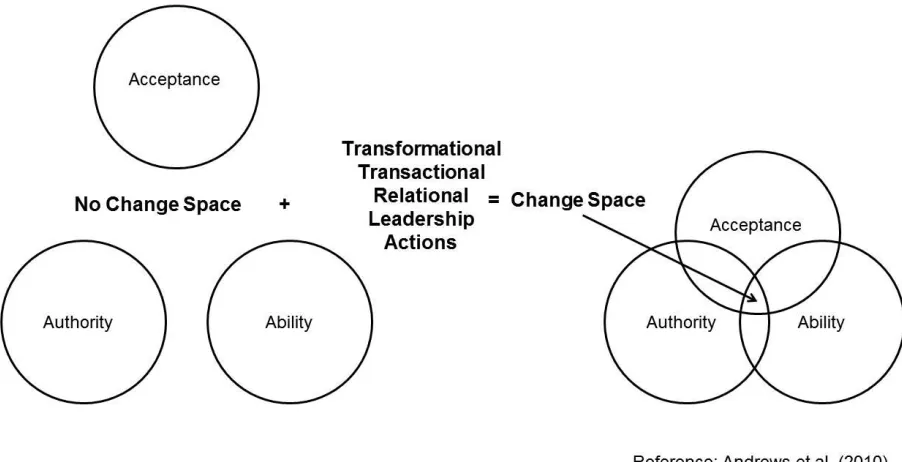
actions in favor of its adoption. As shown in Figure 7, when looking at the theory of
leadership-led change space, three types of theoretical approaches were particularly useful:
Figure 7: Leadership Creates Change Space by Stimulating 3 As (Andrews et al., 2010)
Transformational leadership entails leaders that persuade people in their groups and
cultures to aspire to better outcomes (Burns, 1978). Such leaders convey a vision and belief and
inspire conviction for the good of the group or of its people. Transactional leadership, similar to
transformational leadership, focuses on public value creation where learning results from a
gradual authorizing process. This, in turn, allows leaders to explore and pursue change that
benefits the group (Andrews et al., 2010). Relational leadership looks at social structures in
which several groups engage together to complete things, as a key to understanding leadership in
change (Andrews et al., 2010). Structures include networks and organizations that leadership
creates to facilitate solutions for implementing change (Andrews el al., 2010).
II.4 Conclusion
A previous study conducted by Bang et al. (2000) examined the relationship of three
factors (concern with the environment, knowledge about renewable energy, and beliefs about
influences the adoption of renewable energy as a source of energy production in developing
countries. This study built off these variables, specifically knowledge and concern, and
examined subjective norms in observing Nigerian leadership’s intention and resulting behavior
to adopt WtE. Drawing from Fishbein and Ajzen (1975) and expanding on the Bang et al.
(2000) study, this research addressed the following question: To what extent does leadership
influence the adoption of Waste-to-Energy (WtE) as a plausible energy (and environmental)
III CHAPTER 3: THEORETICAL FRAMEWORK
Researchers have used the theory of reasoned action (TRA) of Fishbein and Ajzen (1975)
as a framework to investigate human behavior in the disciplines of social psychology (Conner,
Kirk, Cade, & Barrett, 2001), where it has found support in the prediction of various social
behaviors (Van den Putte, 1991). For example, Teo and van Schaik (2012) compared four
models (TRA, Theory of Planned Behavior (TPB), Technology Acceptance Model (TAM) and
an integrated model) to determine the accuracy of prediction of each model with respect to
teachers’ intentions to use technology. Similarly, the study by Shih and Fang (2006) replicated
and expanded the TRA framework to probe attitudinal and subjective norm factors that would
influence the adoption intention of Internet Banking. Lam, Cho, and Qu (2007) explored the
relationship between IT beliefs, attitude, subjective norms, self-efficacy, and behavioral intention
towards the perception of adoption of information technology by hotel employees in China.
III.1 Theory of Reasoned Actions
TRA suggests that people contemplate the consequences of new behaviors before
implementing them, and individuals choose to employ the behaviors that they relate to desirable
outcomes (Bang et al., 2000). Fishbein and Ajzen (1975) argue that behavioral intent (BI) is
derived from two factors: (1) attitude toward the behavior and (2) subjective norms. Thus,
“[a]ttitude is defined as a latent disposition or tendency to respond with some degree of
favorableness or unfavorableness to a psychological object” (p. 76). The attitude can be any
discriminable part of a person’s realm, including behavior (Fishbein & Ajzen, 2011). Fishbein
and Ajzen (2011) define subjective norms “as an individual’s perception that most people who
This study examined attitudes formed from factors contributing to individuals’ behavior
regarding WtE with the help of the theoretical models from Fishbein and Ajzen (1975) and
Andrews et al. (2010). Bang et al. (2000) employed TRA in the field of renewable energy to
study attitudes that contribute to the individual’s intended behavior towards RE. The study by
Bang et al. (2000) adopted the partial form of TRA and measured only the attitude towards
behavior. The other component of attitude formation in the TRA consists of subjective norms,
which are defined as the social pressure an individual feels to perform or not perform the
behavior at hand (Fishbein & Ajzen, 1975). The study by Bang et al. (2000) argued that the data
they had collected were not designed to test subjective norms; they further argued that such
normative opinions are hard to quantify, and left these opinions to be studied by future
researchers in this area. Identifying this gap, this study focused primarily on attitude towards the
intended behavior, thus extending the Fishbein and Ajzen (1975) framework to a different
setting. Moreover, the study incorporated subjective norms not addressed in the previous
literature.
According to TRA, attitude stems from two factors: a group of beliefs that an individual
has about a behavior (bᵢ) and evaluations (eᵢ) of the beliefs (Fishbein & Ajzen, 1975). Bang et al.
(2000) specifically examined beliefs in the context of WtE adoption. They argued that beliefs
reflect knowledge of WtE—not necessarily accurate knowledge, but at least knowledge that the
individual perceives to be accurate (Bang et al., 2000). Specifically, TRA suggests that the
attitude concerning the behavior (Aact) is the sum of the results of the beliefs that this behavior
leads to significant consequences and the evaluation of these significant consequences (Bang et
al., 2000). Following the theory of TRA in the context of WtE, the mathematical equation to
𝐵~𝐼 = (𝐴𝐵)𝑤 + 𝑜𝑡ℎ𝑒𝑟 𝑣𝑎𝑟𝑖𝑎𝑏𝑙𝑒(𝑠)
𝑤ℎ𝑒𝑟𝑒 𝐵 = 𝑡ℎ𝑒 𝑏𝑒ℎ𝑎𝑣𝑖𝑜𝑟 𝑖𝑛 𝑞𝑢𝑒𝑠𝑡𝑖𝑜𝑛,
𝐼 = 𝑡ℎ𝑒 𝑝𝑒𝑟𝑠𝑜𝑛′𝑠 𝑖𝑛𝑡𝑒𝑛𝑡𝑖𝑜𝑛 𝑡𝑜 𝑝𝑒𝑟𝑓𝑜𝑟𝑚 𝑏𝑒ℎ𝑎𝑣𝑖𝑜𝑢𝑟 𝐵
𝐴𝐵 = 𝑡ℎ𝑒 𝑎𝑡𝑡𝑖𝑡𝑢𝑑𝑒 (𝑒𝑣𝑎𝑙𝑢𝑎𝑡𝑖𝑜𝑛) 𝑡𝑜𝑤𝑎𝑟𝑑𝑠 𝑝𝑒𝑟𝑓𝑜𝑟𝑚𝑖𝑛𝑔 𝐵
𝑤 = 𝑎 𝑟𝑒𝑔𝑟𝑒𝑠𝑠𝑖𝑜𝑛 𝑤𝑒𝑖𝑔ℎ𝑡
𝐵𝑒ℎ𝑎𝑣𝑖𝑜𝑟𝑡𝑜𝐼𝑚𝑝𝑙𝑒𝑚𝑒𝑛𝑡𝑊𝑡𝐸(𝐵)~𝐵𝑒ℎ𝑎𝑣𝑖𝑜𝑟𝑎𝑙𝐼𝑛𝑡𝑒𝑛𝑡𝑖𝑜𝑛𝑡𝑜𝐼𝑚𝑝𝑙𝑒𝑚𝑒𝑛𝑡𝑊𝑡𝐸(𝐼)
= 𝛼0+ 𝑤𝐴𝑡𝑡𝑖𝑡𝑢𝑑𝑒𝑠𝑖 + 𝛽1𝑆𝑢𝑏𝑗𝑒𝑐𝑡𝑖𝑣𝑒𝑁𝑜𝑟𝑚𝑠𝑖 + 𝜀𝑖
WtE generation requires the use of waste provided by the consumer, government, or
private sector, such as municipal waste or waste materials such as tires or plastics, in order to
generate energy, indicating that consumer attitudes and norms are vital for widespread adoption
of WtE (Moghadam et al., 2016). One goal of this study was to understand Nigerian leaders’
attitudes regarding the desire to implement WtE as an energy source. Key variables measured in
this research were knowledge of WtE, concern about energy creation, concern about pollution,
and leaders’ acceptance, authority, and ability to implement WtE. According to Bang et al.
(2000), variables related to knowledge and concerns contribute to the belief component of the
Figure 8: Diagram of The Theory of Reasoned Action (TRA) by Fishbein and Ajzen (1975)
The literature suggests that renewable energy can solve energy issues without
contributing to pollution (cf. Osterhus, 1997), but its implementation is not present in developing
countries such as Nigeria. In Nigeria’s case, concerns and knowledge that should support the
adoption of RE source (WtE) does not appear to be implemented. Noting this gap between the
benefits of WtE and its actual adoption in developing countries, this research introduced the role
of leaders in understanding this disparity and their intentions to adopt WtE. This paper has also
hypothesized that the leaders in Nigeria can initiate change to address the persistent energy and
environmental crisis through adoption of WtE.
The following section develops three hypotheses to address the primary aim of this study
of analyzing the adoption of WtE in Nigeria using the conceptual framework based on the
1975). This paper uses TRA to examine leaders’ attitudes and subjective norms toward adopting
WtE. Positive attitudes and subjective norms should show a higher intention to adopt WtE, and
leadership-led change should moderate the behavior to adopt WtE in Nigeria as a solution for its
energy demand and pollution reduction.
Attitude is the first construct that has an impact on intention that can lead to a behavior.
Attitudes are comprised of beliefs and evaluations as mentioned in TRA, and, as explained by
Ajzen & Fishbein (1980), "in order to understand why a person holds a certain attitude toward an
object it is necessary to assess his salient beliefs about that object" (p. 63). The beliefs
mentioned by Ajzen and Fishbein (1980) are formed by the individual’s past experiences and the
prior knowledge they have regarding a certain action. Using empirical evidence, Armitage,
Conner, Loach, and Willetts, (1999) found that, when most respondents considered an outcome
to be favorable, they showed a positive correlation between belief and attitude. A leader’s belief
can be formed from knowledge and concerns they have regarding events; therefore, a leader’s
knowledge and concern on WtE can form his/her beliefs. If the leaders have a high level of
concern for pollution, we expect them to have positive attitudes towards WtE. Similarly, if
people have an experience or prior knowledge about energy creation and sustainable energy, this
would create positive beliefs in them, leading to positive attitudes about WtE. Bang et al. (2000)
found that people who were more knowledgeable about the environment and renewable energy
had a more positive attitude on renewable energy. Moreover, a recent study indicated that
consumers' willingness to pay more for environmentally friendly sources of energy increased as
they became more aware of the relative advantages of renewable energy in comparison to
Within the TRA framework of Ajzen and Fishbein (2011), attitudes follow directly from
beliefs. Ajzen and Fishbein (2011) argue that individuals create these beliefs by associating the
object with various characteristics and aspects. The literature indicates that perceptions and
preferences about energy and the environment are influenced by objective information and
sometimes by a lack of it (Farhar, 1994). Consequently, leaders who have more positive beliefs
about adopting WtE developed through their prior beliefs and evaluations will have a more
positive attitude towards WtE.
The second component that determines attitude is the individual’s evaluation towards the
action. People who have knowledge about RE (including WtE) will evaluate it as an option to be
adopted. People evaluate environmental impacts, which can lead them to a reinforced interest in
renewable energy (Joskow, 1996). Individuals evaluate environmental issues, such as climate
change, because they are concerned with their children’s and their own health today and in the
future (Howarth & Norgaard, 1995). Consumers who are more concerned about the environment
have a higher evaluation of renewable energy as shown by Bang et al. (2000). These consumers
have a higher evaluation of RE since they are willing to pay a premium for renewable energy
that consumers who are not as concerned about the environment are not (Bang et al., 2000).
People who are more concerned and are knowledgeable about the problems associated with the
deteriorating environment as well as the advantages of using renewable energy may have a more
positive evaluation towards renewable energy (Bang et al., 2000) and thus more positive
attitudes towards adopting WtE.
This study analyzed attitudes as formed by beliefs and evaluations towards the intention
to adopt WtE. Research in this regard mainly relies on TRA, which maintains that attitudes
perform a behavior will strengthen to the extent that they hold positive attitudes toward the
behavior (Ajzen & Fishbein, 2011). As stated above, positive attitudes can arise from both
beliefs and evaluations. Degree of intention formation can differ depending on motivations and
opportunities (Bagozzi & Yi, 1989). Bagozzi and Yi (1989) further state that at times attitudes
can be so strong that they bypass evaluations or the consequences of an act to promote a specific
intention. This forms the basis of the first hypothesis of this research:
H1: Leaders with stronger attitudes about WtE will have a stronger intention to adopt
WtE.
According to Fishbein and Ajzen (2011), the intention of an individual depends on two
constructs, one of which is the perceived social pressure to implement a behavior (subjective
norms). Fishbein and Ajzen (2011) further explain that the subjective norms are composed of
normative beliefs and motivation to comply. People behave in a certain way based on the
normative beliefs due to social pressure (Fishbein & Ajzen, 2011). It is important to measure
how much an individual is affected by normative beliefs. Previous literature also shows that
motivation to comply can also add some insight to the subjective norms (Budd, North, &
Spencer, 1984; Montaño, Thompson, Taylor, & Mahloch, 1997).
Gusti, Isyandi, Bahri, and Afandi (2015) found that the subjective norms were associated
with and contributed positively towards the behavioral intention to implement social welfare
management in Indonesia. The relationship of subjective norms and behavioral intentions has
been confirmed by several other studies (Kumar, 2012; Chan & Lau, 2001; Mahmud & Osman,
2010). Fishbein and Ajzen (2011) suggest that a person’s intention of a behavior can be
impacted by one’s perception of the social pressure. This forms the basis of the second
H2: Leaders with stronger subjective norms about WtE will have stronger intention to
adopt WtE.
Intention is not a complete predictor of behavior, but it is a determination to act in a
certain way. Intention in an attitude–behavior relationship, as explained by Bagozzi, Yi, and
Baumgartner (1990), can also be influenced by the level of effort required to exercise the
behavior; thus, not all intention leads to a behavior. However, having a strong positive intention
is a good indicator of an individual to perform the given behavior (Fishbein & Ajzen, 2011).
Previous studies examined the behavioral intentions and its predictability of behavior with high
accuracy (Giles & Cairns, 1995; Conner & McMillan, 1999; Hrubes, Ajzen, & Daigle, 2001).
Armitage and Conner (2001), who examined the intention-behavior correlation in 48
different studies and found significant positive correlation between behavioral intentions and
behavior, also support this notion. Previous researchers have utilized behavioral theories to
explain behavior towards performing an action, for example, observed behaviors in specific
Information Technology (IT) use (Agarwal & Prasad, 1997). TRA studies have shown that
intentions are significantly correlated with behavior (Mishra, Akman, & Mishra, 2014). Positive
intentions can lead to the adaptive behavior; for example, the intention to purchase an item has
been found to be a good predictor of the behavior purchasing the item (Ramayah, Lee, &
Mohamad, 2010).
This hypothesis predicts a leader’s behavior on adopting WtE based on the leader’s
intentions of adopting WtE. It is important to know this intention-behavior relationship since the
purpose of this study was to understand what can lead to adopting WtE. This forms the basis of
H3: Leaders who have stronger intentions to adopt WtE will positively predict leaders’
behaviors to adopt WtE.
III.2 Leadership-Led Change
The leadership-led change study by Andrews et al. (2010) provided a framework for the
role of leadership and its impact on creating change. Leadership provides a set of actions that
create a “change space” that organizes people, thoughts, and resources to accomplish a change
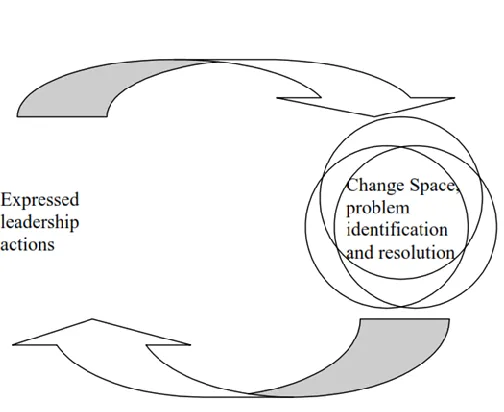
purpose (Andrews et al., 2010). Figure 9 and Figure 10, from the Andrews et al. (2010) study;
show the interaction between leadership and change space. In essence, leadership identifies the
issue at hand and possible solutions to it and then acts to begin implementing change.
Leadership-led change theory further maintains that both active engagement and a contextual
space in which change happens are needed to broaden comprehension of and facilitate such
change (Andrews et al., 2010; Moghadam et al., 2016). The change space framework suggests
that social capacity to change depends on having space to identify change, moving emphasis
towards change demands, and embracing new forms that support development (Andrews et al.,
2010).
Leadership actions focus on enhancing the acceptance of change, as well as the authority
and ability to explore and pursue change in given contexts, such as clean energy sustainability
(Andrews et al., 2010). These leadership actions—acceptance, authority, and ability—offer key