Georgia State University
ScholarWorks @ Georgia State University
Criminal Justice Theses Department of Criminal Justice
12-2016
Use of Home Protection and Worry About
Burglary
Tam Quach
Follow this and additional works at:https://scholarworks.gsu.edu/cj_theses
This Thesis is brought to you for free and open access by the Department of Criminal Justice at ScholarWorks @ Georgia State University. It has been accepted for inclusion in Criminal Justice Theses by an authorized administrator of ScholarWorks @ Georgia State University. For more information, please [email protected].
Recommended Citation
ABSTRACT
USE OF HOME PROTECTION AND WORRY ABOUT BURGLARY
By
Tam Thai Nguyen Quach
December 2016
Committee Chair: Dr. Joshua Hinkle
Major Department: Criminal Justice and Criminology
The purpose of this study is to examine whether different types of home protection/guardianship behavior have any influence on worry about burglary, using the Seattle, Washington data
collected by Terrance Miethe in 1990. This study also examines whether gender and previous victimization have any moderating effect on the relationship between home guardianship and worry about burglary. Logistic regression was used to analyze the relationships. The findings in the main model showed that four of the seven types of home guardianship significantly predicted higher likelihoods of worry of about burglary. When gender was treated as a moderator, only one type of home protection significantly predicted higher chances of worry for females whereas four types of home protection significantly predicted higher odds of worry for males. When previous victimization was treated as a moderator, findings in the non-victims’ model were the same as findings in the main model. Findings in the previous victims’ model showed that one type of home guardianship predicted higher chances of worry about burglary. Limitations and suggestions for future research are discussed.
USE OF HOME PROTECTION AND WORRY ABOUT BURGLARY
By
Tam Thai Nguyen Quach
A Thesis Submitted in Partial Fulfillment of the Requirements for the Degree of
Master of Science in the
Andrew Young School of Policy Studies of
Georgia State University
Copyright by Tam Thai Nguyen Quach
ACCEPTANCE
This thesis was prepared under the direction of the candidate’s Thesis Committee. It has been approved and accepted by all members of that committee, and it has been accepted in partial fulfilment of the requirements for the degree of Master of Science in Criminal Justice in the Andrew Young School of Policy Studies of Georgia State University.
Dissertation Chair: Dr. Joshua Hinkle
Committee: Dr. Barbara Warner Dr. Sue Carter Collins
Electronic Version Approved:
Mary Beth Walker, Dean
Andrew Young School of Policy Studies Georgia State University
iv DEDICATION
First, I would like to take this moment to thank my committee at Georgia State University for
assisting me through this entire thesis step by step. Next, I would like to thank my peers for
providing aid whenever I needed it and pushing me to continue when I felt like giving up.
Finally, I would like to thank my family for always believing in me and supporting me from the
beginning to the end of this academic journey; without them, my educational achievement would
not be possible. Therefore, I would like to dedicate this thesis to my parents as a proof that their
v
ACKNOWLEDGMENT
I would like to acknowledge all the people that aided, guided, supported, and encouraged me
throughout this process. I am most grateful to Dr. Hinkle for providing help and clear guidance
and for the countless hours he spent reviewing my materials and offering comments. Dr. Hinkle
also spent a great amount of time to make sure that I understood the articles thoroughly whether
they were related to methods or statistics. Without Dr. Hinkle’s guidance, I would have been lost
and would not have been able to complete this thesis. Next, I would like to thank Dr. Warner for
providing constructive feedback on the statistics part of my thesis. I would also like to thank Dr.
Collins for encouraging me to keep going when I felt like giving up. Not only that, she also
provided suggestions on how to make my paper flow better so that it is easier to read. Both
committee members have provided very helpful comments and feedback, which I took into
account to further improve my thesis. Next, I would like to thank Jane Daquin and Susannah
Tapp for explaining the statistics in some articles. Finally, I would like to thank Michelle Block,
Brittany Sparks, and Shakia Pennix for being there and supporting me when I wanted to quit;
vi
TABLE OF CONTENT
ACKNOWLEDGMENT ..………. v
LIST OF TABLES ………. viii
Chapter 1: Introduction ……….. 1
Chapter 2: Literature Review ………. 5
What is Fear? ………... 5
Term Adjustment – Fear to Worry ……….. 7
Avoidance and Protective/Defensive Behavior ………. 10
Do Avoidance and Protective Behavior Reduce Fear or Crime? ……….. 14
Specific Types of Home Guardianship ……….. 24
Control Variables ………... 28
Ethnicity. ……….... 28
Previous victimization. ………... 28
Age. ……… 29
Gender. ………...……… 32
The Current Study ……….. 33
Research Questions ……….... 34
Chapter 3: Data and Methods ……… 37
Data and Methods ………. 37
Sampling. ……….. 37
Data collection. ………. 38
Survey instrument. ……….... 38
vii
Independent Variables ……….. 40
Control Variables .………. 41
Analysis Strategy .………. 47
Chapter 4: Results ……… 50
Analysis ……….. 50
Results ………... 51
Chapter 5: Discussion ……….. 57
Limitations ………. 62
Recommendations for Future Research ………. 63
Appendix A .………... 65
References ..……….. 85
viii
LIST OF TABLES
Table 1 Descriptive Statistics for Dependent Variables,
Independent Variables, and Control Variables …..…….………. 48
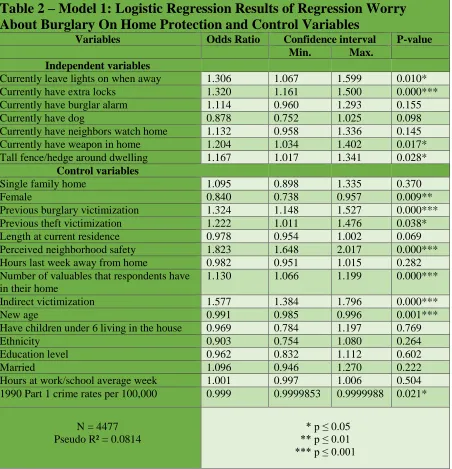
Table 2 Logistic Regression Results of Regression Worry About Burglary On Home Protection and
Control Variables .…………..………... 52
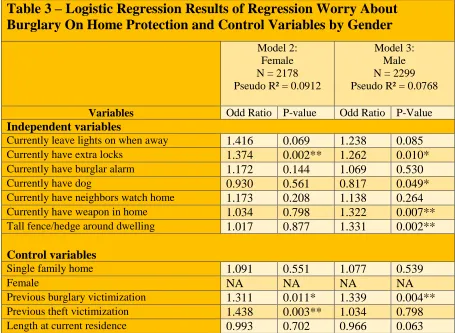
Table 3 Logistic Regression Results of Regression Worry About Burglary On Home Protection and
Control Variables by Gender ………... 53
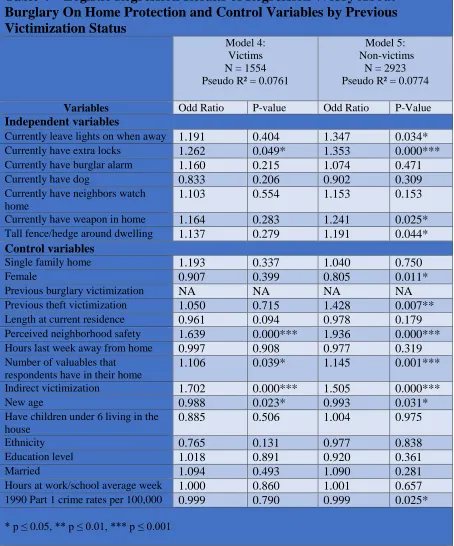
Table 4 Logistic Regression Results of Regression Worry About Burglary On Home Protection and
1
Chapter 1: Introduction
In 2011, Americans spent approximately $20.64 billion on home security systems. This
amount is expected to increase up to $34.46 billion by 2017.1 This data suggests that more
Americans are going to purchase home security in the near future. The home security industry is
a multi-billion-dollar business and is heavily advertised to make people feel safer; however, there
is little research showing whether these actions will actually lower homeowners’ risk of
victimization or cause them to be less fearful or worried about victimization. If home
guardianship is not effective at reducing home victimization risk or improving residents’ quality
of life by making them less fearful/worried, then citizens may not be able to enjoy all of the
benefits that home guardianship is intended to provide. This study aims to shed light on whether
home protection behaviors decrease worry about/fear of burglary by examining the relationship
between seven types of home guardianship behaviors and worry about burglary.
The dearth of research on the impact of home protection on fear of crime does not mean
that fear of crime has not been studied. Indeed, over the past several decades, scholars have
conducted many studies on fear of crime (Ferraro, 1995; Ferraro & LaGrange, 1987; Garofalo,
1981; Lewis & Salem, 1986; Warr, 1987). Interest in fear of crime began to rise when
victimization surveys found little relationship between crime/victimization rates and fear of
crime. According to Ferraro (1995), surveys such as the General Social Surveys (GSS) and the
National Crime Victimization Surveys (NCVS) found that females and older-age groups were
more likely to be fearful of crime; however, most crime statistics showed that young males were
more likely to be victimized. Additionally, researchers found that crime rates or victimization
1
2
rates were not the main predictor of an individual’s fear of crime (Lewis & Salem, 1986). Just as
important, past studies have produced mixed results on the relationship between prior actual
victimization and fear of crime (Ferraro, 1995). As a result, many studies were conducted to find
out what really predicts an individual’s level of fear of crime. Such studies examined the
predictors of fear of crime including demographics, previous victimization, and perceived
neighborhood safety (Garofalo, 1979; Lewis & Salem; 1986; Rountree & Land, 1996b; Skogan,
1987).
It is important to note that there has been a long debate over how to best define,
operationalize, and measure fear. Past studies have used measures of emotional fear, perceived
safety and perceived risk, while recent studies often have opted to use measures of worry to
capture emotional fear about crime. The current study will follow the more recent trend and use
worry instead of fear for reasons that will be detailed in the following chapter. 2 For now, it is
noted that this review of past studies will use the terminology relevant to each study. For
instance, any reference to “fear” means the study used a measure of emotional fear, which is also
known as worry about crime. While more recent findings are mixed, historically, people who
experience victimization are more likely to be fearful. As a result, they may not happily enjoy
their lives. For example, after being burglarized, homeowners might not feel safe living in their
house or property anymore because they might think that the house or property could get
burglarized again. This feeling of vulnerability may lead residents to feel fear.
Fear of crime is an important topic because it can affect people both physiologically and
psychologically (Daigle, 2013). Fear is also an important topic to study because these
physiological and psychological reactions, which will be discussed in more detail in the next
3
chapter, can cause individuals to change their behavior in order to cope with their fear.
Researchers have defined two types of behaviors that people employ to protect themselves:
avoidance and protective behaviors (Ferraro, 1996). Avoidance behaviors result when
fearful/worried individuals avoid situations or restrict their behaviors to protect themselves from
harm (Daigle, 2013; Ferraro, 1996). Protective/defensive behaviors involve residents engaging in
actions such as leaving the lights on when away from home, installing extra locks or an alarm
system and so forth that are intended to protect them from harm (Daigle, 2013; Ferraro, 1996).
Research on coping with fear/worry is limited; however, there is a small body of studies
that have investigated which coping strategies people use in response to fear. Jackson and Gray
(2010) suggested that although some behaviors are helpful at helping people feel safer, others
may backfire and make people more fearful. For example, Liska, Sanchirico, and Reed (1988)
found that when people were fearful, they would constrain their behaviors, such as avoiding
going out at night or changing their routine activities. Liska et al. (1988) found that people who
engaged in avoidance behaviors were more fearful. Simply put, these researchers found that
there was a feedback loop between avoidance and fear. In another study about coping strategies,
Rader, May, and Goodrum (2007) found that people employed defensive or avoidance strategies
to cope with fear; however, while the use of such strategies are logically expected to decrease
fear, this may not always be the case. For instance, Rader et al. (2007) found that both avoidance
and defensive behaviors increased fear. Interestingly, the researchers also found that defensive
and avoidance behaviors were not related to each other (Rader et al., 2007).
As such, the limited amount of research to date that examined the impact of
protective/avoidance behaviors on fear of crime has produced mixed findings, with some
4
The results are also limited because those studies mostly relied upon cross-sectional data.
Although one study might find that using behaviors for protection would decrease fear, another
study might suggest the opposite. For example, Mesch’s (2000) study found that people who
engage in avoidance behaviors reported lower levels of fear; however, Ferraro’s (1996) study
showed the opposite effect and found that people who engage in avoidance behaviors were more
fearful. As a result, this is one area in the fear of crime literature that needs more attention.
The current study aims to provide more insight into this area by examining the impact of
different types of home guardianship actions on the level of worry about burglary separately
using data collected in Seattle. Specifically, this study will look at the impact of seven types of
home protection on the level of worry about burglary. Chapter 2 will discuss the literature on
fear of crime, how it can motivate people to engage in behaviors to protect themselves, and the
impact these coping behaviors may have on subsequent fear. Chapter 2 will conclude by
outlining the hypotheses of this study. Chapter 3 will go into detail about the data and the
methods that will be used for the current study. In chapter 4, the results will be presented. Lastly,
the final chapter will provide a summary of key findings, a discussion of their implications, and
of limitations of the current study. Furthermore, there will be suggestions for how future research
can build upon the current studies’ findings to improve our understanding of the relationship
5
Chapter 2: Literature Review
Fear of crime is an important topic because fear can have both physiological and
psychological effects on a person. People cope with fear by engaging in either avoidance or
protective behaviors. Many studies in the past have examined what predicts fear, but we know
little about the impact of coping behaviors on fear. For example, people may engage in
protective behavior to reduce their risk of victimization so they can feel safer; however, engaging
in protective behaviors may escalate fear instead. Regarding home protection, as the amount of
money being spent on home security increases, it is important to examine whether these home
security systems actually work and make citizens feel safer or whether these home security
actions are ineffective in reducing fear. Thus, home security systems might not achieve one of
their intended purposes.
First, this chapter will begin with defining fear. Second, there will be a section that
explains the reason for changing the term from fear to worry. Third, avoidance and protective
behaviors will be discussed and findings about those behaviors will also be presented. Fourth,
specific types of home guardianship will be introduced. Fifth, control variables that were used in
the fear of crime research will be presented. Finally, this chapter will end with seven hypotheses
that will be tested in this study.
What is Fear?
Fear is “an emotional reaction characterized by a sense of danger and anxiety about
physical harm” (Garofalo, 1981, p. 841). Fear of crime is an important topic of study in
criminology because it focuses on the consequences that crime has for both victims and
non-victims. Warr (1987) states that “fear is among the most overt social reactions to crime and
6
When a person experiences a crime, he or she is more likely to be fearful. Fear of crime may
affect a person both physiologically and psychologically.
Physiologically, when people experience fear, their body changes to alert them about
potential danger (Daigle, 2013). Some examples of body responses to fear are “…heart rate
increases, pupils dilate, digestion slows, blood supply to muscles increases, breathing rate
increases, and sweating increases” (Daigle, 2013, p. 52). These bodily functions activate
automatically without a person’s control, as they are controlled by the autonomic nervous
system. These physiological responses allow people to take actions as a response to danger in
two ways: either stay and fend off the attack or run away from danger. These two reactions are
known as the fight-or-flight response and it helps humans survive harms or dangers (Cannon,
1939).
Psychologically, an individual who is fearful may feel frustrated, stressed, afraid, or
angry (Farrall, 2004). Since fear is a negative emotional reaction to the anticipation of crime, an
individual who is constantly afraid of being victimized is likely to experience more stress than a
person who is not afraid. This negative emotion might amplify as the individual keeps thinking
about being victimized and plays a role in explaining why some people are more stressed about
crime than others. According to Ross (1993), fear could negatively affect people’s subjective
health and quality of life. High levels of fear could increase citizens’ psychological distress and
decrease their outdoor physical activity, such as walking. In turn, higher levels of psychological
distress and less walking would decrease people’s health (Ross, 1993).
Fear of crime is also an important topic to study because the physiological and
psychological reactions noted can cause individuals to change their behavior in order to cope
7
themselves: avoidance and protective behaviors (Ferraro, 1996). When individuals engage in
avoidance behaviors, they avoid situations or restrict their behaviors to protect themselves from
harm (Daigle, 2013; Ferraro, 1996). An example of avoidance behavior would be refusing to go
out alone at night or avoiding certain areas or activities. On the other hand, when citizens utilize
protective behaviors, they engage in behaviors that would protect them from harm (Daigle, 2013;
Ferraro, 1996). Examples of protective behavior include installing an alarm, having extra locks,
locking doors when leaving home, leaving lights on when away, putting fences around the house,
carrying a handgun, or having a dog for the purpose of guarding the house. It is possible that an
individual who is afraid of his or her home being burglarized is more likely to install extra
security around the house in order to ensure that their safe haven is well protected. Regarding
home protection, some protective behaviors could change the physical appearance of the
property. For example, fences not only act as barriers to block potential offenders from invading
but also change the appearance of the house.
Term Adjustment – Fear to Worry
Fear of crime is a complex area to study because the phrase “fear of crime” has many
different meanings. Early researchers conceptualized fear of crime as one broad idea that
included worry, anxiety, or concern over safety (Rader, 2004). As time passed, researchers
argued that fear was different from concern for one’s safety. As a result, scholars conceptualized
concern for one's safety as perceived risk (Rader, 2004).
Fear is different from worry about crime in that worry is the emotional aspect of fear
whereas fear is a broad concept that consists of both cognition and emotion (Ferraro, 1995). The
cognitive aspect of fear is known as perceived risk. Perceived risk is referred to as an
8
process involves cognition (Ferraro & LaGrange, 1987). Although fear of crime has two
dimensions, scholars commonly thought of fear as an emotion rather than a cognition, and
measures of fear were designed with the intention of capturing the emotional aspect. Early
research used the term “fear” and referred to it as an emotion; however, fear is a broad concept,
and newer research often has decided to use the term “worry” so that they could specifically
capture the emotional dimension. It is also believed that worrying about crime is a more common
and relevant emotional reaction to perceived victimization risk than being truly fearful, afraid or
scared of crime.
Ferraro and LaGrange (1987) stated that one of the major problems of measuring fear of
crime is that it is often classified into two aspects: cognitive and affective. The cognitive
continuum of fear includes judgments of risk (also known as perceived risk) of crime, whereas
the emotion continuum is composed of emotion (Ferraro & LaGrange, 1987). However, Ferraro
and LaGrange (1987) argued that fear of crime is limited to only the emotional aspect and not the
perception of risk facet based on the premise that “fear of crime is a negative emotional reaction
to crime or the symbols associated with crime” (p. 72).
Since the concept of fear of crime is often ambiguous, the measurement used in earlier
research might not have accurately captured fear of crime. Ferraro and LaGrange (1987) stated
that the measurement used by the National Crime Survey (NCS) is better at evaluating perceived
risk of crime than fear of crime. The question “How safe would you feel walking alone at night
in your neighborhood” (Liska et al., 1988, p. 830) might be a better measure of perceived risk
because the phrase “How safe….” is asking a person to evaluate his/her likelihood of being
victimized. This question does not ask an individual to express his/her emotions about crime. A
9
time, this same individual may not have any fear of walking alone at night in his/her
neighborhood.
The question in Miethe’s (1991) survey which will be used in my study, “How about
someone breaking into your home and stealing your property? Would you say you worry or think
about this...” (See Appendix A), was designed to capture the emotional aspect of fear. This
measure is more aligned with what other scholars have agreed upon defining as fear in older
research (e.g., Ferraro, 1995; Ferraro & LaGrange, 1987; Garofalo, 1981). Research has
supported the notion that perceived risk (cognitive assessment) is different from fear (emotional
reaction). Specifically, LaGrange, Ferraro, and Supansic (1992) found that although perceived
risk is an important predictor of fear, the two are not perfectly correlated. LaGrange et al.’s
(1992) finding also supported the distinction between perceived risk and fear of crime.
Moreover, Rountree and Land (1996b) found perceived risk of crime to be distinct from fear of
crime, especially fear of burglary.
The preceding discussion shows that the concept of fear of crime has evolved over time.
Fear of crime is a broad concept that includes both cognition and emotion (Ferraro, 1995);
however, research on fear today tends to focus on the emotional forms and uses the cognitive
forms (i.e., perceived risk) as a cause/predictor of fear (see Rader, 2004). Recent researchers
such as Jackson and Gray (2010) and Rengifo and Bolton (2012) have used the term worry
instead of fear to capture the emotional aspect of fear. For instance, although fear of crime is
more aligned with the emotional aspect, Rengifo and Bolton (2012) still recognized that fear has
different aspects: emotion (commonly agreed by scholars as fear) and cognition (perceived risk).
Thus, the term “fear of crime” may not best portray the emotional aspect. As a result, Rengifo
10
Jackson and Gray (2010) also used the term “worry” to measure emotional fear in their study.
Farrall (2004) also suggested that the term “fearful” can be replaced with the term “worried”
when measuring an emotional response to crime.
It is important to be clear about which measure is being used in studies of “fear of crime”
as there is some confusion in past studies resulting from mislabeling of the measures actually
used (Hinkle, 2015). Although worry and fear are different, many studies have used the term
“fear” in their titles and discussions of findings, when they actually used measures of perceived
safety, perceived risk or worry about crime. For example, Jackson and Gray’s (2010) article was
titled “Functional fear and public insecurities about crime,” but the researchers actually used
measures of functional and dysfunctional worry about crime in their study. Similarly, Gray,
Jackson, and Farrall (2011) also titled their research “Feelings and functions in the fear of crime:
Applying a new approach to victimisation insecurity” but measured worry in their study. Similar
to the scholars mentioned above, Rountree and Land (1996b) also have “fear” in their title but
measured worry in their study. The mislabeling of measures used may cause readers to wonder
whether researchers are measuring fear or worry. Since the term “worry” is increasingly used by
newer research to measure the emotional aspect of fear, I am going to use a measure of worry
about burglary in the current study. Although worry is the measure used in my study, my review
below will use the terms relevant to each study as I want to clearly indicate what concept was
actually used in each study.
Avoidance and Protective/Defensive Behavior
When people become fearful of crime, they might change their behaviors and engage in
different strategies to cope with their fear. There are two commonly identified types of behaviors
11
current study only focuses on protective behavior so avoidance behavior will be briefly
discussed.
Miller (2003) suggested that fear might lead people to isolate themselves from others,
change their daily routine activities, refuse to be alone by themselves or avoid going out at night.
These types of actions often have been referred to as avoidance/constrained behaviors, and serve
as one method for people to attempt to reduce their fear (Liska et al., 1988). Garofalo (1981)
stated that avoidance behavior is any behavior that would decrease the chance of a person being
exposed to crime, such as avoiding or staying away from situations where one believes that a
crime is likely to occur. The purpose of avoidance behavior is to decrease the chance of a person
being victimized. An example of avoidance behavior would be a person avoiding going out alone
at night or avoiding going to places with no streetlights by him/herself.
Another strategy that individuals might engage in when they are fearful is protective
behavior. According to Garofalo (1981), protective behavior is any behavior that “seeks to
increase resistance to victimization” (p. 847). Another term for protective behavior is defensive
behavior (Daigle, 2013; May et al., 2010). Perhaps the difference in terminology usage is due to
the time period – older research tends to use the term protective behavior while newer research
mostly uses the term defensive behavior. Rader et al. (2007) found that fear of crime would
encourage homeowners to employ protective/defensive behaviors.
There are two commonly discussed types of protective behavior: home protection and
personal protection. Home protection is any action an individual takes to reduce the chance of
his/her home being victimized (i.e., burglary). This action could include purchasing a home
protection device or increasing usage of an existing device (Garofalo, 1981). Examples of home
12
(Ferraro & LaGrange, 1987). Personal protection is any action that an individual employs other
than avoidance behavior to reduce the chances of becoming a victim when he/she encounters
dangerous situations (Garofalo, 1981). Examples of personal protection include carrying a gun
and having a dog for the purpose of self-protection (Luxenburg, Cullen, Langworthy, &
Kopache, 1994).
In the past, measurements and categories of personal and home protection have varied
greatly across studies and this is a problem because it caused confusion in the fear of crime
research. For instance, Garofalo’s (1981) study suggested that personal protection is different
from home protection and provided detailed reasons, while Rader et al.’s (2007) measurement
implied that personal protection is not so different from home protection. As an example of even
the same item being classified differently, Garofalo (1981) suggested that owning a dog is a type
of personal protection, whereas Rader et al. (2007) proposed that dog ownership is a type of
home protection.
Moreover, not all studies are as clear as Garofalo’s (1981) because many studies tend to
group personal and home protection together, and simply label the variable as protective
behaviors. Besides Rader et al. (2007) grouping of dog ownership with installing locks and
burglar alarms into household precautions, Lab (1990) and May et al. (2010) also grouped dog
and gun ownership with installing burglar alarm and installing multiple locks on door as a
measure of protective behaviors; however, Lab (1990) did not state that their measure was
protective behavior but instead labeled the measure “crime-preventive actions” (p. 472).
Similarly, May et al. (2010) used the term defensive behaviors instead of protective behaviors.
Although Lab (1990) and May et al. (2010) used different terms, the researchers were still
13
(1990) explained that since crime prevention is operationalized in many different ways, various
researchers have used different techniques in their studies. Thus, the results were varied and it is
very difficult for researchers to compare results across studies.
Another problem with measuring crime prevention techniques is that researchers have
been inconsistent with which techniques they included in their scale measures (Lab, 1990). For
example, some studies used single-scale measures by combining multiple items into one variable
and labeling it as defensive/protective behavior (e.g., May et al., 2010), while other studies used
multiple scales by including personal and home protection as separate variables measuring
protective behavior (e.g., Lab, 1990). Still, there was one study that used single items such as
installing extra locks on doors as a measurement for protective behavior (Mawby, 1999). Despite
the difference in measurement, the purpose of those studies was the same - they analyzed the
relationship between protective behavior(s) and fear of crime.
Perhaps not having a fixed rule for measuring protective behaviors could be a good thing
because it allows researchers to come up with different strategies or develop newer methods to
investigate protective behaviors in their research. Different measurements would add more
fluidity to protective behavior studies and, with more studies done differently, knowledge about
protective behavior would expand. As will be detailed in the following chapter, the current study
will not use a scale measure (combining multiple variables into one index variable), but instead
will examine the types of home protective behaviors individually. This will add to our
understanding about the relationship between worry and specific types of protective behaviors,
14
Do Avoidance and Protective Behavior Reduce Fear of Crime?
As noted above, when humans become fearful, they may engage in avoidance and/or
protective behaviors to cope with fear, but we do not know whether people worry more or less
after using them. Garofalo (1979) found that although females and older citizens have higher
levels of fear than their counterparts, their rates of victimization are low. Garofalo (1979)
implied that fear of crime is not necessarily always bad but can be good sometimes because it
may lead people to take actions to prevent victimizations. Therefore, fear/worry and coping
behaviors can either be functional (good) or dysfunctional (bad).
According to Jackson and Gray (2010), functional fear results when people who
experience fear engage in behaviors to protect themselves and those behaviors result in them
feeling safer. Their quality of life is therefore not reduced by their fear. For example, people who
fear being burgled might be more likely to install an alarm to ensure that their homes are safer.
When residents’ homes are well protected, they are less likely to worry about their homes being
broken into. In other words, by engaging in protective behaviors, homeowners may reduce
victimization risk and decrease their worry. As another example, DeFronzo (1979) found that
people who carried handguns for the purpose of self-protection had lower fear of being
victimized than people who did not carry a handgun. In a sense, fear could be productive because
it may encourage people to take precautions to protect themselves, and, as a result, the quality of
their lives would improve.
In contrast, fear could also be dysfunctional. Dysfunctional fear results when people
engage in behaviors that are supposed to make them feel safer, but their coping behaviors
backfire and increase their fear of crime (Jackson & Gray, 2010). As a consequence, people may
15
individual sets an alarm, the alarm might remind the individual of a burglary or a potential
burglary. When a person thinks more about a crime or a potential crime, he/she is likely to
experience more stress. Similarly, avoidance behaviors may negatively impact people’s quality
of life. For example, people who avoid going out alone at night might feel disconnected from the
outside world because they do not get a chance to engage in activities that they enjoy. In a sense,
engaging in behaviors for protection might paralyze some people, thereby adversely affecting
their quality of life. Related to the purpose of the current study, the notion of functional and
dysfunctional fear illustrates the importance of looking not just at what predicts fear of crime
and/or use of protective behaviors but to also study the impact of taking protective actions on
worry about/fear of crime and other outcomes such as quality of life.
Home protection/guardianship is the main focus of my study, thus avoidance behavior
and personal protection (a type of protective behavior) will only be briefly reviewed. First,
findings about avoidance behaviors are mixed. While some researchers found avoidance
behavior to be associated with higher levels of fear (Ferraro, 1996; Liska et al., 1988;
Markowitz, Bellair, Liu, & Liska, 2001; Rader et al., 2007; May, Rader, & Goodrum, 2010),
other researchers found avoidance to be negatively related to fear of crime (Garofalo, 1979;
Mesch, 2000). Thus, whether or not engaging in avoidance behavior is helpful at reducing fear of
crime still remains a mystery.
Switching to personal protection, more studies tend to focus on whether or not fear
predicts personal protection than whether personal protection predicts fear. While some studies
showed that fear would predict personal protection, such as purchasing guns (Hill, Howell, &
Driver, 1985; Whitehead & Langworthy, 1989), one study showed personal protection to be a
16
motivate people to purchase guns, interestingly, the researcher did find that having a handgun
decreased people’s fear of crime.
Shifting to the literature on home protection, which is the main focus of my study,
Rountree and Land (1996a) used the 1990 victimization survey data collected in Seattle,
Washington to examine the impact of home protection behaviors on perceived risk. The data
consisted of 5,302 individuals, but the researchers deleted missing cases, leaving 5,090 as the
final number of individuals for their analysis (Rountree & Land, 1996a). The dependent
variables were crime risk perception and restricted routine activities (Rountree & Land, 1996a).
Rountree and Land (1996a) stated that crime risk perception is a cognitive dimension of fear, and
measured it as “whether or not the respondent perceives his or her neighborhood to be either
somewhat or very unsafe from crime at the time of the survey” and dummy coded as “0=safe and
1=unsafe” (pp. 156-157). The second dependent variable, restricted routine activities, was
measured by the number of precautionary measures used by respondents at the time they take the
survey (Rountree & Land, 1996a). Precautionary measures included locking doors, installing
windows bars, extra locks, burglar alarms, leaving lights on when away, having neighbors watch
home when away, joining a crime prevention program, owning a dog, and owning a weapon
(Rountree & Land, 1996a). Although Rountree and Land called them precautionary measures, in
today’s context, they are known as home protection.
One of the independent variables in Rountree and Land’s (1996a) study was patterns of
guardianship, which consisted of safety precautions and guardianship. The number of safety
precautions was used as both a dependent variable and an independent variable. The difference is
that when safety precautions was treated as a dependent variable, it measured behaviors that
17
precautions measured behaviors that respondents employed in the two years prior to taking the
survey. In the latter case, when used as an independent variable, safety precautions did not
include installing windows bars or locking doors in the measure.
As for guardianship, it consisted of physical and social dimensions (Rountree & Land,
1996a). The physical dimension of guardianship was measured by the number of guardianship
barriers, which included the presence of a tall fence or hedge and an empty house or vacant
property next door (Rountree & Land, 1996a). The scholars suggested that more physical
guardianship barriers would reduce the effectiveness of safety precautions, which is home
guardianship. The social dimension of guardianship was measured as whether or not respondents
lived alone (Rountree & Land, 1996a). Rountree and Land (1996a) suggested that if more people
lived in households, then respondents were more likely to have more human guardians. Rountree
and Land (1996a) found that more safety precautions were associated with higher levels of
perceived risk and found that guardianship barriers were positively related to perceived risk. The
results suggested that respondents that had both safety precautions and guardianship barriers had
higher levels of perceived risk even though safety precautions are supposed to lower people’s
perception of risk.
In a second study, Rountree and Land (1996b) used the same data set that they used in
their (1996a) research and measured both perceived crime risk and burglary-specific fear.
Burglary-specific fear was measured as “whether or not the respondent worries at least once a
week about his/her home being burgled” and was dummy coded as “0=no, 1=yes” (pp.
1357-1359). Perception of crime/victimization risk was measured as “whether or not the respondent
perceives his/her neighborhood to be either somewhat unsafe or very unsafe from crime” and
18
words, Rountree and Land (1996b) measured both cognitive and emotional fear, with perceived
risk being the cognitive fear and burglary-specific fear being the emotional fear.
One of the independent variables in Rountree and Land’s study (1996b) was
guardianship, or any behavior that would effectively prevent respondents from being victimized.
This variable consisted of two measures – safety precautions and guardianship barriers. The
scholars used an index scale to represent the number of safety precautions that respondents
employed in two years prior to taking the survey (Rountree & Land, 1996b). Safety precautions
included the following:
Use of locks on doors, installation of extra locks (e.g., deadbolts locks or chains), use of a
light-timer device or leaving lights on, membership in a crime-prevention program,
ownership of a burglar alarm or security system, ownership of a dog, ownership of a
weapon, or having neighbors watch property when away (p. 1358).
Although Rountree and Land (1996b) labeled their measure as safety precautions, this measure
in today’s parlance is generally known as home protection or home guardianship.
As for the second measure of guardianship, Rountree and Land (1996b) used an index to
represent the number of guardianship barriers a respondent has at his/her home. Guardianship
barriers included “the presence of a tall fence or hedge and the presence of an empty house or
vacant property next door” (Rountree & Land, 1996b, p. 1358). The researchers stated that the
more barriers a respondent has around his/her home, the more likely that those barriers will
prevent neighbors from providing effective guardianship (Rountree & Land, 1996b). In other
words, guardianship barriers will reduce the effectiveness of one type of safety precautions –
having neighbors watch the home when the owner is away. To put it another way, Rountree and
19
effectiveness of guardianship (safety precautions) and the other measures the ineffectiveness of
guardianship (guardianship barriers).
Moving toward the findings, Rountree and Land (1996b) found the same results for both
safety precautions and guardianship barriers on perceived risk as they did in their prior (1996a)
study mentioned above. Shifting to the findings on emotional fear, Rountree and Land (1996b)
found that using safety precautions and guardianship barriers (which reduced the effectiveness of
precautions) were related to higher levels of fear of burglary. This was the case even though
Rountree (1994) had found that safety precautions reduced actual burglary victimization in a
prior study.
Given that the 1990 victimization survey data in Seattle, Washington was a single-wave
survey and was not a time-series survey, Rountree and Land’s (1996a, 1996b) studies were cross
sectional. Therefore, a limitation of their studies was that the scholars were not able to establish
the idea that home guardianship predicts fear (cognitive and emotional) of crime; rather, they
were only able to establish that home guardianship and fear have an association. Despite this
limitation, Rountree and Land’s (1996b) research is one of a few studies that not only examined
home guardianship on fear of crime and it is perhaps the only study that examined both cognitive
and emotional aspects of fear of crime. This is an important contribution to the fear of crime
literature because there are more studies that set fear of crime as the predictor and home
guardianship as the dependent variable in their models and measure either cognitive or emotional
fear but not both (e.g., Lab, 1990; Reid, Robert, & Heather, 1998). The results from Rountree
and Land’s (1996b) study provide greater insight on how the effect differs between the
20
Rader et al. (2007) collected data in Kentucky in 2003 via telephone surveys. The initial
sample was 7,614 respondents, but the final sample consisted of 2,091 respondents with a
response rate of 27.5 percent. In this study, fear of victimization, perception of risk, and
defensive behaviors were each dependent variables in various models (Rader et al., 2007). To
measure fear of victimization, the researchers provided respondents with six statements and
asked them to rate their fear through Likert-scale responses. The Likert-scale options ranged
from “(strongly agree=4, somewhat agree=3, somewhat disagree=2, and strongly disagree=1)”
(Rader et al., 2007, p. 485). The six statements were composed of statements about fear of
different types of crime, and each statement started with “I am afraid…” (Rader et al., 2007, p.
503). For example, the first statement was “I am afraid someone will break into my house while I
am away” (Rader et al., 2007, p. 503). The remaining statements asked whether respondents
were afraid of rape, being attacked by someone with a weapon, afraid to go out at night because
they might get victimized, murder, and have their money/possessions taken from them (Rader et
al., 2007). In today’s context, Rader et al.’s (2007) fear of victimization measure is the measure
of emotional fear.
To measure the perception of risk, Rader et al. (2007) asked respondents to estimate the
likelihood that the seven different types of crime will occur to them in the next 12 months. The
responses were also recorded on a scale of 1 to 10, with 1 meaning “not at all likely” and 10
meaning “very likely” (Rader et al., 2007, p. 486). The responses were indexed, so the scores
ranged from 7 (very low risk) to 70 (very high risk) (Rader et al., 2007). Each question of the
perception of risk started with “Someone…” (Rader et al., 2007, p. 504). The first question asked
respondents to estimate their chances of being victimized by “Someone breaking into your home
21
remaining type of crimes that respondents were asked about included someone: stealing their
motor vehicle, stealing their items without using force, taking or attempting to take something
from them by force, beating them with a club, knife, gun, or other weapon, threatening them with
fist, feet, or other bodily attack, and forcing or attempting to force them to have sexual
intercourse against their will (Rader et al., 2007). The perception of risk measure in Rader et al.’s
(2007) study is known as a measure of cognitive fear in current terminology.
As for the defensive behaviors measure, Rader et al. (2007) listed different types of items
and asked respondents whether if they had added those items to their homes in the past 12
months for security purposes. The types of defensive behaviors included installation of outdoor
security lights, door bolts, a gun, extra door locks, a guard dog, electronic light timers, window
guards, burglar alarms, and police department identification stickers (Rader et al., 2007).
Although defensive behaviors were not listed as an independent variable, Rader et al. (2007)
treated it as an independent variable in two out of their six models. In one model, Rader et al.
(2007) regressed perceived risk, which is cognitive fear, on defensive behaviors. In another
model, the researchers regressed fear of crime, which is emotional fear, on defensive behaviors.
Similar to Rountree and Land (1996b), in Rader et al.’s (2007) regression analyses, the
researchers found that defensive behaviors significantly predicted higher levels of fear of crime.
In addition, Rader et al.’s (2007) study also used a single wave of survey, which indicates that
their data was cross-sectional. Despite the limitations of cross-sectional data, Rader et al.’s
(2007) study is important because it is one of the few studies besides Rountree and Land’s
(1996b) research that examined home protection behaviors on emotional fear of crime.
May et al. (2010) completed a follow-up study to Rader et al.’s (2007) study. This study
22
performed the analyses separately by gender. This study found an increase in defensive
behaviors to be associated with higher levels of perceived risk, which is considered as cognitive
fear, but the association was not significant. As for the emotional fear aspect, May et al. (2010)
found that home guardianship significantly predicted higher levels of fear of crime for females,
but not for males. This result indicates the important of examining the potential moderating
effect of gender on home guardianship and fear of crime. Besides May et al.’s (2010) and
Rountree and Land’s (1996b) studies, there is no study that I can identify that examines home
guardianship on different dimensions of fear. These two studies are important because they
showed that the effect of home guardianship on emotional fear can be different than on cognitive
fear. As reviewed above, although home guardianship was positively related to both perceived
risk and fear of crime, it was only significantly related to fear of crime.
Lastly, in terms of research using longitudinal data to examine home guardianship and
fear of crime, I could not identify any study that had a true time-order analysis; however, there
was a study that had some limited time-ordering. Since the methodology in this study was weak,
I will only review it briefly. Mawby (1999) examined a crime prevention program called the
Homesafe program in Plymouth, Massachusetts, to see whether burglary rates and fear of
burglary decreased after its implementation. The Homesafe program had two phases. Phase one
of the Homesafe program focused on a high crime area by providing free service to anyone that
was not able to afford home protection. Phase two of the Homesafe program focused on older
people in areas that were not covered in phase one. The Homesafe program also provided free
service for older people (Mawby, 1999). The Homesafe program consisted of five main
elements: police doing a security check, extra security locks installed on doors and windows,
23
locks on doors and windows and property markings are two types of home guardianship in
today’s language.
Mawby (1999) found that the Homesafe program reduced people’s worry about burglary;
however, the result should be viewed with caution because the methodology was weak. First, this
study only had very limited accounting for time-ordering. Specifically, the researcher surveyed
respondents, on average, six months after the program was implemented, and simply asked them
if they worried less about burglary since the extra security was installed (Mawby, 1999). The
reason why this study is not considered to have a true time-order is because the researcher did
not ask the respondents about their fear of burglary before they received the program. So,
Mawby (1999) could not compare respondents’ level of fear before and after the Homesafe
program was initiated. Second, there was no control group (the group that did not receive the
Homesafe services); therefore, a comparison between a treatment and control group was not
possible, which raises the question of whether the Homesafe program really worked (Mawby,
1999). In other words, since there were no pre-intervention measures or comparison groups,
there was no true test of Homesafe’s impact. The people that Mawby (1999) interviewed simply
stated that they felt safer after having extra security installed.
In 2004, Mawby also conducted a follow-up study. This study was largely the same as
the study conducted in 1999. The only difference is that the 2004 study had somewhat of a
comparison group to the Homesafe program. Mawby (2004) compared Homesafe program,
which was labeled as the limited package, to the Homesafe program and Senior Link, which was
labeled as the combined service. The Homesafe program included all the elements that were
listed above in the Mawby’s (1999) study. The Senior Link service provided older citizens with a
24
those with the combined package worried about burglary less than those with just the limited
package; however, this result also should be viewed with caution because of the limitations noted
in Mawby’s (1999) earlier study (i.e., no true control group or pre-intervention measures).
Specific Types of Home Guardianship
As noted above, there is relatively little research examining the impacts of use of home
protection on fear of/worry about crime. Another limitation of this research is most studies use
index scale measures of home protection, so we know even less about whether certain types of
home protection (i.e., a burglar alarm or installing extra locks) impact worry differently. As my
study aims to shed light on this issue by examining specific types of home protection, I below
review types of home protection behaviors commonly used in past studies, and summarize
findings about their relationship with fear where possible.
Most research included burglar alarms, installing extra locks, leaving lights on, dog
ownership, weapon ownership, and having a neighbor watch property when away and other
forms of protection in a single scale measure of protective/defensive behavior (e.g., Miethe,
1991; Rountree & Land, 1996a, 1996b; Rader et al., 2007; May et al., 2010). Lab’s (1990) study,
on the other hand, used multiple scales to measure defensive behavior, which consisted of two or
more scale measures of protective/defensive behaviors. Specifically, Lab (1990) combined dog
ownership and guns into a measure of personal security, which could be considered as either
personal protection or home protection/guardianship in current terminology. Next, the researcher
combined burglar alarms, property markings, multiple locks, and door peepholes into a measure
of personal access control/target hardening, which is also home protection/guardianship in
today’s context. Lab (1990) then examined whether fear of crime predicted use of personal
25
Although Lab (1990) did not examine the impact of defensive behaviors on fear of crime, that
study is important because it used multiple scales of defensive behaviors. Besides the studies
mentioned above, there is no study that examines each type of home protection/guardianship on
fear of crime individually.
Findings about the relationship between protective/defensive behaviors and fear/worry
are already reviewed in the previous section above. In addition to those studies, other studies
have used protective/defensive behaviors to predict variables such as risk of actual victimization
or used different variables to predict use of protective/defensive behaviors. For example, while
Lab (1990) used fear of crime to predict protective behaviors, Miethe (1991) used protective
behaviors to predict victimization rates. In addition, Reid et al. (1998) used demographics,
previous victimization, cognitive and emotional fear to predict use of defensive behaviors.
Fences have been argued to be both an effective and ineffective form of home
guardianship/protection depending on the study and the type of fence in question.In a study of
factors that could either increase or decrease a house’s vulnerability to burglary, Brown and
Altman (1983) found that non-burglarized houses were more likely to have fences than
burglarized houses. Brown and Altman (1983) also proposed that fences that set a clear boundary
for the property were more likely to reduce the chance of a house being burgled; however, the
researchers suggested that a four-foot (or shorter) fence or hedge will not discourage a burglar.
Similar to Brown and Altman (1983), Brown and Bentley (1993) suggested that a fence with a
clear demarcation, or that clearly marks off the borders, will make it more difficult for a burglar
to enter because the burglar has to think carefully and expend more effort when he or she is
attempting to burglarize a house. In other words, the researchers implied that a tall fence could
26
Although Brown and Altman’s (1983) and Brown and Bentley’s (1993) studies proposed
that a tall fence would provide effective home guardianship, Rountree and Land’s (1996a,
1996b) studies suggested the opposite – a tall fence would make a home more vulnerable to
burglary. In their studies, Rountree and Land (1996a, 1996b) argued that a tall fence is a type of
guardianship barrier instead of a form of home guardianship. Rountree and Land (1996a, 1996b)
asserted that guardianship barriers would decrease the effectiveness of guardianship, meaning
that a tall fence would decrease the effectiveness of other forms home protection, such as burglar
alarms, multiple locks on doors, or the supervision of neighbors.
The similarity that Brown and Altman’s (1983), Brown and Bentley’s (1993), and
Rountree and Land’s (1996a, 1996b) arguments share is the importance of detectability by
neighbors or potential onlookers; however, their variables were different. Brown and Altman
(1983) and Brown and Bentley (1993) stated that trees will obstruct neighbors’ vision, but fences
will not, while Rountree and Land (1996a, 1996b) proposed that tall fences or hedges will
restrict neighbors’ vision. Another conflicting point is that Brown and Altman (1983) found that
houses with fences were less likely to get burglarized while Rountree and Land (1996a, 1996b)
found that houses with guardianship barriers such as tall fences were positively associated with
higher levels of burglary.
Furthermore, Deleon-Granados (1999) stated that having gates and fences could create a
“fortress mentality,” which in turn would make a neighborhood a scary place to live. A fortress
mentality starts when a person thinks that his or her house is a castle that is protected on all sides,
which would make it nearly impenetrable. As a result, the castle is safe from harm; however, a
castle’s greatest strength is also its weakness - the four walls that protect the castle from intruders
27
castle or fortress would be living in isolation. Thus, the people that live in a castle would be less
likely to know what is going on in the outside world. A fortress mentality is when a resident only
worries about making sure that his or her home is safe and then stays in it without worrying
about or becoming aware of what is going on in his or her neighborhood. Deleon-Granados
(1999) suggested that a “fortress mentality” is harmful because it decreases neighborhood social
cohesion. When residents only worry about their homes and stay inside, they are less likely to go
out, which would decrease their chances of interacting with neighbors; as a result, residents will
be less likely to know what is going on in their neighborhood and less likely to form bonds with
their neighbors. Most importantly, residents will be less likely to get involved with their
community. Another disadvantage of the “fortress mentality” is that since a person only worries
about making his or her own home safer, having fences and/or gates around the house might
remind him or her that the neighborhood is not a safe place to live in. It is possible that people’s
worry about crime would increase as a result. In sum, while there are mixed findings on fences
and actual victimization, no study has directly examined the effect of fences on fear of crime.
Therefore, my study is going to examine the effect of fences on worry about crime.
In conclusion, we know relatively little about the impacts of use of home protection on
fear of/worry about crime. Researchers have gravitated toward focusing on examining what
predicts fear of crime and/or the use of protective behaviors, rather than examining the impacts
of use of protection on worry about crime. The few findings in the latter area to date are mixed
and restrained by limitations of study design and inconsistent measurement of protective
behaviors and fear across studies. Before discussing this in more detail, it is necessary to briefly
review the findings about other variables that matter in the fear-protective behavior relationship.
28
Ferraro, 1995) and some that also examine protective behaviors, which illuminate the variables
necessary that must be controlled for when studying the relationship between protective behavior
and fear.
Control Variables
Ethnicity. Findings between ethnicity and fear of crime are varied. While Ortega and
Myles (1987) and Haynie (1998) found Blacks to be more fearful of crime than Whites, Rountree
and Land (1996b) found Whites to be more fearful than non-Whites. Perhaps the reason for
conflicting findings lies in the type of fear of crime measures that were used. Ortega and Myles
(1987) and Haynie (1998) measured fear for personal safety while Rountree and Land (1996b)
measured fear for home safety. In other words, Ortega and Myles (1987) and Haynie (1998)
found Blacks to be more fearful of walking alone at night than Whites, whereas Rountree and
Land (1996b) found Whites to be more fearful of their house being burglarized than Blacks.
Thus, these findings indicate that fear for home safety may be different than fear for personal
safety across ethnicities.
Previous victimization. Previous victimization refers to an individual who experienced a
crime in the past. Various studies have found that previous victimization and fear of crime are
related (Brunton-Smith & Sturgis, 2011; Rountree & Land, 1996b; Skogan, 1987). Additionally,
Jackson and Gray (2010) found previous victimization was more strongly related to
dysfunctional fear rather than functional fear. Jackson and Gray (2010) suggest that previous
victimization is “one of the things that pushes worry about crime from a motivating experience
into a damaging experience" (p. 14). In other words, experience with crime will negatively affect
29
Previous victimization tends to be positively related to fear of crime. Brunton-Smith and
Sturgis (2011) found that previous victims of both personal and property victimization were
more fearful of crime in general. In addition, Skogan (1987) found individuals with previous
property victimization to be more fearful of property crime. Rountree and Land (1996b) found
that victims of burglary, which is a specific type of property crime, were more fearful of
burglary. On the other hand, Hinkle and Weisburd (2008) found that previous victimization was
not significantly related to fear of crime. Perhaps the reason for the inconsistent findings lies in
the methods that were used. While Skogan (1987), Rountree and Land (1996b), and
Brunton-Smith and Sturgis (2011) recognized personal victimization as a separate variable from property
victimization in their measures, Hinkle and Weisburd (2008) combined those two variables into a
single variable in their measures.
Age. Age is one of several variables consistently used to predict fear of crime; however,
findings about age and fear are mixed. Previous research such as Garofalo (1979), Baumer
(1979), Ferraro and LaGrange (1987), Warr (1993), and Roman and Chaflin (2008) found that
older citizens were more fearful than younger citizens. On the other hand, Baker, Nienstedt,
Everett, and McCleary (1983) and Rountree and Land (1996b) found that elderly people were
less fearful than their younger counterparts. Similarly, LaGrange and Ferraro (1989) also found
that younger people were more likely than older people to fear burglary when away from home.
It is possible that younger individuals who do not stay home often are more likely to employ
some type of home protection since they tend to be afraid of their house being burgled while they
are not home. Moreover, Lab (1990) stated that crime-prevention techniques were more likely to
reduce fear among people who use them and discovered that older people were more likely than
30
found that older people who were fearful tended to avoid going outside. It is also possible that
older people who stay at home often are likely to engage in some type of home protection. Thus,
older and younger age groups using home guardianship indicate that home protection is not
limited to any specific age group.
Ferraro (1995) found older individuals less likely to be afraid than younger individuals.
The findings showed that younger people were more likely than older people to be afraid of
several types of crimes, such as burglary while away, and, while at home, sexual assault, murder,
attack, and robbery. There was only one situation where age had a negative relationship with
fear, and that was older people were more afraid of “being approached by a beggar on the street
than younger individuals” (Ferraro, 1995, p. 81). This relationship was only significant for older
women, not older men. Ferraro (1995) suggested one of the reasons why many previous studies
found higher levels of fear among older people was because measures used to evaluate fear did
not differentiate between types of crime.
In sum, inconsistent findings between age and fear have created confusion in the fear of
crime literature. While some studies found older people to be more fearful (Baumer, 1979;
Garofalo, 1979; Skogan, 1987; Warr, 1993), others found that younger people tended to be more
fearful (LaGrange & Ferraro, 1989; Lab, 1990; Ferraro, 1995). Ferraro (1995) offered five
possible explanations for the inconsistent findings: “measurement, sampling, data collection
methods, analytic methods, and social change” (p. 69).
First, contradictory findings on age and fear could be due to inaccurate measurement in
which the questions from the National Crime Survey (NCS) are better at assessing perceived
safety rather than fear of crime. The NCS measure uses a single-item indicator "How safe do you
31
(LaGrange & Ferraro, 1989, p. 703). Ferraro (1995) argued that a single-item indicator alone
cannot possibly represent fear of crime because crime is not just one act, but instead, crime is
composed of many acts. LaGrange and Ferraro (1989) found that older people reported higher
levels of fear than younger people when the NCS measure was used, but not when 11 alternative
indicators of fear were used. LaGrange and Ferraro’s (1989) findings showed that older people
were less fearful than younger people when using the 11 measures of fear. In addition, younger
people were more likely than older people to fear burglary while away from home (LaGrange &
Ferraro, 1989). Lab (1990) also found that younger people tended to be more fearful than older
people, but the relationship was small though statistically significant.
The second explanation for mixed findings on age and fear is related to sampling. Ferraro
(1995) stated that national and regional studies mostly used NCS measures – questions that “do
not differentiate among the types of crime” – while the studies that differentiated across types of
crimes only used community samples (p. 71). Third, another possibility for the various findings
is data collection methods. The NCS “have used face-to-face interviewing while a few have used
telephone interviews” (Ferraro, 1995, p. 71). Most surveys that are based on questionnaire or
telephone interview showed a negative relationship between age and fear. Ferraro (1995)
suggested older respondents might have reported higher level of fear during face-to-face
interviews; however, the researcher stated that this hypothesis needs to be tested.
The fourth possibility suggests the differences in findings could be due to various
analytic strategies. Findings of a positive relationship between age and NCS measure may be due
to studies not controlling for either official or perceived risk (Ferraro, 1995). The fifth possible
cause of the different findings is social change. Ferraro (1995) suggested that fear of crime