Effectiveness of technology-assisted case
management in low income adults with Type 2
diabetes (TACM-DM): study protocol for a
randomized controlled trial
Egede
et al
.
S T U D Y P R O T O C O L
Open Access
Effectiveness of technology-assisted case
management in low income adults with Type 2
diabetes (TACM-DM): study protocol for a
randomized controlled trial
Leonard E Egede
1,2,3*, Joni L Strom
2,3, Jyotika Fernandes
4, Rebecca G Knapp
1,5and Adebola Rojugbokan
6Abstract
Background:An estimated 1 in 3 American adults will have diabetes by the year 2050. Nationally, South Carolina ranks 10thin cases of diagnosed diabetes compared to other states. In adults, type 2 diabetes (T2DM) accounts for approximately 90-95% of all diagnosed cases of diabetes. Clinically, provider and health system factors account for < 10% of the variance in major diabetes outcomes including hemoglobin A1c (HbA1c), lipid control, and resource use. Use of telemonitoring systems offer new opportunities to support patients with T2DM while waiting to be seen by their health care providers at actual office visits. A variety of interventions testing the efficacy of telemedicine interventions have been conducted, but the outcomes have yielded equivocal results, emphasizing the shortage of controlled, randomized trials in this area. This study provides a unique opportunity to address this gap in the literature by optimizing two strategies that have been shown to improve glycemic control, while simultaneously implementing clinical outcomes measures, using a sufficient sample size, and offering health care delivery to rural, underserved and low income communities with T2DM who are seen at Federally Qualified Health Centers (FQHCs) in coastal South Carolina.
Methods:We describe a four-year prospective, randomized clinical trial, which will test the effectiveness of technology-assisted case management in low income rural adults with T2DM. Two-hundred (200) male and female participants, 18 years of age or older and with an HbA1c≥8%, will be randomized into one of two groups: (1) an intervention arm employing the innovative FORA system coupled with nurse case management or (2) a usual care group. Participants will be followed for 6-months to ascertain the effect of the interventions on glycemic control. Our primary hypothesis is that among indigent, rural adult patients with T2DM treated in FQHC’s, participants randomized to the technology-assisted case management intervention will have significantly greater reduction in HbA1c at 6 months of follow-up compared to usual care.
Discussion:Results from this study will provide important insight into the effectiveness of technology-assisted case management intervention (TACM) for optimizing diabetes care in indigent, rural adult patients with T2DM treated in FQHC’s.
Trial Registration:National Institutes of Health Clinical Trials Registry (http://ClinicalTrials.gov identifier# NCT01373489
* Correspondence: [email protected]
1Center for Disease Prevention and Health Interventions for Diverse
Populations, Ralph H. Johnson Veterans Affairs Medical Center, 109 Bee Street, Charleston, South Carolina, 29401 USA
Full list of author information is available at the end of the article
Background
According to the Centers for Disease Control and Preven-tion, as many as 1 in 3 United States adults will have dia-betes by 2050 [1]. As of 2007, approximately 23.6 million Americans or 7.8% of the population have diabetes; nearly 6 million of which have not been diagnosed [2]. In 2007, 1.6 million new cases of diabetes were diagnosed in indivi-duals 20 years of age and older [2]. Currently, 10.7% of all people in this age group have diabetes [2]. In adults, type 2 diabetes accounts for about 90-95% of all diagnosed cases of diabetes [2].
South Carolina ranks 10thin cases of diagnosed diabetes compared to other states [3]. The prevalence of diabetes in SC is presently 9.6%, with an estimated 300,000-350,000 people in SC living with diabetes. As observed nationally, more women and non-white individuals residing in SC are affected by diabetes [3]. Nearly 1089 deaths are attributed to diabetes, and 100,000-160,000 individuals are thought to be undiagnosed and affected by diabetes [3].
Diabetes is the leading cause of cardiovascular disease, strokes, blindness, and lower limb amputations and was the seventh leading cause of death listed on United States death certificates in 2006 [4] and in the 2009 Burden of Disease Report in South Carolina [3]. Diabetes is asso-ciated with significant morbidity, mortality, increased health care utilization, and increased health care costs [4]. The estimated economic cost of diabetes in the United States in 2007 was $174 billion with $116 billion spent directly in medical costs, and $58 billion used for indirect costs including lost workdays, disability, and premature mortality [2]. People diagnosed with diabetes have average medical expenditures that are approximately 2.3 times higher than what expenditures are for those not diagnosed with diabetes [2]. Additionally, the risk for death among people with diabetes is about twice that of people without diabetes of similar age [2].
Use of telephone contact, video-conferencing, personal digital assistants and web-based systems offer new oppor-tunities to bridge the gap in support for patients with dia-betes, between face to face visits with their health care providers; however, systematic reviews evaluating the effi-cacy of telemedicine interventions on patient outcomes have yielded equivocal results [5-7]. A consistent finding across all these reviews is that there is a shortage of con-trolled, randomized trials that implement clinical outcome measures using sample sizes with sufficient power. How-ever, the nature of the interventions compared (telemoni-toring, physician decision-making support, increased patient access to providers, electronic reminders, educa-tional materials, or some combination of the above) and the baseline features of the populations studied have varied considerably, making specific conclusions difficult to draw.
While the optimal formula for technology-enhanced patient support is far from determined, there is a growing
body of evidence to suggest that telemonitoring strate-gies, overall, are an effective intervention for improving metabolic control. Several small scale [8,9] and non-ran-domized [10,11] studies have found that patients exposed to telemonitoring interventions had lower Hemoglobin A1c (HbA1c) values than those without. Moreover, larger randomized controlled studies have also shown promis-ing results. Two studies with Veteran populations demonstrated that home telemonitoring in conjunction with active care management resulted in lower HbA1c values at follow up when compared to standard care [12,13]. An open label study using ACCU-CHEK insulin guidance software also found that HbA1c values were significantly reduced in the experimental group and suc-cessfully maintained at one year follow-up [14]. In addi-tion, adoption of a mobile (wireless) telemonitoring device with a diverse inner-city population was recently found to result in significantly reduced blood pressure and decreased blood sugar when compared to usual care [15].
But perhaps the most comprehensive randomized com-parison of telemonitoring interventions yet completed is the IDEATel study with 1665 Medicare recipients [16]. Telemedicine case management was assessed in middle-aged Medicare recipients with diabetes living in federally designated medically underserved areas of New York State. Participants were randomized to one of two groups: usual care or intervention group. Those randomized to the intervention group received a home telemedicine unit cap-able of (1) videoconferencing with a nurse case manager, (2) remote monitoring of glucose and blood pressure with electronic upload and integration into the electronic medi-cal records at the participating hospital, (3) dial-up Inter-net service allowing the patients to access their own clinical data and leave messages for the nurse case man-ager, and (4) access to an educational Website created by the American Diabetes Association (ADA). At 1 year, the mean HbA1c was significantly lower in participants in the intervention group, having improved from 7.35% to 6.97%. For those with a baseline HbA1c of 7 or greater, the HbA1c improved from 8.35% to 7.42%. Adjusted net reductions also favored the intervention group: HbA1c, 0.18% (p = 0.006), systolic and diastolic blood pressure, 3.4 mm Hg (p = 0.001) and 1.9 mm Hg (p < 0.001), and low density lipoprotein (LDL) cholesterol, 9.5 mg/dL (p < 0.001). Patients were also blindly assessed annually over a period of five years. It was found that the telemedicine group scored better than the standard care group on vir-tually all outcome measures at each annual evaluation.
group experienced decreases of 2.03% in their HbA1c levels (0.68% in the controls;p< 0.02, one tailed). In addition to improving diabetes outcome measures, 84% of those in the intervention group were able to facilitate optimal treatment decisions and have their medications changed or titrated (23%,p= 0.002).
Nurse case management has, in general, been shown to have a positive impact on treatment adherence, clinical outcomes and quality of life measures in chronic disease [17]. Evidence for the efficacy in the area of diabetes con-trol is considerable. Several randomized concon-trolled trials have shown that nurse case management can be an effec-tive strategy for the reduction of HbA1c values in patients with diabetes [16,18-20]. Indeed, a recent meta-analysis of 29 studies found that nurse case management was a useful clinical strategy for the reduction of HbA1c values in patients with poorly controlled diabetes [21]. A recent study using a retrospective cohort design revealed that the use of nurse case management improved glycemic control with or without medication adjustment [22]. Even in stu-dies in which HbA1c is not directly impacted, measures such as BP and emotional distress [23], and emergency department utilization [24] have improved.
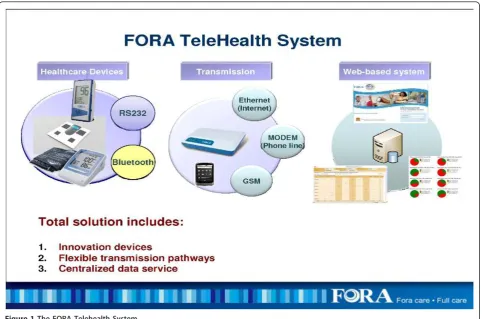
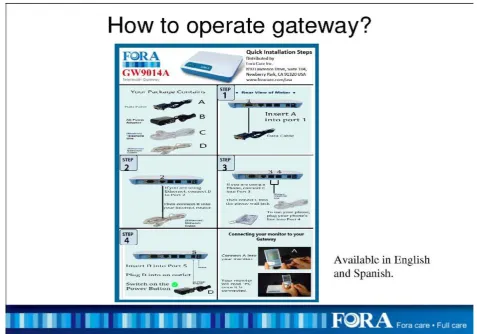
The FORA system is an inexpensive, off-the-shelf, state-of-the-art technology whereby a person/caregiver and a provider can communicate accurately on data needed for self-management of diabetes [25]. The system is comprised of a 2-in-1 Blood Glucose and Blood Pres-sure monitor (Figures 1 & 2) which can provide an easy-to-use operation for users to accomplish two important tests. The measured results can be uploaded to a PC or web-based software by using a RS232 cable via a commu-nication device to connect FORA glucose monitor and web-based FORA Telehealth System using a phone modem (Figure 3). The provider receives the readings, which are stored with previous readings for the patient. The provider can review the patient records on a secure website at any time. In addition, a nurse case manager can review the glucose and blood pressure readings daily and titrate medications as needed under the supervision of the patients’primary care provider. The widespread availability of analog phone lines presents an opportunity to employ a technology that uses a modem to transmit information via analog phone lines, to enhance patient-provider communication and adherence to treatment.
This paper describes the rationale, study aims and objec-tives, and research design and methods of an ongoing four-year, randomized clinical trial testing the effectiveness of technology-assisted case management intervention (TACM) using the FORA 2-in-1 and Telehealth System for diabetes in Federally Qualified Community Health Centers (FQHCs). The long-term goal of the project is to achieve improvement in diabetes-related outcomes in this patient population.
Rationale
the rare instances where the case manager has prescrib-ing authority, changes require direct physician input and are implemented between scheduled visits only in cases where control is poor. Technology-Assisted Case Man-agement (TACM): (High Intensity). This model capita-lizes on information technology like the FORA system to link a case manager to poorly controlled diabetics in real time. Clearly a model that is applicable only to patients in need of intensive intervention, the advantages includes accurate data transfer to a medical decision maker and positive reinforcement/feedback to the patient via the FORA system to enhance adherence. If the case manager has physician-supervised prescriptive authority, then medication adjustments can be made daily or weekly, if needed, to achieve and maintain control. More frequent interventions, combined with improved compliance with medications and testing frequency, the strategies that are known to work, are enabled by this approach.
The study will use technology-assisted case manage-ment to target low income patients served in Federally Qualified Health Care Centers with poorly controlled T2DM residing in coastal South Carolina. Due to lack of access to care and low socioeconomic status, this population is at the highest risk for complications aris-ing from uncontrolled T2DM.
Study Aims & Objectives
The primary objective of this study is to test the effective-ness of technology-assisted case management intervention using the FORA 2-in-1 and Telehealth System for diabetes in improving HbA1c levels in indigent, rural adult patients with type 2 diabetes treated in Federally Qualified Com-munity Health Centers. The primary outcome will be HbA1c at 6 months post-randomization, while the sec-ondary outcomes will be blood pressure control and qual-ity of life at 6 months post-randomization.
Methods
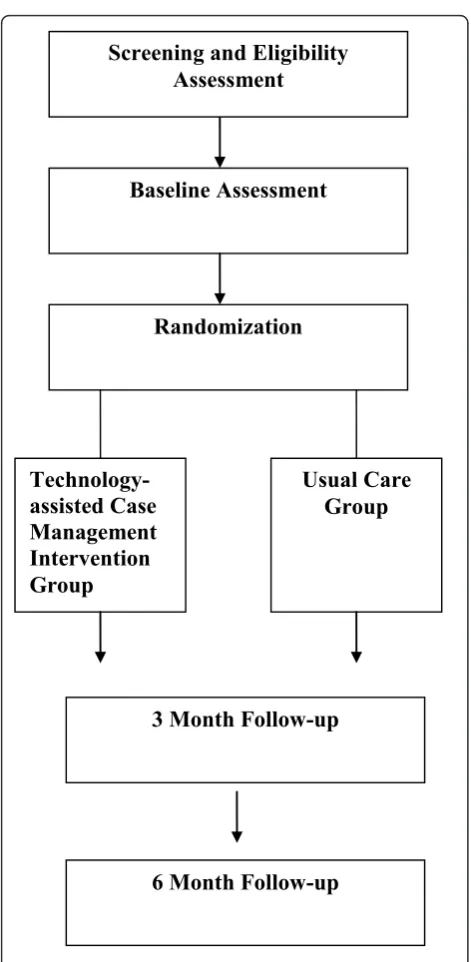
The study is a 2 group randomized controlled trial with randomization of individual participants, blinded out-comes assessments at baseline, 3-months, and 6-months, and concurrent economic evaluation.
Location and Setting
[image:5.595.58.542.88.407.2]care clinic, a home health program, and two pharmacy locations. The clinics provide service to residents in Berke-ley, Charleston, and Dorchester Counties of South Caro-lina. Demographic characteristics of the clinic population are as follows: 70% African American, 25% White, 5% His-panic/other, 70% with income below 100% of federal pov-erty level, and 46% uninsured. The structure of each site is similar with the same number of practitioners and staff.
Ethics and Trial Registration
The study is funded by grant W81XWH-10-2-0057 from the United States Department of Defense. The trial is approved by the Institutional Review Board (IRB) of the Medical University of South Carolina (Pro00009204). The trial is registered on the United States National Institutes of Health Clinical Trials Registry (http://Clini-calTrials.gov identifier# NCT01373489), available online at: http://clinicaltrials.gov/ct2/show/NCT01373489
Trial Population and Recruitment
A total of 200 participants with T2DM will be rando-mized to one of two groups: 1) technology-assisted nurse
[image:6.595.57.544.88.445.2]be informed that they will receive a follow-up call in two weeks unless they mail back the post card or call to decline being contacted. Individuals who mail back the post card and express interest or call the provided tele-phone number will receive detailed information about the study. Individuals who agree to participate will be asked to provide written consent and will be scheduled for the initial screening assessment.
The second method will consist of referrals from physi-cians, other clinic staff such as nurses, or patients them-selves in response to recruitment flyers for the study. The Principal Investigator will share the goals of the study and inclusion/exclusion criteria with physicians and clinic staff during clinic administrative meetings. Physicians and clinic staff will be asked to refer appropriate individuals to the study research assistants. In addition, IRB approved recruitment flyers will be posted in prominent locations in the study clinics.
Regardless of recruitment pathway, research staff mem-bers will obtain written informed consent, complete screening for eligibility, and assure that participants meet criteria for inclusion and participation in the study. The
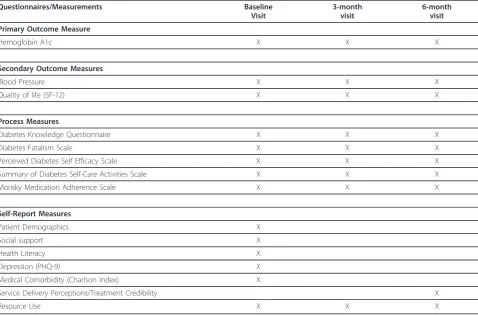
procedure and risks are explained to the patient and the consent form signed as per standard clinical practice. Individuals who meet eligibility criteria then complete the remainder of the assessment battery (see Tables 1).
Randomization
[image:7.595.58.536.93.427.2]be included in the intention to treat analysis in accor-dance with the CONSORT guidelines [26].
Intervention and Control Groups
There is one active treatment group (technology-assisted case management) and a usual care group.
Overview of the Technology-assisted Case Management (TACM) Intervention
The TACM intervention uses the FORA 2-in-1 Telehealth System for diabetes to link a case manager to poorly con-trolled patients with diabetes in real time. Participants will be assigned the FORA 2-in-1 Telehealth System and pro-vided glucose test strips to allow testing at least once a day. They will be asked to perform glucose testing and blood pressure measurement using the FORA system once daily. They will be asked to upload the measurements daily as soon as possible after the test is performed. The nurse case manager will have access to a secure server to which the uploaded measurements are stored in real time. Under the supervision of the patient’s primary care provider, the nurse case manager will make medication adjustments weekly based on the uploaded readings and an evidence-based treatment algorithm approved by the primary care provider. The TACM intervention in essence facilitates increased frequency of self-monitoring and titration of
medications in response to test values to optimize diabetes and blood pressure control. Details of the TACM inter-vention are provided below.
Algorithms for Glucose and Blood Pressure Control
We developed two separate algorithms for control of hyperglycemia and high blood pressure based on American Diabetes Association and American Association of Clinical Endocrinologists guidelines in collaboration with physi-cians at the study clinics. The algorithms went through an iterative process to ensure that evidence was tailored to the unique needs of FQHCs. For example we chose generic versions and low cost alternatives when possible. We also tried to use medications that were on formulary at the respective study clinics. The nurse case manager will be trained to follow the approved algorithms, but the ultimate decision for medication titration will rest with the treating physician.
Glycemic and Blood Pressure Control Targets
The following indices will be used to determine whether participants are meeting treatment goals. These goals conform to current standard of care in outpatient dia-betes management.
[image:8.595.59.538.100.416.2]•Fasting/pre-prandial Blood Glucose: < 110 mg/dl (range 70-109 mg/dl)
Table 1 Data Collection Schedule
Questionnaires/Measurements Baseline Visit
3-month visit
6-month visit Primary Outcome Measure
Hemoglobin A1c X X X
Secondary Outcome Measures
Blood Pressure X X X
Quality of life (SF-12) X X X
Process Measures
Diabetes Knowledge Questionnaire X X X
Diabetes Fatalism Scale X X X
Perceived Diabetes Self Efficacy Scale X X X
Summary of Diabetes Self-Care Activities Scale X X X
Morisky Medication Adherence Scale X X X
Self-Report Measures
Patient Demographics X
Social support X
Health Literacy X
Depression (PHQ-9) X
Medical Comorbidity (Charlson Index) X
Service Delivery Perceptions/Treatment Credibility X
•Bedtime Blood Glucose: < 130 mg/dl (range 70-129 mg/dl)
• Two-hour post-prandial Blood Glucose: < 140 mg/dl (range 110-139 mg/dl)
• HgbA1C target: <
7.0%
• Blood pressure <
130/80 mmHg
Role of the Case Manager
The case manager is to serve as an adjunct to usual care by providing more frequent contact between the patient and his/her health care provider. This will be accom-plished through: (1) Real time tracking of patient-gener-ated blood glucose and blood pressure data using the FORA 2-in-1 and Telehealth System for diabetes; (2) Minimum of monthly phone calls to participants to rein-force diabetes self-management behaviors, e.g. medica-tion compliance, blood glucose monitoring, diet/exercise programs; (3) More frequent phone calls as needed for patients undergoing active changes in management; (4) Telephone reminders about upcoming scheduled appointments; and (5) Use of uploaded blood glucose and blood pressure data and information obtained from participant contact to determine need for additional interventions. The case manager will function as liaison between the primary provider and the participant, identi-fying those participants in need of additional intervention and facilitating implementation of a revised treatment plan.
Case Manager Telephone Follow-up
The nurse case manager will be responsible for conducting regular follow-up by telephone with all TACM interven-tion participants. The initial phone follow-up will occur within two weeks of the initial study visit. Thereafter, the minimum frequency of phone follow-up will be monthly for participants who are meeting treatment targets based upon weekly review of uploaded data. More frequent con-tact is permitted for participants not meeting treatment targets and in whom active interventions are ongoing. Routine follow-up calls will review the following: (1) Inter-val health-related events and changes in medications; (2) Current level of glycemic and blood pressure control, based on data logged in the FORA system; (3) Frequency and severity of hypoglycemia on the current therapy based on both FORA system data and patient perception of hypoglycemia; (4) Reinforce adherence with diet/exercise program and medications; (5) Reinforce participant educa-tion relating to caring for diabetes, treatment of hyper/ hypoglycemia and safe driving rules; (6) Remind partici-pants about upcoming scheduled appointments with their primary provider and/or study visits; and (7) Answer parti-cipants’questions.
Usual Care Group
Apart from study visits, participants will be followed by their Franklin C. Fetter PCPs. The provider will be respon-sible for determining treatment parameters, making changes in the treatment regimen, and determining the timing of follow up visits. Between scheduled office encounters, contact between participant and provider will be patient initiated. The provider may use clinic nurses to follow up on problematic patients or patients with abnor-mal results. In essence, this group will receive the current standard of care at the study clinics.
Study Instruments and Data Collection Schedule
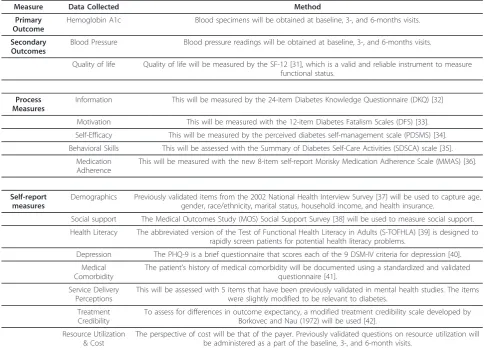
See Figure 4 and Tables 1 and 2, for the study design and study flow, data collection schedule, and data col-lection measures and instruments, respectively.
Intervention Delivery, Treatment Integrity, and Treatment Adherence
A full-time registered nurse (RN) will conduct the screen-ing, patient schedulscreen-ing, consent, and enrollment proce-dures as well as deliver the case management intervention. A blinded research assistant (RA) will conduct all study assessments. A data coordinator will enter all study related data into a secure web-based data system and perform all related data tracking and coordination duties.
Training and Supervision of Interventionist (Nurse Case Manager)
Training in the basic elements of the treatment algorithms and ongoing supervision and oversight of the case man-ager will be provided by the study physicians (a board cer-tified endocrinologist and a board cercer-tified internist). Training will consist of two full days of didactic training on diabetes and hypertension in year 01 and then one day booster sessions in years 2-5 to maintain knowledge. In addition, the case manager will receive two full days of training on the FORA system and use of the secure web-site in Yr 01 and a full day of booster training in subse-quent years. The nurse case manager will also participate in weekly research meetings to discuss challenging patients and resolve conflicts. The study physicians will be available by telephone at all other times to support the nurse case manager.
Treatment fidelity checks
accomplishes a range of relevant tasks for each patient. The study physicians will review and rate the randomly selected patient charts to assess for fidelity to treatment.
Patient adherence to treatment protocol
This is a very important aspect of this study given the intensity of the intervention protocol. We will adopt the following strategies to ensure an optimal level of com-pliance: (1) At enrollment, we will stress the importance of daily testing with the FORA system and daily upload of data; (2) We will place reminder telephone calls to participants on a weekly basis to remind them to test
and upload data; (3) As described earlier, we will request the names and telephone numbers of three of the parti-cipant’s friends and/or relatives who know how to reach the participant in the event we are unable to reach him or her; (4) The research staff will be flexible in accom-modating participants’schedules and every attempt will be made to schedule research visits to coincide with clinic appointments. In addition, we will reimburse the participants ($25 each) for baseline, 3-, and 6-month fol-low-up visits.
Treatment enactment
The behaviors that are the target of this intervention are daily testing and uploading of blood glucose and blood pressure results from the FORA system. We will assess adherence to these behaviors based on review of fre-quency of uploads to the secure server.
Primary Outcome Measure
The primary outcome is HbA1c level at 6 months of fol-low-up.
Sample Size Determination and Power Analysis
For the continuous longitudinal clinical and quality of life outcomes for Primary Aims 1 and 2 (e.g., trajectory of HbA1C, BP, and SF-12 total scores), with 80 partici-pants randomized 1:1 to each intervention group (TACM or UC), we will have 85% power to detect at least a 0.4 standardized (sd units) effect size between the TACM vs. UC intervention groups [assuming 3 time points (baseline, 3 and 6 months); intra-class correlation no greater than 0.6; level of significance (a) = 0.05, two-tailed ]. To account for dilution effect of ITT analyses and “administrative” dropout, i.e., those who drop out immediately upon randomization (do not receive a treat-ment or return for a post baseline visit), we inflated the sample size by 20% to achieve a final ITT sample size of 100 subjects randomized to each intervention group (N = 200).
Data Analysis
Preliminary Descriptive Analyses
Baseline values for demographic, clinical, and other putative prognostic variables will be compared for imbalance across the two treatment conditions (TACM; UC). These analyses will identify potential confounding variables to be used as covariates in subsequent analyses and will include race/ethnicity, gender, age, social sup-port, health literacy, concurrent medical illness, depres-sion, motivation etc. To investigate potential limits on generalizability, we will compare characteristics of the premature exits/protocol non-adherent with those who were completers/protocol adherent. Characteristics of participants who do not complete the study or do not
Baseline Assessment
Randomization
Technology-assisted Case
Management
Intervention
Group
Usual Care
Group
6 Month Follow-up
Screening and Eligibility
Assessment
[image:10.595.56.292.82.564.2]3 Month Follow-up
comply with the treatment will be compared for both conditions.
Statistical Analysis Plan
The longitudinal trajectory of primary and secondary clini-cal (HbA1C, blood pressure) and quality of life outcomes will be compared using the generalized linear mixed mod-els (GLMM) approach. In addition to accommodating a wide range of distributional assumptions [dichotomous/ categorical (e.g., binomial), continuous (e.g., normal), ordi-nal, count (e.g., Poisson)], the approach accommodates missing data, time varying or invariant covariates, and multilevel data (clustering) such as repeated measure-ments on participants and possible cluster effects within clinics through inclusion of random effects in the model [27]. For the continuous outcomes such as blood pressure and HbA1C, GLMM is equivalent to a linear mixed effect model (MEM) approach. MEM analyses estimate indivi-dual change in outcome for each participant in addition to estimating average change in outcome within each inter-vention arm. Covariables, such as age, race, gender, medi-cal comorbidity, social support, health literacy, and depression severity, will be added to the MEM model to
adjust for putative confounding variables. For the dichoto-mous outcome, proportion (%) of participants who drop-out prior to the 6-months end-of-study time point, we will compare proportion dropout for the TACM vs. UC inter-vention groups using GLMM for a binary outcome [equivalent to logistic regression analysis for the single end-of-study endpoint]. Appropriate contrasts will be spe-cified to obtain individual time point comparisons of inter-est (e.g., 3 months, 6 months). Variables will be considered as fixed (e.g., primary intervention effect) or random (e.g., clinic) as appropriate.
Exploratory analysesIn additional exploratory analyses,
[image:11.595.55.541.100.450.2]we will examine the effect modification of baseline fac-tors, such as race/ethnicity age, gender, social support, health literacy, medical comorbidity) on the relationship between clinical/quality of life outcomes and intervention using GLMM/MEM analyses as described above. These analyses involve the inclusion of a putative moderator variable (e.g. race/ethnicity) by intervention interaction term in the multivariable model. A significant interaction effect would suggest that the effect of the putative mod-erator on the outcome of the intervention is different
Table 2 Data Collection Measures and Instruments
Measure Data Collected Method
Primary Outcome
Hemoglobin A1c Blood specimens will be obtained at baseline, 3-, and 6-months visits.
Secondary Outcomes
Blood Pressure Blood pressure readings will be obtained at baseline, 3-, and 6-months visits.
Quality of life Quality of life will be measured by the SF-12 [31], which is a valid and reliable instrument to measure functional status.
Process Measures
Information This will be measured by the 24-item Diabetes Knowledge Questionnaire (DKQ) [32]
Motivation This will be measured with the 12-item Diabetes Fatalism Scales (DFS) [33].
Self-Efficacy This will be measured by the perceived diabetes self-management scale (PDSMS) [34].
Behavioral Skills This will be assessed with the Summary of Diabetes Self-Care Activities (SDSCA) scale [35].
Medication Adherence
This will be measured with the new 8-item self-report Morisky Medication Adherence Scale (MMAS) [36].
Self-report measures
Demographics Previously validated items from the 2002 National Health Interview Survey [37] will be used to capture age, gender, race/ethnicity, marital status, household income, and health insurance.
Social support The Medical Outcomes Study (MOS) Social Support Survey [38] will be used to measure social support.
Health Literacy The abbreviated version of the Test of Functional Health Literacy in Adults (S-TOFHLA) [39] is designed to rapidly screen patients for potential health literacy problems.
Depression The PHQ-9 is a brief questionnaire that scores each of the 9 DSM-IV criteria for depression [40].
Medical Comorbidity
The patient’s history of medical comorbidity will be documented using a standardized and validated questionnaire [41].
Service Delivery Perceptions
This will be assessed with 5 items that have been previously validated in mental health studies. The items were slightly modified to be relevant to diabetes.
Treatment Credibility
To assess for differences in outcome expectancy, a modified treatment credibility scale developed by Borkovec and Nau (1972) will be used [42].
Resource Utilization & Cost
across levels of the moderator variable. For example, a significant race × intervention interaction would suggest that one intervention (e.g., TACM) may be more benefi-cial for African Americans than Whites.
We will also explore the potential mediating effect of changes in diabetes knowledge, motivation, self-efficacy, and behavioral skills on intervention effectiveness out-comes using the GLMM modeling approach. These ana-lyses address the question of whether the putative mediating variables help explain the relationship between the effectiveness outcomes (e.g. improvement in HbA1C or blood pressure control) and the primary independent variable (intervention group). It is posited that variation in intervention accounts for variation in the mediators (e.g. changes in diabetes self-care activities) and variations in mediators account for variations in intervention effective-ness (improvement in HbA1C or blood pressure control). For these analyses, we will follow the recommended meth-ods as described by Baron & Kenney, 1986; Holmbeck, 1997; and MacKinnon et al., 2007 [28-30], and conclusions will be carefully considered in light of the assumptions that accompany mediation analysis.
Discussion
The study was funded in June 2010. Our Institutional Review Board (IRB) and second level administrative review by the Department of Defense IRB were obtained in August 2011. Study recruitment date is anticipated to start in October 2011, with all follow-up assessments associated with the study expected to be completed by July 2014.
The study is inherently novel in that it optimizes two strategies that have been shown to improve glycemic con-trol: nurse case management and telemonitoring interven-tions to improve effective health care delivery in rural, underserved and minority communities with type 2 dia-betes. The study provides a practical and sustainable sys-tem of diabetes management that will help low income patients achieve and maintain goals within established treatment guidelines regardless of geographic location. The study employs novel and innovative information tech-nology to improve communication between patients and providers and improve patient adherence with prescribed therapy. It is expected that the results of this study would enhance the efficiency of care, speed the implementation of effective treatment plans, generate sustained improve-ment in glycemic control, decrease the morbidity and early mortality associated with T2DM, and ultimately gen-erate significant reductions in overall health care costs.
Abbreviations
BP: Blood Pressure; CONSORT: Consolidated Standards of Reporting Trials; FQHC: Federally Qualified Health Center; GLMM: Generalized Linear Mixed Models; HbA1c: Hemoglobin A1c; HIPAA: Health Insurance Portability and Accountability Act; ICD-9: The International Classification of Diseases; 9th
revision; IRB: Institutional Review Board; LDL: Low Density Lipoprotein; MEM: Mixed Effect Model; PI: Principal Investigator; PCP: Primary Care Physician; RA: Research Assistant; RCT: Randomized Control Trial; SF-12: The 12-Item Short Form Health Survey; T2DM: Type 2 Diabetes Mellitus; TACM: Technology-assisted Case Management; UC: Usual Care
Acknowledgements
The study is funded by Grant # W81XWH-10-2-0057 from the Department of Defense. This research and development project was conducted by the Medical University of South Carolina and is made possible by a cooperative agreement that was awarded and administered by the U.S. Army Medical Research and Material Command (USAMRMC) and the Telemedicine & Advanced Technology Research Center (TATRC), Fort Detrick, Maryland 21702, under Contract Number: W81XWH-10-2-0057.
The views, opinions and findings contained in this research are those of the Medical University of South Carolina and do not necessarily reflect the views of the Department of Defense and should not be construed as an official Department of Defense/Army policy unless so designated by other documentation. No official endorsement should be made.
Author details
1Center for Disease Prevention and Health Interventions for Diverse
Populations, Ralph H. Johnson Veterans Affairs Medical Center, 109 Bee Street, Charleston, South Carolina, 29401 USA.2Department of Medicine,
Division of General Internal Medicine & Geriatrics, Medical University of South Carolina, 135 Rutledge Avenue, Charleston, South Carolina, 29425 USA.
3
Center for Health Disparities Research, Medical University of South Carolina, Charleston, 135 Rutledge Avenue, Charleston, South Carolina, 29425 USA.
4
Department of Medicine, Division of Endocrinology, Diabetes, and Medical Genetics, Medical University of South Carolina, 96 Jonathan Lucas Street, Charleston, South Carolina, 29425 USA.5Department of Medicine, Division of
Biostatistics and Epidemiology, Medical University of South Carolina, 135 Cannon Street, Charleston, South Carolina, 29425 USA.6Franklin C. Fetter
Family Health Center, Inc., 51 Nassau Street, Charleston, South Carolina, 29403 USA.
Authors’contributions
LEE conceived of the study; LEE obtained funding for the study. LEE, JF, and RGK participated in the design and coordination of the study. LEE, JF, RGK, and AR reviewed the manuscript. JLS and LEE drafted and finalized the manuscript. All authors read and approved the final manuscript.
Competing interests
The authors declare that they have no competing interests.
Received: 14 September 2011 Accepted: 20 October 2011 Published: 20 October 2011
References
1. Centers for Disease Control and Prevention:Press Release: older, more diverse population and longer lifespans contribute to increase.Atlanta, GA: U.S. Department of Health and Human Services, Centers for Disease Control and Prevention; 2010, Accessible from: http://www.cdc.gov/media/ pressrel/2010/r101022.html.
2. Centers for Disease Control and Prevention:National diabetes fact sheet: general information and national estimates on diabetes in the United States, 2007.Atlanta, GA: U.S. Department of Health and Human Services, Centers for Disease Control and Prevention; 2008.
3. SC DHEC, South Carolina Diabetes Prevention and Control Program and Diabetes Initiative of South Carolina, Medical University of South Carolina, Diabetes Center:Burden of diabetes in South Carolina, 2009 Edition [Report].Columbia, SC: Department of Health and Environmental Control; 2009, Accessible from: http://www.scdhec.gov/administration/library/CR-009477.pdf.
5. Montani S, Bellazzi R, Quaglini S, D’Annunzio Z:Meta analysis of the effect of the use of the computer based systems on the metabolic control of diabetes mellitus patients.Diabetes Technology Ther2001,3:347-356. 6. Farmer A, Gibson O, Hayton P, Bryden K, Dudley C, Neil A, Tarassenko L:A
real-time, mobile phone-based telemedicine system to support young adults with type 1 diabetes.Inform Prim Care2005,13(3):171-7. 7. Costa BM, Fitzgerald KJ, Jones KM, Dunning Am T:Effectiveness of
IT-based diabetes management interventions: a review of the literature.
BMC Fam Pract2009,10:72, Review.
8. Bellazzi R, Arcelloni M, Bensa G, Blankenfeld H, Brugués E, Carson E, Cobelli C, Cramp D, D’Annunzio G, De Cata P, De Leiva A, Deutsch T, Fratino P, Gazzaruso C, Garcìa A, Gergely T, Gómez E, Harvey F, Ferrari P, Hernando E, Boulos MK, Larizza C, Ludekke H, Maran A, Nucci G, Pennati C, Ramat S, Roudsari A, Rigla M, Stefanelli M:Design, methods, and evaluation directions of a multi-access service for the management of diabetes mellitus patients.Diabetes Technol Ther2003,5(4):621-9. 9. Quinn CC, Clough SS, Minor JM, Lender D, Okafor MC, Gruber-Baldini A:
WellDoc mobile diabetes management randomized controlled trial: change in clinical and behavioral outcomes.Diabetes Technol Ther2008,
10(3):160-8.
10. Cherry JC, Moffatt TP, Rodriguez C, Dryden K:Diabetes disease management program for an indigent population empowered by telemedicine technology.Diabetes Technol Ther2002,4(6):783-91. 11. Farmer A, Gibson OJ, Tarassenko L, Neil A:A systematic review of
telemedicine Interventions to support blood glucose self-monitoring in diabetes.Diabet Med2005,22(10):1372-8, PMID: 16176199.
12. McMahon GT, Gomes HE, Hickson Hohne S, Hu TM, Levine BA, Conlin PR:
Web-based care management in patients with poorly controlled diabetes.Diabetes Care2005,28(7):1624-9.
13. Stone RA, Rao RH, Sevick MA, Cheng C, Hough LJ, Macpherson DS, Franko CM, Anglin RA, Obrosky DS, Derubertis FR:Active care
management supported by home telemonitoring in veterans with type 2 diabetes: the DiaTel randomized controlled trial.Diabetes Care2010,
33(3):478-84, Epub 2009 Dec 15.
14. Garg SK, Bookout TR, McFann KK, Kelly WC, Beatson C, Ellis SL, Gutin RS, Gottlieb PA:Improved glycemic control in intensively treated adult subjects with type 1 diabetes using insulin guidance software.Diabetes Technol Ther2008,10(5):369-75.
15. Earle KA, Istepanian RS, Zitouni K, Sungoor A, Tang B:Mobile
telemonitoring for achieving tighter targets of blood pressure control in patients with complicated diabetes: a pilot study.Diabetes Technol Ther
2010,12(7):575-9.
16. Shea S, Weinstock RS, Teresi JA, Palmas W, Starren J, Cimino JJ, Lai AM, Field L, Morin PC, Goland R, Izquierdo RE, Ebner S, Silver S, Petkova E, Kong J, Eimicke JP:A randomized trial comparing telemedicine case management with usual care in older, ethnically diverse, medically underserved patients with diabetes mellitus: 5 year results of the IDEATel study.J Am Med Inform Assoc2009,16(4):446-56, Epub Apr 23. PMID: 19390093.
17. Sutherland D, Hayter M:Structured review: evaluating the effectiveness of nurse case managersin improving health outcomes in three major chronic diseases.J Clin Nurs2009,18(21):2978-92, Epub 2009 Sep 11. Review. PMID: 19747197.
18. Aubert RE, Herman WH, Waters J, Moore W, Sutton D, Peterson BL, Bailey CM, Koplan JP:Nurse case management to improve glycemic control in diabetic patients in a health maintenance organization. A randomized, controlled trial.Ann Intern Med1998,129(8):605-12, PMID: 9786807.
19. Piette JD, Weinberger M, Kraemer FB, McPhee SJ:Impact of automated calls with nurse follow-up on diabetes treatment outcomes in a Department of Veterans Affairs Health Care System: a randomized controlled trial.Diabetes Care2001,24(2):202-8, PMID: 11213866. 20. Stuckey HL, Dellasega C, Graber NJ, Mauger DT, Lendel I, Gabbay RA:
Diabetes nurse case management and motivational interviewing for change (DYNAMIC): study design and baseline characteristics in the Chronic Care Model for type 2 diabetes.Contemp Clin Trials2009,
30(4):366-74, Epub 2009 Mar.
21. Welch G, Garb J, Zagarins S, Lendel I, Gabbay RA:Nurse diabetes case management interventions and blood glucose control: results of a meta-analysis.Diabetes Res Clin Pract2010,88(1):1-6, Epub 2010 Feb 8. PMID: 20116879.
22. Curtis J, Lipke S, Effland S, Dickinson B, McCabe A, Russell B, Russell M, Bloomquist P, Wilson C:Effectiveness and safety of medication adjustments by nurse case managers to control hyperglycemia.Diabetes Educ2009,35(5):851-6, Epub 2009 Aug 27. PMID: 19713556..
23. Gabbay RA, Lendel I, Saleem TM, Shaeffer G, Adelman AM, Mauger DT, Collins M, Polomano RC:Nurse case management improves blood pressure, emotional distress and diabetes complication screening.
Diabetes Res Clin Pract2006,71(1):28-35, Epub 2005 Jul 12. PMID: 16019102. 24. Gary TL, Batts-Turner M, Yeh HC, Hill-Briggs F, Bone LR, Wang NY,
Levine DM, Powe NR, Saudek CD, Hill MN, McGuire M, Brancati FL:The effects of a nurse case manager and a community health worker team on diabetic control, emergency department visits, and hospitalizations among urban African Americans with type 2 diabetes mellitus: a randomized controlled trial.Arch Intern Med2009,169(19):1788-94, PubMed PMID: 19858437.
25. FORA 2-in-1 BP + BG meter: FORA D15g TeleHealth System and Gateway: FORA GW9014A. FORA Care, Inc. Newbury Park, California; 2008, Accessible from: http://www.foracare.com.
26. Altman DG, Schulz KF, Moher D,et al:The revised CONSORT statement for reporting randomized trials: explanation and elaboration.Ann Intern Med2001,134(8):663-694.
27. Hedeker D, Gibbons RD:Longitudinal Data AnalysisNew York: Wiley; 2006. 28. Baron RM, Kenny DA:The moderator-mediator variable distinction in
social psychological research: conceptual, strategic, and statistical considerations.J Pers Soc Psychol1986,51(6):1173-1182.
29. Holmbeck GN:Toward terminological, conceptual, and statistical clarity in the study of mediators and moderators: examples from the child-clinical and pediatric psychology literatures.Journal of Consulting and Clinical Psychology1997,65(4):599-610.
30. MacKinnon DP, Fairchild AJ, Fritz MS:Mediation analysis.Annu Rev Psychol
2007,58:593.
31. Ware JE, Kosinski M, Keller SD:A 12-Item Short-Form Health Survey: Construction of scales and preliminary tests of reliability and validity.
Medical Care1996,34:220-233.
32. Garcia AA, Villagomez ET, Brown SA, Kouzekanani K, Hanis CL:The Starr County Diabetes Education Study: development of the Spanish-language diabetes knowledge questionnaire.Diabetes Care2001,
24(1):16-21.
33. Egede LE, Ellis C:Development and psychometric properties of the 12-item diabetes fatalism scale.J Gen Intern Med2010,25(1):61-6, Epub 2009 Nov 12. PMID: 19908102.
34. Wallston KA, Rothman RL, Cherrington A:Psychometric properties of the Perceived Diabetes Self-Management Scale (PDSMS).J Behav Med
30(5):395-401, Epub 2007 May 24. PMID: 17522972.
35. Toobert DJ, Hampson SE, Glasgow RE:The summary of diabetes self-care activities measure: results from 7 studies and a revised scale.Diabetes Care2000,23(7):943-950.
36. Krousel-Wood M, Islam T, Webber LS, Re RN, Morisky DE, Muntner P:New Medication Adherence Scale Versus Primary Fill Rates in Seniors with Hypertension.Am J Manag Care2009,12(1):59-66.
37. National Center for Health Statistics (2004):Survey Questionnaire, National Health Interview Survey.National Center for Health Statistics, Hyattsville, Maryland; 2002, ftp://ftp.cdc.gov/pub/Health_Statistics/NCHS/
Survey_Questionnaires/NHIS/2002/. Accessed February 2, 2007.
38. Sherbourne CD, Stewart AL:The MOS Social Support Survey.Social Science and Medicine1991,32:705-14.
39. Baker DW, Williams MV, Parker RM, Gazmararian JA, Nurss J:Development of a brief test to measure functional health literacy.Patient Educ Couns
1999,38(1):33-42.
40. Kroenke K, Spitzer RL, Williams JB:The PHQ-9: validity of a brief depression severity measure.J Gen Intern Med2001,6:606-613. 41. Charlson ME, Pompei P, Ales KL, MacKenzie CR:A new method of
classifying prognostic comorbidity in longitudinal studies: development and validation.J Chronic Dis1987,40:373-383.
42. Borkovec TC, Nau SD:Credibility of analogue therapy rationales.J Behav Ther Exp Psychiat1972,3:257-60.
doi:10.1186/1745-6215-12-231