Government Programs and Poverty
Wodon, Quentin
World Bank
September 2001
Online at
https://mpra.ub.uni-muenchen.de/12308/
I. Introduction and Overview: Ten Strategic Questions
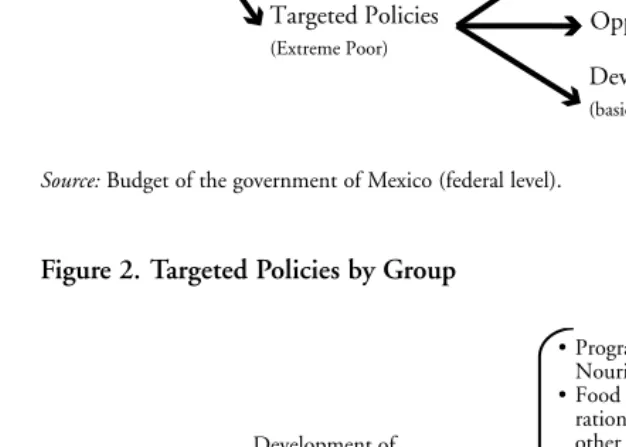
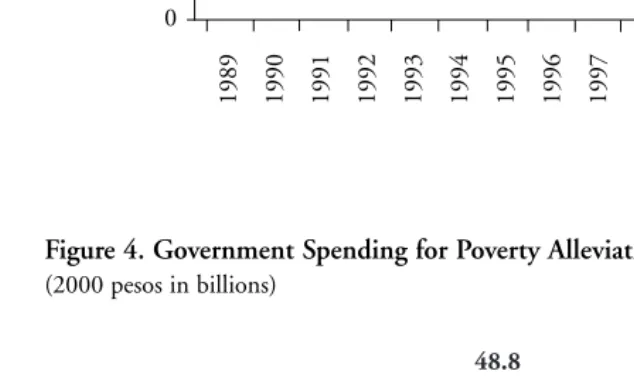
The strategy of the Zedillo Administration for the reduction of poverty relied on both broad-based social expenditures and targeted poverty programs (Figures 1 and 2). Broad-based social expenditures are devoted to the areas of social security and health-care, education, job training, and housing. Targeted poverty programs focus on investing in the human capital of the poor, promoting income and employment opportunities for the poor, and improving the physical infrastructure of poor areas. Public funding for targeted programs has increased much faster over the last dozen years than the programmable budget (Figure 3). Within targeted spending (MXP$53 billion in 2000), half of the funds are devoted to human capital, a third to physical infrastructure, and the rest to income opportunities (Figure 4). This Chapter is based on the poverty assessment for Mexico completed by the World Bank.1It evaluates the
impact of government programs and policies on poverty. After summarizing the key findings through 10 strategic questions, the Chapter reviews broad-based social expenditure and government programs targeted to the poor.
II. Key Findings
1. Do The Poor Benefit From Broad-Based Expenditures In Health, Education, Training, And Housing? The poor do benefit from these broad-based public
expen-Government Programs and Poverty
This Chapter was written by Quentin Wodon
with the valuable input of Gladys Lopez-Acevedo.
569
Figure 1. Broad-based and Targeted Policies
Social Policy
Broad Policies (General Population)
Social Security
Health
Education
Job Training
Housing
Targeted Policies (Extreme Poor)
Development of Human Capital (health, nutrition, education)
Opportunities for Income
Development of Physical Capital (basic social infrastructure)
Source: Budget of the government of Mexico (federal level).
Figure 2. Targeted Policies by Group
Targeted Policies
Development of Human Capital
• Program for Education, Health and Nourishment, PROGRESA • Food programs: school breakfasts,
rationing of milk and tortillas, other programs
• Health programs: Program for Expansion of Coverage under IMSS-Solidaridad • Compensatory Education programs • Social Security for IMSS agricultural
laborers
Development of Physical Capital Employment and Income Opportunities
• Seasonal employment program • Productive supports for low-wage
Sagar agricultural workers
• Productive supports from the National Indigenous Institute
• National Fund for Support of Social Enterprises
• Development of basic social infrastructure in marginalized areas
• Drinking water and sanitation in marginalized areas
• Rural roads and telephony
[image:3.612.59.372.359.582.2]Figure 3. Resources Channeled by Poverty Alleviation Programs
(millions of pesos of 2000)
0 10,000 20,000 30,000 40,000 50,000 60,000
0 200,000 400,000 600,000 800,000 1,000,000 1,200,000
Spending in Poverty Programs Total Programmable Spending
Spending in Extreme Poverty Alleviation
Total Programmable Spending
[image:4.612.57.374.388.577.2]1989 1990 1991 1992 1993 1994 1995 1996 1997 1998 1999 2000
Figure 4. Government Spending for Poverty Alleviation
(2000 pesos in billions)
1998 1999 2000
21.7 15.3 7.4 44.3
23.2 16.9 8.6 48.8
25.9 18.2 8.8 52.9
Human Capital Physical Capital
of Poor Areas Employment
Opportunities
ditures, but not enough. Incidence analysis demonstrates a highly unequal distribu-tion of upper secondary and university educadistribu-tion. Beyond formal basic educadistribu-tion, the access of the poor to training remains limited. Those working in the informal sec-tor (almost half the population) lack health insurance, and until recently 10 million people did not have access to healthcare. In low-income housing, there is evidence of leakage to the nonpoor of programs in principle devoted to low-wage workers. The increase in social spending observed in the last 10 years will be good news for the poor only to the extent that they are better able to benefit from these expenditures.
2. Are There Other Broad-Based Expenditures Where Adjustments Would Help to Serve the Poor? While the government considers broad-based expenditures in health, education, training, and housing to be part of its strategy for the alleviation of poverty, it does not include in this strategy a number of other large programs which have, or could have, an impact on poverty. PROCEDE may be beneficial for the communities adopting it. This is also the case of the agriculture programs PROCAMPO and Alianza para el Campo. This Chapter indicates that PRO-CAMPO may have a larger impact on poverty than Alianza para el Campo, but additional work is needed to evaluate Alianza para el Cambio’s subprograms using better data. PROCAMPO payments would have an even greater impact if payments were progressive, so that those having less land would receive more support per hectare. The point is that a comprehensive strategy for the alleviation of poverty can-not rest solely on a small number of targeted programs. It is important to make sure that, wherever feasible, the design of these programs are adapted so that their impact on the poor is magnified, even though the programs are not specifically targeted to the poor. (Of course, in helping the poor to benefit from the programs, it must be ensured that no conflicts arise with the objectives of the programs.)
better supervision, the integration of the various data bases created by the program, the potential use of the banking system for the payment of the stipends, etc.
4. Was It Right to Reorganize Food Subsidies? While the now-defunct generalized subsidy on tortilla did reduce inequality, especially in urban areas, and while it did reduce inequality more than subsidies on utilities such as water and electricity, it cre-ated distortions. It was also costly, it did not help the poor in the long term, and it was biased toward urban areas. The decision to phase out this subsidy was appro-priate. Should means-tested food subsidies be cut as well? This is a more difficult question because the LICONSA (subsidized milk) and TORTIBONO (means-tested tortilla subsidy) programs have larger impacts on poverty and inequality than generalized subsidies. Still, despite their potential impact on nutrition, it remains true that subsidies may not yield long-term benefits for the poor comparable to the benefits provided by PROGRESA (or DIF’s school breakfasts), which apparently helps in keeping children in school. More generally, given the wide array of food and cash programs in Mexico, it would be important in further work to provide cost-benefit analyses of the performance of the various programs, which would go beyond the impact evaluations provided in this Chapter. For this, the results of sur-vey-based impact evaluations should be combined with detailed administrative records on costs and outreach.
5. Do Compensatory Education Programs Increase the Quality of Basic Education for the Poor? While PROGRESA and DIF’s school breakfasts increase the demand for schooling, compensatory education programs aim at improving the quality and the supply of schooling. PARE was until recently one of the main programs provid-ing resources for schools and trainprovid-ing for teachers. While PARE’s overall impact on test scores in sixth grade was found to be positive, the program did not improve the test scores of the poorest indigenous children. Within nonindigenous rural schools, the impact was also found to be positive, but lower for the poorest of the poor. In urban areas, the impact was negative. Some of these results have to be considered with caution due to the limits of the data available for evaluating PARE. Still, while supply-side interventions can have substantial effects on the learning achievement of children in poor areas, greater attention needs to be paid to the poorest and the indigenous so that they too may benefit.
that the cost of generating 1 peso of additional income for the poor through PET is about 3.5 pesos (this does not take into account the benefits from PET’s infrastruc-ture works). Overall, PET is a necessary program that helps the rural poor, but its design could be improved by learning from other experiences. In Argentina, for example, Trabajar’srecent reform increased community participation and funding. Local community groups present projects for selection by Trabajar staff. After checking for technical feasibility, the projects are selected on a points basis, with more points awarded to projects that are located in poorer areas and that yield larger public benefits, benefit from well-regarded sponsoring groups, and reduce labor costs below the minimum wage.
7. Do Small Rural Communities Have Access to Social Infrastructure? If Not, What Can Be Done? This Chapter shows that access to governmental services (such as telesecondary) and programs (such as DIF’s school breakfast) improve the human capital of the poor by increasing the probability that children remain in school. Unfortunately, households living in poor rural areas still lack access to basic social infrastructure. Many communities with less than 20 households do not have elec-tricity, health, and education services. The smaller the community, the smaller the likelihood of benefiting from government programs as well. This does not imply that government services and programs should be implemented everywhere. Due to the high cost of reaching small rural communities, hard choices must be made as to which communities to serve with which services and programs. A detailed cost-ben-efit analysis of the tradeoffs should be conducted, taking into account the impact of government interventions on mobility and migration. Work should also be done on the impact of migration on poverty.
8. What Can Be Done to Ensure That the Decentralization Process Is Pro-poor?
controls may be needed to prevent this and to protect the poor, but these controls should not prevent innovation at the local level.
9. Has the Government Improved the Design of Its Strategy for the Alleviation of Poverty? The government has made some progress in the design of its strategy for the alleviation of poverty, which was very much needed after the 1995 crisis. As explained earlier, the decision to cut generalized food subsidies was correct. Although reforms could be undertaken for improving each of the government’s programs, and although more work could be conducted to optimize the relative weights of the programs in the budget, the three-pronged strategy of the govern-ment (investgovern-ments in human capital, providing income and employgovern-ment oppor-tunities, and investments in poor areas) is fundamentally sound. Moreover, a cul-ture of evaluation of the programs is progressively being developed, as exemplified by the large-scale evaluation of PROGRESA undertaken by IFPRI, to be com-pleted in 2000. Another example of the culture of evaluation taking shape is the publication of the rules of operation of 135 programs in the Diario Oficial de la Federación. Further gains could be achieved by evaluating programs in a consistent cost-benefit framework, and by streamlining programs that do not have a clear comparative advantage.
10. What Is Still Missing from the Government’s Strategy for the Alleviation of Poverty? Two things: First, there may not yet be a clear blueprint for urban areas similar to the one being implemented in rural areas. Following the phasing out of generalized food subsidies and the implementation of PROGRESA, rural areas are now benefiting from 75 percent of all expenditures targeted to the extreme poor. Given the comparative levels of extreme poverty in urban and rural areas as meas-ured in the surveys, the pro-rural bias of targeted programs for poverty is sound. Still, in urban areas, even though the government is implementing new programs, more is needed to have a clear vision of what has to be done for the extreme poor. Second, at the national level, despite substantial progress in defining a strategy for poverty reduction, there may not yet be a clear understanding of how broad-based and targeted interventions may build on each other so that the whole is greater than the sum of the parts.
III. Broad-Based Public Expenditures and Poverty
Within broad-based public expenditures, social and agricultural expenditures are among the most important for the poor. Expenditures for education, health, social security, job training, and housing are part of the government’s strategy for the reduction of poverty. In 2000 social expenditures2will account for 9.6 percent of
GDP and 61 percent of its programmable expenditures, compared to 6 percent and 36 percent, respectively, in 1990. As a result, over the last sexenio (between 1994 and 2000), despite a fall in real terms of programmable spending of 5.3 percent, social spending per capita increased by 12.8 percent. About US$500 is now spent in social expenditures per capita. This is almost a third of the resources needed for a family of four to avoid being in extreme poverty. Apart from social expenditures, spending by other Ministries also matter for the poor. The programs of SAGAR are especially important given the high incidence of poverty in rural areas. This section analyzes whether broad-based social expenditures benefit the poor, and evaluates the impact on poverty of broad-based agricultural expenditures.
Access of the Poor to Broad-Based Social Public Expenditures Remains Limited
Education
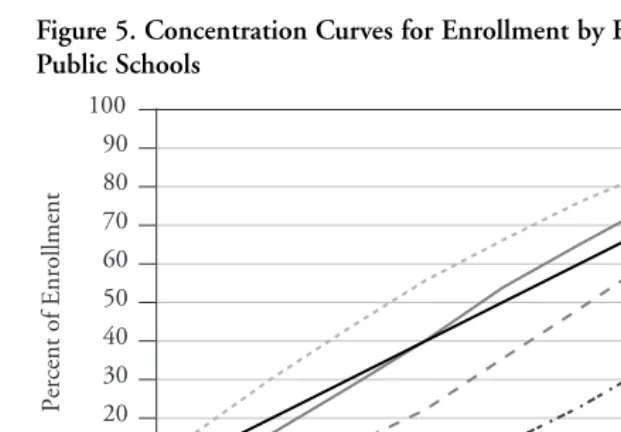
In addition to improving access to upper secondary and higher levels of education, improving basic education is a priority for the poor. As indicated in Figure 5 (next page), which provides concentration curves for public school enrollment in 1996, the access of the poor to upper secondary and university education remains limited, compared to primary and lower secondary schooling (both of which are mandatory, the latter since 1983). For the poor, apart from access to higher levels of education, improving the quality of primary education and access to lower secondary educa-tion, which together form the basic education track, are priorities. Interventions on both the demand and supply side will be needed for this (see Section IV of this Chapter, Investments in the Human Capital of the Poor). Some resources allocated to universities could benefit the poor more if they were reallocated to improving the quality of basic education (and also encouraging access in marginalized rural areas.) Early Child Development (ECD) programs targeted to the poor tend to be effec-tive in helping poor children succeed later in school. There is an international body of evidence suggesting that ECD programs (preschool combined with nutrition support) can be effective in avoiding malnutrition and in helping children learn. As noted in the Education Chapter, Mexico’s Initial Education Program (PRODEI),
with a per capita cost of about MXP50 per year, is a home-based program delivered by community educators who train parents to stimulate their children. The parents’ education is developed through periodic group meetings supplemented by home vis-its. The program promotes the physical, emotional, intellectual, and social develop-ment of infants and toddlers, and improves the school-readiness skills of children. There is empirical evidence that the program is effective in increasing returns on pri-mary education. The program also creates job opportunities for young graduates (of primary education) in poor areas. The program also increases women’s self-esteem, and provides opportunities for parents to socialize, thereby fostering community development. PRODEI’s coverage should be extended.
[image:10.612.61.372.115.331.2]Mexico has increased enrollment and reduced dropout and repetition rates in pri-mary schools. The government provides pripri-mary education to 14.5 million children, 95 percent of whom are enrolled in mainstream general primary education. The official age of entry into primary school is 6, and this level of schooling should be completed within 6 years. Due to latecomers and repetition, however, the target population goes from ages 6 to 14. The percentage of all children aged 6 to 14 enrolled in primary school increased between the 1990 Census and the 1995 Con-teo. The increase in primary school enrollment has been especially strong for the indigenous population (an additional 170,000 students, or 30 percent) and for 6
Figure 5. Concentration Curves for Enrollment by Education Level, 1996, Public Schools
1 2 3 4 5 6 7 8 9 10
0 10 20 30 40 50 60 70 80 90 100
Percent of Enrollment
Decile
Primary
Lower Sec.
Upper Sec.
University
Equality
year-olds, which suggests a better ability to attract children early on. However, the fact that enrollment rates are higher for 7 to 11 year-olds indicates persistent prob-lems related to latecomers and repetition rates. The number of schools and teachers has increased faster than the number of students. While this is good for quality improvements, it also induces higher costs. Mexico has also made progress in termi-nal efficiency (ratio of the number of children completing sixth grade to new enroll-ments in first grade 6 years earlier), with an 11-percentage-point gain in 5 years. The increase in terminal efficiency is due to improvements in both dropout and repeti-tion rates, which decreased for all grades. On average, dropouts decreased from 4.6 percent to 3.0 percent from 1991–92 to 1995–96, whereas repetition rates were reduced from 9.8 percent to 7.8 percent. Overall, the number of children complet-ing primary school each year has increased by more than 200,000. Still, while com-pletion rates for primary education have reached 85 percent or more overall, they are much lower for the poorest deciles of the population.
While progress has also been achieved in secondary schools, access is far from universal. The lower secondary cycle lasts three years and is intended for age group 12 to 16. Today, 4.3 million students participate. Progress in the 1990s is demon-strated by the following indicators: (a) enrollment has risen by 14.8 percent, trans-lating into an additional 600,000 students; (b) as for primary schools, the number of schools and to a lesser extent the number of teachers has increased faster than the number of students (plus 26.9 percent for schools and 17.5 percent for teachers); and (c) although still low, the enrollment rate in the age group 13 to 15 has gained 7 percentage points, reaching 75.4 percent in the 1996–97 school year. On the other hand, terminal efficiency rates have not improved beyond 75 percent and the aver-age dropout rate was 8.9 percent in 1997–98, which is much higher than the dropout rate for primary education (2.9 percent), and only half a point lower than the 9.5 percent dropout rate for secondary school in 1990–91.
Similarly, the repetition rate for lower secondary education has remained stable, compared to a decrease for primary school. Factors both internal and external to the school system are affecting the performance of lower secondary schools. Internally, there may be a shortage of well-trained teachers, with a higher percentage of teach-ers lacking appropriate training at the lower secondary than at the primary level. Externally, the need for children to work, especially among the poorest families, may contribute to generating high student absenteeism and poor test scores, which leads to increased repetition.
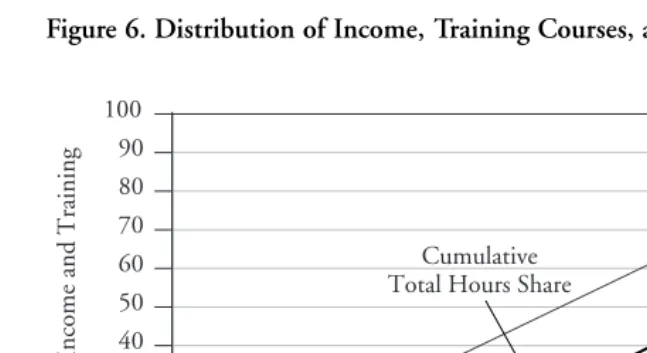
upper deciles. Moreover, while 49 percent of those in the poorest decile who get training pay some or all of the cost of their training, only 25 percent of the rich pay for their training. This is due to the fact that many of the poorest are unemployed and cannot benefit from employer training. In the poorest decile, of all those who get training, only one in six gets training on the employer’s premises, compared to more than half in outside institutions. Among the wealthiest decile, 60 percent of those getting training receive it at their firm, and only one third take training at another institution.
Health
Despite progress in health, half the population remains uninsured and one tenth is without access to healthcare. Infant mortality decreased in the 1990s, immunization among children has become nearly universal, and some gains have been achieved in maternal mortality. Life expectancy has increased from 66.8 years in 1980 to 71.7 years in 1996. However, despite such progress, and while the population engaged in the formal labor market benefits from health insurance through IMSS and ISSSTE, the informal sector (43 million adults and children) remains largely uninsured. Until recently, within the informal sector, 60 percent of the population relied on services provided by the SSA, 16 percent relied on IMSS-Solidaridad, and 24 percent had almost no access to healthcare and needs to be covered.
• IMSS-Solidaridad. Begun in 1973, IMSS-Solidaridad extends Social Security
[image:12.612.56.380.116.292.2]health coverage to segments of the population that are unable to pay into the social security system. The goals are to improve the access to, and quality of,
Figure 6. Distribution of Income, Training Courses, and Hours of Training
0 10 20 30 40 50 60 70 80 90 100
0 10 20 30 40 50 60 70 80 90 100
Percent of Income and Training
Percent of Population
Cumulative Income Share
Cumulative Train Share Cumulative
Total Hours Share
medical attention for the poor. The program emphasizes reproductive health, nutrition, and sanitation. The mobilization of local communities is an inte-gral part of the program. A general assembly, a health committee, and groups of volunteers are convened locally to help implement the program. As of 1996, the program served about 10 million people in 1,225 municipalities, and it had built 3,540 clinics and 67 hospitals in marginalized areas.
• PAC.PAC (Programa de Ampliación de Cobertura) provides basic healthcare to
those living in marginalized and remote rural areas in coordination with PROGRESA (which is discussed in Section IV of this Chapter). PAC is expected to provide health services to 8 million people by 2000.
Social security reform was enacted in 1997 to ensure the continued financial and institutional viability of IMSS in the face of the challenges posed by a growing and aging population. While the expansion of the economy and the reform of social security should help provide insurance to a larger share of the population, reaching in a cost-effective manner those who fall outside of the system, particularly those liv-ing in remote areas, will be a challenge, given the overall increase in the cost of healthcare.
For the rural poor, the priority is access to a basic package of preventive and cur-ative healthcare. Extreme poverty brings with it a high level of mortality and mor-bidity. In rural areas, the infant mortality rate among the poor is more than twice that among the nonpoor. The participation rates among the poor in family planning and prenatal care are low. While 72 percent of poor rural women say they do not want another pregnancy, less than 56 percent use any sort of birth control. Once pregnant, 1 in 6 poor women in rural areas do not receive any prenatal care. Many factors account for these problems, including lack of access to quality care, unhealthy living conditions, malnutrition, lack of a culture of preventive health, absence of social security benefits, and geographic dispersion. To help the poor, pro-grams such as PAC put the priority on providing a package of basic care. For PAC, this includes the following elements: accident prevention and emergency care; basic sanitation; diarrhea control; family planning; treatment of parasitic diseases; health information, communication, and education; immunization; prenatal and delivery care; prevention and control of hypertension and diabetes mellitus; prevention and control of tuberculosis, nutrition surveillance; treatment of upper respiratory tract infections; and prevention and control of cervical cancer. This type of basic care package emphasizes prevention, but curative services are also being tested and devel-oped, including mobile surgery units.
Housing
sector workers (FOVI is also active in the sector). The management difficulties encountered by these agencies have been documented (also see the Chapter on Housing). In addition, the problem for the very poor is that they are not eligible for mortgages, and therefore cannot benefit from the programs. Moreover, while these housing programs are in principle targeted to low-wage workers, leakage is high. For example, according to 1996 INGEI data, information is available on beneficiaries from INFONAVIT in the six-month period preceding the survey. The mean quar-terly household income of beneficiary households was MXP$16,200, versus MXP$10,500 nationally. While the sample size for beneficiaries on which this com-parison is made is very small, this confirms that housing programs are not well tar-geted to low-wage workers.
Social Security
In urban areas, social security reform helped reduce the amount of taxes paid by the poorer segment of the formal sector. While the government has implemented a number of new programs to help the rural poor (these are discussed below and in subsequent sections), there is a feeling that less is done for the urban poor than for the rural poor—at least, there is a perception that the strategy for poverty reduction is less advanced in urban compared to rural areas. Still, one of the positive conse-quences of social security reform, and more specifically of the Seguro de Enfermedad y Maternidad, has been the reduction in the contributions paid by low-income workers. For workers earning up to three minimum wages, the reduction in contri-butions represents an increase in net earnings of 2.6 percent. A question that remains is how to make such benefits available to informal workers.
Not All Agricultural Programs Benefit the Rural Poor in the Same Way
gov-ernment support programs for farmers following the liberalization of Mexican agri-culture agreed to as part of NAFTA. Yet this is far from certain, since programs such as input and credit subsidies tended to favor large farmers, and since lower agricul-tural prices may have helped the poorest, who are also net consumers of maize and other crops. Moreover, rather than talking of a reduction in government support to rural areas, it is more precise to talk of a change in the type of support provided, with the implementation of new programs such as PROCAMPO and Alianza.
PROCAMPO
PROCAMPO, a cash transfer program facilitating the transition to a rural market economy, reduces poverty among beneficiaries, and it may have a multiplier effect on income. Since 1993–94, under the management of the SAGAR, PROCAMPO has provided cash transfers to eligible agricultural producers of basic crops. The transfers are provided on a per-hectare basis and will be phased out in 2008. In the 1997 fall–winter season, PROCAMPO’s transfers totaled MXP$7.5 billion and were distributed to 3 million producers, covering 90 percent of Mexico’s cultivated land. According to data from a SRA/World Bank panel survey of households living in the ejidosector, the average payment per producer in 1997 was MXP$2,516 (for an average of 5.2 hectares), and 84 percent of all ejidatariosparticipated. Despite a decrease over time in the value of the transfers, the program reduces poverty and inequality (details on PROCAMPO’s rules of operations are available in the Diario Oficial de la Federación).
• Impact on Poverty. According to the 1997 SRA/World Bank survey,
PROCAMPO contributed an average of 8 percent toward the ejidatarios’
household income across all income deciles, and up to 40 percent in the poor-est decile. It should be no surprise, therefore, that controlling for other house-hold characteristics, participation in PROCAMPO reduced the probability of being poor. More interesting is the fact that using the panel structure of the survey, PROCAMPO appears to have a multiplier effect over time, in that a transfer of 1 peso leads to benefits of 2 pesos. This multiplier may, but need not be, Keynesian (higher income leads to higher consumption, which gener-ates employment and more income). It may also be due to the possibility for producers to take more risks with higher-yielding investments thanks to the security provided by the transfer. Using other surveys, PROCAMPO has also been shown to reduce income inequality, but not to a very large extent, due to the high transfers received by large land owners.
• Areas for Improvement.To increase the impact of the program, the government
awareness of these criteria, especially among the indigenous population. Progress has recently been made on recommendations (a) and (b). In addi-tion, a larger impact on inequality and poverty could be achieved by reallo-cating funds so that the amount received per hectare becomes a decreasing function of the number of hectares cultivated. This may not be the main pri-ority right now, but it could be considered in the future.
Alianza para el Campo
Alianzahad not reduced poverty by 1997, but this may be because more time is needed to realize benefits. Alianza was introduced in 1996 to provide matching grants to agricultural producers to boost investments. It is the third-largest program managed by SAGAR and accounts for 10 percent of the Ministry’s expenditures. The main subprograms are ferti-irrigation; mechanization; rural equipment; pasture improvement; and kilo-for-kilo, which provides growers with 1 kilo of certified seeds for the price of 1 kilo of normal seeds. Alianza is decentralized, with nancing required from state governments and beneficiary producers. While the cofi-nancing requirements vary by subprogram, producers tend to contribute an average of 50 percent, the federal government 32 percent, and the state governments 19 per-cent. In 1997 1 million producers participated in Alianza. Of these, two thirds were private producers, 11 percent (120,000) were ejidatarios, and 22 percent (241,000) were comuneros.
• Impact on Poverty.Using the 1997 SRA/World Bank ejidosurvey, Alianzawas
not found to have a significant impact on poverty among ejidatario house-holds. This may be because poor ejidatarios lack resources to provide the counterpart funding necessary for participation, and thus tend to participate in the subprograms where counterpart funding requirements (but probably also program outcomes) are lower—such as the kilo-for-kilo program. But it may also be because the data collected in 1997 could not yet reflect the ben-efits of investments made in 1996. It must also be noted that the ejidosurvey is not representative of all the beneficiaries of the program. Finally, it could be that some subprograms of Alianza are more poverty reducing than others (this could be the case of Alianza subprograms for low-income producers which are part of the targeted programs considered by the government in its overall strategy for poverty reduction).
• Areas for Improvement.To increase the impact of the program, the government
PROCEDE
PROCEDE may have a positive impact on social capital, thereby reducing poverty. It is the land titling program which was created in 1992 to implement the revised Arti-cle 27 of the Constitution and the Agrarian Laws approved earlier that year. Accord-ing to official data, as of December 1997, 79 percent of the ejidoswere participating in PROCEDE and 59 percent had received ejidatario certificates and house titles. The program was expected to have three main benefits. First, it would encourage invest-ment in ejidoland because farmers gained greater land security. Second, the reforms would increase the supply of credit, because farmers could use their land as collateral for loans. Third, the ability to engage in rental and sale transactions would promote a more efficient allocation of land among producers. A fourth, unanticipated positive outcome of PROCEDE is that it may have helped at the margin to increase social cohesion and decrease land disputes in the ejido, thereby contributing to social capital, which itself has been shown to help in reducing poverty. In the SRA/World Bank 1997 survey, ejidatarioswere asked whether PROCEDE has had an impact on a number of issues. Two thirds of the respondents replied that PROCEDE did not affect such things as land tenure conflicts, social cohesion, access to credit, migration, land mar-kets, and land investment decisions. However, when PROCEDE was cited as having an impact (by one third of the respondents), those thinking it had a positive impact outnumbered those thinking it had a negative impact. It is in this sense that PRO-CEDE can be said to have had a positive impact on social capital. In turn, social cap-ital was found to have facilitated the adoption of PROCEDE in the ejidos.
Agricultural Programs and the Indigenous Populations
The indigenous differ from the nonindigenous in their attitude toward government programs. Indigenous populations in Mexico make up 10 percent of the population (10 million people), and a much larger share of the poor. In rural areas, they are con-centrated in ejidos and other traditional communities. Government policy toward the indigenous populations has historically promoted integration rather than an alternative model of development, and indigenous communities have not always responded positively to the government’s interventions. A comparison of the atti-tudes of the indigenous population toward PROCEDE, PROCAMPO, and Alianza
for land titling, it tends to be based on wide agreement within the community. The analysis of indigenous attitudes also suggests that the lack of knowledge about PROCAMPO and Alianzawas more a reason for not participating in the programs among the indigenous population than among the nonindigenous. This suggests that the government should make a deliberate attempt at better informing the indigenous population about its programs and their requirements, a finding meas-ured in the ejidosurvey but likely to be valid in other policy areas as well.
Because the indigenous populations are among the poorest, additional work on how to help them emerge from poverty should be conducted. For example, in the report on which this Chapter is based, the evaluation of government programs in agriculture did not have the information available to analyze structural issues related to different needs or interests among indigenous populations with communal or
ejido tenure, where traditional governance and values persist. In addition, while this Chapter does compare the impact of education programs such as PARE on school performance among indigenous and nonindigenous populations (in Section IV), it does not discuss the evidence available in both the developed and developing world that bilingual education can be viewed as much more than teaching in two lan-guages. Bilingual education can be, in the case of marginalized peoples, a curricu-lum aimed at building skills, self-esteem, self-empowerment, parental involvement, and adaptive learning. In healthcare, work could be done on the use and effective-ness of indigenous medicinal treatments, and on whether programs such as PROGRESA and PAC should take into account indigenous medicinal practices. The data available for this Chapter also provided little information about a number of other indigenous initiatives, such as informal credit systems, that may create a synergy with particular types of government interventions (such as the Fondos Regionales Indigenas), and thereby improve the impact of government programs. The fact that some government programs are not building on such synergies is one of the main criticisms of government planning put forth by the indigenous leadership.
IV. Investments in the Human Capital of the Poor
For 2000, the funding is presented in a different format, according to whether the programs are demand or supply side. The demand-side programs include the education component of PROGRESA, Niños de Solidaridad (The Estimulos a la Educación Básicacomponent of FAIS), the school breakfast programs of DIF, the nutrition component of PROGRESA, the means-tested subsidized milk program (Liconsa), and the means-tested tortilla program (Abasto de Tortilla de Fidelist). The programs on the supply side include, for health, PAC, IMSS-Solidaridad, the health component of PROGRESA, the social assistance of INI, and the social security pro-gram for agricultural laborers. For education, the supply-side propro-grams include the CONAFE programs, the Albergues Indígenasof INI, and the telesecondary program. For nutrition, the supply-side program includes the DICONSA stores. This section analyzes PROGRESA, including a review of preliminary evaluation results; evaluates both food subsidies and school breakfasts, and compares them; and describes com-pensatory education and evaluates the impact of PARE.
PROGRESA
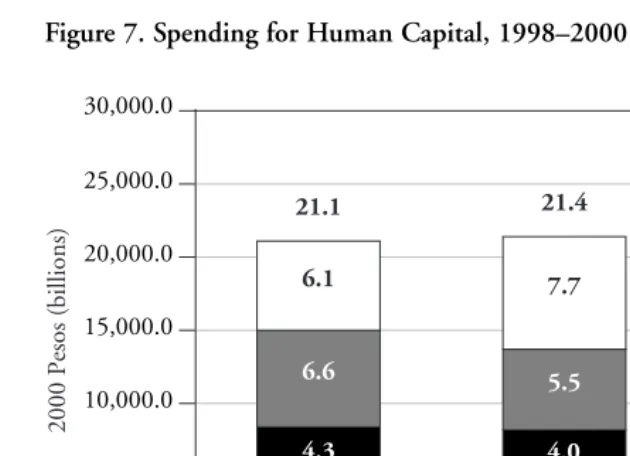
[image:19.612.57.372.113.341.2]PROGRESA’s share of funds has increased, while funding for food assistance has decreased. Real expenditures for human capital programs are rising, in large part due
Figure 7. Spending for Human Capital, 1998–2000
1998 1999 2000
2000 Pesos (billions)
4.1 4.3 6.6 6.1 21.1
4.2 4.0 5.5 7.7 21.4
15.0 10.9 25.9
Education
Health
Nutrition
PROGRESA
Demand
Supply
30,000.0
5,000.0 10,000.0 15,000.0 20,000.0 25,000.0
0.0
to the implementation of PROGRESA in 1997. By the end of that year, the gram was under way in 12,000 localities and 500 municipalities in 13 states, pro-viding benefits to 400,000 families. Today, the program covers 2.6 million families, which represents 4 out of every 5 families in extreme poverty in rural areas, and 14 percent of Mexico’s population. PROGRESA’s share of funds devoted to human capital is increasing.
The share of funds devoted to the other programs is decreasing, with the largest drop affecting nutrition (especially food subsidies; these subsidies could however be considered as income transfers to the extent that evidence is lacking regarding their impact on nutrition). This is a deliberate and appropriate choice made to favor pro-grams which are better targeted and which involve co-responsibility on the part of beneficiaries. One issue is that programs such as PROGRESA do not reach the smallest and remotest communities, so that part of the rural population does not benefit from the reform of the programs implemented in the last sexenio.
PROGRESA Has Sound Features, but There May Be Areas for Improvement
PROGRESA aims to improve education, health, and nutrition among the rural poor, and to build on positive linkages between them. Preliminary evaluation results are encouraging. Education has a positive impact on health. In Mexico, infant mor-tality rates are twice as high among households with illiterate mothers as among households with mothers having at least 7 years of basic education. In turn, good health and nutrition have positive effects on education, if only because they improve a child’s learning ability. PROGRESA provides integrated support at the household level for education, health, and nutrition, with the hope that the impact of the pro-gram as a whole will be larger than that of its parts. The preliminary results of an evaluation conducted by PROGRESA staff with the support of IFPRI are encour-aging. The morbidity among children between ages 0 and 2 has diminished by 22 percent. The female enrollment rate in secondary-level schools has increased by 21 percent. The attendance at health clinics has increased by 18 percent. Overall, school attendance has increased by 1 year, which could translated in the future into an increase of lifetime earnings of up to 12 percent. These results alone would make the program cost-effective.
have the opportunity to review the targeting proposed by PROGRESA, and to sug-gest a second visit by PROGRESA staff if they believe that some poor families should be reclassified as nonpoor or vice versa. While the targeting mechanism used by PROGRESA is basically sound, a few issues remain:
• Community Involvement. There is some evidence that PROGRESA’s targeting
system is not always successful in identifying the needy. It is of course impos-sible to achieve perfect targeting and, overall, PROGRESA does a good job at selecting beneficiaries. The third step in the targeting procedure could help in going beyond the statistical correlation between observable signs of income status (house materials for example) and well-being in order to select benefi-ciaries. Yet, while community-based knowledge exists about who are the most needy, the classification of poor or nonpoor households remains solely based on the prediction made bt PROGRESA staff on the basis of the results of the field survey. One of the reasons why the targeting process is centralized has to do with the desire to avoid political interference in the choice of beneficiaries, and to achieve fairness nationally. Nevertheless, more thought may be needed to assess the role of communities in targeting, not as a primary selection mechanism, but as a useful complement.
• Need for Targeting in Very Poor Communities.Another question relates to the very
need for targeting in some of the poorest rural communities. The higher the proportion of the poor in a community, the less the need to target within that community, especially if targeting is costly not so much in terms of administra-tion (the administrative cost is low, at MXP$170 per household at most), but rather in terms of social cohesion. PROGRESA has increased the percentage of households receiving benefits in participating communities, with three out of four households now receiving support. In some communities, the percentage is higher. In these communities, rather than leaving a few families without access to the program, it may be better to grant it to all in order to avoid conflicts. This choice has been recommended by IFPRI in Honduras, where it is advising on the redesign of PRAF, a program similar to PROGRESA. However, one prob-lem with the idea of not targeting the program in small and highly marginalized localities is that two households living in different localities but otherwise simi-lar would be treated differently, which raises issues of fairness.
for boys and girls in primary school, but they are slightly higher for girls than for boys in secondary school). Families can have several children benefiting from the cash grants up to a maximum cumulative amount of MXP$525 per month (see Fig-ure 8). The children also receive a lump-sum payment per year for schooling mate-rial (MXP$45 in primary school and MXP$170 in secondary school). Finally, the families receive both monthly cash grants of MXP$105 to help them meet their nutritional requirements, and food supplements free of charge. While on average families receive about MXP$250 (22 percent of their income), they can receive up to MXP$600 per month depending on the number and age of the children.
[image:22.612.56.375.379.603.2]While the grants may represent a premium over the wages children would earn if they were working, international experience suggests that grants below the pre-vailing child labor wage may be sufficient to keep children in school because parents value schooling in itself (for altruistic reasons or future intergenerational transfers). To justify the high level of the PROGRESA grants, it could be argued that the grants should provide not only schooling incentives, but also improve the families’ overall level of income and quality of life. The question, however, is whether there may be more cost-effective ways to reach this objective. Another argument for the relatively high level of the PROGRESA grants has to do with opportunity costs for partici-pating in the program not directly related to child labor. In some isolated commu-nities it takes time for parents to go to the office where the PROGRESA allowances are paid. These and other transaction costs may make it necessary to provide higher
Figure 8. Monthly Cash Transfers from PROGRESA
6 7 8 9 10 11 12 13 14 15 16 17 18 19 20 21 22 23 24 25 0
100 200 300 400 500 600 700 800
Transfers (pesos)
Years of Family Union
1 Child
2 Children
3 Children
4 Children Maximum support
payments to induce participation, but again, more work may be needed to establish optimal benefit levels.
PROGRESA is succeeding in raising school enrollment and the demand for healthcare, but this generates tensions on the supply side. According to data from PROGRESA, school enrollment has increased substantially. Critics argue, however, that while PROGRESA is increasing enrollment, the quality of education is suffer-ing as a result of this increase. Some schools may have found themselves ill-prepared to handle the larger student body. The larger issue in terms of the quality of the edu-cation provided relates to the impact of PROGRESA on eduedu-cational achievement, and ultimately on future earnings. To assess such long-term benefits in a robust way, it may be necessary to follow cohorts of PROGRESA students well into the next decades. As for schooling, the demand for healthcare has increased, but a number of problems remain. At least at the beginning some clinics have had a hard time han-dling the extra work generated by the program. There is anecdotal evidence that some beneficiaries have had to wait for long periods, and the examinations per-formed by physicians have not always been thorough due to time constraints placed on them. Some beneficiaries who had to travel for several hours to reach a clinic were told they would not be able to see a doctor and had to return at a later date. Some health centers have been running out of medicine.
PROGRESA may also be encountering resistance to family planning in some indigenous communities. Here, the larger issue is how receptive beneficiaries are to PROGRESA’s intended message of preventive self-care, and how attentive health staff are to the social context in which they operate. Steps have been taken to coor-dinate PROGRESA’s action with that of SEP and SSA, but more may be needed to optimize demand- and supply-side interventions and assess the relative impact of both. In Honduras, for example, where IFPRI is building on its experience with PROGRESA in order to advise PRAF staff on how to improve their program, it was decided to evaluate the relative impact of demand-side and supply-side interventions by testing four combinations of programs: demand-side only, supply-side only, no intervention, and both interventions.
Food Programs
Mexico maintains food subsidies for milk and tortilla, and a network of public stores. The three government programs providing food subsidies are LICONSA (milk), Fidelist, and DICONSA (stores in poor rural areas). Their total cost in 1998 was MXP$6.1 billion.
• Milk.For the past 15 years, LICONSA (Leche Industrializada Conasupo) has
of children under age 12 (8 liters for families with one or two children, 12 liters for families with three children, and 24 liters for families with 4 children or more). About 5.1 million children benefit from the subsidies.
• Fidelist.The tortilla program administered by Fidelist is accessible to families
earning less than two minimum wages. These families are eligible to receive 1 kilogram of subsidized tortilla per day. Participants use a bar-coded card which is scanned at participating tortillerias. The owner of the tortilleriais later reim-bursed for the cost of the subsidized tortillas he or she has distributed.
• Public Stores.DICONSA (Distribuidora Comercial Conasupo) is a public
net-work of small stores providing basic products such as rice and toilet paper to marginalized rural communities. Goods are sold at low prices, yielding an average savings of 16.5 percent for beneficiary households. A central feature of the program is community participation through local Rural Committees of Supply. The program operates in 2,300 municipalities, with 23,468 points of sales. In 1997 it sold 1.6 million tons of products, bringing its sales total for that year to MXP$5.7 billion.
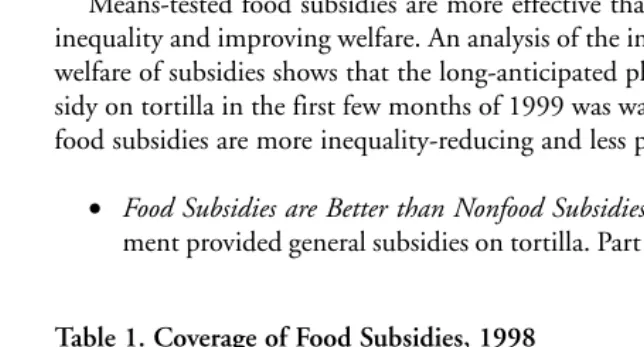
Means-tested food subsidies are more effective than other subsidies in reducing inequality and improving welfare. An analysis of the impact on inequality and social welfare of subsidies shows that the long-anticipated phasing out of the general sub-sidy on tortilla in the first few months of 1999 was warranted because means-tested food subsidies are more inequality-reducing and less price distorting.
• Food Subsidies are Better than Nonfood Subsidies. For many years the
[image:24.612.52.374.415.589.2]govern-ment provided general subsidies on tortilla. Part of the rationale was that since
Table 1. Coverage of Food Subsidies, 1998
LICONSA
Points of sale for LICONSA milk (number of dairies) 11,052
Beneficiary municipalities 1,912
Beneficiaries (in thousands) 5,100
DICONSA
Points of sale for DICONSA (stores) 23,468
Target beneficiary population (thousands) 33,798
Value of distributed volume (millions of pesos) 6,630
Subsidized tortilla
Kilograms of tortilla distributed per day (thousands) 1,512
Localities attended 1,024
Affiliated tortillerias 13,973
tortilla represented a larger share of the consumption of the poor, the subsidy was to some extent self-targeted. It is true that the tortilla subsidy reduced inequality, especially in urban areas, and much more so than subsidies for util-ities such as water and electricity. However, the tortilla subsidy generated price distortions and was costly. Furthermore, it was significantly less effective in reducing inequality than a similar generalized subsidy would have been on corn flour, for example.
• Within Food Subsidies, Means-Tested Subsidies are Better than Generalized
Sub-sidies.Using the 1996 INEGI and the 1997 ENCASEH surveys, it has been shown that the marginal reduction in inequality in consumption achieved with the generalized tortilla subsidy does not come close to the reduction achieved with the means-tested subsidies provided by LICONSA and the means-tested tortilla program.
• Within Means-Tested Food Subsidies, LICONSA and the means-tested Tortilla
Program Have Similar Impacts.In rural areas, LICONSA has a larger marginal impact on inequality, but the means-tested tortilla program is more inequal-ity reducing in urban areas and nationally. Overall, the two programs have similar impacts, but the cost of implementing the means-tested tortilla pro-gram is lower than that of implementing LICONSA.
The government also provides school breakfasts, food support, and community kitchens through three food programs administered by DIF (Desarollo Integral de la Familia):
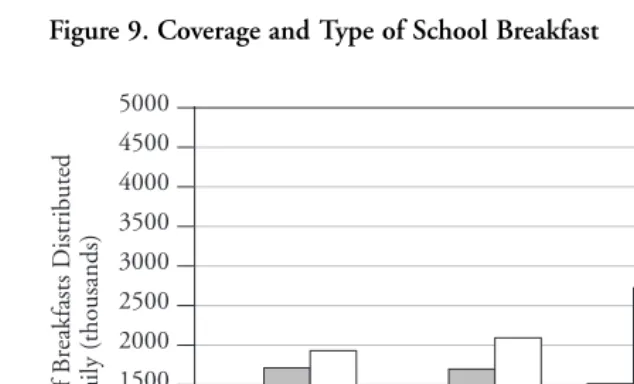
• School Breakfasts.By end of 1998, DIF’s school breakfasts were distributed
in more than 2,400 municipalities. From 1995 to 1998, the number of breakfasts distributed daily more than doubled from 1.9 million to 4.4 million. While higher priority is now being given to hot breakfasts (Fig-ure 9), whether this represents a good use of resources needs to be assessed because hot breakfasts imply higher costs, which need not translate into higher learning gains or nutritional impacts. The federal government pays 63 percent of the program’s cost, and the rest is covered by states and municipalities. Through local committees, 400,000 mothers participate each day in the preparation of the breakfasts, which is a plus in terms of community involvement, but which also represents an opportunity cost in terms of time for the families involved. While the program had an urban bias in the past, today the rural southern states receive a higher share of the breakfasts.
• Food Support. DIF’s PASAF (Programa de Asistencia Social Alimentaria a
• Community Kitchen.DIF supports community kitchens by providing
equip-ment and part of the cost of food with the idea that, in addition to benefiting nutrition, these interventions will contribute to the social fabric of the com-munities and serve as anchors for other education and health interventions. By end 1998, 6,067 kitchens were operating in 1,159 municipalities serving 520,000 beneficiaries.
To some extent, DIF’s school breakfasts and Niños de Solidaridadimprove school enrollment and reduce child labor in rural areas. The aim of the government’s food programs is to improve nutrition for the poor, and thereby to build their human capital. While the impact of food programs on nutritional outcomes and learning performance cannot be measured with the data at hand, other criteria such as the impact on school enrollment and child labor can be used to assess how the programs build human capital.
• Impact of DIF’s School Breakfasts.While food subsidies are unlikely to have
[image:26.612.55.372.115.307.2]strong impacts on school enrollment and child labor, DIF’s school breakfasts may have an impact because they are provided in schools. If the benefit of a school breakfast is assimilated to a reduction in the price (opportunity cost) of going to school, economic theory predicts that school breakfasts will increase school enrollment, while the impact on child labor is uncertain due to substitution with leisure. In empirical work based on the 1997 ENCASEH
Figure 9. Coverage and Type of School Breakfast
1995 1996 1997 1998
0 500 1000 1500 2000 2500 3000 3500 4000 4500 5000
Number of Breakfasts Distributed
Daily (thousands)
Hot Cold Total
survey, DIF’s school breakfasts were found to have a larger impact on school-ing than on child labor, as expected.
• Impact of Niños de Solidaridad. This program, whose name was recently
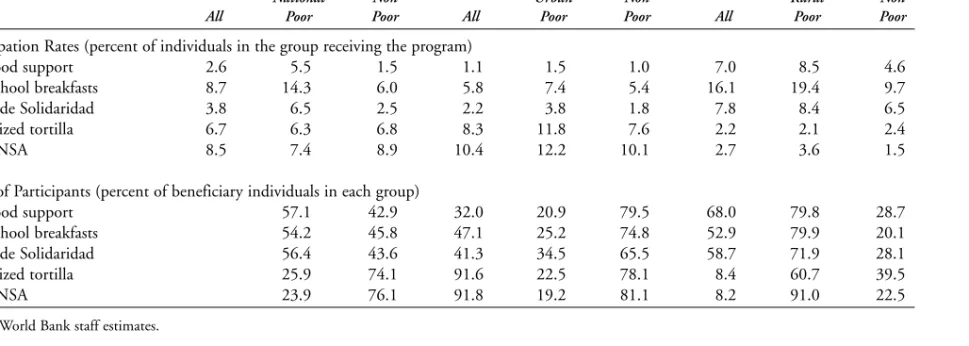
changed to Estimulos a la Educación Básica, is run by SEDESOL. It gives grants to children who complete the first three years of their elementary education in the hope of providing them with an incentive to complete their primary edu-cation. Between 1995 and 1997, 857,000 children were awarded scholarships. An analysis similar to that performed for DIF’s school breakfast also indicates some impact on schooling and child labor, but not in a systematic way. DIF’s programs and Niños de Solidaridad tend to be better targeted than food subsidies. Table 2 provides measures of the targeting effectiveness of food programs using the 1997 ENCASEH. Although there may be underreporting in the survey as to who benefits from the programs, and although the results may be sensitive to the choice of the poverty line, DIF and Niños de Solidaridadare clearly better targeted to the poor than means-tested food subsidies, in large part because the means-tested tortilla program and LICONSA are mainly available in urban areas where the inci-dence of poverty is lower. The same applies to DICONSA (not shown in the table), whose stores are not available in some of the poorest rural communities. Overall, the placement of food programs is apparently driven not only by income considerations, but also by (ease of ) supply considerations.
• DIF, Niños de Solidaridad, and PROGRESA Provide Incentives, While Food
Subsidies Do Not, or at Least Do Not to the Same Extent. Parents must send their children to school if they want to benefit from school-based programs, while they have no such obligation in order to benefit from food subsidies. Of course, there is no guarantee that by increasing school attendance, school-based programs actually increase the human capital of the poor. Beyond the immediate benefit of the programs, parents must buy into the importance of schooling and help their children at home. The schools must also be of suffi-cient quality for the children to be able to learn. But at least programs with built-in positive incentives, such as DIF, Niños, and PROGRESA, hold the promise of bringing long-term changes for the poor. This is less the case with food subsidies. Thus, the strategy of the government to progressively decrease food subsidies is sound.
• Better Programs Could Be Implemented in Urban Areas if Food Subsidies Were
P
R
OGRAMS
AND
P
O
VER
T
Y
[image:28.612.72.557.127.300.2]595
Table 2. Targeting Performance of Food Programs (DIF programs and food subsidies)
National Non Urban Non Rural Non
All Poor Poor All Poor Poor All Poor Poor
Participation Rates (percent of individuals in the group receiving the program)
DIF food support 2.6 5.5 1.5 1.1 1.5 1.0 7.0 8.5 4.6 DIF school breakfasts 8.7 14.3 6.0 5.8 7.4 5.4 16.1 19.4 9.7 Niños de Solidaridad 3.8 6.5 2.5 2.2 3.8 1.8 7.8 8.4 6.5 Subsidized tortilla 6.7 6.3 6.8 8.3 11.8 7.6 2.2 2.1 2.4
LICONSA 8.5 7.4 8.9 10.4 12.2 10.1 2.7 3.6 1.5
Share of Participants (percent of beneficiary individuals in each group)
DIF food support 57.1 42.9 32.0 20.9 79.5 68.0 79.8 28.7 DIF school breakfasts 54.2 45.8 47.1 25.2 74.8 52.9 79.9 20.1 Niños de Solidaridad 56.4 43.6 41.3 34.5 65.5 58.7 71.9 28.1 Subsidized tortilla 25.9 74.1 91.6 22.5 78.1 8.4 60.7 39.5
LICONSA 23.9 76.1 91.8 19.2 81.1 8.2 91.0 22.5
• Further Cost-Benefit Analyses Should Be Conducted for Food Programs.To
bet-ter assess the performance of various programs, detailed cost-benefit analyses should be prepared by combining survey-based impact evaluations of food programs with administrative records on costs and outreach. More informa-tion is also needed about the relative costs and efficiency of cash transfers, food subsidies, food stamps, and direct food handouts, and on the ability of food markets to function well.
Compensatory Education
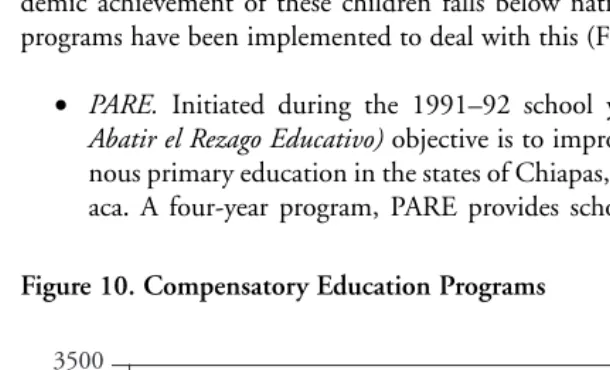
While PROGRESA is demand driven, compensatory education seeks to improve the quality and supply of schooling. The geographic dispersion of marginalized rural areas presents obstacles for educators and families. Teachers usually teach in a single classroom with children of all ages. Children must travel vast distances to reach their schools, creating logistical problems for their families. The quality of educational materials and instruction provided to children is commonly substandard. In many cases, education beyond sixth grade simply does not exist. Not surprisingly, the aca-demic achievement of these children falls below national averages. The following programs have been implemented to deal with this (Figure 10):
• PARE. Initiated during the 1991–92 school year, PARE’s (Programa para
[image:29.612.69.374.416.601.2]Abatir el Rezago Educativo)objective is to improve regular, rural, and indige-nous primary education in the states of Chiapas, Guerrero, Hidalgo, and Oax-aca. A four-year program, PARE provides schools with improved materials
Figure 10. Compensatory Education Programs
1996–97 1997–98 1998–99
0 500 1000 1500 2000 2500 3000 3500
such as textbooks. It also provides financial incentives for teachers, for exam-ple to assist in a regular way to classes and to provide support to the children outside of the classroom. PARE has improved education facilities through the construction and repair of schools and the creation of libraries. The program had 1.2 million beneficiaries in 1997.
• PAREB.Based on the experiences of PARE, PAREB (Programa para Abatir el
Rezago en Educación Básica) began in 1994 and continued through the 1998–99 school year in 10 states: Campeche, Durango, Guanajato, Jalisco, Michoacán, Puebla, San Luis Potosí, Tabasco, Veracruz, Yucatán.
• PIARE.The Programa Integral para Abatir el Rezago Educativowas initiated in
1995 and will be continued through 2000. The program supports preschool, elementary school, and adult education programs in selected communities. It had 1.2 million beneficiaries in 23 states in 1997.
• PRODEI. Undertaken in 1981, PRODEI (Programa para el Desarrollo de la
Educación Inicial)works with parents of children under age 4 to improve child rearing and cognitive development to facilitate the transition to primary edu-cation. In 1997 the program had 313,000 beneficiaries in 10 states.
• PAED.The Programa de Apoyo a Escuelas en Desventaja, was created in 1992
much the Spanish skills of very poor and indigenous children may be due to factors such as poor nutrition and health status among these groups. It would be interest-ing to test whether programs such as PROGRESA achieve better results. Overall, the conclusion of the analysis is that while supply-side interventions can boost the learn-ing achievement of children, special attention and more resources may need to be devoted to the poorest of poor children.
V. Income Opportunities for the Poor
Government-run programs focus on employment generation in rural areas and training in urban areas. With the liberalization of the Mexican economy, the labor market is undergoing transformation. In urban areas, the requirements for skills are rising and the labor force needs training. In rural areas, temporary employment pro-grams are needed to maintain income opportunities during seasonal slowdowns. Credit and training are also needed to help the rural population make the transition to the nonfarm sector. Finally, while employment opportunities must be created for adults, there is a need to reduce child labor and increase schooling. This section is devoted to selected employment issues. It appraises the targeting and cost-effectiveness of PET; briefly describes the other employment and credit programs targeted to the poor; and discusses PROBECAT, the training program for the unem-ployed mainly in urban areas.
Programa de Empleo Temporal
This program provides off-season temporary employment below minimum wage in marginalized rural areas. PET provides short-term employment on public projects in marginalized rural areas. Employment is for up to 88 working days at 90 percent of the minimum wage. In 2000, PET’s budget will be MXP$4.8 billion, more than half of the budget devoted to income opportunities for the poor. In total, close to 100 million workdays and 1 million jobs will be created.
Apart from benefiting participants through the provision of an income during periods of high unemployment or underemployment, PET benefits communities by building infrastructure and responding to local needs. Projects are labor intensive. Examples include irrigating land, paving roads, clearing land, improving housing, and installing water and sewerage systems. PET has national coverage, but a large share of funds is spent in the Southern states, which are poorer. Separate PET pro-grams are administered in these areas by the Ministry of Social Development (SEDESOL, 47 percent of total funds), the Ministry of Transport and Communi-cations (SCT, 33 percent), the Ministry of Agriculture (SAGAR, 17 percent), and the Ministry of the Environment (SEMARNAP, 3 percent) (Figure 11).
margin-alized rural areas (which are those targeted by the program). A few summary indi-cators for participants and nonparticipants are given in Table 3. According to the monthly income of the household head, participants are poorer than nonpartici-pants (with nonparticinonpartici-pants themselves poorer than the national average, since the survey was conducted in poor areas). But if one uses literacy or assets as proxies for well-being, participants are better off than nonparticipants. Participants are less likely to be indigenous and agricultural laborers. A striking difference between par-ticipants and nonparpar-ticipants is, as expected, that parpar-ticipants need temporary jobs more than nonparticipants because they do not benefit as often from an occupation that keeps them employed all year long. This is either because they are involved in seasonal work or because they work on a solicitation basis. PET thus helps alleviate underemployment, which is its goal.
PET may not reach the smallest and most isolated rural communities. The community-level data of the 1997 ENCASEH for marginalized rural areas also enable us to compare the characteristics of the communities benefiting from PET with those which do not benefit (10.8 percent of 6,886 sampled communities ben-efit). On average, PET communities are almost twice as large (575 inhabitants ver-sus 344) as non-PET communities. PET communities have better access to elec-tricity (74 percent versus 60 percent), public phones (33 percent versus 19 percent), preschools (81 percent versus 67 percent), primary schools (89 percent versus 82 percent), and telesecondary schools (22 percent versus 11 percent). Thus, the
pro-Figure 11. Government Spending for Income Employment, 2000 Pesos
1998 1999 2000
0 1 2 3 4 5 6 7 8 9 10
2000 Pesos (billions) 3.9
3.5 7.4
4.0 4.6 8.6
4.0 4.8 8.8
Temporary Employment Program Others
[image:32.612.57.372.115.308.2]gram may not reach the smallest, most isolated, and in all likelihood poorest, com-munities. While part of this targeting problem may be due to the higher costs of reaching smaller communities, part may also be due to the lack of bargaining power of small communities in obtaining funds from program administrators at the state level.
[image:33.612.59.377.107.410.2]The cost of generating 1 peso in additional income for the poor through PET is about 3.5 pesos, but this does not take into account the benefits from the work done by PET workers. As indicated in Box 1, rough appraisal methods are available to assess the cost-effectiveness of employment programs such as PET. While these methods do not replace detailed econometric analysis (for which better data on PET would have to be collected), they provide an order of magnitude of the benefits of the program. The measure of cost-effectiveness used is the share of total program costs which reaches the poor through PET’s wages. This share is a function of four
Table 3. Characteristics of PET Participants
Participants
Yes No
Household Characteristics
Household size 5.4 5.2
Age of household head 46.8 44.6
Indigenous language for head 40.1% 48.4%
Literacy for head 76.0% 61.7%
Principal Occupation of Head
Agricultural laborer 33.5% 44.5%
Work in Principal Occupation
From time to time 14.0% 8.4%
A few months per year 29.8% 19.1%
All year long 56.3% 72.5%
Reason Why Not All Year Long
Seasonal-type work 68.6% 81.3%
Work only when solicited 21.2% 13.9%
Assets
House owner 97.3% 93.3%
Land owner 83.5% 65.0%
Monthly Income of Head
Household income 578 628
Per capita income 128 153
parameters: the proportionate wage gain, the targeting performance, the wage share, and the budget leverage.
• Proportionate Wage Gain. If having a PET job does not increase the
probabil-ity of finding another job, which is realistic in poor rural areas, then the pro-portionate wage gain in the absence of unemployment benefits is one minus the probability of working outside of PET. According to Table 3, half the PET participants have occupations that enable them to work all year long. If they can indeed work on their own or find another job, the proportionate wage gain could be about 0.5, corresponding to those participants who cannot
Box 1. A Simple Framework for Measuring the Cost-Effectiveness of Public Works
Assume that without public works, an individual has a probability F*to find employment at market wage W*. Expected earnings are F*W*. With public works, the individual earns the public works wage W. If the individual can continue to search for private or self-employment while participating in public works, with probability Fof finding such employment, the expected wage with public works is
FW*+(1-F)W. The net wage benefit from the program for the worker is NWB = (1-F)W - (F* - F)W*. If the worker gets unemployment benefits or a subsistence allowance S, the wage benefit is reduced to NWB = (1-F)W - (F* - F)W* - (1-F*)S. If the program costs Gto the government per worker employed, a measure of cost-effectiveness is the share of public expenditures transferred to workers as wage gain
NWB/G. This measure can be decomposed as follows:
/ | \ \
budget wage targeting proportionate leverage share performance wage gain
The determinants of cost-effectiveness are (a) the leverage ratio C/G, where Cis the total cost per worker including community funding; (b) the wage share
(W+L)/C, where Wstands for wages paid to the poor and Lstands for wages paid for the nonpoor resulting in leakage; (c) the targeting performance
W/(W+L), which is the percentage of wages reaching the poor; and (d) the pro-portionate wage gain NWB/W. This model can be extended to take into account the benefits of the infrastructure built by public works.
NWB G
C G
(W L) C
W (W L)
NWB W
work all year long (0.5 was also the proportionate wage gain observed for Argentina’s public employment programTrabajarbefore changes were imple-mented in the program).
• Targeting Performance. In poor rural areas, PET households are poorer than
nonparticipating households in terms of income, but they tend to have better human and physical capital. Overall, one could say that participants are sim-ilar to nonparticipants within marginalized areas. In this case, the poverty rate within marginalized rural areas, which may reach up to 80 percent, is an appropriate measure of targeting performance, given that the program is pre-cisely targeted to these areas.
• Wage Share.Multiplying the number of workdays to be created in 1999 by
PET by the wage rate (90 percent of the minimum wage of geographic zone C, which corresponds to MXP$26.70 per day in January 1999), one gets a total wage bill of MXP$2.5 billion. The total budget allocated to PET for 1999 was MXP3.6 billion, which results in a wage share of close to 70 percent.
• Budget Leverage.The program is almost entirely financed by the federal
gov-ernment (even though project selection is often at the state or local level). Hence the budget leverage is equal to 1.
COST-EFFECTIVENESS. Given the above (very rough) hypotheses, the overall cost-effectiveness of the program is 0.28. Thus, it would take slightly more than 3.5 pesos of federal funds to generate 1 peso in additional income for the poor through PET. This figure is higher than that of employment programs in India, but lower than what is observed in Argentina, at least before changes were made in Trabajar. Note, however, that in the above estimate, the benefits of the public works themselves have not been taken into account, and they can be big. If good survey data were collected on Trabajarparticipants, more precise estimates of the cost-effectiveness of the pro-gram could be obtained.
Mexico could learn from experiences abroad to increase community participation and funding. Several useful lessons for PET can be learned from the reform of Traba-jar. In Argentina, the difficulties of 1996–97, during which unemployment reached 40 percent in the poorest population decile of Greater Buenos Aires, provided an impetus to improve Trabajar(adding 300,000 participants from May 1997 to October 1998). While keeping the self-targeting feature of the program (as in Mexico, minimum wages ensure participation by the poor), the focus of the reform was placed on increasing com-munity participation and funding in the choice of the projects to be financed.