Munich Personal RePEc Archive
Construction industry forecasting model
Skribans, Valerijs
Riga Technical University
2002
Online at
https://mpra.ub.uni-muenchen.de/21707/
CO STRUCTIO I DUSTRY FORECASTI G MODEL BŪVI DUSTRIJAS PROG OZĒŠA AS MODELIS
Valerij Skriban
Key words: development, business, construction economy, dynamic simulation, econometric model, forecasting
In the last years the volumes of civil construction in Latvia have essentially increased. In 2000, the construction industry accounted for 6,8 % from the gross national product (GNP). Annual sales volumes of selling buildings has grown by 74%; dwelling construction volumes have grown by 37%; the volumes of long.distance pipeline, communications and power line construction have grown by 33% [1]. The legislative base for construction industry has become more orderly and the professionalism of market participants has also increased. New technologies have appeared, improving the quality of work in the design, construction and supervision stages. At the same time, the level of competition has increased. Effective organization of all construction processes has become one of priority factors of competition, followed by construction costs. The businessmen, who are using modern technologies not only in building, but also in management, economic substantiation of projects, have more chances to succeed.
Planning is one of the main economic milestones. In construction planning plays a special role because the construction process is time.consuming, labor. and capital intensive. In modern management planning is based on forecasts. Forecasts determine the behavior of both commercial and national entities. One of the main tasks of forecasting is to establish economic interrelations between the parameters or forecasting objects by creating an illustrative model. Taking into account economic interrelations it is possible to expand forecasting in time, and to raise forecast quality to the level which was not feasible earlier when using qualitative and quantitative methods of forecasting.
There are many illustrative forecasting models to predict common processes and macro. economic factors. The paper presents a production forecasting model which could be applied under current situation of Latvian construction industry. Forecasting of construction industry is not possible without forecasting macro.level factors. The author recommends to use a standard model for forecasting common processes, for example, the firm’s “High Performance Systems, Inc” model [4]. Any common process forecasting model has both pluses and minuses, but in general they are alike. There are many technical tools like computer programs to execute a forecasting model, for example “Stella”, “Arena”, PowerSim, SLAM, GPSS, GASP, SIMSCRIPT, ТАНЯ [7, 11. 12 p].
The model offered for the of forecasting of the building sector consists of two basic parts: formation of demand and supply. In the model the result of demand forecasting is shown as evaluated construction demand. It is the basis for modeling construction supply. The demand forecasting is described in more detail in publication [2] and therefore it won’t be dealt with in this paper.
1. The model combining production factors in a unified system
As it has been mentioned above, the industry model has two basic parts: construction demand and construction supply. In the model the result of demand forecast is shown as the established construction demand (in money terms). When addressing the construction demand, it is necessary to allocate resources available by consumers to purchase a construction product, taking into account production factors (i.e., costs of initial materials supply, means of production, labor, money resources, information, and other production factors). And only then it is possible to decide which part should be given greater attention, why the sector is not operating according to the demand (effectively and at full capacity).
The model is based on the assumption that production factors are combined in fixed proportions. It means, that it is possible to calculate the factor consumption rate which determines the necessary volume of a factor (in money terms) for producing the demanded volume of construction production (Leontjev’s production function). The given assumption and the use of the Leontjev’s production function in short.term and medium.term forecasting justifies itself completely: during the period of 5 . 7 years technologies of the construction industry can not be changed. It is not possible to essentially reduce the consumption of a particular factor. In a long. term period the changes in technologies may change the proportion of the consumption of production factors, and that as a result can reduce the quality of forecasting. In this paper it is assumed, that during all the forecasting period the level of technological development is constant and the proportion of consumption of factors is also constant. The forecasting of scientific and technological changes is a very broad and interesting subject, but as this publication is focusing on more specific facets of forecasting, the author will not dwell on these general approaches.
So the volume of consumption of the factor can be defined, using the Leontjev’s production function [5] (see Formula 1).
Ri = Ai * X (1)
where: Ri . need for factor i, X . requested volume of production, Ai . rate.
The demand is met depending on the availability of production factors. It is necessary to note that a certain need for production factors does not correspond to the real consumption of these factors. It occurs because the proportion of factors consumption is constant, and if one factor is insufficient, the use of other factors also decreases.
In the process of construction the volume of production is determined like this: all production costs are summarized with the average margin in the industry, the result obtained is the total volume of construction production.
All construction production gets to the market. If there is a difference between the volumes of supply and demand, it is covered by the external environment. The given system assumes that there is balance of supply and demand, so as supply is defined from the demand established or there is a possible shortage of supply, which can arise because of industrial non.efficiency or insufficiency of production factors.
producers. In the model the environment can provide any volume of construction production. But, if businessmen see, that a part of money resources for domestic consumption goes to the external environment, they tend to increase the industrial margin (profit), which levels out the volumes of supply and demand. In the model the businessmen, when forecasting supply and calculating production amount, assume that there are enough resources to pay for all production factors, i.e. – they operate with a normal profit. If production operates at a full capacity according to the demand established, any positive margin creates redundancy of supply. Redundancy of supply also covers the external environment. In this case environment implies an increase of stocks of finished goods, but for the simplification of the model this factor is always referred to as an environment. It is assumed, that when addressing the issue of satisfaction of domestic demand, the increases in external environment is a negative parameter. If businessmen face an increase of external environment, they reduce the margin, thus they eliminate the redundancy of supply. In the model foreign trade turnover of construction goods is the regulator of the sectoral (branch) internal profit.
2. The model of initial materials supply
The model is based on the assumption, that domestic demand for construction materials has an impact on but does not define extraction of building resources. The economic justification of the assumption is that the country’s economic growth can be provided partly due to extraction and processing of domestic natural resources. If extracted resources are not demanded on the domestic market, they can be exported. It is possible, as it is conditionally accepted in the model, that all resources for building materials can be freely transported (imported or exported) to various distances and/or consumed by related branches. The given assumption is based on the real situation in Latvia as many resources and various groups of building materials are imported from other countries: dry mixes from Germany, cement from Estonia and Belarus, etc.
In the model extraction of building materials is proportional to the stock of domestic resources. The proportion of extraction of building materials determines the extraction rate. At the initial stage the rate is to be calculated by dividing the real amount of extracted building materials by the amount in stock. It is obvious, that the extraction rate is not constant in time and is affected by the regulation effected by the government with regard to the extraction of resources and norms of extraction.
Governmental regulation of extraction of resources is a parameter, which generally reflects the impact of the state on the extraction of building materials in the particular industry.
The norm of extraction is a parameter, which reflects the volume of extraction of resources in a situation when governmental regulation and extraction of resources does not reduce the available stock. In such conditions, the norm of extraction is a constant parameter. In the model it is assumed, that the norm of extraction is a constant parameter under any conditions and that changes occur only as a result of the impact of governmental regulation. The economic justification of the assumption is as follows: with reduction of the resources in stock, the norm of extraction remains constant; the extraction of resources decreases proportionally to the reduction of the resources in stock in each period.
develop new deposits. Extraction of resources decreases proportionally to the resources in stock, but the stock and the volume of extraction each year decreases by at least 0.2 %. The given reduction of the extracted amount covers the increase of the established extracted amount, by increasing domestic demand.
In addition, the norm of extraction reflects the current situation in the mining industry. It is assumed that without investments it is impossible to increase extraction to a higher extent than the amount determined by multiplication of the existing stock and the current norm of extraction.
In short. or medium term period the reduction of extraction should not be taken into account. The reduction of extraction is related to the norm of extraction and to governmental regulation. It is possible to forecast extraction, taking into account the general economic growth (or the growth of the demand for the resources), although it will to a certain degree influence the quality of forecasting. But in a long.term period the proposed model considerably changes the results of the forecast. In this case extraction of building resources is the result of the interaction of three factors – the norm of extraction, governmental regulation and domestic demand. The model allows to forecast a reduction of resources in stock and the influence of governmental regulation on the construction industry. It can help to determine the time when it will be necessary to effect s in the extraction of building resources (to tap a new deposit, to limit extraction, etc).
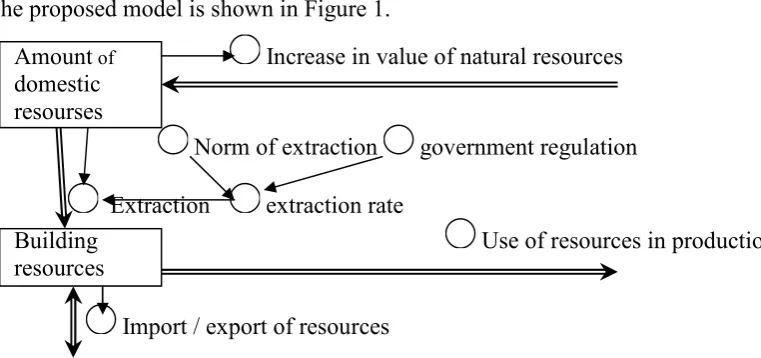
[image:5.595.95.476.346.525.2]The proposed model is shown in Figure 1.
Figure 1. Model of building resources supply
The model can be expressed by the following formula (see Formula 2).
Dr (t) = Dr + (Dp – Ieg) (2) Ieg = In * Vr
Br (t) = Br + (Ieg + Rie – Rr) Rie = Br . Rr
where: Dr – amount of domestic building resources, Dp . an increase in the value of natural resources, Ieg . extraction, In . norm of extraction, Vr . governmental regulation, Br . building resources, Rie . import / export of resources, Rr . use of resources in production.
Figure 1 shows that the amount of domestic natural resources (in money terms) depends on the increase of value and extraction. The increase in value may result from an increase of prices for resources and an increase of the physical amounts of stock. Extraction depends on the domestic volume of natural resources, extractions rate, which depends on the norm of extraction and
Amount of Increase in value of natural resources domestic
resourses
Norm of extraction government regulation
Extraction extraction rate
Building Use of resources in production resources
governmental regulation. All extracted materials form building resources, which are used in production. If extraction of materials is not equal to consumption in production, then the difference is covered by the external environment (import or export of resources), the changes in stocks and/or consumption in other branches.
The model is based on one more assumption, as a conclusion from Figure 1, which was not mentioned earlier: it is assumed that the resource demand for building materials is always satisfied, i.e., if the mining industry is unable to satisfy industrial requirements, then resources are brought from the external environment.
3. The model of production means supply
The model of production means supply (in the economic theory . fixed capital) is based on the following principle: the amount of production means (in money terms) is always balanced. That helps to produce the requested construction volume. It means, that means of production used in the production process are constantly renovated, using available money resources. And, if the available volume of production means is not capable to produce the requested amount of construction goods, then in the consecutive period the missing amount of production means has to be purchased by using the money resources received from the satisfaction of demand in the current period (or, if it is necessary, by using postponed payment). Thus, the mount of production means in construction does not decrease, and the demand for construction goods increases.
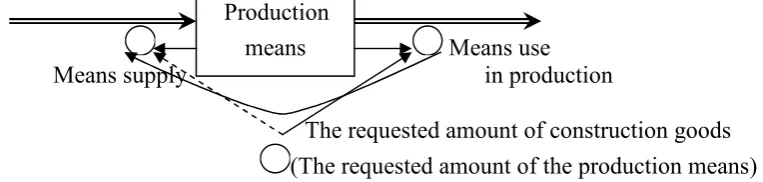
[image:6.595.134.516.417.508.2]Proposed model of production means supply is reflected on Figure 2.
Figure 2. The model of production means supply
The model can be reflected as the following formula (see the formula 3).
PL (t) = PL + (PLi – PLs) (3)
PLi = SMTHN((If PL < PLp then (2 *( PLp – PL)) else PLs /2), 2, 1) PLs = If PL < PLp then PL else PLp
where: PL . production means, PLi . means supply, PLs . means use in production, PLp . the requested amount of the production means.
You can see from Figure 2., that the production means supply depends on the available amount of production means and their use in production. Supply is influenced by the volume of construction goods previously not produced (because of shortage of means of production). The volume of the means used in production is influenced by the available and requested volume of production means for the production of a certain amount of construction goods.
Production
means Means use Means supply in production
The requested amount of construction goods
4. Labor factor model
The model of labor factor for the construction sector can be described as follows: if the size of personnel demanded in the sector exceeds the number of really working persons, then the missing personnel is to be employed; otherwise the number occupied in the sector does not change. Hiring personnel is possible, if there is enough money resources to pay for the personnel’s work.. The model suggest a simplified simplified approach, but this is also the approach practiced in real.life situations: at the moment, in Latvia the number of employees occupied in construction can be compared to the number of the unemployed in the country. There is an opportunity to double the number of the persons employed in the sector. Most of construction specialities do not need long preparation and training. Personnel can be taken on without excessive delays.
There are two major reasons for the personnel turnover in the branch: leaving the labor market if the work conditions (payment, risks etc) in the sector are worse than in other sectors, the number occupied in the sector is gradually decreasing. In the model, the working conditions are included in personnel policy and are reflected in the rate that determines the density of those who have left the sector in relation to the general number employed in the sector.
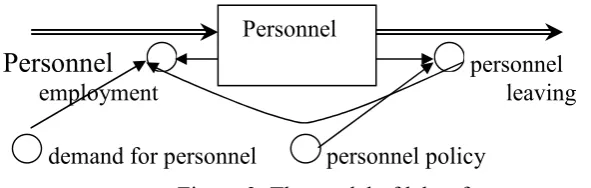
[image:7.595.145.441.358.452.2]Model of labor factor is shown on fig. 3.
Figure 3. The model of labor factor
Model can be expressed as a formula (see Formula 4).
Per (t) = Per + (Per p – Per a) (4)
Per p = If (Per – Per a) >= Per v then 0 else (Per v – Per + Per a) Per a = Per * Per l / 100
where: Per personnel, Per p . employment of personnel, Per a – number of persons left, Per v . Demand for personnel, Per l . personnel policy.
You can see from Figure 2.9 that personnel employement depends on the demand for personnel, available personnel and from the number left. Leaving of the personnel depends on the available personnel and the personnel policy.
5. The model of money resources supply
The model of money resources supply (working capital) reflects a turnover of money resources in construction, income and costs. The model is based on the assumption that money resources can be received from the sale of building resources outside (from export of resources) and from the sale of construction goods. The means received from the above mentioned sources go to the satisfaction of industrial needs, i.e., they can be expended on purchasing building resources, production means, on hiring personnel, purchasing information, and covering other production
Personnel
Personnel
personnelemployment leaving
costs. The given means also include the profit of enterprises operating in in the construction sector. In the sphere of construction goods sales the money received goes to the sellers of resources and/or is withdrawn from the sphere as profit. It is necessary to note, if there is redundancy of building resources and resources are exported, then the money received from export forms a separate cash flow. But if there is insufficiency of building resources and resources are delivered by external suppliers, the costs for their attraction exceed general costs for attraction of production factors. The amount of expenditures and the revenues received in the construction sector can differ, that is why a mechanism has been designed that outer suppliers cover the difference between the costs and incomes (i.e., the outer environment can supply and cover money resources in any amount). Investments, which basically can be withdrawn from other branches or external systems are necessary for the initial development of any branch. A developing branch returns investments, sustains a dynamic development and makes profit, which is usually withdrawn from sales (in the model it is being done using outer environment).
The amount of money capital in construction and its forecasting is the total result of three flows: 1) use of capital in production, 2) import or export of capital, 3) incomes from sale of construction goods and building resources.
6. Model of information and ensurance of other enterprise factors
According to the theory of economics, it is assumed, that alongside with the factors of nature, work, and capital there are also such factors as information and entrepreneurial factors. In the model suggested, the factors of this group are considered separately and termed “information”.
Personnel in action forms object can be named ‘’information’’ or the enterprise factor. In such a way acquisition of information depends on the number of experts in the sector and the information acquisition rate. In the model, it is assumed that if the available amount of information exceeds the necessary amount, the amount of received information makes 75 % from the loss of the topicality of the available information. In the same way it is possible to establish the rate reflecting people’s enterprise factor, and to determine the size of enterprise factor, by multiplying the rate by the number of experts.
The factors cannot be accumulated endlessly, there is always a reduction of the available stock. As for information, it means the loss of topicality, which depends on the actual amount of information and losses of topicality. It is necessary to note that personnel receive information in each period and the scope of available information can vary with its acquirement or reduction. And entrepreneurial spirit of personnel is assumed to be constant in time and can vary only because of the changes in the number and structure of personnel. To eliminate the difference between this economic mechanism of increment and the reduction of parameters, the model suggests that total entrepreurship of personnel at the beginning of a period corresponds to total entrepreneurship at the end of the period. Thus, the value of the entrepreneurship factor increases and decreases, and it depends only on the changes in the number and structure of personnel.
The scope of information is influenced by the acquisition of information and the loss of topicality. Similarly, using the two.stream method, it is possible to determine the value of entrepreneurial factor.
7. Practical implementation of construction industry forecasting model
The model was tested in real.life Latvian conditions. There is a situation forecast for the next 25 years. To produce the forecasting it is necessary to have initial data. In the research 78 parameters were used as initial data, the most relevant from them are the GNP gain and construction product demand, which are shown in Table 1. Taking into account the limited space for the report, it is not possible to demonstrate the detailed procedure for obtaining the values presented in Table 1. But it is important to note that the calculations were based on reliable data obtained from the Latvian Central Statistical Board [1] and appropriate forecasting methods [2].
1 table Basic initial data for construction industry forecast
Forecasting
year Parameter6 (2006)
12 (2012)
18 (2018)
25 (2025)
GNP gain, % 2.67 0.45 0.08 .0.01
Construction product demand (CPD), m Ls 1 358 1 372 1 357 1 345
[image:9.595.80.557.229.297.2]The report does not present all forecasted parameters, taking in to account the complexity of the model. The most important parameters are referred to in Table 2.
Table 2 Construction industry forecast in Latvia for 2000. 2025
Forecasting
year Parameter6 (2006)
12 (2012)
18 (2018)
25 (2025) Use of resources in production, m Ls 21.46 25.74 45.70 139.55 Resource demand according to the CPD, m Ls 443.97 448.55 443.86 439.73 Use of production means, m Ls 3.28 3.94 6.99 21.34 Production means demand according to the CPD,
m Ls 67.89 68.59 67.87 67.24
Labor factor, th pers. 14.48 15.73 23.97 45.78 Personnel, th. pers. 99.86 131.83 172.18 264.55 Personnel demand according to the CPD, th. pers. 391.40 395.44 391.30 387.66 Information supply, th Ls 390.49 583.62 1258.31 5153.28 Information, th. Ls 1312.8 1574.3 2794.9 8535.4 Information demand according CPD, th. Ls 27154.4 27434.1 27147.2 26894.9 Production means sufficiency rate, % 607.3 599.04 580.95 524.56 Personnel sufficiency rate, % 25.52 33.35 44.00 68.24 Information sufficiency rate, % 4.83 5.74 10.3 31.74 General production factors balances rate, % 4.83 5.74 10.3 31.74 Domestic construction industry production, m Ls 11.29 16.82 42.60 258.79
Import, m Ls 1346 1355 1315 1086
Bibliography
1. LR CSP statistiskie krājumi, internet lappuse. www.csb.lv, nepublicēti dati.
2. Skribans V. Būvnozares prognozēšanas modelis un tā izstrādāšanas metodika. Starp. zin. konf. materiāli.. Rēzekne: Rēzeknes Augstskola, 2002.. 518 (9) lpp.
3. Banks J., Carson J. S.. II Discrete – Event System Simulation.. USA.: Prentice. Hall, 1984.. pp 514 . 4. www.hps.inc.com
5. Экономика предприятия: пер. с нем.. М.: Инфра.М, 1999.. 928 с.
6. Экономика строительства/ Б.Я. Ионас, Г.Г. Старостина.. М. Стройиздат, 1989.. 287 с.
7. Экономико. математическое моделирование: учеб. пособие / Лихтенштейн В. Ф., Павлов В. И.. М.: ПРИОР, 2001.. 448 с.
Valērijs Skribans
Riga Technical University Faculty of Engineering Economics
Kaļķu st. 1, Rīga, Latvia. Phone: (+371) 7089378, GSM (+371) 6429535 e.mail: [email protected]
Skribans V. Būvindustrijas prognozēšanas modelis.
Ekonomiskā teorijā un praksē ir daudz metožu un paņēmienu atsevišķo rādītāju prognozēšanai. Vispiemērotākās ir metodes, kuras izmanto ekonomiskās sakarības. Galvenais atsevišķo rādītāju prognozēšanas metodes trūkums. tie neievēro atgriezeniskās saites, kuras rodas prognožu izmantošanas rezultātā. Darbā piedāvāts būvniecības pieprasījuma nodrošināšanas (piedāvājuma) prognozēšanas modelis. Būvnozarē vienā procesā ir saistītas ieguves rūpniecība, apstrādes (būvmateriālu ražotnes) rūpniecība, būvuzņēmēji un būvprodukcijas patērētāji. Piedāvāta modeļa sastāvdaļas atspoguļo galvenos uzņēmējdarbības (ražošanas) faktorus: sākuma materiālu (resursu) pieejamību, ražošanas līdzekļu nodrošinājumu personāla pieejamību, kapitāla nodrošinājumu, informācijas pieejamību. Būvprocesa sastāvdaļas ir cieši saistītas un viena subjekta izaugsme nav iespējama bez kopējas attīstības. Piedāvātās jaunas prognozēšanas modeļa izstrādāšanas metodes pielietošana būvniecībā ir svarīga jo ļauj samazināt nenoteiktās apstākļu iedarbību, ļauj izvēlēt perspektīvus ceļus uzņēmējdarbības un tautsaimniecības attīstībā, sasniegt ekonomisko efektivitāti. Kompleksa pieeja prognozēšanai ir samērā jauns aspekts ekonomiskā teorijā un praksē.
Skribans V. Construction industry forecasting model.
In economic literature are shown different methods and instruments of forecasting of separated factors. The most exactly from them take into account economic relations in investigation object. The paper presents the results of research conducted on forecasting in the construction industry. Development of a model for the construction industry is a complicated task. The paper offers a model for forecasting production volumes of the construction industry in Latvian conditions. The construction brunch consists of the extraction, treat (building material), builders and construction customer models. Component parts of the models reflect main factors of production (entrepreneural activity): natural factor (availability of resources), fixed capital (availability of production means), labor factor, working capital (availability of money resources), enterprising factor (entrepreneural spirit and availability of information). The main idea of the paper is that the suggested economic (econometric) model can produce a more accurately forecast than any other statistical, mathematical, and analytical forecasting approaches. The key of the model is theoretical dynamic simulation used for a real.life economic situation.
Скрибан В. Модель прогнозирования строительной индустрии.