
1 INSTRUCTIONS
Spacedebris, formerly known as space junk, is defined as all man-made objects in orbit about the Earth which no longer serve for a useful purpose [1].The first piece of space debris was the rocket body from the launch of Sputnik 1 in 1957. The quantity of space debris objects began growing at a significant rate in June 1961, when the first manufactured space vehicle exploded in orbit, creating nearly 300 pieces of traceable debris. Of the approximately 6,300 tons of space debris currently in orbit, approximately 2,700 tons are in LEO(Low Earth Orbit). In particular, the LEO polar orbits are becoming congested [2].This fact is troubling because almost half of all existing satellites are in
LEO. The situation as of currently tracked objects in space can be seen in Figure 1.
2 TERMINOLOGY
Space Debris: Space debris are all manmade objects including fragments and elements thereof, in Earth orbit or re-entering the atmosphere, which are nonfunctional [3]
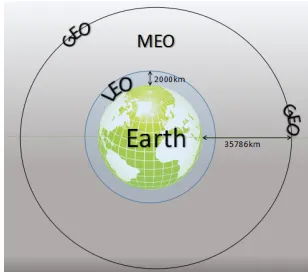
LEO: Low Earth Orbit, an orbit around Earth with an altitude between 160 kilometers and 2,000 kilometers. See Figure 2
GEO: Geostationary Earth Orbit, an orbit around Earth with an altitude closer to 35, 786km
2016 6th International Conference on Information Technology for Manufacturing Systems (ITMS 2016)
ISBN: 978-1-60595-353-3
A Viable Commercial Model Dealing with Space Debris
Qingtian
Wang, Yuxian Chen, Chunling Xie
Jinan University, Guangzhou, Guangdong, China
ABSTRACT: The problem of space debris has already been discussed for many years. How to deal with debris and create a viable commercial opportunity for removing debris has become a universal concern nowadays.
First of all, our team builds a global fund model that offers a commercial opportunity and assists with orbital debris removal. The fund could be established basing on the simple economic approach to address the problem of space debris. Fund could be collected from any countries involved with the spacecraft launch, prior to all launches for 25 years. Five percentage of the total cost of various space-related missions, which include space activities both in the past and future, are given to the foundation. Approximately half of the payments into the fund would be distributed to those entities devoted in removing space debris, including private firms interested in entering the debris removal market. An attractive market would exist with the policy’s support, assuming that the orbital debris removal could be accomplished with low risk technically.
Secondly, the situation about the main countries’ space-related missions is analyzed, and a total cost of each country spent on spaceflight in the past years is estimated. Utilizing the estimated data, the amount of credit that private firm gets from the fund could be derived. At the same time, we create a time-dependent function to predict the budgets for launching satellites in the coming years.
Thirdly, the comparison of the different options of removing debris is done and our team chooses the proper methods for cleaning debris objects in varied size according to existed technologies. Right after that the cost taken to do the removal job is derived.
Next, the risk is analyzed and the benefit could be predicted. Our model’s dependence on the policy or objective environment makes our result full of uncertainty.
Finally, we come to a conclusion that by using our model there would be an economically attractive opportunity for removing space debris with the support of relative policy or international organizations.
MEO: Medium Earth Orbit, sometimes called intermediate circular orbit (ICO), is the region of space around the Earth above LEO and below GEO
[image:2.612.104.249.93.237.2]Figure 1. Clutter from Space Debris. NASA, Orbital Debris: Graphics, NASA Orbital Debris Program Office (October 2, 2012).
Figure 2. Spatial Distribution.
3 MODEL
3.1 Establishing a global fund for space debris removal
3.1.1 Problem background
Nowadays, space applications have become a very increasingly important aspect of global society. Space applications such as spacecraft launch, human spaceflight, and space station have expanded in scope. However, a number of economic space activities previously mentioned are most threated by significantly increased space debris in orbit.
In recent years, the concentration of orbital debris associated with space activities has increased sharply, raising serious questions about the sustainability of human space activities going forward. Given the possibility of a snowball effect, whereby debris collides with other objects, space debris population would become so large that the orbit space would be congested further.
There are some previous analysis about the space debris. for example, Kessler syndrome researched
the growth of new debris, the rate of creation of new debris would overwhelm the debris' natural attrition completely [4]; Liou and Johnson project that the amount of debris will approximately triple within the next 200 years, so that the probability of impact between two objects would come close to certainty [5].
3.1.2 Reasons for establishing a global fund
Why should we establish a global fund? Well, such debris analyzed previously could stop us using the space environment. The space debris become a hazard to space craft, even to mankind in the future. Considering most of the countries in the world are benefiting from the satellites sent in orbit. The fair decision would be to create a fund which is paid by each state of the world proportionally to their use of space.
In fact, it is pretty difficult to claim which country will take the responsibility of this space cleaning, and which private companies or international organization exactly will do it. On the one hand, space cleaning should be regarded as a concern for everyone, it seem logical and fair that every country should participate. On the other hand, considering the current situation, the cost of dealing with the existing space debris is pretty high, there isn't a private company having the capability, or any interest of acting for it. We can affirm that it will not be possible to remove debris without the support and help of a global economic fund for a private company. Above all, establishing such a fund could offer a business opportunity for the company on doing this activity and create a market for commercial services, making the removal of orbital debris a viable business activity.
3.1.3 How should this global fund be organized 3.1.3.1 Collection of the money
Considering the heavy costs taking to solve with space debris, the fund would collect the money from various space-related missions
In order to achieve an effective removal of the space debris in orbit, the money used to execute this activity would be collected prior to all launches and all satellite operators would need to invest 5% of the total mission cost of all their missions. This fund would be collected for a period of 25 years for insuring the effect of the cleaning activity.
3.1.3.2 Distribution of the money
[image:2.612.99.253.292.428.2]to those companies involved in removing space debris from orbit.
3.1.3.3 Purpose of this fund
1) The mitigation of orbital debris would be successfully accomplished over 25 years.
2) Creating a viable commercial opportunity to address the space debris problem for private companies.
3.2 Remuneration
The money to capitalize this type of space debris fund would be collected prior to all launches and would be equivalent to perhaps 5% of the total cost of various space-related missions [6]. Approximately half of the payments into the fund would be paid to a private firm to remove the debris that has been proposed.
Our first consideration is collecting the cost of each country spent on spaceflight. The major space debris creating nations involved Russia, the United States, China, Europe, Japan and India. We only analyze data of the above six countries because of the small proportion of space missions originating from other country.
To simplify the problem, we assume that the annual budget of NASA is only to operate aeronautics research, unmanned and manned space exploration programs. The NASA yearly budgets Yc can therefore be modeled using the following polynomial equation:
= −5.61 × 10+ 0.67 − 3357.8 + 8.94 × 10 − 1.34 × 10 + 1.07 × 10x − 3.56 × 10
Where x is the year from the time of the first satellite was launched.
According to the data from NASA [7], we got the budget trends [See Fig. 3], so that we can count out the budget of NASA from 1958 to 2015, which amounts to $1086.991 billion.
In the same way, the budgets of the other five countries can express as follow [See Fig. 4.Data source comes from [8] [9] [10]].
Y = − 0.068x + 542.19x − 1.63 × 10x
+ 2.17 × 10x − 1.08 × 10 Y = − 0.30x + 2396.8x − 7.19 × 10x
+ 9.58 × 10x − 4.79 × 10
Y = 2.02x − 7899.4x + 7.72 × 10
Y! = − 0.61x + 2506.5x − 2.55 × 10
Yi = 0.34x − 1340.2x + 1.31 × 10
Where:
Yr is the budgets of RFSA (Russian Federal Space Agency)
Yc is the budgets of CNSA (China National Space
Ye is the budgets of ESA (European Space Agency)
Yj is the budgets of JAXA (Japan Aerospace Exploration Agency)
[image:3.612.332.531.115.439.2]Yi is the budgets of ISRO (the Indian Space Research Organization)
Figure 3. The annual budgets of NASA.
[image:3.612.325.548.500.615.2]Figure.4.The annual budgets of RFSA, CNSA, ESA, JAXA, ISRO.
Table 1. The total budgets of main countries before 2015.
By adding the budgets from the year that the first satellite was launched to 2015, we can get the cost of space missions of each country (Table 1).
Z = Y$ + Y + Y + Y + Y!+ Y%
= −5.61 × 10x+ 0.67x− 33578.17x
+ 8.94 × 10x− 1.34 × 10x
+ 1.07 × 10x − 3.56 × 10
3.3 Costs
3.3.1 Methods to remove debris in LEO 3.3.1.1 Ground based laser
Using ground based lasers to remove debris is proposed previously in 1989.It is designed to mainly burn up the debris objects whose size are 1cm and below. There are some advantages of the technology, which are shown below:
1) "Ground based" means it could utilize the ground-based laser system which lies in Earth and decrease the expensive cost in launching objects.
2) High effective in addressing the objects as small as 1cm.
However, the technology's application is doubtful because of laser broom's risk in diffusing ablation and damaging other operational objects, which would make it a severe weapon[11].Therefore, if ground based lasers option is still included in the list of alternatives, there is no doubt that its economically risk would be quite large.
It is estimated that $300M will be needed for one site, so $1k per cm-size object if removing 300,000 objects [12].
3.3.1.2 Collection media
Collection media is a considerable option for removing debris, especially better for the small size. Aerogel is a typical example. It can be used to deal with clouds of small debris fragments (mm-size). Small debris cannot be detected by devices and satellites are being protected by various measures for avoiding the harm from debris cloud. Thus, it may take more money to deal with that problem without solving it as soon as possible, for the reason that collisions between debris and debris or satellites will make more small fragments without human being taking any action.
For 1-10cm LEO debris $20k/object for 5-year mission based on a $100M mission for a 100 kilometer square collector is needed. It is estimated that the cost to remove small debris by collection at near a $1T [12].
3.3.1.3 EDDE
EDDE is short for the ElectroDynamic Delivery Experiment. It is one of the grapping technologies and maneuvers by reacting against the Earth's magnetic field, without using propellant. That a dozen 100kg EDDE vehicles could remove nearly all 2166 tons of LEO orbital debris in 7 years is proposed[13]. Its superiority is showed below:
1) It could remove nearly all the 2,465 objects of more than 2kg that are now in500-2000 km orbits at an affordable price [13].
2) Highly modular--it can be easily scaled to a wide range of sizes and packaged in different approach to launch [14].
3) Not sensitive to altitude jitter [14].
4) Its applications in LEO won't be limited to debris removal. Placing multiple payloads in custom orbits, inspecting multiple satellites in different orbits [14] and something else are also important utilization, which may produce additional benefit commercially.
It is estimated that about $100k-500k per large object removed from LEO is needed.
3.3.1.4 Other methods
Nanosatellites are probably useful ways of debris removal, but the approach is still developing and not that mature. There is no doubt that many other methods of cleaning space junk are proposed and tested, which may make it easier and quicker to keep the LEO space cleaner.
3.3.2 Methods to remove debris in GEO 3.3.2.1 GLiDER
GLiDER is short for Geosynchronous Large Debris Reorbiter. It could be possible that debris objects are re-orbited without requiring physical contact with between the tug and the debris object by a GLiDER device. It employs electrostatic forces to accelerate the debris, while the tug uses inertial thrusters to gently raise the debris orbit to a super-synchronous geostationary disposalorbit [15].GLiDER has following merits.
1) No physical contact with debris object, which reduce risk.
2) Reorbit a high mass debris object within months.
3) Avoid other geostationary objects when removing debris.
However, related simulation shows that solar radiation pressure has become a perturbation to its performance over an orbit period, which need to be settled otherwise it may cause risk.
$150M for 5 objects is needed, resulting in $30M per object [12].
3.3.2.2 Other methods
method out team used to remove space junk in GEO is GLiDER.
3.3.3 Alternatives
There are serval existed cases which have illustrated the threat from orbital debris is real, such as CERISE which was cut in half by a tracked debris fragment in 1996,Iridium 33 which was destroyed by a retired satellite and many satellite anomalies caused by small, untracked debris.
3.3.3.1 Which debris should be removed first? Debris' harm is the most important to be considered. That is to say, objects that are threat to other operational satellites and the space environment, should be cleaned to begin with. The degree of debris' harm has much relationship with its velocity, mass and volume.
Space debris can be sorted by their size, just like figure 5, whose data source is from National Aeronautics and Space Administration [16].
Figure 5. Characteristics of Space Debris Sorted by size.
Figure 6. Energy-to-Mass Ratio (EMR).
A physical quantity using to determine whether a collision is catastrophic or not is the energy-to-mass ratio (EMR), whose formula is shown in Figure 6.From the formula it's clear that both velocity and mass matter.
Commonly objects' velocity varies from different altitude. The speed of objects in LEO is usually highest with 7~8km/s, while in GEO it's slow with 4km/s. Standing from the view of velocity solely, debris in LEO should be settled first.
What's more, LEO is the region with the highest collision risk for orbiting objects. According to the Kessler syndrome, collisions between objects with high density in LEO [See Fig.7] is able to cause a cascade, and the new added space debris would increase the collision rate in the future [17]. In the contrast, GEO has relatively few debris objects, and debris' objects' velocities are low relative to
pose the danger of high-velocity collisions. In addition, MEO has fewer satellites and debris objects, and its dangers of collisions are much lower. Table.2.Estimates the total orbital debris population in different size range and the fraction of the total mass [19].
Collision between large mission-related objects and space debris whose size is 1-2cm at least could be catastrophic. So is the collision between spacecraft or launch vehicle stages with mass smaller than 50kg and space debris with size smaller than 2cm [20].Figure 8 shows the formula of the annual collision probability.
[image:5.612.316.555.197.320.2]Figure 7. Spatial density of objects as a function of altitude for three different size thresholds: objects with diameter larger than 1 mm (red line), 1 cm (green line) and 10 cm (blue line).Source: Encyclopedia-Scholarpedia [18]
Table 2. Approximate orbital debris population by size*.
* Source: reference [19]
Figure 8. The Annual Collision Probability.
From the formula it can be seen that larger size of the colliding objects could make higher collision probability. Undoubtedly more debris will be caused on that situation, which could be a huge disaster--it will cause the cleaning work harder and more expensive. NASA had made a research showing that plenty of these debris fragments are too small to be observed but have sufficient size and velocity to cause damage to spacecraft if an encounter occurs [21].
[image:5.612.57.293.301.395.2]3.3.3.2 Remove debris in LEO
Combining with methods using to remove debris in LEO, we can get the cost taken in the cleaning work, which is shown in the table 3.
Table 3. Debris removal methods and costs.
Note:
a. Assuming that it costs $300k per object, the total cost of removing large debris in LEO would be $4,200M.In this article we use $4,200M to simplify calculation.
b. The cost $8,100M is based on the assume that medium debris will be removed totally within 5 years.
c. There is two optional methods for small debris. d. $12.6B is based on the assume that one site is enough to clean all the small debris in LEO within 5 to 10 years.$13.3B is the cost of using Collection Media to remove small debris.
Source: reference [22]. 3.3.3.3 Remove debris in GEO
Due to GEO's physical distance, the population of debris in the GEO region is still quite uncertain. About 1,000 debris objects with diameter larger than 1 meter are cataloged. However, a large number of debris in that region is of non cataloged. KIAM space debris data center establishing to support ISON development derived that there is about 1,323 debris in GEO[23].Serving 1,323 as the number of debris in GEO, the cost of removal debris would be $39,690M using GLiDER method which costs $30M per object.
3.3.3.4 Total cost of removing debris
We can get the total cost roughly without considering new debris created by the collisions, the changing price of those methods possibly caused by novel, useful and low-cost technology and other factors.
Assume that one site is enough to clean all the small debris in LEO within 5 to 10 years, the total cost would be $12.63969B. Otherwise, the total cost would be over that number. When using Collection Media to remove small debris rather than Ground Based Laser would be $13.33969B.
3.3.3.5 Risks
What’s the risk? There are mainly two kinds of risk. 1) The destruction of failure of removing the debris objects. In that case the firm needs making efforts to clean objects, which may cost a quantity of money or cost a little depending on the methods. The worse situation is the failure because other
satellites' abnormality, which would be a large, loses to the firm for paying compensation to the owners of harmed satellites. Compensation depends on the level of the damage. There should be negotiation before the removal job and also after suffering accidents. This type of risk mostly relies on the removal rate of the applied technology.
2) Supply risk
Removing debris became extremely urgent earlier in the last few years but there has never been any action taken to do the job actually. The limit originates mainly from the policy but not from technology. The policy accepted by all of the space actors will drive this task going forward. It is believed that the fund could reduce the supply risk and make the benefit maximum. This type of risk is full of uncertainty, resulting from its dependence on policy. Therefore, we ignore the supply risk and just consider the first risk.
3.3.4 Removal rate
Just considering the risk of failing to remove debris and ignoring the insurance that should exist, the removal rate is equal to one minus the rate of failure. The amount of money spent in the risk is derived, which is shown in table 4.
Table 4. Debris Removal Rate and Loss.
To guarantee the firm's benefit, the fund that gains from the organization minus the costs of methods using to remove debris and the loss caused by failed removal should be a result which is non-zero and at a trend of increase.
4 ECONOMICALLY ATTRACTIVE
Make a good control of the removal method can reduce the risk and increase the benefit from the market of removing debris. These factors will make the market more economically attractive.
1) The policy which force cleaning the debris or even encourage the behavior of removing debris.
2) Technology's development will reduce the failure rate and also the cost.
3) Devices using to do the removal job are partly good tools to do other space serving, in which benefit may be considerable.
5 STRENGTHS AND WEAKNESSES 5.1 Strengths
Our model is based on a global fund for space debris remediation. It is an approach to financing a solution to the problem rather than seeking an approach to addressing space debris with no financing mechanism [6].
We apply the Least squares Algorithm to determine the budgets depend on time in each country. It can be easily obtained the unknown data, and make the sum of the squares of the error between actual data and calculated data to a minimum. We divide the factors impacting our model into four parts: payment, costs, risks and benefits. We analyze the influence of various factors which helps to better explain our model.
5.2 Weakness
Due to the lack of data about the annual budgets of each country, the result may lead to large deviation.
Our team do not consider the cost that other department spent on spaceflight.
REFERENCES
[1] Orbital debris: Frequently asked questions, March 2012. [2] JOSEPH N. PELTON. Space debris and other threats from
outer space, 2013.
[3]Inter agency Space Debris Coordination Committee. Iadc space debris mitigation guidelines, September 2007. [4] Donald K. Kessler and Burton G. Cour-Palais. Collision
frequency of articial satellites: The creation of a debris belt, 1978.
[5] Alexander William Salter. Space debris: A law and economics analysis of the orbital commons, September 2015.
[6] Joseph N. Pelton. A global fund for space debris remediation: A new way forward to address the mounting space debris problem, 2012.
[7] Budget of nasa. URL:
https://en.wikipedia.org/wiki/Budget_of_NASA\#cite_note-11BO-6.
[8] Introduction to space activities, URL http://www.spacefoundation.org/sites/default/files/downloa ds/IntroToSpace2011_0.pdf.
[9] Ann Martin. How much money is spent on space exploration? (intermediate), 2015.
[10] Countries with a special touch in space technology, URL http://www.viva-mag.com/news/detail/Countries-With-A-S pecial-Touch-In-Space-Technology/1153/1/view/.
[11] Mark Pontin. Beyond gravity: the complex quest to take out our orbital trash, 2014.
[12] Dr. Darren McKnight. Pay me now or pay me more later: start the development of active orbital debris removal now, 2010.
[13] J. Pearson, J. Carroll, and E. Levin. Active debris removal:edde, the electrodynamic debris eliminator. Space Studies Institude, 2010.
[14] JeromePearson, Joseph Carroll, Eugene Levin, John Oldson, and Paul Hausgen. Overview of the electrodynamic delivery express (edde). In 39thAIAA/ASME/SAE/ASEE
Joint Propulsion Conference and Exhibit, 2003.
[15] Hanspeter Schaub and Daniel F. Moorer Jr. Geosynchronous large debris reorbiter: challenges and prospects. In AAS/AIAAKyle T. Alfriend Astrodynamics Symposium, 2010.
[16] J.-C. Liou. Orbital debris mitigation policy and unique challenges for cubesats, October 2015.
[17] Donald J. Kessler and Burton G. Cour-Palais. Collision frequency of articial satellites. Journal of Geophysical Research, 83(A6), June 1978.
[18] Alessandro Rossi. Space debris, 2011. URL http://www.scholarpedia.org/article/Space_debris.
[19] National Research Council and Committee on Space Debris. Orbital Debris:A Technical Assessment. National Academy Press, 1995.
[20] ESA Space Debris Mitigation WG. Space debris mitigation compliance verication guidelines, February 2015.
[21] T. Dale Bess. Mass distribution of orbiting man-made space debris, December 1975.
[22] Fatima Ahmed Mohamed and Noor Azian Mohamad Ali. Space debris low earth orbit (leo). International Journal of Science and Research (IJSR), 4, January 2015.

![figure 5, whose data source is from National Space debris can be sorted by their size, just like Aeronautics and Space Administration [16]](https://thumb-us.123doks.com/thumbv2/123dok_us/303165.1031609/5.612.316.555.197.320/figure-source-national-space-debris-sorted-aeronautics-administration.webp)
