BIROn - Birkbeck Institutional Research Online
Dewaele, Jean-Marc and Li, Wei (2014) Intra- and inter-individual variation
in self-reported code-switching patterns of adult multilinguals. International
Journal of Multilingualism 11 (2), pp. 225-246. ISSN 1747-7530.
Downloaded from:
Usage Guidelines:
Please refer to usage guidelines at or alternatively
Intra- and inter-individual variation in self-reported code-switching
patterns of adult multilinguals
1Jean-Marc Dewaele
Birkbeck, University of London Li Wei
Birkbeck, University of London
Corresponding author: Dr Jean-Marc Dewaele,
Birkbeck College, University of London, 26 Russell Square,
London WC1B 5DT UK
E-mail address: [email protected]
Tel +44 207 631 6399
Abstract
The present study is a large-scale quantitative analysis of intra-individual variation (linked to type of interlocutor) and inter-individual variation (linked to multilingualism, sociobiographical variables and three personality traits) in self-reported frequency of code-switching (CS) among 2116 multilinguals. We found a significant effect of interlocutor (friends, family, colleagues and strangers) on self-reported CS. Participants who grew up and work in a multilingual environment, know many different languages, which they learnt from a young age, have advanced proficiency in various languages reported more frequent CS. Sex, Extraversion and Cognitive Empathy, but not Tolerance of Ambiguity, are linked with higher self-reported CS. We conclude that the frequency of self-reported CS depends not just on situational, complex sociobiographical and environmental factors, but it is also mediated by the personality of the multilingual.
Key words: individual differences, code-switching, multilingualism, personality
Introduction
Rodriguez-Fornells, Krämer, Lorenzo-Seva, Festman and Münte (2012) observe that: ‘Although a plethora of studies have been devoted to code-switching, an important aspect that has been neglected in psycholinguistic, linguistic, and sociolinguistic approaches to this phenomenon is the role of individual differences in language switching’ (2012, p. 1). The present study is intended to start filling this gap by investigating intra- and inter-speaker variations in code-switching (hereafter CS) patterns of adult multilinguals. We define CS as ‘changes from one language to another in the course of conversation’ (Li Wei, 2007, p. 14). There are many different structural configurations of CS (Li Wei, 2013). Whilst individuals may indeed vary the way they code-switch from one context to another, this is a topic that is beyond the scope of the present study. We focus instead on the likelihood of individual speakers to engage in CS in different settings and for different purposes.
The lack of systematic research into individual differences in CS could be linked to a number of reasons. First of all, CS can be a creative discourse strategy applied by multilingual language users in
1 Preprint version of the paper that appeared in International Journal of Multilingualism, January 2014,
real-life interactions in order to achieve effective communication (Ritchie and Bhatia, 2013). This has two critical implications. One is that most studies of CS are focused on either the discourse processes whereby multilinguals combine elements from different languages to create mixed-code utterances or the constraints, linguistic and cognitive, on switching from one language to another. The study of self-reported individual differences in CS requires quantifiable and comparative data from a large number of participants. One way to collect such data is through self-reporting questionnaires, as in the case of Rodriguez-Fornells et al’s study. We will also exploit this data collection method in the present study.
The other implication is that the spontaneity of CS render the identification of CS patterns, a pre-requisite for analysing individual differences, an almost impossible task, if patterns are to be understood as regular usage shared by a group of speakers. Multilinguals are known to be very inventive, creating novel structural forms with elements of different languages spontaneously and deliberately flouting linguistic and social conventions for special effects. Rodriguez-Fornells, et al. (2012) base their study on four types of CS: switches to L1; switches to L2; contextual switches, i.e. switches that are triggered by a particular situation, topic, or environment; and unintended switches. The first two types are intended to measure switching behavior related to linguistic factors such as competence and proficiency in the target and non-target languages and semantic differences across languages. The contextual switch is designed to measure switching patterns influenced by
sociolinguistic factors. And the unintentional switch is aimed to assess cognitive control and performance monitoring or problems in the control of activation of the non-target language.
In the present study, we focus exclusively on situational variation in the frequency of self-reported CS and make no assumption of either the structural configurations of the mixed-language utterances or the level of activation and cognitive control i.e. the ‘flexible and controlled manner of voluntarily guiding goal-directed behavior’, and more specifically ‘executive processes such as voluntary response inhibition and working memory that allow planned responses’ (Luna, 2009, p. 233). We believe that this is a necessary first step toward establishing individual differences in self-reported and actual CS. Details of how exactly individuals differ in combining elements of different languages to produce CS or in the level of activation and control are important topics for future investigations.
The scarcity of research on individual differences in CS could also be due to the confusion over what the very notion of individual differences means to different researchers. For instance, does it refer to the same individual’s different usage in different contexts, i.e. intra-speaker variation, or is it differences between speakers in producing the same code-switching pattern, i.e. inter-speaker variation, or both? Moreover, there is huge diversity in the factors researchers choose to use in studying individual differences. Language proficiency and history of language acquisition and learning are probably the most frequently used factors. But other factors, such as personality, sex, and interpersonal relationship, which are the core factors in psychological research on individual differences, remain under-explored in CS research. The present study will examine both intra- and inter-speaker variation with a particular focus on type of interlocutor, prior and current linguistic practices, age, sex, education and personality traits such as extraversion, tolerance of ambiguity, and cognitive empathy.
Existing sociolinguistic studies of individual variations in CS
Multilingual language users code-switch for a variety of reasons that sociolinguists have termed as ‘motivations’. Gumperz (1982) and Blom and Gumperz (1972) introduced the notions of situational
versus metaphorical CS. Situational CS is triggered by a change of address, topic or setting, whereas metaphorical CS does not involve any change of these variables but are motivated by communicative functions such as quotation, addressee specification, interjection, reiteration, message qualification, or personalization versus objectivation; in other words, special communicative effects. To these we can add i) cultural specificity - certain notions or concepts may only exist in one language or are simply better expressed in a specific language; ii) experiential association – as Grosjean says: ‘Bilinguals usually acquire and use their languages for different purposes, in different domains of life, with different people. Different aspects of life often require different languages’ (2010, p. 29). And iii)
identity and identification - CS can be strategically employed when the speaker wishes to show involvement, group membership, expertise, power, and also excluding someone who does not know the language. Myers-Scotton’s (1993) investigation of CS in conversations of multilingual Africans (mostly Kenyans living in Nairobi) considered different types of CS, its structure, and some social motivations. She concluded that CS is a type of skilled performance, rather than a means of overcoming linguistic difficulties. CS expressed social import and could be interpreted as identity negotiations (p. 151). The work on social motivations for CS, however, does not generally discuss individual variations.
Since the 1980s, there has been a group of sociolinguists who have attempted to explore the question whether different groups of bilingual and multilingual speakers would use CS in different ways in different contexts. Working in the Labovian variationist sociolinguistics paradigm, Poplack (1980), found that speakers in the East Harlem Spanish-English bilingual community in New York City adapted their language choice between Spanish and English and their CS patterns according to the situation they found themselves to be in, e.g. home, school and neighbourhood. On the whole, the most significant variation existed between individual speakers, especially between children who were receiving bilingual schooling or monolingual schooling, with the former switching much more. Gardner-Chloros (1991), using a similar approach, surveyed the use of French and Alsatian, and also switching between the two, in Strasbourg’s department stores. Complex language choice and CS patterns were revealed. For example, the highest rate of CS was found among the youngest group of shoppers, who were also the most French-speaking, when they were in the most Alsatian-speaking store, whereas the same group of speakers used little Alsatian, and little CS also, in another, more linguistically neutral store. Gardner-Chloros explained the variation in terms of speech accommodation and language prestige. Li Wei (1995) examined a number of CS patterns - inter-speaker, inter-sentential inter-clausal, and content words – by three groups of Chinese-English bilinguals: students, British-born Chinese youth and long-term immigrants from Hong Kong, all living in the North East of England. He found that variations existed across these groups according to the bilingual experience and social network contacts the speakers had, as well as the topic, setting and interlocutor of the interaction.
Ritchie and Bhatia (2013) noted that CS is linked to social roles and relationships between participants. Other factors include situational factors, message-intrinsic considerations and finally language attitudes including social dominance and security (p. 378).
the CS in situations where strong emotion had to be expressed was from the foreign language to the L1. Some participants, often of Arab or Asian origin, reported CS in the opposite direction, especially for the expression of anger and swearing. They said that for them, CS to English (a foreign language) allowed them to escape the social constraint that weighs on them in their home environments, where anger cannot be displayed as openly as in English and where swearing carries strong social stigma (p. 212).
Dewaele also found that the higher frequency of CS with known rather than less known, or unknown, interlocutors was linked to a conscious, strategic choice of the speaker. In dealing with an unknown interlocutor the most logical option is to stick to the language in which the interaction was started. Conversations with known interlocutors allow CS to the shared languages (p. 219). Resnik (2012) reported similar effects of the type of interlocutor on self-reported CS in emotional interactions with German, Chinese and Japanese foreign language users of English.
Some significant sex effects emerged in Dewaele (2010), with female participants reporting more frequent CS with friends and on more emotional topics, while male participants reported more CS with strangers. These sex effects seem rather unusual considering Gardner-Chloros (2009) who states that CS is unconnected with sex, although ‘it intersects with a large number of intervening variables which are themselves connected with gender issues’ (2009, p. 82).
Another extralinguistic variable found to be associated with the frequency of CS is the linguistic environment in which an individual grows up or is currently living. Family and community norms may affect the extent of CS of the individual (Lanza, 2008).
One factor that has hitherto not been examined systematically is personality. Gardner-Chloros (2008) points out that the way in which multilinguals use CS is part of the way in which they present
themselves as speakers, i.e. ‘styling the self’. She further observes that among the many independent variables which have been studied in relation to CS, personality variables affecting the amount and type of CS have on the whole been omitted.
In the present study, we hypothesise that certain personality traits contribute to a higher self-reported frequency of CS, possibly in interaction with particular social variables such as context and language background. In the following section, we discuss the key personality traits that we intend to investigate.
Personality traits
Psychologists generally agree that personality traits are hierarchically organized with three or fivei broad, independent dimensions at the top - and a larger number of more specific traits lower down (Cervone & Pervin, 2013). Personality questionnaires allow researchers to establish profiles of participants. In the present study, we focus on one dimension out of the so-called ‘Giant three’ii, Extraversion versus Introversion, and two ‘lower-order’ traits, Cognitive Empathy and Tolerance of Ambiguity. All these three traits have been found to be associated with second language learning and multilingualism (Dewaele, 2012; Dewaele & Li Wei, 2012, 2013). We hypothesize that they are also linked to CS.
Extraversion - Introversion
Eysenck and Eysenck (1985) argue that variation on the Extraversion – Introversion dimension is linked to the amount of cortical arousal, which leads to different behavior, also different
variants than their more introverted peers and more likely to talk about emotion, a particularly challenging topic in a foreign language (Dewaele 2004; Dewaele & Pavlenko, 2002). Li, Chen and Xiao (2009) have argued that extraverts possess superior pragmatic competence and awareness, which allow them to engage in more risky linguistic behaviour. In his overview of individual differences and creativity, Kaufman (2011, p. 681) reports that extraversion has been linked to creativity in some domains but not in others. The study of Peterson, Smith and Carson (2002) found a significant positive correlation between extraversion and creativity (p. 1143). King, Walker and Broyles (1996) also found a significant positive correlation between extraversion and verbal creativity. It is thus plausible that extraverts are more likely to engage in creative CS.
Cognitive empathy
Empathy has been defined as ‘the ‘glue’ of the social world’ (Baron-Cohen & Wheelright, 2004, p. 193). It refers to the ability to empathise, to understanding what other people might be thinking or how they might be feeling (p. 193). People with high levels of empathy are better at understanding the intentions of others, are more accurate in predicting their behaviour, and are better able to recognise the emotion of their interlocutor. Empathy is thus crucial in social interactions, ‘drawing us to help others and stopping us from hurting others’ (p. 193).
Dewaele and Li Wei (2012) investigated the relationship between multilingualism and cognitive empathy among 2158 mono- and multilinguals (who also contributed the data for the present study). A significant positive correlation emerged between multilingualism (operationalised as advanced levels of proficiency in several foreign languages and frequent use of these languages) and cognitive empathy. They concluded that intense multilingual practice makes multilinguals more skilful in conversations as they learn to see the world from their interlocutor’s point of view. It is possible that the ability to empathise with a bilingual or multilingual interlocutor might be linked to increased CS, as this is a way of highlighting the specific links between the speaker and the interlocutor. A high level of empathy might nudge a bilingual or multilingual to converge to a higher frequency of CS to reflect the pattern of the interlocutor.
Tolerance of Ambiguity
According to Furnham and Ribchester (1995, p. 179), ‘The person with low tolerance of ambiguity experiences stress, reacts prematurely, and avoids ambiguous stimuli. At the other extreme of the scale, however, a person with high tolerance of ambiguity perceived ambiguous situations/stimuli as
desirable, challenging, and interesting and neither denies nor distorts their complexity of incongruity’. Dewaele and Li Wei (2013a), using the database on which the present study is based, found that monolinguals and bilinguals scored significantly lower on Tolerance of Ambiguity (TA) compared to multilinguals. Moreover, participants with higher levels of multilingualism, as measured through total proficiency in multiple languages, also scored significantly higher on TA. A multilingual upbringing had no effect on TA but those who have lived abroad scored significantly higher on TA. The authors concluded that TA is determined by individuals’ social-linguistic-cultural environment and especially by the experience of having to survive in a foreign cultural and linguistic environment. A prolonged stay in a new environment requires a sustained and conscious effort to acquire the new sociopragmatic rules and cultural values. CS could be considered as a way to make the interaction more interesting. We will consider the potential link between TA and CS.
Research questions and hypotheses
The present study aims to address the following research questions:
2) Are prior and current linguistic practices linked to the amount of self-reported CS? We expect participants who grew up in a linguistic and ethnic diverse environment to code-switch more. We also expect participants who know more languages, who have advanced knowledge of several languages, who grew up with two or more languages before age 3, who learned languages early in life to code-switch more. Finally, we expect participants who work in multilingual environments to code-switch more.
3) Are sociobiographical variables linked to the amount of self-reported CS? We expect female participants to code-switch more with known interlocutors. Age and education level could also be linked to self-reported CS.
4) Are personality traits linked to the amount of self-reported CS? We expect participants who score high on Extraversion, Tolerance of Ambiguity, Cognitive Empathy to code-switch more.
Method
Participants
A total of 2116 multilinguals (1564 females, 443 males) filled out the online questionnaire on the use of CS that has been designed specially for the present study. The mean age was 34.5 yrs (SD = 12.1). A closer look showed that 90 participants were in their teens, 799 were in their twenties, 583 in their thirties, 347 in the forties, 190 in their fifties, 87 in their sixties, 8 in their seventies and one participant aged 84. Participants were generally highly educated with only 31 having a high school diploma, 650 a Bachelor’s degree, 772 a Master’s degree, and 657 a PhD. This majority of highly educated, female participants is quite typical in web-based language questionnaires (Wilson & Dewaele, 2010).
The participants reported 204 different nationalities, including many participants with double nationalities. The largest group came from the USA (n = 478), followed by British (n = 299); Dutch (n = 145); Belgians (n = 81), Germans (n = 81), Canadians (n = 76), Polish (n = 65), French (n = 58), Spaniards (n = 42), Chinese (n = 41)iii.
English was the most frequent L1 (n = 843), followed by Dutch (n = 195), French (n = 155), Spanish (n = 138), German (n = 124). The most frequent L2 was English (n = 924) followed by French (n =
455), and Spanish (n = 248). The pattern was different for the L3 with French coming first (n = 422), followed by German (n = 330) and English (n = 248). The most frequent L4s were German (n = 205), Spanish (n = 196) and French (n = 174). The most frequent L5 was Spanish (n = 101), followed by Italian (n = 69) and French (n = 50). Mean age of acquisition of the L2 was 10.1 years (SD = 5.4), this increased to 15 years for the L3 (SD = 6.4), 18.3 years for the L4 (SD = 7.8) and 21.7 for the L5 (SD =
8.6).
We used participants’ information on self-perceived proficiency in their various languages to develop a global measure of multilingualism, first presented in Dewaele and Stavans (2012). The ‘total proficiency score’ is the sum of self-perceived proficiency scores collected on 5-point Likert scales for oral proficiency and written proficiency in up to 6 languages (including 2 L1s) (maximal possible score 10 X 6 = 60). Dewaele and Stavans (2012) argued that such a measure is potentially useful to
The sample consists of 399 bilinguals, 566 trilinguals, 557 quadrilinguals, 359 pentalinguals, 143 sextalinguals, 54 septalinguals, 21 octalinguals, 9 nonalinguals, 5 participants knew 10 languages, and 1 participant reported 12 languages. A single category was created including all participants with 6 or more languages. A majority of participants (n = 1825) reported having been exposed to a single L1 before age 3, a minority reported growing up with two L1s (n = 274) and 17 participants grew up with three languages (the latter two groups were aggregated).
Mean score for ethnic and linguistic diversity during the participants’ childhood was rather low (M = 1.26, SD = 1.23, on a 4-point Likert scale). However, the mean score for linguistic diversity in the participants’ workplace was higher (M = 2.59, SD = 1.23, on a 4-point Likert scale).
Instruments
The data was collected through the snowballing technique. The anonymous online CS questionnaire was an open-access survey, advertised through several listservs, targeted emails to teachers and students, and informal contacts asking them to forward the link to friends. The introductory paragraph stated: ‘The aim of this research is to help us better understand the link between personality and linguistic behavior of people knowing one or several languages’. It remained online over a four month period and attracted responses from mono- and multilinguals across the world. We removed the data provided by the 41 monolinguals for the present study, as they did not code-switch between languages. Because participants left occasional questions blank, totals for specific variables can vary. Participants also filled out a short sociobiographical questionnaire with questions about sex, age, education, language history and present language use. The research design and questionnaires received ethical clearance from the research institution.
Buchanan (2007) observes that the use of on-line questionnaires in psychological research is increasing exponentially. The main advantage is of an ‘economic’ nature: large amounts of data can be collected automatically at a fraction of the cost and time of ‘pen and paper’ equivalents (Buchanan, 2007). This allows researchers to reach larger and more diverse samples from all over the world. Internet samples have been found to be more diverse in terms of sex, age, race, socio-economic status and geographical location than the pen-and-paper samples (Gosling et al., 2004). Scores of personality dimensions and patterns of socializing are comparable in internet samples and pen-and-paper samples (Gosling et al., 2004). Moreover, online versions of traditional questionnaires do not compromise the psychometric properties of such measures (Denissen, Neumann & van Zalk, 2010).
Wilson and Dewaele (2010) have pointed out that in multilingualism research participants must meet specific linguistic criteria, have high levels of metalinguistic and metacognitive awareness, and must be able and willing to engage with the questions on language preferences and use (2010, p. 108). We feel that multilinguals are perfectly aware of the amount of CS they use in specific interactions, and they have no reason to lie about the frequency with which they use CS, as they perceive the phenomenon as something positive (Dewaele & Li Wei, 2013b)iv. The reliability of the data might in fact be stronger in linguistic internet-based research, as anonymous volunteers would not benefit in any way from falsifying answers (p. 108). Another advantage of internet-based questionnaires is that they reduce social desirability (the tendency of participants to answer questions in amanner that they imagine will be viewed favourably by the researcher), which leads to increased levels of honesty (and therefore higher validity in the case of self-report) (Joinson, Paine, Buchanan & Reips, 2008). Finally, a sample of more than 2000 multilinguals from all over the world ensures strong ecological validity, as the effects of local social, political and historical factors linked to particular languages or linguistic practices are evened out (Wilson & Dewaele, 2010).
In addition to the background questionnaire, participants filled out the items for the personality dimension Extraversion extracted from the EPQr (Eysenck, Eysenck & Barrett, 1985), also based on self-reported behaviour. Participants filling out the EPQr are invited to tick either ‘yes’ or ‘no’ for 12 items for each dimension. One item for Extraversion is for example: ‘Are you a talkative person?’.
replicable across the world. The EPQr is considered robust (Barrett, 1999). Mean scores for extraversion was as follows: N = 1888, M = 7.6, SD = 3.4. Internal consistency, as measured by Cronbach alpha coefficient, was high (0.84). Participants with scores that were more than 1 standard deviation below the mean were categorised as ‘Introverts’. Those with scores ranging from 1 standard deviation below the mean to 1 standard deviation above the mean were categorised as ‘Ambiverts’. Finally, those with scores that were more than 1 standard deviation above the mean were categorised as ‘Extraverts’. As a result we have 399 Introverts, 1008 Ambiverts and 481 Extraverts.
Participants also filled out the Tolerance for Ambiguity Scale (TAS), a 12–item questionnaire with 5-point Likert scales, contextualized to cross-cultural contexts (Herman et al., 2010, p. 60). According to the authors, it ‘can be used in cross-cultural research and practice to assess individual TA’ (p. 62). It consists of four distinct dimensions: (1) valuing diverse others; (2) change; (3) challenging
perspectives; (4) unfamiliarity (p. 62). We used 11 items of out the original 12-item TAS scale and made some minor stylistic adaptationsv. The items had to be rated on a 5-point Likert scale. A Cronbach alpha analysis revealed modest but sufficient internal consistency reliability: 0.64. Mean score for TA is 28.9, SD = 5.6, with a range between 4 and 44. Participants were also categorised in three groups (low TA, medium TA, high TA), following the procedure set out for extraversion. As a result 277 participants were labelled ‘low TA’, 1337 ‘medium TA’ and 281 ‘high TA’.
Finally, participants filled out an adapted version of Baron-Cohen and Wheelwright’s (2004) questionnaire to measure Cognitive Empathy (CE). We selected five items with the highest factor loadings (Lawrence et al., 2004, p. 915) on the dimension of CE, which ‘measures the appreciation of affective states’ (p. 918). One such item was ‘I am good at predicting how someone will feel’. The items had to be rated on a 5-point Likert scale. This subscale was internally consistent (Cronbach's Alpha = 0.84)vi. Mean score of CE is 18.5, SD = 3.5, with a range between 5 and 25. Three groups were created (low CE, medium CE, high CE), following the procedure set out for Extraversion and TA. As a result 230 participants were labelled ‘low CE’, 1397 were in the middle group (‘medium CE’) and 267 were labelled ‘high CE’.
Data about CS practices of the participants were elicited through the following general closed question: ‘Do you switch between languages within a conversation with certain people?’ It then specified four situations: ‘when speaking with some friends’, ‘with some family members’, ‘with strangers’ and ‘with some colleagues or clients at work/school’vii
. Participants were asked to choose a response on a 5-point Likert scale, i.e. never, rarely, sometimes, frequently, always. We are therefore more concerned with the frequency of CS with different interlocutors in different contexts rather than with the structural patterns of switching.
A series of one-sample Kolmogorov-Smirnov tests showed that the values for self-reported frequency of CS with the four types of interlocutors are not normally distributed
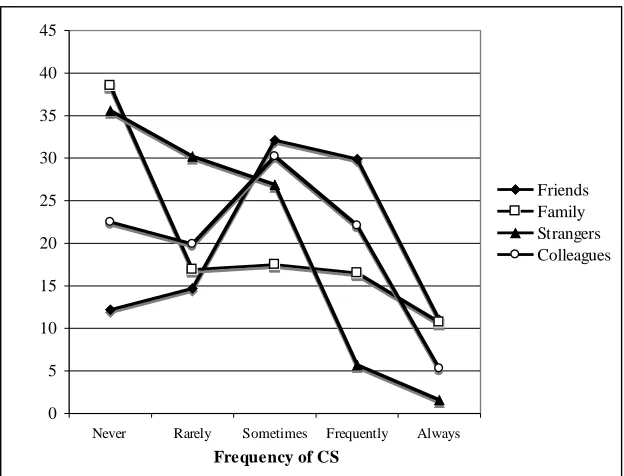
(Kolmogorov-Smirnov Z-values vary between 8.2 and 10.4, all significant at p < .0001). More than a third of participants reported never using CS with family members nor strangers. The proportion of non-CS users dropped to 22% in interactions with colleagues and 12% in interactions with friends where the frequency category ‘sometimes’ is the largest (a third of participants). The complete distribution is presented in Figure 1.
0 5 10 15 20 25 30 35 40 45
Never Rarely Sometimes Frequently Always
Frequency of CS
P
er
ce
n
ta
g
e
o
f
p
a
rt
ic
ip
a
n
ts
Friends Family Strangers Colleagues
As a consequence, we have used non-parametric statistical techniquesviii.
Results
[image:10.612.93.405.72.310.2]A Friedman’s ANOVA test for related samples revealed that the effect of type of interlocutor is highly significant on the amount of self-reported CS (N = 1997, Chi2 = 1047.7, df = 3, p = .0001) (Table 1). This result confirms that multilinguals report CS most with their friends and least with strangers. The standard deviation is also the smallest for these two situations, especially for strangers. There is much more dispersion around the mean for self-reported CS with family members. This suggests that there is more variation in CS practices within families, compared to the groups of friends, colleagues or strangers. This result is somewhat surprising as family members are likely to share similar language backgrounds.
Table 1. Mean scores on self-reported frequency of CS
Code-switching with... M SD
Friends 2.16 1.15
Colleagues 1.70 1.19
Family 1.46 1.41
Strangers 1.09 1.00
The next cluster of variables linked to participants’ linguistic history and current practice show the extent to which it is linked to self-reported CS. The Kruskal-Wallis tests showed that participants who grew up in an ethnically and linguistically diverse environment report more frequent CS in all situations except with strangers (Table 2 and Figure 2).
Table 2. The effect of linguistic history and current practice on self-reported frequency of CS (Kruskal-Wallis Chi2 values)
Friends Family Strangers Colleagues
Linguistic diversity during childhood 10.7* 29.5*** 4.3 8.3*
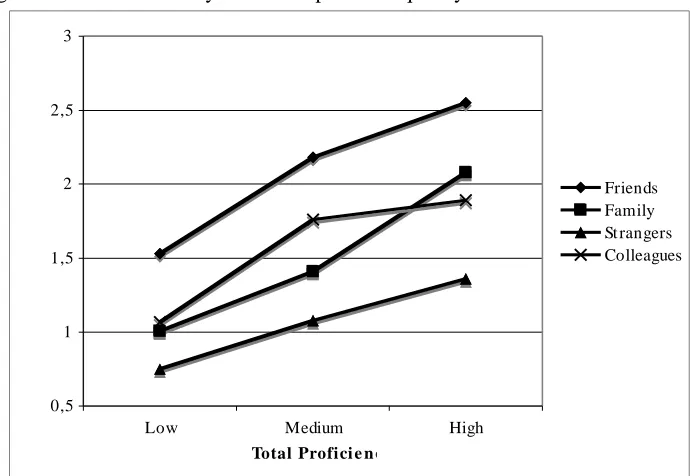
Total Proficiency 93.4*** 80.9*** 51.1*** 79.2***
Multilingualism in work environment 52.8*** 3.2 11.4** 97.2***
[image:11.612.101.410.139.335.2]p < .05, ** p < .001, *** p < .0001
Figure 2. Ethnic and linguistic diversity during childhood and self-reported frequency of CS
0,5 0,7 0,9 1,1 1,3 1,5 1,7 1,9 2,1 2,3 2,5
not at all not especially so-so quite diverse very diverse
Ethnic & linguistic diversity during childhood
F
r
e
q
u
e
n
c
y
of
C
S
Friends Family Strangers Colleagues
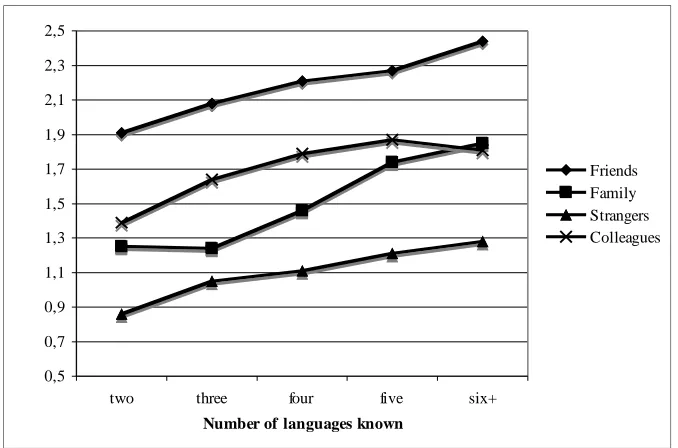
The number of languages known by participants also had a highly significant effect on self-reported frequency of CS in all situations (Table 2). Participants knowing more languages reported more frequent CS with all interlocutors (Figure 3).
Figure 3. Number of languages known and self-reported frequency of CS
0,5 0,7 0,9 1,1 1,3 1,5 1,7 1,9 2,1 2,3 2,5
two three four five six+
Number of languages known
F
r
e
q
u
e
n
c
y
of
C
S
Friends Family Strangers Colleagues
[image:11.612.92.431.416.640.2]Figure 4. Total Proficiency and self-reported frequency of CS
0,5 1 1,5 2 2,5 3
Low Medium High
Total Profici e n cy
F
r
e
q
u
e
n
c
y
o
f
C
S
Friends Family St rangers Colleagues
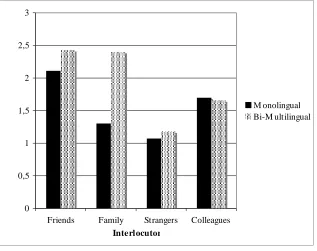
A Mann-Whitney test showed significant differences between early and later bi- and multilinguals in interactions with friends and family, with a marginal difference in interactions with strangers (Table 3). As expected early bi- and multilinguals reported using more CS than later bi- and multilinguals (Figure 5).
Table 3. The effect of early bi- or multilingualism on self-reported frequency of CS (Mann-Whitney)
Interlocutor Z
Friends -4.3***
Family -11.9***
Strangers -1.8
Colleagues -0.7
Figure 5. Monolingual vs Bi- and Multilingual upbringing and self-reported frequency of CS
0 0,5 1 1,5 2 2,5 3
Friends Family Strangers Colleagues
Interlocutor
F
re
q
u
en
cy
o
f C
S
M onolingual Bi-M ultilingual
A Spearman Rank correlation analysis revealed significant negative values between Age of Onset of Acquisition (AoA) in the L2 and L3 and self-reported CS with family, friends and strangers (but not with colleagues). This suggests that multilinguals who started learning their L2 and L3 earlier in life reported using more CS in specific situations. The AoA of the L4 and L5 (both over the age of 18) was unrelated to self-reported CS frequency (see Table 4).
Table 4. The relationship between Age of onset of Acquisition and CS (Spearman Rho)
Language Measure Friends Family Strangers Colleagues
L2 Rho -.124*** -.211*** -.052* -.033
N 2028 2012 2011 2009
L3 Rho -.060* -.165*** -.044 -.022
N 1633 1622 1623 1618
L4 Rho -.057 -.098** -.044 -.047
N 1062 1061 1058 1059
L5 Rho -.039 -.012 -.007 -.020
N 514 512 511 511
p < .05, ** p < .001, *** p < .0001
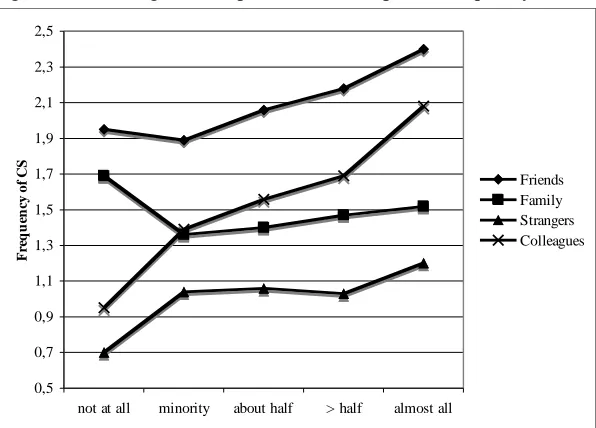
[image:13.612.101.497.428.570.2]Figure 6. Multilingual workplace and self-reported frequency of CS
0,5 0,7 0,9 1,1 1,3 1,5 1,7 1,9 2,1 2,3 2,5
not at all minority about half > half almost all
F
re
q
u
en
cy
o
f
C
S
Friends Family Strangers Colleagues
The next research question deals with the effect of sociobiographical variables such as age, sex and education level. A Spearman correlation analysis showed that age is positively linked to self-reported frequency of CS in interactions with family and strangers, and negatively linked to frequency of CS in interactions with friends and colleagues. In other words, older participants report using CS more with family members and strangers and less with friends and colleagues (Table 5).
Table 5. The relationship between age and self-reported frequency of CS (Spearman Rho)
Interlocutor N Spearman Rho
Friends 2022 -.071**
Family 2006 .133***
Strangers 2006 .081***
Colleagues 2003 -.043
* p < .05, ** p < .001, *** p < .0001
The Kruskal-Wallis analyses reveal significant differences in self-reported CS between the various education levels for two types of interlocutors (Table 6). Participants with higher levels of education reported more CS with colleagues and family members.
[image:14.612.100.570.595.666.2]A Mann-Whitney test shows significant differences between male and female participants in interactions with friends, family and colleagues (Table 6). Female participants report more CS in these interactions than the males.
Table 6. The effect of education level and sex on self-reported frequency of CS (Kruskal-Wallis Chi2and Mann-Whitney Z)
Interlocutor A-level BA MA PhD Chi2 Female Male Z
Friends 2.0 2.2 2.2 2.2 1.1 2.2 1.9 -4.4**
Family 1.5 1.4 1.4 1.6 8.6* 1.5 1.2 -4.6**
Strangers 1.1 1.1 1.1 1.1 0.1 1.1 1.1 -0.3
Colleagues 1.2 1.7 1.6 1.8 10.2* 1.7 1.6 -2.5*
* p < .05, ** p < .001
The Kruskal-Wallis tests did reveal a highly significant effect of Extraversion on self-reported CS in four situations (Table 7).
Table 7 The effect of personality variables on self-reported frequency of CS (Kruskal-Wallis Chi2 values)
Trait Friends Family Strangers Colleagues
Extraversion 32.2*** 13.7** 20.0** 21.6**
Tolerance of Ambiguity 2.53 2.0 2.7 0.8
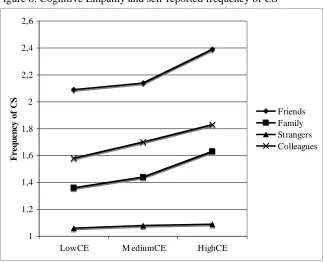
Cognitive Empathy 14.0** 5.5 0.3 4.9
* p < .05, ** p < .001, *** p < .0001
A look at the means shows that more extraverted participants report more CS with the various interlocutors (Figure 7).
Figure 7. Extraversion and self-reported frequency of CS
0,5 0,7 0,9 1,1 1,3 1,5 1,7 1,9 2,1 2,3 2,5
Introverts Ambiverts Extraverts
F
r
e
q
u
e
n
c
y
o
f
C
S
Friends Family Strangers Colleagues
Figure 8. Cognitive Empathy and self-reported frequency of CS
1 1,2 1,4 1,6 1,8 2 2,2 2,4 2,6
LowCE M ediumCE HighCE
F
re
q
u
en
cy
o
f C
S
Friends Family Strangers Colleagues
Discussion
The analyses of the data show that our first hypothesis was confirmed: self-reported CS was most frequent in interactions with friends, followed by interactions with colleagues and family members, and it was least frequent in interactions with strangers.
Our second hypothesis was also confirmed: participants’ linguistic history - including the
environment in which they grew up, current linguistic practices and linguistic diversity in their current workplace all have a significant effect on self-reported CS.
Our third hypothesis was partly confirmed as participants’ age was correlated with frequency of self-reported CS (though in different directions). Sex was significantly linked to self-reported CS: female participants reported more CS in interactions with friends, family and colleagues. The effect of education was significant in interactions with family members and colleagues where highly educated participants reported more CS.
Our final hypothesis was partly confirmed: the degree of Extraversion and Cognitive Empathy was significantly linked to higher levels of self-reported CS, though only with friends for CE. However, Tolerance of Ambiguity had no effect on self-reported CS.
possible that CS was banned within the family home of some participants in order to maintain the minority language. However, a closer investigation confirmed that the early bi- and multilinguals reported significantly more CS with their family members and friends compared to participants who became bi- and multilingual after the age of 3.
The fact that participants who had grown up in highly multilingual and ethnically diverse environments reported using more CS with known interlocutors shows that linguistic practices in childhood continue to resonate through a multilingual’s life. Less surprising is the finding of a positive link between multilingualism in the work environment and self-reported CS (except with family). Indeed, one can assume that our participants conformed to the unwritten rules of their community of practices, which involve CS. However, they did not follow these rules when interacting with family members – which probably constitutes a different community of practice.
The relationship between age and self-reported CS was unexpected because it was positive with some interlocutors, and negative with others. There is no obvious reason why older participants would use more CS more with family members and strangers but on the other hand, use significantly less CS with friends and colleagues. These results differ from those reported by Dewaele (2010, p. 199), namely an absence of correlation between age and self-reported CS in interactions with friends and strangers, and a significant positive correlation between self-reported CS when talking to colleagues or speaking in public. The difference cannot be linked to a different age profile of the sample, as the mean age in Dewaele (2010) was 34 years, identical to the one in the present study. Had the link between age and CS with different interlocutors been consistent, it could have been associated with changes in cognitive control, which reaches a peak in adulthood and remains stable before declining in old age (Luna, 2009)ix.
The significant sex effect in self-reported use of CS in interactions with friends, family and colleagues partly confirms previous research. Dewaele (2010, p. 198) found that the female participants reported using CS significantly more with friends, but not with colleagues. Male
participants were also found to report more CS in interactions with strangers, a pattern that is absent in the present study. It is difficult to speculate on the reason why our female multilinguals report more CS with friends, family and colleagues. Are they conforming to rules of their speech communities? Does it reflect a greater involvement of our female participants in conversations (cf. Tannen, 1993)?
Education level was found to have significant effect on self-reported CS with two types of interlocutor: colleagues and family members. It is again hard to speculate on a possible cause. That highly educated participants report using more CS with colleagues could be linked to the type of work environment they function in. Indeed, a Pearson Chi2 analysis showed that highly educated participants were significantly more likely to work in highly multilingual workplaces (Pearson Chi2 = 44.7, df = 12,
p < 0.0001). It is equally possible that the families of the highly educated participants were more multilingual, but we have no information on the degree of multilingualism of the participants’ families.
general, namely that CS allows multilinguals to avoid ambiguity. By switching to another shared language, communication is more efficient and to the point, it allows the multilingual to find ‘le mot juste’ (Grosjean, 2010, p. 53). One could even argue that multilinguals that share a language and can fluently CS may find this speech style less ambiguous than monolingual-mode. The possibility of substituting a word in the other language if necessary, or use a colloquial saying with the interlocutor may introduce greater security into the interaction. Whilst our study does not aim to investigate the cognitive control in CS, one may speculate, based on existing evidence that links language switching with executive control (e.g. Rodriguez-Fornells, De Diego Balaguer & Münte, 2006; Soveri et al., 2011), that CS requires more selective attention; therefore, it would be associated with precision rather than ambiguity.
The positive link between Cognitive Empathy and self-reported CS in interactions with friends suggests that multilinguals might resort to CS if they feel it could help their friend. In other words, their ability to see the friend’s perspective may push them to CS if they feel it could help the flow of the interaction. Interestingly, that relationship faded in interactions with other interlocutors.
Some of these personality traits might share more or less variance with cognitive control processes and therefore, some of these processes could be mediating the association between personality traits and CS (reduced inhibition, poorer vigilance, uncertainty...) (Matthews, 2009;Mushtaq et al., 2011). A similar explanation might hold for the increased amount of CS with friends, as this is normally a more informal environment and cognitive control and performance monitoring might be reduced.
Since CS is a defining form of bi- and multilingual behaviour (Grosjean, 2010; Li Wei, 2007, 2013), it comes as no surprise that the more multilingual a person is, the greater the use of CS. It also shows that CS is linked to high levels of proficiency in different languages. This confirms the finding reported in Poplack (1980), Ritchie and Bhatia (2013), and Dewaele (2010) that a significant positive
relationship exists between levels of self-perceived competence in the L2 and L3 and self-reported frequency of CS. CS is therefore ‘not an indication of a deficit in the LX but on the contrary a characteristic of participants who feel proficient in their LXs’ (2010, p. 201).
To conclude, it is worth discussing the strengths and weaknesses of our research design. We relied on participants’ self-reports concerning CS, which is not the same as actual CS by participants. We have argued earlier that multilinguals are capable of making generalisations about their CS behaviour in specific situations, and that our data have sufficient validity to investigate inter- and intra-individual variation. We feel that a research design that would rely on frequencies of actual CS would be dogged by a different and even more serious set of problems: firstly, participants would have to be wired up and masses of data would have to be recorded in a variety of settings (this would be ethical headache and a practical one: how to find researchers mastering all the languages to code the data?). While this is not impossible, the sheer amount of imposition on the participants and the amount of data to be analysed would inevitably limit the sample size to not more than a handful. Such a small sample would be insufficient for any statistical analysis into individual differences, which was the aim of the present study.
We are aware that some bi- or multilinguals with a negative perception of CS could have underestimated the frequency of their CS. There are three points to counter this criticism: 1) we reported that our participants had a generally positive attitude towards CS (Dewaele & Li Wei, 2013b); 2) the size of our sample is large enough to iron out tainted feedback from some individuals; 3) the anonymous nature of the questionnaire meant that participants could no gain anything by choosing what they perceived to be the socially desirable option.
the local attitudes towards these languages and CS, which could result in subtly different patterns of relationships.
Another limitation is the absence of information on whether the participants had access to CS with friends, family and co-workers. For some participants, the opportunity to CS might only exist within the family, or within the workplace. If a participant reports never to CS with colleagues, we cannot know whether this is out of choice or simply a necessity (because the colleagues do not share all the languages of the speaker).
A final limitation is that we did not differentiate between self-reported contextual switching and unintended language switching in our questionnaire. We were therefore unable to link our findings to current studies on cognitive control and bilingualism (Soveri et al., 2011). Festman (2012), for example, reported that among German L1-Russian L2 late multilinguals, the non-switchers exhibited stronger language control abilities than the habitual switchers (p. 11). Finally, it has been pointed out that frequent CS could lead to higher levels of cognitive control in bilinguals (Yim & Bialystok, 2012, p. 882). This is a fascinating perspective because it suggests that CS itself could be a source of individual differences.
Future research could focus on the relationship between same independent variables and CS in recordings of actual conversations. A more qualitative approach with a smaller number of participants could also allow an exploration of possible causes behind the patterns we uncovered. It would be particularly useful to select participants from a wide range of educational backgrounds.
Conclusion
The present study is the first systematic investigation of inter- and intra-individual variation in self-reported CS of a very large sample of adult multilinguals from across the world. We are aware of the need to be prudent in interpreting the present findings as we used a non-probability sampling process, and our sample contains different types of multilinguals. The statistical analyses showed that a range of both inter- and intra-individual variables are linked to the amount of self-reported CS. The intra-individual variable, namely the type of interlocutor, turned out to have a strong effect on the amount of self-reported CS: multilinguals report significantly more CS in interactions with friends, followed by interactions with colleagues and family members, and report using significantly less CS in interactions with strangers. This confirms earlier research findings (Dewaele, 2010; Resnik, 2012).
Interindividual variation in self-reported CS is also considerable. The environment in which individuals grow up and live is also linked to their self-reported frequency of CS. Interestingly, CS is clearly a phenomenon linked to higher levels of multilingualism and early bi- and multilingualism (low age of onset of acquisition, many languages known, high levels of total proficiency in the languages), again confirming earlier research (Dewaele, 2010; Poplack, 1980). Some sociobiographical variables were also found to be linked with self-reported frequency of CS: female participants reported using significantly more CS in interactions with known interlocutors. The effects of age and level of education were less clear. Finally, the present study is the first to uncover a significant relationship between two personality traits, Extraversion and Cognitive Empathy, and self-reported frequency of CS. Extraverts and participants with high levels of Cognitive Empathy report to engage more frequently in CS.
To sum up, the frequency of self-reported CS depends not just on situational, complex sociobiographical and environmental factors, but it is also mediated by the personality of the multilingual.
Acknowledgment
References
Baron-Cohen, S., Wheelwright, S. (2004). The Empathy Quotient: An investigation of adults with Asperger syndrome or high functioning autism, and normal sex differences. Journal of Autism and Developmental Disorders, 34, 163-175.
Barrett, P.T. (1999. Rejoinder to: The Eysenckian personality structure: A ‘Giant Three’ or ‘Big Five’ model in Hong Kong? Personality and Individual Differences,26, 175-186.
Barrett, P.T., Petrides, K. V., Eysenck, S., Eysenck, H.J. (1998). Eysenck Personality Questionnaire: an examination of the factorial similarity of P, E, N, and L across 34 countries. Personality and Individual Differences,25, 805-819.
Blom, J.P., Gumperz. J. J. (1972). Social meaning in linguistic structure: code-switching in Norway. In J.J. Gumperz & D. Hymes, (Eds.), Directions in Sociolinguistics (pp. 407-434). New York: Holt, Rinehart & Winston.
Buchanan, T. (2007). Personality testing on the internet: What we know, and what we do not. In A.N. Joinson, K. McKenna, T. Postmes, & U.-D. Reips (Eds.), Oxford Handbook of Internet Psychology
(pp. 447-459). Oxford: Oxford University Press.
Cervone, D., Pervin, L. A. (2013). Personality: Theory and Research. Hoboken, NJ: John Wiley & Sons (12th edition).
Denissen, J.J.A., Neumann, L., van Zalk, M. (2010). How the internet is changing the implementation of traditional research methods, people’s daily lives, and the way in which developmental scientists conduct research. International Journal of Behavioral Development, 34, 564-575.
Dewaele, J.-M. (2004). Individual differences in the use of colloquial vocabulary: the effects of sociobiographical and psychological factors. In P. Bogaards & B. Laufer (Eds.), Learning
Vocabulary in a Second Language: Selection, Acquisition and Testing (pp. 127-153). Amsterdam: John Benjamins.
Dewaele, J.-M. (2010). Emotions in Multiple Languages. Basingstoke: Palgrave Macmillan. Dewaele, J.-M. (2012). Personality. Personality traits as independent and dependent variables. In
Mercer, S. Ryan, S., & Williams M. (Eds.), Psychology for Language Learning: Insights from Research, Theory and Practice (pp. 42-58). Basingstoke: Palgrave Macmillan.
Dewaele, J.-M., & Li Wei, (2012). Multilingualism, empathy and multicompetence. International Journal of Multilingualism, 9, 352-366.
Dewaele, J.-M., & Li Wei, (2013a). Is multilingualism linked to a higher tolerance of ambiguity?
Bilingualism: Language and Cognition, 16, 231-240.
Dewaele, J.-M., & Li Wei, (2013b). Attitudes towards code-switching among adult mono- and multilingual language users. Journal of Multilingual and Multicultural Development.
Dewaele, J.-M., Pavlenko, A. (2001-2003). Web questionnaire ‘Bilingualism and Emotions’. London: University of London.
Dewaele, J.-M., Pavlenko, A. (2002). Emotion vocabulary in interlanguage. Language Learning, 52, 265-324.
Dewaele, J.-M., & Stavans, A. (2012). The effect of immigration, acculturation and multicompetence on personality profiles of Israeli multilinguals. The International Journal of Bilingualism. DOI: 10.1177/1367006912439941
Eysenck, H.J., & Eysenck, S. (1964). The Eysenck Personality Questionnaire. London: Hodder and Stoughton.
Eysenck, H.J., & Eysenck, M. W. (1985). Personality and individual differences: A natural science approach. New York: Plenum.
Eysenck, S., Eysenck, H.J., & Barrett, P. (1985). A revised version of the Psychoticism scale.
Personality and Individual Differences,6, 21-29.
Furnham, A., & Ribchester, T. (1995). Tolerance of ambiguity: A review of the concept, its measurement and applications. Current Psychology, 14, 179–199.
Gardner-Chloros, P. (1991). Language selection and switching in Strasbourg. Oxford: Claredon Press. Gardner-Chloros, P. (2008). Intra-individual variation: The cinderella of code-switching. Paper
presented at the 17th Sociolinguistics Symposium, Amsterdam.
Gardner-Chloros, P. (2009). Code-switching. Cambridge: Cambridge University Press.
Gosling S.D., Srivastava, S., Pand, O., & John, O.P. (2004). Should we trust web-based studies? A comparative analysis of six preconceptions about internet questionnaires. American Psychologist, 59, 93–104.
Grosjean, F. (2010). Bilingual. Life and Reality. Cambridge, Mass. & London: Harvard University Press.
Gumperz. J.J. (1982). Discourse Strategies. Cambridge: Cambridge University Press.
Herman, J. L., Stevens, M. J., Bird, A., Mendenhall, M., & Oddou, G. (2010). The Tolerance for Ambiguity Scale: Towards a more refined measure for international management research.
International Journal of Intercultural Relations, 34, 58–65.
Joinson, A.N., Paine, C., Buchanan, T., & Reips, U-D. (2008). Measuring self-disclosure online: Blurring and non-response to sensitive items in web-based surveys. Computers in Human Behavior,
24, 2158-2171.
Kaufman, J. C. (2011). Individual differences in creativity. In T. Chamorro-Premuzic, S. von Stumm & A. Furnham (Eds.), The Wiley-Blackwell Handbook of Individual Differences (pp. 679-698). Oxford: Wiley-Blackwell.
King, L., Walker, L., & Broyles, S. (1996). Creativity and the Five-Factor Model. Journal of Research in Personality, 30, 189–203
Lanza, E. (2008). Multilingualism and the family. In Li Wei & P. Auer (Eds.), Handbook of Multilingualism and Multilingual Communication (pp. 45-68). Berlin: Mouton de Gruyter. Lawrence, E. J., Shaw, P., Baker, D., Baron-Cohen, S., & David, A.S. (2004). Measuring empathy:
reliability and validity of the Empathy Quotient. Psychological Medicine, 34, 911–924.
Li, M., Chen, X., and Xiao, Y. (2009). The relationship between Chinese English majors' personality and their pragmatic and grammatical competence/awareness. ForeignLanguage Teaching and Research, 41, 119-124.
Li, Wei, (1995). Variations in patterns of language choice and code-switching by three groups of Chinese/English speakers in Newcastle upon Tyne. Multilingua, 14, 297-323.
Li, Wei, (2007). Dimensions of bilingualism. In Li Wei (Ed.), The Bilingualism Reader (pp. 3-22). 2nd ed., London: Routledge.
Li, Wei, (2013). Code-switching. In R. Bayley, R. Cameron & C. Lucas (Eds.), The Oxford Handbook of Sociolinguistics (pp. 360-378). New York: Oxford University Press.
Li, Wei, & Wu, C.-J. (2009). Polite Chinese children revisited: Creativity and the use of codeswitching in the Chinese complementary school classroom. International Journal of Bilingual Education and Bilingualism, 12, 193-212.
Luna, B. (2009). Developmental changes in cognitive control through adolescence. Advances in Child Development and Behavior, 37, 233-278.
Matthews, G. (2009). Personality and performance: cognitive processes and models. In P.J. Corr & G. Matthews (Eds.), The Cambridge Handbook of Personality Psychology, (pp. 400-426). Cambridge: Cambridge University Press.
Mushtaq, F., Bland, A. R., & Schaefer, A. (2011). Uncertainty and Cognitive Control. Frontiers in Psychology, i, 249.
Myers-Scotton, C. (1993). Social Motivations for Codeswitching: Evidence from Africa. Oxford: Clarendon Press.
Peterson, J. B., Smith, K.W., & Carson, S. (2002). Openness and extraversion are associated with reduced latent inhibition: replication and commentary. Personality and Individual Differences, 33,
Poplack, S. (1980). Sometimes I'll start a sentence in Spanish y termino en español: toward a typology of code-switching. Linguistics, 18, 581-618.
Resnik, P.A. (2012). Differences in feeling – feeling the difference: Language, gender and emotion in bilingualism. Unpublished PhD dissertation, Karl-Franzens-Universität Graz, Austria.
Ritchie, W.C., & Bhatia, T.K. (2013). Social and psychological factors in language mixing. In T.K. Bhatia & W.C. Ritchie (Eds.), The Handbook of Bilingualism (pp. 375–390). Chichester, UK: John Wiley & Sons.
Rodriguez-Fornells,A., De Diego Balaguer, R., & Münte, T.F. (2006). Executive control in bilingual language processing. Language Learning, 56, 133-190.
Rodriguez-Fornells, A., Krämer, U. M., Lorenzo-Seva, U., Festman, J., & Münte, T.F. (2012). Self-assessment of individual differences in language switching. Frontiers in Psychology, 2, 388. doi: 10.3389/fpsyg.2011.00388
Soveri, A., Rodriguez-Fornells, A., & Laine, M. (2011). Is there a relationship between language switching and executive functions in bilingualism? Introducing a within group analysis approach.
Frontiers in Psychology, 2, 183: 10.3389/fpsyg.2011.00183
Tannen, D. (1993). Gender and Conversational Interaction. Oxford: Oxford University Press. Yim, O., & Bialystok, E. (2012). Degree of conversational code-switching enhances verbal task
switching in Cantonese–English bilinguals. Bilingualism: Language and Cognition, 15, 873–883. Wilson, R., & Dewaele, J.-M. (2010). The use of web questionnaires in second language
acquisition and bilingualism research. Second Language Research, 26, 103–123.
i
Extraversion, neuroticism, openness, conscientiousness, and agreeableness.
ii
Extraversion, neuroticism and psychoticism.
iii
We do not report the smaller groups.
iv
Dewaele and Li Wei (2013b) found that the sample of participants on which the present study is based had a mean score of 3.85 on a 5-point scale measuring positive attitudes towards CS.
v
For a more detailed discussion of this instrument, see Dewaele and Li Wei, 2013a.
vi
For a more detailed discussion of this instrument, see Dewaele and Li Wei, 2012.
vii
We are aware that this is an abstraction, as some may use more CS with specific individuals, but we feel that the categories reflect typical behaviour within particular language domains (Grosjean, 2010). Moreover, personality questionnaires ask even more decontextualised questions: the item
‘are you a talkative person?’ does not specify the presence of particular (types of) interlocutors or situations. Personality psychologists do not see this as posing a problem.
viii
Unfortunately there is no non-parametric equivalent of multiple regression analysis which would have allowed us to measure the relative impact of all independent variables together.
ix