Effect of Nursing Exercise Protocol on Hemodynamics and
Functional Capacity among Patients after Cardiac Surgery
Asmaa A. A. Mohammed1, Manal S. Hassan2, Yasser S. M. Mubarak3, Lobna M. Gamal4 1Assistant Lecturer of Critical Care Nursing, Faculty of Nursing, Minia University, Egypt.
e-mail: [email protected]
2Professor of Medical-Surgical Nursing, Faculty of Nursing, Ain Shams University, Egypt. e-mail: [email protected]
3Assistant professor of Cardiothoracic Surgery, Faculty of Medicine, Minia University, Egypt. e-mail: [email protected]
4Assistant professor of Medical-Surgical Nursing, Faculty of Nursing, Minia University, Egypt e-mail: [email protected]
Received May 20, 2019, accepted June 20, 2019
ABSTRACT
Context: Exercise interventions are the cornerstone of cardiac rehabilitation.The exercise program consists of respiratory physiotherapy, neck and shoulder exercises, walking, and cycling. The purpose is preventing respiratory complications, neck and shoulder pain, and increasing the physical functional level.
Aim: of this study is to evaluate the effect of applying nursing exercise protocol on hemodynamics and functional capacity among post-cardiac surgery patients.
Methods:Quasi-experimental research design utilized in the current study.A purposive sample including 60 male and female patients, classified equally into two equal groups; study group (n= 30) and control group (n= 30), collected through 14 months. This study carried out in the inpatient cardiac surgery department and the outpatient cardiac clinic of Cardiothoracic Surgery Hospital at New Minia City. Four tools utilized in collecting data; named Health Assessment Record; Six Minute Walk Distance Test; Modified Medical Research Council Scale (MMRC) for measuring dyspnea; andNursing Educational Protocol Checklist.
Results:Current study findings displayed an improvement of total distance walked among study group compared to control group, it also showed highly statistically significant differences between both groups related to total distance walked after 12th-week post-discharge
documented by p-value (0.000).
Conclusion: The current study findings concluded that the nursing educational protocol in the form of deep breathing, incentive spirometer; coughing and early ambulation induces a significant improvement in hemodynamic variables and six minute walk distance recommending that hospitals should implement nursing educational protocol as a routine hospital policy among all cardiac surgical patients in all age groups.
Keywords:Cardiac Surgery, nursing educational protocol, functional capacity, hemodynamics.
1. Introduction
Currently, cardiovascular disease (CVD) is a public health problem. According to the World Health Organi-zation (WHO), about 17 million people die annually from cardiovascular diseases. Coronary artery bypass grafting is a useful alternative for the treatment of CVD (Winkelmann Dallazen, Bronzatti, Lorenzoni, & Windmöller, 2015). Surgical treatment remains the therapeutic option related to better survival of individuals with coronary heart disease, as well as in patients with valvular heart diseases, thus helping to improve blood supply and oxygen to the heart, relieving chest pain, enabling physical activity and improving the overall quality of life (Cordeiro, et al., 2016). The incidence of postoperative complications among cardiac surgery ranges from 3% to 16% after Coronary Artery Bypass Graft and 5%-7% after valvular heart surgery (Naveed, Azam, Murtaza, Ahmad, & Baig, 2017).
1 Corresponding author: Asmaa Ali Ahmed Mohammed
Hemodynamic instability is common after cardiac surgery related to postoperative myocardial dysfunction and decreased ventricular compliance. The overall goal of hemodynamic management is to maintain adequate organ perfusion and oxygen delivery (Stephens & Whitman, 2015).
The functional status may also be impaired post-cardiac surgery due to multiple factors including; surgical procedure, tissues trauma, and other related factors (Papadopoulos et al., 2013). Post cardiac surgery patients limit their activities to a higher level than recommended by physicians following surgery, in order to manage the continued post-operative pain experienced between two to twelve weeks. Limiting activities of those patients not only puts patients at risk of developing complications, but can also prevent a timely return to normal activities and successful rehabilitation (Sethares, Chin, & Costa, 2013).
responses such as resting and maximum blood pressure and heart rate. On the other hand, it is worth mentioning that since exercise training involves large muscle groups, it produces cardiovascular adaptations and improves myocardial perfusion leads to increased exercise tolerance, evaluated by exercise test and 6-MWT (Ghashghaei, Sadeghi, Marandi, & Ghashghaei, 2012).
It is the nurse's responsibility to educate the surgical patients the importance of regular gentle leg exercises and early mobilization to reduce the risk of postoperative complications. Instructions concerning the frequency and duration of each exercise after cardiac surgery vary notably in clinical practice (Snowdon, Haines, & Skinner, 2014).
Regular exercise training has been shown to cause positive effect on cardiorespiratory function and other regulatory mechanisms with associated enhancement of physical performance, in general populations and populations at risk such as the elderly (Karanfil & Møller, 2018). The exercise program during hospitalization consists of respiratory physiotherapy, neck and shoulder exercises, walking, and cycling. The purpose is preventing respiratory complications such as atelectasis and pneumonia, neck and shoulder pain, and increasing the physical functional level (Højskov et al., 2017).
2. Significance of the study
Heart disease is the leading cause of death in Egypt, with ischemic heart disease (IHD) and stroke accounting for 21% and 14% of all deaths, respectively. Overall, cardiovascular disease (CVD) mortality accounts for 46% of all mortality. The high prevalence of cardiovascular risk factors contributes to a burden of cardiovascular morbidity and mortality generally in the Middle East and particularly in Egypt (Elshamy, Abdelaziz, Gado, & Hammed, 2016). At present, in Africa, Egypt performs the highest volume of heart surgery, Egypt performed 45% of WHO projected annual heart surgery volume in 2015 (Nwiloh, Smit, Mestres, & Yankah 2018).
Postoperative hemodynamics and functional capacity have important implications for patient recovery after cardiac surgery, exercise training programs reduce postoperative complications and improve postoperative physiological functional capacity. Early participation in prescribed postoperative exercise programs is an integral component of rapid recovery protocols leading to optimal surgical outcomes. So, this study carried out to investigate the effect of applying nursing exercise protocol for patients after cardiac surgery.
3. Aim of the study
The present study aimed to evaluate the effect of applying nursing exercise protocol on hemodynamics and functional capacity among patients after cardiac surgery. 3.1. Research hypothesis
The study hypothesized that:
- Patients undergoing open-heart surgery who will be exposed to nursing exercise protocol (study group) will
achieve a significant improvement in hemodynamic parameters compared to the (control group).
- Patients undergoing open-heart surgery who will be exposed to nursing exercise protocol (study group) will achieve a significant improvement in functional capacity compared to the (control group).
4. Subjects and Methods 4.1. Research design
Quasi-experimental research design (study/control group) utilized to achieve the aim in the current study. 4.2. Research Setting
This study carried out in the inpatient cardiac surgery department and followed up in the outpatient cardiac clinic of Cardiothoracic Surgery Hospital at New Minia City. 4.3. Subjects
A purposive sample of 60 patients male and female (who selected according to the inclusion criteria) collected through 14 month, and they were classified equally into two groups; study group (n =30) who performed the nursing exercise protocol and control group (n =30) who are subjected to routine hospital care (early ambulation in the first 24 hour postoperatively and waking in the second day postoperative until discharge without specific physical or breathing exercises). The sample size is chosen based upon the following sample calculation formula.
N = (t)
2 x p (1-p)
(m)2
N = (1.96)
2 x 0.07 (1- 0.07)
(0.05)2 Inclusion Criteria
- All adult (18-60 years) patients admitted to the cardiac surgery department
- Hemodynamically Stable - Conscious
- Free of Complications Exclusion Criteria
- Patients are undergoing invasive or noninvasive mechanical ventilation for a period exceeding 24 hours after admission to the Intensive Care Unit (ICU). - Patients contraindicated to perform the exercise
4.4. Tools of data collection Four Tools used:
4.4.1. Health Assessment Record
It covered two main parts:
First part designed to assess the patients' Socio-demographics data like age, gender, occupation, level of education, and marital status, and phone number.
includes medical diagnosis, type of surgery, presence of chronic diseases, smoking and body mass index (BMI), hemodynamics (Temperature, Heart Rate, Blood Pressure, Respiration, and Oxygen Saturation). The reference ranges were for temperature (36.5-37.5ᵒ C), heart rate (60-100 beat per minute), systolic blood pressure (90-140 mmHg), diastolic blood pressure (60-95 mmHg), respiratory rate (12-20 cycle per minute), and peripheral oxygen saturation (≥ 95%) (Hong, et al., 2013) and (Elliott & Coventry, 2012). Each variable of the hemodynamics was measured every day for five continuous days (one-time pre-intervention and four times post-pre-intervention).
4.4.2. Six Minute Walk Distance Test
It adopted from (Chen et al., 2015). This test used to assess the submaximal level of functional capacity for the studied subjects. This test measures the distance that a patient can quickly walk on a flat, hard surface in 6 minutes (6MWD). The following parameters; Modified Medical Research Council Dyspnea Scale (MMRC), Peripheral Oxygen Saturation (SPO2), and Heart rate recorded at the starting and end of the test. The patient can stop the test if any of these manifestations occurred; dyspnea, fatigue, increase heart rate, chest pain or angina-like symptoms, persistent SPO2 <85%. The test used eight times (one-time pre-intervention, one time immediately post-discharge and six times every two weeks post-discharge)
4.4.3. Modified Medical Research Council Dyspnea Scale (MMRC)
This scale used to evaluate the severity of dyspnea among the postoperative open heart surgery patient's, it adopted from(Fletcher, Mendonca & Pereira, 2006). Scale total score ranked from 0 to 4. Grade (0) counted with breathless with strenuous exercise (No dyspnea). Grade (1) considered when shortness of breath occurred when hurrying on level ground or walking up a slight hill (Mild dyspnea). Grade (2) leveled when breathlessness causes slower on the level walking than people of the same age (Moderate dyspnea). Grade (3) considered when the patient stop for breath after walking about 100 yards or after a few minutes on level ground (Severe dyspnea). Grades (4) counted if the patient was too breathless when dressing or leave the house (very severe dyspnea). The test used eight times (one-time pre-intervention, one time immediately discharge and six times every two weeks post-discharge)
4.4.4. Nursing Exercise Protocol Observation Checklist
It adopted from García, Lago, Oquendo, & Rivas Estany, (2014) that includes two parts:
The first part included respiratory physiotherapy consisted of 11 steps (incentive Spirometer include three steps, deep breathing include four steps and breath and cough exercise include four steps)
The second part includes upper and lowers limb exercises consisted of 58 steps (upper and lower limb ROM
include 48 steps, walking include three steps, and sternal precautions include seven steps)
They were applied to improve hemodynamics variables and functional capacity post cardiac surgery. Scoring system: The maximum score value was 69 (respiratory physiotherapy 11 point and upper & lower limb exercises 58 points), each item observed, categorized, and scored into either done =1 or not done= 0 on all items of the evaluation checklist. These scores are further classified as unsatisfactory level of performance (less than 60%), and a satisfactory level of performance more than 60%). The exercise evaluation checklist observed two times (one time pre-intervention and the second time immediately post-discharge)
4.4.5. Nursing Exercise Protocol
Nursing Exercise Protocol formulated by the investigator after revising extensive relevant literature review (García et al., 2014) & (Højskov et al., 2017). The applied protocol aimed to improve hemodynamic variables and functional capacity among open-heart surgery patients.
Nursing exercise booklet designed in a simple Arabic language. It developed and supported with photos and illustrations to help the patient understanding the content of the booklet. The booklet consisted of the introduction of the cardiac surgery, importance of exercise, complete description of exercises that has done in the intensive care unit, in the intermediate care unit, in the cardiac surgery department and then at home. It includes deep breathing exercise, deep breath, and cough exercise and incentive spirometer, upper and lower limb range of motion, walking and sternal precautions
The investigator had trained the study subjects about the nursing exercise booklet in the preoperative phase to ensure the subjects ability to perform these exercises postoperatively. The investigator asked the participants to perform breathing exercises (5–10 breaths and incentive spirometer 3–5 min) from 2 to 3 times a day. Physical exercises include shoulder and head exercises, resistance training, leg endurance and walking (5–10 times of each exercise two times per day from postoperative day one until hospital discharge and then ten repetitions two times per day from hospital discharge until end of the follow-up phase).
4.5. Procedures
Reliability ascertained statistically by using Alpha Cronbach test to ensure that the study tools are reliable. Reliability of Health Assessment Record, Six-Minute Walk Test, MMRC Dyspnea Scale, and Nursing Exercise Protocol Observation Checklist were (0.96, 0.76, 0.84 & 0.71) respectively.
A pilot study carried out on 10% (n = 6) of the total sample to test the clarity of tools and estimate the time required for fulfilling it and for testing the feasibility of the research process. Based on the results of the pilot study, some modifications have done, and the subjects were not included in the actual sample.
Official permission to conduct the study obtained from the Ethical committee of the Faculty of Nursing, Dean of Faculty of Nursing, and Manager of Cardiothoracic Surgery, Minia University Hospital, and agreement from Egypt Academic for Research Center and Technology to carry out this study. Subjects participated in this study were voluntary and each involved subject informed about the purpose, procedure, benefits, and nature of the study, and that he/she had the right to withdraw from the study at any time without any rationale, then written consents obtained. Confidentiality and anonymity of each subject were ensured through coding of all data and protecting the obtained data.
The preparatory phase included reviewing the current and relevant related literature and theoretical knowledge of the various related aspects using textbooks, articles, and periodicals in order to develop the data collection tools. Implementation phase included the preoperative and postoperative period and during this phase, the nursing exercise protocol implemented.
Pre-operatively, the sample selected according to inclusion and exclusion criteria admitted to inpatient cardiac surgery department; Patients were equally enrolled in this study as control and study groups. The investigator obtained written consent from those (study and control group) who accepted to participate in this study. Data collection started from control group firstly, then from the study group, patients who scheduled for the nursing exercise protocol informed by the investigator individually about the purpose and nature of the study.
The investigator has started data collection by using Health Assessment Record, as well as, Six Minute Walk Distance Test, Modified Medical Research Council Scale (MMRC) for measuring the severity of dyspnea, and the Nursing Exercise Protocol Checklist. These data collected by the investigator preoperatively (pre-intervention) for only one time as a baseline assessment.
Preoperative training about the nursing exercise protocol over one or two days was done by the investigator to each participant in the study group through face to face interview to follow the prescribed instructions. The total number of sessions for data collection & training of the study group patient was 2 - 3 sessions preoperatively varied according to each participant understanding. Duration for each session ranged from 30 to 45 minutes.
The first session (overview about cardiac surgery); at the beginning of this session, the investigator introduces herself and explained the objective of the research; each
study group patients has given a nursing exercise protocol booklet, and the investigator illustrated the content of the booklet, give the patients simple information about anatomy and physiology of the heart, cardiac surgery, and preoperative routine events.
The second session (pre and postoperative exercises); the investigator gave the patients a detailed explanation about each exercise and help the patients develop skills related to respiratory physiotherapy (deep breathing, coughing exercise and incentive spirometer), change positioning, ambulation and extremities exercises.
The investigator also gave the patients instructions regarding the duration and frequency of each previous skill to ensure that each patient performs these exercises accurately after their hospital discharge and during staying at home. The demonstration and re-demonstration have done to ensure that the participant can perform these procedures competently. On the other hand; the investigator trained the nursing staff in the cardiac surgery department as a co-investigator to follow the study group during their specific work shift.
Postoperatively, the investigator continued data collection every day started from surgery day until to discharge. The investigator assessed adult patients during the morning and evening shift at the inpatient cardiac surgery department. The assessment tools and study scales collected from control group firstly then started the collection from the study group. Before discharge, the investigator emphasized the importance of follow up visits for all subjects (study and control ) and arranged with the patients the time and place for follow up which were every two weeks postoperatively in the outpatient cardiac surgery clinic
Evaluation Phase: The last phase of the proposed teaching program is the evaluation phase. The investigator assessed both the study and control group by using the second, third, and fourth tool before discharge (after applying the nursing educational protocol). A line of contact (by telephone) established between the investigator and subjects of both groups for feedback, monitoring, and provision of needed consultation and help.
Follow-up for both (study & control group) started after two weeks from discharge and continue for three months. The investigator assessed the two groups every two weeks in the outpatient clinic by using a second and third tool.
4.6. Data analysis
smaller the P-value obtained, the more significant is the result of less than 0.001 considered highly significant. Correlation coefficient made by using the Pearson correlation test. Fisher's exact test is a way to test the association between two categorical variables when in case of small cell sizes (expected values less than 5). Chi-square test used when the cell sizes are expected to be large. If the sample size is small (or you have expected cell sizes <5). 5. Results
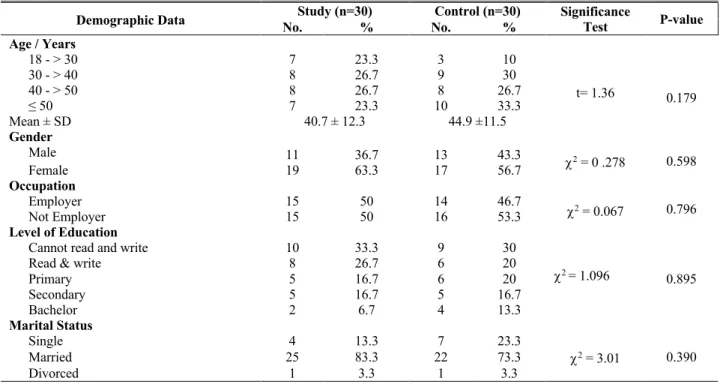
Table (1) reveals the distribution of the studied patients according to their demographic data. The table displayed that there was no statistically significant difference between the two groups regarding demographic data before implementing the nursing exercise protocol. Concerning age, the mean age among study and control groups was nearly similar (40.7 ± 12.3 and 44.9 ±11.5), respectively. Regarding gender, it found that the highest percentages among study and control group were female (63.3%, and 56.7%) respectively. Also, it noticed that the larger percent, (33.3%, 30 %) of study and control groups respectively could not read and write.
Table (2) shows that the highest percentages of both groups (study and control) having rheumatic heart disease (56.7% & 63.3%) respectively. As regarding type of surgery; it found that the highest percentage of both groups (study and control) had valve surgery (83.3% & 76.7%) respectively. Regarding the presence of chronic illness; it observed that the highest percentage of both groups (study and control) had hypertension (30% and 23.3%) respectively, while (16.7 % and 20%) had diabetes mellitus respectively. There was no statistically significant difference between the two groups regarding their medical data before implementing the nursing exercise protocol.
Table (3) reveals that there were no statistically significant differences between study and control group regarding performance of the exercise protocol preoperatively (before implementing the exercise protocol), while the findings show a highly significant improvement between the study and control groups postoperatively (after implementing the exercise protocol) as documented by p-value (0.000).
Figure (1) shows that the mean score regarding each exercise level of performance increased in the study group compared to the control group post implementing nursing exercise protocol.
Table (4) shows that the mean values of the vital signs and oxygen saturation measurements among the studied subjects were within the normal range along the 1st five days (pre and post-intervention). The table shows statistically significant differences between the two groups in the fifth day concerning temperature, pulse, respiration, and oxygen saturation compared to no statistical significance differences at the baseline in the first day before intervention.
The table shows that the mean value of temperature, pulse, systolic and diastolic blood pressure measurements was in the normal range during the 1st five days with a
slight increase in the mean of the study group compared to control. The table shows that there were high statistical significant differences among both groups regarding the respiration during 2nd-day post-intervention documented by p-value (0.001). Also, there were statistically significant differences among both groups regarding the respiration during 3rd, fourth, and 5th-day post-intervention documented by p-value (0.049, 0.05 and 0.029) respectively.
From the same table it was noticed that there were statistically significant differences among both groups regarding oxygen saturation during 3rd-day post-intervention documented by p-value (0.04), moreover, there were high statistical significant differences among both groups during fourth and 5th-day post-intervention documented by p-value (0.001 and 0.000) respectively.
Table (5) reveals that the mean measurement of oxygen saturation and heart rate during the six-minute walk test before implementing the nursing exercise protocol was in the normal range for study and control group (before and after the test), with no statistically significant difference between the two groups. Also, the table showed a statistically significant improvement in oxygen saturation and heart rate at the end of six-minute walk test after implementing the nursing exercise protocol (at the end of follow up phase), as documented by p-value (0.038 and 0.019) respectively.
Table (6) shows the improvement of total distance walked related to 6-minute walk distance test among the study group compared to the control group. It noticed that; the mean value of the total distance was reduced shortly after cardiac surgery (discharge visit). Also, there were statistically significant differences between both the study and control group during the 6th-week post-discharge. Moreover; it found that there were highly statistically significant differences between both groups related to total distance walked during 8th, 10th, and 12th-week post-discharge. Also, it noticed that the mean difference of the total distance walked between the pre-intervention and the end of follow up (after 12 weeks) was 39.9 for the study group compared to 9.4 for the control group.
Table (7) reveals the improvement in the level of dyspnea among both study and control groups. The table showed that the highest percentage of both study and control groups were free from all dyspnea grades in the pre-intervention visit (63.3 %, 66.7 %) respectively, while, 16.7 % and 23.3% of both study and group experienced a high level of dyspnea (grade Ш) with a non-significant difference between the study and control group before and immediately after discharge. In contrast, 100%, 80% of both study and control group had not experienced dyspnea during 12th-week post-discharge, and (0%, 6.7%) of both study and group respectively had a high level of dyspnea (grade Ш) in the same week with a statistically significant difference between both groups.
Table (8) reveals a positive statistically significant correlation between exercise performance score and total distance walked postoperatively among study group during
4th, 6th, and 12th-week post-discharge documented by (p= 0.032, 0.050 and 0.047).
Table (1): Comparison of both study and control groups regarding their demographic data (n=60).
Demographic Data No. Study (n=30) % No. Control (n=30) % Significance Test P-value Age / Years
18 - > 30 7 23.3 3 10
t= 1.36 0.179 30 - > 40 8 26.7 9 30
40 - > 50 8 26.7 8 26.7
≤ 50 7 23.3 10 33.3
Mean ± SD 40.7 ± 12.3 44.9 ±11.5
Gender
Male 11 36.7 13 43.3
c2 = 0 .278 0.598
Female 19 63.3 17 56.7
Occupation
Employer 15 50 14 46.7
c2 = 0.067 0.796
Not Employer 15 50 16 53.3
Level of Education
Cannot read and write 10 33.3 9 30
c2 = 1.096
0.895 Read & write 8 26.7 6 20
Primary 5 16.7 6 20
Secondary 5 16.7 5 16.7
Bachelor 2 6.7 4 13.3
Marital Status
Single 4 13.3 7 23.3
0.390 Married 25 83.3 22 73.3 c2 = 3.01
Divorced 1 3.3 1 3.3
Not significant at p >0.05
Table (2): Comparison of both study and control subjects regarding medical data (n=60).
Medical Data No.Study (n=30) % Control (n=30) No. % Sig. Test P value Current Diagnosis
Rheumatic Heart Disease 17 56.7 19 63.3
c2 = 0.492 0.782
Ischemic Heart Disease 11 36.7 10 33.3 Atrial Septal Defect 2 6.7 1 3.3
Type of Surgery
Coronary Artery Bypass Graft 5 16.7 7 23.3 c2 = 0.417 0.519 Valve Surgery 25 83.3 23 76.7
Presence of Chronic Illness
None 15 50 15 50
c2 = 0.674 0.879
Diabetes mellitus 5 16.7 6 20 Hypertension 9 30 7 23.3 Chronic Obstructive Pulmonary Disease 1 3.3 2 6.7
Smoking
None 20 66.7 22 73.3
t= -0.602 0.550 10-20 cigarettes/day 7 23.3 6 20
21-30 cigarettes/day 3 10 2 6.7 > 30 cigarettes/day 0 0 0 0
Body Mass Index (BMI)
18.5-24.9 17 56.7 17 56.7
t=0.771 0.444
25-29.9 10 33.3 12 40
> 30 3 10 1 3.3
Mean ± SD 24.4 ± 1.6 24.7 ± 1.3
6.36 6.69
8.48
23.2
17.5
3
1.54 1.62
0.24
7.7 7.8
1.7
0 5 10 15 20 25 30
Study
Control
Table (3): Comparison of study and control group regarding the level of performance of exercises pre and post implementing nursing exercise protocol (n=60).
*Highly Statistical Significant Difference (P ≤ 0.01)
Figure (1): Mean score of study and control group regarding the level of performance of exercises post implementing nursing exercise protocol (n=60).
p-value Control (n=30)
Study (n=30)
Nursing Exercise Protocol Score No. % No. %
Pre Intervention
0.248 0
0 0
0 Satisfactory
100 30
100 30
Unsatisfactory
Post Intervention
0.000* 0
0 90
27 Satisfactory
100 30
10 3
Unsatisfactory
Table (4): Comparison between study and control groups regarding their hemodynamic variables pre and post implementing the nursing exercise protocol (n=60)
Hemodynamic Variables Study (n=30) Mean ± SD Control (n=30) Mean ± SD T-test P-value
Te
m
pe
ra
tu
re 1
st day (Pre) 37.1 ± 0.36 36.9 ± 0.15 1.72 0.09
2nd day (Post) 37 ± 0.20 37 ± 0.11 1.24 0.219
3rd day (Post) 37.2 ± 0.27 37 ± 0.11 1.49 0.140
4th day (Post) 37 ± 0.21 37.2 ± 0.27 2.97 0.004**
5th day (Post) 37 ± 0.18 36.9 ± 0.11 2.84 0.006**
F (P-value2) 3.07 (0.017*)
Re
sp
ir
at
io
n 12stnd day (Pre) day (Post) 15.3 ± 0.96 16.8 ± 1.2 18.4 ± 2.2 15 ± 1.5 0.886 3.61 0.001** 0.379
3rd day (Post) 15.1± 0.75 16.3 ± 3.1 2.01 0.049*
4th day (Post) 15.2 ± 0.76 16.2 ± 3.04 1.84 0.050*
5th day (Post) 15.03 ± 0.66 16.3 ± 3.10 2.24 0.029*
F (P-value2) 44.5 (0.000**)
Pu
ls
e
1st day (Pre) 86.1 ± 4.6 85.8 ± 6.5 0.219 0.827
2nd day (Post) 85.1 ± 4.04 82.5 ± 3.8 2.57 0.013*
3rd day (Post) 85.1 ± 4.04 82.6 ± 4.4 2.23 0.029*
4th day (Post) 84.9 ± 3.9 82.4 ± 4.04 2.37 0.021*
5th day (Post) 85 ± 4.04 82.5 ± 4.1 2.31 0.024*
F (P-value2) 5.15 (0.001**)
Sy
st
ol
ic
BP
1st day (Pre) 134.8 ± 6.5 138.1 ± 7.01 0.356 0.712
2nd day (Post) 113.6 ± 12.1 120.7 ± 12.9 2.18 0.033*
3rd day (Post) 129.2 ± 5.5 128.6 ± 7.9 0.326 0.746
4th day (Post) 128.8 ± 5.4 128.2 ± 8.1 0.312 0.757
5th day (Post) 128.8 ± 5.4 128.5 ± 7.9 0.132 0.895
F (P-value2) 45.5 (0.000**)
Di
as
to
lic
BP
1st day (Pre) 78.2 ± 8.5 72.6 ± 9.8 1.18 0.069
2nd day (Post) 80.7 ± 4.2 84.6 ± 4.8 3.29 0.024*
3rd day (Post) 80.5 ± 3.9 82.4 ± 5.3 1.60 0.115
4th day (Post) 80.2 ± 3.9 81.4 ± 5.1 0.992 0.326
5th day (Post) 80.2 ± 3.9 81.4 ± 5.1 0.992 0.326
F (P-value2) 37.7 (0.000**)
Ox
yg
en
Sa
tur
at
io
n 1
st day (Pre) 95.5 ± 0.50 95.3 ± 0.74 1.61 0.365
2nd day (Post) 94.7 ± 1.02 94.2 ± 2.02 2.26 0.306
3rd day (Post) 95.7 ± 1.1 95.1 ±1.2 5.45 0.04*
4th day (Post) 96.8 ± 0.59 94.1 ± 1.5 31.8 0.001**
5th day (Post) 96.8 ± 0.59 93.4 ± 1.6 36.9 0.000**
F (P-value2) 16.2 (0.000**)
* Statistical significant (P ≤ 0.05) ** highly Statistical significant (P ≤ 0.01)
Table (5): Mean score of study and control groups concerning oxygen saturation and heart rate during six-minute walk pre and post implementing the nursing exercise protocol (n=60).
Variable Study (n=30) Control (n=30) p value
Mean ± SD Mean ± SD
Pre-intervention
SpO2 at the start 95.5 ± 0.50 95.3 ± 0.74 0.231
SpO2 at the end 95.1 ± 0.68 94.9 ± 0.99 0.294
HR at the start 82.8 ± 3.8 83 ± 3.93 0.869 HR at the end 83.6 ± 3.6 84.9 ± 3.96 0.09
Post-intervention
SpO2 at the start 95.5 ± 0.50 95 ± 0.70 0.365
SpO2 at the end 94.7 ± 1.02 94.2 ± 2.02 0.038*
HR at the start 82.9 ± 3.7 83.3 ± 4.1 0.697 HR at the end 83.4 ± 3.2 85.8 ± 4.3 0.019*
Table (6): Mean score of both study & control group regarding total distance walked related to 6-minute walk pre and post implementing nursing exercise protocol.
Time Total Distance Walked P-value
Study (n=30) Control (n=30)
Mean ± SD Mean ± SD
Pre-intervention 157.7 ± 40 154.4 ± 48.7 0.773
Immediately Post Discharge 140 ± 45.8 126.3 ± 39.9 0.221
After 2 Weeks 145.7 ± 49.6 140.5 ± 31 0.629 After 4 Weeks 161.1 ± 39.5 151.1 ± 42 0.347 After 6 Weeks 170.3 ± 37.4 147.7 ± 35.4 0.020* After 8 Weeks 178.1 ± 33.9 154.1 ± 36.4 0.011** After 10 Weeks 192.1 ± 24.4 158.7 ± 39.8 0.000** After 12 Weeks 197.6 ± 21.4 163.8 ± 38.8 0.000**
Mean difference (pre-intervention
and after 12-week post-intervention) 39.9 9.4 0.000**
* Statistical Significant Difference (P ≤ 0.05) ** highly Statistical significant Difference (P ≤ 0.01)
Table (7): Distribution of study & control groups regarding dyspnea pre and post implementing the nursing exercise protocol (n=60).
Dyspnea Grades No. Study (n=30) % No. Control (n=30) % Fisher's exact p-value Pre- intervention
Grade (0) 19 63.3 20 66.7
1.57 0.748
Grade (І) 3 10 1 3.3
Grade (Π) 3 10 2 6.7
Grade (Ш) 5 16.7 7 23.3
Discharge visit(Post intervention)
Grade (0) 22 73.3 16 53.3
3.19 0.545
Grade (І) 2 6.7 2 6.7
Grade (Π) 3 10 5 16.7
Grade (Ш) 1 3.3 2 6.7
Grade (ІV) 2 6.7 5 16.7
After 2 weeks
Grade (0) 25 83.3 18 60
11.18 0.010*
Grade (І) 0 0 1 3.3
Grade (Π) 3 10 4 13.3
Grade (Ш) 2 6.7 7 23.3
After 4 weeks
Grade (0) 27 90 20 66.7
9.15 0.012*
Grade (І) 0 0 1 3.3
Grade (Π) 2 6.7 2 6.7
Grade (Ш) 1 3.3 7 23.3
After 6 weeks
Grade (0) 27 90 23 76.6
3.17 0.196
Grade (І) 2 6.7 4 13.3
Grade (Π) 1 3.3 3 10
After 8 weeks
Grade (0) 28 93.3 24 80
5.8 0.024*
Grade (І) 2 6.7 3 10
Grade (Π) 0 0 3 10
After 10 weeks
Grade (0) 30 100 24 80
5.99 0.024*
Grade (І) 0 0 3 10
Grade (Π) 0 0 3 10
After 12 weeks
Grade (0) 30 100 24 80
5.99 0.024*
Grade (І) 0 0 4 13.3
Grade (Ш) 0 0 2 6.7
Table (8): Correlation between exercise performance score and total distance walked post implementing the nursing exercise protocol (n=60).
Total Distance Walked
Exercise Performance Score
Study Control
r P r P
Discharge Visit 0.166 0.382 0.039 0.837 After 2 Weeks. 0.244 0.194 -0.280 0.134 After 4 Weeks. 0.393 0.032* -0.136 0.473 After 6 Weeks. 0.354 0.050* -0.008 0.967 After 8 Weeks. 0.342 0.065 0.009 0.962 After 10 Weeks. 0.329 0.076 0.039 0.837 After 12 Weeks. 0.365 0.047* 0.002 0.910
* Statistical Significant Difference (P ≤ 0.05)
6. Discussion
Functional status can be improved by high-quality therapeutic exercises, even in a short time like the waiting for surgery. Exercise training should be considered to improve perioperative outcomes and functional status (Hulzebos, Smit, Helders, & van Meeteren, 2012).
As regard to demographic characteristics and their medical data, the findings of the present study showed that there is no statistical significance difference between the two groups regarding to demographic characteristics and their medical data, this reflects homogeneity between the two groups in terms of demographic, clinical, and surgical variables enabled the investigator to consider the impact observed in the intervention group as a consequent to performed nursing educational protocol. This results supported by Thirapatarapong, & Chumwong, (2017), who studied the pre-operative pulmonary training program in coronary artery bypass graft surgery patients and found that there was no significant difference between the two groups regarding the baseline characteristics such as age, sex, and comorbidities.
The findings of present study showed that the mean age among study and control groups was nearly similar (40.7 ± 12.3 and 44.9 ±11.5) respectively, this is related to the commonality of heart diseases that required surgical intervention among younger patients from this age group, and that the highest percentages among study and control group were females, a possible explanation for this could be the fact that females are exposed to more cardiovascular risks in their lifetime than males. This finding agrees with Fahmy, (2017), in a study titled ''physical rehabilitation program to improve the physical and functional status after hospitalization of open-heart surgery'' and reported that the mean age among study and control groups (35.7 ± 6.08 and 41 ±10.6) respectively and Nyawawa, et al., (2010)study titled ''one year experience of cardiac surgery at Muhimbili national hospital'', who reported that 79% of all patients who had cardiac surgery were females.
This result is in contrast with Borges et al., (2016) a study titled ''Effects of aerobic exercise applied early after coronary artery bypass grafting on pulmonary function, respiratory muscle strength, and functional capacity '', and reported that the mean age among study and control groups (62.5 ± 7.1 and 62.8 ± 4.2) respectively and Guo, East & Arthur (2012), who investigated the effect of ''a
preoperative education intervention to reduce anxiety and improve recovery among Chinese cardiac patients'' and reported that more than half of cardiac surgery patients were males.
As regards to the medical data among the studied subjects, the present study showed that the highest percentages of both study and control group had rheumatic heart disease, the investigator rationalized that by the increased incidence of rheumatic heart disease in low and middle-income countries. Also, more than two-thirds of both study and control groups had valve surgery, this is related to the highest percentage of rheumatic heart disease among the studied sample affecting the heart valves and that nearly half of both study and control group were suffering from hypertension or diabetes mellitus. Also, the highest percentages of both the study and control group were nonsmoker with an average body mass index.
The previous findings supported by Musuku et al., (2013) in a study titled ''The synergies in open-heart surgery in Zambia'' and reported that (71.4%) of studied patients had rheumatic heart disease and Gelijns, et al., (2014), who examined the ''Management practices and major infections after cardiac surgery'' and found that the valvular surgery was the most common operation type. In addition to Miranda, Silva, Caetano, Sousa, & Almeida (2011) in a study titled ''Evaluation of pain intensity and vital signs in the cardiac surgery postoperative period'' and found that half of the studied population suffered from diabetes mellitus (DM) or systemic hypertension.
As regards to the level of performance of exercise after the implemented nursing exercise protocol, the findings of the present study showed, that the highest percentage of the study group patient has possessed a satisfactory score regarding the level of performance post implementing the nursing educational protocol. This finding is supported by Riaz, Kazmi, Naqvi, & Rizvi, (2017), who investigated the ''Pre and post-operative physiotherapy for patients after open-heart surgery." The study demonstrated that the respondents to pre-operative information regarding, deep breathing, mobilization, supported coughing, range of motion exercises, and post-operative sternotomy restrictions were 95% of all patients.
normal range with statistically significant improvement in the study group compared to controls, these variations may due to the positive effect of implemented nursing exercise protocol. These findings supported by Ghashghaei et al., (2012), who investigated the effect of ''exercise-based cardiac rehabilitation in improving hemodynamic responses after coronary artery bypass graft surgery'' and found that cardiac rehabilitation program has a significant effect on hemodynamic responses.
The present study findings displayed that the mean value of temperature among the studied subjects was within the normal range, with slight increase in the mean value of the study group compared to controls, this slight increase may be just as hazardous as intraoperative hyperthermia, in addition this changes wasn't accompanied by any signs of infection or visible illness as mentioned by Nussmeier, (2005) in study titled ''management of temperature during and after cardiac surgery.'' This result is not supported by Stiller et al., (2010), who evaluates the ''efficacy of breathing and coughing exercises in the prevention of pulmonary complications after coronary artery surgery'' and reported that the mean temperature of both groups was normal with no significant differences any stage of treatment during postoperative days.
The present study displayed a decrease in the mean value of respiratory rate among the study group compared to controls. The investigator regarded that to the effect of the implemented chest physiotherapy (deep breathing, coughing exercises, an incentive spirometer) which help stabilization in the respiratory rate. Tariq et al., (2017) supports this result, in a study titled ''Postoperative outcome of early ≤ 3 Mets (metabolic equivalent of tasks) of physical activity on patients outcomes after cardiac surgery'', who reported a stabilization of respiratory rate among both early activity and control group with a gradual decline in respiratory rate of the early activity group only.
In the present study, it has been noticed that the mean value of pulse among the studied subjects was within the normal range, with a slight increase in the mean value of the study group compared to controls. The possible explanation for the increase in heart rate may be due to implemented exercise protocol which may induce an increase in sympathetic nerve activity to the heart and blood vessels during exercise sessions. This result is in contrast with, Thapa & Pattanshetty, (2016) in study titled '' Effect of chair aerobics as low-intensity exercise training on heart rate, blood pressure and six-minute walk distance in post coronary artery bypass graft surgery patients through phase I cardiac rehabilitation'' who demonstrated a decrease in heart rate of the studied subjects post-intervention
The present study findings displayed that the mean value of systolic and diastolic blood pressure among the studied subjects was within the normal range, with statistically significant differences among both groups during the second-day post-intervention, this could be due to the effect of the inotropic agents that routinely administered post cardiac surgery. This result agrees with Ghashghaei et al., (2012), who found that cardiac rehabilitation has a significant effect on resting and
maximum systolic blood pressure and resting and maximum diastolic blood pressure
The present study findings displayed a significant statistical difference between both groups regarding peripheral oxygen saturation (SpO2) during 3rd, fourth and 5th-day post-intervention; the investigator referred that to the effect of the implemented chest physiotherapy (deep breathing, coughing exercises and incentive spirometer). This result is supported by Tariq et al., (2017), who documented that early physical activity led to a marked improvement in oxygen saturation in the experimental group.
As regard to dyspnea scale, the finding of the present study illustrated that study group was dyspnea free at the end of the follow-up phase with a statistically significant difference between the study and control groups at the twelfth week. This result agreed with Karaszewski, (2014) study titled ''Comparison of two models of hospital rehabilitation in patients after coronary artery bypass grafting'' and confirmed a statistically significant difference between the studied groups concerning dyspnea scale and confirmed that patients in exercise training group demonstrated better exercise tolerance and lower levels of dyspnea.
In addition to, this result was in line with Kodric et al., (2013), who evaluated the effect of ''inspiratory muscle training for diaphragm dysfunction after cardiac surgery'' and documented that the MMRC dyspnea score significantly improved after 6 and 12 weeks in the exercise training group compared with the control group. The previous findings supported the first research hypothesis.
As regards the total distance walked during the 6-minute walk test, the findings of the present study showed that the mean value of the total distance was reduced shortly after cardiac surgery. This finding agrees with Riaz et al. (2007) study titled ''the 6-min walking test early after cardiac surgery. Reference values and the effects of the rehabilitation program documented that distance walked during the 6-minute walk test was significantly shorter after cardiac surgery. This result in line with, Ximenes et al., (2015), who examined the ''Effects of resistance exercise applied early after coronary artery bypass grafting'' and found a decrease in total distance walked in 6-minute walk test between preoperative period and hospital discharge.
In the present study, it has been noticed that the mean value of the total distance walked during the 6 minute walk test quickly improves after nursing exercise protocol as shown at the end of the follow up by a significant increase in the distance walked by the study group. The investigator referred that to the positive effect of the nursing educational exercise protocol on walking performance and exercise tolerance after surgery. This finding agreed with Pattanshetty, Borkar & Khetan, (2014), who illustrated that the six-minute walk distance had demonstrated a significant improvement in exercise capacity following twelve weeks of exercise training.
that there was a significant decrease of physical function in early post-operative period followed by a significant improvement at four weeks and three months postoperative. The current study findings revealed that the mean difference in total distance walked before the intervention and at the last follow up visit after applying nursing exercise protocol was 39.9 meter. This result in line with Alexiev, Terziev & Gotcheva, (2017), who investigated the ''effects of an early cardiac rehabilitation following heart surgery in patients over 70 years'' and confirmed that most patients showed >10% increase in distance walked between the two tests pre and after intervention; this increase should be considered a genuine improvement in functional capacity as a consequence of therapeutic intervention. These findings supported the second research hypothesis.
The present study findings displayed a statistically significant positive correlation between the exercise performance score and the total distance walked among the study group after three months of follow up. The investigator postulate that the difference between 6-minute walk tests at each assessment point indicates that adaptation occurs by subjects undertaking the exercise protocol and the improvement is considered an outcome of the presented nursing exercise protocol.
This result in line with Bellet et al., (2011), who investigated the ''Repeated six-minute walk tests for outcome measurement and exercise prescription in outpatient cardiac rehabilitation'' and documented that there was an improvement in 6-minute walk tests before and after exercise-based cardiac rehabilitation. Chen et al., (2018) found similar findings., when validating the 6-minute walk test as an indicator of recovery in patients undergoing cardiac surgery and documented that the cardiac rehabilitation and the total distance walked during the 6-minute walk tests had moderate to high correlation (r=0.47 to 0.62).
7. Conclusion
Based on current study findings, it can be concluded that the following nursing exercise protocol in the form of deep breathing and coughing, incentive spirometer, early ambulation, and ROM induce significant improvement in hemodynamic variables (that support the first research hypothesis) and six-minute walk distance post-cardiac surgery (that support the second research hypothesis). 8. Recommendations
- Hospitals should recommend implementing nursing exercise protocol as a routine hospital policy among all adult cardiac surgical patients.
- Periodic training about the nursing exercise protocol for patients undergoing cardiac surgery should be developed to nursing staff because they are the ones implementing them.
9. Acknowledgment
The investigator would like to acknowledge the contribution of all participants who kindly agreed to take part in the study. They generously gave their time and
attention to conduct this study. This study would have been impossible without their generosity.
9. References
1. Alexiev, A., Terziev, A. & Gotcheva, N. (2017).
Effects of an Early Cardiac Rehabilitation Following Heart Surgery in Patients Over 70 Years. SM J Clin Med, 3(1), 1019.
2. Ali, K. (2017). Physical function and sternal
management following cardiac surgery via median sternotomy. The University of Melbourne (Published Doctoral dissertation).
3. Bellet, R. N., Francis, R. L., Jacob, J. S., Healy, K.
M., Bartlett, H. J., Adams, L., & Morris, N. R.
(2011). Repeated six-minute walk tests for outcome
measurement and exercise prescription in outpatient cardiac rehabilitation: a longitudinal study. Archives of physical medicine and rehabilitation, 92(9), 1388-1394.
4. Borges, D. L., Silva, M. G., Silva, L. N., Fortes, J. V.,
Costa, E. T., Assunção, R. P., ... & Caputo, D. S.
(2016). Effects of aerobic exercise applied early after
coronary artery bypass grafting on pulmonary function, respiratory muscle strength, and functional capacity: A randomized controlled trial. Journal of Physical Activity and Health, 13(9), 946-951.
5. Chen, C. A., Chang, C. H., Lin, M. T., Hua, Y. C.,
Fang, W. Q., Wu, M. H., ... & Wang, J. K. (2015).
Six-minute walking test: normal reference values for
Taiwanese children and adolescents. Acta
Cardiologica Sinica, 31(3), 193.
6. Chen, Y. C., Chen, K. C., Lu, L. H., Wu, Y. L., Lai,
T. J., & Wang, C. H. (2018). Validating the 6-minute
walk test as an indicator of recovery in patients undergoing cardiac surgery: A prospective cohort study. Medicine, 97(42).
7. Cordeiro, A. L. L., Melo, T. A. D., Neves, D., Luna,
J., Esquivel, M. S., Guimarães, A. R. F., ... & Petto,
J. (2016). Inspiratory muscle training and functional
capacity in patients undergoing cardiac
surgery. Brazilian Journal of cardiovascular surgery, 31(2), 140-144.
8. Elliott, M., & Coventry, A. (2012). Critical care: the eight vital signs of patient monitoring. British Journal of Nursing, 21(10), 621-625
9. Elshamy, N. F. Y., Abdelaziz, S. H., Gado, A. S., &
Hammed, A. F. (2016). The Preoperative Nutritional
and Psychosocial Health Status among Patients Undergoing Open Heart Surgery: A Cross-Sectional Correlational Study. International Journal of Nursing, 6(2), 48-57.
10. Fahmy, W. A. (2017). Physical Rehabilitation
Program to Improve the Physical and Functional Status after Hospitalization of Open-Heart Surgery. J Cardiovascular Thoracic Surgery, 3(1), 1-17.
11. Fletcher, C. M., Mendonca, J., Pereira, H. (2006).
diagnosis of chronic bronchitis in a working population. Br Med J, 2(25), 7–266.
12. García, S. H., Lago, E. P., Oquendo, J. Á. M., &
Rivas Estany, E. (2014). Hospitalization phase of
cardiac rehabilitation. Protocol for cardiac surgery. CorSalud (Revista de Enfermedades Cardiovasculares), 6(3), 246-256.
13. Gelijns, A. C., Moskowitz, A. J., Acker, M. A.,
Argenziano, M., Geller, N. L., Puskas, J. D., ... &
Miller, M. A. (2014). Management practices and
major infections after cardiac surgery. Journal of the American College of Cardiology, 64(4), 372-381.
14. Ghashghaei, F. E., Sadeghi, M., Marandi, S. M., &
Ghashghaei, S. E. (2012). Exercise-based cardiac
rehabilitation improves hemodynamic responses after coronary artery bypass graft surgery. ARYA atherosclerosis, 7(4), 151.
15. Guo, P., East, L., & Arthur, A. (2012). A
preoperative education intervention to reduce anxiety and improve recovery among Chinese cardiac patients: a randomized controlled trial. International Journal of Nursing Studies, 49(2), 129-137.
16. Højskov, I. E., Moons, P., Hansen, N. V., La Cour,
S., Olsen, P. S., Gluud, C., ... & Berg, S. K. (2017).
SheppHeartCABG trial—comprehensive early
rehabilitation after coronary artery bypass grafting: a protocol for a randomized clinical trial. BMJ, 7(1), e013038.
17. Hong, W., Earnest, A., Sultana, P., Koh, Z.,
Shahidah, N., & Ong, M. E. H. (2013). How accurate
are vital signs in predicting clinical outcomes in critically ill emergency department patients? European Journal of Emergency Medicine, 20(1), 27-32.
18. Hulzebos, E. H., Smit, Y., Helders, P. P., & van
Meeteren, N. L. (2012). Preoperative physical therapy
for elective cardiac surgery patients. Cochrane Database Syst Rev, 11:CD010118.
19. Karanfil, E. O. T., & Møller, A. M. (2018).
Preoperative inspiratory muscle training prevents pulmonary complications after cardiac surgery–a systematic review. Danish medical journal, 65(3).
20. Karaszewski, D. (2014). Comparison of two models of
hospital rehabilitation in patients after coronary artery bypass grafting. Kardiochirurgia i torakochirurgia Polska. Polish Journal of cardio-thoracic surgery, 11(1), 86.
21. Kodric, M., Trevisan, R., Torregiani, C., Cifaldi, R.,
Longo, C., Cantarutti, F., & Confalonieri, M. (2013).
Inspiratory muscle training for diaphragm dysfunction after cardiac surgery. The Journal of thoracic and cardiovascular surgery, 145(3), 819-823.
22. Lewis, S. L., Dirksen, S.R., Heitkemper, M. M.,
Bucher, L., Harding, M. M. (2014). Medical-surgical
nursing: assessment and management of clinical problems, cardiac surgery. 9th ed. Elsevier Health Sciences. 758:763
23. Miranda, A. D. F. A., Silva, L. D. F. D., Caetano, J.
Á., Sousa, A. C. D., & Almeida, P. C. (2011).
Evaluation of pain intensity and vital signs in the cardiac surgery postoperative period. Revista da Escola de Enfermagem da USP, 45(2), 327-333.
24. Musuku, J., Bvulani, B., Makasa, E., Mwandila, M.,
Singh, H., Mbewe, W., Kalininchecho, S., Kavindele, D., Mulendele, E., & Kangwa, C. (2013). Synergies in open-heart surgery in Zambia in 2011. In 6th World Congress: Paediatric Cardiology and Cardiac Surgery, (p.5). Cape Town, South Africa: Cardiovascular Journal of Africa, 24(1)
25. Naveed, A., Azam, H., Murtaza, H. G., Ahmad, R. A.,
& Baig, M. A. R. (2017). Incidence and risk factors of
Pulmonary Complications after Cardiopulmonary bypass. Pakistan journal of medical sciences, 33(4), 993.
26. Nussmeier, N. A. (2005). Cardiovascular
anesthesiology: Management of Temperature During and After Cardiac Surgery. Texas Heart Institute Journal/from the Texas Heart Institute of St. Luke's Episcopal Hospital, Texas Children's Hospital, 32(4), 472.
27. Nwiloh, J., Smit, F., Mestres, C., & Yankah, C.
(2018). Challenges to providing open-heart surgery
for 186 million Nigerians. Nigerian Journal of Cardiovascular & Thoracic Surgery, 3(1), 8.
28. Nyawawa, E. T. M., Ussiri, E. V., Chillo, P., Waane,
T., Lugazia, E., Mpoki, U., Luchemba, R., Wandwi, B., Nyangasa, B., Bgoya, J., & Mahalu, W. (2010).
Cardiac Surgery: One Year Experience of Cardiac Surgery at Muhimbili National Hospital, Dar es Salaam- Tanzania. East and Central African Journal of Surgery, 15(1), 111-118.
29. Papadopoulos, N., Hacibaramoglu, M., Kati, C.,
Muller, D., Flöter, J., & Moritz, A. (2013). Chronic poststernotomy pain after cardiac surgery: correlation of computed tomography findings on sternal healing with postoperative chest pain. The Thoracic and cardiovascular surgeon, 61(3), 202-208.
30. Pattanshetty, R. B., Borkar, S. S., & Khetan, S. M.
(2014). Effectiveness of low-intensity exercises on
six-minute walk distance and hemodynamic variables in CABG and valve replacement patients during phase 1 cardiac rehabilitation in a tertiary care setup: a comparative study. Int J Physiother Res, 2(5), 669-76.
31. Riaz, F., Kazmi, S. A. M., Naqvi, S. I. H., & Rizvi, A.
S. (2017). Pre and post-operative physiotherapy for
patients after open-heart surgery. European International Journal of Science and Technology, 6 (2).
33. Snowdon, D., Haines, T. P., & Skinner, E. H. (2014). Preoperative Intervention reduces Postoperative Pulmonary Complications but not length of stay in Cardiac Surgical Patient: A systematic review. Journal of Physiotherapy, 60(2), 66–77.
34. Stephens, R. S., & Whitman, G. J. (2015).
Postoperative critical care of the adult cardiac surgical patient. Part I: routine postoperative care. Critical care medicine, 43(7), 1477-1497.
35. Stiller, k., Montarello, J., Walace, M., Daff, M.,
Grant, R., Jenkins, S., Hall, B., Yates, H. & Nurs, B.
(2010). Efficacy of breathing and coughing exercises
in the prevention of pulmonary complications after coronary artery surgery, chest, 105, 741 – 47.
36. Tariq, M. I, Khan, A. A., Khalid, Z., Farheen, H.,
Siddiqi, F. A. & Amjad, I., (2017). The postoperative
outcome of early ≤ 3 Mets (metabolic equivalent of tasks) of physical activity on patients outcomes after cardiac surgery, Journal of the College of Physicians and Surgeons Pakistan, 27(8), 490-494
37. Thapa, S., & Pattanshetty, R. B. (2016). Effect of Chair aerobics as low-intensity exercise training on heart rate, blood pressure, and six-minute walk distance in post coronary artery bypass graft surgery patients through phase I cardiac rehabilitation. Nepalese Heart Journal, 13(1), 19-23.
38. Thirapatarapong, W., & Chumwong, N. (2017).
Pre-operative Pulmonary Training Program in Coronary Artery Bypass Graft Surgery Patients at Siriraj Hospital. Siriraj Medical Journal, 62(4), 161-164.
39. Winkelmann, E. R., Dallazen, F., Bronzatti, A. B. S.,
Lorenzoni, J. C. W., & Windmöller, P. (2015).
Analysis of steps adapted protocol in cardiac rehabilitation in the hospital phase. Brazilian Journal of cardiovascular surgery, 30(1), 40-48.
40. Ximenes, N. N. P. S., Borges, D. L., Lima, R. O.,