1
A study of how to effectively leverage
incident investigations to better inform
system safety
Cora McCaughan
Thesis submitted for the Degree of Doctor of Philosophy (Ph.D.), School of Psychology,
Trinity College, University of Dublin,
2
DECLARATION
I declare that this thesis has not been submitted as an exercise for a degree at this or any other university and it is entirely my own work. I agree to deposit this thesis in the University’s open access institutional repository or allow the Library to do so on my behalf, subject to Irish Copyright Legislation and Trinity College Library conditions of use and acknowledgement.
Signature:
3
Acknowledgement
I sincerely thank my supervisors - Professor Nick McDonald and Professor Sam Cromie - for their invaluable guidance, enthusiasm and patience. Nick helped me to stay focussed on the importance of this thesis for learning from incidents in the most global sense, while Sam helped me to discern what was most important to achieve, and how to do this meticulously.
I also thank the following who supported me in doing this work:
My former National Incident Management and Learning Team (NIMLT) colleagues: Annette Macken, Margaret McGarry, Dr Samantha Hughes, Marie Boles, and Deirdre Coyne - who helped with the reliability testing work. I also thank them for the intensive and enlightening discourse that helped to develop the ideas that prompted this research. Other NIMLT colleagues that also helped in many ways were: JP Keogh, Vanessa Dunne, Mary King, Fiona Culkin, Aisling Boland, and Geraldine Donaghy.
My managers who provided encouragement and practical support: Mary Culliton, Dr Joe Devlin, John Kenny, and Patrick Lynch.
The Divisional Leads for Quality and Patient Safety in the HSE who engaged in this work: Deirdre O’Keeffe, Margaret Brennan, Annemarie Oglesby, Angela Alder, Gerry Clerkin, and Dr. JP Nolan.
My amazingly professional work colleagues Debbie Kavanagh, and Gerard Gibbons – who patiently and expertly kept the show on the road when I needed to take leave to do this work.
4 Summary
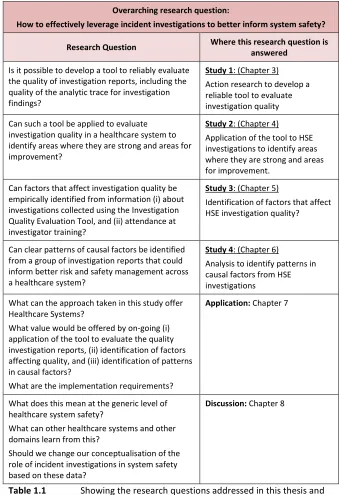
This thesis describes a study of how to effectively leverage incident
investigations to better inform system safety.
Chapter 1 describes the current state of the art. It explores theories of accident causation and their respective strengths and weaknesses. It
considers the role of investigations in managing system risk, and the
challenges of learning from incidents in healthcare. It highlights gaps in the
research including gaps related to (i) evaluating the quality of individual
investigation reports; (ii) identifying factors that affect investigation quality;
and (iii) identifying patterns of causal factors from groups of individual
investigation reports that can better inform system wide safety
improvement.
Chapter 2 presents the history of the Health Service Executive (HSE) which is the organisational context within which this research was conducted. It
shows that the HSE has been continuously restructuring and that this poses
challenges for developing, maintaining and evaluating consistent
high-quality investigation processes. Examples are presented that show that
learning from incidents is (i) not straightforward or automatic, (ii) requires a
level of professionalism and consistency, and (iii) requires a paradigm shift
from asking “why did this happen again?” to “why did this happen in the first place?” Interventions to improve investigation professionalism and consistency are described. To a large extent, this thesis focuses on
evaluating whether these interventions did or can result in better quality
investigations and consequently more effective organisation wide learning
from incidents.
Chapter 3 describes study 1, the first of four studies reflected in this thesis. This study involves the development of a tool to reliably evaluate the
quality of incident investigation reports, including the quality of the analytic
trace for investigation findings. It outlines an iterative action research
approach to develop a rigorous and reliable Investigation Quality Evaluation
Tool (IQET).
Chapter 4 describes study 2 which applies the IQET to determine the extent to which HSE investigations meet stated quality standards. It assigns
Investigation Quality Scores (IQSs) and considers what is done well, and
5
investigations compares favourably with investigations conducted in NHS
England showing that interventions to improve investigation quality yield
dividends. Nevertheless, areas for improvement are identified. By
application to the HSE the chapter demonstrates that the IQET can be
applied to evaluate the quality of investigations in healthcare.
Chapter 5, which chronicles study 3,shows that data about attendance at training, and data from the evaluation of investigation quality can be used
to empirically test hypotheses about the determinants of investigation
quality. The results challenge existing notions about what is important in
investigations. It shows that focusing more on causal factors improves
investigation quality. The findings provide strong evidence for informing
investigation PPPGs1 and training. All of this is important for developing the
theoretical basis of investigation science.
The analysis in study 4 to identify patterns in causal factors from the group of investigation reports outlined in chapter 6 results in a clearer picture of the complex pattern of factors that cause harm across the HSE than we
have had before. It highlights the importance of analysing causal data from
across the system and across time. It shows a way though the problem of
the mismatch of single investigations that can only focus on ‘a linear pathway to failure’ to a predictive model of complex system functioning that is sufficiently robust to support credible preventive interventions.
Chapter 7 describes the practical requirements of training and resourcing individuals to use the IQET, and to conduct on-going analysis to identify
patterns in causal factors from groups of investigation reports. It
demonstrates that the cost of on-going application is minuscule compared
with the costs of incidents. It highlights the benefit of improving staff and
public confidence in investigation processes. Finally, it considers the
applications for the HSE, for policy, and for other jurisdictions and domains.
Chapter 8 examines how far the findings of this research go towards achieving its aim, how they fit with the existing literature, their applied and
theoretical implications, and directions for future research. It describes a
model for continuously improving how to enhance learning from incident
investigations for more effective organisation wide safety improvement.
1
6
Abstract
Purpose: The purpose of this thesis was to explore how to effectively leverage incident investigations to better inform system safety.
Method: Four studies were conducted to achieve the purpose of this research. Study 1 used an iterative action research approach to develop and test an Investigation Quality Evaluation Tool (IQET) to rigorously and reliably evaluate the quality of serious incident investigation reports, including evaluating what Dekker (2006) referred to as the analytic trace for investigation findings. Study 2 applied the IQET to evaluate the quality of serious incident investigation reports assigning Investigation Quality Scores (IQS) and identifying what was done well and what needed to improve. Study 3 used data from (i) the evaluation of investigation quality, and (ii) attendance at investigation training - to empirically test hypothesis about the determinants of investigation quality. Study 4 conducted a thematic analysis of further details of contributory factors identified in investigation reports to identify patterns in causal factors.
Results: Study 1 showed reasonable IQET inter-rater reliability whereby this was excellent in 55.5% (n=5) of cases (kappa value ranging from .756 – .859), and fair to good in the remaining 44.44% of cases (n=4) (kappa value ranging from .418 - .587). Study 2 found that IQSs ranged from 13.79% - 78.13% with a mean of 45.17%. Elements satisfactorily done most frequently included placing events in chronological order in the chronology, and evidence of review of records. Elements not satisfactorily done related to generalizing from investigations, and not using the hierarchy of controls to develop recommendations. Study 3
revealed that there was a positive statistically significant correlation between IQS and (i) attendance at NIMLT2 training; (ii) having
investigation expertise on the investigation team; (iii) having a team of not less than 2 and not more than 3 investigators; (iv) conducting individual interviews; and (v) adherence to the definition of Key Causal Factor (KCF) in investigation guidelines. Study 4 identified nine main
2
7
themes in causal factors including (i) Care pathways, PPPGs and other tools that support care delivery (ii) education, training and supervision; and (iii) Governance and risk management.
8
Table of contents
Chapter 1 – Introduction
The state of the art related to learning from incidents in healthcare 17 1.1. The level and cost of harm in healthcare 18 1.2. Theories of accident causation, system safety, and system
learning
20 1.3. The role of incident investigation in managing system safety 27 1.4. The challenge of learning from incidents in healthcare 28
1.4.1. Studies that did not consider all available information necessary to identify causes
29 1.4.2. Studies that focused on “surmised” causes rather than
actual causes
31 1.4.3. Studies that focused on superficial causes as opposed to
systemic causes
33 1.4.4. Studies that focused on parts of the health system and
subsets of incident types
54 1.4.5. Studies that match types of incidents to a limited
number of incident causes
36 1.4.6. Absence of Human Factors and system safety expertise
in investigations
37 1.4.7. Limited research about the quality of investigations and
how to evaluate this
38 1.4.8. Limited research about the factors that affect
investigation quality
39 1.4.9. Limited analysis of groups of investigation reports to
identify patterns in causal factors
40
1.5. Discussion 43
Chapter 2 – The organisational context
Learning from incidents in the HSE 47
2.1. Introduction 47
2.2. History and scope of the HSE 48
2.2.1. On-going restructuring of the HSE 49
2.3. History of investigation structures in the HSE 55
2.3.1. Investigation structure prior to the establishment of the HSE
9
HSE 55
2.3.3. Cases that highlighted the need to improve investigation quality
59 2.3.4. Cases that highlighted some progress in investigation
quality
65
2.4. Initiatives taken to improve investigation professionalism and quality
72
2.4.1. Updating investigation guidelines 72
Move from the epidemiologic model to the systemic model
75
Evolution of the term “Key Causal Factor” 76
Evolution of a tool to audit compliance with guidelines 79
2.4.2. Delivery of training to support guideline implementation 79
The evidence base for investigation training 79
Evidence based investigation training design and delivery
81
Findings of the analysis of participants’ feedback 84
2.5. Discussion 85
Chapter 3 – Study 1
Developing and reliable tool to evaluate investigation report quality 87 3.1. Introduction: Review of the literature to identify quality
markers and evaluation tools
88
3.1.1. VA NCPS3 Investigation Quality Evaluation Tool 89 3.1.2. NPSA4 RCA5 Investigation Quality Evaluation Tool 91 3.1.3. The rationale for developing and exhaustive IQET6 92
3.2. Method: Iterative action learning approach for developing IQET
93 STEP 1: Checking the evidence base for developing IQET 1 94 STEP 2: Qualitative Inter-rater reliability testing IQET 1 97
Reviewers 97
Methods 98
Results 98
STEP 3: Testing and enhancing IQET 1 through evaluation of 2013 reports to develop IQET 2
100
3
VA NCPS: Veteran Affairs National Centre for Patient Safety (i.e. in the USA)
4 NPSA: National Patient Safety Agency (i.e. in the UK) 5
RCA: Root Cause Analysis
6
10
STEP 4: Qualitative inter-rater reliability testing IQET 2 103
Reviewers 103
Methods 104
Results 104
STEP 5: Development of IQET 3 116
STEP 6: Application of IQET 3 to evaluate 2014 reports 116 STEP 7: Quantitative inter-rater reliability testing of IQET 3 116
Method 116
Reviewers 117
Results 117
3.3. Discussion 123
Chapter 4 – Study 2
Applying the IQET to evaluate investigation report quality 129
4.1. Introduction 129
4.2. Review of criteria for high quality investigations 130
4.3. Method 132
4.3.1. Sample 132
4.3.2. Application of IQET to evaluate 2013 & 2014 reports 133 4.3.3. Method for Investigation Quality Scoring (IQS) 134 4.3.4. Method for determining whether KCFs7 were
adequately supported by the evidence
134
4.3.5. Analysis of the quality of investigation reports 135
4.4. Results 135
4.4.1. Summary of quantitative results 135
4.4.2. Result from IQS process 138
4.4.3. Detailed results 142
4.5. Discussion 167
Chapter 5 – Study 3
Analysis of factors predicting the quality of investigations 177
5.1. Introduction 177
5.1.1. Review of the literature on factors affecting investigation quality
178
7
11
5.1.2. Review of assumptions about what makes a better investigation team and process
179
5.2. Method 180
5.3. Results 180
5.3.1. Attendance and NIMLT8 Investigator Training 180
5.3.2. Timeliness of investigations 183
5.3.3. Size and makeup of investigation teams 187
Number of investigators 187
Use of investigation experts 188
5.3.4. The scope in time of the chronology 190
5.3.5. The number of interviews 194
5.3.6. Individual interviews 194
5.3.7. Adherence to the definition of Key Causal Factors 195
5.3.8. Investigation method used 195
5.4. Discussion 198
Chapter 6 – Study 4
Analysis to identify patterns in causal factors 206
6.1. Introduction 207
6.2. Method 208
6.2.1. Determining patterns of (i) Broad Contributory Factor types, and (ii) Contributory Factors
209
6.2.2. Timeliness of investigations 211
6.3. Results 213
6.3.1. Patterns of Broad Contributory Factor types 213
6.3.2. Patterns of Contributory Factors 215
6.3.3. Patterns identified from “further details of Contributory Factors”
217
Theme 1: Rapid deterioration 222
Theme 2: Planning and monitoring 223
Theme 3: Communications 223
Theme 4: Access 224
Theme 5: Equipment, facilities, and environment 225 Theme 6: Care pathways, PPPGs, and other tools to
8
12
support care delivery 226
Theme 7: Governance and risk management 226
Theme 8: Education, training, and supervision 226
Theme 9: Diagnosis 227
6.4. Discussion 227
Chapter 7 – Application
To effectively leverage investigations to better inform system safety 241
7.1. Introduction 241
7.2. What can the approach taken in this research offer health systems?
242
7.3. Implementation requirements 245
7.3.1. Training of individuals to use the IQET 245
7.3.2. Resourcing people to use the IQET 247
7.3.3. The need to have a single person identifying patterns in causal factors
248 7.3.4. Effective communication & training to promote
evaluation of investigation quality & analysis to identify causal factors
248
7.4. Cost benefit of the approach taken for healthcare systems 250
7.4.1. Smaller investigation teams 250
7.4.2. Good quality investigations don’t necessarily require more resources
250
7.4.3. The benefits of evaluating quality 250
7.4.4. The benefits of analysing patterns in causal factors 251
7.4.5. Cost benefit analysis 251
7.5. What happened to the approach in the interim 253
7.5.1. Handover of learning from identification of patterns in causal factors
253 7.5.2. Investigation quality evaluation & analysis of causal
patterns continued
255 7.5.3. Audit priorities are informed by patterns in causal
factors
255
7.5.4. Additional training for investigators 257
7.6. Application for HSE policy and other jurisdictions 258
13
Chapter 8 – Discussion 262
8.1. Introduction 262
8.2. How has this thesis advanced the state of the art? 263
8.2.1. Learning for the HSE, other health systems, and other domains
263 Need for investigation stability, consistency,
professionalism and focus on causes
263
Investigations from the whole system can be evaluate to improve investigation quality
263
Data about investigation quality can be used to identify determinants of investigation quality
264
Identifying patterns in causal factors from groups of investigations can inform better system wide safety improvement
265
8.2.2. Implications for theory 266
Changing the concept of how we generalize from investigation for system wide learning
266 The fallacy of preventing similar incidents recurring
based on learning from one incident
270 Continuously improving how we generalize from
investigations for system wide learning
271
8.2.3. Implications for policy and implementation 279
Investigator training 279
Investigation team size and make up 280
Investigation quality evaluation feedback to investigators
280 Identification of factors that affect investigation quality 281 Analysis of groups of investigations to identify patterns
in causal factors
281
8.3. Reflection about the role of the author in the thesis 282 8.4. Strengths and limitations of the thesis 284
8.5. Next steps (Unfinished business) 287
References 290
Appendices
Appendix 1: Details of course content for 3 day systems analysis investigator training
Appendix 2: Samples of the respondents’ comments as outlined on completed Evaluation Forms (Modules 1, 2 and 3)
14
Appendix 4: Investigation Quality Evaluation Tool 2 (IQET 2)
Appendix 5: Investigation Quality Evaluation Tool 3 (IQET 3)
Appendix 6: Results of quantitative reliability testing of the IQET 4
Appendix 7: Investigation Quality Evaluation Tool 4 (IQET 4)
Appendix 8: Comparing the IET with the other five Evaluation Tools showing where the other Evaluation Tools do and do not have questions that are equivalent to the IET
Appendix 9: Details of investigation reports that fell within this study
Appendix 10: Details of reasons for delays in investigation timelines
Appendix 11: Further details of investigation reports that did not include a summary of investigation methodology used
Appendix 12: Details from the comments section of the IQET related to the summary of the methodology section of 2015 reports
Appendix 13: Details of quality of data collected
Appendix 14: Details from comments section of the IQET related to whether chronologies were sufficiently detailed
Appendix 15: Expanded details from comments on IQET related to whether contributory factors were adequately supported by evidence within the investigation report
Appendix 16: Details from the comments section of IQET related to whether recommendations were linked clearly to Contributory Factors
Appendix 17: Details from the comments section of the IQET related to whether investigations were written impartially
Appendix 18: Details of investigation guidelines followed correlated to date investigation commenced
Appendix 19: Details of the preliminary reviews and other kinds of reviews by (i) Division; (ii) Brief description of incident; (iii) Number and type of investigators; (iv) Whether any of the
investigators had attended any HSE NIMLT Systems Analysis Investigation Training; (v) Whether KCFs were identified or not; (vi) Whether there was satisfactory evidence to support identified KCFs; Timeliness of the investigations; and (vii) Investigation Quality Scores
Appendix 20a): Themes identified from thematic analysis of further details of contributory factors showing data items under each theme
Appendix 20b): Data items included as further details of contributory factors, but discarded from the thematic analysis as they did not appear to be further details of contributory factors
List of tables
Table 1.1: Showing the three models of accident causation referred to by Dekker (2006) and their respective weaknesses and strengths
Table 2.1: Showing changes over time in the HSE vision, mission, values, objectives, and structures, including incident management and investigation structures
Table 3.1: Time taken to review and input data from review of investigation quality onto Excel spread sheet.
Table 3.2: Tool for tallying individual investigation report quality IQSs.
15
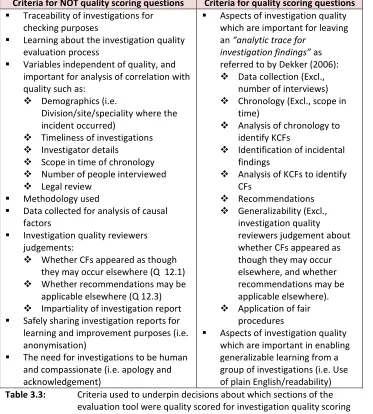
Table 3.4: Showing details of how the criteria referred to above were applied to each question within IQET to decide which questions would be scored for IQS purposes.
Table 3.5: Reliability of IQSs between reviewers for each case
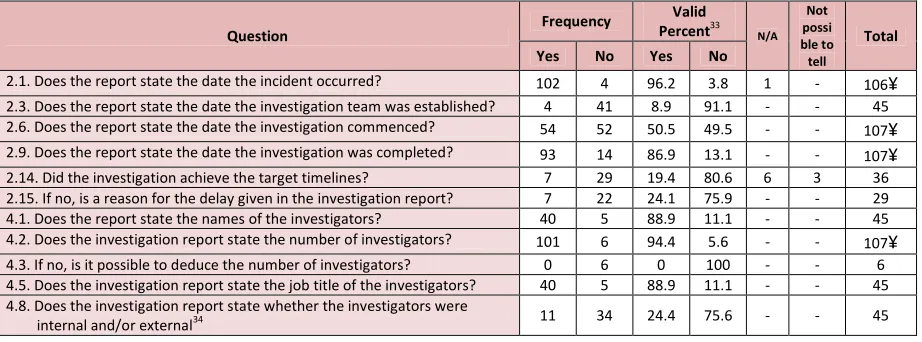
Table 4.1: Results of analysis of investigation reports related to yes/no answers on the IQET.
Table 4.2: Table comparing the timeframes for completion investigation reports in 2013 and 2014.
Table 4.3: Cross tabulation showing whether reports identify Key Causal Factors or state that no Key Causal Factors are identifiable cross tabulated with whether reports identified Key Causal Factors or not for 2014 reports.
Table 4.4: Cross tabulation for whether key causal factors were
identified or not with whether this was adequately supported by evidence in the report (for 2013 report, 2014 reports, and both 2013 and 2014 reports).
Table 4.5: Showing cross tabulation for whether key causal factors were identified by the original investigators v whether they were deducible from the evidence within reports (for 2013 reports, 2014 reports, and both 2013 and 2014 reports).
Table 4.6: Showing cross tabulation of 2014 reports that identified KCFs with reports that identified CFs.
Table 4.7: Showing the results of the assessment as to whether CFs and/or recommendations appeared to be applicable outside of the site where the incident occurred, compared with whether reports stated this.
Table 4.8: Showing the results of evaluation of investigation reports related to the apology given/referred to.
Table 4.9: Showing whether investigation reports reflected the investigation guidelines used correlated with the year the investigation commenced.
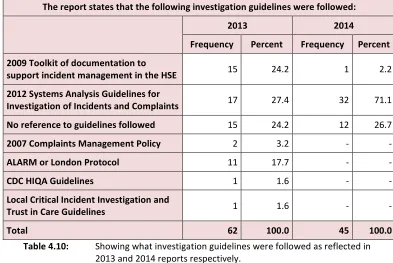
Table 4.10: Showing what investigation guidelines were followed as reflected in 2013 & 2014 reports respectively
Table 4.11: Comparison of the findings of the evaluation of the quality of serious incident investigation reports between the NHS and the HSE
Table 5.1: Showing cross tabulation of IQS with information about whether investigators had attended any HSE Systems Analysis Investigator Training
Table 5.2. Showing whether investigations were conducted by investigation experts, subject experts or a combination of these compared with whether KCFs (or a finding that no KCFs were identifiable) were adequately supported by evidence within 2013 and 2014 reports.
Table 5.3: Showing the proportion of reports that were systems analysis investigations, preliminary reviews or other per year and in total.
Table 5.4: Comparison between preliminary review, “Other” types of investigations, and Systems Analyses in relation to use of definition of KCF in line with Guidelines; whether reports reflected satisfactory evidence to support KFCs (Or a finding that none were identifiable); and average quality scores.
16
Table 6.1: Framework of Contributory Factors from the Guidelines for Systems Analysis Investigation of Incidents and Complaints (HSE, 2012) which in turn is from the London Protocol (Taylor-Adams et al., 2004)
Table 6.2: Showing the frequency of contributory factors (2013 and 2014 reports combined)
Table 6.3: Showing key themes identified from the thematic analysis of the further information about contributory factors data.
Table 6.4: Cases of failure to detect and respond to rapid deterioration per service, and outcome.
Table 7.1: Showing what a cost benefit analysis of the on-going (i) application of the IQET to evaluate investigation quality, and (ii) analysis of groups of investigation reports to identify patterns in causal factors - to enhance incident investigations and how we learn from them – would look like.
List of figures
Figure 3.1: Design of this study to develop the Investigation Quality Evaluation Tool.
Figure 3.2: Tool for calculating final IQS for individual investigation reports.
Figure 4.1: Showing the application of the IQET as per steps 3 and 6.
Figure 4.2: Graph showing the proportion of investigations that
demonstrated satisfactory evidence in relation to each of the 41 elements of quality scored (IQS)
Figure 5.1: Showing whether investigators had attended 1,2, or 3 days of HSE NIMLT 3 day Systems Analysis Investigator Training
Figure 5.2: Scatter plot diagram of the cross tabulation of time to complete investigations with IQS
Figure 5.3: Box plot showing average and range of IQSs for different sizes of investigation teams.
Figure 5.4. The relationship between IQSs and the scope in time in days reflected within chronologies in the investigation reports completed in 2014 (Two outliers of 3031 days and 6933 days removed)
Figure 5.5. The relationship between IQSs and the number of interviewees reflected in 2014 investigation reports
Figure 5.5: Box plot showing the average and range of scores for systems analysis investigations, preliminary reviews, and “Other” investigations completed in 2014.
Figure 6.1: Showing the frequency of Broad Contributory Factors Types (2013 & 2014 reports)
Figure 6.2: Showing the frequency of Broad Contributory Factors Types (Results from 2013 & 2014 combined)
Figure 6.3: Showing the frequency of sub-contributory factors (2013 and 2014 shown separately)
Figure 6.4: Thematic map showing the nine main themes and their sub-themes
Figure 6.5: Thematic map showing the links between the nine main themes
17
Chapter 1 - Introduction
The state of the art related to learning from incidents in healthcare
Overview of chapter 1
1.1.The level and cost of harm in healthcare
1.2.Theories of accident causation, systems safety and system learning
1.3.The role of incident investigation in managing safety in the system
1.4.The challenge of learning from incidents in healthcare
Studies that do not consider all available information necessary to identify causes
Studies that focus on ‘surmised’ causes as opposed to actual causes
Studies that focus on superficial causes as opposed to systemic causes
Studies that focus on part of the health system and subsets of incident types
Studies that match types of incidents to a limited number of causes
Absence of Human Factors and system safety expertise in investigations
Limited research about the quality of investigations and how to evaluate this
Limited research about the factors that affect investigation quality
Limited analysis of groups of investigation reports to identify patterns in causal
factors
1.5.Discussion
The overall aim of this research is to explore how to effectively leverage incident investigations to better inform system safety.
This chapter scrutinizes the literature related to this, focusing first on the level and cost of incidents. It shows that not attempting to improve safety based on learning from incidents is not justifiable and not an option. It goes on to appraise theories of accident causation, system safety and organisational learning and the apparent irreconcilable differences between some of these theories. Next, it considers the role of incident investigation in managing risk in the system, and the
challenge of learning from incidents. This is followed by a critique of the tendency for studies (i) not to consider all information necessary to identify incident causes; (ii) to focus on surmised cause as opposed to
18
subsets of incident types; (v) to focus on matching types of incidents to a limited number of potential incident causes; and (vi) to reflect an absence of Human Factors and System Safety expertise in investigations. Next, this chapter identifies gaps in literature about (i) investigation quality and how this can be evaluated; (ii) the factors that affect investigation quality; and (iii) how to identify patterns in causal factors from groups of investigation reports for organisational learning. Finally, this chapter discusses the evidence available that we can build upon, and the empirical and conceptual gaps in the literature that need to be bridged – in order to understand better how to effectively
leverage incident investigations to inform better system safety.
1.1. The level and cost of harm in healthcare
A World Health Organisation (WHO) report in 2008 identified that tens of millions of patients worldwide suffer disabling injuries or death due to unsafe medical care every year (World Health Organisation, 2008). The following year, a subsequent WHO report stated that nearly one in ten patients is harmed while receiving health care in well-funded and technologically advanced hospital settings and that much less is known about the burden of unsafe care in non-hospital settings, where the majority of health care is delivered globally (World Health Organisation, 2009). A more recent WHO report (World Health Organisation, 2018) addressed the non-hospital setting stating that half the global burden of patient harm originates in primary and ambulatory care, with as many as four out of 10 patients facing safety lapses. This report goes on to state that this may account for over 6% of hospital bed days and more than 7 million admissions in OECD countries. It estimated that up to 80% of harm in primary care settings can be avoided.
19
than half (56.3%) of the patients that experienced an adverse event experienced no or minor disability, whereas 7.4% of events resulted in death.
Retrospective chart reviews conducted to identify adverse events in adult acute non-psychiatric services - in Australia, Brazil, Canada, France,
Ireland, the Netherlands, New Zealand, Portugal, Spain, Sweden, Thailand, the UK, and the USA - found that approximately 3%–17% of hospital admissions were associated with an adverse event; that approximately 50% - 70% of the adverse events were preventable; and that approximately 1.5% -21% resulted in death (Aranaz-Andrés et al., 2008; Baker et al., 2004; Brennan et al., 1991; Davis et al., 2002; Matlow et al., 2012; Mendes et al., 2009; Schiøler et al., 2001; Soop et al., 2009; Sousa et al., 2014; Thomas et al., 2000; Vincent et al., 2001; Williams et al., 2008; Wilson et al., 1995; Zegers et al., 2009).
The Irish National Adverse Event Study (INAES) (Rafter et al., 2016) found that the prevalence of adverse events in admissions was 12.2%, with an incidence of 10.3 events per 100 admissions. Over 70% of events were considered preventable. Two-thirds were rated as having a mild-to-moderate impact on the patient, 9.9% causing permanent impairment and 6.7% contributing to death.
So we know from this that preventable incidents occur on a daily basis in healthcare settings around the world and in Ireland. Tragically, this includes adverse events that result in death and serious harm. The financial impact of incidents is also considerable. Approximately 15% of total hospital activity and expenditure is a direct result of adverse events, and the costs of prevention are dwarfed by the cost of failure (Klazinga (2017)).
20
to an estimated potential liability of £2400 million for existing and expected claims. The total national cost of preventable adverse medical events in the United States of America, including lost income, disability and medical expenses, was estimated in this WHO report at between US$ 17 000 million and US$ 29 000 million annually. This report concluded that the erosion of trust, confidence and satisfaction among the public and health care providers is an additional cost of adverse events.
The report by the Office of the Inspector General in the US (Levinson , 2010) estimated hospital care associated with adverse and temporary harm events cost Medicare an estimated €324 million in one month alone in 2008 (i.e. October 2008). These estimated costs did not include additional costs required for follow up care.
A paper on the detection of adverse events in a Scottish Hospital
(Williams et al., (2008)) estimated that additional costs of adverse events in terms of bed days Scotland-wide could cost £297 million per annum. The Irish National Adverse Events Study (INAES) (Rafter et al., 2016) found that a mean of 6.1 added bed days was attributed to adverse events, representing an expenditure of €5550 per event. This study estimated the cost to the Irish Exchequer of adverse events in adult inpatients in acute hospital services at over €194 million.
Based on the strong evidence in the literature about the (i) very high rates of avoidable death and serious harm; (ii) excessive financial costs; and (iii) loss in public trust and confidence in health services – failure to enhance how we learn from serious incident investigations for more effective organisation wide safety improvement is not justifiable and not an option.
1.2. Theories of accident causation, system safety and system
learning
21
how such events arise out of a complex system such as health care, and how we can understand and address their causes.
In conceptual work related to theories of accident causation, system safety and organisation learning - Dekker (2006) described the challenge of identifying causes of incidents. He detailed three types of accident models that underpin understanding of how accidents occur, some of which he believed were better for some purposes than others as follows:
(i) The sequence-of-events (domino) model: The Root cause analysis (RCA) method of investigation is an exemplar of the sequence-of-events accident model. RCA comes from a technical engineering perspective where linear patterns of causality follow clearly understood scientific/engineering principles. Dekker (2006) stated that the sequence-of-events model saw accidents as a chain of events that led up to a failure. One event caused another, and so on, until the entire series produced an accident. Based on this model, accidents are considered to be prevented by taking one link from the chain, by removing one domino, or by inserting a barrier between any two dominoes.
The London Protocol for the systems analysis investigation of clinical incidents (Taylor-Adams et al., (2004), Page 5) had stated that:
“The term ‘root cause analysis’ originates from industry, where a group of tools are used to identify root causes from the
investigation and analysis of incidents. To us the term root cause analysis, while widespread, is misleading in a number of
22
the incident and, more importantly still, which factors have the greatest potential for causing future incidents”.
On a related note, Dekker (2006) advised that:
“Mishaps have dense patterns of cause, with contributions from all parts and corners of the system, and typically depend on many subtle interactions. Putting one countermeasure in place somewhere along (what you thought was like) a linear pathway to failure may not be enough. In general, it is extremely unlikely that the precise sequence of events, or confluence of factors, will repeat itself, whether you put a barrier there or not. Complex systems have many parts that interact and are tightly coupled to one another. They can generate unfamiliar, unexpected
interactions that are not immediately visible or comprehensible. Just slicing through one sequence of interactions you have now understood by looking at it in hindsight, leaves the door wide open for others to develop.” (Dekker, (2006), Pages 85-86). So, establishing causal pathways, as in RCA, is difficult where there are several or many causes.
Percarpio et al., (2008) reviewed the effectiveness of RCA on improving patient safety and found that there had been no controlled trials that tested the RCA framework. They identified twenty-three articles that described the RCA process, 38 articles that presented RCA case studies, and 12 articles that analysed weaknesses of the RCA framework. Eleven of the case studies measured RCA effectiveness, three using clinical outcome measures and eight using process measures. All 11 articles reported
improvement of safety following RCA. RCA participants reported
difficulty in forming causal statements and in
23
theoretical problems with the analytical framework. They stated that (i) formal studies at the system level and cost-benefit analysis were needed to determine the effectiveness of RCA, (ii) structured publication of case studies would support shared knowledge and would provide benchmarks for improvement, and (iii) enrichment of the RCA literature body would enable reproducibility of
improvement work, optimization of analysis, and validation of the framework itself.
(ii) The epidemiological model: is in line with Reasons (1995) model of accident causation. Reason (1995) described that the accident sequence began with the negative consequences of organizational processes (i.e. decisions concerned with planning, scheduling, forecasting, designing, specifying, communicating, regulating, maintaining, etc.). These decisions were themselves the products of influences and constraints created by the financial, economic and political context in which the organization functioned. These were what Reason (1995) referred to as latent failures which were transmitted along various organizational and departmental
pathways to the workplace where they created the local conditions that promoted errors and violations (e.g. high workload, deficient tools and equipment, time pressure, fatigue, low morale, conflicts between organizational and workgroup norms, and the like). These unsafe acts were referred to by Reason (1995) as active failures, and were distinguished from latent failures both by the relatively short time it took to show their adverse effects, and by their location. Whereas latent failures occurred within the upper
echelons of the system and were created by people who were often remote in both time and space from the hazards, active failures were committed by those at the immediate human-system interface (the 'sharp end').
24
activated by other factors. Based on this model, accidents were considered to be prevented by identifying and knocking out pathogens, or by making sure they did not get activated. Though Dekker (2006) considered that this model oversimplified accident causation, he acknowledged that it had been helpful in portraying the imperfect organisational structures that let accidents happen. But he believed that it did not specify much about the processes that created the holes in the layers of defences, nor how active and latent failures interacted.
Reason’s model was based on major accident enquiries in rail, North Sea oil, and shipping etc. These had massive resources and time to explore many different causal pathways. This work changed the way we think about system safety. While it is not clear how or why individual incident investigations in healthcare should emulate this approach, the approach represents an important standard for disaster enquiries in domains outside of healthcare. Exploration of the transferability of learning about this to the domain of healthcare is important, justified, and required.
25
an added advantage of the systemic model was that it could deal with non-linear interactions.
The difficulty with achieving a systemic approach to investigations was highlighted by Behr et al., (2015) who examined how framing affects the analysis of critical incidents in the hospital sector and the types of frames that were used by inquiry teams. They emphasised that many commentators recommended that inquiries should focus on systems failures, and that despite this the literature suggested that critical incidents tended to highlight the roles that individual actions and decisions played in adverse events and therefore allocated blame (Kohn et al., 2000). Such inquiries were found to have adverse effects, such as reducing the willingness of staff to report critical incidents (Dunbar et al., 2007).
Behr et al., (2015) considered three serious incidents which occurred in Dutch hospitals between 2000 and 2010 each of which had both internal investigations commissioned by the hospital and external investigations conducted by independent advisory bodies or the Inspectorate. These researchers found three types of frame in the different inquiries which were linked to the expertise of the investigation team members - namely (i) a professional frame, (ii) a managerial frame and (iii) a governance frame. They suggested that each frame highlighted a different aspect of risk that, in practice, it was possible for different investigation frames to coexist as they could encompass each other; for example, the professional frame with its emphasis on professional error could be part of the managerial frame with its focus on the failure of management to identify professional errors which in turn could be encompassed within the governance frame in which the overall
governance systems fail to identify professional and managerial failure. The systemic approach described here by Behr et al., (2015) is
26
managers, and governance structures which is not in line with the notion conveyed by Hollnagel (2014) and Dekker (2006) that accidents emerge from interactions between system components and processes, rather than failures within them.
Nevertheless, two points made by Behr et al., (2015) are important in the discussion about theories of accident causation, system safety, and organisational learning namely (i) the problem with limiting
investigation perspectives or “frames”, and (ii) the impact investigators backgrounds and expertise have on investigation perspectives or “frames”.
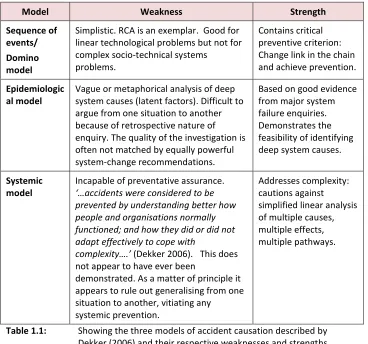
Table 1.1 below summarises each of the three accident models described by Dekker (2006) that underpin understanding of how accidents occur showing their respective weaknesses and strengths.
Model Weakness Strength
Sequence of events/ Domino model
Simplistic. RCA is an exemplar. Good for linear technological problems but not for complex socio-technical systems
problems.
Contains critical preventive criterion: Change link in the chain and achieve prevention.
Epidemiologic al model
Vague or metaphorical analysis of deep system causes (latent factors). Difficult to argue from one situation to another because of retrospective nature of enquiry. The quality of the investigation is often not matched by equally powerful system-change recommendations.
Based on good evidence from major system failure enquiries. Demonstrates the feasibility of identifying deep system causes.
Systemic model
Incapable of preventative assurance. ‘…accidents were considered to be prevented by understanding better how people and organisations normally functioned; and how they did or did not adapt effectively to cope with
complexity….’ (Dekker 2006). This does not appear to have ever been
demonstrated. As a matter of principle it appears to rule out generalising from one situation to another, vitiating any systemic prevention.
[image:26.595.66.434.358.702.2]Addresses complexity: cautions against simplified linear analysis of multiple causes, multiple effects, multiple pathways.
Table 1.1: Showing the three models of accident causation described by Dekker (2006) and their respective weaknesses and strengths.
27
contribution each has to make to (i) the theory of accident causation, (ii) understanding system safety, and (iii) organisational learning from incident investigations in healthcare. We need to find a way to combine the strengths of these three approaches but overcome their
weaknesses. It is not obvious how to do this, particularly as they are most often presented as mutually incompatible alternatives, and even as irreconcilably ideologically opposed. However, the weakness of the arguments for incompatibility is that they are based on statements of principle that have not been empirically tested in a pragmatic way. A more profound analysis of the problem of learning from incidents in healthcare is called for, particularly as this relates to difficulties with achieving satisfactory causal analyses in the healthcare domain.
1.3. The role of incident investigation in managing safety in the
system
Diverse sources of information can be used to inform the understanding and management of safety and risk in the healthcare system. These include (i) risk assessments; (ii) audits; (iii) near miss and incident
reporting systems; and (iv) service user feedback via surveys, comments, or complaints.
So, serious incident investigations are only one source of information used to inform the understanding and management of safety and risk. There are strengths and weaknesses related to information derived from incident investigations compared to other information used to manage risks. Weaknesses include that (i) the particular set of events that gave rise to an incident are exceedingly unlikely to occur again so great care is needed when deriving transferable lessons from an individual incident, (ii) incidents are considered retrospectively and so are subject to hindsight bias, and (iii) by the time an incident is
investigated, some data will no longer be available, or may be subject to recall limitations.
28
are necessary to provide answers to the person(s) harmed or their family; and (iii) they are a requirement of safety, health and welfare at work legislation, and insurers.
Since serious incidents need to be conducted for the reasons set out in the previous paragraph - and since there is no way of knowing in advance which incidents will give the best information for safety improvement purposes – the seriousness of the incident is the best criterion to use to inform decisions to conduct thorough investigations (McCaughan et al., (2013)) meaning that all serious incidents should be thoroughly investigated. These investigations should provide (i) answers for the person(s) harmed or their family that are as complete and factual as they can possibly be, (ii) learning for better understanding of risk, and (iii) learning to better inform system safety.
1.4. The challenge of learning from incidents in healthcare
As stated, incident investigation should provide us with valid and
reliable information about the system, why it fails, and what needs to be done to improve safety. So it is important to take seriously the incident investigation process and to consider how investigation data is best gathered, represented, and communicated.
Much of the literature highlights the challenge of learning from
incidents in healthcare (Leape & Berwick (2005); Brennan et al., (2005); Landrigan et al., (2012); Longo et al., (2005); Shekelle et al., (2013); Shojania et al., (2013); Austin et al., (2014); Baines et al., (2015); Kellog et al., (2017)).
This is not surprising considering that Leap et al., (1998) said that: “Modern healthcare presents the most complex safety challenge of any activity on earth”.
29
describes that socio-technical systems involve people operating complex technologies within highly defined and regulated parameters, across different domains. Healthcare is a highly complex socio-technical system with a diverse range of environments including, but not limited to hospitals, social care settings, community care settings, and primary care with patients moving within and across these settings. Care is delivered by multidisciplinary, distributed healthcare teams who rely on effective team work and communications to ensure effective and safe patient care (Weller et al., 2014). Team work is often characterised by a highly dynamic team membership, involvement in multiple teams and fast team formation (Cahill et al., 2018). The sophisticated technologies used in healthcare - and the range and complexity of patient conditions treated - require a highly skilled and diverse workforce of healthcare professionals. Elaborate structures and processes are required to enable the complex socio-technical system that is healthcare to deliver on its purpose which is to improve the health of the population it serves (Health Service Executive, 2018). The challenge is compounded by the fact that the health needs of the population are constantly changing. Following a search for literature that focused on leveraging incident investigations to better inform system safety, a high volume of literature was identified related to investigations in healthcare with less literature focused on how investigations could inform system safety. This
literature is summarised below highlighting the gaps that need to be addressed by research if we are to fully understand and overcome the challenge of learning from incidents to improve system safety in healthcare.
1.4.1. Studies that did not consider all available information
necessary to identify causes
30
focused on healthcare staff and/or service users ideas about the causes of incidents (Cooper et al, (1984), ElBardissi et al, (2007), Bowie et al, (2008); Coombes et al, (2008)) without interviewing other relevant individuals and/or triangulating interview information with other relevant information such as healthcare records.
For example, a study by Coombes et al, (2008) related to intern prescribing errors involved interviews with interns involved in the prescribing errors. This paper identified that on 10 occasions, interns assumed that another senior doctor would have checked the drug order before administration of the drug to the patient. It would seem
important to know why the interns thought this and interviewing the relevant senior doctors would appear to be very important in gaining an accurate understanding of this. Also, one interviewee stated that: “I was told what to prescribe, but I didn’t know about not using it [enoxaparin] in renal impairment”. Again, it would seem important to have interviewed the individual that told this intern to prescribe this drug to learn why they thought this was correct at the time.
In their study of the frequency and causes of dispensing errors in a UK hospital pharmacy, Beso et al., (2005) used semi-structured interviews with Pharmacy staff that made dispensing errors to explore the causes of errors. Being busy, short-staffed, subject to time-constraints and physical conditions of the individual (feeling tired or unwell) were the most commonly reported error producing conditions. Interruptions and look-alike/sound-alike drugs were also reported, as was lack of
knowledge about the availability of different drugs or formulations of the same drug. Lack of focus on dispensing tasks, and latent factors were also identified during interview.
31
associated with what they were experiencing. For example, do they know why they were particularly busy, short-staffed, subject to time-constraints or is it someone from a management or administration role that is likely to have the most accurate information about this?
This shows the need for thorough data collection for investigation including the need for interviewee information to be corroborated with (i) other interviewee information, and (ii) information from other sources, to get all of the information necessary to identify the underlying systemic causes of incidents.
1.4.2. Studies that focus on ‘surmised’ causes as opposed to actual
causes
Another variation of this tendency to take a leap of faith to identify causes rather than leaving what Dekker (2006) referred to as an analytic trace for investigation findings was identified in some studies that focused on the ‘surmised’ causes of incidents as interviews did not focus on identifying specific causes of specific incidents (Cooper et al, (1984), ElBardissi et al, (2007), Brown et al, (2006)). Tully et al, (2009)
emphasised this when they stated that it was unclear how best to prevent drug prescribing errors because recommendations were often based on ‘surmised’ causes rather than empirically collected data. For example, Cooper et al, (1984) studied anaesthesia related human error and equipment failure. Interviews focused on errors staff
observed directly that involved preventable human error or equipment failure. The interview did not require examples of any specific type of error or equipment failure. So what were identified were what the authors referred to as “conceivably” the causes as opposed to the actual causes.
32
personally experienced an ADE. Thus, their findings were limited in that they did not distinguish between reports based on direct personal experience and speculative attributions for patient-related causes. Based on the methodology used in these and other such studies, it is unlikely that the investigators could have learned what triggers in the environment were being observed and responded to by the real actors involved in incidents, nor the underlying systemic causes of these environmental triggers.
Many studies focused on learning from batches of incident report data (Barach & Small (2000 and 2002); Bechmann et al., (2003); Carson-Stevens et al., (2016); Catchpole et al., (2008); Dodds & Kodate (2012); Hibbert et al., (2015); Holzmueller et al., (2005); Hutchinson et al., (2010 & 2013); Needham et al., (2005); Skapik et al., (2009); Stavropoulou et al., (2015); and Walsh and Antony (2007)). This generally involved analysis of data from incident report forms which were completed in the immediate aftermath of incidents and uploaded to national incident reporting and learning systems. These forms were completed prior to any thorough investigation of the incidents. So the information about causal factors included in these forms would be limited to the reporters’ understanding of the causes and not the causes that were identified after thorough investigation. Many of these studies referred to this causal information as “potential” causes (i.e. Brown et al., (2006); Carson-Stevens et al. (2015)) as
opposed the actual causes identified by empirical study. Case study 4 in chapter 2 which relates to the National Miscarriage Misdiagnosis Review (Ledger et al., 2011) shows how the apparent causes of an incident in its immediate aftermath can be significantly different to the actual causes identified after more thorough investigation.
(Carson-33
Stevens et al., 2016). These researchers found that only one-third of incident reports included described ‘potential’ contributory factors and reporters did not routinely describe the organisational-level factors contributing to incidents. So this information tends to be incomplete. Furthermore, it is hypothetical in relation to causes as opposed to being based on empirical analysis to identify causes.
Morrison et al., (2009) put it clearly when they stated that the fundamental key to both understanding how a system worked and to
being able to devise interventions to improve its functionality was a model of the system which incorporated the functional relationships between the elements of the system. They went on to state that what needed to be modelled was the real system – the objective
dependencies and constraints operating in the real world independently of any one actor’s intentions. Thus, they conclude, what is modelled is not simply a mental construction of the actors in the system but the actual material and social structure within which action takes place, including social relations, co-ordination actions, information and communication (Morrison et al., 2009).
This emphasises the importance of using real information about causal factors – such as interviewing people that observed the actual events, and considering contemporaneous documented records of events - as opposed to hypothetical or speculative information about events.
1.4.3. Studies that focus on superficial cause as opposed to systemic
causes
There was a tendency for studies to focus on superficial causes of incidents (For example, studies by Coté et al, (2000); & ElBardissi et al, (2007)) as opposed to focusing on the deeper underlying systemic causes.
34
pre-sedation medical evaluation, and (iv) inadequate recovery
procedures. However, this study did not appear to identify the deeper, more underlying causes. For example, the reasons for the inadequate resuscitation, or the inadequate monitoring, or the inadequate pre-sedation medical evaluation were not described.
Similarly, a study by ElBardissi et al, (2007) described applying a human factors analysis classification system (HFACS) methodology adapted from aviation accident investigation - to the cardiovascular surgery operating room. They interviewed 68 healthcare professionals from a single operating room using semi-structured interviews. Questions focused on whether and how often interviewees observed what could be considered as superficial causes such as: “How often do members of the OR [Operating Room] team cut corners when performing their job, for example failing to perform needle counts? Can you provide examples of other situations?” Questions did not focus on ‘why’ the team cut corners when performing their jobs. So this study identified what happened, and how often it happened, but it did not focus on ‘why’. Dekker (2006) emphasises the importance of identifying the underlying systemic causes of harm as opposed to superficial causes, in order to achieve meaningful organisation wide safety improvement.
At the same time – no literature clarified what was a sufficiently deep system/underlying cause, nor what was the stop-rule that indicated that you have reached a satisfactory answer.
A study by Cronin (2005) seemed to go some way toward a better understanding of causes compared to many others, by using the London Protocol for the systems analysis of clinical incidents (Taylor-Adams et al., 2004) to investigate eight incidents and then analysing patterns of
factor types and influencing contributory factors that arose from the eight investigations. However, identifying that the contributory factors fell - for example - into the “task” or the “work environment” category in this study still seemed to incompletely answer the question about
35
from this study what specific aspects of the “task” or “work
environment” contributed to incidents, and what needed to be done to address these.
Furthermore, there were only eight investigations included in this study and all occurred in paediatric services. It seemed from reading the Cronin (2005) paper that it might be possible to get an even better understanding of the stop-rule for identifying satisfactory underlying systemic causes of incidents by (i) applying a systemic approach – such as the London Protocol to a larger number of serious incidents that occurred across a wider span of the health system, and (ii) some deeper analysis of further details of contributory factors.
1.4.4. Studies that focus on part of the health system and subsets of
incident types
Examples of studies that were speciality-centred or incident-type focused included studies related to re-intubation incidents in intensive care units (Bechmann et al, 2001), anaesthesia-related human error and equipment failure (Cooper et al, 1984), adverse sedation events in children undergoing procedures (Coté et al, 2000), cardiovascular surgery (ElBardissi et al, (2007)), the operating theatre (Catchpole et al, 2004), paediatrics (Cronin, 2005), errors in drug prescribing
administration in acute hospitals (Beso et al, (2005); Edmondson, (2004); Coombes et al, (2008); Tully et al, (2009); Dornan et al, (2009), mis-transfusion (Elhence et al, (2010)), child and adolescent psychiatry (Ammenwerth et al, 2002), and adverse drug events in ambulatory care (Brown et al, 2006).
Amalberti et al (2011) stated that the dominant approach to safety was often too process driven and too in-hospital and speciality-centred (“silo-driven”) when attributing causes to adverse events. They warned that an outlook that is confined to a single speciality (silo-driven
outlook) is a pitfall that must be avoided. This is not to say that there is not value and legitimacy in focussing attention on specific
36
But, as shown above, published studies are often speciality and/or incident type focused. The point is, while it is accepted that some causes may be specific and considering these specifically is legitimate, it appears that there is additional value in also using a wider more
systemic lens that considers as broad a range of incidents within as wide a span of the health system as is possible. It is important to explore this.
1.4.5. Studies that match types of incidents to a limited number of
causes
Many studies endeavoured to match types of incidents with prescribed incident causes (ElBardissi et al, (2007); Elnicki et al., (1980), Eunhee et al., (2016)).
One example is the operating room study by ElBardissi et al, (2007) which is referred to above. In this study semi-structured interviews used questions developed to target each of the four broad categories and sub-headings with the HFACS (Human Factors Analysis and Classification System) framework namely (i) organisational influences, (ii) unsafe supervision, (iii) preconditions to unsafe acts, and (iv) unsafe acts. This empirical study found that many issues were identified within these four broad causal categories, but there were no statistical
difference between the frequencies with which each broad category or sub heading were identified. Planning, problem correction, and skill based errors and routine violations were the most frequent causal sub headings identified. So, this methodology could not identify why these problems occurred.
37
hospital. They concluded that adverse patient incidents could not be predicted by observing the patient characteristic and hospital
environment. This is a relatively old study, but its findings remain pertinent to this thesis.
Finally, a third example is an empirical study by Eunhee et al., (2016). This was a study of the relationship between nurse staffing levels and work environment with patient adverse events in a cross-sectional study using a combination of nurse survey data, facility data, and patient hospital discharge data in South Korea. This study found relationships between incidents and prescribed causes. Specifically, they found that a larger number of patients per nurse and poor work environment
increased the incidence of patient adverse events, such as
administration of the wrong medication or dose to the patient, pressure ulcers, and injury from falling after admission. Several limitations were highlighted by the authors. For example, the results of the study were based on cross sectional data; therefore, causal relationships among patient adverse events, nursing staffing levels, and nurse work
environment could not be determined. Also, this study did not consider other nurse characteristics, such as stress (burnout), fatigue, or poor sleep quality due to shift work, which might be significantly related to patient adverse events and could increase the possibility of confounding effects by unmeasured or unknown factors.
So, a problem with trying to match incident types to incident cause is that (i) it is not possible to learn ‘why’ incidents occurred, and (ii) some causal factors may be omitted or overlooked.
1.4.6. Absence of Human Factors and system safety expertise in
investigations
38
important for this (For example: Cronin (2005); Drupsteen & Hasle (2014); & Peerally et al., (2016)).
The study by Cronin (2005) found that the complexity of human factors science required expertise to tease out contributory factors. Peerally et al (2016) identified that - despite the complexities, sensitivities and challenges of this work, investigations in healthcare are “typically conducted by local teams, not the expert accident investigators who are proficient in systems thinking and human factors, cognitive interviewing, staff engagement and data analysis that are characteristic of other high-risk industries”.
1.4.7. Limited research about the quality of investigations and how
to evaluate this
Much literature was identified criticising the quality of investigations in healthcare (Anderson & Kodate, (2015); Bowie et al., (2008); Care Quality Commission, (2016); House of Commons, (2015); Kirkup, (2015); Parliamentary and Health Service Ombudsman, (2015); Wallace, (2006); Wallace et al., (2006); and Wallace et al., (2009); Cassins & Barrach (2012); and Kellog et al., (2017)).
39
The four evaluation tools (Bagian (2002); Wallace et al., (2006); Quality Care Commissions (2016); and Leistikow (2016)) and the “Closure Checklist” (NHS England, 2015) are described in Chapter 3 of this thesis:
Study 1: Developing a reliable tool to evaluate investigation quality.
1.4.8. Limited research about the factors that affect investigation
quality
As there was very little reference in the literature to methods of evaluating the quality of serious incident investigation reports, it is not surprising that there was even less literature referring to the factors that affect the quality of investigations. None of the four studies referred to above that related to evaluating the quality of investigations (Bagian et al., (2002); Wallace (2006); Care Quality Commission (2016); and Leistikow et al., (2016)) – referred to analysis to identify factors that affect investigation quality.
One paper which was published while the research was on-going (Drumpsteen and Hasle (2014)) referred to the following factors affecting investigation quality, which in turn the authors identified as detracting from the potential for organisations to learn from incidents:
There was seldom sufficient time made available to do a thorough enough investigation of incidents. Investigations often stopped too early to have identified all causes, and selection of
recommendations was done based on “expert opinion” of the investigators. This resulted in a strong focus on technical actions.
Investigations tended to be conducted by employees of the organisations who had technical backgrounds, which resulted in a focus on technical issues in the incident investigations and a focus on technical actions for improvement whereas human factors and organisational issues were rarely addressed.
40
improvement were not taken and follow-up actions consisted of reminders of existing rules and procedures.
The investigators did not have the knowledge and experience to carry out a satisfactory investigation with investigations rarely addressing organizational causes, because there was a blind spot for organizational and cultural issues and technical factors were more easily identified.
Pertinent to this thesis, Drumpsteen and Hasle (2014) highlighted that factors that affect investigation quality might include (i) the time available to investigators to complete investigations; (ii) investigator knowledge and experience (the relative importance of technical expertise related to the matters under investigation compared with investigation expertise such as in human factors and organisational issues); and (iii) the importance of focusing on the underlying causal conditions in addition to the more obvious superficial causes.
1.4.9. Limited analysis of groups of investigation reports to identify
patterns in causal factors
Only two studies were identified that related to the analysis of groups of completed investigation reports to identify themes in causal factors. One of these studies is a study of Root Cause Analyses (RCAs) of surgery-related adverse events by Cassin and Barach (2012). This study drew on the researchers own experience of facilitating “more than 100” RCAs. It describes themes identified from the data – but it does not specify the methodology used to generate these themes. The researchers refer to the difficulty drawing generalizations from the data because the issues were multifactorial and required a systemic response. They report that they were frustrated with the quality of information that emerged from the RCAs. They highlight the importance of considering alternative tools for the management of serious clinical adverse events such as analysing an event across all levels of an organisation by using the London