Journal of Chemical and Pharmaceutical Research, 2012, 4(12):5081-5088
Research Article
CODEN(USA) : JCPRC5
ISSN : 0975-7384
Characterization and evaluation performance of activated carbon
prepared
from coconut shell argan
K. Legrouri
1, M. El Harti
1, M. Oumam
1,
E. Khouya
1, R. Wahbi
1, H. Hannache
1and
A. Zarrouk
2,*1
Laboratoire de recherche subatomique et application (Equipe des matériaux thermostructuraux
et polymères) Département de chimie Faculté des Sciences Ben M’Sik, B.P.7955 Casablanca, Maroc.
2
LCAE-URAC18, Faculté des Sciences, Université Mohammed I
erB.P. 717, 60000 Oujda, Morocco.
_____________________________________________________________________________________________ABSTRACT
The objective of this study is the valorization of a sub-product of the fruit of the argan tree; it is the shell of argan nuts which represents about 50% of fresh fruit. It is a natural lino-cellulosic residue that we could turn into charcoal under the effect of chemical activation with phosphoric acid which allows the development of a large pore in the activated material. We studied the effect of the activation temperature, activation time and the amount of acid added to the char yield and the adsorption capacity of the material developed in response to the experimental determination of the kinetics of adsorption of an organic molecule: the methylene blue. The results showed that the temperature of 400 °C, the processing time of one hour and the mass ratio (precursor/phosphoric acid) equal to one, are optimal conditions for development of the adsorbent material. The product obtained under these conditions has good textural and structural properties; a specific surface area SBET reached 1105 m2/g and development of
surface functions.
Keywords:Coconut Shell Argan; Activation; Adsorbents; MEB; BET.
_____________________________________________________________________________________________
INTRODUCTION
Currently, the growing demand for adsorbent materials processes for environmental cause pushes further research in the field of manufacturing adsorbents from materials that are not traditional; concretely from byproducts waste or industrial plants, clays and other abundant materials.
Activated carbon is considered the most efficient adsorbent whose use for remediation of waste waters is of great interest for researchers. Therefore, several studies have focused on the development of active carbons from industrial or agricultural waste such aspeat [1], bagasse [2], sawdust [3], desert plants [4], olive stones [5], rice bran [6] and husk [7], fruit peel [8], tea waste [9], and coffee grounds [10], microwave heating [11], globe artichoke leaves[12], bark of pomegranate [13], molasses [14], and coconut [15].
In this context, we conducted research to explore the possibility of producing activated carbon from a byproduct of the fruit of the argan tree; it is the nutshell argan represents about 50% of fresh fruit. We chose this natural precursor because of its composition lino-cellulose as a source of carbon.
This study has two objectives:
Thermal activation
The CAP is heated in oxidant atmosphere (air) in a muffle furnace at different temperatures with the set values between 250 and 500 °C, the treatment time is between 0.5 h and 2 h. The samples were then washed with distilled water in a Soxhlet apparatus for 72 hours, to remove excess acid and soluble matter, and then dried in an oven at 120 °C. The products are ground (particle size less than 100µm), and stored in a desiccator for eventual use.
Evaluation of the performance of prepared activated carbons
Determination of yield-char
The yield-char of the prepared activated carbon (CAP) is determined from the mass of the hull argan initially used. It is given by the following formula:
R = (mCAP /mi)*100 With
mCAP : mass of activated carbon prepared
mi : is the mass of the hull argan initially used.
Adsorption tests of methylene blue molecule
The evaluation of the performance of activated carbons prepared is achieved by monitoring the adsorption of the molecule of methylene blue (MB) considered organic pollutant model. Indeed, the study of the kinetics of adsorption of the molecule of the BM is performed at room temperature using a given volume of solution containing the adsorbate in an initial concentration (Co = 20 mg / L) and in the presence of a given mass of adsorbent (m = 50 mg / L). The mixture is kept under constant agitation and samples are taken at the end of each time interval. MB concentration is determined by UV-visible spectrophotometry at λmax = 664 nm.
Characterization of activated carbon prepared
Surface area
The measurement of the specific surface area is determined based on the BET method [20].The device used is a Micromeritics ASAP 2010. The adsorption isotherms are obtained by nitrogen adsorption at the temperature of liquid nitrogen (78K).
Morphology analysis by SEM
The morphology, of prepared activated carbon (CAP) and the gross shell, was examined by Scanning Electron Microscope (SEM). The SEM photographs are made on the samples (Gross and CAP) of size less than 100 µm, with a device type JED JSM 840A LGS at Thermostructural Composites Laboratory in Bordeaux.
Function surface
To highlight the effect of chemical activation with phosphoric acid on the surface chemistry, we performed quantitative functional groups of the activated carbon prepared and raw shell according to the protocol established by Boehm [21]. This technique allowed the identification of different functional groups that play a very important role in the adsorption process and therefore inform about on the quality of activated carbon studied.
RESULTS AND DISCUSSION
Effect of the activation temperature
On the yield of activated carbon
Figure 1. The variation in the yield of activated carbon obtained at different temperatures.
From the histogram in Figure 1, we see that the yield depends greatly on the activation temperature. Indeed, when the temperature increases from 250 to 500 °C, the yield increased from 49.94% to 17.43%. This can be explained by the oxidation reactions of organic matter that can be held in an oxygenated environment and the amount of phosphoric acid is in sufficient to play its role crosslinking carbon chains and consequently the protection of the carbon skeleton of the precursor from oxidation.
On the adsorption capacity of methylene blue (MB) molecule.
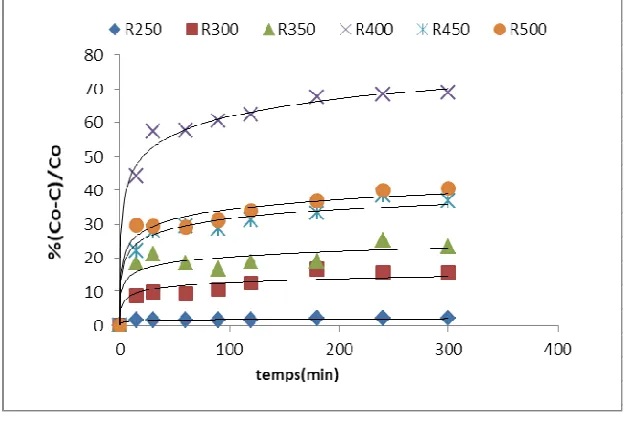
The kinetic curves of adsorption of MB by CAPT samples are shown in Figure 2. The examination of these adsorption kinetics curves (Fig. 2) allowed subdivision into three classes according to the performance of adsorption:
- The first contains those obtained by activation at temperatures below 400 °C; they are characterized by a low adsorption BM (not exceeding 20%) and remain unchanged since the first minutes of contact between the adsorbent and the adsorbate. This inefficiency prepared samples seems to come from the absence of internal porosity when the temperature is inferior to 400 °C.
Figure 2. Kinetics adsorption of methylene blue by CAPT.
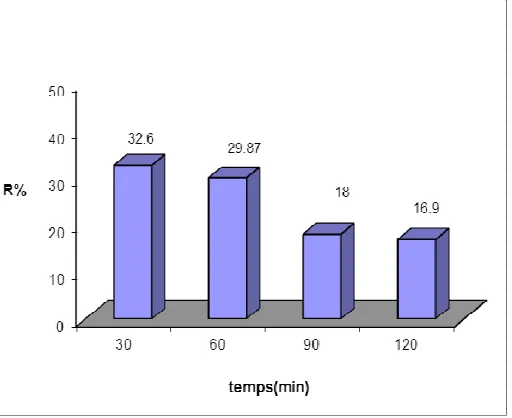
[image:3.595.149.462.452.663.2]The results are shown in Figure 3.
Figure 3. Effect of activation time on the yield of activation.
The histogram shows that the yield of char decreases and as the activation time increases. This loss is mainly due to degassing during activation.
On the adsorption capacity of MB
The adsorption tests of MB are performed under the same conditions mentioned before. In Figure 4, we have plotted the curves representing the adsorption kinetics of methylene blue.
The review of the curves shows that the product (CAP 400) treated for 1 hour presented the best performance followed by that obtained by activation for 0.5 h. While the increase of the activation period beyond 1h intensive causes a reduction in the adsorption of MB.
These findings can be explained as follows:
- The processing time less than 1 hour is insufficient for the completion of the reactions between the shell of argan nuts and phosphoric acid.
- One hour heat treatment seems to be the time required for the completion of dehydration reactions that allow the creation of porosity by venting that result.
Figure 4. Kinetics adsorption of methylene blue by CAP (400, t).
Effect of the amount of phosphoric acid
In view of the above results, it therefore seemed important to study the effect of the amount of phosphoric acid added to the raw shell. Therefore, we varied the mass ratio (macid / mprecursor) CAP prepared samples were introduced
in an oven at 110 °C and then treated in an oven at temperature 400 °C for 1h. The samples referenced by CAP (400, 60, R) where R is the mass ratio of phosphoric acid and the precursor are then washed and dried and then weighed to determine the performance of each one.
On the yield of activation carbon
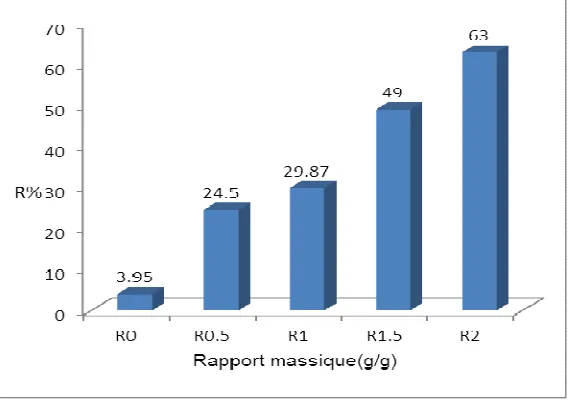
The evolution of the yield of prepared products is given in Figure 5. From the histogram, it appears that the past performance of 3.95% to 63% when the mass ratio macid/mprecursor increases from 0 to 2, which explains well the role
[image:5.595.162.447.469.669.2]crosslinking phosphoric acid which protects the carbon skeleton [13].
Figure 5. Effect of the amount of phosphoric acid on the yield of activated carbon.
On the adsorption capacity of MB
We studied the influence of the amount of H3PO4 activation on the adsorption capacity of MB. The adsorption tests
Figure 6. Kinetics adsorption of methylene blue by CAP (400, 1h, R)
Examination of Figure 6 shows the effect of the amount of phosphoric acid on the adsorption capacity of MB. The absence of phosphoric acid (R = 0) causes the complete oxidation of organic matter, justified by the low yield of char, and therefore a low adsorption capacity of BM. The introduction of phosphoric acid leads to increasing the efficiency of adsorption BM to reach a maximum of 68% for the ratio 1.
For R = 0.5, the amount of acid seems insufficient to catalyze the dehydration reactions of the precursor and thus creating a small pore. However, the increase in the mass of H3PO4 from 1 to 2 causes a decrease in the adsorption
capacity of BM. This decrease seems highly due to excess acid in the mixture causing the incorporation of phosphorus in the structure that led to the closure of the pores created and deteriorating of textural properties of coal that is obtained.
Characterization of CAP (400, 1h, 1)
After getting a activated carbon, CAP (400, 1h, 1), which has a better yield char and the best adsorption capacity of BM compared to other products prepared, we proceeded to its characterization by various physic-chemical techniques.
The Table below contains the values of the quantity of functional groups existing in the surface of the activated carbon comparing them with its precursor and the specific surface area determined by the BET method.
Functional groups in surface (meq/g) Carboxylic lactone hydroxyl
CAP 1.05 0.48 0.37
Brute 0.6 0.65 0.65
Total surface acidity (meq/g)
Total surface basic (meq/g)
SBET
(m2g-1)
CAP 1.9 0.18 1105
Brute 1.9 0.18 0.0523
The results depicted in the table, it appears that the chemical activation with phosphoric acid allows a rearrangement of the surface chemistry of activated carbon obtained, transforming lactones and hydroxyl groups of carboxylic groups that play a very important role, in the process of selective adsorption. In addition, the improvement of the quality of the surface chemistry, the value of the specific surface area (BET) obtained is very high (1105 m².g-1) which leads to the conclusion that the activation process was adopted led to the development of porosity. This hypothesis is confirmed by the morphology of the product obtained by scanning electron microscope.
a
a
b
Figure 7. SEM micrographs of: a- raw shell of argan – b- CAP(400, 1h, 1)
CONCLUSION
In this study, we developed a charcoal from the shell of the nut of the argan tree by chemical activation in the presence of phosphoric acid. The properties of this carbon depend on the amount of phosphoric acid, the activation temperature and residence time.
The characterizations of product developed, have enabled us to determine the activation parameters as follows: Heat treatment in air at 400 °C for one hour, the amount of phosphoric acid (concentration 80%) added has a weight ratio (H3PO4/Precursor) equal to 1.
The CAP (400, 1h, 1) obtained in powder form has a high specific surface area (1105 m2/g) which confirms its great character adsorbent. In addition, the determination of surface chemistry by Bohem method showed the strong presence of acidic groups (carboxylic function) which play a very important role in the adsorption process.
It therefore appears that the manufacturing process used in this study, chemical activation with phosphoric acid, can produce an activated carbon with textural and structural properties well developed.
REFERENCES
[1] A. Veksha, E. Sasaoka, M.D. Azhar Uddin, Carbon, 2009, 47, 2371.
[2] M. Valix, W.H. Cheung, G. McKay, Chemosphere, 2004, 56, 493.
[3] T. Karthikeyan, S. Rajgopal, Lima Rose Miranda, J. Hazard. Mater., 2005, 124, 192.
[4] N. Benderdouche, B. Bestani, B. Benstaali, Z. Derriche, Adsorpt. Sci. Technol., 2003, 21, 739. [5] I. Kula, M. Ugurlu, H. Karaoglu, A. Celik, Bioresour. Technol., 2008, 99, 492.
[6] R.M. Suzuki, A.D. Andrade, J.C. Sousa, M.C. Rollemberg, Bioresour. Technol., 2007, 98, 1985.
[7] I.A. Rahman, B. Saad, S. Shaidan, E.S. Sya Rizal, Bioresour. Technol., 2005, 96, 1578.
[8] Y. Sudaryanto, S.B. Hartono, W. Irawaty, H. Hindarso, S. Ismadji, Bioresour. Technol., 2006, 97, 734.
[9] E. Yagmur,M. Ozmak, Z. Aktas, Fuel, 2008, 87, 3278.
[10] A. Reffas, V. Bernardet, B. David, L. Reinert, M.B. Lehocine, M. Dubois, N. Batisse, L. Duclaux, J. Hazard. Mater.,
2010, 175, 779.
[11] K. Y. Foo, B. H. Hameed, Fuel Process. Technol.,2012, 99, 103. [12] M. Benadjemia et al., Fuel Process. Technol.,2011, 92, 1203.
[13] R. Wahbi, PhD Thesis National, University Hassan II-Mohammedia, Casablanca, Morocco, 2008 pp 138.
[14] K. Legrouri, E. Khouya, M. Ezzine, H.Hannache, R. Denoyel, R. Pallier, R. Naslain, J. Hazard. Mater., 2005, 118, 259.
[15] A. Aygün, S. Yenisoy-Karaka, I. Duman, Microporous Mesoporous Mater., 2003, 66, 189.
[16] K.M. Kifuani, W.M. Mukana, D.P. Ndelo, F. Nsuadi, S. Mubo, Rev. Cong. Sci. Nucl., 2002, 18, 135.
[17] J. Avom, J. Ketcha Mbadcam, M.R.L. Matip, P. Gertmain, Afr. J. Environ. Sci. Technol., 2001, 1.
[18] R. C. Bansal, J. B. Donnet et F. Stoeckli. Active carbon, marcel Dekker éd, New York, 8- 18, 1988.
[19] M. jagtoyen, F. Derbychire, Carbon, 1993, 31, 1185.