ScholarWorks @ Georgia State University
ScholarWorks @ Georgia State University
Public Health Theses School of Public Health
Fall 12-20-2012
Positive Impact Program Evaluation
Positive Impact Program Evaluation
Hannah Oloyede Georgia State University
Follow this and additional works at: https://scholarworks.gsu.edu/iph_theses
Recommended Citation Recommended Citation
Oloyede, Hannah, "Positive Impact Program Evaluation." Thesis, Georgia State University, 2012. https://scholarworks.gsu.edu/iph_theses/238
Positive Impact Program Evaluation
Final Capstone Project
Georgia State University
Acknowledgements
I would like to thank Paul Plate, Gwen Davies, Michael Jeffrey, Heather Wademan, Moneta
Sinclair and the entire staff at Positive Impact for allowing me the opportunity to evaluate their HIV
Mental Health program. Their assistance and guidance in the evaluation and in the data collection
process made this evaluation possible. Secondly, I would like to thank Dr. Laura Salazar for her guidance
and assistance as well in completing my capstone project. Lastly, I would like to thank the clients in the
Table of Contents
Executive Summary………4
Introduction……….………8
Program Description………9
Evaluation Literature Review………13
Evaluation Questions & Evaluation Rationale………...23
Evaluation Methods……….24
Evaluation Findings………...28
Interpretation, Utilization, and Recommendations………...………34
Contribution to Public Health………...37
Bibliography………...38
Appendices………...41
Appendix A: Client Survey Flyer
Appendix B: Survey
Executive Summary
Description of program
Positive Impact is a non-profit organization established in 1992. The organization’s focus was ‘to
eliminate the risk of HIV transmission and to empower those affected by HIV through culturally
competent and inclusive prevention, education, mental health and substance abuse treatment
services’.1 Positive Impact accomplishes its mission through three primary programs: mental health
counseling, substance abuse treatment and risk-reduction services for people affected by HIV. The
agency has conducted its work in a manner that is culturally competent, honest, and respectful of the
diversity among its clients, staff and partners.
Services in the mental health-counseling program include individual counseling in English and
Spanish, group counseling, substance abuse counseling, mental health outreach to homeless persons
and a psychiatric clinic.
IMPACT is the agency’s licensed intensive outpatient substance abuse treatment program for
HIV-infected individuals. The program is based on empirically validated curriculum and grew out of the
substance abuse counseling the agency had provided since its inception. IMPACT is composed of 120
days of intensive group treatment (four hours each day), followed by 120 days of Continuing Care (two
hours per day, twice a week). IMPACT provides all clients an individual mental health counselor during
treatment, and they receive a weekly counseling session. Additionally, the substance abuse treatment
program of Positive Impact includes treatment navigation for clients nearing enrollment in services in
English and Spanish, as well as a homeless outreach program. All of the substance abuse treatment
programs are offered free of charge to qualifying clients.
In response to the realization that safer sex is not just about using a condom, it is about good
includes a module using behavioral health counseling methods. The programs also address multiple
oppressions, such as gender, race, sexual orientation, disease status and class. The prevention program
now includes MISTER, a drop-in center for gay and bisexual men in Atlanta providing wrap around
holistic health services, as well as prevention case management for high-risk individuals and outreach
risk-reduction counseling. The agency also offers free HIV testing on a walk-in basis and STD screening
for gay and bisexual men.
Evaluation questions and explanation
The purpose of this evaluation was to determine how satisfied the clients were with the HIV mental
health-counseling program. Overall, the survey and evaluation were conducted to enhance the
effectiveness of service delivery as well as overall agency operations. The following questions were the
focus of the evaluation:
1. Are the clients satisfied with the services provided?
2. Are the clients satisfied with the staff that provided the services?
3. As a direct result of services received, have clients’ improved their personal lives?
4. Are the psychiatric services, including medications that were prescribed, benefiting the client?
5. Have the clients’ improved their relationships with persons other than their mental health
provider?
Methods
Using a 50-question paper survey, we collected data from the clients who were currently
enrolled in the mental health program. The survey included multiple choice and 5-point Likert scale
questions. Frequencies and percentages were calculated using SPSS for questions that contained
program and staff satisfaction indicator, personal life indicator, psychiatric services indicator, and
personal relationships indicator. The program and staff satisfaction indicators consisted of survey
questions that measured the client’s overall opinions of the staff and services received in the program.
The personal life indicators contained survey questions were based on the direct result of the services
the client received and whether or not they helped improve various aspects of their personal lives
negatively or positively. The psychiatric services indicators consisted of questions that measured
whether or not the medication provided improved the clients’ mental health. The personal relationships
indicators were used to determine if the clients’ personal relationship with people other than their
mental health provider improved. Sixty-four clients completed the survey.
Main findings
Are the clients satisfied with the services provided?
Results showed that the clients were satisfied with the services provided. 73% of respondents
strongly agreed that they liked the services that they received with Positive Impact.
Are the clients satisfied with the staff that provided the services?
Overall, the clients were satisfied with the staff that provided their services. Respondents
agreed that the staff had their best interest in mind.
As a direct result of services received, have clients’ improved their personal lives?
30% of clients agreed that their personal lives improved after receiving services.
Are the psychiatric services, including medications that were prescribed, benefiting the client?
For the respondents that had psychiatric help, an approximately 50% strongly agreed that these
Have the clients’ improved their relationships with persons other than their mental health provider?
Results showed that an average of 30% of clients agree that their relationships with other
people has improved.
Continued Satisfaction Surveillance
Positive Impact should continue to create continued program satisfaction surveillance in order
to assist future evaluation and continue to improve the program. They should administer the survey that
was used in this evaluation or a variation of it once every year.
Introduction
Individual-level risks for HIV infection are at the core of the HIV/AIDS epidemic and are
powerfully impacted by social, structural, and population-level risks and protections.2 According to the
Center for Disease Control, HIV is the human immunodeficiency virus. It is the virus that can lead to
acquired immune deficiency syndrome, or AIDS. CDC estimates that about 56,000 people in the United
States contracted HIV in 2006. 3
HIV is a major public health problem nationally as well as globally. At the end of 2008, an
estimated 1,178,350 persons aged 13 and older were living with HIV infection in the United States. Of
those, 20% had undiagnosed HIV infections.4 HIV not only affects an individual’s health physically, but
also mentally. A variety of psychiatric disorders have been identified among people living with
HIV/AIDS. These conditions may exist prior to and following an HIV diagnosis.5 Due to the need to solve
these issues, Positive Impact envisioned a community in which people value life enough to stop the
Positive Impact History, Mission and Philosophy
The agency was founded in 1992 by Paul Plate and Chris Allers in response to the need for
no-cost HIV-related mental health care for individuals living with HIV and their affected partners, family
members, friends and caregivers. Positive Impact is a 501(c)3 non-profit community-based organization
that is directed by Paul Plate, the Chief Executive Officer and guided by a Board of Directors. The
organization supports the continuum of HIV care in metropolitan Atlanta by providing comprehensive
mental health and substance abuse treatment for individuals, groups and families affected by HIV and
by providing an array of HIV and STD prevention and risk reduction services for a wide range of
consumers.
Positive Impact’s mission is to facilitate culturally competent mental health and prevention
services for people affected by HIV. They accomplish this mission by their philosophy which is “to
eliminate the risk of HIV transmission and to empower those affected by HIV through culturally
competent and inclusive prevention, education, mental health and substance abuse treatment
services”.
Positive Impact accomplishes its mission through three primary programs: mental health
counseling, substance abuse treatment and risk-reduction services .The agency has, throughout its
history, conducted its work in a manner that is honest, and respectful of the diversity among its clients,
staff and partners. All of the agency’s programs cross-refer clients internally and staff clinicians are
placed at six other AIDS-service organizations, further supporting the continuum of care for people
affected by HIV in Atlanta.
The evaluation of the Positive Impact mental health counseling program serves as a resource for
programs to those affected with HIV. Program administrators want to know whether or not their
counseling program and facilities are benefiting the clients.
Program Description
Internal Program Stakeholders
The following individuals are stakeholders within the organization: Paul Plate, the executive
director, Gwen Davies PhD, the clinical director, Michael Jeffrey, the clinical administrative manager,
Heather Wademan LCSW, the assistant clinical director and the psychiatrists. Michael Jeffrey, Gwen
Davies and Heather Wademan are directly involved in the evaluation process. They each are dedicated
and are committed to the work being done through the mental health counseling program at Positive
Impact. In addition to these members, the board of directors is considered to be stakeholders.
External Program Stakeholders
The external stakeholders include various companies, individuals and organizations that have
funded as well as invested time in order to assist the organization to continue to grow and help those in
need. Positive Impact looks towards meeting the needs of people today and in the years to come.
Sustaining Partners are a very special group of loyal Positive Impact supporters who make monthly
donations that provide them with a level of stability that secures the program against changes in
governmental priorities. Their generosity provides dependable funding for the innovative mental health
and HIV prevention programs for which Positive Impact is known.
Mental Health Program
Positive Impact facilitates a broad range of culturally competent HIV-related programs and
services. The counseling services include individual, couples, and family for mental health as well as
offsite primary care locations. IMPACT, is a licensed intensive drug and alcohol treatment and education
program with a Continuing Care program that offers group counseling and psychological support groups
in English and Spanish. The psychiatric clinic includes assessment and adherence monitoring for clients.
There is also a mental health outreach program for homeless persons and persons living in housing
programs designed for people with HIV.
In addition to programs for those in need of services, Positive Impact also offers clinical
internship program for students in Professional Counseling, Social Work, Psychology, Public Health and
Addiction Counseling. They provide training for mental health and social services providers on
HIV-related mental health and substance abuse issues as well as outcome based research programs designed
to identify the most effective manner in which to provide HIV-related mental health services.
Mental health interventions are related to beneficial psychological outcomes such as reduced
stress, increased self-esteem, decreased anxiety and managed depression. In research conducted at
Positive Impact, clients showed significant reductions in the severity both of psychological distress and
of their response to HIV-related stigma.
Program Resources: Funding and Facilitators
Positive Impact established a Fee for Service program in which eligible clients are required to
pay for their counseling services. In order to be considered eligible, a client must provide proof of
income. The fees are based on a sliding scale. Other funding sources include the Ryan White Program of
the Atlanta Eligible Metropolitan Area, The Substance Abuse and Mental Health Services Administration,
Fulton County Board of Commissioners - Housing and Human Services Department, Housing
Opportunities for People Affected by AIDS Program, The Community Foundation for Greater Atlanta,
The Atlanta AIDS Fund and The Cathedral of St. Philip - The Ricks-Wheeler Fund. They also receive
All mental health providers for the program are licensed mental health professionals, either on
staff or volunteering for the agency, or are graduate student interns in accredited programs in social
work, counseling or psychology.
Program Enrollment
Clients are primarily referred to the agency through a network of mental health, case
management, and primary care providers. The staff members begin to assess their needs during their
very first encounter with the agency. Before clients begin their counseling sessions, they must first go
through three steps: The screening tool, the intake, and staffing. The screening tool determines whether
the client is appropriate for services with the agency or if they should be referred to another provider.
The screening is an individual’s first point of contact with the agency either over the phone or in person.
The screener collects the client’s contact information, eligibility requirements (income, insurance
coverage, HIV status, and substance use), and reasons for seeking therapy and overall impression and
action taken. If the client is HIV negative, does not have a partner or immediate family member who is
positive and has mental health insurance, they are then referred to a preferred provider.
The second step is the intake process. From the first point of contact with the client it is
imperative that the staff communicates to them the importance of complying with Ryan White
standards. Required documentation includes: HIV verification, proof of income, residency and primary
care verification, which are verified every 6 months. If the client arrives for their intake without proper
documentation, they are reminded that they will not be assigned a therapist until all of their
documentation has been received. Consent forms in each intake packet need client signature. The
intake report is an account of the mental status exam performed on the client during the intake. It
The final step is assignment of a therapist to a client. Before a client is assigned a therapist, the
enrollment checklist, conceptualization of the clients presenting problem and acuity, therapist
preferences, psychiatric/medication needs and their Diagnostic and Statistical Manual of mental
disorders (DSM) diagnosis must be reviewed by the Clinical Director. The staffing process takes no
longer than fifteen minutes. It includes: complete enrollment checklist, recommendation to the
appropriate service program, discussion of DSM diagnosis, discussion of referrals and lastly, an
assignment to a therapist.
1:1 Session Timeline and Psychiatric Appointments
The first session between the client and their assigned therapist allows them to discuss the
therapeutic process and assess the client’s needs and goals to begin developing a treatment plan. They
create a schedule for sessions; discuss the importance of primary care and follow-up on referrals to
other programs.
After thirty days or four sessions, they finalize the treatment plan. Every six month, all clients
are scheduled for a Clinical Administrative Session with their therapist. This fifty minute meeting serves
two purposes: 1) to rectify the client’s program eligibility by verifying income, address, and proof of
primary care and 2) for the client and therapist to review the treatment plan, discuss or assess progress,
and set new goals and objectives for the next six months of treatment. The overall objective is to ensure
the quality of care as well as the continuity of records and research data across all mental health
programs. The process is overseen by the Assistant Clinical Director and the Clinical Administrative
Manager.
Clients are scheduled with a psychiatrist after they have been assigned a therapist. The intake
report and DSM diagnosis should also be completed before the client’s appointment with the
Literature Review
Review of HIV Prevalence and Incidence
HIV prevalence and incidence have increased tremendously over the years in the United States.
HIV prevalence is defined as the number of people living with HIV infection at the end of a given year.
Reports from the Center of Disease Control analyzed HIV surveillance data from 1981 to 2008 in order to
observe HIV prevalence and discuss the importance of creating more opportunities for routine HIV
testing, reducing risk factors of HIV, and improving the use of health care for those living with HIV.
Approximately 1 million people who were 13 years or older were living with HIV at the end of 2008. Of
those people, the population of men who have sex with men (MSM) living with HIV was approximately
600,000, with the majority of the group categorized as Black/ African American race.4 African Americans
and Hispanics/Latinos are the racial/ethnic groups most affected by HIV.10
HIV incidence is defined as the number of new HIV infections in the population during a certain
period. CDC estimated that approximately 50,000 people were newly infected with HIV each year from
2006 to 2009 in the United States. Unlike HIV prevalence, there was not a significant increase in HIV
incidence during these time periods. On the other hand, HIV incidence increased within the MSM
population. Black/African American men and women were also strongly affected. They were estimated
to have an HIV incidence rate 7 times as high as the incidence rate among whites.7
An increase in incidence does not necessarily mean that prevention techniques are not working.
According to the Center for Disease Control and Prevention, better testing, treatment and health care
has decreased death rates and has helped stabilize HIV incidence despite the increase in HIV
prevalence.6 Furthermore, HIV testing and testing behavior also has an effect on prevalence and
incidence rates. For instance, observing the years that people are tested does not give the actual year
increased 48% among the black/African American MSM group from 2006 to 2009. Review of the
literature shows no significant explanation for the increased rates. However, factors associated with the
increase may include lack of access to health care, socioeconomic status, and discrimination to HIV and
homosexuality. 9
HIV infection is prevalent all 50 states in the U.S. In 2009 Georgia was the sixth highest state in
the country for reported AIDS cases. In that same year, the number of people living with HIV/AIDS in
Georgia was approximately 40, 000. 43% of those people were infected with HIV and 57% were
diagnosed with AIDS. The city of Atlanta, Georgia is also known for high HIV/AIDS rates. In 2009, 67% of
Georgians living with HIV/AIDS lived in Metro Atlanta. 8
Overall, CDC’s new incidence estimates continue to show that MSM remain the population most
heavily affected by HIV in the United States. Knowledge of incidence and prevalence allows for an
increase in public health practices that target HIV/AIDS related issues such as increase of access to
health care, improvement of quality of life for those living with HIV/AIDS and reducing health disparities.
4
Review of Treatment and Intervention Programs
As a result of the high prevalence of HIV infection in the MSM population, Mayer et al
conducted a study in order to explain the different risk factors, behaviors and demographics of men who
attended a New England bathhouse and received HIV and STD testing services during their visits. Among
the total number of men tested, there was HIV prevalence of 2.3%. The findings in this study provided
evidence that proper settings, such as bathhouses, are successful ways to test and diagnose new HIV
and STD infections. This number also showed to be higher than other testing and counseling sites in the
area. In conclusion, the study indicates that creating testing sites at locations that are frequently visited
People diagnosed with HIV are less likely to receive care after they become infected due to
several factors which include: race, risk behavior, age, gender, and transmission category. Hall et al
discussed the importance of maintaining care once a person has been diagnosed with HIV and how it is a
significant component of treatment in the United States. In the study, National Surveillance data was
used to monitor HIV care visits. After laboratory tests were complete, the results showed that less than
fifty percent of people living with HIV were receiving ongoing care. Of that percentage, approximately
sixty-six percent of the patients were MSM and utilized care after becoming diagnosed with HIV. The
author’s determined mental health, substance abuse, along with socioeconomic factors, contributed to
missed care visits. The study observed that the patient responds more positively to continuously
receiving care once a patient develops a relationship with their health care provider. 12
Review of the literature has shown that motivational interventions have been successful in
lowering risk behaviors in people living with HIV. Calsyn et al evaluated whether a motivational and skills
training intervention was successful in a group of men living with HIV/AIDS who received substance
abuse treatment. The study compared two programs: “Real Men Are Safe” (REMAS), which included five
session interventions for men only and “HIV-ED”, which included one standard session on HIV/AIDS
education. The authors concluded that an HIV intervention in clinical settings based on peer group
discussions and single gender sessions, work best in reducing sexual risk behaviors.14
Clinic based education programs have been effective in reducing HIV risks among adults living
with HIV. Chen et al wrote an article discussing clinical-based motivational interventions. The authors
evaluated the effect of a behavioral intervention program called “Healthy Choices”. The program utilized
“motivation interviewing” in order to reduce sexual risk behavior, improve motivation, and reduce
depression and lower HIV viral load among youths living with HIV (YLH). Results showed that YLH with
authors concluded receiving intervention helps; however, different types of risks respond differently to
interventions. 13
Homeless adults have a higher rate (20 to 40 times) of HIV infection than non-homeless adults.
Research explains this high rate as an association of high risk sexual activities and drug and alcohol use
among homeless individuals. In a study conducted by Rotheram-Borus et al, the authors evaluated the
effect of an intervention program titled the “Healthy Living Project” that was attended by homeless
adults. The adults were categorized as homeless if they were not living in a stable housing within a 37
month period. The program included individually delivered, skill focused, case management
interventions that were 15 sessions long. The authors noted that the lengthy sessions were associated
with the success of the program. The clients were able to interact with their healthcare providers and
used the skills learned to maintain health. The “Health Living Project” significantly reduced the use of
drugs and risky sexual behavior among homeless adults. 15
Although these types of interventions are scarce, internet based HIV prevention has been shown
to be effective. Using the internet has its advantages such as being cost effective and having the privacy
while using internet-based intervention in the home or office. Internet prevention programs also range
widely in the health issues that are prevented. Bowen et al conducted a research study that determined
the effectiveness of an internet-based HIV risk reduction program targeted towards MSM in rural
communities. The study used modules that provided prevention information for HIV sexual risk
reduction. The clients were allowed to give feedback at the end of each session. The authors noticed
although the clients provided positive feedback there seemed to be multiple submissions and
non-completion due to lack of pressure from the preceptors. The authors concluded that more research is
Adolescents who lose parents from HIV/AIDS suffer from unresolved grief such as depression
and behavioral problems. Receiving social support on mental and behavioral outcomes among
adolescents with parents with HIV/AIDS has been shown to be beneficial. Lee et al examined these
associations. The participants in the study were majority Hispanic and African American. The authors
concluded that social support lowers levels of distress and has a positive impact on mental and behavior
issues. 17
In April 2003, CDC launched Advancing HIV Prevention: New Strategies for a Changing Epidemic
(AHP). AHP supports current HIV prevention work and new tools (such as rapid HIV testing) and methods
to meet the needs of people living with HIV. AHP’s goals are to lower the death rates of people living
with HIV, prevent the spread of HIV infection and provide ways for marinating health while living with
HIV. AHP is designed to increase early detection of HIV, improve referral to prevention services, medical
care, and treatment, and put programs in place to help people living with HIV.18
Various intervention programs have been created by the CDC’s Diffusion of Effective Behavioral
Interventions project and are targeted towards MSM population. The project was created to educate
and raise awareness on HIV and STD risks. “Many Men, Many Voices” (3MV) is an intervention program
to prevent HIV and sexually transmitted diseases among black MSM. The 7-session program identifies
issues that affect black MSM. These factors include culture and religion, societal issues, relationship
between HIV and STD’s and sexual. 19
“MPowerment” is a Community-Level HIV Prevention Intervention for Young Gay, Bisexual, and
other Men Who Have Sex with Men (YGBMSM). The Mpowement Project is led by a “core group” which
includes YGBMSM from the community. The project offers education, peer-led focus groups, trainings,
and risk reduction. Review of the intervention showed a decrease in rates of unprotected anal
intercourse among the YGBMSM who attended the program. 20
Black MSM have been shown to have higher rates of HIV infection due to higher risk of STD
infection, less testing and unrecognized HIV infection; however, not many prevention programs are
targeted towards black MSM. ‘d-up: Defend Yourself!’ is a community-level intervention that was
designed for and developed by Black men who have sex with men (MSM). ‘d-up!’ is created to
encourage condom use and help Black MSM to recognize and handle risks. “The ‘d-up!’ intervention
mantra is: Brothers Keeping Brothers Safe”. “Brothers Keeping Brothers Safe” refers to black MSM
influencing one another to practice safer sex and stop transmission of diseases.” The intervention
program includes focus groups and interviews discussing prevention tactics. Pre and Post-test were
given at the end of sessions. A study conducted by Jones et al showed a significant decrease in
unprotected anal intercourse along with a decrease in the numbers of sexual partners.21
Review of Program Evaluations
A program evaluation is defined as “the application of evaluation approaches, techniques and
knowledge to systematically assess and improve the planning, implantation and effectiveness of
programs”.22 There are three steps to a program evaluation and they include: determining program
needs, selecting the best evaluation needs and putting the process in motion. Most evaluations are
conducted in order to show that clients are being helped; to determine if clients are satisfied with
services; to determine if the program has an impact on social problems; to show that the program has
worth.23
Studies have shown evidence on how drug users need guidance, monitoring and education in
understanding HIV; however, they are not receiving the services. A program evaluation was conducted
infected with HIV or were at risk for infection. Compared to males, women who use drugs and have a
high risk of being infected with HIV do not receive the care that they need such as healthcare, social
services and treatment for drug use. In the study, women were selected from their community in New,
Haven Connecticut. The interventions that were applied included street-based case management
interventions in order to meet counseling needs. The authors concluded that if case managers routinely
interacted with their clients more effectively, then the patients would benefit from their therapy and
intervention. 25
Mortality rates have been shown to decrease once a person living with HIV receives
anti-retroviral treatment. However, rates are not lowered if patients with advanced immunodeficiency begin
ART services late. Implications for program evaluation for a community-based antiretroviral treatment
(ART) service in South Africa were explained in an article by Lawn et al. In the study, therapeutic
counselors were assigned to each patient in the community. Results of the intervention determined that
early treatment is pertinent to lowering mortality rates. The authors suggested that the evaluation of
the program provides important information, assessments and supports the need to create improved
programs in environments that lack proper resources. 26
Review of Program Implementation
Implementation is defined as the carrying out, execution or practice of a plan, a method, or any
design for a program.23 As a result of the high risk of primary HIV infection, Silvera et al discussed the
development and implementation of “First Call NYC”, an outreach program to inform, educate and raise
awareness of signs of acute infection. The program utilized multi-method recruitment techniques to
recruit and screen approximately 500 people between a 4 year period. Recruitment methods included
the use of advertising media (print ads), internet recruitment, posters, outreach events and outreach to
authors concluded in order to determine acute and recent HIV infections, the use of different
recruitment methods can be significant in increasing testing once an individual has been exposed to HIV.
27
Latino youth ages 15-18 have a high risk for HIV/AIDS, STD’s as well as teen pregnancy. Due to
these facts, researchers have focused on creating and implementing prevention programs that meet
cultural needs and promote condom use within the Latino youth population. Mueller et al implemented
“Cuidate”, a culturally based HIV sexual risk reduction program for Latino youth in a Denver area high
school. The program was successfully implemented due to the support of the school’s faculty, the length
of each session, the access to other prevention information. In addition, the program did not interfere
with students’ class schedules. The main challenges came with recruiting the students due to their lack
of interest in participating; therefore, the authors proposed offering incentives in order to gain more
participation.28
Once an individual has been diagnosed with HIV, they must receive the proper counseling and
prevention interventions in order to reduce HIV transmission. In an article by Patel et al, the authors
designed and implemented “Positive Steps (Striving to Engage People)”, an intervention program
delivered by healthcare providers to reduce risks in HIV transmission.29 In order to implement a
successful program, authors recruited the use of Lewin’s model of organizational change. The model
identifies several factors which included: changing past behaviors and attitudes by dealing with
organizational barriers such as insurance problems, waiting time, and mental health; exposing clients to
new information; strengthening and sustaining the need to change.31 The program was successfully
implemented and positively approved by the patients. The authors concluded that understanding the
implementing process of the prevention program assists in recognizing barriers that prevent the success
Mumma and Suffoletto discussed the implementation of a HIV screening program in a limited
emergency department (ED) and the obstacles as well as recommendations for the process. Barriers that
were encountered included but were not limited to: lack of HIV awareness and information in the
community, crowding in the ED, and limited resources such as staffing. The program had a failure of
follow-up visits along with the identified barriers. For future HIV screening programs in the ED, it is
recommended by the authors to increase resource availability and staff employment, as well as provide
proper testing.30
The previous literature has shown that the implementation of treatment and intervention
programs can decrease HIV prevalence rates. Positive Impact’s HIV mental health counseling program
was created to eliminate the risk of HIV transmission and to empower those affected by HIV through
culturally competent and inclusive prevention, education, mental health and substance abuse treatment
services. This evaluation will contribute to enhancing the effectiveness of service delivery along with
overall agency operations. This evaluation will also contribute to the existing body of research on the
effects that program content has on client satisfaction.
Evaluation Questions and Rationale
The purpose of this evaluation is to determine how satisfied the clients were with the HIV
mental health-counseling program. Overall, the survey and evaluation were conducted to enhance the
effectiveness of service delivery as well as overall agency operations. In collaboration with Michael
Jeffrey, Paul Plate and Gwen Davies, we developed the following questions as part of the evaluation of
Positive Impact’s HIV Mental Health program:
1. Are the clients satisfied with the services provided?
3. As a direct result of services received, are clients more satisfied with their personal lives?
4. Are the psychiatric services, including medications that were prescribed, benefiting the client?
5. Have the clients’ improved their relationships with persons other than their mental health
provider?
A combination of process, outcome and demographic measurements in the evaluation will be
employed in order to answer the evaluation questions as well as to present supporting data that may be
used for future evaluations.
Evaluation Methods
Data Collection, Instruments and Measures
To answer the evaluation questions, we created a 50-question survey that consisted of
statements based on the 5-point Likert scale. Three of the questions were multiple-choice that
measured the client’s demographics. Two questions measured the length of time a person has received
services as well as how often they receive the services. Forty-five of the questions in the survey
measured the client’s satisfaction with four different process indicators of the overall mental health
counseling program. The four indicators were identified as: The program and staff satisfaction, personal
life, psychiatric services, and personal relationships. The program and staff satisfaction indicators
consisted of survey questions that measured the client’s overall opinions of the staff and services
received in the program. The personal life indicators contained survey questions were based on the
direct result of the services the client received and whether or not they helped improve various aspects
of their personal lives negatively or positively. The psychiatric services indicators consisted of questions
personal relationships indicators were used to determine if the clients’ personal relationship with
people other than their mental health provider improved.
The survey also addressed accessibility indicators and some selected outcome indicators
pertaining specifically to the client’s perception of his or herself, such as willingness to change behavior
and effectively dealing with issues after receiving services. The process and outcome indicators we wish
to measure, how they will be measured and specific survey questions to address those indicators are
included in Table 1.
We gathered data from the sixty-four clients who completed the survey. Each therapist was
assigned to give their client a survey after their counseling sessions. The survey was to be completed in
the office and turned in to a staff member once it was completed. We also placed surveys in the
reception area with a sign that encouraged people to take one (Appendix A). All clients enrolled in the
counseling program were eligible to participate. Data were collected from those currently enrolled in
the program and attending sessions and/or psychiatric appointments; therefore recruitment strategies
were not needed.
The evaluation stakeholders reviewed the survey to confirm we were reaching the intended
audience and addressing the appropriate evaluation questions. The therapists administered the survey
during their already existing counseling session time to encourage more participation. We felt the best
people to administer the survey were the therapist because they have an existing relationship with the
clients. The completed survey was submitted into a file box that was kept in the Clinical Administrators
office to protect the privacy of the participants.
Indicator to be measured How it will
be
measured
Question to assess indicator
Program and staff satisfaction Survey 1.I like the services I received here
2. If I had other choices, I would still get services from this agency.
6. Staff returned my call in 24 hours.
9. Staff here believes I can grow, change and recover. 10. I felt free to complain.
11. I was given information about my rights.
12. Staff encouraged me to take responsibility for how I live my life.
13. Staff respected my wishes about who is and who is not given information about my treatment.
14. Staff was sensitive to my cultural background. 15.Staff were sensitive to issues relating to HIV Personal life after receiving
services
Survey 18. I deal more effectively with daily problems 19. I am better able to control my life.
20. I am better able to deal with crisis. 21. I am getting along better with my family. 22. I do better in social situations.
23. I do better in school and/ or work. 24. My housing situation has improved.
25. My symptoms are not bothering me as much. 26. I do things that are more meaningful to me. 27. I am better able to take care of my needs. 28. I am better able to handle things when they go wrong.
29. I am better able to do things that I want to do. Psychiatric services Survey 30. I felt comfortable asking questions about my
treatment.
31. I was able to see a psychiatrist at a time that was good for me.
32. Are you currently taking psychotropic medication? 33. I know the names of the medication I am taking. 34. I know how much and when to take my medication. 35. I take my medication(s) as prescribed.
36. If I have questions about my medication I know how to get them answered.
37. I know why I am taking my medication(s).
38, I know the common side effects of my medication(s). 39. I think my medication(s) is/are effective.
Personal Relationships Survey 41. I am happy with the friendships I have.
42. I have people with whom I can do enjoyable things. 43. I feel I belong in my community.
44. In a crisis, I would have the support I need from family.
45. In a crisis, I would have the support I need from my friends.
Accessibility to services Survey 4. The location of services was convenient (parking, public transportation, distance etc.)
5. Staff was willing to see me as often as I felt necessary. 7. Services were available at times that were good for me.
8. I was able to get all the services I thought I needed. 16. I was informed about other services available from this agency (support groups, psychiatry, and substance abuse treatment).
17. Staff helped me obtain the information I needed so I could take charge of managing my treatment.
Length and Frequency of services received
Survey 46. How long have you received mental health services from Positive Impact?
47. How often do you receive services from Positive Impact?
Threats to Validity: Internal and External
We confirmed participants are aware that the results of the survey will be shared with the
program staff members and other key stakeholders. This may influence their responses although their
identity will be protected. Another potential threat to internal validity could be completing the survey
within the office settings. This could lead to a response bias.
Threats to external validity will be influenced by the exclusivity of the content, structure and the
individuals who use the services of the program. The information that we will attempt to measure can
Data Analysis
Survey response data were first organized in an Excel document at first and then imported into
an SPSS data file for further analysis. Descriptive statistics for the demographic information collected
were also provided. In addition to the demographic information collected in the survey, clients were
asked various questions related to the HIV mental health counseling program. These questions
collected information on clients’ satisfaction the program and staff, personal life and personal
relationship outcomes after receiving services and satisfaction of psychiatric services. Frequencies and
percentages were determined for questions with answer selections (including 45 Likert scale questions)
and 5 multiple choice questions.
Evaluation Findings
Participants
The sample consisted of 64 clients who attended counseling services in the HIV mental health
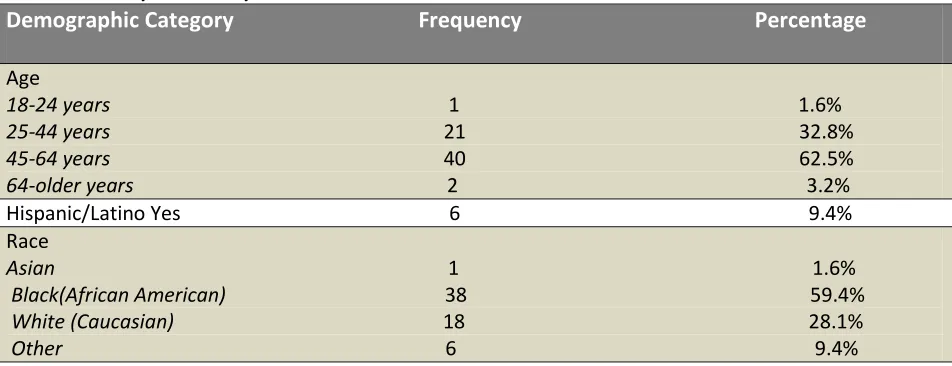
program. Participants were grouped into four age groups: 18-24 years, 25-44 years, 45-64 years and
64-Older years. The largest percentage of participants (62.5%) fell in the 45-64 years of age category;
32.8% were 25-44 years; 1.6% was 18-24 years and 3.2% were 64-older years of age. Clients were asked
if they identify as Hispanic/Latino in one question and which race they identify as in another. Six people
identified as Hispanic/Latino; one person did not respond to this question. In terms of race, the
participants identified as follows: 1.6% Asian, 59.4% Black (African American), 28.1% White (Caucasian)
and 9.4% Other (See Table 2). Other race options included American Indian or Alaskan Native and
Native Hawaiian or Other Pacific Islander, although no one selected these options. One client (1.6%) did
Table 2: Participant Descriptive
Demographic Category Frequency Percentage
Age
18-24 years 1 1.6% 25-44 years 21 32.8% 45-64 years 40 62.5% 64-older years 2 3.2% Hispanic/Latino Yes 6 9.4% Race
Asian 1 1.6% Black(African American) 38 59.4% White (Caucasian) 18 28.1% Other 6 9.4%
A significant difference was found among the age groups. More than half of participating clients
were between the ages of 45 and 64 years. No significant differences were found for race and ethnicity
demographic groups.
Are the clients satisfied with the services provided?
Six Likert scale questions combined indicated that the clients were satisfied with the overall
services that are provided in the program. One particular question asked the clients to respond to the
following statement: “I like the services I received here.” From the overall group of participants,
thirteen participants (20.3%) agreed that they liked the services they received, and 47 (73.4%) strongly
agreed to this statement (see Table 3). These high percentages indicate that the program is well-liked
Are the clients satisfied with the staff that provided the services?
Results from the survey indicated that a combination of ten questions showed that overall,
clients were satisfied with the staff that provided the services (See table 3). 48 clients strongly agreed
that “staff here believe they can grow, change and recover.” The clients responded to the following
statement: “Staff helped me obtain the information I needed so I could take charge of managing my
[image:29.612.37.572.277.720.2]treatments.” 44 participants (68.8%) strongly agreed that staff helped them manage their treatments.
Table 3. Responses to Service and Staff Satisfaction Likert Scale Statements (0= Not applicable, 1= Strongly Disagree, 2=Disagree, 3=Neutral, 4=Agree, 5=Strongly Agree)
Statement 0 1 2 3 4 5 Frequency (Percentage)
I like the services I received here 1 1 0 2 13 47 (1.6%) (1.6%) (0.0%) (3.1%) (20.3%) (73.4%) If I had other choices, I would 2 0 3 6 11 42 still get services from this agency (3.1%) (0.0%) (4.7%) (9.4%) (17.2%) (65.6%) The location of services was convenient 2 0 0 3 12 35 (parking, public (3.1%) (0.0%) (0.0%) (4.7%) (18.8%) (54.7%) transportation, distance etc.)
Services were available at times 1 0 1 3 16 43 that were good for me. (1.6%) (0.0%) (1.6%) (4.7%) (25.0%) (67.2%) I was able to get all the services 3 0 1 5 13 41 I thought I needed. (4.7%) (0.0%) (1.6%) (7.8%) (20.3%) (64.1%) I was informed about other service 5 0 0 3 12 44 available from this agency (support (7.8%) (0.0%) (0.0%) (4.7%) (18.8%) (68.8%) groups, psychiatry, and substance
abuse treatment).
Staff were willing to see me as often 3 0 1 4 14 42 as I felt necessary. (4.7%) (0.0%) (1.6%) (6.3%) (21.9%) (65.6%) Staff returned my call in 24 hours. 4 3 1 6 14 36 (6.3%) (4.7%) (1.6%) (9.4%) (21.9%) (56.3%) Staff here believes I can grow 2 0 1 2 11 43 change and recover. (3.1%) (0.0%) (1.6%) (3.1%) (17.2%) (67.2%) Statement 0 1 2 3 4 5 Frequency (Percentage)
who is not given information about my treatment. (7.8%) (0.0%) (0.0%) (3.1%) (14.1%) (75.0%) Staff was sensitive to my cultural background. 4 0 0 2 12 46 (6.3%) (0.0%) (0.0%) (3.1%) (18.8%) (71.9%) Staff were sensitive to issues relating to HIV. 6 0 0 1 11 46 (9.4%) (0.0%) (0.0%) (1.6%) (17.2%) (71.9%) Staff helped me obtain the information I needed 6 1 0 2 11 44 so I could take charge of managing my treatment. (9.4%) (1.6%) (0.0%) (3.1%) (17.2%) (68.8%)
As a direct result of services received, have clients’ improved their personal lives?
Clients responded to a combination of statements in the survey that reflected whether or not
their personal lives have improved since they were receiving services from the mental health program
(See Table 4). Outcome indicator results showed that the majority of clients agree that their lives have
improved since receiving services. Participants responded to the following statement: “I am better able
to control my life.” 18 clients (28.1%) agreed with the statement and 25 clients (39.1%) strongly agreed.
An average of 10 clients remained neutral throughout the series of ‘personal lives’ statements. In
[image:30.612.37.569.467.716.2]addition to many clients answering neutral, an average of 7 clients answered non-applicable.
Table 4. Responses to Personal Lives Likert Scale Statements (0= Not applicable, 1= Strongly Disagree, 2=Disagree, 3=Neutral, 4=Agree, 5=Strongly Agree)
Statement 0 1 2 3 4 5 Frequency (Percentage)
I deal more effectively with daily problems 6 1 0 9 21 27
(9.4%) (1.6%) (0.0%) (4.1%) (32.8%) (42.2%) Statement 0 1 2 3 4 5
Frequency (Percentage)
I am better able to control my life. 6 1 1 13 18 25 (9.4%) (1.6%) (1.6%) (20.3%) (28.1%) (39.1%) I am better able to deal with crisis. 6 1 2 9 22 24 (9.4%) (1.6%) (3.1%) (14.1%) (34.4%) (37.5%) I am getting along better with my family. 7 1 0 11 20 25 (10.9%) (1.6%) (0.0%) (17.2%) (31.3%) (39.1%) I do better in social situations. 7 1 2 13 17 24 (10.9%) (1.6%) (3.1%) (20.3%) (26.6%) (37.5%) I do better in school and/ or work. 13 1 2 12 16 20 (20.3%) (1.6%) (3.1%) (18.8%) (25.0%) (31.3%) My housing situation has improved. 11 0 3 16 15 19
My symptoms are not bothering me as much. 9 1 3 12 20 19 (14.1%) (1.6%) (4.7%) (18.8%) (31.3%) (29.7%) I do things that are more meaningful to me. 7 2 1 11 23 20 (10.9%) (3.1%) (1.6%) (17.2%) (35.9%) (31.3%) I am better able to take care of my needs. 7 2 1 8 19 27 (10.9%) (3.1%) (1.6%) (12.5%) (29.7%) (42.2%) I am better able to handle things when they 6 1 1 10 21 25 go wrong. (9.4%) (1.6%) (1.6%) (15.6%) (32.8%) (39.1%) I am better able to do things that I want to do. 14 0 2 11 16 21 (21.9%) (0.0%) (3.1%) (17.2%) (25.0) (32.8%)
Are the psychiatric services, including medications that were prescribed, benefiting the client?
This question was not applicable to some of the participants. Out of the 64 participants, 14
clients did not receive psychiatric services along with their counseling sessions. A total of 35
clients(54.7%) responded that they were currently taking psychotropic medication and strongly agreed
that they were able to see a psychiatrist at a time that was good for them. Of those 35, 28 clients (80%)
[image:31.612.42.574.455.718.2]strongly agreed that their medication is effective (see Table 5).
Table 5. Responses to Psychiatric Likert Scale Statements (0= Not applicable, 1= Strongly Disagree, 2=Disagree, 3=Neutral, 4=Agree, 5=Strongly Agree)
Statement 0 1 2 3 4 5 Frequency (Percentage)
I felt comfortable asking questions about 11 0 2 1 14 36 my treatment. (17.2%) (0.0%) (3.1%) (1.6%) (21.9%) (56.3%) I was able to see a psychiatrist at a time 14 0 1 7 14 28 that was good for me. (21.9%) (0.0%) (1.6%) (10.9%) (21.9%) (43.8%) I know the names of the medication 17 1 0 3 11 32 I am taking. (26.6%) (1.6%) (0.0%) (4.7%) (17.2%) (50.0%) I know how much and when to take my 16 0 1 4 8 35 Medication. (25.0%) (0.0%) (1.6%) (6.3%) (12.5%) (54.7%) I take my medication(s) as prescribed. 17 1 0 3 9 34
(26.6%) (1.6%) (0.0%) (4.7%) (14.1%) (53.1%) If I have questions about my medication 15 1 0 3 10 35
(25.0%) (0.0%) (3.1%) (12.5%) (15.6%) (43.8%) I am satisfied with my medication(s). 16 0 2 7 11 28 (25.0%) (0.0%) (3.1%) (10.9%) (17.2%) (43.8%)
Have the clients’ improved their relationships with persons other than their mental health provider?
Results for this indicator were similar to the clients’ personal lives responses. Clients responded
to a combination of statements in the survey that reflected whether or not their relationships with
people other than their therapists have improved since they were receiving services from the mental
health program (See Table 6). Outcome indicator results showed that the majority of clients agreed that
their relationships with family and friends have improved since receiving services. Participants
responded to the following statement: “I am happy with the friendships I have.” 19 clients (29.7%)
agreed with the statement and 22 clients (34.4%) strongly agreed. An average of 12 clients remained
[image:32.612.36.583.440.606.2]neutral throughout the series of ‘personal relationship’ statements.
Table 6. Responses to Psychiatric Likert Scale Statements (0= Not applicable, 1= Strongly Disagree, 2=Disagree, 3=Neutral, 4=Agree, 5=Strongly Agree)
Statement 0 1 2 3 4 5 Frequency (Percentage)
Additional Findings
In addition to demographics and client satisfaction with the service, we also determined how
long clients’ have received services from the program as well as how often they receive the services. 34
clients (53.1%) have received services for less than a year (less than 12 months). 29 clients (45.3%) have
received services for 1 year or more (at least 12 months).
In response to how often they received services from Positive Impact, 38 clients (59.4%) used
the services once a week, 12(18.85%) received services once a month, 9(14.1%) received services twice
a month and 5(7.8%) received services only as needed.
Interpretation, Utilization, and Recommendations
Major Findings
Results showed that the clients were satisfied with the services provided. An average of 73% of
respondents strongly agreed that they liked the services that they received with Positive Impact. These
results also included how satisfied the clients were with the accessibility to the services. Overall, the
majority of participants agreed or strongly agreed to be satisfied with the program and being able to
access the services easily.
Overall, the clients were satisfied with the staff that provided their services. Respondents
agreed that the staff had their best interest in mind. However, the questions in the survey did not
directly ask if clients were satisfied with the staff as a whole. The questions focused on the services that
the staff provided and staff sensitivity to the client’s issues as well as their background.
There seems to be no significance in clients’ personal lives improving after receiving services in
the mental health program. An average of 30% of clients agreed that different aspects of their personal
applicable to their lives, while 20% of the clients remained neutral. This could be due to fact that only
half of the client’s (53.1%) have received mental health services from Positive Impact for less than a
year. They may not have had time apply their treatment to their daily lives. Future evaluations should
use information from client’s who have received services from the program for more than one year.
For the respondents who had psychiatric help, an average of 50% strongly agreed that these
services are benefiting them. This finding is only relevant for those who received psychiatric services. For
those who did not see a psychiatrist during their visits, or do not take psychotropic drugs, their
responses were non applicable. In future evaluations, only the clients who are receiving all of the
services that Positive Impact provides should participate in the survey.
Results showed that 30% of clients agreed that their relationships with other people have
improved. These results are similar to the clients’ personal lives responses. 30% of clients agreed that
different aspects of their relationships improved after receiving services. An average of 8% responded
that the questions were not applicable to their lives, while 20% of the clients remained neutral. This
could be due to fact that half of the client’s (53.1%) received mental health services from Positive
Impact for less than a year. They may not have had ample time for their treatment to affect their
personal relationships with other people. Future evaluations should use information from client’s who
have received services from the program one year or more.
Limitations
This research has some limitations. We had a relatively small sample size. Sixty- four clients
participated in the survey. Also many of the questions were not applicable for some of the participants,
further limiting the results. A second limitation was that the surveys were implemented by the
therapists and staff members in the reception area and they had to be completed within the offices of
already familiar with. However, this could have led to a response bias. A third limitation is the fact that
the clients who participated in the survey were chosen at random. The random sample resulted in some
participants not being able to answer certain survey questions because they did not use all of the
services provided. If we would have used client’s that utilized all of the services, we may have obtained
more significant results.
Recommendations
Continued Satisfaction Surveillance
Positive Impact should continue to collect program satisfaction surveillance to assist future
evaluation and continue to monitor the program so that improvements can be made. With the
information received from the evaluations, the program can continue to provide beneficial and
satisfactory services to their clients. They should administer the survey that was used in this evaluation
or a variation of it once every year to the clients who have received services for that entire year.
Contribution to Public Health
Although the sample size was not very large, the information obtained from this evaluation
could encourage more support for the HIV mental health program and Positive Impact. This program is
having a positive influence in the lives of those infected with HIV and their loved ones that are affected
as well. The majority of the clients’ that participated in the survey are satisfied with the services and the
treatments that they have received from this organization. Positive Impact not only benefits those who
use their services, but also the community that they are established in. The work that they do provides
information, knowledge, and a better understanding of HIV/AIDS and those who are affected by it. .
More research would be needed to determine whether the information and the help provided positively
major public health problem, not just locally, but world-wide. This program continues to address the
issues. Positive Impact’s mental health counseling program has the potential to improve the quality of
Bibliography
1. Positive Impact. Mission, Vision, and Our Work. 2012. Available at: http://www.positiveimpact-atl.org/page/1044/Our-Work)
2. Beyrer, C. 2007. HIV epidemiology update and transmission factors: risks and risk contexts— 16th International AIDS conference epidemiology plenary. Clin Infect Dis. 44(7): 981-7
3. Centers for Disease Control and Prevention. Division of HIV/AIDS Prevention. National Center for HIV/AIDS, Viral Hepatitis, STD and TB Prevention. HIV in the United States: At a Glance. 2012. Available at: http://www.cdc.gov/hiv/topics/basic/index.htm.
4. Center for Disease Control and Prevention. HIV Surveillance --- United States, 1981--2008. MMWR 2011 60(21); 689-693.
5. Health Resources and Service Administration. HIV/AIDS Bureau. HRSA Care Action. Mental Health and HIV Disease. 2001. Available at: ftp://ftp.hrsa.gov/hab/hrsa101.pdf
6. AVERT. Understanding HIV and AIDS Statistics. 2011. Available at: http://www.avert.org/statistics.htm
7. Prejean J, Song R, Hernandez A, Ziebell R, Green T, et al. 2011. Estimated HIV Incidence in the United States, 2006-2009. PLoS ONE 6(8): e17502. doi:10.1371/journal.pone.0017502).
8. Center for Disease Control and Prevention. HIV/AIDS Surveillance Report. The Georgia Department of community Health. 2009 Available at:
http://cdc.gov/hiv/surveillance/resources/reports/2009report/).
9. Centers for Disease Control and Prevention. Division of HIV/AIDS Prevention. National Center for HIV/AIDS, Viral Hepatitis, STD and TB Prevention. Basic Statistics. 2012. Available at:
http://www.cdc.gov/hiv/topics/surveillance/basic.htm#incidence
10. Centers for Disease Control and Prevention. Division of HIV/AIDS Prevention. National Center for HIV/AIDS, Viral Hepatitis, STD and TB Prevention. HIV in the United States: At a Glance. 2012. Available at: http://www.cdc.gov/hiv/resources/factsheets/us.htm
11. Mayer, K.H., Ducharme, R., Zaller, N.D., Chan, P.A., Case, P., Abbott, D., Rodriguez, I.I.,
Cavanaugh, T. 2012. Unprotected sex, underestimated risk, undiagnosed HIV and sexually transmitted diseases among men who have sex with men accessing testing services in a New England bathhouse. JAIDS, Journal of Acquired Immune Deficiency Syndromes: 59(2). 194-198.
13. Chen X., Murphy D.A., Naar-King S., Parsons J.T. 2011. A clinic-based motivational intervention improves condom use among subgroups of youth living with HIV. J Adolesc Health: 49 (2): 193-8.
14. Calsyn D.A., Hatch-Maillette M., Tross S., Doyle S.R., Crits-Christoph P., Song Y.S, Harrer J.M., Lalos G., Berns S.B. 2009. Motivational and skills training HIV/sexually transmitted infection sexual risk reduction groups for men. J Subst Abuse Treat: 37(2): 138-50.
15. Rotheram-Borus M.J., Desmond K., Comulada W.S., Arnold E.M., Johnson M. 2009. Reducing risky sexual behavior and substance use among currently and formerly homeless adults living with HIV. Am J Public Health: 99(6): 1100-7
16. Bowen A.M., Williams M.L., Daniel C.M., Clayton S. 2008. Internet based HIV prevention
research targeting rural MSM: feasibility, acceptability and preliminary efficacy. J Behan Med:31(6):463-77
17. Lee S.J., Detels R., Rotheram-Borus M.J., Duan N. 2007. The effect of social support on mental and behavioral outcomes among adolescents with parents with HIV/AIDS. Am J Public Health: 97(10): 1820-6
18. Center for Disease Control and Prevention. National Center for HIV/AIDS, Viral Hepatitis, STD and TB Prevention. Provisional Procedural Guidance for Community Based Organizations. 2009 Available at:
http://www.cdc.gov/hiv/topics/prev_prog/ahp/resources/guidelines/pro_guidance/introduction-1.htm
19. Effective Interventions. HIV prevention that works. 2012. Available at: https://www.effectiveinterventions.org/en/Home.aspx
20. Kegeles, S.M., Hays, R.B., Coates, T.J.1996. The Mpowerment Project: A Community-level HIV Prevention Intervention for Young Gay Men. American Journal of Public Health, 86 (8), 1129 – 1136.).
21. Kenneth T. Jones, MSW, Phyllis Gray, MPH, Y. Omar Whiteside, MEd, Terry Wang, MSPH, Debra Bost, BA, Erica Dunbar, MPH, Evelyn Foust, MPH, and Wayne D. Johnson, MSPH. 2008. Evaluation of an HIV prevention intervention adapted for Black men who have sex with men. American Journal of Public Health, 98 (6), 1043-1050).
22. Royse, D., Thyer, B., Padgett, D. 2010. Program Evaluation: An Introduction (5th ed). Belmonte, California: Wadsworth. (Royse et al, 2010).
23. Chen, H.T. 2005. Practical Program Evaluation: Assessing and Improving Planning, Implementation and Effectiveness. Thousand Oaks, California. Sage Publications, Inc.
25. Thompson, S., Blankenship, K.M., Selwyn, P.A., Shoshnood, K., Lopez, M., Balacos, K., Altice, F.L. 1998. Evaluation of an innovative Program to Address the Health and Social Service Needs of Drug Using Women with or at Risk for HIV infection. Journal of Community Health: 23(6). 419.440.
26. Lawn, S.D., Myer, L., Harling, G., Orrell, C., BEkker, L.G., Wood, R. 2006. Determinants of
Mortality and Nondeath Losses form an Antiretroviral Treatment Service in South Africa: Impliations for Program Evaluation. Clin Infect Dis: 3 (6): 770-776
27. Silvera, R., Stein, D., Hutt, R., Hagarty, R., Daskalakis, D., Valentine, F., Marmor, M. 2010. The development and implementation of an outreach program to identify acute and recent HIV infections in New York City. Open AIDS JournalL 4, 76-83.
28. Mueller, T.E., Castaneda, C.A., Sainer, S., Martinez, D., Herbst, J.H., Wilkes, A.L., Villarruel, A.M. 2009. The implementation of culturally based HIV sexual risk reduction program for Latino youth in a Denver area high school. AIDS Education and Prevention.
29. Patel, S.N., Golin, C.E., Marks, G., Grodensky, C.A., Earp, J.A., Zeveloff, A., O’Daniels, C., Gardner, L., Boland, M.S., Davis, R., Quinlivan, E.B. 2009. Delivary of an HIV prevention counseling program in an infections diseases clinic: implementation process and lessons learned.
30. Mumma, B.E., Suffoletto, B.P. 2011. Less encouraging lessons from the front lines: barriers to implementation of an emergency department-based HIV screening program. Annals of Emergency Medicine: 58 (1, Suppl. 1) S44-S48
Appendix A: Client Survey Flyer
Appendix B: Survey
We Want To Hear From You!!!
Positive Impact, Inc. truly enjoys having you as a client and is thankful to have served the HIV Mental Health community for over fifteen years. Please take a few moments to let us know how we are doing by
responding to this short survey.
(PLEASE RATE HOW WELL YOU AGREE
WITH THE FOLLOWING STATEMENTS) Strongly Agree
5
Agree 4
Neutral 3
Disagree 2
Strongly Disagree
1
Not
Applicable 0