ScholarWorks @ Georgia State University
ScholarWorks @ Georgia State University
Criminal Justice and Criminology Theses
Spring 1-6-2012
Policing Persons with Mental Illness in Georgia: Elucidating
Policing Persons with Mental Illness in Georgia: Elucidating
Perceptions of the Mental Health System
Perceptions of the Mental Health System
Meredith L. Knowles
Georgia State University
Follow this and additional works at: https://scholarworks.gsu.edu/cj_theses
Recommended Citation Recommended Citation
Knowles, Meredith L., "Policing Persons with Mental Illness in Georgia: Elucidating Perceptions of the Mental Health System." Thesis, Georgia State University, 2012.
https://scholarworks.gsu.edu/cj_theses/1
NOTICE TO BORROWERS
All dissertations deposited in the Georgia State University Library must be used only in accordance with the stipulations prescribed by the author in the preceding statement.
The author of this dissertation is: Meredith L. Knowles
1036 Overlook Park Lane Lawrenceville, GA 30043
The director of this dissertation is: Dr. Wendy P. Guastaferro
Department of Criminal Justice and Criminology 140 Decatur Street
1201 Urban Life Building Atlanta, GA 30303
Users of this dissertation not regularly enrolled as students at Georgia State University are required to attest acceptance of the preceding stipulations by signing below. Libraries borrowing this dissertation for the use of their patrons are required to see that each user records here the information requested.
Type of use
POLICING PERSONS WITH MENTAL ILLNESS IN GEORGIA: ELUCIDATING PERCEPTIONS OF THE MENTAL HEALTH SYSTEM
BY
MEREDITH L. KNOWLES
A Thesis Submitted in Partial Fulfillment Of the Requirements for the Degree
of
Master of Science in the
Andrew Young School of Policy Studies of
Georgia State University
ACCEPTANCE
This thesis was prepared under the direction of the candidate’s Thesis Committee. It has been approved and accepted by all members of that committee, and it has been accepted in partial fulfillment of the requirements for the degree of Master of Science in Criminal Justice in the Andrew Young School of Policy Studies of Georgia State University.
Thesis Chair: Dr. Wendy P. Guastaferro
Committee: Dr. Brent Teasdale Dr. Joshua Hinkle
Dr. Michael Compton, M.D.
Electronic Version Approved: Mary Beth Walker
Andrew Young School of Policy Studies Georgia State University
DEDICATION
ACKNOWLEDGMENTS
I would like to thank Georgia State University, the Andrew Young School of Policy Studies, and the Department of Criminal Justice for the opportunity to participate in the Criminal Justice Master’s Program. Specifically, I would like to thank the Criminal Justice faculty for the knowledge and insight they have shared with me over the past seven years of my undergraduate and graduate career. I would like to extend a special thank you to my thesis committee for their encouragement of this Master’s Thesis process. Thank you to Dr. Brent Teasdale and Dr. Joshua Hinkle for serving on my committee and volunteering your time and expertise throughout this work. Thank you to Dr. Michael Compton, Beth Broussard and the entire Emory CIT research team for your direction and cooperation from the very beginning of this thesis. Above all else, I wish to express the most special thank you to Dr. Wendy Guastaferro, my thesis chair, whose support, dedication and insight kept me moving forward to where I am now. I don’t know how I would have navigated through this process without you. Your time and words are more
appreciated than I can express.
TABLE OF CONTENTS
Page
ACKNOWLEDGMENTS... i
LIST OF TABLES...iii
ABSTRACT……...iv
CHAPTERS I INTRODUCTION...1
Research Questions...16
II REVIEW OF THE LITERATURE...19
III METHODS...60
Data...61
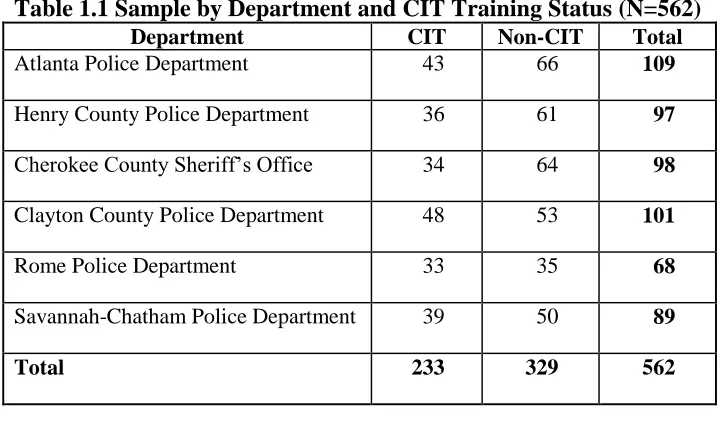
Sample...62
Plan of Analysis... 73
IV RESULTS... 79
V DISCUSSION... 93
REFERENCES... 106
LIST OF TABLES
Page
TABLE 1.1...64
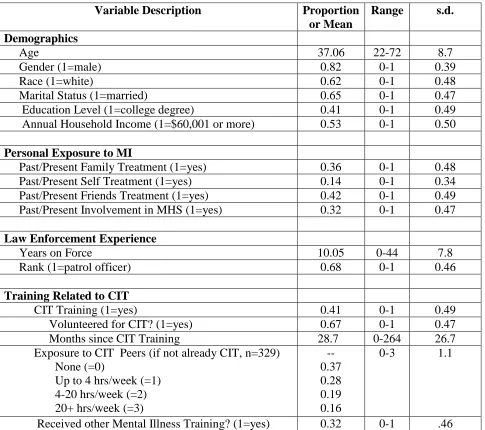
TABLE 1.2...76
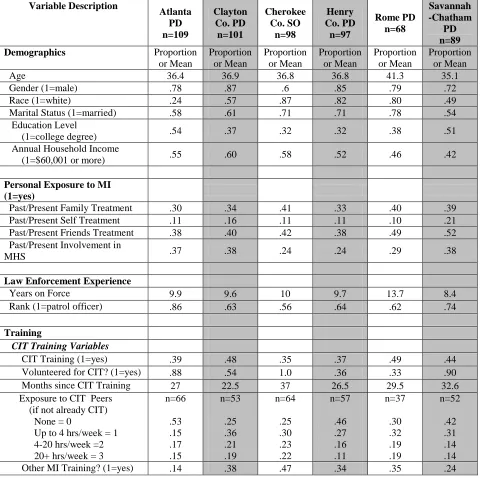
TABLE 1.3...77
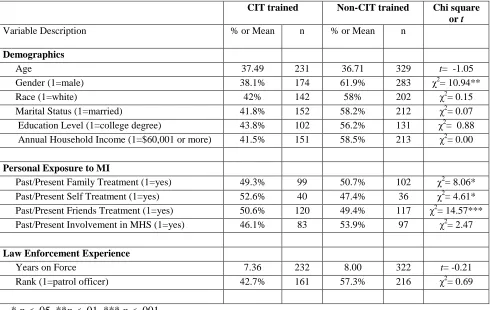
TABLE 1.4...78
TABLE 1.5...80
TABLE 1.6...84
TABLE 1.7...84
TABLE 1.8...87
TABLE 1.9...87
TABLE 2.0...89
TABLE 2.1...91
TABLE 2.2...92
MEREDITH L. KNOWLES
Working title:
Policing Persons with Mental Illness in Georgia: Elucidating Police Perceptions of the Mental Health System
(Under the direction of DR. WENDY P. GUASTAFERRO)
ABSTRACT
The criminal justice and mental health systems increasingly overlap as persons with mental illness (PMI) are disproportionately present throughout components of the criminal justice system, a concern to mental health and criminal justice professionals alike. In response, various initiatives (aimed across components of the criminal justice system) have been developed and implemented as a means of combating this overrepresentation. The following research will focus on one specialized police-based initiative, the Crisis Intervention Team (CIT), which aims to train police how to recognize mental illness, de-escalate persons in crisis, and to seek treatment-based alternatives to arrest, when appropriate (Schwarzfeld, Reuland, & Plotkin, 2008).
Alternatives to arrest consist of various community-based mental health services such as public hospitals (some of which are designated as emergency receiving facilities, or ERFs) or private clinics. While the components of CIT training likely influence officers in unique ways, research has yet to empirically examine how CIT influences police perception, behavior or the incidence of referrals to mental health treatment. As an initial step, this research assessed the attitudes police have regarding the hospital and mental health system within their district. Specifically, this research provides a basic understanding of how police regard their local hospitals and mental health facilities that are posited as available alternatives to arrest, and help identify the role CIT plays in shaping these attitudes. This study found almost no significant difference in the attitudes CIT-trained officers had towards district ERF and the local mental health system as compared to non-CIT officers. Only in one of the six departments studied was there a significant difference between the attitudes of CIT-officers and non-CIT officers; with the non-CIT officers actually having more positive attitudes about their local mental health system than CIT-officers. The six departments studied had nearly similar attitudes of their mental health resources, which would barely be considered passing on a standard grading scale. While officers in this study do not have very positive attitudes towards the ERF they use to transport PMI or their districts’ mental health system, these attitudes may in fact be more positive than many police departments without any specialized approach or initiative. The significance and policy implications of these attitudes are discussed at length, as these findings speak to the need for increased attention by both the mental health and criminal justice systems. Recommendations for future research, including expanding this study to rural departments or agencies with no connection to CIT, are also outlined.
CHAPTER I
INTRODUCTION
At first glance, the criminal justice and mental health systems may appear to be
independent of one another, meeting distinct societal needs. In reality, the two systems are not so
dissimilar, especially because they share the responsibility of promoting and protecting public
safety. Moreover, they are increasingly overlapping, as persons with mental illness (PMI) are
disproportionately present throughout components of the criminal justice system. The increased
rates of arrest, adjudication and incarceration of PMI are concerning to both mental health and
criminal justice professionals. In response, various initiatives (aimed across components of the
criminal justice system) are being developed and implemented as a means of combating this
overrepresentation.
Amidst the many ongoing collaborative efforts between the mental health and criminal
justice systems, the following research will primarily focus on one specialized police-based
initiative, the Crisis Intervention Team (CIT). The basic goal of CIT is to train police to
recognize mental illness, de-escalate persons in crisis, and to seek treatment-based alternatives to
arrest, when an officer (using their discretion) deems it appropriate. Alternatives to arrest consist
of various community-based mental health services such as public hospitals (some of which are
designated as emergency receiving facilities, or ERFs) or private clinics. The components of CIT
training likely influence officers in unique ways and research has only recently begun to
empirically examine how CIT impacts officer’s behavior and the incidence of referrals to mental
health treatment. An important facet to examine in this line of research is the officer-level
decisions on what course of action to take with a particular PMI and whether CIT influences
stigma regarding PMI (Bahora, Hanafi, Chien & Compton, 2008; Compton, Esterberg, McGee,
Kotwicki, & Oliva, 2006; Wells & Schafer, 2006) but has largely failed to link program
implementation with actual police behaviors.
Training, especially CIT, is being implemented throughout the country, yet little is
known about officer attitudes and behaviors. As an initial step, this research will assess the
attitudes police have regarding a primary alternative to arrest: the hospital and mental health
system within their district. A defining moment of CIT success or failure is when an officer
seeks a resolution to an interaction with a PMI. While many factors likely influence the
disposition an officer pursues, research has yet to explore the intricacies and significance of these
influences. Furthermore, mental health treatment resources, such as ERFs and non-emergency
treatment centers, vary significantly in terms of services, emergency intake protocols, and
responsivity to law enforcement. Presumably, officers could have a variety of attitudes regarding
the different mental health facilities (namely ERFs) that are available in their respective district.
Therefore, this research will take a first step in understanding such officer-level outcomes by
exploring the individual attitudes toward the mental health system. Specifically, this research
will establish a basic understanding of how positively or negatively police regard the hospitals
and facilities to which they are told to bring PMI and help identify the role CIT plays in shaping
these attitudes.
In order to effectively answer this research question, this work will first outline a review
of existing literature as it relates to the mental health and criminal justices systems, specifically
addressing the confluence of the two. Mental illness will be delineated as a global, national and
local problem, presenting personal and economic challenges within society. A result of these
Therefore, current responses to the overrepresentation, particularly law enforcement-based
efforts to divert PMI, will be discussed in detail. In order to properly examine law enforcement
programs, this work will also address past and present practices of policing PMI and how
specialized training initiatives, such as CIT, influence the attitudes and behaviors of police
officers.
Mental Illness
The vast body of knowledge on mental health and mental illness serves as a foundation
for the proposed study. Mental illness and its treatment have a distinct history as both a science and social subject (President’s New Freedom Commission on Mental Health, 2003). While
science has acknowledged the public health challenges of mental illness, the general public has largely underestimated the burden that now weighs on many systems of society (President’s
Commission, 2003). As disabilities of all kinds are recognized and addressed, mental illness is
taking priority as a public health issue; driving research, public debate and policy initiatives. In
order to provide a foundation with which to interpret current data and support future research, it
is important to understand the basics of mental illness and the difficulties persons with mental
illness (PMI) live with on a daily basis.
The term mental illness, as used here, has a deep-rooted history and collectively refers to
all diagnosable mental disorders. Mental illnesses are legitimate medical conditions that disrupt one’s ability to think, process emotion, or function on a daily basis. Oftentimes, mental illness is
also associated with substance abuse issues because a significant proportion of PMI have a high
prevalence of substance disorders (Kessler, Chiu, Demler, & Walters, 2005). PMI often use
drugs or alcohol to manage their illness and therefore develop addiction problems in addition to
(Ding, Yang, Cheng, Schiltz, Summers & Skinstad, 2011). COD are usually categorized as
subsets of mental illness and for the most part, this work will refer to them as such (unless
exceptions are noteworthy to the proposed research). A number of serious mental illnesses such
as schizophrenia, depression, bipolar disorder and post-traumatic stress disorder (to name just a
few) manifest in distinct ways from one another. Rather than highlight these differences, this
work will focus on common characteristics of various mental disorders, such as the cognitive and
behavioral deficiencies that can impact how PMI act and react to others. Furthermore, this work
will outline how these functional impairments can lead to familial and social difficulties that may
increase the likelihood of PMI involvement in the criminal justice system.
Personal Challenges
PMI face challenges unique to their respective conditions and environments. Kane and
Ennis (1996) outline these challenges to include difficulty in caring for oneself, obtaining
medical care, housing, or employment. Interaction with others can also be complicated for some
PMI as several disorders are characterized by social withdrawal or a difficulty in managing
environmental stimuli (Kane & Ennis, 1996). These challenges are all related to cognitive
deficiencies experienced by PMI, making the implications of mental illness identifiable on an
individual and a community scale. This work will provide a basic understanding of mental illness
as a medical condition, as well as the related implications and costs for society.
Economic Challenges
While it is difficult to measure or describe the total cost of mental illness, certain
medical, social and fiscal factors can be quantified in order to provide the proper context. To
begin, mental illness is a pervasive issue that recognizes no ethnic, social or economic
familial level, with an estimated one in four adults struggling with a disorder in any given year
(National Institute of Mental Health, 2010). From an economic standpoint, mental illness
accounts for nearly eighty billion dollars in expenditures in the U.S. alone (Rice & Miller, 1996).
These expenditures include costs incurred by the government through avenues like the criminal
justice system and Medicaid as well as costs incurred by PMI and their families, including
treatment for the disorder. Furthermore, the mental health system is largely funded by taxpayer
dollars, underlining the need for an effective response to this societal problem.
Mental illness requires treatment in several forms, including medications and therapies
that can be taxing on the medical and insurance industries. The challenges facing PMI may also
result in loss of work productivity and higher rates of substance abuse (which financially impact
communities). Additionally, unmanaged illnesses can result in increased hospitalizations,
interaction with the criminal justice system, and even suicide (President’s Commission, 2003).
Suicide is perhaps the ultimate cost of mental illness, as the majority of people who attempt or
commit suicide have suffered from mental illness, whether they have been diagnosed or not
(Goldsmith, Pellmar, Kleinman, & Bunney, 2002).
In addition to these quantifiable costs of mental illness, PMI also face social rejection and
prejudice related to their disorder, which is referred to as stigma. Stigma is a term that
encompasses the stereotypical, prejudicial and discriminatory behavior of others that may result
in loss of opportunity and demoralization for PMI (Corrigan & Wassel, 2008). Withdrawal,
secrecy and isolation due to stigma may worsen symptoms, interfere with gainful employment or
hinder access to treatment. As such, stigma is a factor that weighs heavily in modern day mental
health care efforts and underscores the need for effective treatment options to ensure a proper
Responding to PMI
The notion of recovery is not a vague or metaphorical ideal, but rather a reality. In fact,
the overarching takeaway from existing mental health research is that mental illness is treatable
and PMI can live normal, healthy lives with the right combination of treatment. Treatment may
take the form of psychosocial therapies, pharmaceutical remedies, or a combination of the two.
Any number of factors influence the manner in which treatment options affect PMI, with
different medications or therapies having different effects on different people. In addition to the
lessening of symptoms and the enhancement of functioning, the pursuit of recovery has also
improved the study of the human brain and the collective understanding of mental disorders. “Scientists have learned much more about the workings of the brain as a result of their
investigations into how psychotherapeutic medications relieve the symptoms of disorders such as
psychosis, depression, anxiety, obsessive-compulsive disorder, and panic disorder” (NIMH,
2008, p. 2). The current treatments of mental illnesses (especially the pharmacological
treatments) are based on the effectiveness in reducing symptoms and suffering rather than an
established understanding of how they act on the human brain (Noroian, 2007). However, it is in
the pursuit of improving such treatments that the brain is studied and the causes of mental
disorders are elucidated.
The field of effectively treating mental disorders is complex and ever-changing.
However, it is the process of accessing these legitimate means of treatment that is the root
problem of the mental health care system. Treatment is not readily available to a significant
portion of those in need, so an increasing percentage of untreated PMI (including those in a crisis
The reality of such a broken mental health system is largely attributed to the ineffective
shift from institutionalization to community-based treatment and the imposing economic changes
of the last several decades. Primarily, a shift away from institution-based care and towards
community-based services markedly altered the course of mental health care in the U.S. From
the 1950s to the 1970s, the decrease in institutionalized care led to an unprecedented number of
PMI living in the general population. However, this transition was not effectively funded or
implemented within local communities. State governments and municipalities have been unable
to finance adequate treatment and face growing budget deficits. Since mental health treatment is
primarily funded by Medicaid and the state, federal and state budget cuts have direct impacts on
the availability of treatment resources (Appelbaum, 2003).
Mental health treatment is increasingly expensive for the medical community to provide,
and government funding has been unable to supplement the growing costs incurred by treatment
providers. Disparities that were once covered by state funds are even further exacerbated by
recent economic downturns (Appelbaum, 2003). The reality of fiscal shortfall and economic
recession is that local communities are responsible for providing mental health treatment to a
larger number of PMI with fewer resources than ever before. The public health and criminal
justice systems bear direct operational and financial burdens as a result.
With fewer accessible treatment options, PMI suffer consequences such as frequent visits
to emergency rooms and hospitalizations, homelessness, premature deaths and suicides and
involvement with the criminal justice system (Honberg, Diehl, Kimball, Gruttadara, &
Fitzpatrick, 2011). Hospitals are increasingly becoming the first access point for mental health
treatment, as PMI are more likely to require emergency mental health services when disorders go
psychiatric evaluation and services. However, not all hospitals are staffed or equipped to handle
PMI in a crisis state, so certain facilities have special designations as an Emergency Receiving
Facility1 (ERF). Public safety personnel are instructed to take PMI in crisis to an ERF, but PMI
and their loved ones most often access the closest hospital when in crisis. As a result, hospital
resources and staff become overwhelmed with mental health cases and struggle to find local
placement for PMI. Police are aware of the burden on these facilities, as they often rely on
hospitals when trying to get a PMI treatment in lieu of arrest (yet research has yet to elucidate the
basic attitudes police have towards such facilities). However, the intersection of the mental
health and criminal justice systems does not just end in the hospital lobby. The two systems are
increasingly related to one another as they work to leverage existing resources to achieve their
respective missions and improve interactions with PMI.
Families, communities and other public systems are significantly impacted by insufficient
mental health care resources. Therefore, community police are interacting with PMI regularly
(Hails & Borum, 2003). They have effectively become responsible for facilitating access to what
limited treatment options are available. This responsibility has been placed on police without
understanding or even assessing the basic attitudes police officers have towards the mental health
system they are now encouraged (even required in some cases) to leverage. Without effective
coordination and continuity of mental health care in the community, jails and prisons develop
significant disparities within offender populations. As a result, the criminal justice system
assumes the burden and cost of mental health care for a significant subset of PMI who are
increasingly coming into contact with police (Steadman, Morris & Dennis, 1995).
1
Research estimates that of all those arrested, jailed, in-prison or under-correctional
supervision in the United States, anywhere from 7% to 18% qualify as PMI (Lamb &
Weinberger, 1998). While medication and programming is provided to some incarcerated PMI,
these mental health services are limited at best, and certainly insufficient for the overall
population of PMI in jails and prisons (Beck & Maruschak, 2001). The prevalence of PMI
throughout the justice system speaks to the need for reform and effective alternatives to
incarceration. Many also contend that the rise of incarcerated PMI rates is caused by a justice
system that lacks the proper response to a population in need (Wells & Schafer, 2006). A
narrative regarding how these offender disparities are a result of the justice system’s response to
legislative change has since developed.
Deinstitutionalization made the provision of mental health care a responsibility of local
communities and facilities were subsequently overwhelmed with PMI in need of treatment. This
resulted in a higher percentage of PMI (representing various degrees of treatment compliance)
living amongst the general population. Law enforcement was unprepared and inadequately
trained to handle the community influx of PMI following deinstitutionalization (Anderson &
Lynch, 1984). Higher numbers of PMI amongst general populations and an increased frequency
of PMI involvement in criminal offender populations resulted in a higher rate of PMI and law
enforcement interaction (Teplin, 1984). Consequently, the courts and corrections systems saw a
rising number of PMI adjudicated and incarcerated. In recognition of historic and existing PMI
disparities, diversion efforts have become a priority goal of the criminal justice system.
Diversion Initiatives
Collaborative efforts aimed at addressing PMI overrepresentation throughout the criminal
in the formal criminal justice system (post-booking diversion programs) or work to divert PMI
from being arrested to begin with (pre-booking diversion programs). Diversion programs include
specialized first responder initiatives, mental health courts and jail-based diversion programs,
which work to ensure that PMI have access to appropriate treatment within the community upon
release from incarceration. Of these initiatives, law enforcement-based intervention programs are
particularly popular because police are seen as the gatekeepers of the criminal justice system,
exercising a significant amount of discretion during the course of their duties (Menzies, 1987). If
the overall goal is to ebb the flow of PMI into the criminal justice system, stakeholders are
inclined to recognize police as serving a critical role in diverting PMI. Therefore, police behavior
is a common focus of study, seeking to identify, predict and influence the decisions officers
make.
Subsequent chapters of this work provide more information on diversion programming,
given that research has begun to study the effectiveness of individual initiatives. By
demonstrating which programs are effective, agencies, municipalities and governments can make
more educated policy decisions and resource allocations. However, in addition to gauging the
success of programs, it would be helpful to better understand how a program works or how the
attitudes and decisions of those involved impact the overall initiatives. Therefore, subsequent to identifying a specific initiative as “effective,” researchers should examine what fundamental
components contribute to the efficacy. While this work will explore police-based intervention
programming in-depth, the basic differences between other intervention strategies and their
respective research gaps are also addressed in subsequent portions of the literature review.
Team (CIT), has been widely implemented without examining the attitudes police officers (the
primary facilitators of CIT) have regarding the hospitals and resources CIT stresses.
Police are increasingly expected to play a central role in diverting PMI from the justice
system; yet police-initiated intervention programs are being implemented without knowing
enough about the dynamic context of these interactions, including how police officers view the
intervention and perceive the resources that are available to them. Current efforts rely heavily on
police to facilitate access to mental health treatment but research has yet to assess how officers
perceive their mental health resources. It is important to understand more about what police want
to do regarding PMI and how their attitudes towards local mental health resources (i.e. hospitals)
impact their decisions. Therefore, this research takes a critical first step by elucidating the basic
attitudes police have regarding their local emergency rooms and mental health treatment
facilities. To better understand police attitudes and behavior, this work also provides a general
framework of organizations, practices, and interactions with PMI.
Policing PMI
Law enforcement agencies serve several primary functions within local communities: the
maintenance of public safety, the provision of service to citizens and the responsibility to be a
response force to accidents and injuries (Cumming, Cumming, & Edell, 1965). An increasingly significant portion of law enforcement’s time and resources are spent on issues involving PMI.
Cordner (2006) estimates that as much as 10% of sworn personnel’s time is spent concerning
matters involving PMI, suggesting these interactions are a significant factor in terms of law
enforcement resource allocation. Furthermore, the social tendency to identify police as the
gatekeepers of the criminal justice system brought about new studies on the discretion officers
Several high profile events called attention to the manner in which law enforcement was
responding to PMI and brought criticism on police agencies. Most notably, the 1988 Memphis,
Tennessee case in which an individual with a history of mental illness and substance abuse who
was wielding a knife was fatally shot by officers (Dupont & Cochran, 2000). Many communities
experienced similar incidents in which police had to use force (sometimes deadly force) on a
PMI actively exhibiting symptoms of a mental disorder (Hails & Borum, 2003). Given these and
other similar events, the public recognized the significant amount of discretion police have when
interacting with citizens and communities began to see law enforcement’s traditional response as
failing to address a special-needs population (Wells & Schafer, 2006).
While most police interactions with PMI are non-violent, research has found that officers
are less confident and develop anxiety with regard to their personal safety when responding to
such calls for service (Arcaya, 1989; Wells & Schafer, 2006). Additionally, police are frustrated
with more time consuming calls and responding to chronic requests from the same PMI (Hails &
Borum, 2003). Police departments traditionally have lacked special instructions for officers
dealing with PMI and hospitals presented significant barriers to care access (Dupont & Cochran, 2000). As a result of police anxiety, frustrations and the system’s obstacles, police relied on their
discretion and informal practices when interacting with PMI. Police chose from a variety of
options ranging from ignoring the PMI or eliciting the help of family members to transporting a
PMI to a hospital. In lieu of any practical non-custodial options, police often viewed arrest as the
only option (Dupont & Cochran, 2000).
Law enforcement agencies and the criminal justice system as a whole recognized the
need for a new approach that would equip police with the tools for responding to PMI with
Department joined with local mental health and university partners to develop the original model
of the Crisis Intervention Team (CIT), a collaborative effort to enhance police response to PMI.
Recently, different models of CIT programming have been implemented across the U.S. and vary
based upon local jurisdictions and resources. The state of Georgia features a statewide initiative
that offers training (based on the original, Memphis-model of CIT) to any law enforcement or
public safety agency. The Georgia program has grown significantly, working towards a goal of
training 20% of the law enforcement in the state, which the Georgia Peace Officer Standards and
Training Council (POST) estimates at more than 53,000 sworn officers (Oliva & Compton,
2008). While the program is growing, research on CIT initiatives is comparatively limited.
Current research on the success of CIT is limited to larger, more urban law enforcement
agencies and communities and fails to address rural agencies (Compton, Esterberg, McGee,
Kotwicki, & Oliva, 2006; Steadman, et al., 2000). It is erroneous to presume that CIT success
within urban departments would translate to other policing environments. This presumption is particularly flawed because CIT programs (including Georgia’s) rely heavily on the cooperation
of community-based mental health service providers which some rural areas may not have.
Hospitals and mental health treatment resources are different in each jurisdiction and many rural,
communities may not have the resources that larger, urban departments have available.
Existing research aimed at evaluating the rate at which CIT influences the rates of PMI
arrest is limited, yet CIT has spread quickly in the last few decades (Ritter, Teller, Marcussen,
Munetz, & Teasdale, 2011; Teller, Munetz, Gil, & Ritter, 2006; Watson, Morabito, Draine &
Ottati, 2008). The spread of CIT is (at least in part) attributed to the model’s mass appeal to law
enforcement organizations, yet there is virtually no solid evidence base CIT influence on police
studies address specific programmatic elements that contribute to the understanding of how
police behavior is influenced and the role mental health facilities assume in CIT implementation.
(See Borum, et al., 1998; Compton et al., 2006, and Sellers et al., 2005 for examples).
Police confidence in responding to calls with PMI (self-efficacy) and their comfort level
being around PMI (desired social distance) have been measured in officers before and after CIT
training, finding that CIT improves police knowledge and self-efficacy while reducing their
desire for social distance from PMI (Bahora et al., 2008; Compton et al., 2006). Measured
changes in police attitudes are used to support the argument that CIT training would improve
police interactions with PMI, and enhance the safety of subjects and officers yet further research
is needed to test these presumptions (Bahora, et al., 2008). Research has also found CIT models
yield more positive police perceptions of mental health resources than other specialized
police-based diversion models (Sellers et al., 2005). However, studies have highlighted police
departments assuming a traditional or non-specialized approach to policing PMI that have
comparable, or more positive relationships between police and hospitals (Sellers et al, 2005).
This work will highlight how CIT-related outcomes have been evaluated before
clarifying how components of CIT influence one another. Specifically, research has yet to
comprehensively elucidate the basic attitudes police have with regard to mental health facilities
in their jurisdictions. Since behavior is influenced by attitude, it is important to first assess the
attitudes police have about the emergency rooms and mental health facilities available to them.
While some studies have examined CIT from an officer-level perspective, they fall short of fully
assessing the attitudes and outlook police have about their jurisdictions mental health system.
in CIT, only two studies have examined basic police officer perceptions and attitudes (P. Strode,
personal communication, September 9, 2010; Borum, et al., 1998; Sellers et al., 2005).
Developing upon those studies, this work seeks to examine police officer attitudes and
perceptions regarding a variety of mental health treatment resources. These resources, including
hospitals and mental health facilities, are central to the success of CIT initiatives because they
are posited as better alternatives to arrest. The experiences police have with such facilities likely
influences their perception of the hospital and the mental health system as a whole. Since mental
health facilities and hospitals presumably vary by setting in terms of their services, emergency
intake protocols and responsivity to law-enforcement mental health referrals, this work will
determine whether police perception of such services varies accordingly. It is important to better
understand these attitudes in order to clarify how police perception influences behavior and discretion in an officer’s work.
The Current Study
This work examined the attitudes of police officers from six Georgia police departments
toward their local hospitals and mental health systems. Officers from these six departments were
asked a series of questions regarding their opinion of their local hospital and mental health systems’: responsivity, efficiency, resistance to PMI intake, timeliness, and effectiveness.
Additionally, officers were asked to rate their levels of comfort and attitudes related to using
non-law enforcement mental health resources. Only a portion of responding officers have been
trained in CIT, therefore this research also elucidates whether CIT training is associated with a
marked difference in police attitudes of such facilities. This research will improve the collective
understanding of police decisions and interactions with PMI.
Research Question One: How do officer attitudes regarding their jurisdiction’s mental health
facilities vary by department?
Based upon a review of existing literature and the diversity represented by the six hospitals and mental health systems from different areas of Georgia, officers’ perceptions of the
ERF in their jurisdiction are expected to vary between departments. This expectation is based on
the notion that facilities (especially hospitals) create significant barriers to care by leaving police
responsible for the custody and behavior of PMI, establishing unrealistic admission criteria and
failing to successfully organize the delivery of care (Dupont & Cochran, 2000). Therefore,
facilities that offer expedient PMI processing will likely be viewed more favorably by police
than those that require extensive officer involvement and time commitment in referring PMI to
treatment. The six departments included in this research represent different areas of Georgia, and
therefore have different mental health resources and intake protocols. If these hypothesized
differences are supported, significant differences between hospitals could be identified in an
effort to address less favorable police perceptions. Should no such inter-agency disparities exist,
this would suggest that officer attitudes across these six jurisdictions do not vary significantly.
Research Question Two: Does specialized training, specifically CIT training, influence the
attitudes officers have regarding the hospitals and mental health system in their jurisdiction?
Research has found CIT models yield more positive police perceptions of mental health
resources as compared to other specialized police-based diversion models (Sellers et al., 2005).
A part of CIT training involves site-visits to local emergency receiving facilities in an effort to
enhance police familiarity and attitudes regarding the facilities. Therefore, CIT-trained officers
may have a more positive attitude about their local mental health system. However, studies have
comparable or even more positive relationships between police and hospitals than departments
with specialized approaches to PMI (Sellers et al, 2005). Therefore, training may not be the most
effective means of changing officer perceptions and attitudes. Research is needed to clarify the
role training, especially CIT, has with regard to shaping police attitudes about mental health
facilities. Therefore, this work will determine if there is a significant difference between officers
who are trained in CIT and those who are not trained in CIT; both within their respective
departments and across all six departments. Furthermore, if this research finds that no significant
difference between those trained in CIT and not trained in CIT, it will suggest that officer
attitudes regarding hospitals and mental health systems are influenced by factors other than
training. The implications for policy and practice are also addressed.
Research Question Three: Within each agency, does CIT training influence the
attitudes officers have regarding the hospitals and mental health systems in their jurisdiction?
Since this study examines how attitudes vary between departments and based upon
specialized training, the third research question examines how attitudes vary based upon CIT
training within each of the six agencies. This analysis investigates how police attitudes vary
within their respective group environments, based upon having specialized training like CIT.
This question is important, because it serves to compare police attitudes towards the same
hospital or mental health system. This analysis also helps to examine other intra-agency factors
that may influence officer attitudes.
To answer these questions, this research proceeds in the following manner: a review of
literature that centers on persons with mental illness (PMI), their involvement in the criminal
justice system, and policing strategies regarding PMI will be presented. The literature review is
and setting. Subsequently, the results of the analysis are presented and accompanied by graphical
representations of the findings. Lastly, this research discusses the findings in light of previous
research and study limitations. The significance and policy implications of this study’s findings
CHAPTER II
REVIEW OF LITERATURE
To understand the dynamic interplay and interdependency of the mental health and
criminal justice systems, one must first understand some fundamental aspects of each. It is
indeed a challenge to concisely incorporate the sum of established knowledge on mental health
into various frameworks. Previous studies have largely limited the scope of their research to
single issues, perspective or frameworks because of the many changes in mental health policy, practice and resource availability (President’s New Freedom Commission on Mental Health,
2003). Similarly, Mowbray and Holter (2002) acknowledge that producing a comprehensive and
accurate summary of mental health research is nearly impossible due to the extensive changes
that have occurred in the mental health community over the past 25 years alone. Scientific
developments regarding mental illness are broadening what we know about the brain, the body
and individual behavior. Kane and Ennis (1996) acknowledge the current state of knowledge on
mental illness as eclipsing the limited perspectives of previous decades and recognize the
progression of mental illnesses from specific disorders to clinical syndromes. Advances in
epidemiological research establish the distribution and detriments of mental disorders throughout
populations groups (including racial, ethnic and minority groups) and are to be presented here.
Given that this work examines an exchange between the mental health and criminal
justice systems, this chapter will begin with a concise review of mental illness as a problem
which impacts multiple societal systems. By first outlining the basic realities of mental health
care, the narrative will then establish the context in which today’s criminal justice system has
developed stark disparities within offender populations. The chapter will then address research
the primary facilitators of intervention. This work also speaks to policing organizations and practices, particularly law enforcement’s approach to PMI. Therefore, this chapter will highlight
existing knowledge gaps regarding what is known about police attitudes and behavior and
establish how specialized training initiatives, such as CIT, may influence officers.
An Introduction to Mental Illness
The term mental illness is used throughout this work and collectively refers to all
diagnosable mental disorders as defined by the Diagnostic and Statistical Manual of Mental
Disorders, 4th edition (DSM-IV). Generally speaking, mental illnesses are medical conditions that disrupt a person’s cognitive ability, feeling, mood, relationships and daily functioning
(http://www.nami.org). Serious mental illnesses include, but are not limited to: schizophrenia,
depression, bipolar disorder, obsessive compulsive disorder (OCD), panic disorder, post
traumatic stress disorder (PTSD) and borderline personality disorder (President’s Commission,
2003). All humans experience a wide range of moods, emotions and thoughts throughout life that
may be characteristics of mental disorders, however; this review of literature and subsequent
research will focus on persons with serious or chronic mental illness.
For the purpose of this work, persons with mental illness (PMI) are defined as,
“individuals who have (or have had) a diagnosable mental, behavioral, or emotional disorder of
sufficient duration to meet the diagnostic criteria of the DSM that has resulted in functional impairment which substantially interferes with or limits one or more major life activities,”
(President’s Commission, 2003, p. 2). A significant proportion of PMI also suffer from substance
abuse disorders that may exaggerate or mask the symptoms of mental illness. PMI are inherently
sensitive to the effects of alcohol and other drugs and may abuse these substances as a way to
abuse or addiction issues (NAMI, 2011). Individuals with one or more substance-related
disorders in addition to having one or more diagnosable mental illnesses are said to have a
occurring disorder (Ding, Yang, Cheng, Schiltz, Summers, & Skinstad, 2011). Therefore,
co-occurring disorders (COD) are often referred to as a subset category of mental illness because
while not all PMI have a COD; all persons with a COD must have a diagnosable mental illness.
Persons with co-occurring disorders (PCOD) have unique implications in terms of diagnosis and
treatment which will be discussed throughout this work when appropriate, but for the most part
the term PMI will collectively refer to mental disorders or COD.2
Regardless of the cause, mental illness leads to a broad spectrum of deficits in an individual’s ability to function day to day (Kane and Ennis, 1996). These functions include
caring for themselves (financially and physically), accessing and maintaining housing and
medical care, and interacting socially with others. Many of the various mental illnesses are characterized by social withdrawal and may severely inhibit an individual’s ability to understand
or manage environmental stimuli (Kane and Ennis, 1996). Such impairments have a significant
impact on the behavior of PMI and their reaction to other persons. These functional and
cognitive deficiencies are often exacerbated in PCOD, as substance abuse and addiction coupled
with mental illness is associated with a higher risk of relapse, non-compliance with treatment,
and a worsening of the mental disorder (Bradizza, Stasiewicz, & Paas, 2006). PCOD often
experience more severe and chronic medical, social and emotional problems including more
negative health outcomes, longer hospital stays, and an increased need for emergency
hospitalizations (Ding et al., 2011). The daily struggles of PMI and their families are also tied to
the community, as mental illness has impacted society on a larger, even global level.
2 For the purpose of this work, the term PMI will encompass PCOD unless otherwise noted. Unique aspects of
Mental Illness: A Global, National and Local Dilemma
The World Health Organization (WHO) has identified mental illness as the leading cause
of disability worldwide (World Health Organization, 2003). A 2000 study by the WHO found
mental illnesses such as depression, schizophrenia, and bipolar disorder to account for nearly
25% of the total disability across major industrialized countries (the United States, Canada and
Western Europe), (World Health Organization, 2002). Furthermore, alcohol and drug use
disorders, which are closely linked to mental illness, comprised an additional 12% of the total
causes of disability. These findings reflect the serious health challenges posed by mental illness
and substance abuse disorders on a worldwide scale.
On a smaller scale, almost every single American family is impacted by mental illness, either directly or indirectly (President’s Commission, 2003). The National Institute of Mental
Health reports that one in four adults (approximately 57.7 million Americans) experience a
mental health disorder in a given year (2010). A significant portion of those 57.7 million
Americans is increasingly diagnosed as struggling with substance abuse disorders as well.
Throughout the last two decades, COD diagnoses have risen steadily, partially as a result of
improvements in diagnostics and clinical attention (Ding et al., 2011). Recent estimates by the
Office of Applied Studies (2008) reported that 5.4 million adults had a COD (as cited in Ding et
al., 2011). In addition to the staggering number of adults grappling with mental illness, anywhere
from 5% to 9% of children suffer a serious emotional disturbance3 (Farmer, Mustillo, Burns, &
Costello, 2003). Mental illness directly impacts a significant portion of the population and
3
indirectly affects countless families and friends of PMI, making it difficult to quantify the
number of lives impacted each year in America by mental illness.
Another unfortunate (and all too common) societal consequence of mental illness is suicide. The World Health Organization’s (2002) World Report on Violence and Health found
suicide to be responsible for more deaths each year than homicide or war and was found to be the
leading cause of violent deaths worldwide. The lack of media attention surrounding suicide is
significantly disproportionate with the rates of death each year (President’s Commission, 2003).
The Institute of Medicine (2002) reported that suicide was the 11th leading cause of adult death
in 2000, claiming approximately 30,000 lives each year in addition to some 650,000 people who
are hospitalized after a suicide attempt. Even more concerning is the fact that suicide is even
more common among youth; it is the third leading cause of death in American youth (Goldsmith,
Pellmar, Kleinman, & Bunney, 2002). The same report found the vast majority of people who die by suicide (or attempt it) to have suffered from a mental illness, “often times having gone
undiagnosed or untreated,” (Goldsmith et al., 2002 p. 2). These statistics help to illustrate how
pervasive the impact of mental illness is in communities across America and throughout the
world.
In addition to the mortality rate findings, mental illnesses have also been examined from
a fiscal perspective in order to calculate the associated costs. Rice and Miller (1996) examined
the various impacts and deficiencies associated with mental illness and found that in the United
States, mental illness could account for $79 billion in expenditures. These figures include the
loss of productivity associated with individuals not working, mortality costs, treatment for
funded by taxpayer dollars, “in 1997, the United States spent almost 71 billion dollars treating
mental illnesses” (President’s Commission, 2003, p. 3).
In 2002, President George W. Bush announced the creation of the New Freedom
Commission on Mental Health as a part of an initiative to address and overcome the inequalities
facing Americans with various disabilities. In his public address, President Bush proclaimed, “Our country must make a commitment…Americans with mental illness deserve our
understanding and they deserve excellent care,” (President’s Commission, 2003, p.1). A
commission was established with the goal to thoroughly review and analyze the status of mental
health in America and identify points throughout the mental health system in need of reform. President Bush’s formation of this initiative identified mental health as a recent priority of the
country and spoke to a larger movement towards a society that sees mental illness as a treatable
medical condition that deserves further research and understanding.
From 2002 to 2003, the President’s New Freedom Commission on Mental Health met
monthly to examine the public and private mental health systems, visit innovative model
programs throughout the country and interact with the many stakeholders with a vested interest
and role in the system. Stakeholders in the mental health community include consumers of
mental health care, families, advocates, researchers and the public and private providers of
mental health services. After a year of study, review and reflection, the Commission
acknowledged that mental health is treatable, yet the existing mental health system is, “fragmented, disconnected and often inadequate, frustrating the opportunity for recovery.”
“Instead of ready access to quality care, the system presents barriers that all too often add to the
burden of mental illnesses for individuals, their families, and our communities,” (President’s
The National Alliance on Mental Illness (NAMI) is a grassroots advocacy organization
for individuals and families affected by mental illness that offers a wide range of statistics and
information on various mental disorders (NAMI, 2011). NAMI also represents a body of
stakeholders (invested or affected parties of an issue) in the mental health community and is a
primary partner in many initiatives aimed at helping PMI access treatment in lieu of arrest and
incarceration. Although mental illness is widespread in the American population, the main
burden of illness is concentrated in a much smaller proportion; impacting about six percent, or
one in 17 Americans who live with a serious mental illness (http://nami.org). Stigma: Society’s Response to PMI
In addition to the physical, emotional and financial costs related to mental disorders, PMI
often must endure elements of social rejection and prejudice referred to as stigma. Stigma may
take the form of social or professional rejection, family conflict or even an inability to develop
positive feelings of self-worth. Corrigan and Wassel (2008) acknowledge that the term “stigma”
is complex, representing the overall stereotypical and prejudicial process of human behavior
related to PMI. Stigma is often used to describe the personal demoralization and lost opportunity
PMI face when society learns about their respective disorder. Common societal responses to a person’s mental illness may be job discrimination, social rejection, and family discord (Feldman
& Crandall, 2007). These responses are based on common misconceptions people have about
PMI including (but not limited to): the idea that PMI are dangerous, incompetent, and to blame
for their own illness (Watson, Corrigan, Larson & Sells, 2007).
When a person is diagnosed with a mental disorder, they may reflect on the social
stereotypes regarding mental illness and begin to take them personally. This can result in another
by others and in the process, further diminish one’s self-worth and self-efficacy (Watson et al.,
2007). The convergence of negative or markedly changed social, familial, and self-attitudes can
be hard to handle effectively by a PMI. To the extent that PMI anticipate negative stigma and in
response, they also limit their social networks and opportunities (Watson et al., 2007).
Withdrawing from others in this way can potentially aggravate existing symptoms of a disorder.
Furthermore, isolation can result in unemployment and lowered income, which also augments
the problems associated with accessing treatment services (Watson et al., 2007). Feldman and
Crandall (2007) argue that the harm caused by stigma of mental illness is equal to the physical
symptoms. The negative impact of stigma is perhaps most damaging when it keeps PMI from
accessing vital treatment services to address their disorders.
It is important to note that not all PMI self-stigmatize upon diagnosis. Watson, Corrigan, Larson and Sells are careful to mention that some individuals become “energized and
empowered or others remain relatively indifferent and unaffected” by a diagnosis (2007, p.
1312). No matter how a PMI responds to their diagnosis, it seems that society’s response is the
most influential factor in determining whether PMI will hinder their own treatment plans,
personal aspirations and goals. Strategies aimed at reducing this negative stigma will be
discussed below.
Mental Health Treatment Options and their Benefits
Perhaps the most important piece of information elucidated from existing mental health
research is that mental illnesses, like other health disorders, are treatable. The National Alliance
on Mental Illness (NAMI) works to combat the stigma surrounding mental illnesses and educate
the public to the reality that most PMI can experience relief from associated symptoms through
psychosocial treatment and support resources (NAMI, 2011). Treatment may consist of
compliance with psychiatric medications, psychosocial therapy, peer support groups, or a unique combination of these options. NAMI reports that “the best treatments for serious mental illnesses
today are highly effective; between 70 and 90 percent of individuals have significant reduction in symptoms and improved quality of life” when the proper combination of medicine and therapy
is obtained (2011). This proper combination of treatment options is based on the individual’s
needs, medical situations and under the care of a doctor.
Psychosocial Treatments
A fundamental element of mental illness treatment is the provision of support, education,
and guidance to PMI and their families, collectively referred to as psychosocial therapies
(NAMI, 2001). This term generally refers to the variety of non-pharmacological methods of
addressing the symptoms of mental illnesses and helping PMIs understand and cope with a
disorder. One specific method, psychotherapy (or talk-therapy), is used to treat emotional,
behavioral, and social problems associated with mental illness through counseling on an
individual or group basis. The overarching goal of such therapies is to help PMI understand “why they are acting and thinking in ways that are troubling or dangerous to themselves or others
so they have more control over their behaviors and can correct them” (NAMI, 2001).
Talk-therapy sessions may focus on a consumer's current or past problems, experiences,
thoughts, feelings, or relationships. By sharing experiences with a trained,
knowledgeable, and understanding person--by talking about the consumer's world with
someone outside it--people with mental illnesses may gradually understand more about
In addition to methods such as cognitive behavioral therapy or interpersonal therapy
sessions;4 peer support groups (involving other PMI) and other community services (like
volunteer or vocational programs) are common components of a comprehensive recovery plan.
These various psychosocial treatments offer education related to mental illness and help PMI
interact with society: lessening the isolation associated with mental illness stigma.
Psychiatric Medications
Medications for mental illnesses were first introduced in the early 1950s with the
antipsychotic chlorpromazine and since then, psychiatric medications have become an
increasingly critical part of treating PMI (Croft, 2009). Medicinal treatments evolve as
practitioners understand more about the symptoms of mental illness. The National Institute of
Mental Health (NIMH) website defines psychiatric medications (sometimes referred to as
psychotropic or psychotherapeutic medications) as pharmaceuticals that are used to treat the
symptoms of mental disorders such as (but not limited to): schizophrenia, depression, bipolar
disorder, and anxiety disorders (NIMH, 2008). Psychiatric medications are forms of treatment and not outright cures for mental illness, “just as aspirin can reduce a fever without curing the
infection that causes it, psychotherapeutic medications act by controlling symptoms” (Croft,
2009, p. 2). Effective pharmacological treatments also serve to enhance other treatment options
such as psychosocial therapies by lessening the physical symptoms of certain mental disorders
that may inhibit a PMI from effectively engaging in counseling sessions (Croft, 2009). However,
there are a number of biological and lifestyle factors that influence the chemical effectiveness
and side-effects of medications (NIMH, 2008). Therefore, even PMI who are compliant with
prescribed psychiatric medications may still exhibit symptoms of mental illness, require routine
medical attention and come into contact with law enforcement as a result.
Advances in pharmacology and technology aid the development and implementation of
effective treatment plans for PMI and reiterate the notion that mental illness is treatable. PMI can
live normal, productive lives within the community when they have access to legitimate means
of treatment. However, treatment is not readily available to many PMI, a reality that is the result
of systemic political, social and economic change. For a smaller subset of PMI (the homeless and
those with co-occurring disorders) treatment options are even scarcer. Breaks in the system are
largely attributed to the ineffective shift from institutionalization to community-based treatment
that resulted in a higher proportion of un-treated PMI in the general population. As a result,
police are increasingly relied upon to bridge the gaps that exist in accessing treatment despite the
fact that research has failed to assess the basic attitudes police have towards the mental health
resources they are being encouraged to use. Issues with the policy, funding and implementation
of community-based treatment are discussed below and serve to explain how the criminal justice
system is increasingly bearing the burden of shrinking mental health resources.
Treating PMI in the Community: Funding Crises and Shifting Burdens
This increased presence of PMI in the community is attributed to the major changes in
mental health policies that have occurred within recent decades. Teplin (1984) cites
deinstitutionalization, legal restrictions regarding civil commitment and reduction in funding for
community-based health programs as the basis for the increasing number of PMI in the
community. The deinstitutionalization movement was the result of federal legislation
encouraging the use of community-based treatment over custodial hospitalization care;
dramatically altering the burden of mental health care (Anderson & Lynch, 1984). From 1955 to
1974, the number of mental institution residents dropped from 559,000 to 216,000 while mental
Policies and services were forced to respond to large numbers of people being in the community
who were once confined to the custodial care of hospitals (Draine, Wilson, & Pogorzelski, 2007).
Knee and Lamson (1977) noted the steady increase in outpatient treatment participation over
three decades, finding outpatient care to account for 22% of mental health care in 1955, 60% in
1969 and 68% in 1973 (Anderson & Lynch, 1984; p. 41).
The decrease in institutionalized care resulted in the increased presence of PMI in the
general population and fostered a new set of ideas about how mental health services should be
organized (Draine, Wilson, & Pogorzelski, 2007). While this new ideal of mental health service
organization appeased legal restrictions and political agendas, it was not effectively funded or
implemented within the community. Instead, communities were suddenly faced with significant
budgetary and resource-based disparities between what was needed to treat the number of PMI
and what was feasible to fund and provide. States were not equipped to fund the resources that
were implemented. Access to adequate treatment is even further threatened by decreased
funding, largely due to the recent economic recession.
To understand how the economic downturn has exacerbated the mental health crisis one
must understand the basics of how community-based mental health treatment is funded. Mental
health treatment is funded by three primary sources: insurance coverage managed by behavioral
health care organizations (MBHOs), Medicaid, and state-general funds (Appelbaum, 2003).
MBHOs and Medicaid work on a compensation basis in which mental health providers are
reimbursed for services rendered to PMI. However, this reimbursement is often inadequate;
resulting in budgetary shortfalls in which facilities are losing money for their day-to-day services
(Appelbaum, 2003). While the cost to provide mental health treatment has steadily risen since
increased, resulting in a substantial disparity between operating costs and funding (Appelbaum,
2003). In other words, mental health providers in general hospitals and community clinics cannot
cover the costs of the services they are providing and lose money on the majority of the PMIs they serve. These losses were once covered by some state’s funding, but this has largely
disappeared with recent economic downturns (Appelbaum, 2003).
In a recent audit of national mental health service providers, Lutterman (2010) found
Medicaid (a joint federal-state program) and state general funds were the two largest sources of
state support for mental health services. Perhaps most importantly, these two funding sources are
largely contingent upon changes in the federal and state budgets. Therefore, the state of the
economy is a significant factor in the funding of mental health resources. Within the last several
years, the U.S. has experienced the worst economic recession since the Great Depression of the
1930s, resulting in declines in consumer spending and governmental budget deficits (Willis,
2009). With this recession, considerable cuts have been made to an already inadequate system of
mental health resources.
Federal Funding Challenges
Federal funding has been unable to supplement the cuts being made to state budgets on
an annual basis. In response to the latest economic recession, the American Recovery and
Reinvestment Act of 2009 (ARRA) provided temporary federal fiscal relief to states by
increasing the federal Medicaid matching rate (the rate of reimbursement discussed above) for a
specified amount of time (Kaiser Commission on Medicaid and the Uninsured, 2010). However,
this temporary resolution was already extended once previously and recently expired on June
30th, 2011 (Honberg, Diehl, Kimball, Gruttadara, & Fitzpatrick, 2011). State officials who are
accordingly as demand for Medicaid increases (a result of rising unemployment) and federal funding decreases. Possible responses could range from additional cuts to “optional” services
currently available in state Medicaid programs to a renewed interest in the adoption of managed
care systems,5 which consist of a standardized approach to financing and delivering health care
that attempts to control costs and ensure care (Honberg et al., 2011).
It is important to note that while Medicaid supplements to the states are useful in tough economic times, the program is markedly flawed. Many PMI don’t even qualify for Medicaid to
begin with. Honberg et al., (2011) note the Medicaid qualification threshold as well below the
poverty level in many states. Many PMI make too much money to qualify for Medicaid, yet not
enough to obtain private health care. Of those who do qualify for Medicaid, many are incapable
of applying for the program, whether they are too ill or heavily abusing alcohol or drugs. Herein
poses a significant problem for PCOD, as many programs limit participation based upon
substance abuse. Therefore, PCOD may be denied enrollment is certain programs and require more involved and expensive treatment. “The diagnosis and therapeutic process for CODs tend
to be more complicated and often involve different criteria, processes and treatment procedures than that for sole diagnosis” (Ding et al., 2011, p. 367). These specialized programs are more
expensive and difficult to have covered by health care plans. Even for the smaller proportion of
those who do qualify and are able to apply for treatment, Medicaid still does not pay for some of
the most vital services such as inpatient psychiatric treatment (Honberg et al., 2011, p. 3). In
summation, federal funding sources (namely the Medicaid program) have been inadequate prior
to the 2009 economic downturn, and continue to be unable to mitigate the significant state
budget deficits.
5The State of Utah is an example of a statewide managed care system for the provision of mental health services. For