2019 International Conference on Artificial Intelligence and Computing Science (ICAICS 2019) ISBN: 978-1-60595-615-2
X-ray Security Image Recognition System Based on Deep Learning
Zhen-hua JIA
1, Yu LI
1,*, Yu-hong CAO
1, Gang LIU
1and Yuan-fei XU
21North China Institute of Aerospace Engineering, Langfang of Hebei Province 065200, China;
2Beijing Aircraft Star Machinery Manufacturing Co., Ltd., Beijing 100000, China
*Corresponding author
Keywords: Convolutional neural network, Deep learning, Image recognition, Target detection.
Abstract. In order to quickly and accurately identify and locate dangerous goods in security inspection images, this article proposes a real-time method to detect and locate dangerous goods by improving Faster RCNN algorithm and applies it to security inspection machine system. The main design idea of the system is to prepare the security inspection image data set and build an improved Faster RCNN model using Caffe framework. Through training and testing of the model, the recognition model with an average recognition rate of more than 80%, especially the detection effect of small targets, has been greatly improved. Finally, the model is applied to the current security inspection system, and an intelligent security image recognition system is designed and implemented.
Introduction
In recent years, the research work of artificial neural network has been deepening. It has successfully solved many practical problems which are difficult to be solved by modern computers in the fields of pattern recognition, intelligent robots, automatic control, prediction and estimation, biology, medicine, economy and so on.
In 2016, Ren Shaoqing et al. proposed Faster RCNN[1] target detection algorithm, lead to RPN
into Fast RCNN Algorithms, RPN is a full convolution neural network[2,3]. By introducing RPN to
extract the region of interest (ROI) from the input image, it can share convolution calculation with the subsequent target detection network.
Security inspection is a crucial step in the field of safety, and X-ray security inspection machine is the key equipment in this link. For a long time, it has relied on artificial naked eye image recognition, and the phenomenon of missed detection and false detection occurs from time to time. Moreover, employees need to undergo relatively long training before taking up their jobs, and at the same time, they need to accumulate experience slowly in order to identify dangerous goods more accurately[4].
Development of Target-based Detection Algorithms and Demand for Improving Security Inspection Efficiency, from the point of view of application, the article proposes an image recognition algorithm for security inspection based on depth neural network. The algorithm can perform multi-level and multi-typ··e convolution operations on the image, extract the more obvious features of the image, and through tens of thousands of training classifications, get a complete set of parameter models to identify the categories and locations of the objects contained in the image.
Overview of Security Image Recognition System
X ray data Host computer program Target detection system network transmission image
[image:2.612.139.496.74.137.2]Recognition result
Figure 1. Overall architecture of the system.
Algorithm Design
Deep Convolution Neural Network
The deep convolution neural network applied in this system is VGG-16.VGG-16 is a convolution neural network structure developed by Oxford Visual Geometry Group. The model consists of 13 convolution layers, 5 pooling layers and 3 fully connected layers.
The convolution layer of VGG-16 is 13 and which main purpose is to extract image features by convolution operation. The size of convolution core is 3.
The convolution operation designed in this paper is convolution operation with two-dimensional image signal matrix as input and corresponding two-dimensional convolution core matrix. The calculation formula is as follows:
= = − − = 0 0 ) , ( * ) , ( ) , ( m n n j m i A n m k j i B (1) A is the matrix of the winder, k is the Convolution kernel, B is the result of Convolution, i is abscissa and j is Ordinate, m, n represents the transverse and longitudinal coordinates of the convolution kernel.In convolution neural network, the convolution result B (i, j) needs to be input into the activation function f (B (i, j) to calculate after convolution. The function of activation function is to introduce non-linear factors into the whole network to enhance the network's non-linear characterization ability and overcome the difficulty of inadequate linear function expression ability. The activation function selected is ReLU.The ReLU function formula is:
{
00 0 ) (
Re = x x>≤ x
x LU
(2) ReLU function is a piecewise linear function, which can change all negative values to zero while positive values remain unchanged.This operation is called unilateral inhibition, which makes the neurons in the neural network sparsely activated.The sparse model realized by ReLU can better mine the relevant features, fit the training data, and there is no problem of gradient disappearance, so that the convergence speed of the model can be maintained in a stable state[5].
The training of the model is to take the eigenvector as the input of the final soft Max after the final full connection of the model, and finally output the probability of each item in the image.Softmax is defined as follows:
− = k k T k T i x x i P1exp( )
) exp( ) ( θ θ (3) Each output is between 0 and 1, and the sum is 1, so we can see that it's a probabilistic problem.
x
T i
θ is for multiple inputs, and the purpose of training is to approach the best θT
. The cost function of softmax is as follows:
}
{
log( ( | ; ))]1 [
1 )
(θ m k (i) (i) (i)θ
x j y p j y
In order to minimize J, we use stochastic gradient descent algorithm to minimize the loss function, and update the parameters by back propagation algorithm.
Faster R-CNN
Faster RCNN target detection framework is divided into three parts: Feature extraction module, RPN extraction Region of Interest Module and Fast RCNN target detection module. RPN is a full convolution neural network, Faster R-CNN extracts regions of interest by introducing RPN to share convolution feature computation with subsequent target detection networks.
The frame structure of Faster RCNN is shown in Figure 2.
Any size image
Convolution Neural Network
Feature
map ROI pooling
Fully connected
layer
SoftMax
Bbox regression
[image:3.612.95.526.198.257.2]RPN ROI
Figure 2. Faster R-CNN frame structure.
RPN Improvement
In order to deal with the detection targets of different sizes, RPN uses three scales (1282, 2562, 5122)
and three proportions (1:1, 1:2, 2:1) to predict nine kinds of prediction windows projected onto the original image to generate the recommendation window, which basically covers all the positions and shapes in the image.
Faster R-CNN is designed to recognize and locate multi-class targets, and the image data set is tested on several data sets, so the size of the suggestion box is also related to the size of the target to be detected.The dangerous goods in this paper include bullets, lighters, knives and other small dangerous goods, so in order to be able to predict these small dangerous goods more accurately.In this paper, the size of the RPN generating suggestion window is optimized. Three scales (642, 1282,
2562) and three scales (1:1, 1:2, 2:1) are used to generate the suggestion box, which can ensure the
detection accuracy of small targets.
Experimental Design and Analysis
Experimental Design
1) Prepare Dataset
The data set used in this paper is the data collected by the Aerospace Seahawk Security Inspection Machine. The data source is the security inspection images collected by various Metro stations, railway stations and airports. The dangerous goods in the collected images are classified and labeled by marking software. Because the collection of data sets is very difficult, and there are many kinds of dangerous goods, for the purpose of this experiment, relatively small dangerous goods are collected,such as knives, lighters, bullets, batteries and so on. The training set contains 5000 images and the test set contains 1000 images. The training includes 2 500 knives, 500 bullets, 500 batteries and 1 500 lighters. 500 knives, 100 bullets, 100 batteries, 300 lighters.
2) Model parameter design
Table 1. Algorithmic Accuracy.
METHOD VOC2007 VOC2012 Security image Fas R-CNN
(VGG16) 70.0% 68.4% 69.4%
Faster R-CNN (VGG16) 78.8% 75.9% 78.3%
Faster R-CNN (VGG16+
Improved RPN) 79.1% 76.1% 82.39%
[image:4.612.170.445.255.329.2]Table 1 shows that the recognition accuracy of Faster R-CNN is higher than that of Fast R-CNN when the deep neural network model is VGG-16, and the improved Faster R-CNN has the highest recognition rate.The parameter design of the system model is shown in Table 2.
Table 2. Model design parameters.
parameters value
Convolution kernel 3*3
Learning rate 0.001
Optimization function SGD
Network structure VGG16+Improved RPN+Fast R-CNN
Classifier Softmax
Experimental Results and Analysis
In this paper, based on the security image recognition system of deep learning, the training and prediction model of deep learning is designed. The model is chosen as Faster-RCNN algorithm. VGG16 is a large-scale network model, which all convolution layers are convolution cores of size 3X3, Stride = 1, pad = 1, and pooling to maximize pooling. The activation function is ReLU.
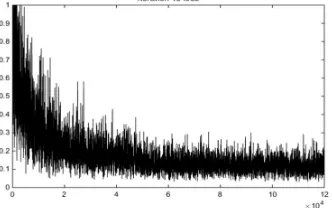
[image:4.612.225.392.421.525.2]The loss values of different iterations in the training process are shown in Figure. 3.
Figure 3. Loss Value under Different Iteration Numbers.
[image:4.612.159.451.623.721.2]As can be seen from Figure 3, when the number of iterations reaches 60,000, the loss convergence does not change significantly, the loss is about 0.06. So we use the model of 60 000 iterations to predict the image containing dangerous goods.The prediction accuracy is 82.39%. The prediction results are shown in Table 3.
Table 3. Prediction results
Test data Accuracy rate(%) Training loss Testing loss
knives 81.42 —— ——
bullet 77.30 —— ——
batteries 85.79 —— ——
At the same time, in order to verify that the accuracy of improved RPN for small target detection has been improved, experiments have been designed on Faster R-CNN and improved Faster R-CNN. The experimental data sets and parameters settings are consistent except for the proportion of candidate boxes generated by RPN. The experimental results are shown in Table 4.
Table 4. Comparisons of small target detection.
algorithm
category bullets lighters knives batteries
RPN 60.55% 80.42% 77.42% 74.08%
Improved RPN 77.30% 90.60% 81.42% 85.79%
Experiment Summary
Experiments show that the improved Faster R-CNN algorithm can be well applied in the field of dangerous goods identification in security inspection images, and the recognition effect can reach more than 80%, and the detection results of small samples have been significantly improved after the improvement. The algorithm can be applied to the judgment module of the security inspection machine image recognition system, and the recognition speed of each security inspection image is about 0.5S, which can meet the real-time requirements of the intelligent security inspection system.
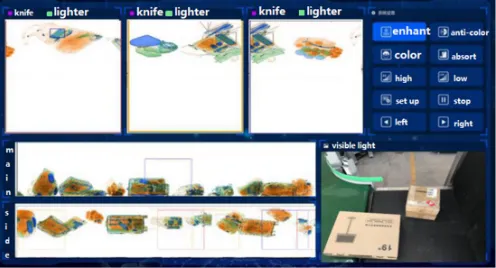
[image:5.612.193.441.354.488.2]At present, the system has been put into practical application.The operating interface of the system is shown in the following figure 4.
Figure 4. Operation interface.
Conclusion
This system is mainly aimed at the current security image recognition system in the field of security. Because of the difficulty of human eyes in identifying security image, the realization of this system can reduce the energy of security personnel to a certain extent and save a certain amount of time. It can also be used well for inexperienced security personnel. Certain practical application value. However, due to the insufficiency of data sets, the recognition accuracy of the algorithm still needs to be improved. At the same time, in the application, there will still be the phenomenon of missing detection. In the next stage, training samples should be added to continue the optimization algorithm.
Acknowledgement
Reference
[1] Ren S., He K., Girshick R., et al. Faster R-CNN: Towards Real-Time Object Detection with Region Proposal Networks. [J]. IEEE Transactions on Pattern Analysis & Machine Intelligence, 2016: 1-1.
[2] Long J., Shelhamer E., Darrell T. Fully convolutional networks for semantic segmentation [C]. Computer Vision and Pattern Recognition. IEEE, 2015: 3431-3440.
[3] Ren S., He K., Girshick R., et al. Object Detection Networks on Convolutional Feature Maps [J]. IEEE Transactions on Pattern Analysis & Machine Intelligence, 2016, 50(1): 815-830.
[4] Mi Zhongyong. Prospective Application of Artificial Intelligence Technology in High-speed Railway Security Inspection System [J]. Electronic Technology and Software Engineering, 2017(12): 254-255.