Smart Meter Reading using PLCC Modem
Sagar kale1, Kapil Khadke2, Shubham Kanade3, Mayuri Dange4, Prof. Santoshi Gupta5
1, 2, 3, 4
BE (Electrical), 5ME (Electrical) Department of Electrical Engineering JSPM’s Bhivarabai Sawant Institute Of Technology & Research, Wagholi , Pune
Abstract: In the modern world the usage of Power Line Carrier (PLC) is spreading as it is cheap, simple and easy to deployment. Using the existing power transmission line and infrastructure this can be achieved at lower cost in everywhere of the country especially in remote rural areas as the extra networking system and equipments are not needed. This paper provides a development of Power Line Carrier (PLC) in Automated Meter Reading (AMR) Systems and Evaluating Non-Technical Loss (Detection of Illegal Electricity Usage). If an AMR system via PLC is set in a power delivery system, a detection system for illegal electricity usage may be easily added in the existing PLC network. The AMR Systems can also provide quick and reliable meter reading collection with less error, few technically people’s involvement and completely eliminates the need for physically reading the meters. In recent days illegal electricity usage has been a major problem in some of the countries. The utilization of PLC in Remote Detection of Illegal Electricity Usage can be a novel solution in this respect. It will also increase the revenue earning of power distribution authorities.
Keywords: Automated Meter Reading (AMR), Electric Energy Meter, Illegal Electricity Usage, Non-Technical Loss (NTL), Power Line Carrier (PLC)
I. INTRODUCTION
Using electric power lines as signal transmission medium, is possible as every building and home is already equipped with the power line and connected to the power grid. The Power Line Carrier (PLC) systems use the existing AC (Alternating Current) electrical wiring as the network medium to provide high speed network access points. In most cases, building a PLC network using the existing AC electrical wiring is easier than other networking systems and relatively inexpensive as well. Automated Meter Reading (AMR)is one of the most important applications of Power Line Carrier (PLC). If a PLC based AMR is set in a power delivery system, a detection system for Non-Technical Loss as well as illegal electricity usage can be easily deployed. Building automation is now a day very widespread in all the industrialized countries, meaning with the term the application of automation and information technologies for the management of buildings like schools, hospitals, public edifices, private houses and so on. A younger sister of building automation is domestics, which is actually the application of the same techniques and tools in a domestic scenario, instead of a very big building. In this application domain, the cost, still very high, is the most important limit to the diffusion of these systems. Moreover, the lack in standardization and uniformity of communication protocols for home automation systems, to mention a few) is often a trouble for technicians required to design and install such plants, especially when the plant has to be installed in a pre-existing building whose electrical cabling is not prearranged to support that level of automation. In this case the solution proposed by the application of power line communication links (such as the U.S. X10 protocol) could be very interesting. These methods exploit standard electric lines (e.g. 220V AC, 50 Hz) to transmit data, with specific modulation techniques, among the different modules (sensors, actuators, controllers) which are installed in the house. Standard protocols of this type are quite widespread in the United States, but their presence in European market is still quite limited. In this paper we present a practical implementation of a power line communication protocol, realized by means of Microchip PIC microcontrollers. The first demonstrative application reported in the paper consists in the automatic opening and closing of windows in a demotic house and has been intentionally realized with minimal costs. Of course, this simple and low-cost system can be easily extended to manage every other service of the house (e.g. lights switching, air-conditioning, etc.). The higher level communication protocol is based on the S.N.A.P. specification, which has been specifically developed for home automation, even if it is actually suitable for a wide variety of cases. The protocol is very scalable and is therefore very easy to implement either on low cost microcontrollers, with the minimum of memory and computational resources, or on more complex and powerful devices
II. RELEVENCE OF WORK
months as an indicator of the likely consumption for the current month. This results in burden for both consumer and the electricity supply company
2)Hiring of a number of meter readers by companies and providing means of transportation to them is an expensive burden on the companies’ budgets. Moreover, these visits of the meter readers to consumers’ premises generate pollution in the air which has negative impacton the environment and the greenhouse effect.
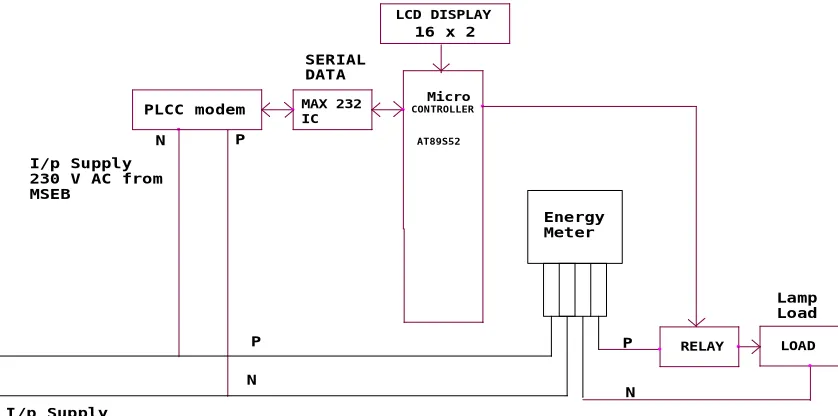
[image:3.612.71.512.161.666.2]A. Block Diagram
Fig 1.-consumer side connection diagram.
Fig.2-MSEB side connection diagram AT89S52
P N
I/p Supply 230 V AC from MSEB Energy Meter P N I/p Supply
230 V AC from MSEB P N Lamp Load MAX 232 IC CONTROLLER Micro
16 x 2
[image:3.612.86.505.171.379.2]III. COMPONENTS USED
A. Microcontroller
In this project we have used a microcontroller 89S52.Which is the heart of the project. This controls all the functions of project. Which will Continuously Monitor the Meter reading. And if meter reading is over 100 then it will increase the rate
B. Max232
The Max232 is used to transmit the Pc data to the Microcontroller 89S52 and also from controller to Pc 3.3
C. LCD 16x2
LCD 16x2 display is used to display the Meter reading and also Load is ON or OFF. It has 1/16 duty cycle. It works on +5v supply and also on +3v.
D. LM7805
It is a 3-terminal 1A positive voltage regulator. This device can be used with external components to obtain variable voltage and current.
E. Power Supply
It is used to supply the power to Max232 and microcontroller, LCD, etc
F. Plcc Modem
Here in this Block we communicate using the 230 V signal and transfer the data using the same.
G. Applications
1) MSEB for switching.
2) In home or at school.
3) The system can be used for meter reading.
H. Result
1) This project can be used at MSEB for switching purpose this will increase the speed of the system
2) By using this project time required for bill generation will be reduced.
3) If a consumer doesn’t pay the electricity bill the meter can be cut remotely in less time.
The following commands are given through MSEB and the result respective to their command will occur.
COMMAND GIVEN OPERATION DONE
0 Meter off.
1 Meter on
R Reading taken by MSEB
D Details of meter given to MSEB
B Bill will be generated
IV. CONCLUSION
REFRENCES
[1] Dostert K., “Power line Communications”, Prentice-Hall, Upper Saddle River, USA, pp. 43-71, ISBN-0-13-029342-3, 2001.
[2] Anatory J., Theethayi N. and Mvungi N. H, “Power Line Channel Models: Comparisons between different Modeling Adopted in BPLC Systems”, Third workshop on power line communications, Udine, Italy, October 2009.
[3] Mork B. A., Ishchenko D., Wang X., Yerrabelli A.D., Quest R.P., and Kinne C.P., “Power Line Carrier Communications System Modeling”, International Conference on Power Systems Transients (IPST’05),Montreal, Canada, June 2005.
[4] Mak, S., Radford, D., “Design considerations for implementation of large scale Automatic Meter Reading systems”, IEEE Trans. Power Delivery, vol. 10, pp. 97-103,1995.
[5] Miura, N. Sato, H. Narita, H. Takaki, M.,“ Automatic meter-reading system by power line carrier communications”, IEEE Proceedings, Generation, Transmission and Distribution, vol. 137, pp. 25-31, 1990.
[6] Pasdar A., Mirzakuchaki S., “A Solution to Remote Detecting of Illegal Electricity Usage Based on Smart Metering”, IEEE Workshop on Soft Computing Applications, pp. 163-167, August 2007.