HEMP: A COMPOSITION REVIEW PLUS
By
Agustin Gonzalo Miguel Garcia (Fall quarter)
A Senior Project submitted
In partial fulfillment of the requirements for the degree of Bachelor of Science in Nutrition
Food Science and Nutrition Department California Polytechnic State University
San Luis Obispo, CA
Garcia, Agustin G.M.. Hemp: a composition review plus (2017). Senior project for B.S. Nutrition at Cal Poly San Luis Obispo. San Luis Obispo, CA.
1
Hemp: A Composition Review Plus
Introduction
The effect of polyunsaturated fatty acids (PUFA) on health (especially when replacing saturated fatty
acids [SAFA] for PUFA) has been extensively studied to suggest that they provide beneficial effects on
health (Zock P. L., Blom, W. A., Nettleton, J. A., & Hornstra, G., 2016; Wysoczanski, T., Sokola-Wysoczanska, E., Pekala, J., Lochynski, S., Czyz, K., Bodkowski, R., Herbinger, G., Patkowska-Sokola, B.,
Librowski, T. 2016; Calder, 2015), especially cardiovascular health with the blood lipid and lipoprotein
profile effects PUFA have. The central nervous system functioning has been documented (Wysoczanski
et al, 2016). These studies assessed the use of other products (i.e. fish oil and flaxseed), but hemp contains
a similar, yet different, makeup of these valuable aspects in its composition, on top of many other benefits (Teh, S., Birch, J., 2013).
Hemp (Cannabis sativa L., Cannabaceae) is likely to be man’s oldest multiuse crop that has been
cultivated for 6000 years (Sawler, J., Stout, J. M., Gardner, K. M., Hudson, D., Vidmar, J., Butler, L.,
Page, J. E., Myles, S., 2015; Hillig, 2005), used as medicine in China for at least 3,000 years (Russo, R.,
Reggiani, R., 2013; Ranalli, P., Venturi, G., 2004) and even thought to be used by prehistoric humans
(Callaway, 2004; Aiello, G., Fasoli, E., Boschin, G., Lammi, C., Zanoni, C., Citterio, A., & Arnoldi, A.,
2016; Hillig, 2005). It is a source of food, fiber and medicine that has been prohibited in the US and
Canada since the later 1930s due to a secondary metabolite component called
delta-9-tetrahydrocannabinol (THC) (Vonapartis, E., Aubin, M., Seguin, P., Mustafa, A., Charron, J., 2015;
Oomah, B. D., Busson, M., Godfrey, D. V., Drover, J. C. G., 2002; House, J. D., Neufeld, J., Leson, G.,
2010), despite the plethora of purposes procured by this nation prior to prohibition in 1937. In fact, in
1942, not even 6 years after prohibition, the US government mandated that US farmers grow hemp to
meet the needs of army, industry and navy due to the hemp shortage that came about because of Japanese
forces taking over the Philippines and southeast Asia, therefore cutting the supply line for the necessary
2
(there are monoecious strains as well) being illegal, the government knew the importance and need for its
cultivation and the benefits procured, hence the mandated growing during WWII.
Cultivation of hemp and capitalization of all its uses may have benefits on a broad sense, should it be
grown throughout the United States for its citizens and surplus could be exported to help house, clothe
and feed globally; hemp grows densely and shades competition making it difficult for weeds to survive
next to them and the roots leave the soil in good condition for next crop upon harvesting (Evans, 1942),
therefore would require less herbicide to grow and leaves the field ready for next crop. It is an
environmentally friendly crop that grows fast (Le Troedec, M., Rachini, A., Peyratout, C., Rossignol, S.,
Max, E., Kaftan, O., Fery, A., Smith, A., 2011; Hemp, n.d.; Palmer, 2011) and uses significantly less
space and water than cotton to grow, although it does require a bit more energy to process (Palmer, 2011),
there is still a net gain with cannabis procurement. Also, if grown properly, hemp fiber can be as fine as
linseed/flaxseed fiber (Evans, 1942). The plant can even be used in components in concrete (hempcrete).
On a broad sense, there are many benefits to hemp, this paper, however, will briefly cover some
history and cultivation of hemp along with its uses, but will primarily focus the discussion on the
nutritional composition of hempseed in the various forms utilized in commerce; highlighting both
macronutrient and micronutrient constituents and how it effects human health. Hemp composition will be
compared to other plant food sources’ composition as well.
The method of study consisted of the author searching PubMed and Google Scholar, analyzing articles and tracing its sources and the cycle continued. Some of the following keywords were used on
various dates throughout the Fall quarter of 2016 (September through December): hemp, hempseed, hemp
seed, hemp nutrition, hempseed oil, hempseed nutrition, hemp and health, et cetera. The author also
searched on Google and investigated other books and sources on information regarding hemp to further
compare. The author then compiled the research, made an outline and then began processing through the
findings to compile this paper.
3 Brief Difference between Hemp and Marijuana
Hemp and marijuana are both strains from the same plant species Cannabis sativa L., and differ
markedly on their THC contents as well as a genome-wide level (Aiello et al., 2016). Through principal
components analysis, Sawler et al., 2015, revealed that hemp and marijuana have some clear and distinct
genetic structures across the genome (as opposed to individual loci). They also differ with their
cannabinoid biosynthesis capacity; marijuana contains a BT allele which codes for tetrahydrocannabinolic
acid synthase, whereas hemp contains BD allele for cannabidiolic acid synthase (Sawler et al., 2015).
Along with differing genetics begetting different proteins (i.e. enzymes), the legal implications
also vary between hemp and marijuana greatly. They are loosely categorized with drug and nondrug titles
(marijuana and hemp, respectively), but this author knows Lehne’s definition of a drug, “any chemical
that can affect living processes,” (Lehne, 2010) and knows this distinction between the two is far too
vague and inclusive of virtually every chemical; in that the whole hemp seed itself would also technically
be a drug by the nutriments (i.e. chemicals) it contains which procure growth in living organisms; i.e.
affecting living processes. The European Union and Canadian regulatory bodies separate hemp and
marijuana cultivars by the percent of THC present in the top third of the plant; less than 0.3% can be
found in plant to be considered hemp and able to be legally be cultivated (Sawler et al., 2015; House et
al., 2010). THC content should be less than 0.2% per others, and there is a phenotype ratio utilized as a
criterion as well (Petrovic, M., Debeljak, Z., Kezic, N., Dzidara, P., 2015); THC plus cannabinol (CBN) over cannabidiol (CBD) [THC + CBN/CBD], where less than one is a fiber/oil/industrial-type hemp and
more than one is a drug-type hemp (Petrovic et al., 2015).
In the United States, marijuana is a Schedule I drug (Drug Schedules, n.d.), meaning that there is
a high potential for abuse without any acceptance for medical use, although there is obvious medical use
due to a patent owned by the U.S. government for the efficacy of cannabinoids as antioxidants and
4
M., Wink, D., Rosenthal, R., & Axelrod, J., 2000). Therefore, legal standpoint does not fully help to
distinguish between the two and we must find other ways to categorize differences and similarities.
Despite sharing a common genetic variation pool, marijuana and hemp are further classified per
use; marijuana is typically used for its psychoactive component predominantly found in the flower or bud,
while hemp is utilized more for its 1) seed, which are the fruits found in the flower or bud when male and
female plants are near each other and procreation via wind pollination occurs, and 2) fiber, which is found
throughout the stalk of the plant and has a large array of uses.
Amongst the marijuana community, there are thought to have distinctions between Cannabis
Indica-type plants and Cannabis Sativa-type plants. Indica-type has shorter, bushy plants with wider
leaves and reported to produce sedative and relaxing effect, whereas Sativa-type are taller, lankier plants
with narrow, long leaves and are reported to produce a stimulating cerebral psychoactive effect (Sawler et
al. 2015; Indica vs Sativa: Understanding the Difference, 2014; Hillig, 2005). Sawler et al. found that the
name of a typical strain of marijuana does not necessarily represent a specific and unique genetic variety
because of the laws over the past century have forced it to be a clandestine market which has obscured the
ancestral lineage and present propagation techniques have not been documented accordingly. Essentially,
it hasn’t been monitored effectively, and being that cloning from a “mother” and germination from seed
are extremely different propagation processes that beget genetical varieties, even amongst the same strain;
for instance, cloning begets genetically identical plants (clones), whereas germination begets a genetically different plant from the mother, granted they have genes from similar gene pools, but they are not
identical phenotypically. Hemp was found to a greater proportion of similar alleles with cannabis indica
than cannabis sativa (Sawler et al., 2015); the authors referenced also feared that genetic variations are in
danger of being lost, in part due to the restrictive regulations. An increasing decrease in diversity has been
taking place.
Hillig in 2005 utilized enzymes to decipher distinctions between strains across the globe via
alloenzyme analysis; alloenzymes are different enzymes that arise during the process of DNA mutation
5
to Zimbabwe were initially divided into three categories, drug, hemp and ruderal (wild or naturalized) and
then went through several varying analyses; known hybrids were excluded since they could obfuscate the
results (Hillig, 2005). The alloenzyme data ruled out the single undivided hypothesis for species since
there were two major gene pools; distinct sativa and indica were found with an uncertain ruderalis
overlapping the two (Hillig, 2005). More research needs to be done to differentiate marijuana and hemp
since the founder event (gene pool originally introduced to a new area) can differ across the world due to
genetic drift and accumulation of new mutations, on top of human influence which makes it hard to
distinguish (Hillig, 2005).
All in all, hemp and marijuana are the same plant but cultivated for different purposes, and due to
strict laws over the past century, have varying levels of THC.
Brief Processing, Uses and Cultivation throughout History to Present day
Processing and Uses. Hemp is a versatile crop that has uses for nearly every component of the
plant. Figure 1 and Figure 2 below depicts the versatility and processes; Figure 1 is regarding the whole
plant, while Figure 2 is regarding the whole seed. The bast fiber, for example, is taken from the stalk and
is used, even in present day, for paper, durable fabrics and rope (Vonapartis, 2015; Callaway, 2004).
Hemp fibers are durable and used to make clothing, sails and paper, most famously, the first copies of the Bible and the U.S. Constitution were written on hemp paper (Ranalli et al., 2004). Hemp seeds are used
for nutrition, and the oil can be extracted by various methods, some being cold-pressed, solvent or
supercritical CO2, among others. The oil has been used for ink for printers, soaps, detergents, lubricants,
and wood preservatives (Oomah et al., 2002; Russo et al., 2013), as well as emollient body care products
6
Figure 1. Modern uses for the cannabis plant
7
Figure 2 Hemp seed processing and products (Crawford, 2012)
As Figure 2 depicts, the whole seed, after harvesting and cleaning, can be used for snacks,
baking, cooking, as Nutbutter, energy bars, nondairy milk and cheese as well as spreads and dips;
typically eaten raw to maintain nutritional value, as the PUFA oil doesn’t do well with high heat and the
unsaturated bonds in fatty acids deteriorate (House et al., 2010; Carvalho et al., 2006), but has also be
eaten cooked or roasted by various cultures worldwide throughout history (Callaway, 2004). The whole
seed can be hulled, i.e. the outer hard shell is removed; the hulls can be used as dietary fiber, mulch and
animal feed, and the hulled hemp seeds (also known as hemp hearts) can be used for similarly as whole
hemp seeds but they will be more susceptible to oxidation since the protective outer hard shell has been
removed, but without the dietary fiber that is in the hull so fats and proteins within the hemp hearts are
more easily digested (House et al., 2010). Both the whole hempseed and the hulled hempseed can be used
to make oil begetting an unrefined oil and defatted seed meal/meat (even with the oil extracted from
process, there is still beneficial residual oil in the meal): the unrefined oil can be used for cooking, salad
8
powder, baking flour and animal feed (House et al., 2010). The hemp seed oil can be refined and that oil
can be used in cosmetic products, massage and bath oils, in industry and as detergents and soaps (for
instance Dr. Bronner’s soap products contain hemp seed oil).
Cultivation. Hemp seed plants are ideally highly branched and can produce a high yield of seed,
about half to a full ton of seed per hectare; seed which has high amounts of good quality oil as well as
protein (Deferne et al., 1996). For producing seed, the males can be removed after pollination to leave
more space for the females and their seeds thrive (Deferne et al., 1996). Using a monoecious variety can
double the yield of seeds produced but the sexual type (hermaphrodite) can be afflicted with inbreeding
depression (Deferne et al., 1996). By “topping” (or “crowning”), which is cutting the apical meristem of
the plant, when they are 30-50 cm high can increase the number of flowers per plant, thereby increasing
the number of seeds made (Deferne et al., 1996). To increase seed yields, the plants must be sown in
lower densities as compared to growing hemp fiber, although if grown too sparse, it leaves space for
weeds to grow (Deferne et al., 1996).
Harvesting is difficult to find the optimal time to harvest, being that maturation of seeds do not
happen simultaneously; the moisture content of the seed crop increases, oil yield is lowered and taste is
modified with presence of unripe seeds (Deferne et al., 1996). Once harvested, the seeds go through a
drying process to decrease moisture content to limit sprouting during storage (Deferne et al., 1996). The varieties of hemp that were encountered in the present research: Finola is a variety of hemp
that has been accepted by Canada in 1998, and European Union in 2004 and is a main Finnish variety that
is well acclimated to northern climates for seed production; it produces more seed than any other strains
to date (Callaway, 2004). It is relatively short compared to other varieties, being only 1.5 m at maturity, it
is well suited for modern agricultural machines. It is frost tolerant to about -5 C at all stages of life, and
during the early maturation it is drought tolerant. It does not require herbicides nor pesticides (Callaway,
2004). Aiello et al., 2016 studied the French cultivar Futura. The ten Canadian cultivars assessed were
9
Two groups were studied, the first were Italian dioecious varieties (Carmagnola, Carmagnola selezionata,
Fibranova) and the second were French monoecious varieties (Fedora 17, Felina 32, and Ferimon) (Russo
et al., 2013). Four hemp cultivars were analyzed in four different states which were, whole hemp seed,
dehulled hemp seed, hemp seed meal, and hemp hulls (House et al., 2010). The varieties were Finola,
USO-14, USO-31 and Crag; the two USO’s are dual-purpose (fiber and grain) crops that are early
maturing with significant stalk yield and seed yield potentials of 400Kg per acre (House et al., 2010).
Crag and Finola are Finnish variety that have a shorter stature and are very early maturing with high seed
yield potential (House et al., 2010). Uniko-B is a unisex female variety that can obtain high seed yields
(Deferne et al., 1996). The variety of the seed used is one of the factors that could lead to varying
compositions found.
Food Composition of Hempseed
Macronutrients. The fruit of cannabis is not technically a seed, but rather an achene (a nut),
since it is a small, dry single seeded fruit with a hard-shell cover that does not open to liberate the seed
(Molleken et al., 1997; Bender, 2006; Deferne, J.L., Pate, D. W., 1996). The author understands that a
seed can be a cereal/grain, a legume, or a nut (McGee, 2004), but for simplicity of this paper, I will refer
to hemp seed as a seed, despite knowing the technical difference.
Hemp seed has been recognized and valued as food, due to its nutritional properties, for both
animals and humans for a long time (Callaway, 2004). It is a rich source of proteins and PUFA, and
comes with considerable amount of fiber. It is a complete nutritional source with all essential amino and
fatty acids, as well as exhibiting pharmacological activity (Leizer et al, 2000). The moisture content of the
seeds is about 7.6-8.0% (Da Porto et al, 2011), and 6.5% for others (Callawy, 2004); as long as it is below
10% moisture content it prevents the seeds from sprouting (Deferne et al., 1996). Hemp seed naturally
contains appreciable amounts of constituents such as omega-3 fatty acids, antioxidants and others that
provide nutritional and therapeutic benefits making it considered, per si, a functional food without the
10
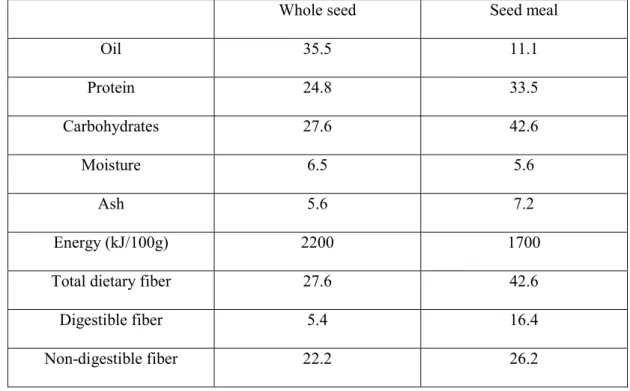
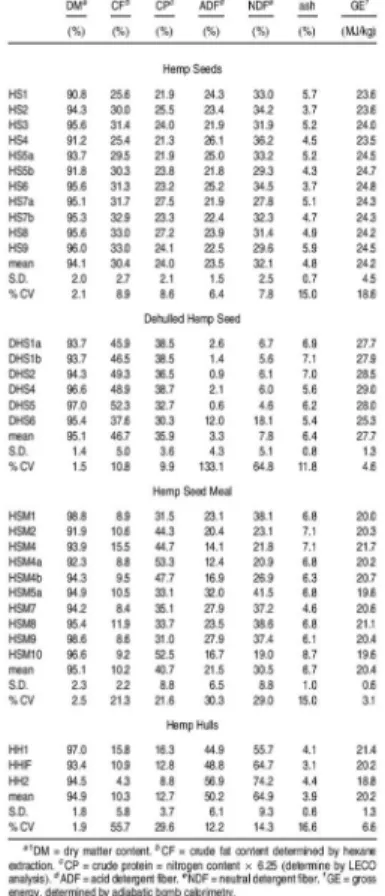
As seen below in Tables 1, 2 and 3, different sources have found that there is a healthful balance
of macronutrients in hemp seeds in various forms. Callaway in 2004 (Table 1) found about a third of the
whole seed was oil, a quarter was protein and carbohydrates is in between, while the seed meal was
predominantly carbohydrates, then protein with much less oil. In both forms, there is considerable amount
of fiber, more so for the seed meal, and ash, which are minerals that play many key roles in our bodies.
Vonapartis and company in 2015 (Table 2), assessed ten different hemp varieties and broke down the
overall composition of the seeds. House and company in 2010 (Table 3), assessed various forms of hemp
seed (whole hemp seed, dehulled hemp seed, hemp seed meal and hemp hulls) and found the constituents
varied depending on the component of the seed analyzed. For instance, the hemp hulls have considerably
less protein and oil than did the hemp hearts and whole hemp.
Table 1. Typical nutritional content (%) of Finola hempseed variety after cold (45 ºC) oil pressing.
Whole seed Seed meal
Oil 35.5 11.1
Protein 24.8 33.5
Carbohydrates 27.6 42.6
Moisture 6.5 5.6
Ash 5.6 7.2
Energy (kJ/100g) 2200 1700
Total dietary fiber 27.6 42.6
Digestible fiber 5.4 16.4
Non-digestible fiber 22.2 26.2
11
Table 2. Seed chemical composition of ten industrial hemp cultivars.
12
Table 3. Proximate Analysis and Gross Energy Content of Hemp Seed Products (As Is Basis)
13
Lipids. Hemp seeds contain a decent amount of fats, as a whole seed, as dehulled seed and even
as a defatted seed meal, as seen on Tables 1, 2 and 3. Hemp seed contains about 25-35% oil (Deferne et
al., 1996). Others say over 30%, by weight, of hemp seeds are highly nutritious triglycerides (Molleken,
H., Theimer, R. R., 1997). Of the ten Canadian cultivars tested, the oil content ranged from 269-306 g/Kg
(average of 292 g/Kg) (Vonapartis et al., 2015). Within hemp seeds, there are more than 30 g/Kg of
triglycerides that are highly nutritious (Carvalho et al., 2006). The New Zealand variety assessed was
found to contain 31% oil content (Teh, S., Birch, J., 2013). To keep oil quality high, the immature seeds
need to be removed and only use the mature seeds (Deferne et al., 1996).
The iodine number of hemp seed oil was found to be about 161 (Oomah et al., 2002). The iodine
number shows the quantity of unsaturated bonds are in; the higher the number the more unsaturated bonds
present, and hemp’s iodine number is rather high. Fatty acid composition is most greatly impacted by
hemp variety (Petrovic et al., 2015).
Da Porto et al., utilized an experimental design when they were studying various oil extraction
techniques (solvent, cold-pressed and supercritical CO2 [a new one regarding hemp seed oil]) and
assessed the quality of subsequent oils and compared fatty acid composition as well as oxidation stability.
They found that the oil content was at about 30.6% of total seed, and that there was no significant
difference, with regards to percent fat of total seed, in oil extracted by solvent or supercritical CO2. The
main components were found to be linoleic acid (LA, C18:2, n-6 [n=omega]), alpha-linolenic acid (ALA, C18:3, n-3) and oleic acid at about 88% for all three, followed by palmitic acid at 5.37%, and 3.48% for
gamma-linolenic acid (GLA, C18:3, n-6) (Da Porto et al., 2011).
Saturated Fatty Acids (SAFA). Hemp seed oil is about 8% SAFA to some (Herer, 2000). Others,
like Da Porto et al., found that 7.5% of oil was SAFA, in the forms of about 5% palmitic acid (C16:0),
about 1.5% stearic acid (C18:0), and about 0.2% behenic acid (C22:0) (Da Porto et al., 2011). The main
14
Porto et al., 2011), The eleven samples assessed from the Croatian marked found 9.43-11.33% SAFA
(Petrovic et al., 2015). Others have found SAFA to make up 10% of oil (Deferne et al., 1996). The
various studies agree on the amount of SAFA present in hemp seeds.
Monounsaturated Fatty Acids (MUFA). Da Porto et al., found that 11.25% of oil was MUFA, in
the forms of about 11% oleic acid (C18:1) and about 0.8% eicosenoic acid (C20:1) (Da Porto et al.,
2011). Oleic acid is the main MUFA found in oil (Carvalho et al., 2006). The eleven samples assessed
from the Croatian marked found 10.29-14.57% MUFA (predominantly oleic acid) (Petrovic et al., 2015).
Others have found that hemp seed oil can have a much higher quantity of MUFA, even as high as 33.3%
of fatty acid content (Prescha et al., 2014). The various studies mostly agree on the amount of MUFA
present in hemp seeds.
Polyunsaturated Fatty Acids (PUFA). The hemp seed oil mostly consisting of PUFA (~80-90%),
predominantly LA and ALA which are both essential fatty acids (EFA), omega-6 and omega-3,
respectively (Oomah et al., 2002; Carvalho et al., 2006). Others have found there to be 70-80% PUFA;
LA ranges from 50-70% and ALA from 15-25% (Deferne et al., 1996). The difference between omega-6
and omega-3 fatty acids is all due to the location of the first double bond, starting the counting from the
methyl end of the fatty acid molecule (Simopoulos, 2016). Others state similar prevalence of EFA, LA makes up 55% of the oil, and ALA makes up 25% (Herer, 2000). The eleven samples assessed from the
Croatian marked found about 80% PUFA (predominantly LA [56.2%] and ALA [17.2%]) (Petrovic et al.,
2015). They also found 0.51-4.55% GLA and 0.26-1.58% stearidonic acid (18:4 n3, SDA) (Petrovic et
al., 2015). With the essential fatty acids specifically, there was a range of LA of 55.56-56.58% (average
of 56.07%) and a range of ALA of 14.69-17.27% (average of 15.98) (Vonapartis et al., 2015).
Hempseed is rare with respect that not only does it contain the two essential fatty acids, LA and
15
elongated products), GLA and SDA (Callaway, 2004; Petrovic et al., 2015). Da Porto et al, found that
over 81% of the oil was PUFA, in the forms of about 59% LA, about 18% ALA, and about 3.5% GLA
(Da Porto et al., 2011). Others have found the same GLA concentration at about 3.5% (Oomah et al.,
2002). Others found that there are only 2% GLA (Prescha, A., Grajzer, M., Dedyk, M., Grajeta, H.,
2014). SDA amounts were near 2% and GLA was about 4% of total fatty acids, with a total oil being 37%
of seed (Callaway et al., 1996). Yu and company found that there was 19.3% ALA (Yu, L. L., Zhou, K.
K., Parry, J., 2005). Leizer et al (2000), used Canadian grown hempseed of the French variety, Fedora-19
to assess the hemp oil. They found concentrations of LA ranging from 52-62% and ALA from 12-23%
(Leizer et al., 2000). GLA was found to be from 0-6.8%, SDA was found to be 0.3-2.5%, eicosenoic acid
(EA, C20:1) was found at about 1.5% of fatty acids present in hemp seed (Molleken et al., 1997). GLA
has been found to be 1.7-6% of total fatty acids (Deferne et al., 1996). The various studies found similar
values with regards to PUFA composition.
The altitude that the plant is grown at has been shown to influence the unsaturated fatty acid
composition; i.e. colder climates beget more GLA and SDA (Callaway et al., 1996; Molleken et al.,
1997). Molleken and Theimer analyzed over 500 different cannabis varieties using gas
chromatography-mass spectrometry (Molleken et al., 1997). All varieties, except for one from Jamaica, had GLA in its
composition; it was found that warmer climates tended to produce less GLA (the lowest was Jamaica with
nothing) and colder climates produced more (the highest was from a region of norther Russia with 6.8% GLA) (Molleken et al., 1997). Figure 3 shows the varying prevalence of three rarer fatty acids (GLA,
SDA, and eicosenoic acid [C20:1, c11 EA]) that occurs around the world. Cannabis grown in tropical
environments has significantly less quantities of ALA, and varieties grown in temperate conditions have
less saturated bonds, maybe due to having higher energy storage capacity or needing to remain liquid at
16
Figure 3. Particular fatty acids of hemp fruits of various countries/regions (Molleken et al.,
1997).
Da Porto et al., found that the PUFA/SAFA (P/S) ratio of hemp seed oil was 10.5. Others found a
P/S ratio for hemp seed oil is 7.3 (Oomah et al., 2002). The total ratio of PUFA to MUFA to SAFA acids
is 78:11:11 (Oomah et al., 2002).
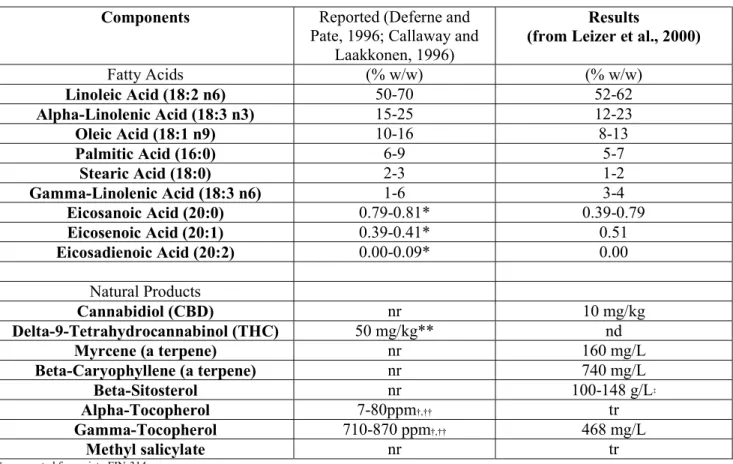
Table 4, has a list of the various fatty acids and their presence found in hemp seed oil from a few
sources. Table 4 also lists numerous micronutrients present in hemp seed oil which will be discussed later
17
Table 4. Hemp Seed Oil Macrocomposition.
Components Reported (Deferne and
Pate, 1996; Callaway and Laakkonen, 1996)
Results
(from Leizer et al., 2000)
Fatty Acids (% w/w) (% w/w)
Linoleic Acid (18:2 n6) 50-70 52-62
Alpha-Linolenic Acid (18:3 n3) 15-25 12-23
Oleic Acid (18:1 n9) 10-16 8-13
Palmitic Acid (16:0) 6-9 5-7
Stearic Acid (18:0) 2-3 1-2
Gamma-Linolenic Acid (18:3 n6) 1-6 3-4
Eicosanoic Acid (20:0) 0.79-0.81* 0.39-0.79
Eicosenoic Acid (20:1) 0.39-0.41* 0.51
Eicosadienoic Acid (20:2) 0.00-0.09* 0.00
Natural Products
Cannabidiol (CBD) nr 10 mg/kg
Delta-9-Tetrahydrocannabinol (THC) 50 mg/kg** nd
Myrcene (a terpene) nr 160 mg/L
Beta-Caryophyllene (a terpene) nr 740 mg/L
Beta-Sitosterol nr 100-148 g/L‡
Alpha-Tocopherol 7-80ppm†,†† tr
Gamma-Tocopherol 710-870 ppm†,†† 468 mg/L
Methyl salicylate nr tr
* as reported for variety FIN-314
** as reported by Grotenherman et al. (1998) † as reported by Blade (1997)
†† as reported by HYChem Corporation. Henry Yard, personal communication ‡ total sterol content measured as Beta-sitosterol
nr–not reported in cold pressed oil
nd–not detectable (lower limits of detection could not be determined without THC standard) tr–trace amounts
18
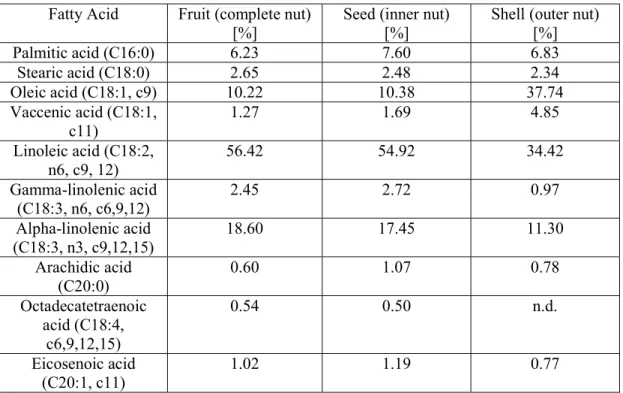
Table 5. Fatty acids from various compartments of Chinese hemp fruit.
Fatty Acid Fruit (complete nut) [%]
Seed (inner nut) [%]
Shell (outer nut) [%]
Palmitic acid (C16:0) 6.23 7.60 6.83
Stearic acid (C18:0) 2.65 2.48 2.34
Oleic acid (C18:1, c9) 10.22 10.38 37.74
Vaccenic acid (C18:1, c11)
1.27 1.69 4.85
Linoleic acid (C18:2,
n6, c9, 12) 56.42 54.92 34.42
Gamma-linolenic acid (C18:3, n6, c6,9,12)
2.45 2.72 0.97
Alpha-linolenic acid (C18:3, n3, c9,12,15)
18.60 17.45 11.30
Arachidic acid (C20:0)
0.60 1.07 0.78
Octadecatetraenoic acid (C18:4,
c6,9,12,15)
0.54 0.50 n.d.
Eicosenoic acid (C20:1, c11)
1.02 1.19 0.77
n.d.=not detected, <0.3%; values expressed as mean percent of 3 analyses
Adapted from (Molleken et al., 1997)
As seen on Table 5, there are differences in fatty acid composition in different parts of the hemp seed.
Some differences are subtle, but some are more significant, for instance, oleic acid, vaccenic acid, linoleic
acid, gamma-linolenic acid, and alpha-linolenic acids vary from their fruit and seed components to their
shell component with regards to percentages that the specific fatty acid is prevalent (Molleken et al., 1997).
LA is abundant throughout nature, predominantly found in seeds of most plants (except coconut,
cocoa and palm), whereas ALA is found in select seeds (like flax, rape, chia, perilla, walnuts and hemp),
and in the chloroplasts of green leafy vegetables (Simopoulos, 2016). LA is metabolized endogenously to
arachidonic acid (AA) (C20:4, n6), which AA can also be found in the diet mostly from phospholipids of
19
endogenously to eicosapentaenoic acid (EPA) (C20:5, n3) and docosahexaenoic acid (DHA) (C22:6, n3),
which is obtain through the diet in the oils of fish (Simopoulos, 2016).
Omega-6 to omega-3 (LA:ALA) ratio. The two essential fatty acids, LA and ALA, are in a ratio (n-6:
n-3) that is optimal for human nutrition at 3:1 (Da Porto, C., Decorti, D., & Tubaro, F., 2011; Leizer, C.,
Ribnicky, D., Poulev, A., Dushenkov, S., & Raskin, I., 2000; Callaway, J. C., Tennila, T., Pate, D. W.,
1996). Da Porto found the omega 6 to omega 3 ratio to be 3.3 to 1 which is much higher than most other
vegetable oils. Others found the ratio to be 2 (Oomah et al., 2002), which is less than the range given by
Da Porto. Using data provided from Liezer et al., omega 6 to omega 3 ratios ranged from 2.69:1 to 4.3:1
(using the two higher concentrations and the two lower concentrations of respective fatty acids).
Table 6. Omega-6/omega-3 ratios in various populations.
Population n-6/n-3 ratio
Paleolithic 0.79
Greece prior to 1960 1.00-2.00
Current Japan 4.00
Current India, rural 5.00-6.10
Current United Kingdom and Northern Europe 15.00
Current United States 16.74
Current India, urban 38-50
Adapted from (Simopoulos, 2004)
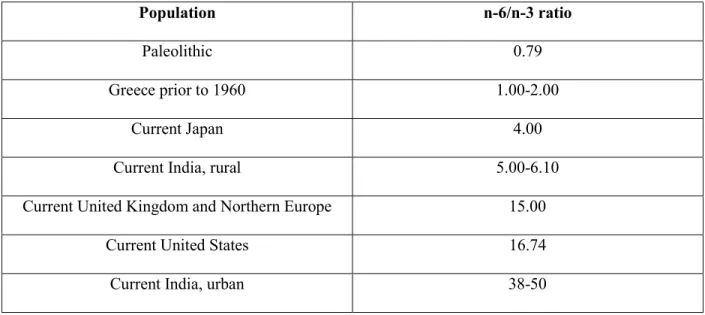
Table 6 above shows the various ratios throughout parts of history and the world; as shown, there
are huge ranges of what is consumed. The European Food Safety Agency recommends the omega-6 to
20
omega-3 of hemp seeds ranged from 2.83:1 to 3.77:1 (Petrovic et al., 2015). LA to ALA (n6:n3) ratio is
3:1 which is considered to be optimal (Deferne et al., 1996).
The omega-6 to omega-3 ratios got from the ranges of LA and ALA present in the ten Canadian
varieties analyzed begot 3.8:1 ratio with the minimum values, 3.3:1 ratio with the maximum values and
3.5:1 with the means which all are roughly near the optimal range beneficial to human health (Vonapartis
et al., 2015). Table 7 below has the specific breakdown of findings.
Table 7. Seed fatty acid composition of ten industrial hemp cultivars.
(Vonapartis et al., 2015)
Protein. The appropriate amino acid requirement met by the composition of amino acid in a
protein and protein digestibility are what make a quality protein (House et al., 2010). Diets rich in
vegetable protein produce greater satiety (de Oliveira Barbosa Rosa et al., 2015). Amino acid composition
can be varied from seed to seed due to variety/genetics, agronomic conditions (i.e. soil fertility),
environmental conditions (i.e. sunlight exposure, rain, etc.), and post-harvest processing (House et al.,
21
Hemp seed contains all essential amino acids required for humans (House et al., 2010). The
amino acid score of a protein echoes the extent that proteins consumed in diet meet humans needs for a
specific amino acid: an amino acid score of one or more means that amino acid is sufficient relative to
requirements; whereas amino acid scores below one is not sufficient to meet the requirements alone and
will need more servings or complimented with another protein source that has more of the limiting amino
acid (House et al., 2010). The lowest amino acid score, which is from the limiting amino acid, is used as
the amino acid score for entire protein source (House et al., 2010). For hemp seed, lysine is the first
limiting amino acid by far and then leucine or tryptophan, depending on product, are the second and third
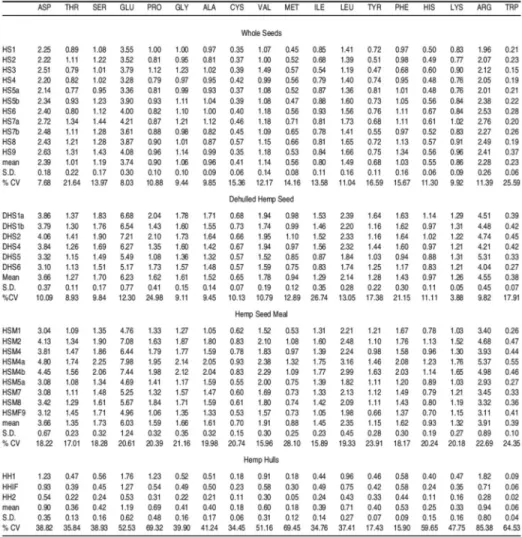
limiting amino acid (House et al., 2010). Table 8 below shows the specific amino acid composition of the
various hemp varieties assessed in their respective forms. Table 9, shows the amino acid scores that were
found during analysis; again, a score of one means it is sufficient, whereas a score of less than one
requires greater quantities consumed or a compliment pairing with another protein source (House et al.,
2010). Most of the amino acids found in hemp are sufficient on their own, however, lysine, leucine and
tryptophan are less than one, but higher than 0.5. Not only is hemp seed protein sufficient for nutrition on
its own, hemp seed protein was shown to have potential to be utilized in food industry as a basic
22
Table 8. Amino acid composition of hemp seed products (% As Is Basis)
23
Table 9. Amino acid scores of hemp protein products
24
The two main components of hempseed protein are albumin, a globular protein, and edestin, a
legumin protein, and both are complete with all amino acids necessary for human health (Callaway, 2004;
Vonapartis et al., 2015). Table 8 shows the amino acid composition of hempseed. There are high levels of
arginine and glutamic acid, and good amounts of cysteine and methionine, the sulfur containing amino
acids (Callaway, 2004; Russo et al., 2013). Total sulfur amino acids (both methionine and cysteine) came
out to be 4.04 g per 100g hemp protein (~4%) (House et al., 2010). Arginine is in high amounts in hemp
seeds (94-128 mg/g protein) (House et al., 2010).
Edestin is a storage protein and a hexameric 11S protein, that comes in two isoforms and contains
copious amounts of all essential amino acids, especially arginine and sulfur-containing amino acids and is
easily digested (Aiello et al., 2016). Edestin is not the only protein in hemp seeds, in fact, through mass
spectrometry analysis Aiello et al. in 2016 found 181 proteins (for full list please refer Table 1 in Aiello et
al., 2016). Since the Spectrum Mill search engine had incomplete sequenced DNA for C. sativa, Aiello et
al., 2016, also utilized A. thaliana database as well to expand the dataset to identify protein within hemp
seeds. C. sativa species is in the Cannabaceae family which has a close phylogenetic relationship to
Brassicaceae which is the family of A. thaliana, and both families belong to the Rosidae subclass (Aiello
et al., 2016). Not only are the two similar genetically but A. thaliana is a model organism chosen by many
plant biologists to analyze plant gene expression and plant development (Aiello et al., 2016). Through a
protein-protein association network analysis utilizing STRING software, Aiello et al. in 2016 found 5 groups of proteins and the most compacted group was with ribosomal proteins, while the other four
groups were characterized by genes involved in kinase activity, vegetative growth, embryo development,
and glucose sensing during plant development.
Of the ten Canadian cultivars tested there was 238-280 g/Kg (average of 256 g/Kg) of highly
digestible crude protein that is great for animal and human consumption alike (Vonapartis et al., 2015).
Hemp seed is a complete protein that provides all essential amino acids to the body to sustain health; 65%
globulin edestin with a presence of albumin as well (Herer, 2000). The whole hemp seed contains about
25
The varying sources have found similar aspects in the composition and quality of hemp seed
protein.
Carbohydrate and Fiber. Whole hemp seed contains about 20-30 g/Kg (gram of carbohydrate/
kilogram of seed) (Vonapartis et al., 2015). The neutral detergent fiber (NDF) (i.e. cellulose,
hemicellulose and lignin) which is mostly present in the seed hull and affects protein digestibility, the
range of the ten Canadian cultivars was 327-388 g/Kg (average of 357 g/Kg) (Vonapartis et al., 2015).
The acid detergent fiber (ADF) (i.e. cellulose and lignin) range of the ten Canadian cultivars was 259-298
g/Kg (average of 278 g/Kg) (Vonapartis et al., 2015). Other sources have also found the whole seed to
consist of about 20-30% carbohydrates and 10-15% insoluble fiber (Deferne et al., 1996).
Tables 1, 2 and 3, in the beginning of this macronutrient section, show the prevalence of
carbohydrates in hemp seeds. The various sources agree on the carbohydrate composition of hemp seed.
Micronutrients. There are various micronutrient components present in hemp seed, both
vitamins and minerals as well as much more. Table 10 shows the vitamin and mineral constituents of
26
Table 10. Typical nutritional values (mg/100g) for vitamins and minerals in Finola hempseed.
Vitamin E (Alpha-tocopherol) (gamma-tocopherol) 90.0 (5) (85) Thiamine (B1) 0.4 Riboflavin (B2) 0.1 Phosphorous (P) 1160
Potassium (K) 859
Magnesium (Mg) 483
Calcium (Ca) 145
Iron (Fe) 14
Sodium (Na) 12
Manganese (Mn) 7
Zinc (Zn) 7
Copper (Cu) 2
Adapted from (Callaway, 2004)
Mineral. Of the ten Canadian cultivars tested, the ash, or total mineral content, ranged from
51-58 g/Kg and averaged at 55 g/Kg (Vonapartis et al., 2015). Hemp seed oil has a rich array of minerals like phosphorous, magnesium, calcium, sulfur and potassium, as well as modest quantities of zinc and iron
(Deferne et al., 1996).
Tocopherols. The main isomers of tocopherols that were found to be present in the ten Canadian
cultivars were gamma and delta; gamma ranged from 2121-2949 microgram/g (average of 2481
microgram/g) and delta ranged from 620-1157 micrograms/g (average of 774 microgram/g) (Vonapartis
et al., 2015). Gamma-tocopherol is the major isomer at 87.5-92.5% of tocopherols, which comes out to
about 10.9-13.6 mg/100g oil (Oomah et al., 2002). The supercritical oil made at 300bar and 80 degrees
Celsius procured the oil that corresponded to 2.16 mM Eq Vit E (Da Porto et al, 2011).
Phenols. Phenolics in the ten Canadian cultivars ranged from 1368-5160 mg/100g gallic acid
equivalent (GAE) (average of 2224 mg/100 GAE) (Vonapartis et al., 2015). Table 11 below provides
27
Table 11. Seed tocopherol composition and total phenolic content (dry mater basis) of ten industrial hemp
cultivars.
(Vonapartis et al., 2015)
Carotene. Hemp seed is also a fair source of a precursor for Vitamin A, carotene (Deferne et al.,
1996). Hemp seed oil contains between 2-5.3 mg/100g oil of carotenoid content (Oomah et al., 2002).
Chlorophyll. The chlorophyll within mature hempseeds is what gives hempseed oil its natural
dark green color, but it also hastens the auto-oxidation of oil when it is exposed to light (Callaway, 2004;
Teh et al., 2013).
Cannabinoids. Cannabidiol (CBD) has been found in oil, but generally isn’t supposed to be there
and is considered a contaminant from poorly washed seeds that still have flower residue or adherent resin
(Leizer et al., 2000; Deferne et al., 1996). Regarding hemp seeds, THC and other cannabinoids are at their
28
system (i.e. food) has much less bioavailability of THC than with smoking tending to have less as
psychoactive effect (Petrovic et al., 2015). In the Croatian market, out of the eleven different hemp seeds
analyzed, the THC (the psychoactive compound) content ranged from 3.04 to 69.50 mg/Kg, while CBD
ranged from 4.18 to 243.68 mg/Kg, and CBN (degradation product of THC) ranged from 1.85 to 8.44
mg/Kg (Petrovic et al., 2015). Gross chemotype of hemp plants are determined by the ratio of specific
cannabinoids (Leizer et al., 2000).
In table 4, Hemp seed oil macrocomposition, the components listed under “natural products” are
considered micronutrients in this paper, their prevalence in the sample tested is listed under “Results,”
and their pharmacological effects are discussed below in “implications on human health.”
Antinutrients. Antinutritional factors like condensed tannins, phytic acid and trypsin inhibitors
are in low concentrations in hemp seed (Aiello et al., 2016). These antinutritional components (such as
condensed tannins, trypsin inhibitors, phytic acid and saponins) present in hemp seed can reduce the
availability of proteins by precipitation or inhibiting digestive enzymes (Russo et al., 2013). These
components can also limit absorption of vitamins and minerals by chelation or complex formations
(Russo et al., 2013). Metabolism of certain substances can lead to release of toxic products (Russo et al.,
2013).
Phytic acid. Phytic acid presence in hemp defatted flour ranged from 61.2 -74.1 g/Kg (6-7%)
(Russo et al., 2013).
Tannins. Tannins can be found in the plant kingdom, they are one of their chemical defenses by
facilitating protein aggregation (McGee, 2004). The astringency of the tannins interferes with digestive
enzymes and meant for self-preservation to deter planting-eating animals (McGee, 2004). Condensed
tannins presence in hemp defatted flour ranged from 1.36 – 2.14 g/Kg which is considered non-toxic
29
Cyanogenic glycoside. Cyanogenic glycoside presence in hemp defatted flour ranged from 0.09 –
0.23 g/Kg (Russo et al., 2013).
Trypsin inhibitor activity. Trypsin inhibitor activity in hemp defatted flour ranged from 10.8-28.4
unit/mg (Russo et al., 2013).
Saponins. Saponins are bitter defensive compounds that are soap-like emulsifying defenses
(McGee, 2004). Saponin presence in hemp defatted flour was around 69.0 mg/Kg (Russo et al., 2013).
Table 12 shows detailed figures of antinutritional constituents present in six different varieties of hemp
seed, from the respective study.
Table 12. Antinutritive compounds in flours of Italian (top three) and French (bottom three) varieties of
cannabis sativa.
(Russo et al., 2013)
Implications on human health. Used topically, hemp seed oil strongly absorbs UVC (100-290
30
shielding power (SPF) and protection factor (PFA) scores, therefore can be used topically as a UV
protectant to protect our skin and limit incidence of skin cancer (Oomah et al., 2002). Hemp seed oil
soaps can be used for cleanliness.
Hemp seeds can be ingested in a variety of forms. Diet is essential, it has been recognized for its
vital role in controlling of noncommunicable chronic diseases (de Oliveira Barbosa Rosa et al., 2015).
In an animal study, consumption of vegetable protein instead of animal protein has shown better
results in lowering cholesterol concentrations (de Oliveira Barbosa Rosa et al, 2015). Higher levels of
vegetable protein have been associated with greater satiety, greater reduction in weight, lowering blood
triglycerol levels, reduction in blood pressure, all with no negative consequences in bone mineral density
and renal function (de Oliveira Barbosa Rosa et al, 2015). Phytosterols which are present solely in plants
help against dyslipidemia by lowering absorption of cholesterol in the intestine; they compete with
cholesterol to be absorbed and the loser of the two (either cholesterol or sterols [but with higher
concentrations of sterols, cholesterols tend to lose]) are unabsorbed and lost in stool (de Oliveira Barbosa
Rosa et al, 2015).
The recommended daily amount of fat is 15% minimum for adult men and 20% minimum of
child bearing aged women and people with an underweight BMI, and a maximum of 30-35%; PUFA is 6
to 11% of total energy intake; omega 6 is 2.5-9% of total energy intake; omega 3 is 0.5-2% total energy
intake; the source stated no rationale for the n-6:n-3 ratio but to follow recommendations which at the lows begets 5:1 ratio and at the highs 4.5:1 ratio (Food and Agriculture Organization, 2010).
From another source, the recommended daily amount of fat is 20-35% total energy intake for
adults; omega 6 is 5-10% total energy intake; omega 3 is 0.6-1.2% total energy intake; no mention of n-6:
n-3 ratio but going by lower and the higher recommendations we get the same ratio of 8.3:1 (Otten, J. J.,
Hellwig, J. P., & Meyers, L. D., 2006). The recommendation for adults for carbohydrates is to consume
45-65% total energy intake (Otten et al., 2006). The recommendation for adults for protein is to consume
10-35% total energy intake (Otten et al., 2006). Table 13 shows these figures for adults as well as for
31
Table 13. Acceptable Macronutrient Distribution Range.
(Otten et al., 2006)
MUFA are fatty acids with only one double bond and some examples are: oleic acid (18:1 n-9), palmitoleic acid (16:1 n-7) and elaidic acid (18:1 n-9). MUFA are generally found in vegetable oils and
have been found to positively modulate serum lipids, blood pressure and insulin sensitivity in individuals
demonstrating cardiovascular disease (CVD) and metabolic syndrome (de Oliveira Barbosa Rosa et al.,
2015). Intake of MUFA should be around 15-20% of total energy (de Oliveira Barbosa Rosa et al, 2015).
Hempseed oil has a high P/S ratio of 10.5 which has been shown to favorably reduce serum
cholesterol, production of arteriosclerotic plaque and a reduced risk for heart disease (Da Porto et al,
2011).
Two essential PUFAs are LA and ALA, and they are considered essential fatty acids because they
cannot be produced endogenously (de Oliveira Barbosa Rosa et al, 2015). LA is a precursor to
arachidonic acid (20:4n-6), and ALA is a precursor to both eicosapentaenoic acid (EPA) (20:5n-3) and
docosahexaenoic acid (DHA) (22:6n-3) (de Oliveira Barbosa Rosa et al, 2015). Essential fatty acids are
32
structure of the cell (i.e. phospholipid bilayer cell membrane) and as precursors for biosynthesis for the
regulatory biochemical in our bodies (Callaway et al., 1996).
Omega-6/omega-3 ratio is thought to be ideal between 5:1 to 10:1 by some (de Oliveira Barbosa
Rosa et al, 2015). Earlier ratio considerations given by FAO and WHO in 1995 were in between 10:1-5:1
but more recent evidence suggests that a more optimal range is 3:1-2:1, which is similar to the ratios of
the Mediterranean and Japanese diets which tend to have a lower prevalence of coronary heart disease
(Callaway, 2004; Teh et al., 2013).
From another source, we should ideally consume about 15-20% fats of total caloric intake, and at
least one-third of these fats ought to be the essential fatty acids (LA and ALA) in optimal ratio (about 3:1)
(Leizer et al., 2000). With a 2500 calorie/day diet, 9-18 grams of LA should be consumed daily, and 6-7
grams of ALA per day; this could be accomplished by consuming 3 to 5 tablespoons of hemp seed oil
each day (Leizer et al., 2000). Granted, these are recommendations to maintain a healthy, balanced diet,
but the body can experience certain stresses that warrant an increased consumption of ALA (Leizer et al.,
2000).
Increased consumption of omega-3 PUFA has not been shown to have harmful effects but there
are many beneficial qualities both at large quantities and regular recommended levels (2% of caloric
intake/day) such as having an inhibitory effect on cancer and tumor growth (Leizer et al., 2000). Omega-3
PUFA also lower blood pressure and blood cholesterol levels, they exhibit anti-inflammatory
characteristics, especially with relieving arthritis, they increase overall membrane fluidity and metabolic
rate, and they help to normal fat metabolism and decrease dependence of insulin in diabetics (Leizer et al.,
2000).
What makes LA and ALA essential, other than our bodies cannot produce them endogenously
and therefore are required in the diet, but also because the biochemical pathways these acids take in our
bodies and the roles of the intermediary and end products play on our physiology. As seen in Figure 4,
LA is in the omega-6 family, and once ingested and in the presence of the necessary enzymes and
33
all in a unidirectional path (Eicosanoid, n.d.; Simopoulos, 2016), whereas AA can bidirectionally,
interchangeably convert to docosatetraenoic acid and then to docosapentaenoic acid. ALA is in the
omega-3 family, and once ingested and in the presence of the necessary enzymes and conditions, it
converts to stearidonic acid, then eicosatetraenoic acid and then eicosapentaenoic acid (EPA) all in a
unidirectional path (Eicosanoid, n.d.; Simopoulos, 2016), whereas EPA can bidirectionally,
interchangeably convert to docosapentaenoic acid (DPA) and then docosahexaenoic acid (DHA). Also
shown in Figure 4, AA has more of an inflammatory effect and is balanced with DGLA, EPA and DHA
which has less of an inflammatory effect; said differently, AA, a twenty-carbon chain fatty acid of the
omega-6 family, tends to increase inflammation response, whereas DGLA, EPA and DHA tend to
counteract AA action (i.e. reduce the inflammation response), and therefore require to be consumed in
balance to help maintain homeostasis.
Figure 4. Eicosanoid pathways derived from essential fatty acids.
Adapted from (Eicosanoid, n.d.)
Prostaglandins help the body regulate a variety of processes, such as: vasodilation and blood
aggregation, smooth muscle contraction and inflammation (Utiger, 2009). Prostaglandins are one of the
34
epoxyeicosatrienoic acids, all of which have varying roles in the body ranging from:
inflammation/anti-inflammation (rubor [increased/decreased redness], calor [increased/decreased heat], dolor [pain
appearance/disappearance], tumor [increased/decreased swelling] and functio laesa [gain/loss of
function]), regulation of blood pressure (blood constituents and vasodilation/vasoconstriction),
coagulation (thrombotic/antithrombotic), modulation of immune system (increase/decrease immune
response), sleep/wake cycle regulation and control of tissue growth (mitosis) and reproductive processes
(meiosis) (Eicosanoid, n.d.; Diwain, 2008; Fernandez, A. Z., Graces, M.F., Alvarado-Castillo, C.P., &
Estrada, O., 2010).
Eicosanoids are vital to human life to help maintain homeostasis, but they have a short half-life
(i.e. they are rapidly degraded, which is a protective factor to prevent exacerbation of effects to have
greater control over the system) and are considered “local hormones” in that they do not travel to distal
sites within the body, and they therefore perform their specific effects close to their site of formation on
target cells (Diwain, 2008). For both LA and ALA, there are two or three separate series with various
activities that are produced from either enzyme (cyclooxygenase [COX] or lipoxygenase [LOX]) which
catalyze the fatty acid oxygenation (Eicosanoid, n.d.). Eicosanoids is a subject that volumes could be
written and is not the focus of this paper; the author merely is trying to highlight the complexity of these
biological processes and the plausible necessity of LA and ALA in proper ratio in the diet due to the
physiological effects that are dependent to diet.
Delta-6-desaturase converts LA to GLA and ALA to SDA, the latter is the faster pathway but our
modern diets typically have ALA missing (Callaway et al., 1996). For some people, either due to
heredity, life-style or other reason, have a weak or non-existent enzyme activity and are unable to produce
GLA and SDA endogenously and therefore require it in the diet; hemp seed oil contains some of those
very components and is in a low enough quantity as to avoid excessive dietary intake for those not
needing supplementation (Callaway et al., 1996)
Again, essential fatty acids (i.e. LA and ALA) cannot be made endogenously and therefore are
35
them to be incorporated in formation of membrane phospholipid bilayer of cells, which is necessary to
maintain appropriate fluidity and permeability of cell membranes, especially important for construction of
neuronal membranes (Callaway, 2004). PUFA and their biological metabolites are superior than SAFA
when it comes to lowering low-density lipoproteins (LDL), which are the “bad” cholesterol that have a
strong association to coronary heart disease (Callaway, 2004). A diet that elevates LDL cholesterol levels
has been found to influence the development of atherosclerosis (de Oliveira Barbosa Rosa et al., 2015).
PUFA intake also decrease platelet aggregation, making components of the blood less likely to stick to
each other which then decreases (or limits the increase of) the viscosity of the blood, and therefore
decreases blood pressure.
ALA, eicosapentaenoic acid (EPA) and docosahexaenoic acid (DHA) are omega-3 fatty acids that
are found in plant-based foods for the first and marine-based foods for the latter two, and all three are
heart healthy in that they reduce the risk of death for both males and females from heart disease
(Chaddha, A., Eagle, K. A., 2015). Omega-3 fatty acids, consumed at the recommended range of 1.5 to 3
g/day, reduced risk of heart disease is thought to happen due to the following: lowering triglyceride
levels, raising high-density lipoproteins (HDL), lowering resting blood pressure, decreasing platelet
aggregation, decreasing arrhythmias risk, increasing compliance of arteries, decreasing atherosclerosis
and deducing inflammatory markers (Chaddha, A., Eagle, K. A., 2015).
Being that hempseed oil contains the essential fatty acids (EFA) and some of their biologic metabolites, the body is given a head start and able to utilize the metabolites as soon as needed; this can
be significant for individuals who lack an enzyme (delta-6 desaturase) (or have decrease enzymatic
activity) to convert the EFA (LA) to GLA, which allows the bypassing of this enzymatic step (Callaway,
2004). The amount of GLA and SDA present is hemp is small but is significant enough for human health
(Molleken et al., 1997). In the human metabolic pathway from palmitic acid (C16:0) to nervonic acid
(24:1), eicosanoic acid (EA) (C20:1) is an intermediate, which is important and beneficial that EA is
present in hemp seed oil because it leads to nervonic acid which is important to produce cerebrosides that,
36
Due to modern agriculture and its business, western diets contain excessive amounts of omega-6
and deficient in omega-3, therefore leading to an unhealthy omega-6/omega-3 ratio of 20:1, rather than
1:1 as during evolution of humans (Simopoulos, 2016). If animal feed (or soil composition) is deficient of
nutriments, the animals (or plants) are deficient, if we consume deficient animal (or plant) products, then
we will be deficient in those nutriments too.
Figure 5. Hypothetical scheme of fat, fatty acid (saturated, n6, n3, trans and total) intake (as percent of
calories from fat). (Simopoulos, 2016).
Figure 5, depicts the change in total fat consumption over time, specifically with increasing
saturated, trans and omega-6 fatty acids, with omega-3 decreasing in consumption. An unbalanced
omega-6/omega-3 ratio shifted towards omega-6 PUFA leads to incidence of atherosclerosis, obesity and
diabetes due to the highly prothrombotic and proinflammatory properties of excess omega-6
consumption, whereas, diets rich in omega-3 PUFA have low incidence of these diseases (Simopoulos,
2016).
Amongst omega-6 and omega-3 fatty acids, there is competition for the desaturation enzymes for
them to elongate and desaturate; and the western diet high in LA out competes the ALA, which interferes
with ALA’s transformation to EPA and DHA (Simopoulos, 2016). Trans fatty acids interfere with both
37
effects of AA, EPA and DHA. In mammals, including humans, DHA is rich in the retina, testis, sperm
and cerebral cortex; DHA is one of the most prevalent compounds of the brain’s structural lipids
(Simopoulos, 2016).
Mammalian cells lack the converting enzyme, omega-3 desaturase, and therefore are unable to
convert omega-6 to omega-3 (Simopoulos, 2016). “Omega-6 and omega-3 fatty acids are not
interconvertible, are metabolically and functionally distinct, and often have important opposing
physiological effects, therefore their balance in the diet is important,” (Simopoulos, 2016). As with the
typical western diet that is rich in omega-6 fatty acids, there is a shift in physiological state which is
proaggregatory, proinflammatory, prothrombic, along with increases in blood viscosity, cell proliferation,
vasoconstriction and vasospasm (Simopoulos, 2016).
As the genus, Homo, evolved over its long history, omega-6 and omega-3 were consumed in
balance, most likely because omega-3 fatty acids were found in all foods consumed, as depicted in Figure
5; however, within the past hundred to 150 years, there have been rapid dietary changes over a relatively
short period has created a new phenomenon in human evolution (Simopoulos, 2016).
By putting emphasis on production and profit, modern agriculture has decreased the omega-3
content in foods that was once prevalent, such as: animal meats, eggs and fish (Simopoulos, 2016). Edible
wild foods tend to have a balance in omega-6 and omega-3 fatty acids; for instance, purslane, a wild
plant, has eight times more ALA than the following cultivated plants: spinach, red leaf lettuce,
buttercrunch lettuce and mustard greens (Simopoulos, 2016). Wild fishes grown naturally in lakes, oceans
and rivers procures fish with more ALA that that of our modern aquaculture (Simopoulos, 2016).
Free-ranged chickens have a fatty acid composition of egg yolk a more beneficial omega-6/omega-3 fatty acid
ratio than do United States Department of Agriculture (USDA) eggs; free-ranged ratio is 1.3, while
USDA is 19.9 (Simopoulos, 2016). The horrendous ratio of USDA eggs can be remediated to a more
beneficial ratio by enriching chicken feed with fish meal or flaxseed to obtain lowered omega-6/omega-3
ratio to 6.6 and 1.6, respectively (Simopoulos, 2016). All in all, our industrial diets have changed and
38
evolved eating from wild hunting and gathering, hasn’t evolved to cope with our modern/strange diet
which results in so many diet-related diseases. Granted, agriculture has been around for over ten thousand
years, but the way our ancestors performed agriculture (working with nature) and the way we perform
now (dominating and trying to manipulate and control nature, utilizing machinery, fossil fuels as
fertilizer, for more financial profit of a few, et cetera) has altered the very composition of our food, not to
mention our surrounding environment. This topic is enough for its own paper and more details regarding
this must come another time, the author just felt the need to express this concern for humanity with
regards to food system and beyond.
Omega-6 and omega-3 fatty acids may produce divergent effects on gaining body fat by
mechanisms of lipid homeostasis, adipogenesis, systemic inflammation and brain-gut-adipose tissue axis
(Simopoulos, 2016). Omega-6 fatty acids increase membrane permeability which then increases
intracellular triglycerides, while omega-3 fatty acids suppress lipogenic enzymes and increase
beta-oxidation which reduces fat deposition (Simopoulos, 2016). Omega-6 and omega-3 fatty acids work
together to create balance, homeostasis, within the body. The omega-6/omega-3 ratio in diet is vital to
ensure that the chemical signalers (i.e. eicosanoids) stimulate the appropriate processes to maintain health.
In experiments with rats, the western diet (excessive omega-6) in mothers turned out to effect
fetuses in that body fat progressively accumulates across generations; this is consistent with the steadily
increasing overweight and obesity rates that we see in humans too (Simopoulos, 2016). Offspring have increased adiposity when the mother has high intakes of omega-6 fatty acids during pregnancy; in animal
and human studies, EPA and DHA supplementation may decrease weight gain in currently obese people
as well as protect non-obese from becoming obese (Simopoulos, 2016). Rats fed high amounts of
omega-3 fatty acids had a reduction in visceral fat (decrease in adipocyte size and number), and the effect was
dose-dependent (Simopoulos, 2016). Whereas rats fed high amounts of omega-6 fatty acids have an
increased risk in becoming diabetic, obese and leptin resistant (Simopoulos, 2016).
The fat-1 transgenic mouse model further shows the necessity of balance amongst omega-6 and
39
endogenously, so excess omega-6 become omega-3 in the necessary balance to make fat-1 mice strongly
protected from diabetes, obesity, hepatic steatosis, hypercholesterolemia, dyslipidemia and inflammation
(Simopoulos, 2016). Since humans lack the enzyme to convert omega-6 to omega-3 fatty acids
endogenously, we must make changes to dietary intake to lower the omega-6/omega-3 ratio to procure
similar effects.
Human randomized clinical trials have shown the role of omega-3 fatty acids in weight reduction,
satiety and body composition (Simopoulos, 2016). Reduction in body weight and obesity occurred with
lean, overweight and obese people on omega-3 fatty acid supplementation (Simopoulos, 2016). Other
human trials have shown that weight gain was associated with the omega-6 fatty acid (LA, GLA, and
DGLA) and trans fatty acids, while the inverse occurred with omega-3 fatty acids (Simopoulos, 2016).
Endocannabinoids are AA derived lipids that are important players in regulating appetite and metabolism,
but when increased signaling occurs, as with diets high in omega-6 fatty acids, it leads to an increased
energy homeostasis, inflammatory state and mood (Simopoulos, 2016). The endocannabinoid system is
regulated by the endocannabinoid pathway’s biosynthetic and catabolic enzymes as well as dietary intake
of omega-3 and omega-6 fatty acids (Simopoulos, 2016). A strategy for weight loss has been to target the
endocannabinoid system, and dietary omega-3 fatty acid can reverse the dysregulation of cannabinoid
system, decrease central adiposity and improve insulin sensitivity (Simopoulos, 2016). Being that obesity
is a preventable disease, a balanced diet with an omega-6/omega-3 ratio of 1:1 to 2:1, along with physical activity, should be considered for management (Simopoulos, 2016).
Simopoulos makes a compelling case (and the author encourages reading) which shows that an
increased consumption of just omega-6 fatty acids leads to obesity and many other problems; it shows the
essential necessity of involving equal amounts of omega-3 fatty acids be incorporated into the diet. EFA
are especially important because they contribute to our immune response, cellular respiration, and they
40
There have been no reported toxicity cases from ingestion of hemp seed oil, and there is a lack of
negative side effects from excess consumption which is most likely due to the optimal ratio of LA to
ALA (Leizer et al., 2000).
ALA have favorable nutritional value and beneficial pharmacological effects in limiting cancer
and coronary heart disease (Oomah et al., 2002), as well as cancer, inflammatory,
anti-thrombosis qualities, as well as increasing general metabolism and promotion of fat burning (Russo et al.,
2013). A high polyunsaturated/saturated (P/S) ratio reduces serum cholesterol, atherosclerosis and helps
prevent heart disease (Oomah et al., 2002). GLA has a positive effect on neurodermic diseases (Oomah et
al., 2002). GLA can be derived endogenously from consuming LA in the diet, and serves as an
intermediary for elongation and desaturation of LA to the eicosanoids (Deferne et al., 1996). Eicosanoids
are like hormones, that have a short life, which play vital roles from controlling the inflammation process
to vascular tone to contraction initiation during delivery (Deferne et al., 1996). Over consumption of GLA
can be harmful when taken at high and concentrated doses but hemp seed oil has a small amount which
isn’t known to cause toxicities (Deferne et al., 1996). GLA has actions to alleviate atopic eczema,
psoriasis and mastalgia; and beneficial effects in cardiovascular, immunological and psychiatric disorders
are being investigated (Deferne et al., 1996).
Improvement of cardiovascular health could be accomplished by the shown hypocholesterolemic
effects produced by a higher ratio of arginine to lysine which is higher for hemp seed protein isolate (Malomo et al., 2014). Arginine is a dietary precursor for nitric oxide formation, and nitric oxide is a
potent mediator of vascular tone, hence affects the cardiovascular system (House et al., 2010). The nitric
oxide formed from dietary arginine has been linked to muscle repair and optimal immune function (House
et al., 2010)
Atherosclerosis is often attributed to a major cause of morbidity and mortality, coronary heart
disease (CHD) (it is actually the leading cause of death for both males and females in the United States),
and the complex process of atherogenesis occurs in the lumen of blood vessels involving lipid laden
41
in the blood that react and adhere to damaged and irritated locations on the endothelium of the tunica
intima which form plaque that narrows the lumen which reduces blood flow to distal tissues that can lead
to necrosis (Kaul, N., Kreml, R., Austria, A., Richard, M., Edel, A. L., Dibrov, E., Hirono, S., Zettler, M. E.,
Pierce, G. N., 2008; Gibbson, 2013). Omega-3 and omega-6 fatty acids help to limit atherosclerosis; effective
even with relatively small intakes of omega-3 (Kaul et al., 2008). There are many beneficial effects of omega-3
fatty acids on the following: lipoproteins and plasma lipids, eicosanoid metabolism, growth factors, cytokines,
coagulation, arterial blood pressure, blood viscosity, platelet/vessel wall interactions, platelet lipid composition
and platelet function (Kaul et al., 2008).
As it has been mentioned, hemp seed contains favorable amounts of fatty acids and in ideal
proportions.
There are other favorable components in hemp seed, in an experiment with rat cortical neuron
cultures that have had toxic exposure levels of glutamate (a neurotransmitter), (Hampson, A. J., Grimaldi,
M., Lolic, M., Wink, D., Rosenthal, R., & Axelrod, J., 2000), found that THC and cannabidiol (CBD)
reduced N-methyl-D-aspartate (NMDA), alpha-amino-3-hydroxy-5-methyl-4-isoxazolepropionic acid
(AMPA), and kainate receptor mediated neurotoxicities, even in the presence of cannabinoid receptor
antagonist. Antioxidants can reduce glutamate toxicity, and CBD proved superior in a head to head trial
against alpha-tocopherol and ascorbate in its ability to protect receptors (Hampson et al, 2000). CBD also
showed reduction of hydroperoxide toxicity as well; the cannabinoids are potent lipophilic antioxidants
(Callaway, 2004).
Even though it is considered “contaminants,” presence of cannabinoids (i.e. THC, CBD) in the oil
is significant because it has been documented as an anticonvulsant, antiepileptic, and an antimicrobial
(Leizer et al., 2000). Terpenoids are similar in that they too are contaminants from glandular hairs, but
their presence is beneficial because terpenes have been found to have anti-inflammatory, anti-allergenic,
and cytoprotective pharmacological properties (Leizer et al., 2000). Leizer et al., 2000 found 10 mg/Kg of