SEXUAL EXPERIENCES AND HEALTH OUTCOMES FROM ADOLESCENCE TO EARLY ADULTHOOD IN POPULATIONS WITH PHYSICAL DISABILITIES
Nicole Fran Kahn
A dissertation submitted to the faculty at the University of North Carolina at Chapel Hill in partial fulfillment of the requirements for the degree of Doctor of Philosophy in the Department
of Maternal and Child Health in the Gillings School of Global Public Health.
Chapel Hill 2018
Approved By:
Carolyn T. Halpern
Jon M. Hussey
Mitchell J. Prinstein
Meghan E. Shanahan
iii
ABSTRACT
Nicole Fran Kahn: Sexual Experiences and Health Outcomes from Adolescence to Early Adulthood in Populations with Physical Disabilities
(under the direction of Carolyn Tucker Halpern)
Although a large amount of research over the last half century has focused on changes in
adolescent sexual behavior, relatively little is known about what characterizes optimal sexual
development through the life course.1,2 Populations with disabilities have been particularly
understudied for various reasons, including historical restrictions on sexual behaviors for eugenic
purposes3,4 and unfounded assumptions of asexuality or hypersexuality.5,6 Past research shows
that adolescents with disabilities have less sexual knowledge than non-disabled peers, are at
increased risk for pregnancy and sexually transmitted infections or diseases (STI/STD), and are
more vulnerable to sexual violence and abuse, indicating a need for more information to protect
this population.7–12 It is therefore crucial to understand sexual patterns and health outcomes of
populations with disabilities in order to develop better support for sexual health.
Accordingly, this dissertation used the Life Course13 perspective to understand
longitudinal patterns of sexual development in populations with physical disabilities in the
United States (U.S.) from adolescence into adulthood. I used data from the National Longitudinal
Study of Adolescent to Adult Health (Add Health)14 to: 1) identify sexual patterns of people with
physical disabilities from adolescence to adulthood, and 2) determine health outcomes associated
with these sexual patterns.
Results demonstrate significant differences in sexual patterns and health outcomes for
iv
with severe disabilities progressed more slowly to first vaginal sex, oral sex, and first sexual
experience, and had fewer lifetime sexual partners compared to non-disabled peers. In general,
earlier timing and more sexual partners were associated with greater odds of STI/STDs and
unintended pregnancy, and lower romantic relationship quality in adulthood. Associations also
varied by biological sex, race/ethnicity, and sexual orientation. Most notably, female and
Non-Hispanic (NH) Black populations with mild disabilities were more likely to experience negative
sexual health outcomes.
These results fill gaps in the literature by providing important information regarding
sexual patterns and health outcomes in this notably understudied population. Such evidence can
inform future research, practice, and policies that support understanding, healthy sexual
development, and the provision of more focused sexuality education to populations with physical
v
This dissertation is dedicated to the memory of my grandparents, Lisa and Justin Kahn and Joyce and Sam Berk, known to me as Oma, Opa, Pomsie and Sam, who always told us that no matter
what happened, we would always have our education. As I achieve this important academic milestone, I am reminded of these words, the sacrifices they made for our family, and how proud
vi
ACKNOWLEDGEMENTS
So many people helped make this dissertation happen. In particular, I would like to thank:
Dr. Carolyn Halpern – My research mom, birthday twin, academic advisor, dissertation chair,
and the guiding light through my entire graduate school experience. I feel so fortunate to have
spent the last four years learning from you. I am in awe of everything you have accomplished,
but I am most inspired by and appreciative of the heartfelt love and mentorship that you provide
to each one of us who works with you. I can never thank you enough.
My dissertation committee members: Drs. Jon Hussey, Mitch Prinstein, Meghan Shanahan, and
Chirayath Suchindran – I am so grateful to have a committee that is so dedicated to my success.
Thank you for your willingness to serve on my committee, your enthusiasm for my work, and
your thoughtful feedback throughout the process.
Jan Hendrickson-Smith – Being a part of the Carolina Population Center was a true highlight of
my graduate career. Thank you for the Harry Potter nights and YoPo dates, but most of all, thank
you for your unwavering support. I am so lucky to have you in my corner.
Susan Charamut – My cool aunt of MCH. Thank you for all the fun chats, for making sure I
could get on Carolyn’s calendar, and for picking fun with and even at me. I know I would not
have been as successful without your help.
Friends and family, near and far – They say it takes a village to raise a child…but it takes an
entire social network spanning multiple continents to get through a PhD program. Thank you for
being there throughout the process. Specifically, I would like to acknowledge my MCH cohort,
vii
alongside me; my research sisters, Bianka Reese, Seri Link Anderson, Megan Barry, Alison
Swiatlo, and Mallory Turner for your brilliant feedback in trainee meetings; Renee Ryberg for
always being there to work, chat, or sew (but mostly chat or sew); and Rebeccah and Ben Sokol
and Anna and Pace Austin for the game nights, delicious meals, airport rides, lip sync battles,
and above all, for the genuine family that you have been for me here in North Carolina.
My mom, Stephanie Kahn – In the MCH department, we often talk about the unique bond
between a mother and child. I can say that I truly understand what this means because I have
you. Thank you for always loving and supporting me, no matter what.
My dad, Steven Kahn – You are a true example of how hard work, passion, and love is rewarded
with excellence and achievement in all aspects of one’s life. Thank you for all you have done and
continue to do for me and our family.
My sister, Talia Kahn – You are my forever role model and best friend. Your hard work, loyalty,
and generosity have had such an enormous impact on me, and I would never be where I am
today without you.
My brother-in-law, Nathan Lawless –Thank you for being such a thoughtful and compassionate
brother, dating all the way back to my middle school years. I am so lucky to have you in my life.
My great aunt, Marianne Baum – The “Dr. Phil” who I so admire. In the face of any challenge,
you prove that women can achieve anything. Thank you for being a role model for us all.
And finally, to my partner, Taizo Ohashi – My constant source of love, laughter, and happiness.
You are proof that dreams are achievable and have always encouraged me to follow my own. I
cannot wait to follow our next dream together.
This research uses data from Add Health, a program project directed by Kathleen Mullan
viii
University of North Carolina at Chapel Hill, and funded by grant P01-HD31921 from the Eunice
Kennedy Shriver National Institute of Child Health and Human Development, with cooperative
funding from 23 other federal agencies and foundations. Special acknowledgment is due Ronald
R. Rindfuss and Barbara Entwisle for assistance in the original design. Information on how to
obtain the Add Health data files is available on the Add Health website
(http://www.cpc.unc.edu/addhealth). No direct support was received from grant P01-HD31921
for this analysis.
This dissertation was supported by the Jessie Ball DuPont Dissertation Fellowship for
Adolescent Studies and the Royster Society of Fellows at the University of North Carolina at
Chapel Hill.
ix
TABLE OF CONTENTS
LIST OF TABLES ... xiv
LIST OF FIGURES ... xix
LIST OF ABBREVIATIONS ... xxi
CHAPTER 1: INTRODUCTION ... 1
Disability ... 2
Sexual Patterns ... 3
Timing ... 3
Partner Accumulation ... 5
Health Outcomes ... 7
STI/STDs ... 7
Unintended Pregnancy ... 9
Romantic Relationship Quality ... 10
Limitations of Past Literature ... 11
Research Questions ... 12
CHAPTER 2: THEORETICAL FRAMEWORK AND DATA ... 15
Life Course Perspective ... 15
Methods... 17
Study Sample ... 17
Measures ... 18
x
Introduction ... 26
Methods... 29
Study Sample ... 29
Measures ... 29
Approach ... 33
Results ... 33
Sample Characteristics ... 33
Cox Proportional Hazards Models ... 34
Discussion ... 36
Strengths and Limitations ... 39
Conclusion ... 40
CHAPTER 4: SEXUAL PARTNER ACCUMULATION AMONG POPULATIONS WITH PHYSICAL DISABILITIES ... 52
Introduction ... 52
Methods... 56
Study Sample ... 56
Measures ... 56
Approach ... 59
Results ... 60
Sample Characteristics ... 60
Poisson Regression Models ... 60
Discussion ... 62
Strengths and Limitations ... 65
xi
CHAPTER 5: ASSOCIATIONS BETWEEN SEXUAL PATTERNS AND LIFETIME STI/STD DIAGNOSIS AMONG POPULATIONS WITH
PHYSICAL DISABILITIES ... 71
Research Questions ... 71
Methods... 71
Approach ... 71
Results ... 73
Sample Characteristics ... 73
Logistic Regression Models ... 73
Discussion ... 79
Disability ... 80
Disability/Biological Sex ... 82
Disability/Race ... 83
Disability/Sexual Orientation... 84
Strengths and Limitations ... 85
Conclusion ... 86
CHAPTER 6: ASSOCIATIONS BETWEEN SEXUAL PATTERNS AND LIFETIME UNINTENDED PREGNANCY AMONG POPULATIONS WITH PHYSICAL DISABILITIES ... 116
Research Questions ... 116
Methods... 116
Approach ... 116
Results ... 118
Sample Characteristics ... 118
Logistic Regression Models ... 118
Discussion ... 124
xii
Disability/Biological Sex ... 125
Disability/Race ... 126
Disability/Sexual Orientation... 127
Strengths and Limitations ... 128
Conclusion ... 129
CHAPTER 7: ASSOCIATIONS BETWEEN SEXUAL PATTERNS AND ROMANTIC RELATIONSHIP QUALITY AMONG POPULATIONS WITH PHYSICAL DISABILITIES ... 159
Research Questions ... 159
Methods... 159
Approach ... 159
Results ... 161
Sample Characteristics ... 161
OLS Regression Models ... 162
Discussion ... 166
Disability ... 167
Disability/Biological Sex ... 167
Disability/Race ... 168
Disability/Sexual Orientation... 169
Strengths and Limitations ... 170
Conclusion ... 171
CHAPTER 8: CONCLUSIONS AND IMPLICATIONS FOR PUBLIC HEALTH ... 201
Overview of Findings ... 201
Limitations ... 203
Implications for Public Health ... 206
xiii
xiv
LIST OF TABLES
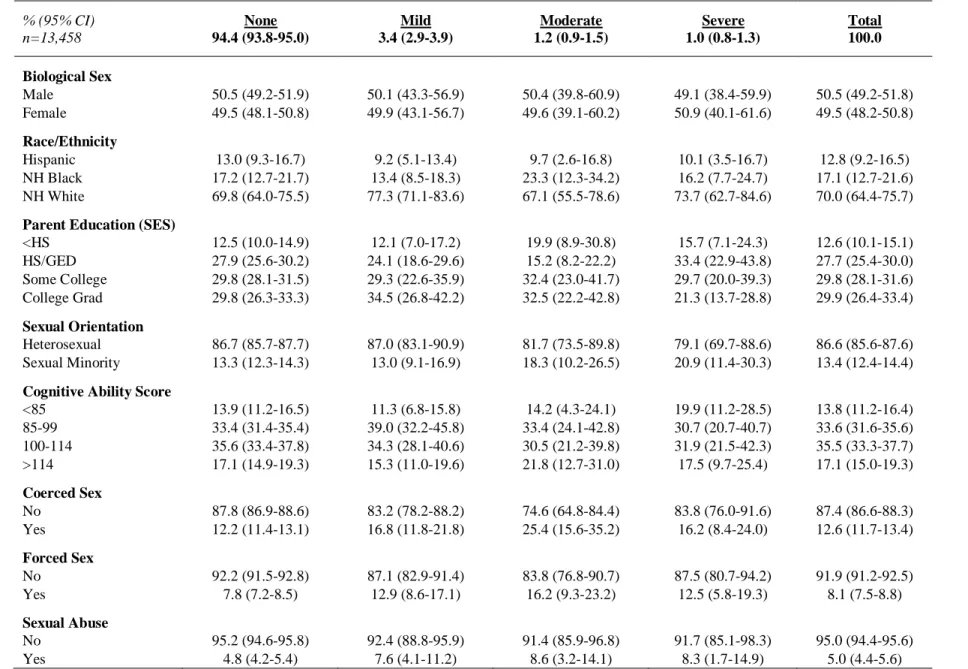
Table 1: Descriptive statistics by physical disability severity for timing models ... 42
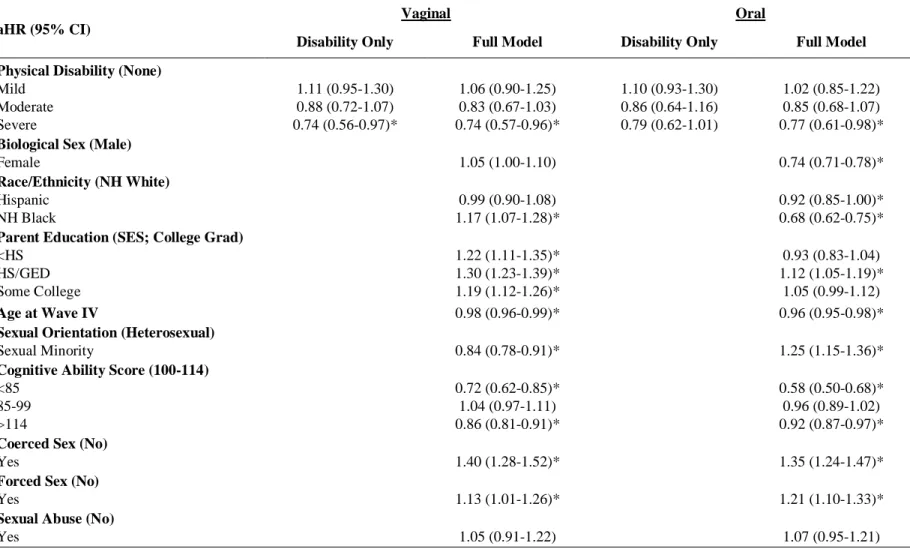
Table 2: Adjusted hazard ratios (and 95% confidence intervals) from Cox
proportional hazards models comparing the timing of each type of sex by
physical disability ... 44
Table 3: Adjusted hazard ratios (and 95% confidence intervals) from Cox
proportional hazards models comparing the timing of each type of sex by
the interaction between physical disability and biological sex... 46
Table 4: Adjusted hazard ratios (and 95% confidence intervals) from Cox
proportional hazards models comparing the timing of each type of sex by
the interaction between physical disability and race/ethnicity ... 48
Table 5: Adjusted hazard ratios (and 95% confidence intervals) from Cox
proportional hazards models comparing the timing of each type of sex by
the interaction between physical disability and sexual orientation ... 50
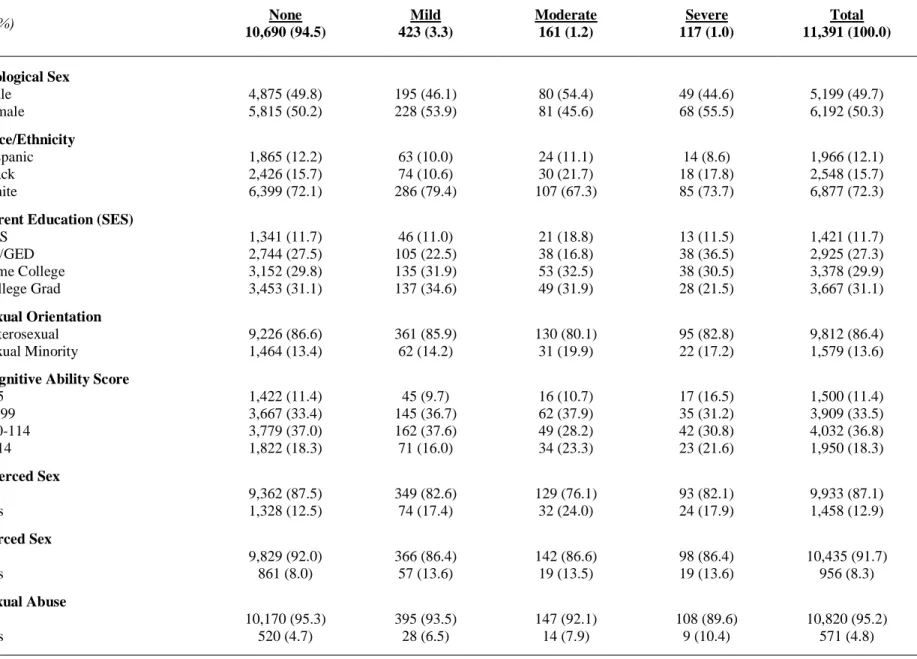
Table 6: Descriptive statistics by physical disability severity for partner
accumulation models ... 67
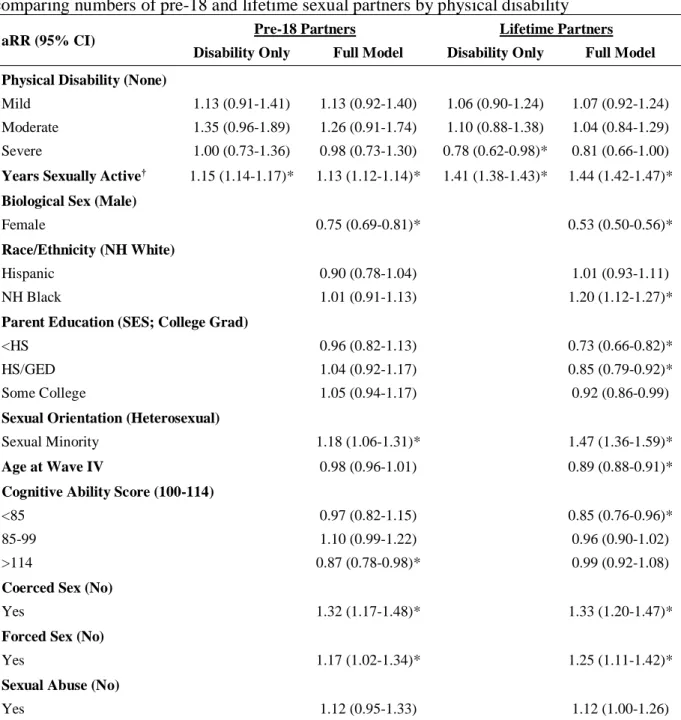
Table 7: Adjusted rate ratios (and 95% confidence intervals) from Poisson regression models comparing numbers of pre-18 and lifetime sexual
partners by physical disability ... 69
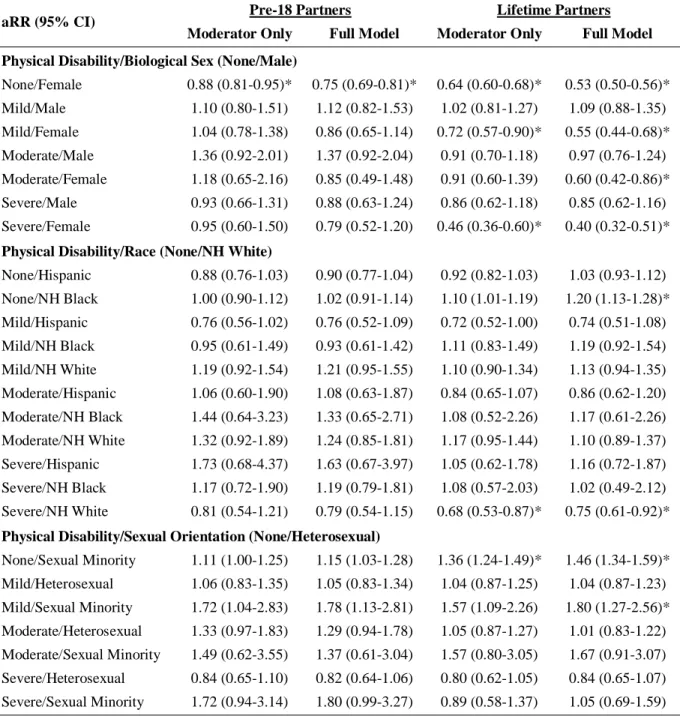
Table 8: Adjusted rate ratios (and 95% confidence intervals) from three sets of Poisson regression models testing moderation in the numbers of pre-18 and lifetime sexual partners among disability severity groups by
biological sex, race/ethnicity, and sexual orientation ... 70
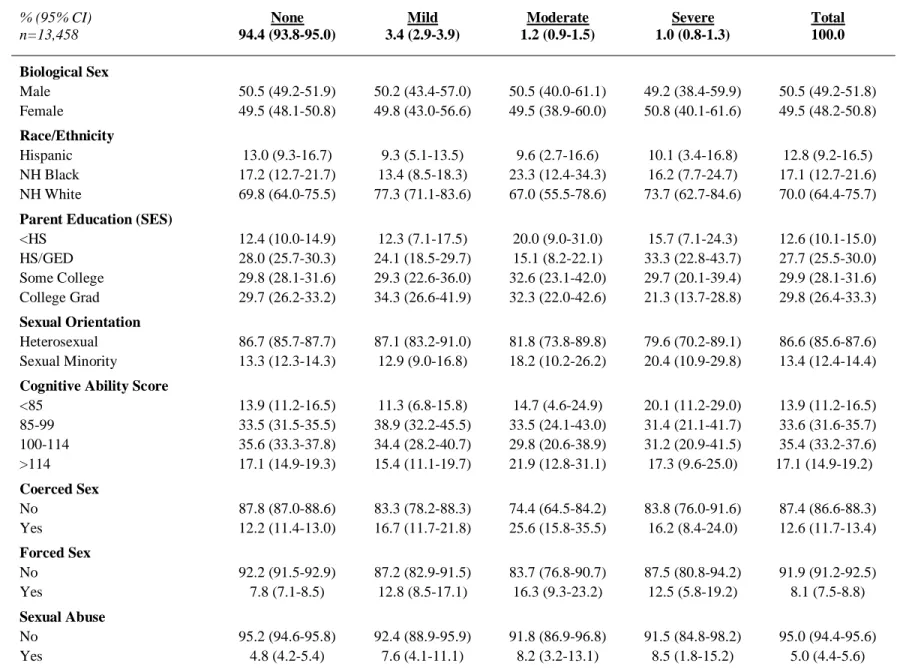
Table 9: Descriptive statistics by physical disability severity for STI/STD
analyses using timing and lifetime partnering as main predictors ... 88
Table 10: Descriptive statistics by physical disability severity for STI/STD
analyses using pre-18 partnering as the main predictor ... 90
Table 11: Adjusted odds ratios (and 95% confidence intervals) from logistic regressions testing the association between timing of sexual activity and
STI/STD diagnosis across disability groups... 92
Table 12: Adjusted odds ratios (and 95% confidence intervals) from logistic regressions testing the association between number of lifetime sexual
xv
Table 13: Adjusted odds ratios (and 95% confidence intervals) from logistic regressions testing the association between number of pre-18 sexual
partners and STI/STD diagnosis across disability groups ... 96
Table 14: Adjusted odds ratios (and 95% confidence intervals) from logistic regressions testing the association between timing of sexual activity and
STI/STD diagnosis across disability/biological sex groups ... 98
Table 15: Adjusted odds ratios (and 95% confidence intervals) from logistic regressions testing the association between number of lifetime sexual
partners and STI/STD diagnosis across disability/biological sex groups ... 100
Table 16: Adjusted odds ratios (and 95% confidence intervals) from logistic regressions testing the association between number of pre-18 sexual
partners and STI/STD diagnosis across disability/biological sex groups ... 102
Table 17: Adjusted odds ratios (and 95% confidence intervals) from logistic regressions testing the association between timing of sexual activity and
STI/STD diagnosis across disability/race groups ... 104
Table 18: Adjusted odds ratios (and 95% confidence intervals) from logistic regressions testing the association between number of lifetime sexual
partners and STI/STD diagnosis across disability/race groups ... 106
Table 19: Adjusted odds ratios (and 95% confidence intervals) from logistic regressions testing the association between number of pre-18 sexual
partners and STI/STD diagnosis across disability/race groups ... 108
Table 20: Adjusted odds ratios (and 95% confidence intervals) from logistic regressions testing the association between timing of sexual activity and
STI/STD diagnosis across disability/sexual orientation groups ... 110
Table 21: Adjusted odds ratios (and 95% confidence intervals) from logistic regressions testing the association between number of lifetime sexual partners and STI/STD diagnosis across disability/sexual orientation
groups ... 112
Table 22: Adjusted odds ratios (and 95% confidence intervals) from logistic regressions testing the association between number of pre-18 sexual partners and STI/STD diagnosis across disability/sexual orientation
groups ... 114
Table 23: Descriptive statistics by physical disability severity for unintended pregnancy analyses using timing and lifetime partnering as main
predictors ... 131
Table 24: Descriptive statistics by physical disability severity for unintended
xvi
Table 25: Adjusted odds ratios (and 95% confidence intervals) from logistic regressions testing the association between timing of sexual activity and
unintended pregnancy across disability groups ... 135
Table 26: Adjusted odds ratios (and 95% confidence intervals) from logistic regressions testing the association between number of lifetime sexual
partners and unintended pregnancy across disability groups ... 137
Table 27: Adjusted odds ratios (and 95% confidence intervals) from logistic regressions testing the association between number of pre-18 sexual
partners and unintended pregnancy across disability groups ... 139
Table 28: Adjusted odds ratios (and 95% confidence intervals) from logistic regressions testing the association between timing of sexual activity and
unintended pregnancy across disability/biological sex groups ... 141
Table 29: Adjusted odds ratios (and 95% confidence intervals) from logistic regressions testing the association between number of lifetime sexual partners and unintended pregnancy across disability/biological sex
groups ... 143
Table 30: Adjusted odds ratios (and 95% confidence intervals) from logistic regressions testing the association between number of pre-18 sexual partners and unintended pregnancy across disability/biological sex
groups ... 145
Table 31: Adjusted odds ratios (and 95% confidence intervals) from logistic regressions testing the association between timing of sexual activity and
unintended pregnancy across disability/race groups ... 147
Table 32: Adjusted odds ratios (and 95% confidence intervals) from logistic regressions testing the association between number of lifetime sexual
partners and unintended pregnancy across disability/race groups ... 149
Table 33: Adjusted odds ratios (and 95% confidence intervals) from logistic regressions testing the association between number of pre-18 sexual
partners and unintended pregnancy across disability/race groups ... 151
Table 34: Adjusted odds ratios (and 95% confidence intervals) from logistic regressions testing the association between timing of sexual activity and
unintended pregnancy across disability/sexual orientation groups ... 153
Table 35: Adjusted odds ratios (and 95% confidence intervals) from logistic regressions testing the association between number of lifetime sexual partners and unintended pregnancy across disability/sexual orientation
xvii
Table 36: Adjusted odds ratios (and 95% confidence intervals) from logistic regressions testing the association between number of pre-18 sexual partners and unintended pregnancy across disability/sexual orientation
groups ... 157
Table 37: Descriptive statistics by physical disability severity for romantic relationship quality analyses using timing and lifetime partnering as
main predictors ... 173
Table 38: Descriptive statistics by physical disability severity for romantic relationship quality analyses using pre-18 partnering as the main
predictor ... 175
Table 39: Adjusted coefficients (and 95% confidence intervals) from OLS
regressions testing the association between timing of sexual activity and
romantic relationship quality across disability groups ... 177
Table 40: Adjusted coefficients (and 95% confidence intervals) from OLS regressions testing the association between number of lifetime sexual
partners and romantic relationship quality across disability groups... 179
Table 41: Adjusted coefficients (and 95% confidence intervals) from OLS regressions testing the association between number of pre-18 sexual
partners and romantic relationship quality across disability groups... 181
Table 42: Adjusted coefficients (and 95% confidence intervals) from OLS
regressions testing the association between timing of sexual activity and
romantic relationship quality across disability/biological sex groups ... 183
Table 43: Adjusted coefficients (and 95% confidence intervals) from OLS regressions testing the association between number of lifetime sexual partners and romantic relationship quality across disability/biological sex
groups ... 185
Table 44: Adjusted coefficients (and 95% confidence intervals) from OLS regressions testing the association between number of pre-18 sexual partners and romantic relationship quality across disability/biological sex
groups ... 187
Table 45: Adjusted coefficients (and 95% confidence intervals) from OLS regressions testing the association between timing of sexual activity and
romantic relationship quality across disability/race groups ... 189
Table 46: Adjusted coefficients (and 95% confidence intervals) from OLS regressions testing the association between number of lifetime sexual
xviii
Table 47: Adjusted coefficients (and 95% confidence intervals) from OLS regressions testing the association between number of pre-18 sexual
partners and romantic relationship quality across disability/race groups ... 193
Table 48: Adjusted coefficients (and 95% confidence intervals) from OLS regressions testing the association between timing of sexual activity and
romantic relationship quality across disability/sexual orientation groups ... 195
Table 49: Adjusted coefficients (and 95% confidence intervals) from OLS regressions testing the association between number of lifetime sexual partners and romantic relationship quality across disability/sexual
orientation groups ... 197
Table 50: Adjusted coefficients (and 95% confidence intervals) from OLS regressions testing the association between number of pre-18 sexual partners and romantic relationship quality across disability/sexual
orientation groups ... 199
Table 51: Distributions of skewed outcome variables ... 209
xix
LIST OF FIGURES
Figure 1: Conceptual model relating physical disability, sexual patterns, and
health outcomes from adolescence to early adulthood ... 16
Figure 2: Relationship between years sexually active and predicted probability of
lifetime STI/STD diagnosis across physical disability groups ... 211
Figure 3: Relationship between lifetime sexual partners and predicted probability
of lifetime STI/STD diagnosis across physical disability groups ... 211
Figure 4: Relationship between pre-18 sexual partners and predicted probability
of lifetime STI/STD diagnosis across physical disability groups ... 212
Figure 5: Relationship between lifetime sexual partners and predicted probability of lifetime STI/STD diagnosis across physical disability/biological sex
groups ... 212
Figure 6: Relationship between years sexually active and predicted probability of
lifetime STI/STD diagnosis across physical disability/race groups ... 213
Figure 7: Relationship between years sexually active and predicted probability of lifetime STI/STD diagnosis across physical disability/sexual orientation
groups ... 213
Figure 8: Relationship between years sexually active and predicted probability of
an unintended pregnancy across physical disability groups ... 214
Figure 9: Relationship between lifetime sexual partners and predicted probability
of an unintended pregnancy across physical disability groups ... 214
Figure 10: Relationship between pre-18 sexual partners and predicted probability
of an unintended pregnancy across physical disability groups ... 215
Figure 11: Relationship between years sexually active and predicted probability of
an unintended pregnancy across physical disability/race groups ... 215
Figure 12: Relationship between pre-18 sexual partners and predicted probability
of an unintended pregnancy across physical disability/race groups ... 216
Figure 13: Relationship between pre-18 sexual partners and predicted probability of an unintended pregnancy across physical disability/sexual orientation
groups ... 216
Figure 14: Relationship between years sexually active and predicted romantic
xx
Figure 15: Relationship between lifetime sexual partners and predicted romantic
relationship quality across physical disability groups ... 217
Figure 16: Relationship between pre-18 sexual partners and predicted romantic
relationship quality across physical disability groups ... 218
Figure 17: Relationship between pre-18 sexual partners and predicted romantic
relationship quality across physical disability/biological sex groups... 218
Figure 18: Relationship between lifetime sexual partners and predicted romantic
relationship quality across physical disability/race groups ... 219
Figure 19: Relationship between pre-18 sexual partners and predicted romantic
relationship quality across physical disability/race groups ... 219
Figure 20: Relationship between pre-18 sexual partners and predicted romantic
xxi
LIST OF ABBREVIATIONS
ADA Americans with Disabilities Act
Add Health The National Longitudinal Study of Adolescent to Adult Health
AHPVT Add Health Picture Vocabulary Test
aHR Adjusted hazard ratio
aOR Adjusted odds ratio
AOUM Abstinence only until marriage
aRR Adjusted rate ratio
CDC Centers for Disease Control and Prevention
CI Confidence interval
GED General Educational Development
HS High school
MCH Maternal and Child Health
NH Non-Hispanic
NLSY National Longitudinal Survey of Youth
NSFG National Survey of Family Growth
OLS Ordinary least squares regression
PDI Physical Disability Index
SAHM Society for Adolescent Health and Medicine
SES Socioeconomic status
SHM Supporting Healthy Marriage instrument
STI/STD Sexually transmitted infection/sexually transmitted disease
xxii
WHO World Health Organization
1
CHAPTER 1: INTRODUCTION
Although a large amount of research has focused on changes in adolescent sexual
behavior over the last half century, relatively little is known about what characterizes optimal
sexual development through the life course.1,2 Populations with disabilities have been
particularly understudied for various reasons, including historical restrictions on their sexual
behaviors for eugenic purposes3,4 and unfounded assumptions of asexuality or hypersexuality.5,6
Fortunately, more recent legislation protecting these groups in the United States has started to
bring their unique sexual development, health, and education needs to the forefront.15,16
Based on the most recent report from the U.S. Census Bureau,17 approximately 56.7
million people in the United States had some type of disability in 2010, accounting for
approximately 18.7% of the U.S. population that year. Of these, 2.8 million were considered to
be school-aged (5-17 years), representing 5.2% of this age group.18 Almost 90% of children with
disabilities are enrolled in public schools where they are provided with education services in the
least restrictive environments based on their individualized education or health plans; however,
this rarely includes sexuality education that is appropriate for their particular needs.8 Current
policies that focus on abstinence only until marriage (AOUM) are not sensitive to the fact that
most people engage in pre-marital sex.19 Thus, it is important to understand various sexual
behavior patterns, such as timing of first sex and sexual partnering, to inform sexuality education
programming and policy.1,20 This is particularly important for populations with physical
2
with particular sexual development pathways and therefore are in need of more targeted and
developmentally appropriate sexuality education.21–23 Unfortunately, the majority of this research
uses cross-sectional data or convenience samples, which severely limits their generalizability and
our understanding of the developmental consequences of sexual behavior in this population.
Furthermore, none of this research considers the relationships between sexual patterns and sexual
health outcomes among populations with disabilities. Accordingly, this project investigates the
sexual patterns and health outcomes of populations with physical disabilities using the National
Longitudinal Study of Adolescent to Adult Health (Add Health) to inform future research,
practice, and policies for the healthy sexual development of these groups at the population level.
Disability
The Americans with Disabilities Act (ADA) defines a disability as “a physical or mental
impairment that substantially limits one or more major life activities, a record of such an
impairment, or being regarded as having such an impairment.”16 I use Cheng and Udry’s22
Physical Disability Index (PDI) for this dissertation, which similarly defines disability using
information regarding limb difficulties, blindness, deafness, medical equipment use, assistive
care needs, and perceptions of disability from Wave I of Add Health. The construction of this
variable is defined in detail in Chapter 2; however, it is important to note that Add Health
respondents were identified for further interview regarding their disabilities based on screening
questions about limb difficulties from the Wave I in-school interview. Thus, while respondents
with mental impairments could have been included in the PDI, they only would have been
identified if they also had a physical limitation. For this reason, this group will be labeled as
3
Sexual Patterns
Sexual patterns are made up of multiple elements including timing of various sexual
experiences and the accumulation of sexual partners. Although the body of research that
considers the differences in these sexual patterns and their effects on health from adolescence to
young adulthood is growing, much of the available research relies on cross-sectional or
short-term longitudinal data. Importantly, little to no research has considered these sexual patterns
among populations with physical disabilities. I have chosen to focus on timing and partner
accumulation as the sexual patterns of interest for my dissertation because understanding when
and how adolescents engage in sexual behavior is critical for guiding the timing and content of
contemporary sexuality education curriculums.24,25 Furthermore, understanding how these
patterns may be similar or different among populations with physical disabilities will provide us
with important information regarding the specific needs of these groups and the ways in which
we can scaffold sexuality education to better meet these needs.26,27 Research that has shaped our
understanding of these particular sexual patterns is described below.
Timing
Timing of first sex, or sexual debut, is a common focus of adolescent sexuality research
because of its implications for later aspects of sexual health. This is a particularly important topic
for my dissertation because understanding timing patterns among populations with physical
disabilities can help us to identify the proper timeline for age-appropriate sexuality education for
these groups.27 In the general population, research has produced conflicting findings regarding
the relationship between timing of different sexual acts and adolescent and adult outcomes such
as frequency of sexual activity28 and likelihood of contraception use.29 Timing of various types
4
example, studies indicate that women are more likely to engage in vaginal intercourse at an
earlier age,30 while men tend to experience oral and anal sex earlier.19 Research also shows that
African American youth engage in vaginal intercourse earlier than their White peers but
experience oral and anal sex later.19,30 Finally, sexual minority males and females have been
reported to initiate sexual activity earlier than their heterosexual counterparts.31,32
Very little research examines the relationship between physical disability and timing of
sexual experiences, and the majority of this literature focuses on increased likelihood of sexual
violence or abuse at earlier ages.7,33 Of the few studies that do focus on timing of sexual
experiences and health outcomes in adolescent populations with various types of disabilities
(e.g., physical, sensory, emotional), findings suggest differences in timing of first vaginal sex by
both disability type and biological sex.34–36 For instance, in their cross-sectional study of 14-17
year olds in Germany, Wienholz and colleagues36 found that a smaller proportion of teens with
physical disabilities and vision or hearing impairments reported experiencing vaginal intercourse
than did those without disabilities; however, among sexually experienced teens with any of these
disabilities, males and those with hearing impairments were more likely to have reported ever
having intercourse. Furthermore, of those who did engage in sexual behavior during this time
period, adolescents with any of these disabilities reported earlier ages of sexual debut compared
to those without a disability. Similarly, using data from the National Longitudinal Survey of
Youth (NLSY), Shandra and colleagues35 found that males with learning or emotional conditions
were more likely, and those with sensory conditions were less likely, to report earlier sexual
debut compared to males without any type of disability. Overall, the research suggests that
populations with disabilities may experience earlier debut of vaginal sex than their peers without
5
However, this existing literature tends to focus only on vaginal sex and often limits the study
periods to the adolescent years. Because of these limitations, it is difficult to consider the
implications of timing of different types of sexual behaviors and how such patterns could affect
health outcomes at later ages among populations with physical disabilities.
Partner Accumulation
Partner accumulation refers to the cumulative number of sexual partners one has over a
specified period of time. I have chosen to study partner accumulation because of past research
suggesting a relationship between partner counts and negative health outcomes in early
adulthood, as described below. This is particularly important for my dissertation because
information regarding similarities or differences in partner accumulation among those with and
without physical disabilities can help us to design more developmentally appropriate sexuality
education that is responsive to the particular needs of different groups.27
Previous research using Add Health has indicated that adolescents (12-18) and emerging
adults (18-24) report higher partner accumulation rates than early adults (24-32); however, closer
examination of the data shows differences by biological sex and race/ethinicity.37 In terms of
biological sex, Kan and colleagues,37 using Add Health data, found that adolescent females
reported more sexual partners over time than did males. In contrast, data from the national Youth
Risk Behavior Surveillance System (YRBSS) consistently indicates that adolescent males are
more likely than adolescent females to report having had four or more sexual partners.38,39 Such
conflicting results may be related to differences in the datasets or the methods of analysis
(growth over time vs. cumulative/categorical outcome). Regarding race/ethnicity, YRBSS data
showed that Black adolescents were significantly more likely than both Whites and Hispanics to
6
Add Health sample show more linear growth rates of partner accumulation from adolescence to
young adulthood, while partnering among Whites and Blacks tends to increase through emerging
adulthood and then decline by age 27. Finally, sexual minority male adults (18-39) and female
adolescents and emerging adults (15-20) have been shown to have greater numbers of lifetime
partners compared to heterosexuals.31,32
One strength of a number of the studies described above is the use of nationally
representative data, which makes the results generalizable to the broader population.32,37–39
However, the differences in the analytic methods and the use of cross-sectional data31,32,38,39 or
convenience samples31 in other studies make it more difficult to know if these patterns persist
across developmental stages. Very little research has considered the partner accumulation
patterns of individuals with disabilities. One recent cross-sectional study of 18-25 year olds with
visual, hearing, and physical disabilities in Germany showed they had experienced an average of
2.3 partnerships.40 Although the differences were not statistically significant, this study found
that those with hearing and vision impairments experienced more partnerships than did those
with a physical disability, and that males with disabilities had more partnerships on average than
did females.40 Unfortunately, this study did not include respondents without disabilities, making
it difficult to compare partnering experiences of individuals with disabilities to those of their
non-disabled peers. To my knowledge, no such studies examine partner accumulation patterns
among individuals with physical disabilities at a population level. For this reason, this
dissertation will fill an important gap in the literature by focusing on the sexual partner
accumulation patterns of populations with physical disabilities from adolescence to early
7
Health Outcomes
There is a growing body of literature documenting the relationships between sexual
patterns in adolescence and health outcomes in young adulthood, and much of this research has
been used to inform the design of educational and preventive health services for adolescents and
adults alike. Unfortunately, virtually no research focuses on these outcomes in the population
with physical disabilities, which means that sexuality education and health services may not be
particularly appropriate to the needs of this group. I have therefore chosen to focus on the
relationship between sexual patterns and various health outcomes, including STI/STD diagnosis,
unintended pregnancy, and romantic relationship quality among populations with physical
disabilities from adolescence to early adulthood for this dissertation. Below I briefly describe
recent research focused on these associations.
STI/STDs
The majority of studies examining health outcomes related to sexual patterns focus on
STI/STDs. Data from the Centers for Disease Control and Prevention (CDC) show that while
15-24 year olds only represent 25% of the sexually active population, this age group accounts for
half of all new STI/STD cases in the United States each year.41,42 Surveillance studies and
research using nationally representative data have also shown that both women and sexual
minorities are disproportionately burdened by STI/STDs.41–43 Regarding timing of sexual
activity, studies have shown that early sexual debut, particularly vaginal sex, has been associated
with increased likelihood of STI/STD diagnosis.44–47 However, other studies have suggested
moderation of these relationships by biological sex, such that early debut of vaginal sex is
associated with higher odds of STI/STDs for both males and females, while delayed vaginal sex
8
inconsistencies can be attributed to the differences in the sample sizes and the representativeness
of the datasets used for each study. Relatively few studies have considered the ways in which
other types of sexual activity are related to STI/STDs. In one such study, Haydon and
colleagues45 found no differences in STI/STD diagnoses among those who had early age of
initiation of vaginal, oral, or anal sex compared to those of the average age. In contrast, delaying
all sex experiences and only ever engaging in vaginal sex were associated with lower odds of
STI/STD diagnosis.45
A greater number of lifetime partners has also been associated with greater odds of
STI/STDs. Among adolescents, Rosenberg and colleagues48 found that concurrent sexual
partnerships were associated with increased STI/STD diagnosis in a STI/STD clinic sample. In
addition, Kelley et al.49 found that adolescents in the Add Health sample who reported
concurrent or multiple sequential partners had greater odds of reporting a STI/STD than those
who were in a single relationship during adolescence. These associations also persist through
young adulthood. For example, Ashenhurst and colleagues50 found that those respondents in their
college sample who reported multiple sexual partners had lower odds of using protection against
STI/STDs during sexual encounters. Furthermore, a study by Vasilenko and colleagues46 as well
as my recent work51 both suggest that having more sexual partners is associated with greater
odds of STI/STD diagnosis. When considering moderation by biological sex, Vasilenko et al.46
found that having more sexual partners was associated with greater odds of STI/STD diagnosis
for men, while STI/STD rates were consistent across all women, regardless of the number of
sexual partners. Although few studies have considered moderation of the relationship between
sexual partnering and STI/STDs among racial/ethnic groups and by sexual orientation, there is
9
their White and heterosexual majority counterparts, respectively.43,45,52 Such differences may be
related to structural and contextual factors including segregated sexual networks, which have
been associated with variation in STI/STD rates.53
More research is still needed to understand the relationship between the timing of
different types of sexual activity, numbers of sexual partners, and STI/STDs from adolescence
through early adulthood. Furthermore, although some research has indicated that populations
with physical disabilities are at greater risk for STI/STDs,8–10,54,55 none of this research has
considered how timing of first sex or sexual partnering may affect STI/STD acquisition by early
adulthood. Therefore, this dissertation will provide important information about how timing of
sexual experiences and partner accumulation are related to STI/STD diagnosis among members
of this specific population.
Unintended Pregnancy
Nearly half of all pregnancies in the United States are unintended, and research shows
that unintended pregnancies are more prevalent among 18-24 year olds, women living in
poverty, racial/ethnic minority groups, and sexual minority females.56–61 Most research that
considers the relationship between timing of first sex or partner accumulation and unintended
pregnancy focuses on contraceptive behaviors as the outcome rather than the pregnancy itself, or
is limited to teen pregnancies. For example, research using the National Survey of Family
Growth (NSFG) has shown that early age of sexual activity among adolescents is associated with
longer delay of contraceptive use, putting one at a greater risk for unintended pregnancy.62
Another study by Reese and colleagues63 using Add Health data showed that initiating sexual
behavior with oral sex and waiting at least a year to have vaginal intercourse was associated with
10
that delayed sexual activity is associated with lower odds of a lifetime unintended pregnancy
from adolescence through early adulthood.
Regarding partnering, a systematic review by Kirby64 showed that having multiple sex
partners during adolescence was associated with teen pregnancy. Research with small samples of
emerging adults has also suggested that serial monogamy may be related to inconsistent
contraceptive use, thus increasing the risk of unintended pregnancy.65 In addition, my current
work51 suggests that having fewer lifetime sexual partners is associated with lower odds of a
lifetime unintended pregnancy compared to those with 4-7 lifetime partners from adolescence to
early adulthood. To my knowledge, no studies consider the relationship between these sexual
patterns and unintended pregnancy from adolescence through adulthood among those with
physical disabilities. This dissertation will thus fill this gap in the literature by examining
associations between these sexual patterns and unintended pregnancy among populations with
physical disabilities using data from Add Health.
Romantic Relationship Quality
Reproductive health is defined by the World Health Organization (WHO) as “a state of
complete physical, mental, and social well-being and not merely the absence of disease or
infirmity;”66 however, romantic relationship characteristics and other more positive aspects of
human sexuality are less commonly studied than the negative health outcomes described above.
Even fewer studies consider the unique experiences of populations with physical disabilities,
who are entitled to the same rights to safe and satisfying sex as are those without physical
disabilities.67–70 In particular, the literature shows mixed findings regarding associations between
sexual patterns and romantic relationship quality, which may be attributed to differences in the
11
cross-sectional research shows no differences in relationship quality between those who initiated
sexual activity at an earlier or later age compared to the average.28 However, my recent work51
using Add Health data indicates that those who delayed sexual activity have higher overall
relationship quality in their current relationship, while those who engaged in sex earlier during
adolescence and who had anal sex before age 18 showed lower overall relationship quality
compared to the normative group. In a cross-sectional sample of 14-24 year olds visiting an
adolescent medicine clinic, researchers found that having fewer than average lifetime sexual
partners was associated with greater happiness in a current sexual relationship.71 Similarly, my
research51 has shown that those who have fewer sexual partners report greater relationship
quality compared to those with 4-7 lifetime sexual partners. While some studies have considered
the relationship quality of people with disabilities, this research tends to focus on adults in the
context of marriage and a disability that has occurred due to aging.72 One recent cross-sectional
study of 18-25 year olds with vision, hearing, and physical disabilities in Germany suggested that
the majority of these individuals experienced positive romantic relationships.40 Unfortunately,
this study was limited to individuals with a particular disability, making it difficult to compare
their experiences to individuals without disabilities. To my knowledge, no research has focused
on the relationships between sexual patterns and romantic relationship quality outcomes of
people with physical disabilities from adolescence to adulthood. Thus, this dissertation will fill a
critical gap in the research by studying these associations in a longitudinal, nationally
representative sample of respondents with physical disabilities in the United States.
Limitations of Past Literature
More research is needed to better understand the relationship between sexual patterns and
12
to young adulthood. Limited research has focused on the sexual development of adolescents with
physical disabilities and how these experiences shape sexual health and behavior in young
adulthood, as this population has traditionally been excluded from such studies.73 Of the research
that does consider the sexual experiences of populations with disabilities, the inconsistent
findings may be attributable to variations in the types of disabilities (e.g., physical, learning, or
emotional conditions) represented across samples. As mentioned previously, research to date has
consistently shown that adolescents with physical disabilities have less sexual education, are at
increased risk for pregnancy and STI/STDs due to poor contraceptive use, and are more
vulnerable to physical and sexual violence and abuse, all of which may affect their sexual
patterns over the life course.7–12,74 However, none of the aforementioned studies consider the
influence of sexual timing and partnering on these outcomes, which are critically important
components of these causal pathways.47,51,62,63,75 Furthermore, these and other studies that
compare disability groups generally focus on the adolescent period only.34–36 Although
important, cross-sectional research does not provide us with important information about
long-term health implications of adolescent sexual behaviors, and thus limits our ability to make
recommendations that can have lasting impacts on the sexual health of populations with physical
disabilities across the life course.
Research Questions
This dissertation uses the Life Course13 perspective to better understand longitudinal
13
disabilities from adolescence into adulthood. The Aims and related research questions are
outlined below and addressed in separate chapters.a
Aim 1: Identify the sexual patterns of people with physical disabilities from adolescence to early adulthood.
Chapter 3: How does the timing of initiation of oral, anal, and vaginal sex vary by physical disability severity? How does timing of initiation of each type of sex further
vary by biological sex, race/ethnicity, and sexual orientation?
Chapter 4: How do pre-18 and lifetime sexual partner accumulation patterns vary by physical disability severity? How do these sexual partner accumulation patterns further
vary by biological sex, race/ethnicity, and sexual orientation?
Aim 2: Determine the physical health outcomes and romantic relationship characteristics associated with the sexual patterns described in Aim 1.
Chapter 5: How are timing of first sex, lifetime sexual partner counts, and pre-18 sexual partner counts related to lifetime STI/STD diagnosis across different levels of disability
severity? How do these associations further vary by biological sex, race/ethnicity, and
sexual orientation?
Chapter 6: How are timing of first sex, lifetime sexual partner counts, and pre-18 sexual partner counts related to lifetime unintended pregnancy across different levels of
disability severity? How do these relationships further vary by biological sex,
race/ethnicity, and sexual orientation?
Chapter 7: How are timing of first sex, lifetime sexual partner counts, and pre-18 sexual
a Aim 1 chapters (3-4) have been written for and submitted to peer-reviewed journals, and thus repeat information
14
partner counts related to romantic relationship quality in the current or most recent
relationship across different levels of disability severity? How do these associations
further vary by biological sex, race/ethnicity, and sexual orientation?
The results of these analyses will fill a gap in the developmental and health literatures by
providing important information regarding sexual patterns and health outcomes in this notably
understudied population. Such information will help to guide future research, practice, and
policies that support healthy sexual development and the provision of more focused sexual health
education to populations with physical disabilities. Moreover, my use of a longitudinal dataset
expands on previous research focused on the sexuality of populations with physical disabilities
during adolescence by considering how sexual patterns and related health outcomes may have
15
CHAPTER 2: THEORETICAL FRAMEWORK AND DATA Life Course Perspective
This dissertation draws upon the life course perspective, which focuses on the sequences
of statuses and roles that people assume throughout life, and how these sequences are affected by
changing societal norms over both individual and historical time.13 Of particular note are life
transitions, which are the changes in statuses and roles that make up long-term patterns or
trajectories, both within an individual life and in historical time. In addition, the life course
perspective is concerned with the ideas of cumulative advantage/disadvantage, which suggests that the combination of various life experiences may exacerbate or mitigate negative health
outcomes over time,76–79 and intersectionality, which similarly posits that individuals who have
multiple socially marginalized identities may experience even greater disadvantage and
discrimination than those who only identify with one minority group.80
The life course perspective has more recently been applied to sexual development,
indicating that social norms exist around the initiation and patterns of sexual experiences and that
departures from these norms have implications for future social, health, and educational
outcomes.1,81–83 Since populations with physical disabilities have different life experiences than
their peers without physical disabilities,84 the life course perspective would suggest the
possibility that they also experience different outcomes. Furthermore, consistent with the
concepts of cumulative advantage/disadvantage and intersectionality, one would expect members
16
marginalized groups (e.g., female, Black race, sexual minority) to experience additive adverse
effects of these sexual patterns compared to those who do not share these other minority
statuses.70,85–88 Therefore, this dissertation uses the life course perspective to understand whether
physical disability is associated with variations in sexual patterns and health outcomes in early
adulthood, and how such patterns and outcomes may further vary by biological sex,
race/ethnicity, and sexual orientation.
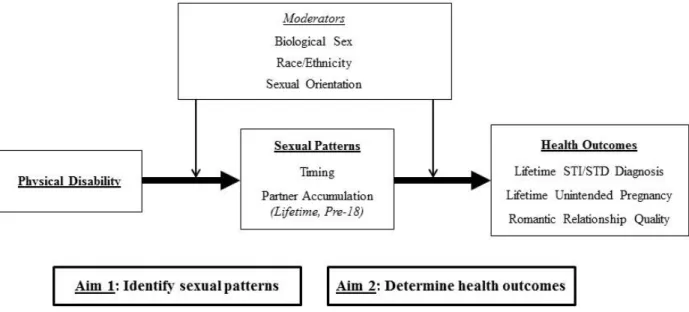
Figure 1: Conceptual model relating physical disability, sexual patterns, and health outcomes from adolescence to early adulthood
Figure 1 presents the conceptual model for this dissertation.Aim 1 is to identify sexual
patterns experienced from adolescence to early adulthood in populations with physical
disabilities, and is indicated by the bold arrow from “Physical Disability” to “Sexual Patterns.”
Aim 2 is to determine the health outcomes and that are associated with the sexual patterns
described in Aim 1, and is illustrated by the bold arrow from “Sexual Patterns” to “Health
Outcomes.” For each aim, I also test for moderation by biological sex, race/ethnicity, and sexual
orientation when sample sizes allow, which is indicated by the vertical arrows connecting
17
Methods Study Sample
This dissertation uses data from the National Longitudinal Study of Adolescent to Adult
Health (Add Health), a nationally representative, longitudinal study of over 20,000 in-school
adolescents who were in 7th-12th grade (ages 12-18) in the United States during the 1994-1995
school year.14 The purpose of the Add Health study was to examine the determinants of
adolescent health and health behavior, and how these affect health outcomes over the life course.
To date, four waves of data have been collected, consisting of one in-school and one parent
interview at study entry and four in-home interviews spanning from adolescence into early
adulthood. The current study uses data from the Wave I and Wave IV interviews, which capture
the important life course transitions from adolescence to early adulthood. Specifically, Wave I
consists of the original 20,745 respondents aged 12-18 in 1994-1995 (adolescence), and Wave
IV consists of 15,701 of the original respondents who were ages 24-34 in 2008-2009 (early
adulthood; response rate=80.3%).89
I focus on respondents who had valid Wave IV cross-sectional sampling weights
(n=14,800) and who had complete data on all variables of interest (n=13,458). To decrease the
amount of missing data in the sample, I used multiple imputation by chained equations.90
Analyses for Aim 1 outcomes included all 13,458 respondents, while Aim 2 analyses varied by
health outcome:b
• For the STI/STD outcome, the analytic sample excluded those who had never had any type of
b These Aim 2 sample sizes only apply to analyses that use timing of first sex and the number of lifetime sexual
18 sex (n=13,123).
• For the unintended pregnancy outcome, the analytic sample excluded those who had never
had any type of sex and those who had never experienced vaginal sex (n=12,719).
• For the romantic relationship quality outcome, the analytic sample excluded those who had
never had any type of sex and those who did not report on a current or most recent
relationship (n=12,877).
All analyses used sampling weights and adjusted variance estimates for the Add Health
complex survey design, and were performed using Stata Version 15.0.91 Measures
Physical Disability
Physical disability was measured using Physical Disability Index (PDI), which integrates
information from the in-school and in-home adolescent interviews, interviewer reports, and the
parent interview at Wave I. As described by Cheng and Udry,22 every adolescent respondent was
asked screening questions regarding limb difficulties, identifying 989 adolescents who received
an extended interview. For those identified, both the adolescent and parent were asked questions
regarding the adolescent’s disabilities, functional limitations, and assistive care needs. Responses
to each of the adolescent and parent interviews were coded independently, and the higher of the
two scores was used to define the adolescent’s PDI score.
For both the adolescent and parent surveys, an individual’s score started at zero. Scores
increased by one point for each of the following:
1. Having limb difficulties
2. Using medical equipment
19
4. If the respondent perceived the adolescent to have a disability, or if the respondent believed
others perceived the adolescent to have a disability
5. Indication of difficulty in walking, standing, extending, grasping, or holding things
6. More than three body parts affected (parent interview only)
After selecting the higher of the two scores, interviewer reports of blindness and deafness
were incorporated as follows:
• If the adolescent was deaf or blind in one eye/ear and had an initial score <3, the adolescent
was given a final score of 3.
• If the adolescent was blind in one eye and deaf and had an initial score <4, the adolescent
was given a final score of 4.
• If the adolescent was blind in both eyes and had an initial score <5, the adolescent was given
a final score of 5.
This process resulted in scores ranging from 0-5; however, due to the infrequency of
scores ≥4, scores of 4 or 5 were grouped into the “3” category, creating the final 0-3 scale,
indicating no (0), mild (1), moderate (2), and severe (3) physical disability.92 Sexual Patterns
Timing. To create the appropriate variables for survival models, I created three
dichotomous variables (yes, no) to serve as the failure variables. These were based on the
following items regarding lifetime experiences of vaginal, oral, and anal sex from the Wave IV
interview:
• Have you ever had vaginal intercourse? (Vaginal intercourse is when a man inserts his penis
20
• Have you ever had oral sex? That is, has a partner ever put his/her mouth on your sex organs
or you put your mouth on his/her sex organs?
• Have you ever had anal intercourse? (By anal intercourse, we mean when a man inserts his
penis into his partner's anus or butt hole.)
Time at risk for each type of sex was determined using responses to the following items
regarding age in years at first sexual experience, each of which was recoded to a floor of 10
years (see Table 51 of the Appendix for distributions of age at first sex variables):
• How old were you the first time you ever had vaginal intercourse?
• How old were you the very first time you had oral sex?
• How old were you the very first time you had anal intercourse?
For those who did not experience a given type of sex, time at risk was equal to the
respondent’s age at the time of the Wave IV interview.
In addition to the variables for each individual behavior described above, I also
constructed a dichotomous failure variable and a time at risk variable for the respondent’s first
sexual behavior, regardless of the type of sex. Again, for those who did not experience any of the
three sexual behaviors, time at risk equaled the respondent’s age at the time of the Wave IV
interview.
For Aim 2, I measured timing using years sexually active instead of age at first sex. To
create this variable, I subtracted the age of the first sexual behavior, whether vaginal, oral or
anal, from age at the time of the Wave IV interview.
Partner accumulation. At Wave IV, respondents were asked to provide numbers of male
and female sexual partners with whom they had ever engaged in any type of sexual activity, both
21
• Considering all types of sexual activity, with how many male partners have you ever had
sex?
• Considering all types of sexual activity, with how many female partners have you ever had
sex?
• Considering all types of sexual activity, with how many male partners did you have sex
before you were 18 years old, even if only one time?
• Considering all types of sexual activity, with how many female partners did you have sex
before you were 18 years old, even if only one time?
Responses to these items were used to construct two continuous partner count variables
for each respondent, one each for lifetime and pre-18 partners. Given the range of responses and
right skew of the distribution, lifetime partner counts were capped at 100 and pre-18 partner
counts were capped at 60 (See Table 51 of the Appendix for distributions of partnering
variables). The resulting partnering variables were used for both Aims 1 and 2.
Health Outcomes
Lifetime STI/STD diagnosis. I used the self-reported history of STI/STDs from Wave IV.
Specifically, respondents were asked the question below, followed by a list of possible
STI/STDs:
• Have you ever been told by a doctor, nurse, or other health professional that you had the
following sexually transmitted disease?
Since many of the STI/STDs are rare, I created a dichotomous variable (yes, no) that
indicated if the respondent had ever been diagnosed with any of the listed STI/STDs. Since some
of the STI/STDs in the Add Health questionnaire are sex specific, I only included those
22
Included STI/STDs were: chlamydia, gonorrhea, trichomoniasis, syphilis, genital herpes, genital
warts, hepatitis B, human papilloma virus, and HIV/AIDS. Excluded STI/STDs were pelvic
inflammatory disease, cervicitis/mucopurulent cervicitis, vaginitis, urethritis, and any other
STI/STD.
Unintended pregnancy. At Wave IV, respondents provided a complete pregnancy history. For every pregnancy, respondents were asked, the following regarding fertility intentions:
• “Thinking back to the time just before this pregnancy with {fill initials}, did you want to
have a child then?”
If the respondent indicated “no” for any reported pregnancy, the respondent was coded as
having had an unintended pregnancy (1). If none of the pregnancies was unintended or if the
respondent had never been pregnant, the respondent was coded as never having an unintended
pregnancy (0).
Romantic relationship quality. The romantic relationship quality variable was calculated
as the average score of six items from the Supporting Healthy Marriage (SHM) baseline
instrument.93 Respondents participated in this section of the Wave IV survey if they reported at
least one past or present relationship with an intimate partner. Respondents were asked a series
of detailed questions about their current partner, and if not currently in a relationship, their most
recent partnership. Each respondent indicated how much they agreed or disagreed with the
following six relationship quality items using a 5-point Likert scale (1=strongly disagree, 5=
strongly agree):
1. We (enjoy/enjoyed) doing even ordinary, day-to-day things together.
2. I (am/was) satisfied with the way we handle our problems and disagreements;
23
4. My partner (expresses/expressed) love and affection to me;
5. I (am/was) satisfied with our sex life;
6. I (trust/trusted) my partner to be faithful to me.
One item from the SHM instrument was included in the Add Health survey but was
excluded from the current analysis. This item was “I (am/was) satisfied with the way we handle
family finances,” and was excluded because it is more applicable to marriage and cohabiting
relationships than other relationship types. Items were reverse coded so that higher romantic
relationship quality was indicated by a higher mean score (α=0.88).
Aim 1 Controls and Moderators
In main effect analyses for Aim 1, I controlled for biological sex, race/ethnicity, age of
the respondent at the time of the Wave IV interview, socioeconomic status (SES) of the family of
origin, sexual orientation, cognitive ability score, and history of sexual violence and abuse. In
moderation analyses, biological sex, race/ethnicity and sexual orientation were treated as
moderators; age, SES, cognitive ability, and history of sexual violence and abuse served as
controls.
Biological sex was measured using the sex on school records at Wave I and confirmed by
the interviewer at each wave. For these analyses, I used biological sex reported at Wave IV.
Race/ethnicity is self-reported and verified by interviewers. These analyses were limited
to respondents who identified as Hispanic, non-Hispanic (NH) Black, and NH White.
Age at the time of the interview was previously calculated by finding the difference
between the Wave IV interview dates and birth dates for each respondent.
Socioeconomic status is a previously constructed variable from Wave I, and is measured
24
Sexual orientation was measured using an item regarding sexual orientation identity at
Wave IV. The sexual minority group included respondents who endorsed an identity of fully or mostly homosexual, bisexual, mostly heterosexual, or asexual. Those who identified as fully
heterosexual represented the heterosexual group.
Cognitive ability was measured using the 87-item Add Health Picture Vocabulary Test
(AHPVT) from Wave I.94 The AHPVT is an abridged version of the Peabody Picture Vocabulary
Test, which is moderately correlated with other intelligence measures such as the Stanford-Binet
Intelligence Scale and the Wechsler Intelligence Scale for Children.95–97 AHPVT scores were
standardized to approximate an intelligence quotient metric with a mean of 100 and a standard
deviation of 15, resulting in four categories (<85, 85– 99, 100–114, >114).98
Sexual violence and abuse were measured using retrospective reports from Wave IV
regarding respondents’ history of non-parental coerced sex, non-parental forced sex, and sexual
abuse by a parent/caregiver.
Aim 2 Controls and Moderators
As with Aim 1, I controlled for biological sex, race/ethnicity, age of the respondent at the
time of the Wave IV interview, SES of the family of origin, sexual orientation, cognitive ability
score, and history of sexual violence and abuse in main effect analyses for Aim 2. In moderation
analyses, biological sex, race/ethnicity and sexual orientation were treated as moderators; age,
SES, cognitive ability, and history of sexual violence and abuse served as controls.
In addition to the above controls, models with lifetime partners as the predictor of interest
were also controlled for years sexually active. For models with pre-18 partners as the predictor of
interest, I also controlled for years sexually active and post-18 sexual partners.