Sharif University of Technology
Scientia IranicaTransactions B: Mechanical Engineering www.scientiairanica.com
Research Note
Aging behavior and microstructure evolution of a
cold-drawn Ni-Co superalloy
H. Ghiasi
a;and S. Asgari
ba. Institute for Technology Development, Tehran, Iran.
b. Department of Materials Science and Engineering, Sharif University of Technology, Tehran, Iran. Received 13 May 2013; received in revised form 29 December 2013; accepted 20 October 2014
KEYWORDS AEREX 350; Cold-drawn; Aging; 0 phase;
phase.
Abstract. Age hardening behavior and microstructure of superalloy AEREX 350TM in
commercially cold-drawn condition were studied. It was found that aging the cold drawn alloy signicantly facilitated the formation of major phases of gamma prime and eta, in AEREX 350TM. Interestingly, the minimum temperature of formation of gamma prime
and eta phases in the cold drawn alloy was lower by about 30C and 5C, respectively,
to that previously reported for the solution treated alloy. Cold working, however, did not considerably inuence the maximum temperature of stability of these phases. In addition, Widmanstatten morphology of eta phase signicantly improved in the cold drawn samples compared to that seen in the solution treated alloy. Diusion through dislocation network could have facilitated growth of major phases whereas its inuence on dissolution temperature of these phases was negligible. In addition, it was suggested that cold working might increase the density of hcp nuclei in the fcc matrix. This may justify the observed enhancement of the Widmanstatten morphology of eta phase in these samples following the aging process.
© 2015 Sharif University of Technology. All rights reserved.
1. Introduction
The nickel-cobalt base superalloy AEREX 350 is a member of MultiphaseTM (MP) family, a group
of thermo-mechanically processed alloys, developed for high-quality applications including aerospace and petrochemical industries. MP alloys have been subject to many investigations upon the past decades [1-6]. AEREX 350, the latest member of this family, has shown superior creep resistance and rupture proper-ties compared to other nickel-based alloys such as Waspalloy, Alloy 718 and Udimet 720 [7]. Previous investigations have shown two main phases in this
*. Corresponding author. Tel.: +98 21 66075198; Fax: +98 21 66075200
E-mail address: [email protected] (H. Ghiasi)
alloy: (i) major strengthening phase is 0; an ordered
phase with an FCC(L12) structure and a nominal
composition of Ni3(Al,Ti) that increases the strength
of the alloy, due to coherency strains, and (ii) phase with HCP(DO24) structure and Ni3Ti composition. 0
phase distributes throughout the FCC matrix as ne precipitates while phase appears with two major mor-phologies, including the discrete blocky precipitates at grain boundaries that is the predominant form at lower aging temperatures and may enhance high-temperature properties of the alloy. This may be explained by taking into account the diculty of grain boundary migration under this situation. Widmanstatten ones form along with the (111) crystallographic planes of the matrix at higher aging temperatures and deteriorates the performance of the alloy for room temperature applications requiring strength and ductility.
Con-or some researchers [12,13] evaluated the inuence of cold working prior to aging on the microstructure of the alloy. This research study, thus, aims (i) to characterize the aging response of the cold-drawn alloy with respect to hardness values of the alloy AEREX 350, and (ii) to determine the eects of the cold work prior to aging on the stability of phases in this alloy.
2. Material and experiment
The material used in this investigation was supplied by SPS Technologies, Jenkintown PA, as cold-drawn rods of AEREX 350 (25Co 17Cr 3Mo 2W -4Ta - 2Ti - 1Al - 1.1Nb - 0.015C - 0.015B - balance Ni in weight percent). AEREX 350 is made by a triple melting route (VIM+ESR+VAR) to ensure an inclusion free material desirable for further thermo-mechanical processing. The cast product was hot rolled to rods, 18 mm in diameter, solution treated for 1.5 hour at 1150C in argon atmosphere and
subsequently water quenched and nally cold drawn to rods, 14 mm in diameter. Three millimeter thick specimens were cut perpendicular to the drawing axis. The samples were aged at temperatures ranging from 660 to 1100C followed by quenching in
wa-ter.
The Vickers hardness of aged samples was mea-sured by a Wolpert hardness tester by 30 kgf. At least four indentations were made for each hardness measurement and the average hardness was plotted against aging times. The samples for the microscopy studies were carefully ground and polished. An etching solution of marble etchant, made of 15 g CuCl2, 150 ml
methanol and 100 ml HCl, was applied to the surface of the polished samples. These samples were studied using a CARL ZEIS JENA, NEOPHOT 32, optical microscope and a JEOL JXA-840 Scanning Electron Microscope (SEM) to document the changes in the underlying microstructure associated with aging. For a more detailed investigation, a number of samples were studied by Transmission Electron Microscopy (TEM) using a PHILIPS C20 TEG-FEG instrument at 200 kV and two beam condition imaging using a double tilt holder. The nal thinning of the TEM samples was done by electropolishing them in a jet polishing unit using a solution of 240 ml methanol, 60 ml H2SO4 and
15 ml H3PO4 at room temperature with a voltage of
20 V.
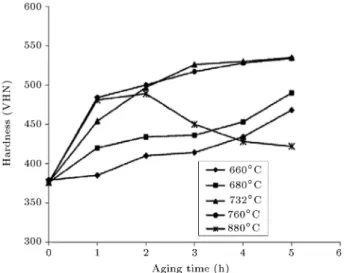
Figure 1. Inuence of the aging time on the average hardness of AEREX 350 alloy at aging temperatures 660 to 880C.
Figure 2. Inuence of the aging time on the average hardness of AEREX 350 alloy at aging temperatures 920 to 1100C.
3. Results
Results of hardness testing are summarized in Figures 1 and 2. As shown, aging at 660C and 680C causes a
steady but slow increase in the hardness values with increasing the aging time. A previous investigation showed no measurable change in the hardness in the solution-treated samples aged at temperatures up to 680C [9]. At aging temperatures of 732 and 760C,
however, a signicant increase in hardening response occurs. At higher temperatures up to 1000C, the
hardness of cold-drawn AEREX 350 increases initially, reaches a maximum value, beyond which shifts to shorter times with increasing aging temperature, and eventually falls to lower values. For long aging times at
Figure 3. Optical micrographs of AEREX 350 alloy as (a) solution-treated, and (b) cold-drawn.
these temperatures, the nal hardness of the material reaches a constant value of about 400 HV30. The rate of this falling in hardness was higher in the temperature range of 990 to 1000C compared to that measured at
920 and 960C especially at 880C. At 1100C, the
material is actually solution treated and reaches to a minimum hardness of 210 HV30 after one hour.
Figure 3(a) and (b) show optical micrographs of solution-treated and cold-drawn AEREX 350 al-loy, respectively. Annealing twins (straight bands) observed inside the grains are characteristic features of microstructure in low stacking fault energy alloys. While these bands are straight in the solution-treated samples, they appear as curved bands in the cold-drawn samples. This is due to the inhomogeneous deformation inside the grains that causes the curvature of lattice planes. In addition, ne deformation markings are seen in a number of grains in Figure 3(b). These markings are known to be deformation twins formed during cold work process [11].
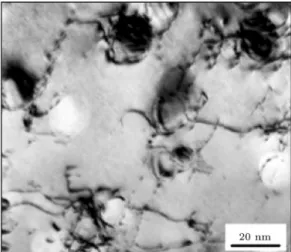
Figure 4 shows a TEM bright-eld micrograph of 0 precipitates in a sample aged at 880C for 2 h.
These precipitates, scattered uniformly throughout the deformed matrix, have been formed during aging process [8,9]. Figure 5 shows a TEM bright-eld micrograph of 0 and phases in a sample aged at
960C for 45 min. It appears that growth of phase
Figure 4. TEM micrograph of 0 precipitates in a sample
aged at 880C for 2 h.
Figure 5. TEM bright-eld micrograph of 0 and
precipitates in a sample aged at 960C for 45 minutes.
Figure 6. SEM micrographs of a sample aged at 1000C
for 7 h: (a) Grain boundary and Widmanstatten morphologies of phase; and (b) grain and twin interior morphologies of phase.
Figure 7. TEM bright-eld micrograph of phase in a sample aged at 1000C for 1 h. Arrows show two blocky
and Widmanstatten morphologies of phase left behind the recrystallization front.
occurs at the expense of 0 phase as implied by the
precipitate free zone formed around phases [13]. Figure 6(a) and (b) show phase formed at grain boundary (discrete blocky), grain interior (Wid-manstatten morphology) and twin interior in a sample aged for 7 hours at 1000C. Figure 7 shows a TEM
alloys containing coherent and semi-coherent precipi-tates is the inuence of these phases on recrystallization behavior of the alloy. These precipitates due to the requirement of coherency loss may inhibit the passage of the large angle boundaries involved in recrystal-lization. The eects of and 0 precipitates on the
recrystallization behavior of AEREX 350 have not been the subject of this work.
4. Discussion
A number of studies [8-11] have shown that the observed increase in the hardness of age-hardened AEREX 350 is due, principally, to the presence of nely dispersed 0 precipitates. In addition, the fall in the
hardness after a peak in the aged samples has been attributed to the coarsening and/or dissolution of 0
precipitates with increasing the aging time and tem-perature [9]. For example, with increasing the aging time at 880C, 0 precipitates grow and, therefore, the
hardness starts to decrease after reaching the maximum extent. At 920 and 960C, the fall in hardness
after reaching a peak value occurs at a lower rate compared to that observed in the samples aged at lower temperatures (880C), as depicted in Figures 1 and 2.
This behavior is concurrent with the precipitation of a large volume fraction of Widmanstatten . Formation of this morphology is known to increase strength of the material and decrease its ductility [10]. The high rate of the fall in hardness of the samples aged at higher temperatures (990-1100C) is attributed to the
recrystallization of the alloy.
Formation of grain boundary in cold-drawn AEREX350TM occurs at lower temperatures while
Widmanstatten morphology of is prevailing at higher temperatures. This is similar to that reported for the solution-treated alloy [9]. At low temperatures where matrix diusion is slow compared to grain boundary diusion, grain boundary grows much faster than Widmanstatten . With increasing the temperature, however, lattice diusion becomes dominant and Wid-manstatten morphology prevails [9]. Also, it should be noted to the 0-free zone formed around precipitate
in Figure 5, thereby suggesting that these precipitates grow at the expense of 0 [9,12,14]. This has been
attributed to the thermodynamic instability of 0 with
respect to the at high temperatures [9,15-16]. In a previous study [9], the stability of 0 and
phases in the solution-treated samples aged at dierent
aging temperatures was investigated. The ranges of stability of 0 and was found to be 690-980C and
800-1055C, respectively. A detailed TEM
investiga-tion was conducted on the samples aged at dierent temperatures to evaluate the range of stability of these phases in the cold-drawn samples. The diraction patterns taken from these investigations showed the hexagonal structure of the new phase. From the collected diraction data and microscope constants, the new precipitate was identied as Eta () phase with D024 structure and lattice parameters a and c of 0.49 nm and 0.81 nm, respectively. These values are comparable to the corresponding X-ray data presented in a recent study on the AEREX 350 alloy [17]. Results of these investigations are summarized in Table 1. Interestingly, while the minimum temperature of 0
formation is lowered by about 30C in the
cold-drawn material, the lower limit of formation was reduced by only 5C. This may be attributed to the
accelerated diusion through the dislocation network formed during cold working. At low temperatures, diusion through dislocation pipes may signicantly contribute to the total mass transfer while at higher temperatures this contribution becomes less important. Therefore, the eect of cold working on lower formation limit is expected to be more signicant for 0compared
to , because, it forms at lower temperatures. Since, minimum stability temperature of 0 phase is lower
than phase, the eect of cold working on nucleation rate of 0 phase is more than phase. Thus, in
cold-drawn alloy with respect to solution-treated alloy, dierence of minimum forming temperature of 0phase
is more than phase. The upper limits of existence of these phases are unaected by the application of cold working due to the thermodynamic instability of these phases at the corresponding dissolution temperatures. 5. Conclusions
Firstly, as shown in previous investigation, no mea-surable change in hardness of cold-drawn AEREX 350 alloy occurs at aging temperatures below 660C. But,
aging at 660C and 680C causes a slow increase
in hardness while the hardness of material increases signicantly at 732C and 760C due to the presence of
coherent 0 precipitates. Aging at higher temperatures
followed by a fall to lower values after reaching a maxi-mum due to the coarsening of these precipitates and/or recrystallization. At 1100C, no increase in hardness is
observed indicating that this temperature is above the limit of stability of all precipitates in AEREX 350.
Secondly, the ranges of stability of 0 and
phases in cold-drawn AEREX 350 are found to be 660-980C and 795-1055C, that minimum temperatures of
formation of these phases is about 30C and 5C lower
than that of the solution-treated alloy, respectively. Thirdly, the larger volume fraction of Wid-manstatten phase formed in the cold-drawn samples compared to the solution-treated alloy, is probably re-lated to the larger number of hcp nuclei formed during pre-aging cold work. The much slower fall in hardness at 920 to 960C compared to those observed at lower
temperatures is related to the extensive formation of high strength Widmanstatten precipitates.
Acknowledgments
The authors thank SPS Technologies (Jenkintown, PA) for providing the raw material used in this study. The authors wish to acknowledge the partial supports from Center of Excellence of Sharif University of Technology and Institute for Technology Development Research. References
1. Asgari, S., EL-Danaf, E., Kalidindi, S.R. and Doherty, R.D. \Strain hardening regimes and microstructural evolution during large strain simple compression de-formation of low SFE alloys", Metall. Mater. Trans., A28, pp. 1781-1795 (1997).
2. Shaji, E.M., Kalidindi, S.R. and Doherty, R.D. \Inu-ence of cold-work and aging heat treatment on strength and ductility of MP35N", Mater. Sci. Eng., A272, pp. 371-379 (1999).
3. Shi-Qiang, L.U., Bao-Zhong, S., Zi-Jian, L. et al. \Investigation on the cold deformation strengthening mechanism in MP159 alloy", Metall Mater Trans., 31A(1), pp. 5-13 (2000).
4. Shi-Qiang, L.U., Bai-yun, H., Yue-Hui, H.E. and Jian-Cheng, T. \Hardening mechanism of MP159 alloy in-duced by aging", Trans. Nonferrous Met. Soc., China, 12(2), pp. 256-259 (2002).
5. Ishmaku, A. and Han, K. \Characterization of cold-rolled and aged MP35N alloys", Materials Characteri-zation, 47, pp. 139-148 (2001).
6. Singh, R.P. and Doherty, R.D. \Strengthening in muliphase alloy", Met. Trans. Part I, 23, pp. 307-320 (1992).
7. SPS Report No. 6569, SPS Technologies Inc., Jenkin-town, PA, pp. 1-55 (1994).
8. Naja, H. and Asgari, S. \Strain hardening mecha-nisms in aged AEREX 350 superalloy", Mater. Sci. Eng., 398A, pp. 204-208 (2005).
9. Asgari, S. \Age-hardening behavior and phase iden-tication in solution-treated AEREX 350 superalloy", Metall. Mater. Trans., 37A, pp. 2051-2057 (2006).
10. Kermajani, M. and Asgari, S. \Inuence of dou-ble aging on microstructure and yield strength of AEREXTM 350", Materials Science and Engineering, A534, pp. 547-551 (2012).
11. Asgari, S. \Structure and strain hardening of superal-loy AEREX 350", J. Mater. Proc. Technol., 118, pp. 246-250 (2002).
12. Farvizi. M. \Eects of cold work prior to aging on microstructure of AEREXTM350 superalloy", M.S. Thesis, Department of Materials Science and Engi-neering, Sharif University of Technology, Tehran, Iran (2007).
13. Farvizi, M. and Asgari, S. \Eects of cold work prior to aging on microstructure of AEREXTM350 superal-loy", Materials Science and Engineering A, 480, pp. 434-438 (2008).
14. Samiee, M. and Asgari, S. \Inuence of solution treatment on precipitation behavior of a Ni-Co alloy", Scripta Mater., 57, pp. 93-96 (2007).
15. Decker, R.F., Sims, C.T. and Hagel, W.C., Eds. \Strengthening mechanisms in nickel-base superal-loys", in Superalloys, II, New York, Wiley (1986).
16. Betteridge, W., The Nimonic Alloys, London, Edward Arnold (1959).
17. Hosseinifar, M. \Investigation of recrystallization be-havior of AEREX 350 superalloy", M.S. Thesis, Sharif University of Technology, Tehran (2004).
Biographies
Hasan Ghiasi received his BSc degree in Metallurgical Engineering from Sharif University of Technology in 1998, and his MSc degree from Tehran University in 2000. Since then, he has been working as a faculty member in laboratories, research and industrial projects, in the Institute for Technology Development. He has accomplished 15 research and technical projects and published 16 papers and 2 books.
Sirous Asgari received his BSc degree in Metallur-gical Engineering in 1985, and his MSc degree in 1987 both from Tehran University. He worked as a faculty member during 1999-2001 at the Department of Metallurgical and Materials Engineering, Tehran University, and since then, at the Department of Materials Science and Engineering, Sharif University of Technology. He is interested in the elds of process-ing and characterization of new materials for Li-ion battery applications, processing and characterization of colloidal quantum dots, surface treatment of Ti alloys for implant applications, micro-mechanisms of strain hardening in FCC alloys, and structure-property correlation in advanced metallic systems.