The papers contained in this issue are the result of the 13th European Conference on e-Learning, ECEL 2014, held at Aalborg University, Copenhagen, Denmark on the 30-31, October, 2014. These papers represent the selective best from the proceedings.
Massive open online courses have been at the forefront of discussion in academic and business circles for quite a few years. Given that the latest technologies allow scalable ways to deliver the content, allow discussions among participants and track student progress, challenges have included assessing student progress and providing needed feedback to promote and secure student achievement. In their paper, Wilfried Admraal, Bart Heusman and Olga Pilli approach the topic of MOOCs from the perspective of how self- and peer assessment might offer promising solutions for scaling the grading of complex assignments in courses with thousands of students. They also explore if intermediate assessments might engage more students in participating in the course. Their study is predicated on three Leiden University MOOCs built on the Coursera platform.
I was most excited to read Edilson Arenas’ study on Affordances of Learning Technologies in Higher Education Multicultural Environments. Since I work for a multicultural institution of higher education, this investigation has potential for practical application at my own institution. This study argues that part of the problem of lackluster empirical evidence on the benefits of using technologies to improve learning is either the content or teacher-centric perspective of these frameworks. Thus, the need to explore the benefits from a more student-centric perspective. Further, the study draws on an ethnographic study of culturally diverse computing students and teachers within learning environments that blend online and face-to-face pedagogies. Arenas looks at aspects of teaching and learning such as (1) the nature of the subject and, (2) students’ learning styles of intellectual inquiry. Biglan’s classic model on academic disciplines and Kolb’s learning styles theory as used to provide context to Arenas’ hypothesis. The results are impressive and can be applied in a range of institutions.
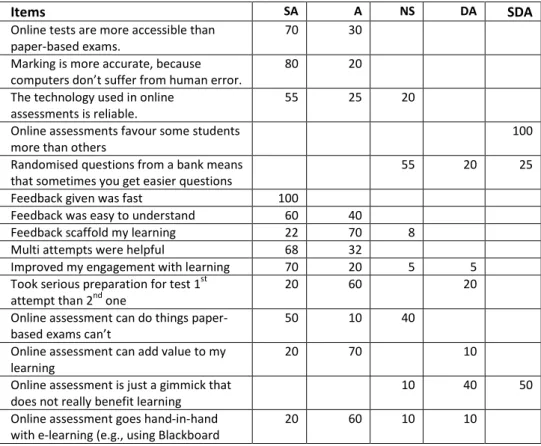
Zwelijongile Gaylard Baleni provides enlightenment on Online Formative Assessment in Higher Education: Its Pros and Cons. This is a topic frequently explored and discussed in teaching and learning circles. Unearthing the impact of assessments in online settings is the focus of this investigation, especially formative assessments. The author used a missed method questionnaire on formative assessment with the primary focus on how formative assessment within online contexts operates. Multiple strategies for formative assessment were deployed dependent on such online tools as discussion forums and objective tests. Some of the most noticeable benefits consisted of improvement of student commitment, speedier feedback, enhanced flexibility around time and place of taking the assessment task and importance in the procedure for students and professors also benefited with less grading time. A savings on administrative costs was also realized. The findings and final analysis bore out that effective online formative assessment is an effective methodology in a student-centric approach. The paper is a story well told and worthy of continued focus on the encouraging results with low achievers.
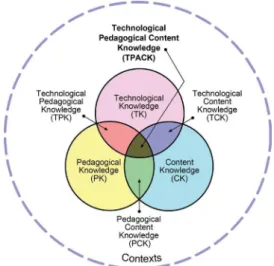
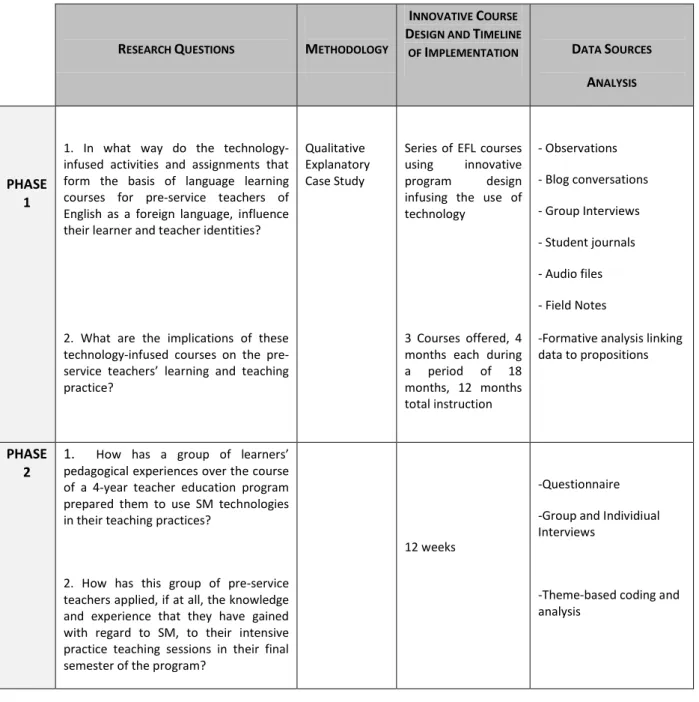
It takes a Community to Develop a Teacher: Testing a New Teacher Education Model for Promoting ICT in Classroom Teaching Practices in Chile by Paula Charbonneau-Gowdy provides a fascinating subject. The paper adds to an emerging and needed dialogue on best practices in teacher education for preparing future teachers to use technology to promote grounded theory based practices in their classrooms. The case study was conducted over 12 months at a private university in Childe. Charbonneau-Gowdy asked the intriguing questions: (1) Do innovative technology-infused courses serve to enable beginning teacher participants to shed their traditional passive, rather narrow mindsets to adopt identities of effective, 21st century teachers; and, (2) Do opportunities to use various innovative technologies for learning have an influence on pedagogies teachers utilize in their teaching practices? The results are interesting and prove to be innovative and potentially game changing.
Using MOOCs to explore alternate pathways to traditional degrees is a frequent topic under discussion in contemporary higher education circles. Recently, several institutions have incorporated MOOCs into online course offerings leading to earning a MBA degree. In their paper, authors Rachel Fitzgerald, Maggie Anderson and Ross Thompson set out to consider recurring themes in the literature in the context of the design and delivery of a MBA which utilizes MOOCs in the schematic. The authors offer insight into incorporating MOOCs’
A novel approach to achieving buy-in from higher education professors in the use of digital tools in their teaching practice is offered by Sue Greener and Craig Wakefield. Their study on developing confidence in the use of digital tools in teaching hypothesizes that by offering instructors the simple incentive of the use of mobile devices, they will more readily adopt new practices in the classroom. Their project was staged in three parts: (1) Presenting student feedback from courses taught by the subjects; (2) Surveying instructor opinions on the impact of the devices after issuance; and (3) Select interviews which focused on results of questionnaires. Stay tuned for the results which confirmed digital confidence issues and the pedagogical reasoning for integrating technologies.
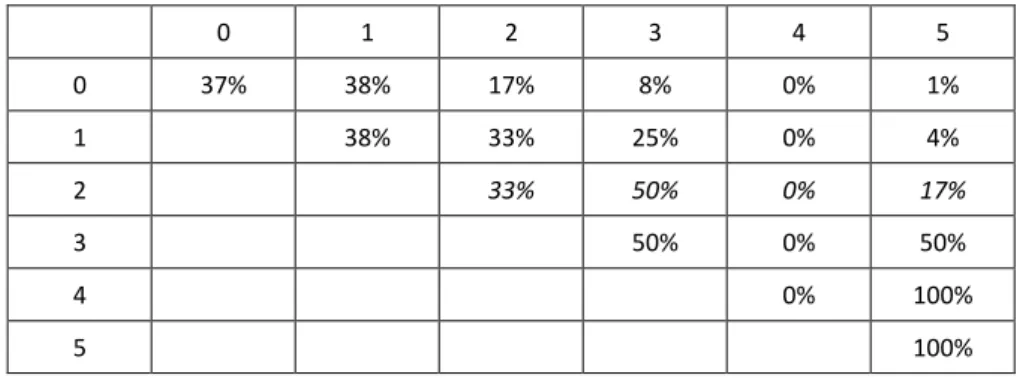
Here’s a different topical presentation on The Scoring of Matching Questions Tests; A Closer Look by Antonín J Y K . While most contemporary educators are familiar with the mechanics and capabilities of electronic testing, this paper attempts to identify how the types of questions used in a test can affect student results on such tests expressed as test scores. The authors demonstrate how the number of distractors included in a question influences the overall test score. The results bear out that these types of assignments are of very little consequence if the end goal is to rank students or delineate between excellent performing students. Two methods of rectification of data obtained from tests made up of closed questions were used in the analysis. Further research using this summary outcome would be useful to obtain additional significance on electronic assessments.
Signe Schack Noesgaard and Rikke Ørngreen examined closely, The Effectiveness of e-Learning: An Explorative and Integrative Review of the Definitions, Methodologies and Factors that Promote e-Learning Effectiveness. These authors took a different approach of examining the effectiveness of e-Learning defined? How is the effectiveness of e-Learning measure? What makes e-Learning solutions effective? Notwithstanding, the authors not only found 19 distinctive ways to define effectiveness, but also how the use of the fulfillment of pre-defined learning objectives affect outcomes. Further, this paper deconstructs if e-Learning and traditional face-to-face learning should be gauged using exact definition of effectiveness. This paper provides timely and worthwhile information to the ongoing debate among traditionalists and futurists in the education arena. Along the oft discussed theme of assessing outcomes in the electronic delivery of teaching and learning, Birgette Holm Sorensen and Karin Tweddell Levinsen explore Powerful Practices in Digital Learning Processes. The paper utilizes two empirical research studies focusing on learning design frameworks involving student agency and participation in digital production across subjects and disciplines. Focus of the unfinished study resides with preliminary evidence that the inaction between student-formulated requirements/learning objectives and the various forms of formative evaluations. Another finding was that students voluntarily initiate formative evaluations practices in their learning design. It is interesting to note that this study opens a new range of research interests.
The final study in this edition was collaboratively written by Saraswathy Thurairaj, Er Pek Hoon, Swaggata Sinha Roy and Pok Wei Fong. The authors very timely investigated, Reflections of Students’ language Usage in Social Networking Sites: Making or Marring Academic English. This topic is one of contemporary concern and philosophical discussion. Considering that social networking is so integral as a form of communication on the global landscape, the effects of the language use on teaching and learning is significant. Descriptive statistical method was used to analyze data collected from questionnaires. The findings exhibited that frequency in the use of short text messaging did not severely affect the English language proficiency of participants. These findings advance the body of literature on the influences of social media on language. Promoting further research on this topic would be a beneficial result of the study.
Wilfried Admiraal
1, Bart Huisman
1and Olga Pilli
1,2 1Leiden University Graduate School of Teaching, Leiden, The Netherlands
2Faculty of Education, Girne American University, Girne, North-Cyprus
[email protected]
[email protected]
[email protected]
Abstract: Open online distance learning in higher education has quickly gained popularity, expanded, and evolved, with Massive Open Online Courses (MOOCs) as the most recent development. New web technologies allow for scalable ways to deliver video lecture content, implement social forums and track student progress in MOOCs. However, we remain limited in our ability to assess complex and open-ended student assignments. In this paper, we present a study on various forms of assessment and their relationship with the final exam score. In general, the reliability of both the self-assessments and the peer assessments was high. Based on low correlations with final exam grades as well as with other assessment forms, we conclude that self-assessments might not be a valid way to assess students’ performance in MOOCs. Yet the weekly quizzes and peer assessment significantly explained differences in students’ final exam scores, with one of the weekly quizzes as the strongest explanatory variable. We suggest that both self-assessment and peer assessment would better be used as assessment for learning instead of assessment of learning. Future research on MOOCs implies a reconceptualization of education variables, including the role of assessment of students’ achievements.
Keywords: MOOC; Open Online Learning; Higher education; Assessment; Peer assessment; Self-assessment; Quiz
1.
Introduction
In recent years, free access has been provided to content which previously had a price: searches, software, music and references, to name but a few. Access to the Internet and broadband has increased rapidly and huge growth in mobile connectivity has brought online content and interaction to a global audience. At the same time, open online distance learning in higher education has quickly gained popularity, expanded, and evolved. Recently, Massive Open Online Courses (MOOCs) appear to be a significant force within higher education. However, while new web technologies allow for scalable ways to deliver video lecture content, implement social forums and track student progress, we remain limited in our ability to evaluate and give feedback for complex and often open-ended student assignments. Self- and peer assessment might offer promising solutions that can scale the grading of complex assignments in courses with thousands of students. Moreover, intermediate assessments might engage more students with participating in a course. In this study, we provide insights into various forms of assessment that are applied in three Leiden University MOOCs in the Coursera platform.
2.
Massive Open Online Courses (MOOCs)
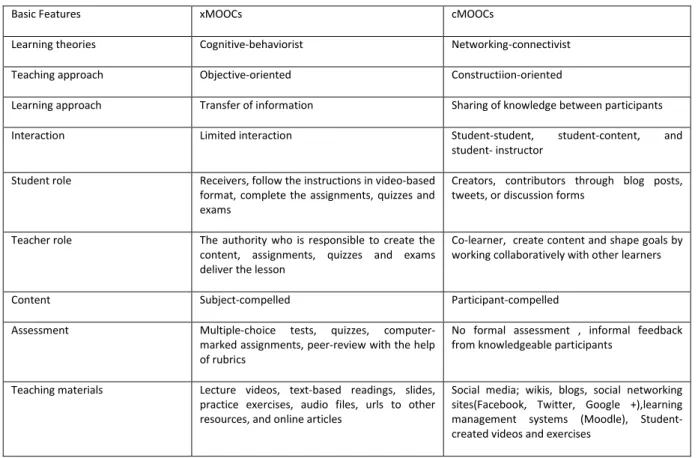
A typical MOOC of 2014 might take place over 4 to 10 weeks. Students, on average, dedicate two to six hours a week to the course. Materials are consumed in diminishing volumes throughout the MOOC as many learners’ commitment wanes. Course applicants can be numbered in the tens of thousands, while those who complete and obtain certificates are usually numbered in the hundreds. As in regular higher education, the value of a MOOC for student learning highly depends on how learning processes are facilitated, stimulated and assessed. The most influential categorization of MOOC pedagogy relates to the notion that there are two main kinds of MOOCs, each of which determines a particular pedagogical approach: the connectivist or cMOOC, driven by pedagogical principles of social learning, and the institutionally-focused xMOOC, reliant on video-lecture content and automated assessment. Table 1 indicates the basic differences between cMOOCs and xMOOCs.
ISSN 1479-4403 207 ©ACPIL
2.1 cMOOC
Connectivist MOOCs (cMOOCs) are directed by explicit principles of connectivism: autonomy, diversity, openness and interactivity (Bell 2010), and it is expected to be hosted by using free social network sites, wikis, and blogs (Rodriguez 2013). Four significant design principles of cMOOCs are generally acknowledged (Bates, 2014; Kop, 2011):
• Autonomy of the learner: Learners choose what content or skills they wish to learn, which makes learning personal without a formal curriculum
• Diversity: Learners use various tools and content and they differ in knowledge levels
• Interactivity: Learners collaborate, co-operate and communicate, resulting in emergent knowledge • Openness: Learners have free access to content, activities and assessment
PLENK2010 (Personal Learning Environments, Networks, and Knowledge), CCK 08, 09, 11 (Connectivism and Connective Knowledge), MobiMOOC 2010 (Mobile Learning) and EduMOOC (ONLINE Learning today and tomorrow courses) are the main examples of cMOOCs (Ebben and Murphy 2014; Kop 2011; Rodriguez 2012). 2.2 xMOOC
XMOOCs are characterised by the step by step learning, breaking down the content into small steps, limited feedback and interaction, pre-determined office-hours for students questions, and criterion-referenced based assessment approaches (Ebben and Murphy 2014). The xMOOCs follow the similar course design model of many of the on-campus higher education courses. The design of the courses unlike the cMOOCs is based on linear, content-based and objective-oriented learning paths. xMOOCs present the content of the course with a list of topics, readings, and small lecture videos. Students are assessed through a combination of quizzes, assignments and final exams and the format of the exam is mostly short-answer or multiple-choice questions. The most popular way of presenting course material is by pre-recorded video lectures which are typically between 3 to 15 minutes long (Bulfin, Pangrazio and Selwyn 2014; Hew and Cheung 2014). Udacity’s CS101 and Coursera’s Artificial Intelligence are well-known xMOOCs, which deliver online content from the instructors of top-ranked universities.
Table 1. xMOOCs vs. cMOOCs
Basic Features xMOOCs cMOOCs
Learning theories Cognitive-behaviorist Networking-connectivist
Teaching approach Objective-oriented Constructiion-oriented
Learning approach Transfer of information Sharing of knowledge between participants
Interaction Limited interaction Student-student, student-content, and student- instructor
Student role Receivers, follow the instructions in video-based format, complete the assignments, quizzes and exams
Creators, contributors through blog posts, tweets, or discussion forms
Teacher role The authority who is responsible to create the content, assignments, quizzes and exams deliver the lesson
Co-learner, create content and shape goals by working collaboratively with other learners
Content Subject-compelled Participant-compelled
Assessment Multiple-choice tests, quizzes, computer-marked assignments, peer-review with the help of rubrics
No formal assessment , informal feedback from knowledgeable participants
Teaching materials Lecture videos, text-based readings, slides, practice exercises, audio files, urls to other resources, and online articles
Social media; wikis, blogs, social networking sites(Facebook, Twitter, Google +),learning management systems (Moodle), Student-created videos and exercises
2.3 Other typologies of MOOCs
However, there is a move away from the cMOOC/xMOOC dichotomy towards recognition of the multiplicity of MOOC designs, purposes, topics and teaching styles, sometimes using alternative terms such as Distributed Open Collaborative Course (DOCC; Jaschik 2013), Participatory Open Online Course (POOC; Daniels 2013), Small Private Online Course (SPOC; Hashmi 2013) or Big Open Online Course (BOOC; Tattersall 2013). Another useful typology of MOOC has been proposed by Clark (2013) who has distinguished eight types of MOOCs based on their functionalities:
1) transferMOOCs that take existing courses and put them onto a MOOC platform with the pedagogic assumption of transfer from teacher and course content to learner similar to traditional academic courses with lectures, short quizzes, set texts and assessments.
2) madeMOOCs in which peer work and peer-assessment is used to cope with the high teacher-student ratios and which tend to be more vocational in nature, VOOCs (Vocational Open ONine Courses), where the aim is to acquire skills.
3) synchMOOCs which have a fixed start date, tend to have fixed deadlines for assignments and assessments and a clear end date.
4) asynchMOOCs which have no or frequent start dates, tend to have no or looser deadlines for assignments and assessments and no final end date. They can be taken anytime and anywhere. 5) adaptiveMOOCs use adaptive algorithms to present personalised learning experiences, based on
dynamic assessment and data gathering on the courses. They take learners on different, personalised paths through the content.
6) groupMOOCs start with small, collaborative groups of students with the aim to increase student retention. They have mentors and rate each other’s commitment and progress. Groups are also dissolved and reformed during the course.
7) connectivistMOOCs rely on the connections across a network rather than pre-defined content. These courses tend to create their own trajectory, rather than follow a linear path.
8) miniMOOCs are more suitable for precise domains and tasks with clear learning objectives and offer more intense experiences that last for hours and days, not weeks.
These different categorizations of MOOCs are based on varieties in pedagogies and assessment and their underlying ideas about effective learning.
3.
Assessment in MOOCs
In a review of the literature and debate, Bayne and Ross (2013) extracted three emerging issues for MOOC pedagogy: 1) the role of the teacher, 2) learner participation and 3) assessment. Firstly, the role of the teacher in the MOOC has been under-examined as most research has investigated the learner perspective (Liyanagunawardena, Adams and Williams 2013). Two main teacher roles appear from the literature, which are connected to the way the MOOC is designed: the academic celebrity teacher in xMOOCs and the facilitator in cMOOCs. The academic celebrity teacher is the role of a respected authority based in an elite institution. These lecturers are not available to MOOC participants in any interpersonal way, but primarily through the recordings of their lectures. The recordings are supplemented with automatically marked quizzes, discussion posts and pass/fail tasks. In cMOOCs, the teachers’ role focusses on facilitating self-directed learning. A more sophisticated distinction between teacher roles in MOOCs is necessary in order to get a better understanding of effective pedagogies. Literature on moderator roles in computer conferencing from the 90s (e.g., Admiraal, Lockhorst, Wubbels, Korthagen and Veen 1998; Paulsen 1995) might be helpful in this.
Secondly, learner participation is one the most examined aspects in literature and debates about MOOCs. The key dilemmas in MOOCs centre on what participation actually means, how it should be measured, and what metrics of success and quality are appropriate (DeBoer, Ho, Stump and Breslow 2014). Milligan, Littlejohn and Margaryan (2013) describe a continuum of active, lurking and passive participation and Hill (2013) distinguishes five archetypes of no-shows, observers, drop-ins, passive participants and active participants. The notion that people might sign up for a course not intending to complete the assessments is common in free courses where the barrier to entry is usually as low as clicking a registration button and entering an email address. This means that new measures of success and quality are required, because participant behaviours and intentions are so diverse.
Assessment is the third emerging issue in literature on MOOCs leading to questions like “What sorts of learning can be assessed at scale?”, “How should individuals be authenticated so that the correct person’s work is being assessed?”, “How can cheating be prevented?”, and “Who should decide how much university credit a MOOC is worth?”, to name a view (cf. Bayne and Ross 2013). It becomes clear that “openness” of a MOOC has a very different future in a system of accreditation than that it does in informal learning settings. In general, the quality of assessment in MOOCs has been criticized by some authors (Admiraal, Huisman and Van de Ven 2014; Clarà and Barberà 2014). Reilly, Stafford, Williams and Corliss (2014) examined the effectiveness of automated essay scoring (AES) to assess writing assignments in two MOOCs. Three groups of assessments were compared: the AES-holistic grades, the AES-rubric grades and the instructor grades. AES-holistic grades and AES-rubric grades highly correlated, but both AES systems tended to give lower scores than the instructor, with the largest differences between instructor and AES-holistic grades. The authors concluded the AES tools gave less accurate assessments of the writing assignments presented in two MOOCs when compared to instructor assessment.
Self- and peer assessment - which has been historically used for logistical, pedagogical, metacognitive, and affective benefits - might offer promising solutions that can scale the grading of complex assignments in courses with thousands of students. How to design assessments is a challenge in itself as MOOCs have massive, diverse student enrolment. In the current study, we have examined various assessment forms in three MOOCs (quizzes, self-assessment and peer assessment of an essay, and final exam). More specific, we formulated the following research question:
1) What is the relationship between self- and peer assessment and quizzes?
2) To what extent do quizzes and self- and peer assessment explain differences in students’ final exams scores?
4.
Methods
4.1 Context of the study
In two MOOCs organized at Leiden University in the Netherlands, intermediate quizzes, self-assessments and peer assessments were used in addition to final exams. The first MOOC, The Law of the European Union: An Introduction, was a 5-8 weeks MOOC, run in June 2013. This course included small video clips, discussion fora, quizzes, a case study and a voluntary exam. The second MOOC, Terrorism and Counterterrorism: Comparing Theory and Practice, was a 5-weeks MOOC in Fall 2013 with weekly videos, quizzes and peer assignments as well as a voluntary final exam. This MOOC was rerun February 2014. All three courses required 5 to 8 hrs. student work per week.
4.2 Assessments
In each of the three MOOCs, four types of assessments were implemented: weekly quizzes, self-assessment, peer assessment and final exam.
4.2.1 Weekly quiz and final exam
The weekly quizzes and final exam were automatically marked multiple-choice quizzes, testing declarative knowledge of the course content. In MOOC 3 (Terrorism 2014), it was possible to follow a certification track, which means that students who completed all quizzes, self- and peer assessments and the final exam could receive a certificate. Of the total of 18,622 registrants, 410 students signed up for the certification track. 4.2.2 Self- and peer assessment
In each of the three MOOCs, students could complete an essay on a topic that was relevant for the particular MOOC. In the first MOOC, this topic was provided; in the other two MOOCs students could choose from four topics. The essay assignment started with a case description in which an authentic context was pictured, followed by some prompts. Students were encouraged to prepare this assignment with the use of information which was available in the course environment (video, syllabus, background materials). Then the procedures of how to complete the assignment were introduced along with a rubric of how to assess it. Students had to
assess their own essay and then the essay of at least two (in MOOC 1) or four (in MOOC 2 and 3) of their peers. The nature of the rubrics differed slightly between MOOC 1, on the one hand, and MOOC 2 and 3, on the other hand. The rubric of MOOC 1 had a pre-structured format with four items with several sub-items on the accuracy of the content of the essay and one item with four sub-items on the structure and the presentation of the essay. Each possible score on each sub-item was clearly described. The rubrics of MOOC 2 and 3 were less structured with four (assignment 1) or five (assignment 2) items. The first three items referred to the accuracy and adequacy of the content of the essay; the last item assessed the structure of the essay. Students were instructed about the deadlines and they were reminded that they agreed with the Coursera Honor Code about plagiarism. Students were instructed to assign a score of 0 to plagiarized work.
4.3 Data
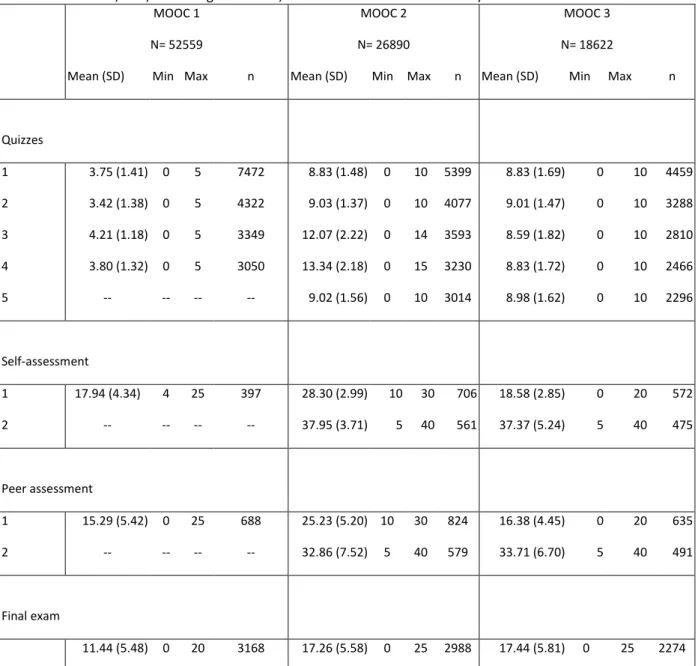
Thousands of participants were registered in each of the three MOOCs, although substantial less data was collected on quizzes, self-assessments, peer-assessment assignments and final exam. From Table 1 it is clear that in all three MOOCs the number of participants who completed the quizzes decreased over time. The number of participants who completed self-assessments and peer assessments was a small portion of the total student enrolment. Participants who completed the voluntary final exam formed about 10% of the total student enrolment (from 6% in MOOC 1 to 12% in MOOC 3).
4.4 Analyses
In addition to descriptive statistics, reliability indices and correlations between all assessments, regression analyses were used to explain differences between students in their final exam scores.
5.
Results
5.1 Four types of assessments
In Table 2, we present descriptive indices of each assessment (mean scores, standard deviations in scores, range of scores and number of valid assessments, respectively). The reliability of the self-assessments (based on 4 or 5 items) ranged from Cronbach’s = .59 in MOOC 2 to = .83 in MOOC 1. This means that the pre-structured format of self-assessment in MOOC 1 showed the highest reliability. We observed a similar result in the reliability of the peer assessment with the highest reliabilities in MOOC 1 (three peer assessments = .87, .89 and .90) and somewhat lower reliabilities in MOOC 2 (between = .72 and .80) and MOOC 3 (between = .59 and .79). In both types of assessment, the item that refers to the presentation (structure, layout, and language use) of the completed assignment showed the lowest item-rest correlations (between r= .55 and r= .64). The other items referred to an assessment of the content quality of the completed assignments. Given the small number of items, we can concluded that both self-assessment and peer assessment showed high internal homogeneity. The correlations between peer assessments of the same assignments were generally moderate (MOOC 2 mostly between r= .30 and .40) to strong (MOOC 1 between r= .42 and .57 and MOOC 3 mostly between r= .50 and .60). So, in general the reliability of both self-assessment and peer assessment was satisfactory.
5.2 Relationship between different assessment forms
The scores on the quizzes of the three MOOCs were generally highly correlated (between r=.50 and .77), but showed low to moderate positive correlations with self-assessment and peer assessment. Correlations between the MOOCs’ quizzes and self-assessment were between r= .10 and .29, with most correlations around .15; Correlations between the quizzes and peer assessment were a somewhat higher, between r=.12 and .37 with most correlations .30 or higher. Finally the correlations between self-assessment and peer assessment scores of the same assignment were generally higher (mostly around r= .38) compared to the correlation between self-assessment and peer assessment scores of different assignments (mostly around r= .18). However, for both self-assessment and peer assessment the correlations between the scores on the two assignments in MOOC 2 and 3 were higher (r= .42 and .55 for self-assessment, and r= .43 and .47 for peer assessment) compared to the scores of the different assessment forms for the same assignment. In other
words, the relationship between the same assessment forms is stronger than between the assessments of the same assignment.
Table 2. Descriptive indices of assessment types (N=number of registrants; Mean=mean score; SD= standard deviation in scores; Min/Max=range of scores; n=number of valid assessments)
MOOC 1 N= 52559 MOOC 2 N= 26890 MOOC 3 N= 18622
Mean (SD) Min Max n Mean (SD) Min Max n Mean (SD) Min Max n
Quizzes 1 2 3 4 5 3.75 (1.41) 3.42 (1.38) 4.21 (1.18) 3.80 (1.32) -- 0 0 0 0 -- 5 5 5 5 -- 7472 4322 3349 3050 -- 8.83 (1.48) 9.03 (1.37) 12.07 (2.22) 13.34 (2.18) 9.02 (1.56) 0 0 0 0 0 10 10 14 15 10 5399 4077 3593 3230 3014 8.83 (1.69) 9.01 (1.47) 8.59 (1.82) 8.83 (1.72) 8.98 (1.62) 0 0 0 0 0 10 10 10 10 10 4459 3288 2810 2466 2296 Self-assessment 1 2 17.94 (4.34) -- 4 -- 25 -- 397 -- 28.30 (2.99) 37.95 (3.71) 10 5 30 40 706 561 18.58 (2.85) 37.37 (5.24) 0 5 20 40 572 475 Peer assessment 1 2 15.29 (5.42) -- 0 -- 25 -- 688 -- 25.23 (5.20) 32.86 (7.52) 10 5 30 40 824 579 16.38 (4.45) 33.71 (6.70) 0 5 20 40 635 491 Final exam
11.44 (5.48) 0 20 3168 17.26 (5.58) 0 25 2988 17.44 (5.81) 0 25 2274
5.3
Relationship between different assessment forms and the final exam
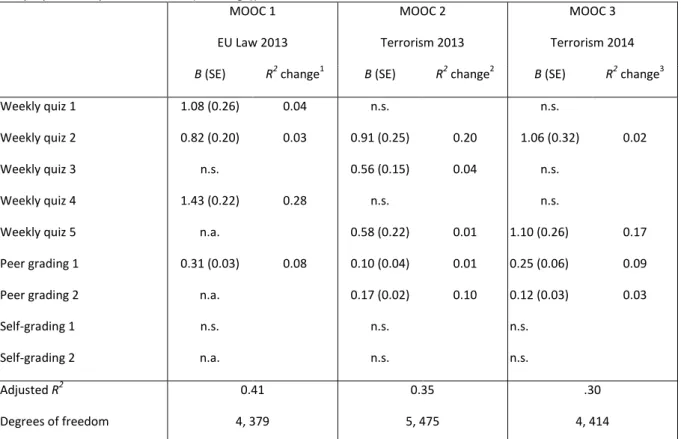
In Table 3, the results of the stepwise regression analyses for each MOOC are summarized. Both self-assessments did not significantly explain differences between students in their final exam grade. The strongest explanatory variable was in all cases one of the quizzes, although peer assessments were also significantly related to the final exam grade.
Moreover, the correlations between the number of assessment attempts (Quizzes, self-assessment, peer assessment) and the final-exam grade were moderate to low (between r= .26 and .41). This means that there seems to be a weak relationship between the number of assessments students took and their final exam grade. This finding contradicts other MOOC research that finds a strong positive relationship between the number of student activities and their final course grade (DeBoer et al. 2014).
Table 3. Stepwise regression analyses with final exam as dependent variable (B coefficients, standard errors (SE) and proportion explained variance (R2 change))
MOOC 1 EU Law 2013
MOOC 2 Terrorism 2013
MOOC 3 Terrorism 2014 B (SE) R2 change1 B (SE) R2 change2 B (SE) R2 change3 Weekly quiz 1
Weekly quiz 2 Weekly quiz 3 Weekly quiz 4 Weekly quiz 5 Peer grading 1 Peer grading 2 Self-grading 1 Self-grading 2 1.08 (0.26) 0.82 (0.20) n.s. 1.43 (0.22) n.a. 0.31 (0.03) n.a. n.s. n.a. 0.04 0.03 0.28 0.08 n.s. 0.91 (0.25) 0.56 (0.15) n.s. 0.58 (0.22) 0.10 (0.04) 0.17 (0.02) n.s. n.s. 0.20 0.04 0.01 0.01 0.10 n.s. 1.06 (0.32) n.s. n.s. 1.10 (0.26) 0.25 (0.06) 0.12 (0.03) n.s. n.s. 0.02 0.17 0.09 0.03
Adjusted R2 Degrees of freedom
0.41 4, 379 0.35 5, 475 .30 4, 414 n.a.= not applicable;
1
Entered with the following sequence: Weekly quiz 4, Peer assignment 1, Weekly quiz 1, Weekly quiz 2 2
Entered with the following sequence: Weekly quiz 2, Peer assignment 2, Weekly quiz 3, Weekly quiz 5, Peer assignment 1 3
Entered with the following sequence: Weekly quiz 5, Peer assignment 1, Peer assignment 2, Weekly quiz 2
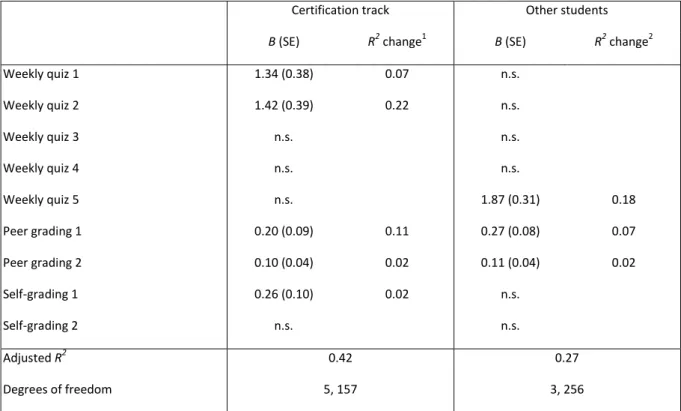
In MOOC 3, students could sign up for a certification track, which required completion of all quizzes, self- and peer assessments and final exam in time. Student who registered for a certification track received significantly higher scores on their final exam, compared to the other students (Mcertification track = 19.2 and Mother students = 17.1; (t(574.5) = 7.41; p<.001)). We repeated the regression analyses for students following a certification track and the other students separately. The results are presented in Table 4.
From Table 4 it is clear that the assessments explained more differences between students in final exams score in cases that they followed a certification track: the first two quizzes, both peer assessments and the first self-assessment significantly explained differences in the final exam scores. For the other students, the total amount of variance in the final exam score explained by the other assessments is less compared to the students from the certification track.
6.
Discussion and conclusion
In general, the quality of both the self-assessment and the peer assessment appeared to be moderate to high. These assessments showed a homogenous structure – and therefore a high reliability-, but the correlations between peer assessments of the same assignments were low to moderate. The latter means that peers did agree on their grades for the assignments only to a limited degree. The correlations between the various peer assessments of the last MOOC were moderate to high. In this MOOC, the procedures and criteria for peer assessment were adapted on the basis of the 2013 run. Moreover, there is only a weak correlation between self-assessment and peer assessment, and the correlations between different self-assessment assignments are higher than the correlations between self-assessment and peer assessment of the same assignments. In addition, self-assessments did not significantly explained variance in students’ final exam scores. This suggests a bias of self-assessments and led us to conclude that self-assessments might not be a valid way to assess students’ performance in MOOCs. Yet the weekly quizzes and both peer assessments significantly explained differences in students’ final exam scores, with one of the weekly quizzes as the strongest explanatory variable
in all three MOOCs. Finally, the number of assessment attempts of students did not significantly correlate with their final exam scores. The latter result does not confirm conclusions from earlier research that found a strong positive relationship between the number of student activities and their course grade (DeBoer et al. 2014).
Table 4. Stepwise regression analyses with final exam as dependent variable for students following the certification track and the other students in MOOC 3 (B coefficients, standard errors (SE) and proportion explained variance (R2 change))
Certification track Other students
B (SE) R2 change1 B (SE) R2 change2
Weekly quiz 1 Weekly quiz 2 Weekly quiz 3 Weekly quiz 4 Weekly quiz 5 Peer grading 1 Peer grading 2 Self-grading 1 Self-grading 2 1.34 (0.38) 1.42 (0.39) n.s. n.s. n.s. 0.20 (0.09) 0.10 (0.04) 0.26 (0.10) n.s. 0.07 0.22 0.11 0.02 0.02 n.s. n.s. n.s. n.s. 1.87 (0.31) 0.27 (0.08) 0.11 (0.04) n.s. n.s. 0.18 0.07 0.02
Adjusted R2 Degrees of freedom
0.42 5, 157
0.27 3, 256 n.s.= not significant with =0.05
1
Entered with the following sequence: Weekly quiz 2, Peer assessment 1, Weekly quiz 1, Self-assessment 1, Peer assessment 2
2
Entered with the following sequence: Weekly quiz 5, Peer assessment 1, Peer assessment 2
With this study we provided insight in the quality of the various assessments in MOOCs and how these are related to the final exams. We conclude that self-assessments and peer assessments should be improved if they are used as summative indicators of one’s achievements (assessment of learning). In the current MOOCs, they only can be used for self-reflection and peer feedback, emphasizing the formative function of assessment (assessment for learning). Of course, we should be careful with generalizing this insight to other types of MOOCs. The MOOCs of the current study can be classified as xMOOCs with a mixture of traditional course pedagogy of transferring knowledge from the lecturer to the student and more connectivist ideas of student interaction and peer assignments. Future research might go deeper into the quality of assessment assignments of different kinds of MOOCs including both assessment of learning and assessment for learning.
However, we agree with DeBoer et al. (2014) that we also should reconceptualise educational variables in research on MOOCs. Differences between traditional classroom data and MOOC data refer to the magnitude of data gathered in terms of numbers of registrants per course, observations per registrant and type of information, the diversity of registrants in reasons for registration as well as in their background, and the registrant use of course tools which is asynchronous and relatively unrestricted in sequence (DeBoer et al. 2014). These authors suggest a reconceptualization of enrolment in MOOCs (e.g., based on registration, course activities, course assignments and assessment, or final exam), participation (the authors show 20 participation metrics which are linked to students’ general attendance, their clicks, the hours they spent on course activities, and the assessments), curriculum (curriculum activities showing a variability in sequence), and achievement (which can be based in various indicators of performance and participation). In order to understand the relationship between assessments, final grades and learning activities in MOOCs we have to think thoroughly
what kind of metrics for achievement should be used, how we should define enrolment and participation, in what way the curriculum is implemented, and –therefore- how assessments should be applied.
References
Admiraal, W., Huisman, B., & Ven, M. van de (2014) “Self- and peer assessment in Massive Open Online Courses”, International Journal of Higher Education, Vol 3, No 3, pp 119-128.
Admiraal, W.F., Lockhorst, D., Wubbels, T., Korthagen, F.A.J. and Veen, W. (1998) “Computer-mediated communication environments in teacher education: computer conferencing and the supervision of student teachers”, Learning Environments Research, Vol 1, No 1, pp 59-74.
Bates, T. (2014) “Comparing xMOOCs and cMOOCs: philosophy and practice”, Online Learning and Distance Education Resources. Available at: http://www.tonybates.ca/2014/10/13/comparing-xmoocs-and-cmoocs-philosophy-and-practice/ [Accessed 15 February 2015].
Bayne, S., and Ross, J. (2013) “The pedagogy of the Massive Open Online Course: the UK view”, York, UK: The Higher Education Academy.
Bell, F. (2010) “Connectivism: Its place in theory-informed research and innovation in technology-enabled learning”, The International Review of Research in Open and Distance Learning, Vol 12, No 3, pp 98-118.
Bulfin, S., Pangrazio, L. and Selwyn, N. (2014) “Making ‘MOOCs’: The construction of a new digital higher education within news media discourse”, The International Review of Research in Open and Distance Learning, Vol 15, No 5, pp 290-305.
Clarà, M. and Barberà, E. (2014) “Three problems with the connectivist conception of learning”, Journal of Computer Assisted Learning, Vol 30, No 3, pp 197-206.
Clark, D. (2013) “MOOCs: taxonomy of 8 types of MOOC”, Available at:
http://donaldclarkplanb.blogspot.com.es/2013/04/moocs-taxonomy-of-8-types-of-mooc.html [Accessed 15 February 2015].
Daniels, J. (2013) “MOOC to POOC: Moving from Massive to Participatory” JustPublics@365. Available at:
http://justpublics365.commons.gc.cuny.edu/2013/02/05/mooc-to-pooc-moving-from-massive-to-participatory/ [Accessed 29 May 2014].
DeBoer, J., Ho, A. D., Stump, G.S. and Breslow, L. (2014) “Changing ‘course’: reconceptualizing educational variables for Massive Open Online Courses”, Educational Researcher, Vol 42, No 2, pp 74-84.
Ebben, M. and Murphy, J.S. (2014) “Unpacking MOOC scholarly discourse: a review of nascent MOOC scholarship”, Learning Media and Technology, Vol 39, No 3, pp 328-345.
Harris, J. and Hofer, M. (2009) “Grounded tech integration”, Learning & Leading with Technology, September/October pp 23-25, Available at: http://www.learningandleading-digital.com/learning_leading/20090910/#pg24 [Accessed 30 May 2014].
Hashmi, A.H. (2013) “HarvardX set to launch second SPOC”, Harvard Crimson. Available at:
http://harvardx.harvard.edu/links/harvardx-set-launch-second-spocharvard-crimson-amna-h-hashmi-september-16-2013 [Accessed 29 May 2014].
Hew, K.F. and Cheung, W.S. (2014) “Students' and instructors' use of massive open online courses (MOOCs): Motivations and challenges”, Educational Research Review, Vol 12, No 1, pp 45-58.
Hill, P. (2013) “Emerging student patterns in MOOCs: A (revised) graphical view”, e-Literate. Available at:
http://mfeldstein.com/emerging-student-patterns-in-moocs-arevised-graphical-view/ [Accessed 12 September 2013].
Jaschik, S. (2013) “Feminists challenge Moocs with Docc”, Times Higher Education. Available at:
http://www.timeshighereducation.co.uk/news/feminists-challenge-moocswith-docc/2006596.article [Accessed 29 May 2014].
Kop, R. (2011) “The challenges to connectivist Learning on open online networks: Learning experiences during a Massive Open Online Course”, International Review of Research in Open and Distance Learning and Instruction, Vol 12, No 3, pp 74-93.
Liyanagunawardena, T.R., Adams, A.A. and Williams, S.A. (2013) “MOOCs: A systematic study of the published literature 2008-2012”, The International Review of Research in Open and Distance Learning, Vol 14, No 3, pp 202–27. Milligan, C., Littlejohn, A. and Margaryan, A. (2013) “Patterns of engagement in connectivist MOOCs”, Journal of Online
Learning and Teaching, Vol 9, No 2.
Paulsen, M.F. (1995) “Moderating educational computer conferences”, In Z.L. Berge & M.P. Collins (Eds.), Computer-mediated communications and the online classroom (Vol. III; pp. 81–103). Cresskill, NJ: Hampton Press. Reeves, T. (1996) “Evaluating what really matters in computer-based education”. Available at::
http://www.eduworks.com/Documents/Workshops/EdMedia1998/docs/reeves.html#ref10 [Accessed 30 May 2014]
Reilly, E.D., Stafford, R.E., Williams, K.M. and Corliss, S.B. (2014) “Evaluating the validity and applicability of automated essay scoring in two massive open online courses”, The International Review of Research in Open and Distance Learning, Vol 15, No 5 , pp 83-98.
Rodriguez, C. O. (2012) “MOOCs and the AI-Stanford like courses: Two successful and distinct course formats for Massive Open Online Courses”, European Journal of Open, Distance, and E-Learning, Available at:
http://www.eurodl.org/?p=archives&year=2012&halfyear=2&article=516 [Accessed 15 February 2015].
Rodriguez, O. (2013) “Two distinct course formats in the delivery of connectivist moocs”, Turkish Online Journal of Distance Education, Vol 14, No 2, pp 66-80.
Tattersall, A. (2013) “Gold rush or just fool’s gold - A quick look at the literature”, ScHARR MOOC Diaries. Available at: http://scharrmoocdiaries.blogspot.co.uk/2013/07/scharr-mooc-diaries-part-xvii-gold-rush.html [Accessed 29 May 2014].
Multicultural Environments
Edilson Arenas
CQUniversity, Melbourne, Australia
[email protected]
Abstract: A cluster of research has been conducted in higher education to investigate the affordances (action possibilities) and the influence information and communication technologies (ICT) may have on students’ learning experiences and outcomes. Such studies have given rise to the implementation of a wide range of educational frameworks with a great deal of empirical evidence on the benefits of using technologies to improve learning. However, these benefits do not appear to have fulfilled higher education expectations for more meaningful and transformative learning experiences. In this paper, I argue that part of the problem is either the content or teacher–centric perspective of these frameworks and the need to explore the benefits from a more student–centric perspective. Learning is contextual, with learners having different abilities to learn and varying preferences for educational technologies with greater potential to facilitate their learning activities. Drawing on an ethnographic study of culturally diverse computing students and teachers within learning environments that blend online and face-to-face pedagogies, I argue that our understanding of what ICT has to offer for the design and implementation of transformative learning activities is a far more complex issue than is often anticipated, particularly in the design and implementation of learning for computer science programs.
Keywords: academic disciplines, computer science, computing science education, e-learning, ICT affordances, learner’s preferences, learning styles, learning technologies, media affordances, online learning
1.
Introduction
There is an extensive body of research on the affordances of information and communication technology (ICT) to transform learning and teaching in higher education (see Collis 1997; Fowler & Mayes 1999; Goodyear 2005; Laurillard 2002; Oliver 2001). For example, in her influential Conversational Framework, Laurillard (2002) claims that for ICT to play an effective role in learning and teaching, there need to be mechanisms to support the interactive dialogue between teachers and students with the subject matter. Fowler and Mayes (1999) take a similar dialogical approach but primarily focusing on ICT to support the three essential learning stages of understanding: conceptualisation, construction and contextualisation; enabling the learner to move from a novice level to an expert level of learning. A different perspective is presented by Collis (1997) in her pedagogical profile of a course, where the intention of incorporating ICT into the course is to maximise flexibility, with more student engagement and locus of control. Collis sees two ways to achieve this: either through the pedagogical enrichment of the course profile or through a more transformative approach known as the pedagogical re-engineering approach where the components of the course are expected to be radically changed. In the Australian Flexible Learning Framework for the Vocational Education and Training sector, according to Oliver (2001), the underpinning theme is for the use of ICT to support the design of the three learning elements which represent critical components of any learning setting for knowledge construction: learning activities, learning resources and learning support. Similarly, in Goodyear‘s (2005) conceptual design framework for networked learning environments, the use of ICT is instrumental in supporting the institutional combination of two elements: the teacher’s pedagogical approach (teachers’ philosophy to teaching) and the educational setting including the learning environment, the learning tasks and the learning activities.
However, despite significant investment in infrastructure and training and a wide-scale uptake of such ICT-mediated educational frameworks, the promised transformative effect on student learning is yet to be actualised outside of small pockets of innovation (Arenas & Lynch 2012; Price & Kirkwood 2014). Of particular interest are students’ approaches to learning in multicultural learning environments where ICT is considered as integral to teaching and learning activities. The above discussed models appear to overlook factors like that learning is cross-cultural, that learners have different abilities to learn and modes of approaching the intellectual inquiry; and that all these factors may affect the way students perceive ICT-mediated learning activities (Arenas 2012). Specifically, this research addresses the following questions:
ISSN 1479-4403 217 ©ACPIL
• In the context of computing science programs, what are students’ preferences for ICT media in their learning activities?
• What is the relationship between the different types of ICT media, their action possibilities and the way these ICT media best support the learning of computer science?
2.
Related work
Two interlocked aspects of learning and teaching appear to be critical in the choice of ICT to support learning: 1) the nature of the subject matter (within an academic discipline) that we as teachers believe students need to construct their knowledge and, 2) students’ learning styles of intellectual inquiry (Becher 1994). In this respect, Biglan’s classic model on academic disciplines and Kolb’s learning styles theory might shed some light. With reference into the similarities and differences of academic disciplines, no other framework has been as extensively cited and used as Biglan’s classic model (Arbaugh 2013; Lam, McNaught, Lee & Chan 2014; Li, Long & Simpson 1999; Pike & Killian 2001; Schommer-Aikins, Duell & Barker 2003; Stoecker 1993).
In his model, Biglan (1973) uses the cultural and epistemological uniqueness found in each branch of knowledge to classify the nature of academic disciplines. In doing so, Biglan (1973) differentiates the academic disciplines according to their specific characteristics including the object of research, body of knowledge, theory, principles and research methods. Two dimensions emerge from these characteristics. The first dimension distinguishes between paradigmatic and non-paradigmatic fields, i.e. hard or soft respectively. For example, physical sciences are ‘characterised by the existence of paradigms that specify the appropriate problems for study and the appropriate methods to be used’ (p. 195), while social sciences and non-sciences areas like history ‘do not have such clearly delineated paradigms’ (p. 195). The second dimension perceives the subject matter in terms of ‘its requirements for practical applications’, i.e. pure or applied (Biglan 1973). On those grounds, Biglan (1973) sees academic disciplines divided into four groups: hard-pure, hard-applied, soft-pure and soft-applied.
The educational context of this study is computing science and in terms of Biglan’s categorisation, it falls into the hard-applied category (Baldwin 2011; Clark 2003). According to Becher (1994), in the hard-applied disciplinary group, the nature of knowledge is purposive and pragmatic where individuals are concerned with the technical mastery of physical environments to build products. Consequently, the effective choice of ICT in the design and implementation of computing learning and teaching activities should consider these characteristics of the computing science discipline.
Kolb’s experiential learning theory (ELT) has been instrumental in understanding learners’ preferences and the way they approach learning. According to Kolb and Kolb (2005), learning is a process where learners construct knowledge through their experiences with the environment. Kolb sees knowledge as the result of combining the way individuals grasp and transform their experiences (Kolb & Kolb 2005). According to this theory, there are two dialectically related modes of grasping experience: Concrete Experience (CE) and Abstract Conceptualisation (AC). Similarly, there are two dialectically related modes of transforming experience: Reflective Observation (RO) and Active Experimentation (AE). For example, when a learner is exposed for the first time to a concrete experience (CE), there is an initial stimulus for the reflective observation (RO) of the new experience, which in turn gives rise to a thinking process characterised by abstraction and conceptualisation (AC) to assimilate the new experience. Once the new experience is assimilated the learner is prepared to act upon and transform it into something different through active experimentation (AE). This learning cycle repeats in the construction of new knowledge and varies depending on the personality and experiences of the learner (Kolb & Kolb 2005). In other words, there is a preferred way of choosing amongst the four abovementioned modes of learning shaped by individual’s previous experiences, learning behaviours, prior learning and the learning environment. To understand Kolb’s ELT in the context of computer science, there is a need to explore first what computer science constitutes in terms of an academic discipline.
A provocative and thoughtful description of the nature of computer science as an academic discipline is the one given by the prominent computer scientist and computational theorist Juris Hartmanis (considered by many as one of the fathers of computer science education). During his Turing Award lecture on computational complexity and the nature of computer science, he stated that computer science is all about the creation of many levels of abstraction to deal with computational problems. It involves the creation of ‘intellectual tools to conceive, design, control, program and reason about the most complicated of human creation’ (Hartmanis
1994; p.39). A similar view is shared by Donald Knuth (the father of the analysis of algorithms) who in a personal communication to Hartmanis commented that:
Computer science is a field that attracts a different kind of thinker. I believe that one who is a natural computer scientist thinks algorithmically. Such people are especially good at dealing with situations where different rules apply in different cases; they are individuals who can rapidly change levels of abstraction, simultaneously seeing things in the large and in the small’ (Knuth in a personal communication to Hartmanis March 10 1992, in Hartmanis 1994; p.39).
In the light of Harmanis and Knuth, and in terms of Kolb’s modes of learning, computing students are individuals with a converging style of learning with abstraction, conceptualisation, and active experimentation as the main dominant learning abilities. Consequently, the choice of ICT for learning purposes should be consistent with the learning style of these individuals.
Following Biglan and Kolb’s work, this paper builds upon our knowledge about how computing students go about learning in learning environments with ICT as an integral component in the design of transformative learning and teaching. The analysis presented below elaborates specifically on computing science students’ diverse responses to particular ICT—mediated learning activities, and through this analysis I argue that our understanding of what ICT has to offer for the design and implementation of transformative learning activities is a far more complex issue than is often anticipated, and this is so particularly in the design and implementation of learning for computer science programs.
3.
About the study
3.1 Participants
This paper draws on an ethnographic study (Arenas 2012), conducted at two universities in Australia, that explored the behaviours, attitudes, perceptions and conceptions of teaching and learning found within multicultural learning environments that blend online and face-to-face pedagogies.
Data were collected from participants located at two qualitatively different sites. Within each site, two postgraduate computing courses (or units of study) were targeted for data collection: NetSec (Network Security) and SAD (Systems Analysis and Design) at Site 1; and BAM (Business Analysis and Modelling) and FOIS (Fundamentals of Information Systems) at Site 2. The first site (henceforth referred to as Site 1) was located in one of the metropolitan campuses of a multi-campus medium-sized regional Australian university, and the second site (henceforth referred to as Site 2) was located in a large metropolitan Australian university. Site 1 student body comprised international students only, whereas Site 2 was located in a university that catered mainly for domestic students with a relatively smaller population of international students. The learning management system (LMS) used at Site 1 was a purpose in-house built system whereas at Site 2 students used Blackboard™, a popular commercially available learning management system.
The purposive, culturally diverse sample from both sites comprised of a total of 18 student participants from nine countries of origin and their respective teachers. The following is a description of the sample based on participant-reported background information.
The student sample at Site 1 was comprised of twelve students. They had diverse educational backgrounds, with varying residency time in the country. Prior to the commencement of the semester term, Site 1 students had been residing in Australia for periods of between 3 months and 18 months, with half of them for less than 12 months and five students for only three months. Of the twelve student participants, six were men and six women, including nationalities from Pakistan, China, Bangladesh, Kuwait and India. Before participating in this study, six students already held a postgraduate degree and three had more than two years’ experience in the field of information technology. All students who provided information about their skills reported that they were experts at writing academic arguments in the English language. They also reported to have expert level knowledge using computer hardware and software and discussion forums; however, only three students reported to have experience using blogs (electronic journals).
At Site 2, there were six student participants: three men and three women including nationalities from Australia, Oman, Vietnam, Indonesia and China. Prior to the commencement of the semester term, except for
one domestic student, Site 2 students had been living in Australia for a period of between one month and two years, with two students residing in Australia for fewer than three months. Also in contrast to Site 1, where six students already held a postgraduate degree, at Site 2 all students held only an undergraduate bachelor degree before the conduct of this study. Three students had between four to thirteen years’ experience working in an information technology field. Only one student claimed to have only novice expertise in computer hardware and software and discussion forums compared to the rest who reported to be highly experienced using those tools. Similarly, two students reported having novice experience writing academic arguments in English, with the rest reporting to have expert level essay writing skills. Except for one student, none had substantial team work and management experience.
The teacher participants at Site 1 were two young but experienced teachers: Georgina taught NetSec and Richard taught SAD (pseudonyms are used throughout to refer to teacher and student participants). Before the conduct of this study, Georgina had more than three years’ experience teaching information technology subjects on a sessional basis, that is to say, through separate contracts for the duration of each semester term. Georgina combined her professional academic practice with full-time paid work in a senior systems administration role at a prominent Australian financial organisation. She held a Masters degree in information technology from an Australian university. Richard was a full-time academic staff member with three years’ experience teaching information systems subjects. Before his full-time academic tenure, Richard was a Site 1 alumnus and after his graduation he worked as a teacher on a sessional basis at Site 1. He held a Masters degree in information systems and a Graduate Certificate in university teaching.
In terms of Site 2 teachers, BAM staff was larger than FOIS, and included three experienced professionals with different industrial and academic backgrounds. Sophia, the principal academic teacher and teacher participant responsible for this subject, had completed a PhD in Computer Science and also a Graduate Certificate in university teaching. She had extensive experience as a research scientist in information architecture; and usability analysis and design for various industrial and research projects locally and internationally. The other two teachers did not form part of the sample.
While BAM had three academic staff, FOIS was managed and taught by a single staff member, Shane. Shane was a senior lecturer within the Faculty of Science at Site 2 with extensive experience teaching online courses. He held a PhD in Information Systems and a Graduate Certificate in university teaching.
3.2 Data collection
The study used multiple data sources to gain insights into the behaviours, attitudes, perceptions and conceptions of teaching and learning found within these multicultural blended learning environments. The data included digital textual records of online discussions, semi-structured interviews, field notes from classroom observations, a reflective research journal, course-associated documentation, and students’ assignments.
The first source of data consisted of digital texts produced by both student and teacher participants during their interactions with the online component of the learning environments at each site. During the term, teachers provided the students with various online learning activities for individual and group work.
At Site 1, student participants were required to maintain an electronic journal (blog) to reflect on their own learning experiences and perceptions of the course. The blog was based on nine topical questions spread over the last nine weeks of the semester and was assessed. The teaching staff provided structured marking guidelines to promote quality work and to ensure each student contributed the nine expected reflections. They also monitored students’ progress and provided weekly feedback. At Site 1, students also used a laboratory simulator (LabSimTM), a simulation tool where students could experiment with real world problems in a virtual environment. The LabSimTM acted as a virtual tutor guiding the students through complex and technical configurations of secured networks. The system could challenge the student to conduct tasks that replicated the real world providing immediate feedback after the completion of the task.
At Site 2, students were required to use a discussion forum to extend their engagement with learning activities initiated in face-to-face classrooms. There were six discussion forums. Three of them were designed for individual participation where students were asked to challenge or critique at least one of the questions raised by the lectures or fellow classmates during the classes. There was a general discussion forum to discuss
general issues arising from the course and two group-project-related discussion boards. Of the six forums only the general discussion forum was moderated by the teaching staff. The other forums were only moderated to check students’ progress and to prevent language flaming.
Classroom observations were conducted at both sites to record reflective notes and provide descriptions of students’ face-to-face classroom activities and behaviours, stimulate personal views of participants in interview, and record events such as student consultations and class participation. The classroom observations were instrumental in the selection of the purposive sample for the student interviews.
Individual semi-structured interviews were conducted with both teachers and students. The duration of each interview was between 30 and 45 minutes. The purpose of these interviews was to gather participants’ reflective views of their teaching and learning experiences in the learning environment. Semi-structured interviews were preferred to structured interviews because this method is more consistent with the ethnographic aspect of this study. Through the use of open-ended questions, semi-structured interviews allow for the exploration of new ideas and themes, something hard to achieve with the rigorous setting of questions, commonly found in structured interviews (Creswell 2007).
The identification of potential interviewees was based on the criterion-based selection as recommended by Schensul and LeCompte (1999). Specifically, four teachers responsible for the delivery of the subjects were interviewed: two at Site 1 and two at Site 2. Student participants were interviewed in the middle of the second semester, by which point there was an opportunity to observe the students and assess the level of engagement and participation in both face-to-face and online forums. Sample diversity was maximised by choosing students from the following groups: those who were quiet in the classroom but very active online; those who were active online but not in face-to-face sessions; those who were very active in both environments; and, those who were passive face-to-face and online.
The interviews contained a range of open-ended questions that asked participants to reflect on the multicultural, pedagogical and technological aspect of the units of study.
Additional data sources were used such as a research journal, subject outlines, profiles, content and accreditation documents, and students’ assignments, to investigate the relationship between students’ reported perceptions of the subject and the documented learning aims, course content and student behaviours in the course.
3.3 Data analysis - coding
NvivoTM, a qualitative research computer program developed by QSRTM, facilitated the data analysis. During the process, a large number of units of data analysis were created, managed and organised aimed to develop codes from the multiple data sources. Codes that made explicit reference to both expected elements of the study and to unexpected elements that represented unusual information to the researchers and/or participants were chosen and labelled (Creswell 2007). This coding process produced a total of forty-six nodes with direct or indirect relevance to the focus of the research.
Nodes were examined in search of themes that were meaningful in relation to the aim of the study in that they related to students’ behaviours, attitudes, perceptions and conceptions of teaching and learning within a blended, multicultural context. For each theme think-aloud and concept mapping processes were used to develop conceptions of the patterns in the nodes and refine the coding process. As a result, some of the nodes were merged and others, considered to be redundant, excluded from further analysis and representation. The resulting thirty-six nodes were hierarchically clustered into five broad themes: 1. Adapting to a new learning environment – cultural and social dimensions; 2. Preparing to learn; 3. Keeping pace with the learning activities; 4. ICT integration; and, 5. Perceptions of pedagogical practices.
It is beyond the scope of this paper to discuss each of these themes, which are reported elsewhere (Arenas 2012). Instead, addressing the research questions, in this paper the focus is on the ICT integration theme, which incorporates codes associated with the affordances of ICT in learning and the types of ICT-mediated learning activities that appear to be a better fit with the expectations and behaviours of computer science students than others.
4.
Discussion of the findings
In relation to educational technology, the term integration means different things in different contexts and it is often used without precise explanations of what it might mean to different people and for different authors. In this paper, a number of ideas and practices related to integration are explored in the context of computing students using ICT in their learning activities and could be interpreted as any of the following: the way different online tools and their access are presented to students, the relationship between online and face-to-face components of a unit of study, the link between learning aims and the use of ICT, the link between assessment tasks and the way ICT is used; and the underlying assumptions of teaching and learning tasks for different aspects or components of a unit of study and how this relates to the way ICT is used.
Having said that, this study showed that the vast majority of student participants perceived the integration of ICT into learning activities as useful, convenient, flexible, encouraging reflection and good for knowledge sharing and asynchronous interactions.
These findings are consistent with those reported by similar studies (e.g. Stacey & Rice 2002), where the use of learning technologies is seen to be a positive experience for students, enabling them to engage in learning activities even when the parties are spread geographically, providing resources, idea sharing and a sense of a learning community. Let us take the case of Vert (India, Site 1)for example, who had the need to urgently fly to his country owing to family problems during the teaching period. He recognised that through the blended learning approach, he was, while overseas ‘able to keep in contact with lecturers, tutors, catch up with lectures, and lecture notes, materials and so on’ (Vert, India, Site 1, interview excerpt), which in a conventional face-to-face teaching and learning program he would have found it difficult to do, given his personal situation. But, if for Vert the use of ICT in his studies was a matter of flexibility and convenience, for Jacquie (China, Site1), an experienced user of the tools, it was necessary for learning. She referred to the discussion forums and blogs as ‘indispensable for learning’, to the extent that she would not have been able to conduct her studies without them. There was evidence of this engagement and facility with these learning tools by Jacquie through the high number of conscientious and thoughtful posts she generated during the semester term. In her interview, she particularly emphasised the ubiquity of the tools, her confidence to express feelings, and the wide audience she was able to reach with them:
They provide you with interactivity that traditional face-to-face methods could not provide; they are also 24/7. I think that maybe people tend to be shy in modern society. Maybe sometimes when I meet you face-to-face I could not say some words directly or I feel tensed or something [like that], I do not want you to know it is me who said that, but with these tools you can solve all those problems. It can also involve large scale people, students, coordinators, lecturers and tutors that could discuss a problem together, not just limited within a classroom (Jacquie, China, Site 1, interview excerpt).
Jacquie’s words are consistent with a cluster of research (Suler, 2004) highlighting the disinhibiting effect of online text-based interactions and particularly the potential that this has for international students (Lanham & Zhou, 2003) when socio-cultural factors and English language issues might otherwise inhibit them from participating in face-to-face forums.
In terms of the affordances or action possibilities of ICT in transformative learning and teaching, the focus of this paper; two findings are relevant to the discussion: 1) the integration and alignment of ICT-mediated learning activities with students’ learning needs and preferences; and 2) students’ diverse responses to different types of digital media discussed next.
4.1 Alignment of ICT-mediated learning activities
While the integration of ICT into learning activities was seen by many students to be beneficial for their learning, many also reported difficulties with the particular array of ICT-mediated learning activities that they experienced.
Some students reported perceptions that the ICT-mediated learning environment did not give them the option to choose from learning tasks and that somehow they were misaligned with their preferences and needs. Take for example the case of Eloisa (Australia, Site2), a mature student with an extensive information technology