ARTIGO ORIGINAL
Prevalence of Hepatitis A Virus Antibody in Portuguese
Travelers: A New Paradigm
Seroprevalência do Anticorpo do Vírus na Hepatite A em
Viajantes Portugueses: Um Novo Paradigma
1. Serviço de Doenças Infeciosas. Centro Hospitalar e Universitário de Coimbra. Coimbra. Portugal.
Autor correspondente: Sónia Rocha. [email protected]
Recebido: 21 de agosto de 2016 - Aceite: 26 de abril de 2017 | Copyright © Ordem dos Médicos 2017
Sónia ROCHA1, Sandra TEJO1, Eugénia FERREIRA1, Luís TRINDADE1, Eduardo RABADÃO1, Nuno MARQUES1,
José SARAIVA DA CUNHA1
Acta Med Port 2017 Jul-Aug;30(7-8):534-540 ▪ https://doi.org/10.20344/amp.8130
RESUMO
Introdução: A prevalência da hepatite A em Portugal tem diminuído nas últimas décadas, sobretudo nos jovens adultos. O objetivo deste estudo foi avaliar a prevalência do anticorpo contra o vírus da hepatite A numa população que recorreu à consulta de Medicina do Viajante.
Material e Métodos: Avaliamos a serologia de hepatite A, hepatite B, hepatite C e do vírus da imunodeficiência humana, através de imunoensaio enzimático padrão, de viajantes com idade igual ou superior a 18 anos. Excluímos aqueles previamente vacinados contra o vírus da hepatite A, com diagnóstico prévio de infeção pelos vírus da hepatite B, hepatite C e/ou vírus da imunodeficiência humana,
estrangeiros e emigrantes. Aplicamos um inquérito epidemiológico prospetivo e analisamos os dados estatisticamente com o SPSS®
versão 18.
Resultados: Participaram no estudo 665 viajantes, dos quais 57,6% (n = 383) eram imunes para o vírus da hepatite A. Foram estratificados por oito grupos etários e, para cada um, foi avaliada a presença de imunidade: 5,0% (n = 1) nos 18 - 25 anos, 32,3% (n = 21) nos 26 - 30 anos, 40,9% (n = 47) nos 31 - 35 anos, 45,8% (n = 54) nos 36 - 40 anos, 68,7% (n = 79) nos 41 - 45 anos, 70,1% (n = 68) nos 46 - 50 anos, 80,8% (n = 63) nos 51 - 55 anos e 87,7% (n = 50) com idade igual ou superior a 56 anos. Dos que aceitaram
realizar rastreio, detetou-se o anticorpo hepatitis B core em 0,6% (n = 3) viajantes, infeção pelo vírus da hepatite C em 1,1% (n = 6)
e pelo vírus da imunodeficiência humana em 0,5% (n = 3), cujos estados serológicos eram desconhecidos. O destino mais frequente foi a África Subsariana (72,6%; n = 483).
Discussão: Detetamos 49,1% (n = 260) viajantes suscetíveis a infeção pelo vírus da hepatite A e o grupo dos 40 aos 50 anos de idade, 30,7% (n = 65) ainda necessita de proteção vacinal.
Conclusão: A prevalência do anticorpo contra o vírus da hepatite A tem diminuindo na população Portuguesa, aumentando a suscetibilidade a esta infeção nas deslocações a áreas endémicas.
Palavras-chave: Anticorpos Anti-Hepatite A; Estudos Seroepidemiológicos; Hepatite A; Medicina do Viajante; Portugal; Viagem; Vírus da Hepatite A Humana
ABSTRACT
Introduction: In Portugal, the prevalence of hepatitis A virus infection has decreased in the past decades, especially in young adults. The aim of this study was to detect the prevalence of antibody to hepatitis A virus in a population observed in our Travel Clinic. Material and Methods: Antibodies against hepatitis A, hepatitis B, hepatitis C and human immunodeficiency virus were tested using standard enzyme immunoassay in patients older than 18. The exclusion criteria were: prior vaccination for hepatitis A virus, previous diagnosis of infection with hepatitis B virus, hepatitis C virus and/or human immunodeficiency virus, foreign travelers and long-term
expatriates. We applied an epidemiological survey and data was statistically analyzed with SPSS® 18.0.
Results: In the 665 travelers studied, natural immunity to hepatitis A virus was present in 57.6% (n = 383). They were stratified into 8 age groups and for each one hepatitis A immunity was clarified: 5.0% (n = 1) in 18 - 25 years, 32.3% (n = 21) in 26 - 30 years, 40.9% (n = 47) in 31 - 35 years, 45.8% (n = 54) in 36 - 40 years, 68.7% (n = 79) in 41 - 45 years, 70.1% (n = 68) in 46 - 50 years, 80.8% (n = 63) in 51 - 55 years and 87.7% (n = 50) over 56 years old. In those who accepted further screening, positivity for hepatitis B core antibody was found in 0.6% (n = 3) travelers, hepatitis C virus infection in 1.1% (n = 6) and human immunodeficiency virus infection in 0.5% (n = 3) whose previous status was unknown. The most frequent travel destination was sub-Saharan Africa (72.6%; n = 483).
Discussion: We found 49.1% (n = 260) travelers under 50 years old susceptible to hepatitis A virus infection and for those between 40 and 50 years, 30.7% (n = 65) still need vaccine protection.
Conclusion: Across age groups there is a trend towards lower prevalence of hepatitis A virus antibody, in particular among youngsters, when compared with older Portuguese studies.
Keywords: Hepatitis A; Hepatitis A Antibodies; Hepatitis A Virus, Human; Portugal; Seroepidemiologic Studies; Travel; Travel Medicine; Viral Vaccines
INTRODUCTION
Hepatitis A virus (HAV) causes the second most common infectious disease in travelers and the most
common cause of viral hepatitis worldwide.1, 2 This hepatic
infection is a major health problem especially in the
developing countries.3 On the other hand, there has been
a reduction in the prevalence rate of HAV antibodies in
developed countries4 due to progressive hygiene and health
ARTIGO ORIGINAL
screening for hepatitis A virus antibodies and vaccination
of those who are not immune.5 According to the Centers for
Disease Control and Prevention, anti-HAV vaccine is safe and is one of the most prescribed vaccines in the pre-travel
advice.6 It is highly immunogenic conferring protection
against HAV in approximately 95% of the vaccinated
travelers.7 Protection is considered to be lifelong after a
complete hepatitis A vaccination schedule (two doses)8,9
and a combined hepatitis A/B vaccine is also available in
some countries.10 Routine vaccination of children is an
effective way to reduce hepatitis incidence in developed countries, however only some of them had implement it in the national immunization program as a mandatory vaccine
or considered it for some risk groups.6 Furthermore, some
studies have found that universal vaccination is
cost-effective.7,12-14 According to the national health regulatory
authority recommendations, children, adolescents and adults who travel to high or intermediate endemic countries, adolescents and adults with chronic liver disease or who belong to a community where an outbreak is detected
should be primarily vaccinated.15
According to the largest epidemiological survey carried out in Portugal in 1984, including 1770 individuals from several districts, the immunity rate for the Portuguese population was 84.9% (93.4% in people younger than 20
years).16 Nevertheless, surveys from the 1990s and 2000s
found that at least one-third of the 20-years-olds had
anti-HAV with considerably higher rates in some areas.17-25
Because of this low endemic pattern many Portuguese adults are at risk for HAV infection when traveling to regions of higher prevalence.
Seroprevalence studies of hepatitis A as well as the evaluation of the cost-benefit of the vaccine may contribute to the decision of extending vaccination to the entire population, not only for individuals who travel to endemic areas. In this report, we reviewed epidemiological data in individuals observed in our Travel Clinic and discuss vaccination strategies.
MATERIAL AND METHODS Population
A total of 665 individuals older than 18 years traveling to international areas were included in this epidemiogical study. All of them received medical care at the consulta de Medicina do Viajante dos Hospitais da Universidade de Coimbra (Travel Clinic), Centro Hospitalar e Universitário de Coimbra, from September 2012 to November 2014. Travelers who have been vaccinated against hepatitis A virus (HAV) in the past, with previous known infection with hepatitis B virus (HBV), hepatitis C virus (HCV) and/ or human immunodeficiency virus (HIV), foreign ones and long-term expatriates were excluded from the study. We investigated these data by surveying travelers and consulting our database.
Our population was inquired about their residence, occupation and international destination. Informed consent was required and signed by travelers despite this screening
is a standard proceeding for international travelers.
Serologic analysis
HAV antibodies (IgG antibody) were determined in the hospital’s Microbiology laboratory using a chemiluminescent micro-particle immunoassay. The same technic was used to determine the serologic status for hepatitis B (hepatitis B surface antigen – HBsAg, antibody to hepatitis B surface antigen – anti-HBs, and IgG antibody to hepatitis B core antigen – anti-HBc) and hepatitis C (antibodies to structural and non-structural proteins of HCV genome). For HIV
infection screening it was applied a 4th generation HIV1/2
combination antigen/antibody chemiluminescent magnetic microparticle-based immunoassay.
Statistical analysis
Data were analysed using the Statistical Package for the Social Sciences (SPSS) version 18.0 for Windows. Travelers were divided by age groups: < 25, 26 to 30, 31 to 35, 36 to 40, 41 to 45, 46 to 50, 51 to 55 and > 56 years old. The absolute (n) and relative (%) frequencies were presented for qualitative variables. The non-parametric
chi-square (χ2) test was used to check if the distribution of
variables was similar in the different groups for immunity. The significant level established was 0.05.
RESULTS
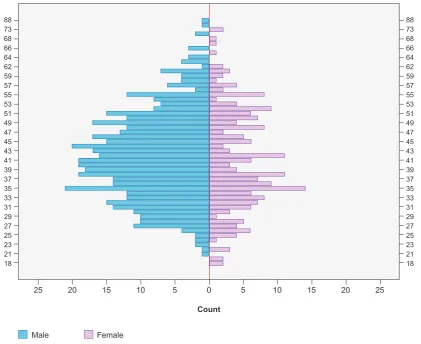
Between September 2012 and November 2014, 665 travelers who met the inclusion criteria were included in the study. About 68.9% (n = 458) were male and 31.1% (n = 207) were female. The mean age was 41.8 years [18 - 88; standard deviation 13.4], with no significant differences between genders. A total of 20 travelers were aged 18 to 25 years, 65 from 26 to 30 years, 115 from 31 to 35 years, 118 from 36 to 40 years, 115 from 41 to 45, 97 from 46 to 50, 78 from 51 to 55 and 57 were older than 56 years (Fig. 1). Total HAV antibodies prevalence rate was 57.6% (n = 383) with no statistically significant differences between men and women. A positive association between HAV antibodies prevalence rates and age was found (Table 1) and there was a predominance of non-immunity for patients under 40 years old (61.3%; n = 195). Over 41 years old most individuals were immune to HAV (74.9%; n = 260). All travelers agreed to determine the serologic status for HAV antibody but not everyone did for the other sexually transmitted infections: 20.2% (n = 134) refused for HBV, 21.2% (n = 141) for HCV and 15.6% (n = 104) for HIV. Most travelers were not immune for HBV (63.1%; n = 335) followed by vaccine immunization (32.2%; n = 171 – mean age 36.4). A small group had natural immunity to HBV (4.1%; n = 22) and in about 0.6% (n = 3) HBc antibody was found positive. Hepatitis C virus infection was found in 1.1% (n = 6) patients and HIV infection in 0.5% (n = 3) whose previous serologic status was unknown.
ARTIGO ORIGINAL
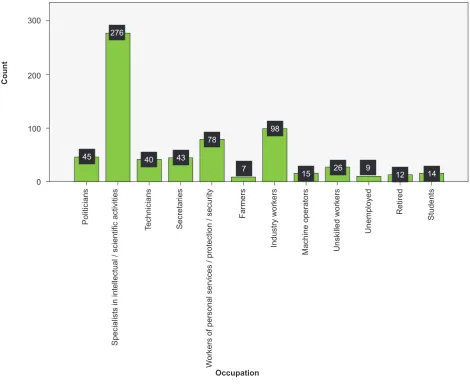
Most travelers were employed when this study was performed (94.7%; n = 630). Only 1.4% (n = 9) was unemployed, 1.8% (n = 12) was retired and 2.1% (n = 14) were still studying (Fig. 3).
To improve data presentation, we grouped the 71 different destinations through geographic areas. The most frequent travel destination was sub-Saharan Africa (72.6%; n = 483) followed by Latin America (9.5%; n = 63), Europe (3.8%; n = 25), North Africa (3.5%; n = 23), Southeast Asia (3.3%; n = 22), Indian Subcontinent (3.2%; n = 21), Oriental Asia (1.2%; n = 8), North America (1.0%; n = 7), Caribbean (1.0%; n = 7) and Middle East (0.9%; n = 6).
DISCUSSION
In high endemic areas, most individuals are infected with HAV in childhood, usually with an asymptomatic clinical presentation. On the other hand, in low or non-endemic areas where people do not have natural immunity against HAV, they are susceptible to be infected with this virus and
the manifestations can be more symptomatic or even fatal.17
In Portugal, after the epidemiological change from the 70s owing to hygienic and health improvements and based in statistically surveys, we used to vaccinate adults younger
than 35.17 However, from January 2000 to December 2015,
448 cases of acute hepatitis A in patients older than 18 were
recorded in our country.26 Most of them were male (57.4%;
Figure 1 – Patients’ distribution by gender and age
18
0 5
25
Male Female
10
20 15 10 5 15 20 25
18
21 21
23 23
25 25
27 27
29 29
31 31
33 33
35 35
37 37
39 39
41 41
43 43
45 45
47 47
49 49
51 51
53 53
55 55
57 57
59 59
62 62
64 64
66 66
68 68
73 73
88 88
Age
Count
Age
Table 1 - Patients’ distribution by age and serologic status for HAV antibody
Age (years) Not immune % (n) Immune % (n) Total % (n) Pearson χ2 (p)
18 - 25 95.0 (19) 5.0 (1) 3.0 (20) 0.001
26 - 30 67.7 (44) 32.3 (21) 9.8 (65) 0.001
31 - 35 59.1 (68) 40.9 (47) 17.3 (115) 0.001
36 - 40 54.2 (64) 45.8 (54) 17.7 (118) 0.005
41 - 45 31.3 (36) 68.7 (79) 17.3 (115) 0.006
46 - 50 29.9 (29) 70.1 (68) 14.6 (97) 0.021
51 - 55 19.2 (15) 80.8 (63) 11.7 (78) 0.001
> 56 12.3 (7) 87.7 (50) 8.6 (57) 0.001
ARTIGO ORIGINAL
Figure 2 – Patients’ distribution by residence Azores
Madeira Faro
Beja Évora
Portalegre Castelo Branco
Setúbal Lisboa
Santarém Leiria
Coimbra Aveiro
Viseu
Guarda Bragança Vila Real
Braga 0.2%
1.6%
7.4% 1.9% 10.4%
68.1%
0.3%
7.2%
1.9%
0.6%
0.2%
0.2%
ARTIGO ORIGINAL n = 257) and the mean age was 46 years old [18 - 91]. The mean hospitalization period was 7.6 days [1 - 147] and the outcome was favorable in 91.3% (n = 409) with early home discharge, followed by death in 4.0% (n = 18). This situation warranted a review of the current cut-off to vaccinate susceptible patients.
In the last 35 years some HAV antibody prevalence
studies were carried out in our country.16-25 In this study,
hepatitis A immunity was examined in 665 individuals in order to evaluate the status of this viral infection, enriching the worldwide hepatitis A surveillance. The lower anti-HAV antibody prevalence shows that Portugal is now a non-endemic area compared with the number seen 35 years
ago.17 In the 80s, Portuguese people were exposed to
the HAV early in childhood with an infection prevalence of
93.4% at age 15 and 99% at age 30.16 In this study, we
registered an increased in lack of immunity since 42.4% (n = 282) travelers do not have anti-HAV IgG. They are a risk group to the development of severe cases and vaccination must be considered for them. When stratifying travelers by age groups, from 18 to 35 years the majority are not immune to HAV and those older than 41 are most of them immune. However, 49.1% (n = 260) travelers under 50
years old are susceptible to HAV infection and for those between 40 and 50 years, 30.7% (n = 65) still need vaccine protection. It is important to identify these individuals since
hepatitis A in older people can be severe and letal.27 As the
HAV immunity remains for life, older individuals in our study are immune to HAV as we see in those older than 50 years old. Therefore, our findings are in agreement with those previous published studies in which there are higher young susceptible individuals.
Contrary to HAV serology, which was performed in all individuals, determination of HBV, HCV and HIV antibodies was refused by some travelers. In those who were tested for HBV, most travelers were not immune, since HBV vaccine was only introduced in our national vaccination plan 15 years ago, as we see by the mean age of immune individuals. In a small parcel we diagnosed new cases of HCV and HIV infection. These travelers were referred for other consultation services in our unit.
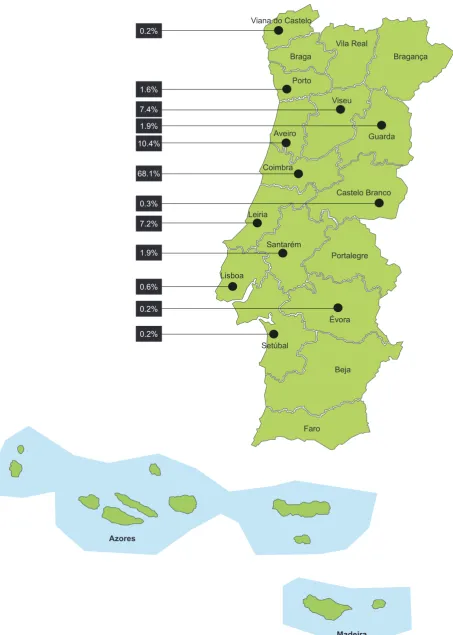
Despite our population is not limited to a specific residence area, it appears that most travelers came from regions nearby our hospital.
A high number was still active in society at the time of this study and the prevalence of academic qualifications
Figure 3 – Patients’ distribution by occupation
Count
100
Politicians Technicians
Industry workers Unskilled workers
Unemployed
Retired
Students
Machine operators
Secretaries Farmers
Specialists in intellectual / scientific activities
W
orkers
of
person
al
services
/ protection
/ security
200 300
0
45 40 43 78
7 15 26 9 14
12 98
276
ARTIGO ORIGINAL
was high since we have noticed a lot of specialists working in intellectual and scientific activities. This means that we were facing a middle economic class whose hygienic and sanitary conditions were good.
In 2011, the World Health Organization (WHO) presented the results of a systematic evaluation of HAV seroprevalence and susceptibility rates in each of 21
geo-cultural world regions.28 In developing countries and some
regions of developed countries, which include Eastern Europe, parts of Africa, Asia and America, sanitary and hygienic conditions vary and some children avoid infection during early childhood. Peak rates of infection commonly occur in later childhood or adolescence. Paradoxically, since HAV transmission occurs in these areas in older age groups, reported rates of hepatitis A can be higher than in less developed countries where HAV transmission is more highly endemic.
According to 2011 WHO survey,28 the overall immunity
in european Western countries was 50% and less than 20% in people younger than 20 years so the adult susceptibility rate to HAV infection is high. In Central and Eastern Europe there is a low-medium child immunity rate and the adult susceptibility rate is medium. All countries in Western and Eastern Asia are moving towards very low endemicity rate. Almost no children have been exposed to HAV and many adults remain susceptible to infection. However, in the Southern countries, the available reports suggest that hepatitis A is highly endemic. In North America there is low child immunity rate and medium susceptibility in adults. In some regions of Latin and South America the immunity rate in adults remains high. North Africa has an intermediate level of anti-HAV seroprevalence. Sub-Saharan Africa has some of the highest anti-HAV prevalence rates in the world and nearly all older children and adults are naturally immunized.
There are no recent seroprevalence studies from Oceania.15
As expected, Portuguese-speaking countries were on the top of the list and Sub-Saharan Africa continues to be sought by Portuguese travelers mainly due to Portugal’s historical links with the former colonies, like Angola (42.3%; n = 281), Mozambique (12.9%; n = 86) and also Brazil (5.7%; n = 38). Although anti-HAV antibody prevalence varies across European countries, Europe appeared as the third most wanted destination because of Turkey which was the only European country represented in this study.
CONCLUSION
Over the past decades, Portugal is moving towards lower hepatitis A prevalence and this will go on owing to improvements in hygiene and sanitation. Considering the recent increase in international travel to countries with higher prevalence of HAV infection it is mandatory to understand its consequences in epidemiology and set the age for vaccination. This study demonstrates that the anti-HAV antibody prevalence is decreasing in the Portuguese adults up to 50 years old. Taking this into account and the higher mortality rate in adults who acquire hepatitis A infection suggest a positive impact of vaccination of the elderly. Cost effectiveness studies of hepatitis A vaccine to include it in the national vaccination schedule will be important to rethink our political of vaccination of the Portuguese population.
OBSERVATIONS
This paper was delivered as oral communication at the meeting “XII Congresso Nacional de Doenças Infeciosas e Microbiologia Clínica/X Congresso Nacional sobre SIDA”, Lisbon, December 1-3, 2014 and as poster at the
3rd ESCMID Conference on Vaccines – vaccines for mutual
protection, Lisbon, March 6-8, 2015.
PROTECTION OF HUMANS AND ANIMALS
The authors declare that the procedures were followed according to the regulations established by the Clinical Research and Ethics Committee and to the Helsinki Declaration of the World Medical Association.
DATA CONFIDENTIALITY
The authors declare having followed the protocols in use at their working center regarding patient’s data publication.
CONFLICTS OF INTEREST
The authors declare that there are no conflicts of interest.
FUNDING SOURCES
No grants or any other type of support was received for this work.
REFERENCES
1. Luxemburger C, Dutta AK. Overlapping epidemiologies of hepatitis A and typhoid fever: the needs of the traveler. J Travel Med. 2005;12:S12-21.
2. Sharapov UM, Teshale EH. Centers for Disease Control and Prevention. Health Information for International Travel 2014. Hepatitis A. 182-5. 3. Elizee PK, Alavian SM. Prevention of hepatitis A virus infection, need to
vaccinate or not? Int J Prev Med. 2013;4:863-5.
4. Steffen R. Changing travel-related global epidemiology of hepatitis A. Am J Med. 2005;118:S46-9.
5. Costas L, Vilella A, Trilla A, Serrano B, Vera I, Roldán M, et al. Vaccination strategies against hepatitis A in travelers older than 40 years: an economic evaluation. J Travel Med. 2009;16:344-8. 6. Centers for Disease Control and Prevention. Prevention of hepatitis A
through active or passive immunization. Morbid Mortal Weekly Rep. 1999;48:1-37.
7. Rosenthal P. Cost-effectiveness of hepatitis A vaccination in children, adolescents, and adults. Hepatology. 2003;37:44-51.
8. Raczniak G, Thomas TK, Bulkow LR, Negus SE, Zanis CL, Bruce MG. Duration of protection against hepatitis A for the current two-dose vaccine compared to a three-two-dose vaccine schedule in children. Vaccine. 2013;31:2152-5.
9. Landry P, Tremblay S, Darioli R, Genton B. Inactivated hepatitis A vaccine booster given ≥ 24 months after the primary dose. Vaccine. 2000;19:399-402.
ARTIGO ORIGINAL
hepatitis A/B vaccine during the primary immunization course? Vaccine. 2000;19:16-22.
11. Haverkate M, D’Ancona F, Giambi C, Johansen K, Lopalco PL, Cozza V, et al. Mandatory and recommended vaccination in the European Union, Iceland and Norway: results of the VENICE 2010 survey on the ways of implement national vaccination programmes. Euro Surveill. 2012;17:1-6.
12. Bauch CT, Snonychuk M, Pham BZ, Gilca V, Duval B, Krahn MD. Cost-utility of universal hepatitis A vaccination in Canada. Vaccine. 2007;25:8536-48.
13. Jacobs RJ, Margolis HS, Coleman PJ. The cost-effectiveness of adolescent hepatitis A vaccination in states with the highest disease rates. Arch Paediatr Adolesc Med. 2000;154:763-70.
14. MacIntyre CR, Burgess MA, Hull B, MacIntyre PB. Hepatitis A vaccination options for Australia. J Paediatr Chil Health. 2003;39:83-7.
15. Cavaco A, Manso A, Rodrigues F, Marques JG, Marques L. Recomendações sobre vacinas. Soc Port Pediatr. 2010;1:10-3. 16. Lecour H, Ribeiro T, Amaral I, Rodrigues M. Prevalence of viral hepatitis
markers in the population of Portugal. Bull WHO. 1984;62:743–7. 17. Leitão S, Santos R, Santos J, Ferreira R, Gonçalves F, Coutinho P, et al.
Hepatitis A prevalence in rural and urban Portuguese populations. Eur J Int Med. 1996;7:119-21.
18. Marinho RT, Valente AR, Ramalho FJ, Moura MC. The changing epidemiological pattern of hepatitis A in Lisbon, Portugal. Eur J Gastrenterol Hepatol. 1997;9:795-7.
19. Macedo G, Ribeiro T. Hepatitis A: insights into new trends in epidemiology. Eur J Gastroenterol Hepatol. 1998;10:175.
20. Barros H, Oliveira F, Miranda H. A survey on hepatitis A in Portuguese children and adolescents. J Viral Hepat. 1999;6:249-53.
21. Lecour H, Santos I, Granjeira L, Candeisa J, Ramos J, Torrinha J, et al. Prevalência de marcadores da hepatite A e da hepatite E na população da região Norte de Portugal. Arq Med. 1999;143:244-8.
22. Cunha I, Antunes H. Prevalência do anticorpo contra o vírus da hepatite A numa população do Norte de Portugal. Acta Med Port. 2001;14:479-82.
23. Antunes H, Macedo M, Estrada A. Epidemiologia da hepatite A numa população pediátrica do Norte: primeiros resultados portugueses de baixa endemicidade. Acta Med Port. 2004;17:219-24.
24. Valadas E, Sousa S, Antunes F. Seroprevalência da hepatite A em infetados por vírus da imunodeficiência humana. Rev Port Doenças Infeciosas. 2008;4:12-6.
25. Speidel A, Malaba N, Marques R, Alves J, Verissimo R, Valente C, et al. Prevalência do anticorpo contra o vírus da hepatite A numa população da região centro de Portugal. Rev Port Doenças Infeciosas. 2010;6:95-100.
26. Willner IR, Uhl MD, Howard SC, Williams EQ, Riely CA, Waters B. Serious hepatitis A: an analysis of patients hospitalized during an urban epidemic in the United States. Ann Intern Med. 1998;128:111-4. 27. World Health Organization. The global prevalence of hepatitis A virus
infection and susceptibility: a systematic review. WHO: Geneva; 2009. 28. Franco E, Meleleo C, Serino L, Sorbara D, Zaratii L. Hepatitis A: