Abstract
In this paper, we try to make a case for the risky approach of many decision-makers and pol-icy specialists to overuse authority and regula-tion-based tools, while neglecting the ones more focused on human capacity and persuasion. Especially in fields like education, we consider that the human factor should be at the core of any policy mix, and a tool like training and pro-fessional development should gain a more visible and persistent role in policy interventions. Firstly, we try to analyze the distribution of policy tools on the authority-complexity axes. The value we see in the mapping of policy tools is that it can be used for investigating and positioning the activity of a specific governing body or central gover-nance. Thus, a fundamental question remains as to what really influences the choice of policy tools or instruments, as a basis for better understand-ing the rationales behind a specific policy mix.
We argue that policy failure could be ex-plained in many cases by the incapacity to ad-dress in a consistent and professional way the human capacities needed for implementation. Thus, training and professional development are, at least, poorly used from the perspective of the potential they have. As an argument, we tried to look at training and professional development in the specific area of teachers in pre-university education in Romania, situating it in the broader context of European policies in lifelong learning and participation of adults in continuing educa-tion and training, but also in the local policy en-vironment. The results of the research led us to the conclusion that educational policies should be among the first in the broader spectrum of public policies valuing and emphasizing learning, through training and professional development of the stakeholders involved in policy change together with adding more value to the Human Factor in educational policies.
Keywords: policy tools, professional devel-opment, educational policies, lifelong learning.
THE HUMAN FACTOR: TRAINING
AND PROFESSIONAL
DEVELOP-MENT AS A POLICY TOOL
Lucian CIOLAN
Mihaela STÎNGU
Elena MARIN
Lucian CIOLAN (corresponding author) Professor, Department of Educational Sciences, Faculty of Psychology and Educational Sciences, University of Bucharest, Bucharest, Romania Tel.: 0040-314-253.446
E-mail: [email protected]
Mihaela STÎNGU,
Assistant professor, Department of Educational Sciences, Faculty of Psychology and Educational Sciences, University of Bucharest, Bucharest, Romania
Elena MARIN,
Assistant professor, Department of Educational Sciences, Faculty of Psychology and Educational Sciences, University of Bucharest, Bucharest, Romania
1. Policy tools: between style and capacity
At the heart of the ‘new governance’ approach is a shift in the ‘unit of analysis’ in policy analysis and public administration from the public agency or the individual public program to the distinctive tools or instruments through which public purposes are pursued. As we have seen, such instruments have mushroomed in both number and scale in recent decades (Salamon, 2000, p. 1624).
The consolidation of public policy systems, specific to the younger democracies in Central and South-Eastern Europe and beyond, is still an ongoing process. One key indicator of professionalization of policymaking, but also of placing the whole process under the rules of democracy, is the way central governances use, misuse and some-times abuse the policy tools at their disposal. The choice and combination of policy tools is influenced by many factors, from policy capacity of the central governance to cultural and social presuppositions, but the first condition for their effective use is to be aware of the diversity of these tools, and of the main functions, advantages and risks they have correlated with the conditions of policy implementation.
Articulation of the policy tools mix is illustrative for the style of policy-making adopted by specific governance, but also for its capacity to understand the correlation between the tools, the reality of policy implementation and the characteristics of the stakeholders involved, mainly of the target group.
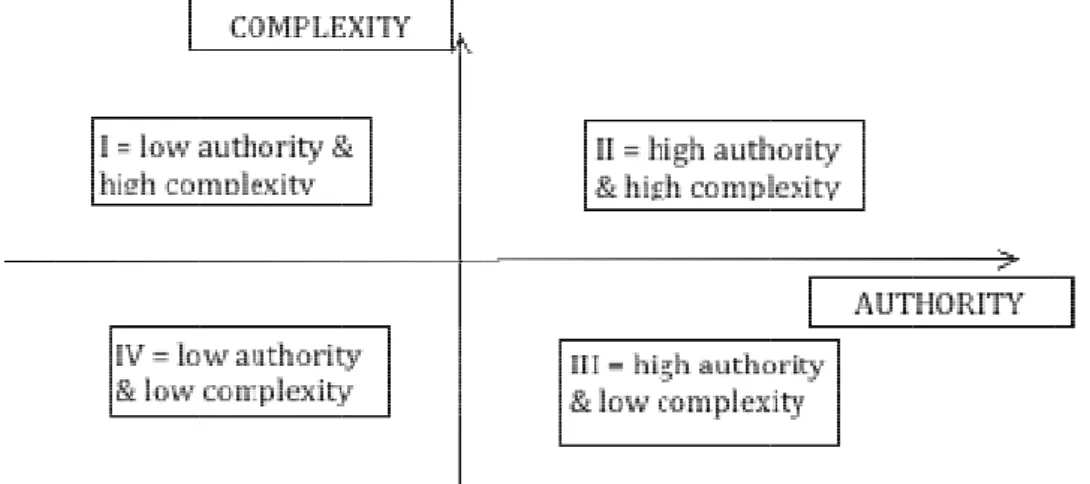
There are many classifications in the literature, based on different criteria, syn-thesized and explained in Schneider and Ingram (1990), Peters (2001, 2009), Howlett (1991, 2009), Perrels (2001), Start and Howland (2004), Birkland (2005), Pal (2012), etc. A categorization based on two axes, complexity and level of authority involved, is presented below.
The value we see in the mapping of policy tools based on this framework, founded on the criteria of tool complexity and level of authority involved, is that it can be used for investigating and positioning the activity of a specific government or governing body.
The 1st quadrant represents the family of policy tools characterized by low level of authority involved and high level of complexity of the tool and tool usage. These tools are mainly strategic instruments focused on the consolidation of capacities at individual, groups or institutional level for implementing a specific change. The most illustrative example here is represented by capacity building and learning tools, such as training and professional development (to be approached and analyzed in detail below), consulting and technical assistance (for policy transfer and policy learning), but also institutional capacity building.
The 2nd quadrant reunites policy tools involving a high level of authority from the central governance(s), by steering and/or controlling processes, and very complex tools or usage of tools in the policy context. A relevant example here is the design and im-plementation of targeted development programs or projects, implemented most of the time by a central agency, but involving a diversity of activities and actions focused on improving a specific situation. Communication and information campaigns are the tools situated at the crossroad of the first and second quadrant, depending on how they are conceived and used into practice. In some cases mandating or empowering could be placed here, as well as a group of financial tools, like incentives and disincentives.
The 3rd quadrant is the terrain of regulatory tools, typically involving the direct exercise of power, low flexibility (or no flexibility at all) characterizing the legislative and legislation-related measures, and low sophistication of the tool and tool applica-tion, which is most of the time prescribed and standardized. Besides regulations and legislation, here we can place also some other financial tools, like taxing, service fees, subsidies or cash transfers. This is the ‘comfort zone’ for government or central gov-ernances tempted to behave in a more authoritarian way, but also for young public policy systems and/or not highly professionalized policy makers. The current policy contexts and the contemporary challenges in front of decision-makers are seriously questioning the exaggerated preference for these tools. Younger policy systems, like for instance new Member States of the EU or transition non-member countries in Eu-rope are seriously abusing the regulatory tools, due to low level of professionalization and low capacity at the decision-making level to operate with complex tool mixes, but also due to the behavioral patterns of central administrations, still not fully committed to participatory democracy.
The 4th quadrant, in which we find loose presence of power and central authority, but also low level of tools complexity and rather simple implementation process, is the quadrant of community-based and community-led interventions, but also of mar-ket and competition instruments.
beneficiaries of public policies, would rather compose a policy mix based on more sophisticated instruments and would involve a lower level of own authority in the processes. Such an approach would entail:
– an explicit commitment to participatory democracy and principle of subsidiari-ty, by empowering local communities and actors, trusting their willingness and competence to co-design and co-act in their own benefit;
– reasonable capacity of the central governance in the field of policy-making and strategic steering of policy processes (policy-making, in this case, has a strong degree of professionalization, moving away from the area of improvised and uni-lateral, top-down decision-making systems); and
– an orientation to long-term future benefits of their action, as many of the complex and behavior change related tools and approaches need sensibly more time to pro-duce effects, but once produces, those effects are stronger and more sustainable.
By the contrary, a public authority characterized by poor capacity and low com-mitment to genuine participatory democracy (by own option or by immaturity) is heavily anchored in the (limited) array of regulatory/legislative tools. Moreover, as a sign of superficiality and dismissed policy professionalism, the regulations or pieces of legislation are considered to be the only concern of public authority and the only way to intervene for solving social problems. Technically, different forms of regula-tory mechanisms and tools, but especially the strong ones (laws, government ordi-nances, etc.) are replacing the more elaborate policy process, fracturing it from a cycle with multiple steps and stages to a line according to which decision-makers ‘discover’ a problem and then just impose a solution attempting to solve it. This is how actually a mean, a tool or an instrument, namely a quite primitive one, like constraining leg-islation, is replacing or shadowing the aim, the broader scope of the intervention, ad-dressing an explicitly acknowledged and analyzed public issue. For authoritative or immature governments is much easy to skip the whole policy analysis process, which needs expert opinion, research and specialized work, but also the policy debate, which involves consultation, dissemination and information, cooperation, but also confron-tation and eventually compromise and changing plans. Not getting seriously engaged in policy analysis and policy debate are clear signs of assumed authority and/or poor capacity for policy-making. And the policy tools are the reflection of this situation. ‘As the discussion of different dimensions of tools will illustrate, a tool may have positive impacts on aspects of democracy, perhaps franchise or support building, but it may have negative effects on another, such as equity and democratic authenticity’ (Smith and Ingram, 2002, p. 569).
2. The missing link: human factor.
Training and capacity building as a reflection of policy tools
pro-cess through which they participate in the work of government’ (Blomgren Bingham, Nabatchi and O’Leary, 2005, p. 547).
A fundamental question remains what really influences the choice of policy tools or instruments, as basis for better understanding the rationales behind a specific pol-icy mix. There are many variables that could explain the selection, but with high im-portance and impact among them we can mention:
1) Theory – concept on public policy;
2) Capacity – professionalism of the central governance and the balance authority – expertise – legitimacy (for beneficiaries);
3) Culture – underlying behavioral assumptions, policy narratives of the past (Young and Queen, 2012, p. 91);
4) Style – type of politics and policy-making in place;
5) Context – social, economic and political life of the community at a particular stage.
The choice and combination of tools is not just a matter of capacity and style, but also reflects the existing concepts and convictions behind how social life and even-tually peoples’ mind and behavior can be influenced. The amazing proliferation of policy tools witnessed over the past half century has been accompanied by an equally amazing explosion of ideas which explore the fundamental ways through which pol-icy influences behavior (Schneider and Ingram, 1990, p. 513).
Analysis of the above-mentioned variables and their contribution in policy tools choice and use is a domain per se, and we would not insist here on this issue.
As clearly and loudly voiced lately in the economic and political literature, eco-nomic crisis had to do, in its broader, but acute sense, with the incapacity of ecoeco-nomic theorists and their sophisticated models to take into account the human factor, mean-ing the values, assumptions, attitudes and behavioral patterns influencing our social lives. Building on that account, we consider that policy failure could be explained in many cases by the incapacity to address in a consistent and professional way the human capacities needed for implementation. The missing link between policy objec-tives and the strategic steering of the processes needed to achieve them is the capacity of the actors to effectively and meaningfully engage and make change happen.
Training and professional development is one of the neglected tools, or, at least, poorly used from the perspective of the potential it has. We will refer to this tool from two perspectives: (a) as generic policy tool to facilitate policy implementation by cre-ating/developing more or less technical or specialized skills at the stakeholders’ level, according to their envisaged role in the policy process, and (b) as a tool to develop ca-pacity for policy-making at the citizens’ level or at central governance level, as a result of the expansion of horizontal and participatory approaches to policy.
co-pro-ducers of the respective policy. So, persons and communities should be trained not only to have capacity for policy implementation, but also for policy formulation, in a movement from consultation to cooperation, as stated in the paragraph below:
‘Communities and citizens are becoming more vocal about their belief that gov-ernment should not decide unilaterally when to consult, on what, with whom, and by what means. Both policy makers and communities have started the work of shifting the policy-making process from traditional consultations to one of citizen engage-ment – a process characterized by mutual trust and a sharing of power. (…) This shift toward a more collaborative, horizontal approach to policy making encourages all parties to reflect and learn. It promotes a focus on common ground and recognizes that citizens and communities have important knowledge and experience to add to the debate’ (Dodd and Boyd, 2000, p. 4).
This whole significant shift demands for capacities, and thus learning and profes-sional development become a key tool in influencing behavior. In order to illustrate this, we have analyzed the case of the education system, having the expectation that in a system dealing with learning, this category of tools would be more used and devel-oped. The perspective we took and we consider relevant for the case is participation of adults in general and participation of teachers in special in training and professional development. The underlying assumption is that in a policy system in which training and professional development is frequently and consistently used as a tool, the level of stakeholders’ participation in such activities would be higher than in systems not using on a regular basis this category of tools. Thus, our applied analysis reflects the participation of adults in Romania in training and professional development, as a reflection of lifelong learning policies, and then the situation of teachers’ participation and involvement in training and professional development. In the last instance we tried to see how much time and effort and how many opportunities we have for ca-pacity developers (teachers) to develop their own capacities themselves.
3. The broader context: European policies in lifelong learning and participation of adults in continuing education and training
Throughout the last decades, lifelong learning has gained a central place on the agenda of European policy in the field of education and training, through the efforts of the OECD, UNESCO and the Council of Europe. It was a response to the anomaly that while individuals learn throughout life, the provision of education opportunities was limited largely to the early phase of life, dominated by formal education. There was a perceived need to provide a ‘second chance’ to those who did not benefit from educational opportunities available during childhood and youth. In current use, life-long learning no life-longer refers simply to provide a ‘second chance’, but encompasses all learning endeavors over the lifespan (Coolahan, 2002).
The conclusions of the Lisbon European Council in March 2000 confirm that the move towards lifelong learning must accompany a successful transition to a knowl-edge-based economy and society and that Europe’s education and training systems are at the heart of the coming changes (European Commission, 2000). Since the year 2000, and continuing with the Europe 2020 initiatives, European Commission has developed a wide range of policy priorities and outputs concerning education and training, focused on strategies for investing efficiently in education and training, de-veloping plans to anticipate and match labor market and identify the skills needed and elaborate strategies to validate non-formal and informal learning.
As an important component of lifelong learning strategies, adult learning has be-come essential in ensuring economic and social progress, as well as the personal
ful-fillment of individuals. In 2000, EU Labor Force Survey found only 8% of EU 25-64 year olds participating in education and training (European Commission, 2001). Tak-ing this in consideration, in 2001 EU Member States agreed a set of targets or ‘bench-marks’ in education and training, one of this being that by 2010, an average of at least 12.5% of adults should participate in lifelong learning. In 2009, Member States raised the benchmark at 15% to be attained by 2020 as part of the strategic framework for cooperation in education and training (Council of the European Union, 2009).
At European level, three important surveys provide data that illustrates adult par-ticipation in education and training: the EU Labor Force Survey (EU LFS), the Adult Education Survey (AES) and the Continuing Vocational Training Survey (CVTS). While the last survey focuses specifically on vocational education and training, the
first two provide more general data on the participation of adults in lifelong learning, which will be the focus of our analysis.
The European Labor Force Survey is a data source for the EU benchmark indica-tor on adult participation in lifelong learning. The benchmark 1 for this survey is set
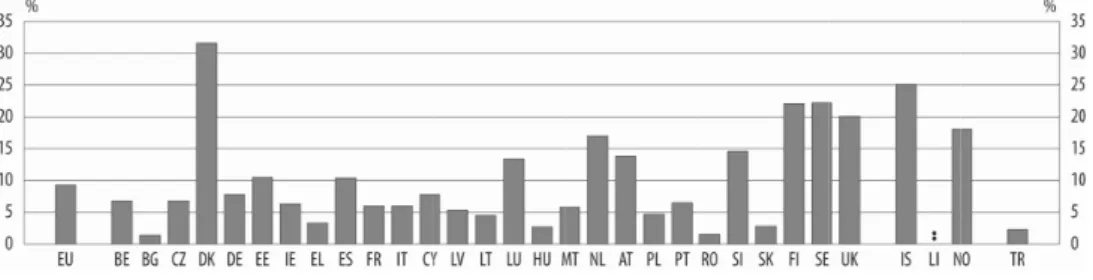
ques-at 15% to be reached by 2020. According to the results of the survey, in 2009, almost 10% of the European adult population participated in formal or non-formal educa-tion and training during the four weeks prior to the research. At country level, the Nordic countries, the Netherlands and the United Kingdom have already attained the agreed European objective for 2020, while Austria and Slovenia are close to the target. However, the participation of adults in education and training lags far behind the EU benchmark in Greece, Hungary, Slovakia and Turkey (where the level is below 4%). The case of Romania and Bulgaria is even worse as in these cases less than 2% of the adult population participated in education and training in the four weeks prior to the survey.
Figure 2: Adult participation in education and training in the four weeks prior to the survey (EU LFS), age 25-64 (%), 2009 Source: Eurostat, EU Labour Force Survey (data extracted January 2011).
The second survey, the Adult Education Survey is a new component of EU statis-tics on education and lifelong learning which was conducted across Europe for the
first time in 2011-2012, but the results are not yet available. However, a pilot AES was carried out between 2005 and 2008 on a voluntary basis, involving 29 countries in the EU, EFTA (European Free Trade Association) and candidate countries2. When com-paring the results of the two surveys presented before, at first glance, the differences might appear rather surprising. According to the Labor Force Survey, less than 10% of adults participate in lifelong learning, while the results of the Adult Education Sur-vey indicate that around 35% of the European adult population takes part in formal or non-formal education and training. However, this significant difference between the results of the two surveys is partly related to the fact that the reference period of
tion ‘participation to education and training. The information collected relates to all educa-tion or training whether or not relevant to the respondent’s current or possible future job. [Online ] available at htt p://epp.eurostat.ec.europa.eu/tgm/table.do?tab=table&init=1&lan-guage=en&pcode=tsdsc440&plugin=1.
the EU LFS is only four weeks prior to the survey, whereas the reference period of the AES is 12 months (Eurydice, 2011). Even the percentage is different because AES results follow the same trend as the ones in EU LFS. For example, regarding Romania, the AES reveals also one of the lowest participation rates (7%), while Bulgaria has a significantly higher score (almost 40%).
As stated before, based on the results of different surveys, at European level there is a generally low average participation of adults in education and training, and EU didn’t reach by 2010 the established benchmark. Adult learning does not always have strong recognition at European and national levels in terms of visibility, policy prioritization and resources, notwithstanding the political emphasis placed on life-long learning at both those levels in recent years. This dichotomy between political discourse and reality is especially striking when set against the background of the major challenges confronting Europe. Adult learning is considered a key response to the challenges for European Union to become a dynamic and competitive knowl-edge-based economy. In addition, in the current economic climate, the skills of Eu-rope’s workforce are crucial to economic recovery and will be vital in responding to whatever new economic structures may emerge. The 2006 Communication from the European Union on adult learning highlighted the essential contribution of adult learning to employability, labor market mobility and social inclusion (European Com-mission, 2006).
Coming back to the case of Romania, the results show a very low rate of partici-pation of adults in education and training and it is far from reaching the benchmark established for 2020.
Continuous professional development, as part of the lifelong learning process, is required to maintain and develop skills, to adapt to structural change and techni-cal developments, for staying in jobs or career advancement (European Commission, 2012). In the following sections of our paper we will focus on a specific group of adults that require continuing professional development throughout their career, teachers, and the policies that establish the foundations for their development. We consider, as more broadly stated above, that participation of teachers in continuing education and training is a reflection of the level to which educational policies are using the training and professional development tool in their implementation, but also an indication of willingness and awareness of this professional category (in charge with organizing education and training for young generation) to invest effort in their own develop-ment as a source for better participation in educational policy interventions.
4. How much teachers learn for being ready to generate learning? A policy perspective
or regions. In Spain, France, Lithuania, Romania and Slovenia CPD participation is, moreover, a prerequisite for career advancement and salary increases. All these mea-sures become very strong policy statements.
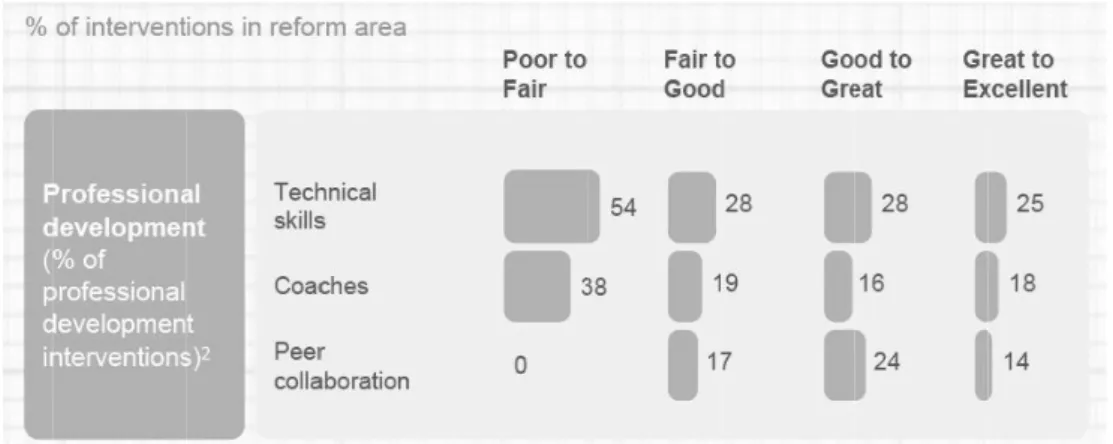
Concerning the level of regulation, the choice of programs of continuing profession-al development may depend on educationprofession-al priorities of centrprofession-al authorities in terms of teacher competences and skills; they may also be developed at local level or as part of school development plans. In the absence of a plan, the decision to follow devel-opment programs may also be entirely up to the individual teacher (Eurydice, 2008). In the McKinsey and Company report from 2010 How the world’s most improved school systems keep getting better it is stated that in the case of fair to good and good to great performance stages, some improving school systems have thought to raise the prestige of the teaching profession by increasing their professional development requirements and by creating clearly defined teaching career tracks (Mourshed, Chi-jioke and Barber, 2010, p. 63). For example, in the good to great performance systems, the central theme is ‘shaping the professional’ with different types of interventions: raising caliber of entering teachers and principals, raising caliber of existing teachers and principals (through training, coaching) and school-based decision-making. In this report it is also stated that if the pervious improvement stages (poor to fair; fair to good) relied on central control over the system and its educators, the good to great journey rely largely upon the values and behaviors of its educators to engage in con-tinuing improvement and professional development.
Figure 3: Interventions in reform area in what professional development of teachers is concerned Source: McKinsey & Company interventions database and system interviews
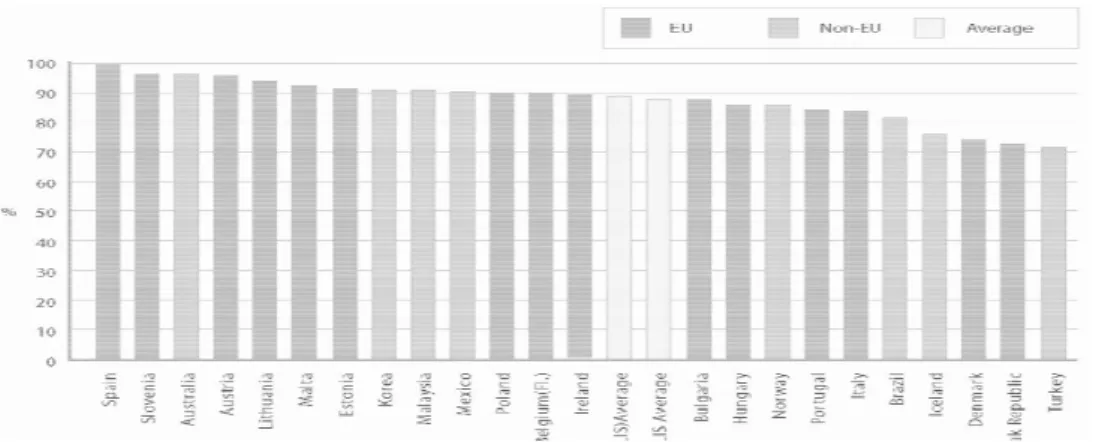
According to the results from TALIS 2008 (Figure 4), on average, across the 23 par-ticipating countries, 89% of teachers reported having undertaken some professional development (defined as having taken part in at least one day of development) over the 18 months prior to the study.
Figure 4: Percentage of teachers who undertook some professional development in the previous 18 months (2007-08)
Source: McKinsey & Company interventions database and system interviews
In Romania, the Law on National Education (no. 1/2011) regulates that teach-ers must undertake training programs in order to accumulate, every five years, an amount of at least 90 transferable professional credits. Teachers can choose from dif-ferent types of programs, such as: short-term academic programs, career develop-ment programs, lifelong learning programs and mobility programs. In what the pro-viders of such programs are concerned, there is a free market of continuing training for teachers. Providers can be higher education institutions, Teachers Training Body, the National Agency for Community Programs in the field of Education and Profes-sional Training, Institute of Educational Sciences, NGOs, Foundations, Associations and so on. Thus, the Ministry of National Education is responsible with the accredita-tion and permanent evaluaaccredita-tion of the providers and the programs proposed by them. We will specifically refer now to a research on pre-university Romanian teachers participation in continuing professional development, based on a 3 year project, enti-tled ‘Restructuring the continuous training system of pre - university teachers, based the European credit transfer system’, developed within the framework of Sectoral Op-erational Program for Human Resources Development 2007 -2013.
in-volving a self-administered survey under the supervision and direct collecting of data by field operators.
The sample of the present research consists of 734 teachers, and out of them, 69.5% are women and the rest of 30.5% are men. More than half of the teachers in this study have more than 10 years of experience in the educational sector (55.94%), and 23.08% of teachers have between 4 to 10 years of experience. The rest of 20.75% have less than 4 years of teaching experience.
The Teachers Survey consists of three thematic units and includes both open and closed questions. The first thematic unit (5 questions) refers to policy changes in the teacher training field, and intends to evaluate in what extent teachers are aware of these changes and how this changes are making an influence on their teaching career. In the second thematic unit there are 12 questions whose aim is to evaluate teach-ers’ opinion regarding the quality of professional development courses, the frequency they participate to these courses, as well as their opinion about further improvements that seem to be necessary in this area.
The third thematic unit consists of 4 questions that target behavioral changes due to teacher’s participation to professional development and in-service training courses. Respondents answers to the questionnaire were given mainly with the aid of fi ve-point of the Likert-type scale, where 1 = very useful and 5 = completely useless, dichot-omous question, multiple choice questions, rank order scaling, and also open-ended questions.
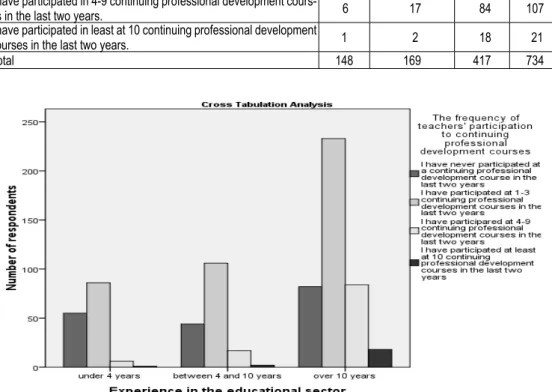
A first interesting result of the research is the correlation between teacher’s partici-pation in CVT and their level of experience (see Table 1 and 2 and Figure 5).
First, in Table 2, we can notice that there is a statistically significant association between the experience in the educational sector and the participation of teachers at continuing professional development courses (χ (1) 44,4, p=,000, df=6).
This statistically significant association between the two variables mentioned above shows that out of 734 teachers in this research, 553 of teachers have participat-ed in continuing professional courses, regardless of the frequency of participation. That means that 75% of the teachers interviewed have participated in different types of courses and a total of 25% of teachers have never participated in a continuing pro-fessional course in the last two years. Regarding those 75% of teachers that have par-ticipated in different types of courses: statistics shows that 58% of the teachers have participated in one to three courses, 14% of teachers have participated in four to nine courses, and an approximately 3% of teachers have participated at ten continuing courses in the last two years. What is really worrying here is that quarter of Romanian teachers did not attend any professional development course in the last two years.
Table 1: Crosstabs between the level of experience and the frequency of teachers’ participation to continuing professional development courses
Experience in the educational sector How often did you participate in continuing professional development
courses in the last two years? 4 yearsUnder 4 and 10 yearsBetween 10 yearsOver Total
I have never participated in a continuing professional development
course in the last two years. 55 44 82 181
I have participated in 1-3 continuing professional development
cours-es in the last two years. 86 106 233 425
I have participated in 4-9 continuing professional development
cours-es in the last two years. 6 17 84 107
I have participated in least at 10 continuing professional development
courses in the last two years. 1 2 18 21
Total 148 169 417 734
Figure 5: Crosstabs between the level of experience and the frequency of teachers’ participation to continuing professional development courses
Table 2: Correlation between the educational sector and the participation of teachers at continuing professional development courses
Chi-Square Tests
Value df Asymp. Sig. (2-sided)
Pearson Chi-Square 44,400a 6 ,000
Likelihood Ratio 48,481 6 ,000
Linear-by-Linear Association 39,675 1 ,000
N of Valid Cases 734
a. 2 cells (16.7%) have expected count less than 5. The minimum expected count is 4.23.
experience in the educational sector, seem to have the same participation rate as those with four to ten years of experience.
In average, 58% of teachers, regardless their work experience, have participated in one to three continuing professional development courses and only 2.9 % of teachers have participated in at least in 10 continuing professional development courses in the last two years.
When being asked what was the average duration of continuing professional de-velopment courses that they have participated in the last two years, an overall of 64% of teachers admitted that the most attractive courses to attend are those that last for about 3-4 days (with more than 24 hours dedicated to attending the course).
Taking into account the fact that all teachers work, on average, 2,000 hours per year and the fact that teachers, according to this research, attend, in general, one to three courses that last up to 24 hours, we can conclude that only 1.5% from the working hours it is dedicated to participation in professional training courses.
Directly linked to the above-illustrated situation is the factors motivating, respec-tively demotivating teachers to devote time to professional development activities. The categories included in the research were adapted after a European research, available on Eurostat entitled Reasons for participation in non-formal education and training. For example for the variable ‘To get knowledge/skills relating to interesting subjects’ a number of possible answers were taken into account, such as ICT skills for teaching, specialized/disciplinary curses, student counseling and guidance, classroom management, students discipline and behavior problems.
In an OECD survey, almost all countries report deficits in teaching skills, and diffi -culties in updating teachers’ skills. Shortages relate especially to a lack of competence to deal with new developments in education (including individualized learning, pre-paring students for autonomous learning, dealing with heterogeneous classrooms, preparing learners to make the most of the ICT, and so on) (OECD, 2005).
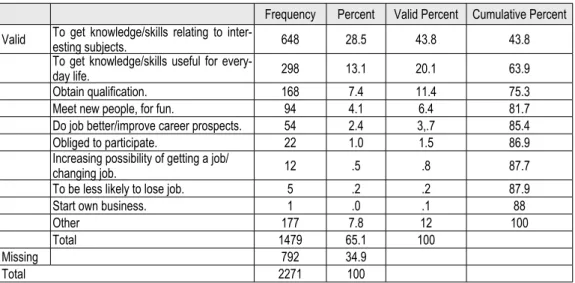
Table 3: Factors that motivate teachers to participate in continuing professional development courses
Frequency Percent Valid Percent Cumulative Percent
Valid To get knowledge/skills relating to inter-esting subjects. 648 28.5 43.8 43.8
To get knowledge/skills useful for
every-day life. 298 13.1 20.1 63.9
Obtain qualifi cation. 168 7.4 11.4 75.3
Meet new people, for fun. 94 4.1 6.4 81.7
Do job better/improve career prospects. 54 2.4 3,.7 85.4
Obliged to participate. 22 1.0 1.5 86.9
Increasing possibility of getting a job/
changing job. 12 .5 .8 87.7
To be less likely to lose job. 5 .2 .2 87.9
Start own business. 1 .0 .1 88
Other 177 7.8 12 100
Total 1479 65.1 100
Missing 792 34.9
In this current research, areas where teachers feel the need to acquire new informa-tion are very similar to those presented in the OECD survey. In a hierarchical perspec-tive, the most common teaching skills teachers tend to mentioned as interesting sub-jects are: ICT teaching skills (37%), closely fallow by disciplinary/field courses (32%), students discipline and behavior problems (12%), classroom management (10%) and student counseling (9%).
Figure 6: Areas teachers feel the need to acquire new information
In conclusion, the main factor that motivates teachers to participate in continuing professional development courses is the opportunity to get knowledge/skills relating to interesting subjects. So 43.8% of respondents indicated that the most important reason for participating in this type of courses is the opportunity to enhance their knowledge regarding new educational perspectives. Close to 20% of teachers admit their reason for participating at continuing professional development courses is to get knowledge/skills useful for everyday life. A percentage of approximately 11% of respondents say that obtaining a qualification is a triggering factor that makes them attend these courses, but they have also mentioned that attending this type of courses has a more social motivation, where teachers have the chance to meet, discuss and exchange experiences.
In comparison to the EU averages, presented in the European report mentioned above, the frequencies of factors motivating Romanian teachers to participate in con-tinuing professional development slightly differ. For example, in our research, the most important factor that motivates teachers is to get knowledge/skills in interest-ing subjects/areas, whereas the EU average shows that at a European level the most important factor is the improvement of career prospects and to do their job better. Another significant difference is the fact that for the Romanian teachers obtaining qualification is a very important factor being situated on the top three factors, while at the European level this factor is not as important, being ranked seventh on a ten scale.
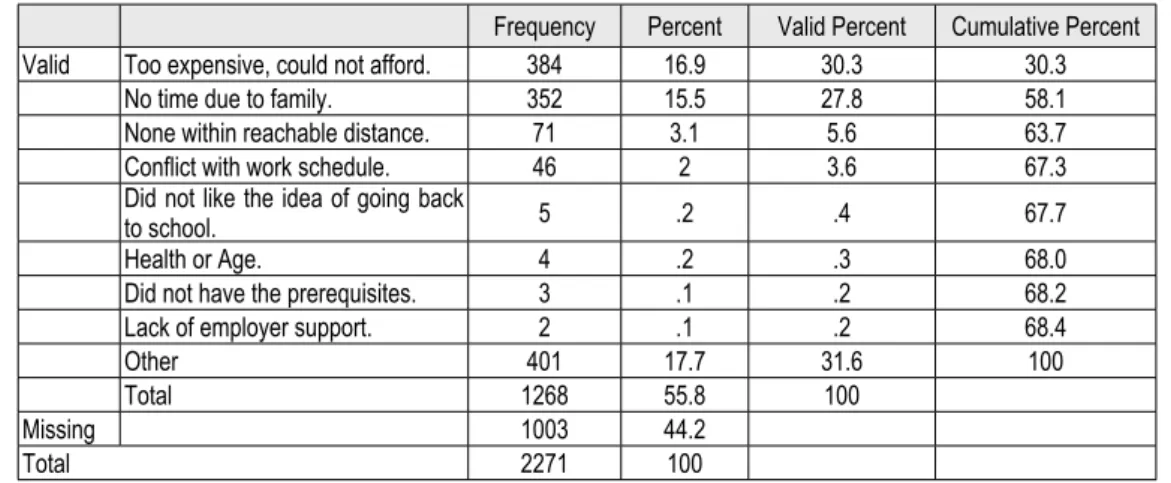
Analyzing obstacles or hindering factors influencing participation to in-service training courses, based on the same adapted criteria from the European survey, we can see the results in Table 4 below.
Table 4: Obstacles to participation at continuing professional development courses
Frequency Percent Valid Percent Cumulative Percent
Valid Too expensive, could not afford. 384 16.9 30.3 30.3
No time due to family. 352 15.5 27.8 58.1
None within reachable distance. 71 3.1 5.6 63.7
Confl ict with work schedule. 46 2 3.6 67.3
Did not like the idea of going back
to school. 5 .2 .4 67.7
Health or Age. 4 .2 .3 68.0
Did not have the prerequisites. 3 .1 .2 68.2
Lack of employer support. 2 .1 .2 68.4
Other 401 17.7 31.6 100
Total 1268 55.8 100
Missing 1003 44.2
Total 2271 100
Even though in the last twenty years Romanian adult learning and education sec-tor have been modernized and influenced by major reforms and related processes of the education system transformation (European Commission, 2011), there are still problems we have to face and one of those problems is how to increase participation in continuing education and training.
In order to make participation of the specific category of teachers at in-service and professional development courses a reality, Romania has to find the main obstacles that prevent teachers to attend, and then try to find solution to increases teachers par-ticipation rate at continuing professional development courses. The research shows that one of the main obstacles Romanian teachers are facing is related to available resources or costs of the training. According to 27.8% of the teachers involved in this research another obstacle is the lack of time, due to family or other type of obligations, but also access, trainings not being held within reachable distance (3.1%).
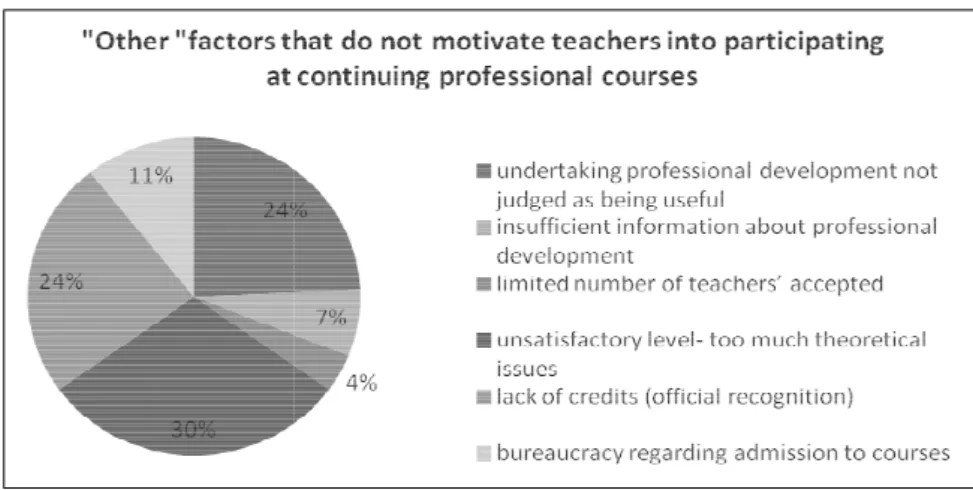
But, as seen in the above table, the highest percentage among factors that demoti-vate teachers to participate in CVT, with an average of 17.7%, is ‘Other’, so none of the typically listed ones.
Figure 7: ‘Other’ factors that do not motivate teachers to participate to continuing professional courses: low valorization, insufficient information and difficult access (limited places)
Comparing the result of this research to those identified by the EU survey (Europe-an Commission 2007a, 2007b) there are some differences which we consider relevant. For instance, Romanian teachers prefer courses that are in a reachable distance (this is an important factor, ranked the third on a ten scale), whereas the EU average shows that teachers do not pay much attention to this factor, placing it on a fifth scale out of ten, which shows a lower mobility and availability to travel for CPD purposes of Romanian teachers. Moreover, where at European level teachers seem to have serious problems integrating the non-formal courses to the daily work schedule, in Roma-nia this problem is not as pressing. ‘Conflict with work schedule’ is placed among the first two most important obstacles that teachers face when they want to attend a non-formal course in the EU, while among Romanian teachers this factor is situated on a fourth scale out of ten.
Therefore, according to the EU report the top three factors that do not motivate teachers to attend courses are: not having enough time due to family obligations,
con-flicts with their work schedule and the fact that the courses are too expensive and they cannot afford them. Whereas, at a national level, Romanian teachers agree that the main factors that do not motivate them into participating at these courses are: the fact that the courses are too expensive and they cannot afford them, not enough time due to family obligations and the fact that none of the courses are within a reachable distance. In conclusion, the key difference is presence in the top three factors imped-ing teachers’ participation in CVT in Romania of the access issue. As mentioned be-fore, this could be a reflection of the lower mobility of Romanian teachers, but also the result of unbalanced distribution of training programs at local and regional level, making participation an expensive endeavor.
5. More value to the human factor in educational policies
More than 25% of the investigated Romanian pre-university teachers didn’t attend any in-service training course in the last two years before being surveyed (in mid-2013) and 58% participated in 1-3 courses in the reference interval, with an average course duration which shows a very low time allocation for training and professional development. As long as high among hindering factors impeding participation we
find lack of resources, lack of time and heavy access, as well as low level of informa-tion and low valorizainforma-tion of professional learning inside the system/profession, we have good reasons to consider that the critical aspect does not rest exclusively (or even predominantly) with individual teachers, but has policy grassroots. The
insuf-ficient provision and access to training and professional development for teachers reflects the low focus of existing educational policies in that direction. Moreover, the low participation of teachers is not just a matter of motivation, but also a reflection of the low intensity with which training and professional development is used as a pol-icy instrument supporting the implementation of different educational interventions. This situation is even more alerting if we take into account that the main mission of teachers is to generate learning, so we would expect them to actively and intensively participate in learning experiences all the time.
Educational policies should be among the first in the broader spectrum of public policies valuing and emphasizing learning, through training and professional devel-opment of the stakeholders involved in policy change. Since education is learning, valuing human factor and its capacities in generating and managing policy interven-tions would be an asset. An asset very poorly used at the moment, with visible effects in the general capacity for policy making and policy implementation of the educa-tional system in Romania. The dominance of regulatory tools in policy approaches and the persisting illusion of ‘controlling from the top’ is a source for demotivating teachers and demotivated teachers, together with other factors, such as rigid edu-cational pathways, early specialization, directive/knowledge based instruction, etc., leaded to the situation that in the PISA 20123 survey (published in the fall of 2013), Romanian students are the most demotivated for learning from all participant coun-tries. And this situation should really alert the central governance and decision mak-ers in education.
References:
1. Birkland, Th. A., An Introduction to the Policy Process: Theories, Concepts, and Models of Public Policy Making, 2nd edition, New York: M.E. Sharpe, 2005.
2. Blomgren Bingham, L., Nabatchi, T. and Leary, R.O, ‘The New Governance: Practices and Processes for Stakeholder and Citizen Participation in the Work of Government’, 2005, Public Administration Review, vol. 65, no. 5, pp. 547-558.
3. Coolahan, J., ‘Teacher Education and the Teaching Career in an Era of Lifelong Learn-ing’, 2002, OECD Education Working Papers, No. 2, OECD Publishing, [Online] avail-able at http://dx.doi.org/10.1787/226408628504, accessed on 15 February, 2013.
4. Council of the European Union, Council Conclusions of 12 May 2009 on a Strate-gic Framework for European Cooperation in Education and Training (‘ET 2020’), [Online] available at htt p://eur-lex.europa.eu/LexUriServ/LexUriServ.do?uri=O-J:C:2009:119:0002:0010:en:PDF, accessed on 15 February, 2013.
5. Dodd, D.J. and Boyd, H.M., Capacity Building: Linking Community Experience to Public Policy, Canada: Population and Public Health Branch Canada, 2000.
6. European Commission, ‘Country Report on the Action Plan on Adult Learning: Ro-mania’, 2011, [Online] available at http://ec.europa.eu/education/adult/doc/romania_ en.pdf, accessed on 23 June, 2014.
7. European Commission, COM (2001) 678 final: Making a European Area of Lifelong Learning a Reality Brussels, 21.11.2001, [Online] available at http://www.europarl. europa.eu/meetdocs/committees/empl/20020416/doc07a_en.pdf, accessed on 23 June, 2014.
8. European Commission (a), ‘File: Obstacles to Participation in Education and Train-ing, 2007 (1) (%) YB2013.png’ - Statistics Explained (2013/05/6) [Online] available at http://epp.eurostat.ec.europa.eu/statistics_explained/index.php?title=File:Obstacles_ to_participation_in_education_and_training,_2007_(1)_(%25)_YB2013.png&fi letime-stamp=20130805132041, accessed on 6 June, 2013.
9. European Commission (b), ‘File: Reasons for Participation in Non-formal Education and Training, 2007 (1) (%) YB2013.png” - Statistics Explained (2013/05/6), [Online] available at htt p://epp.eurostat.ec.europa.eu/statistics_explained/index.php?title=-File:Reasons_for_participation_in_nonformal_education_and_training,_2007_(1)_ (%25)_YB2013.png&filetimestamp=20130805132111#file, accessed on 6 June, 2013.
10. European Commission, ‘Teachers’ Professional Development: Europe in International Comparison. A Secondary Analysis based on the TALIS Dataset’, Luxembourg: Office for Official Publications of the European Union, 2010.
11. European Commission, COM(2001) 678 final, Making a European Area of Lifelong Learning a Reality Brussels, [Online] available at http://eur-lex.europa.eu/LexUriServ/ LexUriServ.do?uri=COM:2001:0678:FIN:EN:PDF, accessed on 6 June, 2013.
12. European Commission, COM(2006) 614 final - Adult Learning It is Never too Late to Learn, [Online] available at htt p://europa.eu/legislation_summaries/education_train-ing_youth/lifelong_learning/c11097_en.htm, accessed on 6 June, 2013.
13. European Commission, SEC(2000) 1832 - A Memorandum for Lifelong Learning. Euro-pean Communities. Brussels: Directorate General Education and Culture.
14. European Commission/EACEA/Eurydice, Key Data on Education, Luxembourg: Office for Official Publications of the European Communities, 2005.
15. European Commission/EACEA/Eurydice, Key Data on Education, Brussels: Eurydice, 2012.
16. European Commission/EACEA/Eurydice, Levels of Autonomy and Responsibilities of Teachers in Europe, Brussels: Eurydice, 2008.
18. European Commission, Commission Staff Working DocumentRethinking Education: Country Analysis Part I Accompanying the document Communication from the Com-missionRethinking Education: Investing in Skills for Better Socio-Economic Outcomes /* SWD/2012/0377 final */, [Online] available at http://eur-lex.europa.eu/legal-content/ EN/TXT/?uri=CELEX:52012SC0377, accessed on 6 June, 2013.
19. Howlett, M., ‘Policy Analytical Capacity and Evidence-based Policy-making: Lessons from Canada’, 2009, Canadian Public Administration, vol. 52, no. 2, pp. 153-175.
20. Howlett, M., ‘Policy Instruments, Policy Styles, and Policy Implementation. National Approaches and Theories of Instrument Choice’, 1991, Policy Studies Journal, vol. 19, no. 2, pp. 153-175.
21. Jänecke, B. and Mykytyn, I., Sisteme europene de dezvoltare profesională continuă a cadrelor Didactice. Analiză comparativă, Bucuresti: Atelier Didactic, 2007.
22. Mourshed, M., Chijioke, C. and Barber, M., How the World’s Most Improved School Systems Keep Getting Better, McKinsey and Company, 2010, [Online] available at htt p://mckinseyonsociety.com/how-the-worlds-most-improved-school-systems-keep-getting-better/, accessed on 7 June, 2014.
23. OECD, Teachers Matter. Attracting, Developing and Retaining Effective Teachers, OECD Publishing: Paris, 2005.
24. Pal, L., Frontiers of Governance. The OECD and Global Public Management Reform, New York: Palgarve Macmillan, 2012.
25. Perrels, A., ‘Efficiency and Effectiveness of Policy Instruments: Concepts and Practice’, 2001, Workshop on Good Practices in Policies and Measures, 8-10 October 2001, Co-penhagen.
26. Peters, B.G., The Future of Governing (Studies in Government and Public Policy), Kansas: University Press of Kansas, 2001.
27. Peters, B.G., American Public Policy: Promise and Performance-Eight Edition, Washington: CQ Press, 2009.
28. Salamon, L.M., ‘The New Governance and the Tools of Public Action: An Introduc-tion’, 2000, Fordham Urban Law Journal, vol. 28, no. 5, pp. 1611-1674.
29. Schneider, A. and Ingram, H., ‘Behavioral Assumptions of Policy Tools’, 1990, Journal of Politics, vol. 52, no. 2, pp. 510-529.
30. Smith, S.R., Ingram, H., ‘Policy Tools and Democracy’, in Salamon, L.M. (ed.), The Tools of Government: A Guide to the New Governance, Oxford University Press, 2002, pp. 565-584
31. Start, D. and Howland, I., Tools for Policy Impact: A Handbook for Researchers, London: Overseas Development Institute, 2004.