Eric L.
Hyman
Economic
Incentives
and
Disincentives:
A
New
Approach
to
Floodplain
Management
Floods are a serious problem in the United States and, to date, most floodplain management programs have been failures. Despite a massive attack on the problem by various levels of
government, floods are inflicting larger total and per capita losses than ever before.
Average annual property losses due to flooding exceed two billion dollars (White et al., 1973:3).
The floodplain is generally defined as the area of land that would be inundated by the worst flooding likely to occur in a hundred year period. Approximately 9.5% of all cultiv-able land, and 16.5% of all urban land, in the United States lies within a floodplain (Mad-dock, 1977:44). Furthermore, urban development encroaches on 1.5% to 2.5% of the total flood-plain area in this country each year, even though much of this new development gains no special benefit from a floodplain location. In
order to control further losses from flooding, land use management would have to prevent 80-90% of the uneconomic part of this expansion
(White et al., 1973:xviii).
Public action in the management of flood-plain use is necessary in order to protect the
public health, safety, and welfare. Most
im-portantly, floodplains are hazardous areas in
which to live, and occupants impose costs upon themselves through the risk of death, injury,
dislocation, and loss of property. In many
in-stances occupants are aware of the risks
invol-ved with locating in a floodplain; however, new
buyers, renters, and other temporary residents may be unaware of the risks if not warned of
the hazard.
Floodplain management is also important because of the spillover costs, direct and in-direct, which development of these areas
im-poses on society as a whole. Direct costs are
imposed as paving increases the amount of
im-pervious surface, thereby preventing infiltra-tion of water into the soil. Buildings, roads, dikes, and levees, which may block flows or end up as debris, add to flood heights, velocity, and erosive scouring. Fires, explosions, and
pollution may result from breached containment
of industrial chemicals stored or used in
floodplains.
The indirect spillover costs include the
costs of warning systems, evacuation, relief,
rehabilitation, and flood control structures. Public utilities and services may need special protection against floods and taxpayers who re-side in the larger political entity, of which
the floodplains may be only a part, may have to
pay a portion of the extra costs. Costs are also imposed on friends, relatives, taxpayers,
and charitable donors who provide aid to flood victims.
A third concern in floodplain management is
that floodplains are often sensitive environ-mental areas serving vital ecosystem functions.
They include estuaries, marshes, aquifer
re-charge areas, flats, or dunes. In addition, floodplains are often associated with scenic,
wildlife, and recreational amenities requiring buffer zones for protection. Tight alluvial
soils created by river floodwaters are poor
sites for disposal of wastes, either in septic tanks or industrial waste containers.
TECHNIQUES
FORFLOODPLAIN
MANAGEMENT
In the past, most floodplain management efforts have been structure oriented. The Army Corps of Engineers, alone, spends $500
million a year in capital costs for the
con-struction of flood control structures; that
figure does not include operation and mainte-nance costs for previously built projects
(Kusler, 1976:1). Such structures are expen-sive, disrupt the environment, are rarely paid
for by beneficiaries, and often provide only limited protection while encouraging further floodplain encroachment. Flood control dams
have not been successful in preventing the
in-crease in flood damage. In recognition of this
failure, the Water Resources Management Act of 1974 gave the Corps of Engineers authority to
Erie L. Hyman is a Ph.D. candidate at the
Department of City and Regional Planning, the
University of North Carolina at Chapel Hill.
He is currently working on a project funded by the Department of Interior on the role of
include non-structural alternatives in their
flood control strategies.
Some state and local governments have turn-ed to direct regulation of land use in the
floodplains in an attempt to reduce flood
losses. These methods, which include zoning,
subdivision controls, building codes, and
de-signation of critical environmental areas, have, for the most part, also proven ineffec-tive. The laws are often weak, and enabling legislation frequently contains clauses that
make it difficult to remove existing uses. Strict regulation will be most effective in the long run by reaching the root of the
problem--the encroachment of more and more of the
flood-plain by intensive uses.
Given the inadequacies of structural and
regulatory techniques, a new approach based on
economic incentives and disincentives may be
preferable. A system of taxes or subsidies can be prepared that would limit development
to desirable activities without prohibiting it
altogether. The economic approach ensures
that those who reap the benefits of floodplain development bear the risks and social costs of using that land. This alternative, which is
more efficient, equitable, and effective than direct regulation, has been virtually ignored
in the literature of floodplain management.
It has, however, been successfully applied in
controlling water pollution in Germany, and
has been proposed for limiting sulfur emissions by major air pollution sources in the United
States.
This paper will focus on the elements of
effective floodplain management. Since other researchers have dealt with the problems
asso-ciated with structural control measures
(James, 1968; Kusler, 1976; United States Gen-eral Accounting Office, 197S; White et al.
,
1975], I will emphasize the relative merits
and disadvantages of direct regulation vis a vis the economic approach to floodplain management.
THE
OBJECTIVES
OFFLOODPLAIN MANAGEMENT
Kusler (1976:110-113) identifies a number
of desirable characteristics for a successful floodplain management program:
1. avoidance of losses to existing uses;
2. avoidance of losses to future uses;
3. congruence with the characteristics of the natural and social systems of the
specific area;
4. consideration of regional welfare objectives;
5. minimal environmental impact;
6. permanency of protection;
7. inherent safety;
8. feasibility of implementation;
9. inexpensive to formulate and operate;
10. low requirements for expertise and
personnel;
11. equitable incidence of benefits and
costs;
12. congruence with the demand for land and
supply of alternate sites;
13. ability to offer immediate control.
The choice of floodplain management policies depends on the multiple objectives of national and regional economic efficiency, equity,
envi-ronmental quality, and other aspects of social
well-being (Water Resources Council, 1973).
Political feasibility and administrative
effec-tiveness are also basic concerns affecting the design of a floodplain management program. Obviously, vested interests are likely to
oppose any regulation of the floodplain, and any policy should be strong enough to overcome
the objections of these groups.
The equity objective demands that manage-ment policies be fair to all concerned,
al-though that does not imply treating everyone identically. A good policy will treat people
in similar situations in a similar manner, while giving special consideration to the poor and others facing special hardships as a result
of the policy. The objective of achieving
equity involves addressing the relations
be-tween the residents of the floodplain and those
in the region outside the floodplain, as well as the relations among floodplain residents.
Environmental quality is another important objective, whether it is interpreted with
re-gard to human values alone, or ecosystem
func-tioning values as well. In the first sense,
floodplains often are associated with scenic,
wildlife, and recreational amenities important
for enhancing the quality of life. In the
second sense, floodplains serve vital ecosystem functions, such as aquifer recharge, or are
im-portant for the preservation of other sensitive areas such as estuaries, marshes, or dune
systems.
Economic efficiency is concerned with the
maximization of social welfare at a given level
of resource expenditure. The concept goes be-yond cost-effectiveness because the analyst must determine the appropriate level of
re-source utilization. Even if a policy is
econo-mically efficient, it is not necessarily desirable. Regional economic development, for instance, can be a valid goal, even at the
ex-pense of national economic efficiency.
ECONOMIC
EFFICIENCY AND
FLOODPLAIN
MANAGEMENT
Economic efficiency is concerned with reaching the highest level of economic well-being. It is achieved through the proper level of resource utilization and the allocation of resources for maximum advantage. Economic theory assumes that individual self-interest is
an important motivating force in human
behav-ior, and that prices act as signals guiding economic decisions. Public policy can change relative prices and modify consumptive behavior
by restricting the supply (direct regulation of floodplain land) or by decreasing demand (tax-ing floodplain occupancy or subsidizing out-migration.
Floodplain land may be a valuable resource
and, in some cases, development may be economi-cally desirable. Alluvial deposition may have built up rich soil for agriculture, or sand, gravel, phosphate, or gypsum for mining.
A waterfront location is important for river or
ocean transportation. Historically, urban centers have developed at strategic locations
along water bodies, creating an impetus for further growth in the floodplain. Also, the
location may be convenient as a source for
in-expensive irrigation or industrial process cooling water. Effective floodplain management
must determine how much land development is
economically efficient and at what intensity of use.
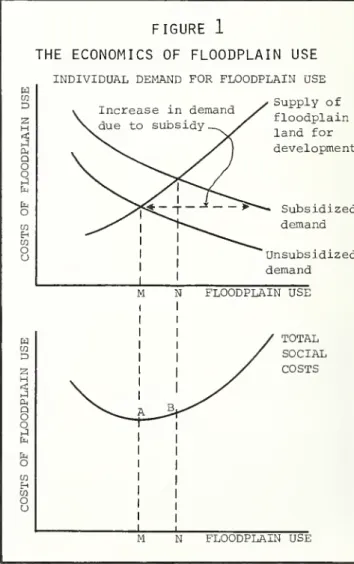
Figure 1 provides a simplified rationale
for economic efficiency in floodplain
manage-ment. The object is to minimize the total social cost of floodplain management. Total social cost is the sum of the costs of
reloca-tion and floodproofing, less the cost of damages avoided by relocation of development, or the restriction of further development in
the floodplain.
If society as a whole could make the
deci-sion, we would choose an amount of floodplain
use represented by point M at a total social cost of A. In fact, floodplain land use
acti-vities are now subsidized because the govern-ment builds flood control projects and bails
out victims of flooded areas. Because of this subsidy, the sum of damages that floodplain residents would avoid by staying out of the
floodplain are less than the damages that
society would avoid if the floodplain were pre-served as open space. As a result, aggregating economically rational decisions results in more land development in the floodplain (at a level
represented by point N) and higher total social costs (equal to point S). The economically
efficient amount of development (N) could be
achieved by 1) eliminating subsidies, 2) taxing floodplain occupancy, or 3) subsidizing
relocation out of the floodplain.
FIGURE
1THE
ECONOMICS
OFFLOODPLAIN
USEINDIVIDUAL DEMAND FOR FLOODPLAIN USE
w
U1
D
•z
<
y Supply of
v Increase in demand
/
_, _ , .\
.,
/
floodplainX
due to suJDsidy—^/
, Z.\
^/
land fora o
o j
Pn
^s^
/
) developmentO ^>f^~~l
"^
•* Subsidizeden Eh en
^^^
1 +—
^^^ demando
o 1 Unsubsidized
demand
M N FLOODPLAIN USE
w / TOTAL
D
/
SOCIALH
<
a<
Q
o o
En
1
/
COSTSO
W
Eh CQ
O
u
Figure 1 captures the main idea behind the
economic approach, but a more detailed analysis of benefits and costs should be carried out. We need information to derive probabilities for the frequency and length of flooding by area, and also the amount, values, and expected
losses of damageable property within the flood-plain. Additionally, we must translate into
EFFECTIVE FLOODPLAIN MANAGEMENT MUST
DETERMINE HOW MUCH LAND DEVELOPMENT
ISECONOMICALLY EFFICIENT AND
ATWHAT
INTENSITY
OFUSE."
cost figures the expected loss of life and limb, and the social, environmental, housing,
transportation, employment, health, and
security disruptions. Actually, the same
information is needed to set up a rational sys-tem of direct regulation like floodplain
zoning. If no floodplain management policies
are implemented, society is making implicit
default estimates of these values.
In a rational world, with an ideally
func-tioning market, "people would suffer [economic]
damage only when every alternative course of a
action was more expensive .... Tney would with-draw from floodplain locations when expected damages are greater than or equal to the value
of land .... They would floodproof as long as
the expense is less than or equal to the damage
reduction" (James, 1968:7). Governmental intervention distorts locational decisions, but
there are also problems with leaving everything
to the market. Individuals may not perceive
risks and benefits properly bacause of a lack of knowledge or ability to deal with complex multivariate probability distributions. People may also have an excessively short time horizon
in mind, or they may deny the hazard
altogether. Individuals may base their deci-sions about location or floodproofing on
"anchoring behavior" (an excessive reliance on
a small amount of concrete data or previous experience), or "gambler's fallacy" (what
happened last year is unlikely to reoccur this year). The poor may be the least likely to be aware of the extent of the hazards.
THE
PROBLEMS
OFDIRECT REGULATION
In general, the direct regulatory technique of floodplain management is not economically efficient because it ignores differences in the
marginal costs of relocation and floodproofing
among firms and individuals in different loca-tions and industries. It does not provide a
mechanism for balancing the marginal costs with
the marginal benefits to the company.
From an administrative point of view, the
relative inflexibility of direct regulatory mechanisms can present several problems. Because of "grandfather" clauses and other exemptions included in most land use control
ordinances and enabling legislation, direct regulation is often ineffective in dealing with existing problems. Zoning laws in eighteen states exempt agricultural uses, while enabling
acts in twenty-nine states exempt pre-existing
uses unless they constitute a nuisance (Kusler, 1976:5). Zoning systems are further prone to
irrational variances, which are unfair to other floodplain landowners and society.
The inflexibility of direct regulation is
also a problem in the achievement of social equity. It does not preserve the right of individuals to make their own decisions, nor
does it make direct allowances for reducing the
heavy burdens that it may impose on individuals --especially the poor. Indeed, direct
prohibi-tion of floodplain residence may increase the cost of housing by restricting supply, but more importantly, it may make housing unavailable to the poor.
A final problem with direct regulation is
that vested interests are likely to oppose
re-gulatory laws, particularly when development is
forbidden. Coalitions of these interests may
be able to apply enough pressure to result in a
weakening of the regulatory effect. Even when
laws are strong, there exist problems with inspection and monitoring for building codes,
floodproofing requirements, and conformance
to zoning requirements. There may be little
power to impose meaningful sanctions for
viola-tions, and even when the power is available,
individuals and firms may escape by delaying compliance until the regulatory agency is
overburdened and unable to go through lengthy
legal proceedings.
THE
ECONOMIC APPROACH
AND
ECONOMIC EFFICIENCY
Economic disincentives can deter or upgrade
the safety of floodplain activities. In
paral-lel, economic incentives for moving out can
decrease the intensity of land uses without prohibiting residents from continuing the same
activity in the same location. They are simply penalized or encouraged for behavior depending
on social costs caused by their activities. When infrastructure is already built up, it may be more economical to stay in the floodplain
and pay the tax or forego the subsidy. Areas
with some flood hazard may still be the most desirable locations for certain land uses. As long as all the benefits of floodplain use
exceed the social costs, and the beneficiaries
of floodplain development bear those costs
rather than taxpayers in general, use of the
North
Carolina's
Growing Problem
Steven
P.French
While the exact amount of flood-hazard area
in North Carolina is unknown, a reputable 1973
study estimated this area to be 3,652,000
acres, or twelve percent of the total land area
of the state (Goddard, 1973). A total of 174
communities have been identified as
flood-prone by the National Flood Insurance Program. Based on the number of flood insurance policies
in force in November 1978, North Carolina has
at least 18,647 structures located in
flood-hazard areas.
Traditionally, flooding has been less
serious in North Carolina (and the Southeast,
in general) than in several other parts of the country. North Carolina did not develop urban concentrations along major rivers or in
coastal areas around seaports, and the concen-tration of development in the piedmont area of
the state, where flooding is relatively less severe, has been a major factor in North Carolina's past record of small flood losses.
Recent changes in the pattern of
develop-ment, however, are likely to lead to serious flood problems in the future. The records of
the National Flood Insurance Program (NFIP) show that there is continuing encroachment by new development on hazardous areas. In 1977, the most recent year for which records are
available, 1,927 construction permits were
re-ported for flood hazard areas in North Carolina.
...the
concentration
ofdevelopment
inthe
piedmont area...
hasbeen
amajor
factor
inNorth
Carolina's
past record
of
small flood
losses."
Assuming an average value of only $30,000 per construction permit, this number of permits represents an investment in hazardous areas of
$57 million in 1977 alone.
NFIP records also indicate that the
ser-iousness of the flood hazard and the rate of
encroachment vary among the regions of the state. For example, the number of flood insurance policies issued in the coastal area
(5,034) is more than four times the number in the Piedmont region (1,183), even though the
Piedmont contains the bulk of the state's population and urban development. The number
of policies in the coastal area is nearly ten
times greater than those issued in the mountain
area (531), even though the most recent floods
have been in the mountains. If the purchasers of flood insurance are acting rationally, the
potential flood hazard is considerably more severe in the coastal area than in the rest of
the state. Additionally, the number of
construction permits issued in hazardous coastal areas in 1977 was ten times the number issued in either of the other two regions.
Given that there is a significant amount of urbanization in hazardous areas in North Carolina, what are the causes of this problem? The natural amenities offered by hazard areas seems to be one of the most important factors.
ACCESSIBILITY
TO
URBAN
SERVICES
AND
PROXIMITY
TONATURAL AMENITIES WERE
TWO
ADVANTAGES MOST OFTEN CITED
IN ASURVEY
OFFL00DPLAIN
OCCUPANTS."
A 1971 study found that many floodplain
resi-dents were willing to bear the risk of flooding
to enjoy the perceived advantages of locating there (James et al., 1971). Accessibility to
urban services and proximity to natural
ameni-ties were two advantages most often cited in a
survey of floodplain occupants. Given the
location of encroachment in hazardous areas of
North Carolina, proximity to natural amenities would seem to be the major factor.
Flood insurance poses another problem for
controlling the urbanization of flood-hazard
areas. The existence of such insurance may encourage banks to provide financing that would otherwise not be available. Furthermore, underpricing of insurance may encourage
un-desirable urbanization since occupants do not bear the full cost of their location decisions. Current methods used to determine flood
in-surance premiums have been questioned. Since
the methods for computing flood probabilities were developed for riverine flooding, wave and
wind forces may not be accounted for correctly
in calculating premiums for coastal areas. A
study of losses associated with Hurricane Eloise indicates that actual losses
signifi-cantly exceeded the losses predicted by the
Federal Insurance Administration (Shows, 1977).
The nearly ten thousand flood insurance policies in emergency program communities in
sub-sidizing such development in some cases and
by making financing available in others.
The final factor leading to urbanization
of hazardous areas in North Carolina is the lack of a state program for floodplain
manage-ment. The Floodway Regulation Law adopted in 1971 has never received funding from the state
or federal level (Stewart et al., 1978). This
lack of funding places the entire responsi-bility for managing and regulating flood hazards with local government, except in the coastal areas which are covered by the Coastal Area Management Act (CAMA) . Even under CAMA,
however, local government has the primary role in regulating hazard areas; this job is too
difficult for local government to handle alone,
especially considering the fiscal incentives
local government has to increase the property
tax base through new development.
In summary, there has been little or no
effort by state or local government to
dis-courage the trend toward large scale urbani-zation of flood hazard areas in North Carolina. Without some form of planned intervention,
flood losses of life and property in North Carolina can be expected to continue climbing
in the coming years.
REFERENCES
Goddard, James E. 1973. An Evaluation of
Urban Flood Plains. Springfield, VA:
National Technical Information Service. James, L.D., E.A. Laurent and D.W. Hill.
1971. The Floodplain as a Residential
Choice: Resident Attitudes and
Percep-tions and their Implication for Flood Plain Management Policy, Atlanta, GA:
Environmental Resources Center, Georgia Institute of Technology.
Shows, E.W. 1977. "National Flood Insurance
and the Coastal Zone: A Case Study of
Hurricane Eloise," Water Resources Bulletin 13(5)
.
Stewart, J.N. , R.C. Heath and J. Morris. 1978.
Floods in Western North Carolina, November
1977: A Lesson for the Future. Raleigh,
NC: The Water Resources Research Institute
Steven P. French is a Research Associate with
the Center for Urban and Regional Studies, the
University of North Carolina at Chapel Hill. He is a candidate for the Ph.D. at the Depart-ment of City and Regional Planning, the Univer-sity of North Carolina at Chapel Hill.
tax and subsidy policy maintains efficient land
uses while discouraging socially unproductive
uses that are also uneconomical to the
entrepreneur.
We can use taxes and subsidies to change an
individual's awareness and perception of flood
hazard, and provide artificial price incentives for more economically efficient responses. Taxes should be structured to provide periodic reminders to floodplain occupants and should be
collected frequently enough so that occupants
can contemplate leaving or floodproofing;
annual or semi-annual tax payments should
suffice. It must be remembered that if the tax
is too low, the program will not be effective. Nor should the tax be set so high that it tries to prevent all potential flood losses,
espe-cially rare, low-probability floods. The
100-year flood is a generally accepted standard. As for subsidies, decisions of individuals and firms to relocate outside the floodplain are
affected more by a one-time payment, since moving is a one-time event, whereas the deci-sion to remain is made continuously or at cer-tain discrete time intervals. Taxes and
sub-sidies may be adjusted until the right levels are achieved, but they should be stable enough
so that decisions can be made more readily.
THE
ECONOMIC
APPROACH AND EQUITY
The economic approach allows long-term residents with sentimental ties to an area to
remain, providing they pay the social costs and
bear the risk for their own decision. Thus,
residents retain more freedom of choice.
Disincentives and incentives are more equitable
than direct regulation because people are not
forced to take specific actions.
Equity is also served because people who live outside the floodplain are not forced to
pay as much to protect floodplain residents. This savings occurs even if subsidies are used
to encourage relocation because less money will be paid out for structural projects, damage, relief, and rescue expenditures.
If the taxing option is chosen, the tax
burden may go up in the floodplain itself, but the overall tax burden in the region will go down. Still more critical from an equity standpoint, third party taxation of non-flood-plain residents for the benefit of floodplain residents will decrease. The burden will fall on those individuals and firms whose activities
are more closely associated with the flood hazard. Furthermore, states are relatively
free to impose new tax and subsidy programs on
existing residents.
Economic tools can also be tailor-made to
least. A tax disincentives program will not cut the supply of housing as much as stringent
land use regulation, although a tax program
will increase the price. Cash or in-kind pay-ments could be used to compensate the low
in-come residents. Better still, in terms of the
efficiency and effectiveness goals, subsidies
can be given to these individuals to help them move out of the floodplain and into decent housing elsewhere. Tax rates could be set on a
progressive basis or could be subject to mini-mum income thresholds, or taxes could be
com-bined with subsidies up to a maximum income
level.
Equity may also be of concern to regional development. Seldom is an entire region in a
floodplain, and development that is periodi-cally inundated does not go very far in
promot-ing a stable economic base for a less developed
area. It would be to the mutual advantage of
both the residents and outsiders if development were located outside the floodplain and compen-sation paid into the area.
Economic disincentives and incentives go a
step beyond the federal flood insurance
pro-gram. Economic measures are set up to account
for spillover costs such as the costs of public structures and rescue, relief, and
rehabilita-tion rather than just the damages to life, limb, and property.
Cochrane (1975:111), in evaluating the
current distributive effects of natural hazards, found that "the federal government under a wide variety of relief programs seems to bear a substantial proportion of the loss to
property .... However, this percentage tends to
decline as the severity of the event
[increases]." At the same time, the current composition of federal programs favors middle
and upper income groups since the poor may not
qualify for government loans. Tax deductions
are also worth more to those in higher tax
brackets, and forgiven loans disproportionately benefit those with the most wealth at stake.
ECONOMIC
TOOLS
CAN.,. BETAILOR-MADE
TOMINIMIZE
IMPACTS
ONTHOSE WHO
CANBEAR
THEM THE LEAST."
If a disproportionate percent of the poor live in areas subject to the most frequent and
severe catastrophic flood events, they also
bear a larger share of injuries and deaths, and
it is likely that they will be in those loca-tions due to lower land prices and rents.
Federal aid may be useful in cases where a
flood-prone locality is in a financially
de-pressed region that is unable to impose a
S.R.I7?6<SR
1110B.
EVERETT
JORDAN
UKE
PROJECT
CONSTRUCTION UNDERSUKRVtSION OF
U.
S.
ARMY
CORPS
OF ENGINEERS
WILMINGTON
DISTRICT KNIGHT INC CONTRACTORm
Structural techniques of flood control are
meeting increasing public opposition.
greater tax burden on residents or fund sub-sidies. The Corps of Engineers is empowered to
acquire land and relocate buildings and
utili-ties off the floodplain; that may be cheaper
than building a giant impoundment even if the
locality by itself cannot afford the relocation
costs
.
FEASIBILITY
OFTHE
ECONOMIC APPROACH
Taxation of floodplain use will encounter political hostility, but less than that gener-ated by other tools such as floodplain zoning.
Unless the taxing jurisdiction coincides with
the flood-risk areas, other groups will also
gain from imposition of the tax. General
tax-payers will not have to bear the burden of
taxes for rescue, relief, and rehabilitation if the tax is set at the proper level and funds set aside for these purposes. If inefficient development is pushed out of the floodplain,
the total tax burden should go down.
Unfortunately, people may fail to perceive this logic and this could have very real political repercussions
.
A tax system is more flexible to administer because the rates can be adjusted up or down
more easily and faster than other regulatory mechanisms. Since floodplain locations shift, taxes can be adjusted to fit changing natural conditions or account for the cumulative effects of small developments. Taxes are also
more flexible as they are not bound by grand-father clauses.
Taxes or subsidies with rates set according
to explicit legislative criteria are probably
less prone to charges of political bias and
favoritism in administration than is direct
exist with taxes than with zoning. It should
be a simple matter to determine whether the tax
on a parcel has been paid or not.
Administra-tive costs would be low if the tax were tied into the existing property tax base.
Property taxes do have some intrinsic pro-blems that result from disparities in services,
differences in size of assessment
jurisdic-tions, the manner in which competent assessment personnel are employed and trained, the types and numbers of properties to be valued, and the
state-local governmental relations and
responsibilities (Back, in Lynn, 1976:62). Due to administrative costs and political
realities, recapture of social costs or
pay-ment of relocation subsidies should be above a
minimum threshold size. At what point should
the tax be collected or subsidy paid out?
There are many possibilities:
1. At the point when public action causes the event (difficult to determine in
practice unless the event is a very specific one such as relocation out of the floodplain)
;
2. Upon sale or transfer of property (harsh if private losses are incurred before
that time);
3. Upon gift by owner (can lead to loopholes)
;
4. Upon death of owner (a proxy for sale, but does not impair real estate trans-actions, although it also does nothing
about the land use before that time un-less combined with regulations.
Corporations persist.);
5. Upon attempted bona fide sale at a lower price if caused by a wipeout or a higher price if due to a windfall (less harsh, but prone to abuse);
6. On beginning or completing development
(this option makes a great deal of sense for a floodplain tax or subsidy system aimed at reducing development in
critical areas)
;
7. On granting or refusing development per-mission (even better than option six);
8. Each year or at some stated arbitrary length of time (this scheme also makes
sense for a floodplain tax or subsidy
program. Taxes would be assessed
several times a year as a reminder of
flood hazard) . (flagman and Misczynski,
1978:35-40)
In designing the taxation system, the sources of political opposition and support should be identified and the information used
to advantage by the planner. Floodplain resi-dents or landowners are the most obvious
sources of opposition. Farmers, land holders, and speculators favor a positive (subsidy)
pro-gram with fewest sanctions for conversion of
undeveloped land. Conservationists favor a
positive program with stiff sanctions for con-version, or a negative (tax) program with
dif-ferentially high taxes for new and existing development. In general, subsidy programs are
politically popular and may be difficult to
uproot once enacted; subsidies and preferential
tax assessments are also relatively invisible
and not usually subject to annual budget scru-tiny, which can be a problem.
James believes that property taxes will not be used as a major environmental protection device because:
1. the environment has traditionally been
a common-property resource;
2. divergence of private versus social costs creates entrenched political interests;
3. subsidies and grants are more popular;
4. "the tax structure already suffers from too much social engineering";
5. activities of various levels of
govern-ment would not be affected. (Lynn, 1976:183)
On the same subject, Haar states that "among
the lessons taught by the American system [of
land use control], perhaps the most valuable
one is that incentives often produce better results than legislative edicts" (Raker and
McPhee, 1975:57).
TYPES
OFLAND
USETAXES
A wide variety of economic disincentives
can be used to guide land use: charges, fees,
assessments, and other instruments lumped
to-gether under the term taxes (although their
legal status varies with the precise type of
system). Disincentives may be defined as "a
monetary charge levied by government on conduct
which is not illegal but which does impose
social costs, for the principal purpose of
dis-couraging the conduct" (EPA, 1974:6). Taxes
may be used to guide future development away from the floodplain or discourage inefficient uses from staying in. According to Delogu
(1968:673), the system can be set up in more complex ways to fine-tune the effects if there
is a "hierarchy of undesirable land use
situa-tions and countervailing public actions could
be construed by the legislature and appropriate
tax rates imposed." Taxes also provide a
source of revenues which can be used to
coun-teract adverse impacts of the taxed activities.
Land use taxes can be structured in various
ways. Some examples are:
1. flat rate per acre;
2. variable rate with type of use;
3. variable rate with type of use and
quality of structure;
5. rates set to cover the extra costs of
public services and contingency costs;
6. rate based on population density of
re-sidential use as a proxy for
quantifica-tion of generated externalities;
7. rates adjusted until the amount of
desired change in land use patterns is
achieved.
Some other types of specific disincentives in-clude special assessments, exactions on
devel-opment permission, impact taxes, sale of development permission, and transfer taxes.
Special assessments penalize incompatible uses in a natural hazard area. Although spe-cial assessments are just the reverse of the
well-accepted preferential assessment tool,
penalty assessments are much more
controver-sial. Special assessments to finance
particu-lar flood control projects or to set aside a fund for flood relief are generally viewed as legal and equitable. Special assessments can be compared to cost-sharing by the
beneficiar-ies of flood control works or relief programs. When special assessments are used, closer scrutiny over the exact benefits and costs of
a proposal can be expected. It is easier to
base assessments on cost allocations because benefits are uncertain as they are dependent
on when a flood occurs.
Exactions on development permission are
charges imposed with subdivision requests, re-zonings, conditional use permits, variances, or building permits. The legality of exactions varies with state and local law, but the trend
is toward acceptance of exactions when the amount paid is less than the gains from development (Hagman and Misczynski, 1978: xxvii)
.
Impact taxes are applied later in the
de-velopment sequence than exactions and are meant
to pay for needed public facilities and ser-vices. In some cases, the cost of servicing floodplains will be greater than flood-free
areas; for example, stronger water pipes must
"RELOCATING
EXISTING
LAND USE
ISESPECIALLY DESIRABLE WHEN THE RISK
OF
FLOODS
ORCOST
OFCONTROL WORKS
ISVERY HIGH."
be used. According to Hagman and Misczynski
(1978:xxvii), "Impact taxes do not enjoy the same legal acceptance as exactions .... [but]
may be more appropriate as general windfall recapture devices than exactions are."
Sale of development permission is related
to contract zoning. Regulatory permits are
issued in exchange for certain monetary or other considerations. In the extreme, this may
be construed as sale of a license to violate a
land use regulation, which is illegal.
Although the theoretical price would equal the net social loss from granting development per-mission, this method may have some loopholes.
Hagman and Misczynski (1968:xxxviii) point out
that speculators might buy up development per-missions and officials might end up "playing
a real game of monopoly rather than..
.adminis-tering a public trust," and further that "no court has ever approved a sale of the right to
regulate. Therefore a permission would be
sub-ject to subsequent regulation even by the
con-tracting government.™
Transfer taxes are sales taxes paid upon
sale or gift of land. They may be ad valorem
taxes based on a percent of the value with fixed or sliding rates or may be levied on
in-creases in land value. If high enough, these
taxes will affect a buyer's decision to locate
in the floodplain. However, transfer taxes
also have the dual effect of discouraging cur-rent residents from moving out. Unscrupulous businessmen may even evade the law by setting
up dummy corporations and claim that no sale
or gift has taken place.
TYPES
OFSUBSIDIES
The purpose of land use subsidies for the
floodplain are to preserve compatible uses and encourage elimination of incompatible uses.
Subsidies may be outright grants, low interest
loans, special tax benefits, or other compen-satory schemes such as transfer of development
rights.
Relocating existing land use is especially desirable when the risk of floods or cost of control works is very high. Although
reloca-tion subsidies have been seriously proposed for Prairie du Chien, Wisconsin, they have not been extensively used (Kusler, 1976:118). If a
sub-sidy program is voluntary, people will only accept the subsidies when they perceive it to
be their interest to do so. Alternatively, relief programs could be designed to reward people who move out of an area after a flood
hits.
Governments should also investigate the use of direct payments, loans, or tax credits for
floodproofing. Tax credits are more equitable than deductions, which are less valuable to
lower income groups.
Easement purchase or differential tax assessments can be used by governments to
re-duce development pressure on floodplain land in
agricultural or open space areas. Easements and differential assessments are well accepted
be combined with land use regulation or
econo-mic disincentives on development to prevent
sprawl caused by market postponement of
con-version aided by tax shelters.
There are three types of differential assessment programs. The first, preferential assessment, bases the value for tax purposes on
current use and not the "best and highest possible use." Because there is no penalty for later conversion to other uses, this tool can
only modify the rate of development of the
floodplain.
deferred taxation is similar to
preferen-tial assessment, but back taxes must be paid if the agricultural or open space is developed.
Clearly, unless the penalty is severe, back
taxes are such a small part of development
costs that delays in conversion are only temporary.
Restrictive agreements are voluntary
con-tracts between land owners and governments to keep land in a particular use for stated
periods of time in return for lower tax
assess-ments. Generally, the tax differential plus interest and a penalty must be paid if the
agreement is broken. Sometimes, long advance notice is also required before development is
allowed. Restrictive agreements are more
com-plex to administer than deferred taxation be-cause contracts are individually negotiated. They can, however, be applied more selectively.
Another incentive/disincentive technique
for development control is that of zoning by special assessment financed by eminent domain.
Landowners in restrictive zones are compensated
by receipts from special assessments on
land-owners outside the floodplain whose property increases in value due to supply restriction.
This is an old technique which has been upheld
in the courts, but is now infrequently used.
THE
LEGALITY
OFNON-UNIFORM TAXATION
The Fourteenth Amendment of the U.S.
Con-stitution requires equal protection and due
process of law for all citizens of a state. Equal protection does not imply equal treatment
of all individuals. It does mean that
govern-ments must weigh public and private interests
and make decisions on a reasonable basis.
Non-uniform taxes based on location inside versus outside the floodplain do not violate the
Fourteenth Amendment. If the entire local
jurisdiction is inside the floodplain, the
locality is not confronted with accusations of
discriminatory taxing unless it sets multiple
rates for different segments of the floodplain according to specific hazard potential.
Unfortunately, a locality entirely within the
floodplain would be risking a competitive
dis-advantage compared to its neighbors in and out
l«(wr
<J:St
In severe floods, structures can end up asdebris and add to erosive scouring.
of the floodplain. Thus, the locality is not
likely to undertake a taxation policy on its own, unless it has already reached its desired
total level of growth or cooperates with all
localities within a region on a floodplain management program.
There are precedents, however, for using taxes to discourage undesirable behavior. State and federal taxes are already being used
to provide economic disincentives against behavior which is harmful to individuals and the environment. Sumptuary taxes on drugs, firearms, gambling, and alcohol, for example, are widespread, and are not considered
viola-tions of equal protection requirements. Most state constitutions prohibit use of public funds for direct private gifts. A
sub-sidy tied to a desired action is not a gift. However, if just the poor received relocation subsidies and the rest of the inhabitants have
to pay floodplain occupancy taxes, there may be
accusations of unequal treatment. If
"simi-larly situated" is interpreted the same way it
is for the progressive income tax, there would
be no problem.
The exact wording of state constitutions
and the implied connotations have a good deal
of bearing on court acceptance of tax
classifi-cations. Most states have some kind of consti-tutional clause relating to uniformity of the
property tax structure. These clauses can be
divided into ten groups:
1. "Property shall be taxed according to
its value." (Arkansas, Maine, and
Tennessee)
2. "Property shall be taxed in proportion
to its value." (Alabama, California,
Illinois, and Nebraska)
3. "The legislature may impose proportional
and reasonable assessments, rates, and taxes upon all persons and estates."
4. "There shall be a uniform rule of
taxation." (Michigan, New Jersey, Ohio, and Wisconsin)
5. "Taxation shall be equal and uniform."
(Mississippi, Texas, West Virginia, and Wyoming)
6. "The legislature shall provide by law for a uniform and equal rate of assess-ment and taxation." (Florida, Indiana, Kansas, Nevada, South Carolina, and
Vermont)
7. "Taxes shall be uniform upon the same class of subjects." (Colorado, Delaware, Georgia, Idaho, Louisiana, Minnesota, Missouri, Montana, New Mexico, Oklahoma,
Oregon, Pennsylvania, and Virginia)
8. "Taxes shall be uniform upon the same class of property." (Arizona
Maryland, North Carolina, North Dakota,
South Dakota, and Washington)
9. "There shall be a fair distribution of the expense of government." (Rhode
Island and Vermont)
10. No uniformity clause directly pertaining
to taxation. (Connecticut, Iowa, and New York) (Newhouse, 1959:9-16)
In general, there is more flexibility in
tax classifications than first meets the eye.
Uniform rules imply classifications are
accept-able. Often, careful creation of tax districts
can circumvent possible problems. The most
re-strictive situation occurs in categories five and six, which outlaw taxation that is not equal and uniform.
In North Carolina, the General Assembly may classify real property for different tax rates.
Presumably, it could place floodplain land in a
separate category. However, this power cannot be delegated to cities and counties to set up
their own classifications themselves (Brower
et al., 1974:80).
Another possibility is designation of urban
and rural service districts. A tax break could
be given on land in the floodplain if the
gov-ernmental unit refuses to extend services
there. This tax subsidy may backfire and
en-courage development if the service boundary is
not taken seriously by developers and the
government; it is best used in conjunction with regulations.
A
MIXED STRATEGY
Now that the case has been made for an
economic approach, it can also be mentioned
that economic incentives, direct regulation,
and structural control are not mutually
exclu-sive tools. They can be integrated to provide effective floodplain management. Additionally,
a mixed strategy is safer if there are doubts
about the legality of a particular element of
the overall plan.
A minimum level of effectiveness can be
ensured by overlaying the various approaches.
If taxes and subsidies are set too low, zoning
and building codes can guarantee some desired
level of land use control. Further, zoning, by
itself, may be useless for modifying existing uses rapidly, while taxes and subsidies alone may not be able to change locational
prefer-ences quickly. Land use locational decisions
are a long time in the making and involve habitual behavior; we do not know the relative elasticities of responses to taxes and
subsidies.
An integrated approach might also be useful
in a rapid growth situation. Since they can be
set into action quickly, taxes are well suited
for use in an interim control program until a
comprehensive plan or regulatory guidance
sys-tem can be prepared or expanded.
...ECONOMIC
INCENTIVES,
DIRECT
REGULATION,
AND STRUCTURAL CONTROL
ARE
NOT MUTUALLY
EXCLUSIVE TOOLS."
With moderately high taxes and subsidies,
in combination with land use controls, the
efficiency and equity advantages of the
eco-nomic approach can be substantially preserved. A mixed strategy is, therefore, not as
incon-sistent as it may seem at first, and is pro-bably the best strategy for practical experi-ments with innovative policies.
CONCLUSION
Flood losses are increasing, despite expen-sive structural flood control works because of
exogenous development pressures undampened by
effective land use guidance. Direct regulation of land use has been largely ineffective and is
hindered by special treatment of existing uses
and by proliferation of variances. It is time
to experiment with a different approach
depend-ing most heavily on economic incentives and
disincentives, in addition to regulation and
structural control if necessary.
It does not make economic sense to prohibit
all use of the floodplain. Taxes and subsidies
can be set up, at least in theory, to encourage
the socially desirable level and types of
acti-vities appropriate for the floodplain. It is
economically efficient to bear some risk and
provide a certain degree of floodproofing,
in-cluding structural controls. Aside from being more efficient, the economic approach is also
more equitable. Disincentives and incentives
do not force anyone to avoid or leave the
pay the full costs of their locational deci-sion, including spillover costs and
environ-mental damage. Often, people are unaware of
the true dangers facing them and society can
bring the risks to their attention with the
periodic reminder of a tax bill.
Still, political opposition to any strong
floodplain land use guidance system can be
expected because of the power of special inter-est groups, even though society as a whole would be better off. Legality depends on spe-cific requirements of states and localities and the program design. Regulatory taxes based on
reasonable criteria are likely to be upheld.
There are many varieties of taxes and
sub-sidies which can be investigated. Each form
has its own particular intended and unintended consequences. The best floodplain program may
be a combination of taxes, subsidies,
regula-tions, and structural control.
"Planners have little
tolose
inadvocating
that the floodplain taxes
and
subsidies
reach
thepublic agenda
as aserious alternative."
It is true that because the use of taxes and subsidies is innovative, we have little
real world data on their effectiveness in
con-trolling land use. The lack of experience is
an advantage as well as a problem. These tools are riskier to attempt, but give the planner more room to experiment. At any rate, previous
flood control policies can be safely judged
a
failure. Planners have little to lose
in
advocating that the floodplain taxes and sub-sidies reach the public agenda as a serious alternative.
Hagman, Donald, and Dean Misczynski, editors. 1977. Windfalls for Wipeouts. Chicago:
ASPO Press.
James, L. Douglas. 1968. Economic Analysis of
Alternate Flood Control Measures.
Lexington: University of Kentucky Water
Research Institute.
Kusler, Jon. 1976. Perspectives on Floodplain Regulations for Floodplain Management. Department of the Army, Office of the Chief Engineer.
Lynn, Arthur, Jr. 1976. Property Taxation,
Land Use and Public Policy. Madison: University of Wisconsin Press.
Maddock, T. 1977. "A Primer on Floodplain Dynamics." Journal of Soil and Water Conservation 31(2).
Newhouse, Wade, Jr. 1959. Constitutional Uniformity and Equality in State Taxation.
Ann Arbor: University of Michigan Law School
.
Oates, Wallace and William Baumol. 1975. "The Instruments for Environmental Policy," in Edwin Mills, Economic Analysis of
Environmental Problems. New York:
National Bureau of Economic Research. United States General Accounting Office. 1975.
National Attempts to Reduce Losses From Floods by Planning For and Controlling the Uses of Flood-Prone Lands. Washington, DC:
Government Printing Office.
United States Water Resources Council. 1973.
"Water and Related Land Resources:
Establishment of Principles and Standards for Planning." Federal Register 38(174). White, Gilbert et al. 1975. Flood Hazard in the United States: A Research Assessment.
Boulder: University of Colorado.
REFERENCES
Baker, Earl and Joe McPhee. 1975. Land Use
Management and Regulating Hazardous Areas:
A Research Assessment. Boulder:
Univer-sity of Colorado.
Brower, David et al. 1974. Growth Management Tools, Techniques, Systems, chapel Hill:
Center for Urban and Regional Studies.
Cochrane, Harold. 1975. Natural Hazards and
Their Distributive Effects. Boulder: University of Colorado.
Delogu, Orlando. 1968. "The Taxing Power as a
Land Use Control Device." Denver Law Journal 45(2). Spring.
Environmental Protection Agency. 1974. Econo-mic Disincentives for Pollution Control: