The purpose of this paper is to develop a decision analytic framework for choosing indicator species for
ecological assessments at Superfund sites. The Comprehensive Environmental Response, Cleanup, and Liability Act (CERCLA)
amended by the Superfund Amendments and Reauthorization Act (SARA) charges the Environmental Protection Agency (EPA) with ensuring that remediation efforts chosen for a site are protective of human health and the environment.
To ensure that the natural communities in the vicinity of a site are being protected, the Environmental Protection
Agency performs an ecological assessment. Indicator Species
are used in the ecological assessment method. Indicator species are organisms who by their presence or absence indicate the extent of environmental contamination in
natural communities. The Environmental Protection Agency does not currently use indicator species in ecological
assessments, but is interested in using them for monitoring cleanup effectiveness after remediation.
Choosing indicator species involves information that is
difficult to quantify and the use of expert judgment. Decision analysis structures the decision problem and
formally incorporates the expert judgement that is involved
in choosing indicator species.
The paper begins with a discussion of the use of
and how indicator species may be used. This is followed by a discussion of the history of the indicator species concept and a review of the use of indicator species in terrestrial and aquatic environments. Criteria for choosing indicator species are then summarized. These criteria are then
incorporated into a framework for choosing indicator species in the next section. This section includes a sensitivity analysis of the parameters of the problem. The final section of the paper is a case study site which illustrates the
application of the framework for choosing indicator species.
Introduction
The following section is a review of ecological
assessment as used by the Environmental Protection Agency (EPA 1984, EPA 1986, EPA 1988, EPA 1989b, EPA 19890). This review covers the definition of ecological assessment,
outlines the regulatory framework for ecological assessment, briefly describes methodologies, and examines the role of
indicator species.
Ecological assessment is a single component of a
hazardous waste site evaluation. Other areas of evaluation
include chemical analyses to establish the fate and
distribution of contaminants, and the assessment of threats
to human health to the site.
The Environmental Protection Agency's Environmental Monitoring and Assessment Program (EMAP) is developing
environmental indicators for a number of areas: near coastal waters, inland surface waters, wetlands, forests, arid
lands, and agroecosystems. The EMAP strategy identifies three main types of indicators: 1) response indicators, 2) exposure or habitat indicators, and 3) stress indicators.
Indicator species are a response indicator, providing a
measure of the overall biological condition of the
ecosystem. Although EMAP's focus is on providing
policy-relevant ecological monitoring information on regional
at Superfund sites), EMAP may provide useful insights into the use of indicator species for ecological assessments.
Statutory and Regulatory Basis of Ecological Assessment The Comprehensive Environmental Response, Compensation, and Liability Act (CERCLA) as amended by the Superfund Reauthorization and Amendment Act of 1986, charges the
Environmental Protection Agency with protecting human health and the environment from releases or potential releases of
contaminants from abandoned hazardous waste sites. The proposed revision of the National Contingency Plan (NCP) calls for the identification and mitigation of environmental impacts from these hazardous waste sites and the selection of remedial actions that are "protective of environmental organisms and ecosystems." Compliance with these laws may require evaluation of a site's ecological effects and the measures needed to mitigate those effects.
Statutes of CERCLA and SARA require that remediation actions chosen for a site protect both human health and the
environment. The Comprehensive Environmental Response,
Compensation, and Liability Act (CERCLA), as amended by the
Superfund Amendments and Reauthorization Act (SARA), requires EPA to protect the environment in terms of the
selection of remediation alternatives, and the assessment of
the degree of cleanup necessary.
Ecological assessments only need to be performed at sites
assessment in areas where the biota is minimal due to urban
or residential development, or in areas where only groundwater or geologic strata are contaminated.
Ecological Assessment and Ecological Risk Assessment
,Ecological assessment can refer to any type of assessment related to actual or potential ecological effects resulting from human activities. Because ecological impact and risk assessment are emerging fields, the term "ecological risk assessment" has been used in many different ways. Strictly defined, ecological risk assessment refers to a quantitative procedure that estimates the probability of specified levels of ecological effects occurring in an ecosystem or part of an ecosystem due to stress from anthropogenic chemicals. Ecological risk assessment has four components: receptor characterization, hazard assessment, exposure assessment,
and risk characterization (ORLN 1986). The Environmental
Protection Agency often uses the term ecological risk assessment in reference to many types of ecological assessment which the agency uses to support regulatory decision making that do not involve estimates of risk.
Ecological Assessment is a "qualitative and/or
An ecological assessment includes several areas. The
current status of selected parts of the biological community are assessed. Then the current level of ecological effects
due to contaminants at a site is determined based on
selected ecological endpoints. An estimate is made of the
extent and variability of toxic effects. Finally, to the extent possible, the Environmental Protection Agencydetermines the extent to which these effects have been
caused by toxic chemicals rather than factors such as
habitat disruption or variability of species distribution
(EPA 1989c).
Indicator species can be used in a CERCLA Type B Natural
Resource Damage Assessment (DOI 1987) where site-specific
assessments are performed based on data collected in thefield. An assessment using indicator species is performed to
determine the present adverse effects of contaminants in an
ecosystem and to monitor the success of clean-up after
remediation efforts. This type of assessment is more
properly referred to ecological assessment than ecological
risk assessment. However, the data from ecological
assessments of this type may provide valuable case study
data for ecological risk assessments.An ecological assessment is conducted to quantify the
ecological effects occurring at a hazardous waste site.
Ecological effects refer principally to community-level
effects on terrestrial and aquatic organisms and ecological
thought to represent reasonably the health of biological populations and communities on and near a hazardous waste site. An ecological assessment does not include the
predictions of future ecological effects at a site, an assessment risk at a site, analyses specific to optimizing remedial actions, evaluation of fate and transport of
anthropogenic chemicals at a site, or comprehensive ecological studies (EPA 1989C). However, an ecological assessment may contribute to any of these areas.
An ecological assessment may be conducted to:
- Determine actual or potential damage to the ecology of a site to support a proposed remedial action.
- Determine the extent of site contamination and adverse
ecological effects of contaminants. - Develop remediation criteria.
- Determine the ecological effects of various remediation alternatives, as part of a feasibility study. (EPA 1989B)
An ecological assessment provides input into the
decision-making process for Superfund sites, including site prioritization, waste characterization, site
characterization, cleanup or remediation assessment, and site monitoring (EPA 1989C). In this paper we are concerned primarily with choosing indicator species to monitor the success of remediation efforts at a site.
The results of an ecological assessment are descriptions
8
is mortality for indicator species. A number of different endpoints can be used for indicator species, but mortality
is the most common. Different endpoints would require different sets of criteria for choosing indicator species, therefore we will focus on developing a decision framework for the most common usage of the term.
Endpoints
Assessment endpoints are those describing effects that drive the decision making process. They represent socially or ecologically important values. Measurement endpoints are those used in the field to approximate the assessment
endpoint when the assessment endpoint is not measurable or
observable.
Endpoints can be either structural or functional. Structural endpoints include indicator species, species diversity and abundance, biomass, indices, and guild
structure. Functional endpoints such as cellular metabolism, individual or population growth rates, and rates of material or nutrient transfer are less commonly used. They are more difficult to measure and have been more recently developed than structural endpoints.
Chemical analyses, ecological surveys, and toxicity tests are all necessary to establish that a cause-and-effect
relationship between toxic chemicals and ecological effects.
variabilities of toxic chemicals at a site. Ecological surveys establish that adverse effects to biota have
occurred at a site. Toxicity tests establish a link between the adverse ecological effects and the toxicity of the
wastes. Without these three types of data we could not
eliminate other potential causes of ecological decline such as habitat alterations and natural variability. The only
capacity in which indicator species have been used in
ecological assessments at Superfund sites is as toxicity
test species.
Ecological Aesessneni: Het.hodologies
An appropriate methodology for an ecological assessment
should:
- Measure the exposure of biota to contaminants. - Determine the adverse effects on ecosystems due to contaminants at the organismal, population, and community levels, as well as effects on community processes.
- Select ecological endpoints that characterize ecosystem responses to contaminants.
- Select ecological indicators that measure the state or rate of change of those endpoints.
- Determine the role of uncertainties in environmental
decision making (Harwell 1990).
Site-specific characteristics influence the assessment strategy and methods at a site. For example, the potential list of "appropriate, relevant, and applicable regulations"
(ARARs) from CERCLA and SARA provide a basis for selecting
10
A detailed ecological assessment involves the measurement
of structural and functional relationships of biota at the
levels of individuals, populations, communities, and ecosystems. This is the role of field surveys. Indicator species are a method of field survey. Field sui'veys have
several advantages:
- Organisms at a site serve as continuous monitors of adverse effects, integrating possible fluctuation in
exposure over time.
- Organisms at a site directly reflect adverse effects and
no laboratory extrapolations are necessary.
- Results of field surveys are directly interpretable since the results are quantified on the resources directly
at risk (EPA 1989C).
Indicator species are a population-level assessment.
Population-level assessments are generally more useful in an ecological assessment than organismal, community, or
ecosystem responses for several reasons:
- Loss of a whole population of organisms has more biological and social importance than the loss of individuals within the population.
- Populations of many species (such as sports fish) have economic, recreational, aesthetic, and ecological
significance.
- Methods for evaluating population responses are better developed than those for organismal, community or ecosystem responses. Population responses have been used longer and more research has been done on them than on responses at other levels.
The use of methods such as indicator species is a
approach such as chemical analyses and laboratory-generated water quality criteria to estimate toxicity. If
Terrestrial and Aquatic Indicator Species
The Indicator Species Concept
Indicator Species Definition
An indicator is "an organism or ecological community so strictly associated with particular environmental conditions that its presence is indicative of the existence of these conditions" (Morrison 1986). The presence or absence of
indicator species is commonly used to assess adverse impacts on ecological communities. Indicator species are organisms that are selectively adapted to certain pollution
conditions, either heavily polluted or clean. The term
"indicator species" has also been applied to organisms that
bioaccumulate toxic substances in their tissues that are
present in trace amounts in the environment. These organisms are more properly referred to as "chemical monitor species"
(Connell and Miller 1984). It has also been used to describe organisms in a healthy or stressed state under a given set of environmental conditions. These different types of
indicator species would have different objectives they are being used to fulfill. The problem that I am addressing is the choice of indicator species that reflect environmental contamination through their presence or absence.
Class I Indicator Species. Class I indicator species are
specialized organisms that have narrow tolerances for most
environmental properties. These are stenoecious organisms
(organisms that have evolved to be specially adapted to pristine conditions). Selected attributes of Class I
indicator organisms may serve as early warning indicators of
perturbations such as chemical stress from a hazardous waste
site. The attribute most often chosen is population decline. Class I organisms tend to signal environmental degradation earlier than Class II organisms. Class II organisms fill theniches which are emptied by the decline of class I organisms.
Class II Indicator Species. Class II indicator species are less specialized organisms that have relatively broad
tolerances for many environmental properties. These organisms are euryoecious (not evolved to fill a highly specialized niche) and are outcompeted by stenoecious organisms in the environments to which the latter are
specially adapted. Class II organisms therefore tend to be present in low numbers in healthy ecosystems. However, tolerant organisms are better adapted to the degraded
conditions of a stressed system. Thus an increase in the
populations of Class II organisms can signal the degradation
14
HiBtory of the Indicator Species Concept
Community composition has been proposed to assess the effects of organic pollution on aquatic ecosystems
(Kolkowitz and Marrson 1908). They developed lists of organisms associated with various zones of pollution,
differentiated accoi~ding to the degree of organic matter in the saprobian spectrum. These zones range from the
polysaprobic (large amount of decomposable organic matter and a low dissolved oxygen concentration) through the alpha and beta zones of recovery, to a clean water oligosaprobic
zone. As we move from the polysaprobic to the oligosaprobic zone, decomposable organic matter decreases and dissolved oxygen increases. Zones are the "centers for optimum growth and development" for the organisms associated with them. An investigator collects and identifies the organisms at a location, and compares them with a list to determine the level of organic pollution.
This system was refined by various scientists in Europe (Sladecek 1965, Thomas 1975). However, this system relied on species sensitivity to dissolved oxygen content in water and did not take into account the toxic pollutants present
Chemical Stress and Indicator Species
For areas such as hazardous waste sites the emphasis on
indicator species needs to be shifted from dissolved oxygen
sensitivity to toxic substance sensitivity. For toxicants,there are large differences in susceptibility among species
(Sloof and De Zwart 1983). Differences in susceptibility ofspecies occupying key places in the food web may have
drastic consequences for the structure and function of an
ecosystem. Changes in chemical conditions can result in the
appearance of characteristic taxa, although these often
represent large population increases in previouslyinconspicuous taxa rather than colonization (Ford 1989).
Changes in species composition may involve the
elimination of only one of the most sensitive species. This species may be of minor ecological importance or concern.
However, if this is a major species such as a fish or an
important fish-food organism, this may give rise to a great
deal of concern (Hawkes 1982). More intense chemical stress
may affect large numbers of organisms in an ecological
16
animals (Borman, 1983). Activities such as resource
gathering and reproduction may also be affected. Shifts in dominance may occur at different trophic levels.
Increased levels or duration of chemical stress not only cause the disappearance of Class I indicator species, but
lead to increases in the numbers of Class II indicator
species. Blooms of opportunistic species normally controlled by competition or predation appear. Blooms create new food supplies for decomposer species, and can lead to a temporary increase in decomposer species (Ford 1989).
The ecosystem response to a chemical stress depends upon the place of the affected species in the food web. A proper ecological assessment based on indicator species requires a thorough knowledge of the relationships between the type of stress and the response of the system. When dealing with disturbance caused by toxic chemicals, knowledge is often insufficient and environmental assessment is seriously hampered (Sloof and De Zwart 1983).
Advantagea of the Indicator Species Approach.
The Indicator species approach has many advantages:
- Indicator species are a relatively easy, inexpensive and
accurate ecological measure if chosen correctly.
- Indicator species serve as continuous monitors of pollution at a hazardous waste site, integrating
- Indicator species are a direct measure of the effects on
the ecology of an area. There is no need to extrapolate from
laboratory tests.
- Effects on indicator species populations are easily understood by managers, regulators, and the general public.
- Indicator species are useful in identifying specific
species at risk (EPA 19a9b).
Karr (1986) writes that indicator species are a useful
measure of the biotic integrity of an area. He defines
biotic integrity as the ability to support and maintain "a
balanced, integrated, adaptive community of organisms having
a species composition, diversity, and functionalorganization comparable to that of the natural habitat of
the region." Systems with biotic integrity can withstand
natural and human-induced stresses or rapidly recover from
these stresses when they are removed. Systems without biotic
integrity are often already degraded and when further
perturbed are likely to change rapidly to even more degraded
states. Karr uses the "index of biotic integrity" hedeveloped as applied to fish to determine perturbations to
aquatic ecosystems.
Disadvantages of the Indicator Species Approach.
In recent years there has been a growing dissatisfaction
among scientists with the use of indicator species (Cairns
1986, Ford 1989). Ecologists have been pushing for a whole
16
of the entire ecosystem rather than measurements on
populations of species. The health of these populations is used to extrapolate the health of the ecosystem as a whole. Whole ecosystem studies are a great deal more costly and time consuming. They also require even greater knowledge than the indicatoi- species approach. The arguments against indicator species are outlined below:
- No single taxa have emerged as the accepted standard among all biologists (Cairns 1974).
- Anthropogenic chemicals may cause stress to exposed organisms that leads to gradual degradation and cumulative changes rather than immediate loss of organisms (Weinstein
and Birk 1988).
- Absence of indicator species may be due to factors other than anthropogenic chemicals, such as competition,
predation, lack of colonization potential, inadequate sampling intensity, and chance. Presence of indicator
species can also be misleading as they may be present in low numbers in undisturbed systems.
- The signal of the response to chemical stress may not be discernable from natural variations in species populations
(Kelly and Harwell 1989).
- If an ecosystem is subject to more than one chemical stress, as is often the case at hazardous waste sites, the indicator species concept may be difficult to apply as different species respond differently to various sets of stresses (Ford 1988). A variety of toxic chemicals will result in a non-specific decrease of species richness and population size (Sloof and De Zwart 1983).
Conclusion
Whether or not species are strongly associated with
specific environmental conditions and share these
associations with others is currently under debate (Mannan et al. 1984). The use of indicator species has not been
critically evaluated. The circumstances under which plants
or animals may provide insight into environmentaldegradation, or the specific organisms that may best serve
as the indicators of degradation have not been well defined(Morrison 1986). The following two sections of this paper
will briefly outline what information is available for plant and animal indicator species in aquatic and terrestrial
ecosystems. The value of the indicator species approach is low in the absence of other supporting data. But careful choice of indicator species applied to well-defined problems
may be useful in detecting regional and site-specific
contamination. The value of the indicator species approach IS enhanced if groups of indicator species are used. It is
particularly useful if they are chosen from different guilds
or trophic levels (Kelly et al. 1988). If groups of
^0
Terrestrial Organlems
Aquatic Versus Terrestrial Qrganieins
Indicator species have been much more extensively used for aquatic ecosystems than they have for terrestrial
ecosystems. In forest ecosystems, the dominant producers are
trees. Trees reproduce and grow slowly. If they are killed
it may be years before they are replaced. A gradual movement
from pollution-sensitive to pollution-resistant speciesoccurs in both terrestrial and aquatic ecosystems. This
trend is much slower in terrestrial ecosystems. The turnover
time for terrestrial ecosystems may be years or centuries
instead of days. Therefore changes are not detectable nearly
as early in terrestrial ecosystems as they are in aquatic ecosystems. However, it will also take a lot longer for a terrestrial ecosystem to recover so detection of
perturbation may be even more important in terrestrial ecosystems (Schindler, 1987). Terrestrial soils tend to
concentrate pollutants, thus exposing the primary producers to toxic chemicals. In aquatic ecosystems the key primary
producers are phytoplankton. They are exposed to toxic pollutants only if those pollutants are water soluble.
Introduction
When examining terrestrial ecosystems, an investigator
needs to know ecosystem properties such as soil type, slope,
is exposed to a xenobiotic (human introduced) chemical, many
organisms are likely to be sensitive to the chemical.Evolution would not have had time to eliminate sensitive species. Various organisms in a terrestrial ecosystem are differentially susceptible to toxic compounds.
Microorganisms capable of detoxifying and breaking down
xenobiotics are not likely to have developed significant
population sizes, if they exist at all. Studies by Sheehan
and Winner (1984) found that pollutants tend to affect species composition and succession by replacing advanced communities with species of earlier serai (successional) stages (see also Woodwell 1983, Odum 1985).
Plants
Early use of indicator species primarily took the form of plants used to identify habitat types. Dominant autotrophs largely determine ecosystem structure, so much has been done
to study changes in these organisms (Weinstein and Birk
1988). Plants have been used in studies of both soil and air
pollution (Jones and Heck 1981, Martin and Coughtrey 1982,
Dewit 1983, Eijsackers 1983, Ernst 1983). Ten Houten (1983)
found that plants are generally more suitable for air pollution studies than animals because they "ask less
attention and react frequently with characteristic symptoms
pollution from volatile organics is an important consideration when determining ecological damage at Superfund sites.
Plants have several advantages and disadvantages as
indicator species:
Advantages:
- Sedentary.
- Easy to identify and usually do not need to be
collected.
- Ubiquitous occurrence.
Disadvantages:
- There is not a great deal of data about plant
sensitivity to toxic chemicals. The focus of most research
has been on animal species.
- Do not bioaccumulate hydrophobic chemicals and therefore are not useful when monitoring for these compounds
(Farrington 1989).
- May react less rapidly than animals (Eijsackers 1983).
Plants may take up chemicals with low log P values
through their roots (A log P value is the logarithm of the
octanol-water coefficient ^Kq^) that predicts
bioaccumulation of compounds in the oils of fish and fat of animals) (EPA 1989B). Plants can't transport significant amounts of compounds with high molecular weights or high log P values. Plants may become contaminated by soil or water, or by the volatilization (into the air) of chemicals at a
of environmental change. Plants are non-mobile, easy to
count, and indicate change through their presence or absence with a high degree of certainty. Perennial plants are the best plant indicators because repeated measurements can be
made at the same location.
Hutton (1984) examined the impacts of airborne metal contamination on a deciduous woodland system. He examined two species, the grass Holcus lanatus and dog's mercury Mercurialis perennis that display tolerance to cadmium contamination. These species showed a strong correlation between abundance and degree of metal contamination. These
species were useful in this situation because there was data
available on the tolerance of these plants to cadmium and
because the substance was not a hydrophobic bioaccumulating compound.
Invertebrates
Terrestrial invertebrates have been used to some extent, but
not to the overwhelming extent they have been in aquatic
environments. Rosenburg (1986) reviewed the use of
terrestrial insects in monitoring studies. Soil is the major terrestrial sink for pollutants, so invertebrates are often heavily exposed to contaminants. Invertebrates have many
24
Advantages;
- High species diversity. - Ubiquitous occurrence.
- Often abundant and easily sampled. ' - Potentially rapid response.
- Ecological and economic importance for decomposition of
organic matter; provision of food for wildlife (Rosenburg et
al. 1986).Disadvantages t
- Small and cryptic in coloration and behavior -not as
easily observed as birds or mammals.
- Identification and analysis of samples is time consuming and expensive.
- Species level taxonomic data are often lacking (Whitby
and Hutchinson 1974).
- Soil types need to be characterized to determine whether
a species should be present or absent.
Decomposer organisms in the litter layer appear to be
relatively sensitive to metals because of their intimate
exposure to them (Hutton 1984). For example, earthworms are
efficient accumulators of both metals and organochlorine compounds, and give a measure of the relative amounts
entering the foodchain. The species Allobophora calliginosa
has been shown to be especially sensitive in studies with copper, cadmium, zinc, fly ash, and sewage sludgeuseful however, when the contaminant is not trapped by soil
particles. Terrestrial invertebrates have not been used
extensively as indicator species, and data are often
lacking. However, there is sensitivity information on this species of earthworm, which makes it a useful indicator.
Vertebrates
Vertebrates have not been used extensively to monitor for
environmental contaminants. Advantages;
- High ecological, economic, and social value. - Conspicuous and easily observed.
- Extensive taxonomic, life history and chemical sensitivity information.
- Upper trophic level organisms which are especially susceptible to bioaccumulating compounds.
Disadvantages:
- Effects of environmental contaminants occur relatively late when compared with smaller organisms with higher
turnover rates.
- Populations tend to be small and absence may be due to
demographics or inadequate sampling.
Birds are the most extensively used vertebrate indicator species (Roberts 1985, Block et al 1986, Block et al 1987). Birds are often the most conspicuous organisms within
26
vertebrates (Stickel 1975, Grue et al 1983). Rats, mice, and
rabbits are other vertebrates that have frequently been
favored as indicator species. This is not because of their
inherent sensitivity but because of the wealth of laboratorydata available which aids in correlating population
decreases with the presence of environmental contaminants.
Sylvia Talmage (1989) assessed the merits of using small mammals as monitors for environmental contaminants. There was a correlation between the amount of contaminants in the soil and in small mammals. The concentration of contaminants
generally increases with higher trophic level organisms.
Morrison (1986) reviews the use of birds for monitoring
ecological effects of DDT on British peregrines (Falco
peregrinus). Upper trophic level species such as peregrines
are especially useful for hydrophobic bioaccumulatingcompounds such as DDT. However, care must be taken in their
use because their numbers are small relative To lower
trophic level species, and sampling error may account for
Aquatic Qrganisms
Introductiort
The use of indicator species is more prevalent in aquatic than in terrestrial ecosystems (Phillips 197S, Angermeier and Karr 1986, Peterson 1986, Courtemanch and Davies 1987, Klerks and Levington 1989). This is because aquatic
ecosystems have been the traditional receptors for municipal and industrial waste. Most of the work that has been done
with indicator species has been in regard to municipal sewage. However, organisms respond very differently to
sewage than they do to toxic chemicals. High concentrations of poorly treated sewage favor organisms that can survive in environments with a low dissolved oxygen content. Toxicity is the main concern with chemical compounds at hazardous
waste sites.
In contrast to the relatively slow reactions of
terrestrial ecosystems, aquatic systems are very dynamic. Heterogeneity is a particularly severe problem in aquatic ecosystems (Ford 1989). It is often difficult or impossible to measure the variability of a system. This is particularly important in weighing the presence or absence of a species.
Even normal seasonal successional changes are more variable
18
of chemicals and ecosystem types make the two very difficult to match in terms of expected effects and changes.
Large lakes are temporally stable physiochemical environments that can also be surprisingly patchy and
changing in terms of community structure. Stratification and mixing lead to differences in species abundance and
ecosystem structure. The sampling intensity necessary to account for ecosystem variability can be great.
Rivers and streams are at the other extreme from lake
ecosystems. Lotic systems are temporally variable and a longer monitoring period may be necessary to characterize lotic systems than non-moving systems. This can be overcome, however, by monitoring a section of stream upstream from the site as well as a section that is being affected by the site
(Stauffer and Hocutt 1980). This allows for comparison between the two sections. Care must be taken that the
ecosystem types of the two sections and extraneous factors are not significantly different.
For aquatic systems it is necessary to determine
ecosystem properties such as dissolved oxygen, substrate, flow, and temperature. In most aquatic ecosystems the best
indicators of stress include changes in sensitive short¬
Periphyton
Periphyton are complex assemblages comprised of
autotrophs (algae) and heterotrophs (fungi, bacteria, or
protozoa) attached to substrates in lotic environments. They
are sometimes are sensitive indicators of environmental
contaminants in lotic (river and stream) ecosystems (Lewis
et al 1986). Non-diatom species predominate in polluted and
recovering areas. Studies have shown declining species
diversity and species richness which demonstrate a loss of
sensitive species with a concurrent increase of more
resistant species (Crossey and La point 1988, Steinman and
Mclntire 1990).Advantages;
- Small and rapidly reproducing, are among the first organisms affected (EPA 19890
- Ubiquitous occurrence
- Easy to collect
- Ecological importance i.e. a food source for higher
trophic level organisms
Disadvantages;
- Relatively little information available on species
sensitivity (EPA 1989C) - Difficult to identify
- Little taxonomic data available
Crossey and LA Point (1988) examined periphyton community
structural and functional responses to heavy metals. They
30
contaminated sites relative to control sites, but diatom
diversity was significantly lower. This indicates a decline
in community complexity where non-diatom speciespredominate. There is presently little information on
pex'iphyton, but as more research is performed on them they
should become more useful indicator species.
Phytoplankton
Phytoplankton have not been used extensively as
indicators of chemical contaminants (Shubert 1984). Changes
in phytoplankton species composition are thought to be among
the most sensitive indicators of ecosystem stress, butcollection and identification problems have kept
phytoplankton from being used (Schindler 1987). Patrick and
Strawbridge (1963,1964) examined effects of contaminants on
diatoms.Advantages:
- Among the first organisms to show changes in species
dominance because they are small, rapidly reproducing, and
disperse widely (Shubert 1984).
- Are sensitive to a large number of compounds:
organochlorines such as DDT and PCBs, and trace elements such as copper, zinc and mercury (Schindler 1987).
Disadvantages;
- Difficult to obtain and sort samples i.e. species
identification (Schindler 1987).- Rapid species succession can cause acute responses to be
- Have not been used extensively i.e data are lacking.
Macroinvertebratea
Aquatic macroinvertebrates are the most commonly used
organisms for the ecological assessment of environmental
contaminants (Resh and Unzicker 1975). Many studies have
been performed using aquatic macroinvertebrates (Lenat et
al. 1983, Schaeffer et al. 1985, Hilsenhoff 1988). Becausepollutants are generally more concentrated in sediments than
in the water column, benthic macroinvertebrates are exposedto greater concentrations of pollutants than pelagic or
planktonic organisms. Thus benthic organisms are the
macroinvertebrates most commonly chosen (Morse 1983). Many benthic organisms are among the most sensitive higher
aquatic species, even to pollutants such as acids which are
not concentrated in sediments (Schindler 1987).
Aquatic macroinvertebrates exhibit a steady, predictable response to heavy metals and other compounds. In streams
extensively polluted with heavy metals, all species except
for tubificid worms and chironomids were virtuallyeliminated (Winner et al. 1980). Mayflies were found to
occur only at the least polluted areas while heavily
polluted areas were dominated by midges. Chironomids
comprise a very small fraction of the fauna in unpolluted
streams in North America, but comprise 40-75% of the fauna
in streams contaminated with heavy metals. Caddis flies were
eliminated at the most seriously polluted parts of streams
parts of streams (Sheehan and Winner 1984).
Macroinvertebrates are the most extensively used indicator species, but species indentification is sometimes a problem. For example, a species-level identification of chironomids requires dissection and examination of mouth parts of the organism under a microscope.
Advantages;
- Large enough for easy collection.
- Are not mobile enough to leave an area of pollution
rapidly.
- Can be studied in labs easily. - Exist in all aquatic environments.
- Life cycle is short enough that short term effects of pollutants will not be overcome until the following
generation (EPA 1989c).
- Communities heterogeneous, several phyla usually represented, therefore chances are high that some groups will respond to environmental contaminants (Hellawell 1986).
Disadvantages:
- Quantitative samples may be difficult to obtain because of spatial heterogeneity.
- Species that drift may be found in areas where they normally don't occur (Lenat et al. 1983).
- Sorting and identifying species may be time-consuming and expensive (Berkman 1986).
- Species level taxonomic and life stage information may
be lacking.
- Chemical sensitivity data are often lacking.
- Under certain circumstances benthic macroinvertebrates
may not be affected by pollution discharges of short duration that may affect organisms in the water column
Fish
Fish are commonly used as bioassay organisms, but they have rarely been used in comprehensive monitoring studies. Fish are becoming more popular as indicator species. Many scientists have decided that the advantages of fish as a
monitoring species outweigh the disadvantages (Karr 1981, Hocutt 1981).
When there are many non-migratory species of various ages and normal growth rates, then pollution has not likely
occurred recently. The presence of fish is more useful than
their absence because of their motility (Goodnight 1973). Karr (1986) has found both the proportion of omnivores and presence of top carnivores to be important in determining pollution levels. Omnivores constitute less than 20% of the fish in an unpolluted ecosystem. A proportion of omnivores of greater than 45% indicates gross pollution. Presence of top carnivores indicates a relatively healthy and
trophically diverse ecosystem.
Advantages;
- Commonly used as a bioassay organism; there is a great
deal of data on chemical sensitivity.- Economic, recreational, and aesthetic value.
- Identification is relatively easy compared to smaller
organisms.- Much information available on the environmental
34
- Fish are "integrators" of lower trophic levels
(Hendricks et al 1980).
- Long lived i.e. temporal integration. - Species occupy many trophic levels.
- Most species reproduce once a year leading to stable populations in the summer when most sampling occurs (Hocutt 1981).
- Contain upper trophic level species which will bioaccumulate hydrophobic compounds.
Disadvantages:
- Mobile and can move away from contaminated areas.
- Numbers are fewer than with smaller organisms, leading to a greater chance of sampling error being responsible for presence or absence. It may also cause sampling to affect the success of a species at the site.
- Quantitative samples are difficult to obtain.
- Have rarely been used; They are not tried and tested.
Karr (1981) developed the "Index of Biotic Integrity," an index of fish community structure, to monitor the health of an aquatic ecosystem. At Black Creek in Allen County,
Indiana, he found a correlation between the trophic structure of the fish community and the amount of
environmental contaminants. He notes, however, that fish have not been used extensively in biological monitoring, and sampling must be extensive to avoid sampling error.
Conclusion
In terrestrial environments, the use of indicator species
with low log P values. Soil dwelling macroinvertebrates are useful indicators of contaminants that tend to be trapped by
sediments. Vertebrates are the most useful indicators of
bioaccumulating substances.
In aquatic environments, the use of indicator species has been extensive. When an ecologist conducts a field survey in a lotic habitat, fish or invertebrates are most commonly used. In standing water, the gradual decrease in effects further from the site is more difficult to detect. In
standing water, a fish residue or toxicity test utilizing water or sediments from the site is often more useful than monitoring for presence or absence of species (EPA 1989C). It is difficult to recommend a specific trophic level to focus on because of site-specific and contaminant-specific differences. However, in certain situations specific types of indicators species are superior.
Macroinvertebrates are most often used for several
reasons: they are ubiquitous; they are easily sampled; and in most cases they can be quickly identified by an expert.
There are some situations where fish are better indicator
species than macroinvertebrates. Fish are good measures bioaccumulators substances. Fish are often important when
social (i.e. sportsfish) or economic (i.e. commercial fishery) issues are involved.
In many cases neither macroinvertebrates nor fish
36
nutrient enrichment or herbicides. The use of periphyton or
Criteria For Choosing Indicator Species
Introduction
The selection of a suitable organism is one of the first
and most important tasks in environmental assessments once
the decision to use indicator species has been made. An
incorrect decision at this stage may render the ecological
assessment useless. The species choice will be influenced by
the needs of the survey as well as by site-specific
characteristics of the hazardous waste site. The choice of
the site should reflect the aquatic and terrestrial
resources at risk.
Two different branches of the federal government have
already developed criteria for choosing indicator species.
The United States Fish and Wildlife Service (USFWS
1980a,b,c) and the United States Forest Service (Code of
Federal Regulations 1985) have developed criteria forchoosing indicator species. The United States Fish and
Wildlife criteria are as follows:
Ecological Criteria;
- Sensitivity to specific environmental factors. - Keystone species (exert a major influence on the community).
- Single species representative of a guild.
- Socioeconomic Criteria;
38
The United States Forest Service has developed criteria for choosing "management indicator species":
- Recovery species; those identified by state or local government as threatened, endangered, or rare.
- Featured species; those of high socioeconomic value. - Sensitive species; those identified by regional
foresters as having habitat requirements particularly sensitive to management activities.
- Ecological indicators; those used to monitor the state of environmental factors, population trends of other
species, or habitat conditions.
Specific goals, objectives, and standards for management indicator species appear in each National Forest Plan that the United States Forest Service is required to develop
(Code of Federal Regulations, 1985). These criteria were developed to monitor the impact of management activities on federal land rather than to monitor for ecological
contamination with toxic chemicals.
Confounding Factors
Introduction
Choosing indicator species is a difficult task. A number
of factors confound the choice of an indicator species.
Species may be present or absent due to factors other than
chemical contamination.
may be other organisms that could take its place. Key species and processes may also vary (Ford 1989). Thus
different species are important in different ecosystems and these species can vary widely in their sensitivity to a
number of chemical contaminants present at a hazardous waste
site. Several floral and faunal groups should ideally be
incorporated into an integrated ecological assessment.
(Roberts 1985). Practical consideration such as time and
money often require that a single species be used. This makes the choice of a proper species crucial.
It is difficult to choose between monitoring for the
presence of a tolerant species or the absence of an intolerant one to determine environmental degradation
through chemical contamination. An ecologist at a site must be concerned with sampling error that may cause an indicator species to appear to have a higher or lower population than it actually does. Having a sensitive species appear present
or a tolerant species appear absent when the opposite is true would constitute a false negative for ecological damage. Having a sensitive species appear absent or a tolerant species appear present when the reverse is true would constitute a false positive for ecological damage. Monitoring for indicator species that have large populations would minimize the risk of false positives and false
40
are an earlier indicator of environmental degradation. However most scientists use the presence of a tolerant species in determining chemical contamination. However,
tolerant species are not always present at a site. Organisms have a wide range of tolerance to pollution conditions.
Therefore absence of non-tolerant species is of greater
significance than the presence of tolerant species (Lenat et al 1983). Absence cannot always be determined for a species because it may be present in low numbers but appear absent.
Cairns (1974) however, has a different point of view. He
notes that the presence of a species indicates that certain
minimal environmental conditions have been met. The absence
of a species is the more risky choice because of possible
confounding factors:
- The environmental conditions are unsuitable.
- The species has not had a chance to colonize the area
but would do so if introduced.
- Another species has assumed the functional niche. The presence of an indicator species is generally more
useful, but the absence of species can be equally useful if a number of species which are all sensitive to the chemical experience population decline.
Species present./absent due to factors other than
tolerance/intolerance. Species may be present or absent due to a number of factors. Species are affected by many factors such as fire or drought, extreme weather conditions, or
wintering grounds. Natural variability and successional changes within the ecosystem may cause changes in species composition over time.
Competition, predation, and disease are factors which can cause the presence or absence of a species. These three
factors, however, are in turn affected by environmental contaminants. Chronic exposure to toxic chemicals can lead to weakness or behavioral abnormalities in organisms. This can cause a species to lose its ability to compete with other organisms or escape a predator. A predator may be affected by a chemical compound and be killed or unable to catch prey as successfully. This could lead to a shift in the competitive balance of lower trophic levels. Toxic chemicals may also make a species more susceptible to disease. It is important to try to separate out the
influence of these factors while at the same time evaluating how much toxic chemicals contribute to the presence or
absence of species.
Differences in comparing one site to another. An indicator that is appropriate in one area may not be
appropriate in another area. Even adjoining areas may appear
similar but have subtle differences. These differences can
occur in the dominant or subdominant species of plants and
animals, and/or in species performing vital ecosystem
functions. There can be different natural disturbances in
42
living in one ecosystem may not be a resident species in the
second ecosystem.
Ambiguous, and ill-defined criteria. Criteria for choosing indicator species need to be unambiguously and explicitly defined (Landres et al 1988). A species used to
fill one criterion should not be used to fulfill a second
criterion unless it explicitly meets the needs of the second criterion. For example, a species with a high socioeconomic value will sometimes be used to fulfill an ecological
criterion. This is not appropriate unless it fulfills both criteria. Species should not be used for multiple roles
unless research has verified that the species is appropriate for both criteria. The reasons for having each criterion should be explicitly stated.
Sources of subjectivity. All of the sources of subjectivity in selecting indicator species must be
identified and defined. These sources will vary depending on the attributes of the site and the ecosystem and species types found on the site. All assessments and technical
decisions inherently contain value judgments which should be discussed so that the merits and difficulties of each may
Criteria For Choosing Indicator Species
When using the criteria, candidate organisms may be arranged by taxonomic class for ease of comparison and organization. An ideal organism would fulfill all of the following criteria. However, the following criteria are
extensive, and it may be difficult or impossible to find one organism that fulfills all the criteria. However, several organisms taken together should be able to fulfill the
criteria and provide important information for an ecological assessment. These criteria were identified through a
literature review of criteria that have been used to choose
indicator species. The following criteria will be incorporated into a decision framework for choosing indicator species in the next section of the paper.
Species Sensitivity to the Contaminant. Indicator Species should be chosen based on their sensitivity to the specific
environmental contaminants which must be monitored.
Sensitivity to toxic chemicals is a crucial element in choosing an indicator species. Those species that are most sensitive to contaminants potentially make the best
indicator species (Szaro and Balda 1983). Sensitivity is often measured in terms of LC50 values (the amount of a chemical necessary to cause 50/C mortality in a species in a given time period). Organisms differ in their relative
44
result in often extreme differences in species' relative
sensitivities to environmental contaminants (see Table 1).
However, these attributes can differ dramatically from chemical to chemical. Consequently, exposure to two different chemicals can produce two markedly different
responses. It is important to determine the contaminants of
concern at a site and to match these contaminants with
species that are relatively sensitive or insensitive to them.
The organism chosen should be at one end of the range, either extremely sensitive or extremely insensitive to toxic chemicals. It may also be useful to choose species that by themselves or in conjunction with one another will exhibit a graded response to a range of increasing levels of
environmental contamination. For example, Sheehan and Winner (1984) report that in streams polluted with heavy metals, mayflies were a significant part of the insect community only at the unpolluted sites. Caddis flies were co-dominant with chironomids at moderately polluted sites while they were eliminated at the most grossly polluted sites.
Chironomids were most abundant at the most grossly polluted
sites. Thus the level of contamination could be roughly
determined by the relative proportions of the three types of insects.
Sensitivity to the contaminants of concern should have a direct cause and effect relationship, rather than a
clearly demonstrate that a species' population decline is due to the contaminant in question. Otherwise the effect of contaminants on populations may not be separable from other regulating factors such as competition, predation, and
disease (Landres et al. 1988).
Sensitive organisms have a relatively rapid response to environmental contaminants. The length of time it takes for a species to be affected by toxic chemicals depends on both species sensitivity and exposure.
Paleoecological studies are becoming more important in determining species sensitive to pollutants (Schindler 1987, Ford 1989). They offer the opportunity to examine changes in community structure at sites that have already experienced
chemical stress.
Temporal Continuum of Reproducing Stocks. A species which has been a part of the ecological community at a site for a long time and has several generations existing at once
serves a number of purposes. It assures that the organism is a permanent part of the ecosystem which is unlikely to
increase or disappear for other reasons. It also allows for continued monitoring of successive generations to determine improvement or further degradation at the site (Ryder and Edwards 1985). The organism should be sufficiently long lived for the examination of more than one year class if
desired (Ryder and Edwards 1985). This may be confounded by
46
High Reliability and Specificity of Response. The organism should exhibit high reliability and specificity of response
(Landres et al 1988). In order for this to be happen,
several factors must hold true. The population increase or decline due to the chemical stress must be large in
comparison to normal population fluctuations. Alternatively, the contribution from each significant source of variation
must be identified (Sloof 1983).
Wide Distribution. Potential indicator organisms should be widely distributed in the area. This will allow for comparison with other sites in the area. Candidate species should be screened for organisms whose geographic range does
not include the area of the hazardous waste site or who
require special habitat features not found at the site (Fry et al 1986). The species should also be abundant enough to be easily found. This minimizes the risk that a species will be misclassified as present or absent. It also minimizes the risk that the populations will be affected by any samples taken.
Residency Status. When monitoring for the absence of an
intolerant indicator species it is important for the
organism to be indigenous and stable component of the
ecosystem. Such an organism will be adapted to relatively
should be permanent residents of the site. Migrating species are affected by many offsite factors. However, migrating species are often included for other reasons such as socioeconomic factors (Landres et al. 1988).
Exposure to Environmental contaminants. Exposure to environmental contaminants is an extremely important consideration when choosing indicator species. It is
important to pick the species which is highly exposed to the
contaminated media. The primary uptake routes of the
organism should be considered. Because organochlorines tend to be associated with particulate matter, a soil organism or filter feeder should be chosen (Phillips 1980). Synthetic organics such as poly-chlorinated biphenyls and dioxin are soluble in fat and thus a species with a large proportion of body fat would be appropriate (Farrington 1989). Trace
metals such as cadmium exist almost totally in solution so an organism that exists in the pelagic zone of an aquatic ecosystem would be appropriate. Landres et al (1988)
cautions that metal pollution in organisms may result from
mobility and transport of the pollutant within the ecosystem
rather than being directly related to pollution
concentration in the environment. Therefore it is often
important to consider species uptake and metabolism, although such information is often limited.
Water soluble compounds should be investigated for
48
compounds may also move through the aqueous phase of some
soils, increasing the likelihood of exposure to soil
organisms.
Compounds with low water solubility may be trapped in soil particles and may affect organisms living on or in the ground. Contaminants trapped in soil particles may also be carried by erosion to aquatic or other terrestrial sites. Hydrophobic compounds tend to bioaccumulate and an upper trophic level organism may be appropriate (Farrington 1989).
Dose is an important element of exposure when looking at indicator species. Dose can be high for a short duration
(acute exposure) or low for a long duration (chronic exposure). A high dose or acute exposure will induce mortality rapidly. A low dose or chronic exposure will
impair the functioning of some biological process within the organism (Weinstein and Birk 1988).
The species chosen should preferably be sedentary at most stages of its life cycle and especially at the life stage of interest. The organism will be more representative of the site the site if it does not spend part of its time
off-site. An organism that spends part of its life off-site will
not be as fully exposed to the contaminants at the hazardous
Easily and Accurately Collected and Monitored. It is important to use a species that can be collected and
measured easily to determine the standing stock in terms of
numbers and biomass. This will decrease the time and cost
expenditures of the environmental assessment and increase the accuracy of the results (Berkman 1986). In order for a species to be easily collected and monitored it must have a fairly high population density. Organisms with a low
population density lead to sampling problems which may make an accurate assessment impossible despite the organism being a good indicator in other ways. Long-term research is needed on each indicator species to assess natural variation in population density not related to environmental contaminants which may confound results. Population density must be
balanced with species sensitivity however Freckman et al (1980) showed that less abundant species are relatively
sensitive to adverse influences. Szaro and Balda (1983) said
that organisms with the following three attributes were relatively easy to monitor:
- Conspicuous by sight and sound.
- Easy to recognize in the field without the observer having to capture the species to identify it.
- Active during daylight hours.
50
ecological assessments need a combination of field
observation and laboratory experiments of organisms. It is
essential to quantify species sensitivity to an environmental contaminant in a laboratory setting.
Historical Information- Species should be chosen based on
the information available on the species' history in the
ecosystem. Information is necessary on the species' natural
baseline condition and its range of variation in the
ecosystem. This information is often available for sports fish. The species should have one or more historic data
series for comparison with the present. The data should show
quantifiable evidence for the relative abundance or scarcity of an indicator species during a period of relatively little
contamination. However, this information is often lacking.
Information on the species at the site can be supplemented
with information from previous studies on the species in
similar ecosystems. By comparing present population levels
with historical population levels, an ecologist can
determine whether a species' population level may have been affected by chemical contamination at a site. An alternative to this is to have a similar site for comparison with the
contaminated site, but if this is done care must be taken to
Available Information and Data. The biology of the species should be known in detail. This should include life history and interactions with other species. This will aid in the evaluation of an organism's response. The organism's
physiological responses to a wide range of environmental
conditions should also be known (Lenat et al 1983). This
will help ensure that environmental factors other than chemical sensitivity will not be responsible for an the presence of a tolerant species or the absence of an intolerant species. Niche requirements and habitat
characteristics should be known and supported by adequate scientific information. This will allow the investigator to determine that the organism's absence is not due to unmet
niche needs or unsuitable habitat at the site.
Using quantity of available information as a selection
criterion reduces time and costs in terms of additional
research that may have to be done on the organism (Landres et al 1988). This often has the drawback of reducing the relevance of the organism for an ecological assessment. Little information may exist for a relatively sensitive indicator while a great deal of information exists for a less sensitive one. The less sensitive indicator may be chosen although the more sensitive species is the better indicator of environmental conditions. This criterion must
52
Maximize Usefulness of Information Gathered. Species should be chosen in such a way that they complement the other information used in the ecological assessment (Ryder
and Edwards 1985). Different indicators should reflect
different trophic levels. A certain amount of redundancy in information is useful in confirming ecological damage, but
this must be balanced with the need to characterize the
state of the natural communities at a site to the greatest extent possible. It is desirable to determine if several species on the same trophic level being affected because this would confirm that significant damage is being done to this trophic level. However, information needs to be
gathered for other trophic levels of the ecosystem also.
Critical Species. In order to assess whether the ecosystem is being adversely affected by chemical contaminants, the indicator organism should be a critical species. A critical species is a species that performs a vital ecosystem
function in the cycle of biological processes in an ecosystem (Weinstein and Birk 1988). A critical species
energy and nutrients to the biota in the ecosystem.
Ecosystem stability and viability depends upon the continued success of critical species. Ecosystem decline will be
signaled by the decline of these species. Recovery of ecosystems is also closely linked with the recovery of
critical species (Weinstein and Birk 1988). Critical species also include top predators which keep populations under
control and maintain species diversity.
When looking at critical species, it is often useful to look at shifts in the dominant species in an ecosystem. These shifts tend to be more ecologically damaging than changes to less dominant species (Ford 1989).
The critical species concept applies to tolerant as well as intolerant species. The relative abundance of species with short life cycles changes to favor those that can
maintain critical ecosystem functions in the early stages of ecosystem stress. Such organisms are valuable indicators of stress and may serve as an early warning of contaminant
problems (Schindler 1987). The critical species criterion is
sometimes difficult to apply because few critical species have been identified although research is continuing.
Low Redundancy and Immigration. The species should occupy
a place in the food web where both redundancy (number of
species performing an important ecosystem function) and
54
species perform the species' ecosystem function (such as litter decomposition) and immigration is unlikely to occur,
then adverse effects to the organism could significantly
effect the food web.
Life Stage. When choosing an indicator species it is
important to consider the life stage of interest. A species may have a life stage that is particularly vulnerable to
environmental contaminants. For example, adults of a species
may withstand a short-term discharge of a contaminant, but
this discharge may kill all of the juveniles of a species. To cause injury, chemical exposure must occur at a
vulnerable location during a vulnerable period (Weinstein and Birk 1988). The life stage of interest may cover any one
of a number of areas:
-Reproductive success as measured by the survival of gametes, larva, juveniles, or embryos.
-Longevity of adults.
-Incidence of disease, including physiological and
behavioral abnormalities (EPA 1989b).
Ecosysten Integration. The organism chosen should display
at least a moderate level of ecosystem integration. Itshould interact with many other natural components of the
community. An organism which interacts with many other parts
of the community will generally have more importance to the
system and therefore more relevance in measuring thepredator that feeds on a large number of lower trophic level
organisms would have high ecosystem integration. However a
parasitic species that feeds on only one species would have
low ecosystem integration. Ecosystem integration is qualitatively rather than quantitatively determined. An important consideration when determining ecosystem
integration is that the more an organism is studied, the more ecologists will recognize a species' interactions with
other species.
Social Value. It is often helpful to reduce the number of possible species by looking at those which are important to humans. The species may be valuable for aesthetic, economic, educational, scientific, or sporting reasons. These include threatened and endangered species which appear on current state and federal lists. Species important for hunting,
fishing, and trapping can be determined using lists obtained from state departments of fish and game. Species of high social value are the species for which we have the most
information. They are also the species we are most concerned
with protecting against the deleterious impacts of
environmental contaminants. Social value has often been the
primary criterion when choosing indicator species (Landres
et al. 1988).
Alternatively, organisms which are a vital food source
56
Framework For Choosing Indicator Speciee
Introduction
Decision'analysis has not been previously been applied to choosing indicator species for ecological assessments at Superfund sites. It has not applied to ecological problems to a great extent, although there are some examples in the literature (Maguire 1986, Keeney 1977, Hilborn and Walters 1977).
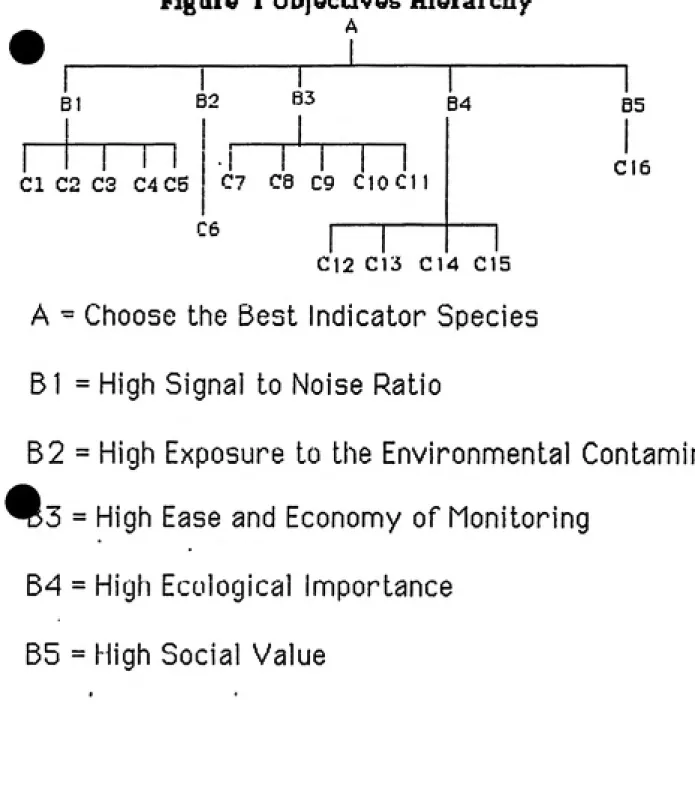
When choosing indicator species, the decision maker is faced with a complex problem involving value tradeoffs between conflicting objectives. A great deal of the information concerning the objectives is difficult to quantify and involves expert judgement. Decision analysis structures the decision problem and formally incorporates the expert judgement that is involved in the decision of choosing indicator species. A person not familiar with
decision analysis techniques may find this formal structure
difficult to use. There are a number of books on decision
analysis for further reading (Keeney and Raffia 1976, von Winterfeldt and Edwards 1986, French 1986, Clemen In
Publication).
The decision analytic framework which I will lay out in this section of the paper is purposefully general in order to be applicable to a large number of Superfund sites. It