PREDICTING PROSPECTIVE MEMORY: METACOGNITIVE SENSITIVITY AT ENCODING
Jonathan A. Susser
A dissertation submitted to the faculty of the University of North Carolina at Chapel Hill in partial fulfillment of the requirements for the degree of Doctor of Philosophy in the Department
of Psychology and Neuroscience
Chapel Hill 2016
iii
ABSTRACT
Jonathan A. Susser: Predicting Prospective Memory: Metacognitive Sensitivity at Encoding (Under the direction of Neil W. Mulligan)
Prospective memory refers to our ability to remember to complete future intentions. Research on prospective memory has identified factors that influence performance; however, it is unclear how sensitive people are to these factors and how aware they are of their prospective memory abilities. In retrospective memory, or our memory for events in the past, much is known about how people assess their learning, and Koriat’s (1997) cue-utilization framework outlines three types of inferential cues thought to influence memory predictions. Koriat classified cues as being intrinsic, or properties of the to-be-learned information; extrinsic, or conditions of the learning environment; and mnemonic, or subjective indices of acquisition. In the current study, I applied Koriat’s framework to predictions of prospective memory. In particular, the study examined, at encoding, sensitivity to one intrinsic cue (target-response association) and one extrinsic cue (target focality) known to affect prospective memory performance. Experiment 1 examined target-response association and target focality in a between-subjects design.
Experiments 2 and 3 manipulated each factor within subjects. Results indicated that judgments of prospective remembering are similar to those of retrospective remembering: they are sensitive to information intrinsic to the to-be-remembered information but less so to extrinsic cues about the learning situation. These findings nicely extend Koriat’s framework to this additional
iv
v
ACKNOLWEDGEMENTS
First and foremost, I would like to thank my advisor, Neil W. Mulligan. Neil always supported and encouraged me, pushed me to be a better researcher and scientist, and made sure I kept the reader in mind in my writing. I truly do not think I would be here today without his guidance, and I know all of his thoughtful feedback helped me succeed. Neil was always around if I had a question, concern, or conundrum, and was excellent at putting things in perspective and ensuring everything was okay whenever I came across any major or minor (almost always minor) issues.
I would also like to thank the other members of my dissertation committee, Kelly Giovanello, Peter Ornstein, Mark Hollins, and Keith Payne, for their advice, comments, and inspiration both inside and outside of the classroom.
I owe a big thanks to the members of my lab, past and present, for all of their support over the years. Miri Besken, Milton Picklesimer, Adam Smith, and Zach Buchin all helped me develop and improve my projects and ideas. I want to strongly thank Chris Foster, the other member of my cohort. He was imperative in keeping me sane, happy, and productive throughout my entire time in graduate school. We went through everything together, and it was great to have someone to connect with along the way. And I would not have been able to collect and analyze all of my data without the help of numerous research assistants over the years.
vi
make me a better person, and, even though I resist at times, I know she has my best interests in mind. I am excited to see where we go from here.
vii
TABLE OF CONTENTS
LIST OF TABLES ... x
LIST OF FIGURES ... xi
CHAPTER 1: INTRODUCTION ... 1
Metamemory Overview ... 2
Memory Monitoring ... 3
Measures of JOL Accuracy ... 5
Metamemory Conclusion ... 7
Prospective Memory Overview ... 7
Classifications of Prospective Memory ... 8
Prospective Memory in the Lab ... 8
Factors Influencing Prospective Memory ... 9
Retrieving Intentions ... 13
Prospective Memory Conclusion ... 16
Metamemory Monitoring in Prospective Memory ... 16
The Current Study ... 20
CHAPTER 2: EXPERIMENT 1 ... 23
Method ... 24
viii
Materials and Design ... 24
Procedure ... 25
Results ... 27
Judgments of Learning ... 28
Prospective Memory Performance ... 31
Ongoing Task Performance ... 32
Discussion ... 33
CHAPTER 3: EXPERIMENT 2 ... 36
Method ... 36
Participants ... 36
Materials, Design, and Procedure ... 37
Results ... 37
Judgments of Learning ... 37
Prospective Memory Performance ... 39
Ongoing Task Performance ... 40
Discussion ... 40
CHAPTER 4: EXPERIMENT 3 ... 42
Method ... 43
Participants ... 43
Materials, Design, and Procedure ... 43
Results ... 44
Judgments of Learning ... 44
ix
Ongoing Task Performance ... 46
Discussion ... 47
CHAPTER 5: GENERAL DISCUSSION ... 50
Limitations ... 56
Future Directions ... 58
Conclusions ... 61
x
LIST OF TABLES
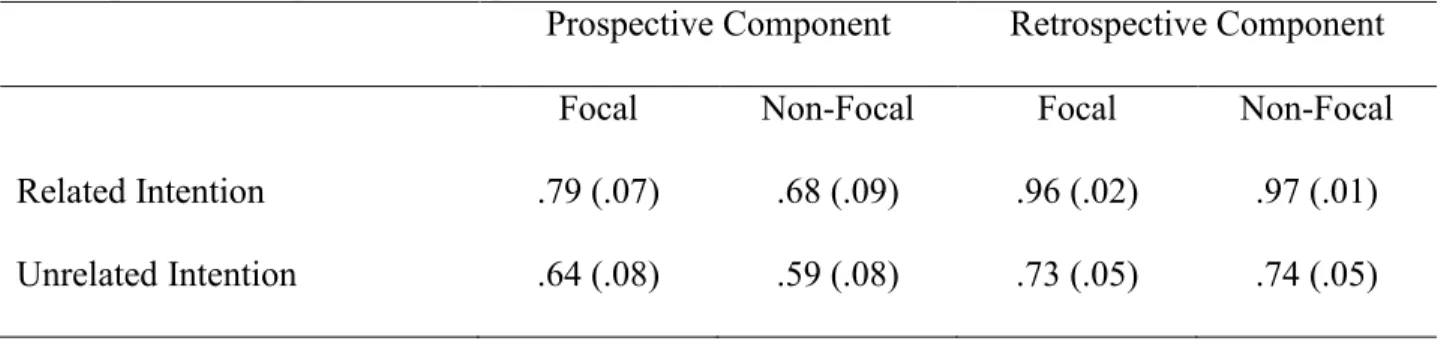
Table 1. Mean (SE) Proportion Prospective Memory Performance
for the Prospective and Retrospective Components in Experiment 1... 32 Table 2. Mean (SE) Proportion Accuracy and Mean (SE)
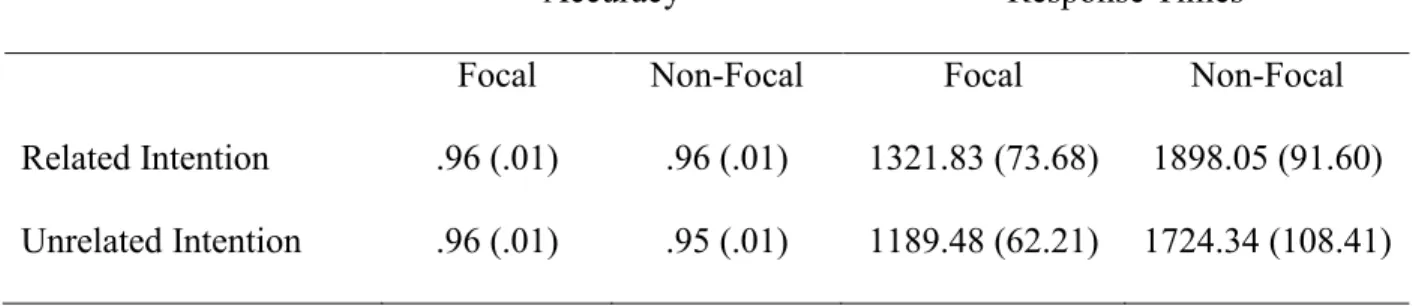
of the Mean Response Times (in Milliseconds) for the Ongoing Tasks in Experiment 1 ... 33 Table 3. Mean (SE) Proportion Prospective Memory Performance
for the Prospective and Retrospective Components in Experiment 2... 40 Table 4. Mean (SE) Proportion Prospective Memory Performance
for the Prospective and Retrospective Components in Experiment 3... 46 Table 5. Mean (SE) Proportion Accuracy and Mean (SE)
xi
LIST OF FIGURES
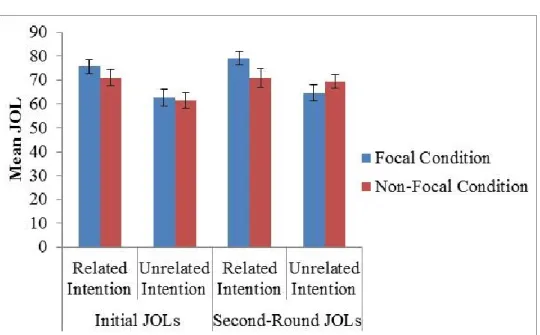
Figure 1. Mean initial and second-round prospective JOLs by
focality and target-response association in Experiment 1 ... 29
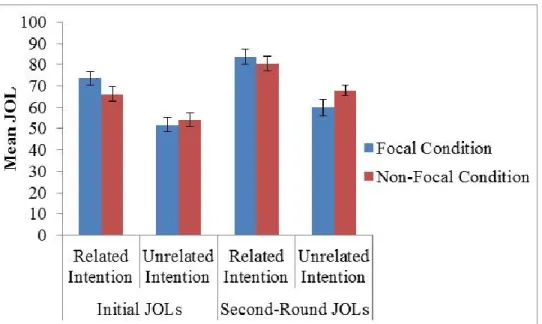
Figure 2. Mean initial and second-round retrospective JOLs by focality and target-response association in Experiment 1 ... 30
Figure 3. Mean initial and second-round prospective JOLs in Experiment 2 ... 38
Figure 4. Mean initial and second-round retrospective JOLs in Experiment 2 ... 39
Figure 5. Mean initial and second-round prospective JOLs in Experiment 3 ... 45
1
CHAPTER 1: INTRODUCTION
Our lives contain many upcoming tasks and responsibilities: we need to pick up groceries from the store, put leftovers in the fridge, relay a message to a friend, and more. Remembering to complete such tasks is referred to as prospective memory. In contrast, our memory for events and information experienced in the past is known as our retrospective memory. Although the
majority of memory research has studied retrospective memory, prospective memory research has grown in recent decades because of its implications in both basic and applied domains (for reviews, see Dismukes, 2010, 2012). Crovitz and Daniel (1984) estimated that half of everyday forgetting reflects failures of prospective memory. Due to the numerous prospective demands we face, we have developed tools to help us remember. Knots on fingers, pill boxes, and basic calendars reflect some of the many aids that ease our prospective memory burdens.
2
With these issues in mind, it is important to understand people’s sensitivity to their prospective memory performance. We know much about how people predict their retrospective memory, but little research has examined our ability to judge whether we will complete future tasks.
Metamemory Overview
How people assess and make decisions about their memory is referred to as metamemory. In other words, metamemory reflects people’s awareness of their memory processes. Researchers distinguish between two metamemorial processes: monitoring, or the assessment of memory, and control, or the decisions we make about our memory (Nelson & Narens, 1990). For example, students preparing for an exam may monitor their studying to evaluate what they know and do not know, and then use these monitoring assessments to decide whether to continue reviewing material or move on to other work.
How do researchers assess monitoring and people’s judgments about their memory? In a typical study, participants learn a list of items one-by-one in preparation for a memory test. During encoding, participants make a prediction, often for each individual item, about their future memory. The most common prediction is the judgment of learning (JOL), for which participants rate their confidence in remembering an item on a scale from 0 (no confidence) to 100 (extreme confidence). Participants later take the memory test, and objective memory can be compared to predictions in a variety of ways to assess the accuracy of the metamemorial
3
A primary goal of metamemory research is to understand how people make JOLs and what information goes into them (for reviews, see Bjork, Dunlosky, & Kornell, 2013; Schwartz & Efklides, 2012). If people initially make faulty predictions, their later decisions may likewise be faulty, leading to an inefficient allocation of cognitive resources (e.g., Rhodes & Castel, 2009).
Memory Monitoring
Current theorizing views monitoring as an inferential process based on cues in the learning environment (e.g., Koriat, 1997; Schwartz, 1994; Schwartz, Benjamin, & Bjork, 1997). People’s predictions will be accurate to the extent that they use cues that relate to actual memory performance. If people rely on cues that are not indicative of memory, their predictions and study decisions may be impaired (e.g., Rhodes & Castel, 2009).
So what cues do people use when making judgments of future memory? Koriat (1997) proposed an influential cue-utilizationframework that delineates types of cues people
4
example, feelings regarding the ease of learning or producing information would be considered mnemonic cues.
A key proposal of Koriat’s (1997) framework is that intrinsic cues more strongly influence JOLs than do extrinsic cues. More specifically, participants often discount or
underappreciate the effects of extrinsic factors on memory. Across multiple experiments, Koriat provided evidence for this idea by first showing that JOLs effectively tracked item difficulty of word pairs (based on the relatedness between the items), an intrinsic cue, but not the number of study trials or length of study duration, both extrinsic cues. Although all three of these variables affected actual recall performance, participants’ predictions were more sensitive to, and
consistent with, the effects of the intrinsic information.
Subsequent research has generally supported the discounting of extrinsic cues in forming JOLs (e.g., Carroll, Nelson, & Kirwan, 1997; Castel, 2008; Kornell & Bjork, 2009; Kornell, Rhodes, Castel, & Tauber, 2011; Susser, Mulligan, & Besken, 2013; Tauber & Rhodes, 2010; but see Begg, Vinski, Frankovich, & Holgate, 1991; Dunlosky & Matvey, 2001). For example, Koriat, Bjork, Sheffer, and Bar (2004) assessed whether participants were sensitive to the effects of differing retention intervals and item relatedness of word pairs. In one experiment,
participants were told that they would be tested on word pairs either immediately or upon returning to the experiment a day or week later. Participants studied the items, made a JOL for each one, and ultimately took the memory test. As expected, predictions were sensitive to the associative relatedness of words pairs, an intrinsic cue. However, for retention interval,
predictions were remarkably stable despite actual memory performance declining dramatically with increasing interval. Subsequent experiments revealed that people can display some
5
the effect on recall remained much greater. This pattern of results is intriguing given the salience of forgetting in everyday life. Furthermore, Susser et al. (2013) found that JOLs were influenced by perceptual characteristics of items (i.e., word font size and auditory clarity), which did not actually affect memory, but were not influenced by the composition of the list in which the items were presented (i.e., mixed vs. pure), which did.
Koriat (1997) defined the third category of cues, mnemonic cues, as subjective indices that inform the learner how well material has been learned. These mnemonic cues have been heavily researched, and the most frequently studied index has been processing fluency, or the subjective ease of processing information (Alter & Oppenheimer, 2009). Researchers have examined various instantiations of fluency, both when perceiving and producing information, and have observed a general pattern: more fluent processing is associated with greater memory confidence, even if it is not reflective of greater memory performance (e.g., Begg, Duft,
LaLonde, Melnick, & Sanvito, 1989; Benjamin, Bjork, & Schwartz, 1998; Besken & Mulligan, 2013, 2014; Hertzog, Dunlosky, Robinson, & Kidder, 2003; Rhodes & Castel, 2008, 2009; Susser & Mulligan, 2015; Undorf & Erdfelder, 2011). For example, Benjamin et al. (1998) had participants mentally generate answers to trivia questions of varying difficulties. Participants pressed a key upon retrieving an answer (used as an index of retrieval fluency) and made a JOL for each. Eventually, participants took a memory test. The researchers found that JOLs increased for answers that were more quickly retrieved, but recall decreased.
Measures of JOL Accuracy
6
the items (i.e., their average JOLs for a set of items is 45) and actually recall 45%, they have perfect absolute accuracy. Overconfidence and underconfidence can similarly be computed by comparing participants’ predictions with their memory accuracy.
The sensitivity of JOLs refers to the extent to which patterns of JOL responses match patterns of recall, and is usually assessed in conjunction with a manipulation of memory or metamemory. For example, if a variable has similar effects on JOLs and recall, then people would seem to be sensitive to the variable. However, a manipulation may affect JOLs and not recall (referred to as a metacognitive illusion, see Rhodes & Castel, 2008), recall but not JOLs (e.g., Sungkhasettee, Friedman, & Castel, 2011), or both but in opposite directions (e.g., Besken & Mulligan, 2014). In these latter cases, people’s awareness of factors influencing memory is shown to be poor. Although people can show good sensitivity (e.g., Begg et al., 1989; Koriat, 2008; Tauber & Rhodes, 2010), they also rely on cues that are not indicative of memory
performance (e.g., Benjamin et al., 1998; Besken & Mulligan, 2013, 2014; Hertzog et al., 2003; Rhodes & Castel, 2008; Susser & Mulligan, 2015).
A third aspect of JOL accuracy is relative accuracy, which assesses people’s ability to accurately predict performance for one item in relation to others. In other words, relative accuracy shows whether people can discriminate to-be-remembered items from those not later remembered (e.g., Dunlosky & Metcalfe, 2009). Relative accuracy is often assessed by
7
Nelson & Dunlosky, 1991), indicating that we often have awareness of which information is more likely to be remembered later.
Metamemory Conclusion
Research in metamemory has helped elucidate what people know about their memory and how they go about predicting and controlling their performance. Although people are rather accurate at deciphering what information will be remembered later (e.g., Nelson & Dunlosky, 1991), they can fall prey to illusions of memory (e.g., Benjamin et al., 1998; Rhodes & Castel, 2008, 2009) and may underappreciate the influence of certain learning conditions (e.g., Koriat et al., 2004). Koriat’s (1997) cue-utilization framework represents a useful way to classify the cues people use to make predictions. Critically, though, the vast majority of research on metamemory – and all of the work discussed above – has examined retrospective memory. In other words, people are making judgments for information that they will be asked to retrieve later. Despite the importance of prospective forms of remembering, much less is known about our metamemorial abilities in this domain.
Prospective Memory Overview
8
and time (e.g., Graf & Uttl, 2001; McDaniel & Einstein, 2007b). For example, you may be walking to class when you pass a friend and realize you need to deliver a message.
Classifications of Prospective Memory
Researchers categorize prospective memory into two types: event-based and time-based. Event-based prospective memory refers to remembering to complete an action in response to an event (e.g., when you see your friend, you need to remember to give a message). Time-based prospective memory refers to remembering to complete an action at a certain time or after a certain amount of time has elapsed (e.g., taking cookies out of the oven in 15 minutes; McDaniel & Einstein, 2007a). The current study is concerned with event-based prospective memory, which has been the main focus of research in the field.
Fulfilling prospective memory intentions requires remembering two pieces of
information: 1) that an intention needs to be completed (in response to the appropriate event or at the appropriate time) and 2) the contents of the intention. The former is often characterized as the prospective component of the intention, and could be said to represent prospective memory proper. The latter aspect can be considered a retrospective component akin to a cued-recall scenario, in that once the intention is initiated, the content or action (e.g., giving the message) must be remembered from the prior episode in which it was planned. The majority of prospective memory studies use a simple and easy retrospective component (e.g., pressing a single key on the keyboard) to better study the prospective component (McDaniel & Einstein, 2007a); however, other actions are also used, including saying a single word or phrase aloud to the experimenter.
Prospective Memory in the Lab
9
Einstein and McDaniel (1990) pioneered such an investigation by designing a paradigm that is still widely used today. In a typical experiment, participants are engaged in an ongoing task; for example, they may rate the pleasantness of words. This aspect of the paradigm is supposed to represent being occupied by everyday activities. Participants are also instructed to perform an action at a point later in the experiment. This is the prospective memory intention. For example, participants may be asked to press a key when they encounter a particular word (i.e., the target word). Prior to the start of the ongoing task, researchers include a delay so the prospective intention does not stay in working memory, which would make the task a vigilance one (Uttl, 2008). Then, the ongoing task begins, and the target word(s) is presented a certain number of times. Prospective memory performance is generally calculated as the number of times participants complete the action out of the total number of target presentations.
Factors Influencing Prospective Memory
Using Einstein and McDaniel’s (1990) laboratory paradigm, researchers have
investigated factors that affect prospective memory success (e.g., Brandimonte & Passolunghi, 1994; Einstein et al., 2005; Hicks, Marsh, & Cook, 2005; Loft & Yeo, 2007). Three factors that have received considerable attention are the focality of the target, the distinctiveness of the target, and the relation between the target and action or response.
Target focality refers to the type of processing fostered by the target in the context of the ongoing task in relation to its initial encoding (McDaniel & Einstein, 2000). A target is
10
prospective memory intention requires participants to respond to a particular syllable found in words and the ongoing task is to determine whether one word is an exemplar of a category word, the target would be non-focal; processing the syllable is not necessary for completing the word-categorization task. On the other hand, if the intention requires participants to respond to a particular exemplar, the processing is consistent, and the target would be focal (see Einstein & McDaniel, 2005).
Focal targets, due to their overlap in processing, typically lead to better prospective memory than do non-focal targets (e.g., Einstein et al., 2005; McBride & Abney, 2012; McBride, Beckner, & Abney, 2011; Scullin, McDaniel, & Einstein, 2010). For example, Einstein et al. (2005, Experiment 2) had participants perform a word-categorization task while holding the intention of pressing a key upon encountering a target. For half of the participants, the target was a focal, single word; for the other half, the target was the syllable tor. In both conditions the target occurred four times throughout the categorization task. Einstein et al. found enhanced prospective memory performance for the focal as compared with the non-focal target.
McBride and Abney (2012) examined focality in a different manner. Rather than
11
participants in the focal condition than the two non-focal conditions, who displayed similar accuracy.
The distinctiveness of the target in its surrounding context can also influence prospective memory (e.g., Brandimonte & Passolunghi, 1994; Cohen, Dixon, Lindsay, & Masson, 2003; McDaniel & Einstein, 1993). For example, Brandimonte and Passolunghi (1994) assessed both target distinctiveness and familiarity in the context of a short-term memory ongoing task. To manipulate distinctiveness, targets were presented either in all capital letters or in lowercase (consistent with the rest of the words). To manipulate familiarity, participants either received a high-frequency target (house) or a low-frequency target (chrism). Targets were presented eight times total. Results showed enhanced prospective remembering for both distinctive and
unfamiliar targets.
Most studies on prospective memory focus on people’s memory for the prospective component of the intention; these studies are interested in how people know when to carry out an action. To answer this question, the retrospective component of the intention is kept consistent across conditions and made very simple, such as the press of a single key on the keyboard. Other studies, however, are interested in how the association between the target and action affects performance (e.g., Loft & Yeo, 2007; Marsh, Hicks, Cook, Hansen, & Pallos, 2003; Pereira, Ellis, & Freeman, 2012).
12
the doctor); one-third being somewhat related (e.g., target = ambulance, phrase = I must go to the doctor); and one-third being unrelated (e.g., target = hot air balloon, phrase = I must go to the doctor). If participants could not remember a particular phrase but did recognize a target, they notified the experimenter.
Cohen et al. (2001) scored prospective memory performance in three ways. To measure overall performance, Cohen et al. assessed the number of correct phrases retrieved from each of the three conditions (8 targets in each). To measure the prospective component specifically, Cohen et al. examined the number of times participants identified a target, regardless of whether the phrase was remembered correctly. To measure the retrospective component specifically, Cohen et al. examined the number of correct phrases reported as a proportion of the identified targets. Results indicated that overall prospective memory performance decreased as the relation between the target and action weakened. Relatedness had this same effect on the individual prospective and retrospective components, but had a larger effect size for the latter.
Subsequent research on the effects of relatedness has not parsed out the prospective and retrospective components; however, to minimize the role of the former, the targets are kept the same for all intentions. For example, Marsh et al. (2003, Experiment 4) had participants learn eight target-response word pairs.1 Some participants received pairs that were related (e.g., dog-food), while other participants received pairs that were unrelated (e.g., dog-album). All
participants saw the same targets, but those in the unrelated condition had the response words re-paired (see also Pereira et al., 2012). Participants’ task was to say the response word aloud upon
1For simplicity, I will refer to these intentions as target-response intentions throughout the rest of
13
encountering the target during a lexical decision task. Marsh et al. found better performance for the related pairs.
Retrieving Intentions
In addition to understanding the factors that affect prospective memory, another important question is how people retrieve intentions upon the appearance of a target. In
particular, researchers debate whether prospective memory retrieval occurs spontaneously when the target is presented or if a form of monitoring is necessary (e.g., Einstein & McDaniel, 2005; Loft & Yeo, 2007; McDaniel & Einstein, 2000, 2007a, 2007b; Smith, 2003; Smith, Hunt, McVay, & McConnell, 2007).2 Although not the focus of the current study, I will describe the different perspectives briefly here.
Monitoring. Monitoring in prospective memory is thought to be a capacity-demanding process driven by the need to retrieve an intention, and is often assessed by examining costs to the ongoing task. The preparatory attentional and memory processes (PAM) theory, outlined by Smith and colleagues (e.g., Smith, 2003, 2015; Smith et al., 2007), has received the most support. The theory proposes that successful prospective remembering relies on preparatory monitoring processes that scan the environment for potential targets and that are alwaysengaged when targets are expected to occur. However, the monitoring does not need to be in the focus of attention at all times; it can occur peripherally outside of focal awareness, though still consuming cognitive resources. Furthermore, this preparatory monitoring is flexible and will be most active in the “performance interval” or “the particular spatial-temporal constraint defining the
2Monitoring in metamemory refers to how people judge, assess, or predict their memory.
14
circumstance under which carrying out ... the intention will complete the original intent” (Smith et al., 2007, p. 742; see also Marsh, Hicks, & Cook, 2006).
To examine this form of preparatory monitoring, Smith (2003) had participants respond to six different prospective memory targets in the context of a lexical decision task in which reaction times (RTs) were assessed. One group of participants was told to respond to the targets immediately by pressing a key, while another group delayed its response until after the lexical decision task. According to the PAM theory, lexical decision times should be slower, throughout the entire task, in the immediate than delayed prospective memory group, as only the former needs to prepare to respond. This is what Smith found. Furthermore, participants who were more accurate on the prospective task exhibited slower RTs, suggesting a resource-demanding
monitoring process that is related to prospective memory success.
Spontaneous retrieval. In their early prospective memory study, Einstein and McDaniel (1990) had participants rate how often they thought about the intention throughout the
15
In one demonstration of this mechanism, Einstein et al. (2005, Experiment 3) had participants proceed through a sentence completion task in which they had to judge whether a word fit into a sentence. Participants completed two blocks of the task: a baseline block (with no prospective memory intention) and a prospective memory block that asked participants to press a key in response to a target word in the sentences. Participants either responded to four out of six potential prospective memory targets (consistent with Smith, 2003) or a single target, four times. Response times were gathered in both blocks. The researchers found that prospective memory performance was equivalent (and high) in both conditions. However, ongoing-task costs
(comparing the baseline to prospective blocks) were only found in the six-target condition. The results indicate that people can demonstrate good prospective memory without costs to ongoing activities, providing evidence for spontaneous processes.
Multiprocess framework.To accommodate both monitoring and spontaneous retrieval processes supporting prospective memory, McDaniel and Einstein (2000; see also Einstein & McDaniel, 2005, 2010; Einstein et al., 2005) proposed a multiprocess framework that outlines circumstances under which each process ought to be engaged. These researchers argued that conditions of the task (e.g., the importance of the intention, the expected delay between encoding and retrieval, the number and nature of targets) and of the individual (e.g., cognitive or
personality differences) may encourage one route over the other (but see Smith, 2010).3
Researchers include target focality as one factor that can alter the type of retrieval used; non-focal targets are thought to need more monitoring to be retrieved, while focal ones can be retrieved through spontaneous mechanisms. The multiprocess framework’s proposed relation
3Though not the focus of the current study, this proposal implies an element of metacognition in
16
between the focality of the target and the type of processing implies that factors that impact the amount of attentional resources available (e.g., divided attention, task importance, aging) ought to have larger effects when targets are non-focal than focal (e.g., McDaniel & Einstein, 2007a). This assumption has generally been borne out (e.g., Einstein et al., 2005; Kliegel, Jäger, & Phillips, 2008; Kliegel, Martin, McDaniel, & Einstein, 2004; McDaniel & Einstein, 2000; cf. Loft & Yeo, 2007).
Prospective Memory Conclusion
Laboratory research on prospective memory has thoroughly investigated how we remember to carry out our intentions and the variables that influence performance. Multiple routes can lead to successful retrieval, and a variety of factors determine how we approach our intentions (McDaniel & Einstein, 2000; McDaniel, Guynn, Einstein, & Breneiser, 2004; Smith, 2003). This finding – that intentions can be completed in different ways – suggests a role for metacognition in the allocation of attention (Hicks et al., 2005; Smith, 2015), but direct investigations of how people monitor their prospective memory are limited.
Metamemory Monitoring in Prospective Memory
17
aids can be thought of as the control components of prospective memory, and being able to accurately predict our performance would allow us to more efficiently use them (see, for
example, Marsh, Hicks, & Landau, 1998). Furthermore, Hicks et al. (2005) proposed that people decide how to allocate their attentional resources based on their predictions of prospective memory success (see also Marsh, Hicks, & Cook, 2005).
The few studies that have directly examined predictions of prospective memory have uncovered intriguing results; however, they have used a variety of methods – both to assess prospective memory and metamemory – that makes it difficult to draw clear conclusions. For example, some studies have used item-by-item JOLs, while others have used aggregate judgments. Item-by-item predictions allow researchers to get fine-grained examinations of specific target influences on predictions (e.g., Schnitzspahn, Zeintl, Jäger, & Kliegel, 2011); a potential limitation of aggregate judgments is they are typically made without participants knowing the actual targets (e.g., Meeks et al., 2007). In general, the research has been concerned with the absolute accuracy of people’s predictions, and typically finds that people are
underconfident (e.g., Knight, Harnett, & Titov, 2005; Meeks et al., 2007; Schnitzspahn et al., 2011). Certain studies have also examined sensitivity to prospective memory manipulations (e.g., Meeks et al., 2007).
Meeks et al. (2007) provided the first controlled laboratory investigation of prospective memory and metamemory. In the context of a lexical decision task, participants were asked to respond to various targets. For some participants, the targets were animal words, and for others, they were words containing the syllable tor. During encoding, participants predicted the
18
Maylor, 2000), a self-report questionnaire that assesses particular everyday retrospective and prospective memory performance and failures, such as “Do you fail to mention or give something to a visitor that you were asked to pass on?”
Although prospective memory performance was better for the animal than syllable targets, predictions were similar for the two and exhibited underconfidence. In the animal
condition, predictions significantly correlated with performance, suggesting that participants had some sensitivity to their performance, at least for certain intentions. Additionally, negative correlations between PRMQ scores and predictions suggested that participants may have used their knowledge of their own everyday memory failures to judge their current performance. The researchers also found that participants in the syllable condition performed the ongoing task more slowly, a result partially consistent with the proposal of Hicks et al. (2005) in that participants may had recognized this task to be more difficult (however, predictions were not associated with ongoing task latencies).
In a similar fashion to Meeks et al. (2007), Meier, von Wartburg, Matter, Rothen, and Reber (2011) examined people’s sensitivity to a cue-specificity manipulation; some participants were given a specific target word to respond to (the word trumpet) and others were a given a general category (a word that is a musical instrument). The ongoing task had participants view short lists of word-object pairs, in which they read the word and remembered the object. Predictions were made using a 6-item questionnaire that assessed both the prospective and retrospective components of prospective remembering, and one average score was then
19
Schnitzspahn et al. (2011) directly tied phenomena from the retrospective JOL literature to the study of prospective metamemory: they examined whether JOLs (both based on the prospective and retrospective components) would display the delayed-JOL effect (see Rhodes & Tauber, 2011) and the underconfidence-with-practice effect (see Koriat, Sheffer, & Ma’ayan, 2002).4 The former effect is the finding that JOLs made immediately after studying items are less accurate than JOLs made at a delay. The latter effect is the finding that JOLs tend to initially be overconfident, but with repeated study trials, become underconfident.
For the ongoing task, Schnitzspahn et al. (2011) had participants read a story in preparation for a later test. Within the story were prospective memory target words (10 total); participants were asked to click on these targets (e.g., Cappuccino) and then type in an associated phrase (e.g., Clean glasses). To examine the JOL phenomena, participants were presented with either one or three encoding trials of the prospective memory intentions, making JOLs for half of the intentions immediately and the other half after a delay. The JOLs for the prospective
component (i.e., prospective JOLs) assessed the likelihood of recognizing a target as a target. The JOLs for the retrospective component (i.e., retrospective JOLs) assessed the likelihood of recalling the actual content of a particular target. For example, for the prospective memory intention Cappuccino-Clean glasses, participants, effectively, rated the probability that they would become aware that an action needed to be taken when they encountered Cappuccino
4Einstein and McDaniel (2008) note that assessing predictions of prospective memory is complex
20
during the ongoing task (the prospective component).5 They also rated the probability that they would become aware of the phrase Clean glasses when encountering Cappuccino (the
retrospective component).
Regarding the delayed-JOL effect, delayed JOLs – for both components of the intention – had better relative accuracy than immediate JOLs. Regarding the underconfidence-with-practice effect, all participants were underconfident in their prospective JOLs. The retrospective JOLs, though, revealed a different pattern: participants in the one-encoding condition were
overconfident, but those in the three-encoding condition were underconfident – the typical underconfidence-with-practice effect. Importantly, these results demonstrate that processes involved in making predictions of prospective memory resemble those from the retrospective metamemory literature.
The Current Study
Given the abundance of research on metacognitive monitoring in the retrospective domain (e.g., Bjork et al., 2013; Dunlosky & Metcalfe, 2009; Koriat, 1997) and the lack of such research in the prospective domain (cf. Meeks et al., 2007; Meier et al., 2011), the current study explores people’s insight into their own prospective memory by assessing their sensitivity to factors known to affect performance. This study also examines whether people can distinguish between the two components of prospective memory intentions: prospective and retrospective. To guide this study, I used Koriat’s (1997) cue-utilization framework. As noted earlier, Koriat outlined three types of inferential cues that people use to make their JOLs: intrinsic, or cues that pertain to the particular items being judged; extrinsic, or characteristics of the study
5Schnitzspahn et al. (2011) did not name the specific prospective memory elements when
obtaining their JOLs, instead using generic superordinate categories. For example, for the
21
environment; and mnemonic, or subjective indices of learning. Koriat proposed that intrinsic cues are often attended to while extrinsic cues are less so, and it is unclear whether this idea holds in prospective memory.
For the current experiments, I chose to examine one intrinsic cue and one extrinsic cue. For the intrinsic cue, I selected target-response association strength. The relatedness of targets to responses has been found to influence the fulfillment of intentions (e.g., Marsh et al., 2003; McDaniel et al., 2004; Pereira et al., 2012; cf. Loft & Yeo, 2007), such that related targets and responses typically lead to better performance. Similarly, in retrospective metamemory, the relation between items in word pairs is a strong intrinsic cue that people use, giving higher predictions to related than unrelated pairs (e.g., Dunlosky & Matvey, 2001; Mueller, Tauber, & Dunlosky, 2013; Soderstrom & McCabe, 2011; Undorf & Erdfelder, 2015).
For the extrinsic cue, I chose target focality. As explained above, focality refers to the way the prospective memory target is processed at encoding in relation to how it is processed during the ongoing task (see McDaniel & Einstein, 2000). A target is considered focal when processing is matched (e.g., the target is the word horse and the ongoing task is lexical decision, which requires the processing of letters as words or not). A target is considered non-focal when processing is mismatched (e.g., the target is the word horse and the ongoing task is counting vowels). Prospective memory performance is typically enhanced for focal as compared with non-focal targets (e.g., Einstein et al., 2005; McBride & Abney, 2012). Focality is a condition of the learning context and therefore would be considered an extrinsic cue in Koriat’s (1997)
classification.
22
23
CHAPTER 2: EXPERIMENT 1
Experiment 1 examined whether participants are sensitive to the effects of target-response association and target focality, intrinsic and extrinsic cues respectively according to Koriat’s (1997) classification. Both factors have been found to affect prospective memory performance (better accuracy for related intentions and focal targets; e.g., Einstein et al., 2005; Marsh et al., 2003; Pereira et al., 2012). To remain consistent with the prospective memory literature, both factors were manipulated between subjects.
Regarding focality, I manipulated the ongoing task participants engaged in, similar to McBride and Abney (2012). This format allowed me to keep the prospective memory targets consistent across conditions and allowed all participants to make JOLs on individual words (rather than syllables or word categories, which have been used as non-focal targets in previous research). As will be detailed below, the focal and non-focal ongoing tasks were made as comparable as possible.
Based on the prospective memory literature (e.g., Marsh et al., 2003; McBride & Abney, 2012), actual memory performance should be better for the focal than non-focal targets (on the prospective component) and for related than unrelated intentions (on the retrospective
24
Method
Participants
One hundred and seven undergraduate students from the University of North Carolina at Chapel Hill participated in exchange for course credit. Two participants failed to follow
instructions for the ongoing task (and their performance on the ongoing task was ~60%), and their data were not used. The data from one additional participant were lost due to a computer malfunction. Therefore, the final data set consisted of results from 104 participants, 26 in each of the four conditions
Materials and Design
The design was a 2 (target-response association: related vs. unrelated) x 2 (focality: focal vs. non-focal) between-subjects design. Stimuli for the ongoing tasks were obtained from the English Lexicon Project (Balota et al., 2007) and consisted of 90 words and 82 pronounceable words (172 items total), all ranging from 4-6 letters in length. Half of the words and non-words contained more than two vowels. Sixteen of the non-words were critical items and used as targets for the prospective memory task. These were randomly halved and counterbalanced to act as old/new items on the recognition test at the end of the experiment. Because the targets were words and therefore all received the same [word] response in the lexical decision task, they also all contained two or fewer vowels so that they likewise all received the same response in the vowel counting task. In all, there were 164 ongoing task trials per participant.
25
University of South Florida word association norms (Nelson, McEvoy, & Schreiber, 1998). Unrelated target-response pairs were formed by randomly re-pairing the related pairs.
The “test list” used for the lexical decision and vowel counting ongoing tasks consisted of the 164 words and non-words. The items in this list were randomly ordered anew for each
participant with the constraint that a random prospective memory target appeared every 20 trials. The recognition test consisted of all 16 critical items, the eight targets seen previously and the eight new items.
Procedure
The study consisted of five main phases: instruction for the ongoing task; instruction, encoding, and prediction for the prospective memory intentions; a delay; the ongoing task; and the recognition and cued-recall tests. First, participants were told about the ongoing task, which was referred to as the “letter strings task.” Participants in the focal condition were informed that a little later in the experiment they would see individual letter strings on the computer screen and that their goal would be to classify them as either words or non-words as quickly and accurately as possible. Responses were made by pressing the D (word) and K (non-word) keys. Each trial consisted of three parts. The first was a “waiting” screen, and participants pressed the Space Bar to begin the trial. The second was a brief (250 ms) delay. The third was the letter string, which remained visible until the participant made a response.
26
and participants pressed the Space Bar to begin the trial. The second was a brief (250 ms) delay. The third was the letter string, which remained visible until the participant made a response.
After the researcher was confident that participants understood the instructions, the researcher explained that a second goal of the experiment was to see how people remember to complete intentions in the future. Participants were told that they would be shown pairs of words, with the first word of a pair being the “target” and the second word being the “response.” They were also given an example. Participants were then instructed that if they encounter a target word later, during the letter-strings task, they should notify the researcher and try to say the associated response word aloud. If this response word was forgotten, the participant was told to still identify the target and let the researcher know. This type of responding allowed measurement of both the prospective and retrospective components of the intention (detailed below).
To encode the prospective memory intentions, participants were shown, in a random order, the eight target-response pairs for 8 seconds each. They were asked to say each pair aloud, and after the 8 s rated their confidence (i.e., made their JOL) in remembering the intention. Participants made two confidence ratings for each intention. The first rating (the prospective JOL) assessed participants’ ability to remember that they had to do something upon seeing the target word later. The second rating (the retrospective JOL) assessed participants’ ability to recall the particular response word, given they noticed the target. Both ratings were made on a scale from 0 (not confident at all) to 100 (extremely confident), and participants were encouraged to use the entire scale.
27
target, participants pressed the Spacebar and were given feedback (i.e., were shown the target). Participants pressed the Spacebar again and proceeded to a blank screen at which they attempted to retrieve the associated response word. After attempting to retrieve the response, participants pressed the Spacebar and were given feedback (i.e., were shown the response). This was repeated for all eight intentions. Then, participants provided the same two JOLs as above. This design enabled participants to report their confidence upon initial learning and once intentions had been studied and tested.
After the encoding and predicting of intentions, participants completed a three-minute math distractor task to remove the intentions from working memory. Next, participants were reminded of the ongoing task (either lexical decision or vowel counting) and performed the task. No reference was made to the prospective memory intentions. At the end of the experiment, participants completed an old/new recognition test of the targets, followed by a cued-recall test of the target-response pairs. In the recognition test, participants saw a focus point (+) for 500 ms, a blank delay for 200 ms, and then a critical test word. Participants responded using the O (old) and N (new) keys. In the cued-recall test, participants were given a sheet of paper listing the prospective memory targets and wrote the associated response for each one. At this point, participants who had failed to identify any target words during the ongoing task were asked whether they remembered the prospective memory aspect of the experiment at all. Participants were then debriefed and thanked for their participation.
Results
(target-28
response association: related vs. unrelated) x 2 (focality: focal vs. non-focal) between-subjects analysis of variance (ANOVA) revealed a marginally significant main effect of target-response association, F(1, 100) = 3.68, p = .058, which showed better recognition for related (M = .98, SD
= .05) than unrelated (M = .95, SD = .10) targets. There was no main effect of focality, F<1, and no interaction, F<1. Turning to the cued-recall results, I found a significant main effect of target-response association, F(1, 100) = 27.54, p < .001, MSE = 0.03, η2p = 0.22, with better cued recall
for related (M = .95, SD = .16) than unrelated (M = .76, SD = .20) responses. There was no main effect of focality, F<1, and no interaction, F(1, 100) = 1.18, p = .181. These latter results
demonstrate that the expected relatedness effect on memory remained despite the extensive encoding of the intentions.
Judgments of Learning
JOLs were made twice, first after initial exposure to each pair and again after all the pairs had been studied and tested. Figures 1 and 2 show the mean JOLs for the different experimental conditions and time points. Because I did not anticipate any differences across the two rounds of JOLs, I submitted the data to two 2 (target-response association) x 2 (focality) x 2 (time) mixed ANOVAs (one on prospective JOLs and the other on retrospective JOLs).
For prospective JOLs (Figure 1), the analysis revealed a significant main effect of target-response association, F(1, 100) = 10.18, p = .002, MSE = 474.70, η2p = 0.09, with greater JOLs
for related than unrelated intentions, and a significant main effect of time, F(1, 100) = 6.18, p = .015, MSE = 93.82, η2p = 0.06, with an increase in JOLs from initial to second-round predictions.
29
marginally significant three-way interaction between time, target-response association, and focality, F(1, 100) = 3.20, p = .077. To decompose this interaction, I analyzed the data at each JOL time point separately using 2 (target-response association) x 2 (focality) between-subjects ANOVAs.
For initial prospective JOLs, the analysis revealed a significant main effect of target-response association, F(1, 100) = 11.36, p = .001, MSE = 289.43, η2p = 0.10, no main effect of
focality, F<1, and no interaction, F<1. For the second-round prospective JOLs, the analysis again revealed a significant main effect of target-response association, F(1, 100) = 6.02, p = .016, MSE = 279.09, η2p = 0.06, and no main effect of focality, F<1, but a significant interaction, F(1, 100) = 3.96, p = .049. Decomposing this interaction revealed a significant relatedness effect in the focal condition, t(50) = 3.33, p = .002, but not in the non-focal condition, t(50) = 0.31,p = .757 . The simple effect of focality was also assessed separately for the related and unrelated conditions. Neither of these analyses were significant, related: t(50) = 1.69, p = .098; unrelated:
t(50) = 1.11, p = .275.
30
Turning to retrospective JOLs (Figure 2), the same 2 x 2 x 2 ANOVA revealed a significant main effect of target-response association, F(1, 100) = 32.00, p < .001, MSE = 500.12, η2p = 0.24, and of time, F(1, 100) = 75.16, p < .001, MSE = 91.59, η2p = 0.43. There was
no main effect of focality, F<1, no interaction between target-response association and focality,
F(1, 100) = 2.86, p = .094, and no interaction between time and target-response association, F<1, or between time, target-response association, and focality, F<1. However, there was a trending interaction between time and focality, F(1, 100) = 3.35, p = .070. This result seems to be driven by the finding that initial retrospective JOLs non-significantly favored focal over non-focal intentions, F<1, while the reverse was true for second-round JOLs (but again non-significantly),
F<1.
Figure 2. Mean initial and second-round retrospective JOLs by focality and target-response association in Experiment 1. Error bars are ± 1 SE.
31
limited reliability given the small number of target items upon which they are based. Additional caution is warranted because of the amount of missing data. In the computation of gamma, ties on a variable are excluded (Gonzalez & Nelson, 1996). So, if a participant gave the same JOL for every item or recalled (or failed to recall) every item, gamma could not be calculated. This aspect of the gamma calculation produced the variable degrees of freedom below and in the subsequent experiments.
Interestingly, all gamma correlations were significantly or marginally greater than 0. The correlation between initial prospective JOLs and memory for the target was positive and
significant (G = .28, SE = .12), t(27) = 2.24, p = .033. The correlation between second-round prospective JOLs and target memory approached significance (G = .24, SE = .12), t(29) = 2.01, p
= .054, and did not differ from the initial round, t(27) = 0.62, p = .543.6 The gamma correlation between initial retrospective JOLs and memory for the response was significantly greater than 0 (G = .20, SE = .09), t(43) = 2.18, p = .035. Finally, the correlation between the second round of retrospective JOLs and response memory was significant (G = .57, SE = .07), t(45) = 8.07, p < .001, and also significantly greater than initial JOLs, t(43) = 3.85, p < .001.
Prospective Memory Performance
As described earlier, prospective memory performance was assessed in two ways. The prospective component was measured as the proportion of times out of eight (the total number of targets) that the participant noted the presence of a target. This value was also conducted
conditionalized on participants’ recognition of the targets at the end of the experiment. The patterns of the unconditionalized and conditionalized data are the almost identical (except where
6For some participants in the current analysis and throughout the gamma correlation results, only
32
noted); therefore, only the unconditionalized data are reported. The retrospective component was measured as the number of times participants retrieved the correct response word given they recognized the target.
See Table 1 for mean proportion prospective memory performance for both the prospective and retrospective components. A 2 (target-response association: related vs. unrelated) x 2 (focality: focal vs. non-focal) ANOVA was conducted on memory for the prospective component. This analysis revealed no main effect of target-response association,
F(1, 100) = 2.18, p = .143, no main effect of focality, F(1, 100) = 1.13, p = .290, and no interaction, F<1.
The same 2 x 2 analysis conducted on memory for the retrospective component showed a significant main effect of target-response association, F(1, 75) = 29.94, p < .001, MSE = 0.03, η2p
= 0.29, with better memory for related responses (M = .96, SD = .09) than unrelated responses (M = .74, SD = .25). There was no main effect of focality, F<1, and no interaction, F<1. Table 1. Mean (SE) Proportion Prospective Memory Performance for the Prospective and Retrospective Components in Experiment 1
Prospective Component Retrospective Component
Focal Non-Focal Focal Non-Focal
Related Intention .79 (.07) .68 (.09) .96 (.02) .97 (.01)
Unrelated Intention .64 (.08) .59 (.08) .73 (.05) .74 (.05)
Ongoing Task Performance
33
were removed because they could skew performance (see Marsh et al., 2003; McBride & Abney, 2012). In total, 9% of trials were removed.
Table 2 displays mean accuracy and response times (in milliseconds) for the ongoing tasks. A 2 (target-response association: related vs. unrelated) x 2 (focality: focal vs. non-focal) ANOVA was conducted on the proportion of correct trials. Overall, accuracy was high, at ~96%. The analysis revealed no main effect of target-response association, F<1, no main effect of focality, F<1, and no interaction, F(1, 100) = 1.06, p = .307.
The same 2 x 2 analysis was conducted on ongoing task response times using the mean of each participant’s mean response times. There was a marginally significant main effect of target-response association, F(1, 100) = 3.18, p = .077, with faster responding in the unrelated than related intentions condition; a significant main effect of focality, F(1, 100) = 41.93, p < .001,
MSE = 1.91 x 10⁵, η2p = 0.30, with slower response times for the non-focal (vowel counting) than
focal (lexical decision) task; and no interaction, F<1.
Table 2. Mean (SE) Proportion Accuracy and Mean (SE) of the Mean Response Times (in Milliseconds) for the Ongoing Tasks in Experiment 1
Accuracy Response Times
Focal Non-Focal Focal Non-Focal
Related Intention .96 (.01) .96 (.01) 1321.83 (73.68) 1898.05 (91.60) Unrelated Intention .96 (.01) .95 (.01) 1189.48 (62.21) 1724.34 (108.41)
Discussion
34
affected prospective JOLs. Therefore, this experiment provides preliminary evidence that predictions about prospective memory behave similarly to those about retrospective memory.
Participants’ predictions were generally reflective of their actual performance. Target-response association influenced prospective memory for the retrospective component, consistent with prior research (e.g., Cohen et al., 2001; Marsh et al., 2003). However, the use of relatedness as a cue for the prospective JOLs acted as a metacognitive illusion because this variable did not affect memory for the target. It is unlikely that participants’ prospective JOLs were driven by a generalization from the retrospective JOLs because prospective JOLs were always provided first. However, a form of generalization cannot be completely ruled out: participants’ consistently high retrospective JOLs in the related condition may have carried over into their predictions of the targets (the prospective JOLs). Experiment 2, which will use a within-subjects manipulation of relatedness, will shed light on this idea because participants will (presumably) be intermixing high and low retrospective JOLs, reducing any overall biasing effect. I will also return to this broader issue in the General Discussion.
Furthermore, participants predicted no effect of focality and, likewise, I did not find a focality effect on prospective memory performance. This lack of a focality effect is inconsistent with the majority of prior research, which tends to show better memory for focal than non-focal targets. It should be noted that the results of Experiment 1 (Table 1) exhibit a numerical trend in the direction of a focality effect, but it was not significant. To further probe a potential effect, I returned to the data and noticed that 15 (14%) of the participants completely forgot the
35
excludes these participants from analyses (e.g., Abney, McBride, Conte, & Vinson, 2015; McDaniel et al., 2004). Therefore, I reran the analyses on only those participants who had knowledge of the prospective memory task. The results remained largely intact but now revealed a significant effect of focality.7 Specifically, a 2 (target-response association) x 2 (focality) ANOVA conducted on memory for the prospective component showed better identification of focal targets (M = .87, SD = .25) than non-focal targets (M = .71, SD = .38), F(1, 85) = 4.81, p = .031, MSE = 0.10, η2p = 0.05.
7Removing these forgetters additionally produced a main effect of target-response association on
36
CHAPTER 3: EXPERIMENT 2
Experiment 1 used a between-subjects design of relatedness and found an effect on both retrospective JOLs and prospective JOLs. Experiment 2 moved to a within-subjects manipulation of relatedness. This exploration is important for a number of reasons: 1) although the effect of relatedness on retrospective JOLs was predicted, it should be replicated given that this is the first analysis of intrinsic cues in the prospective metamemory domain; 2) the effect of relatedness on prospective JOLs was intriguing and not predicted, and therefore should also be replicated and further verified; and 3) the effect on prospective JOLs could be based on a biasing effect from making many high retrospective JOLs in the between-subjects related condition (or many low JOLs in the unrelated condition), so moving to a within-subjects manipulation should be less biasing because the retrospective JOLs should vary between high and low confidence. Consistent with the previous experiment, I predict prospective memory performance and JOLs to be higher for the related than unrelated intentions.
Method
Participants
37
Materials, Design, and Procedure
The experiment was similar to Experiment 1 except that target-response association was manipulated within subjects and the focality manipulation was removed (the ongoing task for all participants was lexical decision, consistent with prior research; Marsh et al., 2003). Of the eight prospective memory intentions, four consisted of related targets and responses and four consisted of unrelated targets and responses. Relatedness was counterbalanced across participants.
Otherwise, the task instructions and structure of the experiment were the same as in Experiment 1.
Results
Post-experiment corrected recognition accuracy was high (M = .96, SD = .05), but was significantly higher for the targets from related (M = .98, SD = .00) than unrelated (M = .94, SD
= .10) intentions, t(31) = 2.68, p = .012. Final cued-recall performance, unsurprisingly, was better for responses from related (M = .96, SD = .09) than unrelated (M = .82, SD = .22) intentions, t(31) = 3.79, p = .001.
Judgments of Learning
See Figures 3 and 4 for the relevant JOL data. To assess whether target-response
38
Figure 3. Mean initial and second-round prospective JOLs in Experiment 2. Error bars are ± 1 SE.
The second analysis, on retrospective JOLs (Figure 4), revealed a significant main effect of target-response association, F(1, 31) = 65.47, p < .001, MSE = 174.14, η2p = 0.68, a significant
main effect of time, F(1, 31) = 31.50, p < .001, MSE = 197.81, η2p = 0.50, and a significant
interaction, F(1, 31) = 8.71, p = .006, MSE = 94.49, η2p = 0.22. Although the effect of
39
Figure 4. Mean initial and second-round retrospective JOLs in Experiment 2. Error bars are ± 1 SE.
As with Experiment 1, the results from relative accuracy should be taken lightly given the limited data being used. The gamma correlation between initial prospective JOLs and memory of the target did not differ from 0 (G = -.05, SE = .18), t(9) = 0.25, p = .808. Likewise, the gamma correlation between the second-round prospective JOLs and memory for the target did not differ from 0 (G = .17, SE = .20), t(9) = 0.85, p = .416, and was not different from the initial gamma,
t(9) = 1.64, p = .135. The gamma correlation between initial retrospective JOLs and memory for the response was marginally greater than 0 (G = .31, SE = .15), t(14) = 2.07, p = .058. Finally, the gamma correlation between second-round retrospective JOLs and memory for the response was significantly greater than 0 (G = .71, SE = .11), t(13) = 6.24, p < .001, and significantly greater than the initial correlation, t(13) = 2.70, p = .018.
Prospective Memory Performance
40
1.72, p = .096. Although this effect is trending, conducting the analysis on the conditionalized data reduces the effect (related: M = .66, SD = .44; unrelated: M = .65, SD = .44), t(31) = 0.66, p
= .514. The same analysis on memory for the retrospective component showed that participants remembered significantly more related responses than unrelated responses, t(21) = 2.95, p = .008.
Table 3. Mean (SE) Proportion Prospective Memory Performance for the Prospective and Retrospective Components in Experiment 2
Prospective Component Retrospective Component
Related Intention .66 (.08) .97 (.02)
Unrelated Intention .62 (.08) .80 (.07)
Ongoing Task Performance
Overall, ongoing task accuracy was high, at ~94%. For task response times, a total of 10% of trials were removed due to errors and target trials. The average response latency (mean of the mean response times) was 1144.55 ms (SE = 44.80).
Discussion
The results of Experiment 2 generally replicated Experiment 1 and coincided with Koriat’s (1997) cue-utilization framework. Specifically, using a within-subjects design of relatedness, Experiment 2 found that participants were more confident in their ability to
41
to provide either high (in the related condition) or low (in the unrelated condition) JOLs. Because Experiment 2 mixed related and unrelated intentions, participants varied their JOLs and therefore would be less influenced by any general tendency to provide high or low predictions.
Although participants were accurately sensitive to the effect of relatedness on the memory for the retrospective component, their use of this variable as a cue for the prospective component JOLs acted as a metacognitive illusion once again: memory for identifying targets did not differ across relatedness.
42
CHAPTER 4: EXPERIMENT 3
Using a between-subjects design, Experiment 1 revealed that JOLs were insensitive to target focality. This finding provides initial evidence that an extrinsic cue does not influence metamemory in prospective memory. However, from the traditional JOL literature we know that although extrinsic cues tend to be discounted in JOLs, increasing their salience using a within-subjects manipulation can enhance people’s sensitivity to them. For example, Koriat et al. (2004) assessed the effect of retention interval on JOLs, first using a between-subjects design: before making JOLs during encoding, participants were told they would take a test either immediately after studying the items, a day later, or a week later. In this design, participants’ JOLs did not show any sensitivity to retention interval, though retention interval did substantially affect actual memory performance. In a subsequent experiment, Koriat et al. used a within-subjects design in which, while studying each item, participants were informed when they would be tested on that item (either immediately after study, a day later, or a week later). Here, participants still grossly underestimated the effect of retention interval on memory, but their predictions did at least decrease with increasing retention intervals.
The results of Koriat et al. (2004) suggest that being made aware of the contrasting levels of an extrinsic variable can enhance its effect on metamemory. Therefore, in contrast to
43
would improve sensitivity to the cue. Focality should influence actual prospective memory performance, and the question is whether it will now affect JOLs.
Method
Participants
Thirty-two undergraduate students from the University of North Carolina at Chapel Hill participated in exchange for course credit.
Materials, Design, and Procedure
The experiment was similar to Experiment 1 except the target-response association manipulation was removed and focality was assessed within subjects. All prospective memory intentions were unrelated target-response pairs. Unrelated intentions were selected to try to increase the variability in prospective memory performance so as to reduce the amount of missing data in the computation of relative accuracy (see above discussion). Because only four prospective memory targets occurred per ongoing task, the tasks were halved to maintain the overall percentage of target trials from the prior experiments.
44
The encoding of the prospective memory intentions was identical to the prior
experiments; however, when making their JOLs for each word pair, participants were informed whether that target item would occur during the lexical decision task or the vowel counting task (in total four targets occurred in each task). The assignment of the targets to each task was counterbalanced across participants. Participants were then tested on their memory for the pairs and rated their confidence a second time, consistent with Experiment 1.
After encoding and predicting the intentions, participants completed a three-minute math distractor task. Next, participants were reminded of the first ongoing task (either lexical decision or vowel counting) and completed it. They then proceeded to the second ongoing task, with the order of the tasks and letter strings contained in each task counterbalanced across participants. No reference was made to the prospective memory intentions. The recognition and cued-recall tests were identical to above.
Results
Post-experiment recognition accuracy was again very high (M = .95, SD = .07), and did not differ between the focal (M = .93, SD = .11) and non-focal targets (M = .96, SD = .06), t(31) = 1.14, p = .263. Similarly, cued-recall performance did not differ across the focal (M = .66, SD
= .30) and non-focal (M = .77, SD = .21) conditions, t(31) = 1.60, p = .119.
Judgments of Learning
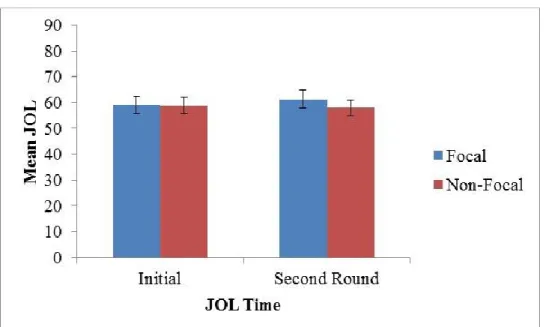
See Figures 5 and 6 for the relevant JOL data. Separate 2 (focality) x 2 (time) repeated-measures ANOVAs were conducted to assess the effect of focality on prospective and
45
was likewise no main effect of focality, F(1, 31) = 1.39, p = .248, no main effect of time, F<1, and no interaction, F(1, 31) = 2.69, p = .111.
Figure 5. Mean initial and second-round prospective JOLs in Experiment 3. Error bars are ± 1 SE.
Figure 6. Mean initial and second-round retrospective JOLs in Experiment 3. Error bars are ± 1 SE.