2020. 78 pages. Advisor: Dr. Claudia Gollop
In 2000, the United Nations adopted the Millennium Development Goals (MDGs) as frameworks to guide the reduction of global poverty and inequality including maternal mortality (MDG 5). After the adoption, there is a substantial increase in maternal health publications. The following was a bibliometric mapping and analysis using an open data source (MEDLINE via PubMed) and open source software (VOSViewer) to identify the characteristics of those publications through visualization of terms, keywords, and author countries. Findings suggest maternal health publications associated with MDG 5 emphasized addressing maternal mortality and infant health but an increasing focus on integration of social barriers to biomedical interventions. Further, the findings in this research supported previous research illustrating the inequity of high-income and low-middle income
collaborations. These findings will be valuable in informing the research for interventions associated with the current Sustainable Development Goals (SDGs) relating to maternal health.
Headings: Bibliometrics
Medical librarianship Data visualization
Millennium Development Goals Maternal health
by
Jordan E Wrigley
A Master’s paper submitted to the faculty of the School of Information and Library Science of the University of North Carolina at Chapel Hill
in partial fulfillment of the requirements for the degree of Master of Science in
Library Science.
Chapel Hill, North Carolina April 2020
Approved by
Table of Contents
List of Tables ... 2
List of Figures ... 2
Introduction ... 3
1.1 An Open Bibliometrics Approach ... 5
Literature Review ... 7
1.2 Millennium Development Goal 5 ... 7
1.3 Bibliometrics ... 13
1.4 Bibliometric and Mapping Analyses of Maternal Health Literature ... 20
Research Question ... 26
Methods ... 27
1.5 Data Collection ... 28
1.6 Operationalization and Iterative Visualization ... 29
1.7 Visualization, Thesauri, and Analyses ... 30
Results ... 32
1.8 Text-Mined Term Map ... 33
1.9 Author Keyword Map ... 35
1.10 Medical Subject Heading (MeSH) Map ... 38
1.11 Country Collaboration Network ... 41
Discussion ... 45
1.12 Impact of MDGs and MDG 5 on Maternal Health Research Publication ... 45
1.13 Comparison of Mined Terms, Author Keywords, and MeSH ... 48
1.14 Women and Neonatal Health... 50
1.15 International Collaboration... 51
1.16 Open Bibliometrics Process ... 53
Conclusions ... 55
Limitations ... 57
Bibliography ... 58
Appendix A: Sustainable Development Goals ... 69
Appendix B: Search Strategy ... 71
Appendix C: Term Map Thesaurus ... 72
Appendix D: Author Keyword Map Thesaurus ... 75
List of Tables
Table 1: Maternal mortality and health publications associated with MDG 5 by year ... 32
Table 2: Top 30 frequently occurring terms in publication titles and abstracts ... 34
Table 3: Top 30 frequently occurring author selected keywords... 36
Table 4: Top 30 frequently occurring MeSH terms ... 39
Table 5: Top 30 countries with greatest total link (collaboration) strength ... 41
List of Figures
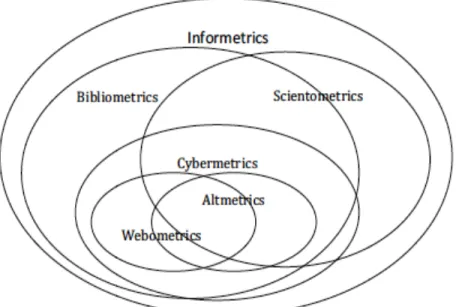
Figure 1: Overlapping Metrics (Onyachaya, 2014) ... 14Figure 2: Tweet by Dr. Tom Frieden, Director of the CDC regarding ZIKA research .... 21
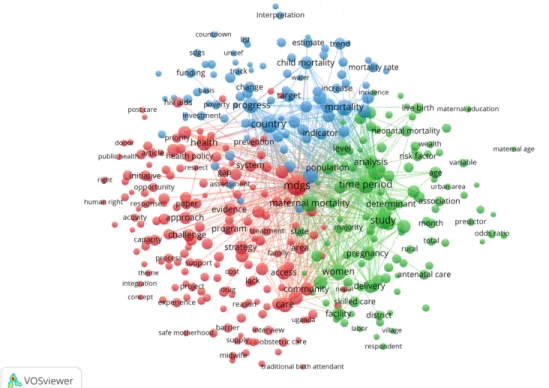
Figure 3: Map of Terms Text Mined from Publication Titles and Abstracts (n=378) ... 33
Figure 4: Map of author selected keywords (n=74) ... 37
Figure 5: Map of MeSH terms associated with publications in dataset (n=226) ... 40
Figure 6: Collaboration Network of Author Countries (n=116) ... 43
Introduction
The improvement of maternal health and the reduction of maternal mortality have been enduring and complex challenges in the global health context requiring addressing inequity through interdisciplinary approaches to find effective interventions (Anderson, 2009; McPherson, 2016). Global leadership has sought to address these challenges via iterative policy goal setting. In 2000, the United Nations (UN) resolved to adopt measures to address extreme global poverty with also included addressing maternal health and mortality. The resulting document was signed by all 191 UN member states at that time and is known as the United Nations Millennium Declaration. This declaration was the founding document for the eight Millennium Development Goals (MDGs). These goals were a series of poverty reduction and development targets falling under eight goals to be reached by 2015 and were the overarching framework for global development efforts (Sachs, 2012). The fifth MDG (MDG 5) “to promote maternal health” sought to reduce maternal mortality rates and improve maternal health.
In 1990, annual global maternal mortality was estimated at 532,000 (WHO Maternal Trends). The MDG addressed the high rate of maternal mortality and lack of access to adequate maternal health care via two targets:
Though neither of these targets were reached, from the time of the conception and adoption of the MDGs, and MDG 5 specifically, publication of maternal health research increased rapidly (300%) between 1994 and 2013 (de Groot et al., 2015). While this increase does not constitute direct causation between the adoption of MDG 5 and the sudden growth in maternal mortality and health research, it shows a substantial body of knowledge on this topic was generated during the implementation years from 2000 to 2015. It is on and from this body of knowledge further maternal health and mortality research will be based. This takes on particular importance as the newly created UN Sustainable Development Goals (SDGs), successors to the MDGs, are currently being implemented from 2015 to 2030, and a new wave of knowledge generation to identify and recommend approaches to maternal health is underway.
The following thesis provides a bibliometric analysis of maternal health research publications associated with the conception and adoption of MDG 5. Although a previous study of maternal mortality research provided bibliometric analysis from the mid-1990's to 2015 (de Groot et al., 2015), the analysis in this thesis drew a more distinct
the research needs of the future as well as science policymakers and those who set research agendas such as funding agencies and institutional administrations.
1.1
An Open Bibliometrics Approach
Literature Review
The eight MDGs set in the 2000 Millennium Declaration were: MDG 1: to eliminate extreme poverty and hunger;
MDG 2: to achieve global primary education;
MDG 3: to empower women and promote gender equality; MDG 4: to reduce child mortality;
MDG 5: to promote maternal health;
MDG 6: to fight malaria, HIV/AIDS, and other diseases; MDG 7: to promote environmental sustainability; and
MDG 8: to develop a universal partnership for development (United Nations, 2000).
The following review of literature begins with a brief background of the MDG 5 and the outcomes and dilemmas of its adoption in the first section. The second section is an overview of bibliometrics and their use in examining research beyond the known uses of research evaluation.
1.2
Millennium Development Goal 5
MDGs required the IDGs either be integrated or discarded. This left the inclusion of reproductive goals open to opposition (Hulme, 2010a).
The inclusion of MDG 5 and its targets encountered gender-based adversity. Target 5b (universal access to reproductive health) was removed entirely in the initial list of goals as a result of pressure by what Hulme (2010b) referred to as an "unholy alliance" of the Vatican and conservative Islamic states (p. 20). This was in spite of
recommendations by gender experts that inclusion of reproductive health including contraceptives was a major factor in poverty reduction efforts (Fehling et al., 2013). Reports by the Millennium Project headed by Jeremy Sachs, made clear that lack of reproductive health access was and would continue to be a major factor in poverty reduction and continuing development. These reports had the effect of catalyzing new commitment to reproductive health access and the UN General Assembly subsequently added Target 5b and its associated indicators to the official MDG list in September 2005 (Hulme, 2010a).
Although the global targets of MDG 5 were not met, progress toward improved maternal health outcomes was made based on the indicators selected for each target. These indicators for the respective targets were:
Target 5a: To reduce maternal mortality by three quarters between 1990 and 2015:
5.1 Reduce the maternal mortality rate (MMR)
5.2 Increase the number of births attended by skilled health personnel
Target 5b: To achieve universal access to reproductive health by 2015: 5.3 Increase the contraceptive prevalence rate
5.4 Reduce adolescent birth rate 5.5 Increase antenatal care coverage
5.6 Reduce unmet need for family planning (van den Broek & Falconer, 2011, p. 27)
Based on UN data, since 1990, global MMR has declined by 45% with the
majority of the reduction occurring during the MDG implementation period (2000-2015). In Southern Asia and sub-Saharan Africa (regions with high rates of maternal mortality), the ratio of maternal deaths per live births was reduced by 64% and 49%, respectively. During the implementation period, births attended by a skilled health worker increased from 59% to over 71%. The proportion of women receiving four or more antenatal visits increased from 50% to 89%. Lastly, contraceptive prevalence among girls and women 15 to 49 years of age who were married or in a union, increased from 55% to 64% globally (United Nations, 2015).
indicated by targets MDG 5.1-5.2 and MDG 5.3-5.6) are known (van den Broek & Falconer, 2011). Despite this awareness, these causes are frequently underrepresented in medical maternal health literature and can vary depending on the regions or country that is the focus of the research and the origin of the publishing researchers (Chersich, Blaauw, Dumbaugh, Penn-Kekana, Dhana, et al., 2016; Chersich, Blaauw, Dumbaugh, Penn-Kekana, Thwala, et al., 2016; Chersich & Martin, 2017; Gil-González et al., 2006).
The success of MDG 5 and its targets has also been uneven across regions due to social, cultural, and economic difficulties in different contexts (McPherson, 2016). These difficulties in goal and target progress present particular barriers and dissidence for medical and public health researchers. For example, though contraceptives might be an obvious answer to unwanted pregnancy and provided as per Target 5.3, there is little to no guarantee women will be able, allowed, or willing to use them due to cultural gender roles and social stigma (McPherson, 2016). Other social considerations and barriers for the implementation of MDG 5 include the economic burden of poverty on women and lack of equity in education. Therefore, multidisciplinary approaches to addressing MDG 5 targets are particularly important to MDG outcomes though they are not often
acknowledged or addressed in medical literature (Gil-González et al., 2006; van den Broek & Falconer, 2011).
mortality) and MDG 6 (to fight malaria, HIV/AIDS, and other diseases). Therefore, MDG 5 becomes inherently complex and intricate when its achievement depends on and assumes the previous achievement or simultaneous achievement of other goals
(McPherson, 2016). Although these might be the most obvious goals to interrelate with MDG 5, a case can be made for the inter-relatability of every goal with the others. The recognition of the necessity of multi-faceted approaches to improving maternal health also requires awareness of the lived experiences of women affected by maternal mortality and lack of access to reproductive health (McPherson, 2016). This is perhaps in part due to a lack of authorship and participation in maternal health research from placed-based researchers and reliance on research originating from high-income countries (HICs) (Chersich et al., 2016; Gil-González et al., 2006).
In a collection of ethnographic studies examining MDG in Africa and Oceania, McPherson (2016) uses the term “cosmopolitan obstetrics”, a term coined by Jordan (1992) and derived from the concept of cosmopolitan medicine developed by Frederick L. Dunn in 1976, to describe the hyper-Westernized approach to MDG 5 research and application. Cosmopolitan obstetrics emphasizes Western biomedicine’s dependence on urban context, technological resources, and presumption of agency in reproductive decision-making for women. As the ethnographers in this collection repeatedly illustrate, this is a context rarely available to the populations of women most affected by maternal mortality and lack of access to maternal and reproductive health.
With the conclusion of the MDG implementation period in 2015, all UN member states adopted The 2030 Agenda for Sustainable Development which lists 17 new
indicators many of which build on the previous MDGs. MDG 5 as well as MDG 4 (to reduce child mortality) and MDG 6 (to fight HIV/AIDS, malaria, and other diseases) were medically linked and subsumed into SDG 3 (ensure healthy lives and promote well-being for all at all ages). Other MDGs socio-economically linked with MDG 5 have been more explicitly retained such as MDG 1 (eradication of poverty and hunger) which remains as SDG 1 (end poverty in all its forms everywhere) and SDG 2 (end hunger, achieve food security and improved nutrition and promote sustainable agriculture). MDG 3 (to empower women and promote gender equality) was retained as SDG 5 (achieve gender equality and empower all women and girls). New goals such as SDG 4 (ensure inclusive and equitable quality education and promote lifelong learning opportunities for all), an incarnation of MDG 2 (to achieve global primary education), and SDG 6 (ensure availability and sustainable management of water and sanitation for all) are also arguably linked with maternal health socially and medically.
understand how they can effectively contribute to further progress toward the achievement of the goals set by the MDGs and continued by the SDGs.
1.3
Bibliometrics
Bibliometric analyses are most associated with scholarly impact measurement (i.e., h-index and other impact factors) for authors, articles, and journals. This purpose is rapidly evolving. Originally designed by librarians as an efficient way of selecting journals for purchase for collection development, the purpose of bibliometrics is speedily evolving. Post-World War II, rapid growth in scholarly publishing created a need for an organized way for researchers to locate relevant publications and potential collaborators in their specific fields and specialties. It was not until the 1970’s and 80’s and the advent of “science policy” and research evaluation that bibliometrics began to take on a structure and purpose that would be familiar to researchers today (Gingras, 2016).
production and personnel as well as funding structures (Gingras, 2016). Overlapping with both bibliometrics and scientometrics are cybermetrics which includes both webometrics and, more recently, altmetrics. These approaches utilize web-based data such as PDF download counts and view rates, mentions on social media (ex. Twitter), references by news media, and saves to citation management software. Webometrics might examine online collaboration networks via Facebook or scholarly knowledge management platforms such as VIVO (https://duraspace.org/vivo/) whereas altmetrics approaches overlap more with scientometrics rather than bibliometrics as they are similarly more
concerned with production and impact (Onyancha, 2014). Gringas (2016) offers a final metric category, technometrics, which uses non-article publication such as patents to analyze scientific information patterns beyond academic scholarly output.
Within bibliometric analysis, there are two main approaches: 1) performance analysis or the quantitative tracking of productivity and impact (where impact is defined as citations per article over time) of scientists and scientific output including articles,
journals, and institutions or organizations and 2) bibliometric mapping (also known as relational bibliometrics) or the analysis of the structure of scientific literature through publication data such as relationships between citations, authors, or terms (Gingras, 2016; Nakagawa et al., 2018; Onyancha, 2014). The first has come to be associated with
research and researcher evaluation, and the latter with more modern and inclusive approaches to examining research production. These two approaches to bibliometric analysis can be used separately but are also used together along with techniques from overlapping metrics (such as cybermetrics) to achieve a specific purpose, typically telling a story of about a particular topic (ex. tropical diseases) (Falagas et al., 2006), research community (Bender et al., 2015; Wrigley et al., 2019), or other grouping of scientific work research such as a journal (Tur-Porcar et al., 2018) or a body of literature funded from a grant (Llewellyn et al., 2019; Schneider et al., 2017).
Gingras (2016) points out the real value of bibliometrics is when they are used at an appropriate scale to analyze the dynamics of scientific research as a tool for science historians and sociologists to understand the changes and trends in scholarly research and research communities. In this way, bibliometric analysis is used to characterize a specific set of publications or a body of literature to see what has been researched. This is
goals by analyzing the pathways of published knowledge to practice and its clinical value (Debackere & Glänzel, 2004; Onyancha, 2014; Smith et al., 2017). Further, bibliometric analysis with data visualization components has the opportunity to engage members of the public outside of the biomedical research community (including those studied by biomedical researchers) by helping to make sense of the research landscape as a whole (Allen, 2018; Nakagawa et al., 2018).
The use of open bibliometric data sources and tools also opens the replication of analyses to any individual or institution with internet access. Yet, there are challenges to free and open-source data and tools. Bibliometric analysis assumes, at least to some extent, the accuracy of publication and citation data (Onyancha, 2014). However, this can vary based on the queried database as other factors. The sources for publication data are typically large aggregate and multidisciplinary databases such as Web of Science
(Clarivate) or Scopus (Elsevier) (Onyancha, 2014). In a recent call for open bibliometric approaches including tools and citation data sources, Stuart (2018) pointed out this dependence on paid subscription-based services limits bibliometricians in collecting fragmentated research via publications and citations into cohesive public knowledge. The fragmented nature of research and the inaccessibility of data sources and tools are
problematic when, presumably, the majority of biomedical research in particular is completed for the sake of improving the health of those studied and often uses public funds in the process of completing research.
researchers (Beran et al., 2017). Previous bibliometric and mapping studies have shown a lack of representation in local research authorship in studied LMIC regions along with a high rate of "north-south" and "north-north" collaborations with fewer to no "south-south" collaborations depending on the topic (Chersich, Blaauw, Dumbaugh, Penn-Kekana, Dhana, et al., 2016; Vargas et al., 2016). In the case of these studies, "north" refers to the global north or typically HICs including Australia and New Zealand and "south" refers to the typically LMICs often including those in the Northern hemisphere. Other studies have found high rates of collaboration and shared authorship between local LMICs and HICs to be high when controlling for study country (Jacobsen, 2009). Yet, the ratio of LMIC to HIC first authorship continues to favor HIC authors in most regions (Chersich, Blaauw, Dumbaugh, Penn-Kekana, Dhana, et al., 2016). This ratio may be in part due to a continuing dependence on HIC funding sources which creates inequitable partnerships (Beran et al., 2017; Gautier et al., 2018).
purchase a subscription. These may also be available via the HINARI program set up by the World Health Organization (WHO) which allows LMIC access up to 15,000 journals including a significant range of biomedical research publications (World Health
Organization, n.d.).
MEDLINE records via PubMed as maintained by the National Library of Medicine (NLM) are another publicly available biomedical citation data source. As part of this maintenance, the NLM employs specialists and indexers to apply Medical Subject Heading (MeSH) terms as part of a controlled vocabulary to publications within the database thereby tagging research with highly specific terms in a hierarchical tree for greater findability (Bachrach & Charen, 1978). Various digital modalities of this process, which, until recently had been a largely manual process, were and are being vetted to decrease the indexing time for newly added publications (ex. Jimeno-Yepes et al., 2013).
Although publication data from PubMed are sometimes thought of as poor quality due to a lack of completeness (Stuart, 2018), PubMed as a citation data source tends to be as viable as Web of Science and Scopus in analyses. A previous study showed journals have incorrectly entered author affiliation data leading to a lack of retrieval of relevant records when searching based on the affiliation field in both Scopus and PubMed (Schmidt et al., 2016). These sorts of inaccuracies can also occur when data is input by the publication author(s). In a comparative scoping review, Li et al. (2017) found
Scopus (7.7%) though lower then Web of Science (29%) (Kokol & Vošner, 2018). Though operationalizing publicly available citation and publication data retrieved through PubMed may present challenges, its value as an open resource and its focus on biomedical literature and first source for many clinicians and clinical decision-makers makes it an ideal source of data for bibliometric analyses of biomedical research (Falagas et al., 2007).
Though also potentially challenging, more open source and free options exist for bibliometric analysis and mapping tools. A range of tools exists both for purchase and as open-source downloads (Nakagawa et al., 2018; Pradhan, 2016). For the purposes of finding relationships within publication datasets, VOSviewer
(http://www.VOSviewer.com) is a particularly valuable tool created to visualize the relationships found in publication and citation data. By creating networks of nodes and lines, VOSviewer shows the interconnectedness of data points (van Eck & Waltman, 2010, 2017). VOSviewer has been used to map a range of bibliometric topics and datasets including the interdisciplinarity of research areas (Nettle & Frankenhuis, 2019;
Youngblood & Lahti, 2018), detect international collaborative networks (Tirgar et al., 2019), and map the conceptual trends of a given research topic (Gao et al., 2018). The visualization of these analyses via VOSviewer allows the coalescing of fragmented publication and citation data into a comprehensible visual of the trends and dynamics of scientific research within the retrieved dataset.
approaches are used to examine various aspects and behaviors of research and researchers as well as the strengths and weaknesses of a given body of literature (Debackere &
Glänzel, 2004). This is achieved through visualization (using tools such as VOSviewer) of analyses such as research collaboration networks (network analysis) and concept relationships (term co-occurrence maps) which can provide an opportunity to check the literature for both expected and unexpected emphases and topics (Nakagawa et al., 2018). This last is referred to as "gap-finding" in bibliometric method literature and adds to conversations in funding and translational science policy, wherein generated research is translated to clinical practice, by denoting places for improvement in evidence-based knowledge (Boerma et al., 2008; El Lawindi et al., 2015; Schneider et al., 2017; Smith et al., 2017). This last has been noted to be particularly important in relation to
implementing measures to reduce maternal health and mortality derived from scholarly research in part due to the multidisciplinary approaches required to address social, cultural, and economic barriers along with biomedical challenges (van den Broek & Falconer, 2011).
maternal health biomedical research is difficult to correlate directly to the adoption of MDG 5 and related MDGs. However, it is likely such informal research agenda setting via implementation of socio-political leader organizations would play a role in directing global medical research agendas by bringing attention to specific issues and gaps in research literature. For example, in the wake of the 2016 ZIKA cluster outbreak, on
February 1, 2016 the World Health Organization (WHO) declared a health emergency (World Health Organization, 2016). Likewise, the Director for Center for Disease Control and Prevention (CDC), Dr. Tom Frieden, tweeted an image of the collected research on ZIKA (a very small pile of documents) with the caption "Entire world literature on Zika. 50 years of neglect" on February 12, 2016 (Figure 2).
After this, research on ZIKA increased explosively (Moraes et al., 2017). A simple search for the term zika in PubMed (completed on July 28, 2019) alone shows publication records on the disease increasing from 42 in 2015 to 1,752 in 2016. Again,
while this does not prove a direct correlation, it can be argued that both informal and formal policies influence the directionality of medical research by pointing to gaps in knowledge.
The gaps in maternal global health research require similar attention. In 2011, researchers part of the Multilateral Association for Studying health inequalities and enhancing North-south and South-south Cooperation (MASCOT) undertook a comprehensive mapping analysis of 2,292 maternal health and mortality publications focused on low and middle income countries (LMICs) from 2000 to 2012 including assessments of intervention research alignment with known clinical mortality and morbidity factors and geographic research emphases (Chersich, Blaauw, Dumbaugh, Penn-Kekana, Thwala, et al., 2016; Chersich & Martin, 2017), publication authorship (Chersich, Blaauw, Dumbaugh, Penn-Kekana, Dhana, et al., 2016), and policy impact (Vargas et al., 2016). In terms of research gaps, these studies found complex regional relationships between the most common conditions leading to maternal mortality and the amount of research dedicated to understanding those conditions. For example, the
researchers found hemorrhage during pregnancy to be generally underrepresented in the literature and only 30 publications from South Africa addressed it despite it being the most common cause of maternal mortality in the country (Chersich, Blaauw, Dumbaugh, Penn-Kekana, Thwala, et al., 2016, p. 12). General findings included a dominant
HIV studies has also declined over time along with other sexually transmitted infections (STIs) studies (Chersich & Martin, 2017, p. 2). The MASCOT studies also found an increasing application of qualitative research methods, particularly in relationship to HIV studies. In general, HIV studies also tended to focus on infected children rather than women. An overall lack of appearance of qualitative methods and health promotion studies may signify an "over-medicalized" approach in some portions of the literature (Chersich & Martin, 2017, p. 4). These support arguments McPherson (2016) and Gil-González, Carrasco-Portiño, & Ruiz (2006) made of the overemphasis on Western
techno-based clinical solutions that do not address the socio-cultural or economic barriers or maternal health. In a later analysis of maternal health literature, de Groot, Leeuwen, Mol, and Waltman (2015) observed an increasing emphasis on public health aspects of maternal mortality and a decrease in emphasis on basic science. Therefore, it may be that researchers have begun to more intentionally address the socio-economic aspects of maternal health solutions.
(2016), up to 60% of maternal health intervention research has been led by LMIC affiliated researchers. This again speaks to assertions that past research does not reflect the lived reality of the health and maternity challenges faced by women and female-persons in LMIC regions but is currently changing and becoming more reflective in part due to increasing locally-led research and publication. Chersich et al. (2016) also noted, despite an increased rate of locally LMIC-led research lead authorship into the 2000's, the rate of first authorship among LMIC researchers has slowed. This may also affect the topics selected for research within LMICs. Lastly, south-south collaborations ("south" typically being used to refer to globally low-income regions where "north" is used to refer to globally high-income regions) are rare. North-north and north-south
collaborations in the case of LMIC-based studies are typical with north-south or south-south studies of HICs being nonexistent as has been found to be typical in global publishing partnerships (Chersich, Blaauw, Dumbaugh, Penn-Kekana, Dhana, et al., 2016; Jacobsen, 2009).
The adoption of the MDGs and MDG 5 provided biomedical research foci for global maternal health and mortality. Although the goal encountered resistance early on, the specific targets and indicators laid groundwork for future research on these topics. However, many topics with maternal health and mortality remain inadequately
researched such as the social, cultural, and economic factors at play in accessing and using reproductive health services and resources.
Research Question
The improvement of global maternal health is a complex challenge that the fifth MDG set in 2000 attempted to address through guiding goals and targets. The setting of these goals and targets can also be argued to have catalyzed a wave of research around relevant topics. This body of published research then became the evidence base for responses and efforts to improve maternal health.
Methods
The following section details the methods used in this research. Bibliometric analysis and mapping through text mining and visualization were the methods chosen to answer this question and characterize the collected body of research literature. Broadly, this consisted of three steps:
1. Data collection
2. Cleaning and operationalization 3. Iterative visualization and analysis
An exhaustive search strategy for PubMed was developed to collect as much relevant publication data as possible for text mining analysis and visualization in VOSviewer (Version 1.6.14). To achieve this, the data required cleaning and
operationalization. VOSviewer uses a combination of natural language processing and mapping to visualize the relationships between data points such as co-occurrence of terms and co-authorship between authors or institutions (van Eck & Waltman, 2010, 2017). For example, in a concept map, terms for public health would appear clustered together more closely than those associated with biostatistical science. Likewise, public health clusters would be more likely situated more closely to behavioral sciences than chemical
In the implementation of these methods, the tools and data sources used were selected based on their accessibility to potential future researchers in working with low accessibility to subscription-based tools and sources. With this in mind, the citation data sources (MEDLINE publication data retrieved via PubMed) and tools (Zotero and VOSviewer) were used as the platform for data retrieval, data management, and visualization respectively.
Throughout the execution of this research, a record of the process of using open source tools and data was maintained. The goal of this record was to elucidate the potential challenges for future researchers seeking to replicate these methods with the same or similar tools and data.
1.5
Data Collection
To collect data publications associated with MDG 5, an exhaustive two-part search strategy was developed. The parts of this search were 1) maternal health and 2) the Millennium Development Goals. The search strategy built on the search created by de Groot, Leeuwen, Mol, and Waltman (2015) by first expanding the number of terms (including Medical Subject Headings or MeSH terms) and keyword synonyms for maternal health.
The second part of the search required all included publications to mention to some extent "millennium development goals" in the title, abstract, or author-selected keywords to illustrate more clearly the association between collected maternal health literature and MDG 5. For the purposes of this research, maternal health publications that also reference the MDGs will be considered to be associated with, and potentially
includes publications directly or indirectly associated with MDG 5 and maternal health through overlap with related goals such as MDG 4. No limits were placed on publication type or publication dates. A full search strategy is appended to this thesis in Appendix B.
The search was executed in PubMed and results were exported in MEDLINE file format. A preservation copy of this original export was retained for analysis. All
publication data were also imported into Zotero reference management software for organization and preservation.
1.6
Operationalization and Iterative Visualization
The operationalization of retrieved MEDLINE publication data for visualization in VOSviewer required greater attention due to challenges with data organization and lack of consistency. In particular, affiliation and country data for authors lacked disambiguation and structure. This issue and the limitations it placed on analysis was noted by VOSviewer creators in the VOSviewer Manual (Van Eck & Waltman, 2013) when using PubMed MEDLINE files. To address this, PubMed2XL (Kiseliov, 2010), an application which converts PubMed files to Excel files (.xls) was used to extract author affiliation and data from the PubMed export file. The resulting .xls file was imported to Google Sheets for hand cleaning including the addition of relevant fields and removal of records lacking data to be useful in analysis.
Completing data cleaning in a spreadsheet file presented another issue in
syntax and field structure. Effectively, this allowed the import of the collected and cleaned dataset from PubMed to be imported into VOSviewer as a Scopus file and function similarly. This created a second dataset specifically for the visualization and analysis of author affiliation and country data.
1.7
Visualization, Thesauri, and Analyses
Analyses of publication data was achieved in two ways:
1.) Visualization and visual analyses of term or keyword maps and mapping of author country collaboration networks.
2.) VOSviewer maps files which include statistical data (ex. frequency of occurrence and total link strength) for data points which are were generated alongside visualizations. These were examined to provide richer quantitative points in analyses.
The network visualizations created through VOSviewer consist of a network of nodes or bubbles representing data points (ex. author countries or terms) with the potential addition of lines or links between nodes to represent relationships between the data points. The distance between nodes in the network visualization also signifies the relatedness of the nodes; the closer two nodes occur the more frequent their
co-occurrence in the dataset. For example, if two terms appear together often in text-mined titles and abstracts, they will be more likely to appear nearer in a term map visualization. Likewise, authors or countries that frequently collaborate will appear nearer in a network visualization of collaborative relationships.
Results
Using the search strategy, 1,303 MEDLINE publication records were retrieved on August 28, 2019 via Legacy PubMed. The records spanned from 2000 to 2019. As seen in Table 1, the increasing publication rate was gradual, peaking in 2013 and tapering off thereafter.
Table 1: Maternal mortality and health publications associated with MDG 5 by year
Year Total Publications Free full-text Publications
2019 38 26
2018 59 42
2017 88 63
2016 118 81
2015 147 94
2014 159 104
2013 164 99
2012 149 78
2011 135 70
2010 85 30
2009 69 35
2008 54 18
2007 56 25
2006 42 12
2005 17 8
2004 7 1
2003 2 0
Of the 1,303 records, 764 (58%) were categorized as having free full-text available. The free full-text rate of publications was similar to the overall publication rate of the dataset. However, publication records with free full-text appeared until 2004 with a peak in 2014 and tapering off thereafter.
Four main network visualizations formed the foci for analysis, 1) a concept term map of text-mined article titles and abstracts, 2) a keyword map of author selected keywords for publications, 3) a map of MeSH terms associated with publications, and 4) a country collaboration network. Sub-visualization images (close-ups of interesting portions of the main visualizations) were also created where required for viewability.
1.8
Text-Mined Term Map
Initial mining for the term map extracted 24,164 terms from titles and abstracts of the 1,122 operationalized records. Application of the thesaurus (Appendix C) combining
92 synonymous terms (ex. "skilled attendant" and "skilled attendance" were synonymized under "skilled care"), reduced the extracted terms to 24,077. For the purposes of this research, terms in the term map with a frequency less than 20 in the overall dataset were removed to focus on the most common or frequent terms and concepts occurring the dataset. The final visualized concept term map contained the 378 most frequent terms as mined from the titles and abstracts of publication records. The terms were grouped into three close clusters with high interrelation (Figure 3).
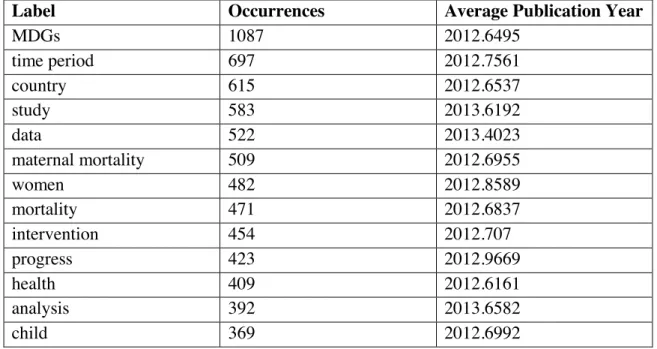
Within publication title and abstracts, terms referencing the MDGs or Millennium Development Goals were the most frequently occurring (n=1,087) mined terms. Other terms in the top 30 most frequently occurring terms (Table 2) were maternal mortality (n=509), women (n=482), mortality (n=471), intervention (n=454), child (n=369), access (n=341), "birth labor" (n=283), community (n=260), and determinant (n=257). Although the term "country" (n=615) as a broad geographic term was in the top occurring terms, Africa (n=204) was the most frequently occurring specific geographic term in result set. Table 2: Top 30 frequently occurring terms in publication titles and abstracts
Label Occurrences Average Publication Year
MDGs 1087 2012.6495
time period 697 2012.7561
country 615 2012.6537
study 583 2013.6192
data 522 2013.4023
maternal mortality 509 2012.6955
women 482 2012.8589
mortality 471 2012.6837
intervention 454 2012.707
progress 423 2012.9669
health 409 2012.6161
analysis 392 2013.6582
care 368 2012.4728
service 343 2012.6735
access 341 2012.3695
pregnancy 336 2012.8065
level 334 2012.7904
reduction 317 2012.8013
delivery 316 2012.5538
mother 306 2013.0131
strategy 301 2012.6346
use 297 2012.4242
birth labor 283 2012.8834
rate 279 2012.8638
facility 267 2012.9326
effort 264 2012.6667
community 260 2012.5654
need 259 2012.7568
determinant 257 2013.3424
1.9
Author Keyword Map
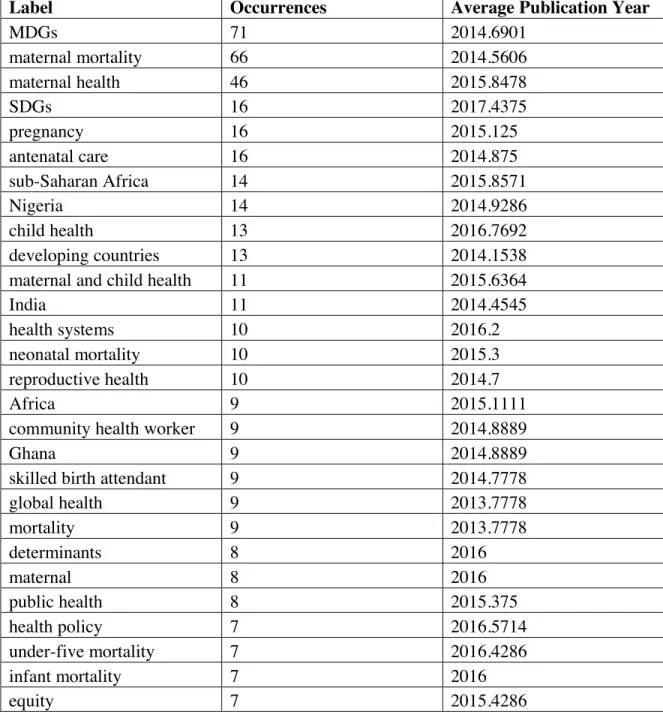
A map of author-selected keywords (those authors input on submission of their manuscript to a journal) was created to examine what terms authors have assigned their research within this dataset. VOSviewer extracted 1,245 keyword terms. A thesaurus (Appendix D) reduced extracted terms to 1,231. Keywords with fewer than three occurrences were removed leaving 93 keywords of which the 74 most connected were retained for visualization. Keywords for MDG/s were the most frequent (n= 71) followed by keywords for "maternal mortality" (n=66) and "maternal health" (n=46). The average publication years for records including these keywords were 2014.5 and 2015.8
child health” (n=11)). Keywords such as health systems (n=10), community health worker (n=9), skilled birth attendant (n=9), determinants (n=8) and equity (n=7) also occurred. Less frequent were epidemiological keywords such as HIV (n=6), postpartum hemorrhage (n=4), or preeclampsia (n=3). Direct keywords for "Millennium
Development Goal 5" or "MDG 5" were rare with four occurrences. Table 3: Top 30 frequently occurring author selected keywords
Label Occurrences Average Publication Year
MDGs 71 2014.6901
maternal mortality 66 2014.5606
maternal health 46 2015.8478
SDGs 16 2017.4375
pregnancy 16 2015.125
antenatal care 16 2014.875
sub-Saharan Africa 14 2015.8571
Nigeria 14 2014.9286
child health 13 2016.7692
developing countries 13 2014.1538 maternal and child health 11 2015.6364
India 11 2014.4545
health systems 10 2016.2
neonatal mortality 10 2015.3
reproductive health 10 2014.7
Africa 9 2015.1111
community health worker 9 2014.8889
Ghana 9 2014.8889
skilled birth attendant 9 2014.7778
global health 9 2013.7778
mortality 9 2013.7778
determinants 8 2016
maternal 8 2016
public health 8 2015.375
health policy 7 2016.5714
under-five mortality 7 2016.4286
infant mortality 7 2016
qualitative research 6 2016.1667
HIV 6 2014
A visual examination of the keyword map (Figure 4) showed maternal health closely clustered with MDGs. Maternal mortality, by contrast, was not clustered with and situated slightly farther from MDGs. Within the visualization, relationships could be seen between certain keywords as well as between geographic references and keywords.
worker" were not linked directly to one another. The visualization also showed Bangladesh as a keyword closely grouped with keywords related to child and infant health. Similarly, Nigeria was situated near Bangladesh but clustered and linked with both "skilled birth attendant" and "community health worker".
1.10
Medical Subject Heading (MeSH) Map
A map of MeSH terms was created to examine what terms specialists and indexers working within a controlled vocabulary by NLM had assigned to the publications within the dataset. VOSviewer extracted 1,207 MeSH terms for initial visualization. As MeSH were already part of a controlled vocabulary and significant overlap in concept terms was unlikely, no thesaurus was applied to this visualization. Although the number of terms extracted by VOSviewer was similar to the author keyword map visualization, the nature of the terms as part of a controlled vocabulary increased the frequency of occurrence for each term. This led to an extremely dense initial visualization. To address this, terms in the MeSH map with an occurrence frequency less than 10 were removed leaving 226 MeSH in the final visualization and analysis set.
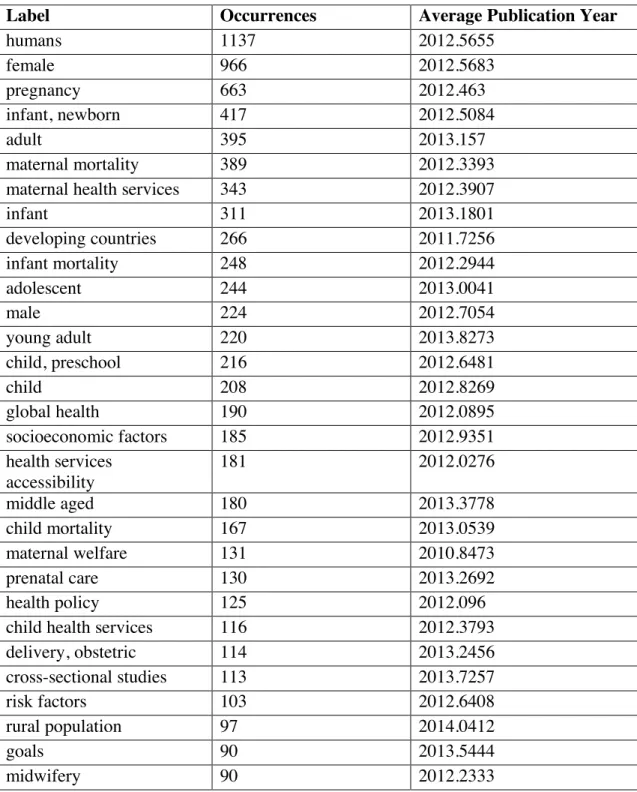
The MeSH terms most frequently used to tag and index the publications in the dataset, in descending order, were: humans (n=1,137), female (n=966), pregnancy (n=663), "infant, newborn" (n=417), and adult (n=395) followed by "maternal mortality" (n=389) and "maternal health services" (n=343). The average publication years for
Table 4: Top 30 frequently occurring MeSH terms
Label Occurrences Average Publication Year
humans 1137 2012.5655
female 966 2012.5683
pregnancy 663 2012.463
infant, newborn 417 2012.5084
adult 395 2013.157
maternal mortality 389 2012.3393 maternal health services 343 2012.3907
infant 311 2013.1801
developing countries 266 2011.7256
infant mortality 248 2012.2944
adolescent 244 2013.0041
male 224 2012.7054
young adult 220 2013.8273
child, preschool 216 2012.6481
child 208 2012.8269
global health 190 2012.0895
socioeconomic factors 185 2012.9351 health services
accessibility
181 2012.0276
middle aged 180 2013.3778
child mortality 167 2013.0539
maternal welfare 131 2010.8473
prenatal care 130 2013.2692
health policy 125 2012.096
child health services 116 2012.3793 delivery, obstetric 114 2013.2456 cross-sectional studies 113 2013.7257
risk factors 103 2012.6408
rural population 97 2014.0412
goals 90 2013.5444
midwifery 90 2012.2333
"health services accessibility"(n=181), "child mortality" (n=167), "maternal welfare" (n=131), "health policy" (n=125), "delivery, obstetric" (n=144), goals (n=90), and midwifery (n=90). There had been no specified term for the Millennium Development Goals in the MeSH database. However, a search for "goals" returned the MeSH term for "Sustainable Development" in the results. The scoping note (quoted below) included a link to a UN document page titled Our Common Future, Chapter 2: Towards Sustainable Development which defined sustainable development in the global context.
"A process of change in which the exploitation of resources, the direction of investments, the orientation of technological development; and institutional change are all in harmony and enhance both current and future potential to meet human needs and aspirations. (http://www.un-documents.net/ocf-02.htm#I)" ("Sustainable Development", 2019).
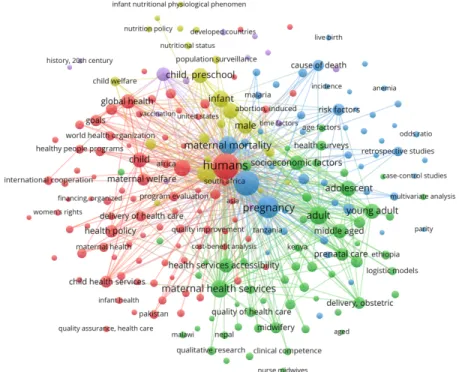
The visualization created by MeSH extraction was dense and showed high
of links (lines) was reduced (n=500). In the visualization, the cluster of MeSH related to health policies (red) neighbored and overlapped with the cluster of MeSH related to health service accessibility (green). Additionally, terms exist in both that could be equally suited to the other conceptually. For example, "reproductive health services" and "family planning services" were clustered within health policy concepts (red) but could also easily fall in with concepts of health serve accessibility (green). Also, conceptually clustered with accessibility are midwifery and "delivery, obstetric". A visual inspection of the blue cluster situated farther from both the policy and accessibility clusters, showed several MeSH terms for specific study types as well as specific pathologies.
1.11
Country Collaboration Network
A collaboration network visualization consisting of the countries for each author as node-data points was created. During operationalization for VOSviewer, some records lacked needed country data (n=181) and were removed leaving 1,122 records (86%) of the original 1,303 for visualization. VOSviewer extracted an initial 139 country labels from author affiliation data. Application of a thesaurus (Appendix E), combining synonymous place terms (ex. "California" was synonymized with "United States") resulted in 124 countries being included. No minimum publication or citation limit was applied. The final visualization was limited to those countries with the greatest
interconnection (n=116).
Table 5: Top 30 countries with greatest total link (collaboration) strength
Label Total Links Total Link Strength Total Publications
United States 85 558 378
United Kingdom 71 420 198
Switzerland 51 258 114
India 50 164 83
Pakistan 36 142 69
Canada 35 141 85
Kenya 47 126 45
Brazil 37 110 36
Uganda 41 97 32
Australia 38 89 65
Ghana 37 85 46
Nigeria 38 84 68
Netherlands 37 81 29
Bangladesh 29 79 38
Tanzania 32 75 38
China 33 73 31
Sweden 29 72 49
Norway 35 62 25
Belgium 38 62 16
DRC 29 61 17
Germany 35 57 15
Malawi 22 55 19
Italy 29 51 11
Philippines 30 51 11
Ethiopia 24 47 41
France 33 45 19
Egypt 30 44 10
New Zealand 29 44 8
Argentina 24 40 9
Canada (n=141) followed India (n=164) and Pakistan (n=142). Kenya (n=126), Brazil (n=110), Uganda (n=97), Australia (n=89), Ghana (n=85), Nigeria (n=84), the
Netherlands (n=81), Bangladesh (n=79), and Tanzania (n=75) were also in the top 30. A visual analysis of the collaboration network (the size of nodes representing the number of publications and the lines illustrating collaborations) showed a strong cluster of countries with Switzerland at the center (Figure 6). The United States was situated somewhat outside the main cluster and connected with a handful of otherwise unlinked countries. A cluster of African countries was also situated within the larger cluster (Figure 7).
Lastly, Australia was shown outside the major cluster (similar to the United States) and connected with several South East Asian countries. Yet, Singapore and African countries such as Mali, Burkina Faso, and Nigeria were situated more closely to and clustered with South Africa.
Discussion
The publication dataset for this research was generated based on a search completed by de Groot et al. (2015) as part of a longitudinal analysis of maternal mortality literature. For the purposes of this research, the search included increased synonymy for maternal mortality and maternal health terms. Terms for the MDGs were also added to narrow retrieved publications to those specifically referencing one or more of the MDGs in relation to maternal mortality and health. Various facets of the resulting data were analyzed via VOSviewer output tables and visualizations. The following section is a discussion of the results found in this research.
To be inclusive of the importance of addressing the needs of transgender reproduction and health, this discussion uses the phrase "women and people who give birth".
1.12
Impact of MDGs and MDG 5 on Maternal Health Research
Publication
In both findings, the increase in publication volume was not explosive as compared to the response to the call for ZIKA research. There are several potential and confounding reasons for this. The gradualness of publication volume increase on this topic may indicate a perception of maternal mortality and health as non-acute issues despite the adoption of MDG 5. Why maternal mortality and health may not be perceived as an acute topic is open for discussion. However, based on the social morays that inhibited various gender equality-based aspects of MDG 5 and the historical emphasis on Western
paternalistic interventions (Hulme, 2010b; McPherson, 2016), social analysts may suspect political and, therefore, science policy deprioritization of this issue due to its solely impacting women and people who give birth.
Another reason may be the inherent complexities of the social, economic, and environmental aspects of maternal health problematizing straightforward intervention finding by the biomedical research community. Recognition and acknowledgement of the necessity of addressing barriers to access in maternal health interventions as part of research and publication will require development of more interdisciplinary teams and collaborations (such as place-based collaborations) as well as methods. This may subsequently increase the time to research completion and publication and decrease annual volume.
relation to maternal, neonatal, and child health directly references MDGs 4 and 5. The document also alludes to unlikelihood of those MDGs being met. Therefore, the Gates Foundation as a major funder of maternal health research may themselves be considered as having been inspired or catalyzed to some extent by the adoption of MDG 5 and related MDGs, equally using the targets and frameworks as foundational perspectives to approaching maternal mortality and health research. Although an analysis of maternal health research was beyond the scope of this research, a brief examination of the grant tracking webpage for the Gates Foundation (https://www.gatesfoundation.org/How-We-Work/Quick-Links/Grants-Database#q/sortdir=asc) on March 7, 2020 showed the total number of grants related to Maternal, Neonatal, and Child Health programs peaked in 2015 (57 total awarded grants), then decreased by nearly half in 2016 (26 awarded grants) and fluctuating between 33 and 44 awarded grants thereafter.
could only be useful for informing implementation of the SDGs related to maternal health.
Lastly, it is worth noting the parallel, yet some somewhat later and slower, entry of full-text access publications in the dataset. The lag in the increase in these publications in comparison to the overall results may indicate a barrier in the publishing process. The limitations of accessing published evidence behind a subscription-based paywall is well documented. The prohibitive costs for researchers wishing to publish their work in open access is equally documented (Solomon & Björk, 2012). Therefore, cost might have been a factor in the lag and comparatively small volume of full-text accessible publications. Other potential factors may account for this. However, further research is required to reach any conclusions.
1.13
Comparison of Mined Terms, Author Keywords, and MeSH
A comparison of the terms mined from publication titles and abstracts, author-selected keywords, and applied MeSH terms presented interesting characteristics about the topical nature of the publications in the dataset. References to the Millennium Development Goals were the most frequently occurring terms and keywords in publication titles and abstracts as well as author keywords.abortion ("abortion, induced" can be seen in the red cluster of the MeSH map) were very infrequent, if they appeared at all. The delay in adding MDG 5's second target and indicators (September 2005) may account for the greater frequency of maternal mortality over maternal health terms. However, the majority of publications in this dataset were published after 2005. Therefore, a general emphasis on the reduction of pregnancy-related death over preventative health interventions within MDG associated maternal health research is likely. Although less frequent, the emphasis on the first target is also supported by the appearance of terms for skilled birth attendance, health services, facilities and others related to the second indicator for MDG 5's first target, to increase the number of births attended by skilled health personnel.
1.14
Women and Neonatal Health
The results in the terms mined from publication titles and abstracts,
author-selected keywords, and MeSH indicated an emphasis on public health aspects of maternal mortality and health. This also aligned with findings by de Groot et al. (2015). However, these emphases in the literature and their association with individual MDG 5 targets and indicators provided an interesting analysis.
Related to pregnancy prevention and contraception, there was a lack of separation between the health of women or people who may give birth and neonate or child health in two (MeSH and author keywords) of the three sets. Simply, there was a perceivable lack of acknowledgement of women outside the state of motherhood. In the MeSH set and visualization in particular, three of the top ten most frequent terms were related to infants and newborns ("infant, newborn", infant, and "infant mortality"). In the author keywords set, the term "maternal and child health" specifically conjoins the two, making women and children an inseparable concept. In each of the three term maps, references to
prevention are those that are most effected by the social barriers of patriarchal gender roles and sexism. These indicators are also those least addressable by strictly biomedical interventions and will require extensive social and placed-based planning to affect access to contraception and pregnancy prevention. Equally, research literature addressing contraception and pregnancy prevention measures would have required extensive social analysis. As the social facets of maternal health are often unacknowledged in literature (Gil-González et al., 2006; van den Broek & Falconer, 2011), the maternal health publications in this dataset appeared to follow this pattern and interventions that address these indicators were underrepresented despite publications generally coming later in the implementation period after the addition of the second target.
In comparison, the second indicator of the first target (5.2 Increase the number of births attended by skilled health personnel) and third indicator of the second target (5.5 Increase antenatal care coverage), were in far more evidence in the term maps and tables. Similarly, in all three sets "pregnancy" is a frequently occurring term, being in the top 10 in the MeSH and author keyword sets and in the top 20 in the title/abstract terms. This again suggests a focus in the literature on health care beginning at pregnancy and even more so on interventions for birth-related complications leading to maternal death rather than on long-term maternal health or health for women and people who give birth as individuals. Overall, this may indicate that research trends are only selectively responsive to informal policy goals.
1.15
International Collaboration
perspective on international author collaboration within this data set. In the visualization, several LMICs impacted by maternal health challenges were centrally located. Similar to the author-keyword place names, a number of the countries with the greatest total
collaboration strength from sub-Saharan African as well as India and Bangladesh were represented. Nepal was also a collaborator visible and situated near China in the visualization. A range of South American and Middle Eastern countries were also represented in addition to European and North American countries.
Interesting relationships were also present within the visualized network. Many countries impacted by maternal mortality and poor maternal health were interconnected. For example, Ghana, Mozambique, Tanzania, and Kenya were all closely situated (red cluster) suggesting high collaboration between the countries. To some extent, similar proximity-based geographic collaboration networks were visible. The close situation and clustering of Australia, Papua New Guinea, and Indonesia was unsurprising.
Broader international collaborations appear to have common HIC dominators. The United States had the greatest volume of publications and was located away from the rest of the main cluster in part due to the five countries (Lesotho, Algeria, Austria,
Bolivia, and Madagascar) that did not collaborate with authors from other countries in this dataset. At the center of the visualization, Switzerland also appeared as an
interconnector in maternal health literature associated with MDG 5, particularly among Southeast Asian countries. It is highly likely Switzerland's positioning and high
In this dataset, the majority of publications were co-authored by HIC researchers. However, the visualized network illustrated several collaborations between LMICs. Based on findings by other researchers, these collaborations are likely to have been initiated by HIC researchers. However, the close interrelation between several LMICs equally suggested place-based collaborations may grow out of the original collaborations in the future. In the future, it would be interesting to execute similar analyses on literature associated with the current SDGs and provide a comparison of the changes in
collaboration network structures.
1.16
Open Bibliometrics Process
This research trialed an open bibliometrics approach to discovering previously undiscovered public knowledge about maternal health publications associated with MDG 5 via bibliometric analysis. The process of this approach involved identifying both a publication data source and tools that were openly and publicly accessible. In this case, PubMed was identified as the data source and VOSviewer as the analysis tool.
Additionally, PubMed2XL was also used to extract data from the PubMed output. During the execution of this research, the NLM began transitioning from what is now called Legacy PubMed to the new version of the PubMed interface with different retrieval aspects. When the dataset used here was downloaded, it was retrieved as a MEDLINE .txt file whereas now users are able to download a variety of file types. However, none of the file types were ideal for open bibliometrics if the goal was collaboration network analysis. This was because these files often did not contain
an API (application programming interface). In the case of this research, PubMed2XL was an open license (via MIT) and was a useful tool for extracting needed data.
Unfortunately, the developer stopped supporting the application shortly after this research was completed.
VOSviewer as an analysis and visualization tool proved easy to use and well supported by the creators. Its analyses were somewhat limited and required visual analysis by the research to give meaning to maps and network visualizations. Although outside the scope of this research, the output files were more quantitatively useful and could provide excellent data for statistical analysis. The interface was overall simple and intuitive. Further, VOSviewer visualizations in their interface entirety could be put online to be explored by viewers and stakeholders, increasing its value as an open source tool that furthers open access.
While the data source and tools used proved adequate for this research, significant time and effort was required to clean and operationalize data for the collaboration
Conclusions
This research completed a bibliographic analysis and mapping to find
characteristic and trends in maternal mortality and health literature associated with MDG 5. Rather than an explosion of literature referencing MDG 5 and related MDGs soon after their adoption, rapid growth in literature occurred near the end of the MDG
implementation period. This suggested the publications in this dataset and in response to MDG 5 were largely summative reporting on interventions. Based on comparative analyses of terms text-mined from publication titles and abstracts, author-selected keywords, and applied MeSH terms several interesting characteristics were discerned. While there was emphasis on public health aspects of maternal health, the literature was still largely concerned with maternal mortality over maternal health per se. Specifically, literature in this dataset focused on the first target of MDG 5 and less so on the second. The second target and its indicators were far more impacted by social barriers to contraceptive access likely reflecting a lack of biomedical attention due to the ineffectiveness of strictly biomedical interventions. This research also illustrated interesting aspects of bibliometric analysis. For example, author keywords were
Limitations
There are several limitations to this research. This includes limited data
cleanliness within the given period. Term mapping via text mining of titles and abstracts assumes the accuracy of their descriptiveness relation to their respective articles and texts. For the purposes to this research, keywords, titles, and abstracts were assumed sufficiently representative of the topic of maternal health as a whole if not of their respective publications. It is also impossible to prove the collected data included every publication related to or generated due to the adoption of MDG 5 despite using a systematic search approach. In this same vein and related to article descriptions, not all publications inspired by MDG 5 may have made mention of this in the title, abstracts, or keywords. These publications were not included as part of this analysis. However, the publications that were collected and analyzed for research can be considered a
Bibliography
Al Hamzy, M., de Villiers, D., Banner, M., Lamprecht, H., & Bruijns, S. R. (2019). Access to Top-Cited Emergency Care Articles (Published Between 2012 and 2016) Without Subscription. Western Journal of Emergency Medicine, 20(3), 460–465. https://doi.org/10.5811/westjem.2019.2.40957
Allen, W. L. (2018). Visual brokerage: Communicating data and research through visualisation. Public Understanding of Science, 27(8), 906–922.
https://doi.org/10.1177/0963662518756853
Anderson, F. W. J. (2009). Maternal mortality: An enduring epidemic. Clinical Obstetrics and Gynecology, 52(2), 214–223.
https://doi.org/10.1097/GRF.0b013e3181a4bd53
Bachrach, C. A., & Charen, T. (1978). Selection of MEDLINE contents, the development of its thesaurus, and the indexing process. Medical Informatics = Medecine Et Informatique, 3(3), 237–254. https://doi.org/10.3109/14639237809014183 Bender, M. E., Edwards, S., Philipsborn, P. von, Steinbeis, F., Keil, T., & Tinnemann, P.
(2015). Using Co-authorship Networks to Map and Analyse Global Neglected Tropical Disease Research with an Affiliation to Germany. PLOS Neglected Tropical Diseases, 9(12), e0004182. https://doi.org/10.1371/journal.pntd.0004182 Beran, D., Byass, P., Gbakima, A., Kahn, K., Sankoh, O., Tollman, S., Witham, M., &
partners. The Lancet Global Health, 5(6), e567–e568. https://doi.org/10.1016/S2214-109X(17)30180-8
Bill and Melinda Gates Foundation. (2009). Maternal, Neonatal, and Child Health. Gates Foundation. https://docs.gatesfoundation.org/documents/maternal-neonatal-strategy.pdf
Boerma, J. T., Bryce, J., Kinfu, Y., Axelson, H., & Victora, C. G. (2008). Mind the gap: Equity and trends in coverage of maternal, newborn, and child health services in 54 Countdown countries. Lancet (London, England), 371(9620), 1259–1267. https://doi.org/10.1016/S0140-6736(08)60560-7
Brandt, J. S., Patel, A. J., Marshall, I., & Bachmann, G. A. (2019). Transgender men, pregnancy, and the “new” advanced paternal age: A review of the literature.
Maturitas, 128, 17–21. https://doi.org/10.1016/j.maturitas.2019.07.004 Bruijns, S. R., Maesela, M., Sinha, S., & Banner, M. (2017). Poor Access for African
Researchers to African Emergency Care Publications: A Cross-sectional Study.
Western Journal of Emergency Medicine, 18(6), 1018–1024. https://doi.org/10.5811/westjem.2017.8.34930
Chersich, M., Blaauw, D., Dumbaugh, M., Penn-Kekana, L., Dhana, A., Thwala, S., Bijlmakers, L., Vargas, E., Kern, E., Becerra-Posada, F., Kavanagh, J., Mannava, P., Mlotshwa, L., Becerril-Montekio, V., Footman, K., & Rees, H. (2016). Local and foreign authorship of maternal health interventional research in low- and middle-income countries: Systematic mapping of publications 2000–2012.
Globalization and Health, 12(1), 35. https://doi.org/10.1186/s12992-016-0172-x Chersich, M., Blaauw, D., Dumbaugh, M., Penn-Kekana, L., Thwala, S., Bijlmakers, L.,
Vargas, E., Kern, E., Kavanagh, J., Dhana, A., Becerra-Posada, F., Mlotshwa, L., Becerril-Montekio, V., Mannava, P., Luchters, S., Pham, M. D., Portela, A. G., & Rees, H. (2016). Mapping of research on maternal health interventions in low- and middle-income countries: A review of 2292 publications between 2000 and 2012. Globalization and Health, 12(1), 52. https://doi.org/10.1186/s12992-016-0189-1
Chersich, M., & Martin, G. (2017). Priority gaps and promising areas in maternal health research in low- and middle-income countries: Summary findings of a mapping of 2292 publications between 2000 and 2012. Globalization and Health, 13(1), 6, s12992-016-0227-z. https://doi.org/10.1186/s12992-016-0227-z
de Groot, C. J. M., Leeuwen, T. van, Mol, B. W. J., & Waltman, L. (2015). A Longitudinal Analysis of Publications on Maternal Mortality. Paediatric and Perinatal Epidemiology, 29(6), 481–489. https://doi.org/10.1111/ppe.12223 Debackere, K., & Glänzel, W. (2004). Using a bibliometric approach to support research