Abstract:
North Carolina has not carried out an execution since 2006 because a series of
legal and policy hurdles led to a de facto death penalty moratorium. Despite efforts by the
Republican General Assembly to restart capital punishment, executions remain on hold
indefinitely. There is more than a century of evidence suggesting newspaper coverage
influences death penalty policy. More recent scholarship established connections between
certain frames and modes of coverage and public death penalty support. My study
entailed analyzing a representative sample of 16 years of death penalty articles in four of
North Carolina’s highest circulation newspapers to examine how the moratorium
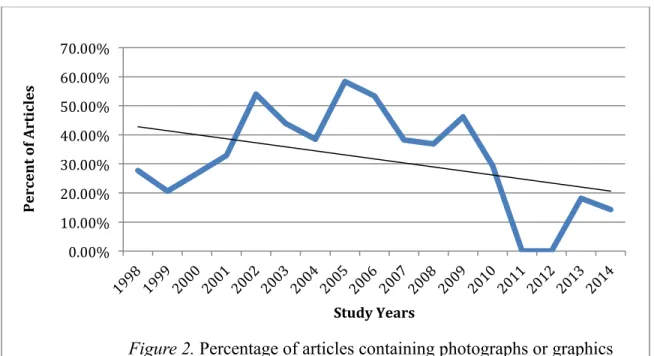
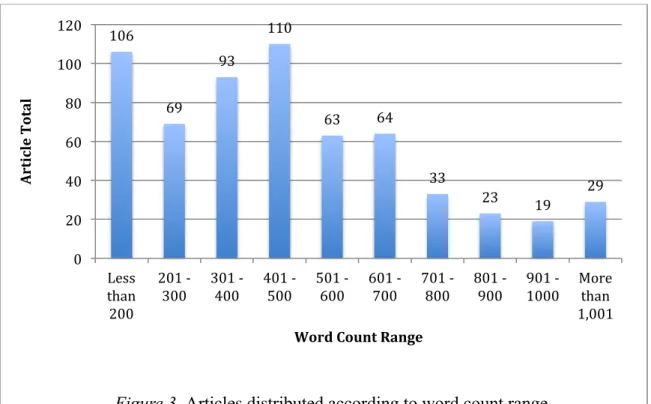
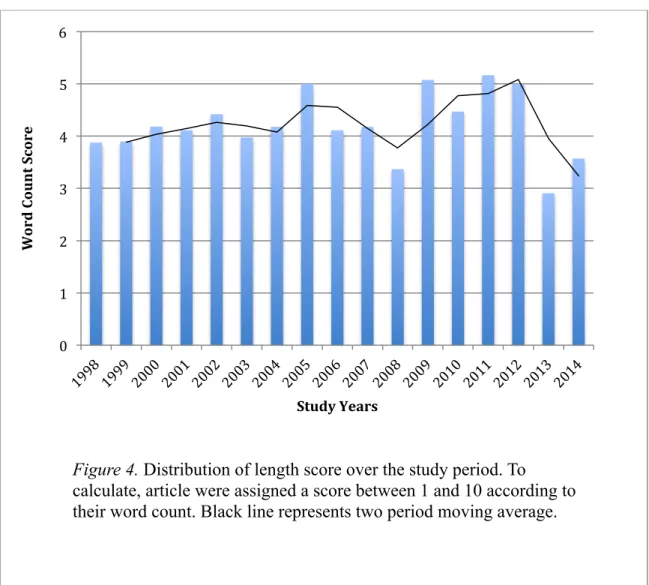
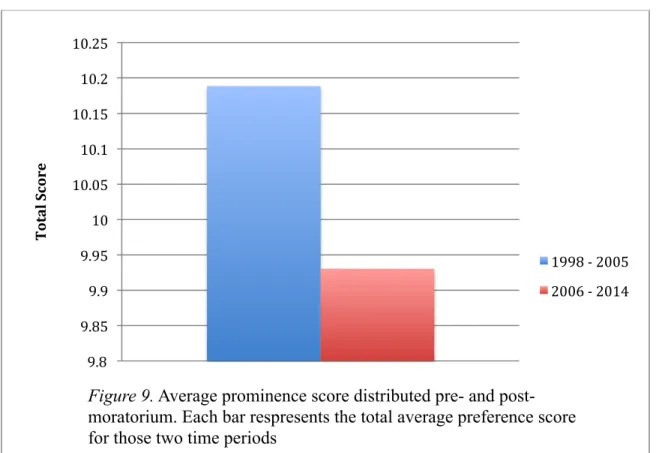
impacted coverage. I used a scoring scheme to calculate how much prominence death
penalty coverage received pre- and post-moratorium, as indicated by article placement,
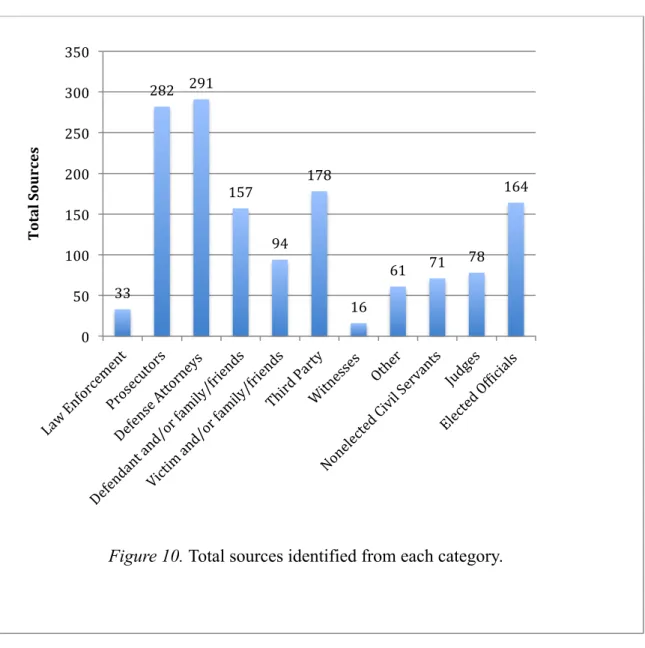
word count and photograph and graphic inclusion. I also studied source choices and
stances expressed by those sources, the inclusion of “innocence frames” and whether
articles cited the death penalty’s alternative punishment: life without parole. I found that
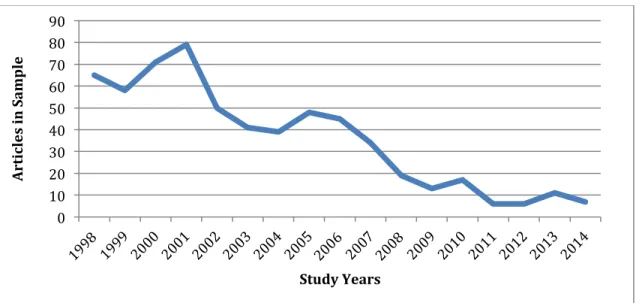
coverage has steadily declined since 2001 but dropped precipitously after the moratorium
came into effect. My findings also demonstrated how articles post-moratorium received
less prominence while references to innocence and life without parole trended downward.
In sum, the moratorium had a profound impact on the amount of death penalty
information newspaper readers receive. Future research should examine death penalty
coverage in other states to help researchers develop a deeper understanding for how legal
Acknowledgements
A big thank you to my committee members: Rhonda Gibson, my advisor, for
working so close with me during one of the most challenging yet rewarding experiences
of my life. Paul Cuadros, my reader, for feedback not just with this project but also with
so many others. Anne Johnston, my professor, for everything she does to encourage
students to take on new challenges to better themselves.
Also, thank you to my girlfriend, Veronica Lupinacci, for understanding why a
project can keep people up at night and still consume their thoughts the next day.
Last but not least, thank you to my parents – Mark and Elizabeth, and Valery and
David – whose love and support allowed me the opportunity to study at UNC-Chapel
Table of Contents
CHAPTER 1: INTRODUCTION ...6
Literature Review ...13
Justification ...28
Research Questions………32
CHAPTER 2: METHODOLOGY ...34
CHAPTER 3: RESULTS ...41
CHAPTER 4: DISCUSSION ...63
Conclusion……….80
APPENDIX A: CODING SHEET………81
APPENDIX B: TABLES………...87
Chapter 1: Introduction
How North Carolina’s newspapers cover state capital punishment practices and
policies has been a source of controversy for more than a century. Not long after the
popular press arose out of 19th century technological advances, state officials realized the
way reporters wrote about executions – word choice, story angles, and interviews –
dramatically affected public opinion.1 Media’s power to influence attitudes toward a
controversial area of public policy makes capital punishment coverage an important field
of research.
In November 1897, Lillington authorities hanged 19-year-old Ed Purvis for
killing flagman W.J. Blackwell, in what became North Carolina’s last public execution.2
Twelve years later, state officials seized control of capital punishment from local
jurisdictions and started carrying out executions with more discretion. The state moved
executions from town squares to closed chambers, hiding them from public view.3 As a
result, executions became veiled affairs to which only select groups gained access. This
selective practice shielded the public from scenes of state-sanctioned violence and made
executions less of a public spectacle.4 However, admission restrictions also impeded
people’s ability to scrutinize whether government officials were adhering to state policies
and upholding constitutional protections against cruel and unusual punishment.
1 See Seitz, Trina N. 2004. "The Killing Chair." North Carolina Historical Review 81, no.
1: 38-72. Academic Search Complete, EBSCOhost (accessed September 18, 2014).
2 Ibid, 40.
3 Ibid, 39.
As conduits to the public, newspaper reporters were among the few allowed into
North Carolina’s execution chamber. As a result, newspapers fast became the public’s
primary source of information about capital punishment. 5 In fact, as penal policy reforms
moved executions behind prison walls, newspaper circulation skyrocketed. So in a sense,
the death penalty helped make printed pages the nation’s most ubiquitous mass medium.6
Not long after reporters became the public’s ears and eyes inside the execution
chamber, their power to effect changes in criminal justice policies came into sharp relief.7
Reporters used vivid descriptions to convey the sights and sounds as inmates died in the
electric chair, employing such grisly metaphors as “frying bacon” and “crackling,
cooking sounds.”8 As such graphic depictions swayed public opinion against the electric
chair, state officials started searching for an alternative execution method. In 1936, North
Carolina adopted the gas chamber, billing it as a more humane way to kill. But it did not
take long before public outcry roared anew thanks to harrowing newspaper accounts
about inmates suffocating to death on toxic fumes.9 Now the state has done away with
both those execution methods entirely, replacing them with something less violent and
more broadly palatable.
5 Haines, Herb. 1992. "Flawed Executions, the Anti-Death Penalty Movement, and the
Politics of Capital Punishment." Social Problems 39, no. 2: 132. Communication & Mass
Media Complete, EBSCOhost (accessed September 18, 2014).
6 Stevens, John D. 1985. "Social Utility of Sensational News: Murder and Divorce in the
1920's." Journalism Quarterly 62, no. 1: 54. Communication & Mass Media Complete,
EBSCOhost (accessed September 18, 2014).
7 Seitz, “The Killing Chair,” 46.
8 Ibid, 48.
As public support for capital punishment started falling in the early 1950s, North
Carolina began encountering legal challenges to its policies. 10 In 1976, the U.S. Supreme
Court quashed North Carolina’s capital sentencing laws, saying the state could not
mandate the death penalty for certain offenses. Death sentences for 120 inmates were
vacated as a result of the court’s ruling. Many of those inmates received new trials, and
most received new sentences of life in prison.11 In 1983, the N.C. General Assembly
started giving inmates the option to die via lethal injection. Fifteen years later, state
lawmakers scrapped the gas chamber entirely, making lethal injection the state’s sole
execution method.12 Today, the public overwhelmingly favors lethal injection over all
other approaches.13
Capital punishment remains a popular penalty for convicted killers, though
support is waning.14 Nationally, 60 percent of Americans support capital punishment, a
low not seen since 1972, when 57 percent supported it.15 Polls show a majority of North
Carolinians favors capital punishment, but support drops markedly when surveyors
reference alternative sentences. For example, a 2013 Public Policy Polling survey found
68 percent of state residents supported life without parole over the death penalty if
10 “Death Penalty,” Gallup (October 13, 2014): Accessed October 13, 2014,
http://www.gallup.com/poll/1606/death-penalty.aspx
11 “History of Capital Punishment in North Carolina,” North Carolina Department of
Public Safety (December 20, 2013): Accessed October 8, 2014,
https://www.ncdps.gov/Index2.cfm?a=000003,002240,002327,002330
12 Ibid.
13 “Death Penalty,” Gallup.
14 See Death Penalty Information Center. “State Polls and Studies,” (2014): Accessed
October 8, 2014, http://www.deathpenaltyinfo.org/state-polls-and-studies?scid=23&did=210#NorthCarolina
15 Jones, Jeffrey M. “U.S. Death Penalty Support Lowest in More Than 40 Years,”
offenders were required to work and pay restitution to victims’ families.16 Public Policy’s findings suggest residents take less punitive stances when keeping offenders alive would
benefit those impacted by crimes.
North Carolina is one of the 32 states that have the death penalty.17 But unlike
most other capital states, North Carolina has been under a de facto moratorium for the
last eight years. A string of lawsuits and other roadblocks have prevented North Carolina
from carrying out executions since 2006. The pause began when death row inmates
challenged their sentences on constitutional grounds, saying lethal injection violated the
Eighth Amendment ban on cruel and unusual punishment.18 Another setback came in
2009, when the highly publicized exoneration of three black men prompted the
then-mostly Democratic General Assembly to pass the Racial Justice Act.19 The law allowed
defendants to use anecdotal evidence and statistics to argue race played a role in their
receiving death sentences.20 While the law drew widespread acclaim from death penalty
16 White, Herbert. “Poll: N.C. residents reject death penalty,” The Charlotte Post (March
4, 2013): Accessed October 8 2014,
http://www.thecharlottepost.com/index.php?src=permalinks/News:_Poll:_N_C_residents _reject_death_penalty
17 Death Penalty Information Center. “States With and Without the Death Penalty.”
(2014): Accessed October 8, 2014,
http://www.deathpenaltyinfo.org/states-and-without-death-penalty
18 Blythe, Anne. “NC executions put on hold by 2007 lawsuit,” The News & Observer
(April 30, 2014): Accessed October 8, 2014,
http://www.newsobserver.com/2014/04/30/3824603_whats-the-death-penalty-status.html?rh=1
19 Parker, Molly. “Goolsby: ‘First-degree murderers deserve the death penalty,” The
StarNews (January 5, 2014): Accessed October 8, 2014,
http://www.starnewsonline.com/article/20140105/ARTICLES/140109870/0/search?p=1 &tc=pg
20 Ibid. See also, “Editorial: The Racial Injustice Act,” The StarNews (June 9, 2013):
Accessed October 8, 2014,
opponents, conservative Republicans who captured control of the legislature in 2010
repealed the measure.
Critics blasted the Racial Justice Act for allowing death row inmates to tie cases
up in litigation, effectively delaying their executions indefinitely.21 In signing the repeal,
Gov. Pat McCrory said the act must be scrapped because it virtually banned capital
punishment in the state.22 And he was right. Death row inmates from all races filed
challenges under the law. As of October 2014, North Carolina’s death row housed 152
inmates, including two women. Of those, 77 inmates were black, 61 were white, seven
were listed as “Indian,” and five were listed as “Other.”23 All but two of those inmates
filed challenges under either the Racial Justice Act or cruel and unusual claims, or both,
potentially suspending executions for years while courts sort out the issue.24
Since Republicans seized the General Assembly, newly emboldened conservative
lawmakers have been trying to roll back anti-death penalty policies implemented under
their more liberal predecessors. In addition to repealing the Racial Justice Act, the
legislature in 2013 passed a series of policy changes aimed at getting the state’s execution
21 Ibid.
22 Smith, Matt. “’Racial Justice Act’ repealed in North Carolina,” CNN (June 21, 2013):
Accessed November 11, 2014,
http://www.cnn.com/2013/06/20/justice/north-carolina-death-penalty/
23 “Offenders on Death Row,” North Carolina Department of Public Safety (September
3, 2014): Accessed October 8, 2014,
https://www.ncdps.gov/index2.cfm?a=000003,002240,002327,002328
24 Freskos, Brian. “Repeal of Racial Justice Act would leave many questions,” The
StarNews (April 13, 2014): Accessed October 8, 2014,
http://www.starnewsonline.com/article/20130413/ARTICLES/130419822/0/search?p=4 &tc=pg.
See also, Blythe, Anne. “NC high court to review sentences changed under Racial Justice
Act, North Raleigh News (April 14, 2014): Accessed October 8, 2014,
chamber operating again. But even with Republican legislative victories, executions
remain stalled. One reason executions have not resumed is the state’s highest court is still
mulling whether lawmakers can retroactively undo challenges brought under the Racial
Justice Act while it was an existing law.25 In April 2014, the N.C. Supreme Court heard
arguments from four inmates whose death sentences were converted to life without parole
after proving racial biases tainted their cases.26 The decision, which justices had yet to
announce as of the time of this writing, would have a dramatic effect on whether claims
filed under the Racial Justice Act can continue and, thus, whether executions may
resume.
Death penalty opponents have pointed to wrongful conviction cases as a reason
to altogether scrap the death penalty. North Carolina witnessed a series of exonerations in
recent years as technological innovations such as DNA provided nearly infallible proof of
a person’s guilt or innocence.27 The state recorded 36 exonerations since 1943; however,
24 of those occurred in the 2000s.28 Policymakers have tacitly acknowledged that people
are, in fact, serving time in prison for crimes they did not commit. In 2006, the state
established The North Carolina Innocence Inquiry Commission to investigate claims of
innocence. As of January 2014, the commission had received 1661 cases, four of which
resulted in exonerations.29
25 Freskos, “Repeal of Racial Justice Act would leave many questions.”
26 Blythe, “NC high court to review sentences changed under Racial Justice Act.”
27 See “North Carolina DNA Exoneration Cases,” The North Carolina Center on Actual
Innocence: Accessed October 17, 2014, http://www.nccai.org/nccases.html
28North Carolina Exonerations, accessed December 1, 2014,
http://ncexonerations.weebly.com/
29 “The North Carolina Innocence Inquiry Commission: A State Agency.” North
Carolina Administrative Office of the Courts. Accessed November 5, 2014,
It is undoubtedly an interesting time for reporters covering North Carolina’s
capital punishment system. In 2006, the state suspended capital punishment in the face of
mounting legal challenges. Four years later, voters ushered in a new conservative
political leadership bent on carrying out the death sentences that courts imposed. As a
result of the historic partisan shift, a return to the pre-2006 capital punishment era is a
real possibility. These political developments unfolded against a backdrop of shifting
public opinion as the national press increasingly focused on wrongful convictions.30
Now, the N.C. Supreme Court’s upcoming ruling would decide whether to toss out
inmates’ pending claims and allow the state to begin executing them. Whatever the
court’s decision, the outcome will define coverage for years to come.
My study sought to examine how North Carolina’s biggest newspapers cover
what is arguably the most divisive criminal justice policy of our era. While the Internet is
quickly changing how people consume news, newspapers and the websites they operate
are still major players.31 My results show from whom newspapers gather their
information and demonstrate how source choices and policy developments influence
coverage. Newspapers indirectly affect policies that literally determine whether death
row inmates live or die. Because of their awesome power, how newspapers cover capital
punishment is a topic worthy of continued academic study.
30 See Dardis, Frank E., Frank R. Baumgartner, Amber E. Boydstun, Suzanna De Boef,
and Fuyuan Shen. 2008. "Media Framing of Capital Punishment and Its Impact on
Individuals' Cognitive Responses." Mass Communication & Society 11, no. 2: 115-140.
Communication & Mass Media Complete, EBSCOhost (accessed September 18, 2014).
31 For more on changing news consumption, see Mitchell, Amy, “State of the News
Media 2014,” Pew Research Center, last updated March 26, 2014,
Literature Review
North Carolina’s pivot to increasingly less violent execution methods in the 20th
century underscores mass media’s potential to affect criminal justice policy. Recent
scholars have studied whether media treat the death penalty in different ways and how
variations influence public opinion. Some research shows longitudinal differences in
frames, with stories reflecting national culture and public attitudes.32 Other studies
demonstrate media coverage’s power to influence public support for capital
punishment.33 Here I present an overview of recent scholarship, focusing on research that
examined newspaper organizations in particular. But I also draw on research from other
spheres to show how reporters face difficulties in communicating information about
capital punishment to audiences. I begin by synthesizing research on the evolving nature
of newspaper coverage over recent decades, emphasizing dramatic shifts between 1960
and 2000. I point out how newspapers increasingly framed stories around wrongful
convictions as exonerations increased and caused people to evaluate capital punishment
through a new lens. I then recount research showing how newspaper coverage influences
more than public policy debates and actually reaches jury boxes to alter trial outcomes.
Finally, I touch on the trauma that journalists experience while covering fraught stories
dealing with life and death, showing how reporters battle with emotionally taxing topics.
32 Dardis et al, “Media Framing of Capital Punishment and Its Impact on Individuals'
Cognitive Responses,”115-140.
33 Fan, David P., Kathy A. Kelner, and Robert O. Wyatt. 2002. “A Matter Of Guilt Or
Innocence. How News Reports Affect Support For The Death Penalty In The United
States.” International Journal Of Public Opinion Research 14, no. 4: 439-452. Business
Newspapers have long garnered criticism for sensationalizing stories to boost
sales.34 That is particularly true in regards to murder coverage. From a rigid professional
viewpoint, newspapers cover murders because they inevitably contain conflict, impact
and other values that increase their newsworthiness, and first-degree murder is the only
crime that carries a possible death sentence.35 Whether media practice objectivity in
murder coverage is an important research topic because news is a mechanism through
which information travels rapidly and on such wide scales that it becomes “the public’s
primary frame of reference for issues of crime and control.”36
When stories weight toward one point of view, the public takes notice,
undermining reader trust. Christian stressed the importance of teaching journalists how
natural thinking habits lead to distortions and errors when left unchecked.37 Showing how
errors actually affect newspapers’ bottom lines, Niven demonstrated how media
credibility influences people’s reaction to news and affects media consumption.38 That
readers will turn away from less credible news sources presents a huge problem given
34 Stevens, “Social Utility of Sensational News: Murder and Divorce in the 1920’s,” 53.
35 Fullerton, Romayne Smith, and Maggie Jones Patterson. 2006. "Murder in Our Midst:
Expanding Coverage to Include Care and Responsibility." Journal Of Mass Media Ethics
21, no. 4: 304-321. Communication & Mass Media Complete, EBSCOhost (accessed
September 18, 2014).
Also, see North Carolina General Statute 14-17.
36 Kort-Butler, Lisa A., and Kelley J. Sittner Hartshorn. 2011. “Watching The Detectives:
Crime Programming, Fear Of Crime, And Attitudes About The Criminal Justice System.”
Sociological Quarterly 52, no. 1: 40. Business Source Complete, EBSCOhost (accessed
September 18, 2014).
37 Christian, Sue Ellen. 2013. "Cognitive Biases and Errors as Cause—and Journalistic
Best Practices as Effect." Journal Of Mass Media Ethics 28, no. 3: 160-174.
Communication & Mass Media Complete, EBSCOhost (accessed November 17, 2014).
38 Niven, David. 2003. "Objective Evidence On Media Bias: Newspaper Coverage Of
Congressional Party Switchers." Journalism & Mass Communication Quarterly 80, no. 2:
311-326. Communication & Mass Media Complete, EBSCOhost (accessed November 17,
how today’s newspaper industry suffers from a credibility crisis. When a 2013 Gallup
poll asked Americans to rate the honesty and ethical standards of professionals in various
fields, newspaper reporters ranked toward the bottom, behind 16 other professions. 39
Gallup’s findings underscore how, for an industry already shedding jobs, maintaining
credibility is paramount.
But despite public opprobrium toward newspapers, researchers believe death
penalty coverage has generally improved. Today’s newspapers employ less
sensationalism and more objectivity.40 This progress, however, has not been credited to
newspapers changing their approach. Rather, researchers believe sensationalism has
declined because modern executions are carried out in much less dramatic ways.41 Lethal
injection is the primary execution method in all 50 states.42 Long gone are scenes of
inmates frying like breakfast meat in the electric chair or gasping for breath in the gas
chamber. Moreover, public support is diminishing for punitive policies and increasing for
restorative practices that emphasize victims’ rights.43 While the former prevails as the
dominant mechanism through which convicted criminals face punishment, death penalty
39 Swift, Art, “Honesty and Ethics Rating of Clergy Slides to New Low,” Gallup, last
modified December 16, 2013, http://www.gallup.com/poll/166298/honesty-ethics-rating-clergy-slides-new-low.aspx
40 “Splashed the fluids into his flesh: News coverage of executions.” Conference Papers
-- International Communication Association 3. Communication & Mass Media Complete,
EBSCOhost (accessed September 18, 2014).
41 Ibid.
42 Death Penalty Information Center. “Lethal Injection.” Access Date: Sept. 22, 2014.
http://www.deathpenaltyinfo.org/lethal-injection-moratorium-executions-ends-after-supreme-court-decision
43 De Mesmaecker, Vicky. "Building social support for restorative justice through the
media: is taking the victim perspective the most appropriate strategy?" Contemporary
Justice Review 13, no. 3 (September 2010): 241. Academic Search Complete,
coverage could reflect softening public attitudes.44 Despite general improvements, many researchers say fairness remains a persistent problem, with stories implicitly supporting
one side over another.
Some critics believe the Internet’s introduction spelled the end of printed news
mediums.45 While the media landscape has grown increasingly saturated, newspapers
continue to fill an important role in American civic society. Most citizens have no direct
exposure to the criminal justice system and must rely on other information sources to
form their value judgments.46 Newspapers fill this vacuum, disseminating cultural images
about crime and shaping public policy debates.47
How newspapers cover an issue matters. Framing theory suggests communicators
highlight some bits of information about subjects while ignoring others.48 Frames define
the problem for readers, diagnose its causes, make moral judgments and suggest
remedies.49 Frames elevate the salience of certain aspects of an issue, increasing the
likelihood readers will perceive certain information, discern its meaning and store it in
their memories.50 Under this theory, frames in death penalty stories influence reader
44 See Fan et al, "A Matter Of Guilt Or Innocence. How News Reports Affect Support
For The Death Penalty In The United States," 439-452, for evidence of the connection between media coverage and public support for the death penalty.
45 Rogers, Tony, “Are Newspapers Dying?” About.com, accessed March 29, 2015,
journalism.about.com/od/trends/a/dyingpapers.htm
46 Kort-Butler and Hartshorn, “Watching The Detectives: Crime Programming, Fear Of
Crime, And Attitudes About The Criminal Justice System," 40.
47 Ibid.
48 Entman, Robert M. 1993. "Framing: Toward clarification of a fractured paradigm."
Journal Of Communication 43, no. 4: 51-58. Communication & Mass Media Complete, EBSCOhost (accessed March 9, 2015).
49 Ibid, 53.
perceptions of the complex issues involved and how states should go about trying to
remedy them.
How much space publications devote to articles is one indicator of how important
editors consider topics.51 The page on which articles appear is another indicator of
importance. In their content analysis of articles about physician-assisted suicide, Pollock
and Yulis looked at four areas of “prominence”: placement, headline size, story length
and presence of photos.52 They scored articles within ranges, with the most prominent
articles – that is, the ones more likely to attract reader attention – receiving the highest
scores.53 There is other research to corroborate the assertion that certain attributes yield
greater readership. Mateos et al pointed out how article length is a sign that journalists
give importance and priority to topics.54 They found, for example, women appear more
frequently in shorter articles, which the researchers interpreted as males’ association with
newsworthiness.55 The Poynter Institute studied how photographs attract viewership,
concluding that photos are among the first visual stops for readers.56 In my study, I
51 Pollock, John C., and Spiro G. Yulis. 2004. "Nationwide Newspaper Coverage of
Physician-Assisted Suicide: A Community Structure Approach." Journal Of Health
Communication 9, no. 4: 281-307. Communication & Mass Media Complete,
EBSCOhost (accessed March 30, 2015).
52 Ibid, 291.
53 Ibid.
54 Mateos de Cabo, Ruth, Ricardo Gimeno, Miryam Martínez, and Luis López. 2014.
"Perpetuating Gender Inequality via the Internet? An Analysis of Women's Presence in
Spanish Online Newspapers." Sex Roles 70, no. 1/2: 57-71. Academic Search Premier,
EBSCOhost (accessed March 30, 2015).
55 Ibid.
56“Eyetracking The News: A Study of Print & Online Reading,” Poynter Institute,
tailored Pollock and Yulis’s prominence scoring scheme to examine how much
importance North Carolina’s newspapers assign to capital punishment.57
Whether news organizations prioritize coverage of particular topics can affect
public attitudes and policy processes. Research suggests media coverage tells the public
which issues matter most, a role known as the agenda-setting function.58 Lee et al
highlighted how the public perceives particular issues as more important when media pay
attention to them.59 Through their reporting, media outlets cultivate public interest, which
affects what people think about and how they think about it. In a summarization of
studies about agenda setting, Camaj noted how “people devote more thought to issues
and objects that are more salient in the media coverage.”60 In addition to affecting how
people think, media also help them sort information and prioritize it.61 In other words,
media move issues from obscurity to the top of the public’s priority list.
Given the media’s agenda-setting power, researchers believe it is important to
know how much attention news organizations pay to capital punishment. Between 1960
and 2003, death penalty stories in the New York Times Index increased and decreased in
57 Pollock and Yulis, "Nationwide Newspaper Coverage of Physician-Assisted Suicide: A
Community Structure Approach,” 281-307.
58 Eissler, Rebecca, Annelise Russell, and Bryan D. Jones. 2014. "New Avenues for the
Study of Agenda Setting." Policy Studies Journal 42, S76. Business Source Premier,
EBSCOhost (accessed January 6, 2015).
59 Lee Hunter, Mark, Luk N. Van Wassenhove, Maria Besiou, and Mignon van Halderen.
2013. "The Agenda-Setting Power of Stakeholder Media." California Management
Review 56, no. 1: 24-49. Business Source Premier, EBSCOhost (accessed January 6,
2015).
60 Camaj, Lindita. 2014. "The Consequences of Attribute Agenda-Setting Effects for
Political Trust, Participation, and Protest Behavior." Journal Of Broadcasting &
Electronic Media 58, no. 4: 634. Communication & Mass Media Complete, EBSCOhost
(accessed January 6, 2015).
step with major legal and policy developments.62 For example, the Supreme Court’s reinstatement of capital punishment in 1976 after a four-year hiatus caused a spike in
news coverage.63 Coverage shot up again in 2000, when issues about the size of death
row, juvenile and mentally handicapped defendants, and exonerations garnered
headlines.64 While coverage rose and fell from one year to the next, Dardis et al found,
overall, death penalty stories have been appearing more frequently.65 The increase in
coverage over time suggests reporters are finding new angles to write about and national
news organizations consider the issue a priority.
There are disparities between actual public support for capital punishment and
what the media portray. Most Americans say they favor capital punishment when asked
outright whether death should be a penalty for murder. But more comprehensive polls
suggest public opinion is more nuanced.66 When surveyors ask whether respondents
prefer the death penalty versus life without parole plus restitution, a majority chooses the
latter option.67 In essence, the public will weigh alternative punishment forms when
explicitly asked to do so.68 Even so, Niven found media frame capital punishment as if
Americans overwhelmingly support it, ignoring the fact that most people prefer to lock
up murderers for life if they were required to compensate their victim’s family
62 Dardis et al, "Media Framing of Capital Punishment and Its Impact on Individuals'
Cognitive Responses,"115-140.
63 Ibid, 122.
64 Ibid, 122-123.
65 Ibid, 122.
66 Niven, David. 2002. "Bolstering an Illusory Majority: The Effects of the Media’s
Portrayal of Death Penalty Support." Social Science Quarterly (Wiley-Blackwell) 83, no.
3: 671-689. Business Source Complete, EBSCOhost (accessed September 16, 2014).
67 Ibid, 673.
68 De Mesmaecker, "Building social support for restorative justice through the media: is
members.69 When newspapers portray capital punishment as overwhelmingly popular, death penalty opponents are less likely to express their beliefs because they wrongly feel
part of a small minority of critics.70 In Niven’s analysis of 4,190 articles between 1996
and 2001, only 7.2 percent mentioned popular support for life without parole. In articles
that did discuss the alternative punishment, most alluded to its existence as an aside and
cast it in a negative light.71
Previous research noted variations in how individual publications treat capital
punishment. These variations have been observed both over time and over different
regions. According to Day and Golan, some newspapers are more balanced in coverage
while others focus squarely on one viewpoint.72 Their analysis of Op-Ed articles credited
The New York Times with including near-equal space for voices on both sides of the
debate. The Washington Post was not so fair, granting space to staff writers who were
anti-death penalty while affording less space to guest columnists who offered a different
point of view.73 Likewise, Dardis et al found that stories leading up to the Supreme
Court’s 1972 ban on capital punishment weighted against capital punishment.74 But
coverage turned decidedly pro-death for the next several decades as states tried to fashion
laws that would pass constitutional muster. In the mid-1990s, coverage turned against
69 Niven, “Bolstering an Illusory Majority: The Effects of the Media’s Portrayal of Death
Penalty Support,” 673-674.
70 Ibid, 674
71 Ibid.
72 Day, Anita, and Guy Golan. 2005. "Source and content diversity in Op-Ed Pages:
assessing editorial strategies in The New York Times and the Washington Post."
Journalism Studies 6, no. 1: 61-71. Communication & Mass Media Complete,
EBSCOhost (accessed September 18, 2014).
73 Ibid.
74 Dardis et al, "Media Framing of Capital Punishment and Its Impact on Individuals'
capital punishment yet again, with stories about innocent people on death row exposing
serious systematic flaws. By 2000, anti-death penalty news became consistent, with
coverage more imbalanced than at any time during their study period.75 Publications can
differ regionally, also. Newspaper stories originating in California tended to weight
against capital punishment. Coverage in Texas newspapers, meanwhile, strongly upheld
the policy, “sometimes omitting key factors in the debate about the method.”76
In covering individual capital cases, reporters highlight key developments but
ignore parts where defendants’ crimes are contextualized. Haines and Green concluded
media focus on pretrial and verdict phases but disregard sentencing phases, when
defendants’ social and historical backgrounds emerge.77 Reporters also frequently rely on
prosecutors and law enforcement sources for information about defendants, a practice
that leads to unfair portrayals of the accused.78 Given how people turn to media for
information about capital punishment, newspapers omitting contextual details about
capital defendants may undermine the public’s appreciation for the social and biological
traits shown to predispose people to criminal behavior.79 According to Fullerton and
Patterson, news reports about murder probe deeply into the lives of those involved but
ultimately present “cheaply sketched, stick-figure portraits.”80 News portrays perpetrators
75 Ibid.
76 "Splashed the fluids into his flesh": News coverage of executions," 10.
77 Haney, Craig, and Susan Greene. 2004. "Capital Constructions: Newspaper Reporting
in Death Penalty Cases." Analyses Of Social Issues & Public Policy 4, no. 1: 129-150.
Academic Search Complete, EBSCOhost (accessed September 18, 2014).
78 Ibid., 138.
79 Ibid., 133.
80 Fullerton and Patterson, "Murder in Our Midst: Expanding Coverage to Include Care
as bad seeds, evildoers unworthy of mercy.81 But crime’s causes are much more complex. A deeper examination of crime’s origins and consequences could spur community
conversations about responsibility, social justice and reconciliation.82
Beyond undermining the public’s appreciation for crime’s many complexities,
coverage has demonstrable effects on public opinion as it relates to crime and capital
punishment. This relationship has been documented as far back as 19th century Great
Britain, when increasing crime coverage engendered false perceptions among residents
that violence was on the rise.83 British policymakers had been considering abolishing
capital punishment. But the false, media-fueled perceptions made any such attempt
politically explosive, prompting policymakers to back off.84 More recently, Niven found
that subjects who read more realistic accounts about the death penalty debate became less
supportive and believed capital punishment would become less common in the future.85
Haines suggested newspaper coverage about flawed convictions casts capital
punishment’s “carefully groomed image of humaneness” into doubt, potentially eroding
support for it.86 Dardis et al found stories about the system’s flaws caused readers who
supported capital punishment to re-evaluate their positions.87 Newspapers long framed
the death penalty debate as a moral question about whether it was right or wrong to kill
81 Ibid.
82 Ibid., 304.
83 Casey, Christopher A. 2011. "Common Misperceptions: The Press and Victorian
Views of Crime." Journal Of Interdisciplinary History 41, no. 3: 367-391. Academic
Search Complete, EBSCOhost (accessed September 18, 2014).
84 Ibid, 368-369.
85 Niven, "Bolstering an Illusory Majority: The Effects of the Media’s Portrayal of Death
Penalty Support,” 671.
86 Haines, “Flawed Executions, the Anti-Death Penalty Movement, and the Politics of
Capital Punishment,” 126.
87 Dardis et al, “Media Framing of Capital Punishment and Its Impact on Individuals’
someone for committing crimes. But the innocence frame causes people to consider a
new dimension and rethink their beliefs.88 This frame is likely to continue to appear.
While not every mishap garners the same level of media attention, imperfections in the
criminal justice system are generally newsworthy events.89
Media’s shift from moral frames to innocence ones may reverberate beyond the
public policy realm. The number of death sentences handed down by American juries has
been steadily declining since 1995. In 2012, that figure reached its lowest point since the
1970s.90 Here again, the innocence frame could be a cause. Fan et al found juries are less
likely to apply death sentences when news coverage focuses on the uncomfortable
possibility of executing innocent people.91 The rise in articles about exonerations makes
citizens less trusting of the criminal justice system and thus less comfortable about
sending people to death row.92 If citizens feel more antagonistic toward capital
punishment, juries are less likely to support it. If juries are less likely to support it,
prosecutors are less likely to expend the considerable resources that capital cases
require.93 North Carolina saw these relationships borne out. State juries handed down
88 Ibid.
89 Haines, “Flawed Executions, the Anti-Death Penalty Movement, and the Politics of
Capital Punishment,”131-135.
90 The Death Penalty Information Center. “Death Sentences By Year: 1976-2012.”
Access Date: Sept. 21, 2014.
http://www.deathpenaltyinfo.org/death-sentences-year-1977-2009
91 Fan et al, "A Matter Of Guilt Or Innocence. How News Reports Affect Support For
The Death Penalty In The United States," 439-452.
92 Ibid.
93 Dardis et al, “Media Framing of Capital Punishment and Its Impact on Individuals’
only one death sentence in the last two years, compared to an average of 25 per year in
the 1990s.94
Researchers differ on whether journalists’ personal beliefs impact media
coverage. Writing specifically about political reporting, Niven noted how journalists
worry so much about protecting their credibility that they go to great lengths to avoid
expressing personal beliefs in articles.95 Sometimes, journalists fear showing bias so
much that they unintentionally convey support for the other side. That hesitation means
stories are more likely to reflect news managers’ or organizations’ viewpoints rather than
the journalists behind the keyboard.96 On the other hand, some researchers found specific
examples where personal viewpoints impacted reporting. For example, Peake found
coverage of the Bush presidency during a five-month period in 2006 slanted in ways that
were partly explained by the political leanings of the newspapers and their respective
audiences, behavior that ran afoul of professional journalistic standards.97 Kothari says
individual beliefs and motives of journalists covering the Darfur conflict between 2003
and 2006 significantly influenced coverage.98 Whether or not attitudes influence death
penalty coverage, one thing is clear: People seek and interpret information in ways that
jibe with their pre-existing beliefs, expectations or hypotheses, a phenomenon known as
94 Parker, “Goolsby: First-degree murderers deserve the death penalty.”
95 Niven, " Objective Evidence On Media Bias: Newspaper Coverage Of Congressional
Party Switchers," 311-326.
96 Ibid.
97 Peake, Jeffrey S. 2007. "Presidents and Front-page News: How America's Newspapers
Cover the Bush Administration." Harvard International Journal Of Press/Politics 12, no.
4: 52-70. Communication & Mass Media Complete, EBSCOhost (accessed November 17,
2014).
98 Kothari, Ammina. 2010. "The Framing Of The Darfur Conflict In The New York
Times: 2003-2006." Journalism Studies 11, no. 2: 209-224. Communication & Mass
confirmation bias.99 Christian showed how confirmation bias appears in journalism. Journalists, he says, can be so committed “to a predetermined conclusion such that
contrary evidence does not sway the final news report or focus.”100
Among the most widely studied phenomena is the impact of sourcing. A long line
of research consistently demonstrated how source selection affects news coverage. 101 In
reporting on national and international affairs, reporters most frequently turn to
government officials for information.102 Juyan and Cameron say the emphasis on
government officials might be understandable when one considers how reporters seek
sources who are accessible and directly engaged with newsworthy events.103 Journalists
often quote social elites who wield economic and political power while ignoring voices
on lower social rungs.104 Rauhala et al showed media’s predilection for government
sources in the debate over universal childcare in Canada.105 Newspapers covering the
issue quoted government sources more often than activists, parents and childcare
99 Christian, "Cognitive Biases and Errors as Cause—and Journalistic Best Practices as
Effect," 160-174.
100 Ibid., 163.
101 For example, see Fogarty, Brian J. 2012. "Local newspapers, House members, and
source usage." Social Science Journal 49, no. 3: 275-283. Business Source Premier,
EBSCOhost (accessed March 4, 2015).
102 Juyan Zhang, Bruce, and Glen T. Cameron. 2003. "Study Finds Sourcing Patterns in
Wen Ho Lee Coverage." Newspaper Research Journal 24, no. 4: 88-101. Communication
& Mass Media Complete, EBSCOhost (accessed March 4, 2015).
103 Ibid, 97.
104 Rauhala, A., P. Albanese, C. Ferns, D. Law, A. Haniff, and L. Macdonald. 2012.
"Who Says What: Election Coverage and Sourcing of Child Care in Four Canadian
Dailies." Journal Of Child & Family Studies 21, no. 1: 95-105. Academic Search
Premier, EBSCOhost (accessed March 4, 2015).
providers.106 By showing favoritism toward elites, media give upper classes more
opportunities to perpetuate their ideologies.107
However, in coverage of high-profile legal cases, defenders and plaintiffs deserve
equal media representation if news organizations are to uphold values of journalistic
fairness.108 Sometimes representation can change over time. Such was the case in the
media circus surrounding the trial of Wen Ho Lee. Researchers found that reporters
covering the suspected Chinese spy’s trial used anonymous and key official sources when
the news first broke but turned elsewhere as the case progressed.109
Who gets quoted and why has become an intense research subject because source
choice affects news quality. Fogarty noted how sources shape coverage and voters’
understanding of issues facing their government and their representatives’ actions.110
According to Fogarty, limiting sources decreases public comprehension of salient
topics.111 In a study on science and technology coverage, Ramsey linked story depth to
sources’ proximity to the subject being covered.112 Articles provided deeper accounts
when journalists quoted scientists, conferences and research reports instead of
organization spokespersons.113 Later research took this notion of source influence even
further. Swain studied how journalists return to the same sources instead of seeking new
106 Ibid.
107 Ibid, 96-97.
108 Juyan Cameron, "Study Finds Sourcing Patterns in Wen Ho Lee Coverage,” 97.
109 Ibid, 98.
110 Fogarty, "Local newspapers, House members, and source usage,” 275-283.
111 Ibid.
112 Ramsey, Shirley. 1999. "A BENCHMARK STUDY OF ELABORATION AND
SOURCING IN SCIENCE STORIES FOR EIGHT AMERICAN NEWSPAPERS."
Journalism & Mass Communication Quarterly 76, no. 1: 87-98. Communication & Mass
Media Complete, EBSCOhost (accessed March 4, 2015).
ones, and when they are unable to ascertain whether events threaten citizens, they merely
inform the public the controversies have occurred and quote key players on both sides of
the dispute.114 This strategy, Swain says, empowers sources to suppress facts, manipulate
information and announce unfounded conclusions. Sources wield influence to their
advantage.115 If journalists are not critical and do not check information, they risk being
manipulated by their sources.116
Some reporters may not be ready for the challenges inherent in covering capital
murder trials. In addition to finding sources, reporters must watch murders recounted in
painstaking detail, see graphic crime scene photographs, listen to 911 recordings and
witness emotional testimony. Reporters must cope with their emotions while producing
copy on deadline. Grubb and Dworznik stressed how journalists should undergo trauma
training, saying students who covered capital trials were ill prepared for their reactions to
them.117 Journalists covering traumatic events must make on-the-spot moral choices.118
The psychological attachments journalists form with the events and people they cover
114 Swain, Kristen Alley. 2012. "Delivering the Scary News: Newspaper Sourcing in a
Bioterrorism Crisis." Online Journal Of Communication & Media Technologies 2, no. 2:
29-56. Communication & Mass Media Complete, EBSCOhost (accessed March 4, 2015).
115 Ibid.
116 Juyan and Cameron, “Study Finds Sourcing Patterns in Wen Ho Lee Coverage," 98.
117 Dworznik, Gretchen, and Max Grubb. 2007. "Preparing for the Worst: Making a Case
for Trauma Training in the Journalism Classroom." Journalism & Mass Communication
Educator 62, no. 2: 190-210. Communication & Mass Media Complete, EBSCOhost
(accessed October 10, 2014).
118 Amend, Elyse, Linda Kay, and Rosemary C. Reilly. 2012. "Journalism on the Spot:
Ethical Dilemmas When Covering Trauma and the Implications for Journalism
Education." Journal Of Mass Media Ethics 27, no. 4: 235-247. Business Source
make emotional harm more difficult to reconcile.119 At a murder trial, reporters may wrestle with whether to interview defendants’ or victims’ family members and how to
approach them without causing further trauma to either party. Death penalty coverage
presents particular difficulties for novice journalists who lack the forethought that
develops with experience. Veteran reporters handle such situations more effectively,
applying their knowledge to the issue. Even so, they can also experience trauma
symptoms and must take care to soften the effects. No one experiences trauma the same
way. Rather, people’s reactions depend on past experiences, personality and how
someone personally assumed what they witnessed and reported.120
Justification
My research took a more focused approach than previous studies. Fan et al and
Dardis et al examined valence variations in capital punishment coverage in national
sources over time. Fan et al examined articles from The Washington Post, a publication
geared toward an elite readership, and the Associated Press, which appeals to broader
segments of the American populace.121 Dardis et al, meanwhile, analyzed abstracts from
The New York Times Index, choosing the publication because of its status as the nation’s
119 Rentschler, Carrie A. 2010. "Trauma Training and the Reparative Work Of
Journalism." Cultural Studies 24, no. 4: 447-477. Academic Search Complete,
EBSCOhost (accessed October 10, 2014).
120 Brayne, Mark. “Trauma & Journalism: A Guide for Journalists, Editors & Managers,”
Dart Centre for Journalism & Trauma: 10 (accessed November 11, 2014),
http://dartcenter.org/files/DCE_JournoTraumaHandbook.pdf
121 Fan et al, “A Matter Of Guilt Or Innocence. How News Reports Affect Support For
newspaper of record.122 Both studies found connections between frames and public support for capital punishment. Their findings are an important addition to academia’s
growing understanding for how newspaper coverage shapes public opinion. But their
research focused on publications read across the nation and even the world. I found only
one study focused on individual states, but it looked at Texas and California, two places
with widely different political cultures.123
I could not find research focused solely on variations in publications produced
and distributed primarily among North Carolinians. The history of North Carolina’s
capital punishment system is unique, and reporters have had a lot to write about. In the
early 2000s, death penalty opponents successfully pushed legislation to keep mentally
retarded defendants off death row.124 They also advocated a law to allow DNA evidence
analysis if such testing had not been done during defendants’ original trials.125 As
concerns about wrongful convictions mounted, a movement to temporarily halt
executions gained steam. Tensions climaxed in 2006 when legal challenges spawned a de
facto moratorium. The pause created a seemingly illogical environment where courts
could impose death sentences even though inmates could not be executed. My study
marks the first time any research has examined how such developments – the moratorium
in particular – affect newspaper coverage.
122 Dardis et al, “Media Framing of Capital Punishment and Its Impact on Individuals’
Cognitive Responses,” 115-140.
123 “Splashed the fluids into his flesh": News coverage of executions," 10.
124 Weigl, Andrea. 2006. “State drops death row appeal.” News and Observer. April 18:
B5. America’s News, NewsBank (accessed March 11, 2015).
125 Weigl, Andrea. 2005. “DNA tests earn convict new trial.” News & Observer. July 26:
My study was inspired by previous research from an array of academics. Fan et al
scored for the numbers of paragraphs containing the ideas of favorable, unfavorable, guilt
and innocence, as inferred from explicit references in the text.126 I also scored for
favorability but used stances expressed in quotes and paraphrased remarks. Dardis et al
studied the relationship between coverage frequency and current events. I also examined
that relationship, theorizing coverage would rise and fall according to major legal and
policy developments.127 Niven showed how media portray capital punishment as
overwhelmingly popular despite polls suggesting a large segment of the American
population would rather lock up killers for life.128 I coded articles for references to life
without parole to see how many stories reported the alternative sentence. Dardis et al also
demonstrated how the accentuation of errors in the criminal justice system caused people
to re-evaluate their positions on capital punishment.129 So I looked at how many articles
used innocence frames through which to discuss and analyze capital punishment. Taking
all these variables together, my research represents a comprehensive exploration of North
Carolina’s capital punishment coverage unlike any other.
My research also underscores the importance of fairness. Because media outlets
serve as the primary source of information about capital punishment, it is important that
reporters provide accurate, detailed and objective accounts. Reporters’ sources affect the
126 Fan et al, "A Matter Of Guilt Or Innocence. How News Reports Affect Support For
The Death Penalty In The United States," 439-452.
127 Dardis et al, “Media Framing of Capital Punishment and Its Impact on Individuals’
Cognitive Responses,” 115-140.
128 Niven, Bolstering an Illusory Majority: The Effects of the Media’s Portrayal of Death
Penalty Support,” 671-689.
129 Dardis et al, “Media Framing of Capital Punishment and Its Impact on Individuals’
angle – or trajectory – that a story takes.130 My study examined which sources appear in capital punishment coverage and whether reporters practiced fairness, incorporating
voices from all sides of the debate. Readers crave in-depth coverage and analysis.131 To
achieve high quality reporting, journalists must draw from sources who add context and
detail to stories. But providing exhaustive coverage has grown increasingly difficult as
reporters grapple with dwindling resources and murky employment outlooks. In 2012,
newspaper cutbacks pushed the industry below 40,000 full-time professional employees
for the first time since 1978.132 Fewer resources means reporters have less time to vet
information from sources. The consequences of this phenomenon have already come into
view. A Pew Research Center analysis found reporters covering the 2012 presidential
campaign acted “primarily as megaphones, rather than as investigators, of the assertions
put forward by the candidates and other political partisans.”133 One 2013 poll found that
not only were Americans noticing declines in news quality, but nearly one-third also
reported having abandoned media outlets because of it.134 If newspapers are to thrive,
quality must be upheld.
My study employed a content analysis to explore coverage before and after the
2006 moratorium. My results shine a light on whether coverage has grown more positive,
130 See Walbert, Kathryn. “Reading newspapers: Factual reporting,” Learn NC, UNC
School of Education: Accessed October 12, 2014, http://www.learnnc.org/lp/pages/4132
131 “The State of the News Media 2013,” The Pew Research Center’s Project for
Excellence in Journalism: Accessed February 5, 2015,
http://www.stateofthemedia.org/2013/overview-5/
132 Ibid.
133 Ibid.
134 Enda, Jodi and Amy Mitchell, “Americans Show Signs of Leaving a News Outlet,
Citing Less Information,” Pew Research Center, accessed March 29, 2015,
negative or neutral over a 16-year period and whether newspapers present a fair
representation of public opinion. I also scored for sources to find out whom reporters
relied on most frequently for information. And finally, I analyzed whether news outlets
employed innocence frames in their reporting. My findings provide reporters, editors and
media managers with valuable insights on coverage practices and enable members of the
public to become more critical news consumers. My study adds to a growing body of
research on how media present an issue of significant public import and may help North
Carolina’s major newspapers increase news quality and retain readership. Given the
media’s power to effect policy changes, newspapers’ treatment of capital punishment
warrants steadfast scrutiny. In the end, I hope my analysis improves coverage so the
public receives accurate and objective information about this important policy topic.
Research Questions
Empirical evidence suggests newspapers’ capital punishment coverage changed
over time in both frequency and approach.135 Yet no previous research examined whether
that trend holds true for major North Carolina newspapers. This study is the first to
provide quantifiable data on longitudinal variations in North Carolina newspaper
coverage using the 2006 moratorium as a critical juncture.
This study had four goals. First, I wanted to find out whether policy developments
affected coverage, both in terms of the frequency with which articles appeared and also in
their treatment. Given significant state policy developments, I theorized coverage
135 See Dardis et al, "Media Framing of Capital Punishment and Its Impact on Individuals'
frequency increased and newspapers afforded articles more space and prominent page
placement leading up to 2006. The content analysis answered the following question:
RQ1: Have newspapers articles about the death penalty grown more or less prominent since the start of the 2006 moratorium?
Second, I wanted to determine whether newspaper coverage grew more or less
favorable toward capital punishment since the moratorium began and whether source
choices affected valence. The content analysis answered the following questions:
RQ2: Has North Carolina newspaper coverage of capital punishment grown more positive, negative or neutral since the moratorium began in 2006?
RQ3: Is there a relationship between source choice and valence?
Third, I wanted to demonstrate how newspapers frame capital punishment and
whether they address the existence of alternative punishments. Opinion polls show death
penalty support drops when the public is reminded about the existence of life without
parole and the possibility that innocent people could be executed. Therefore, the content
analysis examined the following questions:
RQ4: Has there been an increase in references to life without parole since the moratorium began?
Chapter 2: Methodology
I conducted a content analysis of newspaper articles appearing between Jan. 1,
1998 and Dec. 31, 2014. I chose these dates based on North Carolina’s last execution,
which happened on Aug. 18, 2006.136 Therefore, my content analysis spanned roughly
eight years of newspaper coverage prior to the moratorium’s beginning and eight years
after the last execution.
I analyzed highest circulation newspapers from different regions to gain a sense
for how publications across the state treated capital punishment.137 I selected the
following newspapers based on 2013 weekday circulation numbers, which are listed in
parentheses: The News & Observer (123,101), which is based in Raleigh and focuses on
the Piedmont-Triad region but is distributed statewide; The Charlotte Observer
(128,505), which covers the greater Charlotte area; the News & Record (51,114), which
serves North-Central North Carolina; and the StarNews, whose readership includes a
large pocket of Southeastern North Carolina. (I initially planned on including The
Citizen-Times (30,224), an Asheville-based newspaper spanning Western North Carolina,
but copies were not available in the NewsBank database).138
136 Death Penalty Information Center.“Editorials: ‘The Last Man to Die,’” (2014):
Accessed October 17, 2014,
http://www.deathpenaltyinfo.org/editorials-%E2%80%9C-last-man-die%E2%80%9D
137 For example of how death penalty coverage varies by region, see "Splashed the fluids
into his flesh": News coverage of executions," 10.
138 For circulation figures, see “Media Intelligence Center,” Alliance for Audited Media,
accessed November 11, 2014,
I used the NewsBank database to search for keywords in the lead or first
paragraph. I did not conduct a full text search because my goal was to find articles in
which the death penalty was the story’s primary focus. Also, I needed to narrow my
selection to a representative sample because of time constraints. The keywords were
“death penalty,” “capital punishment,” “execution” and “death row.” I excluded articles
containing “Editorial” or “Opinion” in the text and section information, as opinion pieces
fell outside the realm of this study. These search parameters produced a sample of 4,190
articles. I manually browsed the headlines to weed out articles not focused on North
Carolina’s capital punishment system. I removed all stories about federal trials or federal
criminal justice policy. I also removed articles that referred to an “execution-style”
murder but did not reference an actual death sentence in the first paragraph. I also
removed letters to the editor, sports stories, columns and articles in which writers used
the first-person point of view. I also removed articles about people condemned in other
countries. I winnowed the sample down even further through a random selection process
to produce a near-equal subsample of articles from each publication. If an article in the
subsample was later found to be inappropriate, i.e., should have been eliminated during
the winnowing process, I returned to the sample and replaced it with an article from close
to the same date.
After gathering the sample, my advisor and I conducted a trial run to test the
coding procedure, scoring a five-article subsample. The trial run resulted in some tweaks
to the coding instrument, including the addition of a source category for “Elected officials
who aren’t judges or prosecutors” and a narrower definition for whom qualifies as a