REFINING, IMPLEMENTING AND EVAUATING A NEURO EARLY MOBILIZATION PROTOCOL IN THE NEUROSCIENCE INTENSIVE CARE UNIT
Megan A. Brissie
A project submitted to the faculty at the University of North Carolina at Chapel Hill in partial fulfillment of the requirements for the degree of Doctor of Nursing Practice in the Doctor of
Nursing Practice Program in the School of Nursing.
Chapel Hill 2015
ABSTRACT
Megan A. Brissie: Refining, Implementing and Evaluating a Neuro Early Mobilization Protocol in the Neuroscience Intensive Care Unit
(Under the direction of Meg Zomorodi)
Patients admitted to the Neuroscience Intensive Care Unit (NSICU) often suffer from neurological injuries, which can affect their long-term functional outcome. These patients are often admitted to the NSICU for prolonged periods of time, frequently requiring ventilator assistance, as a result of their neurological illness. If these patients are not
mobilized, they are at greater risk of increased morbidity, mortality, infection, hospital costs, and prolonged hospital stays as a result of immobilization. In addition, patients in the
To my friends and family who have supported me, encouraged me, and cheered me on along the way, I thank you. I could not have made it through without making many of the sacrifices that you so gracefully understood in order for me to achieve this accomplishment. To my parents, and especially my mom, thank you for all the meals you prepared, times you
ACKNOWLEDGEMENTS
I want to acknowledge and thank my committee members for their time, support, and expertise in guiding this project, I could not have done it without each of you. I especially want to thank Dr. Meg Zomorodi for her guidance and encouragement throughout this process. She has truly mentored me and her encouragement inspired to me work harder and constantly challenged me to do better. Dr. Dedrick Jordan, thank you for your patience and willingness to support this project in the NSICU. Finally, Dr. Anna Beeber, thank you for always being there at exactly the right moment.
Additionally, I want to acknowledge and thank the wonderful staff and leadership of UNC Health Care’s NSICU, specifically nurse manager, Christa Williams, and CNIV,
TABLE OF CONTENTS
LIST OF TABLES ... x
LIST OF FIGURES ... xi
LIST OF ABBREVIATIONS ... xii
CHAPTER 1: INTRODUCTION ... 1
Background and Significance ... 1
Project Purpose ... 3
CHAPTER 2: REVIEW OF LITERATURE ... 5
Benefits to Early Mobilization in Medical Intensive Care Units ... 5
Early Mobilization Outside the Medical Intensive Care Unit ... 7
Safety and Efficacy ... 7
Patient Outcomes ... 8
Benefits for Neuroscience Intensive Care Unit Patients ... 8
Special Considerations When Mobilizing NSICU Patients ... 11
External Ventricular Drains ... 11
Comatose Patients ... 12
Aneurysmal Subarachnoid Hemorrhage ... 12
Mobility Progression ... 13
Conclusion ... 15
CHAPTER 3: CONCEPTUAL FRAMEWORK ... 16
CHAPTER 4: PROTOCOL REFINEMENT ... 18
Implementation of the NSICU Mobility Protocol: Hemorrhagic
Stroke ... 22
Current Mobility Resources ... 22
Protocol Refinement and Expansion ... 23
Changes in Criteria for Exclusion from the Neuro Early Mobilization Protocol ... 24
Additional Revisions to Neuro Early Mobilization Protocol ... 26
CHAPTER 5: METHODOLOGY ... 29
Setting ... 31
Subjects ... 31
Educational Intervention Prior to Protocol Implementation ... 32
Nursing ... 32
Physical Therapy and Occupational Therapy ... 32
Respiratory Therapy ... 33
Clinical Support Technicians ... 33
Health Unit Coordinators ... 33
Nurse Practitioners and Neurocritical Care Team ... 33
Measures ... 34
Early Mobilization in the NSICU Pre-Implementation Survey ... 34
Neuro Early Mobilization Protocol Evaluation Post-Implementation Survey ... 34
Adverse Events: Data Collection for Safe Mobilization ... 35
Data Collection: Surveys ... 35
Survey Recruitment ... 36
Confidentiality of Participant’s Identity ... 37
Incentives ... 37
Data Analysis ... 38
Qualitative Analysis ... 38
Survey Responses and Adverse Events ... 38
CHAPTER 6: RESULTS ... 40
Response Rate ... 40
Pre-Implementation Survey Participation ... 40
Post-Implementation Survey Participation ... 40
Survey Matching for the Pre- and Post-Implementation Surveys ... 40
Experience ... 41
NSICU Staff Scheduling ... 41
Benefits to Early Mobilization ... 41
Challenges to Implementation ... 42
Tools Requested to Implement Protocol ... 43
Adverse Events ... 45
Protocol Usability ... 45
Change in Beliefs Regarding Mobilization ... 46
What Staff Liked About the Protocol ... 46
Recommendations for the Future ... 47
CHAPTER 7: DISCUSSION ... 49
Conceptual Framework ... 49
Response Rate ... 49
Protocol Usability ... 50
Benefits to Early Mobilization ... 53
Change in Beliefs Regarding Mobilization ... 54
What Staff Liked About the Protocol ... 55
Challenges to Implementation ... 56
Limitations ... 59
Future Works and Recommendations ... 60
Conclusion ... 64
APPENDIX A: KEY TRAINING POINTS FOR NURSES ... 66
APPENDIX B: NEURO MOBILITY PROTOCOL STEPS ... 68
APPENDIX C: BENEFITS OF EARLY MOBILIZATION ... 69
APPENDIX D: PRE-IMPLEMENTATION SURVEY ... 70
APPENDIX E: POST-IMPLEMENTATION SURVEY ... 74
LIST OF TABLES
Table 1. Pre-Mobilization Initiative Nursing Survey Results ... 19
Table 2. Pre-Survey Participant Distribution ... 40
Table 3. Post-Survey Participant Distribution ... 40
Table 4. Top Ten Identified Benefits of Mobilization Listed by Staff ... 42
Table 5. Post-Implementation Survey—Neuro Early Mobilization Protocol Data by Specialty ... 46
LIST OF FIGURES
LIST OF ABBREVIATIONS
A Agree
aSAH Aneurysmal Subarachnoid Hemorrhage bmp Beats Per Minute
CNIV Clinical Nurse Four
CST Clinical Support Technicians
CV Cardiovascular
D Disagree
DNP Doctor of Nursing Practice DVT Deep Vein Thrombosis EMR Electronic Medical Record EVD External Ventricular Drain FiO2 Fractured of inspired Oxygen GCS Glasgow Coma Score
HCP Health Care Professionals HUC Health Unit Coordinators ICH Intracranial Hemorrhage ICP Intracranial Pressure ICU Intensive Care Unit
IRB Institutional Review Board ISCU Intermediate Specialty Care Unit LOS Length of Stay
MICU Medical Intensive Care Unit mmHg Millimeter of Mercury
NA Not Applicable
NG Nasal Gastric
NP Nurse Practitioner
NRC Nursing Research Council
NSICU Neuroscience Intensive Care Unit OT Occupational Therapy
PDSA Plan-Do-Study-Act
PEEP Positive End Expiratory Pressure PI Primary Investigator
PiCCO Pulse index Continuous Cardiac Output PORS Patient Occurrence Reporting System PROM Passive Range of Motion
PT Physical Therapy
PUMP Progressive Upright Mobility Protocol
RN Registered Nurse
RT Respiratory Therapy
SA Strongly Agree
SD Strongly Disagree
S.D. Standard Deviation TBI Traumatic Brain Injury
CHAPTER 1: INTRODUCTION
Background and Significance
Each year, more than 5 million Americans are admitted to the intensive care unit (ICU) (Society of Critical Care Medicine, 2015). The population of the United States continues to age as a result of the baby boomer generation, and patients in the ICU are more critically ill than they were twenty years ago (Society of Critical Care Medicine, 2015). These patients typically require the assistance of a ventilator, cardiovascular support, and invasive monitoring during their ICU stay (Society of Critical Care Medicine, 2015). However, patients who once would have died in the ICU are now surviving their ICU stay due to advances in medical treatment, technology, and care (Schweickert & Kress, 2011; Vincent & Singer, 2010). While in the ICU, many patients are kept immobile as their medical condition and associated treatments are viewed as non-conducive to early
implement in many ICUs, especially the Neuroscience Intensive Care Unit (NSICU), due to the complexity of the patient’s conditions and concern for patient’s safety during
mobilization (Engel, Needham, Morris, & Gropper, 2013).
Patients admitted to the NSICU often suffer from neurological injuries, which can affect their long-term functional outcome. NSICU patients at risk for immobility frequently require complex medical treatments, including ventilator assistance, as a result of
neurological illness and/or damage, and typically remain in the NSICU for two weeks or longer (Diringer et al., 2011; Hemphill et al., 2015; Jauch et al., 2013; Swadron, LeRoux, Smith, & Weingart, 2012). If these patients are not mobilized, they are at greater risk of increased morbidity, mortality, infection, hospital costs, as well as prolonged hospital stays (Perme & Chandrashekar, 2009).
Project Purpose
Mobilization in the ICU is defined as a progressive continuum in which critically ill patients are assessed for readiness to tolerate activity and/or movement, based on the patient’s specific diagnosis and care needs, and are safely mobilized in order to reduce complications from inactivity to improve patient outcomes (Vollman, 2013). Despite
research findings supporting the utilization of early mobilization to improve patient outcomes and reduce hospital LOS, early mobilization efforts have not consistently and effectively occurred (Clark et al., 2013; Drolet et al., 2013; Engel, Tatebe, et al., 2013; Klein et al., 2014; Morris et al., 2008; Needham & Korupolu, 2010; Perme & Chandrashekar, 2009; Schweickert et al., 2009; Titsworth et al., 2012). Immobility can negatively impact patients in the NSICU because it is believed that immobilization of ICU patients leads to poor outcomes, including increased infections, muscle wasting, prolonged ventilator use and lengthy hospital stays (Kayambu, Boots, & Paratz, 2013). Early mobilization of patients, especially patients in the medical intensive care unit (MICU), has been proven to be beneficial and improve patient outcomes (Morris et al., 2008; Needham et al., 2010; Schweickert et al., 2009). While there have been several protocols developed and
physical therapists (PT), occupational therapists (OT) and respiratory therapists (RT) working together to increase mobilization efforts in the NSICU at UNC Health Care. Specifically the following clinical questions will be addressed:
1. What are the benefits identified by health care professionals (HCP) when implementing an early mobility protocol?
2. What are the challenges identified by HCP when implementing an early mobility protocol?
3. What tools do HCP indicate are needed in order to implement an early mobility protocol in the NSICU?
4. Did any adverse events occur during mobilization while implementing the revised early mobilization protocol?
Using a post-implementation survey, what feedback do HCP offer following use of the early mobilization protocol? Specifically the following questions will be addressed: 1. Was the protocol usable?
2. Following implementation of an early mobility protocol, was there a change in HCP beliefs regarding mobilization safety and the need for mobilization in the NSICU? 3. What did the HCP like about the Neuro Early Mobilization protocol?
CHAPTER 2: REVIEW OF LITERATURE
Benefits to Early Mobilization in Medical Intensive Care Units
It is widely supported that early mobilization, when initiated in the MICU, is feasible and safe (Engel, Tatebe, et al., 2013; Morris et al., 2008; Schweickert et al., 2009). Further, early mobilization improves patients’ physical function and is a cost effective means of improving patient outcomes and reducing overall hospital LOS (Engel, Tatebe, et al., 2013; Morris et al., 2008; Needham & Korupolu, 2010; Schweickert et al., 2009). In a ground breaking study by Morris et al. (2008), the use of a mobility protocol initiated by a MICU’s Mobility Team found that early mobilization was “feasible, safe, did not increase costs, and was associated with decreased intensive care unit and hospital length of stay” (p. 2238) in comparison to those patients who received standard care.
In a randomized controlled trial by Schweickert and colleagues (2009) exploring the use of early physical and occupational therapy for mechanically ventilated patients in the MICU, early mobility was found to be safe, well tolerated, leading to better functional
finding suggests that the true benefit of early mobilization may not occur while the patient is in the ICU, but rather prior to patient discharge or during rehabilitation. In this study, functional status was measured at hospital discharge using the Barthel Index Scores (intervention group 75 (7.5-95), control group 55 (0-85); p = 0.05), the number of
independent activities of daily living achieved prior to discharge (intervention group 6 (0-6), control group 4 (0-6); p = 0.06) and unassisted walking distance achieved prior to hospital discharge (intervention group 33.4 (0-91.4), control group 0 (0-30.4); p = 0.004)
(Schweickert et al., 2009). This finding is important to note for the NSICU population, as functional status is a key factor in morbidity and mortality of neurologically injured
individuals (Go et al., 2013; Klein et al., 2014). Ultimately, although there was no change in patient ICU or hospital LOS, patient functional outcomes were improved (Schweickert et al., 2009).
In a prospective quality improvement study, ICU delirium and functional mobility were improved and LOS reduced, following implementation of a protocol to reduce sedation and increase rehabilitation consults (Needham et al., 2010). After the intervention was implemented, by having a multidisciplinary team focused on increasing mobilization efforts and increasing PT and OT presence in the MICU, more patients received rehabilitation treatments per patient (1 vs 7, p < 0.001), patients achieved a higher level of functional mobility while in the ICU (sitting or greater, 56% vs 78%, p = 0.03), and there was a
presence in the ICU, and increase patient mobility, patient’s functional status improved and ICU LOS decreased (Needham et al., 2010). The result of this study indicates there is great benefit to a multidisciplinary early mobilization protocol in the ICU to assist with
transitioning patients through the ICU and healthcare system.
Early Mobilization Outside the Medical Intensive Care Unit
Safety and Efficacy. Patients with neurological injuries have not typically
participated in many early mobilization studies since the majority of studies involving early mobilization have been done in MICUs. However, a few published reports on mobility outside of the MICU have been reported. In a retrospective quality improvement project by Engel et al. (2013) completed in a mixed medical-surgical ICU using a physical therapist, early mobility was found to be safe and feasible while reducing overall LOS. Yet, patients with neurological complications such as stroke, subarachnoid hemorrhage, and intracranial hemorrhage (ICH) were excluded from participating in the early mobilization program (Engel, Tatebe, et al., 2013). It is not clarified in the study why an acute neurological event was cause for these patients to be excluded from the early mobilization protocol.
Clark and colleagues (2013) established efficacy of a mobility protocol in the trauma and burn ICU through a retrospective cohort study. Although there was not a significant reduction in ventilator free days or LOS, there was a reduction in pneumonia and deep vein thrombosis (DVT) rates. It is also important to note that no adverse events occurred during early mobilization for this patient population (Clark et al., 2013).
Therefore, this project evaluated the number and type of reports filed through the Patient Occurrence Reporting System (PORS) as a result of implementing the revised Neuro Early Mobilization Protocol in the NSICU.
Patient Outcomes. Early mobilization efforts outside of the MICU have had varied results in patient outcomes (Bassett et al., 2012; Clark et al., 2013). In a multicenter trial examining trauma, medical, surgical, and cardiac ICUs, implementation of a
multidisciplinary mobility program did not prove beneficial in reducing ventilator free days, mortality, or LOS (Bassett et al., 2012). Outcomes were poorly documented, as inaccurate and inconsistent data was collected from the various sites during the trial, to suggest adequate benefit to implementing early mobilization efforts (Bassett et al., 2012). Clear protocol documentation guidelines, especially for multicenter efforts, are needed in order to effectively explore if early mobility can impact patient outcomes outside of the MICU.
Benefits for Neuroscience Intensive Care Unit Patients
dislodgement, oxygen compromise, hemodynamic instability, or slower recovery that occurred during early mobilization of this patient population (Klein et al., 2014). In spite of the lack of improvement in mortality, this study suggests that early mobility in the NSICU can be safely implemented and may lead to improved outcomes such as reduced LOS and a reduction in common complications from immobility such as blood stream infections and pressure ulcers (Klein et al., 2014).
The early progressive mobility protocol that was developed by Klein and colleagues (2014) was designed by nurse clinician leaders and was based on protocols available in the literature and was designed specifically for the NSICU. The protocol was designed to guide mobilization and included the following 1) exclusion criteria, 2) evaluation of patient
tolerance, 3) steps for advancing patient mobilization, 4) documentation of mobilization, and 5) physical therapy consultation (Klein et al., 2014). For their mobilization initiative,
mobilization was initiated at admission if the patient would tolerate mobilization and the staff were encouraged to use the bed features and lifts to assist with mobilization (Klein et al., 2014). A lift team was available to assist the nursing staff with mobility, while PT and OT performed usual care (Klein et al., 2014). The protocol itself had four progressive mobility milestones from lying, sitting, standing, to ultimately ambulating, with 16 mobility levels (Klein et al., 2014). The design of Klein’s protocol influenced the steps in the design of this project’s Neuro Early Mobilization Protocol.
and six month post-intervention group (n = 93) following the implementation of a Progressive Upright Mobility Protocol (PUMP) Plus program (Titsworth et al., 2012). Implementation of the PUMP Plus program increased mobility of the patients in the NSICU by 300% (p < 0.0001) (Titsworth et al., 2012). The average NSICU LOS decreased by 13% from 4.0 days pre-intervention to 3.46 days post-intervention (p < 0.004) (Titsworth et al., 2012). In addition, the average number of hospital-acquired infections (ventilator associated pneumonia (VAP), central line infections, and catheter-associated urinary tract infections) decreased by 60% during the post-intervention period (average reduction from 5.5 to 2.2; p < 0.05) with the greatest reduction occurring in the number of cases of VAP (2.14 to 0 per 1000 days; p < 0.001) (Titsworth et al., 2012). Despite the increase in mobilization of the NSICU patients, there was not a significant increase in the total number of falls or critical line pulls defined as self-extubations, pulled arterial lines, or inadvertent external ventricular drain (EVD) removals (Titsworth et al., 2012). These findings indicate that the PUMP Plus program, an early mobilization protocol with eleven steps of mobilization, was safe for use with NSICU patients (Titsworth et al., 2012).
In a bidirectional case-control study of 30 patients admitted to a Neuro/Trauma ICU with a Glasgow Coma Score (GCS) of less than or equal to 12, patients who were involved in the structured mobility program with PT had favorable functional outcomes (Gillick,
presentation benefit from early mobilization and experience shorter ICU LOS (Gillick et al., 2011).
Special Considerations When Mobilizing NSICU Patients
There are special considerations for neurological patients that must be addressed in the NSICU population. Patients in the NSICU typically suffer from neurological injuries resulting in hemodynamic instability, alterations in cerebral autoregulation, elevations in intracranial pressure (ICP) as well as neurological deficits that impair physical function, such as hemiparesis and aphasia (Kocan & Lietz, 2013). Therefore, specialized care and
awareness need to occur when mobilizing these patients (Kocan & Lietz, 2013).
Furthermore, patients in the NSICU often require additional cerebral monitoring including: EVDs, ICP monitors, and continuous electroencephalography while in the ICU (Kocan & Lietz, 2013). Great concern is often raised when attempting to mobilize patients with
cerebral monitors and the effects that mobilization may have on cerebral autoregulation, ICP, and the patient’s safety when attempting to mobilize patients with such monitors (Kocan & Lietz, 2013). These concerns are important to address when developing early mobilization protocols for NSICU patients.
diagnosis such as aneurysmal subarachnoid hemorrhage (aSAH), traumatic brain injury (TBI), or ICH, early treatment with PROM was found to be feasible and safe in patients whose ICP was less than 20 mmHg (Roth et al., 2013).
Comatose Patients. Comatose patients and patients who are unable to actively participate in mobilization activities may still benefit from early mobilization (Kocan & Lietz, 2013). Cardiovascular deconditioning is a result of long-term bed rest (Wieser et al., 2014). By elevating the patient’s head of bed as well as placing the patient’s bed in the chair position, orthostatic tolerance and alveolar ventilation can improve (Powers, Wiggs,
Sollanek, & Smuder, 2013; Wieser et al., 2014). Finding ways to improve hemodynamic stability as well as pulmonary function for comatose patients in the NSICU has the potential to improve long term outcomes and reduce ventilator days.
bmp (0.3%) primarily occurring (5.0% of the time) in those patients with poor grade aSAH (Hunt Hess scale > III) (Olkowski et al., 2013). This finding indicates that patients with poor grade aSAH may suffer from greater neurological impairment and physiologic instability; which unfortunately are already anticipated complications as a result of high grade aSAH (Diringer et al., 2011; Olkowski et al., 2013).
In conclusion, nurses and other HCP need to be attentive to these special
considerations when mobilizing patients in the NSICU, but this should not prohibit these patients from participating in early mobilization as there is strong evidence supporting improved long term outcomes and benefits from early mobilization.
Mobility Progression
When mobilizing patients in the NSICU, there needs to be an awareness that these patients may not progress as rapidly through the stages of mobilization during their NSICU stay due to their diagnosis, presenting symptoms, and/or neurological deficits (Mulkey et al., 2014). In a study evaluating mobility progression of 228 patients in an NSICU, nearly 40% of these patients never progressed beyond bed movement and only 10% of these patients walked during their NSICU admission (Mulkey et al., 2014). Findings from this study also revealed that those patients who did not progress as rapidly through the stages of mobility while in the NSICU experienced poorer clinical outcomes (Mulkey et al., 2014). Yet, these patients may have experienced poor clinical outcomes despite receiving aggressive
mobilization efforts, due to their neurological injuries and/or disease processes (Mulkey et al., 2014).
The findings from the reviewed literature suggest that the benefits to early
as rapidly through the steps of mobilization, staff should not be deterred from implementing the Neuro Early Mobilization Protocol because the potential for improved clinical and long term physical outcome has been shown to increase the earlier mobilization is initiated (Schweickert et al., 2009).
Conclusion
Early mobilization, although not a common practice in the ICU, has been proven safe and feasible; and has led to improved patient outcomes and reduced hospital LOS. The ultimate goal of implementing the Neuro Early Mobilization Protocol in the NSICU is so that all patients can potentially receive mobilization efforts earlier and more often during their NSICU admission. Research needs to focus on how to effectively implement an evidence-based Neuro Early Mobilization Protocol into practice in order to safely increase patient mobilization in the NSICU. Therefore, the purpose of this study is to refine, implement and evaluate the usability of a Neuro Early Mobilization Protocol with a multidisciplinary team of CST, nurses, NP, physicians, PT/OT and RT working together to increase patient
CHAPTER 3: CONCEPTUAL FRAMEWORK
The use of a systematic quality improvement process can be beneficial to assure project success to facilitate the translation of research into clinical practice (Ohtake, Strasser, & Needham, 2013). Much of the research on early mobilization in the ICU has used quality improvement methodologies to bring about process change (Drolet et al., 2013; Engel,
Tatebe, et al., 2013; Needham & Korupolu, 2010; Needham et al., 2010; Ohtake et al., 2013). W. Edwards Deming first pioneered the quality improvement movement with the
development of the Plan-Do-Study-Act (PDSA) Cycle that was heavily influenced by Walter A. Shewhert (Best & Neuhauser, 2006; Butts & Rich, 2011). The PDSA Cycle uses a
systematic series of steps to gain knowledge for continued process improvement (The W. Edwards Deming Institute, 2014).
The Institute for Healthcare Improvement uses the Model for Improvement that was developed by the Associates in Process Improvement, which includes the PDSA Cycle, as a tool to accelerate improvement processes and test change (Associates in Process
change), studying (measuring and analyzing the process change and outcomes) and finally
acting (if the desired results are not obtained), implemented changes can be constantly evaluated for success (Best & Neuhauser, 2006).
Drolet and colleagues (2013) used the PDSA model when planning and implementing a nurse driven “Move to Improve” project in an ICU and intermediate care setting. As evidenced by their study results, using a detailed PDSA Cycle to implement and evaluate the findings following protocol implementation, the number of ICU patients ambulating within 72 hours of hospital admission increased from 15.5% (54 of 349 patients) to 71.8% (257 of 358 patients) (Drolet et al., 2013). Engle and colleagues (2013) also provided a detailed step-by-step outline, using a PDSA Cycle, for implementing an early mobilization protocol in the ICU, based on three other quality improvement projects implemented at three different institutions (Burtin et al., 2009; Morris et al., 2008; Schweickert et al., 2009).
Not all changes lead to an improvement, but all improvement requires change (Institute for Healthcare Improvement, 2014). Implementing an early mobilization protocol into clinical practice will require a practice change in order to improve the mobility efforts of patients in the NSICU. Change is a complex process that takes time, effective
CHAPTER 4: PROTOCOL REFINEMENT
Preliminary Work
In October 2014, the original early mobility protocol, specifically for hemorrhagic stroke patients, was initiated. Prior to initiating any mobilization efforts in the NSICU, data were collected by the NSICU nursing administration and the clinical nurse IV (CNIV) (i.e. assistant nurse manager). Approximately 50 NSICU nurses were surveyed regarding their motivation to mobilize patients, their concerns regarding early mobilization, their self-reported time spent mobilizing patients on a daily basis, as well as their knowledge of the perceived benefits to mobilization in September 2014. This initial survey was completed by the nursing staff during a mandatory yearly educational day. The survey, although
Table 1. Pre-Mobilization Initiative Nursing Survey Results Not Motivated Somewhat Motivated Highly Motivated Not Answered
How motivated are you to mobilize your patients
1 (1.92%) 16 (30.76%) 27 (51.92%) 8 (15.38%) Strongly Disagree (SD) Disagree (D) Neutral (N) Agree (A) Strongly Agree (SA) Not Applicable (NA) My patient is obese; my
back will hurt or I may get injured mobilizing my patient 9 (17.30%) 16 (30.76%) 12 (23.07%) 11 (21.15%) 2 (3.84%) 2 (3.84%)
I do not have enough time on my shift to mobilize my patient
11 (21.15%) 23 (44.23%) 9 (17.30%) 7 (13.46%) 2
(3.84%) ---
I am afraid my patient will fall if I mobilize them 11 (21.15%) 26 (50.00%) 8 (15.38%) 7 (13.46%) 0
(0%) ---
I do not have enough help to mobilize my patient 8 (15.38%) 19 (36.53%) 14 (26.92%) 6 (11.53%) 4 (7.69%) 1 (1.92%)
It is not a nursing priority to mobilize patients, that is a PT/OT responsibility 25 (48.07%) 20 (38.46%) 2 (3.84%) 4 (7.69%) 0 (0%) 1 (1.92%)
My patient is comatose and will not benefit from early mobilization 17 (32.69%) 22 (42.30%) 6 (11.53%) 2 (3.84%) 3 (5.76%) 2 (3.84%)
Yes No NA
Do you feel you have the tools you need to safely move your patients?
46 (88.46%) 5 (9.61%) 1 (3.84%)
Number of Benefits
Listed 0 1 2 3 4 5
Number of nurses able to list the given number of benefits of early mobilization in the ICU
7 (13.46%) 2 (3.84%) 9 (17.30%) 12 (23.07%) 10 (19.23%) 12 (23.07%)
ICU: Intensive Care Unit; OT: Occupational Therapy; PT: Physical Therapy
These preliminary results, along with the reviewed literature, suggest that a unit culture that supports mobilization is one in which there is enough staff support and resources to promote mobilization, and addresses the challenges of patient mobility in the NSICU, assists with ensuring mobilization success (Mulkey et al., 2014). Therefore this DNP project focused on education, encouraging teamwork, and fostering an NSICU culture centered on early mobilization.
Although the results of the Pre-Mobilization Initiative Nursing Survey found nurses where highly motivated to mobilize their patients, there are limitations to the survey results. The survey was administered during a mandatory training session, and responses could have been influenced by the nursing leadership that administered the survey. In addition, the survey was administered on a day in which education about mobilization was being provided. The fact that education was being offered could have also influenced the results of this
survey increasing nurses’ self-reported motivation to mobilize patients. Additionally, this survey was only administered to the nursing staff of the NSICU, the motivation of the CST, PT/OT, and RT staff to mobilize patients in the NSICU was not evaluated. In order to fully assess the effectiveness of an early mobility protocol, it is important to survey all members of the healthcare team.
Implementation of the NSICU Mobility Protocol: Hemorrhagic Stroke
Following the aforementioned mobilization survey, the NSICU Mobility Protocol: Hemorrhagic Stroke was implemented in the NSICU on October 2014. This protocol was designed by a nursing leader in the NSICU who sought input from members of a
multidisciplinary team who met to finalize the piloted protocol to be tested on hemorrhagic stroke patients (aSAH and ICH) in the NSICU. The goal of this piloted protocol was to test the protocol on a limited number of patients in the NSICU to: (1) see if it was feasible to implement a mobility protocol in the NSICU, (2) evaluate the resources needed to support the protocol and (3) gain staff buy-in for the mobility initiative. Following a three month trial period, it was decided by the NSICU management and medical team to embark on expanding the project unit wide to encourage early mobilization for all patients in the NSICU. Therefore the ultimate purpose of this DNP project is to refine, implement and evaluate the Neuro Early Mobilization Protocol with multidisciplinary staff of the NSICU at UNC Health Care. This DNP project will use the PDSA Cycle to test the protocol for ease of use in order to make the protocol available to all NSICU patients regardless of diagnosis.
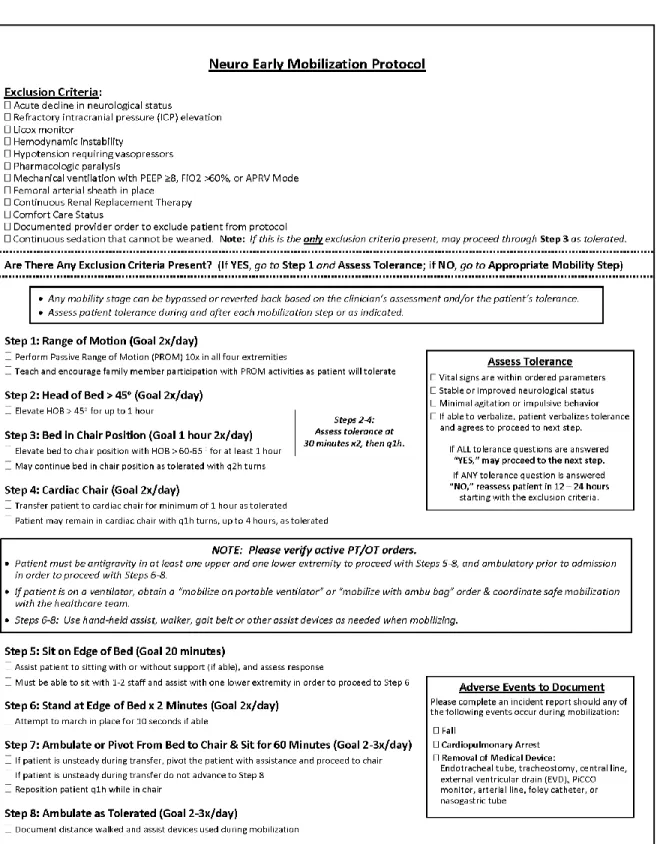
Within the unit, there are two cardiac chairs and rooms are equipped with Hoyer Lifts. The unit is supplied with walkers, gait belts, and portable ventilators to assist with mobilization. Since nursing staff are trained on how to use these assist devices, the revised Neuro Early Mobilization Protocol was designed to guide nurses to advance patients as safely and as quickly as possible to the highest level of tolerated mobilization.
Protocol Refinement and Expansion
In order to revise the original NSICU Mobility Protocol: Hemorrhagic Stroke, staff input was sought in order to gain feedback on how the original protocol could be improved for better understanding and ease of use. Key stakeholders involved in protocol refinement included those persons who participated in the development of the NSICU Mobility Protocol: Hemorrhagic Stroke protocol, the NSICU medical director, the CNIV for the NSICU, the Nursing Practice Council, the Neurocritical Care Team, the NSICU manager, the stroke coordinator, primary NSICU PT/OT, RT management, the NSICU RT specialist, and management of the NSICU sister units, the Intermediate Specialty Care Unit (ISCU) and 6 Neuroscience Hospital. Each stakeholder, or group of stakeholders, was met with
individually to discuss the current protocol, need for possible revisions, and
recommendations for revision based on current evidence from the literature (Bassett et al., 2012; Drolet et al., 2013; Engel, Tatebe, et al., 2013; Klein et al., 2014; Morris et al., 2008; Mulkey et al., 2014; Perme & Chandrashekar, 2009; Titsworth et al., 2012; Zomorodi et al., 2012).
protocol and (4) ensure patients were properly screened for inclusion and exclusion in the protocol. As a result of these conversations the following changes were made to the protocol.
Changes in Criteria for Exclusion from the Neuro Early Mobilization Protocol:
1. Vital sign parameters were removed and exclusion criteria related to hemodynamic instability or vasopressor use was added.
2. Use refractory ICP elevation as an exclusion criteria as patients with EVDs and Camino monitors should be able to participate in some mobilization steps. 3. Licox catheters were added as exclusion criteria, as typically patients with Licox
monitors suffer from severe TBI and would typically only benefit from PROM activities while the Licox monitor is in place (typically one week), during the acute illness period.
4. Pharmacologic paralysis was added as typically patients are paralyzed due to uncontrolled ICP, status epilepticus, or poor pulmonary status and would not tolerate mobilization beyond PROM.
5. Ventilation parameters were added to include positive end expiratory pressure (PEEP) ≥ 8 and fractured of inspired oxygen (FiO2) > 60% as it was determined that many patients could benefit with increased head of bed positioning to improve pulmonary status.
7. Comfort care status remained as several of our patients progress to comfort care or withdrawal of support, and therefore would no longer benefit from
mobilization efforts.
8. Brain death was not included in the exclusion criteria as a patient is declared legally dead after the declaration of brain death and would not benefit from early mobilization.
9. Unsecured aSAH was removed from the list of exclusions as some patients are angiogram negative, meaning there is no aneurysm identified on the first
diagnostic angiogram, yet remain in the NSICU until follow-up angiogram in one week. It was determined that these patients should be treated like any other aSAH and limiting mobility would put these patients at greater harm. Should a patient be at risk for harm from mobilization due to their clinical presentation, the provider will remove the patient from the protocol.
10. Fractures were removed from the exclusion criteria as a single order could be written to not mobilize the involved extremity/extremities.
11. Patients with thoracic and lumbar spine fractures can still benefit from PROM activities and would have an order for bedrest until spines cleared by
Neurosurgery.
13. Pain was removed from the exclusion criteria as pain can be reduced with mobilization or appropriate pre-medication.
Additional Revisions to Neuro Early Mobilization Protocol:
1. Overall protocol was simplified and verbiage was reduced.
2. “Attempts” were removed as paper documentation was shown to be unreliable and underutilized.
3. Step numbers were re-organized.
4. Greater emphasis was placed on PROM exercises for all patients and added as Step 1.
5. Addition of family involvement with PROM exercises at Step 1. 6. Goals for mobilization were added to each step.
7. Safe and coordinated mobilization was encouraged by the healthcare team when mobilizing patients on ventilators.
8. Addition of marching for ten seconds if able, as some patients are unable to march in place due to neurological deficits, yet, can stand at bedside with assistance for ten seconds.
9. The addition of pivoting from bed to chair was added, especially for those patients who are hemiparetic.
10. Reassessment steps removed and re-directed back to exclusion criteria if patient did not tolerate mobilization.
11. Adverse events to monitor for during mobilization was added.
CHAPTER 5: METHODOLOGY
This quality improvement project aimed to evaluate the revised NSICU Neuro Early Mobilization Protocol. This is a descriptive study that examined qualitative content analysis and survey data. Specifically, the following questions were addressed: 1. What are the benefits identified by health care professionals (HCP) when
implementing an early mobility protocol?
2. What are the challenges identified by HCP when implementing an early mobility protocol?
3. What tools do HCP indicate are needed in order to implement an early mobility protocol in the NSICU?
4. Did any adverse events occur during mobilization while implementing the revised early mobilization protocol?
Using a post-implementation survey, what feedback do HCP offer following use of the early mobilization protocol? Specifically the following questions will be addressed: 1. Was the protocol usable?
2. Following implementation of an early mobility protocol, was there a change in HCP beliefs regarding mobilization safety and the need for mobilization in the NSICU? 3. What did the HCP like about the Neuro Early Mobilization protocol?
Approval to conduct this project was obtained from the Nursing Research Council (NRC) at UNC Health Care. This project was not considered research by the University of North Carolina’s Institutional Review Board (IRB), and was exempt from review.
Following NRC review, a multidisciplinary team was created consisting of nursing champions from NSICU’s Nursing Practice Council, nursing management, CST, PT/OT, RT and the Neurocritical Care Team. Using the PDSA cycle, project aims were set by the team (Institute for Healthcare Improvement, 2014). Interventions aimed at increasing staff buy-in and knowledge of the protocol were identified for implementation (plan).
All patients admitted to the NSICU during the summer months of 2015 were mobilized using the Neuro Early Mobilization Protocol (do). To identify the benefits, challenges, and tools needed to successfully mobilize NSICU patients, staff, including nurses, CST, PT/OT and RT were surveyed prior to and following project implementation. To evaluate the revised protocol, a post-implementation survey was administered to the staff following the protocol implementation.
referred to the primary investigator (PI), after removing all identifying patient and staff information.
Based on the study findings (act), changes and recommendations for future study or protocol revisions were made. Finally, the results of the study were disseminated to the NSICU.
Setting
This DNP project took place in the NSICU at UNC Health Care, a large academic medical center in the southeast United States classified as both a Level I Trauma Center and Comprehensive Stroke Center. The NSICU is a 16 bed ICU which is staffed by three Neurointensivists, a medical Fellow, eight Nurse Practitioners, Residents, and Medical Students who work closely alongside highly trained Critical Care Nurses, Nursing Management, CST, PT/OT, and RT.
The patients cared for in the NSICU at UNC Health Care, like many other NSICUs, typically suffer from stroke; ischemic, hemorrhagic, or aSAH, TBI, neuromuscular
complications, spinal cord injuries as well as other neurosurgical and acute neurological injuries. A patient’s eligibility to be mobilized using the Neuro Early Mobilization Protocol was determined by the nurses and/or PT/OT as part of their usual patient care. All patients admitted to the NSICU should have been mobilized within 24 hours of admission, unless the patient met criteria for exclusion as stated in the protocol.
Subjects
Critical Care Nurses, 10 CST, 15 PT/OT, and 15 RT who staff the NSICU; totaling approximately 100 participants.
Educational Intervention Prior to Protocol Implementation
Prior to the implementation of the mobility protocol, multidisciplinary staff education was delivered. Education for each discipline was tailored to each specialty and was decided upon based on recommendations from the management of each specialty.
Nursing. Nursing staff were informed at their monthly staff meetings regarding the mobility project. Nursing Practice Council members, staff champions, the CNIV and PI assisted with individualized nurse training guided by a Neuro Early Mobilization Training Binder (Appendix A: Key Training Points for Nurses). Additionally, unit mobility coaches taught staff the yearly safe patient handling material during protocol implementation to ensure safe patient handling techniques.
Mobility protocol reminders were placed on all computers as quick reminders to all staff of the protocol steps (Appendix B: Neuro Mobility Protocol Steps). Additionally, enlarged versions of the Neuro Early Mobilization Protocol along with the listed “Benefits of Early Mobilization” were posted in unit bathrooms (Appendix C: Benefits of Early
Mobilization).
Physical Therapy and Occupational Therapy. A meeting was held by the PI with the team of PT/OT staff that primarily staff the NSICU to educate them regarding the
Respiratory Therapy. The RT team was trained by the NSICU clinical specialist. The RT clinical specialist and the PI met to discuss the finalized Neuro Early Mobilization Protocol and any educational points to discuss with the RT staff during training. The RT clinical specialist agreed to train her staff on the protocol, answer any questions the RT had about safely mobilizing patients, and assist with overseeing daily mobilization efforts for patients with RT needs.
Clinical Support Technicians. The CNIV and PI devised a plan for how to involve the CST in early mobilization efforts. An email communication was sent to the CST from the CNIV to communicate this practice change. CST were encouraged to assist with performing PROM, organizing a schedule to assist patients to cardiac chairs, and assisting patients to the edge of bed, chair or with ambulation. Additionally, the CST were in charge of updating each patient’s mobility “step” and providing this information to the health unit coordinators (HUC) twice a day in order to update the patient bed board.
Health Unit Coordinators. The CNIV and PI formulated an email communication to the HUC to educate them about the revisions to the Neuro Early Mobilization Protocol and their involvement in the project. The HUC were asked to update the patient bed board twice daily to communicate to members of the multidisciplinary team the patient’s current mobility step. Unit management and charge nurses were responsible for ensuring the bed board information was maintained.
Nurse Practitioners and Neurocritical Care Team. The NPs and the other
members of the Neurocritical Care team were educated about the changes to the Neuro Early Mobilization Protocol at a staff meeting. Project purpose, protocol, and key points to
the PI. The protocol and key points to remember during the Neuro Early Mobilization Protocol project implementation worksheet were posted in the NSICU workroom during project implementation as reminders to the staff. It was a unit wide goal that mobilization be discussed daily as a part of multidisciplinary rounds. Providers were asked to discuss the patient’s current mobility progress with nursing daily during multidisciplinary rounds.
Measures
Early Mobilization in the NSICU Pre-Implementation Survey. Surveys were administered to nurses, CST, PT/OT, and RT before and after protocol implementation. The pre-implementation survey evaluated staffs’ fears about mobilization, self-reported time spent mobilizing patients, whether or not they felt mobilization was a priority, if staff felt as though they had the help and tools necessary to mobilize patients and if not, what additional tools would be required to mobilize patient’s safely, as well as the perceived patient benefits to early mobilization. This survey was adapted from the initial survey that was given to nursing staff in September 2014 (Appendix D: Pre-Implementation Survey).
Neuro Early Mobilization Protocol Evaluation Post-Implementation Survey. To evaluate the usability of the Neuro Early Mobilization Protocol, a second survey was
using the protocol. This survey also evaluated any barriers encountered when implementing the Neuro Early Mobilization Protocol into practice. Recommendations for ways to improve the protocol were also sought in addition to what staff liked most about the protocol. The post-implementation survey also collected demographic data from participants (Appendix E: Post-Implementation Survey).
Adverse Events: Data Collection for Safe Mobilization. To determine if there were any adverse events that occurred following implementation of the revised protocol, adverse events were monitored for and documented by the staff through the completion of PORS reports. The adverse events that were to be documented included those events that occurred during mobilization and included falls, cardiopulmonary arrest, or the removal of any of the following medical devices: endotracheal tube, tracheostomy, central line, EVD, PiCCO, arterial line, Foley catheter, or NG tube. A PORS report was to be filed according to hospital policy. Should the incident occur while mobilizing the patient, the unit manager would forward the report to the PI, who would review the PORS report with the NSICU medical director for significance. The PI requested the unit manager remove all patient and staff information from the report prior to forwarding the PORS report so that no identifying information was available.
Data Collection: Surveys
For the electronic surveys, all emails to participants were sent directly through
Qualtrics and included anonymous survey links that could only be used by the participant and would become inactive once the participant completed the survey or the survey closed. Once the participant had completed the survey, the participant was directed to a second survey through Qualtrics in which the participant could enter his/her name to be entered into a drawing for an incentive for survey completion, however the survey responses would remain anonymous. A follow-up email reminder was sent out through Qualtrics to staff who had not completed a Qualtrics survey as a reminder to complete the survey. This email included the Qualtrics link to the survey and a calculated survey completion rate.
Pen and paper copies of the survey were located in the NSICU breakroom in an envelope marked “NSICU Mobilization Surveys.” An envelope to return the completed NSICU mobilization surveys was also located in the NSICU break room. Additionally, paper survey completion slips and a separate envelope marked “Completed Survey
Completion Slips” was in the NSICU breakroom to allow participants who completed pen and paper surveys to enter his/her name into the drawing for the incentive for survey completion. Surveys were also made available during NSICU staff meetings in order to increase return rate.
participants was confirmed with each manager to ensure an accurate list of participants who would be staffing the unit during the project implementation. A similar email was sent out to management prior to the post-implementation survey confirming whether or not there had been any additional staff hired. There were some participants lost to follow-up due to staff turnover and additional staff were hired midway through project implementation. The participant list was updated accordingly based on staffing changes.
Confidentiality of Participant’s Identity. Confidentiality was maintained at all times while collecting data during this study. Staff names (first name and last name) as well as hospital email address were obtained in order to send out survey links and email
communications with staff members in the NSICU. This information was kept secure at all times and verified during project implementation via a password protected computer. No identifying information was collected on the staff surveys.
Anonymity of Data. All surveys of staff members did not elicit any identifying information so that all surveys could be completed anonymously. Participants created a unique code during survey completion for both pre- and post-implementation surveys, for tracking purposes that was used to compare the pre- and post- survey data. This was used to evaluate for a change in beliefs about mobilization following protocol use and education (Damrosch, 1986).
were notified individually via email following the completion of each survey. An additional incentive was provided to staff during staff meetings at project completion.
Data Analysis
Demographic data was collected from the HCP including the HCPs experience in the NSICU, overall experience, and which shift the employee worked (day, night, or weekend). Descriptive statistics were used to describe the study sample.
Qualitative Analysis. A content analysis of written responses on the survey was completed by the PI to identify benefits of early mobilization, tools required for safe
mobilization, challenges that occurred during protocol implementation, what the participants liked about the protocol, and ways in which the protocol could be improved and used more effectively in future practice. Responses from the pre- and post-implementation surveys were organized in a Microsoft Excel document, read in entirety, and grouped into meaningful categories to develop for themes related to tools, challenges, and benefits to early mobility.
To address knowledge of the mobility protocol, the frequency, mean and standard deviation for all groups (nursing, CST, PT/OT, and RT) was compared and analyzed for all surveys completed.
CHAPTER 6: RESULTS
Response Rate
Pre-Implementation Survey Participation. For the pre-implementation survey, 69 out of a possible 82 participants completed the survey. Of the 69 participants, 61% were nurses, 13% CST, 13% PT/OT and 13% RT.
Table 2. Pre-Survey Participant Distribution
RN CST PT/OT RT Total
Participant
Distribution 42/51 (82%) 9/9 (100%) 9/12 (75%) 9/10 (90%) 69/82 (84%) CST: Clinical Support Technician; OT: Occupational therapy; PT: Physical therapy; RN: Registered nurse; RT: Respiratory therapy
Post-Implementation Survey Participation. For the post-implementation survey, 58 out of a possible 79 participants completed the survey. Of the 58 participants, 60% were nurses, 12% CST, 14% PT/OT and 14% RT.
Table 3. Post-Survey Participant Distribution
RN CST PT/OT RT Total
Participant
Distribution 35/47 (74%) 7/8 (87%) 8/14 (57%) 8/10 (80%) 58/79 (73%) CST: Clinical Support Technician; OT: Occupational therapy; PT: Physical therapy; RN: Registered nurse; RT: Respiratory therapy
Experience. The staff in this NSICU came from a wide range of experience levels. The majority of all staff had been practicing within the range of 2-5 years for their
profession. The majority of nurses (24/35), have been working in the NSICU for 1-5 years, with all nurses reportedly working in the NSICU for less than 15 years. However, overall experience of nurses working in the NSICU ranged from less than 1 year to forty years. These findings are consistent with the representation of critical care nurses practicing in the United States (American Association of Critical-Care Nurses, 2015). The majority of CST, 3/7, had been working in the NSICU for 3-5 years, however, 2/7 of the CST had been a CST for 6-10 years. PT/OT came from a wide range of professional background with the majority of PT/OT, 5/8, practicing for 2-5 years, however, 2/8, reported practicing for 11-15 years. Yet, 3/8 PT/OT reported having less than 1 year of NSICU experience. Of the RT practicing in the NSICU, 5/8 have been in the NSICU for 1-2 years. One RT had 6-10 years of
experience as an RT, while another had 31-40 years’ experience as a RT.
NSICU Staff Scheduling. The majority of the nursing respondents worked day shift (n = 12), along with RT (n = 6). PT/OT equally worked weekdays and weekend days. CST were rather equally distributed between days and nights.
Benefits to Early Mobilization
As part of both the pre- and post-implementation survey of the Neuro Early
Table 4. Top Ten Identified Benefits of Mobilization Listed by Staff
Overall Topics in
Rank Order Examples of Benefits Listed
Improves Pulmonary Status “Reduce ventilator days” “Prevent Pneumonia” “Mobilization of Secretions”
Decreases Length of Stay “Decrease ICU stay” “Decrease hospital stay” “Early discharge” Improves Strength “Increase muscle strength” “Decrease muscle atrophy” “Maintain muscle strength” Reduces Delirium
“Prevent delirium” “Decreased ICU psychosis” “< confusion” Prevent Skin Breakdown/Pressure Ulcers “Pressure ulcer
reduction” “Reduction in wounds” “Decrease risk for skin breakdown”
Decreases Infection “Decreased risk of infection” “Decrease Infection” “Decrease infection rates” DVT Prevention
“Decrease risk for DVT”
“Prevent blood clot”
“Decrease risk for blood clot due to immobilization” Cardiovascular Effects “Improved circulation” “Better circulation” “Improved CV function”
Increased Awareness “Promotes alertness in patients” “Arousal and alertness” “Improves patients awareness”
Motivation
“Gives patients a sense of
accomplishment that they did something”
“Motivation to get better and go home!”
“Increase hope in best outcomes”
CV: Cardiovascular; DVT: Deep Vein Thrombosis; ICU: Intensive Care Unit
Challenges to Implementation
would tolerate mobilization. Specifically one staff member found it challenging “having the time AND help at the same time in between meds, assessments, and procedures.” Another found it challenging “understanding when mobilization was appropriate with so many patients vented and hooked up to everything, [he/she] wasn’t sure if it was safe for them.” Night shift staff struggled to find enough time and assistance to mobilize their patients. Additionally, communication amongst the various disciplines was also reported as a barrier to successful mobilization. One staff member from PT/OT reported “pushback from nursing staff about who will get a particular patient back to bed. If nurses are expected to mobilize more under the protocol, they need to be able to return a patient to bed once therapy has mobilized them.” Another documented concern was incomplete communication and
documentation about how much assistance was required during mobilization, and the impact of this on patient and staff safety. Sedation was also identified as a challenge. Although one particular staff member said “the protocol was good, but sedation was a huge barrier. Even when it could be weaned, some RNs weren’t as willing to do that.” Staff also reported time was required to learn the protocol, including the exclusion criteria and steps. Mobilizing obese patients and documentation was also a reported challenge.
Tools Requested to Implement Protocol
As part of the pre-implementation survey, staff were asked to identify tools needed to implement the protocol. Mobilization equipment, such as walkers, standing frames, gait belts, maxi slides, slings, lifts and cardiac chairs were requested. In order meet these requests and thus increase buy-in for project implementation, the PI met with nursing
mobilization station was designed so that staff would be able to obtain all the mobilization supplies required for mobilization from one location. All the supplies were clearly labeled and each day the HUC were asked to verify that supplies were ordered from central supply, should material run out. Unfortunately, the unit did not have the funds nor the storage to secure an additional cardiac chair prior to initiating this project. Therefore, it was decided that the CST would be utilized to assist with designing a schedule to assist with mobilizing those patients who would need to be mobilized to a cardiac chair each day. On the CST’s assignment sheet, mobilization was added to their list of assignments each day, and the CST were to work with the nursing staff to help coordinate mobilizing patients to cardiac chairs, when appropriate, in order to work with the supplies the unit already had. All efforts were made in order to provide the staff with the needed supplies to safely mobilize patients in the NSICU using the Neuro Early Mobilization Protocol. The supplies that were able to be obtained for the mobilization station included the following: two gait belts, one walker, shorts, sliding board, maxi slides, chair slings, and a cardiac chair placed on each side of the unit, one of which was located at the mobilization station.
Following protocol implementation, staff requested equipment including gait belts, walkers, slide sheets, maxi slides, and an additional cardiac chair. Additionally, charging the lifts in the room was a challenge encountered during project implementation. Greater
Adverse Events
There were no documented adverse events that occurred during mobilization of patients during the implementation of the Neuro Early Mobilization Protocol. There were no completed PORS reports by the staff of the NSICU that addressed any patient safety
concerns, falls, removal of any medical devices or cardiopulmonary arrest that occurred during mobilization. Per the unit manager, the reports that were filed during the protocol implementation time period did not occur during mobilization activities.
Protocol Usability
Findings from the post-implementation survey revealed that staff in general understood the protocol, the exclusion criteria, mobilization steps, how to assess tolerance during and after mobilization and routinely used the protocol when mobilizing patients in the NSICU. Additionally, there was strong managerial support of using the Neuro Early
Mobilization Protocol when mobilizing patients as indicated by the majority of staff strongly agreeing with the statement, “My manager supports my efforts in using the protocol.”
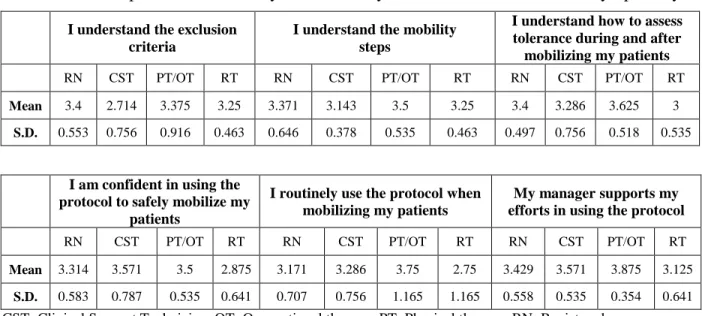
Table 5 breaks the post-implementation mobilization protocol data up into responses by specialty. Although the mean scores were rather close amongst all disciplines, on
average, PT/OT’s mean scores were the highest overall. Nurses, scored highest in
Table 5. Post-Implementation Survey—Neuro Early Mobilization Protocol Data by Specialty I understand the exclusion
criteria
I understand the mobility steps
I understand how to assess tolerance during and after mobilizing my patients
RN CST PT/OT RT RN CST PT/OT RT RN CST PT/OT RT
Mean 3.4 2.714 3.375 3.25 3.371 3.143 3.5 3.25 3.4 3.286 3.625 3
S.D. 0.553 0.756 0.916 0.463 0.646 0.378 0.535 0.463 0.497 0.756 0.518 0.535
I am confident in using the protocol to safely mobilize my
patients
I routinely use the protocol when mobilizing my patients
My manager supports my efforts in using the protocol
RN CST PT/OT RT RN CST PT/OT RT RN CST PT/OT RT
Mean 3.314 3.571 3.5 2.875 3.171 3.286 3.75 2.75 3.429 3.571 3.875 3.125
S.D. 0.583 0.787 0.535 0.641 0.707 0.756 1.165 1.165 0.558 0.535 0.354 0.641
CST: Clinical Support Technician; OT: Occupational therapy; PT: Physical therapy; RN: Registered nurse; RT: Respiratory therapy; S.D.: Standard Deviation
Change in Beliefs Regarding Mobilization
A paired t-test was completed for 34 participants who completed both the pre- and the post-implementation survey. These results are available in Table 6.
Table 6. Paired t-test Results (n = 34)
Mean for Pre Mean for Post Mean Difference p-value
I may get injured 2.294 2.147 0.147 0.201
I don’t have enough time 2.412 2.088 0.324 0.032
I am afraid my patient will fall 2.206 2.030 0.152 0.231
I do not have enough help 2.441 2.265 0.176 0.032
It is not a priority 1.844 1.941 -0.063 0.645
My patient is comatose and
will not benefit 2.235 1.824 0.412 0.011
Significance set at p < 0.05
What Staff Liked About the Protocol
greater team work. Staff found it “rewarding” to see patients get out of bed. One staff member stated, “I like to see my patients’ progress from Step 1 to 8.” Staff also reported that they felt that the patients appeared more alert following mobilization and were leaving the NSICU sooner. One OT stated “It’s helping change the culture in the ICU. The question shouldn’t be when can we move them? It should be, why aren’t we moving them?” Many staff members reported the protocol was easy to use and easy to follow and one staff members stated it “applies well to the Neuro patients.” One staff member even said the protocol gave him/her “more motivation to mobilize [his/her] patients and also supplies an outline and goals to achieve for the patient.”
Recommendations for the Future
of mobilization. There was also a recommendation to identify nursing mobility champions on the unit to assist with mobilizing the various types of patients on the unit to help other nursing staff with mobilization so there would be less reliance on PT/OT to get challenging patients back to bed after PT/OT has worked with them. One staff member also requested “potentially more options for comatose patients.”
CHAPTER 7: DISCUSSION
Conceptual Framework
Although the conceptual framework initially selected for this project was the PDSA Cycle, primarily used to implement rapid change, upon completion of this project, it became evident that the PDSA Cycle may not have been the best model to choose for the overall implementation of the Neuro Early Mobilization Protocol. Although the PDSA Cycle was useful for refining the protocol itself, in gathering feedback from the stakeholders, making changes to the protocol, and preparing the protocol for implementation, once the protocol was refined, the protocol was ready for testing. As it turned out, upon testing, there was very little feedback from the NSICU staff on ways in which the protocol itself could be improved for future use; which was initially anticipated during project design. Rather, theories on process change and outcomes research, like Kotter’s 8-Step Process for Leading Change or Donabedian’s recommendations for process change and outcomes research, could have provided better guidance when implementing the Neuro Early Mobilization Protocol along with sustaining the use of the protocol following termination of the project time period (Donabedian, 2005; Kotter, 2012)
Response Rate
management encouraged staff to participate. Staff were also incentivized to participate by offering Starbucks gift cards for survey completion for both the pre- and post-implementation survey. Additionally, the PI of this project was employed on the unit and encouraged staff to participate in the project to gain feedback. All factors contributed to an overall high survey response rate.
Staff turnover did occur during this project. Seven nurses left during project
implementation, while three new nurses were hired. One CST transferred during the project implementation. There was no RT turnover, however PT/OT had one therapist leave and three were added during protocol implementation. This turnover was largely due to the fact a new sister hospital opened in the area and many staff members left to pursue further
educational offerings and career paths, which can be typical for the ICU. PT/OT were increasing their cross coverage of the NSICU, and therefore additional staff coverage was added.
In general, however the NSICU staffing model is representative of many other ICU models based on levels of experience as well as how the unit is staffed with typical two to one patient to nurse ratios. This NSICU, under the direction of a dedicated Neurointensivist and Nurse Practitioner model, has only been up and running since 2010. This could make up for the reason why many staff members have only been working in this NSICU for less than five years.
Protocol Usability
HCP reported routinely using the protocol to mobilize their patients. The greatest impact for the implementation success of this protocol was managerial support. From the start of this project, nursing, CST, RT, and PT/OT leadership as well as physician support strongly encouraged the use of the Neuro Early Mobilization Protocol. In order to have successful staff buy-in, leadership at all levels must support not only the staff, but drive change to ensure success.
When the results of the post-implementation survey responses evaluating the Neuro Early Mobilization Protocol were broken down into specialty (Table 5), various themes were identified, which can be expected findings when comparing the various roles and how each role brings various expertise when using the Neuro Early Mobilization Protocol. Although the differences between groups were minor, in general, PT/OT tended to score the highest in understanding the mobility steps, how to assess tolerance, and protocol usage. Which, being PT/OT, mobilization is their specialty and knowing how to safely and effectively mobilize patients is an important part of their role in the NSICU. Nurses scored highest on
Compared to the other HCP, RT was the least confident with using the protocol to safely mobilize patients and were least likely to routinely use the protocol to mobilize patients in the NSICU. This could be due to the fact that RT would only mobilize those patients who were ventilated, were going to be placed in a cardiac chair, or where going to be mobilized while intubated or trached, and were therefore required to assist with managing the patient’s airway. Although actions such as those listed did occur during this project,
ventilated patients were not always mobilized out of bed on a daily basis. Allowing RT time to get comfortable with the protocol, along with greater education about the long-term benefits to mobilization, including the potential for limited patient progression while in the NSICU, could lead to better understanding and protocol use.