GENDER NORMS, MASCULINE GENDER-ROLE STRAIN, AND HIV RISK
BEHAVIORS AMONG MEN IN RURAL SOUTH AFRICA
Ann Lillian Gottert
A dissertation submitted to the faculty of the University of North Carolina at Chapel Hill in partial fulfillment of the requirements for the degree of Doctor of Philosophy in the
Department of Health Behavior.
Chapel Hill 2014
Approved by: Clare Barrington Suzanne Maman Audrey Pettifor
ABSTRACT
ANN LILLIAN GOTTERT: Gender Norms, Masculine Gender-Role Strain, and HIV Risk Behaviors Among Men in Rural South Africa
(Under the direction of Clare Barrington)
Introduction: Studies suggest strong links between inequitable gender norms and men’s HIV risk behaviors in South Africa, where one-fifth of adults are HIV-positive. Masculine gender-role strain (MGRS), the psychological strain men experience from trying to live up to expectations of themselves as men, had not previously been measured or applied in HIV prevention research in the African setting. The aims of this mixed-methods study among men in Mpumalanga province were to evaluate measures of gender norms and MGRS, examine relationships between these constructs and key HIV risk behaviors, and qualitatively explore men’s experience of MGRS.
Methods: Quantitative data came from community surveys with 581 men ages 18 to 35. We conducted factor analyses to assess the factor structure, validity, and reliability of the Gender
Equitable Men’s scale (GEMS) and Gender Role Conflict/Stress (GRC/S) scale. We then used logistic regression to examine the impact of inequitable gender norms and MGRS on three HIV risk behaviors. Finally, we conducted qualitative interviews with 18 men and analyzed data using both narrative and coding procedures.
theoretical sub-types of MGRS. Most common was discrepancy strain from unemployment; two-thirds of men were unmarried and unable to establish their own households and become providers.
Some men also experienced trauma strain from intense peer pressure to sexually exploit women. Finally, participants described dysfunction strain from restricting emotions and abusing alcohol,
which contributed to family violence.
ACKNOWLEDGEMENTS
Many people contributed to the completion of this dissertation. I extend my deepest gratitude to my chair and advisor Dr. Clare Barrington, who guided me through both the doctoral program and the dissertation process. Her generous instruction, advice, and mentorship gave me the skills and confidence needed to complete this dissertation and further my career in public health. I am also grateful to each of my committee members for their support and guidance: Drs. Suzanne Maman, Audrey Pettifor, and Luz McNaughton-Reyes at UNC and Dr. Catherine MacPhail at the University of the Witwatersrand (Wits) in South Africa.
This work would also not have been possible without my husband Colby’s unfailing support, patience, and encouragement. Along with being a wonderful husband and father to our lovely
daughter Lily, Colby is also a fantastic filmmaker. Together we produced a series of short films profiling “Transformation stories” of three individuals who participated in the Community
Mobilization intervention described in this dissertation. This experience gave me greater insight into the experiences of community members who were working toward enacting healthier behaviors in their lives. I would also like to thank my parents, Marcy and Bob Rundquist, as well as Colby’s parents, Leslie and Peter Gottert, for their love and support.
I am particularly indebted to Drs. Pettifor, Maman, and MacPhail, as well as Dr. Sheri Lippman at UCSF and Dr. Kathy Kahn at Wits, for welcoming my work on their visionary
commitment to the qualitative interviews with men. I am also grateful to the Agincourt Health and Population Unit (AHPU) for providing the invaluable staff and resources that made both my
quantitative and qualitative studies possible. Rhian Twine and Simon Khoza from the Learning, Information Dissemination and Networking with the Community (LINC) Office, as well as members
of the Community Advisory Group, also provided invaluable assistance and advice on design and recruitment for the qualitative study. Finally, I would like to thank all participants of both the quantitative and qualitative studies who shared their time and their thoughts with us.
Back at UNC, I would like to sincerely thank Dr. Susan Ennett, Doctoral Program Director, as well as other faculty in the Department of Health Behavior for the excellent training they provide to all lucky doctoral students. I owe thanks to Dr. Cathy Zimmer at the UNC ODUM Institute for Research in Social Science, who generously provided statistical consultation on structural equation modeling and factor analysis in the Mplus software.
This dissertation research was supported by a Ruth L. Kirschstein National Research Service Institutional STD/HIV Pre-Doctoral Training Award (National Institutes of Health
!
TABLE OF CONTENTS
LIST OF TABLES ... xiii
LIST OF FIGURES ... xiv
LIST OF ABBREVIATIONS ... xv
CHAPTER 1: INTRODUCTION AND SPECIFIC AIMS ... 1
Problem Statement ... 1
Study Purpose ... 2
Specific Aims and Study Design ... 3
Significance ... 4
Organization of the Dissertation ... 5
CHAPTER 2: BACKGROUND AND SIGNIFICANCE ... 6
The HIV Epidemic in South Africa and Mpumalanga Province ... 6
Continuing High HIV Prevalence and Incidence ... 6
Variation by Urban/Rural Residence and Province ... 7
HIV Status Awareness, Treatment, and AIDS Mortality ... 7
How Did Prevalence Get So High? ... 9
Key HIV Risk Behaviors and the Role Men Play ... 9
Multiple and Concurrent Sexual Partners ... 9
Age Mixing ... 11
Inconsistent Condom Use ... 12
Intimate Partner Violence (IPV) ... 12
Alcohol Abuse ... 13
Theoretical Basis ... 14
Empirical Evidence Linking Gender Norms to HIV Risk Behavior ... 16
How Equitable Are Gender Norms in South Africa? ... 20
Changing Expectations of Masculinity in South Africa ... 22
Masculine Gender-Role Strain: An Underexplored Construct in HIV Prevention Research ... 24
Theoretical Basis ... 24
Empirical Evidence Linking MGRS to HIV Risk Behaviors ... 26
Gauging Levels of MGRS in the South African Context ... 29
CHAPTER 3: STUDY OVERVIEW ... 31
Study Aims, Research Questions, and Hypotheses ... 31
Mixed-Methods Approach ... 33
Parent Study Overview ... 33
Parent Study Description ... 33
Study Site ... 35
Field Implementation ... 35
Sampling and Recruitment ... 36
Survey Administration ... 37
Quantitative Methods for Aims 1 and 2 ... 37
Measures ... 37
Preliminary Analyses ... 45
Aim 1 Factor Analyses ... 47
Aim 2 Logistic Regression Analyses ... 48
Qualitative Methods for Aim 3 ... 49
Sampling and Recruitment ... 49
Data Collection Procedures ... 50
Ethical Approval for Research Under Aims 1–3 ... 52
CHAPTER 4: MEASURING MEN’S INEQUITABLE GENDER NORMS AND MASCULINE GENDER-ROLE STRAIN IN A HIGH HIV–PREVALENCE SOUTH AFRICAN SETTING (AIM 1 FINDINGS) ... 53
Introduction ... 53
Methods ... 55
Sample and Study Setting ... 55
Recruitment and Data Collection ... 55
Scale Adaptation Process ... 56
Analysis ... 59
Results ... 61
GEMS ... 61
GRC/S Scale ... 63
Discussion ... 66
GEMS Factor Analysis Findings ... 67
GRC/S Scale Factor Analysis Findings ... 68
Conclusions ... 70
CHAPTER 5: IMPACT OF INEQUITABLE GENDER NORMS AND MASCULINE GENDER-ROLE STRAIN ON MEN’S HIV RISK BEHAVIORS IN MPUMALANGA, SOUTH AFRICA (AIM 2 FINDINGS) ... 71
Introduction ... 71
Methods ... 74
Data Source and Study Setting ... 74
Sample and Procedures ... 74
Measures ... 75
Statistical Analysis ... 79
Results ... 80
IPV Perpetration ... 81
Alcohol Abuse ... 85
Discussion ... 85
Conclusion ... 89
CHAPTER 6: “WHAT I WISH I AM UNABLE TO ACHIEVE:” A QUALITATIVE STUDY OF MASCULINE GENDER-ROLE STRAIN AND HIV RISK BEHAVIORS IN MPUMALANGA, SOUTH AFRICA (AIM 3 FINDINGS) ... 90
Introduction ... 90
Methods ... 91
Study Setting ... 91
Procedures ... 92
Analysis ... 94
Results ... 95
Meanings of Being a Man, Woman ... 96
What Roles Are Most Important to Men in Their Families and Communities? ... 96
Discrepancy Strain From Inability to Fill Desired Roles ... 98
Trauma Strain From Intense Gender-Role Socialization Experiences ... 101
Dysfunction Strain From Enacting Harmful Aspects of Masculinity ... 103
Discussion ... 105
Conclusion ... 109
CHAPTER 7: CONCLUSION ... 110
Summary of Findings ... 110
Study Strengths ... 115
Study Limitations ... 116
Implications for Future Research ... 118
Future Research on the Impact of Inequitable Gender Norms and
MGRS on Men’s Risk Behaviors ... 120
Implications for Public Health Practice ... 121
Gender Transformative Programming ... 123
Complementary Strategies to Reduce MGRS ... 124
APPENDIX A. Map of the Agincourt Study Site and Surrounding Area, Mpumalanga, South Africa ... 128
APPENDIX B. Structural Equation Model Path Diagrams From Confirmatory Factor Analyses for GEMS and GRC/S Scale ... 129
APPENDIX C. Qualitative Interview Guide for Individual Interviews With Men in Mpumalanga ... 132
LIST OF TABLES
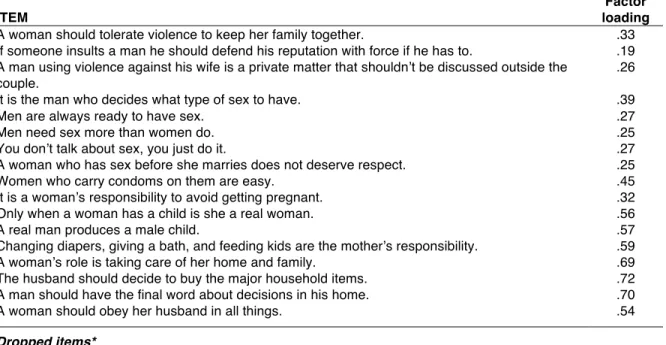
Table 3.1. Gender Equitable Men’s Scale (GEMS) Items Included in the Survey ... 39!
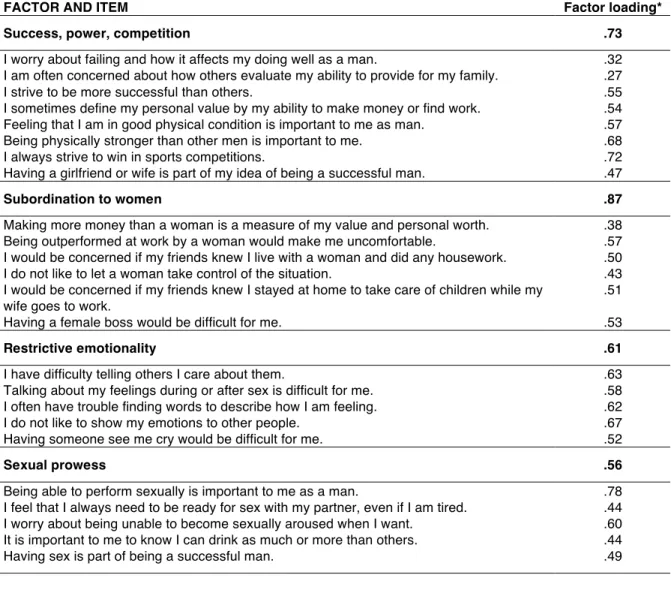
Table 3.2. Gender Role Conflict/Stress Scale Items Included in the Survey ... 43!
Table 3.3. Aim 2 Dependent Variables ... 44!
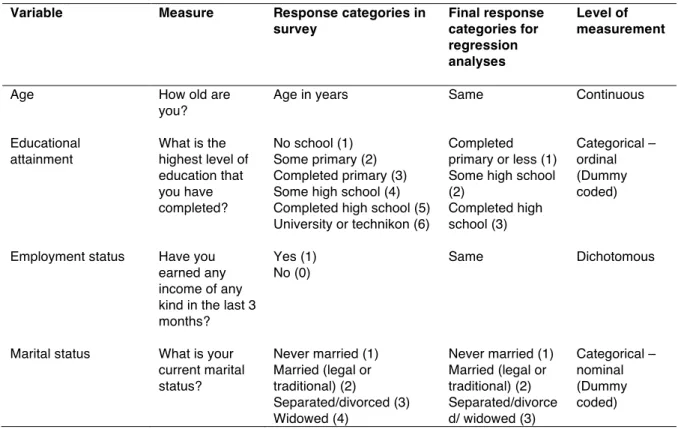
Table 3.4. Aim 2 Control Variables ... 45!
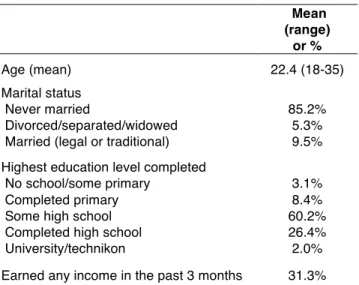
Table 4.1. Weighted Sample Characteristics (n = 581) ... 62!
Table 4.2. Confirmatory Factor Analysis Results for the Final GEM scale (n=290) ... 63!
Table 4.3. Confirmatory Factor Analysis Results for the Final GRC/S Scale (n=290) ... 65!
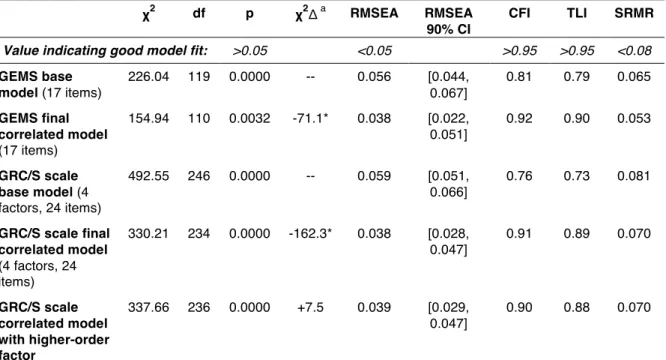
Table 4.4. Model Fit Statistics for Base and Correlated GEMS and GRC/S Scale Models in CFAs (n=290) ... 66!
Table 5.1. Inequitable Gender Norms and MGRS Measures ... 77!
Table 5.2. Weighted Sample Characteristics (n=579 men) ... 80!
Table 5.3. Concurrency: Logistic Regression Results Among Men (n=579) ... 82!
Table 5.4. IPV Perpetration: Logistic Regression Results Among Men (n=579) ... 83!
Table 5.5. Alcohol Abuse: Logistic Regression Results Among Men (n=579) ... 84!
Table 6.1. Demographic Characteristics of Participants (n=18) ... 95!
Table 7.1. Future Directions for Research on MGRS, Overall and By Sub-type ... 122!
LIST OF FIGURES
Figure 1.1. Conceptual model of Aim 2 ... 4!
Figure 2.1. HIV prevalence, by age and sex, South Africa 2012 ... 7!
Figure 2.2. HIV epidemic curve among antenatal women, Mpumalanga 1990 to 2012 ... 8!
Figure 2.3. Percentage of adults aged 15 years and older who reported having more than one sexual partner in the past 12 months by age group, South Africa 2002, 2005, 2008, and 2012. ... 10!
Figure 3.1. Conceptual model of Aim 2. ... 32!
Figure 6.1. Photographs from the study setting. ... 93!
LIST OF ABBREVIATIONS
AHDSS Agincourt Health and Demographic Surveillance System
AIDS AcquiredImmune Deficiency Syndrome
ART Anti-retroviral Therapy
AOR Adjusted odds ratio
AUDIT Alcohol Use Disorders Identification Test
CCT Conditional Cash Transfer
CFA Confirmatory factor analysis
CI Confidence interval
CM Community mobilization
EFA Exploratory factor analysis
GEMS Gender Equitable Men’s Scale
GRC/S Gender Role Conflict/Stress (scale)
HIV Human Immunodeficiency Virus
IPV Intimate partner violence
IRB Institutional Review Board
LINC Learning, Information Dissemination and Networking with the Community office
MGRS Masculine gender-role strain
MRC Medical Research Council
NIH National Institutes of Health
OR Odds ratio
STI Sexually transmitted infection
UNAIDS Joint United Nations Programme on HIV/AIDS
UNC-CH University of North Carolina at Chapel Hill
CHAPTER 1: INTRODUCTION AND SPECIFIC AIMS
Problem Statement
The HIV epidemic in South Africa is the largest in the world. There are 6.4 million South Africans infected with the virus and a prevalence of 18.8% among adults ages 15–49 (1). Two groups are disproportionately impacted: one-third of black African women ages 20–34 are HIV-positive, as are one-quarter of black African men ages 25–49 (1). Prevalence also varies substantially by province. In Mpumalanga, where this study took place, 22% of all adults are HIV-positive (1) and antenatal clinic data suggests that prevalence among pregnant women has plateaued in recent years at around 35% (2, 3). Nationwide, most HIV transmission occurs through heterosexual sex (1). Key risk behaviors include having multiple sexual partners, a behavior about four times more common among men than women, and inconsistent condom use (1, 4). Intimate partner violence (IPV) and alcohol abuse compound risk of sexual transmission for both men and women (4, 5). More effective prevention strategies are needed, especially those that address men’s behavior and include them in solutions (6).
Worldwide, gender norms—beliefs about appropriate roles and behavior for men versus women—are consistently one of the strongest predictors of HIV risk behaviors (6-8). Gender norms are socially constructed rather than driven by biological differences between the sexes and shape HIV risk in a number of ways (9, 10). For instance, studies in South Africa suggest that inequitable norms can encourage men to have multiple sexual partners, produce power imbalances within intimate relationships—which can limit women’s ability to negotiate safer sex—and can lead to IPV (5, 11-14). Studies also show that gender norms tend to be highly inequitable among both men and women
strain (MGRS) is a promising theoretical complement to gender norms that has not been applied in the African context and has been largely unexplored in HIV prevention research globally (19, 20).
The Gender Role Strain Paradigm defines MGRS as the psychological strain men experience from trying to live up to social or internalized expectations of themselves as men (19). When men cannot
meet socially positive masculine expectations, like providing for their family, they may turn to alternate means of gaining self-esteem and social status as men, such as through sexual prowess, and seek to reassert power and control over women (19, 21). Engaging in these harmful behaviors can then produce even more strain, leading to a negative, self-perpetuating cycle (19). MGRS is among the most common constructs measured in masculinity studies in Western countries and has been shown to be associated with men’s anxiety, depression, IPV perpetration, and alcohol abuse (22-27).
In fact, MGRS may be especially pertinent to understanding HIV risk in the South African context. Qualitative and ethnographic studies describe how the legacy of apartheid, social
marginalization, and high unemployment mean that few men can ‘become men’ by working, marrying, and becoming a head of household, compelling many to enact strategies for defining themselves as men by asserting power over women (28-32). In addition, many men perceive new national discourse and policies promoting gender equality and women’s rights as serving to usurp the already meager employment opportunities available and make off-limits the few other roles left by which they can define themselves as men (29, 30, 32). Further, in South Africa and beyond,
experience from programs designed to transform gender norms shows that many men support gender equality in the abstract but are unwilling or unable to implement more gender equitable practices in their own relationships, impeding prevention efforts (33-35).
Study Purpose
The overarching goal of this dissertation was to better understand how gender role
and key HIV risk behaviors (Aim 2), and explored men’s experience of MGRS in more depth through qualitative interviews (Aim 3).
Specific Aims and Study Design
In this mixed-methods study we drew on both quantitative and qualitative methods to address the three specific aims. Aims 1 and 2 involved secondary analyses using data from the baseline survey of the NIMH-funded study Effects of Community Mobilization for the Prevention of HIV in Young South African Women (n=581 men) collected in early 2012. For Aim 3, we conducted and analyzed data from individual qualitative interviews with 18 men in late 2013.
Aim 1: To evaluate measures of inequitable gender norms and masculine gender-role strain (MGRS) among men in Mpumalanga, South Africa.
In Aim 1 we evaluated the validity and reliability of measures of gender norms and MGRS. To measure gender norms we used the Gender Equitable Men’s Scale (GEMS), now a commonly used scale in sexual and reproductive health and violence prevention research worldwide (8, 15). To measure MGRS we developed a multidimensional scale called the Gender Role Conflict/Stress (GRC/S) scale by combining two other validated scales used primarily in the United States, the Gender Role Conflict Scale and Masculine Gender-Role Stress Scale (22, 36). For the GEMS and GRC/S scales, we conducted an exploratory factor analysis to identify the most plausible factor structure, then used confirmatory factor analysis to evaluate the validity of this factor structure. We also assessed scale reliability and convergent validity.
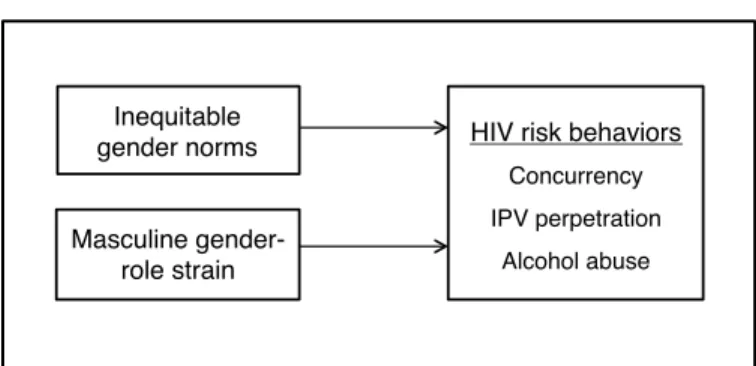
Aim 2: To examine relationships between inequitable gender norms, MGRS and HIV risk behaviors (sexual partner concurrency, IPV perpetration and alcohol abuse) among men in Mpumalanga.
Figure 1.1. Conceptual model of Aim 2
Aim 3: To understand MGRS in Mpumalanga in more depth and in men’s own words and to interpret quantitative findings about the influence of MGRS on men’s HIV risk behavior.
Finally, in Aim 3 we developed a richer understanding of MGRS and its relationship to HIV
risk behaviors through qualitative interviews with 18 men ages 19–35 from the same study area of varying family situations and employment backgrounds. We asked them about the most important
roles to them in their families and communities, the challenges they face in trying to fill these roles, and their hopes for the future for men in their communities. We used both narrative and coding procedures to analyze the data.
Significance
To date, most HIV-related research and programming has focused on women when applying a gender perspective, despite the fact that most men hold power over women in relationships,
affecting HIV risk for both (6, 33). Our study advances the literature on three different behaviors among men that drive HIV risk in South Africa and sub-Saharan Africa more broadly. Our study is
also the first to apply the Gender Role Strain Paradigm in the African setting and the
multidimensional GRC/S scale we developed is a promising new tool for future research and program evaluations. Using data from a large random community sample, we empirically tested theoretical relationships between gender constructs and the key HIV risk behaviors among men. The qualitative study then provided a richer perspective on men’s experience of MGRS grounded in men’s own voices. Findings from this mixed-methods study suggest ways to strengthen current gender
Masculine gender- role strain! Inequitable !
gender norms! HIV risk behaviors! Concurrency! IPV perpetration!
programming and generate ideas for approaches to address MGRS through intervention, currently lacking worldwide.
Organization of the Dissertation
CHAPTER 2: BACKGROUND AND SIGNIFICANCE
The HIV Epidemic in South Africa and Mpumalanga Province
Continuing High HIV Prevalence and Incidence
With an estimated 6.4 million people living with HIV, South Africa’s epidemic is the largest in the world (1). Heterosexual sex is the main mode of transmission (1, 37). Four national household surveys conducted in 2002, 2005, 2008, and 2012 show that prevalence grew slightly among the adult population aged 15–49, from 15.6% to 16.2% to 16.9% to 18.8%, respectively (1). Over this time, HIV incidence nationwide appears to have stabilized, with a non-significant decline among adults aged 15–49 between the periods of 2002–2005 and 2005–2008 (38). However, during 2012 alone, an estimated 396,000 new HIV infections occurred in this age group (1). In a prospective, population-based cohort study that directly measured individual seroconversion in rural KwaZulu-Natal
province, Barnighausen et al. (2008) found a very high incidence rate among both women and men, at 7.9/100 person-years and 5.1/100 person-years, respectively (39).
Figure 2.1. HIV prevalence, by age and sex, South Africa 2012
(Source: Shisana et al. (2014) (1))
Variation by Urban/Rural Residence and Province
Although nationally HIV prevalence is higher in urban areas than in rural areas (1, 4), many of the districts with the highest prevalence are rural. For example, a study in a rural district of KwaZulu-Natal province showed one of the highest population-based prevalence documented worldwide, with 27% of women and 13.5% of men infected, and even higher levels among age
sub-groups (40). Prevalence varies widely by province, from 7.9% in the Western Cape to 27.9% in KwaZulu-Natal in 2012 (1). In Mpumalanga, the largely rural province where our study took place,
21.8% of adults ages 15–49 are HIV positive, the second highest prevalence among South Africa’s nine provinces (1). This level has stayed roughly the same since 2002 (1). Antenatal clinic data from Mpumalanga also suggests that prevalence among pregnant women ages 15–49 is high and has stayed relatively stable since 2005, at around 35% (Figure 2.2) (2, 3).
HIV Status Awareness, Treatment, and AIDS Mortality
Although a majority (66%) of adults nationwide report ever having been tested for HIV, and
results) remains relatively low (1). The 2012 national survey, which included HIV testing, found significantly higher rates of awareness of HIV status among women than men: 55.0% of HIV-positive
women and 45.0% of HIV-negative women were aware of their HIV status at the time they were tested for the survey, compared to 37.8% and 35.6% respectively (HIV positive and HIV negative) of
their male counterparts (1). However, this represents a substantial increase in status awareness over the past decade, and in fact is among the highest rates in the world (1).
Figure 2.2. HIV epidemic curve among antenatal women, Mpumalanga 1990 to 2012
(Source: National Department of Health, South Africa (2012) (3))
Working toward universal access to treatment, in the past decade South Africa has established the largest antiretroviral treatment (ART) program in the world, with an estimated 2 million people on ART by mid-2012 (1). This represents close to a doubling of the 2008 rate; however only 31% of the total estimated number of people living with HIV nationwide are receiving
death among adults (~45%) between 1999 and 2006 and largely drove the significant increase in adult mortality over that time period (42).
How Did Prevalence Get So High?
The first two decades of the epidemic in South Africa saw an inadequate national response characterized by denial, lack of political will, and poor implementation of policies and programs (43). This slow start to HIV prevention and treatment contributed to the growth of the epidemic to today’s alarming levels and substantially changed the dynamics of risk for South Africans. Today, continuing social and structural inequalities, including gender inequalities, serve to sustain a risk environment that promotes substantial vulnerability to HIV, especially among women.
Key HIV Risk Behaviors and the Role Men Play
In South Africa, as in Southern Africa, the greatest behavioral risk factors for HIV are having multiple partners and having unprotected sex (37). Intersecting with these risk factors are the
practices of age mixing/cross-generational sex, violence against women, and alcohol abuse. The epidemiological evidence for each of these behaviors will be reviewed briefly below, with a particular focus on the role of men’s behavior.
Multiple and Concurrent Sexual Partners
and 2004, from 26.1% to 32.1% in men and from 5.7% to 8.7% in women (45). In Mpumalanga, 13.7% of adults age 15+ had multiple partners in the past 12 months, however this was not broken
down by gender (1). This 2012 figure represents an increase from levels at around 10% between 2002 and 2008 and the third highest rate among the nine provinces (1). The increase in multiple
partnerships is not unique to South Africa; according to UNAIDS, recent evidence from several other countries in sub-Saharan Africa indicates a significant increase in men’s number of sexual partners (including Burkina Faso, Congo, Côte d’Ivoire, Ethiopia, Gabon, Guyana, Rwanda, Uganda, the United Republic of Tanzania, and Zimbabwe) (46).
Figure 2.3. Percentage of adults aged 15 years and older who reported having more than one
sexual partner in the past 12 months by age group, South Africa 2002, 2005, 2008, and 2012.
There is also a proposed link between concurrency, defined as having more than one sexual partner overlapping in time, and HIV risk (47-49). Unfortunately, few studies follow current
UNAIDS recommendations to measure concurrency based on a partner grid that identifies overlap in partnership timing and instead use number of partners in a past given amount of time as a proxy for
concurrency (49). One recent study that used a partner grid to measure concurrency in South Africa among a nationally representative sample of 15–24 year olds found that 25% of men and 5% of women reported engaging in concurrent relationships over the past 12 months, compared to 5% of men and 5% of women reporting serial monogamy (49). Interestingly, this study found that concurrency was associated with HIV among women but not men, which the authors suggest may reflect women’s lower ability to negotiate condom use or refuse sex in these relationships (49). Thus, having multiple sexual partners, which is much more common for men than women in South Africa and usually involves concurrent partnerships, is an important risk factor for HIV.
Age Mixing
representing a substantial increase from 18.5% in 2005 and 27.6% in 2008 (53). Similarly high rates were found in another national survey of young people (4).
Inconsistent Condom Use
Consistent condom use is highly effective in preventing sexual transmission of HIV (55). Nationwide, 36.2% of sexually active adults ages 15 and older used a condom during their last sexual encounter (39.4% in Mpumalanga) (1). Men were more likely than women to use a condom (38.6% vs. 33.6%) (1). Consistent condom use, however, was lower, at 29.5% among men and 25.2% among women (1). Other recent studies have also found low rates of consistent condom use (4, 56). For example, among sexually experienced youth ages 15–24 in a different national survey, although 57% of men and 48% of women reported that they used a condom at last sex, the majority also reported that they did not always use a condom with their most recent sexual partner (61 and 71%,
respectively) (4). The same survey found that inconsistent condom use was significantly associated with HIV infection (4). Trends in condom use across the four national HIV surveys suggest that among all age groups, condom use increased substantially between 2002 and 2008 but declined significantly again by 2012 (1).
Intimate Partner Violence (IPV)
Violence and the threat of violence by men against women can contribute directly to HIV transmission through forced or coercive sex with an infected partner and more indirectly by limiting women’s ability to negotiate safe sexual behaviors with their male partners (37, 57). As in many other countries, it is difficult to find national statistics about rates of IPV in South Africa. The only
nationally representative survey on IPV found that 31% of South African women had experienced
physical IPV at some point in their current relationship (58). Jewkes et al. (2010) found that having experienced physical and/or sexual IPV significantly increased the incident risk of HIV infection
survey found that the 10% of young women who experienced forced sex were almost six times more likely to inconsistently use condoms than women who hadn’t and that inconsistent condom use was,
in turn, significantly associated with HIV infection (14). Rape is also very common in South Africa and has been shown to increase HIV risk (18, 59). A study in the Eastern Cape and KwaZulu-Natal
provinces found that 27.6% of men reported having raped a woman or girl (59), and research in a Cape Town township found that more than one in five men reported using the threat of force or force to gain sexual access to a woman in their lifetime (18).
Alcohol Abuse
Alcohol abuse, defined as a pattern of drinking that results in harm to one’s health,
interpersonal relationships, or ability to work (60), is an important risk factor for HIV in sub-Saharan Africa (61-63). In a meta-analysis of African studies, Fisher et al. (2007) found that compared with nondrinkers, the pooled estimates of HIV risk were 1.57 (95% CI=1.33–1.86) for non-problem drinkers versus 2.04 (95% CI=1.61–2.58) for problem drinkers, a statistically significant difference (z=2.08, P <0.04) (62). Alcohol use, and especially alcohol abuse/problem drinking, is believed to influence individuals’ cognitive processes such as reasoning ability and judgment and exacerbate risk-taking tendencies (63). Alcohol abuse has been linked to having multiple and concurrent sexual partners, having unprotected sex, and paying for sex (64-66) as well as perpetrating IPV (67, 68). In addition, venues that serve alcohol are often the same places where sex partners meet (69, 70). Forty percent of South African men and 15% of women drink alcohol, with significant numbers drinking heavily (53), and women’s alcohol-related HIV risk is often related to their male sex partners’ drinking rather than their own drinking (63).
alcohol abuse—as a focus for our study, because these were expected to be strongly influenced by the gender constructs of interest. The next sections lay out the theoretical basis and empirical evidence
for the importance of these constructs to understanding HIV risk on a global level and specifically within South Africa.
Gender Norms As a Driver of HIV Risk
Theoretical Basis
The Theory of Gender and Power serves as an overarching theoretical framework for the three aims of the proposed research. In his influential work Gender and Power, R. W. Connell (1987) sought to create a systematic basis for understanding gender and gender relations (9). While
recognizing that there are important biological differences between the male and female sexes, Connell believed that doctrines of natural difference that assume the biological makeup of our bodies is the foundation of the social relations of gender are fundamentally mistaken. Instead, gender roles and relations are socially constructed and historically embedded and individuals are socialized into and internalize their respective roles (9). According to the Theory of Gender and Power, three major social structures shape gender relations: 1) the gendered division of power, 2) the gendered division of labor, and 3) the structure of social norms and attachments. These structures characterize the
gendered relationships between men and women; exist at societal, institutional, and individual levels; and produce exposures that shape health behaviors and outcomes for men and women (9). These three structures are helpful in organizing our understanding of traditional expectations of masculinity and how gender inequality can shape vulnerability to HIV, as described next (10).
Gendered division of power. Gender is negotiated in part through relationships of power.
Social power of men over women has multiple dimensions, such as force (e.g. violence); balance of advantage in the household, workplace, and major institutions (corporations, government,
gendered power roles within relationships (11). Biology and “God’s will” are often invoked to justify these structures of hierarchy in South Africa and in this way they are presented as the natural order of
family relations (32). Gendered power is also strongly shaped and reinforced by cultural traditions such as by patrilineal marriage traditions in Southern Africa—in which wives leave their families to
join their husbands in their homes (73)—and the continuing tradition of bridewealth (74).
Power imbalances within a relationship affect each partner’s ability to negotiate safe sex on equal terms. For example, having low power and control in a relationship often limits women’s ability to negotiate condom use and refuse unwanted sex with their male partners, experiences that have been linked to HIV infection in South Africa (5, 14). Not only men but women as well tend to be socialized to accept (and perceive as normal) male control of sexual decision-making (75). For example, a study in South Africa found that young women tended to identify their ideal relationship as one in which the man made the decisions, including the use of condoms and the timing of sex (76). Power imbalances within couples also tend to be associated with lower levels of couple communication about sexual and reproductive health, which can limit each partner’s awareness of their counterpart’s wishes and can lead to health-damaging decisions when men exert uninformed or misinformed control over decision-making (11, 77). Finally, extreme power imbalances within couples can lead directly to physical, sexual, and psychological IPV, which can directly increase HIV transmission and also serves to further reinforce women’s inability to negotiate safer sex (14, 17, 77).
dependence on men also contributes to transactional sex and age-mixing practices in South Africa (14, 51). Young women often seek casual relationships with older men, who tend to have more secure
employment and assets, as a way of obtaining money for necessities, as well as social, emotional, and symbolic capital in some instances (51). Although the gendered division of labor is true on an
aggregate level, it is also critical to note that in some settings like rural South Africa many men are also limited in their ability to generate income, challenging gendered expectations of men to work and provide for their family (11).
Structure of social norms and attachments. This structure dictates normative or stereotypical behavior for men versus women, including norms around sexual behavior (9). These gendered expectations of appropriate roles and behavior are learned in relationships over the life course and are reproduced in institutions and cultural practices (6, 79). The sexual double standard, for example, is evident in statistics concerning the sexual behavior of men versus women. Relative to women, men tend to have more sexual partners over their lives, are more likely to have concurrent partners, and are more likely to pursue commercial sex workers as partners (80). In South Africa, men are much more likely than women to have multiple partners and to have casual partners outside of marriage (1, 4).
In sum, the Theory of Gender and Power serves as an overarching theoretical framework for understanding the ways in which gender norms can shape HIV risk, which has also been supported by a wealth of research to date.
Empirical Evidence Linking Gender Norms to HIV Risk Behavior
The World Health Organization, UNAIDS, and other international governing bodies recognize gender norms as a key driver of HIV vulnerability and gender-based violence (6, 78, 81). Studies worldwide have shown that men who believe strongly in traditional notions of masculinity have more sexual partners, a higher level of adversarial sexual beliefs, lower consistency of condom use, and a higher concern about condoms reducing male pleasure (81, 82). A review of 268
behaviors of young people (7). Similarly, in the United States, the National Survey on Adolescent Males showed that young men’s adherence to traditional views of manhood emerged as the strongest
predictor of risk-taking behaviors like unsafe sexual practices, substance use, violence, and
delinquency (83). In addition, extensive research using the Male Role Attitudes Scale, a measure of
masculine ideology, primarily with African American, Hispanic, and White men in the United States, has found that higher scores on this measure predict less consistent condom use, coercive sexual behavior, a higher number of sexual partners, adversarial beliefs about female-male relations, alcohol and drug use, and negative attitudes toward male responsibility for contraception (20).
Research worldwide using the Gender Equitable Men Scale (GEMS) to measure gender norms has also consistently found them to be associated with HIV risk behavior (8, 15, 84). In Brazil, Pulerwitz & Barker (2008) found that support for more equitable gender norms was significantly associated with less self-reported partner violence and more contraceptive use among young men (8). One of the largest studies to date on gender norms and sexual behavior is the International Men and Gender Equality Survey (IMAGES), which was carried out with men and women ages 18–59 in six countries: Brazil, Chile, Croatia, India, Mexico, and Rwanda, and used GEMS (15). This study found that across all six countries, men who held more inequitable gender norms were significantly more likely to have perpetrated physical and sexual intimate partner violence, to have paid for sex, and to abuse alcohol, and were less likely to communicate with their partner about personal problems and to have been tested for HIV (15). Next we review evidence regarding how gender norms influence key HIV risk behaviors in South Africa.
which someone has sexual partners that overlap in time—instead assessing the number of partners in a past period of time (48, 49). However, a recent study using the recommended method of
measurement found that concurrency among young South African women was associated with relationship power imbalances (49). Qualitative research in South Africa has also found that, in
particular, the practice of concurrently having a main partner and other partners is a common arrangement for men and is strongly linked to norms of masculinity (47).
The six-country IMAGES study found that in Chile, Croatia, and Mexico, men who held more inequitable gender norms were much more likely to abuse alcohol than men who held more equitable
norms (15). In addition, a study among adolescents in the United States found that traditional gender role attitudes largely accounted for observed gender differences in alcohol use and abuse (86).
Intervention evidence. Further evidence of the importance of gender norms to sexual and reproductive health and violence behaviors comes from evaluations of interventions that seek to change these behaviors by changing gender norms. A 2008 review by the World Health Organization (WHO) of 58 evaluation studies found that programs that incorporated a “gender transformative” approach that seeks to directly challenge inequitable gender norms and promote more gender-equitable relationships between men and women were more effective in producing behavior change than programs that used a “gender-sensitive” or “gender-neutral” approach (6). For example, the Stepping Stones and Soul City programs in South Africa decreased self-reported use of physical, sexual, and psychological violence in intimate relationships (6, 87) and the “Somos Diferentes, Somos Iguales” (“We are Different, We are Equal”) campaign in Nicaragua increased condom use among young people (88). However, the WHO review also found that few of the programs go beyond the pilot stage, or a relatively short-term timeframe, and suggested that more evidence is needed on how to achieve the large-scale and sustained reach necessary to change gender norms and power dynamics (6). A more recent review (2013) of such programs drew similar conclusions about their effectiveness as well as the continued need for more rigorous evaluations and longer program implementation periods (34).
strategic plans were created after extensive consultation with civil society and other stakeholders and have been hailed as examples of good policy (90). It remains unclear, however, how these kinds of
public policies supporting gender equality are translating into changes at the community or individual levels.
How Equitable Are Gender Norms in South Africa?
A partner study to the six-country IMAGES study was carried out by the Medical Research Council of South Africa in three districts in the Eastern Cape and KwaZulu-Natal provinces and also used the GEM scale to measure gender norms (15). This study found that, on the whole, South
African men held more inequitable gender norms than those from any other IMAGES country (15). In terms of specific gender norms, half of men agreed with the statement that women sometimes deserve to be beaten (vs. an average of 33% across other countries), 60% said that a man should have the final say on decisions at home (vs. 46%), and 85% of men agreed that to be a man it is important to be tough (vs. 43%) (15). Men in South Africa also tended to perform much less housework and childcare work than women, reflecting inequitable norms—a finding that was common across the six IMAGES countries (15). For example, among men in South Africa who lived with their children, only half said they “often played with children, helped with homework or fixed food for them.” Men who did not live with their children commonly failed to perceive themselves as obligated to provide financial or social support, regardless of ability. Men’s communication with their partner about problems or challenges faced at home or work, in the family or community, which is characteristic of more equitable relationships, was lower in South Africa than other IMAGES countries. For example, among married or cohabiting men, only half had discussed problems with their partner in the previous fortnight (15).
mean scores were generally positive (i.e., representing equitable gender norms) for egalitarian sexual scripts and mutuality in relationships but were negative (i.e., representing inequitable gender norms)
for violence in relationships, power in relationships, male dominance scripts, and hyper-romanticism (12). This supports findings from related qualitative work by this research team that men’s and
women’s gender norms related to sexual relationships are changing but that enactment of new roles is a slow and inconsistent process (31).
In terms of support for broad notions of gender equality, a study with 3500 South African men and women by the Unilever Institute found mixed support (91). Sixty-one percent of respondents believed that men and women are equal, 66% believed that men and women should earn the same amount, and 50% that women are treated unfairly. However, 73% also believed that men should be the head of households and 64% thought that they should be the primary breadwinner in the family. This information, together with evidence of inequitable norms related to intimate relationships held by South African men further suggests that national efforts to promote ideals of gender equality are not yet fully translating into more equitable beliefs behavior within intimate relationships in a sustained manner.
Changing Expectations of Masculinity in South Africa
Anthropological accounts of the 19th- to mid-20th-century early colonial South Africa provide a starting place for understanding how masculinities, including those related to sexuality, are changing. Traditional practices in rural South Africa, especially related to men’s “initiation” into manhood, involved a relatively high degree of sexual education and regulation linked to an ideal of manhood that was responsible and respectful (95, 96). Although traditional courting practices in rural South Africa allowed a man to have many potential wives at a time (but a woman to have only one potential husband), these allowances only went so far. Young men with more than one girlfriend, including married men who courted younger single (and thus eligible) women, were called to account for their intention or financial ability to marry these women, particularly by parents with a heavy stake in their daughter’s future marriage (32). At the same time, Christianity, which became interwoven with tradition, was also subtly but powerfully undermining this public courting of multiple women, with many preachers encouraging men to remain monogamous (74).
Yet these kinds of social controls on sexuality existed alongside traditional social hierarchies placing men above women and more powerful (and often older) men above other (and often younger ‘uninitiated’) men. According to Morrell (2001):
“Colonialism may have destroyed the material base of the African economies, but it did not destroy the history which was woven into a myriad of gendered rituals which served to legitimate the sexual division of labour and male power. In the countryside, older men commanded respect. They were part of a gender system which had, at its apex, the chief. He dispensed rights to communal land to men alone. … Public life by and large was a world that belonged to men.…While the rights of women were limited, there was a presumption about the importance of community and the essential role that women played within the household and the larger social units.” (28, p. 13)
were also being drawn away from their rural homes to find work in urban townships and the mines, places characterized by increasing dependence on violence, both by supervisors to maintain authority
and by black men to resist it, validating violence as a way of dealing with power inequalities (28). At the same time, women were necessarily assuming increasing responsibility for the family’s needs, and
in rural areas, legal changes have given women access to land, allowed them to open bank accounts, and in some ways freed them from dependence (28). Today, the expansion of formal education for both women and men, urbanization, and national policy positions promoting gender equality (for example, under the Constitution) are further setting a normative standard of gender equality in the public’s eye (11, 32, 74).
According to Morrell (2001), responses of men in South Africa to these kinds of changes can be loosely grouped into three categories: reactive or defensive, accommodating, and responsive or progressive (28). The absence of widespread opposition to the improvement of women’s conditions suggests that most men may be accommodating the changes (28). This is evident in recent research showing that many young men are taking on certain more equitable roles within sexual relationships. For example, many studies in sub-Saharan Africa are finding that men are engaging in sexual
relationships to prove their masculinity but also because they seek companionship, intimacy, and pleasure (11). In South Africa, O’Sullivan et al. (2006) found that most male participants’ reports of sexual interactions suggested that they endorsed negotiation and respect for partners’ interest and desire (31). A nationwide study on concurrency practices in South Africa also found that although peer norms among men are recognized as generally favoring promiscuity, many of the men
interviewed were asserting new values by actively choosing to remain monogamous (47). Certainly, the devastation of families due to HIV/AIDS is also causing some men to question gender norms and attitudes that were once unquestionable (11).
materialized (11, 31, 32, 74). Many researchers suggest that new norms and pressures are causing a crisis of male identity, especially given the lack of men’s recourse to traditional masculine identities
like being employed and successful (29-32, 74). In a qualitative study in Mpumalanga, Sideris (2004) emphasizes the anxiety and ambivalence induced when men sense that more traditional gender roles
are in question, leading one participant to remark, “You have to change but you don’t know how!” (32, p. 45). Together these findings lead us to consider another important gender construct: masculine gender-role strain.
Masculine Gender-Role Strain: An Underexplored Construct in
HIV Prevention Research
Theoretical Basis
“Engaging men in gender equality requires being empathetic with men’s lived experiences— the unspoken depression, suicidal thoughts, high levels of childhood experiences of violence, and their high levels of work-related stress. But being empathetic toward the structural conditions of men’s lives is not to make excuses for the violent and oppressive practices of some men. It is, instead, an affirmation of the need to move beyond a superficial
understanding of gender equality toward addressing the structural—but changeable—factors that underpin it.” (15, p. 61)
As the passage above suggests, the current discourse on gender norms and masculinities reflects a growing recognition that gender norms do not operate in isolation from other
socio-economic inequalities and stressors. Masculine gender-role strain (MGRS), the stress men experience from trying to meet or failing to meet expected masculine roles, is a promising theoretical
complement to gender norms constructs (20). MGRS has received increasing attention in psychology and health behavior research in recent years, particularly in the United States in relation to men’s depression, anxiety, perpetration of intimate partner violence, and alcohol/substance abuse (22-24, 26, 27). However, the construct has been largely unexplored in HIV prevention research and has not been
measured in the African context.
The MGRS construct has its theoretical basis in the Gender Role Strain Paradigm, which
sub-types of MGRS—discrepancy strain, dysfunction strain, and trauma strain—interact across the life course to produce the experience of MGRS as a whole.
Discrepancy strain is the strain from negative social feedback and internalized self-judgments from attempting to meet perceived expectations of masculinity, and especially failing to do so (19).
Some expectations of masculinity can be seen as more socially positive/less dysfunctional in that they have potentially beneficial results, for example providing for one’s family or achieving
professionally. However, other expectations, like being aggressive, sexually exploitative, and emotionally restrictive, are inherently dysfunctional in that they lead to self-harm or harming others (21). In general, men try to meet more socially positive/less dysfunctional standards of masculinity first, preferring to avoid more harmful behavior if they can help it. These more socially positive roles and behavior also tend to be more widely accepted by society while more dysfunctional norms may be acceptable in narrower social circles or settings (e.g., certain male peers; bars).
Gender role trauma strain is the strain that results from intense gender socialization processes starting in childhood, which often occur during gender role transitions like reaching puberty, getting married, or becoming a father (19). Trauma strain is conceptualized in the literature as contributing directly to the amount of MGRS a man experiences, as well as heightening men’s fear of negative reprisal for violating traditional gender roles (19).
Finally, when men fail to live up to these more socially positive norms of masculinity, they often compensate by turning to more dysfunctional ones. Dysfunction strain is the strain from
engaging in these dysfunctional characteristics or behaviors (19, 22). Examples include the three HIV risk behaviors being examined in the proposed study: having concurrent sexual partners, perpetrating IPV, and abusing alcohol. Thus, instead of reducing the overall strain men experience, engaging in dysfunctional behaviors produces even more MGRS, leading to a negative, self-perpetuating cycle.
because conforming to masculine roles requires denial of, or disassociation from, a wide range of emotions (21). In addition, most women, while being similarly threatened with severe sanctions if
they fail to conform to feminine gender norms, tend to engage in behaviors that harm themselves rather than others as a result (e.g., through underachievement, depression) (21).
The degree of gender role strain a man experiences is thought to depend in part on the extent to which the gender norms are actually psychologically salient to him (19, 22). It is also crucial to note that gender role strain is not a static state but rather a process by which individuals cope and adapt to it by changing their behavior, by changing their perception of role norms or disengaging from them, or by changing their reference group (19). This suggests that although gender role strain likely exerts a strong effect on men’s HIV risk behavior, this effect is also multifaceted and
potentially modifiable.
Empirical Evidence Linking MGRS to HIV Risk Behaviors
A 2008 review of 260 studies using the Gender Role Conflict Scale found that across diverse groups of men (including a few international samples, although none in Africa), the Gender Role
Conflict Scale was significantly associated with intrapersonal problems like depression, stress, anxiety, low self-esteem, and alcohol and substance use (22). Within interpersonal functioning, the
Gender Role Conflict Scale and/or Masculine Gender Role Stress scale have been found to be significantly associated with abuse and violence against women, problems with intimacy, and a lack of closeness in relationships (22-24).
Evidence for the association between MGRS and the three HIV risk behaviors assessed in our study is reviewed below. No articles in the peer-reviewed literature on HIV in South Africa were found that explicitly examined this construct, either quantitatively or qualitatively, therefore we draw on anecdotal evidence from that country as well as other research done worldwide.
Multiple and concurrent sexual partners. MGRS has rarely been examined in relation to sexual risk behaviors. Studies by Malebranche et al. (2012) and Bingham et al. (2013) among Black, bisexually active men who have sex with men (MSM) in the United States found significant
expectations despite their homosexuality led to psychological distress, efforts to camouflage their homosexuality, and strategies to prove their masculinity, which appeared to increase sexual risk
behavior and HIV risk in multiple ways (102). Although the MGRS construct has not specifically been applied in South African studies, a number of qualitative studies in that country suggest that
inability to fulfill certain traditional expectations of masculinity, such as providing for one’s family, leads men to compensate by filling others, one of the most common of which is maintaining multiple sexual partnerships (29, 32, 47, 103).
IPV perpetration. Studies have suggested a significant association between MGRS and IPV perpetration, with most evidence coming from the United States. The strain and sense of insecurity among men may be a central motivation for being aggressive toward women and struggling to maintain control within relationships, including through sex (23). The review of 260 studies using the Gender Role Conflict Scale identified 22 studies that together found that the Gender Role Conflict Scale was significantly related to a range of thoughts, attitudes, and behaviors that are abusive and violent toward women (22). Eisler’s Masculine Gender-Role Stress scale has also been empirically linked to IPV risk (25). Two studies using this scale found that MGRS mediates the relationship between masculinity norms and IPV risk (23, 24). Further, Gallagher & Parrott (2011) found that MGRS mediates this relationship for certain masculinity norms dimensions but not others, reinforcing the importance of examining separately men’s adherence to different gender norms (23).
associated with men’s perpetration of sexual violence against intimate partners in the past 10 years (104).
Alcohol abuse. A number of studies in the United States have found that the Gender Role Conflict Scale is associated with alcohol use and/or abuse (22, 26, 27). Alcohol use may help men
temper gendered self-expectations and manage stress from unmet gender roles (22). Specifically, alcohol use can be seen as a form of avoidant or maladaptive coping with stress, to which men tend to turn more than women (85, 105). In South Africa, although no research has explicitly examined the association between the MGRS construct and alcohol use, studies have shown that the pressures of living in poverty shape alcohol use and HIV risk (106).
Intervention evidence. Little intervention evidence is available for MGRS because there are very few programs in the United States or globally that specifically seek to reduce MGRS and even fewer that have attempted to measure changes in MGRS or behavior. In the United States these primarily involve psychological counseling. Such efforts have produced some success in reducing MGRS, particularly restrictive emotionality (22, 107), but have not yet directly addressed health behaviors. A four-session group intervention to reduce MGRS as part of a dating violence prevention for U.S. college students led to reductions in restrictive emotionality (violence was not measured) (108). An international program called the ManKind Project focuses on men’s-only peer support groups and has also demonstrated some success in reducing success, power, competition, restrictive emotionality, and depression symptoms as well as bolstering perceived social support and life satisfaction (109). However, the project does not clearly address health behaviors and has not been clearly described in the literature to date nor rigorously evaluated.
Gauging Levels of MGRS in the South African Context
up control of the family income (32). These men were still experiencing a high degree of uncertainty and ambivalence around re-examining their role as head of the household.As they attempted to
embrace greater equity within family relations, and as the foundation of their identity as men as head of the household was increasingly challenged, they displayed anxiety associated with not knowing
how to validate their sense of themselves as men. Sideris suggests that these anxieties and hostilities men experience can illuminate the social challenges to male domination and emerging changes in gender relations that are underway (32).
Relating to strain around sexuality, in qualitative research with secondary students in KwaZulu-Natal O’Sullivan et al. (2006) found that participants commonly referred to social
expectations that they must live up to—for example, describing how it is the man’s “duty” to initiate sex with their girlfriends and an essential aspect of being a man (31). One man explained that he always initiated “…Because I want to show her that there is nothing I don’t know about sex;” another man felt it was important that he initiate “Because if I break up with her, I don’t want [her] to go everywhere telling people that she told me many things about sex” (31, p. 104). However, there was not pressure to conform to all expectations of sexual behavior. For example, in relation to women’s ability to refuse sex, most participants (both male and female) indicated that it was important for men and women to communicate their lack of interest, problems, or concerns, and some women said that it did not bother their partner if they didn’t want to have sex. Thus, many men feel pressure to perform sexually as a mark of manhood, but not unconditionally.
CHAPTER 3: STUDY OVERVIEW
The overarching goal of this dissertation was to better understand how gender role expectations affect key HIV risk behaviors among men in Mpumalanga in order to develop more effective prevention programs. We used a mixed-methods design, drawing on both quantitative and qualitative methods to address the three specific aims. Aims 1 and 2 involve a secondary analysis of quantitative data from the baseline survey of the NIMH-funded study Effects of Community
Mobilization for the Prevention of HIV in Young South African Women (n=581 men). Aim 3 involved conducting and analyzing data from a qualitative study with 18 men from the same study area.
Study Aims, Research Questions, and Hypotheses
Below are research questions (RQ) that directed the research done under each Aim. Based on a review of theory and evidence in the literature, a number of hypotheses are proposed under Aim 2.
Aim 1: To evaluate measures of inequitable gender norms and masculine gender-role strain (MGRS) among men in Mpumalanga, South Africa.
For each scale:
RQ1. What does exploratory factor analysis suggest is the scale’s factor structure?
RQ2. Does the scale demonstrate structural validity? That is, is the factor structure (number of factors and items within them) suggested by exploratory factor analysis confirmed in the confirmatory factor analysis (do measures of model fit meet pre-established cutoff criteria)? If the scale has multiple factors, is there evidence for a second-order factor?
RQ3. How reliable is the scale, including each factor and any higher-order factor found?
RQ5. Does the scale demonstrate predictive validity? That is, is it shown to be associated with hypothesized outcomes? (To be examined in Aim 2)
Aim 2: To examine relationships between inequitable gender norms, MGRS and HIV risk behaviors (sexual partner concurrency, IPV perpetration and alcohol abuse) among men in Mpumalanga.
RQ1. Are inequitable gender norms associated with each HIV risk behavior (concurrency, IPV perpetration, alcohol abuse)?
Hypothesis: Holding more inequitable gender norms will be significantly and positively associated with concurrency, IPV perpetration, and alcohol abuse, controlling for age, education, employment status, marital status, and MGRS.
RQ2. Is MGRS associated with each HIV risk behavior?
Hypothesis: Higher MGRS will be significantly and positively associated with concurrency, IPV perpetration, and alcohol abuse, controlling for age, education, employment status, marital status, and inequitable gender norms.
RQ3. If sub-dimensions of inequitable gender norms and MGRS are found in factor analysis, which are associated with each HIV risk behavior? (exploratory analyses)
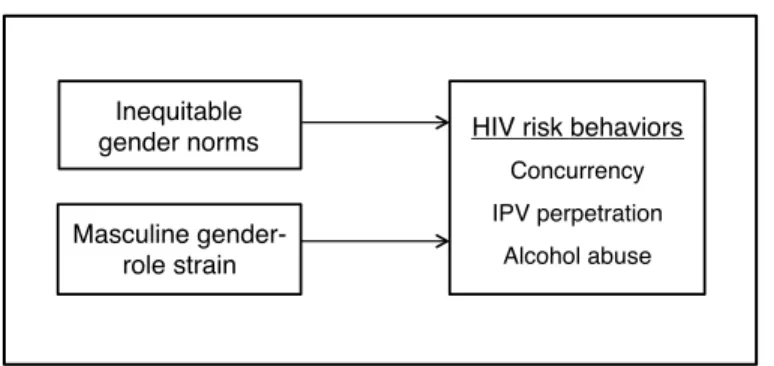
A conceptual model of Aim 2 is reproduced in Figure 3.1 here, for ease of reference.
Figure 3.1. Conceptual model of Aim 2.
Aim 3: To understand MGRS in Mpumalanga in more depth and in men’s own words and to interpret quantitative findings about the influence of MGRS on men’s HIV risk behavior.
RQ1. How do participants describe what it means to be a man and to be a woman? Masculine gender-
role strain! Inequitable !
gender norms! HIV risk behaviors! Concurrency! IPV perpetration!
RQ2. What roles are most important to men in their families and communities? How do they describe what these roles mean to them, and how did they learn about them?
RQ3. To what extent do men feel they are playing these different types of roles? What challenges have they faced in doing so?
RQ4. How salient is the main proposition of the Gender Role Strain Paradigm, that the experience of trying, and failing, to live up to masculine expectations produces strain, which then leads men to engage in dysfunctional behaviors that harm themselves and others?
RQ5. How salient are the three sub-types of MGRS to men—discrepancy strain, trauma strain, and dysfunction strain? What are local examples of each of these three sub-types?
RQ6. To what extent and in what ways do men link strain they identify with behaviors like having multiple sexual partners, perpetrating IPV, or abusing alcohol?
Mixed-Methods Approach
Integrating quantitative and qualitative methodologies provided a more comprehensive picture of the complex phenomena being studied than either approach used alone (110, 111). Our quantitative study provided objective measurement of variables, hypothesis tests and generalizable results but insufficient nuance, particularly about MGRS and its connections to HIV risk behaviors. We followed this analysis with a qualitative study shaped by its results, which provided a richer perspective grounded in men’s own voices that helped us interpret quantitative findings.
Parent Study Overview
Parent Study Description
conditional cash transfers to help them stay in school (Conditional Cash Transfer arm) and changing the inequitable gender norms, particularly among men, that create an enabling environment for risk
behaviors (Community Mobilization arm). The Conditional Cash Transfer arm of the study is also funded by the HIV Prevention Trials Network (HPTN, Study 068). Young women in 22 villages of
the study area were individually randomized to receive the cash transfer, while 11 of these 22 villages were randomized to receive the community mobilization intervention.
For the dissertation study we used data from the baseline (pre-intervention) survey of the Community Mobilization arm only. However, it is helpful to understand the intervention being implemented because it relates to the subject of the present study. The goal of the community
mobilization intervention, implemented by Sonke Gender Justice for two years from 2012–2014, is to engage young men around the issues of gender norms and HIV risk and to encourage them to take action to protect young women and reduce HIV risk in their communities. A group of 15 “community mobilizers” from the villages were selected and trained to conduct mobilization and outreach
activities. Activities included intensive workshops on gender roles, human rights, HIV, and violence; one-on-one engagement with community members; and activities in the community like “ambush” theater and rallies, among others. These mobilization activities have been widely used by
organizations like Engender Health and Sonke Gender Justice with young men across South Africa. The community mobilization approach is believed to hold particular promise in reaching large groups of individuals and having a lasting effect on community norms and dynamics (112-114).
The study is one of the first worldwide to rigorously evaluate community mobilization efforts focused on men that aim to reduce HIV vulnerability. The intervention is being evaluated by two cross-sectional household surveys of young people ages 18–35 in the 22 intervention and control villages, conducted immediately prior to the intervention in 2012 as well as post-intervention in 2014 (2 years later). The primary endpoint for the parent study is changes in gender norms (as
The parent study represents a collaboration between the University of North Carolina at Chapel Hill (UNC-CH); the University of California, San Francisco (UCSF); and two South African
institutions based at the University of the Witwatersrand (Wits) in South Africa: the Wits
Reproductive Health and HIV Institute (WRHI) based in Johannesburg and the Medical Research
Council (MRC)/Wits Agincourt Health and Population Unit (AHPU), with offices in both Johannesburg and rural Mpumalanga.
Study Site
The study took place in the Agincourt area of the rural Bushbuckridge sub-district in Mpumalanga Province, located about 500km northeast of Johannesburg, near South Africa’s border with Mozambique (see map in Appendix A). Approximately 84,000 individuals live in 14,000 households in 25 villages throughout Agincourt. The MRC/Wits Rural Public Health and Health Transitions Research Unit runs an Agincourt Health and Demographic Surveillance System (AHDSS) in this area (115), which was used as a sampling frame for the study.
The study site is typical of many rural areas in South Africa and is characterized by few employment opportunities, high levels of out-migration for labor, and relative social isolation. The area is dry and densely populated (~170 persons per km2) with household plots too small to support subsistence agriculture. Water shortage is a serious problem, household sanitation is generally poor, and most roads are unpaved.
Field Implementation
The MRC/Wits Agincourt Unit has an office responsible for community relations—the Learning, Information Dissemination and Networking with the Community (LINC) Office. Prior to
fieldwork this office informed and invited feedback from the host community about this study through meetings with the local municipal offices and ward councilors, as well as community