THE EFFECTS OF AN INTEGRATED EXERCISE PROGRAM ON LOWER EXTREMITY BIOMECHANICS IN FEMALES WITH MEDIAL KNEE
DISPLACEMENT
Shiho Goto
A dissertation submitted to the faculty of the University of North Carolina at Chapel Hill in partial fulfillment of the requirements for the degree of Doctor of Philosophy in the
Department of Interdisciplinary Human Movement Science (School of Medicine)
Chapel Hill 2015
Approved by:
Darin A. Padua
Michael T. Gross
J. Troy Blackburn
David J. Berkoff
ii ©2015 Shiho Goto
iii
ABSTRACT
SHIHO GOTO: The Effects of an Integrated Exercise Program on Lower Extremity Biomechanics in Females with Medial Knee Displacement
(Under the Direction of Darin Padua)
Knee injury prevention exercise programs are aimed to correct knee valgus alignment
during functional activities. Various factors are associated with knee valgus, including
altered flexibility, muscle strength, and neuromuscular factors. However, the exercise
programs that were used in previous studies did not consider these factors, which may have
resulted in inconsistent finding. In addition, although lower extremity bony alignment has
been associated with faulty movement patterns, little is known whether the bony alignment
abnormalities influence individual’s response to the exercise program. Lastly, effectiveness
of exercise program was tested within the tasks that were part of the exercise program;
therefore, it is unclear if improvement in the trained task transfers to untrained task. The
purpose of this investigation was to examine the effects of an integrated exercise program on
lower extremity biomechanics while accounting for bony alignment measures in females
displaying high risk movement pattern. Thirty-two active females completed the study and
randomly assigned to either the integrated exercise program group (INT=17, Age=21.0±3.1
yrs, Ht=161.1±5.0 cm, Mass=63.6±8.4 Kg) or the control group (CON=15, Age=20.8±3.0,
Ht=162.3 ± 7.8 cm, Mass = 64.9± 18.9 Kg). The participants in the INT group went on a
6-week exercise training. Lower extremity joint range of motion, muscle strength, and hip,
knee, and ankle kinetics and moment during the double-leg squat, single-leg squat,
iv
kinematics was improved during the single-leg squat, jump-landing, and running tasks
following the intervention (p<0.05). These improvements were influenced by combined
effects of bony alignments as greater femoral antetorsion, external tibial rotation while the
magnitude of change was small. Peak knee valgus moment was also improved during the
jump-landing task (p<0.05). The results indicate that the exercise program utilized in this study is effective in improving frontal plane knee kinematics in females present with knee
valgus during the jump-landing, single-leg squat, and running tasks while no improvements
were observed during the double-leg squat. This study also demonstrated motor learning
transfer as frontal plane knee kinematics during running improved while this task was not a
v
ACKNOWLEDGEMENTS
I would like to acknowledge everyone who has helped me to come where I am in
professional life. I would like to thank Drs. Darin Padua, Mike Gross, Troy Blackburn, David
Berkoff, and Michelle Boling who have provided their valuable insight, expertise, and time
with this project as a member of dissertation committee. I would especially like to thank Dr.
Darin Padua for his mentorship though my doctoral program. He provided me amazing
opportunity and helped me to grow as a researcher. Thank you for your countless support and
patience over the past 5.5 years. Without your help, I would not have been able to complete
the program.
There are many people who helped me with this project. I would like to thank my
research assistants have provided a tremendous help. They put so much of their time with
little return rather than experience. Thank you for research participants for your commitment
for this project! I also would like to thank other faculty members and staffs of Exercise and
Sports Science and Human Movement Science for their help in many ways to accomplish
this project. Furthermore, I would like to thank all my colleagues, especially my lab mates
from the Sports Medicine Research Lab, for encouraging me and bringing laughs over the
years.
Lastly, I would like to thank my family and friends who have supported, encouraged
and believed in me though my master’s and doctoral programs. Thank you for your
vi
TABLE OF CONTENTS
LIST OF TABLES ... IX LIST OF FIGURES ... XI
CHAPTER ONE ... 1
1.1 Rationale... 1
1.2. Research questions and Hypotheses ... 10
1.3. Operational definitions ... 13
1.4. Assumptions and limitations ... 14
1.5. Limitations ... 15
1.6. Delimitations ... 15
1.7. Independent Variables ... 16
1.8. Dependent Variables ... 16
1.9. Significance of the study ... 17
CHAPTER TWO ... 18
2.1 Public Health Impact of Knee Injuries ... 18
2.2. Etiology of Patellofemoral Pain ... 19
2.3 Prospective Risk Factors for PFP ... 24
2.4 Consequence of Patellofemoral Pain... 29
2.5 PFP Prevention and Rehabilitation Exercise ... 37
vii
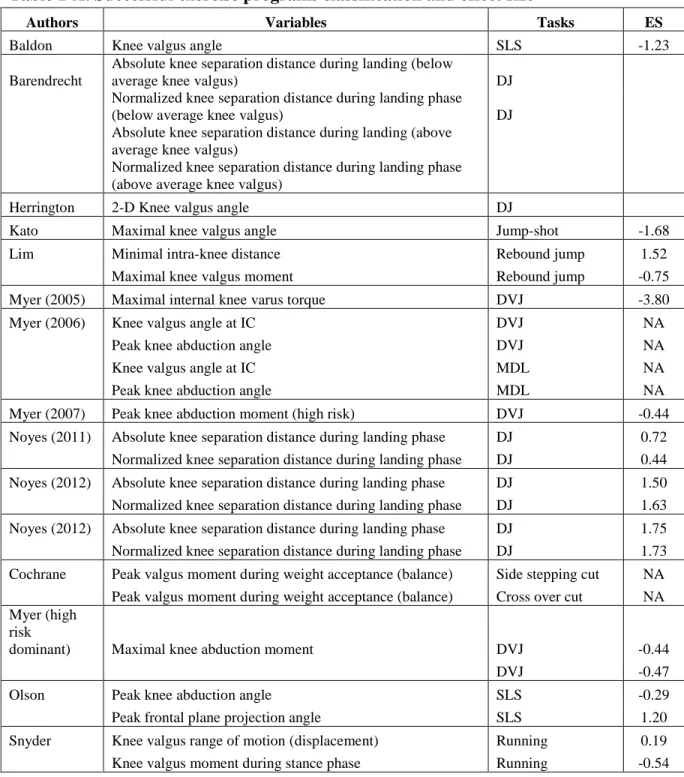
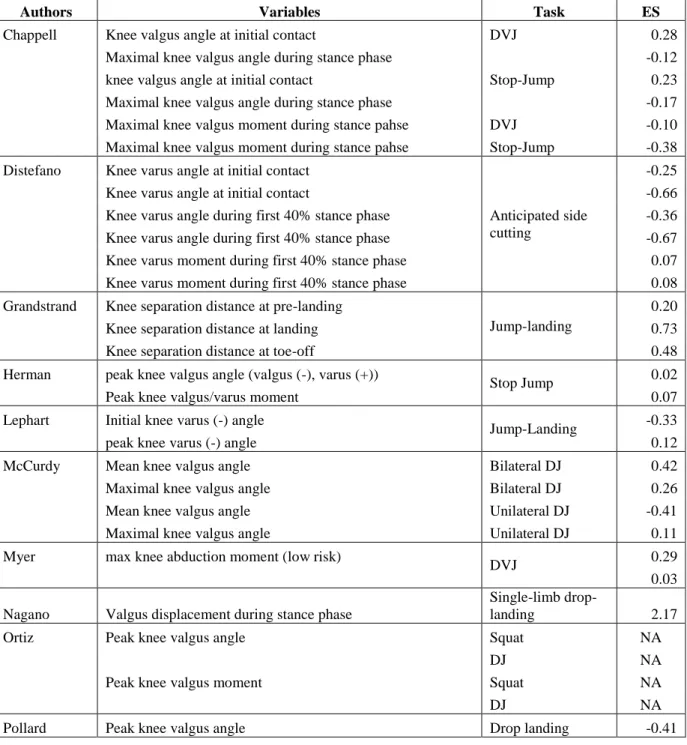
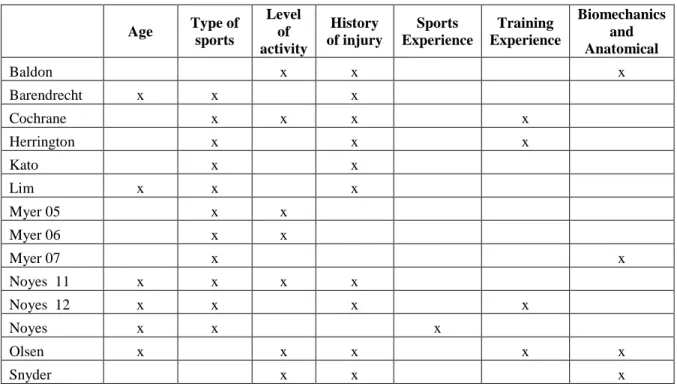
2.7. Effect of Current Knee Injury Prevention Exercise Programs on frontal plane knee
kinematics and kinetics: Systematic Review. ... 50
2.8 Summary of Literature Review and Potential PFP Prevention Program ... 73
CHAPTER THREE ... 75
3.1 Experimental Design ... 75
3.2 Participants ... 75
3.3 Inclusion and exclusion criteria... 76
3.3 Instrumentations ... 77
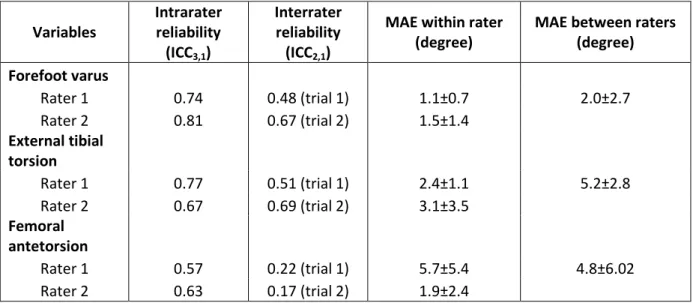
3.4 Reliability test ... 78
3.5 Procedures ... 80
3.6 Data processing and reduction ... 95
3.7 Statistical Analyses ... 97
CHAPTER FOUR ... 99
4.1 Introduction ... 99
4.2 Overview and Participant demographics... 99
4.3 Results ... 100
CHAPTER FIVE ... 105
5.1 Introduction ... 105
5.2 Peak frontal plane knee moment ... 105
APPENDIX 1: HEALTH AND ACTIVITY QUESTIONNAIRE ... 152
APPENDIX 2: EXERCISE INTERVENTION PROTOCOL ... 161
viii
ix
LIST OF TABLES
Table 1. Reliability... 108
Table 2. Subject demographics ... 110
Table 3. Range of motion change difference ... 111
Table 4. Maximal voluntary isometric contraction change difference (N/Kg) ... 112
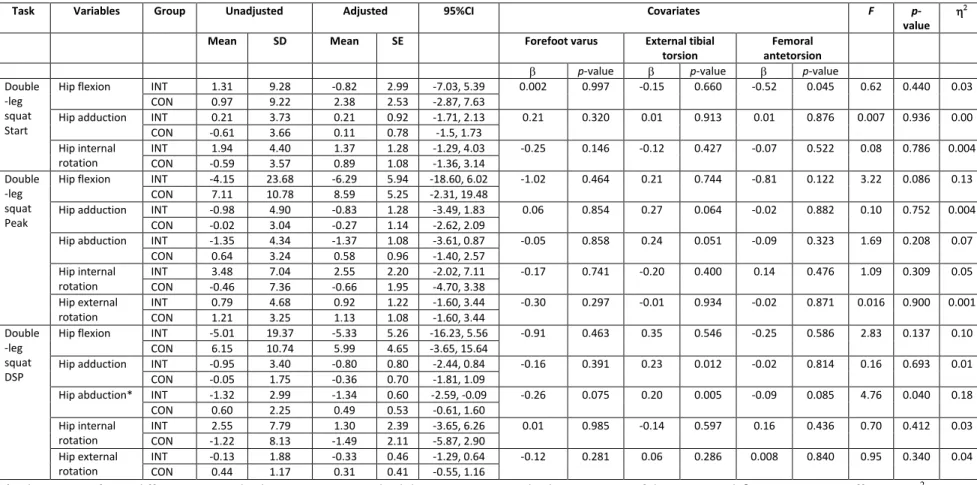
Table 5. Hip kinematics change difference (Adjusted values) – Double-leg squat ... 113
Table 6. Knee kinematics change difference (Adjusted values) – Double-leg squat ... 114
Table 7. Ankle dorsiflexion kinematics change difference (Adjusted values) –Double-leg squat ... 115
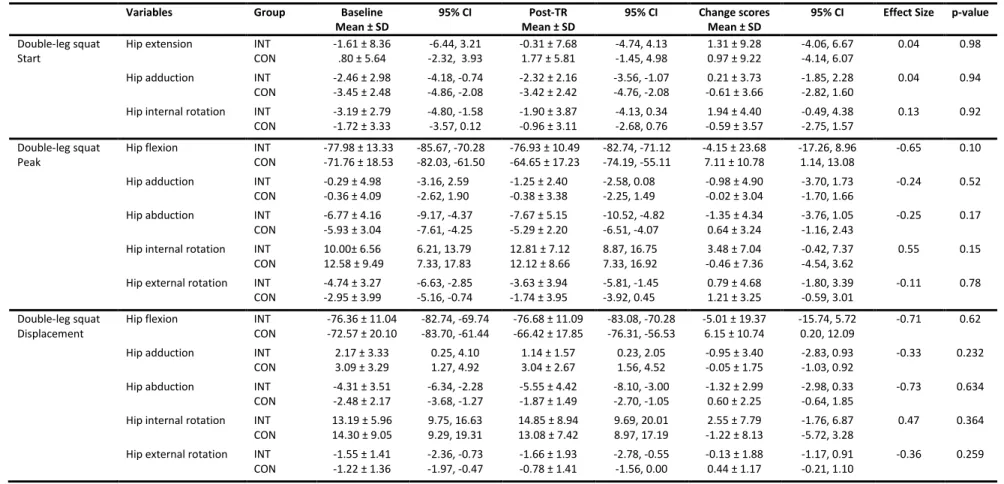
Table 8. Hip kinematics baseline and post-training values (Unadjusted) – Double-leg squat ... 116
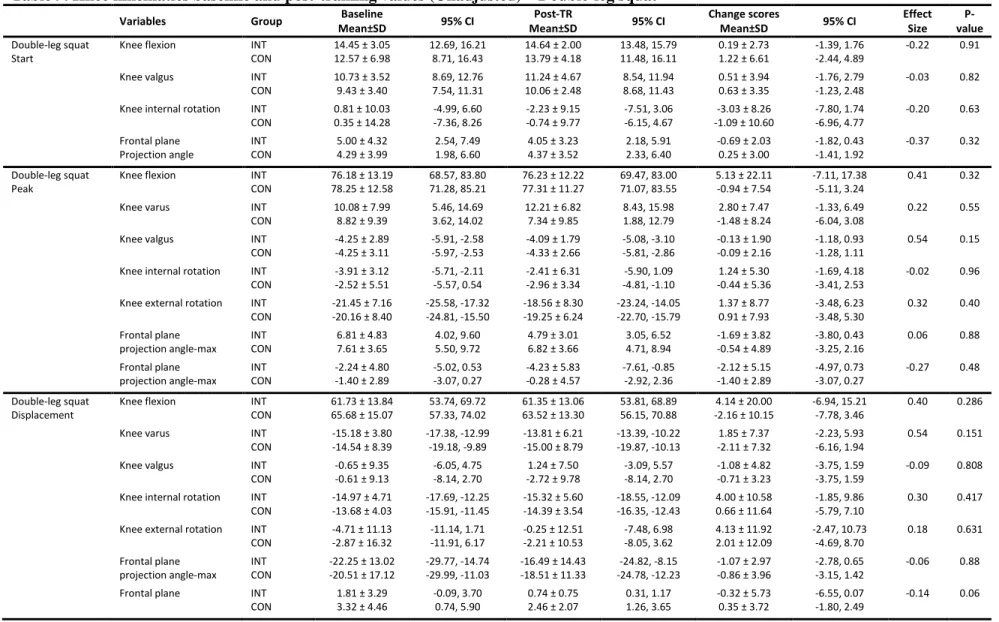
Table 9. Knee kinematics baseline and post-training values (Unadjusted) – Double-leg squat ... 117
Table 10. Ankle dorsiflexion kinematics baseline and post-training values (Unadjusted) – Double-leg squat ... 118
Table 11. Hip kinematics change difference (Adjusted values) – Single-leg squat ... 119
Table 12. Knee kinematics change difference (Adjusted values) – Single-leg squat ... 120
Table 13. Ankle dorsiflexion kinematics change difference (Adjusted values) – Single-leg squat ... 121
Table 14. Hip kinematics baseline and post-training values (Unadjusted) – Single-leg squat ... 122
Table 15. Knee kinematics baseline and post-training values (Unadjusted) – Single-leg squat ... 123
Table 16. Ankle dorsiflexion kinematics baseline and post-training values (Unadjusted) – Single-leg squat ... 124
x
Table 18. Knee kinematics change difference (Adjusted values) – Jump-landing ... 126
Table 19. Ankle dorsiflexion kinematics change difference (Adjusted values) – Jump-landing ... 127
Table 20. Hip kinematics change difference baseline and post-training (Unadjusted values) – Jump-landing ... 128
Table 21. Knee kinematics change difference baseline and post-training (Unadjusted values) – Jump-landing ... 129
Table 22. Ankle dorsiflexion kinematics change difference baseline and post-training (Unadjusted values) – Jump-landing ... 130
Table 23. Hip kinematics change difference (Adjusted values) – Running ... 131
Table 24. Knee kinematics change difference (Adjusted values) – Running ... 132
Table 25. Ankle dorsiflexion kinematics change difference (Adjusted values) – Running ... 133
Table 26. Hip kinematics change difference baseline and post-training (Unadjusted values) – Running ... 134
Table 27. Knee kinematics change difference baseline and post-training (Unadjusted values) – Running ... 135
Table 28. Ankle dorsiflexion kinematics change difference baseline and post-training (Unadjusted values) – Running ... 136
Table 29. Frontal plane peak knee moment change difference (Nm/h*m) ... 137
xi
LIST OF FIGURES
Figure 1. Testing procedures... 139
Figure 2. Screening variable – Medial knee displacement ... 140
Figure 3. Screening variables- Bony deformities ... 141
Figure 4. Range of motions measurements ... 143
Figure 5. Maximal voluntary isometric contraction (MVIC) ... 148
1
CHAPTER ONE INTRODUCTION
1.1 Rationale
Problems of patellofemoral pain
Knee injury is one of the most common activity-related injuries in adolescent and
adult populations,1-4 accounting for approximately 25% of all activity-related injuries in the
United States.1,4 More specifically, patellofemoral pain (PFP) is a common overuse knee
injury among active young adult females5 playing various sports3,6-9 and military recruits,10,11
accounting for 25% of reported knee injuries in sports medicine clinics.3
Symptoms associated with PFP include diffuse knee pain, as well as anterior, lateral,
medial or retropatellar pain that is exacerbated with common weight bearing activities
involving knee flexion and extension.3,6,12 Once symptoms are present in those with PFP the
individual often remains symptomatic for an extended period of time. 13,14 As a result, 36%
of PFP patients have to change their daily activities to minimize pain.15 In addition,
individuals with PFP are at a higher risk of developing patellofemoral osteoarthritis later in
life.16 Despite the high prevalence of this injury, limited research is available investigating
the prevention of PFP. The existing studies investigating preventive measures are
inconsistent as one study demonstrates a significant reduction in the incidence rate of PFP17
2
Previous studies investigating PFP prevention have focused on isolated strengthening and
flexibility training. However, a multi-component and integrated program including strength,
flexibility, stability, movement control, and functional exercise may be needed given the
multifactorial nature of PFP.
Risk factors for patellofemoral pain
Several authors have theorized that PFP occurs due to increased lateral patellofemoral
contact pressure.19,20 This is believed to occur by decreasing contact area, increasing the
contact force, or some combination of these factors to facilitate greater contact pressures.
These factors include three-dimensional excessive hip adduction and internal rotation, knee
valgus, knee external rotation, and medial knee displacement (MKD), or a combination of
these motions, 21-24 which are referred to as faulty movement patterns. Magnetic resonance
imaging and cadaveric studies suggest that faulty movement patterns have a significant
influence on patellofemoral joint loading.21-23,25-28 These kinematic alterations eventually
increase knee valgus angle and lateral resultant force between the quadriceps and patellar
tendon, reduce contact area between the patellar articular cartilage and the femoral condyle,
resulting in increased contact pressure at the patellofemoral joint.21-23,29 These findings
suggest that addressing frontal and transverse plane movement control at the hip and knee
may be an important component for PFP prevention.
The mechanisms influencing patellofemoral contact area and force are multifactorial
including altered gluteal and thigh musculature strength,30-34 lower extremity flexibility,7,35,36
joint kinematics,21,22,25,28,34,37-41 muscle activation,34,37-44 and bony alignment14,23,35 (Appendix
4). Prospective research has demonstrated that those who developed PFP present with
3
adduction angle during functional activities such as running46,47 and jump-landing,35,45
compared to those who did not.47 Similarly, these biomechanical alterations have also been
observed in individuals who already have developed PFP during functional tasks, such as
walking, stair descent, single leg squat, and running.26,27,34,37,39,40,48-50 Multiple studies have
identified altered joint range of motion (ROM) and muscle strength as potential risk factors
for PFP with potential direct and indirect influences from proximal, distal and local structures
of the knee. These factors include reduced strength in the hip abductors,24,30-32,36,51,52 hip
extensors,24,32 hip external rotators,30,32,51 knee extensors,51 and knee flexors,51 and restricted
ROM in dorsiflexion (DFROM),36 knee extension,36 knee flexion (KFLEXROM),7,36 and hip
adduction (HADROM),51 and excessive navicular drop.35
Rehabilitation for patellofemoral pain
Current rehabilitation exercises for PFP often focus on strengthening the gluteal
musculature to decrease the amount of hip adduction and internal rotation angle and these
exercises have effectively reduced pain and increased functionality.52-60 However, a lack of
evidence is available to determine the mechanism by which these exercises may improve
PFP symptoms. Only two research studies have examined frontal or transverse plane hip and
knee kinematic following a rehabilitation exercise program focused on gluteal musculature
strengthening. The results are, however, limited in showing positive effect in kinetics alone
with a reduction in knee abduction moment during running following the exercise
program.52,56 The combined results suggest that gluteal and knee extensor strengthening may
be useful to treat PFP, but other factors may also contribute to the kinematic alterations. If
the aim of PFP prevention or rehabilitation exercises program is to decrease the contact
4
transverse planes, all factors that may potentially increase joint loading should be targeted.
Current rehabilitation exercise programs seem to focus on the gluteal and thigh musculature
strengthening and do not focus on possible influence from distal structures or muscle
tightness. Perhaps, this may lead to the high recurrence rate of PFP following rehabilitation
exercise. Further research investigating the effect of comprehensive exercise on
biomechanical changes is warranted.
Factors associated with knee valgus
Several research studies have identified associations between frontal plane knee
kinematics with lower extremity muscle strength and flexibility in healthy individuals. These
studies examined the role of lower extremity muscle strength in relation with frontal plane
hip or knee kinematics, however, this relationship appears to be weak. Several studies
demonstrated that less strength in hip abduction,61,62 hip extension,63 knee flexion,62,64 knee
extension,62 and plantar flexion.63 was associated with greater hip adduction or knee
abduction angles during functional tasks. However, other studies demonstrated contrasting
results.63,65,66 These studies demonstrated greater strength in the hip abductors65 and external
rotators,63,66 were associated with greater knee valgus angle during functional tasks.
Range of motion (ROM) can also influence frontal plane knee kinematics. Individuals
with knee valgus during functional activities have demonstrated reduced dorsiflexion ROM
(DFROM).67-69 Other ROM, including hip external rotation (HERROM), hip internal rotation
(HIRROM) and, knee extension (KEXTROM)were not associated with frontal plane knee
kinematics.
Investigation of muscle strength and ROM in relation to frontal plane knee and hip
5
muscles showed stronger associations with frontal plane knee kinematics. Research
demonstrated imbalanced co-activation ratios between the gluteus medius (GMED) and hip
adductors,67,70 and medial thigh muscles and lateral thigh muscles71 in individuals with knee
valgus70,72 or greater knee abduction moment.71 Specifically, individuals with knee valgus
activate more hip adductors relative to the GMED and lateral thigh muscles relative to the
medial muscles.67,70 Furthermore, increased activity of the gastrocnemius, tibialis anterior,
and hip adductors has been observed in individuals with knee valgus compared to individuals
without.70 These findings suggest that increasing the activation of underactive muscles
(medial hamstrings) and decreasing the activation of overactive muscles (hip adductors and
gastrocnemius) while maintaining primary activation of the hip abductors and external
rotators (GMED and GMAX) may help to reduce knee valgus during functional activities.
Current knee injury prevention programs
Current knee injury prevention programs seem to be moderately effective in reducing
the number of knee injuries, such as anterior cruciate ligament injury, medial collateral
ligament injury, PFP, and other common knee injuries.17,73-76 A major focus of these
prevention programs is to reduce hip adduction, hip internal rotation, knee abduction, and
knee external rotation motions.35,45,77 A number of research studies identified factors
associated with these movement patterns, including reduced strength of the hip external
rotators,66 hip abductors,62,65,78,79 knee extensors,62 knee flexors,62 and plantar flexors,63 and
restricted DFROM,67-69,80 HERROM,80 and KEXTROM. In addition, it has been theorized that
bony deformities, such as femoral antetorsion,81 excessive forefoot varus,82 and excessive
6
theory suggest that knee valgus is multifactorial; therefore, exercise programs which aim to
correct excessive frontal plane knee motions should be integrated.
Previous research demonstrates that knee injury prevention programs can modify
lower extremity kinematics following exercise training using a combination of two or three
of strengthening, stretching, balance, plyometric, and agility exercises,83-95 However, this
body of evidence is inconsistent as other research studies demonstrated no improvement in
hip and knee movement patterns.85,96-106 There are few apparent discrepancies between the
programs which successfully improved frontal plane kinematics (successful programs) and
did not improve kinematics (Unsuccessful programs), which included the length of the
exercise per session, presence of feedback or instruction about correct movement patterns.
Successful programs lasted for average 60 minutes and majority of programs utilized
feedback or instruction during intervention83,86-96 while unsuccessful programs lasted for
average 25 minutes per session and only 35% of unsuccessful programs used feedback or
instructions about appropriate movement.97,99,101,103,104,106 Previous research demonstrated
lack of knowledge about proper movement patterns had great influence on movement
patterns.107,108 Perhaps, these two factors are the key components between the successful and
unsuccessful programs currently published. Other components, such as duration and
frequency of the program and number of components in the program did not affect the
outcomes.
Limitations of current knee injury prevention programs
There are several limitations with previous research investigating the effects of knee
injury prevention programs. First, a majority of the programs included participants according
7
experience to identify the high risk group,83-106 all of which are unmodifiable factors. These
knee injury prevention programs were developed to correct biomechanical risk factors of
knee injuries such as hip and knee motions by integrating different components of exercises.
If participants did not present with these faulty movement patterns at the beginning,
participants may not respond well to the program because they may not have much ability to
improve their movement patterns compared to those who with faulty movement patterns,
which may lead to show minimal improvement in movement patterns. Additionally,
including these participants in the group may mask the true effect of exercise program on
those who present with faulty movement patterns. In fact, Myer et al.89 reported amount of
improvement in knee abduction moment was greater in females with “high-risk” knee
abduction moment compared to females with “low-risk” knee abduction moment following
7-week neuromuscular training. Distefano et al.109 also showed that those who scored greater
landing errors during a jump-landing task at the beginning of ACL injury prevention exercise
program demonstrated greater improvement following exercise program compared to those
individuals who had less landing errors. Similarly, Barendrecht84 reported those who
displayed excessive knee valgus during a drop-jump test had greater improvement in knee
separation distance than those who did not following training. Recent research studies
displayed that female runners with obvious hip adduction during running improved two- or
three-dimensional hip abduction, internal rotation or contralateral pelvic tilt angles following
training.94,110,111 These results indicate that individuals with faulty movement patterns have
more benefits from the injury prevention programs. Therefore, participants should be
included in the prevention exercise study if they present with faulty movement patterns
8
Secondly, all of the study except one study disregarded bony alignment abnormalities
that may affect lower extremity kinematics, thus increase risk of injury.112,113 There is only
one research that excluded subject with excessive navicular drop because it may affect lower
extremity kinematics.95 Several research studies suggested forefoot varus, external tibial
torsion, and femoral antetorsion might cause or result in faulty movement patterns.65,113-115
Forefoot varus is largely associated with rearfoot eversion,116 which has been theorized to
increase subtalar joint pronation, tibial internal rotation, and femoral internal rotation,
eventually increases hip adduction as a result of coupling motion of the tibia and femur.114
Excessive external tibial torsion might increase knee valgus, and femoral antetorsion might
have downward influence with hip internal rotation and hip adduction.115 These theories
indicate that those who present with excessive bony alignment abnormalities may not have
much benefit from exercise program.
Lastly, current research on knee injury prevention program evaluated only one or two
tasks to assess whether participants could improve their movement pattern following
training.56,83-85,88,91-107,110 Moreover, the task assessed following training is often the same or
similar to tasks that participants performed during training sessions, such as landing from a
jump and single-leg squat tasks training,56,83-85,88,91-107,110 which leaves us to question if the
proper movement pattern is observed in only assessed tasks or it is transferred over other
tasks that are not similar to the exercises included in the training program. Participant’s
ability to adopt their improvement in one task to other tasks is an important component in the
rehabilitation and prevention exercise program to assess if the changes in particular task are
permanent or not. Understanding whether one can perform correct movement patterns and if
9
individuals are ready to terminate the exercise program and return to activity in which they
are engaged.
Summary and problems in current studies
In summary, PFP is a multifactorial injury and biomechanical alterations in hip and
knee frontal and transverse planes are associated with development of PFP. Various factors,
such as muscle strength and joint ROM are associated with these biomechanical alterations,
and these factors seemed to be interrelated to each other. Nonetheless, current rehabilitation
for PFP appears to focus on gluteal and knee extensor muscle strengthening and other factors
that could influence patellofemoral contact pressure have been disregarded, which may lead
to failure to improve hip and knee biomechanics. Effectiveness of current knee injury
prevention programs on hip and knee kinematics is not clear as participants in prevention
programs did not necessarily demonstrate faulty movement patterns at the beginning of the
program although prevention programs attempt to correct faulty movement pattern.
Furthermore, improvement of movement pattern in one task can be translated to another task
is not clear as the majority of research studies evaluated the same tasks that subjects
performed during training.
Purpose statement
The purpose of this study is to investigate if an integrated exercise training program
which is focused on strengthening the gluteal, thigh, and leg muscles and stretching thigh and
leg muscles, and functional movement re-education would improve lower extremity
biomechanics in individuals who present with MKD which are known as high risk movement
10
knee valgus biomechanics. A secondary purpose is to investigate if the improvement on
simple task transfers over to more demanding tasks.
1.2. Research questions and Hypotheses Research Question 1:
What are the differences in lower extremity strength and range of motion between
participants with medial knee displacement following a 6-week integrated (INT) or control (CON) training program?
Hypothesis 1:
The INT training group will demonstrate improved lower extremity strength and range of motion compared to the CON training group following the 6-week intervention period.
Lower Extremity Strength:
1. Hip abduction strength: INT > CON 2. Hip extension strength: INT > CON 3. Hip external rotation strength: INT > CON
Lower Extremity Range of Motion:
1. Ankle Dorsiflexion with Knee Extended: INT > CON
2. Ankle Dorsiflexion with Knee Flexed: INT > CON
3. Weight Bearing Ankle Dorsiflexion: INT > CON
4. Straight Leg Raise: INT > CON 5. Hip Adduction: INT > CON 6. Hip Abduction: INT > CON 7. Hip internal rotation INT > CON 8. Hip external rotation INT > CON
Research Question 2:
What are the differences in lower extremity biomechanics during the overhead squat between participants with medial knee displacement following a 6-week integrated (INT) or control (CON) training program?
Hypothesis 2:
11
Lower extremity biomechanics:
1. Start, peak, and displacement of hip flexion: INT > CON 2. Start, peak, and displacement of hip adduction: INT < CON 3. Peak, and displacement of hip abduction: INT > CON
4. Start, peak, and displacement of hip internal rotation: INT < CON 5. Peak, and displacement of hip external rotation: INT < CON 6. Start, peak, and displacement of knee flexion INT > CON 7. Peak and displacement of knee varus: INT > CON
8. Start, peak, and displacement of knee valgus: INT < CON
9. Start, peak, and displacement of knee internal rotation: INT > CON 10. Peak, and displacement of knee external rotation: INT > CON 11. Start, peak, and displacement of ankle dorsiflexion: INT > CON
12. Start, peak, and displacement of frontal plane projection angle: INT > CON 13. Peak knee valgus moment: INT < CON
Research Question 3:
What are the differences in lower extremity biomechanics during the single-leg squat between participants with medial knee displacement following a 6-week INT or CON training program?
Hypothesis 3:
The INT training group will demonstrate improved lower extremity biomechanics during the single-leg squat compared to the CON training group following the 6-week intervention period.
Lower extremity biomechanics:
1. Start, peak, and displacement of hip flexion: INT > CON 2. Start, peak, and displacement of hip adduction: INT < CON 3. Peak, and displacement of hip abduction: INT > CON
4. Start, peak, and displacement of hip internal rotation: INT < CON 5. Peak, and displacement of hip external rotation: INT < CON 6. Start, peak, and displacement of knee flexion INT > CON 7. Peak and displacement of knee varus: INT > CON
8. Start, peak, and displacement of knee valgus: INT < CON
9. Start, peak, and displacement of knee internal rotation: INT > CON 10. Peak, and displacement of knee external rotation: INT > CON 11. Start, peak, and displacement of ankle dorsiflexion: INT > CON
12
Research Question 4:
What are the differences in lower extremity biomechanics during the jump-landing task between participants with medial knee displacement following a 6-week INT or CON training program?
Hypothesis 4:
The INT training group will demonstrate improved lower extremity biomechanics during the jump-landing task compared to the CON training group following the 6-week intervention period.
Lower extremity biomechanics:
1. Start, peak, and displacement of hip flexion: INT > CON 2. Start, peak, and displacement of hip adduction: INT < CON 3. Peak, and displacement of hip abduction: INT > CON
4. Start, peak, and displacement of hip internal rotation: INT < CON 5. Peak, and displacement of hip external rotation: INT < CON 6. Start, peak, and displacement of knee flexion INT > CON 7. Peak and displacement of knee varus: INT > CON
8. Start, peak, and displacement of knee valgus: INT < CON
9. Start, peak, and displacement of knee internal rotation: INT > CON 10. Peak, and displacement of knee external rotation: INT > CON 11. Start, peak, and displacement of ankle dorsiflexion: INT > CON
12. Start, peak, and displacement of frontal plane projection angle: INT > CON 13. Peak knee valgus moment: INT < CON
Research Question 5:
What are the differences in lower extremity biomechanics during running task between participants with medial knee displacement following a 6-week INT or CON training program?
Hypothesis 5:
The INT training group will demonstrate improved lower extremity biomechanics during running compared to the CON training group following the 6-week intervention period.
Lower extremity biomechanics:
1. Start, peak, and displacement of hip flexion: INT > CON 2. Start, peak, and displacement of hip adduction: INT < CON 3. Peak, and displacement of hip abduction: INT > CON
4. Start, peak, and displacement of hip internal rotation: INT < CON 5. Peak, and displacement of hip external rotation: INT < CON 6. Start, peak, and displacement of knee flexion INT > CON 7. Peak and displacement of knee varus: INT > CON
8. Start, peak, and displacement of knee valgus: INT < CON
13
10. Peak, and displacement of knee external rotation: INT > CON 11. Start, peak, and displacement of ankle dorsiflexion: INT > CON
12. Start, peak, and displacement of frontal plane projection angle: INT > CON 13. Peak knee valgus moment: INT < CON
1.3. Operational definitions
Excessive forefoot varus: Resting frontal plane forefoot angle relative to rearfoot, which exceeds 13 degrees.
Excessive femoral antetorsion: Femoral neck angular orientation measured by Craig’s test, which exceeds 21 degrees.
Excessive external tibial torsion: Resting transverse plane tibial torsion angle relative to the transcondylar of the femur, which exceeds 42 degrees.
Medial knee displacement (MKD): The position of the center of the knee, which is medially displaced relative to the vertical line from the great toe during functional tasks
(Figure 2).
Integrated exercise (INT): Set of exercises developed by National Academy of Sports Medicine that is aimed to correct faulty movement patterns. The exercise program is
comprised of self-myofascial release, static stretching, muscle strengthening, and functional
exercises.
Double-leg squat (DLS): A double-leg squat task is performed by placing the feet shoulder width apart and raising arms over head while descending into knee flexion as far as possible
with heels maintaining contact with floor.
14
Jump-landing (JL): A jump-landing task is performed by the participant, jumping off a 30cm high box set 50% of participant’s height from the force plate, landing on the force
plates with each leg contacting each force plate, followed by an immediate vertical jump as
high as possible.
Running: A running task is performed by the participant running 10-m runway with a self-selected and 10% faster velocity of their preferred velocity ±10%.
Test limb: If the participant presents with bilateral MKD, the dominant leg which is defined as the leg used to kick a ball for maximum distance will be the test-limb. If the participant
presents with unilateral MKD, that limb will be the test-limb.
1.4. Assumptions and limitations
The following assumptions and limitations will be made for this study.
1. All participants will make the best effort performing all of the testing protocols and
exercises protocols during intervention period.
2. All participants will be honest regarding their past and current injury status.
3. All participants will be honest regarding their level of activity.
4. All participants will not perform progressive weight lifting or begin new activities
during the intervention period.
5. All participants with MKD during an DLS will present with MKD across the other
tasks at baseline.
6. Twenty percent of participants will withdraw from this investigation during the
15
1.5. Limitations
The following limitations will be made for this study.
1. The rate of progression in acquiring new motor skill will not be same across the
participants.
2. Past sports experience will be different across the participants.
3. The magnitude of MKD will be different across the participants.
4. The results of this study may not apply to individuals with pathology.
1.6. Delimitations
The following delimitations will be made for this study.
1. All participants will be between the ages of 18 and 28 years.
2. All participants will be students at the University of North Carolina at Chapel Hill.
3. All participants will present with MKD during the DLS task.
4. All participants will have no injury at the time of participation of the study and 6
months prior to participation.
5. All participants will be active (engaged in activity 30 minutes a day, 3 times a week),
but will not be currently participating in a progressive strengthening program.
6. All participants will maintain the level of activity at time of screening throughout the
intervention period.
16
1.7. Independent Variables
1. Group
Integrated exercise (INT)
Control (CON)
1.8. Dependent Variables
Change scores (Post-training value – Baseline value) of following variables:
Muscle strength (N/kg)
o Hip abduction isometric contraction strength
o Hip extension isometric contraction strength
o Hip external rotation isometric contraction strength
Joint range of motion (Degrees)
o Ankle dorsiflexion with knee extended
o Ankle dorsiflexion with knee flexed
o Ankle dorsiflexion with weight bearing
o Straight leg raise
o Hip adduction
o Hip abduction
o Hip internal rotation
o Hip external rotation
o Hip extension with knee flexed
o Hip extension with knee extended
Kinematics (Degrees, Start or initial contact, peak, and displacement)
o Hip flexion
o Hip adduction
o Hip abduction
o Hip internal rotation
o Hip external rotation
o Knee adduction
o Knee abduction
o Knee internal rotation
o Knee external rotation
o Ankle dorsiflexion
o Frontal plane projection angle
Kinetics
o Internal knee varus moment (Peak)
17
1.9. Significance of the study
This research will improve our understanding of the effect of an integrated exercise
program on lower extremity movement patterns during various functional tasks in individuals
with MKD which is known as risk factor for PFP. This study is unique due to the exclusion
of individuals with bony deformities, which could affect lower extremity movement patterns.
Our exercise program target muscle performance, therefore we believe these individuals may
not respond well to the exercise program because other treatment, such as orthotics, may
have more benefit for these individuals. In addition, selecting participants based on the
presence of MKD will provide us with clearer effect of the exercise program on improving
movement patterns in those who present with a potential risk facors for injury as compared to
current injury prevention exercise programs in which participants are not selected based on
the presence of MKD.
Current knee injury prevention programs are moderately effective in improving faulty
movement patterns, however, the improvements have been evaluated during one or two tasks
which. Understanding if the improvement in a simple task, such as double-leg squat, will be
translated into more demanding tasks, such as jump-landing task, will provide insight on the
need for evaluating lower extremity movement patterns across multiple tasks to determine
18
CHAPTER TWO
REVIEW OF THE LITERATURE
2.1 Public Health Impact of Knee Injuries
2.1.1 Epidemiology of Knee Injuries
Physical activity has been recommended to reduce the rates of diseases such as heart
attack, stroke, hypertension, and diabetes, however, physically active populations are highly
susceptible to musculoskeletal injuries.1 Researchers have reported that approximately 25%
of adult ages between the ages 25 and 80 years experienced injury,1 of which 83% are
activity-related.1 Among all activity related injuries, knee injury is the most common injury
in those between 25 and 80 years of age,1-4 and the second most common injury in the high
school athletic populations. Knee injuries are commonly reported to sports medicine clinics
and account for approximately 25% of all activity-related injuries.1,4 Furthermore, 59.2% of
female injuries occur at the knee joint.3 Common knee injuries include acute injuries to the
anterior cruciate ligament, medial collateral ligament, and meniscus tear, as well as overuse
injuries such as patellotendinitis, iliotibial band syndrome, and patellofemoral pain (PFP).3
2.1.2. Problems of Patellofemoral Pain
PFP is one of the most common overuse knee injuries among females,5 active
adolescents and young adult populations and is observed in various sports such as volleyball,
basketball, soccer, and running,3,6-9 and military recruits.10,11 PFP accounts for 25% of the
19
diffuse knee pain, as well as anterior, lateral or retropatellar pain that is exacerbated with
daily and sports activities involving knee flexion and extension, such as walking, jogging,
hopping, stair ascent and descent, squatting, kneeling, and sitting for an extended period of
time.3,6,12 Research reports that females are at higher risk of PFP compared to males.3,5,8
Taunton et al.8 reported 62% of the patients diagnosed with patellofemoral pain were females.
In agreement with these findings, Boling et al.5 demonstrated that females are 2.23 times
more likely to develop PFP compared to males. The average onset of symptoms has been
reported as 25 years,3 however, symptoms start emerging as early as 10 years old.8,55
Patellofemoral pain often results in long term problems. Once symptoms present, individuals
with PFP often remain symptomatic for an extended period of time.13,14 This is supported by
the fact that 73 to 91% of PFP patients remained symptomatic after 4-18 years following
initial treatment.15,54,117 In addition, 36% of PFP patients could not return to the level of
physical activity that they were engaged in before injury,15 and 60% of patients had
restrictions with their daily life, as well as their work due to pain.15 Furthermore, PFP
patients are at a higher risk of developing patellofemoral osteoarthritis later in their life.16
With this high prevalence and problems of PFP, there is a need for effective prevention and
rehabilitation exercise program for PFP.
2.2. Etiology of Patellofemoral Pain
2.2.1. Patellofemoral Joint Contact Pressure
Etiology of PFP is described as increased lateral contact pressure at the
patellofemoral joint. Once pressure builds up in the patellofemoral joint, it increases the
20
conscious perception of pain.119 Contact pressure is defined as the magnitude of contact
force over the contact area squared. Therefore, either increasing contact force or decreasing
contact area, can ultimately increase patellofemoral contact pressure. Factors associated with
increased contact pressure are varied with multiple factors interrelated to each other. Figure 1
shows the interrelationship between multiple factors that may influence an increased contact
pressure.
2.2.2. Increased Contact Forces
Contact force at the patellofemoral joint can be influenced by sagittal plane and
frontal plane factors.28,120-124 In the sagittal plane, knee flexion angle largely influence contact
force.125,126 Two-dimensional models have identified knee extensor moment, patellar moment
arm, quadriceps muscle force, patellar tendon force, knee flexion angle along with the
location of the knee relative to the ground reaction force vector as factors that modify
patellofemoral contact forces.123 Contact forces are also influenced by frontal plane
alignment. Biomechanically, increased quadriceps angle (Q-angle) or knee valgus angle
increases the lateral resultant force between the quadriceps and patella tendon, thus
increasing the lateral resultant force on the patella and the lateral contact force between the
patella and femur.21,112,127 A cadaveric study by Huberti and Hayes21 examining the contact
area and contact forces in those with different Q-angle supported this theory. This research
demonstrated a 45% increase in the contact force when the Q-angle was increased by 10%
while the knee was flexed at 20 degrees.21 Elias et al.128 examined the contact force
distribution in four cadaveric knees during 50 to 70 degree of knee flexion combined with
10% changes in the decreased Q-angle. They reported that the lateral resultant force on the
21
addition, angular acceleration of the lower limb segment and propulsive mechanics are also
associated with contact forces.123
2.2.3. Decreased Contact Area
Anatomical factors
Several researchers have examined the effect of anatomical factors on contact area of
the articular cartilage of the patella with inconsistent findings. Anatomical factors include
size and location of the patella.119,129,130 Salsich et al.130 examined the relationship between
the width of the patella, kinematics of the patella, tibiofemoral rotation angle, with contact
area in patients with PFP. They reported the trend that the width of the patella positively
correlated with the contact area in people with PFP (r=0.43, p=0.062).
Patella alta is a condition where the patella sits superiorly on the femur, and has been
suggested as another anatomical factor that may influence patellar kinematics and contact
area, thus contact pressure. Ward et al.129 examined twenty-five participants with and without
patella alta, using a magnetic resonance imaging. Participants with patellar alta demonstrated
significantly increased lateral patellar displacement and lateral tilt at 0° knee flexion and
significantly decreased contact area across all knee flexion angles. Increased contact pressure
across angles accompanied such changes in patella contact area. Another study by Ward et
al.131 investigated gait mechanics in people with patella alta and reported a significant
decrease in contact area and an increase in contact pressure with no other differences
between those with and without patella alta, suggesting abnormal patella position have
potential to lead to PFP. Anatomical factors appear to influence patellofemoral contact area;
however, these factors are not modifiable through exercise. Research focusing on modifiable
22 Patellar kinematics
Abnormal patella kinematics are suggested to influence contact area. Increased lateral
tilt, lateral displacement, and lateral rotation of the patella are suggested to decrease contact
area; however, research support is inconsistent. There are several MRI studies examining
patellar kinematics during knee flexion or extension in weight bearing and non-weight
bearing conditions. These studies report altered patellar kinematics in those with PFP
compared to healthy, non-injured individuals.24,130 Souza et al.24 examined patella and femur
kinematics in 30 females with and without PFP during single-leg weight bearing, using
magnetic resonance imaging. In their study, females with PFP exhibited significantly
increased lateral patella tilt and lateral displacement during 0 to 45 degree of knee flexion
compared to females without PFP; however the two groups demonstrated similar patella
rotation angle.24 Although Souza et al.24 demonstrated altered patellar kinematics in females
with PFP, its association with contact area or contact force was not clear as Salsich et al.132
demonstrated that patella kinematics (lateral patellar tilt angle and lateral displacement) has
minimal contribution to the contact area.
Tibiofemoral kinematics
The influence of abnormal patella morphology and kinematics on contact area
become more pronounced when combined with movement of the tibia and femur. These
movements include femoral adduction and internal rotation, as well as tibial abduction and
external rotation.
Huberti and Hayes21 demonstrated that contact area of the patellofemoral joint
decreased and shifted to the lateral side of the articular cartilage as quadriceps-angle
23
imaging or cadavers demonstrated a reduction in contact area with increased femoral internal
rotation,25,130,133,134 consequently increased contact pressure.25,133,134 Noehren et al.135
examined patellar and lower extremity kinematics during a forced knee valgus squat and
normal squat in non-injured individuals, using magnetic resonance imaging and
three-dimensional motion analysis. They found that greater knee external rotation and knee
abduction angle during forced knee valgus squat and these movements were associated with
greater lateral patellar displacement and lateral patellar shift, respectively.135 Salsich et al132
conducted a correlational study and demonstrated that tibiofemoral rotation angle was the
only variable that was correlated to the contact area in females with PFP during full knee
extension contraction with non-weight bearing position while they found no correlations
between the contact area and anatomical or kinematic variables of the patella. In the same
study by Salsich,132 tibiofemoral rotation (femoral internal rotation) and patella width were
the predictive for the contact area among these two variables and patella kinematics (R2=0.46,
p=0.006) while patella width explained only 17% of the variance in contact area (R2=0.17,
p=0.062). Souza et al.24 examined femur and patella motions using magnetic resonance
imaging and found that those with PFP demonstrated increased femoral internal rotation and
lateral patellar shift and tilt. The author suggested that this altered patellar kinematics may be
attributed to increased femoral internal rotation because patella’s tilt angle and displacement
were measured in reference to the femur.24
Altered tibial motion also has a great influence on contact pressure in small knee
flexion angles.25 Lee et al.25 examined contact area and pressure during excessive internal
and external knee rotation in different knee flexion angles within cadaveric knees. It appears
24
external rotation across the knee flexion angles of 0°, 30°, and 60° when compared to the
neutral knee position. As a result, the contact pressure increased from 30% to 60% at 0° and
30° of knee flexion. Beyond 60° of knee flexion, the changes in contact pressure with knee
external rotation and internal rotation were similar as there was a 10% increase between 60°
and 90° of knee flexion.
Compared to the neutral knee position, changes in contact area with knee internal
rotation were minimal during 0° and 30° knee flexion while there was a 20% reduction in
contact area with knee external rotation during 60° to 90° of knee flexion.134 Lee et al.25
suggested that knee external rotation moves the tibial tuberosity laterally, thus leading to
lateral rotation of the patella via lateral shift of the pole of the patella. Lateral rotation of the
patella decreases the contact area, thus increases contact pressure. On the other hand, internal
rotation of the tibia rotates the patella medially, but this movement does not seem to
influence contact area or contact pressure.134
2.2.3. Summary of Etiology of PFP
Multiple factors are interrelated to each other and eventually increase patellofemoral
contact pressure. It appears that anatomical factors and patellar kinematics could influence
contact pressure, but the magnitude of contact pressure become magnified when frontal and
transverse plane tibiofemoral motions combined with these anatomical factors. Therefore,
controlling femoral and tibial motions in frontal and transverse planes may be an important
component for prevention and rehabilitation for PFP.
2.3 Prospective Risk Factors for PFP
Although a number of research studies have investigated prospective risk factors for
25
categorized into modifiable (biomechanical and muscle functions factors) and unmodifiable
(anatomical) factors. In this chapter, biomechanical factors will be discussed because these
are our focus and are believed to be modifiable through exercise intervention.
2.3.1. Biomechanical factors
Regardless of the high prevalence of PFP, a number of research studies investigating
bioimechanical risk factors for PFP are limited as only two studies identified biomechanical
risk factors in active adult populations.35,47 Specific to kinematics, Boling et al.35 examined
knee and hip kinematics in 1597 males and females midshipmen from the United States
Naval Academy and followed them for up to 4 years. They reported a trend of decreased
peak knee internal rotation (PFP 12.2° vs Control 14.7°, p=0.07) and peak knee flexion angle
(PFP 76.5° vs Control 80.8°, p<0.06) during a jump-landing task in 40 midshipmen who
developed PFP compared to those who did not while no other kinematic difference was
observed. Noehren et al.47 conducted a two-year prospective study and examined hip
adduction, hip internal rotation, and rearfoot eversion in 400 female runners during stance
phase of running at a speed of 3.7m/s. Those who developed PFP in the following two years
demonstrated greater hip adduction angle during the stance phase of running compared to
who did not develop PFP (PFP 12.1° vs Control 8.1°, p=0.007). Female runners who
developed PFP demonstrated greater hip internal rotation and foot eversion compared to who
did not develop PFP; however the differences were not significant. Increased hip adduction
angle can eventually increase lateral contact force at the patellofemroal joint. This finding is
supported by the cadaveric study of Huberti and Hayes21 who found an increased Q-angle
decreased the contact area at the patellofermoal joint, leading to an increase in the lateral
26
pressure at the patellofemoral joint.21 However, why those who developed presented with
decreased knee internal rotation and knee flexion angles were not clear as these movements
are believed to decrease contact force, thereby decrease contact pressure.
Two research studies identified kinetic risk factors for PFP.35,45 Boling et al. reported
less vertical ground reaction force, internal knee extension moment and hip external rotation
moment during the stance phase of a jump-landing task. Myer et al.,45 examined 144 female
adolescents and reported that those who developed PFP presented with greater external knee
abduction moment during a drop-landing while Boling et al. did not show any significant
difference in the frontal plane moment between the groups. A contrasting finding between
these studies may be due to sample population difference (males/females and
adults/adolescents). Myer et al.45 examined adolescent females while Boling et al.35
examined adult males and females. Since males and females have different biomechanics,
adding male subjects may confound the result. While increased external knee abduction
moment could lead to increased lateral resultant force at the patellofemoral joint,
contributions of the other kinetic factors to PFP is not clear as decreased ground reaction
force and knee extension moment could help to reduce contact force.
2.3.2. Muscle strength
Recent systematic reviews136,137 have described decreased isometric or isokinetic
knee extension strength as a risk factor for PFP. In addition to the isometric knee extension
strength, decreased knee flexion35 and hip abduction,35 and increased hip external rotation
strength have been shown to increase likelihood of developing PFP.7,35 Previous research has
shown that hip abduction and knee extension weakness is present in patients with PFP and
27
joint by contributing to altered patellofemoral kinematics.30-32,34,36,138 Decreased knee
extension strength has also been suggested to be a factor to mal-alignment of the patella
within the femoral trochlea.138 Deficits in knee extensor strength may be linked to
imbalanced activation between the vastus medialis (VM) and vastus lateralis (VL),55 with
delayed onset or less activation of VM relative to VL, which may facilitate lateral patellar tilt,
resulting in increased contact pressure.139,140 Previous research consistently observed less hip
abduction strength in patients with PFP compared to healthy individuals and suggested that
weak hip abductors could disrupt the frontal plane hip kinematics by increasing hip
adduction angle.30-32,36 Greater hip external rotation strength compared to the healthy
individuals contrasts the hypothesis that hip external rotation weakness is a risk factor for
PFP by allowing for increased hip internal rotation motion.30,34 Boling et al.55 explained this
finding by theorizing that those who go on to develop PFP might need to activate their hip
external rotator muscles to a greater activation levels to resist hip internal rotation, which
overtime promote greater hip external rotation strength. The specific contribution of the knee
flexors weakness is not clear and it may be a sign of general muscle weakness in patients
with PFP.35
2.3.3. Muscle flexibility
Witvrouw et al.7 assessed quadriceps, gastrocnemius, and hamstring flexibility in 282
young adult populations. Decreased quadriceps and gastrocnemius flexibility has been
identified was associated with development of PFP while hamstring flexibility was not
identified as the one.7 Several research studies hves demonstrated that individuals who
demonstrated increased medial knee displacement (dynamic knee valgus collapse) during a
28
with excessive foot pronation.141 This alignment increases subtalor eversion.112 As a result
the tibia increases internal rotation as a coupling motion with the talus, which eventually
increases knee valgus.112 This suggests that decreased flexibility of the gastrocenemius
could increase Q-angle, consequently increase lateral resultant force, which may lead to
increased contact pressure at the lateral patellofemoral joint, thus leading to pain. The
relationship between decreased quadriceps flexibility and development of PFP is not clear as
there is no research investigating underlying relationship with lower extremity biomechanics.
2.3.4. Other factors
Other factors may also increase likelihood of PFP development, such as static bony
alignment and extrinsic factors.142 Boling et al.35 reported that those who developed PFP
originally displayed greater navicular drop compared to those who did not develop PFP.
Navicular drop is a result from excessive subtalar pronation, which is linked to increased
tibial (knee) internal rotation as a coupling motion. This motion, in turn, increases femoral
(hip) internal rotaion. This motion has been associated with decreased contact are at the
patellofemoral joint, thereby increases contact pressure. Therefore, excessive navicular drop
could be linked to PFP development. Excessive navicular drop may contribute to PFP
development by facilitating an internal tibial rotation that may be coupled with femoral
internal rotation to increase congruency with the internally rotated tibia.82 This may
ultimately reduce patellofemoral contact area and increase contact pressure on the patella.
Additionally, less activity time per week,142 greater medial tibial intercondyler distance,142
greater mobility of the patella in medial-lateral and superior-inferior direction,7 and slow
29
acknowledge these factors could lead to the development of PFP; however, our focus in this
study is modifiable factors which could be corrected via exercise intervention.
2.3.5. Summary of Prospective Risk Factors for PFP
The number of study investigating biomechanical risk factors limited and there are
discrepancies between the tasks (jump-landing and running) and populations (adults and
adolescents) tested, it is difficult to draw a conclusion from current studies. However, it is
plausible to hypothesize hip and knee frontal and transverse plane kinematics might be the
key factors for development of PFP.
2.4 Consequence of Patellofemoral Pain
Once individuals developed PFP, they frequently demonstrate alterations in their
movement patterns and muscle characteristics. The majority of currently published research
has investigated kinematics and muscle characteristics in females with PFP while only a few
studies have included mixed gender cohorts.26,27 Since little is known in terms of prospective
risk factors for PFP, identifying kinematic factors as well as factors that can be measured
clinically in those with PFP may help to establish prevention and rehabilitation guidelines for
PFP. In this section, biomechanical alterations in sagittal, frontal, transverse plane of hip,
knee, and ankle joints, and muscle characteristics including muscle strength and flexibility
will be discussed.
2.4.1. Sagittal plane biomechanical alteration
Biomechanically, joint resultant force is influenced by joint angle and the magnitude
of adjacent forces. Large knee flexion angles can increase patellofemoral contact pressure by
30
demonstrated that hip and ankle sagittal plane kinematics were similar during functional
tasks such as stair ascent and descent in PFP compared to the healthy individuals .143
However, this was not true for sagittal plane knee joint kinematics.144 It appears that PFP
patients demonstrate less knee flexion angle when performing stair stepping,39,144,145
walking,146,147 and running.28 This appers to be combined with decreased knee extensor
moment during stair ascent and descent144 and walking in PFP patients compared to healthy
individuals.50 This result suggests that PFP patients may attempt to minimize patellofemoral
contact forces by reducing knee flexion angles and knee extension moments. Thus, frontal
and transverse plane biomechanics may play an important role in explaining altered contact
pressure in those with PFP. Interestingly, Wirtz et al.28 reported that PFP patients had greater
joint reaction forces and increased hip internal rotation angle without concomitant
differences in those with PFP. This suggests that individuals with PFP may develop
compensatory movement patterns outside of the sagittal plane that may need to be corrected
for successful rehabilitation of PFP to occur.
2.4.2. Frontal and transverse plane kinematic alterations
Excessive hip adduction has been identified as a risk factor to PFP development in
recent research.47 Hip adduction is a component of knee valgus alignment, therefore,
excessive hip adduction increases knee valgus, which increases lateral resultant force
between the quadriceps and patellar tendon. This is further supported by in-vivo research
displaying decreased contact area and increased contact pressure with increased frontal plane
hip and knee angles.21 Increased hip adduction has been shown to increase patellar lateral
displacement and lateral tilt, which decreases contact area,21,135 and increases lateral
31
demonstrate excessive hip and knee frontal plane kinematics during functional activities.
However, individuals with PFP have not necessarily shown this movement pattern during
functional tasks.
Specific to hip adduction angle, PFP patients demonstrated increased hip adduction
angle compared to the healthy individuals during walking,148 running,149 and single-leg
squatting.27 In a study by Willson et al.,40 females with PFP performed single-leg squatting,
running, and single-leg jump tasks with greater hip adduction angle compared to the healthy
control group. Contrary to these findings, other research observes no significant difference in
hip adduction angle during similar tasks.26,27,37,39,40,143,147,148,150
Individuals with PFP also demonstrated alterations in frontal plane knee joint angles.
Increased knee abduction/valgus angle was observed in individuals with PFP during
walking50,148 running,37 and single-leg squat27 in comparison to a healthy control group.
However, these findings are not consistent across all research as other studies demonstrated
no difference in knee abduction angles compared to the control group during similar tasks
that showed increased knee abduction angle in the other studies.27,147,148,151 Interestingly,
Bolgla at al.150 reported that females with PFP tended to be positioned in greater knee
adduction/varus during stair descent compared to the control group although the difference
was not statistically significant.
Some studies reported no differences in frontal plane hip and knee angles between
PFP and healthy control groups. When comparing tasks used in previous research that
showed different frontal plane kinematics and did not, there was no apparent difference in
task demands or type of tasks. Several authors37,148 hypothesized that the tasks selected in the
32
established compensatory mechanics by decreasing hip adduction angle (move to more hip
abduction) to minimize pain. One study148 supported this hypothesis by showing different
kinematics in PFP individuals performing same task at different velocities. Salsich et al.148
investigated hip adduction and internal rotation angles at a maximal knee extension angle,
corresponding to the angle which the patella is most unstable, and maximal internal knee
extension moment (highest knee joint reaction force) during walking in females with PFP.
They walked under two different conditions: free speed (preferred velocity) and fast speed
(faster than preferred velocity). While females with PFP demonstrated no differences in hip
kinematics during free speed walking compared to the control group, the same group
demonstrated significantly greater hip adduction angle at the maximal knee extension angle
and less hip adduction angle at the maximal internal knee extension moment during fast
speed walking compared to the control group. The authors148 suggested that this may
represent an attempt to minimize patellofemoral contact pressure during maximal knee
loading in females with PFP. The increased hip adduction at the maximal knee extension
angle may occur as PFP participants may be less able to control their motions at fast walking
speeds. Furthermore, in the same study, 4 out of 20 participants with PFP demonstrated
increased hip adduction at both time points with significantly greater pain on visual analogue
scale compared to the others. This emphasized the potential for increased hip adduction and
knee abduction to increase contact pressure, and produce pain. Correcting frontal plane
motions could be beneficial for treatment of PFP if individuals present with excessive hip
33 2.4.3. Transverse plane biomechanical alterations
Increased hip internal rotation and knee external rotation have been shown to
decrease contact area,132,134 consequently increasing contact pressure at the patellofemoral
joint.24,25,28,130,133,134 Therefore, it is believed that individuals who developed PFP may
display these kinematics during dynamic activities. Specific to hip joint, individuals with PFP
displayed increased hip internal rotation angle during walking,49,147,148 running,34,48 single-leg
squat,27 step-down,34 and drop-jump34 compared to a healthy control group. Conversely, a
large portion of research demonstrateds that individuals with PFP displayed similar hip
internal rotation motion in walking,50,148 running,28 stair descent,39,150 and single-leg squat27
tasks in comparison to the control group. Moreover, two studies demonstrated that PFP
patients actually demonstrated increased hip external rotation in comparison to the control
group.40,151
Increased knee external rotation has also been shown to decrease contact pressure.
Cadaveric study displayed lateral rotation of the patella with increased knee external rotation.
The patellar tendon connects tibial tuberosity and the patella. Therefore, external rotation
shifts the tibial tuberosity laterally, which pulls the apex of the patella laterally via a patellar
tendon, consequently rotates the patella laterally. Thus, excessive external knee rotation
could be associated with PFP. A few studies have investigrated knee transverse plane
kinematic alterations.40,48 Interestingly, these two studies demonstrated contrasting results.
Willson et al.40 examined lower extremity kinematics in 20 females during three different
tasks, including single-leg squat, running, and single-leg jump and revealed that females with
PFP generally demonstrated increased knee external rotation angle compared to the control