Geschke Center
Doctor of Nursing Practice (DNP) Projects Theses, Dissertations, Capstones and Projects
Fall 12-12-2014
Improving Women’s Health Services by Adding
Long-Acting Reversible Contraceptive Methods
into Primary Care-Focused Student Health
Shu-chen jennie cheng
CSU East Bay, [email protected]
Follow this and additional works at:https://repository.usfca.edu/dnp
Part of theFamily Practice Nursing Commons
This Project is brought to you for free and open access by the Theses, Dissertations, Capstones and Projects at USF Scholarship: a digital repository @ Gleeson Library | Geschke Center. It has been accepted for inclusion in Doctor of Nursing Practice (DNP) Projects by an authorized administrator of USF Scholarship: a digital repository @ Gleeson Library | Geschke Center. For more information, please [email protected].
Recommended Citation
cheng, Shu-chen jennie, "Improving Women’s Health Services by Adding Long-Acting Reversible Contraceptive Methods into Primary Care-Focused Student Health" (2014).Doctor of Nursing Practice (DNP) Projects. 49.
1
Introduction
Unintended pregnancy among young women continues to be an issue in the United States
(Finer & Zolna, 2011). Although several safe and highly effective contraceptives are available,
nearly half of all pregnancies in the United States are unintended, with the majority occurring
among women between the ages of 18-24, who are frequently college students, unmarried, low
income, or not planning to conceive (Finer & Henshaw, 2006; CDC, 2013). Unintended
pregnancies often result from inappropriate or inconsistent contraceptive use (Secura, Allsworth,
Madden, Mullersman, & Peiper, 2010), and one in five unintended pregnancies ends in abortion
(Pazol, Creanga, Burley, Hayes, & Jamieson, 2013). Long-acting reversible contraceptive
methods (LARCs) are safe and highly effective contraceptive methods that can be used to
prevent unintended pregnancy, but are currently only being utilized by a small portion of women
- 5% of contraceptive users - in the United States (Secura et al.; Mosher & Jones, 2010).
Based on the 2011 enrollment report, the patient population of Student Health and
Counseling Services (SHCS) of California State University, East Bay (CSUEB) consists of
approximately 13,160 enrolled students, of which 60% (7,959) are female and 40% (5,201) are
male, with an average age of 26 (Baker, Malhotra, & Weitzman, 2013; Office of Planning &
Institutional Research, CSUEB, 2012). An American College Health Association (ACHA)
survey conducted in spring 2010 found that the unintended pregnancy rate was reported as 4.9%
among CSUEB respondents compared to national rates of 5%. Among all 23 CSU campuses,
currently enrolled students are able to go to any nearby CSU, Student Health Services (SHS) for
care if needed, but none of the CSU SHS listed the provision of LARCs service on the SHS
2
Assisting students in maintaining their optimal health to allow them to pursue academic
and career goals is the main mission of Student Health and Counseling Services (SHCS, 2014).
According to the 2012 ACHA, approximately 65% of college students reported having sexual
partners within the last 12 months, and 49% of them reported not using any contraceptive
method (ACHA-NHCA II, 2012). Furthermore, in 2013, the American College Health
Association surveyed college students nationwide about contraceptive use, with a 34% response
rate that consisted of 96,611 respondents (ACHA-NCHA II, 2013). Of the respondents, 46.5%
reported not using any contraceptive methods during their last sexual intercourse within the past
30 days. The usage rate for intrauterine contraception (IUC) was reported at 5.5%, implant
contraception was reported at 2.4%, and birth control shot was reported at 4.3%. Therefore,
helping students prevent unintended pregnancy, especially freshmen and newly transferred
students, is one of the measures to help maintain their optimum health.
Previous studies have shown that misperceptions about LARCs, lack of access, lack of
education, and lack of training on IUC use among health professionals are common issues, and
may be the major reason for their underuse (Secura et al., 2010; Khan & Shaikh, 2013;
Kavanaugh, Jerman, Ether, & Moskosy, 2012). Family nurse practitioners can help these young
women make an informed choice about contraception by providing evidence-based information
and dispelling the misconceptions regarding LARCs. The purpose of this project is to provide
evidence-based information regarding LARCs use and discuss the integration of LARCs services
into a primary care-focused student health clinic.
3
Long-acting reversible contraceptives (LARCs) include three types of intrauterine
devices and one type of implant that provide highly effective contraception, rapid fertility
reversal after removal, and are non-user dependent after placement.
Intrauterine contraceptives
The World Health Organization (WHO) supports intrauterine contraceptive (IUC) use in
adolescents starting from menarche with a level 2 recommendation, “benefits outweigh the risks”
(WHO, 2004). Additionally, IUC is considered to be a first-line choice contraceptive method for
both nulliparous and parous adolescents as recommended by the American College of
Obstetricians and Gynecologists (ACOG) Committee Opinion in 2007 (Deans & Grimes, 2009;
ACOG, 2007). IUC is one of the most effective contraceptive methods for unintended
pregnancies because it is long-acting, reversible, safe, and requires low user maintenance. After
adequate counseling, an IUC may be placed by a trained health care provider in an outpatient
clinic. Currently, the three IUC devices available in U.S. include the Copper T 380A (ParaGard)
and two levonorgestrel intrauterine systems (LNG-IUS), Mirena and Skyla (Deans & Grimes,
2009; Hatcher et al., 2011).
The Copper T 380A IUD was introduced in the United States in 1988. It is a
non-hormonal, polyethylene T-shaped copper containing device with barium sulfate for x-ray
visibility, placed inside the uterus for contraceptive use for up to 10 years. The device is 36 mm
tall and 32 mm wide, and the total copper surface area is 380 ± 23 mm². The copper ions in the
device prevent fertilization and implantation (Hatcher et al., 2011). The Copper T can be used as
emergency contraception within five days of unprotected sexual intercourse (Hatcher et al., 2011)
4
use have made copper IUDs the most common contraceptive method in developing countries,
especially in China (Arrowsmith, Aicken, Saxena, & Majeed, 2012).
There are currently two levonorgestrel intrauterine system (LNG-IUS) options available
in the United States: Mirena and Skyla (Hatcher et al., 2011; Phelps, Murphy, & Godfrey, 2011;
Medscape Reference, 2014). The first LNG-IUS, Mirena, was approved for use in the United
States in 2000 and is a small T-shaped IUC device that contains 52 mg levonorgestrel, and
initially releases about 20 mcg daily into the uterine cavity, with the amount gradually
decreasing to 10 mcg daily by the fifth year (Hatcher et al., 2011; Phelps et al., 2011; Medscape
Reference, 2014). The device is made of a Nova-T polyethylene frame with barium sulfate for
x-ray visibility and a cylinder of a polydimethylsiloxane-levonorgestrel mixture molded around
the vertical arm. The device is 32 mm tall & 32 mm wide (Hatcher et al., 2011; Medscape
Reference, 2014). It is one of the most effective contraceptive methods and also has a number of
non-contraceptive health benefits which include: decreasing menstrual blood loss, alleviating
painful menstrual cycles, and protecting the endometrial layer during estrogen replacement
therapy (Medscape Reference, 2014; Mansour, 2012). The efficacy of the LNG-IUS in
preventing pregnancy is greater than 99%, and it is approved for contraceptive use for up to 5
years.
The second LNG-IUS, Skyla, contains 13.5 mg levonorgestrel and is the newest IUC,
added to the US market in 2013. The device is 30 mm tall and 28 mm wide and releases about
14 mcg per day of levonorgestrel into the uterine cavity initially (Medscape reference, 2014).
The amount of levonorgestrel gradually decreases to 5 mcg daily after three years of use
(Medscape Reference, 2014). Levonorgestrel acts by thickening the cervical mucus to prevent
5
implantation. This IUS prevents pregnancy for up to 3 years at greater than 99% efficacy. It
also can provide non-contraceptive benefits to some female users with a history of painful or
heavy menstrual cycles by decreasing the lining of the endometrial layer, decreasing menstrual
blood loss, and preventing painful menstrual cycles (Hatcher et al., 2011; Medscape Reference,
2014; Mansour, 2012).
Etonogestrel contraceptive implant
The ENG-Implant is a single thin implant rod 4 cm long and 2 mm in diameter that is
made of ethylene vinyl acetate and contains 68 mg of etonogestrel (3-keto-desogestrel), which is
placed under the skin in the medial upper arm. The ENG-Implant provides unsurpassed
contraceptive efficacy by inhibiting ovulation and thickening cervical mucus. It also provides
effective contraception with a very low level of progestin and follicular phase estrogen that has
been well tolerated, reportedly has decreased weight changes among users, and rare medical
contraindications. It also decreases menstrual blood loss and painful menstrual cycles for at least
3 years. The effectiveness of the ENG implant to prevent pregnancy is greater than 99% (6
pregnancies in 20,648 cycles). Return of fertility is rapid among users with etonogestrel levels
undetectable within 1 week (Davies, Feng, Newton, Van Beek, & Coelingh-Bennink, 1993); 44
of 47 women who were studied with ultrasound and serum progesterone levels ovulated within 1
month post removal (Croxatto & Makarainen, 1998).
Besides preventing unintended pregnancies, non-contraceptive benefits of LARCs can be
used to help individuals with chronic medical conditions, such as anemia, heavy menstrual
bleeding, and painful menstrual periods (Hatcher et al., 2011). LARCs will be suitable for
6
are especially appropriate for patients who are treating their medical conditions with teratogenic
medications (US MEC, 2012).
Local problem
The Need for LARC services
There are a few triggers leading this project’s initiation. First, highly effective
long-acting reversible contraceptive methods are not available at SHCS, even though most other
contraceptive methods are provided. Second, students who are interested in LARC methods are
referred to off-campus Planned Parenthood (PP) clinics or nearby community health centers for
LARC placement services, but the nearby PP clinics have been closed due to financial
difficulties (Mieszkowski, 2010). Also, according to an on-line search, none of the 23 California
State Universities (CSU), student health clinics currently lists the service of LARCs on their
student health clinic’s home pages.
Unintended pregnancy is a substantial social and economic problem in the United States.
Even though there are many contraceptive choices available, 49% of the 6.4 million pregnancies
every year in the United States are unintended (Trussell, 2007). Among women 15-44, the rate
of unintended pregnancies was 51 per 1,000 women, with the majority occurring among women
aged 18-24, who are often unmarried, low-income, low-education level, and minority ethnicity
(Finer, 2006). In the U.S., unintended teenage pregnancy has a significant fiscal impact, costing
taxpayers at least $10,900,000,000 annually (H.R.2678, 2011). In 2009, there were nearly
750,000 teenage pregnancies, and a total of 409,840 infants were born to 15-19 year-olds with a
live birth rate of 39.1 per 1,000 women (CDC, 2011). Women with an unintended pregnancy
7
Pregnant teenagers also face more medical and socioeconomic concerns such as increased risk of
pre-term delivery, low birth weight, neonatal mortality, delays to antenatal care, lower
educational levels, higher rates of poverty, and other poorer “life outcomes” compared with
women in their twenties and thirties (CDC, 2011; Chen et al., 2007).
According to the 2013 American College Health Association survey of contraception use
among U.S. college students (ACHA-NCHA II with n=96,611), the IUC usage rate was 5.5%.
Of the respondents, 46.5% reported not using any contraceptive methods during sexual
intercourse within the past 30 days. About 18.8% of the female respondents reported using
emergency contraceptive pills (“the morning after pill”) in the last 12 months and 1.9% of the
respondents reported experiencing an unintended pregnancy in the past 12 months.
Inappropriate or inconsistent contraceptive use is the most common cause of unintended
pregnancy, (Secura et al., 2010) and approximately one in five unintended pregnancies ends in
abortion (Pazol et al., 2013). Due to the misuse or infrequent use of contraceptives, unintended
teen pregnancy in the Unites States continues to be a persistent problem (Martinez, Copen, &
Abma, 2011). Prevention of unintended teen pregnancy is of particular importance to the health
and quality of life for young people throughout the United States. Additionally, improving
maternal health is one of the United Nations Millennium Development Goals for 2015 (UNDP,
2012). Recommended strategies will effectively improve maternal health, such as increased
contraceptive use and improved health care access.
Student Health Services are outpatient clinics on college campuses that offer primary
medical care and women’s health care to students. Generally, they are staffed by physicians,
8
Student Health Services is to assist students in achieving their academic and career goals by
providing resources to help them maintain optimal health and to provide high quality, low cost
health care to all enrolled students. Highly effective long-acting reversible contraceptive
methods, such as the implant contraceptive and IUC, are not listed as available services at the
majority of on-campus Student Health Services (SHS) in California.
Healthy Campus 2020, initiated by American College Health Association’s (ACHA)
Healthy Campus Coalition and derived from Healthy People 2020, targets reducing unintended
pregnancy, increasing contraception use, and facilitating emergency contraception access at SHS
to meet the student family planning objectives by 2020. Long-acting reversible contraception
(LARC) methods are very safe and effective contraceptive methods that can be used to prevent
unintended pregnancy, but are currently only being utilized by a small portion of women in the
United States (Secura et al., 2010; Mosher & Jones, 2010). Increased highly effective
contraceptive method use and increased access to such health care options are recommended as
strategies to improve family planning and maternal health by United Nations (UNDP, 2012).
Integrating LARC services into College Student Health Services is needed to help the healthcare
system effectively meet these goals.
Intended Improvement
The goal to add the highly effective, non-user dependent LARC methods to the services
of SHCS for students will enhance SHCS’s mission to provide the best quality, low-cost health
care to help students maintain their optimal health in order to pursue their academic and career
9
The first objective of this project is to study the clinical contraceptives services currently
provided and continuing usage by individual students. The second objective is to promote
contraceptive use and add the service of highly effective LARC methods for sexually active
students to lower students’ stress by reducing the number of off-campus referrals, to prevent
unintended pregnancy, and to help students maintain optimal health conditions to pursue their
university degrees and careers. The third objective is to collaborate with the health promotion
department to educate students and to promote the use of highly effective contraceptives.
The purpose of this proposal is to add highly effective long-acting reversible
contraceptives (LARCs) service at SHCS for university students to help maintain their optimal
health, to treat medical conditions, and to prevent unintended pregnancies.
Review of the Evidence
Also, many misperceptions regarding the use of IUC among patients and health providers
need to be addressed (Khan & Shaikh, 2013; Mansour, 2012) prior to integration of IUC services
into a primary care focused student health clinic. Providing the most up-to-date and accurate
information about LARC methods will assist in dispelling rumors and myths. Myths can be
defined as a belief, often false or unproven, that have accrued around a person, phenomenon, or
institution. Rumors can be defined as unverified information of uncertain origin received from
another (American Heritage Dictionary, 2000). Misconceptions and rumors have negatively
impacted the uptake of LARC methods. The facts presented below will help address common
misconceptions about the LARC methods.
10
Although IUCs are safe, highly effective, and economical contraceptive methods, they
are currently underutilized, especially among adolescents. Clinical providers are still reluctant to
provide the service due to misperceptions stemming from the 1970s. Memories remain of the
Dalkon Shield product, an IUC released in 1971 and withdrawn from the market in 1974, whose
unique shape and its multifilament string tail caused removal difficulties, pelvic infections, septic
abortions, and other infections (Cheng, 2000). Approximately 200,000 claimants worldwide
filed lawsuits against the manufacturer even after the product was withdrawn from the market in
1974.
Myths about IUC use and function abound, nevertheless the U.S. Medical Eligibility
Criteria for Contraceptive Use, 2010 (U.S. MEC), and the U.S. Selected Practice
Recommendations for Contraceptive Use, 2013 (U.S. SPR) for health care providers are
excellent resources for education, implementation, continuing care, and management of IUC.
A common misperception is the mechanism of action of an IUC. An IUC is not an
abortifacient (Phelps et al., 2011). IUC alters the uterine environment by promoting a
foreign-body reaction inside the uterine cavity that prevents fertilization and/or implantation (Hatcher et
al., 2011; Mansour, 2012). With the copper IUD, copper repels sperm and generates an
inflammatory foreign body reaction to prevent fertilization (Hatcher et al., 2011; Phelps et al.,
2011). The LNG-IUS works by releasing high concentrations of LNG within the uterine cavity,
which results in endometrial atrophy and thickens the cervical mucus to create a barrier to sperm
penetration, thereby preventing sperm-egg binding (Hatcher et al., 2011; Phelps et al., 2011).
Historical problems with the Dalkon Shield have falsely created the belief that the IUC is
11
both nulliparous and parous adolescents (WHO SPR, 2004; ACOG, 2007; Mestad et al., 2011;
Godfrey et al., 2010). IUC for nulliparous use is a level 2 recommendation from the U.S.
Medical Eligibility Criteria; the benefits of IUC generally outweigh the risks for women who
have not had children (US MEC, 2010) (see appendix L).
Similarly, misperceptions about infertility persist. An IUD does not cause infertility and
does not limit one’s chances of getting pregnant in the future. Most cycles in women using
LNG-IUS are ovulatory because there is no reduction in estradiol levels (Mansour, 2012). For
women wanting to conceive, the 12-month pregnancy rate (92%) following removal of
LNG-IUS is similar to women using natural family planning (Mansour, 2012). Historically, there was
concern that IUC increased the spread of sexually transmitted infections (STIs). If STIs are not
treated, they can scar the fallopian tubes and prevent women from getting pregnant. Research
shows that today’s IUC does not increase the risk of STIs and does not lead to infertility. For
women who are at a low risk of sexually transmitted infections, such as those who are in
monogamous relationships, the risk of developing pelvic inflammatory disease (PID) with IUC
use is less than 1 in 100 and is even less in women who use LNG-IUS (Mansour, 2012). Women
who use IUC and develop an STI or PID rarely need to have the device removed. Mansour
(2012) found that discontinuation rates due to PID were 0.5 and 2.0 per 100 women at 3 years
(p=.013) for the LNG-IUS and copper IUD, respectively, and 0.8 and 2.2 per 100 women (p<.05),
respectively, at 5 years. When a woman develops an STI or PID, she should be treated with
antibiotics right away. The IUC can remain in place if symptoms improve within 72 hours. If
symptoms persist, the IUC should be removed (Hatcher et al., 2011).
IUC does not increase the risk of ectopic pregnancy, regardless of whether a woman has
12
who do not use contraceptives than in IUC users. Mansour (2012) found that ectopic pregnancy
rates were 0.045 and 0.22 per 100 LNG-IUS users at 1 and 5 years, respectively. For women
who did not use any contraception, an estimated rate was 1.4 per 100 pregnancies. The U.S.
MEC found no restriction to use for patients with history of ectopic pregnancy (US MEC, 2010).
Mansour (2012) also found no significant abnormal cytopathological effects on the
LNG-IUS users in a 7-year long-term study of cervical smear samples. Progestin-releasing intrauterine
contraception has been shown to reduce the incidence of endometrial cancer because it is more
effective in reducing endometrial hyperplasia than oral progestin, and the LNG-IUS also
prevents endometrial polyps in women taking tamoxifen for up to 4.5 years (Hatcher et al., 2011;
Mansour, 2012). The copper IUC’s mechanism of action is unclear, but the endometrium
alterations may be related to the presence of copper; (Hatcher et al., 2011) therefore, both types
of IUCs may reduce the risk of endometrial cancer (Hatcher et al., 2011; Mansour, 2012).
Literature Review
The currently used intrauterine devices are very safe and more effective than other types
of contraceptives (Secura et al., 2010). IUC efficacy is similar to sterilization at 99%, but fertility
can be reversed rapidly after the device’s removal. An IUC can be used by both parous or
nulliparous adolescent women (ACOG, 2007). However, it is currently underused among
adolescents who are in the high risk group for unintended pregnancies, and this is largely due to
a lack of knowledge regarding IUC. Furthermore, clinical providers are often reluctant to
provide IUC services due to historical problems with outmoded devices, ongoing misconceptions,
13
A literature review was conducted to evaluate the effectiveness, acceptability, and
continued use of these highly effective contraceptive methods by the young female population.
Due to scarce data on long-acting reversible contraceptive (LARC) use among the adolescent
group, it is important to determine whether LARCs are acceptable among this age group.
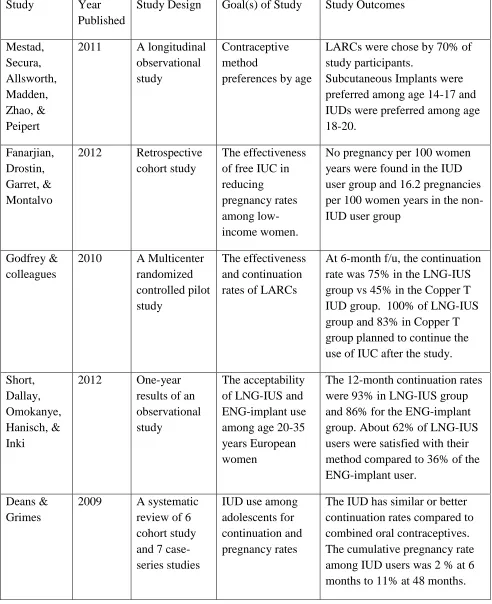
Mestad et al. (2011) conducted a longitudinal, observational study in St. Louis, MO -- the
Contraceptive CHOICE Project -- to promote LARC with no financial barriers and to evaluate
use, satisfaction and comparison of continuation between LARC and non-LARC methods. The
LNG-IUS, Copper IUD, and subdermal implant are included among LARC methods. Combined
and progestin-only oral contraceptives, depot medroxyprogesterone acetate, the vaginal
contraceptive ring, the transdermal contraceptive patch, and barrier methods are included in the
non-LARC methods. There were 5086 female residents of St. Louis participants, aged 14-45
years, who were evaluated for their contraceptive method preferences by age. All methods of
reversible contraception were offered without cost to women for 3 years. This study objective
was to estimate the association of age and preference for LARC or other methods, and preference
for specific LARC method among adolescents aged 14-20 years. LARC methods were chosen
by 70% (n=3557) of study participants, but among the adolescents age 14-20 years, 62%
(658/1054) chose a LARC method. Among 14-17-year-olds, 69% (148/214) chose a LARC
method, whereas 61% (510/840) of 18-20-year-olds chose a LARC. Of the LARC methods, a
subcutaneous implant was preferred among the 14-17 year olds (63% or 93/148); however,
selection of a subcutaneous implant device was only 29% (146/510) among 18-20-year-olds.
This study concluded that LARCs are acceptable among adolescents enrolled in this project and
14
Fanarjian, Drostin, Garrett, & Montalvo (2012) conducted a retrospective cohort study to
evaluate the effectiveness of free intrauterine contraceptives in reducing pregnancy rates among
low-income women. The study, conducted in two North Carolina clinics between January 1,
2003 and June 30, 2009, included eligible uninsured women ages 15-44 years who desired
contraception. Pregnancy rates were studied between groups with the exposure (IUC users) and
the unexposed group (non-IUC users). Non-IUC users included women who chose to use other
forms of contraception or no contraception at all. The original sample size was 321 women;
however, over the course of the 6.5 year study all but 90 were lost to follow up by either phone
or mail. A Levonorgestrel IUC was used in 65 participants; 25 non-users comprised the control
group. Seven pregnancies (11%) occurred in the user group; the IUC had been removed prior to
pregnancy in all 7 subjects. Of the 7 pregnancies in the user group, 3 were planned. Eight
pregnancies (8/25 or 32%) occurred in the non-IUC users. Even though a small study sample
due to the low response rate (32%) was the main restriction of the study, the final result showed
no pregnancy per 100 women years in the IUC user group compared to 16.2 pregnancies per 100
women for the unexposed group.
Godfrey and colleagues (2010) investigated the effectiveness of LARCs in a multicenter,
randomized, controlled pilot study (n=23) of 14-18-year-old females divided into groups who
were randomized to receive a copper T 380A IUD or LNG-IUS. At 6 months of follow up, the
continuation rate for the levonorgestrel group was 75% compared with 45% for the copper T
380A group (p = .15). Among those participants at 6 months, 100% in the LNG-IUS group and
83% in Copper T380A group planned to continue their IUC use after the study (p=.36). Both
15
lower continuation rate at 6-month follow up among the copper T 380A users. The pilot study
results warrant a larger scale study of IUD use among adolescents in the future.
Short, Dallay, Omokanye, Hanisch, & Inki (2012) published an interim analysis report at
the end of the first year of an observational study regarding the acceptability of levonorgestrel
IUS (LNG-IUS) and etonogestrel implant (ENG implant) use among young European women,
ages 20–35 years. The study included 454 women from 4 countries (France, Ireland, Slovakia,
and the United Kingdom) who opted to switch from oral contraception to either the LNG-IUS or
the ENG implant. At the planned interim analysis in September 2010, follow-up data had been
obtained from 311 women out of the original 454. Among 311 study subjects, there were 211 in
the LNG-IUS group and 100 in the ENG implant group. The continuation rates at 12-months
were 93% for LNG-IUS and 86% for ENG implant. At 1-year follow up, there were no
pregnancies, pelvic inflammatory disease, perforations, or other complications recorded.
Participants’ satisfaction was evaluated with a 5-degree Likert-like scale at the 12-month
follow-up visit or at discontinuation. About 62% of LNG-IUS users were satisfied with their
contraceptive method compared to 36% of the ENG implant users. The difference in level of
overall satisfaction between the two groups was statistically significant (p<0.001). Most users
were satisfied with their method of contraception after 1-year of follow-up. The conclusion of
the study showed that both the LNG-IUS and ENG implant are highly acceptable contraceptives
among women, but the LNG-IUS users showed the highest continuation and satisfaction rates.
A systematic review of the literature regarding IUD use among adolescents was
conducted by Deans and Grimes (2009). Six cohort studies and seven case-series were included,
but none of the IUDs included in the study are currently in use in the United States. Generally,
16
contraceptives. The cumulative pregnancy rate among IUD users was low, ranging from 2% at 6
months to 11% at 48 months. Even though the published studies show improved rates of IUC
use in adolescents, the literature on IUC use among adolescents is sparse. Further randomized
control trials and cohort studies are needed.
Mansour (2012) also provided updated information of the risk and benefits associated
with use of levonorgestrel IUS through a literature review. Rapid fertility return after
discontinued use is well established. Even though transient menstrual disturbances during the
first few months of use is typical, the condition will generally resolve itself with continuing use
and the total amount of menstrual blood loss will also decrease. Available data from the
literature does not show adverse effects on bone health, cardiovascular events, breast, or uterine
cancers, and it can be used by a wide range of populations.
Overall, research demonstrates that IUCs are acceptable, safe, highly effective, and
non-user dependent. The evidence strongly supports the integration of IUC services into
primary-care services, and student health clinics are ideal locations for the provision of IUC services.
Evidence-Based Practice
Evidence-based practice involves the usage of quality studies as evidence to prevent
errors in information, which will contribute to better clinical practice and quality patient care. In
order to identify the strengths and weaknesses of a research article and validate its findings, the
critical appraisal process of a research study must be used to find the most relevant, high-quality
studies (Young & Solomon, 2009). In this project, the project leader independently completed
the literature review process, which may lead to possible bias such as information selection
17
Epidemiology) criteria was used to evaluate observational studies, including cohort, case-control
and cross-sectional studies (Young & Solomon, 2009) in hopes of assessing study quality and
lessening study selection bias (Sanderson et al., 2007; von Elm et al., 2007) (see table 1 & 2 on
page 85-89).
Conceptual/Theoretical Framework
Since the 1960s when the nurse practitioner (NP) role was developed, NPs have become
increasingly important to serving as primary care providers who provide comprehensive services
including health promotion, disease prevention, and counseling. The 2010 Institute of Medicine
(IOM) report The Future of Nursing: Leading Change, Advancing Health recommended that
nurses should be providing health care services as fully as they were trained in their educational
programs (IOM, 2011). Following the implementation of the Affordable Care Act in 2010, more
than 16 million individuals are projected to gain health insurance coverage by 2016. Combined
with the rapidly aging population, NPs are increasing in demand as primary care providers. An
up-to-date literature review of NP practices by the National Governors Association (NGA) found
that the quality of care provided by an NP and resultant patient health outcomes, is comparable
to care provided by a physician (Schiff, 2012).
NPs can serve successfully as primary care providers and can be differentiated from
physician’s services as human caring is being blended into NPs scientific-based training and
clinical practices (Hagedorn & Quinn, 2004). Human Caring is depicted by the Chinese
characters “關心”, and this topic was discussed in an article by Jean Watson during in 1970s.
Human caring is essential in nursing practice, and this concept empowers nurses to ensure
18
human caring/caring science is derived from carative to caritas that was assembled and published
by the Watson Caring Institute (2010). Her carative factors are the basis for current nursing
practices. Watson’s human caring theory, such as caritas processes, also called caring practices,
have been applied into daily clinical practice. For example, human caring for others and for self
is the first core concept that is based on the moral, ethical, and philosophical foundation of love
and values. Respect for the person, including clinical staff and patients, and commitment to
protecting human dignity are all aspects of care provided to meet their needs, routines, and
rituals. Increasing awareness of presence to the humanism of self and others and caring for self,
others, and environment are also core concepts of Watson’s human caring theory.
As primary care providers, NPs meet the complex challenges of translating rapidly
expanding knowledge into practice and function in a changing health care environment. The NP
Core Competencies emphasize independent and inter-professional practice, analytic skills for
evaluating and providing evidence-based, patient centered care across settings, and advanced
knowledge of the health care delivery system (NONPF, 2012). The human caring theory is also
essential for practice NPs to provide quality patient care, ensure patient safety, and empower
patients to make informed decisions about their care. This will improve patient’s self-care and
health outcomes, and care for the environment.
Methods
Ethical issues
As a health care provider with ethical obligations, one of the trademarks of
professionalism is the responsibility to respect the clients’ interests above all else. After
19
Protection of Human Subjects of Biomedical and Behavioral Research, the three general ethical
principles, identified to the ethical conduct of research with humans, are also essential in daily
clinical practice. The first ethical principle is “Respect for persons,” the concept that a client’s
autonomy must be acknowledged and each individual should participate in informed
decision-making of their own care. The second principle is “Beneficence,” or “Do no harm,” meaning
that providers should make decisions in order to maximize benefits while minimizing possible
risks. The third, “Justice,” requires that the patient is treated fairly, equally, and appropriately
(Beauchamp & Childress, 2009). These three general principles establish the foundation for the
conduct of research; similarly, clinical practice principles are guided by informed consent,
risk/benefits assessment, and care provided fairly.
This quality improvement (QI) project for adding LARC services into primary
care-focused student health is based on the observational study of the current clinical services of
women’s health care and contraceptive use by current students. Prior to initiation of this project,
the project proposal was approved by the DNP Department and Institutional Review Board
approval (Appendix A-1 & A-2) was completed to ensure patients’ safety & privacy.
Contraceptive use was evaluated by retrospective chart review from all women’s health related
clinical visits without involving any demographic data of individual student identities to ensure
patients’ privacy. LARC protocol and informed consent have been completed and approved by
the administrative committee as well as all providers to ensure patient’s safety in receiving
LARC services.
Also, addressing the misperceptions regarding the use of IUC among patients and health
providers can facilitate smooth integration of IUC services into a primary care focused student
20
clinic to counsel female patients and couples on safe choices for contraceptive methods and to
assist women with medical conditions understand their choices for contraception (U.S. MEC,
2010). Informed decisions made by patients in clinical practice will lead to better patient
self-care and health outcomes. A consultation appointment to explain the mechanisms of the LARCs
along with obtaining informed consent (see Appendix B) is essential to help patients & partners
dispel their fears & misconceptions about the methods that they decide on.
Setting
Student Health and Counseling Services (SHCS) of California State University, East Bay
(CSUEB) is an on-campus outpatient clinic accredited by the Accreditation Association of
Ambulatory Health Care, Inc. (AAAHC), which offers mainly primary medical care to students
and is staffed by three full-time and two part-time physicians, one full-time and one part-time
nurse practitioner, two full-time registered nurses, one full-time licensed vocational nurse, and
five full-time medical assistants. There are also health promotion and counseling departments
within SHCS that are staffed with many health educators and counselors. There is a staffed
pharmacy and laboratory on site. According to the 2011 Enrollment Headcount Report, there
were 13,160 enrolled students composed of about 60% (7,959) female and 40% (5,201) male
students with an average age of 26 (Baker et al., 2013).
The mission of SHCS is to assist students in achieving their academic and career goals by
providing resources to help them maintain optimal health, to provide high quality, low cost
health care to all CSUEB students, and to be pioneers in the university health and wellness
services.
21
Market Analysis
To understand the current state of the need to provide LARC service, a SWOT analysis
has been completed (see Appendix C). Based on the SWOT analysis of the strengths of the
project, one skilled staff nurse practitioner is able to consult, insert and follow up with students
who have chosen a LARC method and will help train staff physicians and assist with their first
few procedures. Care is provided on campus at the SHS which is a convenient location for
students. There is no restriction per student on the number of clinical appointments, and students
with concerns who wish to meet with a provider will be able to book the earliest appointment
available by calling in or by self-booking online. LARC methods are fully reimbursed by the
Family Pact Program. The SWOT analysis also point out weaknesses of the project. Concerns
center on the need to train three staff physicians on LARC use and follow up, and the expense of
acquiring LARC devices before providing the service. The third SWOT analysis, opportunities,
indicates that there will be many opportunities to provide LARC services, as none of the other
CSU campuses provide the services, the Planned Parenthood clinics and community health
clinics where students used to be referred are all located off campus, and not all students have
cars to visit clinics off campus. To visit clinics off-campus is very time consuming to students.
Also, staff physicians will gain new skills to serve patients. Finally, to analyze threats to the
project, the cost of each LARC unit is currently approximately $700 dollars. Competition for
services include Planned Parenthood Mar Monte which provides clinic services at their Central
Hayward location, although with restricted hours, and the Community Health Care Network
clinics, Women’s Clinic of Alameda County Medical Center, and private health clinics.
22
LARCs and not eligible for coverage by Family Pact program will need to seek care from their
own primary care providers or pay out-of-pocket.
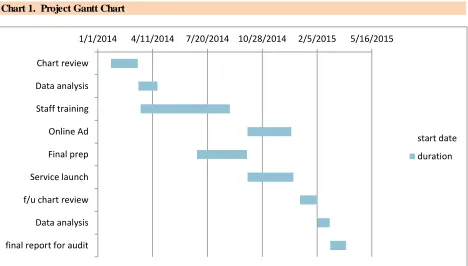
Gantt chart
The Gantt chart depicted in appendix D provides information about LARCs service
project planning and monitors progress for tasks such as training providers, staff, meeting with
the administrative team, and service launch. The Gantt chart is posted on a Google drive file to
share with all staff in the clinic.
Critical Activities
To ensure a safer patient care environment by preventing errors and mitigating the risk of
causing harm to patients and staff, a clinical protocol and policy regarding the LARC procedure
and medical errors also must be established. Prior to starting the LARCs service, the potential
risks of patient adverse outcomes needs to be carefully evaluated and precautions put in place to
ensure the safest patient care at SHCS. The Failure Modes and Effects Analysis (FMEA) or
Failure Modes, Effects, and Criticality Analysis (FMECA) is a systematic, proactive method to
investigate potential risks that focuses on identifying vulnerability and preventing future failures.
FMECA focuses on system design and process rather than on a single incident such as in
root-cause analysis (IHI, 2004; Nagamine & Williams, 2005). When doing a FMEA, we should
include a review of the following steps in the process: failure modes (what could go wrong?),
failure causes (why would the failure happen?), and failure effects (what would be the
consequences of each failure?) (IHI, 2004; Larson & Gray, 2011). An example for this project is
shown in Appendix E. Every specific step in the process that can possibly go wrong is listed in
23
mode listed. Next, the group is assigned a numeric value (known as the Risk Priority Number, or
RPN) from 1 -10 for likelihood of occurrence, likelihood of detection, and severity. Then,
multiplying the three scores, we obtained the RPN for each failure mode. Therefore, in order to
focus improvement efforts on the most important area of the process, it is helpful to find out the
failure modes with high RPNs.
The activities have been evaluated for potential risks, which were included in a “things to
look for” section during the presentation to the administrative team, and also reviewed while
comprehensively training providers, keeping an updated list of supplies, tools, LARC units, and
establishing an account with pharmaceutical companies for purchasing of LARC units. An
informed consent for patients and LARC protocols (appendix B-2 and B-3) are established and
approved for the staff to use. Advertising on campus is via text message, email, through the
SHCS home page, and advertisements sent to other CSU campuses.
Plan for Variance Control and Evaluation Criteria
We use data collection forms (Appendix F) to collect information from scheduled
women’s health related appointments by all providers. To prevent errors and to make it easier to
trace errors for correction, individual providers tally their data on the data collection form each
week. For providers who have missing data, the project leader follows up at the end of each data
collection period. Using data from the summer & fall quarter allow us to gain a perspective from
a mixed student population. For example, there are more junior & senior students in summer
quarter and more freshmen students in the fall quarter.
24
The forms used for data collection were made by the primary investigator based on the
study inclusion criteria derived from the Female Medical History Form that is part of the
recommended documentation by the Family Pact Program: age, history of pregnancy, sexual
partners, method of contraceptive use, and length of usage (Family Pact, 2014).
Before providing new medical services in the primary care clinic according to affordable
care act (ACA) expectations, the primary care providers and internists must attend new training
workshops. County or local specialists contact information has been updated for consultation or
referral as needed. Annual refresher courses will be planned as needed depending on the amount
of services provided.
Risks Prevention
A risk breakdown structure (RBS) (appendix G) is used to help identify risks from the
macrosystem to microsystem that affect adding the new service in order to mitigate risks and
prevent adverse events in advance (Larson, 2011). The risks can be identified in four categories:
technical, external, organizational, and project management. The subcategories under technical
risk include skills for the procedure, reliability and quality of the service. The external risks
include regulatory, policy and procedure, market, and customer. Resources, funding and
prioritization are considered under the category of organization. For project management,
estimating, planning, control, and communication are considered.
Institutional Review Board (IRB) training and completion (see appendix H) is required
by the Project leader to ensure human subject protection and to minimize risks from the study.
25
An Ishikawa diagram (Appendix I) is used to help plan the project and identify potential
risks that will affect the project (Nelson, Batalden, & Godfrey, 2007). The diagram also is used
for continuing evaluation of the project as it progresses, and updates will be provided and
discussed during the weekly provider/staff meeting and monthly QI meeting.
Implementation of the project
A retrospective review of electronic records from approximately 1000 clinical notes of
all women’s health related visits during summer & fall quarter from June 24 to December 24,
2013 has been completed. The chart review and data collection was performed from December
2013 through the end of January 2014. A form with the necessary information and key criteria
for study in Appendix F was developed during summer 2013 and was continuously revised
throughout the fall quarter. Data were analyzed by project leader in April 2014.
An advertisement and marketing program is important and needed for this new service,
including but not limited to text messages sent to students and emails broadcasting to other CSU
campuses. The nursing department is responsible for organizing the required supplies and
instruments on the list provided by the Nurse Practitioner who also will continue to update the
list as needed. A meeting with the Clinic Director, the Administrative Analyst for purchasing
LARC units was completed at the beginning of summer quarter 2014. Students who are
interested in LARCs will be required to have a consultation appointment prior to scheduling a
LARC placement appointment, and these consultation appointments may be scheduled anytime
per the student’s request. The service was planned to be provided to students starting summer
quarter 2014, but has been delayed to fall quarter because the procurement process is still
26
A list has been established during the spring quarter and summer quarter for students who are
interested in LARC and wished to be contacted when the service is available. On October 20th,
the nurse practitioner received a call from the pharmacist that one of LARC units, the
contraceptive implant, has been approved to start. A secure message was sent to individual
students on the list regarding the approval of the service.
Planning the study of the intervention
Action Plan of LARC Services
On college campuses, Student Health Clinics have the unique role of helping students
maintain their optimal health which allows them to succeed in academic study, future career, and
in life. The majority of enrolled students are females between the ages of 18 and 24, and do not
plan to conceive while they are pursuing their college education (ACHA-NCHA II, 2013).
Preventive health services, including family planning and the provision of highly effective
long-acting reversible contraception, are essential and should be integrated into primary-care focused
student health clinics. To prepare for the integration of LARC services into primary-care
focused Student Health Clinics, the action plan includes staff education, patient counseling, risk
prevention, administrative issues, and establishment of equipment protocols (clinical minutes,
ARHP, 2013). The goals are to increase access to LARC services, empowering patients,
improving efficiency, and improving staff knowledge.
Staff education: Staff education is essential to integrating LARC services into the college
student health clinics. This means new skills and scientific-based evidence for the primary care
providers and internists who do not specialize in the area of women’s health care. LARC
27
knowledge will be planned as needed depending on the amount of service provided (see Table 4
provider training plan on page 87). The U.S. MEC is an important resource for health care
providers to counsel their patients and to help them make safe choices for contraceptive methods
(US MEC, 2010). Furthermore, nurse practitioners and health care providers also use the U.S.
SPR as guidance for clinical contraceptive management to help reduce the unintended
pregnancies rate among college students (US SPR, 2013).
Patient education: Clinicians are providing individualized counseling for contraception
choices, the efficacy, benefits, and side effects of method chosen (US MEC, 2010; US SPR;
Hathaway, 2013), and utilizing the “Teach-Back” method to assess, teach, and confirm student’s
understanding of the information (AHRQ, 2010; Moritsugu, 2006; Brach et al., 2012; White,
Garbez, Carroll, Brinker, & Howie-Esquivel, 2013). Clinicians must provide time for students to
review and sign the Informed Consent Forms for the LARC procedure.
Risk prevention: Policy and LARC clinical practice protocols have been established to
help plan the services, to identify and mitigate potential risks, and to prevent negative outcomes.
Patient selection criteria and contraindications according to the U.S. MEC for LARC method are
included in LARC clinical protocols. Any patient, whose desired LARC with U.S. MEC 3 and
4 conditions will be excluded, so clinical protocols for consultation or referral to local specialists
have been established. Risks that have been addressed include ensuring that providers have the
necessary skills, that standard of care is maintained, and that appropriate policies and
communication channels are in place if any adverse incidents are to occur.
Administrative issues: The administrative team has addressed the purchase of LARCs
28
three appointments (consultation, insertion, and follow up) are needed for each patient. A
consultation appointment will be required from students who are interested in LARC prior to an
LARC placement. Billing and coding training have been completed for reimbursement of LARC
services that included management of costs of all necessary health care services and supplies.
Advertisement and marketing are also important when offering a new service. To spread the
word about services text messages and emails are employed.
Equipment protocol: New instruments exclusively for LARC placement or removal have
been requested and completed. The Nursing Department is responsible for coordinating
equipment inventory, organizing the required supplies, and ordering and restocking LARC
devices. The supplies include: miscellaneous supplies (clean gloves, sterilized gloves, betadine
swab sticks package, sterilized gauze, long big cotton swabs, silver nitrate sticks, Maxi pads, and
patient instruction), instruments (sterilized speculum, ring forceps, tenaculum, uterine sound, and
long scissors), and LARC devices.
LARC service evaluation: The program will be evaluated quarterly. The following
outcomes can be used to measure program progress & success - number of LARC consultations,
number of LARC placements, continued contraception use, training progress, quarterly billing
and reimbursement, and satisfaction of the services from patients and staff. Students will be
followed every 6 months by secure message system within their electronic record or by phone
with electronic documentation until they graduate.
A retrospective evaluation of LARC services to assess the success and long-term
sustainability of the program is necessary. Off campus referral rates, adverse procedure incidents,
29
Improvement measures for continuation of the service should be discussed monthly to assure that
the best quality of care is delivered and patient safety is maximized at Student Health Services.
Analysis
According to the ACHA-NCHA II Spring 2013 nationwide survey results, 64.4% of
sexually active college students used hormonal contraceptives including oral contraceptive pills,
patches, and rings; 3.4% received DMPA injection; 1.8% used contraceptive implant; and 6.9%
used IUC. The current usage of LARC among our students, who use a contraceptive method and
have visited SHCS, is 1% for contraceptive implant and 3% for IUC (See Appendix J). LARC
usage by our students is much lower than the national benchmarks (see Table 1), which may be
partially associated with the fact that the LARC services are not available in our SHCS.
Results
Description of Data:
Records from all female university students who visited SHCS during summer and fall
quarter 2013 for women’s health related care were reviewed. All female students in any age,
race, and ethnicity were included. Electronic medical records of all visits and demographic
information were reviewed and analyzed by the primary investigator from February to March
2014. A faculty member in the statistics department was a consultant for the on-campus study in
the summer 2013. A few of the female patients who were seeking care for women’s Health
related issues were under age 18 at the time of study and their parental consents and clinic care
30
Evidence of Data Collection: the Primary Investigator conducted a chart review of
clinical visits through the electronic health record (health history, medical record, lab report) at
the beginning of 2014 at SHCS. A data collection form (See Appendix F) that was developed
during the summer quarter was used. For the study, we tracked client data by electronic chart
review based on the clinical visit notes during June 24 to December 20, 2013. A retrospective
review of 1031 subjective notes of all women’s health related visits during summer and fall
quarter from June 24-December 20, 2013 was performed. The chart review and data collection
took place in January-February 2014. A form with the necessary information for study was
developed during summer 2013 has been used to tally the data. Data were analyzed by the
project leader. The analysis was complete in April 2014. (See Appendix J)
Study Results: After reviewing a total of 1031 visits electronically from June-December
2013, the project leader found that most of our clients (71%) were 24 years-old or younger. The
contraceptives used by our clients were: 52% hormonal contraceptives, including oral
contraceptive pills, patches, and rings; 7% DMPA injection; 1% contraceptive implant; and 3%
IUC. (See Appendix J)
Program evaluation/Outcomes
The program will be evaluated at the end of every academic quarter. The following key
performances will be used to measure program progress and success including number of LARC
consultations, number of LARC placements, pregnancy rate, training progress, monthly financial
reports, and satisfaction surveys from patients, providers, and staff. Providers will follow up
31
update of project progress will uploaded to a google drive file to share with all providers and the
QI committee, and a monthly report will be given at the all-staff meeting.
By June 30, 2015, a retrospective study for this LARCs service will be held. Besides the
key service performances, the off campus referral rates, adverse procedure incidents, infection
rates, and unintended pregnancy rates will be studied. The final report will be delivered in QI
committee meeting and the first all-staff meeting in the fall quarter. Based on the study results,
the improvement measures for the future service will be started during the weekly provider
meetings during the fall quarter 2015 to assure the best quality of care is delivered and patient
safety is maximized at SHCS.
Discussion
Summary
Compared to the ACHA-NCHA II Spring 2013 nationwide survey results, LARCs usage
by our students is much lower than the national benchmarks, which may be partially accounted
for by the fact that the LARC services are not available in our SHCS.
Potential benefits: The study results will help to guide implementation and
improvement of women’s Health services at SHCS. Because this is based on a retroactive chart
review, no compensation or other incentives will be provided to any of the students.
Potential risks: Privacy and emotional discomfort (unrelated to the direct effects of the
study) may be potential risks that will be felt by some students who visited SHCS during the
32
Risk reduction: Any patient’s identifying information will not be used during the data
collection and this helps to minimize the potential risks to any student included in the study.
Risk/Benefit: The potential risks to the subjects, such as privacy and emotional
discomfort felt by some of the students who visited SHCS during the study period were not
related to the direct effects of the study.
Study limitation: The study was conducted for the purpose of quality improvement at
the on campus student health clinic of CSUEB, so the study demographic was limited only to
students registered with CSUEB during the study period. The results will help clinic services
and quality improvement, but further study will be needed to determine the applicability to other
colleges and student health clinics.
Study unexpected benefit: Improvements in clinical documentation for better service &
care to the clinic patient is very important. From the data collected, it was determined that about
14% (143/1031) patients’ past obstetrics, gynecology, and sexual history information were
missing (See study results, p32.). This information is very pertinent history for women who are
seeking contraceptive care. The importance of this data will be emphasized throughout project
implementation and improvements tracked.
Barriers to implementation/Limitations: Adding new patient services means that
clinic providers must learn new skills or be able to perform a skill that they may not comfortable
or familiar with. All of the providers in our clinic graduated from their medical schools or nurse
practitioner programs over 15 – 20 years ago. For seasoned clinical providers, learning new
clinical skills can be a challenge, and the many misconceptions about LARC use and the
33
providers at a distance. Despite the safety and efficacy of modern LARC devices, dispelling
misconceptions and rumors, training providers and staff, patient counseling and informed
decision making with evidence-based information are all barriers that must be addressed prior to
the effective integration of LARC services into primary care-focused student health clinics.
Conclusions
Unintended pregnancy is still a significant social issue that affects the quality of life for
parents and their children. Since the highest rates of unintended pregnancy occur in college age
women, and about 80% of college women are sexually active without planning to become
pregnant (Kavanaugh et al., 2012), it is very important to provide these women with effective
contraceptive methods. To help prevent unintended pregnancies, integrating LARC services into
primary care-focused health clinics and student health services is necessary. Provider training
and patient counseling to dispel misconceptions regarding LARC use has been shown to improve
usage and continuation rates of LARC contraception (Arrowsmith et al., 2012; Garber et al.,
2013). To help young college aged women make an informed decision about contraception use,
Nurse Practitioners and Medical Providers need to eliminate the misconceptions and provide
evidence-based information to educate adolescents and young women about LARC methods and
access. All of these steps will help reduce unintended pregnancy, help to increase contraceptive
use and adherence, promote healthy behaviors, decrease sexually transmitted infections, and
increase access to the health care system.
Other information: Provider Training and Funding
34
This project was received very enthusiastically by the Student Health Center. All full
time and part time providers have attended the Nexplanon training session by Pharmaceutical
company and have received Nexplanon certification. All full time providers have also received
training for Mirena insertion and removal. 1 Family Practice physician and 1 internist have
completed training of Paraguard IUD, and they will continue onto the next steps of training –
observation, supervised insertion, and supervised removal of all LARC devices. Future training
sessions for the remaining providers will be scheduled based on their availability(see Table 4
Provider LARC training plan on page 87).
Budget presentation
Direct costs for this project include providers, equipment, and supplies. Providers include
one nurse practitioner (1FTE), three physicians (3 FTEs), two part-time physicians (total of 0.4
FTE), 7 FTEs of supporting staff including two registered nurses, and five medical assistants.
The supply costs will cover miscellaneous supplies (clean gloves, sterilized gloves, Betadine
3-swab package, 2x2 sterilized gauze, 3 ml syringe, injection needles, 1% Xylocaine injection
solution, long cotton swabs, Maxipads, instruction handouts), tools (5 of each—sterilized
speculum, ring forceps, long kelly clamp, tenaculums, metal or plastic sounds, long scissors),
and starter LARC units ( 5 of each ENG-Implant, Copper T 380A IUD, and LNG-IUS). Indirect
costs include 1 FTE center director, 2 FTEs administrative assistants, 4 FTEs front desk staff, 1
FTE IT staff, 1 FTE housekeeping, 1 FTE health promotion staff, educational and advertising
material, computer, office, etc.
A pre-paid package includes a total of fifteen LARCs units, or five of each type, which will
35
appointments will be needed for each patient including one min LARCs consultation, one
30-min LARC placement, and a 15-30-min appointment for 2-month follow up after LARC placement.
The medical assistant needs about15 minutes to set up the exam room and intake the patient. A
male provider will require a chaperone while performing the pelvic examination or procedure.
The cost of providing the LARC services to students at SHCS will be reimbursed by the
Family Pact Program. After consulting with the providers and staff at SHCS, all parties believe
that providing this service is feasible and will be beneficial for both students and SHCS. The
funding for a few LARC units and the initial set-up are required in order to start the service.
Budget projection for the pre-paid LARC units and reimbursement are estimated and outlined in
Appendix K-1. Since the Implant Contraceptive has been approved to purchase in October 2014,
36
References
ACHA. (2010). American College Health Association-National College Health Assessment
II:California State University East Bay Executive Summary Spring 2010. Retrieved from
Amercian College Health Association: http://www20.csueastbay.edu/students/campus-
life/shcs/about/NCHAExecSummaryCSUEB2010.pdf
ACHA. (2013, Spring). ACHA-NCHA II: reference group executive summary. Hanover, MD:
American College Health Association. Retrieved from American College Health
Association: http://www.acha-ncha.org/docs/ACHA-NCHA-
II_ReferenceGroup_ExecutiveSummary_Spring2013.pdf
ACHA-NCHA II. (2012, Spring). California State University East Bay, executive summary.
Retrieved from American College Health Association: http://www.acha-
ncha.org/docs/ACHA-NCHA-II_ReferenceGroup_ExecutiveSummary_Spring2012.pdf
ACOG. (2007). Committee opinion No.392: intrauterine device and adolescents. Obstet Gynecol,
110:1493-5.
ACOG. (2009, December). Increasing use of contraceptive implants and intrauterine devices to
reduce unintended pregnancy. Retrieved from Committee on Gynecologic Practice Long-
Acting Reversible Contraception Working Group:
http://www.acog.org/~/media/Committee%20Opinions/Committee%20on%20Gynecolog
ic%20Practice/co450.pdf?dmc=1&ts=20130828T0056205894
American Psychological Association (eds). (2010). Publication manual of the american
psychological association (6th ed.). Washinton, DC: American Psychological
Association.
Arrowsmith, M. E., Aicken, C. R. H., Saxena, S., & Majeed, A. (2012). A strategies for
improving the acceptability and accepatance of the copper intrauterine device. Cochrane
37
10.1002/14651858.CD008896.pub2. Retrieved from The Cochrane Collaboration:
http://www.thecochranelibrary.com
Assembled by Wagner, A. (2010). Core concept of Jean Watson's theory of human caring/caring
science. Retrieved from Watson Caring Science Institute:
http://watsoncaringscience.org/files/Cohort%206/watsons-theory-of-human-caring-core-
concepts-and-evolution-to-caritas-processes-handout.pdf
Baker, M., Malhotra, M., & Weitzman, R. (2013, December 23). CSUEB overall headcount
enrollment profile, fall 2011. Retrieved from CSU AS Term Enrollemnt Summary-Fall
2011: http://www.calstate.edu/as/stat_reports/2011-2012/f11_01.htm
Beauchamp, T. & Childress, J. (2009). Principle of biomedical ethics (6th ed). London: Oxford
University Press.
Brach, C. et al. (2012, June). Ten atrributes of health literate healt care organizations. Retrieved
from IOM: http://iom.edu/~/media/Files/Perspectives-Files/2012/Discussion-
Papers/BPH_Ten_HLit_Attributes.pdf
CDC. (2011, April). Preventing teen pregnancy in the U.S. Retrieved from CDC Vital Signs:
http://www.cdc.gov/vitalsigns/pdf/2011-04-vitalsigns.pdf
CDC. (2011, October 17). Teen pregnancy. Retrieved from Reproductive Health:
http://www.cdc.gov/TeenPregnancy/index.htm
CDC. (2012, April 04). United States medical eligibility criteria (USMEC) for contraceptive use.
Retrieved from Reproductive Health:
http://www.cdc.gov/reproductivehealth/unintendedpregnancy/USMEC.htm
CDC. (2013, June 21). U.S. selected practice recommendations for contraceptive use, 2013.
Retrieved from MMWR, Recommendation and Reports, 62(5):
http://www.cdc.gov/mmwr/pdf/rr/rr6205.pdf
38
Health, Centers of Diseases Prevention and Control:
http://www.cdc.gov/reproductivehealth/UnintendedPregnancy/index.htm
Chen, X., Wen, S. W., Fleming, N., Demissie, K., Rhoads, G. G., & Walker, M. (2007). Teenage
pregnancy and adverse birth outcomes: a large population based retrospective cohort
study. International Journal of Epidemiology, 36,368-373.
Cheng, D. (2000). The intrauterine device: still misunderstood after all these years. South Med
Journal, 93(9). http://www.medscape.com/viewarticle/410619.
Core competencies for nurse practitioners. (2012). Retrieved from National Organization of
Nurse Practitioner Faculties (NONPF):
http://c.ymcdn.com/sites/www.nonpf.org/resource/resmgr/competencies/npcorecompeten
ciesfinal2012.pdf
Croxatto, H. B. & Makarainen, L. (1998). The pharmacodynamics and efficacy of Implanon. An
overview of the data. Contraception, 58(suppl. 6):91s-97s.
Davies, G. C., Feng, L. X., Newton, J. R., Van Beek, A., & Coelingh-Bennink, H. J. (1993).
Release characteristics, ovarian activity and menstrual bleeding pattern with a single
contraceptive implant releasing 3-ketodesogestrel. Contraception, 47(3):251-261.
Deans, E. I. & Grimes, D. A. (2009). Intrauterine devices for adolescents: a systematic review.
Contraception, 79:418-423. doi:10.1016/j.contraception.2008.12.009.
Family Pact fact sheets. (2014, January 08). Retrieved from Family Pact: Family Planning-
Access-Care-Treatment: http://www.familypact.org/Providers/fact-sheets
Fanarjian, N., Drostin, C., Garrett, J., & Montalvo, A. (2012). Does the provision of free
intrauterine contraception reduce pregnancy rate among unisured low-income women? A
cohort study a two North Carolina clinic. Contraception, 85(2),160-165.
doi:10.1016/j.contraception.2011.06.002.