Wondimu Gudu , Delayehu Bekele, Ethiop Med J, 2018, Vol . 56, No. 2 ORIGINAL ARTICLE
A PROSPECTIVE REVIEW OF ECLAMPSIA AT A REGIONAL HOSPITAL, EASTERN
ETHIOPIA: INCIDENCE, CLINICAL CORRELATES, MANAGEMENT
AND PREGNANCY OUTCOME.
Wondimu Gudu (MD, MPH)1, Delayehu Bekele (MD, MPH)1
ABSTRACT
Objective: The aims of the study were to determine the incidence of eclampsia and describe its clinical correlates and pregnancy outcomes.
Patients and Methods: A one-year prospective study of 93 cases of eclampsia using a structured questionnaire which in-cluded socio-demographic data, clinical presentation, work-up, management and feto-maternal outcomes was done at Karamara Regional Hospital, Eastern Ethiopia.
Results: The incidence of eclampsia was 2.7% (93 in 3500 deliveries). Most of the cases were young (45%), nulliparous (70%) women who had not received any antenatal care (63%). Almost two thirds of the women (n=57, 61%) presented with eclampsia in antepartum, whereas 26 cases (28%) occurred in intrapartum, and there were 10 cases (11%) with eclampsia postpartum. Preceding symptoms were reported in 78.5 % of patients with severe hypertension recorded in 66%. The average gestational age at presentation was 32 weeks. Hydralazine was used for emergency control of hyperten-sion in 91% of the cases. Magnesium was administered to 92 (99%) of the patients. Delay greater than 12h from admis-sion to delivery occurred in 45% of the women with eclampsia. Cesarean section (CS) was performed in 14 (17%) and instrumental delivery in 15 (18%). The maternal and perinatal case fatality rates of eclampsia were 34.7% and 11% re-spectively.
Conclusion: The incidence of eclampsia was very high with corresponding high maternal and perinatal deaths. The pres-entation of patients was late and the work up and management of cases substandard. Hence capacity building of health facilities, implementation of standard guidelines and criteria based auditing are recommended.
Keywords: eclampsia , pregnancy outcomes, eastern Ethiopia.
INTRODUCTION
Eclampsia is defined as the development of convulsions and/or unexplained coma during pregnancy or postpartum in patients with signs and symptoms of preeclampsia (1). The incidence of eclampsia in developed countries is sta-ble and estimated to be about 5–7 cases per 10,000 deliv-eries while it varies widely in developing countries, rang-ing from 1 case per 100 to 1 case per 1700 pregnancies (1-3). Eclampsia and preeclampsia account for about 63,000 annual maternal deaths globally; of note this figure may only refer to those mothers that reached a health facility (4).
It is also one of the major causes of perinatal mortality. The impact of the disease is disproportionately higher in developing countries where medical interventions may be ineffective due to late presentation of patients and health facility constraints (2). Although convulsions and/or coma are hallmark signs of eclampsia, the premonitory symp-toms, the onset (timing) of convulsions, the clinical and laboratory findings of patients are variable (5). The onset of eclamptic convulsions can be antepartum (38-53%),
intrapartum (18-36%), or postpartum (11-44%) (1,5). Around 20% of mothers may present without hyperten-sion and 15% without proteinuria (1,5). Other than early detection of preeclampsia, there are no reliable tests or symptoms for predicting the development of eclampsia (6). Institutional care with close maternal monitoring, prevention and control of seizures through the use of anti-convulsants, treatment of severe hypertension, and timely termination of pregnancy reduces maternal mortality and serious morbidity (7). The decline in the incidence of eclampsia and improvements in disease outcome in devel-oped countries have been attributed to improvements in antenatal and intrapartum care (8).
There is scarcity of data on eclampsia in Ethiopia. Limited studies suggest that it is one of the major maternal health problems with an incidence varying from 0.2% to 1.2%. The reported maternal deaths from eclampsia in hospital studies varied from 6.5% in 1983 to 35.7% in 2008 (9). The current study is the first of its kind to comprehen-sively review eclampsia prospectively in Ethiopia. It in-tends to contribute to the knowledge gap in the incidence, 1
pattern of presentation, clinical care and outcomes of pregnancies complicated by eclampsia, and to highlight areas of future intervention for improving quality of eclampsia care in the study area. Specifically, study objec-tives included the assessment of the incidence of eclamp-sia, the description of socio-demographic and clinical correlates, the evaluation of patient workup and manage-ment of patients, the determination of pregnancy out-comes, and the identification of areas for future improve-ment in eclampsia care at Karamara General Hospital, Eastern Ethiopia.
PATIENTS AND METHODS
A hospital based prospective cross-sectional study was conducted for one year (from March 2014 to February 2015) at Karamara Regional Hospital located in Jigjiga town of the Somali Regional State, Eastern Ethiopia which is located 780 km away from the capital, Addis Ababa. According to the 2008 National baseline emer-gency maternal and newborn care (EMONC) assessment, there are 5 hospitals (3 governmental) and 21 health cen-ters involved in the provision of emergency obstetric and newborn care in Somali region. These facilities serve a population of nearly 5 million. According to the 2016 demographic and health survey (DHS) data, the skilled birth attendant rate was 7.6%. Karamara hospital is the only regional hospital which also serves as the highest referral center for the region. The hospital provides all-round comprehensive emergency obstetric care with an estimated 3500 deliveries annually; however, it has nei-ther adult nor neonatal intensive care units. Eclampsia is one of the most common complications of pregnancy in the OBGYN wards including obstetric hemorrhage and sepsis. One year prior to the onset of this study, magne-sium sulphate replaced diazepam as the anticonvulsant of choice. The study subjects were all pregnant women ad-mitted to Karamara Hospital with a diagnosis of eclamp-sia (as confirmed by senior obstetricians). Purposive sam-pling was used and all women with eclampsia during the study period (one year) were included.
All women (pregnant and postpartum) admitted to the obstetric and gynecologic wards of Karamara Hospital with raised blood pressure and convulsions and/or coma irrespective of gestational age as confirmed by senior ob-stetricians, and willing to participate in the study were included. Women with convulsions and/or coma secon-dary to other medical illnesses (e.g. epilepsy, cerebral malaria, and stroke) were excluded.
In this study, eclampsia was defined as convulsions and/or unexplained coma during pregnancy after 24 wks of ges-tational age or in postpartum patients after other medical causes were ruled out. Proteinura was defined as the pres-ence of protein on microscopic urine examination (graded at least 1+). Severe hypertension was defined as systolic
blood pressure at least 160 mmHg or higher, and/or dia-stolic blood pression at least 110 mmHg. Early neonatal death represented deaths of newborns within 7 days of birth. Preterm delivery was defined as delivery less than 37 weeks of gestational age. Perinatal asphyxia was de-fined as an APGAR score < 7 at birth with cardiorespira-tory and neurologic depression.
Data collection was made using a pretested, structured and interviewer administered questionnaire. The question-naire was prepared in English. For interviewing, the So-mali language was used. Data collectors were ward nurses who comprehended both English and Somali Languages. An experienced nurse was employed for supervision of data collection. Data collectors were trained for 2 days by investigators. The questionnaire included questions on socio-economic data, risk factors for eclampsia, antenatal care (ANC) booking status, clinical presentation of cases, work up of cases, observed maternal and neonatal compli-cations, management and outcome of cases. Data were extracted both from interviewing of eclamptic women and/or their attendants and from patients’ clinical records. The questionnaires were attached with patients’ folders throughout their stay in the wards and perinatal and ma-ternal outcomes were recorded upon discharge of patients. Explanation was given to the participants about the study, written consent was obtained and anonymity in data col-lection assured. Ethical clearance for the conduct of the study was secured from the health research ethics commit-tee under Somali Regional State Health Bureau.
Data collection accuracy was checked by an inspector, entered, and analyzed using the EPI INFO 2002 statistical package. Proportions, means, tables and graphs were used for data summarization and presentation.
RESULTS
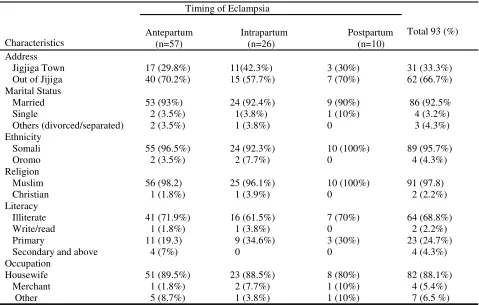
Socio demographic data: There were 93 cases of eclamp-sia in 3500 deliveries during the study period with an inci-dence of 2.7% (Table 1). Most were young (45.2% ≤ 20 years) with a mean age of 23.0 years; nullipara (70.0%); illiterate (70.0%); low income (61.3%); married (95.7%) and residing out of the capital Jijiga (67%).
ultrasound scanning as the mothers did not have reliable last menstrual period (LMP). The average gestational age for those mothers with ante/intrapartum eclampsia was 32.0 weeks and most, 90 (96.8%), were singleton preg-nancies. Of these 3.5% were previable (<28wks), 62.3% preterm (<37wks) and 34.1% term (> or = 37 wks). Most women who presented with eclampsia (63.4%) had not received any antenatal care. One or more risk factors for preeclampsia/eclampsia were reported in 75 (80.7%) of the mothers. These include primagravidity in 66 (71.0%), teenage pregnancy in 22 (23.7%), previous his-tory in 3 (3.2%), twin pregnancy in 3 (3.2%), and chronic hypertension in 2 (2.2%). Precedent clinical di-agnosis of hypertensive disorder of pregnancy was made in 8 (8.6%) of the patients. Of these, all were diagnosed between 7 to 60 days prior to developing eclampsia with mean of 29.1 days. Most, 5 (62.5%), had preeclampsia; 2 (25.0%) had superimposed preeclampsia and 1 (12.5%) had chronic hypertension. Five (62.5%) of these patients were on aldomet.
Antepartum seizures occurred in 57 (61%) with a further 26 (28%) having intrapartum seizures and 10 (10.7%) postpartum seizures. Most, 84 (90.3%), had their first episode at home and 10.0% at the health facility after being admitted in labor and/or for management of pree-clampsia. Thirty-four (36.6%) of the patients were re-ferred from other health facilities.
Most of the patients with eclampsia (53.8%) were semi-conscious at admission while 29.0% were unsemi-conscious. Only 5 (5.4%) of the mothers were normotensive upon admission. Among the hypertensive women, the mean systolic blood pressure was 164 mmHg and the mean diastolic blood pressure (DBP) was 110.0 mmHg. Sys-tolic blood pressure (SBP) > 160 was recorded in 64.5% with a range of 110-240. Diastolic blood pressure > 110 mmHg (severe hypertension) was recorded in 65.6% with a range of 70–140 mmHg.
Work UP and Management: Laboratory/imaging tests done were: ultrasound in 31 (33.3%), hematocrit in 91 (98%), urinalysis in 92 (99%), blood group in 82 (88%), random blood sugar levels in 8 (8.6%), blood films in 24 (26%), liver function test in 3 (3%), renal function tests in 3 (3%), and serum uric acid in 2 (2%). No patients had serum coagulation profiles or platelet counts done. Pro-teinuria was detected in 88 (95%) of the mothers with half of them having +2 (Table 3). Anemia was seen in 52 (58%) patients. Magnesium sulphate was administered to all (99%) except a single case that was given diazepam. Magnesium sulphate was effective in controlling convul-sions in 87 (93.6%) of the patients. In 97% of the cases magnesium sulphate administration continued for 24 hours. Six (6.5%) of the patients who had convulsions after administration of magnesium sulphate had their seizures within 1 hour after the first dose.
Antihyperten-sive medication was given for a total of 82 patients (88.2%). Short-acting antihypertensives for acute control of severe hypertension (DBP>110 or SBP >170mmhg) were needed in 65 (76.5%) of the patients and long act-ing in 73 (86%). A sact-ingle anti-hypertensive (hydralazine) was used for acute control of hypertension in 63 (96.9%) of the patients. The mean dose of hydralazine was 23.0 mg range (5- 65). Most (74.2 %) required a dose of ≤ 25 mg. Combined hydralazine and nifedipine were used in the remaining (3.0%) of the eclamptics. Labetalol was never used. Antibiotics were administered in 89 (95.7%) of the patients. The most commonly used antibiotic was ampicillin in 37 (42%) followed by ceftriaxone in 29 (32.6%) patients.
Out of the 57 patients who presented with antepartum eclampsia, 9 refused termination and were discharged against medical advice, and 2 died on arrival. Out of the remaining 46 patients, 7 (15.2%) underwent emergency cesarean delivery and 27 (58.7%) were induced. Aug-mentation of labor was needed in 8/37 (22%) of those mothers who presented with intrapartum eclampsia. The mode of delivery for the 72 mothers who gave birth at the hospital was caesarean in 14/72 (19.4%), instrumen-tal in 15 (20.8 %), and spontaneous vaginal in 43 (59.7%). The CS rate at the hospital at the same period was 12.5%. The anesthesia used during CS were: general anesthesia in 11 (78.6%), spinal anesthesia in 2 (14.3%) and local infiltration in 1 (7.1%). The mean interval from admission to delivery was 25 hrs (range 1-168 hrs) and only 55% were delivered within 12 hrs of admission. Termination of pregnancy was delayed in 17 (40%) of the patients because of patients/family failure to consent timely upon initial counseling. The mean duration of delay because of initial patient/family refusal for termi-nation was 48 hrs (range 3 to 144 hrs). Nine of the eclamptic patients were discharged against medical ad-vice.
The preterm delivery rate was 63%. Out of the 75 neo-nates delivered at the hospital (including 3 twin sets), 47 (62.7%) were live births, 19 (25.3%) stillbirths, and 7 (9.3%) early neonatal deaths. The mean birth weight was
2365 gm (range 680gm – 3700gm). There were 26 peri-natal deaths among 75 deliveries from women with eclampsia indicating a perinatal case fatality rate of 34.6%. The other perinatal complications are listed in Table1: Socio-demographic characteristics of patients by timing of Eclampsia
Table 2: Maternal Complications by timing of eclampsia
Characteristics
Timing of Eclampsia
Total 93 (%)
Antepartum Intrapartum Postpartum (n=57) (n=26) (n=10) Address
Jigjiga Town Out of Jijiga
17 (29.8%) 40 (70.2%) 11(42.3%) 15 (57.7%) 3 (30%) 7 (70%) 31 (33.3%) 62 (66.7%) Marital Status Married Single Others (divorced/separated) 53 (93%) 2 (3.5%) 2 (3.5%) 24 (92.4%) 1(3.8%) 1 (3.8%) 9 (90%) 1 (10%) 0 86 (92.5% 4 (3.2%) 3 (4.3%) Ethnicity Somali Oromo 55 (96.5%) 2 (3.5%) 24 (92.3%) 2 (7.7%) 10 (100%) 0 89 (95.7%) 4 (4.3%) Religion Muslim Christian 56 (98.2) 1 (1.8%) 25 (96.1%) 1 (3.9%) 10 (100%) 0 91 (97.8) 2 (2.2%) Literacy Illiterate Write/read Primary
Secondary and above
41 (71.9%) 1 (1.8%) 11 (19.3) 4 (7%) 16 (61.5%) 1 (3.8%) 9 (34.6%) 0 7 (70%) 0 3 (30%) 0 64 (68.8%) 2 (2.2%) 23 (24.7%) 4 (4.3%) Occupation Housewife Merchant Other 51 (89.5%) 1 (1.8%) 5 (8.7%) 23 (88.5%) 2 (7.7%) 1 (3.8%) 8 (80%) 1 (10%) 1 (10%) 82 (88.1%) 4 (5.4%) 7 (6.5 %)
Complication Antepartum (N=57) Intrapartum (N=26) Postpartum (N=10) Total (N=93)
1. Renal failure 12 (21.2%) 7 (26.2%) 3 (30%) 22 (23.7%)
2. Aspiration Pneumonia 4 (7.0%) 2 (7.7%) 3 (20%) 9 (9.7%)
3. Pulmonary Edema 7 (12.3%) 1 (3.9%) 1 (10%) 9 (9.7%)
4. Hepatic Failure 1 (1.8%) 0 2 (20%) 3 (3.2%)
5. Abruption placentae 2 (3.5%) 5 (19.2%) 0 7 (7.5 %)
6. Postpartum haemorrhage 2 (3.5%) 2 (7.7%) 4 (40%) 8 (8.6%)
6. Sepsis 4 (7%) 4 (15.4%) 5 (50%) 13 (14%)
7. Intracranial Haemorrhage 1 (1.8%) 1 (3.9 %) 2 (20%) 4 (3.2%) 8. Others (DIC, HEELP....) 2 (3.5%) 2 (7.7%) 1 (10%) 5 (5.4%)
9. Maternal death 5 (8.7%) 2 (7.7%) 3 (30%) 10 (11%)
Total 25/57 (44%) 15/26 (58%) 9/10 (90%) 93
Table 3: Clinical variables stratified by maternal mortality
Table-4 Perinatal complications in pregnancies with antenatal Eclampsia delivered at Karamara Hospital (n=75)
Variable Deaths (n/%)
(N=10)
Survivors (n/%) (n=83) Age (n=93)
< 20 20 to 35 > 35
3 (30%) 6 (60%) 1(10%)
19 (23%) 55 (66.2%)
9 (10.8%) Parity (n=93)
0 1 to 5 ≥ 6
7 (70%) 2 (20%) 1 (10%)
58 (69.9%) 20 (24.1%)
5 (6%) ANC status (n=93)
Unbooked Booked
8 (80%) 2 (20%)
51 (61.4%) 32 (38.6%) Gestational Age (n=93)
Preterm (28 – 36 wks) Term (≥ 37wks)
6 (60%) 4 (40%)
56 (68.4%)
27 (31.6) Timing of eclampsia (n=93)
Antenatal Postpartum
7 (70%) 3 (30%)
74 (89.2%)
9 (10.8%) Convulsions to presentation interval (n=93)
≥ 12hrs < 12hrs
5 (50%) 5 (50%)
42 (50.6%) 41 (49.4%) BP at admission (n=93)
DBP ≥ 110
DBP 100 to 109 mmhg DBP < 100mmhg
7 (70%) 2 (20%) 1 (10%)
55 (66.3%) 21 (25.3%) 7 (8.4%) Proteinuria (n=92)
Negative/trace +1
+2 +3
1 (10%) 1 (10%) 3 (30%) 5 (50%)
4 (5%) 8 (9.8%) 30 (36.6) 40 (48.8%) GCS at admission (n=93)
< 5 (unconscious) 5 – 8 (semi-conscious) ≥ 8 (conscious)
1 (10%) 2 (20%) 7 (70%)
15 (18.1%) 48 (57.8%) 20 (24.1%) Admission- delivery interval (n=72)
≥ 12hrs < 12hrs
4 (57.1%) 3 (42.9%)
35 (53.8%)
30 (46.2) Mode of delivery (n=82)
Vaginal Cesarean
7 (87.5%)
1 (12.5%)
61 (82.4%) 13 (17.6%)
Complication Frequency Percent
1. Preterm delivery 47 65.3%
2. IUGR 8 10.7 %
3. Still birth 19 25.3%
4. Perinatal asphyxia 26 34.7%
5. Low birth Weight 34 45.3%
DISCUSSION
Eclampsia presents one of the most life-threatening con-ditions in pregnancy and management is complex. Worldwide, approximately 14% of maternal deaths are caused by pre-eclampsia and eclampsia; in Africa about 10% of maternal deaths are caused by hypertensive dis-orders in pregnancy (10). The 2.7% incidence of eclamp-sia in our study is higher than all previous reports from hospital based Ethiopian studies which have ranged from 0.3% to 2.0% (11 – 15). It is also high compared to hos-pital-based incidences from most African countries which vary from 1.8% to 7.1% (2), notably 1.37% in Tanzania (16), and 1.57% in Nigeria (17). However, it is less than the 5% reported in another Nigerian study at a tertiary university hospital (18). The high incidence of eclampsia in our study area might be ascribed to the large number of referrals (37% of all eclampsia cases) and/or increased access to obstetric health services for eclampsia. The possibility of high disease burden im-posed by preeclampsia/eclampsia in the study area was also expressed by one study (19). We share this concern and suggest a well designed community based study to be conducted primarily in pastoralist regions to identify possible underlying geographic factors.
The fact that eclampsia was most common in young (45.2%) and nulliparous (70%) women is in accordance with many previous literature reports (5,16). The ante-partum convulsion rate of 61% is comparable with previ-ous reports (5,17,20). However, our observed intrapar-tum convulsions (31%) were higher than postparintrapar-tum convulsions (11%) which contrasts with observations in developed countries where postpartum eclampsia is be-coming more common (20). This reflects the disparity in efficiency of early detection and effective management of preeclampsia/eclampsia between developed and de-veloping nations.
Only 54.8% of the patients presented within 12 hrs of convulsion and 7.5% of them presented after 24 hours. This is less than the 83.3% within 12 hrs in a Nigerian study (18), but comparable to the 8.2% presentation after 24 hrs in the same study (18). There could be individual, socio-cultural, or health facility factors affecting timely presentation of patients. Timeliness of presentation in eclampsia is crucial particularly in developing countries as it influences effectiveness of medical interventions. Most of the eclamptic women (79%) had prodromal symptoms but the majority (67%) did not have any pre-vious antenatal visits. Improving access to focused ANC may improve pregnant mothers’ awareness of danger signs of eclampsia and prompt early health care seeking. However, eclampsia can develop without any precedent warning symptoms and signs as evidenced in the 21% of the asymptomatic patients in our study; this is similar to the 20% asymptomatic presentations reported in the lit-erature (1,6).
Laboratory test-particularly biochemical-are presumed to be markers of end organ damage in preeclampsia/ eclampsia; however, the majority of eclamptic patients in this study did not have complete (essential) lab tests done. This implies that facilities are not adequately equipped with the necessary diagnostic equipment and/or reagents. The same finding was reported in the nation-wide study where majority of Ethiopian health facilities, especially health centers, were lacking important diag-nostic tests (12). This has an impact on the provision of effective care for cases of eclampsia. The management of some patients who might benefit from timely decision of pregnancy termination based on biochemical test re-sults and those with organ failure who might need timely referral to higher centers could be compromised. It is recommended that in order to improve the effectiveness and quality of eclampsia care in the study area there should be capacity building at all levels of health facili-ties including ensuring the availability of essential equip-ment for the diagnosis of eclampsia and early detection of eclampsiaand its complications. The fact that magne-sium sulphate was used in almost all (97%) cases is im-pressive as this has been a recent introduction in the Ethiopian setting. The use of magnesium sulphate was higher than previous reports in similar settings, notably the 23% and 35.8% in two Nigerian studies (17,20). In Ethiopia, only 11% of facilities reported having magne-sium sulfate in 2008 (12). Results in this study also dem-onstrated good responses as only 6.4% of the cases had a repeat convulsion after first dose.
Antihypertensive treatment is recommended when blood pressure exceeds 160/100 mmHg. There are three recom-mended options: hydralazine, labetalol or nifedipine. Like many developing countries, the most commonly used short acting antihypertensive was hydralazine (97.0%). A total hydralazine dose of >25 mg was needed in 26% of the patients who should have been given a second short acting antihypertensive (nifedipine). Labe-talol was never used which implies unavailability of the drug. This was also seen in the 2008 National Emer-gency Obstetric Care Assessment where only 4.5% of the hospitals were using labetalol (12).
Most of the cases with patients with eclampsia (97%) were given antibiotics but the use was erratic with a wide variation in the choice and duration of antibiotics. A standard recommendation on antibiotic administration should be included in all eclampsia care guidelines so as to promote uniform and rational use of the limited antibi-otics.
alternative (cultural) remedies. Hence raising community awareness through socio-culturally sensitive health edu-cation in the area is important.
Generally, there was delay in the time interval of admis-sion to delivery. Only 55% of patients were delivered within the recommended 12 hrs of admission (22,23). This was lower than the 74% reported from studies on timeliness of eclampsia care in three developing coun-tries (22). Delivery is the cure for eclampsia and timeli-ness of intervention is crucial to avert maternal deaths and the risk of morbidity from complications. Although patients’ refusal might contribute to the delay in our study, underlying institutional and/or health provider factors might also be the reasons. Theseshould be identi-fied, preferably through criteria-based auditing, and modified.
Eclampsia increased the risk of CS and instrumental de-liveries as the rate of CS (19.4%) and instrumental deliv-ery (22%) were higher than the rates in the general ob-stetric population in the hospital during the same period, which were 12.5% and 14%, respectively. However, the overall caesarian section rate in Karamara Hospital was still low compared to all other previous studies. In Ethio-pia CS rates have varied from 36.6% in Jimma (11) to 45.3% in Addis Ababa teaching hospitals (13,14), while reports from other African studies have ranged from 29.4% and 75% (16-18,20). The maternal complication rate of 53% was higher than the 39.2% and 37.7% re-ported in two Nigerian studies (16,20). Higher inci-dences of acute renal failure (23%) and aspiration pneu-monia (9.3%) were seen in our study compared to the 3.8% and 5% rates reported in the two Nigerian studies (16,20), whereas incidence of other complications was comparable. Nonetheless, high rates of sepsis, pulmo-nary complications, abruptio placentae and postpartum haemorrhage coupled with unavailability of an intensive care unit and/or bloodproducts would definitely impact maternal and perinatal deaths.
The case fatality rate of 11% in our study was compara-ble with the 13% rate in Ethiopia by Zufan and Misga-naw (12), and that of most African studies which range from 7.5% to 13% (15,16,23), but higher than the other studies in Ethiopia which range from 3.6% to 5.2%
(11,12,14). The maternal mortality rate of 285/100,000 and the perinatal case fatality rate of 346/1000 deliveries were also high compared to studies from Ethiopia and other African countries. Maternal mortality rates from 98/100,000 to 118/100,000 have been reported (13, 17), and perinatal case fatality rates from 132/1000 to 300/1000 deliveries (11,14,15,18,20). This high maternal and perinatal mortality is concerning as the rate-in par-ticular the perinatal mortality-is even higher than the reports in those studies done when the use of magnesium sulphate was very limited in Ethiopia (13,15). The fact that the hospital is the major regional referral center might have resulted in a higher percentage of compli-cated referrals. Other factors such as lack of adult/ neonatal ICU, delayed presentation of patients, and de-layed and suboptimal eclampsia care could have contrib-uted to the high maternal/neonatal mortality. These all reflect clinical and public health challenges of eclampsia in similar peripheral areas of Ethiopia.
Conclusion: The incidence of eclampsia is very high with corresponding high maternal and perinatal deaths which might necessitate a large-scale study to identify possible geographic factors. The presentation of patients with eclampsia is late and the work up and management of cases is substandard. Hence capacity building of the health facilities and professionals at all levels in early diagnosis and timely provision of comprehensive pre-eclampsia/eclampsia care as well as improving access to maternal health facilities are recommended. Appropriate advice on danger signs of preeclampsia/eclampsia should be given at antenatal care clinics.
ACKNOWLEDGEMENTS
We are deeply indebted to Gete Sorsa for computer type-writing of the draft and final manuscript and for her con-tinuous encouragement and we thank all ward staffs in-volved in data collection.
REFERENCES
1. Coppage, K, Sibai, B, Glob. libr. women's med. (ISSN: 1756-2228) 2008; DOI 10.3843/GLOWM.10158.
2. Osungbade KO, Ige OK. Public Health Perspectives of Preeclampsia in Developing Countries: Implication for Health System strengthening. J Pregnancy.2011;2011:481095.
3. Liu S, Joseph KS, Liston RM, et al. Incidence, risk factors and associated complications of eclampsia. Obstet Gyne-col. 2011: 118:984-94.
4. Duley, L.The global impact of pre-eclampsia and eclampsia. Semin Perinatol. 2009 Jun;33(3):130-7.
6. Sibai BM. Diagnosis, prevention, and management of eclampsia. Obstet Gynecol. 2005;105(2):402-10.
7. Cunningham FG, Gant NF, Leveno KJ, Gilstrap LC , Hauth JC, Wenstrom KD, editors. Williams Obstetrics 21st ed. New York:McGraw-Hill.2001.
8. Goldenberg RL, McClure EM, Macguire ER, Kamath BD, Jobe AH. Lessons for low income regions following the reduction in hypertension-related maternal mortality in high-income countries. Int J Gynecol Obstet 2011;113(2):91– 5.
9. Abdella A. Maternal Mortality Trend in Ethiopia. Ethiop. J. Health Dev. 2010;24 Special Issue 1:115-22.
10. The World Health Organization. WHO recommendations for Prevention and treatment of pre-eclampsia and eclamp-sia. Geneva, Switzerland.2011. Available from: http://apps.who.int/iris/
bitstream/10665/44703/1/9789241548335_eng.pdf
11. Zenebe W, Segni H, Woldie M. Hypertensive disorders of pregnancy in Jimma University specialized hospital. Ethiop J Health Sci. 2011 Nov; 21(3):147-54.
12. Gaym A, Bailey P, Pearson L, Admasu K, Gebrehiwot Y. Disease burden due to pre-eclampsia/eclampsia and the Ethiopian health system's response. Int J Gynaecol Obstet. 2011 Oct;115(1):112-6.
13. Abate M, Lakew Z. Eclampsia a 5 years retrospective review of 216 cases managed in two teaching hospitals in Addis Ababa. Ethiop Med J. 2006 Jan;44(1):27-31.
14. Teklu S, Gaym A. Prevalence and clinical correlates of the hypertensive disorders of pregnancy at Tikur Anbessa Hospital, Addis Ababa, Ethiopia. Ethiop Med J. 2006 Jan;44 (1):17-26.
15. Mekbib TY, Ketsela K. Preeclampsia /eclampsia at Yekatit 12 hospital Addis Ababa. East Afr Med J. 1991 Nov;68 (11):893-9.
16. Urassa DP, Carlstedt A, Nyström L, Massawe SN, Lindmark G. Eclampsia in Dar es Salaam, Tanzania -- incidence, outcome, and the role of antenatal care. Acta obstetricia et gynecologica Scandinavica. 85(5):571-8. 2006.
17. Eke AC, Ezebialu IU, Okr C. Presentation and Outcome of Eclampsia at a Tertiary Center in South East Nigeria – A 6 -Year Review. Hypertension in Pregnancy, 30:125–132, 2011.
18. Yakasai IA, Gaya SA. Maternal and fetal outcome in patients with eclampsia at Murtala Muhammad specialist Hospi-tal Kano, Nigeria. Ann Afr Med 2011;10:305-9.
19. Daniel T. Does preeclampsia/eclampsia pose a higher disease burden to mothers in pastoralist communities in Ethio-pia? Ethiop Med J. 2011 April; 49 (2):17-26.
20. Jido TA. Eclampsia: maternal and fetal outcome. African Health Sciences 2012; 12(2): 148 – 52.
21. Zwart JJ, Richters A, Ory F, de Vries JI, Bloemenkamp KW, van Roosmalen J. Eclampsia in the Netherlands. Obstet Gynaecol 2008;112(4):820-7.
22. Edson W, Burkhalter B, McCaw-Binns A. Timeliness of care for eclampsia and preeclampsia in Benin, Ecuador, and Jamaica. International Journal of Gynecology and Obstetrics. 2007;97:209–14.