Wu, C., Zou, Q., Xue, S., Pan, W., Hartley, W. Huang, L. and Mo, J. 2016. Effect of silicate on arsenic fractionation in soils and its accumulation in rice plants. Chemosphere, 165, pp.478-486.
Effect of silicate on arsenic
fractionation in soils and its
accumulation in rice plants
by Wu, C., Zou, Q., Xue, S., Pan, W., Hartley, W.
Huang, L. and Mo, J.
Copyright, Publisher and Additional Information: This is the author accepted manuscript.
The final published version (version of record) is available online via Elsevier Please refer to any applicable terms of use of the publisher.
Effect of silicate on arsenic fractionation in soils and its accumulation in rice
plants
Chuan WU1,Qi ZOU1, Sheng-Guo XUE1,*, Wei-Song PAN2,*, Liu HUANG1,
William HARTLEY3, Xu Yue2, Jing-Yu MO1
1 School of Metallurgy and Environment, Central South University, Changsha
410083, China. E-mail: [email protected]
2 College of Bioscience and Biotechnology, Hunan Agricultural University,
Changsha 410128, China
3 Crop and Environment Sciences Department, Harper Adams University, Newport,
Shropshire, TF10 8NB, United Kingdom
* Corresponding authors:
Tel: +86-13787148441, E-mail address: [email protected] (Shengguo Xue);
Tel: +86-15974218619, E-mail address: [email protected] (Weisong
ABSTRACT
Four rice genotypes, two hybrid and two indica, were selected to investigate the
effects of silicate (Si) application on arsenic (As) accumulation and speciation in rice
and As fractionation in soil. There were significant differences in root, straw and grain
biomass between genotypes (p<0.05), and Si application significantly increased root
(p<0.05) and grain biomass (p<0.001). Silicate addition reduced the proportion of As
associated with well-crystallized hydrous oxides of Fe and Al and residual phases,
whilst increasing the proportions of specifically-sorbed As and As associated with
amorphous and poorly-crystalline Fe and Al hydrous oxides. Furthermore, the results
indicated that the fraction proportions of non-specifically sorbed, specifically-sorbed,
and associated with amorphous and poorly-crystalline hydrous oxides of Fe and Al in
rhizosphere soils, were greater than non-rhizosphere soils. Silicate application had a
significant effect decreasing total As concentrations in root (p<0.005), straw (p<0.05)
and husk (p<0.001) of rice plants. The effect of Si on reducing As accumulation in
rice leaves was revealed by SXRF. Indica genotypes transported and accumulated
less As than hybrid genotypes. Both percentage and concentration of iAs were lower
in indica genotype XFY-9 than in hybrid genotype XWX-12. Silicate reduced iAs and
DMA by 21% and 58% respectively in polished grain. DMA may have a greater
translocation capacity from straw to polished grain than inorganic As. The study
provides the potential for understanding As uptake mechanisms in rice and mitigating
the health risks posed by As contamination in paddy fields.
1. Introduction
Chronic and acute arsenic (As) exposure from either drinking water or the food
chain has resulted in adverse health impacts such as cancers, neurological and
cardiovascular diseases (Stone et al., 2008; Guo et al., 2009; Martinez et al., 2011).
Irrigation of paddy fields with As-rich groundwater and mining activities have caused
serious contamination of paddy soils (Huang et al., 2006; Wang et al., 2015; Xue et al.,
2016). Liao et al (2005) reported that As concentrations in rice grain grown in
As-contaminated soils reached 7.5 mg/kg. Generally, rice is cultivated in flooded
paddy soils (Meharg et al., 2012; Pan et al., 2014). Under anaerobic conditions, the
mobilization and bioavailability of As is greatly elevated, as large concentrations of
As are released into pore-waters due to the reductive dissolution of Fe (hydr)oxides
regulated by iron-reducing bacteria, and arsenate (As(V)) reduction to arsenite
(As(III)), which is less sorbed (Roberts et al., 2011; Stroud et al., 2011; Peng et al.,
2016). In addition, As(III) uptake and accumulation is more efficient in rice compared
to other crops due to As(III) translocation occurring through a strong silicon uptake
pathway (Su et al., 2010; Zhao et al., 2013; Pan et al., 2014), thereby resulting in
greater As concentrations in rice grain (Zhu et al., 2008a,b). Studies have also shown
that rice consumption is a major source of inorganic As (iAs) in the human diet
(Meharg et al., 2009; Jia et al., 2012; Su et al., 2010).
Owing to the differences in toxicity and mobility of As species, total As
concentrations are insufficient to indicate As bioavailability and toxicity in soils
(Huang et al., 2015). Arsenic mobility, bioavailability, and toxicity largely depends on
the chemical forms and types of binding (Novoa et al., 2007; Yang et al., 2016). In
order to understand the bioavailability and toxicity of As to rice plants, As
using different extraction reagents, such as with sequential extraction procedures, to
determine the chemical forms of As in soils (Wu et al., 2015). These procedures can
also be used to predict changes in As mobility from various solid phases following
amendment additions such as silicon (Si) (Wenzel et al., 2001).
Numerous studies have shown that silicate (Si) application not only increases
rice yield, but also suppresses uptake and accumulation of As in rice grains, though Si
was not considered as an essential element of rice (Li et al., 2009a; Seyfferth and
Fendorf, 2012; Fleck et al., 2013). In flooded soils, rice is inherently efficient at
taking up and transferring As(III) (Su et al., 2010) due to the translocation of As(III)
into rice via silicon transport systems (transporters Lis1 and Lsi 2) as a silicon acid
analogue (Ma et al., 2006,2008; Chen et al., 2012). Transporter Lis1 acts as a major
uptake channel for As(III) in rice plants and Lsi 2 plays an essential role in mediating
As(III) translocation to shoots and subsequent accumulation in the grains (Ma et al.,
2006, 2008). Consequently competition for uptake and translocation between Si and
As(III) occurs, and hydroponic experiments have demonstrated that addition of Si
reduced As uptake and accumulation in rice (Guo et al., 2005,2007; Tripathi et al.,
2013). Fleck et al (2013) reported that Si application reduced As concentrations by
22% in brown and polished rice grains by suppressing As(III) transport. Li et al
(2009a) revealed that Si addition reduced iAs concentrations by 59% and increased
DMA concentrations by 39% in rice grains. However, due to similarphysicochemical
properties, Si may also compete against As(III) for retention sites on soil minerals. It
was found that silicate reduced arsenite adsorption rates and competed for adsorption
sites, thus increasing As concentrations in soil solutions (Luxton et al., 2008; Lee et
al., 2014).
bioavailability to rice with different radial oxygen loss (ROL) rates in rhizosphere and
non-rhizosphere soils and to determine the effect of Si on As fractionation in soil, As
uptake, translocation and speciation in rice plants.
2. Materials and methods
2.1 Materials
Pot experiments were conducted with four rice genotypes, comprising of hybrid
genotypes Xiangfengyou 9 (‘XFY-9’) and T-you207 (‘TY-207’) and indica subspecies
Xiangwanxian 17 (‘XWX-17’) and Xiangwanxian 12 (‘XWX-12’) which were
obtained from Hunan Agricultural University. The four rice genotypes ROL values are
as follows, 9.55, 15.41, 19.76 and 27.00 umol O2 g-1 root dry weight h-1 respectively
(Wu et al., 2015). Rice seeds were sterilized (30% H2O2) for 15 min, and then
thoroughly washed with deionized water. They were then germinated in petri dishes
containing moist filter paper for three days. Subsequently the seedlings were
cultivated in Kimura B nutrient solution for two weeks.
The soils used in this investigation were obtained from a paddy field (1-20cm
depth) located at the Central South University, China. The soils had a sandy texture, a
pH of 6.6 and contained 9.4 mg/kg pseudo-total As. After being air-dried at room
temperature, the soils were ground and sieved (< 2 mm). Basal fertilizers were added
to soils and mixed thoroughly (P as CaH2PO4 . H2O at 0.15 g/kg P2O5, K as KCl at 0.2
2.2 Pot trail under waterlogged conditions
Soils were supplied with arsenate solution (Na2HAsO4·12H2O) at 60 mg As/kg.
Silicon was added as a silica gel which provided a sparingly soluble source of Si for
rice growth (Seyfferth and Fendorf, 2012). Treatments were conducted as follows:
Control: no As or Si
Treatment A: 60 mg/kg As only, no Si (Si0)
Treatment B: 60 mg/kg As and 10mg/kg Si (Si10)
Treatment C: 60 mg/kg As and 20mg/kg Si (Si20)
Treatment D: 60 mg/kg As and 40mg/kg Si (Si40).
Soils were mixed and allowed to equilibrate for two weeks, and the seedlings were
subsequently transplanted into polyethylene pots (20 cm diameter, 20 cm high) filled
with 3.5 kg of the treated soils. All treatments were carried out in triplicate.
Following planting, soils were saturated with water and the water level was
maintained 2-3cm above the soil surface until harvest. Pot experiments were
performed in the greenhouse with controlled temperature (20/25 ℃, night/day) and
relative humidity (70%). Natural sunlight was supplemented with sodium light (1200
Lux), providing a light period of 12 h per day. After maturity the rice plants were
harvested and subsequently separated into polished grain, husks, straw and roots. The
straw harvested from below the water level was discarded due to contamination by the
irrigation water. Plant tissues were washed with tap water and then with deionized
water. From the plant tissues subsamples were collected and freeze-dried at -20 ℃ in
order to preserve the As species prior to determination and the remaining samples
were oven-dried at 70℃ for total analysis. Biomass (dry weight) was also determined
2.3 Sequential extraction of As
After harvest, rhizosphere and non-rhizosphere soils were collected to determine
As fractionation using the sequential extraction procedure described by Wenzel et al
(2011). Soil samples (1.0 g) were weighted into 50 ml centrifuge tubes and 25 ml of
each extracting reagent was added sequentially. The sequential extraction processes
involved five stages as follows:
1) 0.05 mol/L (NH4)2SO4 at 20 °C for 4 h;
2) 0.05 mol/L NH4H2PO4 at 20 °C for 16 h;
3) 0.2 mol/L NH4+-oxalate buffer in the dark at pH 3.25 and 20 °C for 4 h;
4) 0.2 mol/L NH4+-oxalate buffer + ascorbic acid at pH 3.25 and 96 °C for 0.5 h;
5) HNO3/H2O2 with microwave digestion.
Following each extraction stage, solutions were centrifuged for 15 min at 1700g and
the supernatant was filtered through 0.45 μm filters. The soils were then washed with
deionized water (25 ml) and centrifuged prior to the next extraction stage, washings
were discarded. Arsenic concentrations in the filtered supernatants were determined as
described in section 2.4. Samples were analyzed in duplicate. The As fractions
extracted were associated with the following adsorption sites: 1) non-specifically
sorbed (F1); 2) specifically-sorbed (F2); 3) associated with amorphous and
poorly-crystalline hydrous oxides of Fe and Al (F3); 4) associated with
well-crystallized hydrous oxides of Fe and Al (F4); 5) residual phase (F5).
2.4 Plant analysis for total As
All plant samples for total As analysis were ground to fine powders using a
stainless steel mechanical mill. Samples (0.5 g) were weighed and digested overnight
electric hot plate at 120℃ until the solution became clear. After digestion, the solution
was filtered (0.45 μm) and diluted to 20 ml with deionized water in volumetric tubes.
The total As concentrations were determined by HG-AFS (AFS-8230, Beijing Jitian
Instruments Co., China) (Wu et al., 2016). A certified reference material, bush
branches and leaves, GBW07603, was used to confirm recovery of the digestion
methods.
At harvest, SXRF microprobe experiments were performed to determine the
effects of Si application on As accumulation in rice leaves, performed at beamline
LU15 at the Shanghai Institute of Applied Physics, Chinese Academy of Science.
Incident X-rays of 8.1 keV were used to excite elements from leaf samples, which had
been placed in liquid nitrogen immediately after cutting from the live plant (Zheng et
al., 2011; Zhu et al., 2016).
2.5 As speciation in rice plants
Plant samples for As speciation were ground under liquid N2 to avoid changes to
As species (Zhu et al., 2008b). Samples (0.1g) were extracted with 20 ml 0.28M nitric
acid placed on heating blocks at 95 ℃ for 90 min in centrifuge tubes (50 ml).
Following centrifugation at 5000r/min (10 min), samples were filtered (0.22 μm) and
the extracts were determined by HPLC-HG-AFS (HPLC, Shimadzu LC-15C Suzhou
Instruments Co., China; HG-AFS, AFS-8230, Beijing Jitian Instruments Co., China)
(Zhu et al., 2008b; Shi et al., 2013).
2.6 Data analysis
Analysis of variance were determined by the statistical package SPSS 19.0 and
8.0 (OriginLab Corporation, USA).
3. Results
3.1 The effect of Si on plant growth
Biomass of root, straw and grain from the different treatments are presented in
Fig. 1. There were significant differences in root (p<0.05), straw (p<0.001) and grain
biomass (p<0.001) between genotypes. Silicon application significantly increased root
(p<0.05) and grain biomass (p<0.001). Root biomass of plants varied from 9.25 g/pot
to 15.8 g/pot in control treatments. Compared to Si0, Si increased root biomass of the
hybrid genotypes (XFY-9 and TY-207) by 27% and 49% respectively and indica
genotypes (XWX-17 and XWX-12) by 1% and 7% respectively. Greatest root
biomass was observed from genotypes TY-207 and XWX-17 grown in Si20 treatment
and genotypes XFY-9 and XWX-12 grown in Si40 treatment. Compared to Si0
treatment, Si increased straw biomass of the hybrid genotypes (XFY-9 and TY-207)
by 22% and 27% respectively and the indica genotypes (XWX-17 and XWX-12) by
1% and 24% respectively; greatest straw biomass was observed in genotypes XFY-9
and TY-207 grown in Si20 treatment and genotypes XWX-12 and XWX-17 in Si40
treatment. Grain biomass of plants varied from 6.4 g/pot to 14.8 g/pot in control
treatments. Compared to Si0 treatments, Si increased grain biomass of the hybrid
genotypes (XFY-9 and TY-207) by 60% and 58% respectively and the indica
genotypes (XWX-17 and XWX-12) by 52% respectively; Greatest grain biomass was
observed in genotype TY-207 grown in Si20 treatment and genotypes XFY-9,
3.2 The effect of Si on As fractionation in soils
Figure 2 shows the relative distribution of As in rhizosphere soils with different
Si treatments. Concentrations of the five fractions were ranked as: F3 > F2 > F4 >
F5 > F1 for all treatments. There was no significant genotypic difference between As
fractions. Silicon addition may have reduced the concentrations of F4 and F5 fractions,
whilst increasing the As fractions associated with F2 and F3 (Fig 2). With the
exception of Si40, the other Si treatments increased As concentrations in the F1
fraction compared to Si0.
Arsenic fractionation in non-rhizosphere soils is presented in Fig 2. The five
fractions displayed a similar order with rhizosphere soils. Results indicated that F5
and F4 fractions in non-rhizosphere soils were much higher than rhizosphere soils in
the same treatment (Fig. 2). Fractions F1, F2 and F3 in non-rhizosphere soils were
also lower than rhizosphere soils. With increasing Si, the concentrations of fraction F5
decreased in all four genotypes. Silicon application increased the concentrations of the
F2 and F3 fractions. In Si0 treatment, fraction F3 in non-rhizosphere soils for all
genotypes with lower ROL was greater than genotypes with higher ROL, whilst the
F4 fraction presented the opposite trend.
3.3 The effect of Si on total As in rice plants
Total As concentrations in rice plants grown in control treatments were below the
detection limit. Significant genotypic differences were observed for total As of roots
(p<0.05), husks (p<0.01) and polished grains (p<0.001). Silicon application had a
significant effect by decreasing total As concentrations in roots (p<0.005), straw
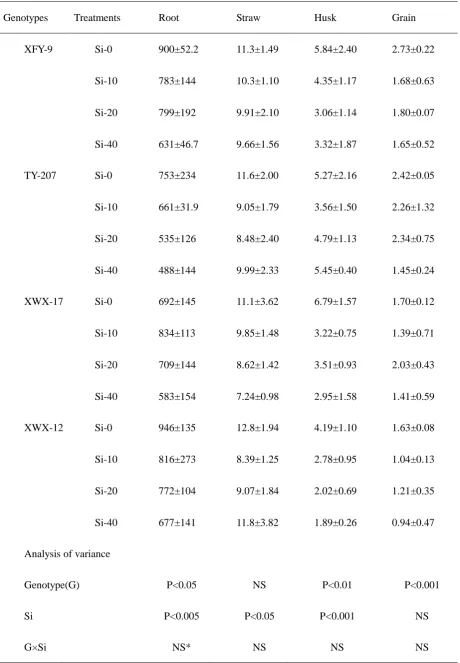
(p<0.05) and husks (p<0.001) of rice plants (Table 1). Total As concentrations in roots
treatment of genotype XWX-12 and the lowest in Si40 treatment of genotype TY207.
Overall Si treatments reduced total As concentrations in roots by approximately 32%.
Genotype XWX-17 displayed the lowest total As concentrations in straw, 7.24 mg/kg
in Si40 treatment, and genotype XWX-12 showed the greatest concentration,
12.8mg/kg, grown in Si0 treatment. Application of Si reduced total As concentrations
in straw by approximately 25%.
Polished grain As concentrations of indica genotypes were significantly lower
than hybrid genotypes grown in the same treatments (P<0.001). Genotype XWX-12
(1.63±0.08mg/kg) and XFY-9 (2.73±0.22mg/kg) produced the lowest and greatest As
concentrations in control treatments respectively. The results indicated that the indica
genotypes transported and accumulated less As than the hybrid genotypes. Polished
grain As concentrations varied from 0.94 mg/kg to 2.73 mg/kg, and the lowest
polished grain As concentration was observed in Si40 treatment of genotype XWX-12.
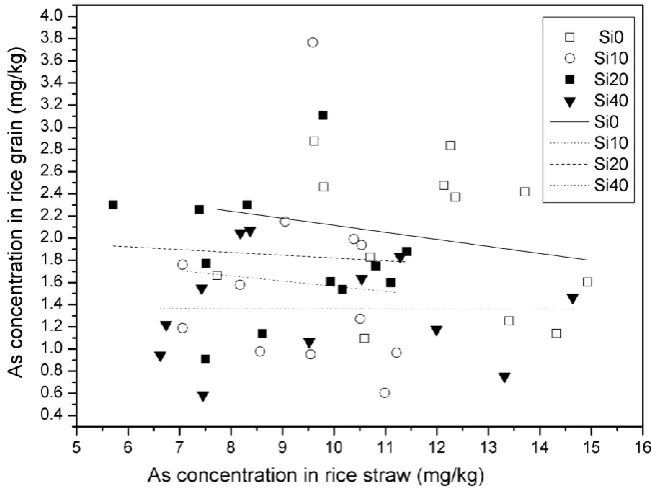
Silicon application clearly affected the translocation capability (Figure 3). With
increasing straw As concentrations, As slightly decreased in polished grain. With
increasing Si concentrations, translocation of As from straw to grain increased, with
As concentration in polished grains almost having no change in Si40 treatment
regardless of increasing straw As (Figure 3).
3.4 The effect of Si on As localization in rice leaves
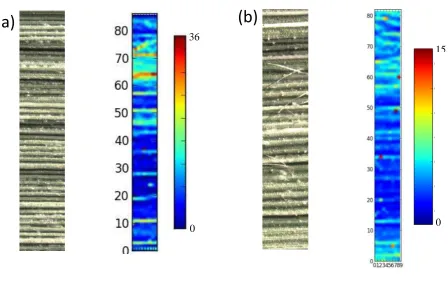
SXRF imaging (Fig 4a and 4b) demonstrated that the main leaf veins contained
high As signals, stronger intensities and larger As signals in plants grown with no Si
(Fig 3a) compared to those with Si addition (Fig 3b). SXRF imaging indicated that Si
addition reduced As accumulation in leaves and reduced the translocation of As from
3.5 The effect of Si on As speciation in rice plants
Owing to possible conversion of arsenite to arsenate, the concentrations of
inorganic As (iAs) were adopted to represent the concentrations of As(III) and As(V)
(Wu et al., 2015). Inorganic As (78%-91%) was the predominant As species in rice
straw (Table 2). The proportion of iAs in hybrid genotype XFY-9 was greater than
genotype indica XWX-12 with the exception of Si20 treatment. Silicon decreased iAs
concentrations in rice straw by 8%-60%. With increasing Si, DMA concentrations in
XFY-9 increased initially, but then decreased, whilst in XWX-12, DMA
concentrations reduced. The main As species in rice husk were iAs (22%-43%) and
DMA (56%-77%) (Table 3). MMA accounted for approximately 1% of total As.
Silicon addition decreased both iAs and DMA concentrations by 55% and 43%
respectively. Table 4 presents the As species in rice grains grown in the different
treatments; MMA concentration was not detected. DMA was the dominant As species
representing 90.9% - 95.4%, whilst iAs contributed between 4.6% - 9.1%. The
percentage and concentrations of iAs in hybrid genotype XFY-9 were both greater
than indica genotype XWX-12 (Figure 5). Figure 5 indicated that DMA may have
greater translocation capacity than iAs from straw to polished grain. In polished grain,
Si reduced iAs and DMA by 21% and 58% respectively (Table 4).
4. Discussion
It is already well understood that Si application exerts beneficial effects on plant
growth and yield by enhancing resistance to both biotic and abiotic stresses (Ma et al.,
et al., 2013). The beneficial effects of Si on plant growth have been observed in
previous studies by Li et al (2009a) and Fleck et al (2013) who reported that Si
addition increased rice straw and grain yields. Results from this investigation have
demonstrated that Si application significantly increased root (p<0.05) and grain
biomass (p<0.001) (Figure 1).
Studies have also demonstrated that Si application increased As concentrations in
soil solution (Bogdan et al., 2008; Seyfferth and Fendorf, 2012; Fleck et al., 2013; Liu
et al., 2014; Lee et al., 2014). Liu et al (2014) and Lee et al (2014) both indicated that
it may be due to Si and As competing for similar adsorption sites on soil minerals, but
the definite mechanism remained elusive. Previous studies have also reported that As
is primarily associated with amorphous and poorly-crystalline hydrous oxides of Fe
and Al and with well-crystallized hydrous oxides of Fe and Al (Wenzel et al., 2001;
Smith et al., 2008); this was observed in this study regardless of rhizosphere or
non-rhizosphere soil type (Figure 2). Our results demonstrated that Si application
increased both the non-specifically and specifically sorbed (p<0.01) fractions of As
but reduced the amorphous and poorly-crystalline hydrous oxides of Fe and Al,
well-crystallized hydrous oxides of Fe and Al (P<0.05) and residual fraction in
rhizosphere soils (Table 1). Increases in non-specifically sorbed, specifically sorbed
and amorphous and poorly crystalline hydrous oxides of Fe and Al fractions of As and
reductions in well-crystallized hydrous oxides of Fe and Al and residual fractions
were observed in non-rhizosphere soils. Non-specifically sorbed, specifically sorbed
and amorphous and poorly crystalline hydrous oxides of Fe and Al fractions of As are
considered to constitute the main proportion of bioaccessible As. The fraction
associated with amorphous and poorly-crystalline hydrous oxides of Fe and Al is the
with well-crystallized hydrous oxides of Fe and Al and residual fractions being
relatively stable and less bioavailable (Wenzel et al., 2001). Results from this
investigation show that both Si and the rhizosphere environment have an effect on As
fractionation. Indeed, Si application not only redistributed As, but it also increased its
bioaccessibility and concentrations in the soil solution.
The sequential extraction results also revealed that there were differences in As
fractions (non-specifically sorbed and amorphous and poorly-crystalline hydrous
oxides of Fe and Al) between rhizosphere and non-rhizosphere soils. In rhizosphere
soils non-specifically sorbed andamorphous and poorly-crystalline hydrous oxides of
Fe and Al fractions of As were greater than those in non-rhizosphere soils, whilst for
non-rhizosphere soils As concentrations were greater in specifically-sorbed,
well-crystallized hydrous oxides of Fe and Al andresidual fractions (Fig 4). Studies
have demonstrated that ROL has profound influences on the rhizosphere environment
including contaminant mobility (Wu et al., 2011, 2016). For example, Wu et al (2015)
reported that root oxygenation greatly affected As mobility in soils whilst oxygenation
followed by ROL contributed to the co-precipitation of Fe and heavy metals (Comer
et al., 2003), increasing As in the amorphous and poorly-crystalline hydrous oxides of
Fe and Al fraction in rhizosphere soils. In addition, the residual fraction which is
associated with recalcitrant materials like sulfides (FeAsS) and organic matter (Huang
et al., 2015), may become oxygenated by plant roots and microbial activity thereby
converting Fe2+ to Fe3+ (Mei et al., 2009). Ferric iron may accelerate the
oxidation-dissolution reaction of arsenic-bearing minerals such as arsenopyrite and
Sanchez et al., 2003); this may increase As in amorphous and poorly-crystalline
hydrous oxides of Fe and Al fraction but reduce the residual fraction. In addition,
oxidation by rice roots may stimulate microbial activity in rhizosphere soils, thereby
further influencing As behavior (Jia et al., 2014).
In anoxic environments such as waterlogged paddy soils, the majority of As is
present as As(III) (Takahashi et al., 2004; Xu et al., 2008; Pan et al., 2014). As a
silicic acid analogue, As(III) efficiently enters into rice roots by sharing the Si
transport pathway (Ma et al., 2008). Competition for uptake and translocation
between Si and As may therefore occur in rice plants (Lee et al., 2014). Our results
indicated that adding Si reduced As concentrations in rice roots (p<0.005), straw
(p<0.05), husks (p<0.001) and grain (Table 2). This was in agreement with previous
studies, showing that Si addition significantly reduced As concentrations in rice roots
and shoots grown in solution cultures ((Guo et al., 2005, 2007; Tripathi et al., 2013).
Fleck et al (2013) reported that Si application limited As(III) uptake and translocation
into shoots and subsequent transportation into grain. Arsenic concentrations in straw,
flag leaves, and husks were reduced by half while As concentrations in brown and
polished rice were reduced by 22%. Seyfferth and Fendorf (2012) also reported that
silica gel applied to soil decreased straw and grain As concentrations in rice plants.
Bogdan and Schenk (2008) discovered a negative correlation between dissolved Si
concentrations in soil solution and As concentrations in rice straw and grain. Similarly,
Li et al (2009a) found that Si addition decreased straw and grain As concentrations by
78% and 16% respectively. However the above studies revealed that Si application
increased As concentrations in the soil solution due to competition between Si and As
for soil absorption sites and the suppressing effect of Si on As accumulation was
2013). This was similar to studies by Liu et al (2014) who reported that Si increased
As(III) concentrations in soil solution but decreased the As(III) accumulation in rice
plants. Our sequential extraction results also indicated that Si application enhanced As
bioavailability and mobility in the soil solution, and this effect was much smaller than
the inhibitory effect of Si on As uptake in rice plants. In addition, there were
significant genotypic effects on As concentrations in rice roots (p<0.05), husks
(p<0.01) and grains (p<0.001) (Table 2). Indica genotypes, with higher ROL,
accumulated lower As concentrations than hybrid genotypes with lower ROL. Rice
plants with higher ROL induced extra iron plaque formation, which subsequently
sequestered more As and resulted in less As accumulation in above-ground tissues
(Mei et al., 2012; Wu et al., 2016).
Previous studies have indicated that there is a genotypic difference in As
speciation in rice (Mei et al., 2009; Wu et al., 2011). Previous studies have shown that
the predominant As species presented in rice straw is inorganic As (Zavala et al.,2008;
Zheng et al., 2011), which corresponds with our results. Arsenic speciation is greatly
affected by the soil environment and under waterlogged conditions As(III) has been
identified as the main species presented with DMA at much lower concentrations
(Takahashi et al., 2004; Xu et al., 2008; Smith et al.,2008). In addition, Abedin et al
(2002) reported a greater affinity for inorganic As than organic As forms in rice, and
this may explain the reason why inorganic As accounted for the majority of total As
in rice straw. The results from this study have demonstrated that As speciation
differed between genotypes and this may be the result of variation in root uptake or
internal translocation efficiency of different As species within different genotypes
(Zhao et al., 2013a; Wu et al., 2016). Additionally, differences in translocation
assumption. Numerous studies have reported that DMA is the dominant As species in
grain (Smith et al.,2008; Zheng et al., 2013; Syu et al., 2015). Zheng et al (2013)
showed that DMA has greater mobility than inorganic As in both xylem and phloem,
and DMA was inclined to accumulate in the caryopsis whilst inorganic As was mainly
sequestered in vegetative tissues; Carey et al (2011) reported that DMA was easily
transported into rice grain. As the predominant species in paddy soils (Pan et al.,
2014), As(III) is a silicic acid analogue and is assimilated via silicic acid transporters
Lsi 1 and Lsi 2 (Ma et al., 2008; Chen et al., 2012). Rice aquaporin Lsi 1 was also
considered to mediate the uptake of DMA and MMA in rice plants (Li et al., 2009b),
and therefore Si application may suppress As(III) uptake due to competition with Si
for transport pathways especially Lsi 2 (Ma et al., 2008). Similarly, competition
between DMA and Si for transporters may decrease DMA accumulated in grain and
Li et al (2009b) reported that mutation of Lsi 1 reduced DMA uptake by
approximately 50% in rice plants. In addition, Si application reduced the expression
of transporters Lsi 1 and Lsi 2 (Ma et al., 2006, 2007). Li et al (2009a) and Liu et al
(2014) found the Si addition increased the DMA concentration in rice grain and
reproductive tissues of rice whilst Fleck et al (2013) reported that Si application did
not affect the DMA content in polished rice. Zhao et al (2013a) demonstrated that As
speciation in grain was primarily due to environmental variation, whilst the presence
of methylated As species in grain was dependent on soil microbial activities and
5.
ConclusionGreenhouse experiments were conducted to investigate the effects of Si
application on plant growth, As fractionation in soil, and As accumulation and
speciation in four rice genotypes (hybrid genotypes XFY-9 and TY-207, and indica
subspecies XWX-17 and XWX-12) possessing different radial oxygen loss rates.
There were significant differences in root (P<0.05), straw (P<0.001) and grain
(P<0.001) biomass between genotypes, and Si application significantly increased root
(P<0.05) and grain biomass (P<0.001). The sequential extraction procedure
demonstrated that there were no significant genotypic differences between As
fractions. However, Si addition reduced the proportion of As associated with
well-crystallized hydrous oxides of Fe and Al and residual phases, whilst increasing
the proportion of specifically-sorbed As and As associated with amorphous and
poorly- crystalline hydrous oxides of Fe and Al. Additionally, the results indicated
that the proportion of As associated with well-crystallized hydrous oxides of Fe and
Al and residual phases in non-rhizosphere soils were much greater than rhizosphere
soils with the same treatment. Significant genotypic differences were observed for
total As in roots (P<0.05), husks (P<0.01) and polished grains (P<0.001). Silicon
application had a significant effect by reducing total As concentrations in root
(P<0.005), straw (P<0.05) and husk (P<0.001) of rice plants. SXRF revealed the
effects of Si on decreasing As accumulation in rice leaves. Indica genotypes
transported and accumulated less As and iAs than hybrid genotypes. DMA may have
greater translocation capacity from straw to grain than iAs. Silicon reduced iAs and
DMA by 21% and 58% in rice grains respectively. The study has the potential for
further enhancing the understanding of As uptake mechanisms in rice and mitigating
Acknowledgment
Financial support from National Natural Science Foundation of China (No. 41201493;
31300815) and Natural Science Foundation of Hunan, China (No. 2015JJ3142) is
gratefully acknowledged. Chuan Wu acknowledged the Postdoctoral Science
Foundation of Central South University in Changsha, P.R. China. Thanks are also due
to Yang Fei, and Zhaocai Li in Central South University for assisting with various
experiments.
Reference
Abedin, M.J., Feldmann, J., Meharg, A.A., 2002. Uptake kinetics of arsenic
species in rice plants. Plant Physiol. 128, 1120–1128.
Bogdan, K., Schenk, M.K., 2008. Arsenic in rice (Oryza sativa L.) related to
dynamics of arsenic and silicic acid in paddy soils. Environ. Sci. Technol. 42(21),
7885-7890.
Carey, A.M., Norton, G.J., Deacon, C., Scheckel, K.G., Lomb, E., Punshon, T.,
Guerinot, M.L, Lanzirotti, A., Newville, M., Choi, Y., Price, A.H., Meharg, A.A.,
2011. Phloem transport of arsenic species from flag leaf to grain during grain filling.
New. Phytol. 192, 87–98
Chen, X.W., Li, H., Chan, W.F., Wu, C., Wu, F.Y., Wu, S.C., Wong, M.H., 2012.
Arsenite transporters expression in rice (Oryza sativa L.) associated with arbuscular
mycorrhizal fungi (AMF) colonization under different levels of arsenite stress.
Chemosphere 89, 1248–1254.
Colmer, T.D., 2003. Long-distance transport of gases in plants: a perspective on
17–36.
Fendorf, S., Michael, H.A., Geen, A.V., 2010. Spatial and temporal variations of
groundwater arsenic in South and Southeast Asia. Science 328, 1123-1127.
Fleck, A.T., Mattusch, J., Schenk, M.K., 2013. Silicon decreases the arsenic
level in rice grain by limiting arsenite transport. J. Plant. Nutr. Soil. Sci. 176,
785–794.
Frost, R.R., Griffin, R.A., 1977. Effect of pH on adsorption of arsenic and
selenium from landfill leachate by clay minerals. Soil. Sci. Soc. Am. J. 41(1), 53-57.
Guo, Z.H., Meghari, M., Beer, M., Ming, H., Rahman, M.M., Wu, W., Naidu, R.,
2009. Heavy metal impact on bacterial biomass based on DNA analysis and uptake by
wild plants in the abandoned copper mine soils. Bioresource Technol. 100,
3831-3836.
Guo, W., Hou, Y.L., Wang, S.G., Zhu, Y.G., 2005. Effect of silicate on the
growth and arsenate uptake by rice (Oryza sativa L.) seedlings in solution culture.
Plant Soil 272, 173-181.
Guo, W., Zhu, Y.G., Liu, W.J., Liang, Y.C., Geng, C.N., Wang, S.G., 2007. Is
the effect of silicon on rice uptake of arsenate (AsV) related to internal silicon
concentrations, iron plaque and phosphate nutrition? Environ. Pollut. 148, 251-257.
Huang, G.X., Chen, Z.Y., Sun, J.C., Liu, F., Wang, J., Zhang, Y., 2015. Effect of
sample pretreatment on the fractionation of arsenic in anoxic soils. Environ. Sci.
Pollut. R. 22, 8367-8374.
Huang, R.Q., Gao, S.F., Wang, W.L., Staunton, S., Guo, W., 2006. Soil arsenic
availability and the transfer of soil arsenic to crops in suburban areas in Fujian
Province, southeast China. Sci. Total Environ. 368, 531-541.
influenced by Microbe-Mediated arsenic redox changes in the rhizosphere. Environ.
Sci. Technol. 48, 1001-1007.
Jia, Y., Huang, H., Sun, G.X., Zhao, F.J., Zhu, Y.G., 2012. Pathways and relative
contributions to arsenic volatilization from rice plants and paddy soil. Environ. Sci.
Technol. 46, 8090-8096.
Lee, C.H., Huang, H.H., Syu, C.H., Lin, T.H., Lee, D.Y, 2014. Increase of As
release and phytotoxicity to rice seedlings in As-contaminated paddy soils by Si
fertilizer application. J. Hazard. Mater. 276, 253-261.
Li, J.X., Yang, X.E., He, Z.L., Jilani, G., Sun, C.Y., Chen, S.M., 2007.
Fractionation of lead in paddy soils and its bioavailability to rice plants. Geoderma
141, 174-180.
Li, R.Y., Ago, Y., Liu, W.J., Mitani, N., Feldmann, J., McGrath, S.P., Ma, J.F.,
Zhao, F.J., 2009b. The rice aquaporin Lsi1 mediates uptake of methylated arsenic
species. Plant Physiol. 150, 2071–2080.
Li, R.Y., Stroud, J.L., Ma, J.F., McGrath, S.P., Zhao, F.J., 2009a. Mitigation of
arsenic accumulation in rice with water management and silicon fertilization. Environ.
Sci. Technol. 43, 3778-3783.
Liao, X., Chen, T., Xie, H., Liu, Y., 2005. Soil As contamination and its risk
assessment in areas near the industrial districts of Chenzhou City, Southern China.
Environ. Int. 31, 791-798.
Liu, W.J., McGrath, S.P., Zhao, F.J., 2014. Silicon has opposite effects on the
accumulation of inorganic and methylated arsenic species in rice. Plant Soil 376,
423-431.
Luxton, T.P., Eick, M.J., Rimstidt, D.J., 2008. The role of silicate in the
Ma, J.F., Tamai, K., Yamaji, N., Mitani, N., Konishi, S., Katsuhara, M., Ishiguro,
M., Murata, Y., Yano, M., 2006. A silicon transporter in rice. Nature. 440, 688–691.
Ma, J.F., Yamaji, N., Mitani, N., Tamai, K., Konishi, S., Fujiwara, T., Katsuhara,
M., Yano, M., 2007. An efflux transporter of silicon in rice. Nature. 448, 209–212.
Ma, J.F., Yamaji, N., Mitani, N., Xu, X.Y., Su, Y.H., McGrath, S.P., Zhao, F.J.,
2008. Transporters of arsenite in rice and their role in arsenic accumulation in rice
grain. Proc. Natl. Acad. Sci. USA 105 (29), 9931–9935.
Martinez, V.D., Vucic, E.A., Becker-Santos, D.D., Gil, L., and Lam, W.L., 2011.
Arsenic exposure and the induction of human cancers. Journal of Toxicology, 431287.
Martinez-Sanchez, M.J., Martinez-Lopez, S., Garcia-Lorenzo, M.L.,
Martinez-Martinez, L.B., Perez-Sirvent, C., 2011. Evaluation of arsenic in soils and
plant uptake using various chemical extraction methods in soils affected by old
mining activities. Geoderma. 160, 535-541.
Meharg, A.A., Williams, P.N., Adomako, E., Lawgali, Y.Y., Deacon, C.,
Villada, A., Cambell, R.C.J., Sun, G.X., Zhu, Y.G., Feldmann, J., Raab, A., Zhao, F.J.,
Islam, R., Hossain, S., Yanai, J., 2009. Geographical variation in total and inorganic
arsenic content of polished (White) rice. Environ. Sci. Technol. 43, 1612-1617.
Meharg, A.A.; Zhao, F.J., Risk from arsenic in rice grain. In Arsenic & Rice;
Springer: London, New York, 2012; pp 31−50.
Mei, X.Q., Wong, M.H., Yang, Y., Dong, H.Y., Qiu, R.L., Ye, Z.H., 2012. The
effects of radial oxygen loss on arsenic tolerance and uptake in rice and on its
rhizosphere. Environ. Pollut. 165, 109-117.
Mei, X.Q., Ye, Z.H., Wong, M.H., 2009. The relationship of root porosity and
radial oxygen loss on arsenic tolerance and uptake in rice grains and straw. Environ.
Novoa-Munoz, J.C., Queijeiro, J.M.G., Blanco-Ward, D., Alvarez-Olleros, C.,
Garcia-Rodeja, E., Martinez-Cortizas, A., 2007. Arsenic fractionation in agricultural
acid soils from NW Spain using a sequential extraction procedure. Sci. Total Environ.
378, 18-22.
Nriagu, J.O., Bhattacharya, P., Mukherjee, A.B., Bundschuh, J., Zevenhoven, R.,
Loeppert, R.H., 2007. Arsenic in soil and groundwater: An overview. Trace Metals &
Other Contaminants in the Environment 9, 3-60.
Pan, W.S., Wu, C., Xue, S.G., Hartley, W., 2014. Arsenic dynamics in the
rhizosphere and its sequestration on rice roots as affected by root oxidation. J.
Environ. Sci. 26, 892-899.
Peng, B., Song, T.T, , Wang, T., Chai, L.Y., Yang, W.C, Li, X.R., Li, C.F.,
Wang, H.Y. 2016. Facile synthesis of Fe3O4@Cu(OH)2 composites and their arsenic
adsorption application. Chem. Eng. J. 299, 15-22.
Roberts, L.C., Hug, S.J., Andreas, V., Jessica, D., Ruben, K., Bernhard, W., Saha,
G.C., Badruzzaman, A.B.M., M Ashraf, A., 2011. Arsenic Dynamics in Porewater of
an Intermittently Irrigated Paddy Field in Bangladesh. Environ. Sci. Technol. 45,
971-976.
Sanchez, G.A., Alvarez, A.E., 2003. Arsenic in soils and waters and its relation
to geology and mining activities (salamanca province, spain). J. Geochem. Explor.
80(1), 69–79.
Seyfferth, A.L., Fendorf, S., 2012. Silicate Mineral Impacts on the Uptake and
Storage of Arsenic and Plant Nutrients in Rice (Oryza sativa L.). Environ. Sci.
Technol. 46, 13176-13183.
and zinc contamination in soil and wheat during coal mining with assessment of
health risks for the inhabitants of Huaibei, China. Environ. Sci. Pollut. Res. 20 (12),
8435–8445.
Smith, E., Juhasz, A.L., Weber, J., Naidu, R., 2008. Arsenic uptake and
speciation in rice plants grown under greenhouse conditions with arsenic
contaminated irrigation water. Sci. Total Environ. 392, 277-283.
Stone, R., 2008. Arsenic and paddy rice: a neglected cancer risk. Nature 321,
184–185.
Stroud, J.L., M Asaduzzman, K., Norton, G.J., M Rafiqul, I., Tapash, D.,
Yong-Guan, Z., Price, A.H., Meharg, A.A., Mcgrath, S.P., Fang-Jie, Z., 2011.
Assessing the labile arsenic pool in contaminated paddy soils by isotopic dilution
techniques and simple extractions. Environ. Sci. Technol. 45, 4262-4269.
Su, Y.H., Mcgrath, S.P., Zhao, F.J., 2009. Rice is more efficient in arsenite
uptake and translocation than wheat and barley. Plant & Soil 328, 27-34.
Syu, C.H., Huang, C.C., Jiang, P.Y., Lee, C.H., Lee, D.Y., 2015.Arsenic
accumulation and speciation in rice grains influenced by arsenic phytotoxicity and
rice genotypes grown in arsenic-elevated paddy soils. J. Hazard Mater. 286, 179–186
Takahashi, Y., Minamikawa, R., Hattori, K.H., Kurishima, K., Kihou, N., Yuita,
K., 2004. Arsenic behavior in paddy fields during the cycle of flooded and
non-flooded periods. Environ. Sci. Technol. 38, 1038-1044.
Tang, X.Y., Zhu, Y.G., Shan, X,Q., McLaren, R., Duan, J., 2007. The ageing
effect on the bioaccessibility and fractionation of arsenic in soils from China.
Chemophere 66, 1183–1190.
Tripathi, P., Tripathi, R.D., Singh, R.P., Dwivedi, S., Goutam, D., Shri, M.,
sativa L.) through lowering of arsenic uptake and improved antioxidant defence
system. Ecol. Eng. 52, 96-103.
Wang, T., Zhang, L.Y, Wang, H.Y., Li, C.F., Yang, W.C., Chai, L.Y., Dai, S.,
Meng, Y., 2015. Synthesis of core shell magnetic Fe3O4@poly(m-phenylenediamine)
particles with high chromium removal performance. Environ. Sci. Technol., 49,
5654-5662.
Wenzel, W.W., Kirchbaumer, N., Prohaska, T., Stingeder, G., Lombi, E.,
Adriano, D.C., 2001. Arsenic fractionation in soils using an improved sequential
extraction procedure. Anal. Chim. Acta. 436, 309-323.
Wu, C., Ye, Z.H., Shu, W.S., Zhu, Y.G., Wong, M.H., 2011. Arsenic
accumulation and speciation in rice are affected by root aeration and variation of
genotypes. J. Exp. Bot. 62, 2889-2898.
Wu, C., Zou, Q., Xue, S.G., Mo, J.Y., Pan, W.S., Lou, L.Q., Wong, M.H., 2015.
Effects of silicon (Si) on arsenic (as) accumulation and speciation in rice (Oryza
sativa L.) genotypes with different radial oxygen loss (ROL). Chemosphere 138,
447-453.
Wu, C., ZOU, Q., Xue, S.G., Pan, W.S., Huang, L., Hartley W., Mo, J.Y., Wong,
M.H., 2016. The effect of silicon on iron plaque formation and arsenic accumulation
in rice genotypes with different radial oxygen loss (ROL), Environ. Pollut. 212,
27-33.
Xu, X.Y., McGrath, S.P., Meharg, A.A., Zhao, F.J., 2008. Growing rice
aerobically markedly decreases arsenic accumulation. Environ. Sci. Technol. 42,
5574-557.
Xue, S.G., Zhu, F., Kong, X.F., Wu, C., Huang, L., Huang, N., Hartley, W., 2016.
Environ. Sci. Pollut. Res. 23, 1120-1132.
Yamaguchi, N., Ohkura, T., Takahashi, Y., Maejima, Y., Arao, T., 2014. Arsenic
distribution and speciation near rice roots influenced by iron plaques and redox
conditions of the soil matrix. Environ. Sci. Technol. 48, 1549-1556.
Yang, F., Zhao, L., Gao, B., Xu, X.Y., Cao, X.D., 2016. The interfacial behavior
between biochar and soil minerals and its effect on biochar stability. Environ. Sci.
Technol. 50, 2264–2271.
Zavala, Y.J., Duxbury, J.M., 2008. Arsenic in rice: I. Estimating normal levels of
total arsenic in rice grain. Environ. Sci. Technol. 42, 3856–3860
Zhao, F.J., Zhu, Y.G, Meharg, A.A., 2013a. Methylated arsenic species in rice:
Geographical variation, origin, and uptake mechanisms. Environ. Sci. Technol. 47,
3957-3966.
Zhao, F.J., Harris, E., Yan, J., Ma, J.C., Wu, L.Y., Liu, W.J., McGrath, S.P.,
Zhou, J.Z., Zhu, Y.G., 2013b. Arsenic methylation in soils and its relationship with
microbial arsM abundance and diversity, and As speciation in rice. Environ. Sci.
Technol. 47, 7147–7154.
Zheng, M.Z., Cai, C., Hu, Y., Sun, G.X., Williams, P.N., Cui, H.J., Li, G., Zhao,
F.J, Zhu, Y.G., 2011. Spatial distribution of arsenic and temporal variation of its
concentration in rice. New Phytol. 189, 200–209.
Zheng, M.Z., Li, G., Sun, G.X., Shim, H., Cai, C., 2013. Differential toxicity and
accumulation of inorganic and methylated arsenic in rice. Plant Soil 365, 227-238.
Zhu, F., Liao J.X., Xue, S.G., Hartley, W., Zou Q., Wu, Hao., 2016. Evaluation
of aggregate microstructures following natural regeneration in bauxite residue as
Environ. 573, 155-163.
Zhu, Y.G., Williams, P.N., Meharg, A.A., 2008. Exposure to inorganic arsenic
from rice: A global health issue? Environ. Pollut. 154, 169-171.
Zhu, Y.G., Sun, G.X., Lei, M., Teng, M., Liu, Y.X., Chen, N.C., Wang, L.H.,
Carey, A.M., Deacon, C., Raab, A., Meharg, A.A., Williams, P.N., 2008. High
percentage inorganic arsenic content of mining impacted and nonimpacted Chinese
Table 1 Total As concentrations of four rice genotypes subjected to different treatments
Genotypes Treatments Root Straw Husk Grain
XFY-9 Si-0 900±52.2 11.3±1.49 5.84±2.40 2.73±0.22
Si-10 783±144 10.3±1.10 4.35±1.17 1.68±0.63
Si-20 799±192 9.91±2.10 3.06±1.14 1.80±0.07
Si-40 631±46.7 9.66±1.56 3.32±1.87 1.65±0.52
TY-207 Si-0 753±234 11.6±2.00 5.27±2.16 2.42±0.05
Si-10 661±31.9 9.05±1.79 3.56±1.50 2.26±1.32
Si-20 535±126 8.48±2.40 4.79±1.13 2.34±0.75
Si-40 488±144 9.99±2.33 5.45±0.40 1.45±0.24
XWX-17 Si-0 692±145 11.1±3.62 6.79±1.57 1.70±0.12
Si-10 834±113 9.85±1.48 3.22±0.75 1.39±0.71
Si-20 709±144 8.62±1.42 3.51±0.93 2.03±0.43
Si-40 583±154 7.24±0.98 2.95±1.58 1.41±0.59
XWX-12 Si-0 946±135 12.8±1.94 4.19±1.10 1.63±0.08
Si-10 816±273 8.39±1.25 2.78±0.95 1.04±0.13
Si-20 772±104 9.07±1.84 2.02±0.69 1.21±0.35
Si-40 677±141 11.8±3.82 1.89±0.26 0.94±0.47
Analysis of variance
Genotype(G) P<0.05 NS P<0.01 P<0.001
Si P<0.005 P<0.05 P<0.001 NS
Table 2 Proportions of As species in rice straws subjected to different treatments
Genotype Treatment
Total As
(mg/kg)
iAs
(mg/kg)
DMA
(mg/kg)
MMA
(mg/kg)
iAS (%)
Recovery
(%)
XFY-9 Si-0 11.3±1.49 13.6±3.99 1.04±0.15 0.25±0.02 91 132
Si-10 10.3±1.10 12.0±0.57 1.19±0.21 0.31±0.03 89 131
Si-20 9.91±2.10 8.50±3.05 2.01±0.35 0.37±0.17 78 110
Si-40 9.66±1.56 5.46±2.13 0.89±0.48 0.04±0.02 85 66
XWX-12 Si-0 12.8±1.94 12.3±0.70 2.28±0.09 0.31±0.04 83 116
Si-10 8.39±1.25 8.96±2.52 1.85±0.29 0.28±0.09 81 132
Si-20 9.08±1.84 8.82±1.71 1.35±0.51 0.17±0.04 85 114
Table 3 Proportions of As species in rice husks subjected to different treatments
Genotype Treatment
Total As
(mg/kg)
iAs
(mg/kg)
DMA
(mg/kg)
MMA
(mg/kg)
iAs
(%)
Recovery
(%)
XFY-9 Si-0 5.84±2.40 1.41±0.056 1.86±0.19 0.047±0.009 43 57
Si-10 4.35±1.17 0.958±0.133 1.61±0.25 0.033±0.003 37 60
Si-20 3.06±1.14 0.635±0.058 1.59±0.11 0.045±0.015 28 74
Si-40 3.32±1.87 0.632±0.265 1.36±0.53 0.031±0.020 31 61
XWX-12 Si-0 4.19±1.10 1.20±0.070 3.07±0.65 0.073±0.008 28 104
Si-10 2.78±0.95 0.716±0.149 2.45±0.32 0.038±0.011 22 115
Si-20 2.02±0.69 0.633±0.030 2.19±0.71 0.031±0.015 22 141
Table 4 Proportions of As species in rice grains subjected to different treatments
Genotype Treatment
Total As
(mg/kg)
iAs
(mg/kg)
DMA
(mg/kg)
MMA
(mg/kg)
iAs
(%)
Recovery
(%)
XFY-9 Si-0 2.73±0.22 0.235±0.023 2.4±0.28 ND* 8.9 97
Si-10 1.68±0.63 0.207±0.026 2.08±0.62 ND 9.1 136
Si-20 1.80±0.07 0.211±0.023 2.12±0.23 ND 9.1 130
Si-40 1.65±0.52 0.198±0.026 2.04±0.74 ND 8.9 136
XWX-12 Si-0 1.63±0.08 0.094±0.015 1.93±0.77 ND 4.6 124
Si-10 1.04±0.13 0.074±0.012 1.27±0.15 ND 5.5 129
Si-20 1.21±0.35 0.107±0.016 1.29±0.34 ND 7.7 115
Si-40 0.94±0.47 0.076±0.011 0.82±0.25 ND 8.5 95
Figure captions
Fig. 1. Biomass of roots, straws and grains in rice plants of four genotypes in
different treatments(mg/kg, mean ± SD)
Fig. 2. Arsenic fractionation in rhizosphere and non-rhizosphere soils in different
treatments and different genotypes (a, XFY-9; b, Y-207; c, XWX-17; d, XWX-12).
Fig. 3. The relationship between As concentration in straw and grain in rice
plants of four genotypes in different Si treatments.
Fig. 4. Synchrotron X-ray fluorescence (SXRF) images of As distribution in the
leaves of rice (Oryza sativa) plants of XFY-12 genotypes in control treatments (a) and
Si20 treatments (b). The emission intensity of each pixel was normalized using the
beam intensity as a reference. The figure shows a leaf section (left) and As signals in
SXRF images (right). Note that high As signals coincided with the veins shown in the
leaf section.
Fig. 5. The relationship between iAs (a) and DMA (b) concentrations in rice
Fig. 1. Biomass of roots, straws and grains in rice plants of four genotypes in
Fig. 2. Arsenic fractionation in rhizosphere and non-rhizosphere soils in different
Fig. 3. The relationship between As concentration in straw and grain in rice
Fig. 4. Synchrotron X-ray fluorescence (SXRF) images of As distribution in the
leaves of rice (Oryza sativa) plants of XFY-12 genotypes in control treatments (a) and
Si20 treatments (b). The emission intensity of each pixel was normalized using the
beam intensity as a reference. The figure shows a leaf section (left) and As signals in
SXRF images (right). Note that high As signals coincided with the veins shown in the
leaf section.
(a)
36
0 0
Fig. 5. The relationship between iAs (a) and DMA (b) concentrations in rice straw