The Thirty-Third AAAI Conference on Artificial Intelligence (AAAI-19)
PVRNet: Point-View Relation Neural Network for 3D Shape Recognition
Haoxuan You,
1Yifan Feng,
2Xibin Zhao,
1Changqing Zou,
3Rongrong Ji,
2Yue Gao
1∗1BNRist, KLISS, School of Software, Tsinghua University, China
2School of Information Science and Engineering, Xiamen University, China
3UMIACS, University of Maryland, College Park, United States
{haoxuanyou, evanfeng97, aaronzou1125}@gmail.com, [email protected],{zxb, gaoyue}@tsinghua.edu.cn
Abstract
Three-dimensional (3D) shape recognition has drawn much research attention in the field of computer vision. The ad-vances of deep learning encourage various deep models for 3D feature representation. For point cloud and multi-view data, two popular 3D data modalities, different models are proposed with remarkable performance. However the rela-tion between point cloud and views has been rarely investi-gated. In this paper, we introduce Point-View Relation Net-work (PVRNet), an effective netNet-work designed to well fuse the view features and the point cloud feature with a proposed relation score module. More specifically, based on the rela-tion score module, the point-single-view fusion feature is first extracted by fusing the point cloud feature and each single view feature with singe-view relation, then the point-multi-view fusion feature is extracted by fusing the point cloud feature and the features of different number of views with point-multi-view relation. Finally, the point-single-view fusion feature and point-multi-view fusion feature are further combined together to achieve a unified representation for a 3D shape. Our proposed PVRNet has been evaluated on Mod-elNet40 dataset for 3D shape classification and retrieval. Ex-perimental results indicate our model can achieve significant performance improvement compared with the state-of-the-art models.
Introduction
With the proliferation of image and 3D vision data, 3D shape recognition has grown into an important problem in the field of computer vision with a wide range of applications from AR/VR to self-driving. Several modalities are used to rep-resent 3D shape and the recent development of deep learn-ing enables various deep models to tackle different modali-ties. For volumetric data, 3D convolutional neural networks (CNN) (Maturana and Scherer 2015)(Wu et al. 2015)(Qi et al. 2016) are generally used, but the sparse structure of volu-metric data and the high computation cost constrain the per-formance. For view based and point cloud based models, the input data respectively are multiple views from cameras and point clouds from sensors and LiDARs, which have rich in-formation and can be easily acquired. More and more
re-∗
Corresponding author
Copyright c2019, Association for the Advancement of Artificial
Intelligence (www.aaai.org). All rights reserved.
PV Fusion
Classification/ Retrieval Strong
Weak
Point Cloud Multi-view
High
Low
Relation score to the category
Desk? Table? TV stand?
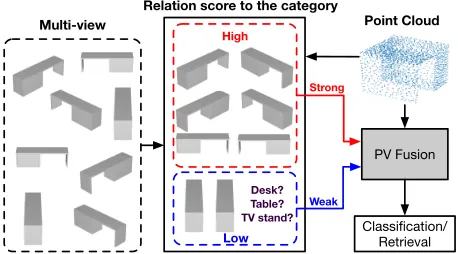
Figure 1: Illustration of the motivation of PVRNet.
search interests are concentrated on dealing with multi-view data and point cloud data.
For view based deep models, multiple views captured by cameras with different angles are employed to represent 3D shape as the input. These views can be efficiently processed with 2D CNN (Su et al. 2015) (Feng et al. 2018). However, limited by camera angles, each view only presents partial local structures of an entire 3D shape, and thus some view features may not be discriminative for shape recognition. For point cloud based deep models, the input data are irregular point clouds obtained from 3D sensors, which well reserves the original spatial structure by 3D coordinates. While con-ventional CNN is not suitable for disordered data, making extracted feature ineffective.
C Concat
Multiplication ⇥<latexit sha1_base64="EKJy6rjXhiAKrBUXGSg3J2VqHFQ=">AAAB7XicbVDLSgNBEOyNrxhfUY9eBoPgKeyKoMegF48RzAOSJcxOZpMxszPLTK8QQv7BiwdFvPo/3vwbJ8keNLGgoajqprsrSqWw6PvfXmFtfWNzq7hd2tnd2z8oHx41rc4M4w2mpTbtiFouheINFCh5OzWcJpHkrWh0O/NbT9xYodUDjlMeJnSgRCwYRSc1uygSbnvlil/15yCrJMhJBXLUe+Wvbl+zLOEKmaTWdgI/xXBCDQom+bTUzSxPKRvRAe84qqhbEk7m107JmVP6JNbGlUIyV39PTGhi7TiJXGdCcWiXvZn4n9fJML4OJ0KlGXLFFoviTBLUZPY66QvDGcqxI5QZ4W4lbEgNZegCKrkQguWXV0nzohr41eD+slK7yeMowgmcwjkEcAU1uIM6NIDBIzzDK7x52nvx3r2PRWvBy2eO4Q+8zx+2K480</latexit><latexit sha1_base64="EKJy6rjXhiAKrBUXGSg3J2VqHFQ=">AAAB7XicbVDLSgNBEOyNrxhfUY9eBoPgKeyKoMegF48RzAOSJcxOZpMxszPLTK8QQv7BiwdFvPo/3vwbJ8keNLGgoajqprsrSqWw6PvfXmFtfWNzq7hd2tnd2z8oHx41rc4M4w2mpTbtiFouheINFCh5OzWcJpHkrWh0O/NbT9xYodUDjlMeJnSgRCwYRSc1uygSbnvlil/15yCrJMhJBXLUe+Wvbl+zLOEKmaTWdgI/xXBCDQom+bTUzSxPKRvRAe84qqhbEk7m107JmVP6JNbGlUIyV39PTGhi7TiJXGdCcWiXvZn4n9fJML4OJ0KlGXLFFoviTBLUZPY66QvDGcqxI5QZ4W4lbEgNZegCKrkQguWXV0nzohr41eD+slK7yeMowgmcwjkEcAU1uIM6NIDBIzzDK7x52nvx3r2PRWvBy2eO4Q+8zx+2K480</latexit><latexit sha1_base64="EKJy6rjXhiAKrBUXGSg3J2VqHFQ=">AAAB7XicbVDLSgNBEOyNrxhfUY9eBoPgKeyKoMegF48RzAOSJcxOZpMxszPLTK8QQv7BiwdFvPo/3vwbJ8keNLGgoajqprsrSqWw6PvfXmFtfWNzq7hd2tnd2z8oHx41rc4M4w2mpTbtiFouheINFCh5OzWcJpHkrWh0O/NbT9xYodUDjlMeJnSgRCwYRSc1uygSbnvlil/15yCrJMhJBXLUe+Wvbl+zLOEKmaTWdgI/xXBCDQom+bTUzSxPKRvRAe84qqhbEk7m107JmVP6JNbGlUIyV39PTGhi7TiJXGdCcWiXvZn4n9fJML4OJ0KlGXLFFoviTBLUZPY66QvDGcqxI5QZ4W4lbEgNZegCKrkQguWXV0nzohr41eD+slK7yeMowgmcwjkEcAU1uIM6NIDBIzzDK7x52nvx3r2PRWvBy2eO4Q+8zx+2K480</latexit><latexit sha1_base64="EKJy6rjXhiAKrBUXGSg3J2VqHFQ=">AAAB7XicbVDLSgNBEOyNrxhfUY9eBoPgKeyKoMegF48RzAOSJcxOZpMxszPLTK8QQv7BiwdFvPo/3vwbJ8keNLGgoajqprsrSqWw6PvfXmFtfWNzq7hd2tnd2z8oHx41rc4M4w2mpTbtiFouheINFCh5OzWcJpHkrWh0O/NbT9xYodUDjlMeJnSgRCwYRSc1uygSbnvlil/15yCrJMhJBXLUe+Wvbl+zLOEKmaTWdgI/xXBCDQom+bTUzSxPKRvRAe84qqhbEk7m107JmVP6JNbGlUIyV39PTGhi7TiJXGdCcWiXvZn4n9fJML4OJ0KlGXLFFoviTBLUZPY66QvDGcqxI5QZ4W4lbEgNZegCKrkQguWXV0nzohr41eD+slK7yeMowgmcwjkEcAU1uIM6NIDBIzzDK7x52nvx3r2PRWvBy2eO4Q+8zx+2K480</latexit>
Pointclouds Feature Extraction
Views Feature Extraction
Point-Multi-view Fusion Point-Single-view
Fusion
Relation Score Module
Output Score …
Multi-View Feature Point Clouds
Feature
C
Global Feature
⇥<latexit sha1_base64="EKJy6rjXhiAKrBUXGSg3J2VqHFQ=">AAAB7XicbVDLSgNBEOyNrxhfUY9eBoPgKeyKoMegF48RzAOSJcxOZpMxszPLTK8QQv7BiwdFvPo/3vwbJ8keNLGgoajqprsrSqWw6PvfXmFtfWNzq7hd2tnd2z8oHx41rc4M4w2mpTbtiFouheINFCh5OzWcJpHkrWh0O/NbT9xYodUDjlMeJnSgRCwYRSc1uygSbnvlil/15yCrJMhJBXLUe+Wvbl+zLOEKmaTWdgI/xXBCDQom+bTUzSxPKRvRAe84qqhbEk7m107JmVP6JNbGlUIyV39PTGhi7TiJXGdCcWiXvZn4n9fJML4OJ0KlGXLFFoviTBLUZPY66QvDGcqxI5QZ4W4lbEgNZegCKrkQguWXV0nzohr41eD+slK7yeMowgmcwjkEcAU1uIM6NIDBIzzDK7x52nvx3r2PRWvBy2eO4Q+8zx+2K480</latexit><latexit sha1_base64="EKJy6rjXhiAKrBUXGSg3J2VqHFQ=">AAAB7XicbVDLSgNBEOyNrxhfUY9eBoPgKeyKoMegF48RzAOSJcxOZpMxszPLTK8QQv7BiwdFvPo/3vwbJ8keNLGgoajqprsrSqWw6PvfXmFtfWNzq7hd2tnd2z8oHx41rc4M4w2mpTbtiFouheINFCh5OzWcJpHkrWh0O/NbT9xYodUDjlMeJnSgRCwYRSc1uygSbnvlil/15yCrJMhJBXLUe+Wvbl+zLOEKmaTWdgI/xXBCDQom+bTUzSxPKRvRAe84qqhbEk7m107JmVP6JNbGlUIyV39PTGhi7TiJXGdCcWiXvZn4n9fJML4OJ0KlGXLFFoviTBLUZPY66QvDGcqxI5QZ4W4lbEgNZegCKrkQguWXV0nzohr41eD+slK7yeMowgmcwjkEcAU1uIM6NIDBIzzDK7x52nvx3r2PRWvBy2eO4Q+8zx+2K480</latexit><latexit sha1_base64="EKJy6rjXhiAKrBUXGSg3J2VqHFQ=">AAAB7XicbVDLSgNBEOyNrxhfUY9eBoPgKeyKoMegF48RzAOSJcxOZpMxszPLTK8QQv7BiwdFvPo/3vwbJ8keNLGgoajqprsrSqWw6PvfXmFtfWNzq7hd2tnd2z8oHx41rc4M4w2mpTbtiFouheINFCh5OzWcJpHkrWh0O/NbT9xYodUDjlMeJnSgRCwYRSc1uygSbnvlil/15yCrJMhJBXLUe+Wvbl+zLOEKmaTWdgI/xXBCDQom+bTUzSxPKRvRAe84qqhbEk7m107JmVP6JNbGlUIyV39PTGhi7TiJXGdCcWiXvZn4n9fJML4OJ0KlGXLFFoviTBLUZPY66QvDGcqxI5QZ4W4lbEgNZegCKrkQguWXV0nzohr41eD+slK7yeMowgmcwjkEcAU1uIM6NIDBIzzDK7x52nvx3r2PRWvBy2eO4Q+8zx+2K480</latexit><latexit sha1_base64="EKJy6rjXhiAKrBUXGSg3J2VqHFQ=">AAAB7XicbVDLSgNBEOyNrxhfUY9eBoPgKeyKoMegF48RzAOSJcxOZpMxszPLTK8QQv7BiwdFvPo/3vwbJ8keNLGgoajqprsrSqWw6PvfXmFtfWNzq7hd2tnd2z8oHx41rc4M4w2mpTbtiFouheINFCh5OzWcJpHkrWh0O/NbT9xYodUDjlMeJnSgRCwYRSc1uygSbnvlil/15yCrJMhJBXLUe+Wvbl+zLOEKmaTWdgI/xXBCDQom+bTUzSxPKRvRAe84qqhbEk7m107JmVP6JNbGlUIyV39PTGhi7TiJXGdCcWiXvZn4n9fJML4OJ0KlGXLFFoviTBLUZPY66QvDGcqxI5QZ4W4lbEgNZegCKrkQguWXV0nzohr41eD+slK7yeMowgmcwjkEcAU1uIM6NIDBIzzDK7x52nvx3r2PRWvBy2eO4Q+8zx+2K480</latexit>
Enhanced View Features
FC layer C
Repeat
Relation Scores Point Cloud
Feature
Multi-View Feature
Relation Score Module
Normalization Function
Figure 2: Architecture of the proposed PVRNet.
the view descriptors with poor discrimination. Therefore, it is essential to mine the relation between the point cloud and different views to achieve a more powerful shape descriptor. In this work, we propose a point-view relation neural net-work called PVRNet, which serves as the first exploration on the relationship between point cloud an multi-view data. At First, a relation score module which computes the re-lation scores between point cloud and each view is intro-duced. And the point-single-view fusion is performed with the point-single-view relation. Second, based on the relation scores, point-view sets (PVSets) which containing the point cloud and the different number of views are fused together to form the point-multi-view fusion feature, which exploits the point-multi-view relation. In this process, only views having higher relation scores are included in PVSets. In such way, more informative view features are preserved and combined with the point cloud feature. Third, the point-single-view fu-sion feature and the point-multi-view fufu-sion feature are fur-ther fused togefur-ther to obtain a unified 3D shape representa-tion. To demonstrate the effectiveness of the proposed PVR-Net, we have performed experiments on ModelNet40 (Wu et al. 2015), the most popular 3D shape dataset, for the tasks of shape classification and retrieval. The experimental results show our framework can outperform not only existing point cloud based or view based methods but also multimodal fu-sion methods. The evaluation results confirm that the point-view relation based feature fusion scheme achieves a pow-erful 3D shape representation.
The main contributions of this paper are two-fold: (1) We introduce the first point-view relation (relevance) based deep neural network to well fuse the multi-view data and point cloud data. Different from existing work treating views equally for the feature fusion, our network fuses the two-modality features by exploiting the correlation between point cloud and each individual view by the relevance (rela-tion score).
(2) We design a new relation fusion scheme for the point cloud feature and the view features. In our fusion scheme, two kinds of relations including point-multi-view relation and point-singe-view relation are exploited to well fuse the point cloud feature and the view features together to form an integrated 3D shape representation.
The rest of our paper is organized as follows. We first present the related work. Then we detail the proposed PVR-Net. After that, we show the experimental results as well as provide some insight-full analysis. In the last section, we conclude the paper.
Related Work
In this section, we briefly review some existing related meth-ods, which can be divided into three directions: view based methods, point clouds based methods and multimodal meth-ods.
View Based Methods For view based models, the input
super-vised by both classification loss and triplet loss. In (Xie et al. 2017), a deep network with auto-encoder structure is pro-posed for 3D feature extraction. Triplet-center loss is intro-duced in (He et al. 2018) as a well-designed loss function especially for retrieval. In (Dai, Xie, and Fang 2018), a bidi-rectional long short-term memory (BiLSTM) module is em-ployed to aggregate information across different views.
Point Clouds Based Methods For point cloud based
mod-els, the input data is a set of points sampled from the sur-face of the 3D shape. Although point cloud preserves more completed structure information, the irregular and unstruc-tured data prevent the usage of conventional 2D CNN. As a pioneer, PointNet (Qi et al. 2017a) first introduces a deep neural network to process disordered point cloud data. To be invariant to the permutation, spatial transform block and a symmetric function-max pooling are applied. Following PointNet++ is proposed in (Qi et al. 2017b) to employ Point-Net module in local point sets and then the local features are aggregated in a hierarchical way. In Kd-Netowrk (Klokov and Lempitsky 2017), features are extracted and gathered by the subdivision of points on Kd-trees. For better exploiting local structure information, DGCNN in (Wang et al. 2018) proposes EdgeConv operation to get edge feature between points and their neighbors. In PointCNN (Li et al. 2018), the χ-Conv operation is proposed to extract local patch features
and a hierarchical structure containing severalχ-Conv
lay-ers is applied like traditional CNN models.
Multimodal Methods Compared with 2D image, 3D
shape usually has more complex structure information, which makes a single modality difficult to describe the 3D shape completely. So the multimodal fusion is necessary and beneficial if in an effective way(Gao et al. 2018). In (Hegde and Zadeh 2016), FusionNet jointly employs vol-umetric data and view data together to learn a unified fea-ture representation. When it comes to the fusion of view data and point cloud data, PVNet (You et al. 2018) uses the global view feature to guide the local feature extraction of point cloud. In the task of 3D object detection, MV3D network (Chen et al. 2017) fuses the point cloud data from LiDAR and view data from camera together to perform de-tection task, which however projects the point cloud data to bird’s eye view map and perform fusion in image level. Our work differs greatly from them by mining the relationships between point cloud data and multi-view data and propos-ing the point-spropos-ingle-view fusion and point-multi-view fusion based on the relation of two modalities.
Point-View Relation Network
In this section, the details of our proposed PVRNet are in-troduced. The input of PVRNet are two modality data of a 3D shape: multi-view and point cloud data. The data acqui-sition setting follows (You et al. 2018) to get 12 views and 1,024 points for each shape. Point cloud and multi-view data are first individually fed to the corresponding feature extrac-tor to get the global feature of the whole point cloud and the view features for each view. Then, a relation score module is proposed to learn the relevance of the point cloud and each view. Based on the relation scores, both point-single-view
Relation Scor e Enhanced View Features Sorted by Relation Scor e Top2 Feature Top3 Feature Top4 Feature C C C Point Cloud Feature FC layer FC layer FC layer Average Pooling Point-Multi-view Fusion
Set{p, v0
1, v02}
<latexit sha1_base64="DgMKqgkfOesDvMGqdIiAAcq7tv4=">AAAB/nicbVDLSsNAFJ3UV62vqLhyM1hEF1KSIuiy6MZlRfuAJoTJ9KYdOnkwMymUUPBX3LhQxK3f4c6/cZpmoa0H7uVwzr3MneMnnEllWd9GaWV1bX2jvFnZ2t7Z3TP3D9oyTgWFFo15LLo+kcBZBC3FFIduIoCEPoeOP7qd+Z0xCMni6FFNEnBDMohYwChRWvLMowdQToaTCzw+8+y8152pZ1atmpUDLxO7IFVUoOmZX04/pmkIkaKcSNmzrUS5GRGKUQ7TipNKSAgdkQH0NI1ICNLN8vOn+FQrfRzEQlekcK7+3shIKOUk9PVkSNRQLnoz8T+vl6rg2s1YlKQKIjp/KEg5VjGeZYH7TABVfKIJoYLpWzEdEkGo0olVdAj24peXSbtes62afX9ZbdwUcZTRMTpB58hGV6iB7lATtRBFGXpGr+jNeDJejHfjYz5aMoqdQ/QHxucPdrCT3A==</latexit><latexit sha1_base64="DgMKqgkfOesDvMGqdIiAAcq7tv4=">AAAB/nicbVDLSsNAFJ3UV62vqLhyM1hEF1KSIuiy6MZlRfuAJoTJ9KYdOnkwMymUUPBX3LhQxK3f4c6/cZpmoa0H7uVwzr3MneMnnEllWd9GaWV1bX2jvFnZ2t7Z3TP3D9oyTgWFFo15LLo+kcBZBC3FFIduIoCEPoeOP7qd+Z0xCMni6FFNEnBDMohYwChRWvLMowdQToaTCzw+8+y8152pZ1atmpUDLxO7IFVUoOmZX04/pmkIkaKcSNmzrUS5GRGKUQ7TipNKSAgdkQH0NI1ICNLN8vOn+FQrfRzEQlekcK7+3shIKOUk9PVkSNRQLnoz8T+vl6rg2s1YlKQKIjp/KEg5VjGeZYH7TABVfKIJoYLpWzEdEkGo0olVdAj24peXSbtes62afX9ZbdwUcZTRMTpB58hGV6iB7lATtRBFGXpGr+jNeDJejHfjYz5aMoqdQ/QHxucPdrCT3A==</latexit><latexit sha1_base64="DgMKqgkfOesDvMGqdIiAAcq7tv4=">AAAB/nicbVDLSsNAFJ3UV62vqLhyM1hEF1KSIuiy6MZlRfuAJoTJ9KYdOnkwMymUUPBX3LhQxK3f4c6/cZpmoa0H7uVwzr3MneMnnEllWd9GaWV1bX2jvFnZ2t7Z3TP3D9oyTgWFFo15LLo+kcBZBC3FFIduIoCEPoeOP7qd+Z0xCMni6FFNEnBDMohYwChRWvLMowdQToaTCzw+8+y8152pZ1atmpUDLxO7IFVUoOmZX04/pmkIkaKcSNmzrUS5GRGKUQ7TipNKSAgdkQH0NI1ICNLN8vOn+FQrfRzEQlekcK7+3shIKOUk9PVkSNRQLnoz8T+vl6rg2s1YlKQKIjp/KEg5VjGeZYH7TABVfKIJoYLpWzEdEkGo0olVdAj24peXSbtes62afX9ZbdwUcZTRMTpB58hGV6iB7lATtRBFGXpGr+jNeDJejHfjYz5aMoqdQ/QHxucPdrCT3A==</latexit><latexit sha1_base64="DgMKqgkfOesDvMGqdIiAAcq7tv4=">AAAB/nicbVDLSsNAFJ3UV62vqLhyM1hEF1KSIuiy6MZlRfuAJoTJ9KYdOnkwMymUUPBX3LhQxK3f4c6/cZpmoa0H7uVwzr3MneMnnEllWd9GaWV1bX2jvFnZ2t7Z3TP3D9oyTgWFFo15LLo+kcBZBC3FFIduIoCEPoeOP7qd+Z0xCMni6FFNEnBDMohYwChRWvLMowdQToaTCzw+8+y8152pZ1atmpUDLxO7IFVUoOmZX04/pmkIkaKcSNmzrUS5GRGKUQ7TipNKSAgdkQH0NI1ICNLN8vOn+FQrfRzEQlekcK7+3shIKOUk9PVkSNRQLnoz8T+vl6rg2s1YlKQKIjp/KEg5VjGeZYH7TABVfKIJoYLpWzEdEkGo0olVdAj24peXSbtes62afX9ZbdwUcZTRMTpB58hGV6iB7lATtRBFGXpGr+jNeDJejHfjYz5aMoqdQ/QHxucPdrCT3A==</latexit>
Set{p, v0
1, v20, v03}
<latexit sha1_base64="rGDARCnlxroXvv1IYmeT+9opMQs=">AAACA3icbVDLSsNAFJ3UV62vqDvdDBbRhZSkCrosunFZ0T6gCWEynbRDJw9mbgolFNz4K25cKOLWn3Dn3zhNu9DWA3M5nHMvd+7xE8EVWNa3UVhaXlldK66XNja3tnfM3b2milNJWYPGIpZtnygmeMQawEGwdiIZCX3BWv7gZuK3hkwqHkcPMEqYG5JexANOCWjJMw/uGThZcoaHJ56d12pez52xZ5atipUDLxJ7RspohrpnfjndmKYhi4AKolTHthJwMyKBU8HGJSdVLCF0QHqso2lEQqbcLL9hjI+10sVBLPWLAOfq74mMhEqNQl93hgT6at6biP95nRSCKzfjUZICi+h0UZAKDDGeBIK7XDIKYqQJoZLrv2LaJ5JQ0LGVdAj2/MmLpFmt2FbFvrso165ncRTRITpCp8hGl6iGblEdNRBFj+gZvaI348l4Md6Nj2lrwZjN7KM/MD5/AGGWlWk=</latexit>
<latexit sha1_base64="rGDARCnlxroXvv1IYmeT+9opMQs=">AAACA3icbVDLSsNAFJ3UV62vqDvdDBbRhZSkCrosunFZ0T6gCWEynbRDJw9mbgolFNz4K25cKOLWn3Dn3zhNu9DWA3M5nHMvd+7xE8EVWNa3UVhaXlldK66XNja3tnfM3b2milNJWYPGIpZtnygmeMQawEGwdiIZCX3BWv7gZuK3hkwqHkcPMEqYG5JexANOCWjJMw/uGThZcoaHJ56d12pez52xZ5atipUDLxJ7RspohrpnfjndmKYhi4AKolTHthJwMyKBU8HGJSdVLCF0QHqso2lEQqbcLL9hjI+10sVBLPWLAOfq74mMhEqNQl93hgT6at6biP95nRSCKzfjUZICi+h0UZAKDDGeBIK7XDIKYqQJoZLrv2LaJ5JQ0LGVdAj2/MmLpFmt2FbFvrso165ncRTRITpCp8hGl6iGblEdNRBFj+gZvaI348l4Md6Nj2lrwZjN7KM/MD5/AGGWlWk=</latexit>
<latexit sha1_base64="rGDARCnlxroXvv1IYmeT+9opMQs=">AAACA3icbVDLSsNAFJ3UV62vqDvdDBbRhZSkCrosunFZ0T6gCWEynbRDJw9mbgolFNz4K25cKOLWn3Dn3zhNu9DWA3M5nHMvd+7xE8EVWNa3UVhaXlldK66XNja3tnfM3b2milNJWYPGIpZtnygmeMQawEGwdiIZCX3BWv7gZuK3hkwqHkcPMEqYG5JexANOCWjJMw/uGThZcoaHJ56d12pez52xZ5atipUDLxJ7RspohrpnfjndmKYhi4AKolTHthJwMyKBU8HGJSdVLCF0QHqso2lEQqbcLL9hjI+10sVBLPWLAOfq74mMhEqNQl93hgT6at6biP95nRSCKzfjUZICi+h0UZAKDDGeBIK7XDIKYqQJoZLrv2LaJ5JQ0LGVdAj2/MmLpFmt2FbFvrso165ncRTRITpCp8hGl6iGblEdNRBFj+gZvaI348l4Md6Nj2lrwZjN7KM/MD5/AGGWlWk=</latexit>
<latexit sha1_base64="rGDARCnlxroXvv1IYmeT+9opMQs=">AAACA3icbVDLSsNAFJ3UV62vqDvdDBbRhZSkCrosunFZ0T6gCWEynbRDJw9mbgolFNz4K25cKOLWn3Dn3zhNu9DWA3M5nHMvd+7xE8EVWNa3UVhaXlldK66XNja3tnfM3b2milNJWYPGIpZtnygmeMQawEGwdiIZCX3BWv7gZuK3hkwqHkcPMEqYG5JexANOCWjJMw/uGThZcoaHJ56d12pez52xZ5atipUDLxJ7RspohrpnfjndmKYhi4AKolTHthJwMyKBU8HGJSdVLCF0QHqso2lEQqbcLL9hjI+10sVBLPWLAOfq74mMhEqNQl93hgT6at6biP95nRSCKzfjUZICi+h0UZAKDDGeBIK7XDIKYqQJoZLrv2LaJ5JQ0LGVdAj2/MmLpFmt2FbFvrso165ncRTRITpCp8hGl6iGblEdNRBFj+gZvaI348l4Md6Nj2lrwZjN7KM/MD5/AGGWlWk=</latexit>
Set{p, v0
1, v02, v03, v04}
<latexit sha1_base64="E4z96fUnQIQShdTXsGxSrm6nZWc=">AAACCXicbVDLSsNAFL2pr1pfUZduBovoQkpSC7osunFZ0T6gCWEynbZDJw9mJoUSunXjr7hxoYhb/8Cdf+M0zUJbL8zhcM693LnHjzmTyrK+jcLK6tr6RnGztLW9s7tn7h+0ZJQIQpsk4pHo+FhSzkLaVExx2okFxYHPadsf3cz89pgKyaLwQU1i6gZ4ELI+I1hpyTPRPVVOGp+j8alnZ1jN8CLDmjP1zLJVsbJCy8TOSRnyanjml9OLSBLQUBGOpezaVqzcFAvFCKfTkpNIGmMywgPa1TTEAZVuml0yRSda6aF+JPQLFcrU3xMpDqScBL7uDLAaykVvJv7ndRPVv3JTFsaJoiGZL+onHKkIzWJBPSYoUXyiCSaC6b8iMsQCE6XDK+kQ7MWTl0mrWrGtin1XK9ev8ziKcATHcAY2XEIdbqEBTSDwCM/wCm/Gk/FivBsf89aCkc8cwp8yPn8AsLiXIQ==</latexit>
<latexit sha1_base64="E4z96fUnQIQShdTXsGxSrm6nZWc=">AAACCXicbVDLSsNAFL2pr1pfUZduBovoQkpSC7osunFZ0T6gCWEynbZDJw9mJoUSunXjr7hxoYhb/8Cdf+M0zUJbL8zhcM693LnHjzmTyrK+jcLK6tr6RnGztLW9s7tn7h+0ZJQIQpsk4pHo+FhSzkLaVExx2okFxYHPadsf3cz89pgKyaLwQU1i6gZ4ELI+I1hpyTPRPVVOGp+j8alnZ1jN8CLDmjP1zLJVsbJCy8TOSRnyanjml9OLSBLQUBGOpezaVqzcFAvFCKfTkpNIGmMywgPa1TTEAZVuml0yRSda6aF+JPQLFcrU3xMpDqScBL7uDLAaykVvJv7ndRPVv3JTFsaJoiGZL+onHKkIzWJBPSYoUXyiCSaC6b8iMsQCE6XDK+kQ7MWTl0mrWrGtin1XK9ev8ziKcATHcAY2XEIdbqEBTSDwCM/wCm/Gk/FivBsf89aCkc8cwp8yPn8AsLiXIQ==</latexit>
<latexit sha1_base64="E4z96fUnQIQShdTXsGxSrm6nZWc=">AAACCXicbVDLSsNAFL2pr1pfUZduBovoQkpSC7osunFZ0T6gCWEynbZDJw9mJoUSunXjr7hxoYhb/8Cdf+M0zUJbL8zhcM693LnHjzmTyrK+jcLK6tr6RnGztLW9s7tn7h+0ZJQIQpsk4pHo+FhSzkLaVExx2okFxYHPadsf3cz89pgKyaLwQU1i6gZ4ELI+I1hpyTPRPVVOGp+j8alnZ1jN8CLDmjP1zLJVsbJCy8TOSRnyanjml9OLSBLQUBGOpezaVqzcFAvFCKfTkpNIGmMywgPa1TTEAZVuml0yRSda6aF+JPQLFcrU3xMpDqScBL7uDLAaykVvJv7ndRPVv3JTFsaJoiGZL+onHKkIzWJBPSYoUXyiCSaC6b8iMsQCE6XDK+kQ7MWTl0mrWrGtin1XK9ev8ziKcATHcAY2XEIdbqEBTSDwCM/wCm/Gk/FivBsf89aCkc8cwp8yPn8AsLiXIQ==</latexit>
<latexit sha1_base64="E4z96fUnQIQShdTXsGxSrm6nZWc=">AAACCXicbVDLSsNAFL2pr1pfUZduBovoQkpSC7osunFZ0T6gCWEynbZDJw9mJoUSunXjr7hxoYhb/8Cdf+M0zUJbL8zhcM693LnHjzmTyrK+jcLK6tr6RnGztLW9s7tn7h+0ZJQIQpsk4pHo+FhSzkLaVExx2okFxYHPadsf3cz89pgKyaLwQU1i6gZ4ELI+I1hpyTPRPVVOGp+j8alnZ1jN8CLDmjP1zLJVsbJCy8TOSRnyanjml9OLSBLQUBGOpezaVqzcFAvFCKfTkpNIGmMywgPa1TTEAZVuml0yRSda6aF+JPQLFcrU3xMpDqScBL7uDLAaykVvJv7ndRPVv3JTFsaJoiGZL+onHKkIzWJBPSYoUXyiCSaC6b8iMsQCE6XDK+kQ7MWTl0mrWrGtin1XK9ev8ziKcATHcAY2XEIdbqEBTSDwCM/wCm/Gk/FivBsf89aCkc8cwp8yPn8AsLiXIQ==</latexit>
Set{p, v1}0
<latexit sha1_base64="cQrlZopjp/yC05HK1UFClOYgfOs=">AAAB+HicbVBNS8NAEJ34WetHox69LBbRg5REBD0WvXisaD+gCWGz3bRLN5uwuynU0F/ixYMiXv0p3vw3btsctPXBwOO9GWbmhSlnSjvOt7Wyura+sVnaKm/v7O5V7P2DlkoySWiTJDyRnRArypmgTc00p51UUhyHnLbD4e3Ub4+oVCwRj3qcUj/GfcEiRrA2UmBXHqj2cpSeo9Fp4HqTwK46NWcGtEzcglShQCOwv7xeQrKYCk04VqrrOqn2cyw1I5xOyl6maIrJEPdp11CBY6r8fHb4BJ0YpYeiRJoSGs3U3xM5jpUax6HpjLEeqEVvKv7ndTMdXfs5E2mmqSDzRVHGkU7QNAXUY5ISzceGYCKZuRWRAZaYaJNV2YTgLr68TFoXNdepufeX1fpNEUcJjuAYzsCFK6jDHTSgCQQyeIZXeLOerBfr3fqYt65Yxcwh/IH1+QM8HJIm</latexit>
<latexit sha1_base64="cQrlZopjp/yC05HK1UFClOYgfOs=">AAAB+HicbVBNS8NAEJ34WetHox69LBbRg5REBD0WvXisaD+gCWGz3bRLN5uwuynU0F/ixYMiXv0p3vw3btsctPXBwOO9GWbmhSlnSjvOt7Wyura+sVnaKm/v7O5V7P2DlkoySWiTJDyRnRArypmgTc00p51UUhyHnLbD4e3Ub4+oVCwRj3qcUj/GfcEiRrA2UmBXHqj2cpSeo9Fp4HqTwK46NWcGtEzcglShQCOwv7xeQrKYCk04VqrrOqn2cyw1I5xOyl6maIrJEPdp11CBY6r8fHb4BJ0YpYeiRJoSGs3U3xM5jpUax6HpjLEeqEVvKv7ndTMdXfs5E2mmqSDzRVHGkU7QNAXUY5ISzceGYCKZuRWRAZaYaJNV2YTgLr68TFoXNdepufeX1fpNEUcJjuAYzsCFK6jDHTSgCQQyeIZXeLOerBfr3fqYt65Yxcwh/IH1+QM8HJIm</latexit>
<latexit sha1_base64="cQrlZopjp/yC05HK1UFClOYgfOs=">AAAB+HicbVBNS8NAEJ34WetHox69LBbRg5REBD0WvXisaD+gCWGz3bRLN5uwuynU0F/ixYMiXv0p3vw3btsctPXBwOO9GWbmhSlnSjvOt7Wyura+sVnaKm/v7O5V7P2DlkoySWiTJDyRnRArypmgTc00p51UUhyHnLbD4e3Ub4+oVCwRj3qcUj/GfcEiRrA2UmBXHqj2cpSeo9Fp4HqTwK46NWcGtEzcglShQCOwv7xeQrKYCk04VqrrOqn2cyw1I5xOyl6maIrJEPdp11CBY6r8fHb4BJ0YpYeiRJoSGs3U3xM5jpUax6HpjLEeqEVvKv7ndTMdXfs5E2mmqSDzRVHGkU7QNAXUY5ISzceGYCKZuRWRAZaYaJNV2YTgLr68TFoXNdepufeX1fpNEUcJjuAYzsCFK6jDHTSgCQQyeIZXeLOerBfr3fqYt65Yxcwh/IH1+QM8HJIm</latexit>
<latexit sha1_base64="cQrlZopjp/yC05HK1UFClOYgfOs=">AAAB+HicbVBNS8NAEJ34WetHox69LBbRg5REBD0WvXisaD+gCWGz3bRLN5uwuynU0F/ixYMiXv0p3vw3btsctPXBwOO9GWbmhSlnSjvOt7Wyura+sVnaKm/v7O5V7P2DlkoySWiTJDyRnRArypmgTc00p51UUhyHnLbD4e3Ub4+oVCwRj3qcUj/GfcEiRrA2UmBXHqj2cpSeo9Fp4HqTwK46NWcGtEzcglShQCOwv7xeQrKYCk04VqrrOqn2cyw1I5xOyl6maIrJEPdp11CBY6r8fHb4BJ0YpYeiRJoSGs3U3xM5jpUax6HpjLEeqEVvKv7ndTMdXfs5E2mmqSDzRVHGkU7QNAXUY5ISzceGYCKZuRWRAZaYaJNV2YTgLr68TFoXNdepufeX1fpNEUcJjuAYzsCFK6jDHTSgCQQyeIZXeLOerBfr3fqYt65Yxcwh/IH1+QM8HJIm</latexit>
M F1
<latexit sha1_base64="w9GzCk2aIA/Qd/xJKEvhHG0Hf6A=">AAAB63icbVBNSwMxEJ2tX7V+VT16CRbBU9mIoMeiIF6ECtYW2qVk02wbmmSXJCuUpX/BiwdFvPqHvPlvzLZ70NYHA4/3ZpiZFyaCG+v7315pZXVtfaO8Wdna3tndq+4fPJo41ZS1aCxi3QmJYYIr1rLcCtZJNCMyFKwdjq9zv/3EtOGxerCThAWSDBWPOCU2l+5u+rhfrfl1fwa0THBBalCg2a9+9QYxTSVTlgpiTBf7iQ0yoi2ngk0rvdSwhNAxGbKuo4pIZoJsdusUnThlgKJYu1IWzdTfExmRxkxk6DolsSOz6OXif143tdFlkHGVpJYpOl8UpQLZGOWPowHXjFoxcYRQzd2tiI6IJtS6eCouBLz48jJ5PKtjv47vz2uNqyKOMhzBMZwChgtowC00oQUURvAMr/DmSe/Fe/c+5q0lr5g5hD/wPn8AWgeNxQ==</latexit>
<latexit sha1_base64="w9GzCk2aIA/Qd/xJKEvhHG0Hf6A=">AAAB63icbVBNSwMxEJ2tX7V+VT16CRbBU9mIoMeiIF6ECtYW2qVk02wbmmSXJCuUpX/BiwdFvPqHvPlvzLZ70NYHA4/3ZpiZFyaCG+v7315pZXVtfaO8Wdna3tndq+4fPJo41ZS1aCxi3QmJYYIr1rLcCtZJNCMyFKwdjq9zv/3EtOGxerCThAWSDBWPOCU2l+5u+rhfrfl1fwa0THBBalCg2a9+9QYxTSVTlgpiTBf7iQ0yoi2ngk0rvdSwhNAxGbKuo4pIZoJsdusUnThlgKJYu1IWzdTfExmRxkxk6DolsSOz6OXif143tdFlkHGVpJYpOl8UpQLZGOWPowHXjFoxcYRQzd2tiI6IJtS6eCouBLz48jJ5PKtjv47vz2uNqyKOMhzBMZwChgtowC00oQUURvAMr/DmSe/Fe/c+5q0lr5g5hD/wPn8AWgeNxQ==</latexit>
<latexit sha1_base64="w9GzCk2aIA/Qd/xJKEvhHG0Hf6A=">AAAB63icbVBNSwMxEJ2tX7V+VT16CRbBU9mIoMeiIF6ECtYW2qVk02wbmmSXJCuUpX/BiwdFvPqHvPlvzLZ70NYHA4/3ZpiZFyaCG+v7315pZXVtfaO8Wdna3tndq+4fPJo41ZS1aCxi3QmJYYIr1rLcCtZJNCMyFKwdjq9zv/3EtOGxerCThAWSDBWPOCU2l+5u+rhfrfl1fwa0THBBalCg2a9+9QYxTSVTlgpiTBf7iQ0yoi2ngk0rvdSwhNAxGbKuo4pIZoJsdusUnThlgKJYu1IWzdTfExmRxkxk6DolsSOz6OXif143tdFlkHGVpJYpOl8UpQLZGOWPowHXjFoxcYRQzd2tiI6IJtS6eCouBLz48jJ5PKtjv47vz2uNqyKOMhzBMZwChgtowC00oQUURvAMr/DmSe/Fe/c+5q0lr5g5hD/wPn8AWgeNxQ==</latexit>
<latexit sha1_base64="w9GzCk2aIA/Qd/xJKEvhHG0Hf6A=">AAAB63icbVBNSwMxEJ2tX7V+VT16CRbBU9mIoMeiIF6ECtYW2qVk02wbmmSXJCuUpX/BiwdFvPqHvPlvzLZ70NYHA4/3ZpiZFyaCG+v7315pZXVtfaO8Wdna3tndq+4fPJo41ZS1aCxi3QmJYYIr1rLcCtZJNCMyFKwdjq9zv/3EtOGxerCThAWSDBWPOCU2l+5u+rhfrfl1fwa0THBBalCg2a9+9QYxTSVTlgpiTBf7iQ0yoi2ngk0rvdSwhNAxGbKuo4pIZoJsdusUnThlgKJYu1IWzdTfExmRxkxk6DolsSOz6OXif143tdFlkHGVpJYpOl8UpQLZGOWPowHXjFoxcYRQzd2tiI6IJtS6eCouBLz48jJ5PKtjv47vz2uNqyKOMhzBMZwChgtowC00oQUURvAMr/DmSe/Fe/c+5q0lr5g5hD/wPn8AWgeNxQ==</latexit>
M F2
<latexit sha1_base64="BMGvwJG6NqvQKB0TnBF7vZ9MKYg=">AAAB63icbVBNS8NAEJ3Ur1q/qh69LBbBU0mKoMeiIF6ECvYD2lA22027dHcTdjdCCf0LXjwo4tU/5M1/4ybNQVsfDDzem2FmXhBzpo3rfjultfWNza3ydmVnd2//oHp41NFRoghtk4hHqhdgTTmTtG2Y4bQXK4pFwGk3mN5kfveJKs0i+WhmMfUFHksWMoJNJt3fDhvDas2tuznQKvEKUoMCrWH1azCKSCKoNIRjrfueGxs/xcowwum8Mkg0jTGZ4jHtWyqxoNpP81vn6MwqIxRGypY0KFd/T6RYaD0Tge0U2Ez0speJ/3n9xIRXfspknBgqyWJRmHBkIpQ9jkZMUWL4zBJMFLO3IjLBChNj46nYELzll1dJp1H33Lr3cFFrXhdxlOEETuEcPLiEJtxBC9pAYALP8ApvjnBenHfnY9FacoqZY/gD5/MHW4uNxg==</latexit>
<latexit sha1_base64="BMGvwJG6NqvQKB0TnBF7vZ9MKYg=">AAAB63icbVBNS8NAEJ3Ur1q/qh69LBbBU0mKoMeiIF6ECvYD2lA22027dHcTdjdCCf0LXjwo4tU/5M1/4ybNQVsfDDzem2FmXhBzpo3rfjultfWNza3ydmVnd2//oHp41NFRoghtk4hHqhdgTTmTtG2Y4bQXK4pFwGk3mN5kfveJKs0i+WhmMfUFHksWMoJNJt3fDhvDas2tuznQKvEKUoMCrWH1azCKSCKoNIRjrfueGxs/xcowwum8Mkg0jTGZ4jHtWyqxoNpP81vn6MwqIxRGypY0KFd/T6RYaD0Tge0U2Ez0speJ/3n9xIRXfspknBgqyWJRmHBkIpQ9jkZMUWL4zBJMFLO3IjLBChNj46nYELzll1dJp1H33Lr3cFFrXhdxlOEETuEcPLiEJtxBC9pAYALP8ApvjnBenHfnY9FacoqZY/gD5/MHW4uNxg==</latexit>
<latexit sha1_base64="BMGvwJG6NqvQKB0TnBF7vZ9MKYg=">AAAB63icbVBNS8NAEJ3Ur1q/qh69LBbBU0mKoMeiIF6ECvYD2lA22027dHcTdjdCCf0LXjwo4tU/5M1/4ybNQVsfDDzem2FmXhBzpo3rfjultfWNza3ydmVnd2//oHp41NFRoghtk4hHqhdgTTmTtG2Y4bQXK4pFwGk3mN5kfveJKs0i+WhmMfUFHksWMoJNJt3fDhvDas2tuznQKvEKUoMCrWH1azCKSCKoNIRjrfueGxs/xcowwum8Mkg0jTGZ4jHtWyqxoNpP81vn6MwqIxRGypY0KFd/T6RYaD0Tge0U2Ez0speJ/3n9xIRXfspknBgqyWJRmHBkIpQ9jkZMUWL4zBJMFLO3IjLBChNj46nYELzll1dJp1H33Lr3cFFrXhdxlOEETuEcPLiEJtxBC9pAYALP8ApvjnBenHfnY9FacoqZY/gD5/MHW4uNxg==</latexit><latexit sha1_base64="BMGvwJG6NqvQKB0TnBF7vZ9MKYg=">AAAB63icbVBNS8NAEJ3Ur1q/qh69LBbBU0mKoMeiIF6ECvYD2lA22027dHcTdjdCCf0LXjwo4tU/5M1/4ybNQVsfDDzem2FmXhBzpo3rfjultfWNza3ydmVnd2//oHp41NFRoghtk4hHqhdgTTmTtG2Y4bQXK4pFwGk3mN5kfveJKs0i+WhmMfUFHksWMoJNJt3fDhvDas2tuznQKvEKUoMCrWH1azCKSCKoNIRjrfueGxs/xcowwum8Mkg0jTGZ4jHtWyqxoNpP81vn6MwqIxRGypY0KFd/T6RYaD0Tge0U2Ez0speJ/3n9xIRXfspknBgqyWJRmHBkIpQ9jkZMUWL4zBJMFLO3IjLBChNj46nYELzll1dJp1H33Lr3cFFrXhdxlOEETuEcPLiEJtxBC9pAYALP8ApvjnBenHfnY9FacoqZY/gD5/MHW4uNxg==</latexit>
M F3
<latexit sha1_base64="lX6N/61Igd8dkUSjm0LjhCwqD2Q=">AAAB63icbVBNS8NAEJ3Ur1q/oh69LBbBU0lU0GNREC9CBfsBbSib7aZdursJuxuhhP4FLx4U8eof8ua/cdPmoK0PBh7vzTAzL0w408bzvp3Syura+kZ5s7K1vbO75+4ftHScKkKbJOax6oRYU84kbRpmOO0kimIRctoOxze5336iSrNYPppJQgOBh5JFjGCTS/e3/fO+W/Vq3gxomfgFqUKBRt/96g1ikgoqDeFY667vJSbIsDKMcDqt9FJNE0zGeEi7lkosqA6y2a1TdGKVAYpiZUsaNFN/T2RYaD0Roe0U2Iz0opeL/3nd1ERXQcZkkhoqyXxRlHJkYpQ/jgZMUWL4xBJMFLO3IjLCChNj46nYEPzFl5dJ66zmezX/4aJavy7iKMMRHMMp+HAJdbiDBjSBwAie4RXeHOG8OO/Ox7y15BQzh/AHzucPXQ+Nxw==</latexit>
<latexit sha1_base64="lX6N/61Igd8dkUSjm0LjhCwqD2Q=">AAAB63icbVBNS8NAEJ3Ur1q/oh69LBbBU0lU0GNREC9CBfsBbSib7aZdursJuxuhhP4FLx4U8eof8ua/cdPmoK0PBh7vzTAzL0w408bzvp3Syura+kZ5s7K1vbO75+4ftHScKkKbJOax6oRYU84kbRpmOO0kimIRctoOxze5336iSrNYPppJQgOBh5JFjGCTS/e3/fO+W/Vq3gxomfgFqUKBRt/96g1ikgoqDeFY667vJSbIsDKMcDqt9FJNE0zGeEi7lkosqA6y2a1TdGKVAYpiZUsaNFN/T2RYaD0Roe0U2Iz0opeL/3nd1ERXQcZkkhoqyXxRlHJkYpQ/jgZMUWL4xBJMFLO3IjLCChNj46nYEPzFl5dJ66zmezX/4aJavy7iKMMRHMMp+HAJdbiDBjSBwAie4RXeHOG8OO/Ox7y15BQzh/AHzucPXQ+Nxw==</latexit>
<latexit sha1_base64="lX6N/61Igd8dkUSjm0LjhCwqD2Q=">AAAB63icbVBNS8NAEJ3Ur1q/oh69LBbBU0lU0GNREC9CBfsBbSib7aZdursJuxuhhP4FLx4U8eof8ua/cdPmoK0PBh7vzTAzL0w408bzvp3Syura+kZ5s7K1vbO75+4ftHScKkKbJOax6oRYU84kbRpmOO0kimIRctoOxze5336iSrNYPppJQgOBh5JFjGCTS/e3/fO+W/Vq3gxomfgFqUKBRt/96g1ikgoqDeFY667vJSbIsDKMcDqt9FJNE0zGeEi7lkosqA6y2a1TdGKVAYpiZUsaNFN/T2RYaD0Roe0U2Iz0opeL/3nd1ERXQcZkkhoqyXxRlHJkYpQ/jgZMUWL4xBJMFLO3IjLCChNj46nYEPzFl5dJ66zmezX/4aJavy7iKMMRHMMp+HAJdbiDBjSBwAie4RXeHOG8OO/Ox7y15BQzh/AHzucPXQ+Nxw==</latexit>
<latexit sha1_base64="lX6N/61Igd8dkUSjm0LjhCwqD2Q=">AAAB63icbVBNS8NAEJ3Ur1q/oh69LBbBU0lU0GNREC9CBfsBbSib7aZdursJuxuhhP4FLx4U8eof8ua/cdPmoK0PBh7vzTAzL0w408bzvp3Syura+kZ5s7K1vbO75+4ftHScKkKbJOax6oRYU84kbRpmOO0kimIRctoOxze5336iSrNYPppJQgOBh5JFjGCTS/e3/fO+W/Vq3gxomfgFqUKBRt/96g1ikgoqDeFY667vJSbIsDKMcDqt9FJNE0zGeEi7lkosqA6y2a1TdGKVAYpiZUsaNFN/T2RYaD0Roe0U2Iz0opeL/3nd1ERXQcZkkhoqyXxRlHJkYpQ/jgZMUWL4xBJMFLO3IjLCChNj46nYEPzFl5dJ66zmezX/4aJavy7iKMMRHMMp+HAJdbiDBjSBwAie4RXeHOG8OO/Ox7y15BQzh/AHzucPXQ+Nxw==</latexit>
M F4
<latexit sha1_base64="UIHsiEwOVdxCtRhBtpkpyKHo27A=">AAAB63icbVBNS8NAEJ3Ur1q/qh69LBbBU0mkoMeiIF6ECvYD2lA22027dHcTdjdCCf0LXjwo4tU/5M1/4ybNQVsfDDzem2FmXhBzpo3rfjultfWNza3ydmVnd2//oHp41NFRoghtk4hHqhdgTTmTtG2Y4bQXK4pFwGk3mN5kfveJKs0i+WhmMfUFHksWMoJNJt3fDhvDas2tuznQKvEKUoMCrWH1azCKSCKoNIRjrfueGxs/xcowwum8Mkg0jTGZ4jHtWyqxoNpP81vn6MwqIxRGypY0KFd/T6RYaD0Tge0U2Ez0speJ/3n9xIRXfspknBgqyWJRmHBkIpQ9jkZMUWL4zBJMFLO3IjLBChNj46nYELzll1dJ56LuuXXvoVFrXhdxlOEETuEcPLiEJtxBC9pAYALP8ApvjnBenHfnY9FacoqZY/gD5/MHXpONyA==</latexit> <latexit sha1_base64="UIHsiEwOVdxCtRhBtpkpyKHo27A=">AAAB63icbVBNS8NAEJ3Ur1q/qh69LBbBU0mkoMeiIF6ECvYD2lA22027dHcTdjdCCf0LXjwo4tU/5M1/4ybNQVsfDDzem2FmXhBzpo3rfjultfWNza3ydmVnd2//oHp41NFRoghtk4hHqhdgTTmTtG2Y4bQXK4pFwGk3mN5kfveJKs0i+WhmMfUFHksWMoJNJt3fDhvDas2tuznQKvEKUoMCrWH1azCKSCKoNIRjrfueGxs/xcowwum8Mkg0jTGZ4jHtWyqxoNpP81vn6MwqIxRGypY0KFd/T6RYaD0Tge0U2Ez0speJ/3n9xIRXfspknBgqyWJRmHBkIpQ9jkZMUWL4zBJMFLO3IjLBChNj46nYELzll1dJ56LuuXXvoVFrXhdxlOEETuEcPLiEJtxBC9pAYALP8ApvjnBenHfnY9FacoqZY/gD5/MHXpONyA==</latexit> <latexit sha1_base64="UIHsiEwOVdxCtRhBtpkpyKHo27A=">AAAB63icbVBNS8NAEJ3Ur1q/qh69LBbBU0mkoMeiIF6ECvYD2lA22027dHcTdjdCCf0LXjwo4tU/5M1/4ybNQVsfDDzem2FmXhBzpo3rfjultfWNza3ydmVnd2//oHp41NFRoghtk4hHqhdgTTmTtG2Y4bQXK4pFwGk3mN5kfveJKs0i+WhmMfUFHksWMoJNJt3fDhvDas2tuznQKvEKUoMCrWH1azCKSCKoNIRjrfueGxs/xcowwum8Mkg0jTGZ4jHtWyqxoNpP81vn6MwqIxRGypY0KFd/T6RYaD0Tge0U2Ez0speJ/3n9xIRXfspknBgqyWJRmHBkIpQ9jkZMUWL4zBJMFLO3IjLBChNj46nYELzll1dJ56LuuXXvoVFrXhdxlOEETuEcPLiEJtxBC9pAYALP8ApvjnBenHfnY9FacoqZY/gD5/MHXpONyA==</latexit> <latexit sha1_base64="UIHsiEwOVdxCtRhBtpkpyKHo27A=">AAAB63icbVBNS8NAEJ3Ur1q/qh69LBbBU0mkoMeiIF6ECvYD2lA22027dHcTdjdCCf0LXjwo4tU/5M1/4ybNQVsfDDzem2FmXhBzpo3rfjultfWNza3ydmVnd2//oHp41NFRoghtk4hHqhdgTTmTtG2Y4bQXK4pFwGk3mN5kfveJKs0i+WhmMfUFHksWMoJNJt3fDhvDas2tuznQKvEKUoMCrWH1azCKSCKoNIRjrfueGxs/xcowwum8Mkg0jTGZ4jHtWyqxoNpP81vn6MwqIxRGypY0KFd/T6RYaD0Tge0U2Ez0speJ/3n9xIRXfspknBgqyWJRmHBkIpQ9jkZMUWL4zBJMFLO3IjLBChNj46nYELzll1dJ56LuuXXvoVFrXhdxlOEETuEcPLiEJtxBC9pAYALP8ApvjnBenHfnY9FacoqZY/gD5/MHXpONyA==</latexit> Top1 Feature
C FC layer
FC layer C Repeat Point Cloud Feature Enhanced View Features Point-Single-view Fusion Max Pooling C Concat
SF<latexit sha1_base64="vYypQZPXE8iyG8+iu8NB+oTNO94=">AAAB6XicbVDLSgNBEOyNrxhfUY9eBoPgKeyKoMegIB7jIw9IljA76U2GzM4uM7NCWPIHXjwo4tU/8ubfOEn2oIkFDUVVN91dQSK4Nq777RRWVtfWN4qbpa3tnd298v5BU8epYthgsYhVO6AaBZfYMNwIbCcKaRQIbAWj66nfekKleSwfzThBP6IDyUPOqLHS/cNNr1xxq+4MZJl4OalAjnqv/NXtxyyNUBomqNYdz02Mn1FlOBM4KXVTjQllIzrAjqWSRqj9bHbphJxYpU/CWNmShszU3xMZjbQeR4HtjKgZ6kVvKv7ndVITXvoZl0lqULL5ojAVxMRk+jbpc4XMiLEllClubyVsSBVlxoZTsiF4iy8vk+ZZ1XOr3t15pXaVx1GEIziGU/DgAmpwC3VoAIMQnuEV3pyR8+K8Ox/z1oKTzxzCHzifPz2DjSc=</latexit><latexit sha1_base64="vYypQZPXE8iyG8+iu8NB+oTNO94=">AAAB6XicbVDLSgNBEOyNrxhfUY9eBoPgKeyKoMegIB7jIw9IljA76U2GzM4uM7NCWPIHXjwo4tU/8ubfOEn2oIkFDUVVN91dQSK4Nq777RRWVtfWN4qbpa3tnd298v5BU8epYthgsYhVO6AaBZfYMNwIbCcKaRQIbAWj66nfekKleSwfzThBP6IDyUPOqLHS/cNNr1xxq+4MZJl4OalAjnqv/NXtxyyNUBomqNYdz02Mn1FlOBM4KXVTjQllIzrAjqWSRqj9bHbphJxYpU/CWNmShszU3xMZjbQeR4HtjKgZ6kVvKv7ndVITXvoZl0lqULL5ojAVxMRk+jbpc4XMiLEllClubyVsSBVlxoZTsiF4iy8vk+ZZ1XOr3t15pXaVx1GEIziGU/DgAmpwC3VoAIMQnuEV3pyR8+K8Ox/z1oKTzxzCHzifPz2DjSc=</latexit><latexit sha1_base64="vYypQZPXE8iyG8+iu8NB+oTNO94=">AAAB6XicbVDLSgNBEOyNrxhfUY9eBoPgKeyKoMegIB7jIw9IljA76U2GzM4uM7NCWPIHXjwo4tU/8ubfOEn2oIkFDUVVN91dQSK4Nq777RRWVtfWN4qbpa3tnd298v5BU8epYthgsYhVO6AaBZfYMNwIbCcKaRQIbAWj66nfekKleSwfzThBP6IDyUPOqLHS/cNNr1xxq+4MZJl4OalAjnqv/NXtxyyNUBomqNYdz02Mn1FlOBM4KXVTjQllIzrAjqWSRqj9bHbphJxYpU/CWNmShszU3xMZjbQeR4HtjKgZ6kVvKv7ndVITXvoZl0lqULL5ojAVxMRk+jbpc4XMiLEllClubyVsSBVlxoZTsiF4iy8vk+ZZ1XOr3t15pXaVx1GEIziGU/DgAmpwC3VoAIMQnuEV3pyR8+K8Ox/z1oKTzxzCHzifPz2DjSc=</latexit><latexit sha1_base64="vYypQZPXE8iyG8+iu8NB+oTNO94=">AAAB6XicbVDLSgNBEOyNrxhfUY9eBoPgKeyKoMegIB7jIw9IljA76U2GzM4uM7NCWPIHXjwo4tU/8ubfOEn2oIkFDUVVN91dQSK4Nq777RRWVtfWN4qbpa3tnd298v5BU8epYthgsYhVO6AaBZfYMNwIbCcKaRQIbAWj66nfekKleSwfzThBP6IDyUPOqLHS/cNNr1xxq+4MZJl4OalAjnqv/NXtxyyNUBomqNYdz02Mn1FlOBM4KXVTjQllIzrAjqWSRqj9bHbphJxYpU/CWNmShszU3xMZjbQeR4HtjKgZ6kVvKv7ndVITXvoZl0lqULL5ojAVxMRk+jbpc4XMiLEllClubyVsSBVlxoZTsiF4iy8vk+ZZ1XOr3t15pXaVx1GEIziGU/DgAmpwC3VoAIMQnuEV3pyR8+K8Ox/z1oKTzxzCHzifPz2DjSc=</latexit>
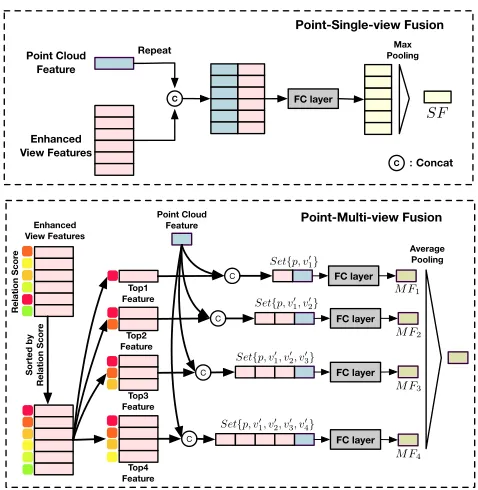
Figure 3: Point-multi-view fusion and point-single-view fu-sion modules. The enhanced view features are sorted by the relation scores. Different colors denote different significance values of relation scores. From the red to green, the relation scores decrease from 1 to 0.
fusion and point-multi-view fusion are further exploited to build a unified feature for 3D shape. The unified feature is then used for the applications of shape classification and re-trieval. The architecture of the whole framework is shown in Fig. 2
Feature Extraction
Point cloud Let a point cloud of F-dimension with n
points beX ={x1, . . . , xn} ⊆RF. In the general setting
ofF = 3, points are presented with 3D coordinates. We
em-ploy DGCNN (Wang et al. 2018) to extract the global feature from point cloud. DGCNN includes a 3D spatial transform network, several EdgeConv layers, and a max-pooling to ag-gregate features. Note that our framework is compatible with various models for point cloud feature extraction.
Multi-view Each 3D shape is represented by a group of
rendered views captured by a predefined camera array. Fol-lowing MVCNN (Su et al. 2015), we feed these views to a group of CNNs that share the same parameters. The view-pooling is discarded so that the features of each view are preserved.
Relation Score Module
all view features cannot be integrated effectively by a sim-ple equal pooling scheme. Hence, it is essential to mine the relation between point cloud and each view so as to find out an effective solution for feature fusion.
Inspired by the relational reasoning network for the VQA task (Santoro et al. 2017), we define the relation score of
point cloud andithview as:
RSi(P, V) =ξ(gθ(p, vi)), (1)
wherepis the point cloud feature andV ={v1, . . . , vn}
de-notesnextracted view features from a 3D shape. The
func-tiongθreasons the relations between the point cloud feature
and per-view feature and learns an effective fusion. In our
network,gθ uses the simple multilayer perceptrons (MLP)
andξis the normalization function (sigmoid function is used
in our implementation). For each view, the output is a re-lation score ranging from 0 to 1, which represents the sig-nificance of the correlation between different views and the point cloud.
The relation scores have two purposes: 1) enhance the view features in a residual way and 2) decide which view feature will be included in point-multi-view fusion. For fea-ture enhancement, the view feafea-tures that have a stronger cor-relation with the point cloud feature will be assigned a larger
significance. We use the relation scoreRS(P, V)to enhance
the view features by a residual connection:
vi0=vi∗(1 +RSi(P, V)) (2)
where vi ∗ RSi(P, V) is to refine the feature by relation
score and is then added to origin view featurevi to
gener-ate the enhanced feature v0
i. After that, the enhanced view
feature, point cloud feature, and relation scores are sent into the point-single-view fusion module and point-multi-view fusion module to get a integrated feature. The point-single-view fusion and point-multi-point-single-view fusion are illustrated in Fig. 3
Point-Single-View Fusion
Each view has its own local feature, so it is reasonable to em-ploy the fusion between the point cloud and different views.
Consider a point-view set (PVSet) Sn = {p, v10, . . . , vn0},
wherendenotes the number of views in this set andp
de-notes the corresponding point cloud feature. According to the number of views in PVSets, point-single-view fusion and point-multi-view fusion are performed. Point-single-view
fusion module takesnPVSets containing point cloud and
each view as input and aggregates the pairwise relations.
When the PVSet only includes single view i , S1i =
{p, v0
i}. The pairwise set fusion function can be defined as:
SFi=hφ(p, v0i), (3)
where the subscriptidenotes that the fusion is about a
point-single-view set with theithview. We use multilayer
percep-trons (MLP) as functionhφ. For point-single-view set, only
one set can not provide enough information. We therefore
aggregaten set relations covering all views with a simple
max-pooling operation. The final output of this block can be described as below:
SF usion=SF =M axpooling{SF1, . . . , SFn}, (4)
Point-Multi-View Fusion
We further explore the fusion between point cloud and mul-tiple views. Under this circumstance, point cloud is com-bined with several views to form PVSets. Relation scores here decide which view features are included in the sets. The view features are sorted according to the values of the relation scores. Then the view features with higher re-lation scores are selected to combine point cloud feature
to form PVSets. A set with k views can be denoted as
Sk ={p, v10, . . . , vk0}, where the top-kviews that have the
highest relation scores are included. The fusion function can be extended from the point-single-view fusion above:
M Fk =h0φ(p, v10, . . . , vk0). (5)
With total K PVSets, different point-multi-view
combina-tions are accumulated together:
M F usion= 1
K
K
X
k=1
M Fk. (6)
After that, the fusion features of two levels are aggregated together by a concatenation operation to generate the final point-view relation feature:
F usion=Concat(SF usion, M F usion), (7)
where SF usion denotes point-single-view fusion feature
and M F usion denotes point-multi-view fusion feature.
Then the final feature is followed by MLPs and softmax function to produce the classification result.
Implementation and Training Strategy
In our PVRNet framework, point cloud feature and view fea-ture extraction can be produced by any view based and point cloud based models. In our implementation, the 12 view fea-tures are extracted by 12 AlexNets that share the same pa-rameters like (Su et al. 2015). No view-pooling is performed to preserve the feature of each view. PVRNet is trained in an end-to-end fashion. The view feature extraction model and point cloud feature extraction model is initialized by the pre-trained MVCNN model and DGCNN model. And an alternative optimization strategy is adopted to update our framework. In first 10 epochs, the feature extraction model is fixed and we only fine-tune the other part (including relation score module, single-view fusion module and point-multi-view fusion module). After the first 10 epochs, the all parameters are updated together to get better performance. The intuition of this strategy is that the feature extraction part is well-initialized but the relation module and fusion modules are relatively weak in the beginning, and this strat-egy is more stable for the fusion.
Experiments
Method Data Representation. Classification Retrieval
Number of Views (Overall Accuracy) (mAP)
(1) 3D ShapeNets (Wu et al. 2015) Volumetric 77.3% 49.2%
(2) VoxNet (Maturana and Scherer 2015) Volumetric 83.0%
-(3) VRN (Brock et al. 2016) Volumetric 91.3%
-(4) MVCNN-MultiRes (Qi et al. 2016) Volumetric 91.4%
-(5) LFD (Chen et al. 2003) 10 Views 75.5% 40.9%
(6) MVCNN (AlexNet) (Su et al. 2015) 12 Views 89.9% 80.2%
(7) MVCNN (GoogLeNet) 12 Views 92.2% 83.0%
(8) GVCNN (GoogLeNet) (Feng et al. 2018) 8 Views 93.1% 84.5%
(9) GVCNN (GoogLeNet) 12 Views 92.6% 85.7%
(10) MVCNN with TCL (He et al. 2018) 12 Views - 88.0%
(11) PointNet (Qi et al. 2017a) Point Cloud 89.2%
-(12) PointNet++ (Qi et al. 2017b) Point Cloud 90.7%
-(13) KD-Network (Klokov and Lempitsky 2017) Point Cloud 91.8%
-(14) SO-Net (Li, Chen, and Lee 2018) Point Cloud 90.9%
-(15) DGCNN (Wang et al. 2018) Point Cloud 92.2% 81.6%
(16) FusionNet (Hegde and Zadeh 2016) Volumetric and 20/60 Views 90.8%
-(17) PVNet (You et al. 2018) Point Cloud and 12 Views 93.2% 89.5%
(18)PVRNet(AlexNet) Point Cloud and 12 Views 93.6% 90.5%
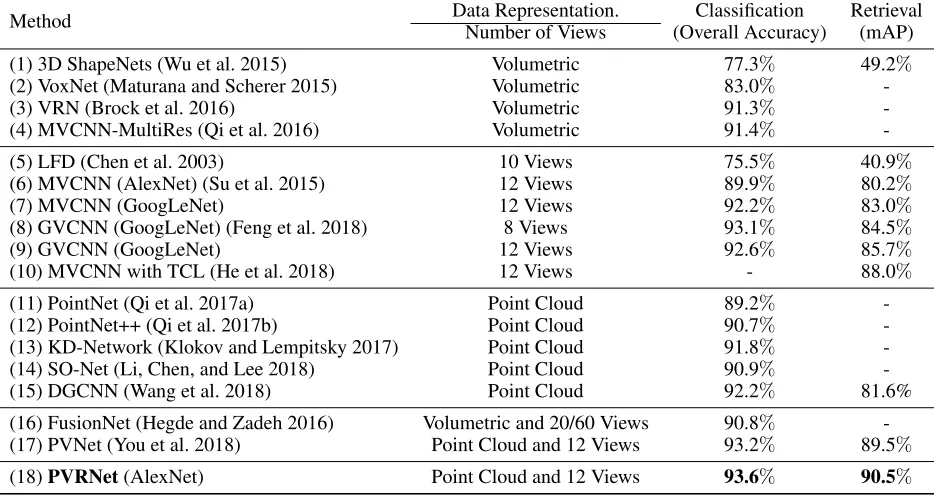
Table 1: Classification and retrieval results on the ModelNet40 dataset. In experiments, our proposed framework PVRNet is compared with state-of-the-art models that use different representations of 3D shapes. MVCNN (GoogLeNet) means that GoogLeNet is employed as base architecture for weight-shared CNN in MVCNN. PVRNet (AlexNet) indicates using AlexNet as base structure in our view feature extraction and our PVNet framework can get superior performance over other models.
module is also investigated. At last, we explore the effect of different number of views and points toward the classifica-tion performance.
0 . 0 0 . 1 0 . 2 0 . 3 0 . 4 0 . 5 0 . 6 0 . 7 0 . 8 0 . 9 1 . 0 0 . 2
0 . 4 0 . 6 0 . 8 1 . 0
P
re
c
is
io
n
R e c a l l
S p h e r i c a l H a r m o n i c L i g h t F i e l d M V C N N M V C N N + m e t r i c G V C N N G V C N N + m e t r i c P V R N e t
Figure 4: The precision-recall curves of our PVRNet and other compared methods in the task of shape retrieval. In MVCNN and GVCNN models, GoogLeNet is employed as the base network. The metric denotes the low-rank Maha-lanobis metric learning is used. Our PVRNet, with no spe-cific metric and retrieval loss employed, still get superior performance over others.
3D Shape Recognition and Retrieval
To demonstrate the performance of the proposed PVRNet on 3D shape recognition and retrieval, comprehensive experi-ments are conducted on the dataset of Princeton ModelNet (Wu et al. 2015). ModelNet contains 127,912 3D CAD mod-els from 662 categories. ModelNet40, a more commonly used subset containing 12,311 3D CAD models from 40 popular categories, is applied in our experiments. Our train-ing and test split setttrain-ing follows (Wu et al. 2015). Individu-ally, point cloud data are sampled from the surface of each CAD model as (Qi et al. 2017a) and view data are captured by camera as the setting in (Su et al. 2015).
In experiments, various methods based on different modalities are compared with PVRNet. Volumetric based methods such as 3D ShapeNets(Wu et al. 2015), Vox-elNet(Maturana and Scherer 2015), VRN(Brock et al. 2016), and MVCNN-MultiRes(Qi et al. 2016) are com-pared. Multi-view based methods consist of hand-craft de-scriptor LFD(Chen et al. 2003), deep learning models MVCNN(Su et al. 2015), and GVCNN(Feng et al. 2018). PointNet(Qi et al. 2017a), PoineNet++(Qi et al. 2017b), Kd-Network(Klokov and Lempitsky 2017), DGCNN(Wang et al. 2018) and SO-Net(Li, Chen, and Lee 2018) are included in the point cloud based methods. For multimodal methods, FusionNet(Hegde and Zadeh 2016) and PVNet(You et al. 2018) are compared.
Models Mean Class Overall
Acc. Acc.
Point Cloud Model 90.2% 92.2%
Multi-View Model 87.6% 89.9%
Late Fusion 90.81% 92.62%
SFusion 90.93% 92.84%
S+M Fusion(1+2view) 91.35% 92.99%
S+M Fusion(1+2+3view) 91.43% 93.47%
S+M Fusion(1+2+3+4view) 91.64% 93.61%
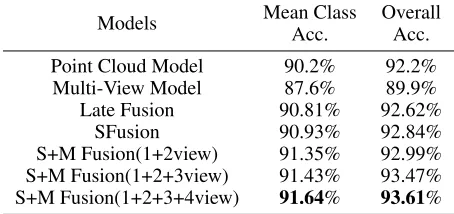
Table 2: Ablation experiments of our framework on the clas-sification task.
view based models, our proposed PVRNet with AlexNet has an improvement of 1.4% and 7.5% over the classic MVCNN (use GoogLeNet as backbone) on the classifica-tion and retrieval tasks, respectively. PVRNet also outper-forms the state-of-the-art GVCNN with the improvement of 0.5% and 4.8% on the classification and retrieval tasks, re-spectively. Compared with state-of-the-art point cloud based models, PVRNet outperforms DGCNN by 1.4% and 8.9% in terms of classification and retrieval accuracy, respectively. For multimodal methods, the performance of PVRNet also outperforms others.
For retrieval task, we take the 256-dimensional feature before the last fully-connected layer as the shape repre-sentation. For MVCNN and GVCNN, a low-rank Maha-lanobis metric learning (Su et al. 2015) is applied to boost the retrieval performance. As in (He et al. 2018), triplet-center loss is used as the loss function. Trained with gen-eral softmax loss and without low-rank Mahalanobis met-ric, PVRNet can achieve the state-of-the-art retrieval perfor-mance with 90.5% mAP, which indicates the capability of the fused feature for 3D shape representation. Fig. 4 presents the precision-recall curve of our model. It is shown that our PVRNet, without specific metric learning and retrieval loss, can still significantly outperforms the point cloud based model and view based methods that have triplet-center loss and metric learning.
Ablation Analysis
In this section, we go deep into PVRNet to investigate the ef-fectiveness of our point-view relation fusion method. There are two popular fusion methods, early fusion and late fusion, for multimodal fusion task. For the problem of the fusion of point cloud and multi-view in this paper, early fusion is not available because of the different dimension number of two representations as well as the disordered property of point cloud. However, as for late fusion, the global feature from point cloud model and global view feature after the step of view-pooling can be directly concatenated together for shape representation. But various views have different rela-tionships with point cloud. Some views are more informative for combining with point cloud feature. So in our PVRNet, the relations between point cloud and views are described by relation scores, which then guide point-view fusion to build a unified representation for 3D shape.
Models Number of Mean Class Overall
Views Acc Acc
MVCNN
4 82.5% 84.6%
8 87.2% 89.0%
10 87.4% 89.3%
12 87.6% 89.9%
GVCNN
4 88.1% 90.3%
8 90.2% 92.1%
10 90.4% 92.4%
12 90.7% 92.6%
PVRNet
4 89.5% 91.5%
8 91.4% 93.2%
10 91.5% 93.5%
12 91.6% 93.6%
Table 3: The comparison of different number of input views. 1,024 points and 12 views are feed to train models and we respectively employ 4, 8, 10, 12 views as our test data that
are captured by cameras with 90◦, 45◦, 36◦, 30◦ interval.
Top: The result of MVCNN; Middle: The result of GVCNN; Bottom: The result of our PVRNet.
To well study the effectiveness of PVRNet, we eval-uate the performance of different combinations of our model’s components. And the influence of different num-ber of PVsets is investigated. The detailed experimental results are shown in Tab. 2. In the table, ”Point Cloud Model” denotes the point cloud feature extraction model used in PVRNet. ”Multi-View Model” denotes the multi-view feature extraction model we use where MVCNN with AlexNet (Krizhevsky, Sutskever, and Hinton 2012) is em-ployed. ”Late Fusion” denotes the result of direct late fu-sion of two global features. ”SFufu-sion” denotes only Point-single-view fusion block is employed. ”S+M Fusion(1+...+
nview)” denotes employing both point-single-view fusion
and point-multi-view fusion withnsets, where each set
in-cludes point cloud and nviews. PVRNet outperforms not
only the baseline multi-view and point cloud methods by a large margin but also the late fusion method by about 1% in overall accuracy and 0.8% in mean class accuracy. And it can be seen that our single-view fusion and point-multi-view fusion are both beneficial to the performance. With more meaningful views included in point-multi-view fusion block, the performance of our network progressively improves from 92.84% to 93.61%, which validates the ef-fectiveness of our point-multi-view fusion.
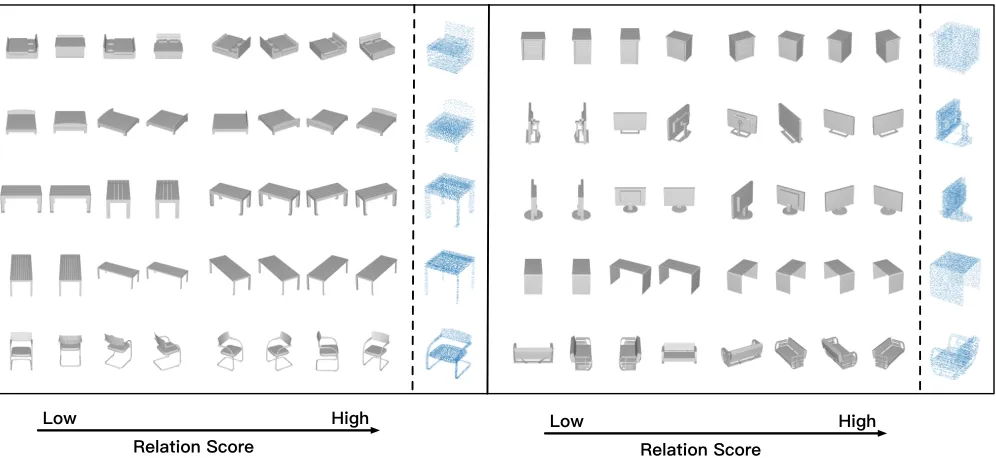
Figure 5: Visualization of relation score module. For each 3D shape, we list the views with relation scores from low to high value and corresponding point cloud samples.
1 28 2 56 3 84 5 12 6 40 7 68 8 96 1 02 4 0 . 2
0 . 4 0 . 6 0 . 8 1 . 0
O
v
e
ra
ll
A
c
c
u
ra
c
y
N u m b e r o f P o i n t s P V R N e t D G C N N
(a) Overall accuracy
1 28 2 56 3 84 5 12 6 40 7 68 8 96 1 02 4 0 . 2
0 . 4 0 . 6 0 . 8 1 . 0
O
v
e
ra
ll
A
c
c
u
ra
c
y
N u m b e r o f P o i n t s P V R N e t D G C N N
(b) Mean class accuracy
Figure 6: The experimental result of different number of in-put points. Left: Overall accuracy of PVRNet and DGCNN. Right: Mean class accuracy of PVRNet and DGCNN.
Influence of Missing Data
In this section, we evaluate the robustness of PVRNet to-ward missing data. In real world, it often happens that we can only get part of data as input. At that time, we also ex-pect the network to give satisfactory performance under this situation. It can demonstrate the generalization ability and robustness of our method.
At first, we investigate the influence of missing views. PVRNet is trained with 12 views and 1024 points. In the testing, we keep the number of points fixed as 1,024 but vary the number of views. 4, 8 10, 12 views are successively se-lected as input. The comparison of PVRNet and MVCNN and GVCNN is shown in Tab. 3. Note that MVCNN and GVCNN are also trained with 12 views. It indicates that with the reduced views, PVRNet can still keep a high per-formance of more than 91% accuracy. And with 4 views, compared with the performance drop of 5.3% of MVCNN
and 2.3%, PVRNet only drops 2.1%.
Then we explore the influence of missing points. In the testing, the number of views is fixed at 12 and the num-ber of points varies from 128 to 1,024. 128, 256, 384, 512, 640, 768, 896, and 1,024 points are respectively selected in the experiment. PVRNet is compared with state-of-the-art point cloud based model DGCNN. From the Fig. 6, we can find that point missing greatly degrades the performance of DGCNN. When 256 views are used, the performance of DGCNN drops to about 50%, while PVRNet can still keep a satisfactory performance of around 80%. The relatively sta-ble result benefits from the complement of corresponding view information which can help to compensate for the in-fluence of missing points.
The detailed experimental results demonstrate that our PVRNet is robust to the problem of data missing. That is due to the multimodal compensation of our framework. Point cloud feature and view feature are complementary to each other in the fusion process.
Conclusions
shape representation. The effectiveness of our framework is evaluated by comprehensive experiments on ModelNet40 on the tasks of classification and retrieval. Ablation results and visualization results indicate that the proposed point-view relation based feature fusion scheme has significant contri-bution to the proposed framework.
Acknowledgments
This work was supported by National Key R&D Program of
China (Grant No. 2017YFC0113000), and National Natural Science Funds of China (U1701262, U1705262, 61671267), National Science and Technology Major Project (No. 2016ZX01038101), MIIT IT funds (Research and applica-tion of TCN key technologies) of China, and The Naapplica-tional
Key Technology R&D Program (No. 2015BAG14B01-02).
References
Brock, A.; Lim, T.; Ritchie, J. M.; and Weston, N. 2016. Generative and Discriminative Voxel Modeling With
Convo-lutional Neural Networks.arXiv preprint arXiv:1608.04236.
Chen, D.-Y.; Tian, X.-P.; Shen, Y.-T.; and Ouhyoung, M. 2003. On Visual Similarity Based 3D Model Retrieval. In
Computer graphics forum, volume 22, 223–232. Wiley On-line Library.
Chen, X.; Ma, H.; Wan, J.; Li, B.; and Xia, T. 2017. Multi-view 3D Object Detection Network for Autonomous
Driv-ing. InProceedings of the IEEE Conference on Computer
Vision and Pattern Recognition, volume 1, 3.
Dai, G.; Xie, J.; and Fang, Y. 2018. Siamese CNN-BiLSTM
Architecture for 3D Shape Representation Learning. In
IJ-CAI, 670–676.
Feng, Y.; Zhang, Z.; Zhao, X.; Ji, R.; and Gao, Y. 2018. GVCNN: Group-View Convolutional Neural Networks for
3D Shape Recognition. InProceedings of the IEEE
Confer-ence on Computer Vision and Pattern Recognition, 264–272. Gao, Y.; Tang, J.; Hong, R.; Yan, S.; Dai, Q.; Zhang, N.; and Chua, T.-S. 2012. Camera Constraint-free View-based 3-D
Object Retrieval. IEEE Transactions on Image Processing
21(4):2269–2281.
Gao, P.; Li, H.; Li, S.; Lu, P.; Li, Y.; Hoi, S. C.; and Wang, X. 2018. Question-Guided Hybrid Convolution for Visual
Question Answering. InProceedings of the European
Con-ference on Computer Vision (ECCV), 469–485.
Guo, H.; Wang, J.; Gao, Y.; Li, J.; and Lu, H. 2016. Multi-view 3D Object Retrieval With Deep Embedding Network.
IEEE Transactions on Image Processing25(12):5526–5537.
He, X.; Zhou, Y.; Zhou, Z.; Bai, S.; and Bai, X. 2018.
Triplet-Center Loss for Multi-View 3D Object Retrieval.
arXiv preprint arXiv:1803.06189.
Hegde, V., and Zadeh, R. 2016. Fusionnet: 3D Object
Classification Using Multiple Data Representations. arXiv
preprint arXiv:1607.05695.
Klokov, R., and Lempitsky, V. 2017. Escape From Cells: Deep Kd-networks for the Recognition of 3D Point Cloud
Models. InProceedings of the IEEE International
Confer-ence on Computer Vision, 863–872. IEEE.
Krizhevsky, A.; Sutskever, I.; and Hinton, G. E. 2012. Im-agenet Classification with Deep Convolutional Neural
Net-works. InAdvances in neural information processing
sys-tems, 1097–1105.
Li, Y.; Bu, R.; Sun, M.; and Chen, B. 2018. PointCNN.
arXiv preprint arXiv:1801.07791.
Li, J.; Chen, B. M.; and Lee, G. H. 2018. SO-Net:
Self-Organizing Network for Point Cloud Analysis. In
Proceed-ings of the IEEE Conference on Computer Vision and Pat-tern Recognition, 9397–9406.
Maturana, D., and Scherer, S. 2015. Voxnet: A 3D Convo-lutional Neural Network for Real-time Object Recognition. In Intelligent Robots and Systems (IROS), 2015 IEEE/RSJ International Conference on, 922–928. IEEE.
Qi, C. R.; Su, H.; Nießner, M.; Dai, A.; Yan, M.; and Guibas, L. J. 2016. Volumetric and Multi-view cnns for Object
Clas-sification on 3D Data. InProceedings of the IEEE
Confer-ence on Computer Vision and Pattern Recognition, 5648– 5656.
Qi, C. R.; Su, H.; Mo, K.; and Guibas, L. J. 2017a. Pointnet: Deep Learning on Point Sets for 3D Classification and
Seg-mentation. Proceedings of the IEEE Conference on
Com-puter Vision and Pattern Recognition1(2):4.
Qi, C. R.; Yi, L.; Su, H.; and Guibas, L. J. 2017b. Point-net++: Deep Hierarchical Feature Learning on Point Sets in
a Metric Space. InAdvances in Neural Information
Process-ing Systems, 5105–5114.
Santoro, A.; Raposo, D.; Barrett, D. G.; Malinowski, M.; Pascanu, R.; Battaglia, P.; and Lillicrap, T. 2017. A Sim-ple Neural Network Module for Relational Reasoning. In
Advances in neural information processing systems, 4967– 4976.
Su, H.; Maji, S.; Kalogerakis, E.; and Learned-Miller, E. 2015. Multi-view Convolutional Neural Networks for 3D
Shape Recognition. In Proceedings of the IEEE
Interna-tional Conference on Computer Vision, 945–953.
Wang, Y.; Sun, Y.; Liu, Z.; Sarma, S. E.; Bronstein, M. M.; and Solomon, J. M. 2018. Dynamic Graph CNN for
Learn-ing on Point Clouds. arXiv preprint arXiv:1801.07829.
Wu, Z.; Song, S.; Khosla, A.; Yu, F.; Zhang, L.; Tang, X.; and Xiao, J. 2015. 3D Shapenets: A Deep Representation for
Volumetric Shapes. InProceedings of the IEEE Conference
on Computer Vision and Pattern Recognition, 1912–1920. Xie, J.; Dai, G.; Zhu, F.; Wong, E. K.; and Fang, Y. 2017. Deepshape: Deep-learned Shape Descriptor for 3D Shape
Retrieval. IEEE Transactions on Pattern Analysis and
Ma-chine Intelligence39(7):1335–1345.
You, H.; Feng, Y.; Ji, R.; and Gao, Y. 2018. PVNet: A Joint Convolutional Network of Point Cloud and Multi-view for
3D Shape Recognition. In2018 ACM Multimedia