3887 FORMULATION AND IN VITRO CHARACTERIZATION OF SUSTAINED
RELEASE TABLETS OF PRIMIDONE
Gampa Vijaya Kumar*1, V. V. Basava Rao2
1Professor and Head, Dept. of Pharmacy, KGR Institute of Technology and Management, Rampally, Keesara, Rangareddy, Telangana, India
2Dean, Department of Pharmacy, Osmania University, Hyderabad, Telangana India
*Corresponding author E-mail: [email protected]
ARTICLE INFO ABSTRACT
Key Words
Pimidone, Eudragit RL 100, Guar gum, Ethyl cellulose,
Sustained release tablets
The aim of the present study was to develop sustained release formulation of Primidone to maintain constant therapeutic levels of the drug for over 12 hrs. Various grades of polymethacrylate polymer, ethyl cellulose and guar gum were employed as polymers. Primidone dose was fixed as 60 mg. Total weight of the tablet was considered as 300 mg. Polymers were used in the concentration of 60, 90 and 180 mg concentration. All the formulations were passed various physicochemical evaluation parameters and they were found to be within limits. Whereas from the dissolution studies it was evident that the formulation (F6) showed better and desired drug release pattern i.e., 98.57% in 12 hours. It contains the natural polymer Primidone as sustained release material. It followed zero order release kinetics mechanism.
INTRODUCTION:
Sustained release dosage forms are designed to release a drug at a predetermined rate in order to maintain a constant drug concentration for a specific period of time with minimum side effects. This can be achieved through a variety of formulations, including liposomes and drug-polymer conjugates (an example being hydrogels). Sustained release's definition is more akin to a "controlled release" rather than "sustained". A drug delivery system (DDS) is defined as a formulation or a device that enables the introduction of a therapeutic substance in the body and improves its efficacy and safety by controlling the rate, time, and place of release of drugs in the body. This process includes the administration of the therapeutic product, the release of the active ingredients by the product, and the subsequent transport of the
active ingredients across the biological membranes to the site of action. The term therapeutic substance also applies to an agent such as gene therapy that will induce in vivo production of the active therapeutic agent. Drug delivery system is an interface between the patient and the drug. It may be a formulation of the drug to administer it for a therapeutic purpose or a device used to deliver the drug. This distinction between the drug and the device is important, as it is the criterion for regulatory control of the delivery system by the drug or medicine control agency. If a device is introduced into the human body for purposes other than drug administration, such as therapeutic effect by a physical modality or a drug may be incorporated into the device for preventing complications resulting from
Journal of Global Trends in Pharmaceutical Sciences
3888 the device, it is regulated strictly as a
device. There is a wide spectrum between drugs and devices, and the allocation to one or the other category is decided on a case by case basis. Sustained release (SR) preparations are not new but several new modifications are being introduced. They are also referred to as “long acting” or “delayed release” when compared to “rapid” or “conventional” release preparations. The term sometimes overlaps with “controlled release,” which implies more sophisticated control of release and not just confined to the time dimension. primidone is approved for adjunctive (in combination with other drugs) and monotherapy (by itself) use in generalized tonic-clonic seizures, simple partial seizures, and complex partimple partial seizures, and myoclonic seizures. In juvenile myoclonic epilepsy (JME), it is a second-line therapy, reserved for when the valproates and/or lamotrigine do not work and when other second-line therapies—acetazolamid work either. Open-label case series have suggested that primidone is effective in the treatment of epilepsy. Primidone has been compared to carbamazepine, phenytoin, phenobarbital, mephobarbital, ethotoin, metharbital, and mephenytoin. Compared to carbamazepine, primidone has been found to be equally effective, less effective at controlling partial seizures but just as effective at controlling generalized tonic-clonics, less likely to cause side effects but more likely to cause side effects requiring withdrawal of the drug, half as likely to reduce seizures in patients being considered for surgery by at least 80%, more likely to cause depression, significantly more likely cause intolerable side effects, more likely to cause impotence and decreased libido, and cause more adverse effects on motor performance and attention/concentration tests. In adult comparison trials, primidone had a higher incidence of intolerable side effects than phenytoin, a higher incidence of decreased libido and impotence, similar control of tonic-clonic seizures, more likely to cause nausea, vomiting, dizziness, and sedation; twice as likely to be effective in controlling
seizures in epilepsy surgery candidates, more acute effects such as nausea, vomiting, dizziness, and sedation, and to be just as effective.
METHODOLOGY
Analytical method development:
a) Determination of absorption maxima:
A solution containing the concentration 10 µg/ ml drug was prepared in 0.1N HCl and pH 6.8 Phosphate buffer UV spectrums was taken using Double beam UV/VIS spectrophotometer. The solution was scanned in the range of 200 – 400.
b) Preparation calibration curve:
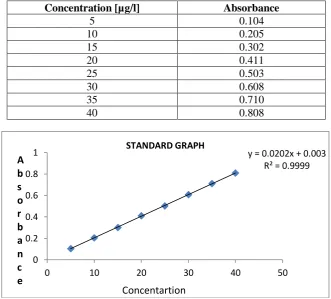
100mg of Primidone pure drug was dissolved in 100ml of Methanol (stock solution)10ml of above solution was taken and make up with100ml by using 0.1 N HCl (100μg/ml).From this 10ml was taken and make up with 100 ml of 0.1 N HCl (10μg/ml). The above solution was subsequently diluted with 0.1N HCl to obtain series of dilutions Containing 5,10,15,20,25,30,35 and 40μg/ml of Primidone per ml of solution. The absorbance of the above dilutions was measured at 238 nm by using UV-Spectrophotometer taking 0.1N HCl as blank. Then a graph was plotted by taking Concentration on X-Axis and Absorbance on Y-Axis which gives a straight line Linearity of standard curve was assessed from the square of correlation coefficient (R2) which determined by least-square linear regression analysis. The above procedure was repeated by using pH 6.8 phosphate buffer solutions.
Drug – Excipient compatibility studies
FTIR Spectroscopy:
3889 Elmer IR spectrophotometer and the IR
spectrum was recorded from 3500 cm to 500 cm. The resultant spectrum was compared for any spectrum changes.
Preformulation parameters
The quality of tablet, once formulated by rule, is generally dictated by the quality of physicochemical properties of blends. There are many formulations and process variables involved in mixing and all these can affect the characteristics of blends produced. The various characteristics of blends tested as per Pharmacopoeia.
Angle of repose:
The frictional force in a loose powder can be measured by the angle of repose. It is defined as, the maximum angle possible between the surface of the pile of the powder and the horizontal plane. If more powder is added to the pile, it slides down the sides of the pile until the mutual friction of the particles producing a surface angle, is in equilibrium with the gravitational force. The fixed funnel method was employed to measure the angle of repose.
Bulk density:
Density is defined as weight per unit volume. Bulk density, is defined as the mass of the powder divided by the bulk volume and is expressed as gm/cm3. The bulk density of a powder primarily depends on particle size distribution, particle shape and the tendency of particles to adhere together. Bulk density is very important in the size of containers needed for handling, shipping, and storage of raw material and blend. It is also important in size blending equipment.
Tapped density:
After carrying out the procedure as given in the measurement of bulk density the cylinder containing the sample was tapped using a suitable mechanical tapped density tester that provides 100 drops per minute and this was repeated until difference between succeeding measurement is less than 2 % .
Measures of powder compressibility:
The Compressibility Index (Carr’s Index) is a measure of the propensity of a powder to be compressed. It is determined from the bulk and tapped densities. In theory, the less compressible a material the more flowable it is. As such, it is measures of the relative importance of interparticulate interactions. In a free- flowing powder, such interactions are generally less significant, and the bulk and tapped densities will be closer in value.
Formulation development of Tablets:
All the formulations were prepared by direct compression. The compositions of different formulations are given in Table 6.3.The tablets were prepared as per the procedure given below and aim is to prolong the release of Primidone. Total weight of the tablet was considered as 300mg.
Procedure:
1. Primidone and all other ingredients were individually passed through sieve no 60.
2. All the ingredients were mixed thoroughly by triturating up to 15 min.
3. The powder mixture was lubricated with talc.
4. The tablets were prepared by using direct compression method.
Evaluation of post compression parameters for prepared Tablets
The designed formulation tablets were studied for their physicochemical properties like weight variation, hardness, thickness, friability and drug content.
Weight variation test:
3890 Table 1: Formulation composition for tablets
Formulation Code
Primidone Eudragit RL 100
Guar gum
Ethyl cellulose
Mag. Stearate
Talc MCC pH 102
F1 60 60 3 3 QS
F2 60 90 3 3 QS
F3 60 180 3 3 QS
F4 60 60 3 3 QS
F5 60 90 3 3 QS
F6 60 180 3 3 QS
F7 60 60 3 3 QS
F8 60 90 3 3 QS
F9 60 180 3 3 QS
All the quantities were in mg
Table 2: Observations for graph of Primidone in 0.1N HCl (238nm)
Concentration [µg/l] Absorbance
5 0.104
10 0.205
15 0.302
20 0.411
25 0.503
30 0.608
35 0.710
40 0.808
Figure 1: Standard graph of Primidone in 0.1N HCl
Table 3: Observations for graph of Primidone in p H 6.8 phosphate buffer (234nm)
Concentration [µg/l] Absorbance
5 0.098
10 0.195
15 0.298
20 0.392
25 0.490
30 0.595
35 0.690
40 0.776
y = 0.0202x + 0.003 R² = 0.9999
0 0.2 0.4 0.6 0.8 1
0 10 20 30 40 50
STANDARD GRAPH
Concentartion
3891 Figure 2: Standard graph of Primidone pH 6.8 phosphate buffer (234nm)
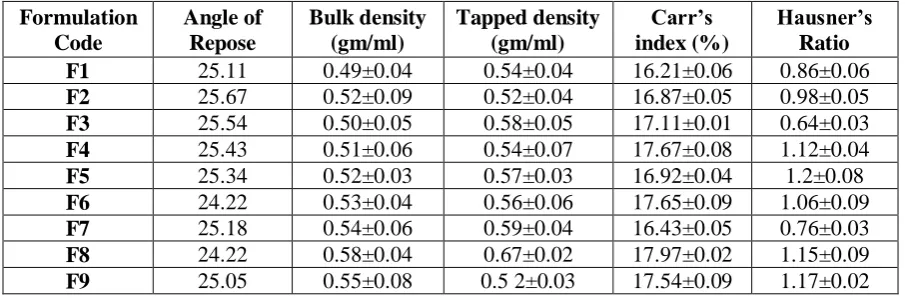
Table 4: Pre formulation parameters of powder blend
Formulation Code
Angle of Repose
Bulk density (gm/ml)
Tapped density (gm/ml)
Carr’s index (%)
Hausner’s Ratio F1 25.11 0.49±0.04 0.54±0.04 16.21±0.06 0.86±0.06 F2 25.67 0.52±0.09 0.52±0.04 16.87±0.05 0.98±0.05 F3 25.54 0.50±0.05 0.58±0.05 17.11±0.01 0.64±0.03 F4 25.43 0.51±0.06 0.54±0.07 17.67±0.08 1.12±0.04 F5 25.34 0.52±0.03 0.57±0.03 16.92±0.04 1.2±0.08 F6 24.22 0.53±0.04 0.56±0.06 17.65±0.09 1.06±0.09 F7 25.18 0.54±0.06 0.59±0.04 16.43±0.05 0.76±0.03 F8 24.22 0.58±0.04 0.67±0.02 17.97±0.02 1.15±0.09 F9 25.05 0.55±0.08 0.5 2±0.03 17.54±0.09 1.17±0.02
Table 5: Pre-formulation parameters of Core blend
Formulation codes
Weight
variation(mg) Hardness(kg/cm2)
Friability (%loss)
Thickness (mm)
Drug content (%)
F1 312.5 4.5 0.50 3.8 99.76
F2 305.4 4.5 0.51 3.9 99.45
F3 318.6 4.4 0.51 3.9 99.34
F4 310.6 4.5 0.55 3.9 99.87
F5 309.4 4.4 0.56 3.7 99.14
F6 310.7 4.5 0.45 3.7 98.56
F7 302.3 4.1 0.51 3.4 98.42
F8 301.2 4.3 0.49 3.7 99.65
F9 298.3 4.5 0.55 3.6 99.12
y = 0.0195x + 0.0019 R² = 0.9997
0 0.1 0.2 0.3 0.4 0.5 0.6 0.7 0.8 0.9
0 10 20 30 40 50
STANDARD GRAPH
Concnetartion A
3892 In-Vitro Drug Release Studies
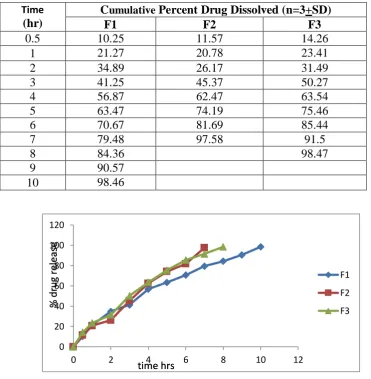
Table 5: Dissolution Data of Primidone Tablets Prepared With Eudragit RL 100 in Different Concentrations
Time
(hr)
Cumulative Percent Drug Dissolved (n=3+SD)
F1 F2 F3
0.5 10.25 11.57 14.26
1 21.27 20.78 23.41
2 34.89 26.17 31.49
3 41.25 45.37 50.27
4 56.87 62.47 63.54
5 63.47 74.19 75.46
6 70.67 81.69 85.44
7 79.48 97.58 91.5
8 84.36 98.47
9 90.57
10 98.46
Fig 3: Dissolution profile of Primidone (F1, F2, F3 formulations).
Fig 4: Dissolution profile of Primidone (F4, F5, F6 formulations) 0
20 40 60 80 100 120
0 2 4 6 8 10 12
F1
F2
F3
time hrs
%
d
ru
g
rel
ease
time hrs
%
d
ru
g
rel
ease
0 20 40 60 80 100 120
0 2 4 6 8 10 12
F4
F5
F6
time hrs
%
d
ru
g
rel
3893 Table 6: Dissolution Data of Primidone Tablets Prepared With Eudragit RS 100 In
Different Concentrations
Time (hr) Cumulative percent drug dissolved (n=3+SD)
F4 F5 F6
0.5 10.57 15.47 16.29
1 15.27 20.48 20.16
2 30.59 32.47 25.47
3 45.67 44.17 30.65
4 55.42 60.49 41.63
5 70.16 74.59 51.43
6 98.17 85.46 59.17
7 99.15 65.19
8 70.16
9 78.46
10 86.45
11 91.42
12 98.57
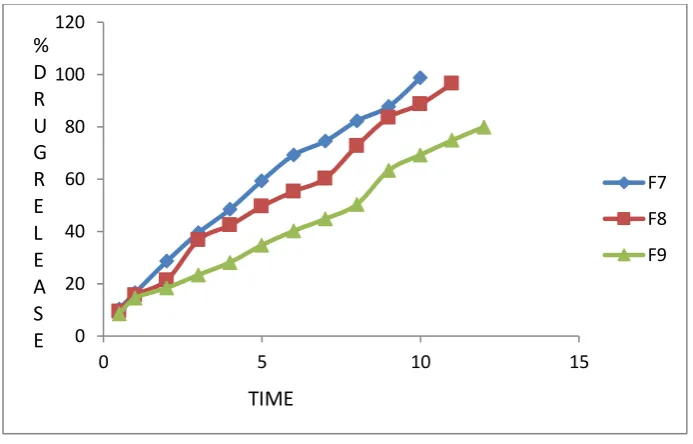
Table 7: Dissolution Data of Primidone Tablets Prepared With Ethyl cellulose In Different Concentrations
Time (hr) Cumulative percent drug dissolved (n=3+SD)
F7 F8 F9
0.5 10.4 9.4 8.5
1 16.5 15.6 14.5
2 28.6 21.4 18.4
3 39.5 36.7 23.4
4 48.5 42.4 28.2
5 59.4 49.6 34.8
6 69.2 55.3 40.2
7 74.5 60.3 44.8
8 82.3 72.8 50.4
9 87.78 83.52 63.34
10 98.78 88.65 69.27
11 96.56 74.86
12 79.97
3894
Fig 5: Dissolution profile of Primidone (F7, F8, F9 formulations)
Weight variation: The weight variation test would be a satisfactory method of deter mining the drug content uniformity. Not more than two of the individual weights deviate from the average weight by more than the percentage shown in the following table and none deviate by more than twice the percentage.
Hardness: Hardness of tablet is defined as the force applied across the diameter of the tablet in order to break the tablet. The resistance of the tablet to chipping, abrasion or breakage under condition of storage transformation and handling before usage depends on its hardness. For each formulation, the hardness of three tablets was determined using Monsanto hardness tester and the average is calculated and presented with deviation.
Thickness: Tablet thickness is an important characteristic in reproducing appearance. Tablet thickness is an important characteristic in reproducing appearance. Average thickness for core and coated tablets is calculated and presented with deviation.
Friability: It is measured of mechanical strength of tablets. Roche friabilator was used to determine the friability by following procedure. Preweighed tablets were placed
in the friabilator. The tablets were rotated at 25 rpm for 4 minutes (100 rotations). At the end of test, the tablets were re weighed, loss in the weight of tablet is the measure of friability
Determination of drug content:
Tablets were tested for their drug content. Ten tablets were finely powdered quantities of the powder equivalent to one tablet weight of Meloxicam were accurately weighed, transferred to a 100 ml volumetric flask containing 50 ml water and were allowed to stand to ensure complete solubility of the drug. The mixture was made up to volume with water. The solution was suitably diluted and the absorption was determined by UV –Visible spectrophotometer. The drug concentration was calculated from the calibration curve.
In vitro drug release studies
Dissolution parameters:
Apparatus--USP-II, Paddle Method
Dissolution Medium -- 0.1 N HCl , p H 6.8 Phophate buffer and RPM –50, Sampling
intervals (hrs)-0.5,1,2,3,4,5,6,7,8,10,11,12 Temperature--37°c + 0.5°c
0 20 40 60 80 100 120
0 5 10 15
F7
F8
F9
TIME %
3895
Procedure:
900ml 0f 0.1 HCl was placed in vessel and the USP apparatus –II (Paddle Method) was assembled. The medium was allowed to equilibrate to temp of 37°c + 0.5°c. Tablet was placed in the vessel and the vessel was covered the apparatus was operated for 2 hours and then the medium 0.1 N HCl was removed and pH 6.8 phosphate buffer was added process was continued from upto 12 hrs at 50 rpm. At definite time intervals of 5 ml of the receptors fluid was withdrawn, filtered and again 5ml receptor fluid was replaced. Suitable dilutions were done with receptor
fluid and analyzed by
spectrophotometrically at 238 nm using UV-spectrophotometer.
RESULTS AND DISCUSSION
The present study was aimed to developing Sustained release tablets of Primidone using various polymers. All the formulations were evaluated for physicochemical properties and invitro drug release studies.
Analytical Method
Graphs of Primidone were taken in Simulated Gastric fluid (pH 1.2) and in p H 6.8 phosphate buffer at 238 nm and 234 nm respectively. Tablet powder blend was subjected to various pre-formulation parameters. The angle of repose values indicates that the powder blend has good flow properties. The bulk density of all the formulations was found to be in the range of 0.43±0.07 to 0.58±0.06 (gm/cm3) showing that the powder has good flow properties. The tapped density of all the formulations was found to be in the range of 0.57 to 0.69 showing the powder has good flow properties. The compressibility index of all the formulations was found to be ranging between 16 to 18 which show that the powder has good flow properties. All the formulations has shown the hausner ratio ranging between 0 to 1.2 indicating the powder has good flow properties.
Quality Control Parameters For tablets:
Tablet quality control tests such as weight variation, hardness, and friability, thickness, and drug release studies in different media were performed on the compression coated tablet.
In vitro quality control parameters for tablets
All the parameters such as weight variation, friability, hardness, thickness and drug content were found to be within limits. From the dissolution data it was evident that the formulations prepared with Eudragit RL 100 as polymer were unable to retard the drug release up to desired time period i.e., 12 hours. Whereas the formulations prepared with Eudragit RS 100 retarded the drug release in the concentration of 180 mg (F6 Formulation) showed required release pattern i.e., retarded the drug release up to 12 hours and showed maximum of 98.57% in 12 hours with good retardation. The formulations prepared with Ethyl cellulose showed more retardation even after 12 hours they were not shown total drug release. Hence they were not considered.
CONCLUSION
3896
BIBLIOGRAPHY
1. Leon Shargel, Susanna Pong, Andrew B.C., Applied
Biopharmaceutics and
Pharmacokinetics, Modified-Release Drug Products, Pg 515 Fifth Edition, 2004
2. Chien Y.W., Controlled- and modulated-release drug-delivery systems. Encyclopedia of pharmaceutical technology. New York, Dekker, pgs 281-313, 1992.
3. J. R. Robinson, S. P. Eriksen,
Theoretical formulation of sustained-release dosage forms. J Pharm Sci.
1966
4. Gilbert S. Banker, Christopher T. Rhodes, Modern Pharmaceutics, Sustained - and Controlled -release drug-delivery systems, Pg 505 Fourth Edition, 2002
5. Leon Lachman, The Theory and Practice of Industrial Pharmacy, Sustained Release Dosage Forms, pgs 430-431, Third Edition, 1987
6. Gilbert S. Banker, Christopher T. Rhodes, Modern Pharmaceutics, Sustained - and Controlled -release drug-delivery systems, Pgs 505-506 Fourth Edition, 2002
7. Gilbert S. Banker, Christopher T. Rhodes, Modern Pharmaceutics, Sustained - and Controlled -release drug-delivery systems, Pgs 507-508 Fourth Edition, 2002
8. Gilbert S. Banker, Christopher T. Rhodes, Modern Pharmaceutics, Sustained - and Controlled -release drug-delivery systems, Pgs 510-511 Fourth Edition, 2002
9. Leon Shargel, Susanna Pong, Andrew , Applied Biopharmaceutics and Pharmacokinetics, Modified-Release Drug Products, Pg 535 Fifth Edition, 2004
10.http://www.pharmainfo.net/reviews/f loating-drug-delivery-systemsan-approach-gastro-retention
11.http://www.initium.demon.co.uk/relf ick.htm
12.Leon Shargel, Susanna Pong, Andrew B.C., Applied
Biopharmaceutics and
Pharmacokinetics, Modified-Release Drug Products, Pg 534 Fifth Edition, 2004
13.Gilbert S. Banker, Christopher T. Rhodes, Modern Pharmaceutics, Sustained - and Controlled -release drug-delivery systems, Pg 513 Fourth Edition, 2002
14.Korsmeyer. Peppas NA. Mechanisms of solute release from porous hydrophilic polymers. Int J
Pharm. 1983
15.Alfred Martin, Textbook Of Physical Pharmacy, Pgs 285 – 289, Fifth edition
16.Leon Shargel, Susanna Pong, Andrew B.C., Applied
Biopharmaceutics and
Pharmacokinetics, Modified-Release Drug Products, Pg 526 Fifth Edition, 2004
17.Physicians’ Desk Reference, 62nd edition, Pgs 1715-1717
18.http://www.ijpsonline.com/temp/Indi
anJPharmSci694511-3017942_082259.pdf
19.Ana Rita C. Duarte, Christelle Roy, Preparation of acetazolamide composite microparticles by supercritical anti-solvent techniques,
International Journal of
Pharmaceutics, Volume 332, Issues
1-2, 6 March 2007, Pages 132-139
20.Barzegar-Jalali, Study on the release of acetazolamide from matrices containing tragacanth and acacia gums, Journal of Faculty of
Pharmacy, Tabriz University of