This is an open access journal, and articles are distributed under the terms of the Creative Commons Attribution-Non Commercial-ShareAlike 4.0 License, which allows others to remix, tweak, and build upon the work non-commercially, as long as appropriate credit is given and the new creations are licensed under the identical terms.
© 2018 Journal of Advanced Pharmacy Education & Research | Published by SPER Publication
43
Patient attitudes and health information features as predictors
of health promotion in Malaysia
Mathialagan AG
1, Jinat Ahmed J.A.
1*, Dinesh M.
2, Azra N.
1, Selvaganapathi G.
3, Harikrishnan T.
4,
Kohila J.R.
1, Suriya P. N.
1, Fathy I.
5, Ramalinggam R.
1, Vikneswaran S.
61 Department of Post-Graduate Studies, Perdana University, Malaysia, 2SP Care Group, Health Care, Malaysia, 3Seremban Prison, Malaysian Prison Department, Home
Ministry, Malaysia, 4Department of Rehabilitation Medicine, Hospital Tunku Ampuan Rahimah, Ministry of Health, Malaysia, 5Child Health Department, Sabak Bernam
District Health Department, Ministry of Health, Malaysia, 6Planning Division, Health Financing Department, Ministry of Health, Malaysia.
Correspondence: Jinat Ahmed J.A.,Department of Post-Graduate Studies, Perdana University, Malaysia. E_mail: [email protected]
ABSTRACT
Objective: The objective of this study was to examine the relationship between Patient Attitudes and Health Information Features towards intention-to-accept health information in private clinics. Methods: A validated questionnaire was utilized for this study whereby three variables of the study (patient attitudes, health information features and intention-to-accept health information) were measured using a 5-point Likert scale. 800 questionnaires were distributed to target respondents of registered clinics in Malaysia. The data were analyzed utilizing SPSS software version 21.0. Findings: There were 624 completed and usable responses received, which represented a 72.3% response rate. This study showed that both patient attitudes and health information features had a direct relationship with patient intention-to-accept information. Health information utilizing simple language and attractive diagrams were important precursors to trigger patients to accept health information. Similarly, patient attitudes played a major role in generating interest in health information in private clinics. Conclusion: Patient Attitudes and Health Information Features are important factors in determining patients’ Intention -To-Accept Health Information among patients in private general practitioners’ clinics.
Keywords: Health promotion, patient attitudes, private clinic, Malaysia.
Introduction
The dramatically increasing rates of non-communicable diseases in Malaysia necessitate a review of health promotion practices within healthcare settings [1]. Effective health promotion is
considered as one of the fundamental requirements to prevent and manage chronic diseases in Malaysia. In recent years, the Ministry of Health (MOH) of Malaysia has advocated strong health promotion practices in both governmental and private sectors. Increase in health campaigns and health information materials has been seen in many healthcare settings across Malaysia. This increase in health promotion activity is aimed at
empowering the patients’ knowledge of disease matters and
increasing their capacity to accept health information on disease preventive practices. It is envisioned that health promotion activities in public or private healthcare settings would create an empowering initiative among patients to accept health information about their medical conditions. However, implementation of such an ambitious health promotion plan is not without its barriers. Two prominent factors that have been
suggested to have a direct effect on a patient’s intention -to-accept-health-information would be Health Information Features (HIF) and Patient Attitudes (PA).
Though the nurses should be given the opportunity to fully apply the knowledge and skills they have acquired during their educational years [2], Health information materials, such as
leaflets and posters are also widely used by diverse health organizations and professionals in Malaysia as a part of patient education or health promotion efforts, and in support of preventive, treatment, and compliance objectives [3, 4]. Health
promotion materials were developed because public health programmes could not reach their goals without the public having solid understanding about their health conditions.
Access this article online
Website: www.japer.in E-ISSN: 2249-3379
How to cite this article:
Mathialagan AG, Jinat Ahmed J.A., Dinesh M., Azra N., Selvaganapathi G., Harikrishnan T..
Patient attitudes and health information features as predictors of health promotion in Malaysia. J Adv Pharm Edu Res 2018;8(2):43-48.
44 Journal of Advanced Pharmacy Education & Research | Apr-Jun 2018 | Vol 8 | Issue 2
Therefore, there have been concentrated efforts in this area of primary prevention assuming that if the public were equipped with adequate information about health, then they would reorient their behaviour and lifestyle or accept help from health professionals catering to their individual health needs [5, 6]. In the
same vein, information providing as well as consultation lead to happiness and hope among the patients [7]. Tailored and
non-tailored printed materials are widely available for helping the individuals change health-related behaviours in reference to smoking, diet, physical activity, and screenings for cancer and cholesterol. However, recent studies have shown that the technical features of the material itself are very important in terms of acceptability by patients [8, 9]. Patients in healthcare
settings who encounter health information materials that are too scientific and inaccessible, have seen them as a form of deterrent rather than an incentive. A study done by [10] showed that the
patients’ health information materials that were too scientific in nature, were not well received by the patients in Belgium. Similarly, another study done in 2014 showed that HIF
attractiveness plays a major role in capturing patient’s attention
and fascination to consume the health material [11]. HIF attraction
is very important in initiating and sustaining health information consumption. Thus, HIF is a very important independent variable that ensures patients not to reject the benefits of the materials based on accessibility and attractiveness.
Patients’ attitudes are also an important determinant of
Intention-to-Accept-Health Information. In a patient-centred approach, patients become important partners in medical care. When risky behaviours are viewed as a balancing act on the part of the patients, it becomes easier to appreciate that many patients take risks not because of ignorance, but after weighing rewards against risk [12]. When clinicians counsel patients about any
behaviour risks, the appropriate focus of discussion and the patients’ receptivity can depend on patients’ readiness to change.
According to the trans-theoretical model, if an individual does not plan to change his/her behaviour, there will be no motivation to change [13, 14]. However, if a person is motivated to change
his/her behaviour, there are specific principles and processes of change that can be applied during certain stages of change when progress through the stages is to occur. Thus, the patients’
attitudes towards the health promotion materials are a vital factor in determining their intention-to-accept health information to improve their behaviours.
Raising the awareness among the patients might be a helpful contribution to minimize the possible harm, to help decrease the mortality and morbidity rates, and to promote recovery in minor incidents [15].
By way of an example, through a study [16], training patients and
providing the required info led to improvements in their status. And as stated by [17], lack of health-related information might lead
to the severity and prevalence of many diseases.
Despite the wide availability of literature on health promotion, the impact of the patients’ attitudes (PA) and health information
features (HIF) has rarely been assessed in Malaysia. This is
especially missing in the private general practitioners’ setting.
Little is known about the impact of HIF and PA towards the
patients’ intention-to-accept health information (ITAHI) in the waiting rooms of family physicians. In this study, the relationship between PA and HIF towards ISTHI among patients in private clinics was examined.
Methodology
Study Design & Context
This study was conducted via a cross-sectional survey design. It was carried out among the patients from the private clinics in the central region of Peninsular Malaysia. The surveys were conducted among 40 clinics in this region, and a total of 800 questionnaires were distributed.
Participant identification and recruitment
Self-administrated questionnaire surveys were distributed to the participants fulfilling inclusion criteria in Selangor, Wilayah Perseketuan Kuala Lumpur and Negeri Sembilan. The inclusion criteria were being a local citizen of Malaysia, giving consent to take part in the study, being mentally stable, and having been to any general practitioner (GP) clinics for at least three times in the past 1 year. The patients who were suffering from certain mental illnesses, or did not consent to take part in the study and Non-Malaysian respondents were excluded from the study. A sample size of 380 participants was deemed adequate to obtain significant findings based on Krejzie and Morgan population table. To account for a good response rate, the study population was targeted at 800 respondents.
Instrumentation and Data Collection
The questionnaire consisted of 21 items, and was divided into separate sections. The first part was consisted of demographic details, whereas the second part of 7 items explored the health information features. The third section contained 6 items
evaluating the patients’ attitudes, while the final section
contained 3 items determining the dependent variable of intention-to-accept-health information (ITAHI). The items in the questionnaire were designed based on the findings from previous studies [18-20] and a 5-point Likert scale was appropriately
Journal of Advanced Pharmacy Education & Research | Apr-Jun 2018 | Vol 8 | Issue 2 45
Out of the 800 questionnaires distributed to the patients in 40 private clinics, 624 questionnaires were returned completed, yielding a response rate of 78%.
Statistical Analysis
Data analysis was done using ‘Statistical Package for Social Sciences’ (SPSS) Version 22.0. The descriptive and inferential
analytical tests were computed using this software. Statistical significance level was taken at the p value < 0.05. For bivariate analysis, the data were analyzed by using Pearson Chi-Square test for statistical difference of the categorical variables. Finally, for multivariate analysis, the simple logistic regressions were used to predict the final model.
Ethical Consideration
Written consent was obtained from the participants prior to participating in this study. Further approval was also obtained by the relevant ethics committee.
Results
Demographics
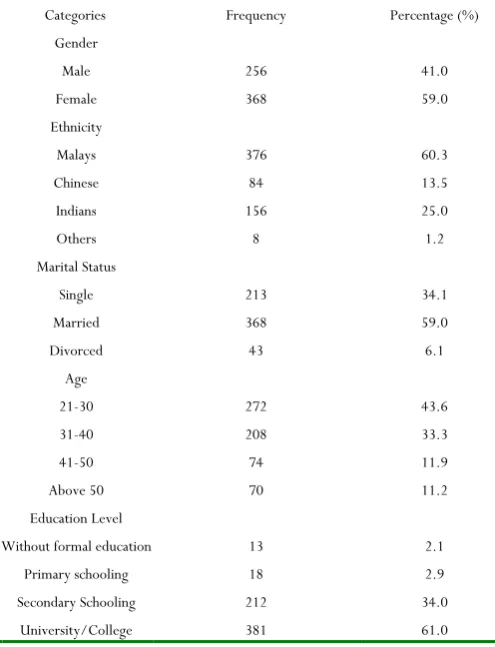
Table 1: The profile of the respondents (n = 624). This table details the demographic profile of the respondents, the number of each
response (frequency), and the percentage of the respondents Categories Frequency Percentage (%)
Gender
Male 256 41.0
Female 368 59.0
Ethnicity
Malays 376 60.3
Chinese 84 13.5
Indians 156 25.0
Others 8 1.2
Marital Status
Single 213 34.1
Married 368 59.0
Divorced 43 6.1
Age
21-30 272 43.6
31-40 208 33.3
41-50 74 11.9
Above 50 70 11.2
Education Level
Without formal education 13 2.1
Primary schooling 18 2.9
Secondary Schooling 212 34.0
University/College 381 61.0
Based on the social demographic analysis in the table above, it can be concluded that there was an almost equal participation between both of the genders. Male respondents comprised of 41%, while female respondents were slightly higher than 59%,
bridging a gap of 18% in comparison to one another. Looking into races, the Malay ethnicity had the highest level of involvement in this survey of 60.3%, followed by Indians 25%, Chinese 13.5%, and the least of whom took part in this survey were other races that was 1.2%. Marital status was also taken into account in this study, whereby the highest prevalence of the patients coming to the clinic were married at 59%, followed by singles who were 34.1%, and finally the least numbers were divorced accounting to 6.1%. Additionally, there were four age groups that took part in this survey ranging from 21-year-old up till above 50. The highest participation belonged to the 21-30-year-old age group which were 43.6% followed by the rest which declined as the age group increased. Finally, the education level was also valued in this survey. Based on the analysed data, it can be presumed that the majority of the patients that visit clinics have at least completed secondary school education and more.
Table 2: Reliability, validity, normality status of Patient Attitudes (PA), Intention-to-accept Health Information
(ITAHI) and Health Information Features (HIF)
Kaiser-Meyer-Olkin Measure of Sampling
Adequacy.
Bartlett's Test of Sphericity Cronbac
h Alpha Skewness Kurtosis
Approx.
Chi-Square df Sig.
PA 0.634 527.264 15 0.000 0.647 0.424 2.032 ITA
HI 0.708 647.647 3 0.000 0.809 -0.421 2.050 HIF
0.847 959.622 21 0.000 0.765 -0.658 1.409
The normality, reliability and validity analyses were conducted on the collected data from the participating samples. The table shows that the collected data has passed the normality, reliability and validity tests. The KMO statistic for all the three variables was greater than 0.50 which were 0.634, 0.708 and 0.847. Cronbach Alpha value was also viable as the minimal level of acceptance was 0.60 and above. Based on the outcome for normality, it has been shown that the skewness and kurtosis were within the acceptable range.
Correlation
Table 3: Correlation between Patient Attitudes (PA), Intention-to-Accept-Health Information (ITAHI) and Health Information
Features (HIF)
HIF PA ITAHI
HIF
1 .593(**) .488(**)
.593(**) 1 .492(**)
.488 .492 1 PA
ITAHI
46 Journal of Advanced Pharmacy Education & Research | Apr-Jun 2018 | Vol 8 | Issue 2
The table above shows a positive relationship between all the three variables. HIF had a positive correlation of 0.488 with ITAHI, while PA had a positive correlation of 0.492 with ITAHI. Both were deemed strongly to influence ITAHI.
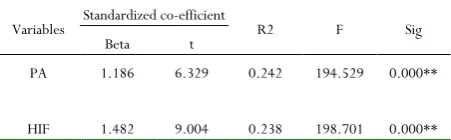
Table 4: Regression between Patient Attitudes (PA) and Health Information Features (HIF) towards
Intention-to-Accept-Health Information(ITAHI)
Variables Standardized co-efficient R2 F Sig Beta t
PA 1.186 6.329 0.242 194.529 0.000**
HIF 1.482 9.004 0.238 198.701 0.000**
This regression analysis showed that both of the patients’ beliefs and heath information features influence the patients’ intention
to accept health information. The R2 value of 0.242 indicated
that PA influenced ITAHI as much as 24.2%, and similar R2 value
of 0.238 indicated that HIF influenced ITAHI as much as 23.8% in this model.
Discussion
and Conclusion
The current study conducted provides an understanding of the
impact of the patients’ attitudes (PA) and health information
features (HIF) towards their capacity to accept health
information. The results of this study showed that the patients’
attitudes and health information features are important predictors of intention-to-accept health information (ITAHI).
The influence of PA on ITAHI
The theory of the planned behavior illustrates that the behaviors and intentions are governed by attitudes, social norms, and environmental factors. The theory of reasoned action, which has been used to predict a variety of health behaviours, provides a theoretical framework for understanding why many patients will
not accept their physicians’ diagnosis of depression [21]. According
to the theory of the reasoned action, intention is the critical determinant of the behaviour. Intention is determined by attitudes about treatment information (e.g, medication efficacy and adverse effects), past behaviour and experiences (e.g, past treatment), and self-efficacy [22]. The balance of the favourable
and unfavourable attitudes towards health information
determines the patients’ intention to accept the health
information displayed in general practitioners’ clinics [22, 23].
Patients who have positive beliefs towards health information and have past experiences that yielded beneficial health outcomes after accepting health information will have a strong intention to accept health information [24]. Patients with negative attitudes
towards health information and have had less desirable experiences such as inaccurate information from health materials will have a hard time accepting health information.
The Influence of HIF towards ITAHI
This study has also shown that health information features such as accessibility, formatting, attractive designs, are also important predictors of ITAHI. According to the framework of Intervention Mapping [18, 25, 26], which provides a systematic
approach to intervention development, designing a new campaign begins with formulating clear goals and objectives that are derived from a systematic needs assessment procedure. Text comprehension, text coherence and creative illustrations in health information materials are very important in providing accessibility to patients consuming health information. Research has shown that combining text with illustrations increases recollection and comprehension of the information [19, 27-29].
Research has also shown that when the mind conducts a visual search, such as the scanning of a text, items that do not match the specific features of the surrounding environment, are registered as important pieces of information in our neural network [20, 30,
31].
Implications for Practice
These results have implications for general medical practice and health care policy. Our study suggests that behavioural theories can be used to develop models to understand and deconstruct the reasons why certain patients readily accept health information. Future studies should focus on understanding how general practitioners in clinics can facilitate effective health information
delivery by focusing on specific patients’ concerns. Policy makers
should consider some form of incentives to primary care physicians who put extra efforts in developing health information materials that feature accessible and attractive health information messages. Easier renewal of yearly practicing and clinic license would provide an incentive for these physicians to spend the time needed to create health information appropriately, which would
likely increase the patients’ confidence in evidence-based treatments and their receipt of guideline-concordant health information.
References
1. Mustapha, F. I., Omar, Z. A., Mihat, O., Md Noh, K., Hassan, N., Abu Bakar, R., et al. (2014). Addressing non-communicable diseases in Malaysia: an integrative process of systems and community. BMC Public Health, 14(Suppl 2), S4.
2. Sanad, H. M. & Krishnasamy, R. (2017). International Journal of Pharmaceutical and Phytopharmacological Research (eIJPPR), 7(4), 1-6.
Journal of Advanced Pharmacy Education & Research | Apr-Jun 2018 | Vol 8 | Issue 2 47
4. David Richards (1975) Methods and effectiveness of health education: The past, present and future of social scientific involvement.
5. NOP Market Research. (1988) Consumer health education survey. London: Health Education Authority.
6. Hirsch R, Edelstein ME. (1992) In the eye of the beholder: pretesting the effectiveness of health education materials. J Am Coll Health 1992; 40: 292-293
7. Mansouri, M., Taheri, A., & Maghsoudi, J. (2018). International Journal of Pharmaceutical and Phytopharmacological Research (eIJPPR), 8(1), 90-97.
8. Rowe N, Ilic D. (2009) What impact do posters have on academic knowledge transfer? A pilot survey on author attitudes and experiences. BMC Med Educ: 9:71.
9. Ilic D, Rowe N. (2013) What is the evidence that poster presentations are effective in promoting knowledge transfer? A state of the art review. Health Inf Libr J. (1):4–12.
10. Moerenhout, T., Borgermans, L., Schol, S., Vansintejan, J., Van De Vijver, E., & Devroey, D. (2013). Patient health information materials in waiting rooms of family physicians: do patients care? Patient Preference and Adherence, 7, 489–497.
11. Sustersic M1, Jeannet E, Cozon-Rein L, Maréchaux F, Genty C, Foote A, David-Tchouda S, Martinez L, Bosson JL. Impact of information leaflets on behavior of patients with gastroenteritis or tonsillitis: a cluster randomized trial in French primary care. J Gen Intern Med. 2013 Jan;28(1):25-31.
12. Duck JM, Terry DJ, Hogg MA. (1995) The Perceived Influence of AIDS Advertising: Third-Person Effects in the Context of Positive Media Content. Basic Appl Soc Psychol. 1;17(3):305–25.
13. O’Donohoe S. (1995) Attitudes to Advertising: A
Review of British and American Research. Int J Advert. 1995 Jan 1;14(3):245–61.
14. Rains SA. (2008) Seeking Health Information in the Information Age: The Role of Internet Self-Efficacy. West J Commun.;72(1):1–18.
15. Almoammar, N. A., Fathalla, A., Alotaibi, F. F., Alshahrani, K. M., Alanazi, A. M., Alqarni, A. A., & Aldossari, H. M. (2018). International Journal of Pharmaceutical Research & Allied Sciences (IJPRAS), 7(1), 58-63.
16. Ibrahim S., Azhar A.S., Ather A.S., Ahsan A.S. (2018). International Journal of Pharmaceutical Research & Allied Sciences (IJPRAS), 7(2), 8-14.
17. Mosarrezaii, A. &, Kargar, K. (2018). Journal of Advanced Pharmacy Education & Research (JAPER), 8(2), 16-20.
18. Bartholowmew KL, Parcel GS, Kok G, et al., Planning Health Promotion Programs; An Intervention Mapping Approach, 2006San Francisco, CAJossey-Bass.
19. Foxcroft DR, Lister-Sharp DJ, Lowe G. Alcohol misuse prevention for young people: a systematic review reveals methodological concerns and lack of reliable evidence of effectiveness, Addiction, 1997, vol. 92 (pg. 531-7).
20. Kintsch W. The role of knowledge in discourse comprehension: a construction integration model, Psychol Rev, 1988, vol. 95 (pg. 163-82).
21. Ajzen, I., (2001), “Nature and operation of attitudes”,
Annual Review of Psychology, Vol. 52 No.1, pp. 27-58.
22. Carter WB. Health behavior as a rational process: theory of reasoned action and multiatribute utility theory. In: Glanz K, Lewis FML, Rimer BK, eds. Health Behavior and Health Education. San Francisco: Jossey-Bass; 1990:63–90.
23. Halgin RP, Weaver DD, Edell WS, Spencer PG. Relation of depression and help-seeking history to attitudes toward seeking professional psychological help. J Couns Psychol. 1987; 34:177–185.
24. Howland MJ. Examining the decision to seek professional psychological help: A comparison of attribution and attitude theory in predicting help-seeking intention using the theory of reasoned action[dissertation]. University of Illinois at Urbana-Champaign; 1997.
25. Hagger MS, Chatzisarantis NL, Biddle, SJ. A meta-analytic review of the theories of reasoned action and planned behavior in physical activity: predictive validity and the contribution of additional variables. J Sport Exer Psychol. 2002; 24:3–3228.
26. Ajzen I. The directive influence of attitudes on behavior. Gollwitzer PM, Bargh JA, eds. The Psychology of Action: Linking Cognition and Motivation to Behaviour. New York, NY: Guilford; 1996:385 403.
27. Kok G, Schaalma H, Ruiter RAC, et al. Intervention mapping: a protocol for applying health psychology theory to prevention programmes, J Health Psychol, 2004, vol. 9 (pg. 85-98).
48 Journal of Advanced Pharmacy Education & Research | Apr-Jun 2018 | Vol 8 | Issue 2
29. Rossi PH, Freeman HE, Lipsey MW., Evaluation: A Systematic Approach, 1999Thousands Oaks, CASage Publications.
30. Kintsch W., Comprehension: A Paradigm for Cognition, 1998New York. Cambridge University Press.