Marta Tanasiewicz
1, Małgorzata Skucha-Nowak
1, Anna Greń
2, Robert T. Hese
3,
Henryk Twardawa
1, Piotr Gorczyca
3Analysis of State of the Oral Cavity in Schizophrenic
Inpatients Treated with Atypical and Classical
Neuroleptics*
Analiza stanu jamy ustnej chorych na schizofrenię leczonych psychiatrycznie
w warunkach szpitalnych neuroleptykami atypowymi i klasycznymi
1 Department of Conservative Dentistry with Endodontics, Medical University of Silesia, Bytom, Poland 2 Student of a full-time PhD course at the Medical Department in the Medical and Dentistry Division in Zabrze,
part of the Medical University of Silesia in Katowice, Poland
3 Chair and Clinical Psychiatric Ward at the Medical Department in the Medical and Dentistry Division
in Zabrze, part of the Medical University of Silesia in Katowice, Tarnowskie Góry, Poland
Abstract
Background.Schizophrenic disturbances are a group of disorders that influence approximately one percent of the overall population. The symptoms of schizophrenia can be divided into several groups. There are positive toms and negative symptoms, general psychopathological symptoms and disintegration or disorganization symp-toms. As far as dental healthcare is concerned, that group of patients has serious problems with improper hygiene of the oral cavity. Additionally, those patients are usually not concerned about their own state of health.
Objectives. Assessment of state of the oral cavity in schizophrenic inpatients treated with atypical and classical neuroleptics and its comparison with a healthy group; assessment of the efficiency of pro-hygienic activities con-ducted in the researched groups and the control group.
Material and Methods. The research group was comprised of patients of the Psychiatric Clinical Ward of the Medical University of Silesia (MUS) in Tarnowskie Góry, Poland. The research group was comprised of 100 schizo-phrenics (male and female), treated with atypical (group 1) and classical neuroleptics (group 2). The control group was comprised of 50 healthy people who did not stay at the hospital and who, during the interview, did not give any information about the possible diagnosis of any physical illness in their cases (group 3). Each group was randomly divided into subgroups 1A, 2A and 3A, where professional hygienic training was provided, and into subgroups 1B, 2B and 3B, where such training was not provided. The patients were assessed for DMFT (decayed, missing, filled and total), OHI (oral hygiene) and API (approximal plaque) indices.
Results. In case of patients from the research group (1 and 2), all components of the DMFT index reached values that indicated a less than satisfactory state of the dentition when compared to the control group. Schizophrenics do not maintain proper hygiene of the oral cavity and can be classified in the highest range that corresponds to the description “bad or average hygiene level”.
Conclusions. Schizophrenics show significantly less interest in hygiene of the oral cavity and the state of their own dentition. Atypical neuroleptics used in the process of pharmacotherapy of schizophrenia can have an advanta-geous influence on the degree of interest of the treated person on the state of hygiene of their oral cavity. Patients undergoing treatment with classical neuroleptics should be taken under particular care, as the effectiveness of dental hygienic activities in that group, including hygienic training for the oral cavity, is lower than in the group which was treated with atypical neuroleptics (Adv Clin Exp Med 2011, 20, 2, 187–197).
Key words: schizophrenia, classical neuroleptics, atypical neuroleptics, dental health, oral cavity health.
Adv Clin Exp Med 2011, 20, 2, 187–197 ISSN 1230-025X
ORIGINAl PAPERS
© Copyright by Wroclaw Medical University
Mental disorders are increasingly frequent in the human population. Schizophrenic distur-bances are a group of disorders that influence ap-proximately one percent of the overall population. The symptoms of schizophrenia can be divided into several groups. There are positive symptoms and negative symptoms, general psychopatho-logic symptoms and disintegration or disorgani-zation symptoms [1]. The positive symptoms are mainly hallucinations and delusions, as well as disturbances of the thinking process, excitement, megalomania and persecution complex, suspicion and hostility. Negative symptoms include blunted affection, emotional withdrawal, lack of attempts to make contact with surroundings, apathy, weak-ened ability to think in an abstract way, decreased or no spontaneity of expression and behavior, stereotypical behavior and weakened non-verbal expression. Social withdrawal frequently leads to autistic behavior when the patient’s thoughts and feelings, not elements of the outside world, be-come his source of experience and thinking. Then, the patients stop differentiating between the real world and a world of fantasy. Schizophrenics often express ideas which are inconsistent with reality. In one case, a request made of a dental clinic by a pa-tient to remove all her teeth was fulfilled because no one recognized the symptoms of a mental dis-order [2]. Social problems like long-term unem-ployment, poverty and homelessness are common among schizophrenics [3, 4]. Biochemical research
shows that disturbances in the functioning of three important neurotransmitter systems, dopaminer-gic, serotoninergic and glutaminerdopaminer-gic, are a part of schizophrenia [1, 5].
Treatment of schizophrenia frequently in-volves neuroleptics, currently divided into two groups: classical and atypical [1]. Treatment of schizophrenia is a lengthy process. Treatment of the initial episode of schizophrenia should last at least 2 years, while later recurrences should last at least 5 years. Atypical drugs have changed the world of modern psychiatry, particularly as far as better treatment of schizophrenic disorders is concerned [3, 6]. Classical neuroleptics mainly eliminate the psychotic symptoms of schizophre-nia. lack of any therapeutic effect on negative symptoms of schizophrenia, as well as the fre-quent occurrence of side-effects such as extrapy-ramidal symptoms and hyperprolactinemia, are their main deficiencies. Persistence of negative symptoms such as emotional or social withdrawal and lack of activity also results in lack of interest in personal hygiene and the state of the oral cavity. lack of effective oral hygiene enables the accumu-lation of dental plaque, the main cause of caries and periodontal diseases. Atypical neuroleptics have a more favorable effect on negative (chronic) symptoms, which results in improved quality of life for patients [7]. Atypical neuroleptics, when compared to their classical counterparts, have a more favorable effect on the cognitive skills of
Streszczenie
Wprowadzenie. Zaburzenia schizofreniczne to grupa schorzeń, która dotyka około 1/100 osób w populacji ogólnej. W schizofrenii wyróżnia się objawy pozytywne, objawy negatywne, ogólne objawy psychopatologiczne i objawy dezin tegracyjne. Z punktu widzenia opieki stomatologicznej, w tej grupie chorych wyraźne problemy są związane z nieodpowiednią higieną jamy ustnej, na którą dodatkowy wpływ ma brak zainteresowania chorych własną kondycją.
Cel pracy. Ocena stanu jamy ustnej u chorych na schizofrenię, leczonych psychiatrycznie w warunkach szpitalnych neuroleptykami atypowymi i klasycznymi w porównaniu z grupą osób zdrowych; ocena skuteczności stomatolo-gicznych działań higienizacyjnych przeprowadzanych w grupach badanych i kontrolnej.
Materiał i metody. Grupę badaną stanowili pacjenci Oddziału Klinicznego Psychiatrii SUM w Tarnowskich Górach. Grupa badana obejmowała 100osób (kobiet i mężczyzn) chorych na schizofrenię leczonych neurolep-tykami atypowymi (grupa 1) i klasycznymi (grupa 2). Średnia wieku pacjentów badanych wynosiła 37,5 ± 0,5 lat. Grupę kontrolną stanowiło 50 osób zdrowych (kobiet i mężczyzn), nieprzebywających w warunkach szpitalnych, u których w wywiadzie nie uzyskano informacji na temat rozpoznania chorób psychiatrycznych (grupa 3). Średnia wieku pacjentów grupy kontrolnej wynosiła 39,5 ± 0,5 lat. W każdej grupie u połowy pacjentów losowo podporządkowanych do podgrupy 1A, 2A i 3A przeprowadzono profesjonalny instruktaż higieny. U pacjentów oznaczono wskaźniki PUW, OHI i API.
Wyniki. Wszystkie składowe wskaźnika PUW u pacjentów grupy 1 i 2 osiągnęły wartości wskazujące na mniej zadowalający, w porównaniu z grupą kontrolną, stan uzębienia. U osób chorujących na schizofrenię higiena jamy ustnej jest niewłaściwa; są one klasyfikowane w najwyższym przedziale korelującym z określeniem „higiena zła i średnia”.
Wnioski. Pacjenci chorzy na schizofrenię wykazują mniejsze zainteresowanie higieną jamy ustnej i stanem własnego uzębienia. Neuroleptyki atypowe mają korzystniejszy wpływ na zainteresowanie własną osobą dotyczące higieny jamy ustnej. Szczególną opieką należy objąć pacjentów leczonych neuroleptykami klasycznymi, gdyż w tej grupie skuteczność stomatologicznych działań higienizacyjnych jest mniejsza niż w grupie poddanej terapii neurolep-tykami atypowymi (Adv Clin Exp Med 2011, 20, 2, 187–197).
patients suffering from schizophrenia, especially as far as procedural memory and executive functions are concerned. Due to the fact that their receptor profile is different, those drugs may cause differ-entiation of actions [8]. Therefore, patients treated with atypical neuroleptics should be expected to have less dental negligence and a fairly good state of hygiene of the oral cavity. Additionally, oral cav-ity disorders are exacerbated by a decrease in saliva secretion, primarily caused by classical neurolep-tics but a side-effect of some atypical neurolepneurolep-tics (e.g. rispersidone), too. In the case of most atypical neuroleptics, secretion of saliva not only does not become limited but even increases [8].
The purpose of the research was:
– assessment of the state of the oral cavity in schizophrenic patients with atypical and classical neuroleptics and its comparison with the control group,
– assessment of the efficiency of pro-hygienic activities conducted in the researched groups and the control group.
Material and Methods
The research group was comprised of patients of the Psychiatric Clinical Ward of the Medical University of Silesia in Tarnowskie Góry. The re-search group was comprised of 100 schizophren-ics. The average age of the patients examined was 37.5 ± 0.5 years (male and female). The patients were divided into four groups according to treat-ment received. First, group 1 – atypical neuroleptics (risperidonum, olanzepinum) and group 2 – clas-sical neuroleptics (perphenazinum, chlorpromazi-num). Then, in each of those groups, half of the patients were randomly divided into subgroup. In 1A and 2A, professional hygienic training was provided. This included verbal presentation and training on correct teeth cleaning conducted with a chosen method, a check of the patient’s ability to conduct correct cleaning procedures in their oral cavities, and distribution of leaflets on hygiene that included descriptions of the chosen cleaning method together with toothbrushes and tooth-paste. Patients from subgroups 1B and 2B did not receive any hygienic training.
The control group was comprised of 50 healthy people who did not stay at the hospital and who, during the interview, did not give any information about possible diagnosis of any physical illness in their cases. Patients from the control group (fe-male and (fe-male) were examined at the outpatient clinic of the Private Healthcare Center in Łaziska Górne and were randomly chosen from a group of people who came for a dental examination after at
least 12 months from the previous visit. The aver-age aver-age of the control group was 39.5 ± 0.5 years. Both males and females were randomly divided into subgroups 3A and 3B. Patients from sub-group 3A received professional hygienic training. Patients from subgroup 3B did not receive any hy-gienic training.
During the interview, patients were asked about their past and current illnesses and diseas-es, medicines taken, allergidiseas-es, the date of the last visit to a dentist, causes for canceling appoint-ments, food habits including frequency of eating food with sugar, how often they brush they teeth and if they smoke. During their first visit, patients from both research and control groups had the hard tissue of their teeth assessed with the use of the DMFT index, which describes the amount or prevalence of dental caries in an individual patient. The DMFT mean numerically expresses the car-ies prevalence and is obtained by calculating the number of decayed (D), missing (M) and filled (F) teeth (T). The degree of the hygiene of the oral cav-ity was assessed with the use of two indices: Ap-proximal Plaque Index API (according to lange) and Oral Hygiene Index OHI (according to Green and Vermillion). The OHI index consists of two components: PI and CI, where PI stands for plaque deposits and CI stands for calculus deposits. These indices are the basic for estimating the status of oral hygiene by measuring dental plaque and/or calculus which occur in the areas adjacent to the gingival margin and on the surfaces of the teeth. The first visit ended with professional oral cavity hygiene training for patients of subgroups 1A, 2A and 3A.
The second examination was conducted after 10 weeks and included re-assessment of the indi-ces that describe the state of the oral cavity with regard to hard tissue and hygiene. Information and data from the second examination made it possible to assess the efficiency of the introduced hygienic scheme.
All patients who took part have signed in-formed-consent forms. The research was approved by the Bioethics Committee of the Medical Uni-versity of Silesia, document number KNW/022/ KB1/6909. Patients were given code numbers, ensuring patient anonymity. The codes consisted of patient initials and last two digits of their birth year.
from disorders other than mental like leukemia and other white-blood cell system disorders, pa-tients taking antibiotics at any time during a three month period prior to the start of the research, pa-tients legally incapacitated, papa-tients without teeth or with removable dentures, patients hospitalized for a time shorter than 2 weeks.
Final criteria: Conducting of detailed inter-views and research made it possible to assess the influence of the therapy that comprised the distri-bution of classical and atypical neuroleptics on the condition of the oral cavity and the effectiveness of hygienic activities.
Statistical Method
During the statistical analysis, the results from each group and subgroup of schizophrenics and healthy patients were compared, as well as the results obtained at both preliminary and control examinations. Subsequently, verification of the normal distribution of measurable features (API, OHI, D, M, F and DMFT) was conducted for each group with use of a Shapiro-Wilk test. Normal distribution criterion is an essential value in ap-plication of parametric tests (in the case of a com-parison of two groups it is a t-Student test for two mean values). Unfortunately, normal distribution was found in only 14.9% of cases. Therefore, to make the statistical reasoning more standardized, a Mann-Whitney test was used. That test can also be applied to results expressed in an ordinal scale
(assessment of the oral cavity state). When measur-able features such as API and OHI are compared, the results obtained from two examinations (pre-liminary and control) should be verified for their compliance with normal distribution principles prior to their assessment. Again, that verification resulted in rejection of the results (normal distri-bution was found in only 30.6% of cases), therefore a Wilcoxon test was used. All tests of one-tailed investigative hypotheses were carried out at signif-icance level α = 0.05 using Statistica v 6.0 software (SUM, Katowice, Poland).
Results
In order to conduct preliminary characteriza-tion of both research and control groups, informa-tion from the preliminary examinainforma-tion on the state of denture based on the elements of the DMFT in-dex was used, where “D” refers to decayed teeth, “M” refers to teeth missing due to their decay, and “F” indicates filled teeth which underwent preven-tive treatment. On the basis of the values of DMFT index elements and because patients in the groups were chosen randomly, it should be stressed that all elements of the DMFT index in patients from both research groups (1 and 2) reached less than satisfactory values in comparison to the state of denture in the control group (see Tables 1 and 2). In the investigated groups (1 and 2), the mean val-ue of the “D” element of the DMFT index
amount-Table 1. Arithmetic mean and standard deviation of DMFT index assessed during the preliminary examination in groups
(1–3) and subgroups (1A–3B)
Tabela 1. Średnia arytmetyczna i odchylenie standardowe wartości wskaźnika PUW ocenianego podczas badania wstępnego
w grupach (1–3) i podgrupach (1A–3B) Group
Grupa D (decayed teeth)(P – próchnicowe) M (missing teeth)(U – usunięte z powodu próchnicy)
F (filled teeth)
(W – wypełnione) DMFT(PUW)
xśr. SD xśr. SD xśr. SD xśr. SD
1 7.07 5.26 8.17 6.84 6.27 4.91 21.76 7.40
2 7.33 3.68 4.90 5.99 6.05 5.66 18.29 8.15
1+2 7.16 4.75 7.06 6.70 6.19 5.13 20.58 7.77
3 2.10 2.57 3.70 4.44 9.25 4.68 15.05 6.19
1A 7.88 5.49 8.88 7.38 5.96 5.53 23.12 7.42
1B 5.67 4.69 6.93 5.84 6.80 3.71 19.40 6.98
2A 7.42 3.42 4.83 5.59 5.58 5.88 17.83 9.37
2B 7.22 4.21 5.00 6.84 6.67 5.63 18.89 6.68
3A 1.70 1.64 3.90 4.41 11.90 3.54 17.50 6.17
ed to 7.16, SD – 4.75. Similar values were obtained for the “M” element: 7.06, SD – 6.70. The average number of filled teeth was 6 (6.19, SD – 5.13). In the control group, there were significantly fewer teeth with decay, 2 on average (2.1, SD – 2.57), and missing teeth, 3 on average (3.7, SD – 4.44). Simul-taneously, there were significantly more filled, that is treated teeth, 9 on average (9.25, SD – 4.68). In a preliminary assessment of subsequent subgroups and values for each element of the DMFT index, the most advantageous seemed to be the control group of patients, which was randomly assigned to participate in the hygienic training (3A). In that subgroup, the average number of decayed teeth did not exceed 2 (1.70, SD – 1.64), while the value of the “F” element reached almost 12 (11.90, SD – 3.54). When we take into consideration teeth removed due to their decay, patients from group 3 have the least of such cases, especially those from subgroup B, in which the “M” element amounts to 3 (3.50, SD – 4.70). That can be confirmed by statistically significant differences of results ob-tained in the preliminary analysis, namely the dif-ferences between values obtained for groups 1 and 2 when compared to the results of group 3. When the number of decayed teeth is taken into consid-eration, even at the significance level of α = 0.0001, the research group had significantly more diseased teeth, as well as significantly less teeth with fill-ings (α = 0.01) and noticeably more dental fillfill-ings (α = 0.05). In groups 1 and 2, that is those which included schizophrenics, the smallest number of decay loss was recorded in group 1B (mean value of the “D” element = 5.67, SD – 4.69), the smallest number of removed teeth was recorded in the group
of patients treated with classical neuroleptics, that is subgroup 2A (mean value of the “M” element = 4.83, SD – 5.59), while the biggest number of filled teeth was found in group 1B (mean value of the “F” element = 6.80, SD – 3.71), which indi-cates treatment of decay in that group (Table 1). Simultaneously, the research conducted revealed differences which can be analyzed in the context of drugs taken by the patients examined, that is classical and atypical neuroleptics. There was a difference in both the state of the oral cavity at the initial examination (less favorable parameters of DMFT, OHI and API indices in group 2 when compared with group 1), as well as in the follow-up examination conducted after 10 weeks (worse parameters of OHI and API indices in subgroup 2A when compared with subgroup A1), while an improvement was expected as a result of motiva-tional and instrucmotiva-tional sessions in both subgroups 1A and 2A. When patients from groups treated with atypical and classical neuroleptics (groups 1 and 2) were compared in a preliminary investiga-tion, a statistically significant difference was found, with a significance level of α = 0.05, in the number of removed teeth. There were significantly more patients with a larger number of removed teeth in the group which was treated with atypical neuro-leptics (Table 2).
The state of hygiene of the oral cavity of pa-tients who participated in the research was as-sessed with use of API and OHI indices. In the research group (1 and 2), that is among schizo-phrenics, the mean value of the API index during the preliminary examination amounted to 77% (SD – 0.32), while during the control examination
Table 2. Mann-Whitneytest for the two trials which compare dependencies between groups and subgroups for the values of
DMFT index elements assessed during the preliminary examination
Tabela 2. Test Manna-Whitneya dla dwóch prób porównujący zależność między grupami i podgrupami wartości składowych
wskaźnika PUW ocenianego w badaniu wstępnym Mann-Whitney Test (Test Manna-Whitneya)
Index
(Wskaźnik) Group (Grupa) Group (Grupa) n1 n2 Mean (1)(Średnia – 1) Mean (2)(Średnia –2) Significance levelPi
D/P GR1 GR2 41 21 30.41 33.62 0.2557
M/U GR1 GR2 41 21 34.88 24.90 0.0196
F/W GR1 GR2 41 21 32.15 30.24 0.3488
DMFT/PUW GR1 GR2 41 21 34.34 25.95 0.0420
D/P GR1 + GR2 GR3 62 20 48.55 19.65 0.0000
M/U GR1 + GR2 GR3 62 20 44.77 31.38 0.0141
F/W GR1 + GR2 GR3 62 20 37.82 52.90 0.0069
it decreased to 63% (SD – 0.34). Such figures in-dicate that schizophrenics have improper hygienic habits as far as the oral cavity is concerned and that positions them in the highest range, that is between 70% and 100% of the API index, which corresponds to the description “bad hygiene”. The worst picture shows itself in group 2B, as dental plaque was found in 90% (SD – 0.21) of patients, on average. After 10 weeks, the API index lowered but only to the level of 82% (SD – 0.29), which is still very high (Table 3, Fig. 1–3).
In control subgroup 3A, the initial value of the API index was assessed at the level of 29% (SD – 0.15), which corresponds to the description “quite good hygiene”. After the hygienic training, it was further lowered to 18% (SD – 0.14), which corresponds to the “optimal hygiene” rating. Among schizophren-ics, the best overall picture can be found in group 2A, that is patients treated with classical neurolep-tics and who underwent hygiene training. Howev-er, a high value in the first investigation, 63% (SD – 0.37), and 44% (SD – 0.31) in the second evalu-ation, after 10 weeks, still rates those people in one of the lower range of the API index (70–40%), corresponding to the description “average hygiene with necessity of improvement” (Table 3). During statistical analysis, no significant statistical differ-ences were found in the API index, with a signifi-cance level of α = 0.05 for schizophrenics who were treated with atypical neuroleptics when compared to the group treated with classical neuroleptics, neither in the case of the preliminary nor control examinations. To the contrary, such differences
can be found between the schizophrenics, and the control group, even at significance level α = 0.0001. This proves that hygiene among schizophrenics is far away from a level accepted for adults, as de-scribed by the API index (Table 3).
The outcome of the above analysis is as fol-lows: when results of the preliminary and control examinations for each subgroup are compared, a decrease in the value of the API index can be seen. Both groups 2B and 3B were excluded from the analysis conducted with the use of the Wilcox-on test due to a small number of values different from zero. The highest decrease of the API index value, with significance level of α = 0.01, was not-ed in those subgroups which underwent hygiene trainings. This proves such trainings are effective and useful for both schizophrenics and the healthy population. A decreased value of the API index when comparing the preliminary and control ex-aminations was also found in the case of group 1B, that is among patients treated with atypical neu-roleptics who did not undergo hygienic training. However, its significance level was only α = 0.05. Such result may suggest that even the examination alone and higher awareness of the state of the oral cavity in those patients caused by the mere fact that they underwent such a procedure may con-vince them to improve the quality of hygienic care of their oral cavity (Table 4).
The OHI index represents another method of analysis necessary to finding answers as to the state of hygiene of the oral cavity and effectiveness of im-plementation and intensification of hygienic
train-Table 3. Mean arithmetic and standard deviation of the API index value assessed during preliminary and control
examina-tions in groups (1–3) and subgroups (1A–3B)
Tabela 3. Średnia arytmetyczna i odchylenie standardowe wartości wskaźnika API ocenianego podczas badania wstępnego
i kontrolnego w grupach (1–3) i podgrupach (1A–3B) Group
(Grupa) API preliminary investigation(API badanie wstępne) API control investigation(API badanie kontrolne)
xśr % SD xśr % SD
1 79 0.28 63 0.34
2 74 0.33 62 0.35
1+2 77 0.30 63 0.34
3 32 0.27 25 0.26
1A 73 0.30 60 0.32
1B 89 0.24 89 0.24
2A 63 0.37 44 0.31
2B 90 0.21 82 0.29
3A 29 0.15 18 0.14
ing actions that could lead to an improved state of the oral cavity. One of its elements describes the advancement of plaque (PI) and the other of dental calculus (CI) (Table 5).
In the group of schizophrenics, the mean value of the OHI DI index amounted to 1.29, SD – 0.95 during the preliminary examination, while during the control examination it decreased to the level of 0.96; SD – 0,85. In both cases, such a value can be described as “average hygiene”. In the control group, the value of that index amounted to 0.21, SD – 0.20 in the preliminary examination, while in the control examination it decreased to 0.15, SD – 0.18. The least favorable results for the OHI PI index can be found in group 2B, that is the group of patients that underwent therapy with classical neuroleptics and did not receive hygienic train-ing. The mean value in the preliminary examina-tion was 1.61, SD – 1.10 and decreased during the control examination to the level of 1.24, SD – 0.95, nevertheless remaining the highest value among all groups. Therefore, a previously presented thesis was confirmed that group 2B featured the worst level of oral cavity hygiene and any attempts to improve it were the least effective in that group. The best results were achieved in group 3A, that is among healthy people who underwent hygienic training. While among schizophrenics, values of the OHI PI index were supplemented with results
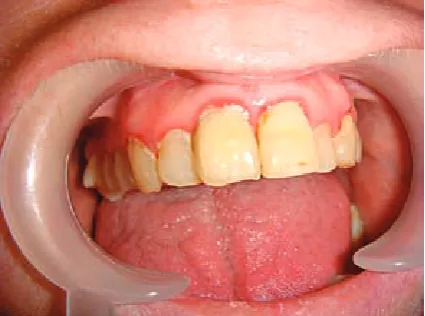
Fig. 1. Abundant deposits of dental plaque and calcu-lus and inflammation of the gingiva and periodontium in patients from investigation group (1A)
Ryc. 1. Znaczne nagromadzenie płytki nazębnej i kamienia skutkujące zapaleniem dziąseł i przyzębia brzeżnego u pacjentów z grupy badanej (1A)
Fig. 2. Abundant deposits of dental plaque and calcu-lus and inflammation of the gingiva and periodontium in patients from investigation group (1A)
Ryc. 2. Znaczne nagromadzenie płytki nazębnej i kamienia skutkujące zapaleniem dziąseł i przyzębia brzeżnego u pacjentów z grupy badanej (1A)
Fig. 3. Extensive cementum caries lession in patient from investigation group (1B)
Ryc. 3. Rozległe ubytki cementu korzeniowego u pacjentki z grupy badanej (1B)
Table 4. The Wilcoxon test compares figures for API
index for the preliminary and control examinations in various subgroups
Tabela 4. Test Wilcoxona porównujący wyniki wskaźnika
API między badaniem wstępnym i kontrolnym w podgru-pach
Group
(Grupa) uΣR(+) uΣR(–) pj GR1A Increase
(Wzrost) Decrease(Spadek)
API_1_2 0.1140 0.8860 0.0033 GR1B
API_1_2 0.0714 0.9286 0.0234 GR2A
API_1_2 0.0278 0.9722 0.0078 GR2B
API_1_2 GR3A
API_1_2 0.0000 1.0000 0.0020 GR3B
of research conducted with the use of the API index during the preliminary examination, which proved the effectiveness of preventive action in group 2A (Table 5). When OHI CI, that is the dental calcu-lus element of the OHI index, is taken into con-sideration, its mean value among schizophrenics amounted to 0.34, SD – 0.46 during the prelimi-nary examination and it increased to a mean value of 0.42, SD – 0.52 during the control examination. Such results can be easily explained, as patients of a closed psychiatric ward have no contact with the dentist, therefore they have no chance to have their mineralized deposits removed. If dental plaque is not removed quickly, it starts mineralizing in less than 72 hours and that, in turn, resulted in the in-crease of such index. The most extensive deposits were found in group 2B, with a mean OHI CI in-dex value of 0.50, SD – 0.60 during the preliminary examination and 0.47, SD – 0.55 value during the control check. The most favorable results for OHI CI index values can be found in group 3A, simi-larly to the assessment score for other indices of the oral cavity state (Table 5).
Discussion
The purpose of the examination described above was the analysis of the state of the oral cavity and assessment of effectiveness of pro-hygienic ac-tions among schizophrenics treated with classical
and atypical neuroleptics. It was conducted during a 10-week stay of those patients at the psychiatric ward of a hospital. The state of the dentition was assessed with use of the DMFT index, while effec-tiveness of pro-hygienic actions was assessed with use of OHI and API indices in comparative analy-sis during the first and second control visit, as well as comparatively with results obtained from pa-tients who stayed outside the psychiatric ward and a group of people who did not demonstrate any symptoms of psychic disorders and thus did not necessitate treatment with neuroleptics. The analy-sis probably depends on the specific situation of patients who suffer from various types of chronic mental disorders, including schizophrenia. Avail-able literature reports cases that characterize that particular group of patients, yet rarely explores in-terdependencies between the overall state of health of those patients and the state of their oral cavity, as well as the specific needs that group of patients has, particularly where basic, preventive healthcare in the field of dentistry is concerned [9].
Studies conducted by Persson et al. have shown that impaired mental health has been as-sociated with an increased need for dental care. Population surveys have indicated that people with enduring mental health problems make less frequent planned visits to the dentist and report a greater number of missing teeth than the gen-eral population [10]. According to the opinion of
Gurbuz et al., patients with mental illness or
psy-Table 5. Mean arithmetic value ± standard deviation of value of OHI PI (plaque index) and OHI CI (calculus index) indices
obtained from the preliminary and control examinations in 3 groups and 6 subgroups of patients
Tabela 5. Średnia arytmetyczna ± odchylenie standardowe wartości wskaźników OHI PI (składowa płytki) oraz OHI CI
(składowa kamienia) uzyskane podczas badania wstępnego i kontrolnego w 3 grupach i 6 podgrupach pacjentów Group
(Grupa) OHI PIPreliminary investigation (Badanie wstępne)
OHI PI
Control investigation (Badanie kontrolne)
OHI CI Preliminary investigation (Badanie wstępne)
OHI CI
Control investigation
(Badanie kontrolne)
xśr. SD xśr. SD xśr. SD xśr. SD
1 1.27 0.92 0.95 0.83 0.30 0.45 0.38 0.50
2 1.33 1.02 1.00 0.91 0.41 0.47 0.50 0.58
1+2 1.29 0.95 0.96 0.85 0.34 0.46 0.42 0.52
3 0.21 0.20 0.15 0.18 0.13 0.34 0.15 0.38
1A 1.16 0.89 0.78 0.73 0.33 0.52 0.44 0.57
1B 1.48 0.97 1.23 0.94 0.25 0.29 0.30 0.35
2A 1.13 0.95 0.78 0.86 0.34 0.37 0.52 0.63
2B 1.61 1.10 1.24 0.95 0.50 0.60 0.47 0.55
3A 0.20 0.20 0.08 0.07 0.07 0.06 0.07 0.07
chiatric disorders are one of the special groups re-quiring attention as they are often neglected [11]. These patients constitute a high risk group for caries, temporomandibular disorders (TDM) and severe tooth wear because of the mental situation of the population or the severe prolonged effect of emotional distress [11]. Zusman et al. point out the fact that patients with psychiatric disease are at a particularly high risk of dental disease because of the side effects of their medication, their high frequency of sweets consumption, poor dental hy-giene, and smoking. Dental treatment is difficult for these patients because of their lack of motiva-tion and apathy, limited cooperamotiva-tion, low adapt-ability to new prostheses, mobility difficulties, fear of treatment and poor communication as well as financial considerations [12]. Neuroleptic medi-cation can also increase appetite for foods high in sugar. Sixty-three percent of schizophrenic young women consume sugar at least once a day, and in some cases more than that [13]. Research con-ducted by Antilla et al. also demonstrated elevated sugar consumption among women suffering from mental disorders. Moreover, it was shown in the same study that 60% of examined men and 17% of examined women brush their teeth less than twice a day [14]. Other research conducted by these authors demonstrated a connection between increased consumption of foods high in sugar and growth of Lactobacillus acidophilus populations in the saliva to levels higher than 100 000 CFU/ml, which in turn leads to decreased pH levels in the oral cavity [13]. Dry mouth symptoms, confirmed with the dental mirror test, were observed in ev-ery examined schizophrenic man from the 36–63 age group treated with classical neuroleptics, even though only 40% of them complained of it during the interview [15]. Other medication such as an-tidepressants and lithium may cause xerostomia too (a which is associated with oral problems such as caries, gingivitis, glossitis, stomatitis, acute pa-rotitis). Chronically mentally ill patients may try to overcome a dry mouth by drinking more car-bonated drinks which may in themselves increase the rate of caries [16]. Interestingly, increased sa-liva production was observed in 2 men from the younger (aged between 20–35) group treated with neuroleptics. Excessive saliva production in re-sponse to atypical neuroleptics is mentioned by Kurnatowska and Stankiewicz[15].
The results of McCreadie et al. suggest a num-ber of possible reasons for poorer dental health. The majority of patients only went to the dentist when they had trouble with their teeth or gums; few went for a regular check-ups [16]. Marques-Vidal research demonstrated that people suf-fering from depression visited the dentist more
frequently than healthy people [17]. Also fewer schizophrenics cleaned their teeth daily. Patients therefore were taking less care of their teeth. This is not because they experienced more barriers to treatment. In fact, the reverse appeared to be the case. They were not more nervous about going to the dentist. Negative symptoms such as apathy and loss of drive may lead to poor self-care, in which attention to dental health is but a part. In this con-text it is noteworthy that those who did not brush their teeth regularly had more negative symptoms. It is well known that people from non-manual backgrounds are more likely to be dentate than those from manual backgrounds among both men and women [16].
The acquired results of the research described above prove that in the case of patients who are treated with neuroleptics, the state of their oral cavity and dentition (number of decayed teeth and teeth extracted due to decay) and their hygiene in total was significantly worse than in the control group. However, professional hygienic training conducted among such patients improved the pa-rameters of hygienic indices in that group, which should result in discussion for choosing a motiva-tional approach to popularize in that group. The results mentioned above are confirmed by some sources of reference in the available literature [18]. Preventive dental education for this unique group of patients is paramount. Hygiene instruction ses-sions are best conducted before a large mirror. Oral instructions, modeled demonstrations (in which the dentist brushes and flosses his or her own teeth) and colorful posters are effective in describing the proper tooth brushing and flossing techniques and the use of artificial saliva products, anti-microbial agents (for example, chlorhexidine digluconate), and fluoride mouth rinses. Patients should be rescheduled at three-month intervals for a clinical examination, oral prophylaxis and appli-cation of a fluoride gel. Unfortunately, a significant number of patients lack the ability or motivation to independently perform oral hygiene procedures. Thus, maximal effectiveness is achieved by also educating a family member who can serve as the patient’s primary care giver [12, 18, 19].
hyperpro-lactinaemia, side-effects such as extrapyramidal symptoms and, what is even more important in the context of the conducted research, improvement of cognitive and executive functions of procedural memory [8, 20, 21]. Sacchetti et al. claims that the only negative symptoms with increased intensity could be limited social needs and reduced interests. As research proves, a representative of that group, called risperidone (one of the drugs administered to patients examined in the discussed research), is a well-tolerated drug which rarely causes undesir-able side-effects of increased intensity. The most frequent ones are drowsiness, disturbances in the menstrual cycle of women and increase of body weight [20]. Psychiatrists consider this drug effec-tive in fighting posieffec-tive symptoms and helpful in fighting cognitive dysfunctions, particularly im-proving procedural memory and executive func-tions. Treatment conducted with risperidone re-sults in significant improvement of concentration, psychomotor speed and performance in psycho-metric tests, as well as reaction time, manual skills, kinesthetic learning and lingual processes. The beneficial effects of risperidone on cognitive func-tions in schizophrenia can be observed as early as in 4 to 6 weeks of treatment [22]. The image of olanzapine, another drug also used by the patients examined, is strongly associated with its favorable influence on cognitive functions, particularly those connected with verbal skills such as verbal fluency and memory, as well as its effectiveness in fighting positive and emotional symptoms and prevention of recurrences [8, 20, 21].
Both an analysis of available literature and the results of the research presented clearly demon-strate negligence in preventive and therapeutic ac-tions that should be undertaken as far as the state of the oral cavity in patients suffering from
schizo-phrenia is concerned [9–19]. The dental problems of patients of psychiatric wards are enormous. Analysis of the problem is even more complex, as the state of health of the teeth and mucous mem-brane of the oral cavity in those patients is a re-sult of combined primary disorder and the fact that most of them have to stay a long time at the hospital, which is a place very different from the familiar home environment which most patients are used to. Unfortunately, the stay at the hospital is, in many cases, an essential stage of treatment required in order to improve the overall state of health, which then guarantees continuation of therapy in the family environment. The fact that improvement of the parameters of the oral cav-ity hygienic indices was observed after a profes-sional pro-hygienic training was conducted allows for a question: Should the phase when the patient is hospitalized and clinically treated be simulta-neously the period during which introduction of a preventive hygienic program is to be imple-mented in order to improve the overall state of the patient’s oral cavity, and should such program be continued after the stay at the hospital, in the pa-tient’s home environment [12, 19].
The authors concluded that schizophrenics show significantly less interest in hygiene of their own oral cavity and in the state of their denture.
Patients treated with classical neuroleptics should be taken into particular care, as effective-ness of dental hygiene activities in that group, which includes hygienic training for oral cavity care, is lower than in a group of patients treated with atypical neuroleptics.
Atypical neuroleptics used in pharmacothera-py of schizophrenia can have a more advantageous influence on the level of interest a given person pays to the hygiene of their own oral cavity.
References
[1] Krzystanek M: Schizofrenia, zaburzenia typu schizofrenii (schizotypowe) i uroje niowe [In:] Psychiatria. Podręcznik dla studentów pielęgniarstwa. Eds.: Krupka-Matusz czyk I, Matuszczyk M. SUM, Katowice 2007, first ed., 35–46.
[2] Wichowicz H, Drogoszewska AB: Nieuzasadnione usunięcie wszystkich zębów u 35-letniej osoby chorej na przewlekłą schizofrenię. Czas Stomatol 2004, 57, 366–369.
[3] Chuong R: Schizophrenia. Oral Surg Oral Med Oral Pathol Oral Radiol Endod 1999, 88, 526–528.
[4] Al-Hiyasat AS, Khasawneh SF, Khader YS: Tooth Wear Among Psychiatric Patients: Prevalence, Distribution, and Associated Factors. Int J Prosthodontics 2006, 19, 403–409.
[5] Krzystanek M, Krupka-Matuszczyk I: Obserwacja nasilenia objawów negatywnych u pacjentów z rozpoznaniem schizofrenii leczonych neuroleptykiem atypowym. Probl Med Rodz 2008, 10(4), 63–68.
[6] Horacek J, Bubenikova-Valesova V, Kopecek M, Palenicek T, Dockery C, Mohr P, Hoschl C: Mechanism of action of atypical antipsychotic drugs and the neurobiology of schizophrenia. CNS Drugs 2006, 20(5), 389–409.
[7] Krzystanek M, Krzystanek E, Krupka-Matuszczyk I: Obserwacja występowania akatyzji i późnych dyskinez u pacjentów leczonych olanzapiną – lekiem przeciwpsychotycznym II generacji. Probl Med Rodz 2009, 1(26), 75–79.
[8] Rybakowski JK, Borkowska A: The effect of treatment with risperidone, olanzapine or phentothiazines on cogni-tive functions in patients with schizophrenia. Int J Psychiatry Clin Pract 2001, 5, 249–256.
[10] Person K, Axtelius B, Soderfeldt B, Ostman M: Monitoring oral health and dental attendance in an outpatient psychiatric population. J Psych Mental Health Nurs 2009, 16, 263–271.
[11] Gurbuz O, Alatas G, Kurt E: Prevalence of temporomandibular disorder signs in patients with schizophrenia. J Oral Rehabil 2009, 36, 864–871.
[12] Zusman SP, Ponizovsky AM, Dekel D, Masarwa AS, Ramon T, Natapov L, Grinshpoon A: An assessment of the dental health of chronic institutionalized patients with psychiatric disease in Israel. Spec Care Dent 2010, 30(1), 18–22.
[13] Anttila SS, Knuuttila MLE, Sakki TK: Depressive symptoms favor abundant growth of salivary Lactobacilli. Psychosomatic Med 1999, 61, 508–512.
[14] Anttila SS, Knuuttila MLE, Sakki TK: Relationship of depressive symptoms to edentulousness dental health, and dental health behavior. Acta Odontol Scand 2001, 59, 406–412.
[15] Kurnatowska A, Stankiewicz A: Choroby afektywne a periodontopatie. Stomatol Współcz 2003, 10, 24–27.
[16] McCreadie RG, Stevens H, Henderson J, McCaul R, Filik R, Young G, Sutch G, Kanagaratnam G, Perrington S, McKendrick J, Stephenson D, Burns T: The dental health of people with schizophrenia. Acta Pschiatr Scand 2004, 110, 306–310.
[17] Marques-Vidal P, Milagre V: Are Oral Health Status and Care Associated with Anxiety and Depression? A Study of Portuguese Health Science Students. J Pub Health Dent 2006, 66, 64–66.
[18] Friedlander AH, Marder SR: The psychopathology, medical management and dental implications of schizophre-nia. J Am Dent Assoc 2002, 133, 603–610.
[19] Greń A, Tanasiewicz M, Skucha-Nowak M, Twardawa H:Condition of oral cavity at patients staying in environ-ment of psychiatric hospital – preliminary research. Pol J Environ Stud 2010, 19, 6A,112–115.
[20] Sacchetti E, Valsecchi P, Parrinello G: QUERISOlA Group. A randomized, flexible-dose,quasi-naturalistic com-parison of quetiapine, risperidone, and olanzapinein the short-term treatment of schizophrenia: the QUERISOlA trial. Schizophr Res 2008, 98(1–3), 55–65.
[21] Meder J, Tyszkowska M, Jarema M, Araszkiewicz A, Szafrański T: leki przeciwpsychotyczne w praktyce lekarza psychiatry. leczenie pacjentów z rozpoznaniem schizofrenii lekoopornej. Psychiatr Pol 2008, 6, 859–873.
[22] Harvey P, Keefe R: Studies of cognitive change in patients with schizophrenia following novel antipsychotic treat-ment. Am J Psychiatry 2001, 158, 176–184.
Address for correspondence:
Marta Tanasiewicz
Department of Conservative Dentistry with Endodontics Medical University of Silesia
Plac Akademicki 17 41-902 Bytom Poland
Tel.: +48 32 282 79 40
E-mail: [email protected]
Conflict of interest: None declared