Available online at www.jallr.ir
Correspondence: Khojaste Askari, Email: [email protected] © 2014 Journal of Applied Linguistics and Language Research
The Effectiveness of Ur Model in Developing Iranian EFL
Learners’ Fluency and Accuracy in Speaking
Khojaste Askari
MA in TEFL, Department of Foreign Languages, Islamic Azad University, Kerman, Iran
Jahanbakhsh Langroudi
Associate Professor, Department of Foreign Languages, Shahid Bahonar University, Kerman, Iran
Abstract
The present study set out to investigate the effect of Ur's model on Iranian EFL learners’ fluency and accuracy in speaking ability. To do so, a sample of 60 Iranian EFL learners were selected based on their performance on Oxford Placement Test (OPT). The participants were then randomly assigned to two equal groups of Ur model and control. The groups received speaking instruction based on the 5-component model of Ur and routine techniques of speaking instruction. Based on the statistical results of the paired sample t-test, Ur model had been proved to be successful in enhancing both fluency and accuracy of EFL learners. The findings of the present study was a supporting empirical evidence for a model presented by Ur (2009) that highlighted both mechanical and communicative practices to lead learners from accuracy to fluency.
Keywords: Ur model, accuracy, fluency, speaking ability
INTRODUCTION
Nowadays, learning a foreign language has an incontrovertible role in every day's life. With the continuing progress of communications and technologies this role is even highlighted much more than before. Among all the languages across the world, the English language is more widely used. Speaking is a productive oral skill which is known as the most difficult skill, in teaching English at a foreign language (EFL) since it happens in real time (Nunan, 2003). Moreover, speaking includes productive verbal utterances to convey meaning. Spoken language is auditory and temporary. Speaking can be defined as the people way to convey the message to others. The purpose of speaking is to make the receiver understand the topic being uttered.
second language has great value for individual language learners since their proficiency in language learning is often measured by productive skills specially speaking ability. Speaking is the primary skill for evaluating the efficacy of a course, since it is a medium to realize the proficiency in other language skills and sub-skills. Haung (2006) stated that non- native speakers believe that speaking in the target language is one of the most demanding and crucial tasks in their everyday life. Furthermore, Ferris and Tag (1996) mentioned that even highly proficient language learners are not satisfied with their speaking skills and are looking for chances to improve their speaking ability. Regarding these facts, speaking can be considered as one of the most studied and discussed areas of applied linguistics.
According to Richards (2008), concerning speaking instruction, three issues should be considered. First, a decision needs to be made on the types of speaking skills in class based on questionnaires, interviews, and diagnostic testing. Second, the types of teaching strategies to teach speaking should be identified. The third issue refers to characterizing the expected level of learners' performance on speaking and the criteria for assessment of their performance. Most successful learners consider their own goals, needs and stage of learning and use the appropriate learning strategies whose manners are more adjustable with them. It seems that more successful learners use a wider range of strategies in a great number of situations than poor ones do.
Richards and Renandya (2002) pointed out that reading and writing are the necessary skills however, the skill of speaking and listening are paid no or little attention. Celce-Murcia (2003) argued that for most people “the ability to speak a language is synonymous with knowing that language since speech is the most basic means of human communication.” (p. 103).
According to Ur (2013), teaching should not be primarily based on a method but rather on a set of principles and procedures based on teachers’ practical situated experience, enriched by research, theory, and practice relevant to teaching and learning of any subject. It is suggested that it is unhelpful and counterproductive to urge teachers to use a method that they would be better served by being encouraged to develop theory and practice in situated methodologies.
their grammar competence and use it effectively in communication, at least in oral production.
Speaking in the foreign language has always been considered the most demanding skill to develop in the learners of the target language compared to such other skills as listening, reading, and writing. This is due to the fact that it involves more than simply knowing the linguistic components of the language. In effect, knowledge of the linguistic components such as vocabulary and grammatical structures seems essential but not sufficient. What makes speaking different from the other skills is that the speaker needs to have a quick access to all the relevant knowledge required to produce the appropriate language in relatively short lags of time, whereas in other skills the learners normally have enough time to either match the input with the existing knowledge, e.g., in reading or writing or to search for the accurate forms to produce the language with no immediate recipient who might be waiting even some times impatiently to receive the language, e.g., in writing.
Pathan, Aldersi and Alsout (2014) mentioned that EFL learners have various problems while communicating in English and speak the language in their own way with the flavor of their mother tongue. Furthermore, some limitations such as neglect of errors, emphasis on global meaning, and big class size and unreal peer communication can impede the use of CLT in the classroom (Dan Lu & Julie Y. F. Ng, 2013).
This study sought to find the effectiveness of Ur model in developing EFL learners' accuracy and fluency in speaking. To address the objectives of the study, the following research questions were posed:
1. Does Ur's model have any significant effect on Iranian EFL learners' fluency in speaking?
2. Does Ur's model have any significant effect on Iranian EFL learners' accuracy in speaking?
METHOD
Participants
Instruments
The first instrument used in this study was the Oxford Placement Test (OPT). The validity of the test is self-evident. This test enabled the researcher to select those learners who were compatible with the conditions of the study. Oxford placement test (OPT) has been used to assess students’ language proficiency. It also enabled the researcher to have a greater understanding of what level (i.e., elementary, pre-intermediate, intermediate) their participants were at. This test consists of 70 items, including 10 multiple-choice and true-false items for reading, 10 items for writing, and 50 multiple-choice language use items. According to OPT, those who could attain 39 and above (out of 70) are considered as intermediate learners.
The speaking section of Preliminary English Test (PET) was selected for the pretest and posttest of the study. The speaking section contains four parts. Each candidate interacts with the interlocutor. The interlocutor asks the candidates questions in turn, using standardized questions. The questions include giving information of a factual and personal kind. The candidates respond to questions about present circumstances, past experiences, and future plans. In the second task, candidates interact with each other. Visual stimulus is given to the candidates to aid the discussion task.
Measures
In this study, accuracy was measured according to Tavakoli and Rezazadeh (2014) who measured a dependent clause and at least one additional clause. The dependent clause was one which contained a finite or a non-finite verb and additional clause was one of the subject, object, complement or adverbial. Fluency was measured based on Wigglesworth and Storch (2007) who measured in terms of the average number of words, T-units and clauses per text.
Procedures
At the beginning of the study, OPT was administered in order to manifest the participants' homogeneity in terms of English language proficiency. Fourteen participants (out of 74) could not attain the minimum score for the intermediate level and they were excluded from the whole participants. The participants were then randomly assigned to two equal groups of Ur model (n = 30) and control (n = 30). The groups were pretested by a speaking pre-test. Then, the participants of each group received the same material, speaking instruction, and the same amount of time was spent teaching speaking in each class.
The third group of the study received instruction based on the 5-component model provided by Ur. The instruction was communicative-based with the purpose of teaching the students to use the conventional correct forms in their own output, while encouraging awareness of variants in different types of input. Using traditional explanation and practice, as well as communicative procedures helped students achieve accuracy. The five components of the lesson were as follow:
1. Task-based instruction + focus on form: The focus of this component was on form
within the framework of task-based language teaching.
2. Presentation + practice-based instruction: In this component, a grammatical rule,
was presented inductively or deductively and then the learners practiced activities, and progressed from mainly form to mainly meaning focus.
3. Communication only: Examples of activities in this component were: (receptive)
listening to recorded or improvised speech; extensive reading; watching movies, TV. Examples (productive) talking, communication games; exchanging information; creative or transactional writing
4. Form-focused only: The fourth component of Ur's model consisted of purely
form-focused activities. Examples were ‘Tip of the day’ – isolated language points; grammar rule explanations.
5. Exemplar-based: Finally, the learners were bombarded with a variety of
examples in order to fully understand the instruction.
The second group received speaking instruction according to routine and traditional methods. Initially, the students were asked to listen attentively while the teacher was presenting a dialog, a conversation between two people. The students were expected to eventually memorize the dialog. All of the teacher's instructions were in English. The students listened several times and repeated each of the lines of the dialog after her model. Students were imitators of the teacher's model. They follow the teacher's direction s and respond as accurately and as rapidly as possible. The teacher taught the new vocabulary, grammar structures through the dialog. The grammar was induced from the given examples. The accurate use of the forms was emphasized. Generally, the learners' speaking interactions were restricted in dialog practice.
RESULTS
Table 1. Descriptive statistics of groups' performance on pretest
N Minimum Maximum Mean Std.
Deviation
Pretest
Ur Accuracy 30 Fluency 30 2 2 9 9 6.34 6.09 2.30 2.25 Control Accuracy 30 Fluency 30 1 1 8 9 5.83 5.86 2.05 2.52
A Pearson-product moment correlation coefficient was performed in order to test the inter-rater reliability of scores on pretest obtained by two raters in two groups of the study. The results of a Pearson correlation for Ur group are provided the Table 2.
Table 2. Inter-rater reliability of the Ur group on pretest
Pretest interactive
(Rater 1) Pretest interactive (Rater 2)
Pretest interactive (Rater 1)
Pearson
Correlation 1 .986**
Sig. (2-tailed) .000
N 30 30
**. Correlation is significant at the 0.01 level (2-tailed).
It was revealed that there is a significant relationship (r = 0.98, p < 0.05) between the scores of pretest obtained by two raters in interactive group. Thus, the inter-rater reliability of scores for interactive group is highly significant.
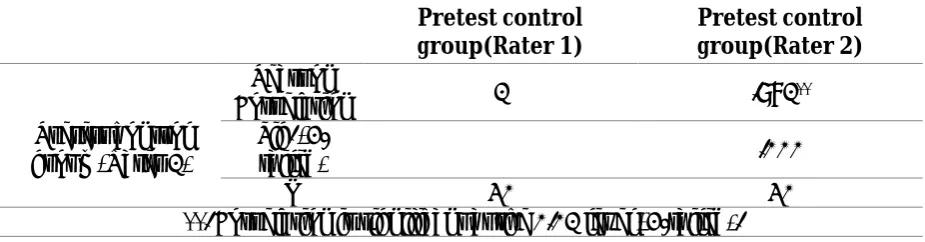
The inter-rater reliability of pretest speaking scores of control group was calculated using a Pearson correlation coefficient among two sets of pretest scores of control group. The results are shown in Table 3.
Table 3. Inter-rater reliability of the control group on pretest
Pretest control
group(Rater 1) Pretest control group(Rater 2)
Pretest control group (Rater 1)
Pearson
Correlation 1 .981**
Sig.
(2-tailed) .000
N 30 30
**. Correlation is significant at the 0.01 level (2-tailed).
In order to prove the normality of the scores of the pretest, another statistical procedure, namely, one sample Kolmogorov-Smirnov test was performed. The results are presented in Table 4.
Table 4. One-Sample Kolmogorov-Smirnov of Pretest Ur
Fluency (Pretest)
Ur Accuracy (Pretest)
Control Fluency (Pretest)
Control Accuracy (Pretest)
N 30 30 30 30
Normal Parametersa,b
Mean 6.34 6.09 5.83 5.86
Std. Deviation
2.300 2.254 2.051 2.522
Most Extreme Differences
Absolute .164 .199 .200 .179
Positive .124 .199 .116 .163
Negative -.164 -.145 -.200 -.179
Kolmogorov-Smirnov Z .972 1.179 1.185 1.061
Asymp. Sig. (2-tailed) .301 .124 .121 .210
As the Table 5 shows, the most extreme differences between the scores is not significant. The measured significance level for Ur and control groups were higher than the assumed level of significance (i.e., 0.05); thus, it can be concluded that there was no significant difference between the observed distribution of selected scores of pretest and the scores are normally distributed.
In order to ensure that there is no significant difference between the groups regarding their fluency and accuracy in speaking, a two-way ANOVA was performed. The results are provided in Table 6.
Table 6. Two-way ANOVA on pretest Dependent Variable: Pretest
Source Type III Sum
of Squares df Mean Square F Sig.
Corrected Model 17.110a 4 3.422 .400 .849
Intercept 8209.376 1 8209.376 958.889 .000
groups 7.267 1 3.633 .424 .655
Fluency and
accuracy 9.643 1 9.643 1.126 .290
groups * Fluency
and accuracy .200 1 .100 .012 .988
Error 1746.514 114 8.561
Total 9973.000 120
Corrected Total 1763.624 119
a. R Squared = .010 (Adjusted R Squared = -.015)
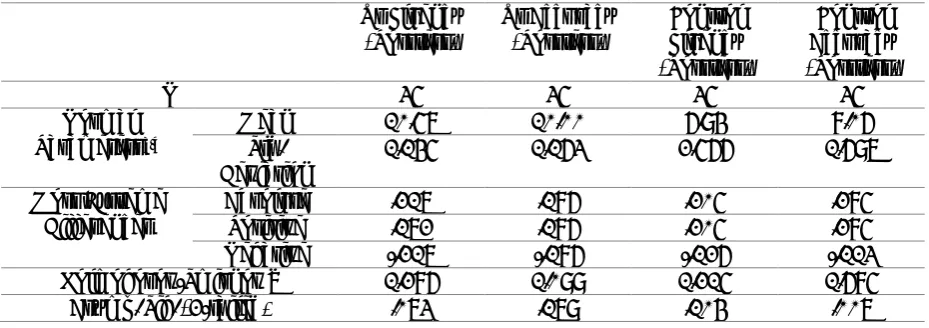
The mean of two raters' scores on the posttest scores of each group was considered for final analysis. The descriptive statistics of the three groups' scores has been presented in Table 7.
Table 7. Descriptive statistics of groups' performance on posttest N Minimum Maximum Mean Std.
Deviation
Posttest Ur
Fluency 30 9 12 10.57 1.14
Accuracy 30 8 12 10.00 1.16
Control Group
Fluency 30 4 12 6.94 2.56
Accuracy 30 6 12 8.06 1.69
The inter-rater reliability of the Ur group's performance on posttest was calculated by means of Pearson correlation. The results of statistical analysis are provided in Table 8.
Table 8. Inter-rater reliability of the Ur group on posttest
Interactive (Rater 1) Interactive (Rater 2)
Ur group (Rater 1)
Pearson
Correlation 1 .990**
Sig. (2-tailed) .000
N 30 30
**. Correlation is significant at the 0.01 level (2-tailed).
The results suggested that there is a strong and significant (r = .99, p < .05) correlation between two raters' scores on posttest of Ur group. The inter-rater reliability of the control group's performance on posttest was calculated by means of Pearson correlation. The results of statistical analysis are provided in Table 9.
Table 9. Inter-rater reliability of the control group on posttest Posttest Control Group
(Rater 1) Posttest Control Group (Rater 2) Posttest Control Group
(Rater 1)
Pearson
Correlation 1 .989**
Sig. (2-tailed) .000
N 30 30
**. Correlation is significant at the 0.01 level (2-tailed).
The results of a Pearson correlation for control group showed that there is a significant relationship (r = 0.98, p < 0.05) between the scores of posttest obtained by two raters in control group. Thus, the inter-rater reliability of scores in control group is also highly significant.
Table 10. One-Sample Kolmogorov-Smirnov of Posttest
Ur Fluency
(Posttest) Ur Accuracy (Posttest) Fluency Control (Posttest)
Control Accuracy (Posttest)
N 35 35 35 35
Normal
Parametersa,b
Mean 10.57 10.00 6.94 8.06
Std.
Deviation 1.145 1.163 2.566 1.697
Most Extreme Differences
Absolute .217 .186 .205 .285
Positive .172 .186 .205 .285
Negative -.217 -.186 -.126 -.113
Kolmogorov-Smirnov Z 1.286 1.099 1.215 1.685
Asymp. Sig. (2-tailed) .073 .179 .104 .007
As the Table 10 shows, the most extreme differences between the scores is not significant. The measured significance level for Ur and control groups were higher than the assumed level of significance (i.e., 0.05); thus, it can be concluded that there was no significant difference between the observed distribution of selected scores of posttest and the scores are normally distributed.
In order to verify the research question of the study in finding whether Ur model have any significant effect on Iranian EFL learners' fluency in speaking, a paired-sample t-test was performed between EFL learners' fluency scores in pretest and posttest. The results are provided in Table 11.
Table 11. Paired samples t-test between fluency in pretest and posttest
Paired Samples Test
Paired Differences t df Sig.
(2-tailed)
Mean Std.
Deviation Error Std. Mean
95% Confidence Interval of the
Difference Lower Upper Pair
1 Ur Fluency (Pretest) - (Posttest)
-4.22 1.592 .269 -4.77 -3.68 -15.71 34 .000
The results of paired samples t-test indicated that there is a significant difference (t = -15.71, p < .05) between the participants of the Ur group's fluency on pretest and posttest. In other words, the Ur's model caused learners' progress in fluency in speaking ability. Therefore, the first research question of the study was verified.
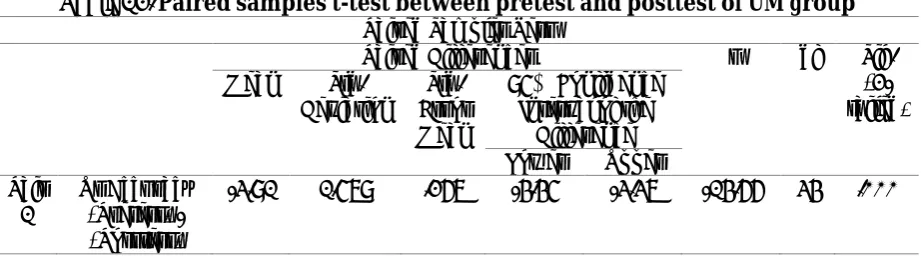
Table 12. Paired samples t-test between pretest and posttest of UM group
Paired Samples Test
Paired Differences t df Sig.
(2-tailed)
Mean Std.
Deviation Error Std. Mean
95% Confidence Interval of the
Difference
Lower Upper
Pair
1 Ur Accuracy (Pretest) - (Posttest)
-3.91 1.579 .267 -4.45 -3.37 -14.66 34 .000
The results of paired samples t-test indicated that there is a significant difference (t = -14.66, p < .05) between the participants of the Ur group's accuracy on pretest and posttest. In other words, the Ur model enhanced EFL learners' accuracy in speaking ability. Therefore, the second research question of the study was verified.
DISCUSSION AND CONCLUSION
Speaking is an interactive process between the speaker and the oral text as well as the interaction between bottom-up and top-down strategies. This study was an attempt to investigate the effectiveness of the model provided by Ur in measuring accuracy and fluency of EFL learners in speaking. The results of this study supported the use of Ur's model in speaking as they allow the students to comprehend more information, associate it with other ideas and incorporate new ideas into their prior knowledge. Therefore, when information is decoded by using Ur's model, speaking will be easier. The first research question of the study addressed the impact of Ur model in enhancing EFL learners' fluency in speaking. The results of paired sample t-test showed that EFL learners' fluency in speaking significantly improved after they have received speaking instruction through Ur model. This findings was a supporting empirical evidence for a model presented by Ur (2009) that highlighted both mechanical and communicative practice to lead learners from accuracy to fluency.
The second research question of the study addressed the impact of Ur model in enhancing EFL learners' accuracy in speaking. The results of another paired sample t-test showed that EFL learners' accuracy in speaking significantly improved after implementing Ur model. This finding is able to support the findings of Nation (1989) who found that learners' fluency, accuracy and control of content was enhanced during the performance of a speaking activity which involves repeating the same unrehearsed talk.
learner with a low learning potential should be provided with learning and information processing strategies; likewise, the teacher can prepare different plans for each individual learner.
This study was not without its limitations. One limitation of this study relates to the selection of participants. It was impossible to randomize the selection of participants because of limited number of available students. The study was conducted as a component of regularly scheduled EFL coursework.
The age of the learners is another issue which may affect the practicality of Ur's model. Participants of the current study were adult learners. Young learners are the next possible participants for further research. This study focused on the speaking of the learners. Other areas and skills such as listening, writing and grammar can be investigated using Ur's model as an instructional tool.
REFERENCES
Celce-Murcia, M. (Ed). (2003). Teaching English as a second or foreign language (3rd Ed.). Boston: Heinle.
Ferris, D., & Tagg, T. (1996). Academic oral communication needs of EAP learners: What subject-matter instructors actually require. TESOL Quarterly, 30, 31- 58.
Florez, M. A. C. (1999). Improving adult English language learners’ speaking skills.
Washington, DC: Clearinghouse for ESL Literacy Education.
Ho, P. V. P. & Binh, N. T. (2014). The Effects of Communicative Grammar Teaching on Students’ Achievement of Grammatical Knowledge and Oral Production. English
Language Teaching, 7(6), 74-86.
Huang, K. (2006). Metacognitive strategies in academic oral presentation. TESOL Paper. Province University Taiwan.
Lu, D., & Ng, J. Y. F. (2013). The Pedagogical Maze: Retrospection on CLT in Hang Kong.
Open Journal of Modern Linguistics, 2, 289-294.
Nunan, D. (2003). Designing Tasks for the Communicative Classroom. Cambridge: Cambridge University Press.
Pathan, M., Aldersi, Z. & Alsout, E. (2014). Speaking in their Language: An Overview of Major Difficulties Faced by the Libyan EFL Learners in Speaking Skill. International
Journal of English Language & Translation Studies, 2(3), 96-105.
Richards, J. C. (2008). Teaching listening and speaking: From theory to practice.
Cambridge: Cambridge University Press.
Richards, J., & Renandya, W. (Eds.), (2002). Methodology in Language Teaching: An
Tavakoli, M. & Rezazadeh, M. (2014). Individual and Collaborative Planning Conditions: Effects on Fluency, Complexity and Accuracy in L2 Argumentative Writing. The
Journal of Teaching Language Skills (JTLS), 5(4), 85-110.
Ur, P. (2009). Grammar practice activities (2nd Edition). Cambridge: Cambridge University Press.
Ur, P. (2013). Language-teaching method revisited. ELT Journal, 67(4), 468-474.