Trans-Atlantic Slave Trade
• Began in 1400s (Portugal and Spain)
• Majority African captives were from West Africa (between Senegal and Angola).
• ~11 million people were taken. 1-2 mil. didn’t survive travel to the Americas. • ~9-14 million East Africans taken and enslaved by Arabs.
• Established unequal relationship between Africa and European Powers.
• Africans contributed to the trade. Slavery/servitude existed in Africa prior to slave trade but was different than European slavery, where slaves were
“chattel” (property)
• Africans captured people from other ethnic groups for trade through warfare and raids.
• They then traded these captives to Europeans in exchange for guns and other goods.
Liberia’s Unique History
• Began as a colony for former African
American slaves.
• Founded by American Colonization Society,
led by white minister named Robert Finley. Group didn’t want slavery but also didn’t want black people free in America.
• Black people were critical of the idea as
were abolitionists.
• Became independent of US in 1847, a
reason why it remained independent through Scramble for Africa.
• ~15,000 African Americans settled there, a
minority of Liberia’s population. 11 stripes for 11 signers of declaration
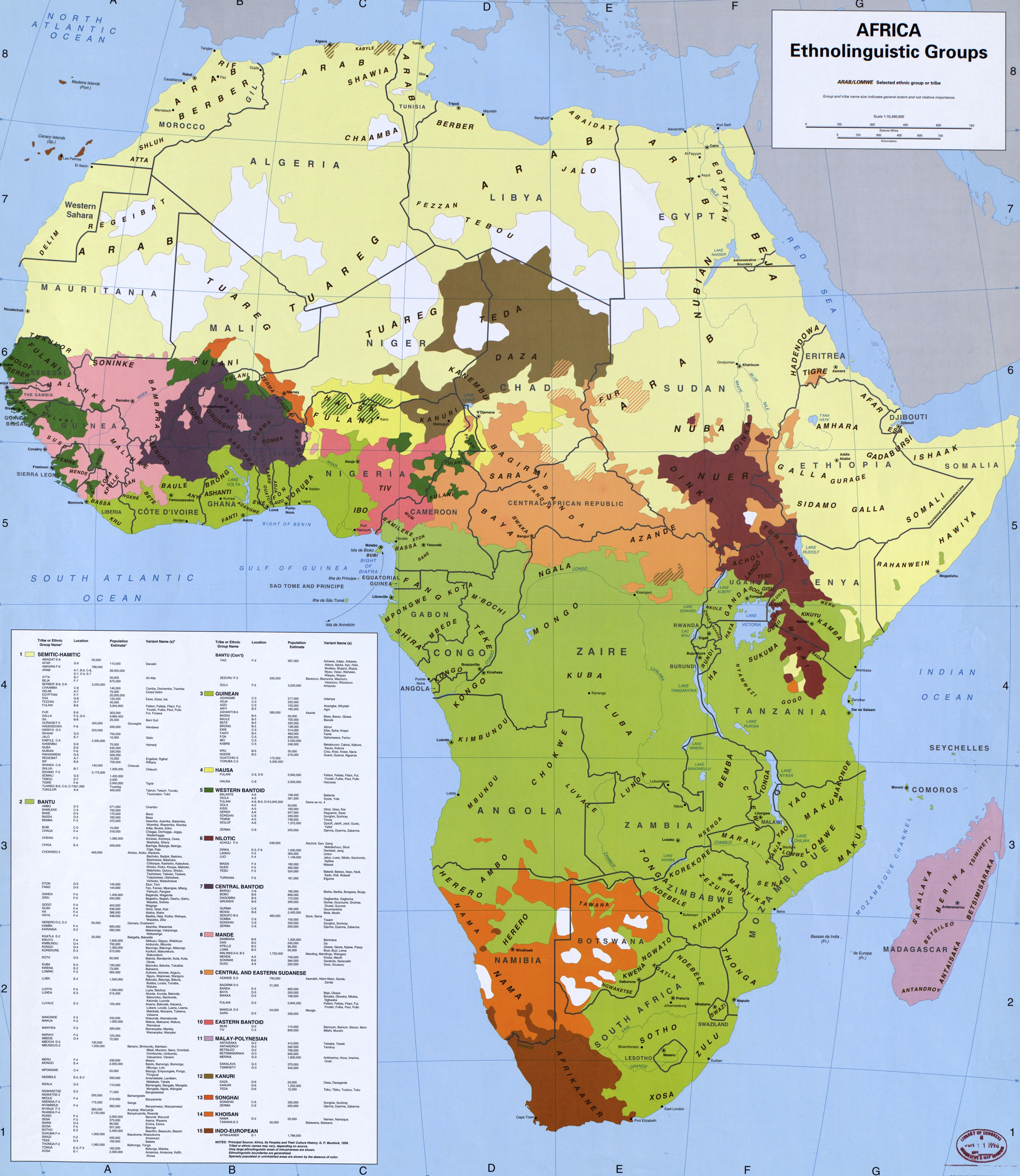
Diversity in Africa
•
Approximately
1500 languages
spoken
•
English, French,
Swahili, and
Arabic are most
commonly
spoken.
•
Many
Rural vs. Urban Centers
• Africans inland and in rural areas
live more traditionally than those in large population centers.
• 62% of Sub-Saharan Africa is rural.
– Harder to access clean water, healthcare, education, higher incomes
– 389 million people are estimated to live on less than $1.90 a day and get by on subsistence farming
– Solar power is helping bring electricity to rural areas.
– Urbanization is increasing. Projected to go from 36% to 50% in 2030.
Comparison: 81% urban in USA.
– World Bank Link Zougmore Saidou, 21, digging a well
Africa’s Struggle to Develop
•
Civil war and terrorism
•
Corruption and political instability (bribe
taking in gov’t. and business)
•
Reliance on 1 or 2 crops/commodities
•
Poor education systems
•
Poor health and healthcare
•
Dependence on aid.
•
Debt. Some criticize IMF/World Bank that
provide loans to poor countries with
requirements that create other problems.
•
See pages 461-463.
Charles Taylor, Liberian president, 1994-2003.
Growth in Africa: Botswana
• Went from one of the lowest per capita income ($70 to $16,300) in a few decades.
• Factors that helped: diamond and mineral reserves, strong democratic leadership, smart money management
• Average income increasing for citizens by 6% annually (higher than developed countries.
• Population growth is slower than other countries • Low corruption rating
• Effective fight against HIV/AIDs
• Big companies have headquarters there or large operations. This will help trade increase.
• Highest credit rating of all African countries • Ghana and Ivory Coast are other examples
South African Apartheid
• Began in 1948.• Apartheid = complete separation of
blacks and whites.
• Segregated schools, hospitals, and
neighborhoods.
• Blacks ~75% of population but most land
was owned by whites.
• Nelson Mandela fought for black rights,
was imprisoned for 27 years for “conspiring to overthrow the state.”
• Released in 1990 and worked to bring
Apartheid to an end in 1994 when the country held first multi-racial election.
• He was president from 1994-1999 and
Disease in Africa
•
HIV/AIDS, Malaria, Ebola have all affected Africa.
•
Ebola (2014-16)
– 11,315 people killed in Liberia, Sierra Leone, and Guinea – Spread by bodily fluids (mucous, blood)
– Causes fever, diarrhea, vomiting.
– Required global effort stop transmission – High death rate: ~50%
•
Malaria:
– spread by mosquito
– A child dies every minute of Malaria in Africa
HIV/AIDS
HIV/AIDS:
• 36.7 million people worldwide
currently have HIV/AIDs, most are in Sub-Saharan Africa.
• Africans have the lowest treatment rate in world
• 66% of new infections in 2015 Occurred in Sub-Sarahan Africa.
• Many children are born with HIV.
• Infection is decreasing due to
education
• Life expectancy for those with
HIV is increasing due to treatment
Desertification
• Causes:
– Overgrazing of vegetation and trampling of soil by livestock, exposes the soil, erodes it.
– Farming. Clearing the land exposes soil to which exposes the soil to wind, erosion.
– Drilling for water increases salt levels, preventing vegetation
– Increase population puts more stress on the land – Drought
• Effects: reduction of forests, migration (UN projects 50 million may move from Sub-Saharan Africa by 2020.
• Solutions: tree planting, forest protection,
sustainable farming. Trees will take time to
Migrants and Refugees fleeing North Africa
and Middle East
• Millions (1.3 mil in 2015 alone) in the past few years are leaving and
continue to flee.
• Causes: 15 conflicts in the region result in people fleeing or being
driven from their homes.
– Somalia, Sudan, S. Sudan, Libya, Nigeria (war/terror)
– Eritrea (repressive gov’t.)
• Effects:
– People taking risk of paying smugglers, dangerous crossing of Mediterranean, being enslaved/imprisoned in Libya.
– ~5000 people died crossing the Med. In 2016.
– Going to Europe because of location, opportunity, safety
– European countries struggling to deal w/influx and rescue.
Arab Spring
•
Movement by people to end oppression and
authoritarian rule , bring democracy.
•
Began in Tunisia in 2010. Street vendor set
himself on fire to protest police harassment.
•
Protest removed leaders in Libya, Tunisia,
Egypt, and Yemen.
•
6 years later only Tunisia is a success story.
New constitution but still progress to be
made.
•
Civil war in Libya, Syria. Egypt overthrew
their elected president.
•
Human rights abuses being committed
Rwandan Genocide
•
Conflict beginnings stem from
Belgian colonial control. Gave
privilege to Tutsi minority. Hutus
treated more poorly.
•
April 1994, Rwandan president dies
as plane was shot down.
•
Hutu majority target Tutsi minority.
•
800,000 killed in 100 days.
•
International community looked on
as it unfolded.
•
UN Tribunal prosecutes war crimes.
•
Country working to reconcile, live