THE IMPLEMENTATION OF THE SCHOOL DISASTER RISK REDUCTION AND MANAGEMENT
PROGRAM COMPONENTS OF THE DISASTER
Faculty, College of Education, Caraga State University, Ampayon, Butuan City, Philippines
ARTICLE INFO ABSTRACT
The schools today are facing a lot of problems regarding the undesirable effects of disasters. Situated in a low
frequent disasters that cause loss of
schools are no exemptions to this destruction. The researcher took interest on how the disaster schools of Butuan City dealt with the pressing issue. The study focused on the program ini the Department of Education, the School Disaster Ris
researcher used both quantitative and qualitative design in the collection of data with 20 disaster prone elem
encountered several problems in the implementation of the School Disaster Risk Reduction and Management Program (SDRRM). In the SDRRM components, it revealed that there was a poor serving entrance for school children, absenc
the SDRRG members, dearth of equipment, and a discontinuity of instruction. However, the schools make initiatives to mitigate the problems like they improvised unused materials for them to make disaster equipment. They invited resource persons to conduct seminars and training and others would spend their money on the training and seminars. Most of the stakeholders who lack understanding about DRRM gained knowledge on the DRRM concepts by watching telev
the internet about disaster preparedness.
Copyright © 2018, Ariel U. Cubillas. This is an open access distribution, and reproduction in any medium, provided
INTRODUCTION
Disaster is a mostly unexpected event that severely disrupts the functioning of a community or society and causes human, material, and economic or environmental losses and most of the time exceed the ability to recover or to cope using its resources. It occurs when a hazard impacts on vulnerable people (International Federation of Red Cross and Crescent Societies, 2011). The experiences of the past have indicated that the ability of the communities to respond to disasters is weak for most of the time they fall short on disaster preparedness (DepEd Regional Memo No.120 s. 2015). Thus, it is necessary for these communities to improve or enhance their programs on disaster preparedness to decrease vulnerabilities which will result in the reduction of risks and damages when an actual disaster strikes. The strengthening of disaster and risk reduction programs particularly in communities that are prone to disasters is one of the concerns of the international leaders nowadays. Environment News Service (2013) posted that indeed the Asia Pacific region is extremely vulnerable to the impacts of natural disasters.
*Corresponding author: Ariel U. Cubillas
Faculty, College of Education, Caraga State University, Ampayon, Butuan City, Philippines
ISSN: 0975-833X
Vol. 10, Issue,
Article History:
Received 10th August, 2018
Received in revised form 28th September, 2018
Accepted 29th October, 2018
Published online 29th November, 2018
Citation: Ariel U. Cubillas, 2018. “The implementation of the school disaster risk reduction and management program components of the disaster
elementary schools”, International Journal of Current Research Key Words:
Disaster-prone, Prevention and mitigation, Preparedness, Response, Recovery and Rehabilitation, School Disaster Risk Reduction Management.
RESEARCH ARTICLE
THE IMPLEMENTATION OF THE SCHOOL DISASTER RISK REDUCTION AND MANAGEMENT
PROGRAM COMPONENTS OF THE DISASTER-PRONE ELEMENTARY
*Ariel U. Cubillas
Faculty, College of Education, Caraga State University, Ampayon, Butuan City, Philippines
ABSTRACT
The schools today are facing a lot of problems regarding the undesirable effects of disasters. Situated in a low–lying area, Butuan City, Philippines gained nationwide attention regarding vulnerability to frequent disasters that cause loss of lives and damaged properties. The Butuan City public elementary schools are no exemptions to this destruction. The researcher took interest on how the disaster schools of Butuan City dealt with the pressing issue. The study focused on the program ini the Department of Education, the School Disaster Risk Reduction Management Program. researcher used both quantitative and qualitative design in the collection of data with 20 disaster prone elementary schools as respondents. It was found in t
encountered several problems in the implementation of the School Disaster Risk Reduction and Management Program (SDRRM). In the SDRRM components, it revealed that there was a poor serving entrance for school children, absence of building emergency evacuation, lack of training of the SDRRG members, dearth of equipment, and a discontinuity of instruction. However, the schools make initiatives to mitigate the problems like they improvised unused materials for them to make er equipment. They invited resource persons to conduct seminars and training and others would spend their money on the training and seminars. Most of the stakeholders who lack understanding about DRRM gained knowledge on the DRRM concepts by watching telev
the internet about disaster preparedness.
access article distributed under the Creative Commons Attribution the original work is properly cited.
Disaster is a mostly unexpected event that severely disrupts the functioning of a community or society and causes human, material, and economic or environmental losses and most of the time exceed the ability to recover or to cope using its curs when a hazard impacts on vulnerable people (International Federation of Red Cross and Crescent The experiences of the past have indicated that the ability of the communities to respond to disasters is fall short on disaster preparedness (DepEd Regional Memo No.120 s. 2015). Thus, it is necessary for these communities to improve or enhance their programs on disaster preparedness to decrease vulnerabilities which will result in the reduction of risks and The strengthening of disaster and risk reduction programs particularly in communities that are prone to disasters is one of the concerns of the international leaders nowadays. Environment News d that indeed the Asia Pacific region is extremely vulnerable to the impacts of natural disasters.
Faculty, College of Education, Caraga State University, Ampayon, Butuan
A few examples of these are the killer quake that hit Japan, which was made even more destructive because of the tsunamis. The Philippines as a Southeast Asian country gained the global attention when the 7.2 magnitude earthquake beat Bohol and when Yolanda devastated the live
Taclobanons in Leyte. They became sensational these times for the number of casualties, damaged properties and wounded souls they brought (Mukherjee & Chakraborty, 2013). disasters mentioned above are uncontrollable.
occurrences are beyond man’s control. The only thing that the man can do is to reduce their effects. Disaster Risk Reduction Management groups strengthen their capacity to mitigate risks and ill-effects of disasters. Inspection during the construction of both public and private infrastructure is necessary. Legarda (2012 in Sy, 2015) pointed out that extra costs required for making structures safe from earthquakes are worth it especially if they would save thousands of lives. On the other hand, the Primer on the Disaster Risk Reduction and Management (DRRM) Act of 2010 stated there is the need for a more proactive approach to managing disaster risks. The DRRM Act transforms the way we deal with disasters. We now recognize that addressing their causes and identifying their ris
the impacts. The Philippine government at present focused on disaster risk reduction (DRR) from disaster response.
International Journal of Current Research Vol. 10, Issue, 11, pp.75309-75314, November, 2018
DOI: https://doi.org/10.24941/ijcr.32904.11.2018
The implementation of the school disaster risk reduction and management program components of the disaster
onal Journal of Current Research, 10, (11), 75309-75314.
THE IMPLEMENTATION OF THE SCHOOL DISASTER RISK REDUCTION AND MANAGEMENT
PRONE ELEMENTARY SCHOOLS
Faculty, College of Education, Caraga State University, Ampayon, Butuan City, Philippines
The schools today are facing a lot of problems regarding the undesirable effects of disasters. Situated lying area, Butuan City, Philippines gained nationwide attention regarding vulnerability to lives and damaged properties. The Butuan City public elementary schools are no exemptions to this destruction. The researcher took interest on how the disaster-prone schools of Butuan City dealt with the pressing issue. The study focused on the program initiated by k Reduction Management Program. The researcher used both quantitative and qualitative design in the collection of data with 20
disaster-It was found in the study the respondent-schools encountered several problems in the implementation of the School Disaster Risk Reduction and Management Program (SDRRM). In the SDRRM components, it revealed that there was a poor e of building emergency evacuation, lack of training of the SDRRG members, dearth of equipment, and a discontinuity of instruction. However, the schools make initiatives to mitigate the problems like they improvised unused materials for them to make er equipment. They invited resource persons to conduct seminars and training and others would spend their money on the training and seminars. Most of the stakeholders who lack understanding about DRRM gained knowledge on the DRRM concepts by watching television programs and surfing
License, which permits unrestricted use,
se are the killer quake that hit Japan, which was made even more destructive because of the tsunamis. The Philippines as a Southeast Asian country gained the global attention when the 7.2 magnitude earthquake beat Bohol and when Yolanda devastated the lives of the Taclobanons in Leyte. They became sensational these times for the number of casualties, damaged properties and wounded souls they brought (Mukherjee & Chakraborty, 2013). The disasters mentioned above are uncontrollable. Their nd man’s control. The only thing that the man can do is to reduce their effects. Disaster Risk Reduction Management groups strengthen their capacity to mitigate risks effects of disasters. Inspection during the construction ate infrastructure is necessary. Legarda (2012 in Sy, 2015) pointed out that extra costs required for making structures safe from earthquakes are worth it especially if they would save thousands of lives. On the other hand, the k Reduction and Management (DRRM) Act of 2010 stated there is the need for a more proactive approach to managing disaster risks. The DRRM Act transforms the way we deal with disasters. We now recognize that addressing their causes and identifying their risks lessen the impacts. The Philippine government at present focused on disaster risk reduction (DRR) from disaster response.
OF CURRENT RESEARCH
This move puts on more emphasis on strengthening people's capacity to take in stress, maintain core functions during a catastrophe, and recover from disasters. The DRRM Act mandates and legalizes the best practices of local communities that have been implementing effective DRRM in their respective areas. The DRRM team members shared the commendable practices implemented by several communities on disaster preparedness with the establishments such as schools and public offices. As stated in the Disaster Risk Reduction Resource Manual (Safer School Resource Manual, 2008), the Department of Education as the agency responsible for schools acknowledges that aside from providing primary education, the department is also responsible for providing safe teaching-learning facilities. It is also in charge in making a hazard-free environment to the school children. Caraga Region, particularly Butuan City, has also gained its share in disaster. It garnered national attention regarding vulnerability to disasters such as floodings, landslides, typhoons, earthquakes, and even to several man-made disasters like armed conflicts which all brought damages and destructions to the lives of Butuanons (DepEd Memo No. 87 s.2015). In 2012, the city mourned over the seventeen (17) victims who perished in the fire incident that broke out at 3:55 a.m at Novo Jeans, Montilla Boulevard. Lack of fire drills was one of the causes cited in the City Risk Profile (2014). A particular study also showed that almost 40% of the total land area of Butuan was subjected to moderate to severe soil erosion because of shifting cultivation and inappropriate farming practices in the uplands. Typhoons Agaton and Seniang in 2014 were two of the recently recorded calamities that struck the city which resulted in the evacuation of hundreds of families to nearby public schools. Additionally, an armed encounter between Arm Forces of the Philippines and New People’s Army in Barangay Anticala in 2013 caused a total of 80 families to leave their homes and housed at Tagkiling Tribal Elementary School (RDRRMC, 2013). A few of these events prove that Butuan City schools are no exemption to vulnerabilities. Of the 105 elementary public schools in the city, 20 were identified by the Butuan City Planning Office as disaster- prone. Such is due to the postulation that these schools may likely be damaged or disrupted by the impact of particular hazards such as floods, landslides, and fire , on account of their nature, construction and proximity to hazards. With the response to DepEd Division Memo No. 87 series of 2010, the Butuan City Division then, through the Technical Working Group is operating on disaster - preparedness. It conducted seminar-workshops, pieces of training and lectures for teachers, school administrators, school children and parents. But disaster preparedness does not end with theories. Actual implementation proves preparedness. It is on this premise, therefore, that the researcher undertakes this study to determine the extent of the implementation of DRRM programs in the public schools of DepEd - Butuan City Division. He also wanted to find out the significance of disaster preparedness to DepEd officials, teachers, parents, LGU's and other people involved in the school safe-keeping. Upon knowing the status of the implementation of DRRM in the school, which as a result would cause to create a good intervention program, the vulnerability to calamities and perils are reduced.
MATERIALS AND METHODS
The study used both quantitative and qualitative design in the collection of data. It is descriptive because it illustrated the
respondents' idea on the level of implementation of SDRRM program in their respective schools and correlational since it involved the testing whether the relationship between the performance of the SDDRM program and the implementation of its components exist or not. The interview and survey techniques were employed. Focus Group Discussions (FGDs), triangulation and the use of a camera for picture-taking were also done to determine the extent of implementation of the SDRRM program, the best practices done, the problems encountered and the causes of the problems. The researcher conducted the study in the public elementary schools of DepEd Butuan City, the capital city of Caraga Administrative Region, Philippines. Situated in a low–lying area, Butuan City had gained nationwide attention regarding vulnerability to frequent disasters such as flooding, flash floods, landslides and typhoons, earthquakes and even to several man-made caused disasters liked arm-conflicts that all brought destruction to lives and properties among its inhabitants. The Butuan City public elementary schools are no exemptions to this destruction despite the fact that schools turned into evacuation centers (City Planning of Butuan City, 2014).
As depicted in the SDRRM organizational structure, there is an enormous scope of the study. Not only that it involved a lot of people but also a lot of nearby and far-flung schools, so the researcher employed the non-probability sampling technique, particularly purposive sampling. Taken as samples, were 20 disaster-prone public elementary schools. To determine the respondents of the study, the researcher identified first the stakeholders who have maximum participation in the implementation of the program, thus, a purposive sampling again was used. These people were involved every time in any disaster related activities. The schools were considered disaster-prone due to one, two, or many of the following reasons as stated in Butuan City Risk Profile from the City Planning Office (2012): First is flooding. Since the city is in below sea level and is considered the catching basin of Davao and Agusan del Sur floods, schools near the Masao and Lumbocan coasts and Agusan River are vulnerable to rain-induced floods; and if there is two to three-day continuous rain, some parts of the city will submerge with the flood. Schools stood near the watershed areas present the risk of rapid water run-off creating flash floods in occasions of heavy rains. Second are landslides. The city’s topography varies from flat to rolling and steep to very steep. The steep to very steep areas are located on the eastern, western and southern portion of Butuan with the highest elevations extended to about 700 meters. Schools built on places described above are most likely to experience landslides. Another is that almost 40% of the total land area of Butuan especially those in the mountainous areas would be most likely to be subjected to moderate to severe soil erosion. Schools situated near those areas are likely to experience mild to massive soil erosion. Third is the earthquake. Based on the hazard map of PHIVOLCS, fault lines pass through parts of the region and Butuan City. A few schools in the city sit through one of the major fault lines in the Philippines and such poses a great danger. The fourth is fire. Butuan City, being the highly urbanized city in Caraga Region serves as the center of economic activity in the region, and by definition, represents the largest economic risk in a fire. Schools located near or at the heart of the city might be in peril with fire. Fifth is the armed conflict. In the recent years, Butuan City, among other provinces in Mindanao, has been under the threat of human-induced armed conflicts due to contested incompatibility of government, territory, and
political system. Several specific rural barangays were identified vulnerable to this hazard. Schools located in far-flung, isolated hard-to-reach-by-the authorities areas will likely to experience cross-fire encounter and other related armed conflict incidents.
RESULTS AND DISCUSSION
On the implementation of SDRRM program components
Prevention and Mitigation
Ensuring the school site and building
As shown in Fig. 1, all respondents rated the SDRRM component prevention and mitigation fair which means the implementation was met and functioning adequately. The implementation of ensuring the school site and the building was given by the school heads a mean of 3.04 which was ranked the highest. The General Parent Teacher Association (PTA), on the other hand, gave the lowest mean of 2.77. Majority of the indicators were rated fair or the implementation was met and functioning adequately. The indicator conducts mapping exercise had the highest mean of 3.04. The following indicators which were rated poor are separate serving entrance for children, fire alarm system, and fire extinguisher, windows with security grills and emergency exits, and posts evacuation /exit plan on every floor of the building. Providing at least two (2) doors per classroom got the lowest rating with the mean of 2.18. All indicators mentioned having poor ratings signify that the implementation was limited.
Preparedness
Preparation of the Disaster Risk Reduction Plan: Exhibited
in fig. 2, the groups rated the implementation of the SDRRM component preparedness as fair which means it was met and functioning adequately. The SDRRM coordinators gave the highest mean of 3. 46 while GPTA gave the lowest mean of 3.13. The preparation of the DRR plan had an overall mean of 3.32. Coordinates with NGOs, INGOs, agencies and other stakeholders to assist in developing the Disaster Risk Reduction Program ranked the highest with a mean of 3.90 which means satisfactory while identifies the community map safe places where the school stakeholders and the community can go in case of particular emergencies such as flood, earthquake, fire, bombings, etc. got the lowest mean of 3.02 which means fair. In general, the preparation of the DRR plan is met and functioning well.
Organization of the School Disaster Risk Reduction Group
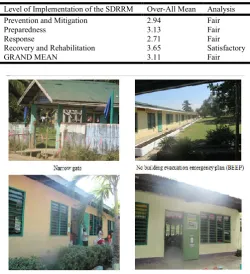
Table 1 Over-All Implementation of the SDRRM Components
Level of Implementation of the SDRRM Over-All Mean Analysis Prevention and Mitigation 2.94 Fair Preparedness 3.13 Fair
Response 2.71 Fair
Recovery and Rehabilitation 3.65 Satisfactory GRAND MEAN 3.11 Fair
Fig. 7. Sample pictures of inadequate buildings
Response
Implementation of the DRR measures: Presented in fig. 4,
the overall mean of the implementation of the DRR measures is 3.18. All respondents perceived the implementation as fair, or it was met. The SDRRM coordinator had the highest mean of 3.32 while GPTA had the lowest mean of 3.14. The implementation in following the protocol on class suspension (signal # 1 – preschool, signal # 2 – preschool, elementary and secondary, and signal # 3 – all levels) was moderately extensive and functioning well has the highest mean while the implementation of providing survival kits, equipment, materials, and supplies needed in times of calamities got the lowest mean or it was limited and functioning minimally. In CDRRMO Terminal Report Summary (2015), the lack of equipment was observed during the conduct of the drill. The members of the SDRRG cannot function well because they did not have the equipment to use.
Implementation in the Continuity of Instruction: Displayed
in fig. 5, all indicators inthe implementation in the continuity of instruction were rated by the respondents poor or limited. The SDRRM coordinators gave the highest mean of 2.34 while GPTA had the lowest mean of 2.17.
Providing books, manuals, and instructional materials for Grades I-III had the lowest mean of 2.12. The results showed that the continuity of instruction needed more attention from the stakeholders so that even during and after disasters, learning of the pupils will not be affected.
Recovery and Rehabilitation
Implementation of the Post-Disaster Needs Assessment: As
presented in fig. 6, all groups of respondents rated the implementation of the post-disaster needs assessment satisfactory which means that it was moderately extensive. The SDRRM gave the highest mean of 3.88 while pupils gave the lowest mean of 3.47. Also, all indicators were also rated satisfactory. Coordinating with NGOs, INGOs, local and foreign agencies for rehabilitation assistance when needed were given the highest mean of 3.82 while organizing a group that provides relief and rehabilitation services after the disaster had the lowest mean of 3.53. This goes to show that the stakeholders must give priority in assessing the needs after disaster.
Over-all implementation of the SDRRM components: The
results exhibited in table 1 the grand mean of the SDRRM components which is 3.11. This means fair or the implementation of the components was met. The component recovery and rehabilitation ranked the highest having a mean of 3.65 which means satisfactory or the implementation was moderately extensive. This implied that the respondent-schools gave emphasis on strengthening their capacity in providing relief and rehabilitation services after disasters. In post-disaster needs assessment, they coordinated with non government organizations, local government unit and other agencies for rehabilitation assistance. On the other hand, the component response had the lowest mean of 2.71.The result is due still to the lack of equipment such as kits, and other supplies and materials needed by the SDRRG to respond accordingly in times of disasters.
On the problems identified in the implementation of the
SDRRM program components and their causes: Like any
other program in DepEd, the implementation of the Disaster Risk Reduction Program (DRRP) has to be evaluated and monitored to ensure proper application, efficiency, and corrective measures or interventions (Disaster Risk Reduction Manual, 2008). During the conduct of the interview and focus group discussion (FGD), there were problems identified in the implementation of the SDRRM such as the lack of training and seminars, lack of equipment, poor serving entrance for children, not enough clearance for fire unit and medical vehicle, no installation of fire alarm system and fire extinguisher, no security grills for windows and emergency exits. Moreover, the unavailability of two doors per classroom, evacuation or exit plan on every floor of the building, survival kits, equipment, materials needed in times of calamities and discontinuity of instruction during disasters were also identified. Figure 7 shows sample pictures of inadequate building in terms of disaster preparedness.
Best Practices/Initiatives of the Schools in the
Implementation of the SDRRM Program: To mitigate the
problems of insufficient funds, the stakeholders made some initiatives. They improvised unused materials for them to make disaster equipment. In doing so, they maximized the skills of the teachers in carpentry.
[image:4.595.37.288.219.494.2]For lack of training and seminars for the members of the SDRRM, they invited resource persons to conduct seminars and training and others would spend their money on the training and seminars. The school heads encouraged and checked the attendance of the stakeholders every time the CDRRMO, Division, and others will initiate training and seminars. Most of the stakeholders who lack understanding about DRRM gained knowledge on the DRRM concepts by watching television programs and surfing the internet about disaster preparedness. Cooperation among Local Government Unit, General Parent-Teacher Association and School Administrators to prioritize the SDRRM program was done for them to at least create activities for SDRRM. Lastly, the lack of dedicated members was also given a solution. The school head monitored and evaluated the program and the attendance of members. They encouraged the Boy scouts, Girl Scouts, Supreme Student Government and Red Cross to help implement the programs.
Range of Means: 1.00 – 1.49 Needs Improvement; 1.50 –
2.49 Poor; 2.50 – 3.49 Fair; 3.50 – 4.49 Satisfactory; 4.50– 5.00 Very Satisfactory
Range of Means: 1.00 – 1.49 Needs Improvement; 1.50 –
2.49 Poor; 2.50 – 3.49 Fair; 3.50 – 4.49 Satisfactory; 4.50 – 5.00 Very Satisfactory
Conclusions
The lack of equipment of the SDRRM group contributed much to the poor implementation of the schools’ DRRM program. The availability of the equipment needed in the performance of the duties and functions of the members of SDRRM is necessary so that the group can do what are expected of them to do and the program will be implemented effectively. Unless the inadequacies are properly addressed, the schools that lacked equipment and paraphernalias were considered to possibly suffer damages or destruction caused by disasters or emergencies. Moreover, the identification of the needs of the stakeholders in schools after the occurrence of disasters is required for them to be properly addressed or else, the school will likely to recover late and more problems will likely to arise. The initiatives and best practices done by the schools in their SDRRM program implementation help minimize the problems they encountered. Fundamentally, the success of the implementation of the program depends upon the number and capability of the human resources, availability of the needed equipment and financial resources. If problems will occur, there is a need for the implementers to take initiatives to immediately solve them.
REFERENCES
Amador III J. and Lopez IG. 2013.The Philippine Disaster Risk Reduction and Management Policy Framework. Retrieved from http://www.anser.org/babrief_philippine-disaster-risk-reduction.
Campaign. Retrieved from www.unisdr.org/wdrc-2006-2007 City Disaster Risk Reduction Management Office Report
2015. City Planning Office, Butuan City.
DepEd Division Memo No. 87 series of 2015. School Disaster Risk Reduction and Management Bulletin.
DepEd Memorandum No. 175 s. 2007 Creation of Technical Working Group (TWG) on the Preparation DepEd
Calamity, Disaster and Risk Management and Control Operations Manual.
DepEd Order No. 50 s.2011 Creation of Disaster Risk Reduction Management Office.
DepEd Order No. 55 s. 2007 Prioritizing the Mainstreaming of Disaster Risk Reduction Management in the School System and Implementation of Programs and Projects Relative There for.
DepEd Regional Memo No. 120 series 2015. School Disaster Risk Reduction and Management Bulletin.
DepEd, 2008. Disaster Risk Reduction Resource Manual (Safer School Resource Manual). Dep Ed Philippines.DRR Knowledge Center.
Education Facilities Manual. 2010. Physical Facilities and Schools’ Engineering Division, Office of Planning Service, Pasig City.
Environmental Health Services. 2014. Emergency evacuation plans. Retrieved from file:///C:/Users/HPmini/Downloads /Emergency evacuation _plans.pdf.
Implementing Rules and Regulations of Republic Act 10121 (Philippine Disaster Risk Reduction and
International Federation of Red Cross and Crescent Societies. 2011. Public awareness and public education for disaster risk reduction: a guide.
International Federation of Red Cross and Red Crescent Societies, Geneva 2011. Public awareness and public education for disaster risk reduction: a guide. Retrieved from https://www.ifrc.org/Global/Publications/ disasters/ reducing_risks/302200-Public-awareness-DDR-guide-EN.pdf.
Introduction to Disaster Risk Reduction. 2011. African Centre for Disaster Studies NWU Potchefstroom Campus. Introduction To Disaster Risk Reduction. (n.d.). Retrieved
from http://www.preventionweb.net/files/26081_kp
1concepdisasterrisk1.pdf.
Legarda, L. 2012. Disaster Risk. Retrieved from
http://lorenlegarda.com.ph/
Lynch, J. 2012. Hotel managers reminded of the importance of
fire safety training. Retrieved from http://www.wormald.
com.au data/ assets/pdf_file/0020/300926/Hotel-managers-reminded-of-the-importance-of-fire-safety-training.pdf Mainstreaming Disaster Risk Reduction in the Education
Sector in the Philippines, 2008. Retrieved from http://www.preventionweb.net/english/professional/ publications/v.php?id= 8625
Management (DRRM) Act of 2010). Retrieved from
http://drrknowledge.net/ implementing
-rules-and- regulations-of-republic-act-10121-philippine-disaster-risk-reduction-and-management-drrm-act-of-2010.
Mukherjee S, and Chakraborty D. 2013. Environmental Challenges and Governance: Diverse Perspectives from Asia. Routledge 711 Third Avenue, New York.
National Disaster Risk Reduction and Management Plan 2011-2028 (2011). Retrieved from http://www.ndrrmc.gov.ph /attachments /article/41/NDRRM_Plan_2011-2028.pdf Prepare our schools and children for disasters – Save the
Children and DepED 2012. Retrieved from
http://www.mynewsdesk.com/sg/save-the-children-asia/ pressreleases
Primer on the disaster risk reduction and management (DRRM) Act of 2010. 10121 PRIMER English -
Department of the Interior and Local ...(n.d.). Retrieved
Public awareness and public education for disaster risk reduction: a guide, 302200 E 06/2011. Retrieved from http://docplayer.net/1261666-Public-awareness-and-public-education-for-disaster-risk-reduction-a-guide.html.
Republic Act 10121. Retrieved from www. google .com. Safer School Manual. 2008. Retrieved from http://jea.sagepub. com/content/early/2008/11/17/027243 1608324190.short School Safety Initiative Plan. 2010. Retrieved from
http://b.3cdn.net/awas/17f0a8f0c750d6704c_mlbrgn5qs.pd f
Tobin, V. 2008. Disaster /emergency situation . Retrievedfrom http://www.deped.gov.ph/sites/default/files /Disaster%2 0Risk%20Reduction%20Resource %20Manual.pdf on
UN/ISDR. 2006. Disaster risk reduction begins at school 2006-2007 World Disaster Reduction
UNISDR. 2006. Early Warning Systems in the Context of
Disaster Risk Management. Retrieved from
http://www.unisdr.org/2006/ppew/info- resources/docs/ ELR_dt_23-25.pdf
United Nations Development Programme. 2004. Reducing Disaster Risk: A Challenge for Development. Retrieved from http://www.undp.org/cpr/ whats_new/rdr_english.pdf. Pp. 17-27; 87- 91.
75314 Ariel U. Cubillas.The implementation of the school disaster risk reduction and management program components of the disaster-prone elementary schools