Application of Wheat B-Starch in Biodegradable
Plastic Materials
Evžen Šárka
1, Zdeněk kruliŠ
2, Jiří kotEk
2, lubomír růžEk
3,
anna korbářoVá
4, Zdeněk bubNík
1and Michaela růžkoVá
51Department of Carbohydrate Chemistry and technology, Faculty of Food and biochemical
technology, institute of Chemical technology in Prague, Prague, Czech republic; 2institute of Macromolecular Chemistry aS Cr, Prague, Czech republic; 3Department
of Microbiology, Nutrition and Dietetics, Faculty of agrobiology, Food and Natural resources, Czech university of life Sciences Prague, Prague, Czech republic; 4Department of Physics, Faculty of Chemical Engineering, institute of Chemical technology in Prague, Prague, Czech republic; 5Central institute for Supervising and testing in agriculture, brno, Czech republic
Abstract
ŠárkaE., Kruliš Z., Kotek J., Růžek L., Korbářová A., Bubník Z., Růžková M. (2011): Application of wheat B-starch in biodegradable plastic materials. Czech J. Food Sci., 29: 232–242.
Food application of wheat B-starch comprising small starch granules as a result of lower quality is problematic. Ac-cordingly, B-starch or acetylated starch prepared from it, with the degree of substitution (DS) of 1.5–2.3, was used in biodegradable films after blending with poly-(ε-caprolactone) (PCL). The following mechanical characteristics of the produced films were derived from the stress-strain curves: Young modulus, yield stress, stress-at-break, and strain-at-break. Water absorption of PCL/starch (60/40) films was determined according to European standard ISO 62. The measured data were compared with those of commercial A-starch. The films containing native starch degraded in compost totally during 2 months. Acetylation of starch molecules in the composites reduced the degradation rate. Optical microscopy, in combination with the image analysis system NIS-Elements vs. 2.10 completed with an Extended Depth of Focus (EDF) module, was used to study the surface morphology of PCL/starch films after 20-day and 42-day compost incubation. Chemical changes in the compost used for the film exposition were measured.
Keywords: biodegradable plastic; polycaprolactone; B-starch; wheat starch; image analysis; biodegradability Abbreviations
BR – basal respiration; C-K2SO4 – carbon extractable with 0.5 mol/l K2SO4; DMSO – dimethyl sulfoxide; DS – degree of substitution; EDF – extended depth of focus; MBC-MW – carbon of microbial biomass using microwave method; NGR – potential respiration with 0.4 mg N-(NH4)2SO4 and 4 mg C-glucose/g wet substrate; NMR – nuclear mag-netic resonance; NR – potential respiration with 0.4 mg N-(NH4)2SO4/g wet substrate; PCL – poly-(ε-caprolactone); PNP – p-nitrophenol; TPF = triphenylformazan
Supported by the Czech Science Foundation, Grant No. GAČR 525/09/0607. Wheat is one of the world’s most important
crops. The main chemical compounds of wheat grain that determine the quality and grain yield are protein (9–19%) and starch (60–73%). Wheat
end-use depends upon the cultivar, environment, and their interaction (Mikulíková et al. 2009).
pro-duction continued to increase by about 3% per year. This growth is attributable almost entirely to wheat starch. The main use of starch is for food production (confectionery, drinks or processed food) – 56%, the rest is for non-food applica-tions such as paper and board, organic chemicals, pharmaceuticals, enzymes, plastics, glues, other chemicals, etc. (De Baere 1999). The aims of the European Union look to the enhancement of wheat share for industrial (non-food) processing (Dvořáček et al. 2007).
The granule size distribution of wheat starch is an important characteristic that is linked with its chemical composition, which in turn may affect its functionality. Compared to other cereal or tuber starches, wheat starch has two different types of granules, the so-called “A-starch” and “B-starch”. A-starch contains a larger type of wheat starch granules (20–30 µm across) that are of lenticu-lar shape. Smaller granules called B-starch are 2–8 µm in diameter and have a spherical shape (Leeb & Schumann 2007). Industrially produced B-starch is of lower quality – it has a higher con-centration of proteins (about 1.1%), lipids and pentosans, and a higher affinity for water at room temperature (Knight & Olson 1984; Galliard
et al. 1994).
Technological processing of B-starch (filtration, drying etc.) and its food application are problematic for these small particles. Thus, B-starch is used as a cattle feed, a milk replacer in calf feeds, core binder in the foundry industry and corrugated boards, or as a source for ethanol production. (Šárka & Bubník 2010). Nevertheless, the present market of ethanol is characterised by structural higher supply than demand (Hönig et al. 2008). However, challenges for other uses of B-starch have been taken up in the designs of new technological processes, thus B-starch has become a valuable raw material for follow-up processing.
Starch application for biodegradable plastic materials
Since last decades, many attempts have been focused on grafting or blending plastic materials with cheap and biodegradable natural biopolymers, such as starch, cellulose, chitin etc., to create new materials with desired properties. These biopoly-mers, especially starch, are abundant, inexpensive, renewable, and also degradable (Sahoo & Rana
2006). The interest in its use in biodegradable plas-tics is also driven by the inherent biodegradability of starch as a carbon source (Willet 2009).
In some instances, their mechanical properties are relatively poor compared to many petroleum-based plastics due to the inherent lower stiffness and strength. Many of them are relatively sensitive to water, with some materials dissolving rapidly, or with a substantial decrease in mechanical strength when they absorb water, especially in moist envi-ronments (Zhao et al. 2008).
Several commercial biodegradable plastics (e.g. Mater-BiTM or BioflexTM ) are prepared by blending
up to 45% starch with degradable poly-(ε-caprol-actone) (PCL). PCL is a synthetic, biodegradable polyester with good mechanical properties that is compatible with many types of polymers, and is one of the most hydrophobic biodegradable polymers currently available (Chen et al. 2000; Müller
et al. 2001). PCL is used also in pharmaceutical
drug release formulations. In soil, extracellular enzymes degrade the extensive chains of PCL, thereby allowing microorganisms to assimilate the polymer. (Rosa et al. 2005). The viscosity of the PCL/starch blends increases with the increasing starch content (Rosa et al. 2004).
Proteins composed of several amino acids deserve special attention in the production of biodegrad-able polymers (Mariani et al. 2009). According to Tummala et al. (2006), e.g. soy protein can be available in the form of soy flour, soy concentrate, or soy isolate. Therefore, the higher protein con-tent in B-starch need not interfere with plastic application.
Starch acetylation
Chemical modification of starch can have a ma-jor impact on the biodegradation rate and final biodegradation percentage (Du et al. 2008). Starch acetates are novel biodegradable polymers which undergo slower degradation and swelling than na-tive starch. Fringant et al. (1998) and Tuovinen
et al. (2004) used acetylated starch with a degree
of substitution (DS) of 3 to improve the resistance of biodegradable materials to moisture. Ganjyal
et al. (2004) prepared starch acetate-corn fibre
Physical properties of biodegradable plastic materials based on starch
Poor resistance to water and low strength are limiting factors for the use of materials manufac-tured from starch (Wang et al. 2003). A study by Koenig and Huang (1995) showed that blend-ing any kind of starch with PCL had increased the modulus and decreased the overall strength compared to the polymer before blending. PCL could be mixed with up to 25 wt.% high-amylose corn starch with only a small (20%) decrease in strength. Rosa et al. (2007) found that the pres-ence of increasing amounts of three non-specified types of starch (labelled as A1, A2, and A3) in blends with PCL generally reduced the mechanical properties of PCL – reducing the tensile stress-at-break, the elongation at stress-at-break, and Young modulus. Starches with the linear structure (A1 and A3) had a smaller tensile strength at break and higher elongation at break. Photomicrographs showed that the blends formed a two-phase system with good dispersion. Thermal analysis showed that in blends containing 25%, 50%, and 75 wt.% starch, linear starches produced greater crystallinity than branched starch. The addition of starch probably facilitated the crystallisation of PCL.
Biodegradability of plastic materials based on starch
The desired effect of biological factors on the plastics is its most extensive and rapid degradation. Biodegradation does not, however, ensure that a biodegradable material will always degrade. Ac-cording to EU standards, a biodegradable plastic should, within 6 (or 9) months of composting, be decomposed into carbon dioxide, water, and humus substances. These substances should not contain more than 10 % particles larger than 2 mm (Avella et al. 2001).
The biodegradation of PCL-starch compositions starts with the starch consumption and continu-ously increases with the content in natural filler. Monitoring the sample thickness proved to be useful for the measurement of surface erosion and complementary to scanning electron microscopy (Singh et al. 2003). The other possibility is that the amount of the produced carbon dioxide de-rived from the biodegradation of the test material can be measured, compared with the theoretical
maximal amount and recorded as a biodegrada-tion percentage (Du et al. 2008).
The wheat starch/aliphatic polyester blend stud-ied by Lim et al. (1999) demonstrated excellent biodegradability. Soil burial tests revealed complete biodegradation within eight weeks. Bastioli et al. (1995) reported the enhanced biodegradation of PCL in the presence of starch by providing a larger surface area for microbial attack.
The compost derived from biodegradable plastics along with other organic products increases the soil organic carbon, water and nutrient retention, while reducing fertiliser inputs and suppressing plant disease. The composting of biodegradable plastics also recycles matter rather than ‘locking’ it up in resistant materials, particularly when the non-degradable plastics are destined for landfill (Cesar et al. 2009).
The aim of the research project was to test me-chanical characteristics, water absorption, and biodegradability of the prepared films based on PCL and small wheat starch granules. Chemical changes in the compost used for the film exposi-tion were measured.
MAteriAl And MethodS
Material. Dried wheat B-starch “Soltex P6” was provided by the starch company Amylon Havlíčkův Brod (Czech Republic). The content of dry substance was 91.3% and the mean average diameter was 5.9 µm, as determined by image analysis (Šárka & Bubník 2009) using NIS-Elements, v. 2.3 (Labora-tory Imaging, Prague, Czech Republic). For com-parison, high-grade A-starch labelled Soltex P1, with the dry substance of 88.7%, was applied.
Commercial grade PCL CAPA 6800 was obtai-ned from Perstorp UK Ltd (Warrington, UK). PCL number average molecular weight was 80 000 and the melt flow index 3 g/10 min (2.16 kg, 160°C). The melting point of PCL ranged from 58°C to 60°C.
Starch acetate preparation. Starch acetate with DS of 1.5–2.3 was prepared from the above mentioned wheat starch in the laboratory using a modified process, as proposed by Shorgen (1996). DS of the acetylated starch in DMSO with 5 mg of benzoic acid was analysed using 1H NMR
spectroscopy (Koláček et al. 2009).
acetyla-tion process, the main part of acetic anhydride was placed in the reactor and heated to 128°C. Then 170 g of starch (and other substances, such as Na2SO4, oil polyoxyethylenealcohol ether and polyoxyethylenenonylophenol ether or silicagel) were added into the reactor under continuous mixing for 5 min, and then the temperature of the oil bath was increased to 133–138°C. Further, 50% NaOH solution was added dropwise during mixing. The remainder of the acetic anhydride was added in equal doses during 1–2 hours. After cooling the reaction blend was mixed with cold distilled water, ground using a liquidiser and washed with water to a pH value ranging from 3.3 to 4.5 before drying at 43–44°C. When the moisture was constant (< 4%), the starch was ground in a standard mill to 100– 300 µm particles, as identified by laser diffraction
(MasterSizer 2000 with the dispersion unit Hydro 2000G, Malvern Instuments, Malvern, UK).
Sample preparation and testing. The compos-ites were prepared by mixing in the melt of the PCL with 10, 20, and 40 wt.% of the individual starch fillers in the chamber of a Brabender Plasti-Corder at 110°C and 60 rpm for 8 minutes. The material removed from the chamber was immediately com-pression-moulded to form 0.5 mm thick films.
For tensile testing, the dumbbell specimens (type 5 according to the ISO 527 standard) were die-stamped from the compression-moulded films.
Tensile tests were performed using an Instron 5800 tensile tester at room temperature, and a crosshead speed of 50 mm/min. The reported values are the averages of at least 5 individual measurements.
Water absorption of PCL/starch samples (60/40) was determined according to ISO 62. Test speci-mens of 50 × 50 × 0.5 mm were suspended in a water bath at a temperature of 23.0°C. After 24 h
the test specimens were weighed with accuracy of 0.001 g. Water absorption was quantified as a relative increase of the sample weight.
Compost and film incubation. Two composting bins, AL-KO K390, were filled with the two-year old substrate prepared from green municipal waste, white high-moor peat, and clayey soil coming from excavation, and the material was then sieved (10 mm). The formed films were overlayered with composites in five layers. The composites were wetted with a surface emulsion (Supresivit, Lig-nohumate AM, Agrisorb). The first composting bin (A) and the second one (B) were opened after 63 days and 147 days, respectively. Then new composites of acetylated starch with various DS were put in the bins. The films were taken out from the composter A after 20 days, and from the composter B on the 42nd day.
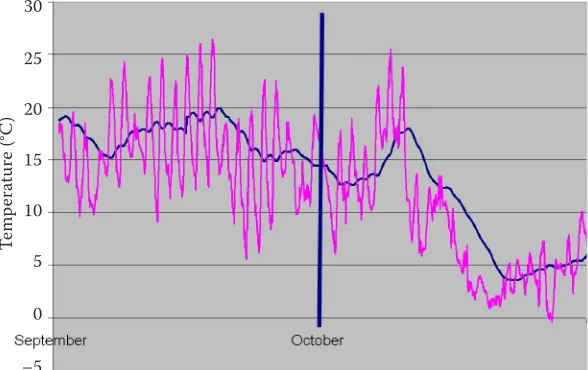
[image:4.604.65.359.572.757.2]The temperature variation within the compost medium during composite storage is shown in Figure 1.
Optical microscopy (NIKON Eclipse LV 100D; camera type SONY DFW-SX910, magnification 50×), in combination with the image analysis system NIS-Elements vs. 2.10 completed with Extended Depth of Focus (EDF) module, was used to study the surface morphology after compost incubation of the samples.
The substrate mopped off the composite sur-face was stored in polypropylene cans (1200 ml at 4°C) for analysis. If the composites were fully destroyed, the substrates were extracted from the space where the remainingcomposites (including metal labels) were found.
The dry substance of the substrate was analysed on drying 5 g substrate at 60°C (24 h). pH was measured in the extract of the moist substrate using deionised
Figure 1. Temperature fluctuation within the composed medium during the 42 days of storage period
30
25
20
15
10
5
0
–5
Te
m
pe
ra
tu
re
(°
C
water (3 g/15 ml) and shaking on a horizontal shaker (60 minutes; 250 swings per minute) by means of Hanna electrode. Carbon in the soil organic matter (Corg) was measured using a microwave method in an equivalent amount of the moist substrate, which corresponded to 0.03 g of the dry substance. The available organic carbon was extracted from the moist substrate with 0.5 mol/l K2SO4 according to Vance
et al. (1987). Microbial biomass carbon (MBC) was
analysed using the microwave irradiation method (Islam & Weil 1998). The basal respiration (BR), metabolic quotient (BR/MBC) × 1000, respiratory ratio NR/BR (ratio between potential respiration with 0.4 mg N-(NH4)2SO4/g moist substrate and BR), and respiratory ratio NGR/BR (potential respiration with 0.4 mg N-(NH4)2SO4 and 4 mg C-glucose/g moist substrate related to BR) were evaluated as defined in ISO 16072. Dehydrogenase activity was evalu-ated according to Öhlinger (1996). Arylsulfatase activity was analysed according toTabatabai and Bremner (1970).
reSultS And diScuSSion
Mechanical behaviour
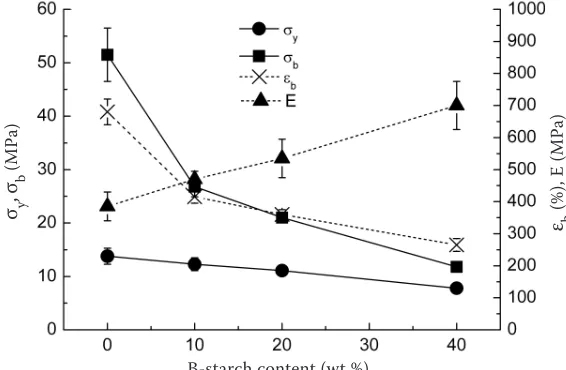
The following mechanical characteristics were derived from the stress-strain diagrams: Young modulus – E, yield stress – σy, stress-at-break – σb, and strain-at-break – εb. All experimental data obtained for PCL/B-starch blends are summarised in Figure 2. It can be seen that the presence of the starch strongly affects tensile mechanical proper-ties. Thus, the Young modulus increases with the increasing B-starch content. On the other hand,
the yield stress, stress-at-break, and strain-at-break decrease with increasing filler content. The decrease in the yield stress can be ascribed to poor adhesion between the polymer matrix and the filler, which allows debonding at the onset of plastic deformation. All the samples showed cold-drawing after reach-ing the yield point. However, the extent of plastic deformation characterised by strain-at-break value dropped from 680% for neat PCL to 415% by the incorporation of 10 wt.% of B-starch. Obviously, relatively large particles with low interfacial adhesion act as structural heterogeneities. A further increase in the filler content leads to an almost linear de-crease in strain-at-break. The reduced plasticity is manifested also in the decrease in stress-at-break. Its concentration dependence follows the corre-sponding dependence of strain-at-break.
A positive finding is that the mechanical behaviour of PCL/B-starch composites is not significantly infe-rior to the behaviour of the corresponding materials containing A-starch and is comparable with the data by Koenig and Huang (1995) and Rosa et al. (2007). From Figure 3, it is obvious that the Young modulus and yield stress of the blends containing B-starch are as good as the same characteristics of the PCL/A-starch composites. On the other hand, the plasticity of the PCL/B-starch composites is slightly lower, which is demonstrated in lower strain-at-break and stress-at-break values.
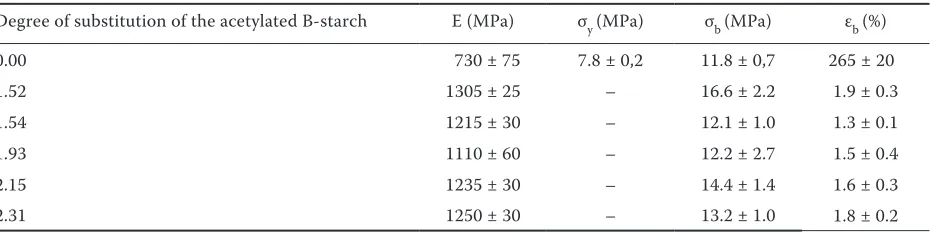
Acetylation of starch significantly affects the macroscopic mechanical behaviour of the compos-ites. The mechanical properties of PCL/acetylated B-starch composites (60/40) are summarised in Table 1. Two basic features can be discerned. First, the Young modulus is markedly increased when acetylated starch is applied. It seems that, in
com-Figure 2. The effects of B-starch content on the tensile mechanical behaviour of the PCL/starch composites
B-starch content (wt.%)
ε b
(%
),
E
(M
Pa
)
σ y
,
σ b
(M
Pa
[image:5.604.72.355.567.752.2]parison with the natural starch, acetylated B-starch shows substantially increased stiffness. On the other hand, changing the degree of substitution from 1.5 to 2.3 has almost no effect on the modulus value. Second, the acetylation of starch dramatically influ-ences the failure of the composites. While PCL/B-starch (60/40) composite exhibited ductile behaviour represented by cold drawing beyond the yield point, and the strain-at-break value was higher than 250%, the corresponding samples containing acetylated B-starch failed in a brittle mode at ultimate strain not exceeding 2%, irrespective of the degree of substitution within the range studied. The very low ultimate strain and brittle fracture of these materials were probably induced by the inadequate granu-lometric characteristic of the dispersed acetylated starch grains. In particular, great particles (over 100 µm) act as defect centres and induce the loss
of material toughness.
Water resistance of prepared samples
Table 2 confirms that enriched starch PCL composites are more absorptive of water. Thus,
the composite with native wheat B-starch will be unusable for the applications where it is in a longer contact with water such as packaging films or pots for seedling trees. On the other hand, water absorption improves biodegradability, as we will see later. Acetylation of starch decreases significantly the water absorption by PCL/starch blends. This observation is in agreement with the experiments of Fringant et al. (1998) and Tuovinen et al. (2004) .
Weight loss of Pcl-starch composites during composting
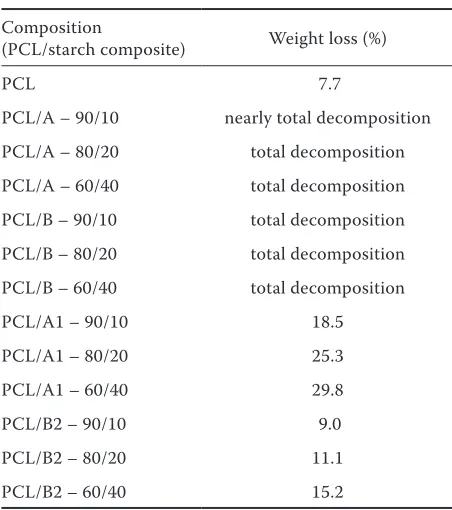
The weight loss after 2-months composting of 165 × 245 mm/thickness 0.5 mm film is shown in Table 3 for PCL-starch compositions with starch content lower than or equal to 40 wt.%.
The blends containing native starch (A or B) were dissolved totally during 2 months (63 days).
The substitution of hydroxyl-groups by acetyl-groups in the starch molecules in the blends reduced the degradation rate. It emerged from these data that PCL undergoes a slow degradation compared
[image:6.604.65.343.84.273.2]Figure 3. The effects of A-starch content on the tensile mechanical behaviour of the PCL/starch composites
Table 1. Mechanical properties of PCL/acetylated B-starch composites (60/40)
Degree of substitution of the acetylated B-starch E (MPa) σy (MPa) σb (MPa) εb (%)
0.00 730 ± 75 7.8 ± 0,2 11.8 ± 0,7 265 ± 20
1.52 1305 ± 25 – 16.6 ± 2.2 1.9 ± 0.3
1.54 1215 ± 30 – 12.1 ± 1.0 1.3 ± 0.1
1.93 1110 ± 60 – 12.2 ± 2.7 1.5 ± 0.4
2.15 1235 ± 30 – 14.4 ± 1.4 1.6 ± 0.3
2.31 1250 ± 30 – 13.2 ± 1.0 1.8 ± 0.2
A-starch content (wt.%)
ε b
(%
),
E
(M
Pa
)
σ y
,
σ b
(M
Pa
[image:6.604.67.534.642.758.2]238
to the blends with starch in any form. The higher weight loss was related to the higher concentration of (acetylated) starch. This differs from the data of Singh et al. (2003) for of poly(ε-caprolactone)/ starch blends reporting that the weight loss during composting increases with the decrease in interfacial tension between the filler and polymer and does not depend very significantly on the concentration of starch in the polyester matrix.
We tested the influence of DS of acetylated B-starch used on the weight loss of the created films after 20 days storage. The results are shown in Table 4.
The weight loss did not depend significantly on DS ranged between 1.5–2.3, the external influences coming from the compost soil prevailing.
degradation surfaces as detected by the edF module
The result of the image analysis system was a 3D image which enabled us to view the surface (Fig-ure 4), to meas(Fig-ure the altitude differences between the chosen points (e.g. hill minus valley), and in this way to evaluate the roughness of the surface.
The process of decomposition seems to be very similar without any dependence on DS, and thus we can take this figure as illustrative. Figure 4a shows a newly prepared film, with the parallel creases originated during the plastic film
forma-tion between 2 aluminium foils; the roughness was 30–40 µm. After 20 days of composting (Figure 4b)
the measured roughness was unchanged, but we could see round patterns on the surface. Similarly as Singh et al. (2003) had observed, we could assume the action of fungi but the growth was only just beginning. The thinning of the films was caused by soil bacteria and by chemical dissolving. After 42 days (Figure 4c), we could observe deep folds in the sample (180 µm).
changes in surrounding substrate
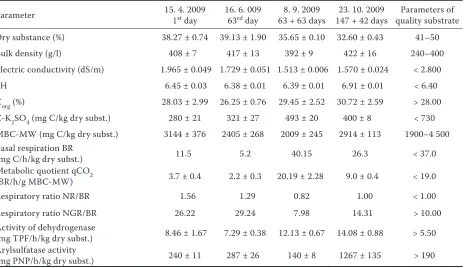
[image:7.604.72.300.101.205.2]The chemical composition of the compost in which the films were stored was studied at the be-ginning and at the end of the period; the resulting data are shown in Table 5. The substrate stability
Table 2. Water resistance – absorption power
Composition (PCL/starch blend) Water absorption (%)
PCL 0.00
PCL/native A-starch 6.90
PCL/acetylated A-starch 5.33
PCL/B-starch 9.44
PCL/acetylated B-starch 3.86
[image:7.604.313.539.110.365.2]DS of the acetylated A-starch was 1.9, of the acetylated B-starch 2.0
Table 3. Weight loss of PCL-starch blends after 2 month composting
Composition
(PCL/starch composite) Weight loss (%)
PCL 7.7
PCL/A – 90/10 nearly total decomposition PCL/A – 80/20 total decomposition PCL/A – 60/40 total decomposition PCL/B – 90/10 total decomposition PCL/B – 80/20 total decomposition PCL/B – 60/40 total decomposition
PCL/A1 – 90/10 18.5
PCL/A1 – 80/20 25.3
PCL/A1 – 60/40 29.8
PCL/B2 – 90/10 9.0
PCL/B2 – 80/20 11.1
PCL/B2 – 60/40 15.2
A, B – native starch, A1, B2 – acetylated starch with DS of 1.9 (A1) or 2.0 (B2)
Figure 3 The effects of A-starch content on the tensile mechanical behaviour of
the PCL/starch composites
(a)
(b)
(c)
Figure 6 Degradation surfaces as detected by EDF module
[image:7.604.75.542.661.747.2](a) (b) (c)
increased, and its properties after storage showed no deterioration.
Dry substance. The recommended values of the dry substance are 41–50%. Lower values give support to anaerobic processes, higher values to the development of microscopic filamentous fungi before that of bacteria. The values of 32–39% as obtained during the films decomposition are acceptable, with a relatively low probability of anaerobic processes.
Bulk density. The recommended range is 240 g/l to 400 g/l; a light, fluffy, and crumbly substrate is
desirable for oxygen supply to the roots of a plant. That value is achieved by adding pearlite, peat, coir, etc.
Electric conductivity. Electric conductivity of the substrate decreased slightly, probably because it depends on the dissolved mineral salts (ions) present in the soil solution. However, conductivity below 3 dS/m is convenient for most plants. Wet-ting the included films by an ion source (Kristalon Start, 0.1 g/l) caused a slightly higher conductivity at the end of the period.
pH (H2O). The recommended range (5.4 to 6.4) meets the physiological requirements of most plants and microorganisms. Strong alkalinity (> 7.7) and strong acidity (< 5.0) are not desirable. The substrate after the tests was fully applicable for the growth and development of plants; pH of the substrate did not decrease greatly, just on the contrary; adding fillers to the composites such as CaCO3, e.g. in the form of carbonation mud, (Kotek et al. 2007) is not necessary.
[image:8.604.63.290.115.265.2]Carbon of soil organic matter (Corg). Carbon of soil organic matter reached a wide range of 20–36% in the growing substrate. The recom-mended value (28%) is the average of the interval found and twenty times the average value reached by Corg in the topsoil layer (0–150 mm).
Table 5. Parameters of compost substrate before and after film storage
Parameter 15. 4. 2009 1st day 16. 6. 009 63rd day 63 + 63 days8. 9. 2009 147 + 42 days23. 10. 2009 quality substrateParameters of
Dry substance (%) 38.27 ± 0.74 39.13 ± 1.90 35.65 ± 0.10 32.60 ± 0.43 41–50
Bulk density (g/l) 408 ± 7 417 ± 13 392 ± 9 422 ± 16 240–400
Electric conductivity (dS/m) 1.965 ± 0.049 1.729 ± 0.051 1.513 ± 0.006 1.570 ± 0.024 < 2.800
pH 6.45 ± 0.03 6.38 ± 0.01 6.39 ± 0.01 6.91 ± 0.01 < 6.40
Corg (%) 28.03 ± 2.99 26.25 ± 0.76 29.45 ± 2.52 30.72 ± 2.59 >28.00 C-K2SO4 (mg C/kg dry subst.) 280 ± 21 321 ± 27 493 ± 20 400 ± 8 < 730 MBC-MW (mg C/kg dry subst.) 3144 ± 376 2405 ± 268 2009 ± 245 2914 ± 113 1900–4 500 Basal respiration BR
(mg C/h/kg dry subst.) 11.5 5.2 40.15 26.3 < 37.0
Metabolic quotient qCO2
(BR/h/g MBC-MW) 3.7 ± 0.4 2.2 ± 0.3 20.19 ± 2.28 9.0 ± 0.4 < 19.0
Respiratory ratio NR/BR 1.56 1.29 0.82 1.00 < 1.00
Respiratory ratio NGR/BR 26.22 29.24 7.98 14.31 > 10.00
Activity of dehydrogenase
(mg TPF/h/kg dry subst.) 8.46 ± 1.67 7.29 ± 0.38 12.13 ± 0.67 14.08 ± 0.88 > 5.50 Arylsulfatase activity
(mg PNP/h/kg dry subst.) 240 ± 11 287 ± 26 140 ± 8 1267 ± 135 > 190
[image:8.604.69.533.470.738.2]TPF = triphenylformazan, PNP = para-nitrophenol
Table 4. Changes of PCL/acetylated B-starch films after 20 days storage
Degree of
substitution Weight loss (%) Surface loss (µm)
1.52 19.60 49.0
1.54 10.20 25.5
1.69 2.70 6.8
1.76 8.90 22.3
1.93 16.80 42.0
2.15 11.10 27.8
2.31 16.70 41.8
Available organic carbon (C-K2SO4). The available organic carbon content in the substrate increased during the films biodegradation, as expected. When its content is lower than 730 mg C/kg dry substrate, the substrate is stable. The data in Table 5 indicate a high metabolic activity of the microorganisms present.
Microbial biomass carbon (MBC-MW). In the growing substrate, much higher levels were achieved (1900–4500 mg C/kg DS) than is the value for arable land (0–150 mm; 250 mg C/kg DS). With stunted compost, within 10 months without digging, up to 10,000 mg C/kg DS was achieved in the initial ripening phase. Significantly lower and significantly higher values compared to the recommended interval are not desirable.
Basal respiration (BR). Basal respiration (mg C per h per kg of dry substrate) is an essential quali-tative microbiological criterion. BR expresses the mineralisation intensity of organic matter. Im-mature compost, aged no more than 10 months without digging up, when applied during the ini-tial phase of the maturation process exceeds the recommended limit value of 37 mg C/kg of dry substrate/h as much as ten times. The value is about 10 mg C/kg of dry substrate/h for finished stable composts aged more than 15 months and plant-growing substrates, while the value 1.25 mg C/kg of dry substrate/h is characteristic for vari-ous types of arable land (0–150 mm).
Metabolic quotient (qCO2 ). This widely used quotient of the basic criteria indicates the activa-tion level of the soil by microorganisms and, at the same time, the mineralisation rate of organic mass in the soil. The limit value of 19 mg C/g MBC/h is the threshold that protects both organic matter in the environment against extreme mineralisation and the atmosphere against extreme enrichment with CO2. Usual values in arable lands and in finished stable substrates reach about 5 mg C/g MBC/h.
Ratio NR/BR. The ratio signifies physiological accessibility of nitrogen for soil microorganisms. It improved during the tests.
Ratio NGR/BR. CO2 respiration induced by the addition of two essential nutrients in the ratio 10:1 – glucose carbon and ammonia nitrogen (NGR), related to basal respiration, provides information on organic matter stability. In finished substrates of good quality, which are designated for growing plants, the values of this ratio higher than 10 are required. The higher the value, the more stable the
substrate, i.e. the more is it resistant to microbial decomposition.
Dehydrogenase activity (DHA). Dehydrogenase indicates the level of oxidation-reduction proc-esses in the environment, and is one of the most intensively monitored enzymes in soils, composts, and plant-growing substrates. The method based on triphenylformazan (TPF) production is one of the most widespread. An average production of 5.5 mg TPF/kg of dry substrate per hour is the limit value required for finished composts as well as for arable lands of good quality. The DHA level gradually decreases to the aforementioned limit value in the course of the maturation and stabilisation of the substrate. In young, immature composts, particularly in the first weeks follow-ing their establishment, values many times higher than the limit value may be achieved.
Arylsulfatase (ARS). Arylsulfatase hydrolyses (interrupts) the linkage of the sulphate anion with an aromatic organic skeleton. The quintuple value from 23rd October indicates the increasing
capa-bility of microorganisms for hydrolysis of para-nitrophenylsulphate to para-nitrophenol. Vong et al. (2003, 2008) confirmed significant correlation coefficients between arylsulfatase activity and immobilised-S. Strong positive correlation coef-ficients were found between fungal activities and immobilised-S; however, no significant correlations were found between fungal activities and ARS. As to bacterial activities, Vong et al. (2008) found positive significant correlation coefficients with immobilised-S as well as with ARS activities. Our results indicate that bacterial activities are likely to outweigh the fungal activities. Further research and measurements to obtain microbial data from the degraded film surfaces will be necessary.
concluSion
Mechanical characteristics, water absorption, and biodegradability of the prepared films based on PCL and wheat small starch granules (B-starch) were tested. Acetylated (DS of 1.5–2.3) or native A and B wheat starches (10, 20, and 40 wt.%) were blended with different levels of PCL. Regarding the prepared films, the following effects were detected:
the other hand, the incorporation of acetylated starch caused a marked loss of ductility. – Acetylation of starch significantly decreased
water absorption of PCL/starch blends.
– The films containing native starch (A or B) were dissolved in compost totally during 2 months (63 days). The substitution of hydroxyl-groups by acetyl-groups in the starch molecules in the blends reduced the degradation rate. The weight loss did not depend on DS significantly, the external influences coming from the compost soil prevailed. The surface losses were in the range of 7–49 µm.
– Optical microscopy in combination with image analysis system completed with the Extended Depth of Focus (EDF) module was used to study the surface morphology of the films after compost incubation. The roughness of the surface of the films prepared with acetylated starch increased in compost from 30–40 µm observed after 20 days exposition to 180 µm reached after 42 days. The soil substrate stability increased during the compost experiments and its properties after storage showed no deterioration. The substrate, was fully applicable after the tests for the growth and development of plants. Further research and measurements would be desirable to obtain mi-crobial data from the degraded film surfaces.
references:
Avella M., Bonadies E., Martuscelli E., Rimedio R. (2001): European current standardization for plastic packaging recoverable through composting and biodeg-radation. Polymers Testing, 20: 517–521.
Bastioli C., Cerutti A., Guanella I., Romans G.C., Tosin M.J. (1995): Physical state and biodegradation behavior of starch-polycaprolactone systems. Journal of Environmental Polymer Degradation, 3: 81–95.
Cesar M.E.F., Mariani P.D.S.C., Innocentini-Mei L.H., Cardoso E.J.B.N. (2009): Particle size and concentra-tion of poly(ε-caprolactone) and adipate modified starch blend on mineralization in soils with differing textures. Polymers Testing, 28: 680–687.
Chen D.R., Bei J.Z., Wang S.G. (2000): Polycaprolactone microparticles and their biodegradation. Polymer Deg-radation and Stability, 67: 455–459.
De Baere H. (1999): Starch Policy in the European Com-munity. Starch/Stärke, 51: 189–193.
Du Y.L., Cao Y., Lu F., Li F., Cao Y., Wang X.L., Wang Y.Z. (2008): Biodegradation behaviors of thermoplastic starch
(TPS) and thermoplastic dialdehyde starch (TPDAS) under controlled composting conditions. Polymers Test-ing, 27: 924–930.
Dvořáček V., Růžek P., Vavera R. (2007): Vliv odrůdy. technologie pěstování a lokality na produkci škrobu a bioetanolu u vybraných odrůd pšenice seté. Listy cukro-varnické a řepařské, 123: 379–382.
Fringant C., Rinaudo M., Gontard N., Guilbert S.E., Derradji H. (1998): A biodegradable starch based coat-ing to waterproof hydrophylic materials. Starch/Stärke,
50: 292–296.
Galliard T., Bowler P., Towersey P.J. (1994): In: Pome- ranz Y. (ed.): Wheat is Unique. American Association of Cereal Chemists, St. Paul: 251–262.
Ganjyal G.M., Reddy N., Yang Y.Q., Hanna M.A. (2004): Biodegradable packaging foams of starch acetate blended with corn stalk fibers. Journal of Applied Polymer Sci-ence, 93: 2627–2633.
Guan J.J., Hanna M.A. (2006): Physical, mechanical, and macromolecular properties of starch acetate during ex-trusion foaming transformation. Industrial & Engineering Chemistry Research, 45: 3991–4000.
Hönig V., Miler P., Hromádko J. (2008): Bioetanol jako inspirace do budoucna. Listy cukrovarnické a řepařské,
124: 203–206.
Islam K.R., Weil R.R. (1998): Microwave irradiation of soil for routine measurement of microbial biomass carbon. Biology & Fertility of Soils, 27: 408–416.
Knight J.W., Olson R.M. (1984):In: Whistler R. (ed.): Starch: Chemistry and Technology. Academic Press, New York: 491–505.
Koenig M.F., Huang S.T. (1995): Biodegradable blends and composites of polycaprolactone and starch derivatives. Polymer, 36: 1877–1882.
Koláček J., Šárka E., Synytsya A., Kováčová R., Hra-bal R., Bubník Z.: Charakterizace acetylovaného B-škro- bu měřením velikosti částic pomocí image analysis a laserové difrakce a hodnocením spekter NMR a FT-IR spektroskopie. Im: Proceedings 5th International Confer-ence on Polysaccharides-GlycosciConfer-ence. Prague, 11.–13. 11. 2009. (CD-ROM)
Kotek J., Kruliš Z., Šárka E. (2007): Využití saturačních kalů z cukrovarnického průmyslu pro výrobu polymer-ních kompozitů. Listy cukrovarnické a řepařské, 123:
185–187.
Leeb C.V., Schumann H.P. (2007): Product design and engineering. Best practices. In: Bröckel U., Meier W., Wagner G. (eds): Raw Materials, Additives and Applica-tions. Vol 2. Wiley-VCH, Weinheim: 395–419.
ent biodegradability of the host polymer. Carbohydrate Research, 338: 1759–1769.
Tabatabai M.A., Bremner J.M. (1970): Arylsulfatase activity of soils. Soil Science Society of America Journal,
34: 225–229.
Tummala P., Liu W., Drzal L.T., Mohanty A.K., Misra M. (2006): Influence of plasticizers on thermal and me-chanical properties and morphology of soy-based bio-plastics. Industrial & Engineering Chemistry Research,
45: 7491–7496.
Tuovinen L., Ruhanen E., Kinnarinen T., Rönkkö S., Pelkonen J., Urtti A., Peltonen S., Järvinen K. (2004): Starch acetate microparticles for drug delivery into retinal pigment epithelium – in vitro study. Journal of Controlled Release, 98: 407–413.
Vance E.D., Brookes P.C., Jenkinson D.S. (1987): An extraction method for measuring soil microbial biomass C. Soil Biology & Biochemistry, 19: 703–707.
Vong P.C., dedourge O., Lasserre-Joulin F., Guckert A. (2003): Immobilized-S, microbial biomass-S and soil arylsulfatase activity in the rhizosphere soil of rape and barley as affected by labile substrate C and N additions. Soil Biology & Biochemistry, 35: 1651–1661.
Vong P.C., Piutti S., Slezack-Deschaumes S., Benizri E., Guckert A. (2008): Sulphur immobilization and arylsulphatase activity in two calcareous arable and fal-low soils as affected by glucose additions. Geoderma,
148: 79–84.
Wang X.L., Yang K.K., Wang Y.Y. (2003): Properties of starch blends with biodegradable biopolymers. Jour-nal of Macromolecular Science: Polymer Reviews, 43:
385–409.
Willet J.L. (2009): Starch in polymer compositions. In: Be Miller J., Whistler R. (eds): Starch: Chemistry and Technology. 3rd Ed. Academic Press/Elsevier, Burlingtion-London-San Diego-New York: 715–743.
Zhao R.X., Torley P., Halley P.J. (2008): Emerging biodegradable materials: starch- and protein-based bio-nanocomposites. Journal of Materials Science, 43:
3058–3071.
Received for publication August 2, 2010 Accepted after corrections September 29, 2010 Mariani P.D.S.C., Allganer K., Oliveira F.B., Cardoso
E.J.B.N., Innocentini-MEI L.H. (2009): Effect of soy protein isolate on the thermal, mechanical and morpho-logical properties of poly(ε-caprolactone) and corn starch blends. Polymers Testing, 28: 824–829.
Mikulíková D., Masár Š., Horváthová V., Kraic J. (2009): Stability of quality traits in winter wheat cultivars.
Czech Journal of Food Sciences, 27: 403–417.
Müller R.J., Kleeberg I., Deckwer W.D. (2001): Biodeg-radation of polyesters containing aromatic constituents. Journal of Biotechnology, 86: 87–95
Öhlinger R. (1996): Dehydrogenase activity with the sub-strate TTC. In: Schinner F., Öhlinger R., Kandeler E., Margesin R. (eds): Methods in Soil Biology. Springer-Verlag, Berlin: 241–243.
Rosa D.S., Guedes C.G.F., Pedroso A.G., Calil M.R. (2004): The influence of starch gelatinization on the rheological, thermal, and morphological properties of poly(ε-caprolactone) with corn starch blends. Materials Science & Engineering: C, 24: 663–670.
Rosa D.S., Lopes D.R., Calil M.R. (2005): Thermal proper-ties and enzymatic degradation of blends of poly(ε-capro-lactone) with starches. Polymers Testing, 24: 756–761.
Rosa D.S., Lopes D.R., Calil M.R. (2007): The influence of the structure of starch on the mechanical, morphological and thermal properties of poly(ε-caprolactone) in starch blends. Journal of Materials Science, 42: 2323–2328.
Sahoo P.K., Rana P.K. (2006): Synthesis and biodegrad-ability of starch-g-ethyl methacrylate/sodium acrylate/ sodium silicate superabsorbing composite. Journal of Materials Science, 41: 6470–6475.
Šárka E., Bubník Z. (2009): Using image analysis to identi-fy acetylated distarch adipate in a mixture. Starch/Stärke,
61: 457–462.
Šárka E., Bubník Z. (2010): Morfologie, chemická struk-tura, vlastnosti a možnost využití pšeničného B-škrobu. Chemické Listy, 104: 318–325.
Shorgen R.L. (1996): Preparation, thermal properties, and extrusion of high-amylose starch acetates. Carbohydrate Polymers, 29: 51–62.
Singh R.P., Pandey J.K., Rutot D., Degée Ph., Dubios Ph. (2003): Biodegradation of poly(ε-caprolactone)/starch blends and composites in composting and culture envi-ronments: the effect of compatibilization on the
inher-Corresponding author: